Mental Health Check-In


As we get closer to the end of the semester, it is important that mental health remains a top priority. Emma Druckmiller, a junior here at Concordia, was asked what her main stressors are at this point of the semester. She says mostly housing arrangements and upcoming finals: 

“The first thing that comes to mind is housing stuff. I just got an apartment so moving and coordinating all of that, on top of finals, is a lot.” 

To give herself a break, Emma says she enjoys working out and journaling. “I love working out. Working out clears my head for a little bit and gives me a break. You do not have to deal with anything while doing that. I also like journaling a lot. I write down my worries and when I look back at them, they almost look silly since things tend to work out fine. So, working out and journaling are things that help me.” 

Concordia has many great mental health resources; Emma says she is a fan of Evelyn’s Place and the comfort dogs. “Freshman year I went to Evelyn’s place every day. I have not been recently because it is far away from me now. Also, whenever I see the comfort dogs I give them a pet, they brighten up my day.”  

Looking for some tips to stay focused and optimistic? Here are four things you can do to help get through the end of this semester! 

  • Ask yourself, how am I feeling today? In an article written by Bob Livingstone, a licensed social worker, he says that by asking yourself questions, you learn how to be introspective. “You will learn to be introspective. Introspective means the ability to look inside yourself in a non-judgmental way. It is a way of assessing one’s thoughts, feelings, and spirituality from an objective place.” Many times, our minds are occupied by thoughts such as final grades, exams, and assignments, which block us from understanding how we are truly feeling. So, take a moment, stop what you are doing and allow yourself to understand how you are feeling. 
  • Make sure that you are providing your body with its basic needs. It is vital that you are eating nutrient-rich foods and drinking enough water. This ensures your brain and body can work to their best ability. According to healthline.com, certain foods can help promote academic performance: “Although an overall healthy diet is most important for keeping your body and brain nourished and ready to take on difficult tasks, research shows that certain food may be especially important for brain health and promoting mental performance.”  

Some of the recommended foods are berries, which contain anthocyanins which may improve mental performance by increasing blood flow to your brain. Nuts, packed with nutrients such as vitamin e and zinc for brain health, are also a good option. Foods containing omega 3s provide essential fats that play a significant role in brain health.  

  • Give yourself a break. Even when you feel like you have a lot to get done, make sure you take time out of the day to do something you enjoy. Whatever it is, remember that you deserve to have fun. According to Cornell University, taking breaks can increase productivity.  

“Research shows that taking purposeful breaks (anywhere from 5-60 minutes) from studying to refresh your brain and body increases your energy, productivity, and ability to focus.” 

However, it is not recommended to hop on social media, it is better to find activities that give your mind a break. Some examples are meditation, going for a walk, organizing your workspace, calling a friend, or expressing yourself through creativity.  

  • Lastly, kick your stress or anxiety to the side by saying positive affirmations. In an article written by Ronald Alexander, PhD a mind/body psychotherapist, he says “An affirmation can work because it has the ability to program your mind into believing the stated concept.” Alexander says it’s best to start with a list. “Make a list of what you’ve always thought of as your negative qualities. Include any criticisms others have made of you that you’ve been holding onto. When you write out the recurring belief, notice if you are holding on to it anywhere in your body? For example, do you feel tightness or dread in your heart or stomach?” After that you can begin to write out affirmations. “Now write out an affirmation on the positive aspect of your self-judgment.” Alexander recommends saying your affirmations aloud for five minutes, three times a day.  

Here at CUW there are many great resources available for students seeking help or simply in need of some relaxation, including:  

  • Counseling Center 
  • Falcon Peer Support Network 
  • Sensory Room 
  • Evelyn’s Place 

For more information: 

https://www.cuw.edu/academics/services/health-wellness/index.html

—Ruanda Diaz is writer for The Beacon, the official student newspaper of Concordia University Wisconsin. She is a Junior pursuing a degree in Mass Communications.
Getting Your DBA at Concordia University: Our Uncommon Approach

The Doctorate of Business Administration (DBA) program at Concordia University will prepare you as a leader to make data-informed decisions.

What is the DBA Program?

Through a balanced approach of theory and practice, studying trends, and real-life case studies, you’ll gain the skills you need to lead at the next level. You’ll gain knowledge of quantitative and qualitative business concepts which will prepare you to become a scholar-practitioner. A scholar-practitioner is able to both conduct and read research. Additionally, they can apply the research to their own context.

How does a DBA benefit me?

“A DBA degree can benefit individuals who serve in various capacities and come from varied professional backgrounds,” states Dr. Matthew Hurtienne, Concordia’s School of Business Dean. “Many of our current students are looking for ways to better themselves and the teams that they serve. Most serve in a leadership capacity and have master’s degrees. They’re often looking for ways to stand out above a master’s degree that set many apart from a few years ago. In a sense, the DBA is the new MBA.”

Why Choose Concordia?  

Concordia takes an Uncommon approach to the DBA model. We’re here to support you from beginning to end. You’ll have faculty support as you choose your classes and your dissertation topic.

You’ll get the chance to network with our industry partners and learn from the best. Additionally, we have a scholar-practitioner focus and concepts that you can use in the workplace quickly.

One unique aspect is the approach to the dissertation. Our DBA students begin working on their dissertations at the start of the program versus other programs that wait until the end. 

Concordia’s program is built on our solid educational foundation. Our legacy and program strength are second to none, but the interpersonal experience at Concordia is what truly makes us Uncommon.

Check out our DBA program webinar to learn more.

Passionate Faculty

All of the faculty are scholarly practitioners, meaning they have their doctorates and are industry experts. The professors bring their own experiences to class, and you should do the same.

“Concordia’s DBA faculty are well established in their fields of study and embody the scholar-practitioner approach espoused in the program. We have leading faculty in organizational performance and change, sustainability, and finance and economics” states Hurtienne.

What is Concordia’s curriculum model?

“All aspects of our coursework are able to be applied at work immediately.” -Dr. Matthew Hurtienne, Program Director

The DBA program uses an Applied Learning Model, which means that all of the coursework should relate to real life on the job. For example, if you gain new insight into an economic theory or you interact with an industry expert who was guest lecturing, you will be able to apply whatever you learned to your work right away. You’ll not only learn from faculty but also from peers in your cohort.

The Cohort Model

You’ll benefit from the small cohort size. This allows you to build lifelong relationships, receive peer mentoring, and collaborate on case studies and projects in a meaningful and effective way. In addition to peer support, you’ll get a mentor for one-on-one guidance to help with your research process and capstone.

Choose from four Concentrations

Within the DBA, you’ll choose a concentration to focus on during your degree. There are four to choose from and are specialized to give you the skills and insights you need to achieve your goals.

Financial & Economic Management:

Choose this concentration if you love finance and economics and want to make data-based decisions. You’ll be well-versed in business and industry, and you’ll have the tools to stay current with the trends. You want to think critically about economic concepts like free enterprise.

Organizational Change & Performance:

Choose this concentration if you want to improve productivity and effectiveness as a leader. You want to learn the skills you need to do this at the employee level, team level, and/or organizational level. You’ll learn to unleash your expertise so a change can be made. This is ideal for you if you see yourself in HR, learning & development, C-suite, consulting, etc.

Business Sustainability:

Choose this concentration if you want to examine multiple methods to assess environmental risks and innovate sustainable solutions in order to implement strategies that generate value and increase competitiveness through business sustainability. 

What is the workload like for the DBA program?

As you probably guessed, a doctoral program requires a high level of commitment. During your residency, we will set the workload expectations and give you tools to help you manage your time and coursework.

Each class is 8 weeks and is interactive. These courses are not self-paced, so you’ll be experiencing the content along with your classmates. At the minimum, you should expect 10 hours per week of coursework.

How long is the DBA program?

This is a 3-year program at the minimum, and it’s built this way for you. We want you to start this program to finish this program and not get derailed during your research process. 

The program could take you longer, depending on how aggressive you are with your research topic. You’ll actually take research courses as a part of the core curriculum. These classes are built to help you write your dissertation’s literature review and methodology section.

At Concordia, you get to research your topic while taking courses as opposed to waiting until you’re at the end of your coursework. You’ll work with us to build up your faculty review committee for your dissertation along the way.

How much does the DBA program cost?

This program is $890 per credit hour, and it’s 60 total credits. If you plan to use FAFSA, remember that you can use these funds to help cover room and board and travel expenses during your residency.

Are there scholarships available?

Yes. If you’re an alumnus of Concordia, you’re eligible for the Alumni Scholarship, which is $500 per course. We also have numerous Business Community Partners, so if you work at one of these businesses, you are eligible for our Business Community Scholarship. Concordia also offers Veteran scholarships and scholarships for those in public and Christian places of education.

When it comes to funding your education, be sure to check with your employer to see if they will pay a portion of your tuition.

Learn more about our Uncommon Scholarships.

Application Requirements

Here is a list of what you need to do to apply:

  • Apply Online
  • Submit the following:
    • Official Transcript
    • Resume/CV
    • Personal Statement
  • Candidate Interview

Once you’re accepted, you’ll pay a $250 deposit that secures your seat within 30 days which goes toward your tuition.

Feeling Inspired?

Learn more about the Doctorate of Business Administration (DBA) program here.

This blog was originally published on December 14, 2020, and is updated to reflect current information.

What is an Infectious Diseases Pharmacist?

When exploring career paths, it’s best to talk to a professional in the field. Fortunately, Concordia University has Dr. Lynne Fehrenbacher, PharmD, BCPS-AQ ID, as a professor in the School of Pharmacy. Dr. Fehrenbacher also serves as a preceptor for pharmacy APPE students on infectious diseases rotations and for pharmacy residents.

Apart from her faculty role, she also practices as infectious diseases (ID) and antimicrobial stewardship clinical pharmacist at Aurora St. Luke’s Medical Center in Milwaukee, WI. Actually, she helps support antimicrobial stewardship across all of the Aurora hospitals in Wisconsin. Check out her insight as to why being an ID pharmacist is such an “infectious” career path.


What is an Infectious Diseases and Antimicrobial Stewardship Pharmacist?

An ID pharmacist is usually part of a multidisciplinary team working to care for patients with infections. Their main focus is ensuring that medications (antimicrobials) prescribed to treat a patient’s infection are optimized for the best possible outcome.

And just as importantly, ID pharmacists are champions for antimicrobial stewardship, which means using antimicrobials to appropriately treat infections only when they’re indicated. Since there isn’t an endless supply of new antimicrobials in the drug pipeline, it’s important to use existing medications wisely to preserve them for the future.

In this role, we track antimicrobial use to identify areas for improvement and trending antimicrobial resistance. And it’s critical that we educate caregivers and patients about the importance of using antibiotics appropriately.

Evaluating the ‘bugs and drugs’

We use the electronic health record (EHR) system to extract real-time reports based on either positive culture results (the ‘bugs’) or selected antimicrobial medications (the ‘drugs’). We then review patients’ therapy plans and identify whether they are on optimal drug therapy to cover their bugs. Interventions that we make regularly include the following.

  • Identifying safety or efficacy concerns related to antimicrobial dosing and working to optimize a patient’s dose.
  • Recommending de-escalation (changing from a broader coverage antimicrobial to a more targeted option) when culture information is available.
  • Assisting with therapy selection when a patient is infected with difficult-to-treat organisms that may be resistant to one or several antimicrobials.

Antimicrobial Stewardship

Infectious disease pharmacists are a key part of antimicrobial stewardship teams. These teams work on projects to identify areas to improve antimicrobial use. This can involve working in partnership with infection prevention teams to track and trend resistant organisms.

It may include doing patient-based research to develop protocols for antimicrobial dosing or infection-specific recommendations within a hospital. The main goal is simple: optimize patient outcomes while using antimicrobials in a way that will minimize the risk of antimicrobial resistance.

Teaching and Learning

There are usually multiple pharmacy residents and a 4th-year pharmacy student on rotation with our service at Aurora Healthcare each month. We do patient rounds together and work to develop their knowledge and confidence through exposure to a variety of patient situations and infection types.

Using a layered learning approach, residents, students, and preceptors all teach and learn from one another in a collaborative environment. In addition, we work closely with physicians, physician assistants, nurse practitioners, microbiology laboratory technicians, and other health professionals daily. We are a reference for one another and infectious diseases pharmacists serve as the drug experts on a healthcare team.


How do I become an Infectious Diseases Pharmacist?

First, you must receive a Doctor of Pharmacy (PharmD) degree. Following graduation, you’ll complete a PGY-1 pharmacy residency followed by either a PGY-2 ID pharmacy residency or a research fellowship. Most ID pharmacists who want to practice in patient care traditionally choose the PGY-1/PGY-2 pathway, while those who are more interested in research will opt for pursuing a fellowship.

While not required, most ID pharmacists will have advanced certifications such as board certification with the Board of Pharmaceutical Specialties (BPS). As a pharmacist who has been practicing for greater than 20 years, Dr. Fehrenbacher took an exam in addition to her licensing exams and is a Board Certified Pharmacotherapy Specialist (BCPS).

In addition, she submitted a portfolio for review and received Added Qualifications in Infectious Diseases (AQ-ID). While the AQ-ID will be sunsetting, there is a new BPS board exam to award Board Certification in Infectious Diseases Pharmacotherapy (BCIDP) that new ID pharmacists can take to become certified.


Professional Service and Advocacy

Dr. Fehrenbacher has chosen multiple ways to serve and advocate for those with infectious diseases.

  • She is an active member of the Society of Infectious Diseases Pharmacists (SIDP) and has chaired several committees over the years.
  • She is the past chair of the Education Committee, which is responsible for coordinating educational activities not only for members but for other pharmacists and members of healthcare teams as well.

Being involved in organizations has allowed her to expand both her network and professional involvement locally and internationally. Whatever area of pharmacy practice you pursue, align yourself with a professional organization that will:

  • Support your development
  • Allow you to network and mentor others
  • Work to advocate for the advancement of the profession for the good of those whom we serve

Dr. Fehrenbacher is willing to answer any further questions and offer insight to those interested in becoming infectious diseases pharmacists. You’re welcome to contact her below to discuss how this field can provide you a rewarding career for a lifetime.

Should I become a family nurse practitioner?

With a high need for medical professionals, becoming a family nurse practitioner (FNP) is a good career to consider. Since you’re reading this article, I’ll assume you are ready to explore the FNP role. Let’s jump in.

What is an FNP?

A family nurse practitioner (FNP) is an advanced healthcare provider who works in a variety of primary care settings. They provide care to patients across all stages of life and focus on preventative care. They can work in collaboration with physicians or can work independently (in most states).

Typical responsibilities include diagnosing and treating conditions and ordering and evaluating test results. There are some who additionally conduct research, train staff members, or provide consultation in specialty fields.

Why should I become an FNP?

As an FNP, you’ll focus on preventative care. You’ll have the ability to create genuine and long-term relationships with your patients and their families. If you’re looking for a role in which you can see patients for an extended time, being an FNP is a great path. To gain insight into the experience of being an FNP, find out what Concordia students have to say.

What’s the future outlook?

FNPs have one of the highest growth projections within the nursing field. Jobs are projected to grow 40% within the next 10 years. Therefore, you can enter a fast-growing industry knowing you’ll have various job opportunities when you graduate.

Additionally, the average annual wage for nurse practitioners is $123,780 annually. FNPs that make higher salaries usually work in outpatient centers or hospitals. As other FNPs retire, the needs and opportunities of the field will grow quickly.

How do I become an FNP?

First, you must earn your Bachelor of Science in Nursing (BSN). If you already have a non-nursing bachelor’s degree, you can earn an Accelerated Second Degree BSN (ABSN). After receiving your degree, you will have to pass the National Council Licensure Examination (NCLEX) to receive your RN licensure.

You then can start a Master of Science in Nursing (MSN) program. Concordia’s MSN- Nurse Practitioner program will prepare you to graduate with both the skillset and confidence to excel within your field.

Once you complete your degree, you must pass the national FNP certification board exam. Concordia’s success rates will give you the edge you need to start your career on the right foot and stand out from your peers.


Taking a step towards a new career can be nerve-racking, but having more information can help that fear. If you’re interested in learning more about becoming a family nurse practitioner (FNP) through our MSN program, feel free to read about our program below.

Faculty Spotlight: Dr. Michael McKinnis

Dr. Michael McKinnis, fondly nicknamed “Dr. Mac”, is an associate professor in the occupational therapy department. Not only does he teach for CUW OT, Dr. Mac is an alumnus of Concordia University Wisconsin’s occupational therapy program!

His clinical background is acute care occupational therapy, specializing in fall prevention. Dr. Mac started with the OT department in 2007 as an adjunct instructor, and then joined as a full-time professor in 2013. In May 2021, he completed his PhD in Leadership from Cardinal Stritch University.

What do you love about the CUW OT program?

I have been involved with Concordia’s OT program in different roles for the last 16 years. The one constant of our program is change. We are always adapting to stay up with the latest in education and the OT field. Our latest change was the development of a new OT curriculum. The new curriculum allows our students to build fundamental skills in advocacy, leadership, integration of faith and practice, best practice and professional and clinical skills. The first year allows the students to develop a strong foundation in these key areas. The 2nd year allows students to stand on this foundation as they expand their knowledge and explore opportunities in the field of OT. 

What is your area of expertise within Occupational Therapy? Share a little bit about the ways you involve students/community?

My areas of expertise are teaching in simulation lab, fall prevention, and interprofessional education.

Simulation Lab

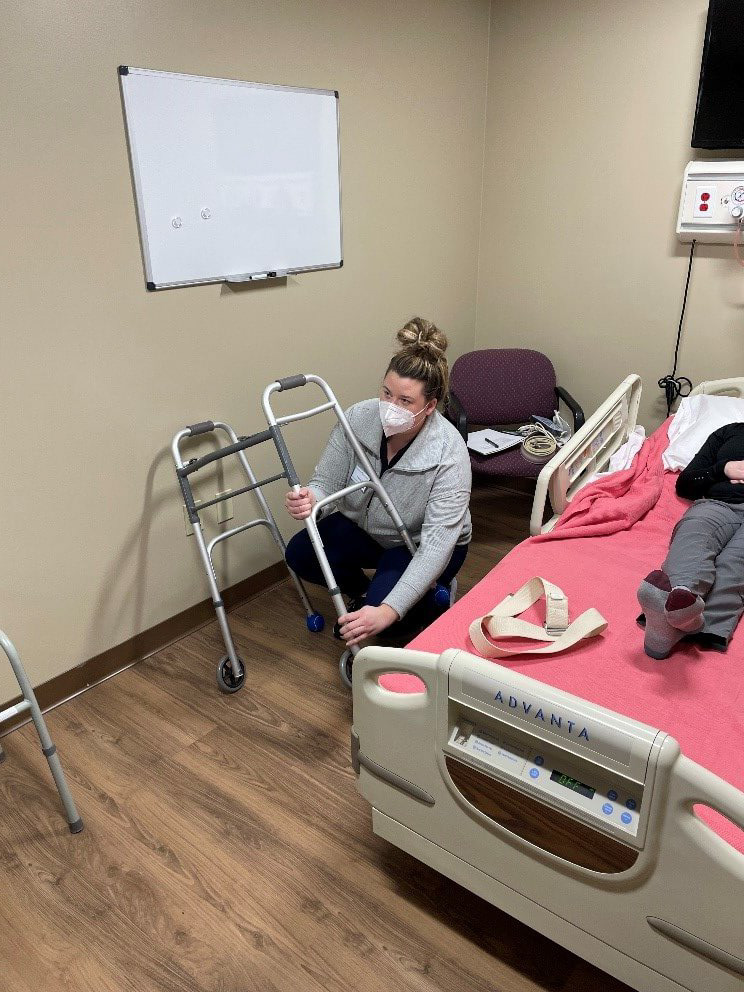
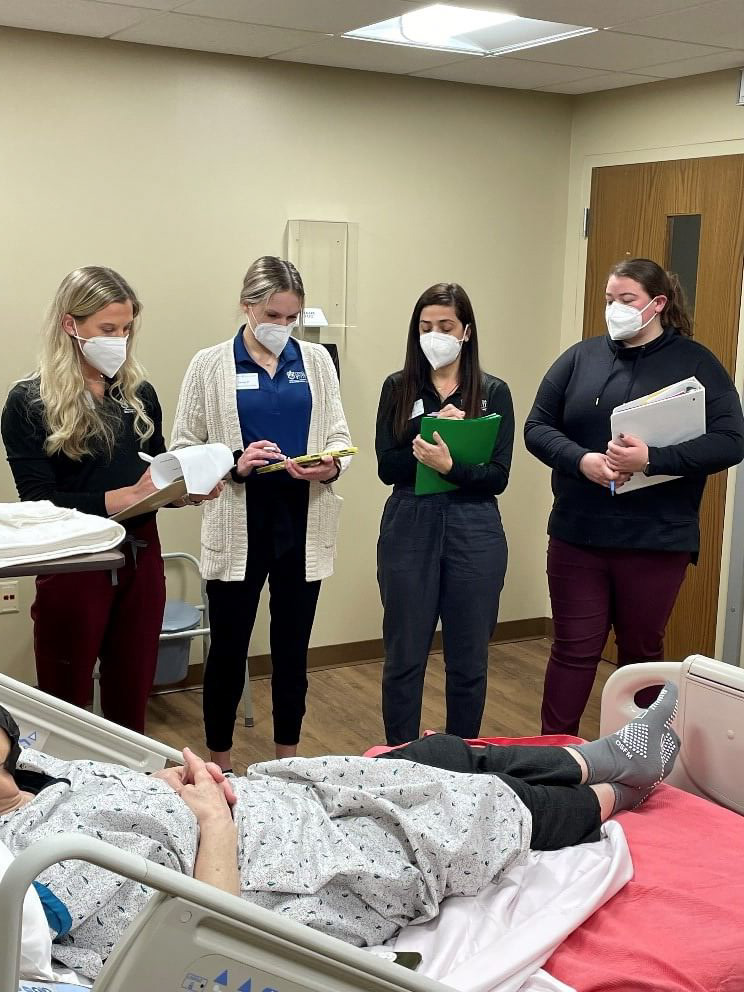
My experience in multiple adult areas of practice provides me the clinical background for teaching in our simulation lab. In January of 2023 we opened our brand-new simulation lab. The new space allows student to experience a “real world” hospital room equipped with hospital beds, vital monitors, medical lines, and chair lifts. The students, often working in pairs, receive the case study prior to lab which allows them to develop a plan. Each week the simulation is designed with a variety of patient diagnoses, vital signs, patient psychosocial factors and is portrayed by a standardized patient actor.

This lab offers students the opportunity to work in real-time on interview skills, provide evidenced-based assessments and interventions. The session is completed with a debriefing session. This is one of the most important parts of the lab. The students participate in the feedback process with faculty and peers. This safe space allows them the opportunity to reflect on what went well and discuss areas of growth. This reflective exercise helps the students improve with communication, therapeutic use of self, and critical thinking skills. The new lab also offers the ability to record the sim session and allows students the ability to review the session at a later time.

As a professor, sim lab allows me to engage with students as we discuss important questions about the patient and OT practice. It is one of the best modalities to teach and assess clinical skills. The lab allows a paper case to come alive.  Where else can you learn and interact with a “patient” a day after a heart surgery? It’s a safe place to learn because regardless of the outcome, everyone including the patient goes home at the end of the session! 

Fall prevention

My two other areas of expertise, fall prevention and interprofessional education, are often combined. People will often ask me, “Why do I care about fall prevention?” My passion for addressing fall prevention comes from a desire to see older adults have an increased quality of life. I hear stories all the time about someone’s relative falling and injuring themselves. The number is too high. It is estimated in the United States that an older adult dies every 20 minutes from a fall and roughly 25-33% of older adults sustain a fall each year, decreasing qualify of life and increasing health care cost (CDC, 2023). In Wisconsin, it is estimated that over 270,000 adults 65 and older fall each year (CDC, 2023). This means my neighbors are having unnecessary injuries from a fall.

Interprofessional education

Evidence-based practice recommends an interprofessional team to address this concern. OT is one of the disciplines uniquely qualified to assess and educate older adults on how to decrease falls in their home and community.

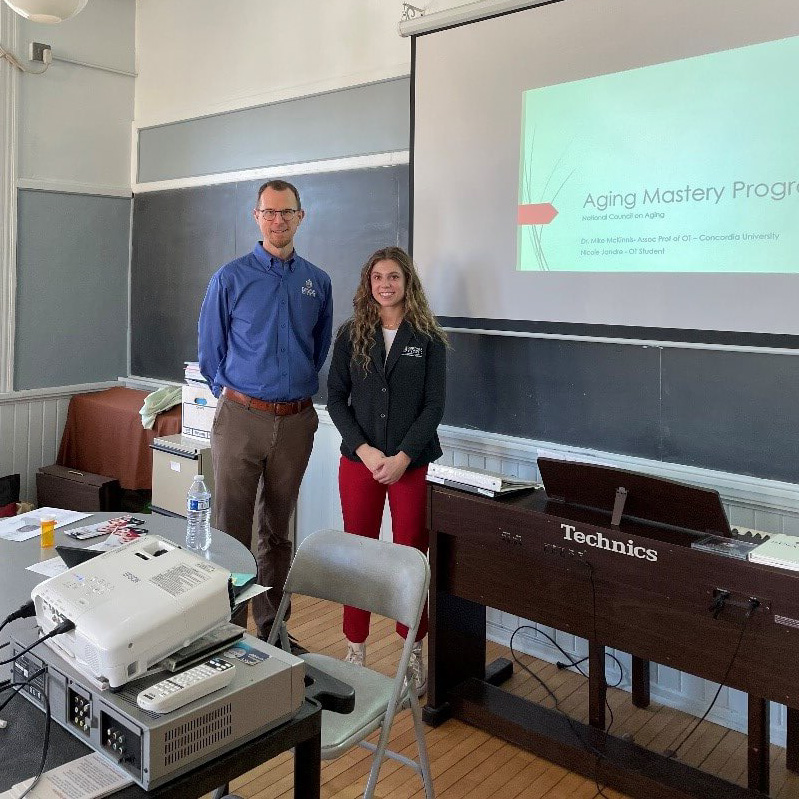
As a leader in falls prevention, I use my skill in this area to help meet our university and OT mission of serving and empowering communities. My desire to serve communities has been put on hold for the last few years due to the global pandemic. I was very happy this year when things began to return to normal. In September of 2022 I was able to connect with older adults as part of Milwaukee County Falls Prevention Coalition (MCFPC) fall prevention event. This spring, I was able to share the updated fall prevention guidelines with Concordia physician assistant students. I was able to connect with the area community by presenting at Stepping On and providing at the fall prevention session for the National Council on Aging (NCOA) Aging Mastery Program.

In addition, I love when I am able to mentor students and bring them along with me to events. Nicole Jandre was able to assist me in giving talks to the physician assistant students and the Aging Mastery Program. During fall prevention week in September of 2023, I will be leading a group of OT students to participate in the MCFPC fall prevention event.  


All about the Doctorate of Education in Leadership in Innovation and Continuous Improvement

With consumer demand ever-evolving in the marketplace, industry leaders are forced to embrace innovation more than ever. 

But there is hope. And it comes in the form of interprofessional collaboration.

To maintain a competitive edge, business leaders and healthcare providers must work together. In fact, those that refuse to collaborate with others don’t stand a chance in the marketplace.

That’s why we created our Doctorate of Education (Ed.D.) in Leadership in Innovation and Continuous Improvement (LICI)—to solve real-world issues. Our goal is to help individuals from various industries work together to tackle issues through the use of innovation and continuous improvement science.  

What is the Doctorate of Education in Leadership?

Collaborative Learning Environment

Our LICI program focuses on interprofessional application. Each cohort is made up of a diverse group of students from business, education, and health professions.

“I think one reason [this program] works at Concordia is that we’re a very collaborative community and we learn from each other,” said Dr. James Pingel, program director and Dean of the School of Education. “We have some great leadership in all our schools—they don’t just talk about collaboration, they live by it.”

The goal is to build a true environment of interprofessional learning. Students get to connect with peers from different industries to solve problems together. They also learn from a range of professors spanning multiple industries.

“They learn from one another,” Dr. Pingel said. “There’s knowledge and skills that each field can learn from one another.”

Creating Real Impact for Learners

Some doctorate programs focus just on leadership development, the study of continuous improvement, or how to be an agent of innovation. However, our Ed.D. combines all three to fully equip students to create a real impact in their careers.

The program has a core of three pillars:

  • Leadership core
  • Innovation and improvement science core
  • Research core

Students also get the chance to customize their experience by choosing between business or education emphasis electives. Throughout the coursework, students can practice everything they learn in either their dissertations or ongoing projects in their workplace.

“It is a project-based philosophy,” Dr. Pingel said. “They need to apply some of the continuous improvement best practices to a project they’re working on at work. Using these practices, they can improve efficiency or enhance their organization. It’s very pragmatic in its approach where [students] will be doing real-world projects, real-world scenarios.”    

A Unique Dissertation Approach

Building off of the project-based mindset of the curriculum, the program also takes a unique approach to the dissertation. Traditional doctorate programs wait to begin the process until students are a few years into the coursework. However, with this program, students begin their dissertation work in the first month. This approach builds on the project-based learning structure, giving students the ability to apply lessons and projects directly to their dissertations.

“We know people are busy, they’re working, but they want to climb the ladder and achieve more wherever they’re at or for some future job,” Dr. Pingel said. “We want this to be a transformational experience for them. One that they can not only apply what they’ve learned but also feel good that they’ve got that diploma in hand.”

Along the way, program participants are encouraged to consider all the theories they learn and projects they complete through the lens of faith.

“We’re very excited that we can offer this program from a Christ-centered perspective,” Pingel said. “We welcome students from all faith backgrounds. But it’s our chance to certainly shed a light, share, and expose people to God’s word in our own noncoercive yet upfront way.”  

Learning in an Online, Asynchronous Environment

We know that earning your doctorate is a true commitment of your time and resources. Therefore, we built our LICI program with the value of flexibility in mind. You’ll have the ability to do asynchronous online learning. From the courses to group discussions and meetings with faculty, you can complete it all online as you pursue your degree.

Asynchronous?  What does that mean?  Asynchronous describes online learning where the course material is continuously present (always there, ready and waiting for you). As a student, you have the convenience of doing your coursework at times that fit your schedule. For asynchronous learning, you can do your online lesson on a weekend morning, or maybe you work better later on weeknights. It’s more focused on meeting your learning needs and the optimal time for you to learn.

Ready to embrace innovation and continuous improvement?

Regardless of the industry you’re in or the title of your position, you can achieve success through the use of innovation and continuous improvement. As Dr. Pingel says, “It’s intense. It’s tough. But it’s worth it.”

If you’ve been trying to figure out what the next step forward is toward accomplishing your career goals, consider this your invitation to explore the Ed.D. program.

This blog was originally published on 12/06/2018. It has been updated to reflect current information.

Concordians featured in special volume of AMA Journal of Ethics

Several faculty and pharmacy students contributed to a special volume of the American Medical Association Journal of Ethics.


The special volume focuses on interprofessional education (IPE) and innovation. CUW Director of Interprofessional Practice & Education Michael Oldani, PhD, MS, served as co-editor.

In addition to Oldani, these Concordians contributed:

  • Associate Professor of Physician Assistant Studies Michael Toppe, DMSc
  • Associate Professor of Pharmacy Practice Anne Graff LaDisa, PharmD
  • Associate Professor of Pharmacy Practice James Lokken, PharmD
  • Pharmacy student T. Lee
  • Pharmacy student E. Mauer

Founded in 1999, the AMA Journal of Ethics is an editorially independent, peer-reviewed journal devoted to helping students and clinicians navigate ethical decisions in service to patients and communities. The free digital journal, which publishes monthly, reaches a vast audience. According to the AMA JOE’s website, in 2022, the journal received more than 3.7 million visits to its website, over 150 thousand PDF downloads, and more than 110 thousand podcast downloads.

A member of the AMA JOE editorial team approached Oldani, who had previously contributed to the journal, about doing the special volume. He reached out to a peer, Erica Chou, who previously served as IPE director at the Medical College of Wisconsin, to serve as co-editor.

Click here or on the image below to view the special edition.

CUW’s Excellence in IPE

IPE at CUW provides opportunities for students enrolled in health and human services programs to learn and train together. The goal is for collaborative learning, where students build their IPE communication skills, knowledge base, and understanding of other health and human service specialties. This skill-building helps students more fully appreciate how IPE in practice positively impacts and nurtures patient-centered care.

Concordia received recognition for its exemplary IPE practices. In 2021, at the completion of Concordia School of Pharmacy’s scheduled accreditation review, the ACPE named CUW SOP one of only five “Noteworthy Examples” of exceptional achievement nationwide for CUW’s work in IPE. At the conclusion of each accreditation review cycle, the ACPE and the American Association of Colleges of Pharmacy (AACP) recognize model programs throughout the nation. CUWSOP was one of only two schools nationwide recognized for exemplary IPE activities.


Learn more

Advocating for Yourself and Your Program

DPT Faculty Kevin Gries shares his experience on promoting his program to politicians and public figures.


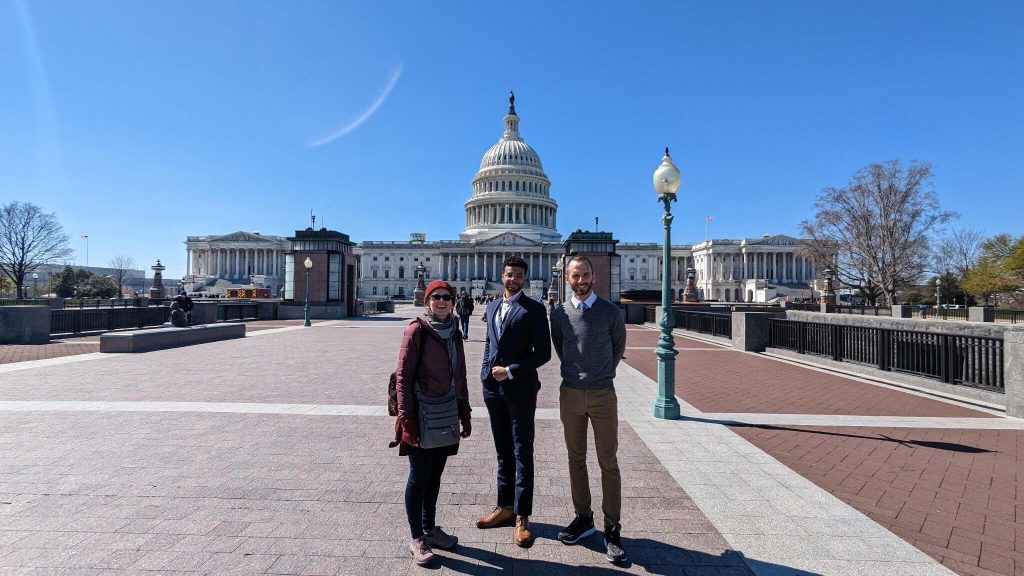
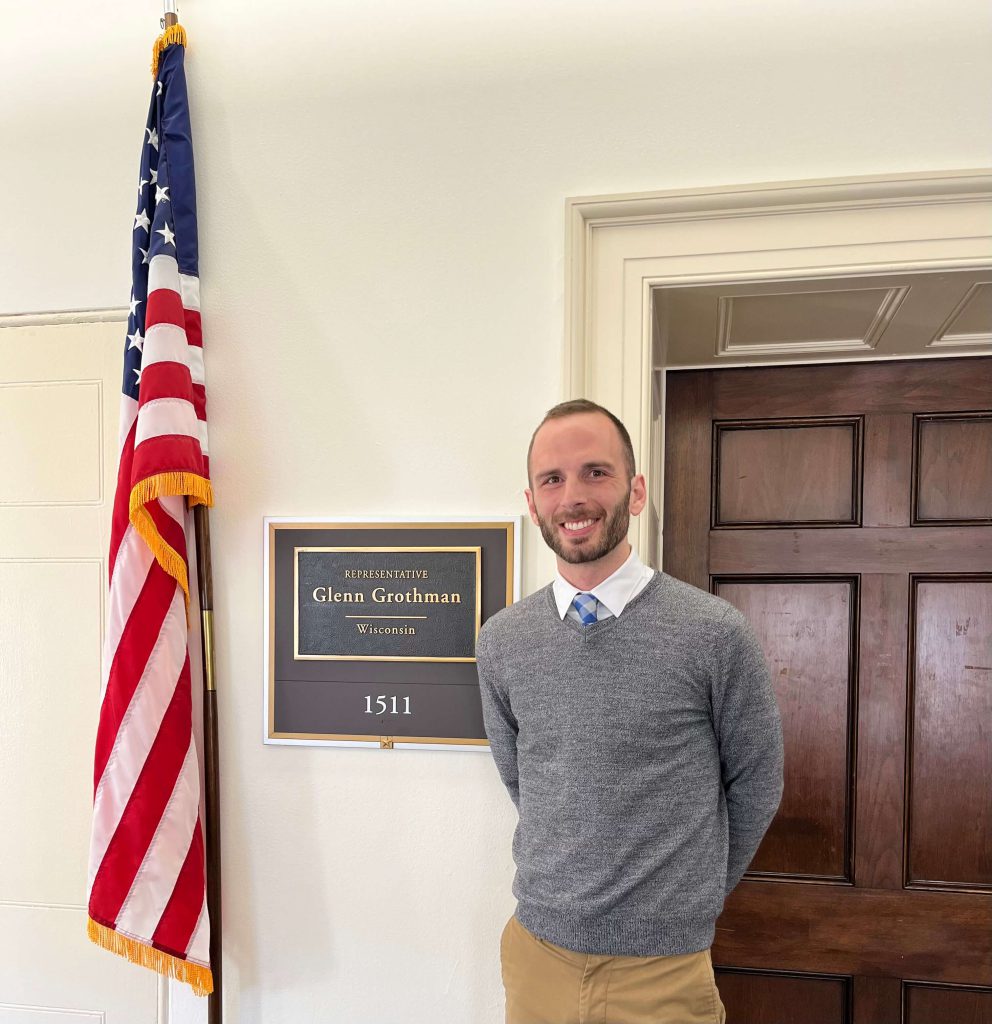
On March 14th, I had the opportunity to discuss scientific funding with federal lawmakers for the Federation of American Societies for Experimental Biology. As I write this blog while waiting for my flight from D.C. back to Milwaukee, I cannot help but think of the importance of advocating for what you believe in. This trip has taught me several things that I wanted to share as well as tips for advocating.

Kevin Gries in front of the US Capitol Building

Government influences our jobs, whether we like it or not

We underestimate how much governmental funding and regulations affect our day to day lives. However, those that are making these decisions are often several steps removed from the challenges we face and therefore misconceptions arise. An example of this occurred in our meetings where we stressed money distributed from the National Institutes of Health (NIH) is distributed based on a peer-review system of scientists across the country and not just officials within the NIH.  This small misunderstanding led to the staffer drastically changing their demeanor on increasing scientific funding. I sit here thinking how many misconceptions may be out there regarding all of our professions that can be fixed by meeting and advocating for your cause with politicians.

Have uncomfortable conversations

I also noticed the need to talk with people who disagree with us. We live in an increasing polarized world in all aspects of life, not just politics. When we disagree with people, we often find ourselves uncomfortable which leads us to find friends who affirm our believes, watch tv stations that only say what we want to say, and follow people on social media who agree with us.

However, it is uncomfortable conversations that make us grow and reflect, and make us think about if our beliefs are truly the right way to act. These conversations also allow us to least learn about “the other side” and see the people as humans rather than simply the opposition. We need to avoid echo chambers. We also need to see that leaders often want to help you, but their means just may be different than what you think. Having this attitude will help us see those we disagree with as still brothers and sisters in Christ.

Kevin Gries talks about how to advocate in DC

Ways to advocate

I am extremely fortunate to be asked to travel to Washington D.C. to advocate for what I believe. So, while this specific trip may not be for everyone, there are ways in which you can advocate for your beliefs:

Focus on your sphere of influence.

This isn’t an attractive piece of advice, but is the most effective. If you want to see good/a change in the world, start with the people you spend the most time with. Be good to your family, friends, neighbors, community, classmates, etc. It does not do any good to take our frustrations on your family based on things far away and that you cannot control.

Meet government officials.

This doesn’t mean travel to Washington D.C. Maybe your state capitol is more reasonable. Several public offices will hold Zoom meetings, which makes talking to your representatives as easy as a phone call. Perhaps you can speak with your representative directly when they visit your district. You can also write letters, use social media, and call their offices. You can make a difference.

Use the power of media.

This can include writing letters to the editors in journals or magazines (be sure to select the source based on your target audience). This can also mean use social media. However, to be an effective advocate on social media, you have to be ready to have your information scrutinized. If you want your opinion to be taken seriously, that means you need to be taken seriously. Clean up your profile before doing this.

Join an advocacy group.

I am a part of several scientific and other advocacy groups based on topics I am passionate about. If you feel uncomfortable speaking your opinion, you can donate to these groups (traveling is not free), or just give moral support by simply being there.

This trip to Washington D.C. is one I plan to make yearly. I enjoy communicating the importance of the scientific process to lawmakers to improve the health of our society. We need to remember the power that we have, no matter what stage of your career you are in (yes, even students), and use that power to improve the lives of those around us, no matter the topic.


Feeling Inspired?

If you want to learn more about becoming a physical therapist, feel free to check out our website.

You can also take a look at our most recent blog posts about A Day in the Life of a Physical Therapy Student or learn about Experiential Learning


  • Dr. Kevin Gries is a professor at CUW in the Physical Therapy department

Personal Statement of Benefits (PSOB) explained

Let’s get down to the nitty gritty and look at your benefits.

Your Personal Statement of Benefits provides a summary of all your benefits in one place. The PSOB shows specifically your:

  • Projected Concordia Retirement Plan pension benefits at normal retirement age.
  • Estimated disability income replacement benefits and life insurance benefits (called “Survivor Benefits”).
  • Reported compensation including the value of your benefits.
  • Other benefit details and enrollment.

Hurry! When the new Member Portal launches in May, the PSOB will not be available right away. Log in to the Member Portal and review your PSOB now. You can even print a copy for your records.

To access your Personal Statement of Benefits

  1. Login to your Concordia Plans portal at https://www.concordiaplans.org/myaccount
  2. Scroll down and click “view now” on the Personal Statement of Benefits box on the main page

Senior art show opening reception set for Friday

The Senior Exhibition is open in the CUW Art Gallery now through May 14. An opening reception is scheduled for Friday, May 5.


Senior students who are majoring in Graphic Design (aka BA in Visual Communication), Interior Architecture & Design, and Art have displayed their work in the Barth Gallery (B109). Work is also on display in the smaller galleries at the intersection of the Loeber, Rincker, and Barth hallways.

Don’t miss this opportunity to see some of the amazing work these talented students have produced.

Show run

April 10 through May 14

Hours

  • Monday-Thursday: 4-8 p.m.
  • Friday & Sunday: 12-4 p.m. (closed Saturday)

Opening Reception

Friday, May 5 | 6-8 p.m.

Senior exhibitors

Elena Cieszki | Art major

From Milwaukee, Wisconsin

I have always loved testing different medias, and never wanted to be confined to just one. Over the years, I have had the most experience with acrylic painting. I also have skills in gouache, watercolor, and oil painting. With my minor in photography, I have more knowledge in Adobe software and digital artwork as well. I am looking forward to growing and diving more deep into my interests to further develop my own personal style throughout my artwork.

I like to create art that captures the beauty in everything that surrounds us. I gain inspiration from my love for nature and traveling, along with faith and passion. I like to take my photography work and create paintings based off images I have captured.

Eleni Dalamangas

Eleni Dalamangas | Interior Architecture & Design major

From Muskego, Wisconsin

Hello, my name is Eleni Dalamangas! Archi-tecture has become a passion of mine from a young age. I aim to create spaces that are not only functional but also visually stunning and emotionally compelling. I believe that architecture has the power to shape our experience of the world and influence how we interact with one another. I am passion-ate about exploring the intersection of form, function, and meaning. Great architecture should tell a story and every element in a space should serve a purpose. I am also motivated by the interplay of light, texture, and color, and strive to create designs that are both timeless and modern.

Whether I am designing a private residence, a commercial building, or a public space, my goal is to create a space that not only meets the practical needs of its occupants but also inspires and uplifts them. The spaces we inhabit should be a reflection of our values and I am dedicated to helping my clients create homes and workspaces that are not only beautiful but also aligned with their unique vision and goals. I hope to help others to see the potential for beauty and meaning in every space, and to create environments that support and nurture the human spirit. I plan to start my career after I graduate in the Spring of 2023.

Anna Kuhnle

Anna Kuhnle | Interior Architecture & Design major

From Waunakee, Wisconsin

Artist Statement: The world around us begins as a blank canvas. As artists, we have the opportu­nity to paint our inner thoughts and ideas onto this canvas to bring it to life. As someone who has been searching for different canvases to paint my entire life, I am constantly locating beauty in the most unexpected places. I design because I am able to take a literal blank canvas and completely transform it into something that is not only functional, but powerful in the sense that it can make the beholder feel something.

Utilizing color is a technique I like to use to evoke emotion. Bright, triadic color schemes can create more energizing spaces while cool, monochromatic schemes can stimulate relaxation. I also like to use more interesting geometries as a way to define space and create not only captivating spaces, but floor plans as well. A lot of my inspiration comes from past styles when designing new spaces. Incorporating the successes of older designs in with newer designs generates a seamless blend of both that creates exciting and unique spaces.

Saul Leon

Saul A. Leon | Graphic Design major

From Twin Lakes, Wisconsin

Artist Statement: Hello, my name is Saul Leon. I was born in Harvard Illinois but was raised in Wisconsin, so I consider it my true home and state. I love Wisconsin because of its cold and snowy winters, the cheese of course, and the Green bay Packers. I come from a Mexican family that is originally from Mexico, making me the 2nd generation in my family and the first generation to receive a higher education.

I want my designs and work to help portray a message and meaning. I want there to be emotion and for the designs to evoke happiness, seriousness, and other emotions so that people who see these designs can understand the business approach. Yes, to create unique, fun, and modern designs, but I don’t want my work to just look cool, fancy, or pretty, I want there to be meaning behind it that the business is trying to portray and build a brand, poster, logo, menu anything that will catch the viewers eyes and tell what the business is trying to portray.

Sage Wojdyla

Sage Wojdyla | Graphic Design major

From Cedarburg, Wisconsin

Artist Statement: Hello! My name is Sage Wojdyla and I am a Graphic Designer based in the greater Milwaukee area. From a young age, I was immersed in a creative environment where art and design were central in everyday life. With a mother who is a lead graphic designer for her company, I was exposed to the world of design from an early age and was fascinated by the work I saw her produce. Drawing and designing became second nature to me, and my passion for the field only grew as I practiced and matured.

As a graphic designer, my work is a reflection of my passion for visual storytelling and communication. I believe that design has the power to shape the world around us. I believe that every project is unique and requires a tailored solution that addresses the specific needs of the client and the audience.

Ultimately, my goal is to create designs that are not only aesthetically pleasing but also impactful and meaningful. I believe it is important to inspire others to think more deeply about design and its role in our world.

14 Frames Gallery

Kelvin Kazibwe | Graphic Design major & Photography minor

From Uganda

Artist Statement: To help establish a means of sharing with the world what we’re about, I photographed individuals, their environments, and the world in an authentic and raw way, elevating the stories we all have. Shared conviction means a lot t me; I want to learn about the people I work with and what they like and dislike. Working together and growing together is easier when you find ways to connect with others.

Time spent with friends, criticism from people I respect, and encouragement from close friends all contribute to my work. Photographing is a beautiful process. Working with others and bringing out the best in them and what they stand for brings me joy. I strive to portray the world in a positive light, be it in my editing or subject matter.


Want in?

Concordia University Wisconsin is pleased to offer students plenty of academic and extracurricular activities in art. Students can express themselves creatively in a variety of ways. Opportunities range from showcasing their work in art gallery exhibitions or on the stage.