Learning that fits your life


Explore continuing education and certificate programs to grow your skills, pursue your interests and make room for what’s next.


Not every educational journey needs to begin with a full degree program. For many adult learners, the right next step is something more focused, more flexible and more immediately connected to personal or professional goals. At Concordia University Wisconsin, continuing education and certificate programs offer exactly that kind of opportunity.

If you are exploring ways to grow in your career, strengthen your skills or pursue meaningful learning, CUW may have an option that fits your life.


Focus on your goals

Adult learners often return to school with clear goals and full schedules. You may be balancing work, family responsibilities, church involvement or community commitments. You may already hold a degree and want to expand your expertise. Or you may be looking to gain practical knowledge without the time and financial investment of a full academic program.

Continuing education and certificate programs allow students to focus on a specific area of growth. Online access makes that process more manageable, allowing students to learn from wherever they are while continuing to meet the demands of daily life.


Build skills for your next step

For many professionals, the goal is to become better equipped for the work they are already doing or the work they hope to do next. Certificate and continuing education programs can provide focused preparation in areas that matter in today’s workplaces.

Whether you are hoping to sharpen your leadership abilities, deepen your understanding of a specialized field or prepare for a career transition, these programs can help you build practical skills. Their narrower scope can be especially appealing to students who want to apply what they learn right away.

CUW’s current course offerings span professional and personal development areas, including business communication, AI analytics, teacher professional development and career training.


Explore what interests you

Not every student is focused primarily on career advancement. Some are drawn by the desire to keep learning, explore a calling or engage more deeply with a personal interest. Concordia recognizes that education can serve many purposes.

Continuing education and certificate programs can also be a meaningful fit for retirees who want to grow intellectually, explore subjects they have long cared about or prepare for volunteer, ministry or service opportunities.

Learning does not have to end when a career changes or concludes. In many cases, that new stage of life creates the freedom to pursue education in a fresh and rewarding way. CUW’s continuing education webinars and mini-courses offer a starting point for curious minds at any stage of life.


Learn with purpose

At CUW, education is about more than gaining information. It is about developing the knowledge, character and sense of purpose that help people serve faithfully in their work and communities. Concordia’s Lutheran Christian identity shapes an approach to learning that values truth, vocation, compassion and service.

For students considering continuing education or certificate programs, this foundation can be especially meaningful. You are investing in your ability to contribute, lead and serve with wisdom and integrity.


Find more options online

Online learning makes it possible to continue your education without relocating or commuting. This flexibility opens doors for working adults, parents, ministry leaders, military-affiliated learners and retirees alike.

CUW also partners with ed2go to offer an expanded catalog of online courses with open enrollment across dozens of professional categories, giving learners more options to find the right fit.


Take the next step

A full degree is a valuable path for many students. Sometimes, though, the next right step is shorter, more focused and better aligned with your current season of life.

If you are curious about which continuing education or certificate program might fit your goals, CUW’s online and graduate admissions team is ready to help. An admissions counselor can answer questions, walk you through available options and help you decide where to start.


Want in?

Concordia University Wisconsin is a Lutheran higher education community committed to helping students develop in mind, body and spirit for service to Christ in the Church and the world.


Degree Works: Your GPS for graduation


As an online student at Concordia University Wisconsin, you want flexibility, but you also need clarity. You need to know how your previous coursework applies, what requirements remain and which classes will keep you moving toward graduation.

That’s where Degree Works comes in.

Degree Works is an online degree-audit tool that gives you a clear view of your academic progress. It shows what you’ve completed, what is currently in progress and what requirements remain. For online students balancing work, family and other responsibilities, having that information in one place can make academic planning easier.


What is Degree Works?

Degree Works compares your completed and in-progress coursework with CUW’s degree requirements. Its easy-to-read worksheet shows how your classes apply to your program and gives you useful information to discuss with your advisor.

It can help answer questions such as:

  • Which requirements have I already completed?
  • How do my transfer credits apply?
  • What courses or credits do I still need?
  • Am I on track for my intended graduation timeline?
  • What should I discuss with my advisor before registering?

Degree Works does not replace your advisor. Instead, it gives you and your advisor a shared starting point for making informed academic plans.


Four areas of your degree audit

When reviewing your progress, focus on four main areas.

1. Completed Courses

These are the classes you’ve already finished, including approved transfer credits and electives. This section can help you see how your previous coursework is being applied toward your degree.

2. In Progress

This section shows the courses you are currently taking and how they fit into your degree requirements. Courses typically do not count as completed until final grades are posted.

3. Still Needed

Think of this as your academic to-do list. It identifies remaining requirements for your major, general education, electives or other areas of your program. This section is especially useful when preparing for registration.

4. Plan Ahead

Planning future terms with your advisor can help you consider course sequencing, prerequisites and your anticipated graduation timeline. Planning ahead also matters because not every course may be offered every term.


Three habits for success

Degree Works is most helpful when you use it regularly. Try building these three habits into your academic routine.

1. Check it every term

Review your audit at the beginning of each term, after adding or dropping classes, after final grades are posted and after transfer credits or substitutions are processed. Regular reviews can help you identify questions early rather than discovering an issue close to graduation.

2. Use it during registration

Before selecting courses, review the “Still Needed” section along with prerequisites, major or minor requirements, general education requirements and the total credits required for graduation. This can help you choose courses that apply toward your degree.

3. Review it with your advisor

Degree Works can help you plan, but it is not the final authority on your degree requirements. If a course appears in the wrong section, a requirement looks incomplete, transfer credit does not seem to apply correctly or something else looks unclear, talk with your advisor. Your advisor can help you interpret the audit and determine your next steps.


Why Degree Works matters for online learners

For adult learners, time matters. Many online students balance career goals, family commitments, military service, ministry and other responsibilities while working toward a degree. Knowing where you stand academically can make planning a little easier.

Degree Works brings much of that information together in one place. You can see how completed coursework and approved transfer credits apply while keeping an eye on the requirements that remain. Combined with regular conversations with your advisor, the tool can help you make informed decisions about registration, course loads and your anticipated graduation timeline.

At CUW, online education is designed for students who need flexibility while pursuing their academic goals. Degree Works is one resource available to help students stay informed and organized throughout their program.


Take the next step

If you’re considering an online program, you can begin by learning more about CUW’s undergraduate and graduate options. Online classes are offered year-round, with many programs featuring two eight-week mini-terms during the spring, summer and fall.

Connect with Concordia University Wisconsin’s admissions team by visiting CUW Online Undergraduate Admissions for undergraduate degrees or CUW Graduate Admissions for master’s degrees and licenses. You can also call 262-243-4300 to learn more.


Want in?

Concordia University Wisconsin is a Lutheran higher education community committed to helping students develop in mind, body and spirit for service to Christ in the Church and the world.


Finish what you started with Concordia online


Your life doesn’t need to fit around your degree. Your degree needs to fit into your life.


Finishing a degree after time away can raise a lot of questions. Will your previous credits transfer? Can you fit classes around work and family? Can you get back into the rhythm of school?

Concordia University Wisconsin online graduates Ashley Eickert and Dalton Stewart came to Concordia under different circumstances, but both needed a path that allowed them to earn their degrees without putting the rest of their lives on hold.

Eickert, a mother of three from Brillion, Wis., returned to school after a career in nursing and recently earned her bachelor’s degree in education. She was nervous about fitting in, keeping up academically and managing school alongside family life and a family business. Those concerns began to ease once she got to know her professors.

Concordia’s team helped Eickert understand which credits would transfer, how they applied to her degree plan and what she still needed to complete.

“They were really intentional about building relationships with me, checking in, and easing my worries,” Eickert said. “They walked me through every step.”

Stewart also had little room in his schedule to spare. The St. Louis-area student is married with two children, works full time and is preparing to enter Concordia Seminary in St. Louis.

With help from Concordia staff and his advisor, Stewart mapped out an ambitious academic plan. He earned a Bachelor of Arts in theological studies with a minor in human resource management while continuing to meet his responsibilities at work, at home and in leadership.

His advice to future students is simple: “Do it.”


Online learning built around your life

Concordia Wisconsin’s online programs are designed for students balancing work, family and other responsibilities. Whether you are working full time, raising a family, serving your community, preparing for a new career or returning to school after time away, you can pursue your degree while remaining present for the other parts of your life.

Eickert said online learning gave her the flexibility she needed at home while finishing her degree. “I could structure my coursework around my family schedule,” she said.

Stewart balanced coursework with a full-time job, raising children and serving in union leadership. Staying engaged and communicating with his professors helped him keep going.

“The sacrifice is great,” Stewart said, “but the reward that you get from those sacrifices far outweighs the sacrifice.”


Support from start to finish

Support can take different forms throughout the process, from transfer credit review and advising to course planning and conversations with professors.

For Eickert, asking questions and trusting the people around her became an important part of the experience. “Concordia truly meets you where you’re at,” she said. “The faculty, the staff, the advisors, they want you to succeed.”

Stewart offers similar advice, especially when life gets busy. “Stay in contact with your professors,” he said. “It doesn’t matter what the situation is.”

What mattered to both was having people to turn to for help as they worked toward graduation.


Ready to finish what you started?

If you have been thinking about finishing your degree, transferring credits or preparing for something new, you do not need to have everything figured out before you begin.

CUW offers online undergraduate and graduate courses year-round, with most programs offering two eight-week terms during the spring, summer and fall.

Take the next step. Connect with Concordia’s admissions team through CUW Online Undergraduate Admissions or CUW Graduate Admissions, or call 262-243-4300.


Want in?

Concordia University Wisconsin is a Lutheran higher education community committed to helping students develop in mind, body and spirit for service to Christ in the Church and the world.


Building a Concordia legacy across five consecutive generations: The Zersen family story


New students at Concordia often have surprising histories, unknown even to them. Aiden Michael Zersen, a new student at CUW, only recently came to understand that his great-great-grandfather, Friedrich (Fred) Zersen, was the first to be educated at Concordia Wisconsin.

The Zersen family’s story is a powerful example of how faith-filled choices can echo across generations.

Fred was the first in the Zersen family ever to study in the United States. His ancestors had never gone past elementary school in Germany, but his father’s courage would change that. Carl Ludwig Zersen, the patriarch, knew he would inherit no land because his older brother held that right.

After being confirmed at St. John’s Lutheran Church in Fischbeck, where he had also been baptized, he set out with a friend named Tegtmeier for America.


A faithful beginning

On the ship, he met Johanna Clausing, whom he ultimately married. Together, they bought land near Russell’s Grove, Ill., and raised a family of seven children.

One day, Pastor Herman Lőssner, from St. Matthew’s Lutheran Church in today’s Hawthorn Woods, Ill., called on the couple and said, “God has blessed you with seven children. One you owe to the Lord”. He was surely thinking of 1 Samuel 1 when Hannah gave her son to Eli at the temple, but it was also a typical recruitment technique used by pastors to help the church prepare men for the ministry.

Carl (now “Charlie” to his friends) and his own “Hannah” decided they would send their second youngest son, a studious type, to Concordia in Milwaukee, a school built on the German Gymnasium model offering ultimately four years of high school and two years of college. The new institution was 10 years old.

So, Fred, his son, enrolled in 1891 with 66 students in a building that still stands on 31st Street, between Highland and State streets. Upon completing his studies, he attended Concordia Seminary in St. Louis, graduating in 1900. His first call sent him to Sikeston, N.D., to be a circuit rider responsible for establishing congregations among German immigrants from Russia. Circuit riders were clergy assigned to travel around specific geographic territories to minister.


Answering the call

After the first year in North Dakota, Fred returned to Illinois to court a young woman he had learned to know years before. A year’s correspondence led to a proposal, and Fred returned to marry Sophie Kirchhoff in August of 1902. They would return together and make a home in the Sikeston prairie parsonage. Carl was their firstborn, and William (Bill) followed a year later.

In 1907, the young family accepted a call to Itasca, Ill., a few miles from where Fred’s parents had married, and they served there for 38 years. Three more sons were born to the couple, and Fred surely remembered how, in his case, “one was owed to the Lord.” Instead, counting their blessings, Fred and Sophie decided to send three of their sons to Concordia Milwaukee.


A legacy tested and strengthened

Carl, the oldest, went first and enrolled in 1917. Bill, his brother, enrolled in 1919 and, after graduating from Concordia Seminary, was sent to Kelowna, B.C., in 1930. Ottomar (Otti) enrolled in 1922 but was only a student for a year before he succumbed to a diphtheria epidemic in Milwaukee. In June 1923, he was the first student in the school’s history to die on the campus.

Bill died of encephalitis in 1938 after eight years of service in British Columbia. That left Carl, who, after graduating from Concordia in 1923, went to the Milwaukee School of Engineering on the recommendation of renowned scientist Charles Steinmetz, and graduated in 1927. He would become a pioneer in the lighting industry, known throughout the U.S. as “Mr. Light.”

Carl married Alma Selle in 1935, and they had two children, David and Kathryn. With two Lutheran pastor grandfathers, David considered joining his friend at Concordia in 1956, but instead went to Valparaiso University and Concordia Theological Seminary, becoming a pastor in 1964. In 1966, he married Julie Schmid, and they served three parishes in Northern Illinois—Midlothian, St. Charles, and Itasca—for 20 years. They have two children, Kristin and Rolf.

David was hired in 1987 by then-university president, Dr. John Buuck, to become the dean of Adult and Continuing Education at Concordia, now Concordia University Wisconsin.

Concordia’s focus had changed in 1965 when it no longer provided just ministerial training. It became co-educational and offered courses to men and women in education and business.

An additional direction for the growing campus, which had moved to Mequon in 1983, began with the development of degree completion programs in seven cities.

David developed these programs, and his wife, Julie, became director of Continuing Education at Concordia in 1990. After seven years at Concordia, David and Julie moved to Austin, Texas, where in 1994, David became president of Concordia University Texas, serving there for an additional seven years.


The next generation

Rolf enrolled at Concordia in 1993, when the university had begun to offer new programs, including nursing and computer science. Unlike his great-grandfather, he could choose from numerous majors.

He decided to major in Broad Field Social Studies and to play soccer for Concordia, graduating in 1997. After teaching at Milwaukee Lutheran High School for 14 years, Rolf became head of the Women’s Soccer Program at Milwaukee School of Engineering in 2004. He served there as associate athletic director and earned an MBA.

Rolf married Leslie Verthein, and they have two children, Olivia and Aiden. Rolf continues to work at MSOE, now in his 25th year, having won more than 200 college games, four NACC Conference championships, three NACC Conference tournament championships, and four NCAA appearances.

Aiden enrolled at Concordia in 2026 after graduating from Hamilton High School in Sussex. Wis. Unlike his great-great-grandfather, Fred, he can now choose from the 70 majors available to all students. Given that he played soccer throughout high school, he plans to follow his father’s lead and play soccer at Concordia while earning a degree in business.  

135 years have passed since the first of the five Zersen generations became involved with Concordia in 1891. Concordia has undergone significant changes over the years, but continues to attract students from the Lutheran community, as well as those seeking to grow as Christian leaders in the world.

As time goes by, the Zersen family reflects positively on the gifts they have received from Concordia, knowing that other families may also wish to explore the blessings that come from a long-term commitment to an institution like Concordia.


man in suit with gray hair

David Zersen

This story was written by Dr. David Zersen, who worked at Concordia University Wisconsin as the dean of Adult and Continuing Education in the 1980s and 1990s. He was hired in 1987 by then-university president, Dr. John Buuck. David adds to the Zersen legacy through his involvement at Concordia, continuing a family connection to the university that now spans five consecutive generations.


Want in?

Concordia University Wisconsin is a Lutheran higher education community committed to helping students develop in mind, body and spirit for service to Christ in the Church and the world.


Online learning that works for real life

From mobile-friendly access to personalized feedback, Canvas gives online learners the tools they need to succeed on their schedule.


When you’re a working adult exploring online programs, you’re not just asking, “What will I learn?” You’re also asking, “Can I realistically manage this with everything else in my life?”

Canvas—the university’s learning management system—is a big part of the answer. Canvas is the online hub where you access your courses, connect with instructors and classmates, submit assignments, and track your progress. It’s designed to support real people with real responsibilities, not just full-time students with empty calendars.

Natalie Upson, PhD, director of online learning in the Center for Excellence in Learning and Teaching, says, “Over the past year, students and faculty alike have enjoyed using Canvas because of its intuitive design and focus on creating a positive student experience.”

Here’s how Canvas helps make the CUW online experience clearer, more flexible and more student-friendly from your first login to graduation.


Clear course design means less guesswork, more learning

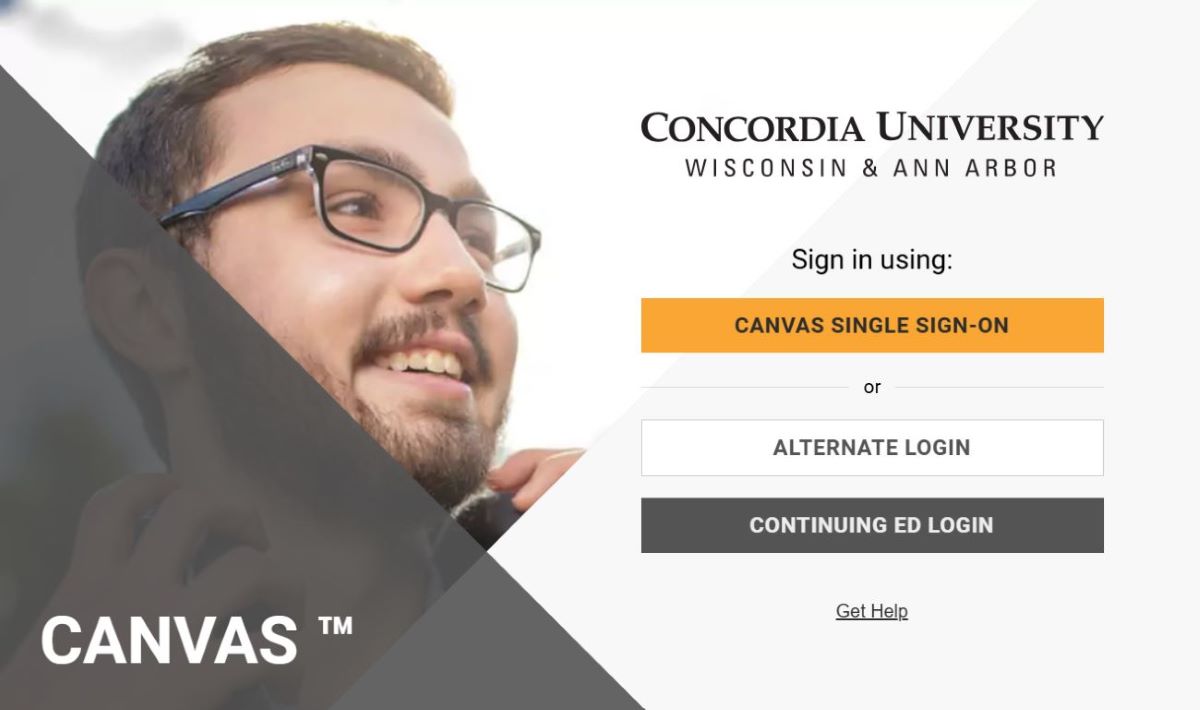
screenshot of Canvas

When you log into Canvas at CUW, you don’t have to dig through email chains and scattered links to figure out what to do next. Most courses are organized, with many others being redesigned, into modules that guide you step by step.

  • Modules organize your learning. Courses are broken into weekly or thematic units so you can see readings, videos, discussions and assignments in one place.
  • Clear instructions and due dates. Each activity includes directions, expectations, and a due date to help you plan ahead.
  • Consistent layout across courses. Most CUW online courses follow similar structures in Canvas, so once you learn your way around one course, you’ll feel at home in the others.

This clarity reduces stress and uncertainty. You can quickly answer questions such as, “What should I be working on this week?” and “How does this assignment fit into the bigger picture?” Then you can focus on learning.


Mobile-friendly learning for real-life schedules

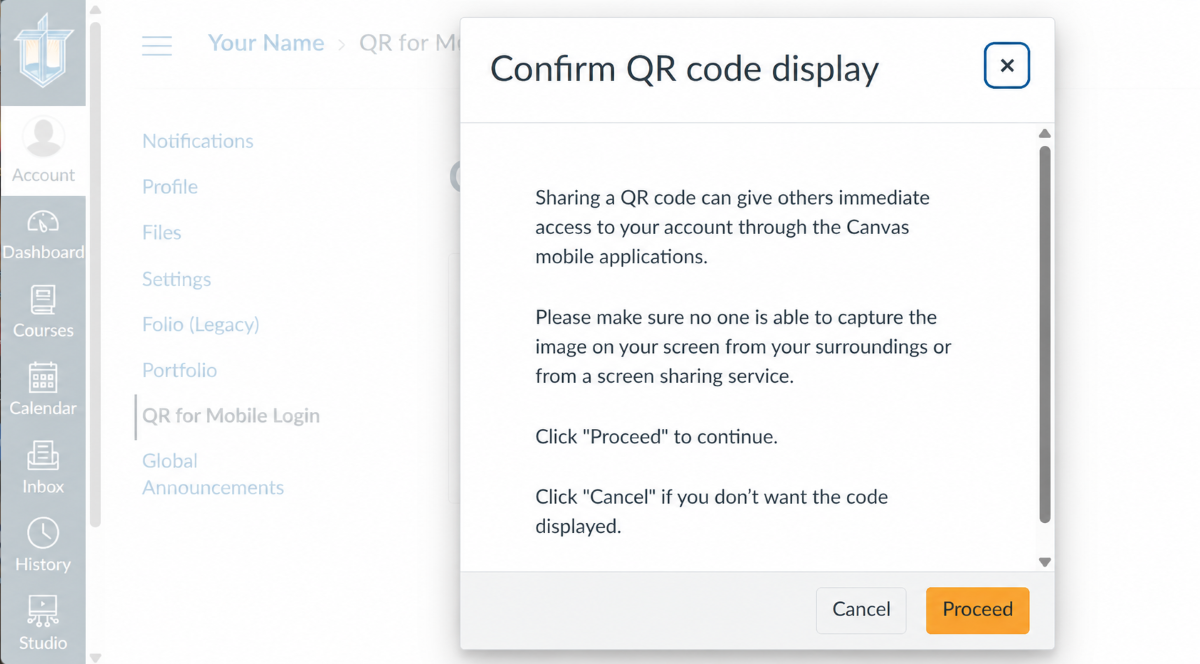
screenshot example of QR code access
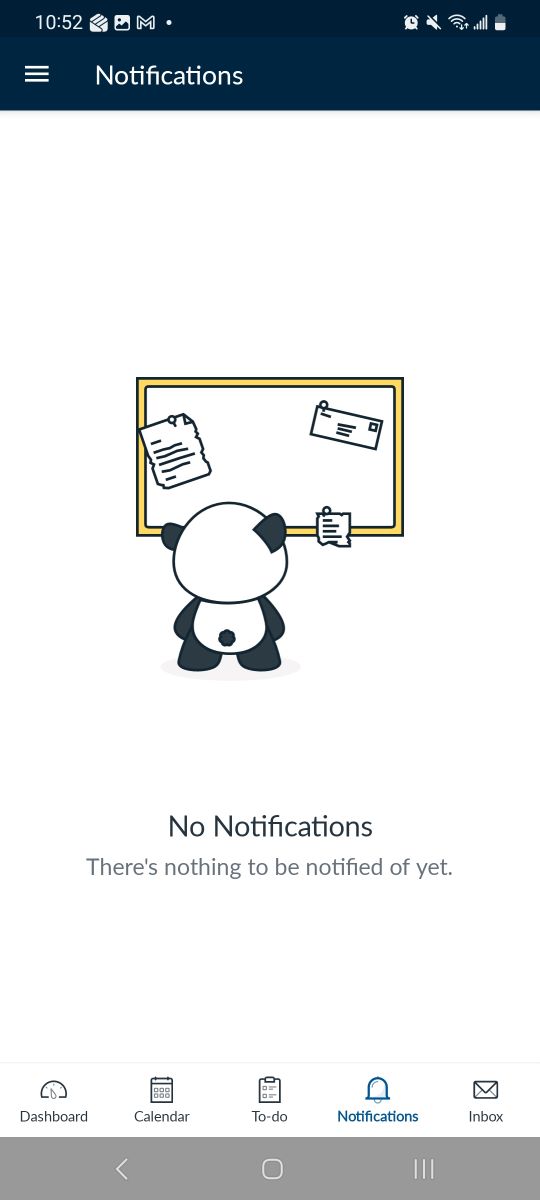
screenshot of Canvas phone app

For many online students, learning happens between shifts, after the kids are in bed or during a lunch break. Canvas supports that kind of real-life schedule.

  • Canvas student app. Review content, check announcements, participate in discussions, and view grades from your phone or tablet.
  • On-the-go notifications. Choose push notifications for new grades, due date changes and instructor announcements so you’re never caught off guard.
  • Learn in short bursts. Waiting for an appointment? You can watch a recorded lecture, contribute to a discussion or review course materials from your mobile device.

Instead of requiring you to be at a desk at a specific time, Canvas helps you make progress whenever your schedule allows.


Fast, helpful feedback that keeps you moving forward

Feedback is one of the most important parts of learning, especially online, where you’re not in a physical classroom. Canvas makes feedback easier to access and act on.

  • Centralized gradebook. View grades, instructor comments, and your overall standing in each course at a glance.
  • Detailed comments and rubrics. Many instructors use rubrics and online comments so you know what you did well and where you can improve.
  • Multiple feedback formats. Instructors can leave text, audio or video feedback, creating a more personal learning experience.

Rather than waiting until the end of a unit to understand your progress, you receive ongoing feedback that helps you make adjustments while there’s still time to improve.


Inclusive access for every learner

CUW is committed to creating a learning environment where all students can participate fully. Canvas supports that commitment through accessibility features and inclusive course design.

  • Screen reader-friendly layouts. Canvas works with assistive technologies used by students with visual impairments.
  • Captioned and downloadable content. Many courses include captioned videos and downloadable resources that support different learning preferences.
  • Flexible formats. Instructors can offer content through text, video and interactive activities, allowing students to engage in ways that fit their learning styles.

Upson says, “To better support all learners, CUW has integrated Pope Tech into Canvas. This accessibility tool allows students to instantly convert Canvas pages and course documents into alternative formats, including Braille, MP3 audio, Word and PDF files. Whether you have specific learning needs or simply want to study on the go, Pope Tech helps you access course materials in the format that works best for your learning style and schedule.”

If you need accommodations—or simply prefer learning in a particular way—Canvas helps create a more accessible learning experience.


A sense of community, even at a distance

Online learning shouldn’t feel isolating. Canvas includes built-in tools that help you connect with your peers and instructors, not just course content.

  • Discussions that feel like real conversations. Participate in text-based and multimedia discussions where classmates share experiences, ask questions, and respond to one another.
  • Announcements and messaging. Instructors use announcements to share updates, and the Canvas Inbox allows direct communication with instructors and classmates.
  • Group work and peer review. Many courses use collaboration and peer-review tools that help students practice workplace-ready communication skills.

These tools support CUW’s mission of providing a caring, Christ-centered community, even when students and faculty are spread across time zones.

Upson adds, “Every course at CUW includes a dedicated Pray & Chat discussion board, creating space for students to connect spiritually with their peers. Students can post prayer requests, share praise reports and lift up classmates in prayer, fostering a supportive faith community within each course.”


3 tips to get the most from Canvas

screenshot of notifications

If you decide to enroll in a CUW online program, a few simple habits can help you make the most of Canvas from day one.

1. Customize your notifications

Spend a few minutes adjusting your notification settings so you receive alerts about grades, announcements, and due date changes in the way that works best for you—email, push notifications or both.

2. Make the calendar your home base

Check the Canvas Calendar at the start of each week and add important dates to your personal calendar. Seeing all your course deadlines in one place can make it easier to balance school, work and family commitments.

3. Use the mobile app intentionally

The app is perfect for quick check-ins, discussion participation and short readings. For longer tasks, such as writing major papers or taking exams, use a laptop or desktop whenever possible for the best experience.

These small habits can help you stay organized and feel more in control throughout the term.

CUW’s online undergraduate and graduate classes are offered year-round, with students beginning courses in two eight-week mini-terms during the spring, summer and fall semesters for most programs.

Take the next step and connect with Concordia University’s admissions team by visiting CUW Online Undergraduate Admissions for undergraduate degrees or CUW Graduate Admissions for master’s degrees and licensure programs, or call 262-243-4300.


Want in?

Concordia University Wisconsin is a Lutheran higher education community committed to helping students develop in mind, body and spirit for service to Christ in the Church and the world.

Concordia marks World Psychology Day with student research symposium

Senior psychology majors present research shaped by faith, service and academic study.


Concordia University Wisconsin will host its annual Arts & Sciences Research Symposium Thursday, April 23, in the Terrace Room from noon to 1 p.m. The symposium coincides with World Psychology Day, a time to recognize psychologists and their contributions to global challenges and mental health awareness. The campus community is invited to engage with student research across disciplines.

Rooted in Concordia’s Christ-centered mission, the study of human behavior reflects a shared commitment among students and faculty to serve others with compassion, integrity and purpose.

That calling is especially visible within the Bachelor of Arts in Psychology program, one of the university’s largest majors. Students enter the program with a desire to better understand others and to serve their communities. CUW’s program blends academic study with experiential learning to prepare students to engage thoughtfully with a range of human experiences.


Purposeful research

At this year’s symposium, 11 senior psychology students will present independent research projects developed over the course of the academic year. Each project reflects careful study and a focus on questions that connect to real-world concerns.

Topics include social media’s influence on academic self-efficacy, a weeklong cognitive behavioral intervention among female CUW athletes, and mental health considerations for children with dyslexia. Additional research examines the relationship between religious participation and coping strategies among Concordia students.

For Autumn Snow, a senior psychology major, research became a way to connect her academic work with her personal experience as a student-athlete. Her project explored how cognitive behavioral techniques can help reduce performance anxiety among female collegiate athletes. She said the experience deepened her understanding of how psychology can support others in meaningful ways.

“Through Concordia’s program, I’ve been challenged academically and encouraged to grow as a person,” Snow said. “My professors have invested in me in ways that have shaped both my character and my purpose. This experience strengthened my desire to pursue a career as a therapist, where I hope to support others in their mental well-being.”


Preparing students

Faculty design the research process to prepare students for what comes next, both academically and professionally.

“Our psychology seniors have worked incredibly hard over the last year to develop scientific studies that have real-world impact,” said Sthephany Escandell, assistant professor of psychology. “As their research faculty, I am very proud of their accomplishments. The skills they have learned through this process will easily translate to graduate school, the workforce, and their lives as informed research consumers and producers.”

The symposium will feature more than 40 projects from across the School of Arts and Sciences. While topics vary, each presentation reflects a shared commitment to careful study and meaningful application.

“Concordia University Wisconsin’s psychology department is committed to providing all majors with meaningful experiential learning opportunities, such as engaging in independent research and collecting original data,” said Dr. Rachel Pickett, professor of psychology and department chair. “These experiences not only help students grow in their ability to apply the concepts that they learn in the classroom; they also make them competitive candidates for jobs and graduate programs.”

“We are grateful for the dedicated faculty and students in the Department of Psychology who continue to use their God-given gifts to make a meaningful difference in the world,” said Escandell. “Happy World Psychology Day!”

World Psychology Day at Concordia highlights both celebration and purpose. It affirms the value of studying human behavior with care and points to the responsibility that follows. Students pursue this work with intention, seeking to understand others and serve where they are called.

Sthephany Escandell, assistant professor of psychology and senior research faculty advisor, contributed to this article.


Want in?

Concordia University Wisconsin is a Lutheran higher education community committed to helping students develop in mind, body and spirit for service to Christ in the Church and the world.

Finding the right online program

Six practical steps to help you choose an online program aligned with your strengths and calling.


Choosing an online degree program can feel overwhelming, especially if you know you want to continue your education but are unsure which path fits your personality, interests and God-given strengths. At CUW, we believe education is not simply about earning a credential. It is about discovering your vocation and preparing to serve Christ in the Church and the world.

If you are uncertain where to begin, here are six practical steps to help you discern the right online program for you.


No. 1: Start with your strengths

Every student brings unique gifts. Some thrive in analytical environments. Others are energized by helping people, leading teams or creating new ideas.

Ask yourself:
• Do I enjoy solving complex problems and working with data?
• Do I feel most fulfilled when I am caring for or guiding others?
• Am I motivated by organization, leadership and strategy?
• Do I enjoy creative expression, communication or storytelling?

Your natural strengths often point toward areas where you will both succeed academically and feel professionally fulfilled.

For example:
• Strong communicators and relationship builders often flourish in education, leadership, business or human services.
• Detail-oriented and analytical thinkers may find success in business, analytics, technology or health-related fields.
• Compassion-driven individuals may feel called to nursing, social work, counseling or ministry-related programs.

The key is alignment. When your studies connect with how God has wired you, your motivation and resilience increase.


No. 2: Consider how you like to work

Online learning offers flexibility, but programs still differ in structure and expectations.

Think about:
• Do I prefer structured schedules or independent pacing?
• Am I comfortable with technology and digital communication?
• Do I enjoy discussion and collaboration, even in virtual settings?
• How much time can I realistically dedicate each week?

Some programs require field experience or licensure components. Others are more research-based or project-driven. Understanding your preferred working style helps you choose a program that supports—not frustrates—your learning habits.


No. 3: Reflect on your long-term goals

Sometimes clarity comes not from personality, but from purpose.

Ask:
• Where do I see myself in five or 10 years?
• Do I want to advance in my current field or pivot to something new?
• Am I seeking leadership opportunities?
• Do I feel called to serve in a particular way?

At Concordia, we often talk about vocation—the place where your gifts meet the world’s needs. An online program should not just prepare you for a job, but for meaningful impact.

If your goal is classroom leadership, an education degree may be the right fit. If you feel drawn to organizational growth and strategic thinking, a business or leadership program could be a strong choice. If your heart is in serving vulnerable populations, health professions or social work may align well.


No. 4: Evaluate support systems

Success in an online program is not a solo effort. Strong support makes a meaningful difference.

Look for programs that provide:

• Dedicated academic advisors
• Accessible and engaged faculty
• Clear pathways for licensure or certification, if required
• Academic support services designed for online learners

Online students are supported holistically—mind, body and spirit. Advisors, program directors, and student support teams walk alongside you from admission through graduation.

Choosing a program means choosing a community.


No. 5: Pray and seek wise counsel

As a Lutheran university, we believe discernment is both practical and spiritual. Prayerfully consider your options. Seek input from trusted mentors, pastors, family members and colleagues who know your strengths.

God has uniquely gifted you. Education is one of the tools He uses to shape your service.


No. 6: Take the next step—even if it’s small

You do not need to have every detail figured out today. Often, the best next step is a conversation.

Speak with an admissions counselor. Review program descriptions. Ask about career outcomes. Share your questions openly. These conversations can bring clarity.

Remember: Choosing a degree is not about finding the “perfect” program. It is about finding the right next step in your growth.


You were created for more

Online education offers flexibility, but it should still be transformational. The right program will challenge you, strengthen you, and prepare you to lead a life of purpose and service.

If you are unsure where to begin, that is OK. Discernment is part of the process. With reflection, prayer, and guidance, you will find a path that aligns with your strengths and your calling.

And when you do, you will not walk it alone.


Want in?

Concordia University Wisconsin is a Lutheran higher education community committed to helping students develop in mind, body and spirit for service to Christ in the Church and the world.

CUW’s online undergraduate and graduate classes are offered year-round. Students begin courses in two eight-week terms during the spring, summer and fall for most programs. Take the next step by connecting with Concordia University’s admissions team. Visit CUW Online Undergraduate Admissions for undergraduate degrees or CUW Graduate Admissions for master’s degrees and licensure programs, or call 262-243-4300.


Preparing students to lead wisely in an age of artificial intelligence

Concordia University Wisconsin prepares graduates to use AI responsibly — and lead with purpose.


Artificial intelligence is reshaping how we work, communicate, teach, heal and serve. From data analysis and classroom instruction to health care delivery and organizational leadership, AI tools are becoming part of everyday professional life. At CUW, online programs intentionally prepare students to use AI responsibly — not only to use these tools, but also to do so thoughtfully, ethically, and in service to others.

“We are moving beyond proficiency to teaching true discernment,” said Dr. Rachel Ware Carlton, dean of the School of Arts and Sciences. “We want graduates who know when AI helps, and when stepping back protects learning, preserves dignity and builds trust.”


Business and leadership

Across CUW’s online business and leadership programs, students are introduced to data-informed thinking and emerging technologies that support strategic decision-making. AI-assisted tools are explored as ways to analyze trends, improve efficiency and support organizational goals, while still prioritizing human leadership, ethical responsibility and accountability.

Students learn to ask important questions alongside technical ones: What does this data mean? Who does it serve? How do leaders remain responsible for decisions when technology is involved? This approach prepares graduates to lead organizations with both competence and conscience.


Education

CUW’s online education programs prepare teachers and educational leaders to navigate classroom environments increasingly shaped by technology, including AI-supported learning tools. Rather than focusing on automation, these programs emphasize instructional design, critical thinking and the responsible integration of technology to support student learning.

Future educators are encouraged to evaluate digital tools carefully, use them to enhance — not replace — sound pedagogy, and remain attentive to the dignity and individuality of every learner. This preparation equips graduates to guide students thoughtfully in a world where AI will be part of the educational experience.


Health and human services

In health-related and human services programs offered online, students engage with the growing role of technology in professional practice. Discussions around AI often center on its potential to assist with assessment, documentation, communication and research, while reinforcing the irreplaceable value of human presence, ethical judgment and compassionate care.

Concordia’s Christ-centered approach helps students reflect on how emerging technologies can support, rather than diminish, service to patients, families and communities.


Theology and ethics

A distinctive strength of Concordia’s online programs is their integration of faith and learning. As AI raises new ethical and philosophical questions, students are invited to reflect on what it means to be human, how vocation shapes the use of technology, and how Christians are called to act responsibly in a rapidly changing world.

Rather than offering simple answers, CUW equips students with a framework for discernment — one that draws on Scripture, Lutheran theology and ethical reasoning to engage complex challenges with clarity and humility.


BoodleBox

boodlebox image and QR code

To further support students as they learn to navigate AI responsibly, the university has introduced BoodleBox as a new resource for student learning. BoodleBox provides a structured environment where students can engage with AI tools as part of their coursework, guided by faculty and grounded in academic integrity.

Rather than leaving students to experiment with AI independently or without context, BoodleBox integrates emerging technologies into the learning process in a thoughtful and transparent way. Students are encouraged to use AI to support research, drafting, analysis and problem-solving, while continuing to develop their own critical thinking, judgment and professional voice.

This approach reflects a commitment to formation as much as innovation. By providing clear expectations, ethical guardrails and faculty oversight, BoodleBox helps students understand how to use AI appropriately, when it is helpful, and why human responsibility and discernment remain essential.

As part of the online learning environment, BoodleBox supports the broader goal of preparing graduates who are not only technologically capable, but also wise, reflective and ready to serve. In a rapidly changing digital world, students are equipped to lead with confidence, integrity and faith.


Technology and vocation

“At Concordia, we approach AI through the lens of vocation and service,” Ware Carlton added. “Ethical AI use reflects Christian freedom rightly understood — the discipline to use powerful tools for the good of others, and the wisdom to step back when their use diminishes human dignity or thoughtful engagement.”

As technology continues to evolve, CUW remains focused on what does not change: the formation of thoughtful, capable and compassionate professionals who understand their work as a calling.


Want in?

Concordia University Wisconsin is a Lutheran higher education community committed to helping students develop in mind, body and spirit for service to Christ in the Church and the world. CUW’s online undergraduate and graduate classes are offered year-round, with students beginning courses in two eight-week mini-terms during the spring, summer and fall for most programs. Connect with the admissions team by visiting Online Undergraduate Admissions for undergraduate degrees or Graduate Admissions for master’s degrees and licenses, or by calling 262-243-4300.

Lent: Abounding in grace for the struggle against sin

“God is able to make all grace abound to you, so that having all sufficiency in all things at all times, you may abound in every good work.” – 2 Corinthians 9:8


Dear brothers and sisters in Christ, the Lenten season is right around the corner — soon, the Epiphany season will give way to Lent. The paraments on the altar and the stoles on the pastors will be violet. In our Sunday services we will take a fast from the singing of the Hymn of Praise and we will also refrain from speaking and singing “Alleluia” until Easter. An exception to this fast is during funerals, as every Christian funeral is a celebration of Jesus’ resurrection from the dead and his victory over the grave!

There are other changes that happen during Lent, too; changes for you!  Consider for yourself the habits you have in your own life, and assess whether they are good or bad. In light of God’s Word and the Ten Commandments, examine your conscience. What habits need to be broken? What habits could you take up that would be beneficial? This is a useful exercise, and many Christians engage in fasting of some kind during the Lenten season as a means of focusing on Christ and fighting against sin and sinfulness. St. Paul in Romans reminds us that, “We were buried therefore with him by baptism into death, in order that, just as Christ was raised from the dead by the glory of the Father, we too might walk in newness of life.”


Struggle against sin

“But…old habits die hard!” you might think. Indeed, they can be persistent, and temptations will resurface, but the struggle against sin is probably even more difficult than you might imagine. In the war against sinful habits, you are struggling not only with the weakness of your own flesh, but also with the temptations of the world and the works and ways of the devil!  Without the gifts of God, replacing sinful habits would be entirely impossible! Thanks be to God, therefore, that he has not left us to wage this war by ourselves, but is with us and helps us in our struggles.

At church you will find fellow Christians who are waging the same battles, praying, and hoping, and who will support you, too! Everyone in the church struggles with sin. I know I do. No one has their own righteousness; our only righteousness comes from Christ! So, spend time with your fellow Christians; go to church as much as you can, for your brothers and sisters in Christ are your companions along the way! In short, God our Father has provided us with everything that we need for this struggle, and he will keep us by grace, through faith, into eternity! To him be all the glory, forever and ever!

Written by Concordia University Wisconsin’s campus pastor, Rev. Jonathon Bakker.

The Imposition of Ashes will be observed on Ash Wednesday during the regularly scheduled chapel time at 9:30 a.m.


Want in?

Concordia University Wisconsin is a Lutheran higher education community committed to helping students develop in mind, body and spirit for service to Christ in the Church and the world.


Lifelong learning, elevated: The Platinum Speaker Series at Newcastle Place

A yearlong partnership between Concordia University Continuing Education Studies and Newcastle Place brings thoughtful learning opportunities to lifelong learners.


At Concordia University, Continuing Education Studies, we treasure lifelong learning as a meaningful way to remain curious, engaged and connected at every stage of life. That commitment is reflected in the Platinum Speaker Series, a yearlong lecture series developed in partnership with Newcastle Place, a senior living community dedicated to whole-person wellness and connection.

The Platinum Speaker Series features one-hour presentations led by Concordia University faculty and subject-matter experts, offering thoughtful and accessible exploration of topics that speak to intellectual curiosity, personal growth, faith, wellness and creativity. The series kicked off with The Healing Power of Animal-Assisted Therapy, setting the foundation for a year focused on enrichment, reflection and shared learning.

“We are thrilled to partner with Newcastle Place and create this speaker series for residents who continue to be curious and are interested in learning something new,” said Sarah Pecor, director of Continuing Education Studies.

Dr. Lois Harrison, associate professor in the Rehabilitation Science program, led the opening presentation, and said the session fostered both engagement and connection among attendees. “The residents asked great questions and contributed to a lively discussion about the role animals play in our lives,” Harrison said. “They appreciated learning how animals can be incorporated into human care — and, of course, they loved interacting with Runner.”

Runner, one of Concordia’s comfort dogs, attended the presentation alongside his handler, Katherine Giannetti, adding a meaningful and personal element to the conversation.

The partnership has been equally meaningful for Newcastle Place and its residents.

“We genuinely cherish our partnership and collaboration with CUW across many meaningful areas, including academic speakers, theatrical performances and athletic events,” said Kim “Kiki” Hoenick, lifestyle supervisor at Newcastle Place. “Our relationship with CUW enriches the lives of our residents in countless ways, and we look forward to continuing this wonderful connection for years to come.”


A diverse lineup of topics

The Platinum Speaker Series honors the depth of experience and wide-ranging interests of lifelong learners. Topics throughout the year include:

The Healing Power of Animal-Assisted Therapy
Exploring how relationships with animals can support emotional, physical and mental well-being.

Exercise and Aging: How They Impact Muscular, Skeletal and Heart Health
Examining the role of movement in maintaining strength, mobility and cardiovascular health.

Jesus in the Old Testament
A reflective exploration of biblical connections that deepen understanding of Scripture and faith.

Quantum Computing Is Cool and Fun!
An approachable introduction to emerging technology and its growing influence on our world.

How People Develop Musical Preferences
Insight into the psychology and life experiences that influence which music we enjoy.

Homemade Hobbies: Winemaking 101
A practical look at the art and science of winemaking as a creative, hands-on pursuit.

Lessons Learned: From Baseball to the Bluff
Connecting timeless lessons with modern cultural and financial topics.

Crypto!
An exploration of the future of finance and how digital currencies are reshaping transactions, investments and technology.

Artificial Intelligence for Seniors
A clear and relevant overview of how AI is shaping everyday life.

The Power of Gratefulness and Its Effects on Mental Health
Exploring how gratitude can strengthen emotional well-being and resilience.


Learning that enriches community

Hosted at Newcastle Place, the Platinum Speaker Series reflects a shared belief that learning does not end with retirement — it deepens. These sessions create space for thoughtful reflection, meaningful dialogue and intellectual engagement, reinforcing the value of wisdom gained through experience.

Through this partnership, Concordia University Continuing Education Studies and Newcastle Place affirm their shared commitment to lifelong learning as an essential part of living well, one that nurtures the mind, strengthens community and honors the joy of continued discovery.


Want in?

Concordia University Wisconsin is a Lutheran higher education community committed to helping students develop in mind, body and spirit for service to Christ in the Church and the world. The Division of Continuing Education Studies meets you where you are, offering innovative lifelong learning opportunities that deliver flexible, accessible and high-impact learning experiences — whether you are a youth, young adult, working professional or navigating your retirement journey — all in alignment with Concordia’s mission.