National recognition for Concordia’s veteran support earns local spotlight

Concordia University Wisconsin recently made headlines in the Ozaukee News Graphic after once again being recognized as a Military Friendly® Top 10 School and Military Friendly® Top 10 Military Spouse School.


The national designation places Concordia among the country’s top institutions for serving veterans, active-duty military members, and their families. It also marks the fifth consecutive year the university has earned Top 10 recognition, reflecting a sustained commitment to providing military-affiliated students with the resources, support, and community they need to thrive.

The local coverage shines a light on the work taking place every day through Concordia’s Howard J. Bogenschild Veteran and Military Affiliated Resource Center, where students can find academic support, career guidance, camaraderie, and encouragement as they pursue their educational goals.

The recognition aligns closely with Concordia’s mission of helping students develop in mind, body and spirit for service to Christ in the Church and the world. Through personalized care and a Christ-centered approach to education, the university continues to create opportunities for veterans and military families to flourish both in the classroom and beyond.

And speaking of local celebrities, Truman, the Veteran Resource Center’s newest therapy dog, recently enjoyed a moment in the spotlight himself. Truman appeared in a campus clips compilation featured by the LCMS Reporter. While he may not know much about national rankings, he has quickly become a favorite among students who stop by the center for encouragement, conversation, and a friendly wag.

Whether it’s national recognition for serving veterans or a therapy dog bringing a smile to someone’s day, Concordia remains committed to supporting those who have served and helping them discover what it means to live uncommon.


Want in?

Concordia University Wisconsin is a Lutheran higher education community committed to helping students develop in mind, body and spirit for service to Christ in the Church and the world.


Why nursing students are adding business degrees

CUW’s MSN/MBA program prepares nurse practitioners for independent practice, healthcare leadership and serving rural communities across Wisconsin.


Starting Sept. 1, 2026, qualified nurse practitioners in Wisconsin will be able to work independently without physician oversight under the state’s new Advanced Practice Registered Nurse Modernization Act.

For many nurses, the law represents more than expanded responsibility. It creates a new path forward—one where advanced practice nurses can open clinics, care for underserved communities, and help address provider shortages across the state.

At CUW, the MSN/MBA dual-degree program was designed with that future in mind.

Students develop advanced clinical knowledge while also learning the business side of healthcare. Graduates earn both a Master of Science in Nursing and a Master of Business Administration with a healthcare concentration.

For those interested in independent practice, that combination matters.

Opening a clinic requires more than patient care knowledge. Nurse practitioners also need to understand budgeting, staffing, healthcare operations, insurance processes, compliance requirements and long-term planning.

“Many communities across Wisconsin still face limited access to healthcare providers,” said Jessica Leiberg, PhD, DNP, dean of the School of Nursing. “Nurse practitioners have an opportunity to help meet those needs, especially in rural and underserved areas.”

Across the country, more nurse practitioners are stepping into primary care roles as healthcare systems work to address physician shortages and rising patient demand. Wisconsin’s full practice authority law now creates more flexibility for APRNs to serve communities independently once they complete the required education, certification and clinical experience.


A different kind of graduate program

nurse by patient in wheelchair

That shift also changes how nurses think about graduate education.

Instead of preparing only for hospital or clinic employment, some nurses are now considering what it would look like to lead their own practice or build healthcare services within communities that lack consistent access to care.

CUW’s MSN/MBA pathway helps students prepare for both sides of that responsibility.

Alongside advanced nursing coursework, students study leadership, finance, operations and healthcare management. The program also emphasizes ethical decision-making, compassionate care, and service to others through Concordia’s mission-centered approach to education.

“We want nurses to feel prepared not only to care for patients, but also to lead sustainable practices that strengthen their communities,” said Leiberg. “That requires both clinical preparation and business knowledge.”


Built for working nurses

male nurse looking at boy's ear

The flexible structure allows working nurses to continue their education while balancing careers and family responsibilities.

For BSN-prepared nurses, the degree can support several career paths:

  • Becoming a nurse practitioner
  • Opening an independent practice
  • Serving rural or underserved communities
  • Leading healthcare teams or departments
  • Moving into healthcare administration

As Wisconsin enters a new era for advanced nursing practice, Concordia’s MSN/MBA program reflects how the profession itself is changing.

Nurses are no longer only supporting healthcare systems from within them. Increasingly, they are helping build the future of healthcare in their own communities.

Interested in reading more on nursing? Concordia University Wisconsin helps address the healthcare workforce shortage


Want in?

Concordia University Wisconsin is a Lutheran higher education community committed to helping students develop in mind, body and spirit for service to Christ in the Church and the world.


The uncommon pharmacist who serves patients and country

‘Service’ is not a word that 2026 pharmacy graduate Gracie Wilson takes lightly.


She lives it out every day, whether serving her community as a pharmacist, or serving her country as a staff sergeant in the Air National Guard.

The Deerfield, Wis., native graduated earlier this month and has accepted a residency to work at the Milwaukee VA.

“Matching to a residency at the Milwaukee VA is incredibly meaningful to me, both personally and professionally,” Wilson said. “Through my military service, I have developed a deep respect for those who have served, making the VA’s mission especially significant to me… More than anything, it will allow me to continue serving others in a way that aligns with both my values and long-term goals as a pharmacist.”

Wilson added that being part of the military community has given her a “greater appreciation for the sacrifices service members make, and has created a strong desire to continue supporting veterans through different stages of life, whether they are navigating some of their most difficult health challenges or working to improve their quality of life.”

During her residency, she said, she hopes to “make an impact by contributing to patient care in a meaningful and consistent way while continuing to strengthen my clinical decision-making skills.”


A calling rooted in service

Dr. Michael Brown, associate dean for Academic Affairs and professor in the School of Pharmacy, calls Wilson a “remarkable person,” citing her service in the Concordia community as well as to her patients.

“In addition to service in our Concordia community and service to her patients as a student and now graduate, Dr. Gracie Wilson serves in the United States military, protecting our freedoms,” Brown said. “Her selflessness and courage are inspiring.”

Wilson, who graduated with an undergraduate degree in biochemistry from Wisconsin Lutheran College in 2022, said Concordia University Wisconsin enabled her to retain a “close-knit environment” where she could get to know classmates and build meaningful connections with professors.

“When I visited CUW, it immediately felt like a good fit in that sense. The class sizes were smaller, the faculty seemed very approachable, and it felt like a place where I would feel supported throughout the program.”


Building confidence through community

Throughout her training at Concordia, Wilson grew to appreciate the pharmacy staff, clinical preceptors and their support. She is grateful for their guidance, mentorship and dedication to teaching, which have played a key role in her growth as a student and future pharmacist.

“I am especially appreciative of the time they took to share their knowledge, encourage learning and provide meaningful feedback, all of which have helped shape my clinical skills and confidence,” Wilson said.

Her experiences in the Air National Guard have also helped her grow as a leader and pharmacist. In fact, she says, some of the most important skills she has learned—discipline and time management—have been instrumental in her education and career.

“Balancing military responsibilities with pharmacy school has required me to be intentional with my time, stay organized and learn how to prioritize responsibilities effectively,” Wilson said. “My experience has also reinforced the importance of clear communication and teamwork. Working in a military setting requires effective collaboration, and I’ve found those same skills to be essential in interprofessional healthcare environments.”


A servant leader in pharmacy

Brown said what stands out most about Wilson’s impact on her peers, faculty and patients is that she always puts others first in everything she does.

 “She has spent her time at Concordia developing into a highly gifted and talented pharmacy professional, and has the knowledge, skills and attitude to make a difference in the lives of her patients.

“She is going to be an amazing pharmacist!”


cat head
Emmy
cat scottie
Scottie

At a glance

  1. Who has made the biggest impact on your college journey? It’s incredibly hard to choose just one person, but my husband, Sid, has had the greatest impact on my college journey. He’s been there through all the daily struggles and stress, and has supported me in every way throughout pharmacy school. Whether it’s helping me think through career paths, offering encouragement on difficult days, or simply being a steady source of support, he has truly helped me stay grounded and motivated the entire time.
  2. If your life had a theme song right now, what would it be? Right now, it would be “Good Time” by Niko Moon because it has such an upbeat and positive vibe. Lately, I have been trying to focus on enjoying the moment and appreciating the simple things with friends and family, even during busy seasons.
  3. What’s your go-to comfort food when you need a pick-me-up? Any type of pasta. It’s always simple, comforting and just a perfect meal to make a long day a little better.
  4. If you could teleport anywhere for a weekend getaway, where would you go? Italy. It’s always been a dream vacation for me as I’m really drawn to the culture, history and, of course, the food. I love the idea of spending time exploring different cities and enjoying authentic Italian.
  5.  What’s something small that never fails to make you laugh or smile? I would have to say my two cats, Emmy and Scottie, at home. Whether they are running around chasing each other or just curling up to cuddle, they never fail to make me smile or brighten my day.

Editor’s note: This is one in a series of stories highlighting a few Concordia’s uncommon graduates. Faculty and staff submit candidates for consideration. Stories are posted in the days leading up to or after commencement. View more uncommon graduates here.


Want in?

Concordia University Wisconsin is a Lutheran higher education community committed to helping students develop in mind, body and spirit for service to Christ in the Church and the world.


What the Milwaukee Brewers can teach us about leadership

Brewers executive Rick Schlesinger reflects on leadership, resilience and building meaningful connections through sports.


When people think about Major League Baseball, they usually think about what happens between the lines: the players, the walk-off wins, packed stadiums and the moments fans remember for years. For Brewers fans, those memories often include Ryan Braun home runs, tailgating in the parking lot and the iconic Sausage Race.

For anyone considering a career in business, sports management, marketing, analytics, communications or leadership, though, professional sports offer insights that extend far beyond the field.

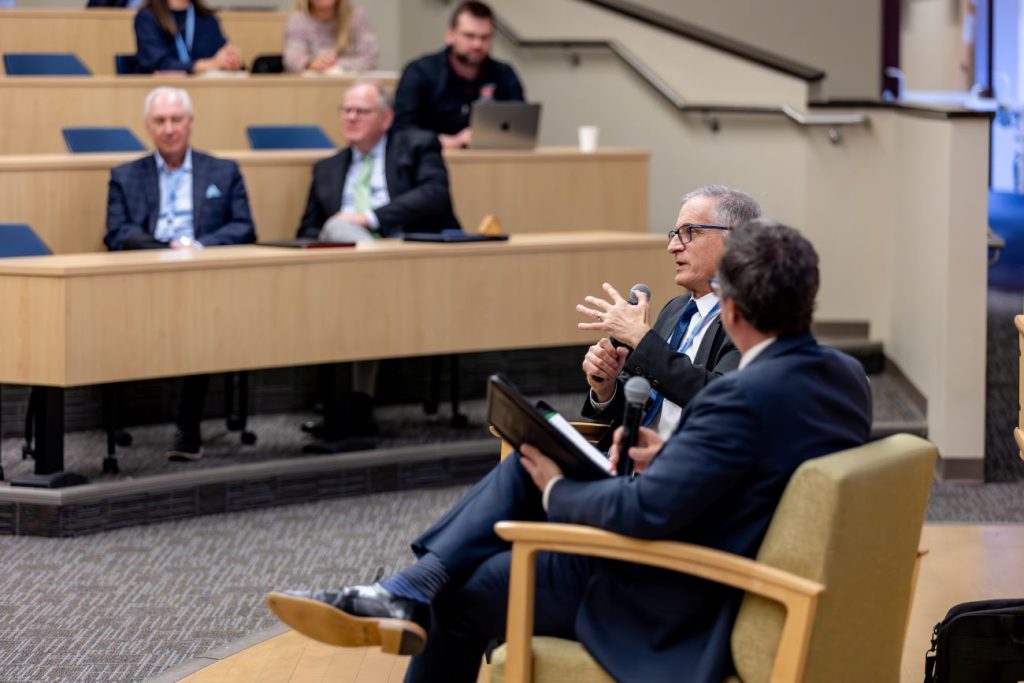
Rick Schlesinger, president of business operations for the Milwaukee Brewers, explored many of those ideas during CUW’s third annual Ignite & Inspire Leadership Conference on May 6.

As one of the keynote speakers, Schlesinger joined Dr. Scott Niederjohn, dean of Concordia’s Batterman School of Business, for a Q&A session about leadership and the evolving business of sports.

Drawing from more than two decades with the Brewers organization, Schlesinger offered participants an inside look at managing a major sports franchise while building a career rooted in relationships, adaptability and trust.

Throughout the discussion, one theme surfaced repeatedly: Organizations succeed because of people. Whether someone is managing a baseball team, leading a classroom or beginning a career, relationships still matter most.


From Brewers fan to Brewers executive

Schlesinger’s connection to the Brewers began long before he joined the organization.

Growing up in Milwaukee, he spent countless hours watching baseball with his father and attending Brewers games after the franchise relocated from Seattle in 1970.

“I always loved the business of baseball,” Schlesinger said. “Working for the team you grew up rooting for is just the greatest honor I could have as a person and in a career.”

Although he began his career practicing law in Los Angeles, his path eventually shifted into sports through The Walt Disney Co., where he worked after leaving private practice.

For students still trying to figure out where they want to go professionally, Schlesinger’s story served as a reminder that careers rarely follow a perfectly straight line. When Disney purchased the Anaheim Angels and Mighty Ducks, Schlesinger transitioned into sports operations.

A few years later, the Brewers came calling. He returned to Wisconsin in 2003 during one of the most difficult periods in franchise history.


Leadership during difficult seasons

At the time, the Brewers were struggling both on and off the field. The team had lost 106 games the season before Schlesinger arrived.

Rather than focusing exclusively on wins and losses, he concentrated first on the organization’s employees.

“When you work for a sports team and everybody’s attacking you and the team isn’t good, it affects morale,” Schlesinger said. “My first focus was keeping employees encouraged and helping them move forward.”

That approach helped establish a culture built on trust, accountability and communication, qualities leaders will encounter in nearly every profession they pursue.

Schlesinger believes one of the most important parts of leadership is creating an environment where employees feel comfortable speaking honestly.

“I want people to feel safe criticizing decisions, including mine,” he said. “The people around me are experts in their fields, and I rely on them heavily.”

That willingness to listen has helped the Brewers navigate ownership changes, front-office transitions and evolving industry demands while maintaining stability over time.


Creating a fan experience people remember

While baseball operations receive much of the public attention, Schlesinger oversees nearly every business function connected to the Brewers, including finance, marketing, sponsorships, ticketing, broadcasting, technology, analytics and community relations.

One of the Brewers’ biggest priorities is continually improving the fan experience at American Family Field.

Over the last two decades, the team has invested heavily in stadium upgrades, including enhanced premium seating areas, new scoreboards and technology, outdoor entertainment spaces, expanded food and beverage options, and improved Wi-Fi and digital connectivity.

Schlesinger said the philosophy is simple.

“Even if the team performance fluctuates, the ballpark experience should always feel first-class,” he said.

The Brewers also work to balance revenue generation with affordability.

Unlike the NFL, which hosts a limited number of home games each season, Major League Baseball teams must fill stadiums 81 times every year.

“We want families to feel like they can come to multiple games without it becoming unaffordable,” Schlesinger said.

That commitment to accessibility remains especially important in Milwaukee, where generations of families have grown up with Brewers baseball.

“The people of Wisconsin built this ballpark,” he added. “We want them to feel like it belongs to them.”

How data is shaping the modern game

Like many industries, baseball has undergone major changes through data and analytics.

When Schlesinger joined the Brewers in 2003, analytics on the business side were still limited. Now, the organization relies heavily on data to inform decisions related to ticket pricing, marketing, sponsorships and fan engagement.

The Brewers employ a dedicated business analytics team that helps leadership make faster and more informed decisions.

Artificial intelligence is becoming part of that evolution as organizations search for better ways to understand audiences and improve experiences.

Although Schlesinger acknowledged that industries across the board are still learning how to use AI effectively, he believes the technology will improve personalization and fan engagement.

“We gather enormous amounts of data through surveys, focus groups and purchasing behavior,” he said. “AI can help us better understand different fan segments and create more customized experiences.”

Still, he emphasized that technology should support people, not replace them.


Leadership lessons you can apply now

Many of Schlesinger’s insights extended far beyond sports.

He encouraged leaders to operate with humility, make decisions without waiting for perfect information and remain grounded in strong values. For students preparing to enter internships, graduate programs or careers, those lessons felt especially relevant.

One of the biggest lessons he learned early in his career involved decision-making.

“As a lawyer, I thought I needed every single fact before making a decision,” he said. “Eventually I realized you’re never going to have 100% of the information. At some point, you have to trust your experience and move forward.”

He also stressed the importance of ethical leadership, especially in public-facing organizations.

“You have to know your values before difficult decisions arrive,” he said.


A responsibility to the community

Schlesinger repeatedly returned to the Brewers’ role within the broader Wisconsin community.

The team measures its impact through charitable giving, community outreach, educational programs and direct engagement with fans across the state.

One lesson the Brewers learned during recent stadium funding discussions was that many communities outside southeastern Wisconsin wanted stronger engagement from the franchise.

Since then, the team has expanded outreach efforts throughout the state.

“We realized we needed to be more visible in communities across Wisconsin,” Schlesinger said.

That perspective reflects Schlesinger’s belief that sports franchises can serve as civic institutions, not simply entertainment businesses.


Remembering Bob Uecker

One of the most memorable moments from the discussion came when Schlesinger reflected on legendary broadcaster Bob Uecker.

“What you saw publicly was exactly who he was privately,” Schlesinger said.

He described Uecker as authentic, generous and deeply committed to his craft.

“He treated everybody the same,” Schlesinger said. “Owners, executives, stadium workers and fans—everyone.”

Schlesinger also shared a humorous story about a four-hour dinner with Uecker during spring training, where Uecker convinced him to try frog legs for the first time.

“It was awful,” Schlesinger joked. “But Bob thought it was hilarious.”


Looking ahead

As Major League Baseball prepares for future media changes, labor negotiations and evolving technologies, Schlesinger believes adaptability will remain essential.

At the same time, Schlesinger remains optimistic about the future of the sport and the role organizations play in bringing people together.

“Baseball has never been more popular,” he said. “The game is resilient. We want people to feel connected. That’s what great organizations do.”


Want in?

Concordia University Wisconsin is a Lutheran higher education community committed to helping students develop in mind, body and spirit for service to Christ in the Church and the world.

As we observe Memorial Day: Remembering sacrifice, renewing our promise

Memorial Day is far more than a long weekend. It is our nation’s solemn pause—a day set apart to honor the men and women who gave their lives in service to the United States.


At Concordia University Wisconsin, we mark this day with gratitude, reverence and a renewed commitment to support the families and communities that carry on their loved ones’ legacy.

What Memorial Day asks of us

Memorial Day is not a celebration of war or victory; it is a remembrance of sacrifice. It invites each of us—students, faculty, staff, alumni and friends—to reflect on the cost of the freedoms we enjoy. That reflection can take many forms: visiting a memorial, placing a flag on a headstone, sharing a fallen service member’s story with a friend, or simply observing a quiet moment of prayer or reflection.


Remembering by name

At CUW, remembrance is personal. We remember heroes across generations—from the fields of Gettysburg and the beaches of Normandy, to the mountains of Afghanistan. We also remember Private Howard J. Bogenschild of the 21st Infantry Regiment, 24th Infantry Division, who was killed in action in Korea on Nov. 5, 1950. In his honor, the Bogenschild family established an endowed fund that helped create the Howard J. Bogenschild Veteran and Military Affiliated Family Member Resource Center at the heart of our campus. This space exists so our military-connected students have a place to belong, find community, and receive the practical support they need to thrive.

How we honor the fallen at CUW compels action. Our Veteran Services team works year-round to:

  • Support student veterans and military-affiliated learners through benefits navigation, academic coaching and career readiness.
  • Foster community through our American Legion Post 1881 and our partner programs.
  • Connect students with financial support, including the Bogenschild Legacy Grant and other scholarships for those demonstrating financial need.
  • Equip faculty and staff to better serve military-connected students in the classroom and beyond.

Ways you can observe Memorial Day

  • Observe the National Moment of Remembrance at 3 p.m. local time. Take a moment to pause, wherever you are, in honor of the fallen.
  • Visit a local memorial or cemetery. If you’re able, volunteer with an organization that places flags and maintains veterans’ graves.
  • Learn and share a story. If your family or community has a connection to a fallen service member, say their name and share their life and service with others.
  • Fly the U.S. flag with proper etiquette. On Memorial Day, the flag is flown at half-staff until noon, then raised briskly to full-staff.
  • Extend care to the living. Reach out to Gold Star families and battle buddies. Even a simple message of remembrance matters.

A word to our military-connected students

To our student veterans, service members, spouses and dependents: Your perseverance honors those who served before you. When you ask for help, lean on your community, and persist toward graduation, you carry forward a legacy of service in a distinctly Concordia way—through faith, learning and compassionate leadership.

A promise we renew

As a Military Friendly institution, CUW will continue to strengthen our support networks, expand access to resources, and champion the success of our military-connected students. We will remember the fallen, not only with words on a single day, but with our deeds throughout the year.

On this Memorial Day, may our remembrance honor their sacrifice. May God grant comfort to the grieving families, and may He guide us to live lives of purpose, gratitude, and service.

Written by Col. Keith Casey, USA (RET.), MA, MSS, director of Veteran Services, Concordia University Wisconsin


Want in?

Concordia University Wisconsin is a Lutheran higher education community committed to helping students develop in mind, body and spirit for service to Christ in the Church and the world.

Media coverage grows around CUW’s partnership with ICOM

Concordia University Wisconsin’s recent announcement regarding its new partnership with the Idaho College of Osteopathic Medicine (ICOM) is drawing attention from media outlets both locally and across the country.


Coverage of the partnership appeared in WisBusiness, BizTimes, and Idaho Education News, highlighting growing interest in the collaboration and its potential impact on healthcare education and workforce development. The partnership will allow ICOM to host a medical school program on Concordia’s Mequon campus, creating new opportunities for students pursuing careers in medicine.

The collaboration brings together Concordia’s mission-centered educational environment and ICOM’s expertise in osteopathic medicine with the shared goal of preparing future physicians to serve communities with compassion, skill, and integrity.

The announcement also reflects CUW’s mission as a Lutheran higher education community committed to helping students develop in mind, body, and spirit for service to Christ in the Church and the world.

The media attention from both Wisconsin and Idaho underscores the significance of the partnership and the enthusiasm surrounding its potential to strengthen healthcare education and expand pathways for future medical professionals.


Want in?

Concordia University Wisconsin is a Lutheran higher education community committed to helping students develop in mind, body and spirit for service to Christ in the Church and the world.


A passion for service—and the spaces that make it possible

Melena Weber is building her academic path around her interests, leading her toward her calling.


Melena Weber’s time at Concordia has been formative. Through trial and error, she has discovered a passion for serving others. “I think I’m called to people,” she said. “I want to be part of something I truly care about, where I can live out my faith and serve others.”

As a junior majoring in mass communication and minoring in hospitality and event business, Weber is very active across campus. She writes for “The Beacon,” CUW’s student newspaper, and serves as membership coordinator for the Campus Activities Board.

In that role, she recruits and leads 30 ambassadors and helps plan up to 15 of the 40 to 50 events hosted each semester. She also works as a student engagement intern for the Concordia Crew, which welcomes and guides incoming students.

At Concordia, Weber has found ways to connect what she studies with how she serves, bringing together communication, leadership and event planning in meaningful ways.

During her first year, CAB in particular gave her a place where she could have fun, build relationships and step outside her comfort zone. “I felt overwhelmed and unsure of what I wanted to do,” Weber said. “Now, as part of CAB’s executive team, I can see how much that experience helped shape me. It helped me realize part of what I want to do in the future.”

Her passion for community continues to shape her academic and professional path.


Establishing a community

Feeling uneasy during her first year of college, Weber relied on the Lord more than ever. Having grown up attending Lutheran schools, her faith played a key role in her decision to attend CUW.

“I felt lost because I knew I was supposed to be at Concordia, but I didn’t know what I was supposed to study,” Weber said. “That uncertainty pushed me to rely on the Lord more than I ever had before. Looking back now, I can see how much He was working through that season. By junior year, I feel like I’m living in the answers to a lot of prayers.”

With prayer part of the daily rhythm in the classroom and faith woven naturally into campus life, Weber found space to pause, worship and build meaningful friendships. She also serves on the prayer team for Haven, Concordia’s student-led worship gathering.

“It has been a really meaningful way to serve,” she said.

For students new to CUW or still discerning their calling, Weber encourages them to seek out professors, advisors and peers. They should ask questions and build connections. Getting involved, she said, played a key role in helping her find direction.

“I kept circling back to the things I genuinely loved, and eventually I realized those interests could become a career,” Weber said. “Sometimes the path isn’t obvious right away, but that doesn’t mean it isn’t there.”


Growing in purpose

Family, faith and community have shaped Weber’s journey.

Choosing to attend CUW was not easy. “I’m very family-oriented, and I came here knowing almost no one,” she said, acknowledging her family’s steady support. “They’ve been my prayer warriors, and they’ve encouraged me to keep going.”

Today, Weber has grown in clarity about her interests and is eager to make a meaningful impact.

Inspired by her mother’s work running a nonprofit and organizing mission trips, Weber hopes to work for a smaller nonprofit where she can use her skills across many areas of the organization.

“My mom works with people across the organization, helping with event planning, handling communication and marketing, all while staying connected to the mission,” Weber said. “That kind of role feels like a really good fit for me.”


Guided by mentors

Director of Student Engagement Kara Janowski and Assistant Professor of Communications Dr. Marnie Lawler McDonough have played a meaningful role in shaping Weber’s college experience. Through their example, they model a steady, student-centered approach to leadership that continues to influence her goals.

In Lawler McDonough’s classroom, Weber found a new way of engaging with media.

“Her classes focus on rhetoric and critical analysis of mass media, and they have been fascinating,” she said. “I catch myself paying attention to how something is framed, what message is being sent and why certain choices are made. That has been really valuable.”

Outside the classroom, Janowski continues to offer mentorship in Weber’s campus roles.

“I was thrilled that she stepped up to join our orientation team—first as a crew leader, then as a crew intern, and now as the student engagement intern,” said Janowski. “It has been a joy to watch her grow in her work across campus. I can’t wait to see what she does next.”

Through those experiences in student engagement, Weber appreciates Janowski’s leadership approach.

“She wants students to have the best experience possible,” Weber said. “She is the kind of leader I would love to be like one day.”


Around the corner

As Weber nears the end of her time at Concordia, she is preparing for what comes next. She has managed people and social media platforms, created graphics and promotions, and spearheaded events—bringing together communication, leadership and event planning in each role.

Last summer, she completed a marketing internship with United Services for Children in St. Charles, Mo. This summer, she will intern with Concordia Publishing House in St. Louis, gaining additional experience in public relations.

With a clear desire to work with people, Weber is still discerning the details of her future.

“I don’t know exactly what that will look like yet, but I know I want to do work that helps people and reflects something bigger than myself,” she said.


“The School of &” blog series highlights the distinctive identity of Concordia University Wisconsin’s School of Arts & Sciences, where interdisciplinary connections shape learning and purpose. Each month, the series features Concordia students and alumni who have paired majors, minors and certificates in thoughtful and creative ways, showing how this approach influences both their education and their sense of calling.

These stories reveal how students connect their studies, develop their gifts and live out their callings in service to the Church and the world.


Want in?

Concordia University Wisconsin is a Lutheran higher education community committed to helping students develop in mind, body and spirit for service to Christ in the Church and the world.


Health ministry leaders from 19 states gather at CUW for national conference

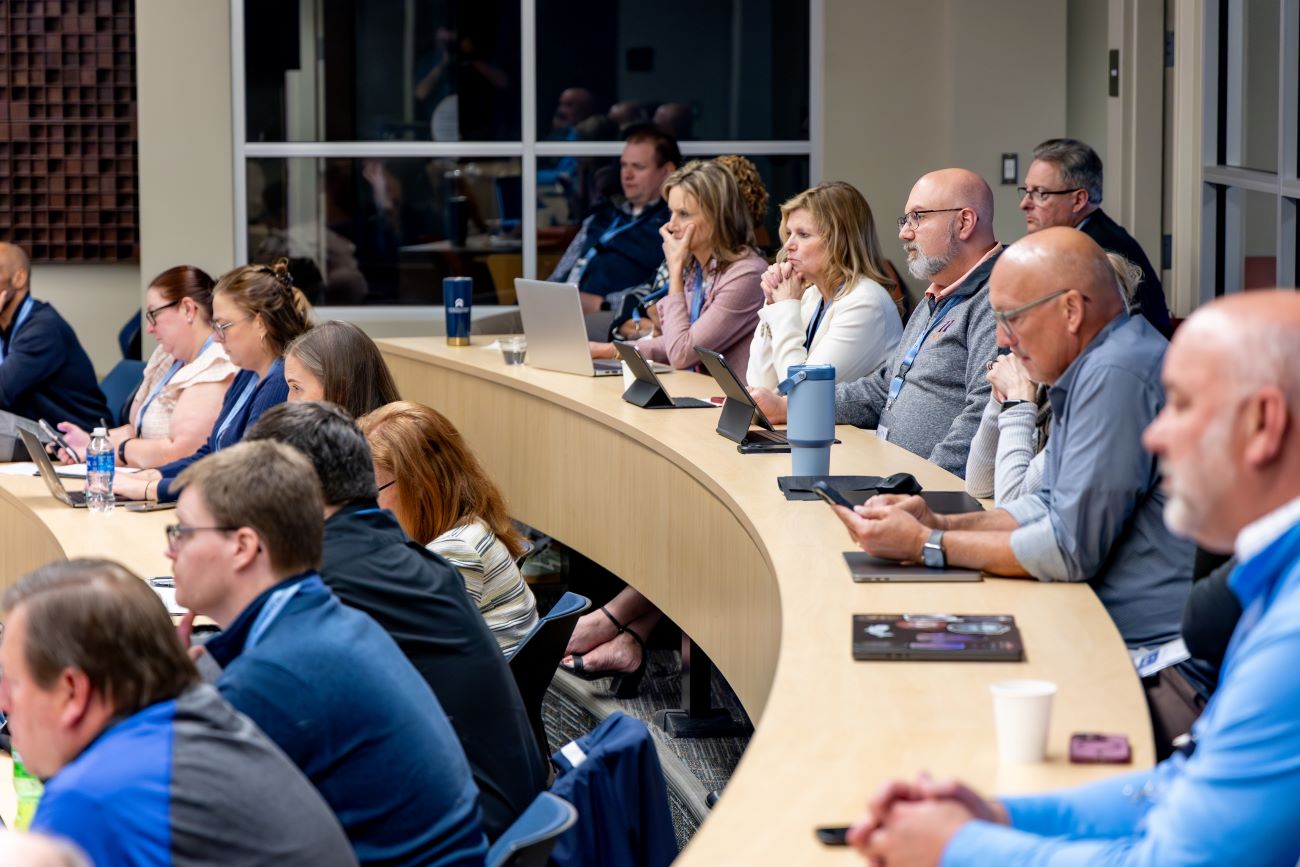
Concordia University Wisconsin welcomed parish nurses, pastors, lay ministers and congregational health leaders from across the country May 13-14 for the Annual Parish Nurse and Congregational Health Ministries Conference on the Mequon campus.


Centered on the theme “Living Well,” the conference invited attendees to reflect on Deuteronomy 5:33: “Walk in obedience to all that the LORD your God has commanded you, so that you may live and prosper and prolong your days in the land that you will possess.”

Over two days, participants explored what it means to care for the whole person through Christ-centered health ministry, worship, fellowship and evidence-based learning. Ninety attendees representing 19 states gathered for the conference, underscoring its continued national reach and impact.

“The theme, ‘Living Well,’ was impactful as many sessions focused on wholistic health in mind, body and spirit,” said Dr. Carol Lueders Bolwerk, director of Parish Nursing and Congregational Health Ministries at Concordia University Wisconsin. “Presenters integrated a biblical framework with recent research evidence in serving others in congregations across the country.”


Caring for caregivers

The conference opened with chapel and continued with sessions emphasizing whole-person care, self-care for caregivers, and encouragement for those serving in demanding ministry roles. Discussions highlighted the importance of recognizing compassion fatigue and burnout while helping church workers and health ministry leaders remain grounded in their own spiritual well-being.

Attendees also reflected on the legacy of longtime conference contributor Rev. Dr. Dan Paavola, whose involvement in the parish nurse conference spanned two decades. Paavola passed away earlier this year.

Keynote presentations shared current best practices and emerging research in health care ministry, while exhibitors and partner organizations, including the LCMS and American Heart Association, provided resources to support congregational care initiatives.

“As parish nurses develop programs and activities, they emphasize wholistic health, especially the intentional care of the spirit,” Lueders Bolwerk said.


Strengthened through fellowship

In addition to professional development, the conference created meaningful opportunities for networking and collaboration among ministry leaders serving in diverse church and community contexts.

“This conference offers not only evidence-based information along with resources from the LCMS, American Heart Association, and others, but also networking opportunities with others across the United States,” Lueders Bolwerk said. “Sharing their church ministries helps others in developing programs for their own churches and communities.”

Many participants also found spiritual renewal during their time on campus through worship, singing, prayer and fellowship with fellow Christian caregivers.

“Many parish nurses report that they are inspired and refreshed in their own spiritual journey with chapel and worship, singing and presenters,” she added.

The conference reflects Concordia’s mission as a Lutheran higher education community committed to helping students and servant leaders develop in mind, body, and spirit for service to Christ in the Church and the world.


Looking ahead

This event will continue next year as Concordia welcomes attendees back for the 35th Annual Parish Nurse and Congregational Health Ministries Conference on May 12-13, 2027, on the CUW campus.

Centered on the theme, “Beyond the Pews: Nurturing Wholistic Health in Mind, Body and Spirit,” the 2027 conference will reflect on Galatians 5:13: “Serve one another humbly in love.”

The conference is sponsored by Concordia Plans, Lutheran Parish Nurses International, CUW and the LCMS.

Those interested in learning more or serving as presenters are encouraged to contact Dr. Carol Lueders Bolwerk, conference chairperson, at Carol.LuedersBolwerk@cuw.edu or 262-243-4233. Potential presenters are invited to submit a topic idea and title by Oct. 1.

Want in?

Rooted in a mission of Christ-centered service, the School of Nursing at Concordia University Wisconsin prepares both new and experienced nurses for meaningful careers in a rapidly changing healthcare landscape. Through flexible online and hybrid pathways—including MSN, MSN-DE, DNP and post-master’s certificates—Concordia equips nurse leaders who combine clinical excellence with compassion, integrity and a commitment to whole-person care.


Grow your career without putting life on hold

Concordia’s graduate certificates help you grow your skills without stepping away from your work, family or calling.


For many working professionals, the question is not if they need additional education—it’s how to fit it into an already full life.

A promotion may call for stronger financial understanding. A new role might require leadership skills you haven’t formally developed. In other cases, emerging tools like artificial intelligence are becoming part of everyday responsibilities. The need is clear, but the traditional path forward can feel less practical.

At Concordia University Wisconsin’s Batterman School of Business, graduate certificates offer a different approach. This approach meets professionals where they are and helps them move forward with purpose.


Focused learning for real-world roles

Graduate certificates at Concordia help individuals grow in specific areas without committing to a full degree program. Each certificate includes four courses—12 credits total—and can be completed in one semester.

Each course is designed for busy professionals, with practical content that is immediately relevant to today’s workplace. Students gain skills they can apply right away.

Certificate options cover a range of business disciplines, including business administration, management, accounting and finance, human resources, leadership, and management information systems. Beginning in the 2026 to 2027 academic year, Concordia will also offer a graduate certificate in artificial intelligence, preparing professionals to understand and apply AI in their organizations.


Built around your schedule

Flexibility defines Concordia’s graduate certificates.

Courses follow eight-week formats. Whether you prefer in-person classes, live online sessions or fully asynchronous learning, there’s an option that fits your routine.

This structure allows students to continue working and managing their responsibilities while advancing their education.


A practical starting point — or next step

Graduate certificates serve professionals at many stages of their careers. Some are looking to build new skills quickly. Others are preparing for leadership roles or considering a shift into a new area of business.

For those thinking about pursuing an MBA, a certificate can also be an entry point. Students can apply earned credits toward Concordia’s MBA program, allowing them to continue their education without losing time or momentum. Amber Gray, EdD, CPA, MSA, assistant dean for academic innovation, graduate and continuing education, said, “Our 12-credit graduate certificates let you start small, gain immediate career value, and keep the door open to finish your full MBA when the time is right.”

“Whether you’re looking to sharpen your leadership skills, transition into a new role or simply stay competitive, the graduate certificate in business equips you with practical knowledge you can apply right away—while also serving as a pathway into the MBA,” said Dr. Kimberly Schave, MBA program director.


Straightforward admission

The admission process reflects the program’s flexible design. Applicants must complete a graduate application, hold a bachelor’s degree from an accredited institution and have a minimum undergraduate GPA of 2.75. No entrance exams are required.

Transfer credit may also be available for prior graduate coursework.


Moving forward with confidence

CUW’s graduate education prepares students to pursue their purpose. Programs address the needs of today’s professionals while fostering meaningful growth—both personally and professionally.

Graduate certificates provide a clear next step. They allow you to focus on what matters most, build relevant skills and move forward with confidence.

For more on graduate certificates, read “Are Graduate Certificates Worth It?”


Want in?

Concordia University Wisconsin is a Lutheran higher education community committed to helping students develop in mind, body and spirit for service to Christ in the Church and the world.


“Do It Scared”: Rheannon Trampf finds strength in Concordia’s graduate counseling program

A young mother and children’s book author found faith, support and purpose while pursuing graduate studies.


Rheannon Trampf (’26) came to CUW looking for a counseling program that could fit her life as a young mother and found a community that strengthened her faith, deepened her calling and prepared her to serve others with compassion.

For Trampf, pursuing a master’s degree in clinical mental health counseling was not simply an academic decision. It was a step of faith. “I chose Concordia because the virtual option made it possible for me to pursue my education while raising two children,” Trampf said, noting that a fully in-person program would not have allowed her to continue in the same way.

That flexibility mattered. But what she found was more than convenience. She found care. “I was drawn to this campus because of its strong sense of community and the genuine care faculty show for both students and one another,” she said.


A program marked by support

Trampf, who graduated this month, described the support she received as “outstanding,” noting she was able to get answers promptly regardless of which professor she contacted.

That support became especially meaningful during difficult seasons. She pointed to Professor Bargmann, Dr. Laura Kaae and Professor Laura Adameak as faculty members who made a lasting impact.

“They consistently responded promptly, supported me like enthusiastic professional cheerleaders and checked in during challenging times, making me feel truly valued and genuinely cared for as a student,” Trampf said.

Professor Laura Adameak, assistant director of graduate counseling, said Trampf brings the kind of heart and reflective spirit that will serve her well in the profession.

“Rheannon is a dedicated professional counseling student who brings thoughtfulness, compassion and genuine curiosity to her counselor training,” Adameak said. “She demonstrates a strong commitment to supporting the mental health and well-being of individuals across diverse settings, and her collaborative spirit and reflective nature position her to make a meaningful impact in the counseling profession.”


Learning that becomes real

One of the most meaningful parts of the program was her internship experience, where she saw firsthand how her coursework prepared her to support clients in real-life settings.

“It reinforced the strength of the counseling program because I have been able to succeed in my internship based on the foundation I gained through my coursework,” she said.

She also appreciated the way Concordia’s program structure helped students build connections, even in an online format. The video discussion posts helped classmates get to know one another on a more personal level, she said, and she even recognized some of them at graduation.

That sense of connection helped her grow not only as a counseling student, but also as a person. “I have grown as a mom, a student and a friend, and I have also found my purpose in life,” she said. “I feel so proud of the person I am and have so much confidence.”


Faith in the middle of the unknown

Trampf’s experience has also strengthened her faith in a deeply personal way. “I grew up in a strong faith-based household but stepped away from it for a few years, and this university and program helped me see how faith in God can help you get through obstacles I never imagined I could face. I thank God every day for His love and forgiveness,” she said.

One moment in particular stands out. When she began practicum, her initial site was not what she had expected. She remembers going home to her husband and saying, “I can’t do this.”

She felt panicked and worried she might need to take a semester off, so she emailed 28 nearby counseling sites asking whether they could urgently take her on for practicum or internship. Most did not respond. Five said no. “I prayed continuously,” Trampf said.

The next day, one clinic responded. Although the clinic had not planned to take another intern until fall, the timing worked out.

“I truly believe God placed this opportunity in my hands and answered my prayers,” she said. “I am still working there and have found a lot of value in my time at the ATT Center in Green Bay, Wis.”


Family, perseverance and purpose

Trampf’s journey has been shaped by perseverance. She gave birth in June 2024 and filmed her first discussion-post video just one day later.

That is not exactly the usual “welcome back to class” routine, and coffee probably deserved an honorary degree. “I often completed papers and assignments after my kids went to bed,” she said.

She credits her husband, parents, in-laws and sister-in-law for helping make the journey possible. “It really does take a village,” Trampf said, “and their support made it possible for me to finish assignments or even take time to work from a coffee shop while they cared for the kids.”

That same heart for children and emotional well-being also inspired her to become an author. Her children’s book, “Luca’s Heavy Backpack,” grew out of her own experience with big feelings.

“The story follows Luca as he carries all of his emotions in his backpack and learns that big feelings can become too heavy to carry alone, and that talking to a trusted adult can help take the weight off,” Trampf said.

Adameak also celebrated this part of Trampf’s work, noting that her book “thoughtfully supports emotional growth by helping children feel safe, understood and supported as they process their feelings.”


Carrying compassion into the counseling profession

Now preparing for her next steps, she is looking for a professional counseling position in the Fox Valley area. She also plans to begin a doctorate in behavioral health through Arizona State University Online in January 2027, with the goal of growing as a behavioral health professional in integrated health care systems.

“My hope is to one day do behavioral health consulting in a hospital setting with physicians, APNPs, PAs, nurses and more,” she said. “Helping educate others on the importance of behavioral health is a huge goal of mine.”

One counseling mindset she will carry forward is simple but powerful. “Solutions are not always what people need,” Trampf said. “Sometimes the greatest value comes from simply being understood, validated and heard.”

For anyone considering Concordia’s counseling program, Trampf offers the same advice she carried with her as a student therapist intern.

“Do it scared,” she said. “By stepping directly into fear, I have seen growth and a decrease in anxiety over time, compared with when avoidance takes over. If you are considering the program but feeling scared, I encourage you to set up a meeting with an advisor and learn more about how supportive and meaningful the program truly is.”


Want in?

Concordia University Wisconsin is a Lutheran higher education community committed to helping students develop in mind, body and spirit for service to Christ in the Church and the world.