CUW 2026-27 campus theme: ‘Rest in Christ’

The yearlong focus will encourage students, faculty and staff to lay down life’s burdens and embrace Christ’s gift of rest.


Few invitations are more gracious than the one our Lord extends in Matthew’s Gospel: “Come to me, all you who labor and are heavy laden, and I will give you rest” (Matthew 11:28, ESV).

The labor of which Jesus speaks is not hard manual work, but rather the burden of carrying our sins and striving after righteousness according to a standard we can never quite meet.

Indeed, every one of us is weary and heavy laden because, no matter how hard we work, when it comes to making ourselves righteous, we can never be good enough for God.

That endless toil of chasing after our own righteousness is what the false, sinful and natural religion of humanity is in a nutshell: striving to be good enough so that we can earn and deserve God’s favor. It makes for a very hard life, for such a false god is unforgiving and unmerciful.


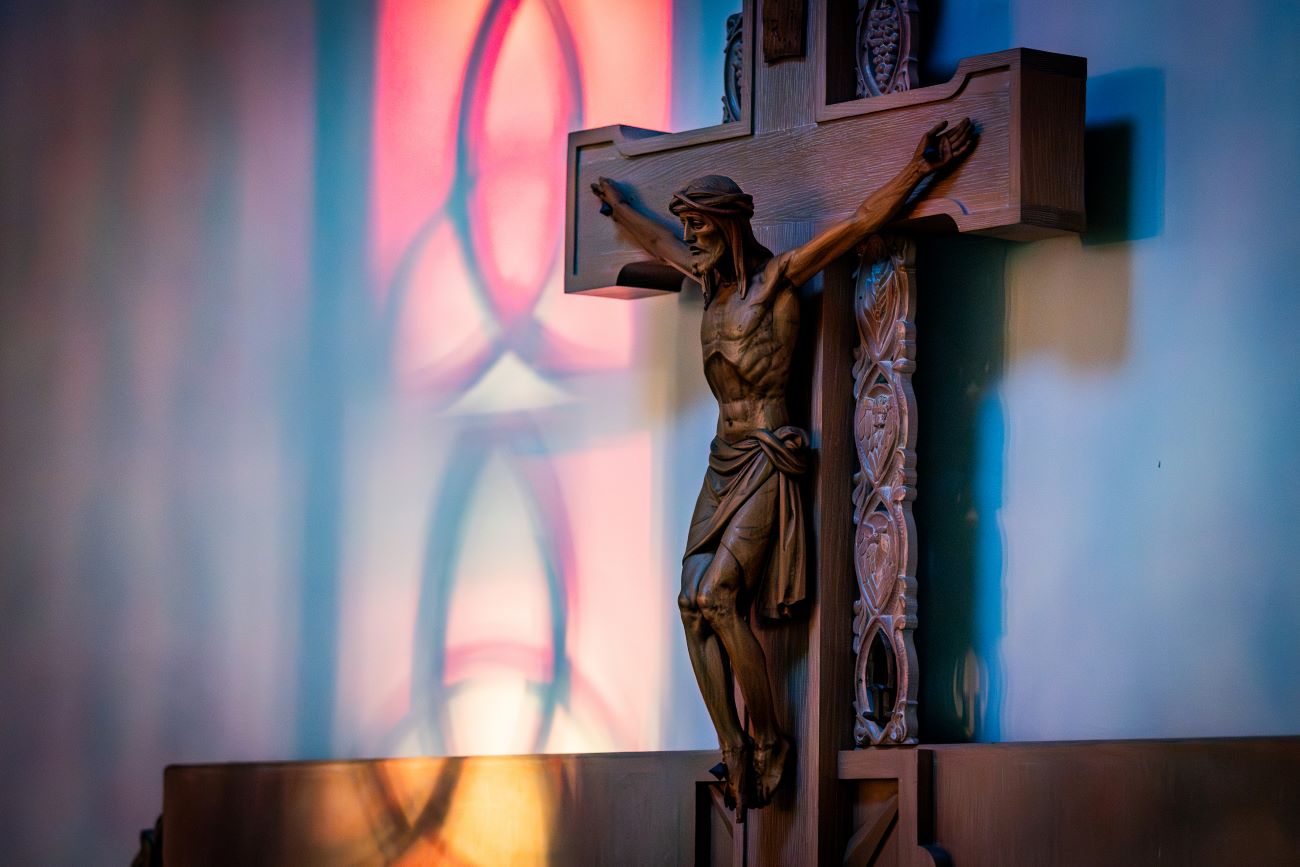
cross with Jesus on it

The rest only Christ can give

In the words of Jesus, however, we find a different teaching: the true religion of God. “Come to me, all you who labor and are heavy laden, and I will give you rest.”

The way of Jesus is unlike any other religion in the world. In Jesus’ religion, God tells you to lay down your burdens of self-justification.

He tells you to rest.

Jesus tells you that He will take your heavy burden. He will take the hard labor. He will take your hard yoke and make it easy. He will take your heavy burden and make it light.

Jesus could only say that because He is the Son of God who became flesh to save us from our sins.

Apart from Him, no one can know the love of God the Father. While there is nothing we can do to please God, everything Jesus did pleased His Father. While we cannot endure the punishment our sin demands, Jesus’ sacrifice on the cross completely satisfied God’s justice for us. He rose from the dead three days later, just as He promised.

Jesus is the One who takes our yoke upon Himself and gives us the easy yoke of forgiveness in its place. He is the One who took away our heavy burden of sin and replaced it with His righteousness. He has taken away the labor and burden of false belief and replaced them with the gift of rest that comes from faith in Christ alone.

So, dear friends, rest in Christ. By His Word, by Baptism and Absolution, by His body and blood, receive rest from the burden of trying to bargain your way out from under the heavy load of guilt and shame that the devil, the world, and your own sinful flesh try to trick you into bearing.

Christ has taken your load. He replaces it with His yoke—His righteousness—which is easy and light.

By Rev. Jonathon Bakker, Campus Pastor


Want in?

Concordia University Wisconsin is a Lutheran higher education community committed to helping students develop in mind, body and spirit for service to Christ in the Church and the world. To learn more about campus ministry opportunities, click on the link below.


As we observe Memorial Day: Remembering sacrifice, renewing our promise

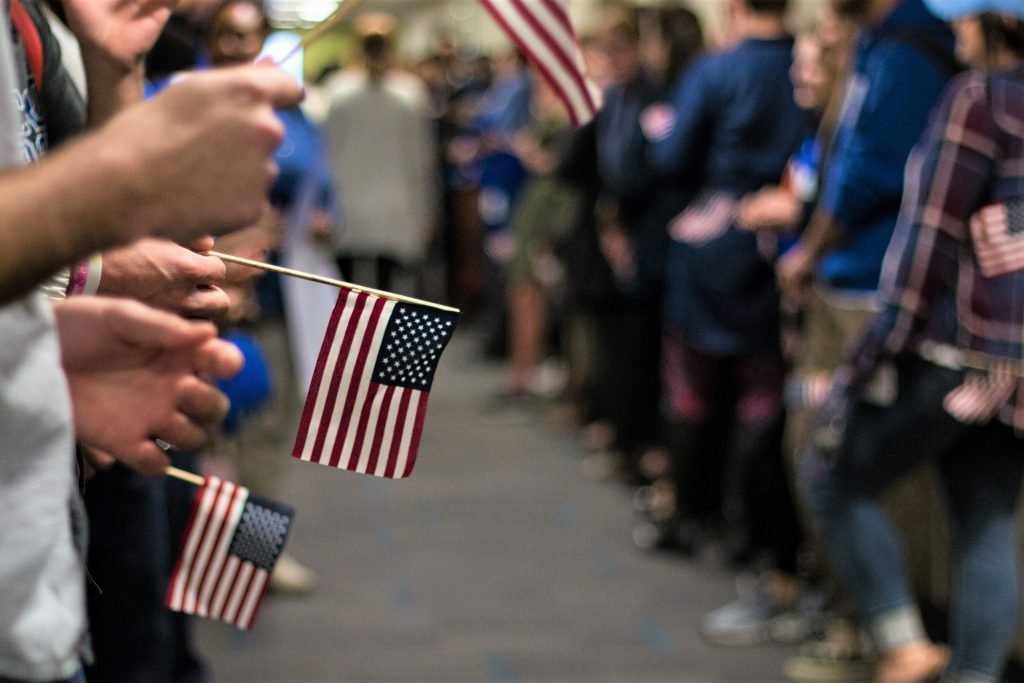
Memorial Day is far more than a long weekend. It is our nation’s solemn pause—a day set apart to honor the men and women who gave their lives in service to the United States.


At Concordia University Wisconsin, we mark this day with gratitude, reverence and a renewed commitment to support the families and communities that carry on their loved ones’ legacy.

What Memorial Day asks of us

Memorial Day is not a celebration of war or victory; it is a remembrance of sacrifice. It invites each of us—students, faculty, staff, alumni and friends—to reflect on the cost of the freedoms we enjoy. That reflection can take many forms: visiting a memorial, placing a flag on a headstone, sharing a fallen service member’s story with a friend, or simply observing a quiet moment of prayer or reflection.


Remembering by name

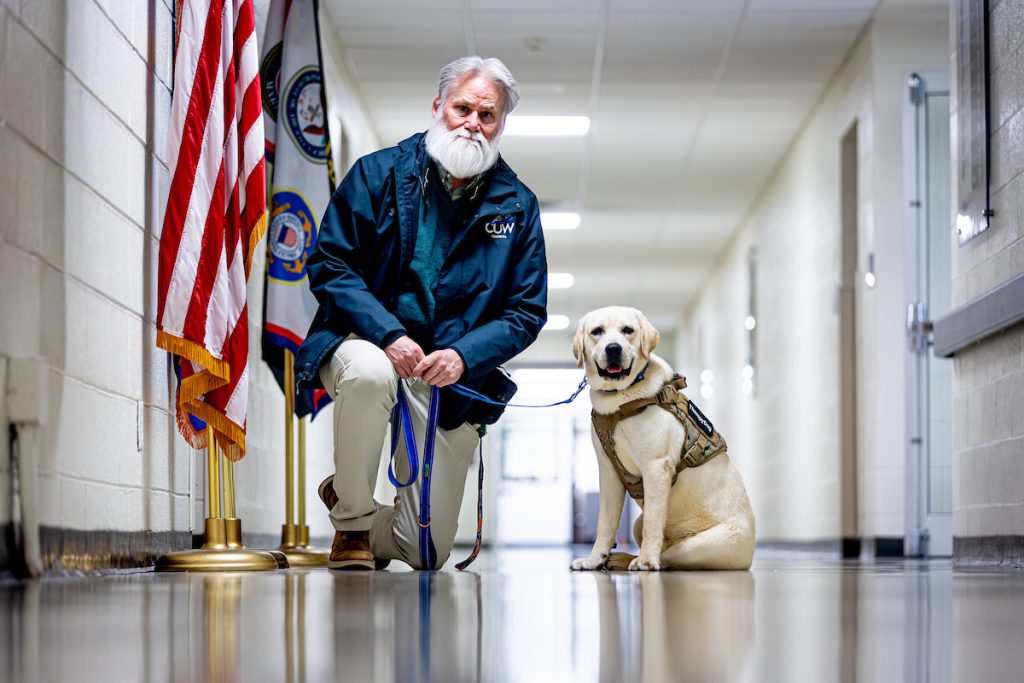
At CUW, remembrance is personal. We remember heroes across generations—from the fields of Gettysburg and the beaches of Normandy, to the mountains of Afghanistan. We also remember Private Howard J. Bogenschild of the 21st Infantry Regiment, 24th Infantry Division, who was killed in action in Korea on Nov. 5, 1950. In his honor, the Bogenschild family established an endowed fund that helped create the Howard J. Bogenschild Veteran and Military Affiliated Family Member Resource Center at the heart of our campus. This space exists so our military-connected students have a place to belong, find community, and receive the practical support they need to thrive.

How we honor the fallen at CUW compels action. Our Veteran Services team works year-round to:

  • Support student veterans and military-affiliated learners through benefits navigation, academic coaching and career readiness.
  • Foster community through our American Legion Post 1881 and our partner programs.
  • Connect students with financial support, including the Bogenschild Legacy Grant and other scholarships for those demonstrating financial need.
  • Equip faculty and staff to better serve military-connected students in the classroom and beyond.

Ways you can observe Memorial Day

  • Observe the National Moment of Remembrance at 3 p.m. local time. Take a moment to pause, wherever you are, in honor of the fallen.
  • Visit a local memorial or cemetery. If you’re able, volunteer with an organization that places flags and maintains veterans’ graves.
  • Learn and share a story. If your family or community has a connection to a fallen service member, say their name and share their life and service with others.
  • Fly the U.S. flag with proper etiquette. On Memorial Day, the flag is flown at half-staff until noon, then raised briskly to full-staff.
  • Extend care to the living. Reach out to Gold Star families and battle buddies. Even a simple message of remembrance matters.

A word to our military-connected students

To our student veterans, service members, spouses and dependents: Your perseverance honors those who served before you. When you ask for help, lean on your community, and persist toward graduation, you carry forward a legacy of service in a distinctly Concordia way—through faith, learning and compassionate leadership.

A promise we renew

As a Military Friendly institution, CUW will continue to strengthen our support networks, expand access to resources, and champion the success of our military-connected students. We will remember the fallen, not only with words on a single day, but with our deeds throughout the year.

On this Memorial Day, may our remembrance honor their sacrifice. May God grant comfort to the grieving families, and may He guide us to live lives of purpose, gratitude, and service.

Written by Col. Keith Casey, USA (RET.), MA, MSS, director of Veteran Services, Concordia University Wisconsin


Want in?

Concordia University Wisconsin is a Lutheran higher education community committed to helping students develop in mind, body and spirit for service to Christ in the Church and the world.


The quiet engine: How Paul Wangerin is building spaces where students belong

For more than three decades, his behind-the-scenes work has shaped campus life and the spaces students call home.


When Paul Wangerin (’76) learned he’d been selected for Concordia’s Distinguished Alumnus Award, his first reaction was surprise. He thought, “that’s for important people like pastors, people in the ministry and teachers,” he said. “That’s not me.”

But for anyone who has benefited from his research guidance, studied in the commuter lounge or library, or received a Wangerin family scholarship, his impact is unmistakable. His nominator for the Alumnus of the Year distinction described him as “a quiet engine”—a phrase that fits perfectly.

Wangerin has powered Concordia’s transformation for 31 years—not with fanfare, but with steady, essential work that helps keep things running.

From setting up the university’s first course evaluation system and managing computer labs before students had laptops, to providing data and insights that documented Concordia’s journey from a small junior college to a leading Christian university, Wangerin has been a force you don’t always see but absolutely feel.

“I like to be the little guy behind the scenes,” Wangerin, 70, said. “I try in my own very small and human way to be a humble servant.”

Wangerin started his career at CUW helping to develop many of the college’s technology systems while working in computer science and information technology. When he moved to the Office of Institutional Effectiveness as a senior research analyst, he assisted faculty with more than 20 doctoral dissertations. He was a “data scientist to the max with a true love of working with people,” said Dr. Tamara Ferry, Wangerin’s friend, previous boss and colleague for more than 20 years.

“He’s student-centered and student-focused, which is not easy to do in the data field,” said Ferry, who retired from her position as executive director of the Office of Research and Sponsored Programs in 2023. “He is emotionally attached to work and, by extension, to Concordia.”


A childhood rooted in Concordia

Wangerin’s story at Concordia didn’t start with his career—it started in childhood. His earliest memories are inseparable from Concordia. He grew up among faculty families in Milwaukee’s Sherman Park neighborhood and walked Concordia College’s halls with his father, Rev. Dr. Norman Wangerin (‘43).

Rev. Wangerin taught theology and social studies for almost 40 years at Concordia College in Milwaukee and Concordia University in Mequon. Wangerin earned his associate degree in arts at Concordia College. Having witnessed Concordia’s journey, Paul Wangerin’s mission became clear: to provide the research to help define who we are. That bridge is his foundation.

That bridge inspired a legacy of giving. His mother was one of the first employees at Lutheran-founded La-Z-Boy Inc., as it is now known. This relationship became a financial blessing for the family—and gifts to Concordia. His family’s donations have included four endowments and chapel windows with the theme “faith alone, grace alone”—a fitting tribute to a family steeped in Lutheran tradition. His brother, Mark (’72), is a retired minister.

Paul Wangerin continues to support CUW because of loyalty and history, he said. “My ties to campus run deep.”

Those deep ties have translated into gifts that shape daily student life. Much of his support comes from a desire to create “an environment where students feel they belong,” he said. His donations have included library resources, furniture and original works of art. For example, a 3-foot-by-4-foot painting of him and his father walking in front of Concordia College hangs in the library. He provided La-Z-Boy furniture for the library to create a cozy study space. He funded Heidelberg Lounge, a commuter space with a fireplace, rug and inviting seating.


Spaces that welcome

The importance of the student experience stems from his days as a commuter student at the University of Wisconsin-Milwaukee, where he earned his bachelor’s degree in experimental psychology and his master’s degree in educational research. Unlike at Concordia College, Wangerin said he struggled to find comfortable spaces to go between classes at UWM, especially when cold weather made Lake Park near campus less appealing.

“Seeing students relaxing or studying in spaces I helped create is very rewarding to me,” he said. “It makes one feel happy and fulfilled when you can make someone else happy. There’s not much more satisfying in life.”

Just like his behind-the-scenes approach in his professional work, few of his donations bear his name. The Wangerin Seminar Room in the Robert Plaster Building is dedicated to his mother. The Heidelberg Lounge honors Rev. Fred Mueller, his friend and high school classmate who died in 2007.

Although the “quiet engine” retired in 2025, he continues to support the university through special data projects, creating comfortable spaces to welcome students and providing scholarships for future servant-leaders.

Being chosen to receive the 2026 Distinguished Alumnus Award may have surprised him. But Wangerin is the kind of “important people” who deserve recognition: a humble servant whose life’s work has helped develop generations of students in mind, body and spirit for service to Christ in the Church and the world.

To learn more, read “The many donations of the Wangerin family.”

Written by Rosland Gammon, Advancement Communications Specialist.


Want in?

Concordia University Wisconsin is a Lutheran higher education community committed to helping students develop in mind, body and spirit for service to Christ in the Church and the world.


Collaborative Leadership: The Future of Organizations

In a rapidly changing business environment, one leadership approach has proven powerful in fostering innovation and success: collaborative leadership!


Instead of just zeroing in on individual wins or segregation between separate departments, collaborative leaders take a team-first approach. As they say, there is no “I” in “team.” Leaders listen, keep the conversation open, and they help create a space where people feel safe sharing ideas and info. It’s this kind of vibe that helps an organization’s overall success.

Here’s a quick look at what makes collaborative leaders so effective, and how CUWAA is building these skills through our unique MBA and continuing education programs.

Key Characteristics of Collaborative Leaders

  • Sponsoring Collaboration
  • Active Coaching
  • Building Community
  • Balancing Relationships and Tasks
  • Clear Roles with Flexible Tasks
  • Psychological Safety

Collaborative leadership is all about teamwork, communication, and supporting each other to reach for the common good of the workplace and its employees. Leaders who believe in collaborative leadership don’t just make decisions on their own–they listen, encourage dialogue, and create a space where everyone’s ideas matter.

CU Inc.’s Collaboration with Walgreens

Earlier this year, CUWAA partnered with Walgreens to provide leadership development for their employees. This collaboration showcased CUWAA’s approach to business education, where leadership is not just about profit but about integrating values, ethics, and holistic well-being into the workplace.

Deaconess Kim Schave, PhD, CPA, Director of MBA Programs at CUWAA, shared her perspective:

“I am very grateful for the opportunity that Walgreens afforded us to contribute to the development of their employees on the topic of Collaborative Leadership. It provided them with a glimpse of what we offer in our MBA and Continuing Education programs. Beyond just a focus on profits, our programs incorporate sustained advantages by integrating ethics and values into our curriculum. We are intentional about helping students thrive in mind, body, and spirit and preparing students for success in their business vocations.”

CUWAA’s MBA Program

We understand the importance of having collaborative skills in the workplace, CUWAA has designed an MBA program that understands a student’s development. We prepare leaders who are well-rounded in mind, body, and spirit.

Here are three ways Concordia’s MBA program prepares students to lead in collaborative environment:

Personalized support

CUWAA assigns each MBA student a Student Engagement Specialist who supports them at every step of their academic journey.

Experiential learning

MBA students will complete six credits of experiential learning, choosing from; internships, global study programs, and specialized certifications in areas such as Six Sigma and project management.

Focused development

The MBA curriculum emphasizes both qualitative and quantitative analysis. Students can customize their education by selecting from 12 concentration areas, ensuring that they gain expertise relevant to their goals.


Want in?

Collaborative leadership is essential for the success and growth of any organization. CUWAA’s MBA and continuing education programs are specifically crafted to develop leaders and prepare them, so they can create workplaces that inspire and empower others. Concordia University Wisconsin is a Lutheran higher education community committed to helping students develop in mind, body, and spirit for service to Christ in the Church and the world. To learn more about continuing education opportunities at CUW, click the link below.


Online Transfer Student Survival Guide

The best word that describes a transfer student is “courageous.”


By Leah Fassbender, Post Traditional Admissions Counselor, Concordia University Wisconsin

Each transfer student experience is unique. A transfer student comes from a prior college that they may have loved and been heavily involved in. Next, they enter as a fully online student with less personal engagement and more responsibility such as delegating classroom discussion responses, posts and projects that are due each week. As a transfer student myself, I found it to be essential to follow these few tips that helped me to stay on track, be efficient and also feel fulfilled like I once did when I was an in-person, technical college student

Set Yourself up for Success

When I start a new class, I enter into my online course and start with the syllabus. It is essential to read through the syllabus as your professor will give a description of the class and set a timeline of assignments. They will include their contact information either by phone, email or in-person.

Get Organized

Once I have read through the class syllabus, I then go through each of the modules and create a document that has each assignment and due date. You can either create a document to cross off or insert into a planner. This will help you to stay organized and to not miss an assignment. At the start of each week, I take a look at what assignments I will need to complete for the week.

Be Engaged

One of the things I missed the most from in-person classes was my engagement with others. I felt that it was something I was going to lose when transferring to a fully online student. It helps to feel engaged by being interactive with your online classmates and professor. Get involved in your discussion boards and learn from your classmates. You can always reach out to a fellow classmate to meet and have a study session near you.


Being a transfer student is one of the most rewarding feelings. You get to widen your educational horizons and get to know others from all over the country or state. When you cross that stage, you will know you put your all into each discussion, assignment, and project while you managed work, family and your social life. That takes courage, determination, and discipline!


Want in?

Have questions about transferring to Concordia? Connect with us at admission@cuw.edu


Concordia’s Different Learning Formats

Learn more about Concordia’s flexible learning opportunities


Each student has a unique way of learning. It essential to know what learning format will be the best fit for you.

At Concordia University, we offer a few different formats for our students which include face-to-face, virtual, and fully online. Let us break down each of the learning styles:

Face to Face

This is a familiar format for our traditional, on-campus students who live in our dorms or commute and attend classes on campus. In our face-to-face classes, you will meet a couple times a week. Depending on the day of the week will determine the length of the class period. For example, on Tuesday’s and Thursday’s, classes go for 1.5 hours long whereas for Monday’s, Wednesday’s and Friday’s, classes are for an hour. We do offer some night courses which typically occur one day a week for three hours long.

What are the pros and cons of in-person classes? Our undergraduate admissions counselors, Amanda and Lauren, shared the pros and cons of face-to-face learning:

“The pros of this format are the opportunity for hands-on experience with both the classmates and professors. You will have the chance to build relationships with others. In the classroom setting, students have the ability to stay more focused. Conversations take more place in a physical setting rather than through discussion boards and chat groups. For the cons, there will not be as much flexibility for those who work either part-time or full-time jobs.”

Virtual

For those that like to be in-person due to the interaction but cannot come to campus physically, our virtual format may be the best option to learn. Each week, your professor will have a set day and time that you will need to be online which is typically through Zoom. Through this, you can interact with your professor and fellow classmates through a video chat. Your professor will give their lecture and be able to share their screen. They may ask the class questions for interaction to take place between themselves and the students. You will receive assignments to do on your own time during the week and will need to complete them by the deadline your professor sets. This format has classes in either our 8-week or 16-week terms.

Online

Our fully online option is a flexible format for those who work and want to come back to school to complete their degree. Students do not have to be online at a specific time each day. However, online students need to be well-organized and determined because it will be their responsibility to read given material, reply to weekly discussions and complete assignments set by their professors each week. Typically, for those in this learning format, take between 1-2 courses in each 8-week term.


Got questions? Feel free to reach out to Admissions at 262.243.4300

Leah Fassbender, Post Traditional Admissions Counselor


Want in?

Concordia University Wisconsin is a Lutheran higher education community committed to helping students develop in mind, body, and spirit for service to Christ in the Church and the world.


CUW 2024-25 campus theme: ‘Inseparable Love’

The Campus Ministry Leadership Team (CMLT) at CUW focused on the assurance we have in God’s inseparable love when it came to selecting the theme and theme verse for the 2024-2025 academic year.


By Rev. Jonathon Bakker

For I am sure that neither death nor life, nor angels nor rulers, nor things present nor things to come, nor powers, nor height nor depth, nor anything else in all creation, will be able to separate us from the love of God in Christ Jesus our Lord.

Romans 8:38-39 (ESV)

These are some of the most comforting words we hear in all of the Bible, and they speak to all of us at Concordia—students, faculty, staff, and our families.

There is always a temptation for us to question or doubt God’s love for us and for others. When floods or fires afflict people and their communities; when conflicts spill over into violence and war; or when sickness and death take those close to us, the evil one will work to lead us away from God … to find hope not in the Lord but in ourselves or other created things. St. Paul points us back to the Lord and his love—his inseparable love that is ours in Christ Jesus our Lord.

It is that love of God that led him to have mercy on his fallen children in the Garden of Eden, promising a Savior. It is that love of God that led the Savior into our flesh to bear our sins and save us, dying for us on the cross and rising from the dead. It is that love of God that led to the promised Holy Spirit—the Comforter—to be poured out on the disciples of Jesus at Pentecost, and to work in the world through the water, word, bread, and wine to call, gather, enlighten, and sanctify the whole Christian church on earth.

Indeed, Paul’s reassuring words cut through any grief, sadness, or despair which may be burdening us to hold up Jesus Christ our Lord and his love. Paul gives us a list of ten created things, finishing with “anything else in all creation,” and reveals that none of them can nullify God’s love for us. This is the joyous gift of God’s grace, that by faith we are forgiven all our sins, and we have the hope of the resurrection of the body and everlasting life!

God bless all of us at Concordia as we grow and mature this next year in faith, comforted by the inseparable love of God that is ours in Christ Jesus!

Rev. Jonathon Bakker is the campus pastor for Concordia University Wisconsin.


Want in?

Concordia University Wisconsin is a Lutheran higher education community committed to helping students develop in mind, body, and spirit for service to Christ in the Church and the world. To learn more about campus ministry opportunities, click on the link below.


With a little help from some friends

Concordia’s online students have the ARC (Academic Resource Center) in their corner!


By Jonathan Cain, CUW Admissions

Higher Education has been changing with warp speed in recent years and for many adult learners returning to finish degrees or starting fresh in this brave new world of technology and new learning formats can be a bit daunting. At Concordia University, we understand that the journey of learning is unique for each student, especially for those who are juggling multiple responsibilities such as careers, families, and community commitments. The Academic Resource Center (ARC) is available to all students, including online students with busy work and family schedules!

The ARC provides assistance through Peer Academic Coaching, the Online Writing Lab, the Math Drop-In Desk and the Brainfuse Online Tutoring link found on the student portal page. Elizabeth Kirk, an Academic Support Specialist in the ARC encourages adult learners to make use of these services and reminds students that self-advocacy is critical for student success:

“You truly can overcome whatever academic challenges you will face as you continue moving forward and seek help from those around you.”

Elizabeth Kirk, M.S.

This message of self-advocacy is echoed by Concordia’s Academic & Career Advisors, such as Elyse Parks, who works with the post-traditional students earning degrees through Concordia’s online programs. Parks states, “Typically when a student needs additional assistance with a class, I first tell them to contact their instructor and request a phone or zoom meeting. It is easier to talk through all of their questions by phone or Zoom, rather than email.” This is a common suggestion for all students.

Parks continues: “Secondly, I tell them to work with a tutor through the Academic Resource Center and I provide the contact information, but students can find all of this information by scrolling down on the left column of their student portal page.  And lastly, I advise them to use Brainfuse through Canvas.  Brainfuse is available at any time and is more convenient for our adult students who study late at night.”

Making it personal

For those students looking for more personalized help, individual tutoring sessions can be arranged through the ARC. Andy Lopez works with students in a variety of classes and states that the most common requests from students involve proofreading, editing, planning papers, and setting up PowerPoints. He reminds students, though, “when reaching out, it is always a good idea for students to reach out early and to do so within a couple sessions or the week before a challenging class starts, so things don’t snowball.”

Elizabeth Kirk also highly recommends the use of the Online Writing Lab (OWL). By sending written essays for review, the OWL provides feedback at any stage of the writing process. The OWL receives your essays electronically, reads through the work, adds questions and comments, and returns the essay within 3-5 working days.

Finally, many online learners returning to academic coursework may need extra assistance as conditionally admitted students with previous grades in college coursework below full acceptance for their program of choice. The ARC offers the Prosper Program as a semester-long workshop program designed for conditionally admitted, accelerated students attending CUW online. The purpose of this program is to acquaint students with CUW, connect them to valuable resources, empower them through skill-building workshops and equip them for educational success. Prosper workshops and materials are designed to acquaint students with CUW’s online platforms (CUW Portal, Canvas, Outlook, Concordia Central, Academic Resource Center services, Counseling Center, etc.), as well as teach students valuable skills involving time management, healthy study/lifestyle habits and self-advocacy.

Whatever concerns or anxiety Concordia’s online students may encounter, help is always available from the ARC and there is comfort in knowing that students are not alone. By communicating with Academic & Career advisors, instructors, and friends in the ARC earning a degree is certainly within reach!

CUW’s Online classes are offered year-round, with students beginning courses in two eight-week mini-terms during the Spring, Summer, and Fall for most programs. Take action and connect with Concordia University’s admission team by visiting CUW Online Undergraduate Admissions for undergraduate degrees or CUW Graduate Admissions for master’s degrees and licenses or by calling 262-243-4300.


Jonathan Cain is an Admission Counselor, Adult-Accelerated for Concordia University Wisconsin.


Want in?

Concordia University Wisconsin is a Lutheran higher education community committed to helping students develop in mind, body, and spirit for service to Christ in the Church and the world. For more information or to apply today, click the link below.


Faculty Spotlight: Dr. Gary Locklair

Dr. Gary Locklair has been at Concordia since 1986, teaching students in the computer science and information technology department. He’s both a professor and chair of the department and stays involved with students beyond the classroom by serving as a faculty advisor for the Alpha Chi honor society and the faculty coordinator for Concordia’s Student of the Month program.

How long have you been at Concordia? Why did you choose Concordia?

After completing my undergraduate degree with a BS in Computer Science and a BA in Chemistry, I worked in the computer industry for 10 years. While I enjoyed my industrial career, I felt compelled to do something different and more meaningful. I contacted all of the schools in the Concordia University school system to see if any school needed a computer science professor. The Mequon campus responded, and I began my vocation here in 1986.

What do you love most about Concordia?

Effective teaching is about passion. You must love what you do. The way to keep the fire alive is to understand teaching as a vocation. While I enjoyed my career in the computing industry, the work I did there didn’t have a real impact on people. Teaching at a Lutheran university allows me to combine computer science with a Christian worldview.

That combination is powerful and energizing. It allows us to see God’s gift of creativity as a means to love and serve our neighbor. Not only can we prepare people for meaningful vocations, but we can also share the most important message of all – eternal life is freely available in the person of Jesus Christ.

What’s your education and career background? Where did you study? What did you do before Concordia?

I was originally a chemistry major in college. I had no direction or advice in college and chose chemistry because I liked my high school chemistry teacher. As a senior, I discovered there were no jobs available for chemistry majors. I had been minoring in computer science just because I enjoyed it. At that point, I decided to complete a computer science major. (I tell students to minor in something that interests them, since it might be helpful someday.)

After graduation, I worked for the California Department of Transportation as a programmer/analyst. I created programs that simulated the effect of earthquakes on roadbeds. After that, I joined Hewlett-Packard Company in Cupertino, California aka “Silicon Valley.”

During my time with HP, I completed my Master of Science in computer science (Oregon State and University of Idaho). My Ph.D. in computer science is from Nova Southeastern University in Ft. Lauderdale, FL. At Concordia, I completed the Lutheran Education Colloquy program.

What are you most passionate about in your work here at Concordia?

I am most passionate and thankful for the ability to integrate and relate a Christian worldview to my discipline. I ask students at the end of class, “What will you remember about this class five years from now?” Since it’s before the final, students will offer all kinds of answers. But, the reality is they won’t remember anything about the specifics of the class in five years. Eternal life is a “little” longer and much more important than discipline-specific material.

In addition to computer science, I am blessed to teach a course in Cosmogony (the science of origins) here at Concordia. The opportunity to share information about evolution and creation in a scientific context is exciting. Concordia is a place where the truth of origins can be freely explored as we value God’s world and God’s Word.

What’s the one key lesson from your courses/work here at Concordia that you hope students take away from interacting with you and learning from you?

Computer science is a vocation. The purpose of computer science is to love and serve our neighbors by creating useful and effective tools which solve important problems. Computer science is a liberal art; it requires integrating many branches of knowledge to produce a good system. There’s no room for geeks who can only work with technology in computer science.

Being a computer scientist is about understanding people and their problems and then creating problem-solving tools which people enjoy using. Computer science is exciting since it is a creative endeavor. Reflecting God’s image, we sub-create everything from physical systems to virtual worlds.

What’s the most interesting thing about your field of study that the general public might not know?

Computer science is not the study of computers. Computer science is the study of problem-solving. A computer is only a tool. The people who create the tool and use the tool are much more interesting and important. To understand computer science and 21st-century technology, a student must understand the grand ideas of the discipline, and not merely the specifics of current technology. The specifics change constantly; however, the conceptual grand ideas have served as the foundation of the discipline for hundreds of years.

I trace the roots of computer science back to the 17th-century Lutheran pastor and professor, Wilhelm Schickard. Schickard was a genius who applied his depth of liberal art knowledge to creating the world’s first mechanical calculator. While not a computer, his device spurred the investigation into algorithmic problem-solving which culminated in the true computer of the 20th century. Schickard created the calculator in love and service for his friend, Johan Kepler, the Lutheran astronomer who solidified the heliocentric model of the solar system.

Lastly, why should students study your field/discipline?

Every educated person must understand how to solve problems well. It is a foundational skill. Computer science provides a framework for solving difficult problems well. Every job, career, and vocation requires the use of computer technology today. While you can use a computer without significant training, you can be much more effective (and useful to employers) if you understand the concepts which underlie the technology.

The computer science and information technology fields consistently rank among the most “in demand” degrees for job applicants. Every business needs computer systems and technology. A computer science or information technology degree opens the door to a world of employment options.

Related: Should You Get a MSCS or MBA MIS?

Why should students consider Concordia?

We investigate current and exciting topics in computer science, such as artificial intelligence, machine learning, speech synthesis, face recognition, animation, 3D printing, app development, software engineering, data security, game programming, robotics, and many more all in the context of helping students develop in mind, body, and spirit for service to Christ in the church and the world.

Computer scientists create the world. Information technologists run it. That’s common knowledge. Uncommon? Learning computer science and information technology in order to love and serve our neighbor. That’s Concordia.

At Concordia, we offer programs in both computer science and information technology. If you’re interested in our programs but not quite ready to apply, you can connect with a counselor and request more information.

Concordia honors the fallen

As we celebrate Memorial Day this weekend, CUWAA would like to take a moment to remember our country’s fallen heroes. We also thank the veterans who served alongside them and who are helping keep their memories alive today.


By Keith Casey, CUWAA Director of Veteran Services

Memorial Day is much more than just a three-day weekend and a chance to get the year’s first sunburn. Memorial Day is one of the United States’ most poignant federal holidays. It’s a day to remember and honor those who have lost their lives in military service.

Private Howard J. Bogenschild, of Milwaukee, Wisconsin

The national holiday reflects on those lost in service through many historic battles, including the Civil War, both World Wars, and more recent conflicts. Many of us come together as a community to watch parades, visit memorials, or host barbecues or picnics with friends and family.

An enduring legacy

This Memorial Day, CUWAA is proud to recognize Private Howard J. Bogenschild, RA 16 321 641, Infantry, who paid the ultimate sacrifice for his country on 5 November, 1950 on the battlefields of Korea. In his honor, Private Bogenschild’s family established the Howard J. Bogenschild Memorial Endowment and funded the Howard J. Bogenschild Veteran and Military Affiliated Family Member Resource Center. The Resource Center provides dedicated space in the heart of the Concordia University Wisconsin campus along with trained staff to help student veterans retain and persist during their academic journey.

Private Howard J. Bogenschild, who served with the “Love” Company 21st Infantry Regiment, 24th Infantry Division was killed in Action while fighting the enemy in North Korea. Private Bogenschild was awarded the Purple Heart, the Combat Infantryman Badge, the Korean Service Medal, the United Nations Service Medal, the National Defense Service Medal, the Korean Presidential Unit Citation and the Republic of Korea War Service Medal.

In memory of Private Bogenschild’s service, the Howard J. Bogenschild Legacy Grant will be awarded to a Veteran who shows a financial need with tuition and / or with academic materials. Each grant will be in the amount of $1,000 and will be disbursed within the entire school year, $500 during the fall semester and $500 during the spring semester.

For more information on the Howard J. Bogenschild scholarship and other grants and scholarships available to our military and veterans community, click HERE.


Want in?

Concordia University Wisconsin (CUW) is a Lutheran institution that is proud to be Military Friendly. You can be assured that we are committed to providing first class service to support our Active, Reserve, and Veteran personnel and their families. In 2023, CUW was named a Top Ten Military Friendly School by the website MilitaryFriendly.com, ranking first in the nation among peer institutions: Private Schools Offering Doctorate.


—Keith Casey is director of CUWAA’s Veteran Services Department and a retired colonel in the U.S. Army.