6 Online learning myths

Online learning has been evolving and becoming more common, but with those changes come myths. If you’ve ever considered pursuing an online education, here are some statements you may have heard or even believe to this day.

1. You have to teach yourself

Just because you will not be sitting in a classroom in front of an instructor, does not mean your instructors are not there to help you. Online instructors have the same responsibility to engage and teach their students as a face-to-face instructor.

Online courses give you the freedom to pace yourself and learn on your own time. Courses will provide lectures, readings, textbooks, and outside resources all of which are offered in face-to-face classes. Students also have access to speak with their professors over email or live video chat.

2. Online learning is all online

Yes, a lot of online learning occurs online, but well-designed online courses also invite students to engage with the world around them. This comes through talking about what they are learning with family, friends, and colleagues. It also happens through creative assignments that might require students to do interviews, make observations at a business or in the natural world, participate in service-learning, or join dozens of other possible activities in the physical world.

3. Students don’t learn as much online as they do in person — online courses are easier

Now that online learning has been around for over 30 years, we have a body of research to help us address this myth. Look at resources like No Significant Difference, and you will find countless studies showing that there is frequently no significant difference between how much students learn from one delivery system to another. What matters is the quality of the course design, the commitment of the learner, and the mentoring of the teacher. When those are present, learning happens whether it is face-to-face or online.

If you are enrolling in an online course, do not expect it to be easier than courses you have taken in person. The course material is the same, with the same academic expectations as a face-to-face course. In some ways, if you are not a self-motivated student, an online course may actually be more difficult for you.

4. All online courses are the same

We hear comments about online learning versus face-to-face learning, and they often assume these online learning experiences are all equal. We know that isn’t true for face-to-face courses, and it certainly is also not true for online courses. There are hundreds, even thousands, of ways to design and teach online courses. In fact, this field of study is called instructional design and is arguably the most important element of any program.

If one style or approach doesn’t work for you, don’t be too quick to rule out online learning. Take what you learned about your needs for success and look for instructional design that will deliver.

5. Online learning is impersonal

It is unquestionable that the interaction with your teacher and classmates is different in an online class, but that doesn’t mean that it is impersonal. As many online learners will tell you, communication and interaction with others can be rich, personal, and substantive online. With the way our world has changed, it is important to learn how to develop and maintain relationships online. Learn more about How to Build Rewarding Relationships with Online Classmates.

There are different ways of communicating and interacting with other people online. These differences in online learning have their pros and cons. For example, when is the last time that you were in a face-to-face course where every student in the class contributed 500-1000 words of comments in a class discussion? That is common in an online course, but rare in a face-to-face class. However, you can’t usually read body language or nonverbal messages from others in an online class. This could increase the potential for miscommunication but typically encourages us to develop a different approach to building and maintaining relationships.

6. Employees don’t value online degrees

Online education has become more common and widely accepted. Hiring managers have started to view online degrees equally to traditional degrees. As long as the degree is earned from an accredited institution and the candidate can demonstrate the necessary knowledge and skills for the position.

The virtual classroom engages many modern technologies commonly used in the workplace. It’s not uncommon for colleagues to communicate and collaborate online, so your online learning experience would prepare you for that interaction. With the increasing demand for digital skills in the modern workplace, online courses are a valuable way to enhance those necessary skills, improve resumes, and be standout in the job market.

Want to learn more about online learning? Check out what sets Concordia apart from other universities in online education. 

This blog was originally published on January 17, 2020. It has been updated to reflect current information.
What Makes a Good Leader?

Whether you’re already leading a team or project or aspiring to become a leader this year, we need your leadership. Confident leaders are essential for organizations, businesses, and governments to succeed. But in order to reach your leadership goals, you need personalized, concrete actions to follow.

What does effective leadership look like? We will present 5 tips on becoming an effective leader: excellent communication skills, appropriate education, self-awareness, the ability to network, and a professional online presence. Let’s break down those tips so you can become the effective leader you aspire to be.

5 tips to become an effective leader

1: Effective leaders need communication skills

  • Read. Great communication will never develop in an echo chamber. You have to expose yourself to great writing in order to know what great writing looks like. Remember to read publications that pertain to your industry so you know what terminology and style are appropriate.
  • Sign up for Daily Page. The goal of this resource is to help you write regularly. You receive a daily prompt, write a response, and then decide if you want to keep it private or make it public. This resource is helpful because repetition is key to consistent improvement.
  • Join Toastmasters. Members improve their speaking and leadership skills by giving and/or listening to speeches. Toastmasters has over 15,900 clubs in 142 countries, so you can shop around and find the right club for you.
  • Body language. Pay attention to your body language. Focus on your posture, where your hands are, and your facial expressions when you are speaking. Your non-verbal communication speaks just as much as your verbal communication.

2: Effective leaders need appropriate education

  • Attend workplace training. This is a convenient way to receive a little more training that can benefit you in the long run. Not all employers offer such training, so you may need to seek education from an outside source.
  • Talk to HR about pursuing additional education. Find out what kind of financial support your employer provides to help you further your education. Understand your options. It is vital to get the right information to make an informed decision.
  • Enroll in a master’s program. It has become increasingly common for companies to only consider applicants with master’s degrees rather than bachelor’s degrees. Consider a degree designed to prepare leaders like the Masters of Leadership program offered online through Concordia University.

3: Effective leaders need self-awareness

  • Ask for a performance evaluation. Hopefully, your employer already prioritizes regular performance reviews. If not, ask for one. Performance evaluations provide an opportunity to identify areas for improvement, address personal concerns, and negotiate promotions and salary increases.
  • Take a personality quiz. Knowing how you think and act helps you identify your strengths and weaknesses. This is particularly helpful for understanding how you interact with team members. If you want the most accurate results, pay for the official Myers-Briggs test. Free variations sometimes give helpful information but are not especially credible.

4: Effective leaders need a network

  • Create and maintain your LinkedIn account. Companies use this resource to recruit new employees, and professionals use it to form mutually beneficial connections.
  • Set lunch dates with influential co-workers. In the digital world, it is vital to be building face-to-face relationships whenever possible. Enjoying lunch provides a great opportunity to casually get to know other people and their connections. Bonus: you get to work on your oral communication skills.

5: Effective leaders need an online presence

  • Research the basics of an online presence. One of our previous posts explores what a healthy online presence looks like with 4 Power Tips to Grow Your Online Presence. You don’t have to be a tech wizard to take control of your online information.
  • Create an online professional portfolio. Have you ever Googled yourself? If the obituary of someone you don’t know pops up, your online presence needs some work. PortfolioGen is a resource that allows you to share your professional achievements with peers and administrators. Your other social media platforms should also reflect your professional reputation.

Your Next Step to Become an Effective Leader

If you follow through on just one step per tip, you are well on your way to becoming an effective leader. Imagine the possibilities if you picked two steps per tip! If leadership is important for reaching your career goals, consider the Masters of Leadership program here at Concordia University. With this program, you have the opportunity to complete a master’s degree AND your goal to become an effective leader by this time next year!

This blog was originally published on January 16, 2020. It has been updated to reflect current information.

Concordia University Wisconsin Partners with Upright Education to Offer Online Technology Bootcamp Programs

Concordia University Wisconsin and Ann Arbor is excited to announce its partnership with Upright Education, a leading provider of online technology bootcamp programs in software development, UX/UI, and tech sales.

The partnership allows Concordia to offer its post-traditional learners access to Upright’s industry-driven programs, which are designed to provide learners with the skills and knowledge needed to excel in high-demand fields.

Upright’s programs have a proven track record of success, with 92% of program graduates finding new careers in their field of study and experiencing an average salary increase of 30%. These impressive results demonstrate Upright’s commitment to providing high-quality, career-focused education that helps adult learners switch into new careers seamlessly.

“We are thrilled to partner with Concordia University and serve their adult learner community,” said Benny Boas, CEO of Upright Education. “At Upright, we understand the importance of providing accessible, flexible and career-focused education to adult learners. With our programs, learners can gain the skills and knowledge needed to excel in their desired field, and we are excited to see the impact this partnership will have on the success of Concordia’s students and within the upper Midwest region.”

This partnership reflects Concordia University’s dedication to serving adult learners and providing them with opportunities for career advancement. According to CompTIA, tech job openings were up 21% within the greater metropolitan Milwaukee region from 2021 to 2022 and are expected to continue growing. Concordia’s Office of Continuing Education Studies is committed to providing accessible, flexible, and career-focused education to help learners achieve their professional goals and break into new fields. 

This is an exciting partnership, enabling us to offer high demand boot camps throughout the Midwest tech industry that will equip students to better themselves professionally

Sarah Pecor, AVP of Continuing Education Studies at Concordia University

Until May 14th, learners can earn a $1,000 discount on the tuition for any programs powered by Upright through Concordia University Wisconsin. Learners can request more information by going to bootcamp.cuw.edu. 

About Concordia University Wisconsin and Ann Arbor

Concordia University is a private, Lutheran university with two campuses, in Mequon, Wisconsin and Ann Arbor, Michigan. The university offers undergraduate, graduate, and doctoral programs in a variety of disciplines as well as continuing education studies. It is committed to providing accessible, flexible, and career-focused education to its students.

About Upright Education

Upright Education is a leading provider of online technology bootcamp programs in software development, UX/UI, and tech sales. The company is dedicated to providing learners with the skills and knowledge needed to excel in high-demand fields and has a proven track record of success in helping adult learners switch into new careers.

Want more?

The Division of Continuing Education Studies at Concordia University seeks to meet learners where they are, creating innovative lifelong learning opportunities that provide high-impact, flexible, accessible, transformational learning experiences for all through their life span—whether a youth, young adult, working professional or those on their retirement journey—in accordance with and advancement of Concordia’s mission.


What is a Teaching Certificate and What is a Teaching License?

You’ve decided on a career path as an educator. You’re ready for the next step. But what is a teaching certificate vs a teaching license?

Teaching certificate vs. teaching license

There are many directions you can go in this rewarding career of teaching, and many decisions are still ahead of you. Most importantly, what type of teaching appeals to you most? When you’re considering your options, it’s always best to verify what your state requires. In many states, the terms certification and licensure mean the same thing.

What is a teaching certificate?

A teaching certificate is an agreement with your state that you have fulfilled all standards and requirements to be a certified teacher in that state. Michigan, for example, uses the term teaching certificate or teaching certification the way that other states use license or licensure. In other words, if you want to be certified to teach by the Michigan Department of Education, you need to earn a teaching certificate. Concordia University Ann Arbor offers a Teacher Certification Program. This program is ideal for working adults who wish to achieve their dream of becoming a certified teacher in Michigan. This program does qualify for financial aid.

What is a teaching license?

Depending on your state, teaching license can mean the exact same thing as a teaching certificate. For example, Wisconsin uses the term teaching license to refers to the “completion of an approved educator preparation program and meeting all applicable Wisconsin statutory and testing requirements,” according to the Department of Public Instruction.

Concordia University Wisconsin offers a post-bachelor’s teaching licensure program if you don’t already have a Wisconsin teaching license. You need a bachelor’s degree to earn your teaching license in Wisconsin. If you’re looking for an accelerated bachelor’s in elementary education, Concordia offers that program as well in an online format.

Are you ready to get your teaching license in Wisconsin, learn the steps here.

The benefits of a teaching certificate/teaching license

While it’s definitely possible to teach in some capacities without a certificate or license, meeting your state’s requirements for teaching has its benefits. First of all, understanding what your state requires is a part of professionalism. With your certificate/license, you’re demonstrating that you’ve met the requirements to teach in your state. Next, you’ll be able to be a lead your classroom with confidence knowing that you’re certified/licensed to teach in your state. Finally, in some schools and districts, the pay is better for teachers who have their state’s endorsement as certified/licensed educators.

Here is where you can find the requirements to teach in your state.

Do you want to know more?

If you want more information about teacher certification or teacher licensure, feel free to check out our online and in-person programs in Wisconsin and Michigan.

This blog was originally published on September 21, 2020. It has been updated to reflect current information.

5 Reasons You Should Become a Superintendent

As an educator, you have dedicated your career to promoting knowledge in young people. Perhaps you are currently a principal or school administrator. Now, you are considering the role of the school district superintendent. A big step? Yes. Worth it? Absolutely.

Superintendents shape the lives of students and shape the future of education. The role of a superintendent is not an easy one, but it is a rewarding position. They are the leaders who will change the educational landscape and open up opportunities to kids and new doors for the community.

If you’re curious about the role, here are five of our best reasons why you should consider becoming a superintendent:

Reason 1: Influence

The superintendent is who sets the tone of the school district. By becoming a superintendent, you can direct real changes. If a curriculum or plan clearly isn’t beneficial, replace it with something better! You get the power to improve what is weak and build up what is working. If teachers feel neglected or the community has a negative attitude, you can develop trust and healthy communication. The positive tone set by the superintendent trickles down to school administrators, teachers, parents, and the community. Do you have ideas that could help your district excel?

Bonus: You can be a part of the reason your school district is a desirable destination for high-quality teachers and staff. Especially in Wisconsin, where there is a decline in teachers and pay, developing a positive direction is key in attracting teachers. Your influence could change the lives of people in your community, from teachers to parents, and students.

Reason 2: Challenges

Let’s be honest; a challenging work environment is not for everyone. Superintendents have to deal with unhappy people, budget restrictions, and naysayers. Sounds like a walk in the park, right? The challenges of a superintendent can be stressful. However, challenges are often an important ingredient of a fulfilling career.

Embracing challenges force us to respond creatively and grow. Does helping a struggling student excel or successfully adapting to a tight budget give you a sense of fulfillment and pride? If yes, then you need challenges to thrive. For those who need more than a paycheck to be satisfied, becoming a superintendent is a great option. The challenges that are overcome as a superintendent are what make the job so fulfilling.

Bonus: A tough job, like a school superintendent, can lead to a healthier brain and better health. 

Reason 3: Job Outlook

As the older generation retires, superintendent positions are opening up. Additionally, as the number of students in schools continues to grow, the need for new schools increases. With enough new schools opening, more superintendent positions will be created. School administration roles are projected to grow at an average rate of 7% from 2021 to 2031. This slow and steady rate of growth is a healthy sign for those considering becoming superintendents. Principals, if you want to advance your career and have a larger impact on education, now is the time to pursue this licensure.

Bonus: The increase in pay certainly doesn’t hurt! In Wisconsin, school superintendents typically make an average salary of $168,786.

Reason 4: Servant Leader

The most important contributor to a school’s success (besides teacher quality) is a strong leader. How many jobs have you had where the support (or lack thereof) of a boss, supervisor, or school superintendent had a significant impact on the employees? Most likely, your answer is “all of them.” As the superintendent, you will be the strong leader that ensures principals and teachers have the resources to do their job. Inevitably, this means acting as a servant leader. You get to support and care for the needs of principals and teachers, so they, in turn, can focus on serving the students.

Bonus: If your principals and teachers understand that your goal is to serve their needs, you will have their support and respect in return. When challenges arise, your team will be able to rely on and defend each other.

Reason 5: The Kids

Ultimately, the best reason to become a school superintendent is the kids. Isn’t helping children learn the reason you became involved in education in the first place? Students will continue to be the most important reason for choosing your career, whether you are a principal, central-office administrator, or superintendent. Having a positive influence, overcoming challenges, and supporting your staff always comes back to the young people who need you. By becoming a superintendent, you are not simply caring for more children, you care for them in new ways. You get to improve the policies and curriculum that help young minds grow.

Bonus: Regardless of the impressive policies and procedures you implement, the kids in your schools are the legacy you leave behind. That is beautiful knowledge.

If you want to make a difference in your school district, consider receiving your Superintendent Licensure through Concordia University. This online program can be completed in as little as 12 months. Ready to get started?

Originally published on February 22, 2017. Is now updated with current information.

How to Transfer a Teaching License to Another State

As teachers and educators, we are blessed to live in a nation that allows us to move across state lines while maintaining our careers with relative ease. Should you need to transfer teaching licenses to another state, here are the steps to take.

Contact the Department of Education

When transferring your teaching license from state to state, the best first step is to contact the Department of Education (DOE) in the state in which you plan to reside.

Each state is different, but luckily, the majority of state licenses transfer to other states through something called license reciprocity. Reciprocity means each state recognizes your host state’s teaching credential as proof you have your teaching license.

Should you plan to move states immediately after completing your licensure program, it is recommended that you obtain your home state license. Then apply to transfer your license to the state you plan to live and work.

The majority of states require licensure in order to teach in both the private and public sectors of education. Not having your license will substantially limit your choices as employers tend to hire solely licensed candidates. You’ll be better off if you get your license before applying for a teaching position and as a result, be more likely to land the job.

If you reside in Wisconsin, Concordia University offers an excellent education program that allows you to get your teaching license.

The NASDTEC Interstate Agreement

Nearly all states in the National Association of State Directors of Teacher Education Certification (NASDTEC) have signed the NASDTEC Interstate Agreement. This agreement gives certified teachers eligibility for certification in the state they seek to relocate. Oftentimes, NASDTEC will require additional testing and state-specific clearances in order to transfer your credential.

It is important to note that you need to be a licensed teacher in order to qualify according to NASDTEC’s requirements. Also, note that many states will offer a temporary provisional certificate valid for 1 to 5 years. Each state has its own agreements and you’ll need to take assessments for that state to transfer your license. Make sure to check each state’s requirements as there is not always an agreement.

Find a DOE Specialist

Knowing all this, the best advice is to contact a real person in the state you are moving to. Find a DOE specialist or Human Resources administrator in an in-state University and work with them directly. Throughout the process, you will find it easiest and quickest to work with the same individual specialist for all your questions. These experts are paid to help, and their guidance will prove invaluable.

When you are looking to transfer your license, some states require evidence of successful job performance. This would include teacher evaluations or a letter from a previous employer. Make sure to double-check with the school you are working with and what that state requires. When you connect with a DOE specialist, they will be able to guide you through that process and make it as smooth as possible.

The job market for a teaching professional is as competitive as ever. Anyways you can distinguish yourself from other candidates gives you an advantage. We offer a wide variety of options for educators, from licensure to graduate degrees. Not only will a graduate degree set you apart, but it will also provide you with advanced teaching techniques and knowledge.

This blog was originally published on September 15, 2015. It has been updated to reflect current information.


4 Powerful Tips to Grow Your Online Presence

Take a moment and think about where you are in your life right now. Do you have a life calling you to want to pursue? Are you plateauing in your career? Do you wish for something more to help you succeed but are not sure what it takes? A distinguished online presence could help.

With social media showing no signs of slowing down or going away anytime soon, you have an opportunity to utilize those channels to grow your online presence. With a polished and consistent online presence, you could see an increase in opportunities—both personally and professionally. The following are some tips you can use to do just that.

Tip 1: Brand Yourself

If you’re looking for career success but haven’t found what you’re looking for yet, perhaps it’s time to take a step back and build a personal brand. Why is a personal brand so important? By building a brand, you create an image of yourself to illustrate what makes you special. Identifying what makes you unique and working from that angle can sometimes open the door for new opportunities in your life that might otherwise have passed on.

Sarah Ware Kline, Co-Founder, and CEO of the influencer marketing agency, Markerly, says there is a right way to effectively brand yourself. Professional agencies brand companies for a living, and you can get inspired by putting yourself in their shoes and by pondering how you would advertise yourself. Learn how to embrace your own value, see your distinguishing qualities, network with other professionals to build relationships, and create digital content to acquire opportunities.

Be confident in who you are and that will be what makes you unique and marketable. To practice, write your elevator pitch. This is a tool to recognize who you are and what your goals are. Then you will know what your brand is and how to promote that both online and in person.

Tip 2: Be Active on LinkedIn & other Social Media

Once you have determined your personal brand, you need to use it. Wayne Breitbarth, a LinkedIn speaker, and consultant say’s that it is crucial to be active with your brand on LinkedIn. This particular social network can create new professional opportunities if you know how to use it correctly. It’s a tool to visually differentiate yourself from other experts in your field by demonstrating your specific specialties and strategically connecting with like-minded professionals. There are many tools that most LinkedIn users aren’t aware of that can help move you to the front of the pack. So, build your profile and your resume on LinkedIn. Make sure to always be updating it.

Social media is no stranger to us. It is used everywhere and for everything. With different social media platforms, you can build your brand image even more in-depth. Having consistent content on all your social media platforms will better allow people in your life, both professionally and personally to know who you are and what you are about. Using numerous platforms is also a great opportunity for networking and building relationships. It’s also important when it comes to the professional reputation that you are monitoring your social media. You don’t want there to be anything that would look poorly on your brand image. Always be wise about what you are posting on your social media.

Tip 3: Create Digital Content and Have a Content Strategy

With your personal brand made, a solid LinkedIn profile, along with consistent social media to back you up, go the extra mile and create digital content to push your success even further. Creating digital content has many positive effects. Having content for other professionals to see, such as a website, blog, video, podcast, etc., increases their awareness of who you are and what you can do. This also includes building an email list to send your content to. This content shows what you’re passionate about and will help you be seen as a leader in your field.

As you’re creating your digital content, it is important to have a solid content strategy driving your efforts. Figure out who your target audience is and write specifically for them. This is also a great place to experiment with different advertising or influencer marketing. Pay attention to your competition and see what they are doing on their online platforms. Then use that information to continue building your brand and your content. When your content impacts, educates or entertains people, they are more likely to share it with their own network—increasing the overall visibility of your brand.

TIP 4: LEARN

The path to becoming a digital influencer doesn’t have to be a difficult one. By investing in ongoing learning, you can stay sharp and up to date on best practices to elevate your brand and your content. There is always more to learn and more ways to grow. Focus on the progress you are making but always continue to find ways to grow your brand and your platform in whatever field you are in.

This blog was originally published on March 15, 2016. It has been updated to reflect current information.

MBA or MSL—Which One Should You Pursue?

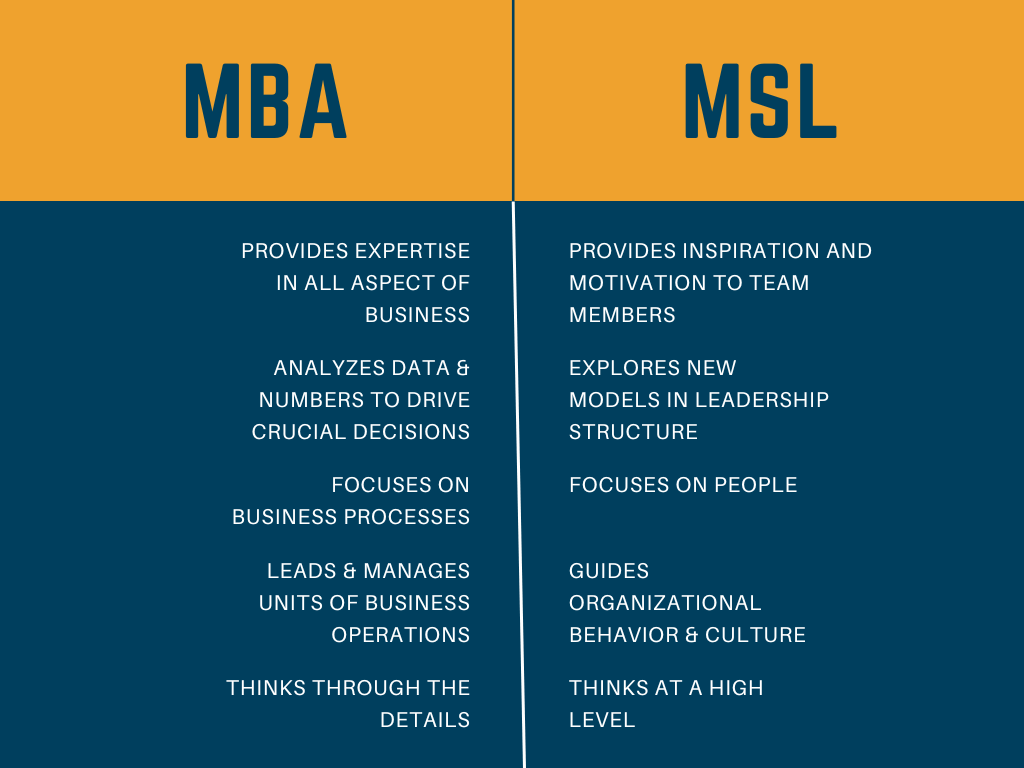
Students often come to us knowing that they want to pursue some sort of graduate business degree. However, we often get the question, “How do I know if I should do your MBA or MSL program?” Our answer to that question is another question: “What motivates you?”

Are you fascinated by people? Are you inspired when your team comes together and accomplishes your goal? Do you love helping others grow? Or are you a “number” person? Maybe you are all about digging into the data and finding innovative solutions? Perhaps developing and executing processes that contribute to company growth is what gets you up in the morning.

At Concordia University Wisconsin, we have 100% online programs for people on both sides of the fence. That’s why we’ve compiled this handy infographic that breaks down the differences between our Master of Business Administration and Master of Science in Leadership degrees.

Both of these graduate business degrees are powerful options for advancing your career. In fact, we offer a huge variety of concentrations within each degree. However, it really comes down to reflecting on your personality type and ultimate career goals when considering whether to pursue an MBA or MSL degree.

Our admissions counselors are trained to help you ask these critical questions of yourself and ultimately end up in the perfect course of study. Reach out to us today, and we can begin that conversation.

This blog was originally published on February 15, 2015. It has been updated to reflect current information.