Called to LEAD: Advancing Faith-Filled Leadership Through a Fully Funded Professional Development Experience

Applications are now open!


Concordia University Wisconsin continues its mission to develop informed, compassionate and Christ-centered leaders through Called to LEAD – Faith-Filled Leadership, an innovative year-long professional development program designed for emerging leaders in ministry. This program not only equips participants with advanced leadership competencies but also provides an accessible and supportive learning environment through a fully funded tuition scholarship generously sponsored by the Lutheran Church Extension Fund.

A Leadership Program Built on Christian Identity and Academic Excellence

Called to LEAD is structured to help current and future ministry leaders strengthen their leadership capacity in a way that is both intellectually rigorous and deeply grounded in Christian values. Participants engage in a blend of coursework, expert-led sessions, reflective practice and hands-on project development that together prepare them for effective, purposeful service within their congregations and communities.

The program’s curriculum is built around CUW’s L.E.A.D. values:

  • Lift Others Up
  • Empower with Faith
  • Act with Integrity
  • Demonstrate Compassion

These values guide the program’s pedagogy and inform how participants approach leadership, discipleship and community impact.

Comprehensive, Cohort-Based Curriculum

The one-year program follows a structured, developmental sequence that includes:

  • Program Kickoff & Orientation – Setting expectations, building cohort relationships and establishing the vision for the year.
  • Emotional Intelligence – Developing self-awareness, empathy and communication skills essential for healthy ministry leadership.
  • Adaptive Leadership – Learning to lead through complexity, navigate change and respond to evolving ministry needs.
  • Equity Leadership – Exploring practices that builds trust and design systems for everyone’s success within the Body of Christ.
  • Innovative Leadership – Applying design thinking and creative problem-solving to ministry challenges.
  • Transformational Leadership & Change – Identifying and influencing systemic elements within a church or ministry setting.
  • Faith-Based Leadership – Integrating Scripture, theology and Christian identity into leadership decisions and organizational vision.
  • Capstone Project Presentation – Presenting a fully developed “Leading & Growing” ministry initiative to expert reviewers for feedback and evaluation.

Mentorship and Long-Term Impact

Each participant is paired with a dedicated mentor — known as a Cultivator — who provides guidance, accountability, and professional insight throughout the program. The mentorship relationship often extends beyond the cohort year, supporting the implementation and sustainability of the participant’s ministry project.

Projects demonstrating strong potential for impact may receive seed funding, giving leaders the resources needed to move from concept to implementation. Participants also receive support in developing a three-year strategic plan to ensure long-term success.

Fully Funded Tuition Through LCEF

A significant hallmark of this program is its accessibility. Thanks to the generosity of the LCEF, tuition for Called to LEAD is fully funded. This scholarship removes financial barriers, allowing participants to focus fully on their learning, leadership development, and ministry innovation. The partnership between CUW and LCEF reflects a shared commitment to strengthening the Church by investing in emerging leaders.

Supporting the Future of Ministry Leadership

Called to LEAD is more than a professional development program — it’s an investment in the future of Christian communities. Participants leave equipped with practical leadership tools, spiritual grounding and a clear vision for service. Combined with full tuition support and personalized mentorship, this program offers an unparalleled opportunity for those who feel called to grow as leaders in ministry.

Ready to apply? Click the link below.


Want in?

Concordia University Wisconsin is a Lutheran higher education community committed to helping students develop in mind, body and spirit for service to Christ in the Church and the world.

CUW Social Work Students Partner With Local Veterans

Annual event gives junior social work students real-world experience while strengthening ties with the veteran community.


Each fall, the Concordia University Wisconsin Bachelor of Social Work program partners with the Veterans Services Office to provide junior social work students with a hands-on learning experience. This year marks the sixth year of this tradition, and its impact continues to grow.

On Nov. 20, students visited Boudicca House, a transitional housing program that supports single female veterans and female veterans with children, as well as Vets Place Central, which serves veterans experiencing housing instability.

These visits give future social workers an opportunity to practice intake and rapport-building skills with individuals who have volunteered to share their stories and perspectives.


A tradition that continues to grow

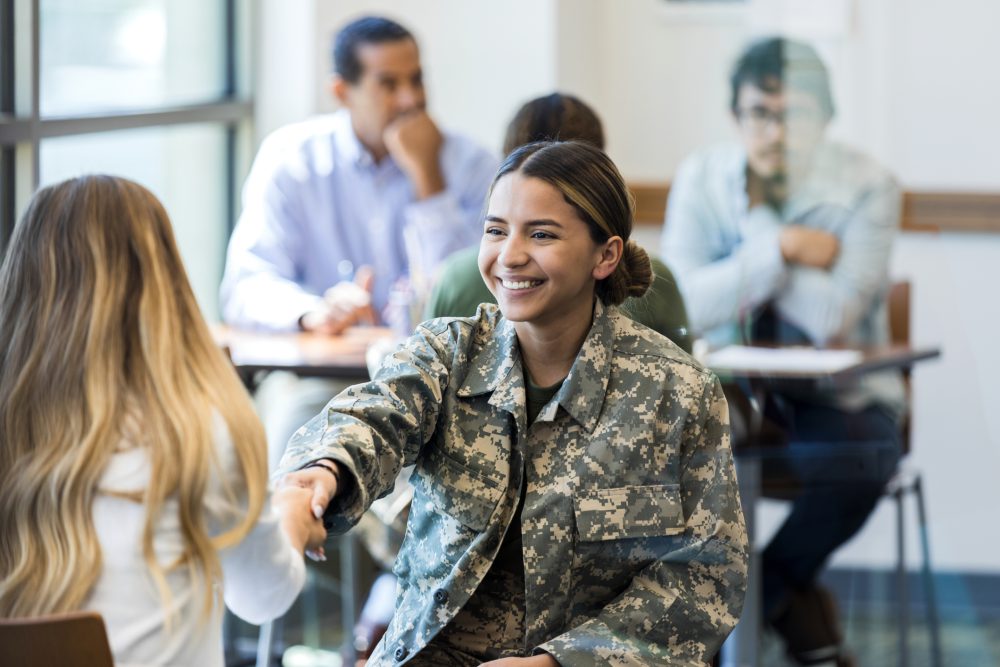
woman veteran

This annual event began six years ago by inviting veterans to campus for lunch and conversation with students. Those early interactions were meaningful, but feedback from participants helped the experience evolve into its current form.

Two notable changes strengthened the partnership:

1. Expanding voices: Including female veterans

Students now meet with both male and female veterans, ensuring a broader and more accurate representation of veteran experiences. Partnering with Boudicca House has given students deeper insight into the unique challenges female veterans may face.

2. Meeting veterans in their spaces

Instead of bringing participants to campus, students now meet veterans in familiar environments. This change has increased participation and helped veterans feel more comfortable and secure during interviews, resulting in richer and more authentic conversations.


A first step into real-world practice

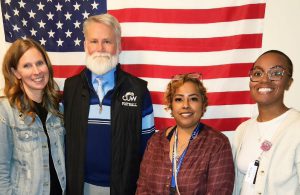
four people standing in front of flag

According to Nichole Ostrowski, MSW, CAPSW, director of the Bachelor of Social Work program, this event marks the first official opportunity for junior students to step outside the classroom and apply what they’ve learned.

“Social work is not a profession that can be learned through coursework alone. It requires real-world engagement, empathy and connection,” Ostrowski said.

Students echoed this sentiment throughout their reflections on the experience.


Building rapport and confidence

Junior Olivia Race shared that the experience helped her see how meaningful rapport building can be: “I learned a lot about effective interviewing. In particular, I gained valuable insight into building rapport. I began with simple, open-ended questions to show that I was genuinely interested in listening, and over time, the conversation flowed so naturally that neither of us wanted it to end. This experience reinforced my hope that I will be able to build similarly strong and trusting relationships with my future clients.”

A moment that impacted her deeply came from hearing about resilience amid hardship: “A moment that will stay with me was hearing a man who had been living in his car until just a week before our conversation talk about finding the positive in everyday things. It was a powerful experience that truly put things into perspective.”


Growing comfort in professional practice

For Adriana Skelding, the experience helped ease her apprehension about conducting interviews: “Before this experience, I was apprehensive about how it would go. I felt nervous about speaking with people who had endured multiple forms of trauma, especially since I had only just met them. However, the experience turned out to be incredibly positive… I truly enjoyed it. In fact, I found it so meaningful that I am now hoping to complete my senior year field placement working with the veteran population.”

She was especially moved by one conversation at Boudicca House: “A moment from the visit that will stay with me was witnessing the depth of the veterans’ struggles. While speaking with one veteran, I noticed her hesitation with certain questions… At times she began to cry. My heart broke for her. Even though I couldn’t fix everything for her, I was grateful that I was able to make her smile.”


Understanding the scope of social work with veterans

Courtney Bauer said the visit broadened her understanding of how social workers support veterans and their families: “Through this experience, I gained a clearer understanding of the wide range of services social workers provide to veterans, including mental health support, advocacy, housing assistance and more.”

She also reflected on the importance of rapport building and careful assessment: “When meeting with the veterans, we discussed some difficult topics, which made building rapport so important… As social workers, meeting clients where they are begins with establishing trust.”

One veteran’s message especially resonated with her: “A lady who served in the Navy… said she’s learned that having a hard day is okay, and that she does not need to wear a mask to hide her feelings. I feel this is important for everyone to hear.”

CUW’s BSW students spend their entire senior year in a field placement. Experiences like this one help prepare them by building confidence, communication skills and a stronger understanding of client-centered practice. Working with veterans offers lessons in resilience, trauma, identity and community support that cannot be learned from textbooks alone.


A partnership rooted in respect and service

This event is made possible through ongoing collaboration among:

Kari Metts, veterans outreach coordinator, has played a key role in building and maintaining relationships with community partners and supporting both students and veterans throughout the experience.

“Every year, I hope that the undergraduate social work students walk away with some gems shared from our veterans that they can keep in their toolbox, to see and respect our veterans,” Metts said. “In the words of Dr. Berdie Cowser, former transitional housing director, ‘Our veterans do not want a hand out, but a hand up.’”

Female veterans are a vulnerable, often overlooked population regarding their service and rising unhoused rates, according to Metts. “As a female veteran, I am glad that Sharon [one of the veterans] showed her strength, resilience and pride in her service to the students who were fortunate enough to interview and interact with her.”

Together, these partners create a powerful learning opportunity — one that strengthens students’ professional skills and highlights the importance of compassion and connection in social work practice.


Looking ahead

Each year, students describe this event as a formative moment in their journey. For some, it inspires a passion for serving veterans or other vulnerable communities. For others, it provides assurance as they prepare for their senior field placements.

As this tradition continues, CUW remains committed to honoring veterans’ stories, supporting community partnerships, and preparing social workers who are ready to serve with skill and heart.


Further reading

Want in?

Concordia University Wisconsin is a Lutheran higher education community committed to helping students develop in mind, body and spirit for service to Christ in the Church and the world. Concordia’s Bachelor of Social Work program combines rigorous academic training with hands-on field experience and a Christian worldview. Students even have the option to complete their BSW and Master of Social Work (MSW) in just five years. Learn more about CUW’s social work programs, or connect with BSW Program Director Nichole Ostrowski at Nichole.Ostrowski@cuw.edu.


Win the Day: Vin Baker Brings Powerful Testimony to Christian Leadership Series

In the heart of Vin Baker rests a simple but transformative truth: hope is stronger than any obstacle, and winning the day begins with looking up.


That theme resonated throughout Concordia University Wisconsin’s Christian Leadership Series on Thursday, Nov. 20, as Baker—Milwaukee Bucks assistant coach, four-time NBA All-Star, and recovery advocate—shared a raw, faith-filled testimony of redemption and purpose.

More than 200 business and community leaders gathered at the River Club of Mequon for the semi-annual event, sponsored by PWSB, where Baker’s keynote—“Hoops to Hope: Life’s Lessons in Perseverance”—delivered laughter, honesty, and a deeply personal call to embrace each day as a gift.

From the moment Baker stepped to the microphone, he brought a warmth and authenticity that immediately connected with the room.

“I don’t go far into my story without telling you exactly why I’m here,” he said. “It’s by God’s grace, favor, and His mercy that I’m standing before you today.”

In April, he will mark 16 years of sobriety—a milestone he described not as an accomplishment, but as a miracle.

A Journey Marked by Triumph—and Collapse

Baker shared the improbable arc of his life: from a ninth-grader who was actually cut from his basketball team to averaging 28 points per game as a senior at the University of Hartford; from the No. 8 pick in the 1993 NBA Draft to a four-time NBA All-Star, Olympian, and Jordan Brand athlete.

But 1997 marked a turning point—not upward, but downward. Following a playoff run with the Seattle SuperSonics, Baker picked up alcohol “and couldn’t put it down.” In the span of a few years, he went from one of the most respected players in the game to a man losing everything: his career, finances, reputation, and health.

“In 2006, I was done playing basketball,” he said. “I was a full-blown alcoholic, and I was out of the league. No one wanted me around. In 2014, I was working at Starbucks. I had lost essentially everything except God.”

He described the lowest moment of his life: standing in a bathroom, weak from addiction, asking God simply to save his life—not his image, not his career—just his life. That prayer led him to detox, then to recovery, then to an unexpected door cracking open.

The Slow, Steady Climb Back

Baker’s return to the Milwaukee Bucks began humbly. A former teammate, Jason Kidd, brought him on to assist part-time with the team and with broadcasting. Eventually, Baker transitioned fully onto the coaching staff, where he now works with players—including NBA superstar Giannis Antetokounmpo, whom he affectionately called “like a son.”

The Bucks’ historic 2021 NBA Championship run was an incredibly proud moment, but even that ring, he told the audience, was not his proudest moment.

“Outside of my kids, my most crowning moment as a human being was being able to open up the Vin Baker Recovery Center,” he said. “There’s nothing like being able to pay forward what God has blessed you with. I often say that coaching the Bucks is my day job. Recovery is my mission and my passion. I’ve been there where the patients are.”

The center, launched in 2024 as part of his Bouncing Back Foundation, provides compassionate treatment and mentorship to people battling addiction.

Hope as the Path Forward

Throughout his remarks, Baker returned to a simple but profound theme: winning the day.

Sobriety, he said, isn’t built in years—it’s built in moments, in small victories, in choosing hope over despair again and again.

“If you only carry one thing throughout your entire life,” he told the audience, “let it be hope. Let it be the hope that better things are ahead. Hope is what got me here today.”

He tied the idea to Scripture, reading from Psalm 121—“I lift up my eyes to the mountains. Where does my help come from?”—and then illustrated his point with a story about a buzzard, a bat, and a bumblebee, each trapped not by walls but by habit. People, he said, often do the same.

“We struggle with all our problems and frustrations, never realizing that all we have to do is look up,” he said. “The escape route and the solution to any problem is to look up at God. Sorrow looks back, worry looks around, but faith looks up.”

Want in?

Concordia’s Christian Leadership Series is a signature, semi-annual event that exists to recognize and encourage ethical leadership principles and provide networking opportunities for business and community leaders to come together in a dynamic, Christian, higher education environment.


Shape the Future With Our Master’s of Public Health

Prepare to lead, innovate and make a lasting impact on communities.


Love collaborating with a variety of people — from clients with low health literacy to government officials and CEOs — to promote healthier communities and drive meaningful change? Concordia University Wisconsin is launching a new online MPH in Applied Community and Population Health in fall 2026.

The American Public Health Association states, “Public health promotes and protects the health of all people and their communities. This science-based, evidence-backed field strives to give everyone a safe place to live, learn, work and play.”  

A degree that transforms lives

woman and man looking at chart

An MPH degree is extremely versatile; graduates are poised to make an impact in a variety of areas, including governmental, nonprofit, healthcare and private sectors. Growth in public health jobs is expected to be strong, at rates faster than average. For example, health education specialists are expected to grow by 4%, epidemiologists by 16%, and health services managers by 23% in the next 10 years, according to the U.S. Bureau of Labor Statistics. These are just a few examples of jobs you may consider with a degree in public health.

“The public health infrastructure is undergoing revitalization and expansion. The field provides many exciting opportunities for new graduates to be at the forefront of change in this profession,” says Sandy Slater, PhD, MS, professor and MPH director.

black man in pink suit
Joshua Liston-Zawadi

Junior Joshua Liston-Zawadi has already been making a significant impact in the world of public health and will graduate with his bachelor’s degree in December 2026. Zawadi currently owns three businesses in the public health sector: Dad Doula University, Life Redefined MKE and Conscious Community Curators. He has also been ministering for the last five years.

Not wanting to feel like just a number, Liston-Zawadi chose to attend CUW because the people here made him feel seen and valued.

“They saw me and that’s a big deal for me,” Liston-Zawadi says. “At Concordia, you can feel that people actually care about you. For example, I was in the hospital for a week and missed class, and my professors called me every day to make sure I understood the assignments. You don’t get that at a regular college.”

He continues, “Public health is the one arena where everything I do can be used.” Zawadi is a minister, a father, a doula, a community health worker — and soon a CUW alumnus. The master’s program is appealing to him because he eventually plans to pursue a doctorate, which he hopes will help him work in policy.

Heart of a servant, mindset of a leader

vaccine clinic event with children

“We are looking for thought leaders — students who are creative, committed to public health, and ready to challenge the way things have always been done,” says Audrey Kostrzewa, PharmD, MPH, BCPS, professor and MPH assistant director.

CUW’s MPH program will nurture a servant’s heart and equip students with the skills to develop effective, evidence-based strategies that improve population health. Courses are intentionally designed to teach evidence-based practice, management and servant leadership, research methods, systems thinking, and informatics. These courses provide students with practical tools to address real public health problems.

One of the unique courses students will take, “Leadership and Advocacy in Public Health,” will focus on servant leadership development within the context of public health, and its relation to meeting the needs of others, and advancing the profession of public health through advocacy.  

A degree that opens doors — and hearts

people at farmer's market

“Public health’s goal is to ensure people can achieve the healthiest lives possible,” Slater says. “That means meeting people where they are, working with them and caring for them — values that align deeply with faith and what it means to be a Christian.”

Graduates of this program will be capable of:

  • Demonstrating strong knowledge and communication skills
  • Leading and collaborating effectively
  • Exhibiting technological and digital fluency
  • Advocating for public health
  • Applying creative, out-of-the-box thinking to drive change

There are many pressing health challenges throughout the country and around the world.

“Public health needs people who can think outside the box and advocate for positive change,” Kostrzewa says.


Choose your path — purposefully

Driven to serve others and strengthen communities? Public health could be the right fit for you.

As a multifaceted field, career opportunities exist in:

  • Health systems
  • Insurance companies
  • Nonprofits such as the American Heart Association or the American Cancer Society
  • Digital health organizations

With these versatile career possibilities, CUW’s public health program offers an exceptional path for people from a variety of undergraduate backgrounds. Take that bachelor’s degree to the next level.


Want in?

Concordia University Wisconsin is a Lutheran higher education community committed to helping students develop in mind, body and spirit for service to Christ in the church and the world. Public health professionals are on the front lines of creating healthier, stronger and more resilient communities. CUW’s Master of Public Health in applied community and population health equips students with the knowledge, skills and evidence-based perspective to promote health, prevent disease and serve others.

Rooted in Concordia’s mission to prepare students to serve “Christ in the church and the world,” the MPH program integrates science, service and stewardship. Students gain practical tools to address today’s complex public health challenges while grounding their work in compassion, ethics and faith.


Bringing Anatomy to Life: CUW’s New Anatomage Table Enriches Learning Across Health Programs

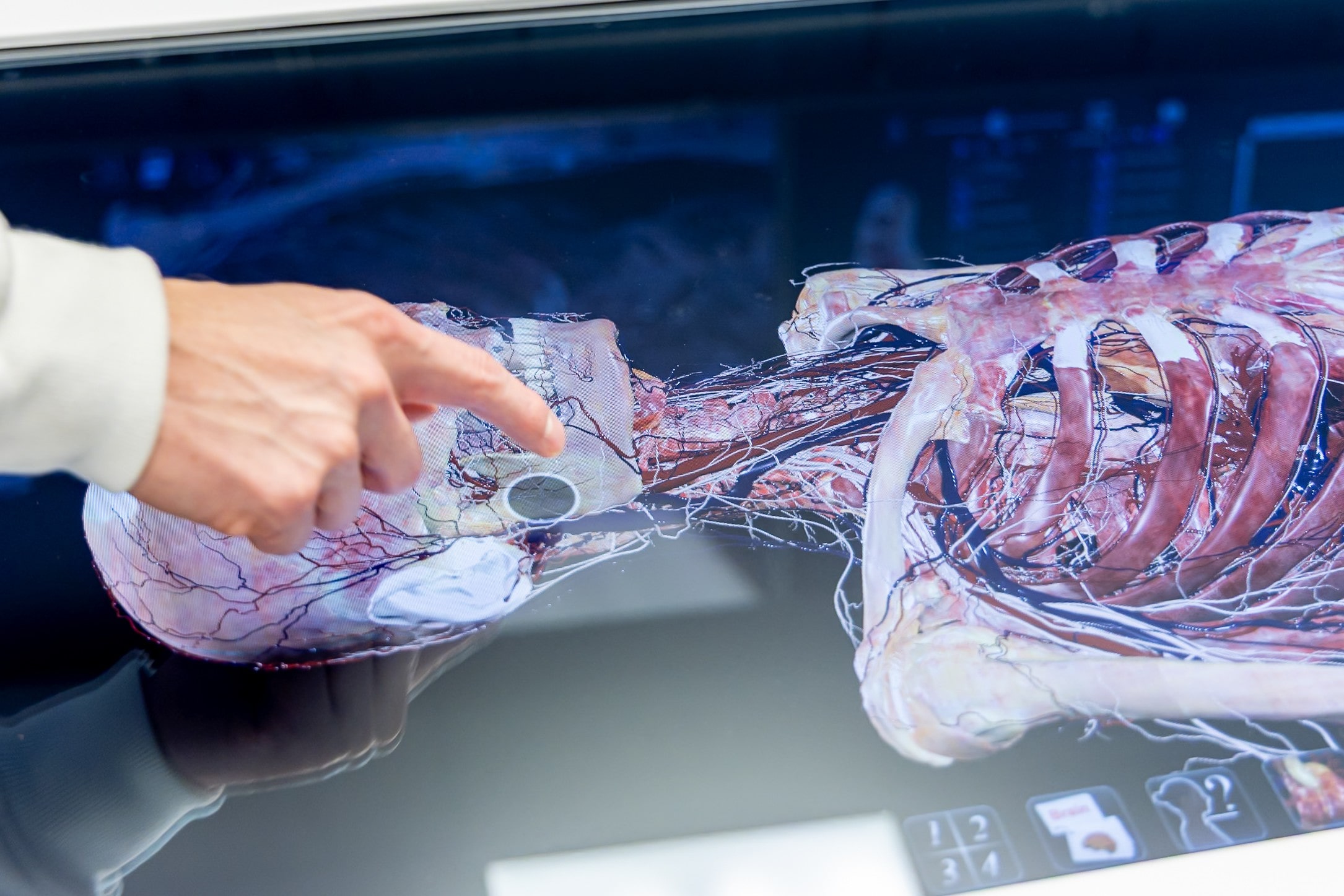
Meet Hans. He’s the image on one of Concordia University Wisconsin’s newest tools — the Anatomage Table. Through this cutting-edge technology, Hans supports nursing and health professions students at CUW.


The Anatomage Table is a life-sized, touchscreen digital anatomy system that helps students explore God’s design of the human body with clarity and depth. Using high-resolution images from real human cadavers — and in some cases animals — it provides a safe, interactive way to study anatomy through virtual dissection, layered views and detailed 3D exploration. This tool supports the university’s commitment to developing knowledgeable, compassionate health professionals who serve others with skill and integrity.

“Students from a wide range of academic programs will benefit from this new Anatomage Table,” said Dr. Robert Balza, biology professor and associate vice president of Academics for Teaching, Learning, and Academic Innovation.

He added: “Nursing students will be able to visualize catheters moving through a semi-transparent body. Physical therapy students will be able to view how muscles move joints in exquisite detail. There is an ultrasound application that is great for our sonography students. Rehab sci and premed biology students will be able to use this machine to help learn the names of bones and muscles. SLP (speech-language pathology) students can explore the detailed anatomy of the mouth and neck in 3D. Pre-vet students will even be able to explore the anatomy of household pets and farm animals!”

During a recent demonstration of the equipment, Balza showed how Hans could be virtually dissected and viewed layer by layer. He even pointed out the cancer “growing” within Hans. He added that the images were based on a real person, nicknamed Hans by the manufacturer.


Digital tools that deepen learning

Because it isn’t limited like a traditional cadaver, the digital model allows students to return to structures again and again — undoing dissections, shifting perspectives and isolating specific systems to deepen understanding. Its interactive touchscreen format encourages curiosity and keeps learners engaged as they work through challenging anatomy concepts.

With warranty, CUW’s Anatomage Table cost about $100,000 and was made possible through a donation made by a generous family. “This table is the premium ‘convertible’ model that flips up for use in a lecture hall, so it is very versatile,” Balza said.

Biomedical science senior Madeline Brashaw has had an opportunity to observe the table in action.

“When Dr. Balza first told me about the Anatomage Table, I was beyond excited for CUW,” Madeline said. “It sounded like an amazing opportunity for students to become fully immersed in seeing real models without having to immediately go into a cadaver lab. The first time (I saw) the table, I thought it was very interesting. Not only did it allow me to see each individual part of the human body, but it also allowed me to fully comprehend everything as a whole.”

Strengthening understanding through practice

Madeline, who serves as the president of Concordia’s Pre-Med Club’s, plans is to become a physician and is now pursuing clinical experiences to complement her academic training. The members of the Pre-Med Club recently had an opportunity to see the table and how it works.

Madeline Brashaw

“(Those) that attended this meeting were impressed by how realistic and detailed the table was,” she said. “Many people enjoyed seeing the birth simulation.”

Balza said the table will not entirely replace real cadavers because it’s important for students to actually feel muscle and other parts of the body during dissection. In addition, it will not replace clinical experiences with hospital partners, either. “This is just one more tool in our toolbox that allows us to provide students a wide range of experiential learning opportunities,” he said.

As for Madeline, she is looking forward to more opportunities to work with Hans.

She said: “There are so many different features on the human models, but it does not stop there. There are some programs on the table that can help with chemistry and physics understanding as well. The more you interact with it, the easier using it will be. This will help you not only recognize muscles, bones, and nerves, but to fully understand how they interact with each other.”


Want in?

Concordia University Wisconsin is a Lutheran higher education community committed to helping students develop in mind, body, and spirit for service to Christ in the Church and the world. The School of Health Professions (SHP) and School of Nursing offer a wide variety of accredited programs at both the undergraduate and graduate level. Our programs are provided in a variety of teaching formats (face-to-face, online, blended) and our curriculum emphasizes service to the community and inter-professional collaboration.


Michelle Gain and Madison Post are CUW Students of the Month

CUW is pleased to honor two outstanding students every month, one undergraduate student and one graduate student. Congrats to Michelle and Madison!


Undergraduate Student of the Month

The CUW faculty have selected Michelle Gain as the Undergraduate Student of the Month for November. Michelle is a senior Communication Sciences and Disorders major who exemplifies Concordia’s mission through her intellect, service, and faith-filled leadership. Alongside her CUW Presidential Scholarship, Michelle serves as an instructional technology assistant, supporting faculty with excellence and grace. She leads as treasurer of NSSLHA, co-editor in chief of Quaestus, executive assistant for Alpha Chi, and chapel care coordinator for Campus Ministry. Her volunteer work, ranging from CUW’s Speech-Language-Hearing Clinic to AAC events with children, reflects compassion and professional dedication. Michelle integrates her gifts in communication, organization, and faith to serve others in mind, body, and spirit, living her vocation as a future speech-language pathologist grounded in Christ-centered service.

Michelle was nominated by Dr. Mikaely Schmitz.


Graduate Student of the Month

The CUW faculty have selected Madison Post as the Graduate Student of the Month for November. Madison is a graduate student in Speech-Language Pathology who exemplifies perseverance, integrity and compassion in all areas of her graduate work. As a two-year organizer for the Walk for Apraxia, her leadership helped CUW become one of the top fundraising universities in the nation. In the classroom, Madison models curiosity and resilience, asking insightful questions that benefit both herself and her peers. Madison’s work experience providing childcare to children with significant developmental needs and as a registered behavior technician reflects her servant-hearted approach to care. Madison truly embodies Concordia’s Christian mission—living out faith through service, demonstrating empathy, and using her God-given gifts to improve the lives of others through speech-language pathology.

Madison was nominated by Dr. Cindy Lund.


Concordia University Wisconsin has been awarding Student of the Month since 2016. Want to see our previous Student of the Month awardees? Take a look here!


Want in?

At Concordia University Wisconsin, we believe that education is at the junction of faith and learning. That means that we get to know you personally – your unique gifts and skills – so that we can help you develop fully in mind, body, and spirit to achieve your highest potential. To learn more or to apply, click the link below.

Beyond the hype: Safe and ethical AI use for nurses

Understanding when—and when not—to trust AI in nursing is becoming a core competency.


Nursing students must use critical thinking, communication and clinical judgment. When a nurse cares for a patient, that patient doesn’t want their nurse staring at a screen or asking AI every question. Patients can do this at home, which can lead to misdiagnosis. Nursing graduates must be able to safeguard accuracy and use AI correctly, as well as function without it.

Balancing humanity and technology

“AI can help with many components of medicine, but humans care for the mind and spirit,” says Jessica Leiberg, PhD, DNP, dean of the School of Nursing. AI is advancing quickly, but comforting a patient and showing compassion are uniquely human.

Julie Parve, DNP, APNP, director of graduate nursing, is also a family nurse practitioner who works in a clinic one day a week. She is learning how AI is being used in the field and is excited to show students how it can help in practice.

One example is Epic Systems’ electronic health record (EHR) software, which has existed for several years. This platform uses AI assistants and ambient-listening technology (DAX) to help reduce charting time and improve documentation. DAX Copilot (Dragon Ambient eXperience) is an AI-powered tool that supplements note-taking by acting as an AI scribe for nurses. These tools work together.

“It’s coming out very quickly,” says Dawn Kuerschner, chair of undergraduate nursing. “For students, especially undergrads, I want them to understand how it can help patients—but also that it can give wrong or incomplete information. So they need to be careful and prudent in how they use and interpret AI.”

AI assistance should help you, not replace you

AI-powered tools such as DAX are not designed to replace the human brain—just assist it by reducing documentation burden, streamlining workflow and improving a nurse’s efficiency.

“There are multiple spaces for AI in nursing: clinical practice, the classroom, leadership, scholarship and how faculty use it to inform their teaching,” says Leiberg. Conversations are underway within the School of Nursing to set consistent parameters.

“We’re working to ensure faculty and students use it appropriately. AI isn’t good or bad—it’s a tool. It’s how the human uses it.”

Overall, AI may help reduce burnout and administrative burdens for future nurses since charting takes a considerable time. AI summarizes charts, assists with documentation and can help inform diagnoses as well.

AI pitfalls you must be aware of

Whether using AI or not, nurses must focus on being present and communicating properly with their patients. For those using the tools, they must also be aware of inaccurate information.

Kuerschner says, “I have students ask AI about a medication, then check it in a verified drug resource. Sometimes it’s accurate, but sometimes not.”

The goal is for nurses to learn to use AI as a tool while still thinking critically. For example, Parve explains, “AI might tell you how to insert an IV but skip aseptic technique—which is critical for infection prevention.”

HIPAA is also a major concern because nurses cannot enter patient information into a noncompliant platform. Leiberg says, “We have to teach students how to use the technology safely to protect patients.”

Embracing AI responsibly

It’s impossible to predict where AI will be even one month from now. Concordia nursing graduates will be equipped to use this tool ethically and effectively. Rooted in Christ, they will learn to serve their patients first—focusing on accuracy, healing, humanity and compassion.

“Let AI handle the charts; let nurses handle the humans,” Kuerschner says.

Additional reading

For a more in-depth feature on nursing read, “DE-MSN: A beacon of hope for the future of nursing.”


Want in?

Concordia University Wisconsin is a Lutheran higher education community committed to helping students develop in mind, body and spirit for service to Christ in the Church and the world. Whether you’re just beginning your journey or looking to advance your nursing career, CUW is here to support you every step of the way. With flexible programs, faith-integrated learning, and a community that truly cares, you can become the kind of nurse the world needs. Explore our nursing programs today and discover how CUW can help you lead with compassion and purpose.


Answering the Literacy Crisis: Why Become a Reading Teacher or Reading Specialist at Concordia

Reading is the foundation of all learning, and when students fall behind their futures are at risk.


Across the nation, schools are facing an urgent literacy crisis. Reports show that far too many children struggle to read at grade level, and the gap only widens as students move through school.

This is where literacy leaders are needed most.

Becoming a reading teacher or a reading specialist is more than a professional step forward—it’s a calling to serve children and communities.

Reading teachers with the #1316 license provide targeted support for struggling readers, equipping them with the skills and confidence to succeed. Reading specialists with the #5017 license lead schools and districts in building comprehensive literacy programs, mentoring teachers, and ensuring that every student has the opportunity to thrive.

Why choose CUW?

Kasey Schroeder, a graduate literacy student, says her experience at CUW truly shaped her as an educator and leader. “Throughout my coursework, I had the chance to dig into teaching standards, leadership practices, curriculum design, active research and the science of learning,” she said. “What I appreciated most was that the assignments weren’t just theoretical—they pushed me to create real resources and tools that I now use every day in my role as a literacy specialist.”

The program also helped Schroeder understand the bigger picture of school leadership.

“By connecting our learning to the Wisconsin Administrative Standards and applying them to real situations, I learned how to think strategically, support teachers and manage the many moving pieces that impact literacy instruction,” she said.

Schroeder was well-prepared and confident when entering her internship—and you will be too.

“I’m grateful for my growth and excited to keep applying what I’ve learned to support the communities I serve.”

Hope for tomorrow

The literacy crisis is real, but it’s not without hope. Every new reading teacher and reading specialist has the power to make a difference in the lives of students, classrooms and schools.

CUW provides:

  • Urgent alignment with today’s needs: Our program is built around the most current literacy requirements, including Wisconsin Act 20 and the International Literacy Association Standards.
  • Highly qualified practitioner professors: Our faculty bring years of classroom and leadership experience, merging evidence-based theory with real life classroom practices.
  • Mentorship that matters: Professors walk alongside you, offering guidance, support and expertise throughout your journey.
  • Faith and service at the center: We believe literacy is not only an academic goal but a way to open doors, empower students and serve communities in Christ’s name.

If you are ready to step forward as a leader in literacy, now is the time. Concordia’s graduate literacy program offers both licensure pathways and a supportive community that will equip you to meet this urgent need.

Your calling as a literacy leader starts here.


Want in?

Concordia University Wisconsin is a Lutheran higher education community committed to helping students develop in mind, body, and spirit for service to Christ in the Church and the world. Our online graduate program prepares you to be a respected and effective leader in literacy for students and teachers. This interdisciplinary program will give you the tools to teach reading at the K-12 level. You will develop the confidence and knowledge to modify current teaching methods and implement innovative reading initiatives.


Adventures Await: Experience the World at Concordia

Get ready for a weeklong celebration of global cultures hosted by the Concordia International Center.


The Concordia International Center invites you to embark on a journey across continents—no passport required! From November 17–21, experience the colors, flavors, music, and traditions of India, Latin America, Africa and the African Diaspora, Europe, and Asia through a series of immersive “adventures.”

Each day features three events highlighting different aspects of the region’s culture. Whether you’re tasting traditional dishes, enjoying live performances, or joining hands-on activities, every adventure brings a new opportunity to learn, connect, and celebrate the rich diversity of God’s world.


Schedule of events

Monday, November 17: India
Start the week with a full day of Indian sights and flavors.

  • 9 a.m. – Traditional Indian chai and Parle biscuits | Rincker Lobby
  • 11:45 a.m.–1 p.m. – Indian student dance performance and Indian cuisine | Siebert Dining Hall
  • 3–5 p.m. – Indian snacks and desserts, henna, and crafts | Concordia International Center

Tuesday, November 18: Latin America
Celebrate Latin America’s energy and artistry through food, music and dance.

  • 9–10 a.m. – Pan dulce and cocoa | Rincker Lobby
  • 12–1 p.m. – Mariachi band and Latin American cuisine | Siebert Dining Hall
  • 3–6 p.m. – Mexican corn, salsa dancing lessons, Brazilian mask-making, and a film | Terrace Room

Wednesday, November 19: Africa and the African Diaspora
Experience the vibrancy of Africa and the African Diaspora through rhythm, community and culture.

  • 10–11 a.m. – Biscuits from South Africa and Tanzanian coffee | Chapel Hallway
  • 11:45 a.m.–1 p.m. – Live music and dance by Lucky Diop and African cuisine | Siebert Dining Hall
  • 2–4 p.m. – Music with African and Jamaican food (sponsored by BSU) | Albrecht Lounge

Thursday, November 20: Europe
From polka to pastries, Europe’s heritage comes to life on Thursday.

  • 9–10 a.m. – Italian coffee and biscuits | Robert Plaster Collaboratorium
  • 11:45 a.m.–1 p.m. – Mike Schneider Polka Band and European fare | Siebert Dining Hall
  • 3–5 p.m. – Paint your own gnome (Gartenzwerge), snack on German treats, and enjoy a Martin Luther film | Concordia International Center

Friday, November 21: Asia
End your journey through the nations with a celebration of Asian traditions, artistry and cuisine.

  • 9:30 a.m. – International Flag Ceremony | Chapel of Christ Triumphant
  • 10–11 a.m. – Korean tea and honey cookies | Chapel Hallway
  • 12–1 p.m. – CUW Chinese student performances and Asian cuisine | Siebert Dining Hall
  • 3–5 p.m. – Open house featuring Sushi Go! game, Japanese crafts, an animated film and ramen-making | Concordia International Center

A Week to Remember

Each “adventure” offers more than cultural discovery—it’s an invitation to celebrate the creativity of our Creator reflected in people and places around the globe. Join us for this week of joyful learning, connection and community.

Want in?

Concordia University Wisconsin is a Lutheran higher education community committed to helping students develop in mind, body, and spirit for service to Christ in the Church and the world. To explore CUW’s international programs, visit International Admissions


CUW Holiday Service Projects Guide 2025


Service brings us closer — this season and beyond.


As the holiday season approaches, Concordia University Wisconsin invites students, faculty and staff to share the spirit of Christ through service. Below are several meaningful ways to give back to our local and global communities this November and December.


Food drives

students doing volunteer work

Student Nurses Association (SNA) Food Drive for Hunger Task Force

Dates: Nov. 10 to 21
Location: Collection boxes by grade level
Support Milwaukee’s only free and local food bank, the Hunger Task Force, Wisconsin’s anti-hunger leader. When donating, please choose healthy, shelf-stable foods such as:

  • Whole-grain, sugar-free cereals or oatmeal
  • Canned vegetables (no salt added)
  • Canned fruits (no sugar added or packed in natural juices)
  • Low-fat dairy foods and lean meats
  • Peanut butter

Each box corresponds with a grade level to make it a fun competition — the grade that donates the most items will win a prize!


Latino Student Union & Sodexo Non-Perishable Food Drive

Dates: Nov. 12 to 25
Location: Donation containers inside the cafeteria
Join the Latino Student Union and Sodexo in their mission to support families in need this holiday season. Bring non-perishable food items and drop them in the collection bins located inside the cafeteria.


For the children

man surrounded by children

Operation Christmas Child Packing Party (Samaritan’s Purse)

Date: Thursday, Nov. 13 | Time: 4–5 p.m.
Location: Terrace Room
Join us to help spread joy to children around the world by packing Christmas gift boxes. Bring small toys, stuffed animals, school supplies, and toothbrushes to include in the boxes. Every item helps brighten a child’s Christmas morning.


School of Education Graduate Counseling Program: Clothing Drive

Dates: Nov. 17 to Dec. 23
Location: Donation bins inside the School of Education office (Rincker 110), open 8 a.m. to 4:30 p.m.
Help provide warmth and comfort this winter by donating new or gently used clothing for Ozaukee County foster care children. Your donation will bring hope and encouragement to children in need this season.


Angel Tree spreads generosity

Dates: Nov. 25 to Dec. 8
Locations: Chapel of Christ Triumphant and Pharmacy Building

Every year, Concordia has the opportunity to bring Christmas cheer to children through the Angel Tree program. This year, CUW is partnering with St. Peter-Immanuel Lutheran School to provide gifts for every student at their school (roughly 200 students).

tree with presents under it

Angels are available to pick up on the Christmas tree located in the back of the chapel or in the Pharmacy Building, and can be picked up at any time — please select as many as you wish. Also, write your name on the sheet next to the name of your angel to indicate when a child’s gift is received. (The sign-ups are arranged by grade level.)

We want to ensure that every student at St. Peter gets at least one Christmas present this year. Please keep presents to around $25.

Please securely attach your angel to your gift and drop it off in the back of the chapel in the box underneath the corresponding grade of the student. Please have the presents wrapped and in the chapel by Monday, Dec. 8.

If you have any questions, please email madeline.bryant@cuw.edu.


Feeding Starving Children Event

girl with hair net packing food

Join the CUW community in supporting Feed My Starving Children, a hands-on service event where volunteers pack nutritious meals for children around the world. This is a powerful way to serve as the hands and feet of Christ — making a global impact right from campus!

Over 500 volunteers and $30,000 are needed to host this event March 18–20, 2026. To learn more about how you can support or volunteer, visit here.

“Whoever has a bountiful eye will be blessed, for he shares his bread with the poor.” — Proverbs 22:9


Add Your Service Project

If you have a service project you would like added to this article, please email Director of Communications, Sue Suleski, at susan.suleski@cuw.edu. We’d love to help spread the word about how CUW students are making a difference this holiday season!


Want in?

CUW is a Lutheran higher education community committed to helping students develop in mind, body and spirit for service to Christ in the Church and the world.