A gift that drives impact

New driving simulator enhances driver assessment training for occupational therapy students.


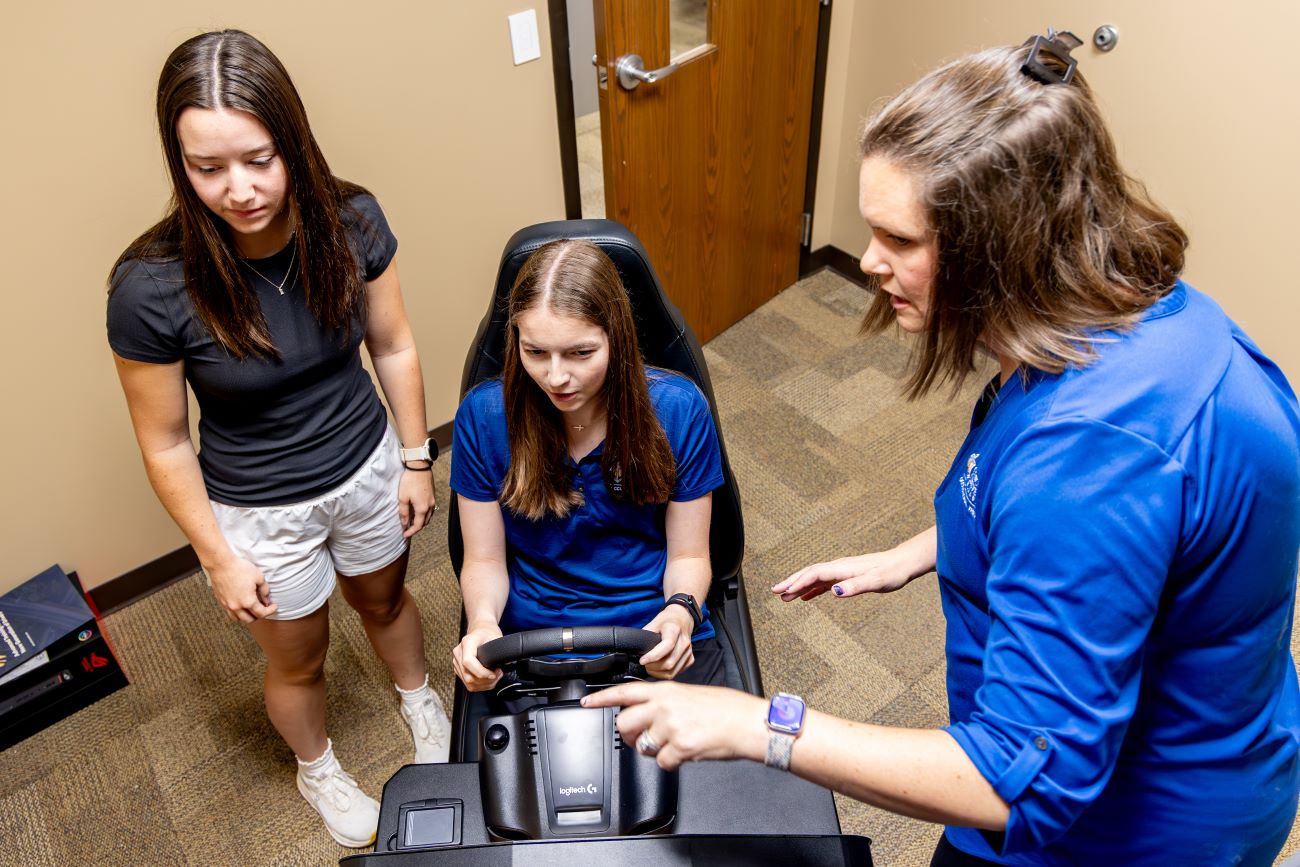
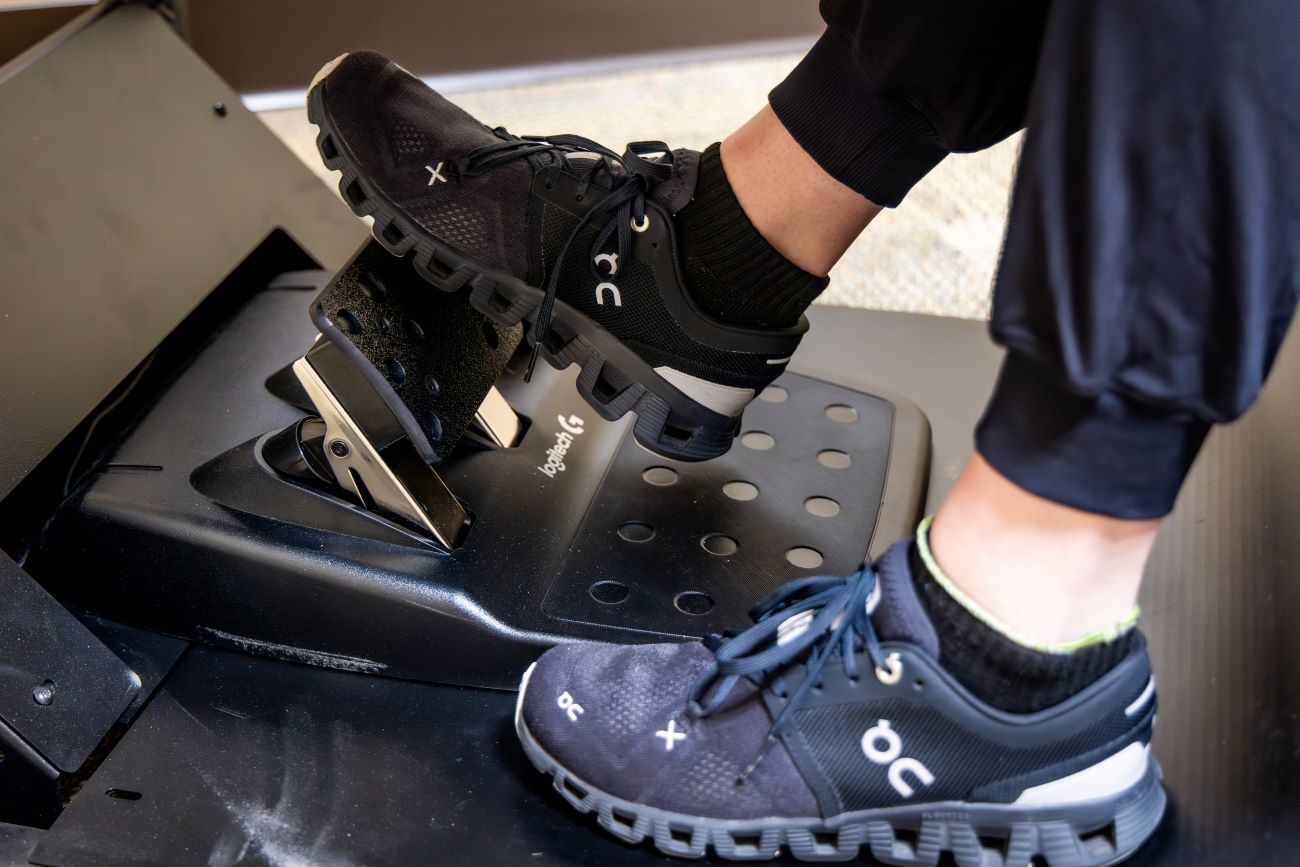
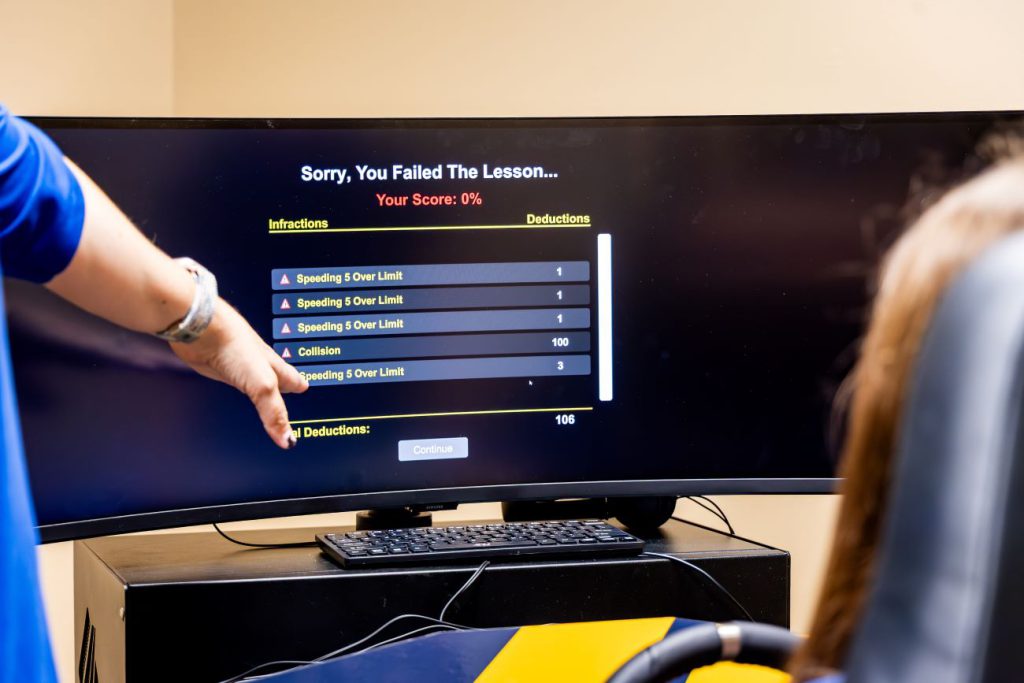
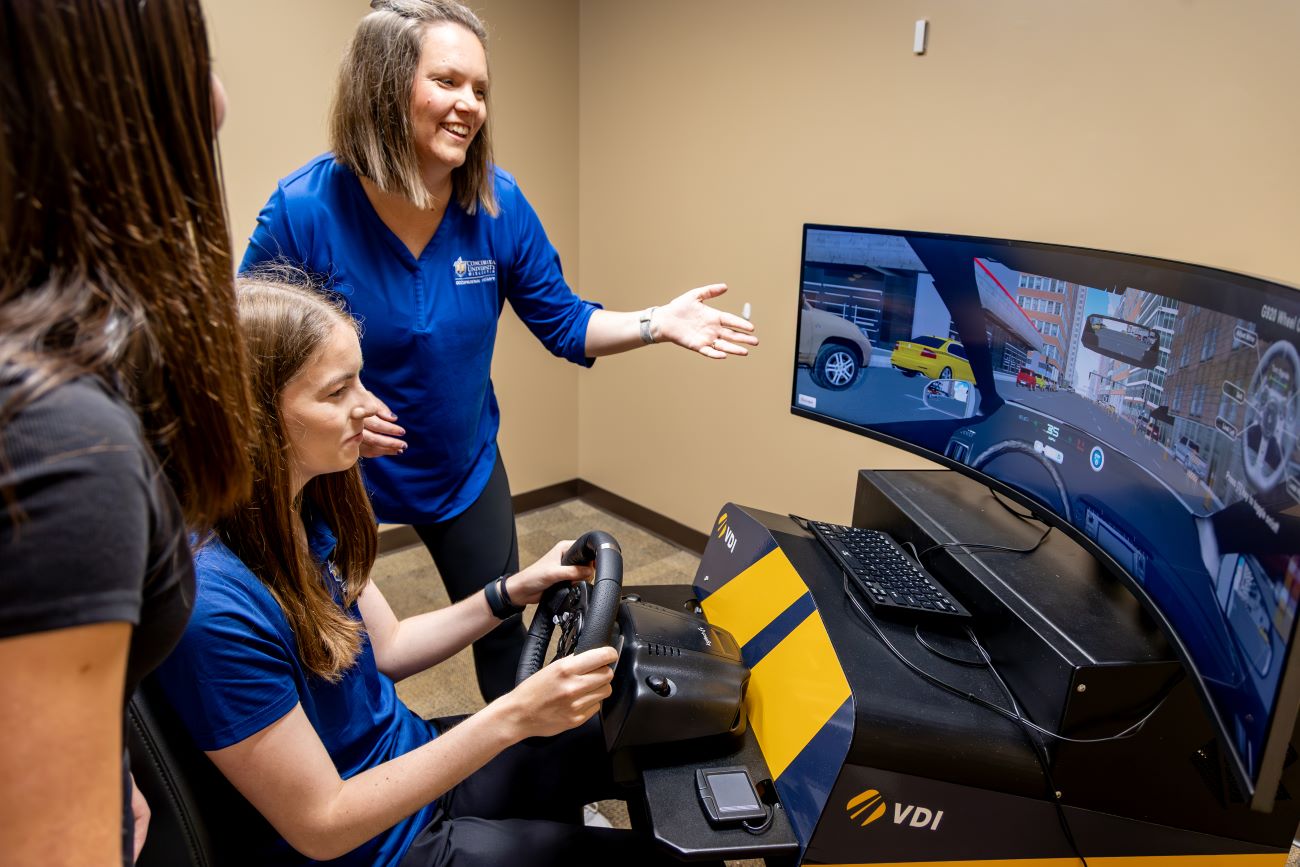
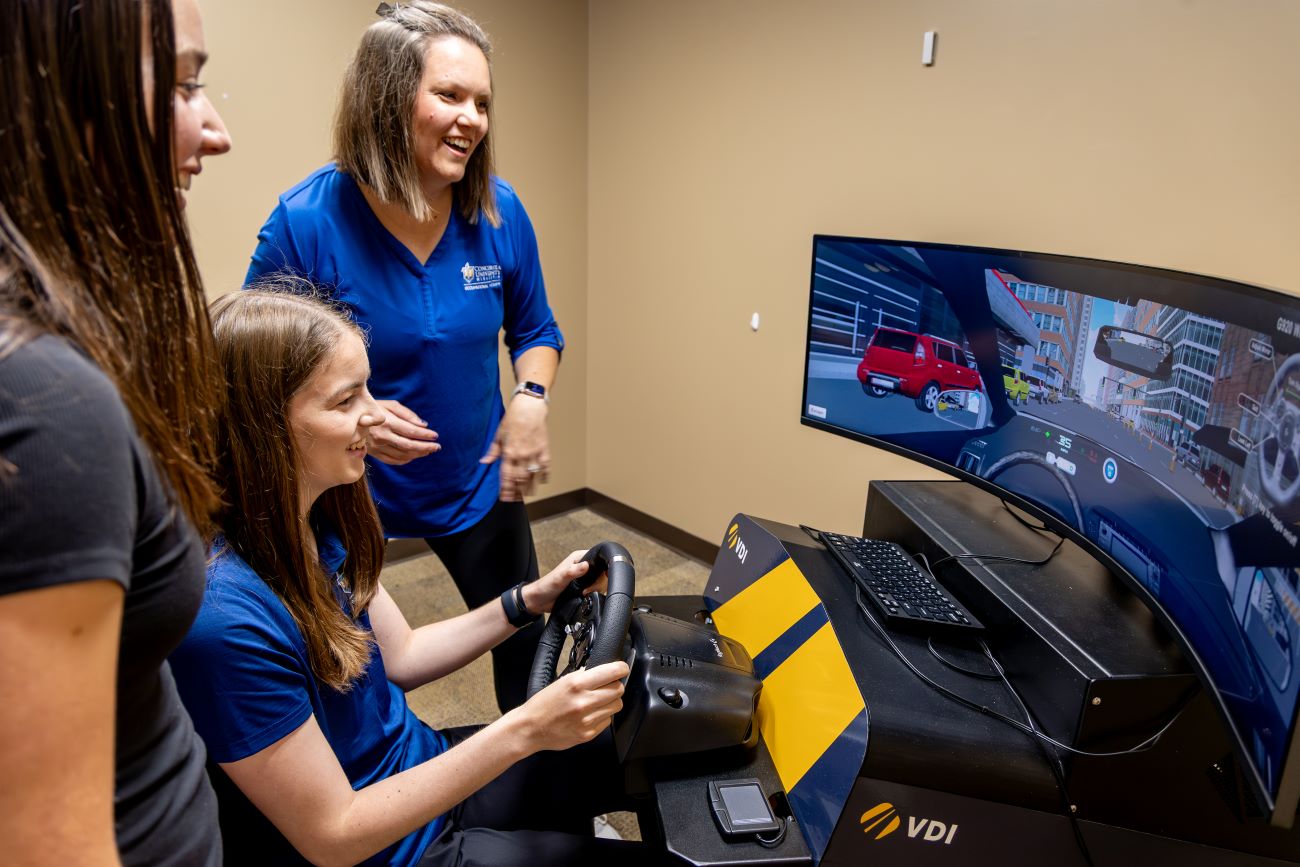
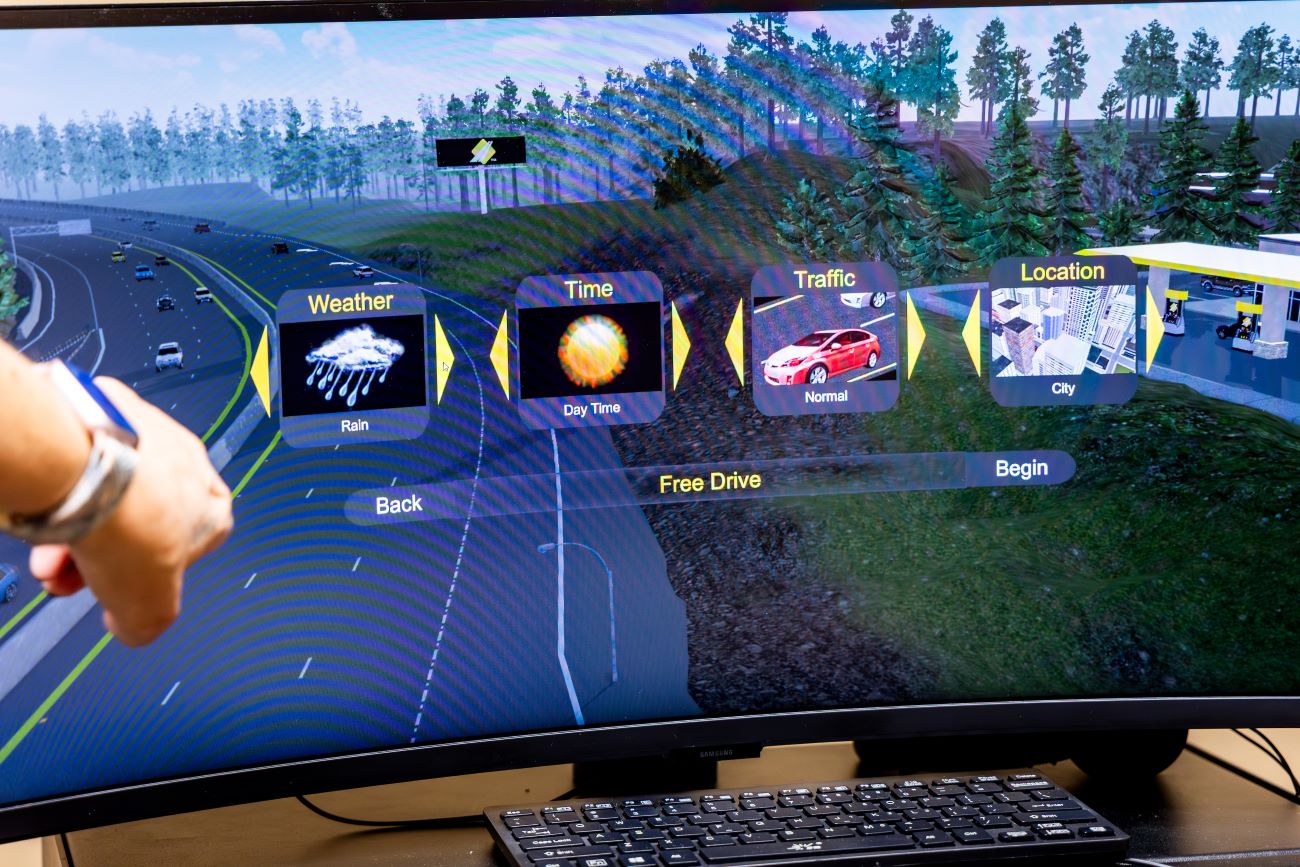
Thanks to a generous gift from the Kott Memorial Charity Trust, the new driving simulator brings classroom learning to life. Through realistic driving scenarios, occupational therapy students evaluate driving performance, strengthen clinical reasoning and apply what they’ve learned before working directly with clients.

“Driving simulators are an exciting and innovative teaching tool. They bring to life what students have read in their textbooks and give them opportunities for hands-on practice. As a professor, I’m always looking for ways to make that happen,” said Anne Martin, OTR/L, assistant professor of occupational therapy.


OT and driving go hand in hand

Driving is more than a convenience. It allows people to work, attend school, keep medical appointments, complete daily errands and stay connected to their communities. Occupational therapists help clients maintain or regain their independence by evaluating the physical, visual and cognitive skills needed to drive safely.

Behind the scenes, students learn to assess the roles, habits and routines that influence a person’s ability to drive. They also examine how injury, illness or changes in cognition affect driving. Those insights help them determine when occupational therapy interventions can support a client’s safe return to the road.

“It was a great experience to get a sense of what the driver simulator could do and what to observe and look out for when assessing a client’s driving ability,” said Anna Pace, a Doctor of Occupational Therapy student expected to graduate in 2027. “We learned how it could help us assess and provide safe, client-centered recommendations and interventions.”


Bridging the gap between textbook and practice

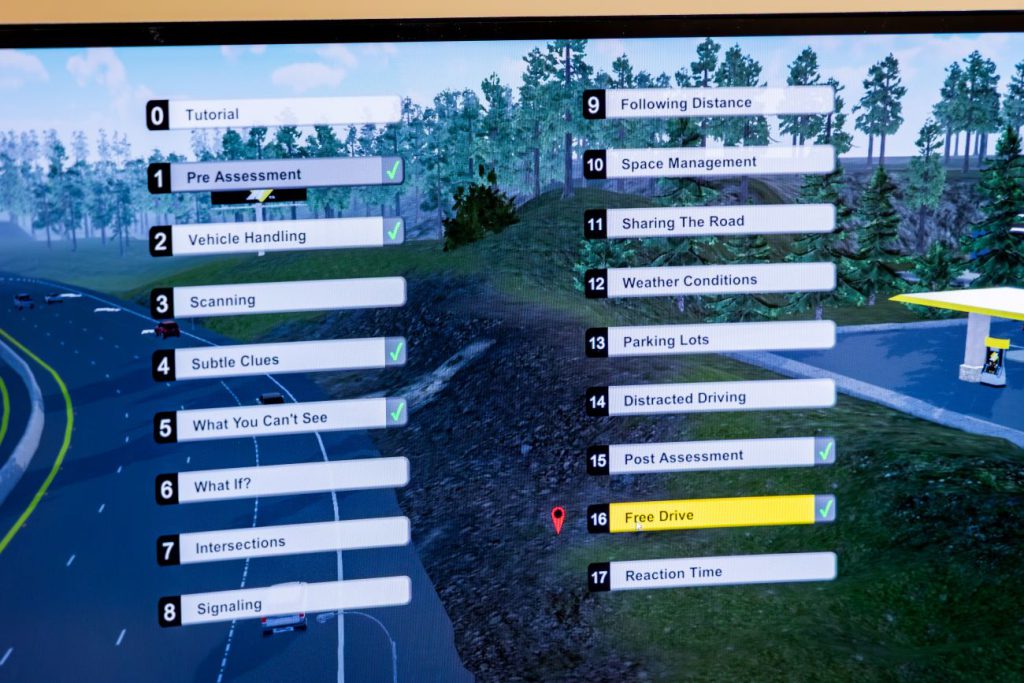
The simulator recreates a variety of driving conditions, from sunny afternoons to snowy evenings, during both daytime and nighttime travel. Learners experience suburban neighborhoods, rural highways, busy city streets and other driving environments. They also practice responding to distracted driving, speed control, reaction time and other scenarios that influence driving safety.

Martin said the simulator also gives students opportunities to practice communicating recommendations with clients—one of the most important aspects of occupational therapy. In doing so, it allows them to apply classroom learning in meaningful ways before entering fieldwork, preparing them to better serve the clients and communities they’ll one day support.

Anne Martin, OTR/L, assistant professor of occupational therapy, contributed to this article.


Editor’s note: The driving simulator was made possible through the generous support of the Kott Memorial Charity Trust, whose investment is helping prepare the next generation of occupational therapists.


Want in?

Concordia University Wisconsin is a Lutheran higher education community committed to helping students develop in mind, body and spirit for service to Christ in the Church and the world.


Good Friday at the center of Concordia

At Concordia University Wisconsin, Christ crucified shapes our faith, our life together and our call to live in his love.


Luke 23:33–34: “And when they came to the place that is called The Skull, there they crucified him, and the criminals, one on his right hand and one on his left. And Jesus said, ‘Father, forgive them, for they know not what they do.’”

CUW’s chapel features a larger-than-life crucifix as its focal point. Hanging front and center above the altar, Christ crucified is the defining image of the Chapel of Christ Triumphant. That crucifix witnesses that the Christian faith centers on Christ and him crucified. Accordingly, Good Friday is foundational for the Christian church.

Good Friday is part of the holiest days in the church: the three days incorporating the Last Supper, Jesus’ betrayal, trial, condemnation, crucifixion, burial, and resurrection. By these events, Jesus redeemed mankind from sin and death and wins an eternal life that he promises to all who believe in him.

Good Friday is foundational for Concordia as well. We orient our life together around Christ, striving to place him at the center of all that we do.

Accordingly, we gather in chapel for devotion and prayer. We hear the Word proclaiming that Christ was crucified for our life and forgiveness. We go out to model Christ in our interactions with one another. Good Friday offers us an image of the life we are called to model.

In his sermon on Good Friday in 1529, Martin Luther called attention to Jesus on the cross as the Great High Priest. Like the priests of the Old Testament, Jesus is clad in fine vestments and makes a sacrifice. Instead of the priestly robes worn by Aaron and his sons, Jesus is adorned with the virtues of patience, obedience, humility, love, and gentleness. Every possible virtue comes together in Jesus, the spotless Lamb of God.

Those virtues are evident in Jesus’ prayer for those who crucify him. Jesus shows his love for them rather than lashing out in anger or threatening vengeance. He prays to his Father to forgive them. This gives us an image of the patience, gentleness and love of Christ. He loves even those Roman soldiers nailing him to the cross.

This love of Christ inspires our love for others. We strive to show the same gentleness, humility and love as Christ. We aim to live in obedience to God, as Jesus did, and to live with the same humility that he shows as he humbles himself to the point of death on the cross.

Good Friday is a holy day at Concordia: a day set apart from our everyday work. Classes are canceled. Offices are closed to allow our community to observe Good Friday in prayer and devotion and worship at their congregations.

As Christ stands at the center of our university, on this day we place studies, classes, and meetings aside so that we might all gather at the foot of the cross and see in Jesus our Savior.

Written by Rev. Dr. Aaron Moldenhauer


Want in?

Concordia University Wisconsin is a Lutheran higher education community committed to helping students develop in mind, body and spirit for service to Christ in the Church and the world.


Powered by Curiosity, Grounded in Courage = Future Social Worker

Curiosity invites us to explore, understand and create new possibilities for those we serve.


If you have ever spent time with a child, you know they’re full of questions. “Why” might just be their favorite word. Some of the most memorable questions from my own children include:

  • “Why do adults drink coffee if it smells bad?”
  • “Why can’t we just eat cake every day if it makes us happy?”
  • “Why do I have to go to bed if you’re still awake?”
  • “Why do we have eyebrows … are they just for decoration?”

Children come into the world with a natural curiosity. Their constant questioning is their way of making sense of the people, structures and systems around them. In many ways, this same curiosity is at the heart of social work. A curious spirit drives us to ask deeper questions, seek understanding, and imagine better possibilities for individuals, families, groups and entire communities.

Your Path to Becoming a Future Social Worker

The first place we encourage our social work students to embrace their curiosity is within themselves. Ethical practice begins with a commitment to continuous self-reflection and self-awareness. After all, the greatest tool a social worker brings to their work is themselves. That tool must be continually sharpened and examined for judgment, bias and blind spots. And this is where courage steps in: being truly honest with ourselves and willing to make meaningful change from within.

Next, we encourage our social work students to extend that same curiosity to their clients. Approaching others with curiosity rather than judgment opens the door to deeper understanding; it invites us to ask questions, seek the roots of behaviors, explore the full story, and consider the person-in-environment within the larger system. And it takes courage to lean into the discomfort that can arise in these conversations, staying present even when the truths we uncover are complex or challenging.

Finally, social workers must stay curious about the systems in which their clients live and interact. Curiosity helps us recognize when systems benefit some while disadvantaging others, prompting us to question the status quo and challenge the “way things have always been done.” It invites us to imagine creative solutions and think beyond traditional approaches. And it takes tremendous courage to stand for change, especially when that change disrupts long-standing structures or norms.

Curiosity and courage truly reside in the heart of a good social worker — from understanding ourselves, to connecting deeply with others, to challenging systems that need to change. If you find yourself asking “why,” noticing injustices or imagining how things could be different, those instincts are not just personality traits; they are the foundations of a meaningful career. The world needs more people who are willing to care, to question and to act. If you carry a curious spirit and the courage to use it, social work may be exactly where you belong.

Written by Nichole Ostrowski, CUW BSW program director


Want in?

Concordia University Wisconsin is a Lutheran higher education community committed to helping students develop in mind, body, and spirit for service to Christ in the Church and the world. The Concordia University BSW mission is to prepare graduates for baccalaureate level, generalist social work practice and graduate level education. Our program is delivered within the context of Christian faith, in which we hold all people to be created equally in the image of God, while honoring our professional social work values of advocacy, service, justice, dignity and worth of the person, importance of human relationships, integrity and competence.


Answering the Literacy Crisis: Why Become a Reading Teacher or Reading Specialist at Concordia

Reading is the foundation of all learning, and when students fall behind their futures are at risk.


Across the nation, schools are facing an urgent literacy crisis. Reports show that far too many children struggle to read at grade level, and the gap only widens as students move through school.

This is where literacy leaders are needed most.

Becoming a reading teacher or a reading specialist is more than a professional step forward—it’s a calling to serve children and communities.

Reading teachers with the #1316 license provide targeted support for struggling readers, equipping them with the skills and confidence to succeed. Reading specialists with the #5017 license lead schools and districts in building comprehensive literacy programs, mentoring teachers, and ensuring that every student has the opportunity to thrive.

Why choose CUW?

Kasey Schroeder, a graduate literacy student, says her experience at CUW truly shaped her as an educator and leader. “Throughout my coursework, I had the chance to dig into teaching standards, leadership practices, curriculum design, active research and the science of learning,” she said. “What I appreciated most was that the assignments weren’t just theoretical—they pushed me to create real resources and tools that I now use every day in my role as a literacy specialist.”

The program also helped Schroeder understand the bigger picture of school leadership.

“By connecting our learning to the Wisconsin Administrative Standards and applying them to real situations, I learned how to think strategically, support teachers and manage the many moving pieces that impact literacy instruction,” she said.

Schroeder was well-prepared and confident when entering her internship—and you will be too.

“I’m grateful for my growth and excited to keep applying what I’ve learned to support the communities I serve.”

Hope for tomorrow

The literacy crisis is real, but it’s not without hope. Every new reading teacher and reading specialist has the power to make a difference in the lives of students, classrooms and schools.

CUW provides:

  • Urgent alignment with today’s needs: Our program is built around the most current literacy requirements, including Wisconsin Act 20 and the International Literacy Association Standards.
  • Highly qualified practitioner professors: Our faculty bring years of classroom and leadership experience, merging evidence-based theory with real life classroom practices.
  • Mentorship that matters: Professors walk alongside you, offering guidance, support and expertise throughout your journey.
  • Faith and service at the center: We believe literacy is not only an academic goal but a way to open doors, empower students and serve communities in Christ’s name.

If you are ready to step forward as a leader in literacy, now is the time. Concordia’s graduate literacy program offers both licensure pathways and a supportive community that will equip you to meet this urgent need.

Your calling as a literacy leader starts here.


Want in?

Concordia University Wisconsin is a Lutheran higher education community committed to helping students develop in mind, body, and spirit for service to Christ in the Church and the world. Our online graduate program prepares you to be a respected and effective leader in literacy for students and teachers. This interdisciplinary program will give you the tools to teach reading at the K-12 level. You will develop the confidence and knowledge to modify current teaching methods and implement innovative reading initiatives.


Math meets creativity: When numbers come alive through art

Who says math and art don’t mix? In CUW’s Elementary Curriculum and Methods in Teaching Mathematics course, future educators discovered just how powerful creativity can be when paired with numbers and shapes.


On Oct. 21, these 17 preservice teachers—majoring in Early Childhood and Elementary or focusing on Special Education—took their learning beyond the textbook by planning and teaching third-grade math lessons that integrated arts and music.

student teaching group of students

Singing shapes and sticky tunes

One group began their lesson with a “shape detective” activity, where students analyzed various quadrilaterals and described characteristics like equal sides, parallel sides and right angles. Then came the highlight—a catchy quadrilateral song with hand motions, led by Ava Booth, Elementary Education major with a concentration in Special Education (graduating May 2026).

After singing it through, one student exclaimed, “That’s a really catchy tune!” The preservice teachers agreed, noting that they wouldn’t forget the properties either after learning the song. Who knew geometry could be so musical?

“This was an awesome experience, and I’m grateful for the chance to teach in a real classroom,” said Booth. “The education department does a great job preparing us with hands-on practice before student teaching. I taught a song about the properties of quadrilaterals to 3rd graders, using hand motions to represent each property. It was fun, engaging and the students loved it!”

Art in motion: Learning through creation

The other three classes used art to make math concepts come to life. Students created artwork using quadrilateral cutouts, identifying the shapes within their masterpieces.

One creative student designed a butterfly picture featuring rectangles and squares—carefully pointing out that since all squares are rectangles, there were actually nine rectangles, six of which weren’t squares. Another group tied literature and geometry together by reading “Grandfather Tang’s Story” and making tangram animals inspired by the tale.

Meanwhile, the Quadrilateral Zoo challenged students to design a zoo map where each enclosure was a unique quadrilateral, complete with at least two parallel and two perpendicular paths. The activity encouraged both mathematical reasoning and artistic design.

And for those who love games, “Quadrilateral Guess Who,” a Creative Commons resource from the Georgia Department of Education (and a digital version from Amplify Classroom), kept everyone engaged as students asked questions like, “Does your shape have parallel lines?”

Why it works: The power of arts integration

Integrating art into academic subjects isn’t just fun—it’s backed by science. Studies, such as those highlighted in “Your Brain on Art: How the Arts Transform Us” by Susan Magsamen and Ivy Ross, show that arts-based learning can boost memory, motivation and comprehension.

For these preservice teachers, the experience underscored an important lesson: creativity makes learning stick.

Ready to blend your passions?

If the idea of infusing creativity into education excites you, maybe it’s time to take the next step toward becoming a teacher. Discover how you can inspire future learners to see math—and the world—through a more creative lens.

Written by Dr. Nicole Muth, professor of elementary education and mathematics at Concordia University Wisconsin’s School of Education.


Want in?

Concordia University Wisconsin is a Lutheran higher education community committed to helping students develop in mind, body, and spirit for service to Christ in the Church and the world. Our Education programs focus on optimizing your abilities to serve students, schools, and the community through education. We develop well-rounded educational professionals that can teach and lead in rural and urban communities. With a Christian-centered focus, relevant curriculum, and engaging faculty you can play a meaningful role in the world of education. For more information, click the link below.


Concordia students partner with community agencies for a holistic senior fair on winter wellness

OT and PT students join forces with local partners to help older adults stay safe, active and connected through Wisconsin’s winter months.


When the Wisconsin winter sets in, icy sidewalks, freezing temperatures and limited mobility can make everyday life more challenging—especially for older adults. To help seniors prepare, Concordia University Wisconsin’s Occupational Therapy (OT) and Physical Therapy (PT) students joined forces with local agencies to host a holistic senior fair focused on winter wellness on Oct. 21.

The event, held at Crossroads Presbyterian Church in Mequon, brought together Concordia students, faculty, and community partners to offer practical tools and education for preventing falls and promoting safety during the colder months.

image of students at church and tips on falling

“Fall prevention screenings are typically offered during September and only focus on basic fall screens,” said Dr. Mike McKinnis, Ph.D., MOT, OTR, associate professor of occupational therapy. “I wanted to create a holistic fall prevention event focused on winter weather. This would address the unique challenges of ice, snow, heating, and access to meals that older adults in Wisconsin face.”

Learning through service

The event allowed Concordia students to learn through hands-on community engagement—a key part of their health care education—while serving the public. OT students offered strategies for reducing fall risks, selecting proper footwear and ensuring home and community safety.

“This event offered the opportunity to partner with multiple community agencies to offer this holistic approach. It was a great time to connect with and serve older adults, as well as to build new relationships with our community partners,” said McKinnis.

Community partnerships that make a difference

The OT and PT departments extend their heartfelt thanks to the community partners who helped make this event possible:

  • Crossroads Presbyterian Church—hosted the event.
  • Dr. Kalloo, Aurora Health Care gerontologist—provided information on memory deficit screenings and osteoporosis education.
  • Family Sharing of Ozaukee County— shared details about mobile and senior delivery food pantry services.
  • Aging and Disability Resource Center (ADRC) of Ozaukee County—offered resources on the Stepping On group fall prevention program, disability benefits, and other support services.
  • Partners for Community Development—provided information on financial support for heating, housing, and other benefits.
  • Southern Ozaukee Fire Department (Mequon/Thiensville)—shared home safety insights.

Faith in action

Through service, partnership and compassion, Concordia students are living out the university’s mission to prepare leaders who serve their communities. This collaborative event exemplifies how faith-based learning and professional preparation can make a tangible difference—one safe step at a time.


Want in?

Concordia University Wisconsin is a Lutheran higher education community committed to helping students develop in mind, body and spirit for service to Christ in the Church and the world.

The School of Health Professions (SHP) offers a wide variety of accredited programs at both the undergraduate and graduate level. Our programs are provided in a variety of teaching formats (face-to-face, online, blended) and our curriculum emphasizes service to the community and inter-professional collaboration. Students are able to work with community members very early in their educational experience. Explore your options! 


Real stories, real impact: CUW SLP students learn with veterans, providers and peers in powerful evening of connection

An on-campus conversation on military culture, TBI, PTSD—and the power of empathy in clinical care.


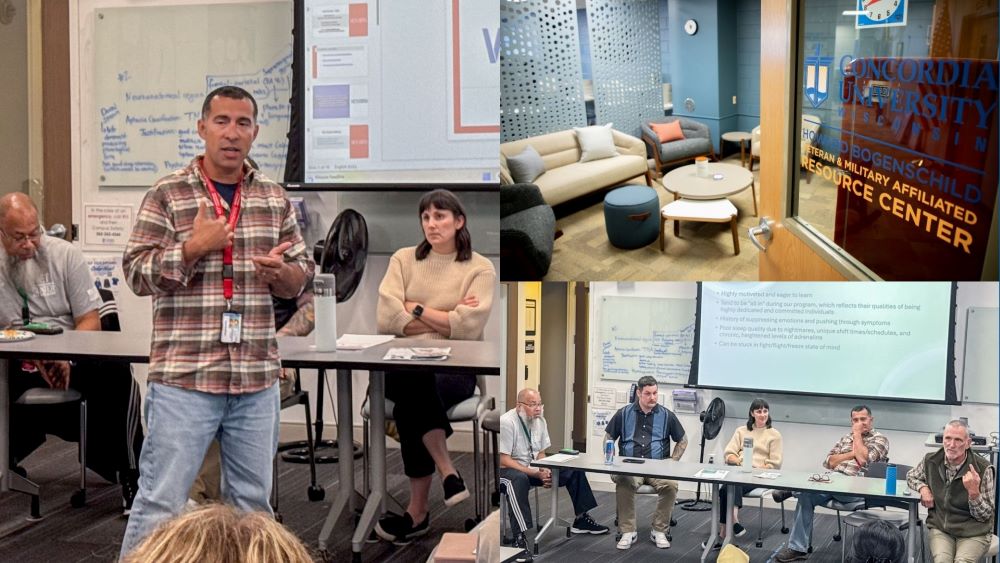
On Wednesday evening, Oct. 8, 2025, second-year graduate students in Concordia University Wisconsin’s Master of Science in Speech-Language Pathology program experienced one of the most powerful sessions of their semester so far. Guests from the Milwaukee VA, the Milwaukee Vet Center and the BRAVE Program (Building Resilience through Action in Veterans and First Responders) joined the class for a frank, deeply human discussion about military culture, traumatic brain injury (TBI), post-traumatic stress disorder (PTSD) and the path to recovery.

The event, part of the course Multicultural Considerations for Speech-Language Pathologists taught by Dr. Mikaely T. Schmitz, CCC-SLP, invited students to learn directly from those living and serving in this space.

SLP students met providers who support veterans living with cognitive-communication challenges related to PTSD, TBI, executive function, concussion and blast injury. The evening’s presenters included Dr. Michael McBride (VA); Richard Clark and Azael “Ozzie” Brodhead (Milwaukee Vet Center); Megan Utic, MS, CCC-SLP (BRAVE Program, MCW); and AJ, a veteran who courageously shared his story publicly for the first time.

CUW Veterans Outreach Coordinator and Army veteran Kari Metts also attended, sharing reflections on the complexity of women’s experiences in military service and the often unseen realities of female veterans.

From systems to stories

a mix of people in the classes

The evening followed a deliberate structure: beginning with the macro level (the Veterans Affairs system), then the community level (Vet Center and BRAVE collaborations), and concluding with the individual—AJ’s lived experience.

SLP students spent the evening unpacking military culture, the lived impact of TBI and PTSD, and what truly person-centered, trauma-informed care looks like. Throughout the discussion, they heard why “readjustment counseling” (Vet Center language) matters, how stigma can keep veterans from seeking support, and why quality-of-life goals must anchor care.

Clinically, they examined how mild TBI often evades standard imaging, why executive function complaints are common, and how patient-reported outcome measures (PROMs) can reveal functional challenges even when standardized test scores appear “average.”

Clark and Brodhead explained that Vet Centers create a safe, stigma-free space for veterans and their families, offering counseling, outreach, and whole-health approaches separate from the larger VA medical record system. They emphasized a mission of “readjustment counseling,” centering connection over diagnosis and confidentiality as a cornerstone of care.

Utic’s presentation on the role of speech-language pathologists in recovery and the BRAVE Program outlined how interdisciplinary teams—including SLPs, PTs, OTs and social workers (all majors of study available in the CUW School of Health Professions)—serve veterans and first responders through functional, evidence-based, person-centered therapy. The program focuses on recovery from TBI and PTSD using tailored interventions, fatigue management, patient-reported outcome measures, and real-world strategy training as anchors of SLP care.

“Functional therapy,” Utic explained, “means fewer worksheets and more real-world strategy use, helping clients build skills that translate to daily life.”

A veteran’s voice

For many students, the most unforgettable part of the evening came when AJ, a veteran of multiple deployments who sustained several blast injuries, spoke candidly about his experiences with TBI, PTSD and the ongoing process of healing.

It was AJ’s first time sharing his story in a public setting. His honesty, vulnerability and unfiltered perspective created a rare learning moment. He reflected on loss, mistrust, memory gaps, and the difficulty of reconnection after returning home, painting a portrait of resilience that moved the entire room.

“The people you are serving have been through hell … meet them where they are.”
– AJ, Veteran speaker

When invited into the discussion, Metts offered insights into the realities of female veterans and the frequent invisibility they face in both civilian and military circles. She spoke about how identity, gender and recognition intersect in veterans’ lives. The dialogue that followed modeled the kind of interdisciplinary empathy and exchange Concordia aims to foster, where each story adds a new dimension to understanding.

One student later thanked the speakers, saying, “Before I came here, so much of my education had been online or through videos made years ago. Tonight felt different—real, powerful and personal.”

What Speech-Language Pathology students practiced and learned

  • Person-first military history. Students practiced asking if someone served—recognizing that many individuals do not self-identify as “veterans.” They learned to use the “four W’s” (what branch, when, what job, where) and follow with how service has affected health and daily life, framed through practical empathy.
  • Foundations of empathic interviewing. Students explored how tone, pacing and curiosity foster trust, allowing clients to share experiences that might otherwise remain unspoken—skills they will build upon at the VA on Nov. 12.
  • Function over checkboxes. Students examined how standardized scores can appear “average” while participation and quality of life still suffer. They discussed how patient-reported outcome measures (PROMs) and contextualized tasks help identify meaningful goals for recovery.
  • Why multidisciplinary intervention matters. Recognizing that TBI and PTSD frequently co-occur and executive function is a key area to address, students observed how overlapping symptoms benefit from coordinated, team-based approaches rather than siloed treatment—underscoring the value of collaborative, whole-person care.

Beyond the classroom

This powerful on-campus session is the first part of a two-part experience. On Nov. 12, Schmitz and her graduate students will visit the Milwaukee VA campus for an evening of learning, connection, empathy training and a shared meal with veterans.

Students will meet and engage in intentional conversations with veterans living with cognitive-communication challenges related to ADHD, executive function, concussion and blast injury, continuing the applied learning they began on campus.

For Schmitz, these moments represent what teaching at Concordia is all about.

“Our students learn to see support of functional cognition and communication not just as a clinical skill, but as a way of restoring connection, purpose and dignity,” she said. “Partnering with the VA, the Vet Center and BRAVE brings our mission—service to Christ in the Church and the world—to life.”

Uncommon Connection

“This has been one of only a handful of opportunities in my 18 years at the VA to partner with the community and share our mission of veteran care,” wrote Dr. Michael McBride, local recovery coordinator and psychiatrist at the Milwaukee VA. “Frankly, the experience made me wish I was a student again.”

Jonathan Stone, LCSW and Milwaukee Vet Center director, reflected on AJ, the veteran who presented: “To see him find purpose, connection and community in that moment warms my heart beyond words … you’re not just helping veterans, you’re saving lives, restoring dignity and reminding them that they are not alone.”

Schmitz frames the class, Multicultural Considerations for Speech-Language Pathologists, around person-centered care. “Our aim is to learn from the people and providers closest to the work,” she said. “This discussion honored the complexity of veteran identity and emphasized our calling to serve thoughtfully, humbly and with evidence-based skill.”

Why it matters

  • Mission in action: Experiences like these embody Concordia’s commitment to forming clinicians who serve others in mind, body and spirit.
  • Evidence meets empathy: Students connect current research on TBI, PTSD and communication with patient-reported realities and lived experience.
  • Community partnership: The evening showcased the strength of Milwaukee-area collaborations across the VA, Vet Center, MCW BRAVE Program and CUW’s Speech-Language Pathology program.

About the programs

  • Vet Centers provide confidential, community-based counseling and outreach for veterans and their families, emphasizing trust, reconnection and peer support.
  • The BRAVE Program delivers interdisciplinary outpatient care for TBI and PTSD, blending neuropsychology, speech-language pathology, physical therapy and counseling to rebuild cognitive and emotional strength.

Written by Dr. Mikaely Schmitz, CCC-SLP, associate professor of Speech-Language Pathology.


Want in?

Concordia University Wisconsin is a Lutheran higher education community committed to helping students develop in mind, body and spirit for service to Christ in the Church and the world.

If you’re inspired by the ways Concordia students are learning to serve others through evidence-based, compassionate care, consider exploring CUW’s undergraduate and graduate programs in Communication Sciences and Disorders and Speech-Language Pathology. Whether you’re just beginning your journey or seeking advanced clinical training, our programs prepare you to make a meaningful difference in the lives of others.

Learn more about how Concordia integrates faith, science, and service in the preparation of future speech-language pathologists, or schedule a campus visit to experience our mission in action.

Expanding global classrooms: Concordia partners with U.S. University Pathways

Concordia University Wisconsin’s School of Education and the Office of Continuing Education Studies is proud to announce a new international collaboration with U.S. University Pathways, extending its educational reach and influence into global K–12 classrooms.


This exciting new partnership launched in summer 2025 with a teacher training program designed for international educators in Lagos, Nigeria. The effort was a joint endeavor between Concordia and U.S. University Pathways, which operates Forward International Academy (FIA)—a network of global schools that deliver U.S. high school diplomas aligned with Wisconsin’s academic standards.

“This summer, as part of a partnership with U.S. University Pathways, CUW began offering a new program to international teachers hoping to learn more about the concepts of the U.S. education system,” explained Dr. Dan Frederking, the CUW adjunct professor who led the inaugural course.

The five-day professional development course, conducted via Zoom from July 7–11, introduced Nigerian educators to foundational topics in Western-style teaching. “It was fun,” Dr. Frederking reflected. “I learned as much from them about the Nigerian education system as they learned from me. It was a great experience.”

The workshop featured five one-hour sessions covering:

  • Day 1: Introduction to the Western-Style Classroom
  • Day 2: Differentiation: Meeting Students Where They Are
  • Day 3: Assessment for Learning
  • Day 4: Promoting Critical Thinking and Inquiry
  • Day 5: Putting It All Together

Educators explored topics such as Bloom’s Taxonomy, differentiation, and the differences between formative and summative assessments—all with the goal of building instructional strategies rooted in student-centered learning. The training was conducted at 10 a.m. Central Time (4 p.m. in Nigeria), making it easily accessible for participants.

Dr. Liang, president of U.S. University Pathways, emphasized the growing reach and mission of FIA. “Since 2016, U.S. University Pathways has been exporting Wisconsin K–12 education and connecting talented international students with Wisconsin universities,” he shared. “Our mission is to make education accessible to students around the world, regardless of their circumstances, while also helping address declining enrollment at Wisconsin universities and the state’s growing workforce shortage.”

From 2024 to 2025, FIA’s international student population more than doubled—from 80 to 180 students—representing countries such as Afghanistan, Pakistan, Algeria, China, Portugal, and Ukraine. Students receive a U.S. high school diploma from their home country while being prepared to apply to Wisconsin universities.

“We’re thrilled to partner with Concordia University Wisconsin to train our local teachers abroad to deliver FIA’s curriculum with Wisconsin grades 6 to 12 academic standards,” Dr. Liang added. “Most recently, Concordia University completed a training program for our newest school in Nigeria, which is set to launch in September 2025.”

Dr. Adam Paape, assistant dean of the School of Education at Concordia, echoed the enthusiasm: “I’m excited about this partnership as we get to expand Concordia’s influence in international education at the high school level. Dr. Frederking brings significant background in the world of education and did a wonderful job with our first running of this program with the school in Nigeria. We are excited to continue this partnership and look forward to influencing even more educators with our high-quality, student-focused approach to teacher development.”

Written by Dr. Adam Paape


Want in?

Concordia University Wisconsin is a Lutheran higher education community committed to helping students develop in mind, body, and spirit for service to Christ in the Church and the world. To learn more about the School of Education’s outreach or explore how your school might benefit from international collaboration, visit our School of Education programs page: CUW School of Education. To learn more about our professional development offerings, visit Continuing Education Studies page at CUW Continuing Education Studies.


From classroom to community: The ripple effects of Social Work Education run deep

‘Social work is more than a profession. It is a movement. And every student who passes through our Bachelor of Social Work program becomes a part of that movement.’


As a social work educator, there are few things more fulfilling than hearing from former students, now professionals, who are out in the world facilitating real change. These updates often come through emails, phone calls, or chance encounters, and each one is a reminder of why we do this work.

When our students graduate, they step into roles that require not just skill and knowledge but courage, empathy, and resilience. They become the steady voice in chaotic systems. They become advocates for the unheard. They apply what they have learned about justice, ethical practice, trauma-informed care, cultural humility, and a strengths-based perspective in all the places and spaces they serve.

One of the greatest honors of my career has been witnessing these students’ journeys, first in the classroom, where their passion begins to take shape, and later in the field, where that passion meets purpose. In the classroom, I get to see their hearts: their desire to serve, their questions about injustice, their struggles, and their growth. In the field, they are bold. They turn compassion into action. They embody the values of this profession with a kind of steady strength that moves mountains.

What makes it even more powerful is knowing that many of them came to this path with lived experiences that fuel their drive to make a difference. They have taken the pain they have known and transformed it into purpose. They have taken theory and turned it into advocacy. They have taken learning and turned it into healing for individuals, groups, families, and entire communities.

These stories are not just inspiring, they are essential. They remind us that social work is more than a profession. It is a movement. And every student who passes through our Bachelor of Social Work program becomes a part of that movement.

As I write this, Concordia University BSW graduates are making a meaningful impact across a wide range of settings, including child welfare, mental health, school systems, healthcare, public policy, homeless shelters, victims’ advocacy organizations, refugee and immigration services, corrections, veteran support, court systems, employee assistance programs, grassroots community organizing and beyond! They are serving individuals across the entire lifespan, from prenatal care to end-of-life. Each one is contributing to the greater good with faith, grace, grit, and an unwavering commitment to integrity.

From classroom conversations to community transformation, our students are the bridge. They are the change. And as an educator, I will never stop cheering them on.

graduation caps

This article was written by Professor Nichole Ostrowski.


Want in?

Concordia University Wisconsin is a Lutheran higher education community committed to helping students develop in mind, body, and spirit for service to Christ in the Church and the world.


Marsha Konz 2025 award recipients share educational journeys

The path to one’s vocation isn’t always simple, Concordia University Wisconsin alumni proudly share their stories as they pursue their callings in teacher education.


The Marsha Konz Student Educator Award is given to an individual who has exhibited superior achievement in the field of teacher education. CUW has two recipients for the spring of 2025—Benjamin Groll and Grace Anna Ohlemeyer.

Benjamin Groll

man in blue shirt

Benjamin Groll hails from Oak Park, Ill., and majored in Broad Field Social Studies secondary education with a certificate in political science. Next fall he will be teaching social studies and assisting in starting up a men’s volleyball program at Milwaukee Lutheran High School.

Some of Ben’s most memorable experiences at CUW involved completing his history senior seminar paper, being a student teacher, being a resident assistant, and becoming an assistant resident director. These experiences helped him acquire and enhance managerial, leadership, and planning skills. As the co-founder and president of CUW’s Falcon Bowling Club, Ben also enjoyed meeting new people. The “Luau at the Lanes,” in particular, brought him much joy.

The toughest part of his educational journey was balancing academic priorities with his involvement in co-curriculars. “I spent a lot of nights staying up late after practices, games, and hall events in order to get my assignments in on time,” he says. “While it was extremely draining, I believe it built in me plenty of discipline that will help in the long run.”

Ben is so ready to teach: “I have wanted to teach since I was six years old. However, it wasn’t until my high school and college years that I realized just how rewarding this vocation will end up being. I want to teach because I want to serve the next generation. I love studying history and political science, too, and I really want to be able to present that in such a way so students can enjoy it. As a social studies teacher, there is a chance that my class will be the only time these students may formally learn about the history of this world and our country. I want to teach so I can have that responsibility and instruct them in how to be informed and actively engaged citizens in their democracy. I want students to be able to understand their world, its past, and how to engage with it—I want them to understand our democratic institutions and know how to influence them positively.”

Ben’s favorite Bible passage is Isaiah 41:10: “So do not fear, for I am with you; do not be dismayed, for I am your God. I will strengthen you and help you; I will hold you in my righteous right hand.”


Grace Anna Ohlemeyer

woman with with sweater and short dark hair

Grace Anna Ohlemeyer hails from St. Louis, Mo., and double majored in Lutheran Secondary Education and English Literature, with a minor in Visual Communications/Graphic Design. Next year she will be teaching freshman English and Yearbook at Lutheran High School South (her high school alma mater) in St. Louis. 

Her favorite memories of her time at CUW involved overcoming her fears during the first week of student teaching. “After a few days of successful lessons (albeit with the usual hiccups),” she says, “I was standing in front of my class that was engaged in active discussion when I felt an overwhelming sense of clarity that I was exactly where I was supposed to be. While I’ve never doubted my calling to teaching, it was reaffirming to feel that I was capable of teaching and adapting to its surprises. I felt like a teacher for the first time, and it brought me so much joy.” She truly loves talking to her students about their interests, hobbies, and movie recommendations as well as giving advice about college. “I’m genuinely having so much fun, and I look forward to this being my job!”

She says she “loved” her education classes “and the education lessons that were hands-on where we did activities we could teach to our students. I appreciated moments where professors would pull back the curtain and explain the goals and skills involved in specific techniques. I’ve loved acting out Shakespeare, creating field trips, reading in book clubs, having discussions about theology, and so many more moments of involvement.”

The toughest part of her educational journey were the innumerable English papers. “My English senior seminar was a long process of research, writing, and revising, but I enjoyed the depth of the project. I did (for fun) do the math and realized I read over 400 pages of academic articles for that paper (lol)!”

Grace Anna says she didn’t actually figure out why she wanted to teach until beginning college classes. “While I’ve always loved the content, I found that my college classes taught me to love the student even more. Through interactions with students and the enthusiasm of my professors, I saw what it means for teaching to be a vocation. Their guidance showed me how I can be a teacher who impacts and encourages students experiencing a difficult time of identity growth found during high school. I’ve realized that transparency is one of my core teaching values. I want to be clear and honest with my students about why we do what we do, so that they see the applications beyond the classroom. This means pulling back the curtain on each novel, assignment, or writing project, and explaining the skills students will learn. My goal is to show students how skills of analysis, argument, communication, etc. are revenant and integral in society. I want to give students individual attention so that they know they are seen, that I want them to learn, and that I will help them to succeed.”

Grace Anna’s favorite Bible verse is Colossians 3:17: “And whatever you do, in word or deed, do everything in the name of the Lord Jesus, giving thanks to God the Father through him.”


The Marsha Konz Graduate Educator Award is given to an individual who has exhibited outstanding performance as an educator and as a student in graduate education studies.

Lisa Hengst

This spring’s recipient is Lisa Hengst who will be graduating with her master’s degree in Educational Administration.

Lisa is currently teaching 5th and 6th grade at Grace Lutheran middle school and also serves as the Music Director for both the church and school. In addition to these duties, Lisa is also the church organist and teaches piano lessons after school. Let’s just say she’s got the church work thing down.

Her favorite memories of CUW are the many interactions she had with her professors. “They are dedicated to their vocation and offer the support needed for their students to be successful,” she says. The toughest part of her journey in achieving her master’s degree was balancing her family obligations with her teaching vocation and continuing education.

In the future, she’d love to offer more support to the current principal at her growing Lutheran School as they focus on continuous improvement.

Lisa is an alumna of Martin Luther High School and CUW (2002)—holding a double major in K-12 Music Education, 6-12 Choral, and Elementary Education.

Lisa lives Oak Creek, Wis., with her husband and two children.

Her favorite Bible passage is Proverbs 3:5-6: “Trust in the Lord with all your heart and lean not on your own understanding; in all your ways acknowledge him, and he will make your paths straight.”


Looking to explore online education classes? Check out our FAQ article on online, undergraduate education programs.


Want in?

Concordia University Wisconsin is a Lutheran higher education community committed to helping students develop in mind, body, and spirit for service to Christ in the Church and the world. Our Education programs focus on optimizing your abilities to serve students, schools, and the community through education. We develop well-rounded educational professionals that can teach and lead in rural and urban communities. With a Christian-centered focus, relevant curriculum, and engaging faculty you can play a meaningful role in the world of education. For more information, click the link below.