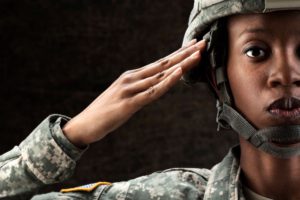
An on-campus conversation on military culture, TBI, PTSD—and the power of empathy in clinical care.
On Wednesday evening, Oct. 8, 2025, second-year graduate students in Concordia University Wisconsin’s Master of Science in Speech-Language Pathology program experienced one of the most powerful sessions of their semester so far. Guests from the Milwaukee VA, the Milwaukee Vet Center and the BRAVE Program (Building Resilience through Action in Veterans and First Responders) joined the class for a frank, deeply human discussion about military culture, traumatic brain injury (TBI), post-traumatic stress disorder (PTSD) and the path to recovery.
The event, part of the course Multicultural Considerations for Speech-Language Pathologists taught by Dr. Mikaely T. Schmitz, CCC-SLP, invited students to learn directly from those living and serving in this space.
SLP students met providers who support veterans living with cognitive-communication challenges related to PTSD, TBI, executive function, concussion and blast injury. The evening’s presenters included Dr. Michael McBride (VA); Richard Clark and Azael “Ozzie” Brodhead (Milwaukee Vet Center); Megan Utic, MS, CCC-SLP (BRAVE Program, MCW); and AJ, a veteran who courageously shared his story publicly for the first time.
CUW Veterans Outreach Coordinator and Army veteran Kari Metts also attended, sharing reflections on the complexity of women’s experiences in military service and the often unseen realities of female veterans.
From systems to stories
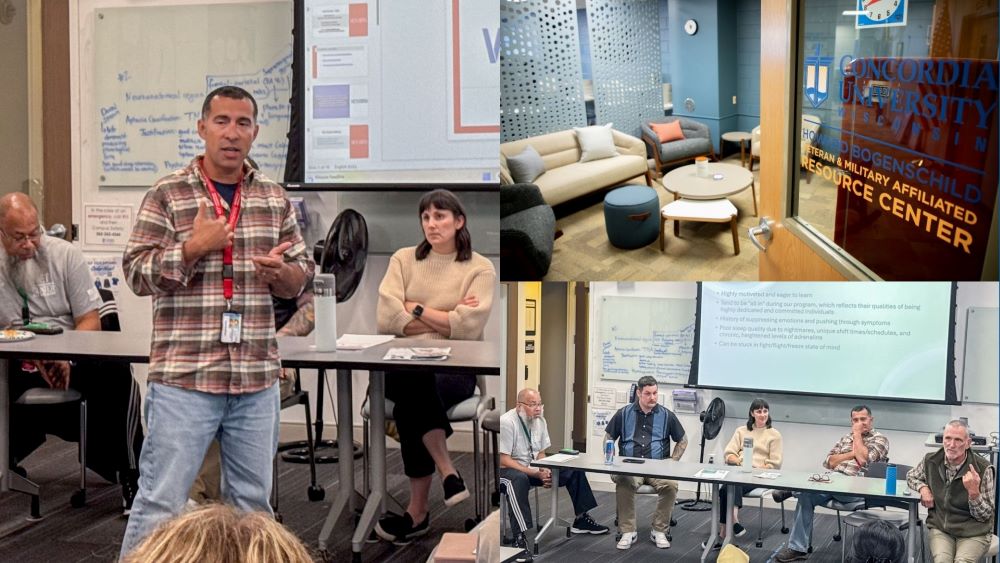
The evening followed a deliberate structure: beginning with the macro level (the Veterans Affairs system), then the community level (Vet Center and BRAVE collaborations), and concluding with the individual—AJ’s lived experience.
SLP students spent the evening unpacking military culture, the lived impact of TBI and PTSD, and what truly person-centered, trauma-informed care looks like. Throughout the discussion, they heard why “readjustment counseling” (Vet Center language) matters, how stigma can keep veterans from seeking support, and why quality-of-life goals must anchor care.
Clinically, they examined how mild TBI often evades standard imaging, why executive function complaints are common, and how patient-reported outcome measures (PROMs) can reveal functional challenges even when standardized test scores appear “average.”
Clark and Brodhead explained that Vet Centers create a safe, stigma-free space for veterans and their families, offering counseling, outreach, and whole-health approaches separate from the larger VA medical record system. They emphasized a mission of “readjustment counseling,” centering connection over diagnosis and confidentiality as a cornerstone of care.
Utic’s presentation on the role of speech-language pathologists in recovery and the BRAVE Program outlined how interdisciplinary teams—including SLPs, PTs, OTs and social workers (all majors of study available in the CUW School of Health Professions)—serve veterans and first responders through functional, evidence-based, person-centered therapy. The program focuses on recovery from TBI and PTSD using tailored interventions, fatigue management, patient-reported outcome measures, and real-world strategy training as anchors of SLP care.
“Functional therapy,” Utic explained, “means fewer worksheets and more real-world strategy use, helping clients build skills that translate to daily life.”
A veteran’s voice
For many students, the most unforgettable part of the evening came when AJ, a veteran of multiple deployments who sustained several blast injuries, spoke candidly about his experiences with TBI, PTSD and the ongoing process of healing.
It was AJ’s first time sharing his story in a public setting. His honesty, vulnerability and unfiltered perspective created a rare learning moment. He reflected on loss, mistrust, memory gaps, and the difficulty of reconnection after returning home, painting a portrait of resilience that moved the entire room.
“The people you are serving have been through hell … meet them where they are.”
– AJ, Veteran speaker
When invited into the discussion, Metts offered insights into the realities of female veterans and the frequent invisibility they face in both civilian and military circles. She spoke about how identity, gender and recognition intersect in veterans’ lives. The dialogue that followed modeled the kind of interdisciplinary empathy and exchange Concordia aims to foster, where each story adds a new dimension to understanding.
One student later thanked the speakers, saying, “Before I came here, so much of my education had been online or through videos made years ago. Tonight felt different—real, powerful and personal.”
What Speech-Language Pathology students practiced and learned
- Person-first military history. Students practiced asking if someone served—recognizing that many individuals do not self-identify as “veterans.” They learned to use the “four W’s” (what branch, when, what job, where) and follow with how service has affected health and daily life, framed through practical empathy.
- Foundations of empathic interviewing. Students explored how tone, pacing and curiosity foster trust, allowing clients to share experiences that might otherwise remain unspoken—skills they will build upon at the VA on Nov. 12.
- Function over checkboxes. Students examined how standardized scores can appear “average” while participation and quality of life still suffer. They discussed how patient-reported outcome measures (PROMs) and contextualized tasks help identify meaningful goals for recovery.
- Why multidisciplinary intervention matters. Recognizing that TBI and PTSD frequently co-occur and executive function is a key area to address, students observed how overlapping symptoms benefit from coordinated, team-based approaches rather than siloed treatment—underscoring the value of collaborative, whole-person care.
Beyond the classroom
This powerful on-campus session is the first part of a two-part experience. On Nov. 12, Schmitz and her graduate students will visit the Milwaukee VA campus for an evening of learning, connection, empathy training and a shared meal with veterans.
Students will meet and engage in intentional conversations with veterans living with cognitive-communication challenges related to ADHD, executive function, concussion and blast injury, continuing the applied learning they began on campus.
For Schmitz, these moments represent what teaching at Concordia is all about.
“Our students learn to see support of functional cognition and communication not just as a clinical skill, but as a way of restoring connection, purpose and dignity,” she said. “Partnering with the VA, the Vet Center and BRAVE brings our mission—service to Christ in the Church and the world—to life.”
Uncommon Connection
“This has been one of only a handful of opportunities in my 18 years at the VA to partner with the community and share our mission of veteran care,” wrote Dr. Michael McBride, local recovery coordinator and psychiatrist at the Milwaukee VA. “Frankly, the experience made me wish I was a student again.”
Jonathan Stone, LCSW and Milwaukee Vet Center director, reflected on AJ, the veteran who presented: “To see him find purpose, connection and community in that moment warms my heart beyond words … you’re not just helping veterans, you’re saving lives, restoring dignity and reminding them that they are not alone.”
Schmitz frames the class, Multicultural Considerations for Speech-Language Pathologists, around person-centered care. “Our aim is to learn from the people and providers closest to the work,” she said. “This discussion honored the complexity of veteran identity and emphasized our calling to serve thoughtfully, humbly and with evidence-based skill.”
Why it matters
- Mission in action: Experiences like these embody Concordia’s commitment to forming clinicians who serve others in mind, body and spirit.
- Evidence meets empathy: Students connect current research on TBI, PTSD and communication with patient-reported realities and lived experience.
- Community partnership: The evening showcased the strength of Milwaukee-area collaborations across the VA, Vet Center, MCW BRAVE Program and CUW’s Speech-Language Pathology program.
About the programs
- Vet Centers provide confidential, community-based counseling and outreach for veterans and their families, emphasizing trust, reconnection and peer support.
- The BRAVE Program delivers interdisciplinary outpatient care for TBI and PTSD, blending neuropsychology, speech-language pathology, physical therapy and counseling to rebuild cognitive and emotional strength.
Written by Dr. Mikaely Schmitz, CCC-SLP, associate professor of Speech-Language Pathology.
Want in?
Concordia University Wisconsin is a Lutheran higher education community committed to helping students develop in mind, body and spirit for service to Christ in the Church and the world.
If you’re inspired by the ways Concordia students are learning to serve others through evidence-based, compassionate care, consider exploring CUW’s undergraduate and graduate programs in Communication Sciences and Disorders and Speech-Language Pathology. Whether you’re just beginning your journey or seeking advanced clinical training, our programs prepare you to make a meaningful difference in the lives of others.
Learn more about how Concordia integrates faith, science, and service in the preparation of future speech-language pathologists, or schedule a campus visit to experience our mission in action.