A number of studies conducted in Canada and the United States asked a politically diverse, well-educated group of adults to read arguments confirming their beliefs (and perhaps their biases) about controversial issues. Participants were then given a chance to read contrary arguments—and get paid for doing so. However, two-thirds refused to even look at the counterarguments, never mind seriously considering them.
Researchers concluded that the more scientifically literate adults are, the more likely it is that they become dogmatic about politically polarizing topics in science. Put another way, the more intellectual someone might be, the better they know how to find evidence to confirm their feelings. How sad that in a world that clamors for diversity, too many are afraid to even hear an idea or thought that might differ from their own.
Perhaps you swim in everyday waters where confirmation bias is alive and well. But is that really what our world needs today—people not listening to others or considering other ideas, new ways of doing things, or different points of view? Are people so afraid that their convictions, beliefs, ideas, or thoughts won’t survive even the softest of scrutiny or the most innocent of inquiry?
The doctoral mindset
One essential hallmark of doctoral students or those who hold terminal degrees is their ability to see things—people, issues, contexts—from multiple perspectives. In our complex, global world today, the challenges and obstacles that leaders face are complex and comprehensive.
One quick, soundbite answer won’t solve them. That’s why the very best literature reviews in dissertations show evidence of a doctoral student analyzing an issue from all sides. They suspend their biases and aren’t afraid to look under the microscope or hood. Then they research and experiment. Doctoral students don’t hide or ignore the evidence that doesn’t fit their preconceived notions. They also listen and ponder. Finally, they question their own convictions and thoughts while practicing healthy skepticism for other ideas. In short, doctors do their homework.
The 360-degree perspective
Effective leaders today must be able to examine and analyze societal and organizational challenges from all sides and angles—a 360-degree perspective. Only then can they provide the direction and leadership that will solve the problem or advance the cause.
Of course, looking at things from a 360 perspective doesn’t mean you will abandon the truth. As a Christian institution, we find comfort in the words of the Bible—that the “testing of your faith produces steadfastness. And let steadfastness have its full effect, that you may be perfect and complete, lacking in nothing.”
Concordia University Wisconsin’s doctoral program of Leadership in Innovation and Continuous Improvement will train and equip you to do just that—to lead and think with a 360-degree mindset. This mindset and skill set are critical to the growth, development, and success of any leader or organization. So earn your Doctor of Education at CUW, and think differently.
It’s that time of year again, the start of a new school year at CUW. And that means Falcon Frenzy—brought to you by the Campus Activities Board!
Every time you attend one of these events you can enter a raffle to win some great stuff! This year’s prizes include a $100 Amazon gift card, a Giannis Bucks jersey, a Hydroflask & Starbucks gift card, an Echo Dot, a Polaroid camera, and AirPods! To stay up-to-date on the latest event information, be sure to follow the CAB on social media: @cuwcab.
Friday, Sept. 1: Brewers Game
5:30 p.m. departure | American Family Field | Price: $10 | SOLD OUT!!
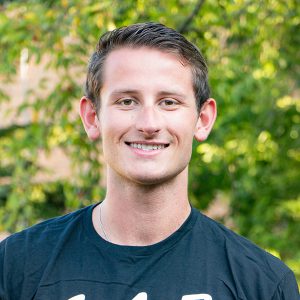
Degrees: BS, Marketing and Hospitality Event Management; MBA, Strategic Marketing
Why students should join CAB: It’s so fun being able to work as a team to plan events and then even more fun to attend all the events!
Voted: Most gullible
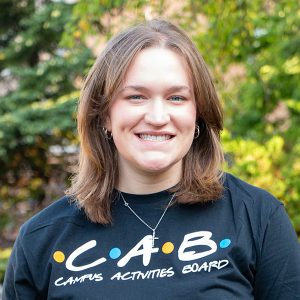
Alicia Schroeder (’25): Event Manager
Hometown: Hilbert, WI
Major: Lutheran Elementary Education
Why I joined CAB: To plan exciting events and have fun!
Voted: Most likely to be cleaning
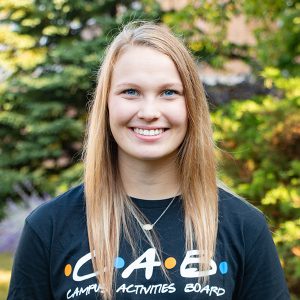
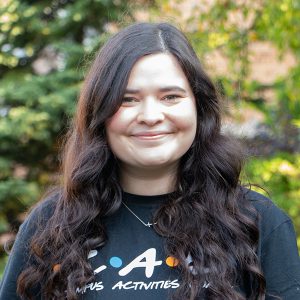
Leah Flolo (’25): CAB Administrator
Hometown: Elgin, IL
Major: Graphic Design
Why I joined CAB: It is a great place to find community and make amazing friends!
Voted: Most likely to be watching New Girl
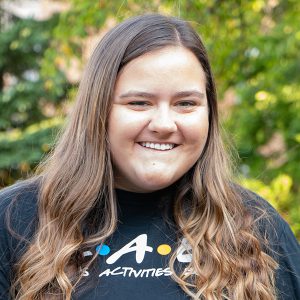
Makenna Krell (’25): Membership Coordinator
Hometown: West Bend, WI
Major: Communication Sciences & Disorders
Why I joined CAB: To make CUW a fun place and make more friends!
Voted: Most likely to be on a reality TV show
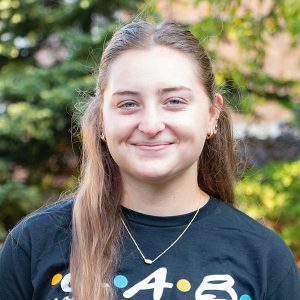
Rachel Lingsch (’25): Event Coordinator
Hometown: Naples, FL
Major: Director of Christian Ministries
Why I joined CAB: I love going to activities and wanted to be a part of making them happen!
Voted: Most likely to be chill
Nathan Bilan (’25): Communications Coordinator
Hometown: Greendale, WI
Major: Healthcare Administration
Why I joined CAB: To meet new people and help plan great events!
Voted: Most likely to have Starbucks
Ella Pittman (’26): Marketing Coordinator
Hometown: Waukesha, WI
Major: Hospitality & Event Business
Why I joined CAB: I love planning and could tell it was a welcoming and fun environment!
Voted: Most likely to be listening to Taylor Swift
Want in?
The CUW Campus Activities Board (CAB) creates, plans, and executes many exciting campus events throughout the school year. Some of these events include Brewer’s Games, Casino Night, Themed Bingo Nights, Open Mic Night, and Tunes Tuesdays. CAB also organizes trips at a discounted rate for students to attend. Some destinations include Six Flags, The Mall of America, Chicago, Downtown Milwaukee, and Madison. To learn more, click the link below.
Joseph Niswonger has been named Dean of Students for CUW. He brings nearly 30 years of experience in higher education.
After a period of interim service, Joseph Niswonger has officially been named Dean of Students for CUW. He continues to serve in his role as Title IX Coordinator & Compliance Officer for the university. He has held this role for nearly two years.
Joseph brings decades of experience to the position. He served almost 30 years in higher education overseeing residence life, conduct, Title IX, student affairs, and compliance matters for schools in Wisconsin, Oklahoma, and Missouri.
He’s excited to leverage his experience on behalf of Concordia and its students. Get to know a little more about Joseph Niswonger and how he might be able to serve you.
So you’re Dean of Students…what does that mean?
The Dean of Students helps develop and maintain community standards in order to facilitate a safe and healthy campus environment for students. In my role as Dean of Students, I play a role in helping students navigate challenges. These challenges may include personal crises, emergencies, and other unusual situations. I work closely with various departments on behalf of students, both inside the classroom and outside of it. The goal is to be a helpful resource and an advocate on behalf of learners at CUW.
What types of issues can/should students bring to you?
The sky is the limit, really! Students can come to me with anything from wanting to find ways to get more involved on campus to conflicts involving other students. I also serve as a resource for students who are addressing a personal concern. It’s not uncommon for a student to have have an unforeseen extended absence, for example, due to health concerns or a family funeral.
Even if you don’t feel comfortable coming directly to me, I hope you’ll turn to any trusted employee on campus. I make a point of embedding myself into different processes and departments within the university so that I can advise those individuals to whom you have chosen to turn. No matter what you’re going through, my goal is to handle your situation with the utmost discretion. You deserve to maintain your dignity no matter the situation.
Tell us a little about yourself.
I have a wonderful wife, Julie, and three sons, Nicholas, Harrison, and Benjamin. Nicholas graduated from CUW in 2020. We live in Grafton. I enjoy going to sporting events, concerts and the movies. I’ve also been known to binge a good TV show or two, play video games and spend lots of time listening to music.
What is one of your favorite parts about being a Concordia employee?
One of my favorite “perks” is the daily Chapel time that is set aside as part of the workday. It’s such a gift to not only have the convenience of worship opportunities right down the hall, but to be part of an organization that prioritizes that time for all employees and students.
What motivates you for the year ahead?
I’m excited to be a resource for students and get to know more people. I love interacting with people and even in the midst of struggles, it’s a joy to get to connect with people on a deeper level.
Why Concordia?
Concordia is a place where its Christian values are readily apparent. I love being part of a community and a workplace where I can see those values in action on a daily basis.
Need support?
There are a variety of resources and options that will support any member of the campus community who experiences gender discrimination, sexual harassment, sexual violence, dating violence, domestic violence, stalking, other sexual misconduct, or who have been documented for a violation of the University sexual misconduct policy. These resources are available regardless of whether a report or complaint is filed.
One of the highlights of the summer for several CUW social work students was an inaugural study abroad opportunity to Austria.
By Lauren Rich (’24)
Lauren Rich was among the students who participated in the new learning experience. Rich plans to graduate in May 2024 with her bachelor’s in psychology and a minor in social work. She intends to earn her Master of Social Work degree through CUW as well.
Rich took time to journal throughout the experience. Scroll down to read excerpts from her reflections.
June 11
“It was so fun being able to walk around and explore Linz. The culture is similar in some ways, but there are so many little things that are vastly different. … Being able to experience something like this is absolutely amazing and I’m so so thankful to be given the opportunity to be here.”
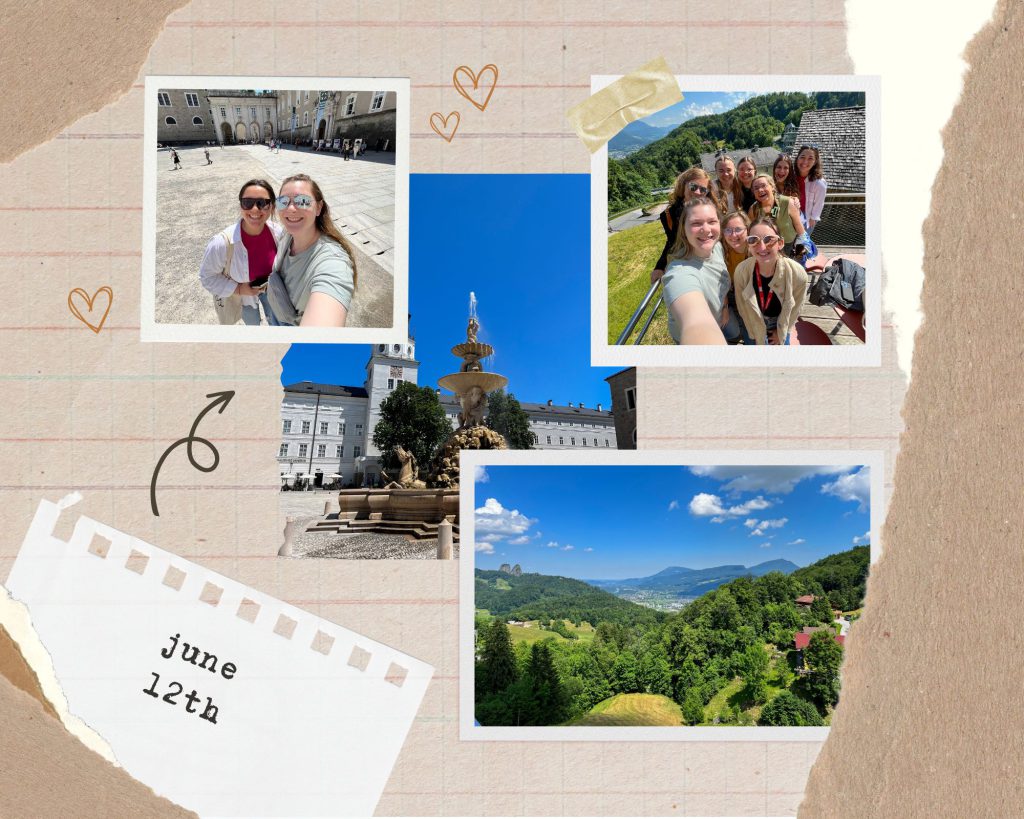
June 12
“The trip to the Hallein salt mine was such a fun and unique experience. From the Celtic village to the mine itself there was so much to learn.”
“The trip to Salzburg was also such an amazing experience. The city had so much to offer, especially in terms of its architecture. The churches, the fortress, and the Mirabell Palace were so fun to explore.”
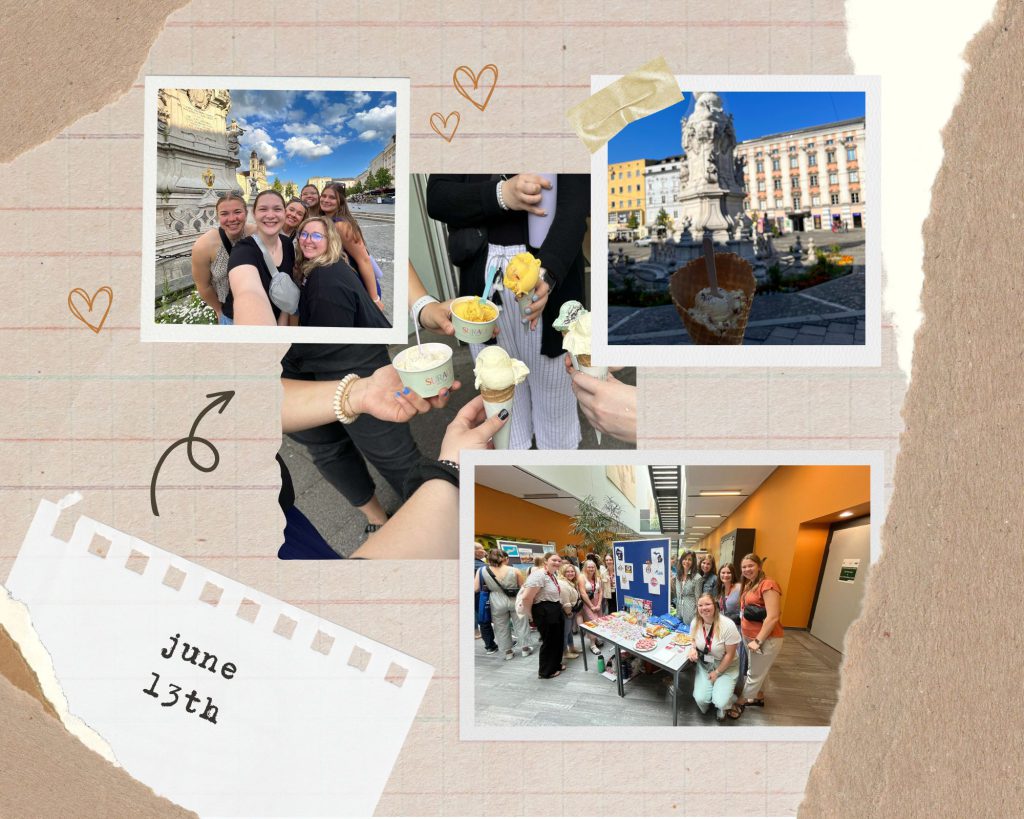
June 13
“Today was the first day of the conference and it was packed with lecture, the world cafe, and breakout rooms. The lecture I attended was about jailed mothers and the child welfare system in Milwaukee, a topic that hit close to home. Learning about how people who are in jail or prison have super limited connections with their family outside made my heart hurt for so many people. Even if they have committed a crime, they should still be given the right to be able to communicate with their spouses, children, and family. It made me realize that one day when I am a social worker myself, if I were to ever work with this population, I would try my hardest to be able to advocate for better communication means for those who are imprisoned and their family.”
June 14
“On the second day of the conference, I attended a lecture about the armed conflict in Armenia. Throughout the lecture, I kept getting choked up hearing about so many people who are displaced because of other countries’ greed and want for resources. It would be very heavy, but it made me realize how much I want to help people who are experiencing events like this.”
“After the first lecture, I sat in on the resilience lecture. There is so much secondhand trauma that comes with the social work profession, so being able to take care of ourselves is important so that we are able to better help others.”
June 15
“After attending two lectures in the morning, I went on a site visit to an emergency sleep center. It was so interesting hearing about how they have programs like this that allow for people to have a safe place to sleep. When comparing it to similar programs that exist in the US, it seemed like the European model was a lot more lax. For example, on paper those who use the resource are supposed to stay about 4 weeks, but a social worker can advocate to extend the stay if needed, which I think is ultimately beneficial.”
June 16
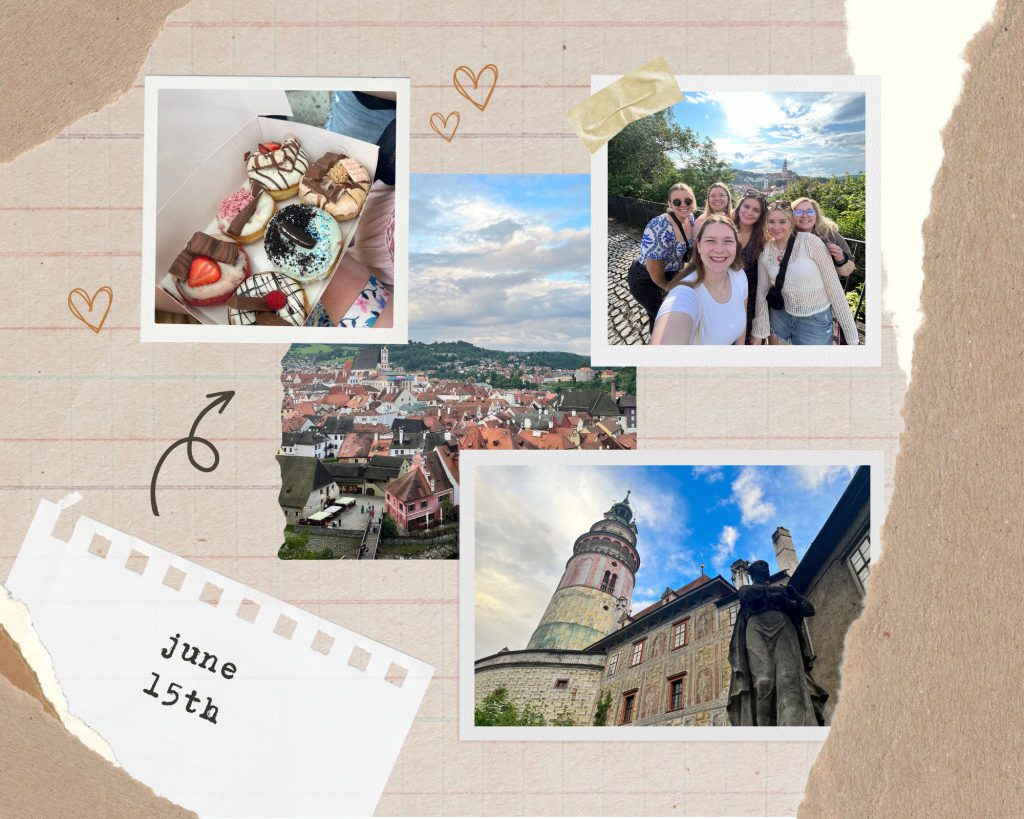
“Today we visited the Czech Republic. It was absolutely beautiful. There was a renaissance fair going on, so part of the city was closed off unless you had a ticket, so we ended up taking some pictures and walking to another side of the city to actually enter. There were so many pop-up stands with jewelry and other handmade items, probably because of the fair. The churches and the chateau were absolutely breathtaking and the architecture was so fun to look at. Overall, it was such a cool experience and it felt surreal the entire time. It was a bit stressful at the bus station as it was late and the signs were not helpful in finding our bus, but in the end it worked out and we made it back to the hotel safely.”
June 17
“Today was another packed day with going to Munich for the majority of the day. When we got in, we walked almost 40 minutes to go to this festival that was happening. It had a bunch of pop up stands with food, clothes, jewelry, and other handmade things. It was super fun walking around and seeing so many people there too. It was interesting listening to people and hearing a lot of English speaking people, which shows that it may have been a popular spot.”
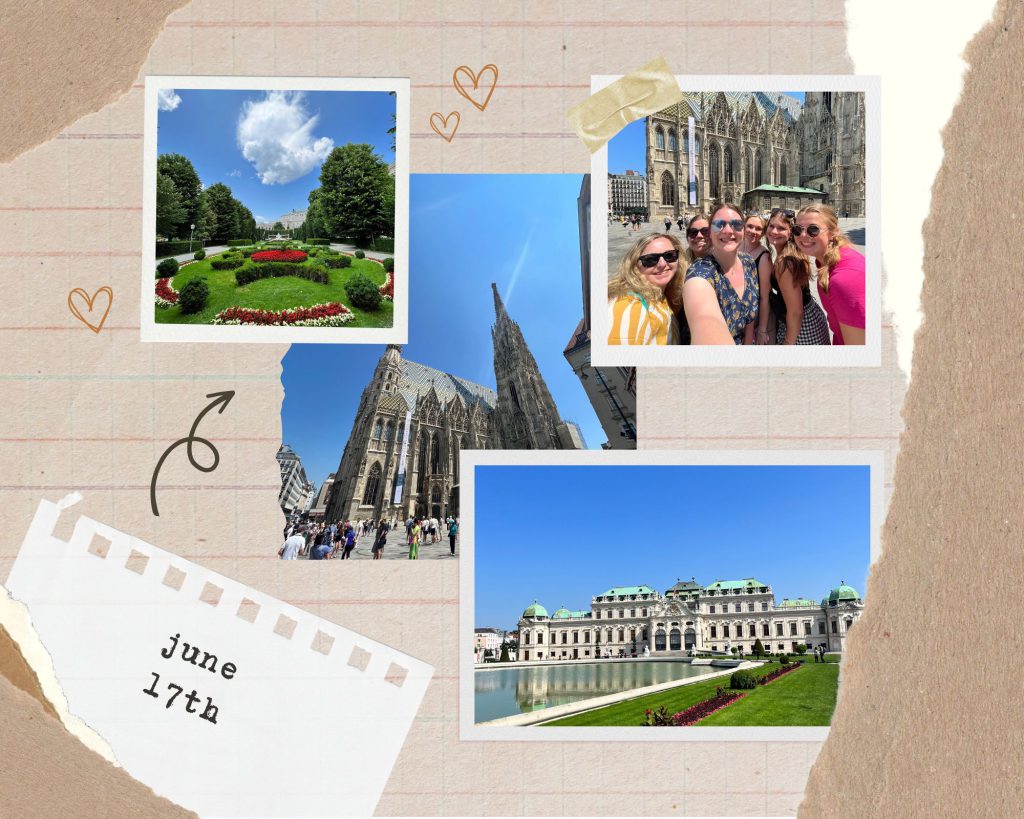
“After that we got tickets for the tram and went into the historic city center. We walked around for a bit and then found St. Peters church and walked up the 14 flights of stairs for a beautiful view. … We walked further into some gardens, which turned out to be more of like a bunch of open fields with trees, a bunch of grass volleyball courts, and some streams that people swam in. It was absolutely full of people of all ages just laying out and enjoying the sun. It definitely made us all jealous of that lifestyle for a few minutes. There were so many teenagers living their best life and it would have been such an amazing experience to have lived in the area and got to do that for the weekend.”
June 18
“We took a train in the morning to Vienna, and it was beautiful! The first place we stopped at was the Belvedere Palace. The grounds were pristine and the upper and lower palaces were beautifully built. It was surprising, too, that they were built more recently, in the 18th century. After walking around the palace grounds, we walked to an area that had a bunch of shopping. We went into so many souvenir shops and picked up some goodies. … Overall, today was a little less stressful walking around compared to yesterday, and the vibes of Vienna and Munich were a bit different, but overall was very fun and I can definitely see myself going back.”
June 19
“Today was a very heavy day starting off at Mauthausen. It was an experience that you could only prepare yourself so much for. I have done a decent amount of research on World War II and the Holocaust, but there was so much that I learned today. I thought the tour guide was absolutely incredible and did such a good job explaining the different areas but also asking us the deep questions that should be asked. It made me think a lot about what is happening in current day and how it reflects the absolute horrors of almost 80 years ago and much earlier. There is so much happening today that I do not know about, and as we talked about on the tour, a big reason behind that could be that I just don’t go out of my way to research those things because they are not right in front of me and don’t “directly” affect me. It really opened my eyes to how I could try to do better at this and educate myself and hopefully others around me.”
June 20
“Today was the first day of the week where we got to do the site visits for most of the day. I visited the Work and Life site, which turned out to be an amazing resource. It was located in an old cigarette/cigar factory and was home to about 150 business. The place we visited was just one of 150 in the building. The presenters explained that their organization helped people who needed help finding jobs. They have many resources, including counseling, but also have a special program that can help people who struggle finding work to get legal help to determine if they are fit to retire or help them rejoin the workforce. They also talked about how they have a bicycle shop that employs a few people to help them gain work skills to enter the workforce.”
June 21
“In the morning we visited a domestic violence center, a place for social workers and other staff members to have resources ready for those who suffered domestic violence. Something interesting that I learned there was that people who commit acts of violence are forced to leave the home for 2 weeks, not the survivor, and the survivor in that time has the option to submit a restraining order. Another thing the presenter emphasized was that the client makes their own choices and their choice needs to be honored. I feel like this is something that is seen in the US as well. There may be situations where a social worker may want to intervene and speak their opinion on what the client is choosing to do, but they must hold back, as everything needs to be the client’s decision.”
June 22
“The first workshop today was very interesting, as it was about the story of the presenter and his life as a refugee. He talked about how in Iran, he had next to no rights as a refugee from Afghanistan. Even though he was born on Iranian soil, he was considered a refugee and could not attend school, marry a woman from Iran, and grew up in fear of being shot by the police for doing one thing wrong. This was heartbreaking to hear, as it seems to be so different than the US. If you are born in the US, even if your parents weren’t, you still are considered a citizen. It hurt my heart to hear how he grew up in fear and when he got to Austria, it was the first time that he did not feel fear around the police because they were not holding guns. It really put into perspective how much trauma he must have.
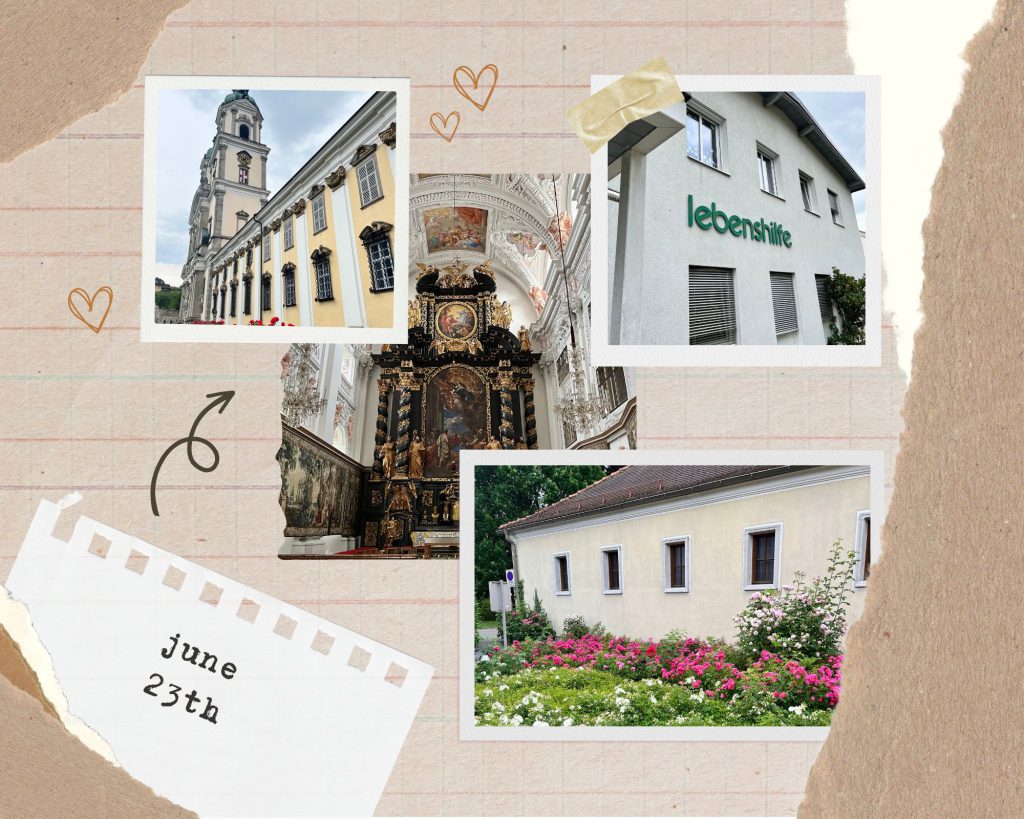
June 23
“On the last day of the conference, we were able to go to Steyr. I was in group B, so instead of going to the prison, we went to the facility for those with intellectual disabilities. This location made a huge impression on me. The facility is for adults with disabilities and it allows for them to be taken care of by caretakers and do little odd jobs in order to make money. There was a woodworking room where clients made objects out of wood and another room where clients could make things out of clay. At the end of the tour, they showed us the little shop filled with creations the clients made, and I of course had to grab a few things. I ended up with two pieces of clay that had little designed etched into them. The clients that we met were so sweet and I could tell that most of them enjoyed seeing new people.”
“After that, we were able to walk around Steyr and it was such a cute little city. After walking around, we got back to the bus to go pick up everyone in group A. While waiting, we went inside the church that is connected to the prison, and it was one of the prettiest churches I have been in. The artwork and carving in the walls and ceilings were so intricate and it was so beautiful. After that, we had our farewell ‘dinner’ in St. Florian, which was another cute little town. The church was beautiful and it was fun just walking around in the area surrounding the church. It was a wonderful last day in Austria! I’m sad to leave but am ready to go home.”
Want in?
Concordia’s social work program uses Christian service, quality research, and hands-on learning to grow you as a competent professional. Earn your bachelor’s degree at CUW and then continue on to acquire an MSW, the most sought-after social services degree. Learn more about our programs by clicking below.
This year’s theme and theme verses challenge us to rely more fully on God and His wisdom—and less on our own.
This year’s campus theme—In Every Way, God’s Path—is based on a familiar pair of verses. They are so familiar, in fact, that the campus ministry team was surprised to discover that they have not been used before in the more than 50 years this has been a tradition at Concordia University Wisconsin.
Proverbs 3:5-6 state:
Trust in the Lord with all your heart, and do not lean on your own understanding. In all your ways acknowledge him, and he will make straight your paths.
English Standard Version (ESV)
Though these verses may seem very familiar, they have perhaps deeper meaning than might be observed at first reading. Rev. Steve Smith, CUW campus pastor, said he likes how the verses break down into four component parts, each with its own depth of meaning.
Trust in the Lord with all your heart: “The word ‘all’ here is very important. A lot of us are able to say, ‘Yeah, I’ll trust God with the big things,’ the little, day-to-day things are sometimes harder to give to God. God wants us to trust all things to him, with all our hearts.”
Do not lean on your own understanding: “There are plenty of times when we think we’re wise enough to see or understand something, but our own understanding will ultimately break down at some point. We’re not going to find the right answer to everything just by looking to our own wisdom and way of looking at things. We need to turn to God for that.”
In all your ways acknowledge him: “Again, we see all. Not in some ways, in all our ways. And we all liked how ‘way’ can mean different things. It can be a road or a path, but also the way you do something or think about things.”
And he will make your paths straight: “A straight path may seem like a direct line from Point A to Point B, but here ‘straight’ is more about being ‘right with God.’ The path God puts us on isn’t always the easy one, but we can trust that it’s the path that keeps us closest to Him.”
Harrison Hulse (’24), the CMLT (Campus Ministry Leadership Team) president for 2023-24 puts it this way: “Though the ways which we study, serve, and come to know God in our time here at CUW may be numerous, we can find comfort in our common confession and journey along His path for our lives together in Him.”
This year, let’s all make a concerted effort to trust and turn to the Lord in all our ways and see how close He draws us to Himself as a result!
Want in?
At CUW you can see and feel a Christian emphasis from how our professors teach in the classroom to how our athletes play on the field. We instill in our students that living a full Christian life is about more than worship. CUW is a Christian university, not because we’re perfect people, but because we’re forgiven sinners who gather together in Christ. The strength of a Christian community rests on an awareness that people need one another and reach out to one another for support and understanding.
Pharmacists frequently depend on a range of vital skills, including leadership, teamwork, time management, and meticulous attention to detail. However, among these crucial abilities, effective communication skills stand out as paramount. Pharmacists, as experts in medications, regularly engage in communication with fellow pharmacists, pharmacy technicians, nurses, healthcare providers, and, notably, patients.
Patients come from a variety of diverse cultural, linguistic, religious, educational, and socioeconomic backgrounds. And yet, pharmacists need to be able to provide adequate care to all patients. Part of this responsibility involves clear and simple communication with patients.
Even with using patient-friendly terminology (e.g. “high blood pressure” instead of “hypertension”), clear communication still can be a challenging task. Complex medications can be hard to understand and communicate due to intricate and nuanced information.
Unfortunately, misunderstandings and miscommunications with medications can lead to errors, decreased quality of care, poor outcomes, or harmful adverse events. Language differences influence communication, which also affects patient satisfaction and adherence to recommendations.
Patients with limited English proficiency are especially likely to experience poor patient-clinician communication. This is why it’s critical that aspiring pharmacists begin to consider fluency in multiple languages, especially Spanish.
A growing need in the United States
In the United States, there is a growing need for pharmacists to provide patient care. This care must be specifically linguistically and culturally appropriate for Spanish-speaking patients. According to the US Census Bureau, in 2020, there were an estimated 62.1 million Hispanic people living in the United States, or 18.9% of the total US population. This makes persons who identify as Hispanic the country’s largest ethnic minority. In 2019, Spanish was the most common non-English language spoken in U.S. homes. Approximately 28.4 percent of Hispanics, however, stated that they are not fluent in English.
The Hispanic population in the United States is underserved and underrepresented in the healthcare workforce, particularly in the pharmacy workforce. And, the majority of pharmacists do not have sufficient Spanish skills to communicate safely and effectively with patients in Spanish.
Therefore, there is a growing language gap where the patient and the pharmacist do not share a common language. This situation has significant potential to negatively impact patient care and is technically referred to as “language discordance.”
What can pharmacists do to address this growing language discordance problem?
Pharmacists can take several proactive steps to address the growing language discordance problem. They can also ensure effective communication with patients who may have limited proficiency in the primary language spoken in the healthcare setting. Here are some strategies:
Utilize Trained Interpreters: Appropriate use of interpreters is helpful and essential, but it is inferior to language concordant care where the patient and the practitioner speak the same language.
Provide Language Concordant Care: This must be done with appropriate language training to ensure the competent and appropriate use of language skills.
Addressing language discordance in pharmacy settings is essential to providing equitable healthcare services and ensuring patient safety. By implementing these strategies, pharmacists can enhance communication with patients from diverse linguistic backgrounds and improve overall healthcare outcomes.
What specific medical Spanish opportunities are available at CUW SOP?
Concordia University Wisconsin School of Pharmacy (CUW SOP), deeply commits to fostering a culture of patient-centered care, where we prioritize the well-being and needs of the patient in every healthcare decision. We understand that effective communication lies at the heart of this commitment. It is not merely about transmitting information but ensuring that patients receive and understand it.
In recognition of this vital aspect of healthcare, we prioritize equipping our students with the necessary skills. These skills enable them to engage with patients in a manner that transcends language barriers and fosters genuine understanding. Effective communication is a bridge that connects healthcare professionals with their patients, enabling them to make informed decisions together.
Here are some opportunities for students to learn and grow these skills:
Medical Spanish for Pharmacists Elective:Students learn to perform patient education and medication list retrieval in Spanish as well as participate in a service-learning opportunity. Additionally, students will learn cultural insights relevant to caring for patients from various Hispanic cultures.
Special Topics Course in Advanced Medical Spanish: Students have a personalized opportunity to dive deeper into more nuanced and complex medical Spanish topics, and develop patient education materials and pharmacist resources.
Study Abroad Opportunities: CUW SOP has supported several study abroad opportunities in the past including experiences in Peru and Spain.
NHPA Student Group: CUW SOP’s local chapter of the National Hispanic Pharmacist Association (NHPA) focuses on providing educational, service, and cultural experiences to students so that patient care for Hispanics can be improved.
APPE Experiences: There are several elective Advanced Pharmacy Practice Experiences (APPE) that serve a predominantly Spanish-speaking patient population which provides an excellent opportunity for students to improve their language and cultural competency skills under the supervision and guidance of local clinical instructors.
Interested in learning more about language skills?
Contact Dr. Robert Mueller about his work in Medical Spanish. He can also give you more details on our student-centered and patient-centered pharmacy school.
About the Author
Robert Mueller, Pharm.D., BCPS is an Associate Professor of Pharmacy Practice. He is a certified Spanish interpreter within Ascension WI and maintains a pharmacy practice as an inpatient clinical pharmacist at Ascension St. Joseph Hospital on an internal medicine floor. He also practices as an ambulatory care pharmacist within a family medicine clinic where he works via a collaborative practice agreement to provide medication therapy management to patients in Spanish with chronic diseases such as diabetes.
In the CUW School of Pharmacy, Dr. Mueller teaches elective classes on intermediate and advanced Medical Spanish for pharmacists where students learn how to provide language-concordant care in a variety of pharmacy settings. Dr. Mueller also helps teach all CUWSOP students how to work collaboratively with interpreters and helps train CVS pharmacy interns enrolled in a Spanish immersion summer internship program in medical Spanish. He also serves as a board member for the National Association of Medical Spanish (NAMS) and as an advisor for the school’s National Hispanic Pharmacists Association (NHPA) student chapter.
Concordia University Wisconsin is a Lutheran higher education community committed to helping students develop in mind, body, and spirit for service to Christ in the Church and the world. Click on the link below to learn more.
Meet Rachel Morton (’11/’16), who followed God’s leading to turn her love of music into a meaningful career in the Church.
To read more inspiring stories of CUW music alumni, click HERE. To help support the new CUW Music building, click HERE.
Quarter Notes
Name: Rachel Morton (’11/’16)
Hometown: Longview, TX
Now Resides: West Bend, WI
UndergradMajor: Parish Music (piano and organ), with a minor in Theology
Graduate Degree: Master’s in Church Music (choral conducting)
Primary instrument: Piano
Other instruments: Organ, handbells, voice (“I can also fumble my way around on a guitar or a flute, but would never play in public!”)
CUW Ensembles: Chapel Choir; Chapel Ringers; Alleluia Ringers; Haven band
Whole Notes
Career path:
I accepted my first call and started working as Assistant Worship Director at St. John’s Lutheran Church in West Bend, Wisconsin in July 2012. I am the principal organist/pianist, direct the choir and handbell choir, play for weddings and funerals, oversee the altar guild, and work alongside the other worship director in the writing of weekend services. Eleven years later I am still serving this congregation with some added responsibilities in Women’s Ministry, and also operate my own small piano studio out of the church.
Who or what inspired me to pursue music:
I had several sources of inspiration when deciding to pursue music, and specifically church music. I have always loved the Church; I remember playing “church” in the backyard with my siblings a lot (whether they liked it or not!). I had a piano teacher—Mrs. Amy Neal—who instilled such a love of music in me that I knew I would grow up to be a piano teacher, but that didn’t really “scratch the itch” of wanting to be more involved in church.
Then when I was in high school, my family moved to a new church and I grew very close to the music director, Martha Garmon. Martha found out I could play the piano, and before long I was accompanying the choir, playing piano and singing for church, ringing handbells, and following her around as her “music intern.” I loved every minute of it, and felt so much fulfillment in watching my passion for music and for the Church and Her people meeting in one place!
Martha had graduated with her master’s degree in Church Music from CUW a few years before I met her, and she was very instrumental in helping me look into church music as a degree path through the Concordia System. I had so much love and support from the church choir and handbell choir, and their encouragement toward the goal of becoming a music and worship director played a large role in my decision to pursue that degree and career path. I know that no matter what path God leads me down in the future, serving the Lord and His people through music will always be a large part of my life.
If I had it to do over again, I would choose CUW every time. I highly value their mission of “helping students develop in mind, body, and spirit for service to Christ in the Church and the world.” Music is a head, heart, and hands experience, so I feel like the Music Department embodies that mission.
Rachel Morton
Favorite CUW memory:
I had the opportunity to go on two mission trips to Mexico with CUW over Spring Break, once to Juárez and once to Acuña. Those trips were life-changing! There was something about the friendships built while riding on (and sleeping on!) a bus for more than 30 hours straight, the exhaustion after a long day of building houses from the foundation up, and the tears of joy watching a family step foot across the threshold of their new home for the first time … it was all so amazing! We worked hard and had so much fun at the same time.
It was so fun to work alongside professors like Dr. Paavola and Pastor Smith and learn new skills from them. We cooked meals together, played with the local kids after working, sang worship songs and did devotions together, and got to experience in a new and beautiful way just how blessed we were at CUW.
Favorite CUW Music memory:
I loved our Alleluia Ringers tours. They took place after classes ended in May, so we had the freedom of a slightly longer tour time without the pressure of classes and exams. We were a small, tight-knit group and had so much fun putting on engaging, well-executed (sometimes choreographed!) concerts at our host churches. And Dr. and Mrs. Behnke also made sure we had some fun on the tours, as well.
I also can’t forget the friendships and memories made playing and singing in a Haven Band and The Cross Band (the group no longer exists, but we were a contemporary band that went out and played for local churches so their existing worship bands could have a break). I loved the friendships made with people who are prayer warriors with me to this day, the creativity of the groups, the exposure to contemporary music, and learning to sing and play keyboard at the same time (a skill that has served me very well in my position at church!). I miss singing worship music in the stairwells after late-night rehearsals!
What CUW Music has meant to me:
My CUW music experience was really most meaningful because of the integration of faith practice with high-caliber, hands-on experience learning. Dr. Freese and Dr. Behnke taught me to play the organ with sensitivity to the text. Dr. Behnke opened my eyes to the world of handbells and just how fun music can be. Dr. Kosche and Dr. Doebele taught me how to take a mix of trained and untrained musicians in a choir and help them to sing with one heart and voice. Professor Little challenged my brain to make theory fun and engaging, and I make sure to incorporate that into my ensembles and my piano lessons. Professor Weiss gave me my first ever voice lesson, and I use the simple techniques she taught me when working with brand new vocalists in the choir to help them feel comfortable.
Because of their well-rounded approach to teaching, I had already practiced planning and writing out a worship service before I took my call to St. John’s. I had learned how to direct a choir from a piano and control the room with a breath and “impulse of will.” I had learned ways to make music in the church accessible to a variety of skill levels. Because of my experience with CMLT and being in a Haven Band, I stepped into my role able to lead both traditional and contemporary worship. Did I know everything I would ever need to know to be successful after college? No, because it’s impossible to learn that much in one snapshot in time. My professors trained me well, though; they gave me a strong foundation to build upon, and through their love of teaching and learning instilled in me a love of continued learning and growth in both faith and music. They made me a life-long learner, which grows both my skill set, my knowledge and understanding, and also my passion for music and the way it serves and supports God’s people in every time and place.
If I had it to do over again, I would choose CUW every time. I highly value their mission of “helping students develop in mind, body, and spirit for service to Christ in the Church and the world.” Music is a head, heart, and hands experience, so I feel like the Music Department embodies that mission. I believe this trained me well not only to lead in the role that I’m in, but that this training translates into all other areas of my life. I am so thankful for the opportunities to learn from such wonderful people, and I pray that God would bless and sustain this department (and school) for many years to come!
How you can help!
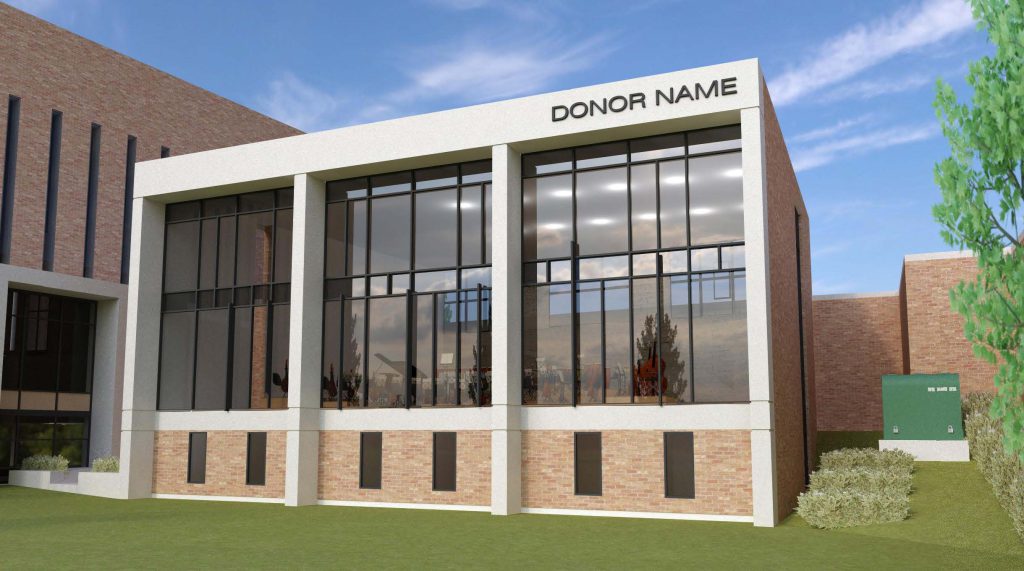
The CUW Music Department is currently raising funds to build a new, long-overdue music rehearsal space. The new building will devote 6,800 square feet to rehearsal and practice rooms for the 225-plus students at Concordia who are majoring in music programs or involved in one of CUW’s 12 music ensembles. If you’d like to help, click the link below to find out how to contribute.
Since 1881, Concordia University’s mission has been teaching and preparing students for careers and vocations that serve The Lutheran Church – Missouri Synod. Music has always been an integral part of that mission. The music department contributes to the spiritual, cultural, artistic, academic and co-curricular aspects to University life on campus. As the campus has grown in scope and size the music department has become more integral to the University mission.
Meet Alex Lauersdorf (’23), a recent CUW graduate who truly understands that music is a gift from God and is eager to share it with the next generation.
To read more inspiring stories of CUW music alumni, click HERE. To help support the new CUW Music building, click HERE.
Quarter Notes
Name: Alex Lauersdorf (’23)
Hometown: Ashippun, WI
Now Resides: Green Bay, WI
Major: K-12 Music Education
Primary Instrument: Trombone
Other Instruments: Organ, piano, handbells
CUW Ensembles: University Band, Wind Ensemble, Brass Ensemble, Pep Band
Whole Notes
Career path:
I am the Music Director for the Northeastern Wisconsin Lutheran School Association (NEWLSA) in Green Bay. I teach Band and Choir at N.E.W. Lutheran High School, and middle school band and private lessons at Pilgrim Lutheran Church and School. I teach Band and K-8 General Music and Choir and Handbells at Green Bay Trinity Lutheran Grade school.
Who or what inspired me to pursue music:
My love for music began at a very young age. I started playing piano between second and third grade. My Grandpa played trombone in about five different bands around the area and I always thought it was the coolest thing. He is the one who truly inspired me to want to do music. He has always pushed me and believed in me and inspired me to be the best musician I can be. He has never missed any of my performances, even if it was just watching the livestream these last few years as he can’t get out as easily anymore. It was him and the continual support of my family that developed my love of music.
When I got to fifth grade and could join band, I knew that trombone was going to be my pick. I truly knew. When I got to college and was deciding my major, I knew I loved kids and music, and I wanted to be able to share my love of music and Christ with future students. The Music department at CUW has continued to push me and develop my skills both as a musician and educator, and I am truly thankful for what they have done for me over these past four years. It is because of all of these people that I am ready to embark on this journey and share my love of music with future generations.
Favorite CUW memories:
For me it is kind of a tie between all of my friends, waking up to the beautiful bluff every day, and having the opportunity to worship each day in Chapel at Concordia, and to be able to learn from amazing educators and professors.
When I got to college and was deciding my major, I knew I loved kids and music, and I wanted to be able to share my love of music and Christ with future students. The Music department at CUW has continued to push me and develop my skills both as a musician and educator, and I am truly thankful for what they have done for me over these past four years.
Alex Lauersdorf
Favorite CUW Music memories:
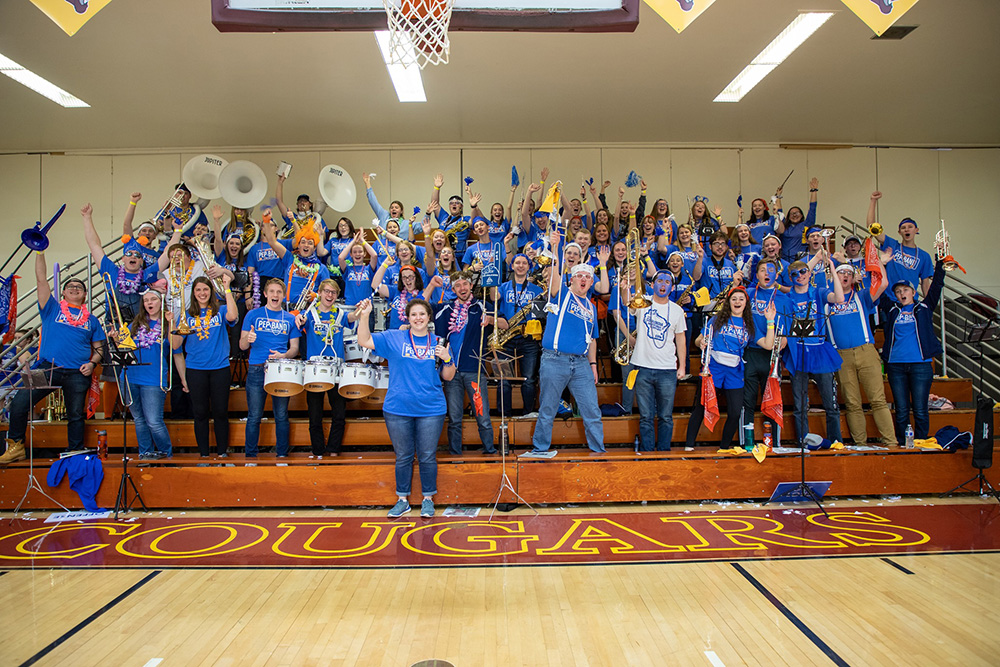
This is also a tie, between Wind Ensemble rehearsals, Pep Band and tours, as well as the Brass Ensemble. For me, Wind Ensemble and Pep Band are where I met many of my friends in college, so going to rehearsals and playing in Pep Band was not only fun because we were playing great music and learning, but because we were having fun and hanging out with friends while doing it.
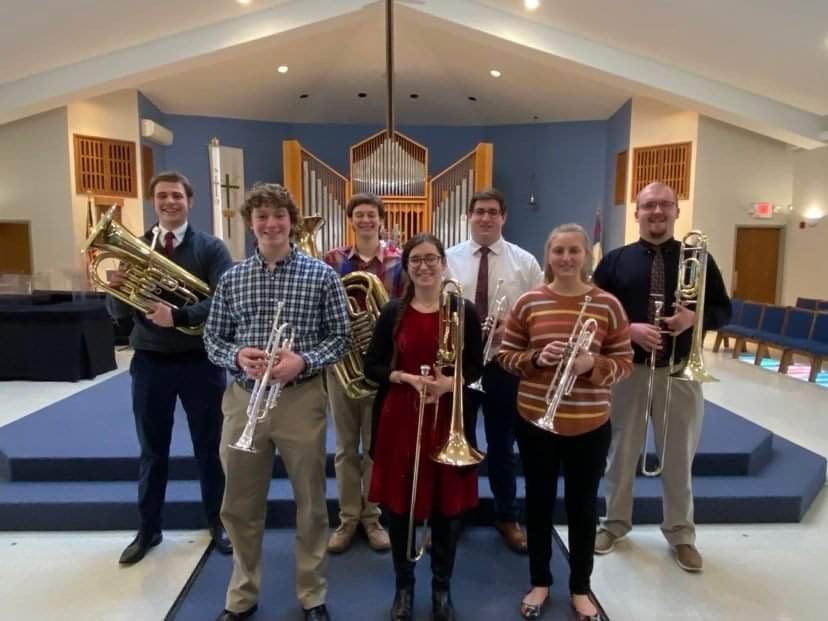
I include Brass Ensemble because it was a dream that my friend and colleague Zach Roeglin and I had that came true. Our Junior year we were able to start this ensemble, practicing one night a week. Eventually, this group went out and played at different churches in Southern Wisconsin, both to represent the CUW Music Department and to help enhance worship at these churches and share our gifts with the community. What started with five members our first year grew exponentially our second year, and I have to say that I am super proud of everyone in that ensemble and the work and dedication they put into it. I am excited to see where it goes this year under new leadership, and the amazing things that they accomplish.
What CUW Music has meant to me:
My CUW music experience means a lot to me because it is where I continued to develop my skills as a musician and learned how to be a great music educator. But it was also a second home where I met my second family. Some of my best friends and memories have come out of my music experience at CUW. Even in the toughest times (and there were a few) I always had these amazing people by my side. I have learned that music truly is a gift from God. I know that even though I am not on campus anymore, I now have a second family there, and around the U.S., that supports me and continues to build me up as I embark on life’s journey.
It is because of this experience that I feel ready and equipped to fulfill God’s call to serve in three schools here in Green Bay and share the gift of music with my future students. My CUW music experience has shaped me into who I am today, and all for the better!
How you can help!
The CUW Music Department is currently raising funds to build a new, long-overdue music rehearsal space. The new building will devote 6,800 square feet to rehearsal and practice rooms for the 225-plus students at Concordia who are majoring in music programs or involved in one of CUW’s 12 music ensembles. If you’d like to help, click the link below to find out how to contribute.
Since 1881, Concordia University’s mission has been teaching and preparing students for careers and vocations that serve The Lutheran Church – Missouri Synod. Music has always been an integral part of that mission. The music department contributes to the spiritual, cultural, artistic, academic and co-curricular aspects to University life on campus. As the campus has grown in scope and size the music department has become more integral to the University mission.