In the news: CUW featured in Ozaukee County News Graphic coverage of Veterans Day celebration


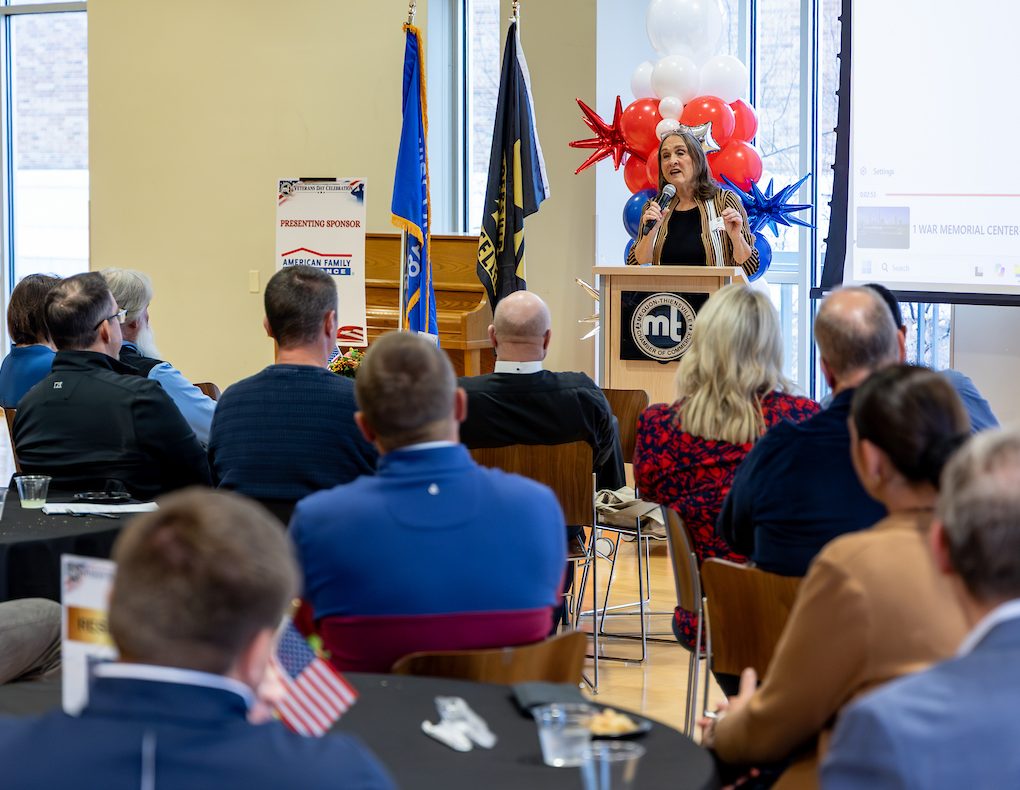
Concordia University Wisconsin is once again making headlines in the local news. The Ozaukee County News Graphic recently featured CUW in its coverage of the Mequon-Thiensville Chamber of Commerce’s Veterans Day celebration, held on the university’s campus.

The gathering brought together community members to recognize and honor local veterans, including 100-year-old Bernard “Bernie” Alberg, a U.S. Army veteran who served during World War II.

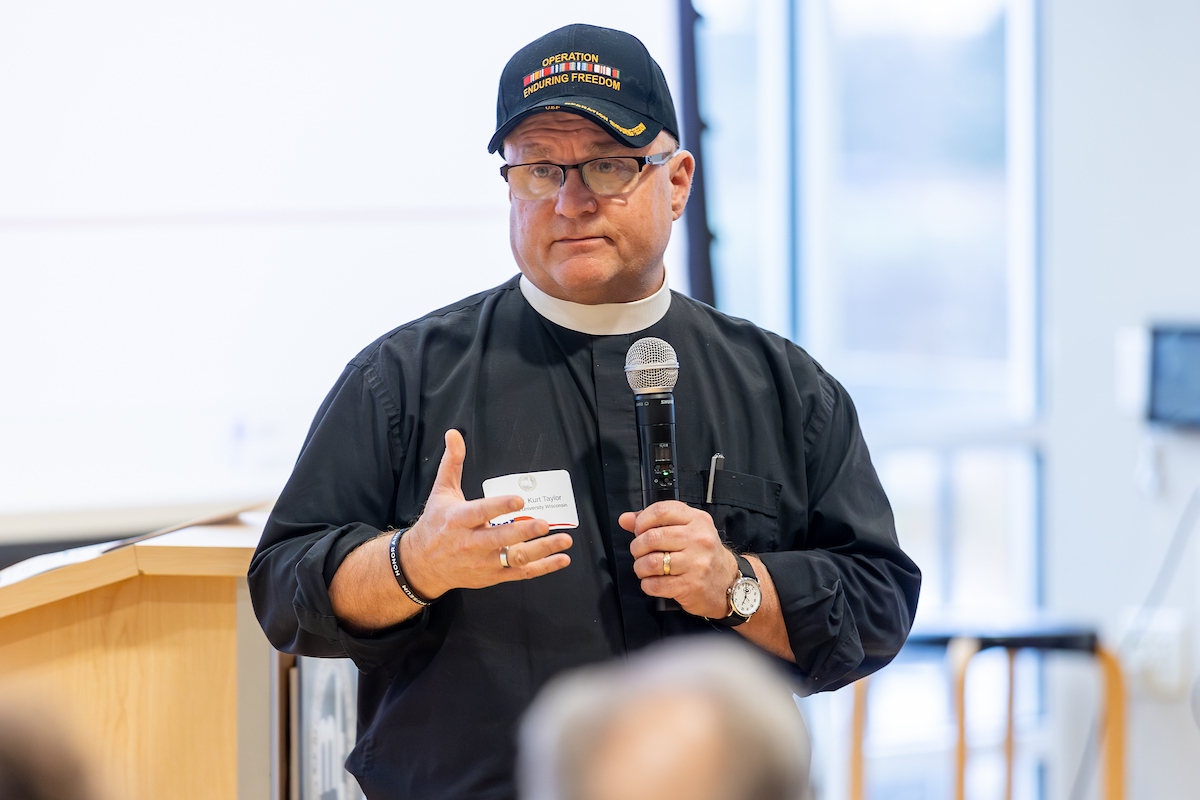
One of the featured speakers was Rev. Dr. Kurt Taylor, associate professor of theology at CUW, who served more than 24 years in the U.S. Air Force as a chaplain. Drawing on his own military experience, Taylor reflected on the unique connection veterans share and the meaning behind their visible expressions of service.

When asked why veterans often wear clothing or hats identifying their military branch, Taylor explained that it is not about seeking recognition. Rather, it is about finding others who share a special bond.

“We’re looking for each other because we have a bond,” he said. “And this bond has to do with honor.”

Taylor also shared his personal motivation for becoming a military chaplain: “I want to serve God and my country.” He added another reason with a smile: “I want to hang out with heroes.”

The celebration also featured keynote speaker Deb Paschke, director of outreach and camp programming for Camp Hometown Heroes, who shared stories of hope, healing and volunteerism in support of children and siblings of fallen military service members.

We are grateful to the Mequon-Thiensville Chamber of Commerce for hosting this meaningful community gathering at Concordia and to the Ozaukee County News Graphic for highlighting the event and CUW’s participation.

Also read Veterans Day luncheon at Concordia honors service, sacrifice and lives of purpose.


Want in?

Concordia University Wisconsin is a Lutheran higher education community committed to helping students develop in mind, body and spirit for service to Christ in the Church and the world.
Annual Angel Tree brings joy to 191 children


A simple gift can make a child’s Christmas day a little brighter.


Christmas has a way of reminding us how much the little things matter. A thoughtful gift, a simple act of kindness or knowing someone is thinking of you can make the season that much more special. Concordia University Wisconsin students, faculty and staff once again have an opportunity to share some of that Christmas joy with 191 children at St. Peter Immanuel Lutheran School in Milwaukee.

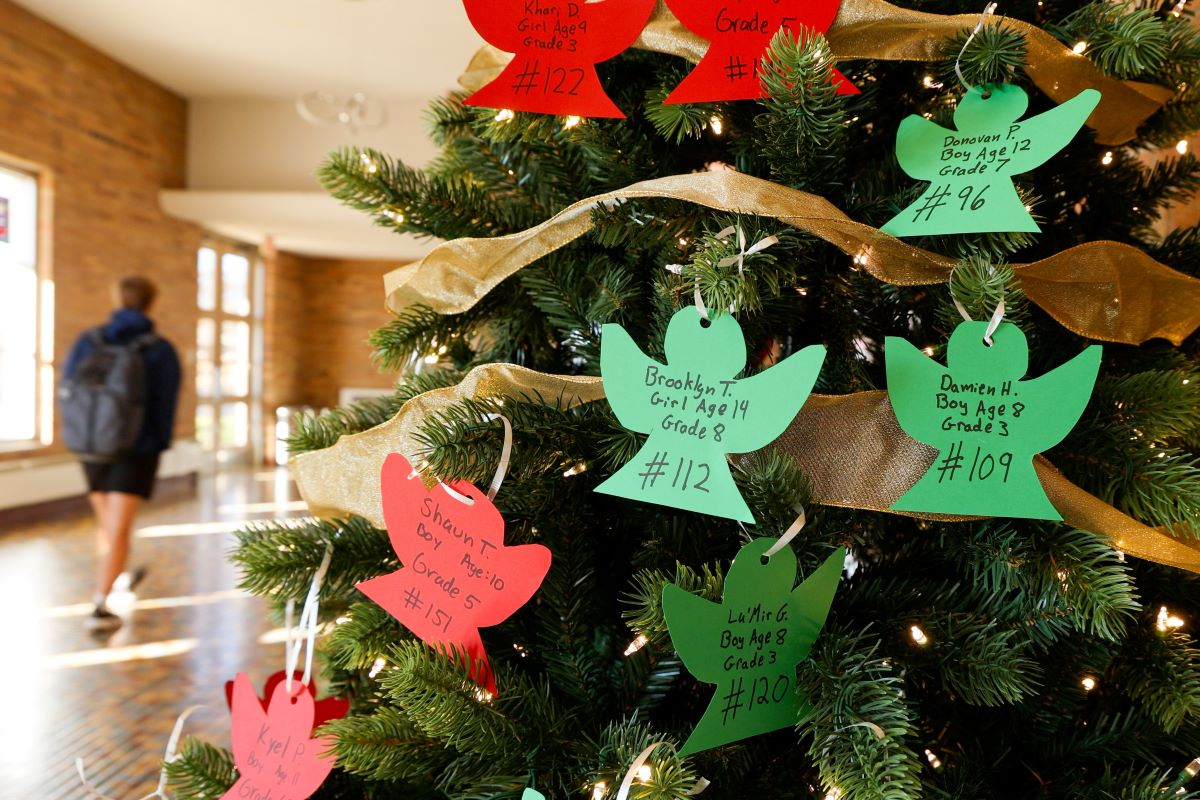
Organized by KidMin, CUW’s children’s campus ministry, the annual Angel Tree project invites the campus community to purchase gifts for local schoolchildren. Two Angel Trees are located on campus, one in the Chapel hallway and another in the Pharmacy Building. Each tree is decorated with paper angels representing children at St. Peter Immanuel Lutheran School, each carrying a Christmas wish from one heart to another.


A little kindness goes a long way

Harmony Dohm, a senior majoring in communication sciences and disorders who expects to graduate in spring 2027, is one of KidMin’s co-coordinators. She is helping organize this year’s project alongside Lauren McMahon and Molly Chopp. Although this is Dohm’s first time coordinating an event of this size, the response from the Concordia community has already been encouraging.

In fact, two students were so eager to participate that they were already on their way to Target to purchase gifts when one emailed KidMin with a question. The two roommates had apparently wasted little time getting into the Christmas spirit.

“We loved that they were so inspired that they immediately wanted to go find a gift,” Dohm said.

And they’re not alone. Students and others on campus have been signing up and expressing interest in the project, which has grown from approximately 125 children in previous years to 191 this year.

“Angel Tree is something that KidMin does every year, and it just brings me so much joy to know we may be able to help a child smile,” Dohm said. “I have never run anything this size before, and I am just excited to see how everyone comes together for a common goal.”

This is also KidMin’s second year partnering with St. Peter Immanuel Lutheran School, part of LUMIN Lutheran Schools in Milwaukee. The ministry previously collected gifts for students at St. Martini Lutheran School.


More than a Christmas gift

The Angel Tree is more than a campus service project. It’s an opportunity for the whole community to put faith into practice. “I have always wanted to help and serve others, but often times life and busy schedules get in the way,” Dohm said.

Through KidMin, she has found a way to share the blessings she’s received while serving others. “He has placed me in a position of ministry with certain talents and desires to spread the love of Christ to others,” she said.

Although she may never meet the children receiving the gifts, Dohm hopes those considering taking an angel will remember what made Christmas so special when they were young. She recalls the Christmas hymns, church services, colorful lights, music, snow days and cookies. These are the little things that often become our fondest childhood memories.

“We don’t know anything about these kids and their lives, but I hope people realize that a small act of kindness, like giving a small gift, can simply make a kid and their family very grateful,” she said.


close-up of paper angels with children on them

How to participate in Angel Tree

Participating is easy, and there’s still time to select an angel before the Dec. 2 deadline.

  1. Choose an angel. Visit the Angel Tree in the Chapel hallway or Pharmacy Building and select a paper angel.
  2. Sign up. Find the corresponding number on the sign-up sheet to see the child’s gift wishes. Add your name and email address or phone number.
  3. Purchase a gift. Plan to spend approximately $25 per child. If a requested item costs more, consider purchasing a gift card that can help the child buy the item.
  4. Return your gift. Securely attach the original angel tag to your gift and place it in the designated box corresponding to the child’s grade. Gift wrapping is optional.
  5. Meet the deadline. All gifts must be returned by Wednesday, Dec. 2.

Once the gifts are collected, KidMin will partner with LIGHT, CUW’s women’s Bible study, to host a Christmas wrapping party. Dohm, McMahon and Chopp will then deliver the presents to St. Peter Immanuel Lutheran School during finals week.


A Christmas worth sharing

With 191 children on this year’s list, Angel Tree is asking a little more of you. But judging by the response so far, you’re more than willing to help. And perhaps that’s what makes this annual tradition so meaningful. You don’t need to make an elaborate gesture or purchase an expensive gift to let someone know they’re remembered.

Sometimes, all it takes is a paper angel, a trip to Target and your desire to make a child smile.


Want in?

Concordia University Wisconsin is a Lutheran higher education community committed to helping students develop in mind, body and spirit for service to Christ in the Church and the world.

New virtual reality lab at Concordia University Wisconsin brings hands-on learning to a new dimension


CUW’s new VR lab will help students develop practical skills, build confidence and prepare to serve others.


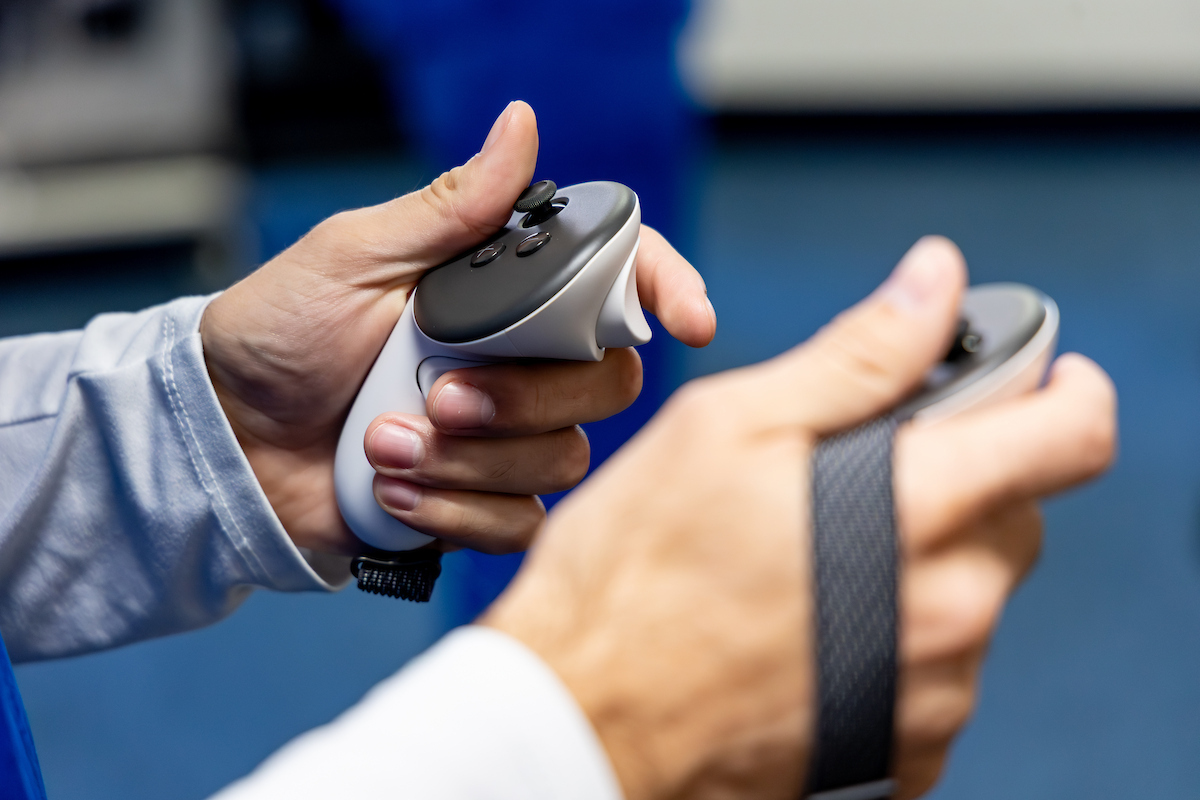
What if nursing students could practice caring for multiple patients, navigate difficult conversations and make critical clinical decisions before encountering those situations in a hospital?

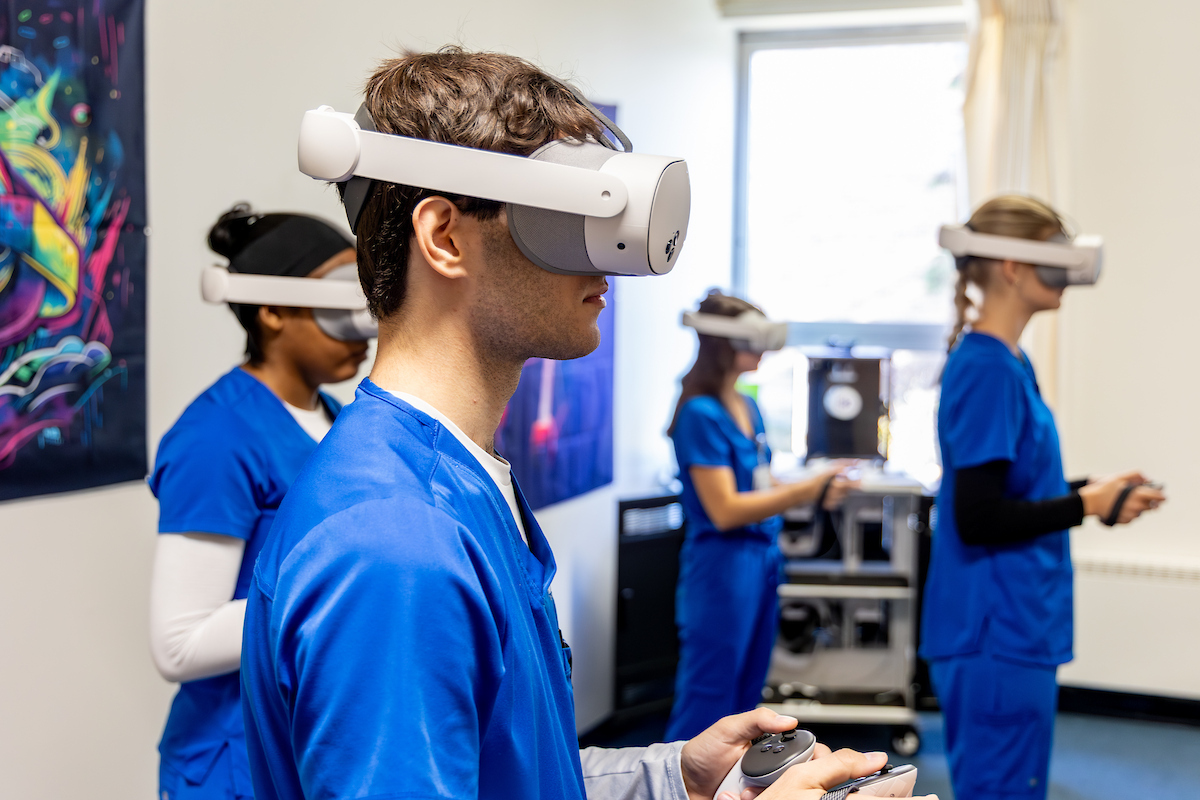
At CUW, a new virtual reality lab will make those learning experiences possible, giving students another way to develop the skills and confidence they need for their future careers.

While nursing students will be among the primary users, the lab is designed to serve disciplines across campus, opening new possibilities for hands-on learning through immersive technology, artificial intelligence and realistic simulations.

More than a technological advancement, the lab represents another way CUW is preparing students to put their knowledge into practice and serve others with competence and compassion.


Preparing nurses for real-world decisions

For nursing students, clinical experiences are an essential part of their education. Working alongside health care professionals in real clinical settings allows students to apply classroom knowledge, develop critical thinking skills and learn to care for patients.

Virtual reality offers an additional layer of preparation.

“VR provides multi-patient access to specifically practice assessments, delegation, prioritization, and communication. These are key aspects of nursing that maximize patient safety and the care provided to them,” said Tina Gaffney, CUW’s simulation and VR center director, psychiatric wellness coordinator and nursing instructor.

Through virtual simulations, students can practice managing multiple patients and determining which needs require their immediate attention. They can also work through decisions about delegating responsibilities, communicating with patients and coordinating care.

These are skills that can be challenging to practice extensively during traditional clinical rotations, where students generally focus on providing bedside care to individual patients.

The lab will use clinical simulation scenarios from Wolters Kluwer, a company whose educational programs are already familiar to CUW nursing students. Faculty and staff will guide students through preparation and reflection sessions before and after each simulation, helping them evaluate their decisions and identify opportunities for improvement.

Unlike real clinical encounters, virtual scenarios can be repeated, giving students additional opportunities to practice, learn from mistakes and strengthen their clinical judgment in a controlled environment.

Gaffney believes this additional preparation will help bridge the gap between nursing education and the demands of professional practice.

“VR will test these concepts further for the students to be more practice ready at graduation,” she said.


Combining clinical skills with compassionate care

Although VR introduces new technology into nursing education, the ultimate goal remains deeply human: preparing nurses to care for people.

At CUW, nursing education emphasizes treating the whole person, recognizing that physical health is only one part of a patient’s well-being.

“At Concordia in nursing we educate on caring for the patient mind, body, and spirit,” Gaffney said. That approach reflects CUW’s Christian mission.

Nursing students learn to consider the physical, psychological, social, spiritual and financial factors that can influence a person’s health. Understanding those circumstances helps future nurses develop care plans that address individual needs while respecting the realities of each patient’s life.

Virtual reality, particularly when combined with AI, creates opportunities to practice those important interpersonal skills.

Students could encounter virtual patients facing complex health challenges, work through sensitive conversations and explore how their responses influence patient care. Such experiences can help them develop not only sound clinical judgment but also the communication skills and compassion essential to the nursing profession.

“We have to show compassion for each person individually and make care plans that fit into their needs and are attainable with their lives in the community,” Gaffney said.

By providing opportunities to practice those conversations, the lab can help students become more comfortable responding to patients with different needs and circumstances.


A resource for learning across campus

Although nursing will be a major focus, the new VR lab has the potential to benefit students throughout Concordia.

Gaffney said the lab will be available to nursing students at every level, from undergraduate education through the upcoming certified registered nurse anesthetist (CRNA) program. Faculty in occupational therapy, social work, psychology and pharmacy have also expressed interest in exploring its applications.

For students preparing to enter professions that involve direct interaction with patients or clients, the technology could offer valuable opportunities to practice communication, assessment and decision-making.

For example, students may be able to rehearse challenging conversations with people living with dementia or those with mental health conditions. Pharmacy students could practice patient education and sensitive discussions, while students in other disciplines could explore scenarios relevant to their future professional responsibilities.

AI-powered interactions are especially promising because they could allow students to practice responding to a range of situations in a simulated environment.

“It really comes down to practice, practice, practice – with VR being another tool for students to become practice ready in whatever field they are going to be using their degree in moving forward,” Gaffney said.


Looking ahead: The future of immersive learning

While the new lab offers exciting possibilities today, advances in technology could make immersive learning even more accessible in the years ahead.

Dr. Michael Litman, professor and chair of computer science, program director for the master’s programs in computer science and artificial intelligence, and co-founder of Concordia’s AI & Quantum Innovation Lab, sees virtual reality evolving into experiences that blend digital information with the physical world.

“I think VR is going to become more immersive with less hardware moving forward,” Litman said.

As headsets become lighter and more comfortable, augmented reality (AR) could allow students to interact with virtual elements while remaining present in their actual surroundings.

Rather than entering a completely virtual environment, students could one day practice skills using digital objects and scenarios integrated into familiar classrooms and shared learning spaces.

Litman envisions a future in which students can practice together without relying on physical training materials for every exercise, potentially reducing waste while creating new opportunities for collaboration.

He also sees significant possibilities in the convergence of AI, robotics and other emerging technologies, particularly in health care.

These advances could eventually help health care professionals perform complex procedures with greater precision while retaining the human judgment essential to patient care.

For Concordia students, learning to engage thoughtfully with emerging technologies may become an increasingly important part of professional preparation.


Innovation with a purpose

As Concordia explores the possibilities of virtual reality, the new lab reflects a commitment to combining innovative education with meaningful service.

For nursing students, that means more opportunities to practice making decisions, communicating with patients and coordinating compassionate care. For students across campus, it offers a new environment to develop professional skills and prepare for real-world challenges.

And for faculty, it creates opportunities to explore new approaches to teaching that connect classroom knowledge with practical experience.

Gaffney hopes the technology will ultimately help students develop the confidence and critical thinking skills needed to serve patients as individuals.

“We can really challenge them to critically think through what they will need to do as a nurse, who is expected to often play many roles, while giving patients that individual whole person-centered care required,” she said.

At Concordia, the technology may be new, but the purpose behind it is familiar: equipping students with the knowledge, skills and compassion to make a difference in the lives of others.

Note: CUW nursing has a story to tell through the students, faculty, alumni and experiences shaping the next generation of compassionate, skilled nurses. As we look ahead to the completion of our expanded nursing wing, we will showcase the strength of our program, the people behind its success and the opportunities this new space will create. Each feature will explore how nursing education brings together academic excellence, hands-on learning, faith and a commitment to serving others.


Want in?

Concordia University Wisconsin is a Lutheran higher education community committed to helping students develop in mind, body and spirit for service to Christ in the Church and the world.


Why CUW students choose to serve internationally


Explore how international missions give you opportunities to share Christ’s love, learn from others and put your faith into practice beyond campus.


Ruth Dolde had never been back to China, the country where she was born. This past summer, however, an open spot on a mission team gave her a reason and an opportunity to return. The Concordia University Wisconsin junior, who was adopted from China, joined a group through Concordia University, Nebraska, for six weeks in Hong Kong and Shenzhen.

“God works all things for good, and I felt called to show others the love of Christ,” Dolde said. About 20 years after her adoption, she returned to teach, help lead Vacation Bible Schools and share Christ’s love with the children she met.

Her experience is just one example of how serving internationally can help you learn more about your faith, the people around you and the vocation you may feel called to pursue. This year, CUW is renewing its emphasis on international mission experiences, with trips planned to the Czech Republic, Poland and Costa Rica. These opportunities offer different ways to serve and learn alongside missionaries and local communities.


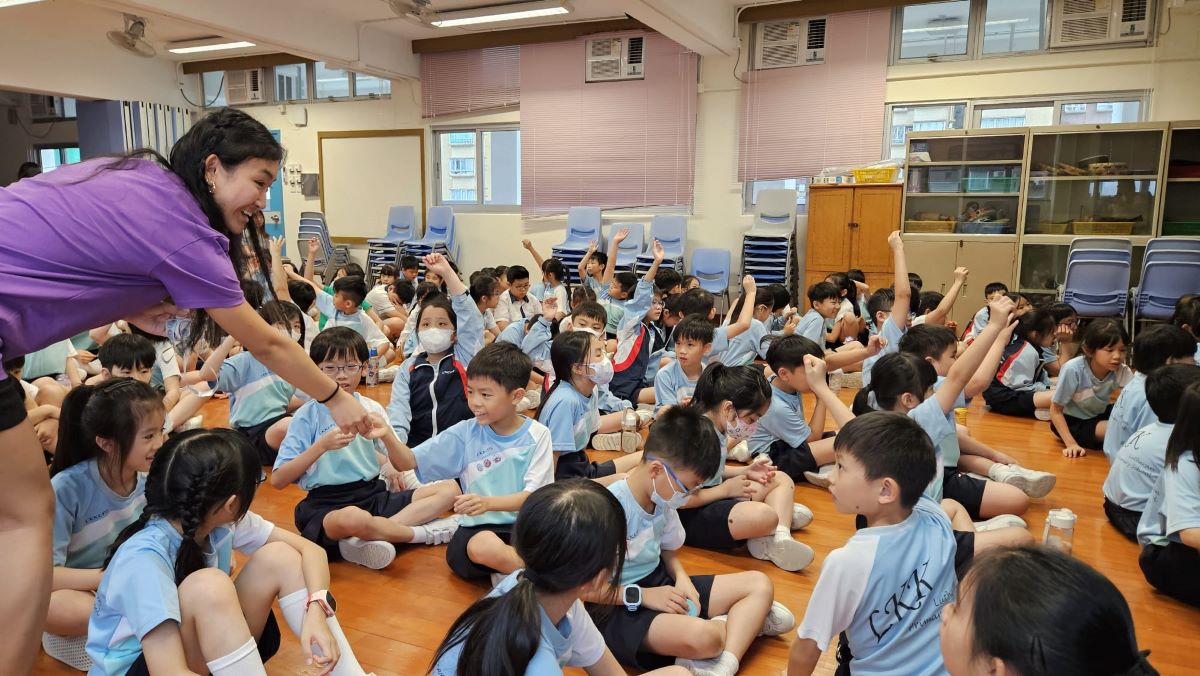
room of kids in blue shirts
CUW junior Ruth Dolde, left, connects with children during Vacation Bible School in Hong Kong. Dolde spent six weeks serving in Hong Kong and Shenzhen this past summer through a mission trip organized by Concordia University, Nebraska. Photo courtesy of Dr. Vicki Anderson at CUNE.

Sharing faith across cultures

Dolde’s team spent about three and a half weeks in Hong Kong, staying with the Lutheran Church–Hong Kong Synod and leading Vacation Bible Schools at local schools and churches. During that time, she connected with a high school student who helped lead VBS. The girl was thankful they could serve together and that she could learn about Jesus.

woman in flower dress in front of ocean
Ruth Dolde

Another memory that stayed with Dolde was the children singing together, their faces lighting up as they praised God. “I was able to see God’s love working all the way across the world,” she said.

The remaining two and a half weeks took the group to Shenzhen. There, they taught English during a two-week program that helped students transition from classes taught in Mandarin to classes taught in English. Although most team members were education majors, Dolde was not. She put her own skills to work by co-teaching a 10th grade class.

Now pursuing two bachelor’s degrees at CUW, one in social work and one in art, she plans to graduate in spring 2028. She hopes to work in adoption and eventually earn a master’s degree in social work. “I will go wherever the Lord takes me,” she said.

The trip gave her practice working with different people, hearing their experiences and adjusting to unfamiliar situations. “As I am pursuing a helping profession, I see that this experience equipped me by enabling me to be compassionate, understanding and adaptable,” she said.


chapel of people walking with flags
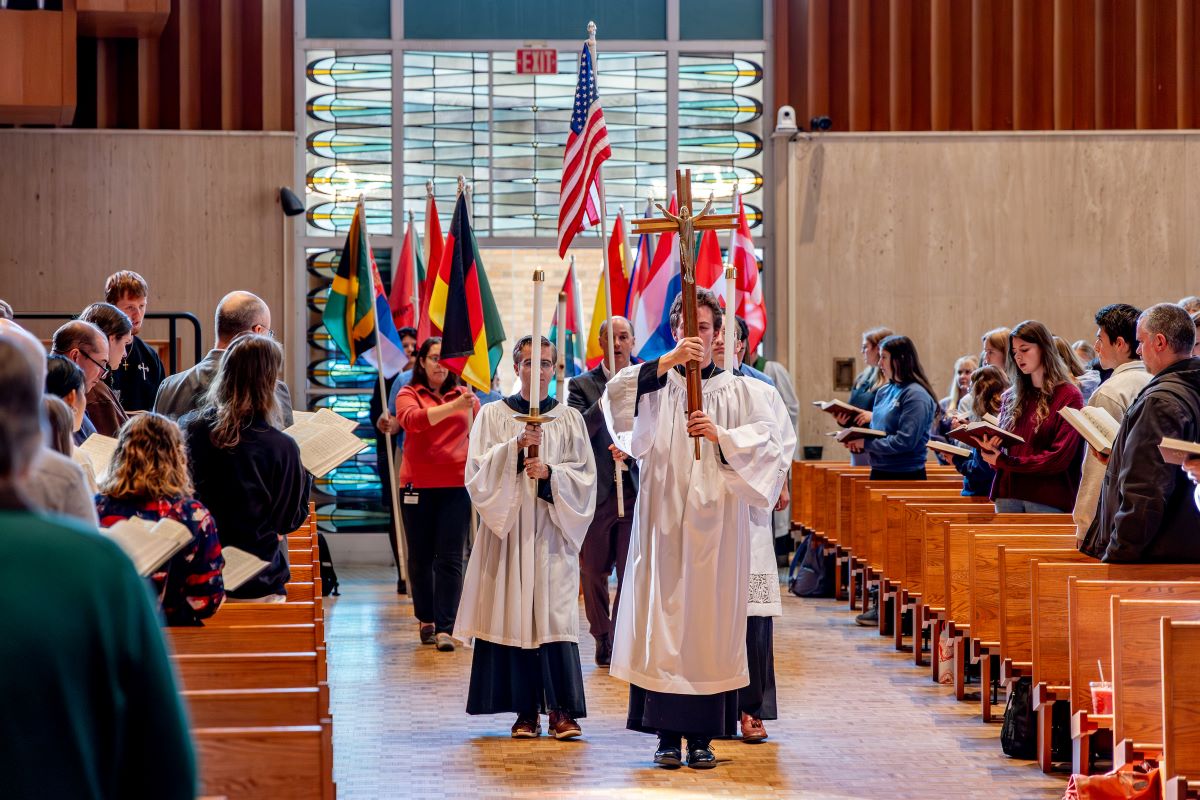
Participants carry flags through CUW’s Chapel of Christ Triumphant during the International Education Week Parade of Flags. Photo by Mike Zimmerman.

What international missions can look like

Teaching is one way you can serve. Other experiences give you a chance to learn alongside missionaries, spend time with local congregations or assist with activities for children and families. Kristin Schneider, international education events and marketing coordinator, is organizing CUW’s planned spring break mission education trip to the Czech Republic and Poland.

Participants will get a closer look at the everyday work of LCMS missionary Benjamin Helge, learning about the people he serves and how culture, language and history influence his ministry. The itinerary includes Prague, Ostrava and Krakow, with opportunities to interact with children and adults through local churches and ministry activities.

Getting to know the communities you visit begins before you leave. Schneider said the group will practice basic Czech phrases before traveling and continue learning during the trip. Even knowing a little of someone’s language can help start a conversation.

Another CUW mission trip is planned for May 8–15, 2027, at Camp Penuel in Costa Rica, where participants will serve children and their families. Interest has already met the trip’s eight-student capacity. Heather Fortuine, associate professor of rehabilitation science and the trip’s primary contact, hopes it can become a regularly offered experience.


Praying about the possibilities

Deciding to serve internationally is a big step. You may have questions about the cost, your schedule, the language or simply being far from home. Schneider suggests beginning with prayer, then talking with a trip organizer to understand what to expect and whether the experience is a good fit. Depending on your schedule, a short mission trip may be more feasible than a full semester abroad.

Preparation for the Czech Republic and Poland trip will include group meetings, Bible study and orientation. You’ll discuss cultural expectations, what to pack, how to handle money and other details before leaving. You do not need to have everything figured out before expressing interest. Asked what experience students need to participate, Schneider offered a simple answer: “Just a willingness to learn and to try things.”

Dolde also encourages you to pray, talk with a pastor or another faith mentor and weigh your options. Support from people back home helped her feel ready to go. Once she arrived, she said, she was so busy that she did not have time to be homesick. Seeing the children respond to the group’s work helped her appreciate the decision she had made.

“I knew I would regret NOT doing it more than the fear of going,” she said.


Growing through service

Schneider’s first international mission trip took her to Japan. She later taught preschool, where many of her students came from countries around the world. Looking back, she sees how those experiences helped prepare her to work with people from different cultures at CUW.

“I feel like part of the reason why I’m in the job that I’m in is because I did an international mission trip,” Schneider said. She hopes you’ll consider how an experience abroad might shape your own faith, relationships and future vocation.

Dolde returned with greater confidence and experiences she can carry into social work. She also came home with memories of the children she taught, the people she served alongside and her first visit back to the country where her life began.

“Christ was at the center of this opportunity, and this was truly a trip of a lifetime,” she said.


Meet the missionary you’ll learn alongside

Benjamin Helge has served with the LCMS Office of International Mission since January 2014. Based in Ostrava, Czech Republic, he is the shared ministries manager for the Eurasia region, helping connect people and coordinate ministry opportunities across national borders. Locally, he serves as lay leader of the K4 Community Center, which includes a Lutheran church plant. His work involves a children’s club, an English conversation group for teens, workshops and support for worship services led by a Czech pastor.

The planned Czech Republic and Poland trip will introduce you to three pillars of Lutheran mission work: spreading the gospel, planting Lutheran churches and showing mercy.

The journey begins in Prague, continues east to Czech Silesia and ends with a day in Krakow, Poland. Along the way, you’ll meet LCMS missionaries and explore how the region’s history has shaped Christian life and ministry today. You’ll also help children practice English at a local elementary school and assist with an after-school program where the gospel is shared.

“The goal of mission education isn’t to serve the entire week, but it is to experience and learn at a deeper level what Lutheran mission means,” Helge said. His hope is that you’ll return better able to explain what mission means and ready to put that understanding into practice in your own community, whether at CUW or wherever God leads you.


Learn more about international missions

CUW’s planned spring break mission education trip to the Czech Republic and Poland costs about $2,100, including airfare, housing, meals, in-country transportation, excursions and insurance.

To learn more, contact Schneider at kristin.schneider@cuw.edu or 262-243-4294 for current availability, registration details and preparation requirements.

For further reading:


Want in?

Concordia University Wisconsin is a Lutheran higher education community committed to helping students develop in mind, body and spirit for service to Christ in the Church and the world.

Four ways CUW helps international students feel at home


What happens after you land? Starting fresh doesn’t have to mean starting alone.


Above Liam Lucas’ bed hangs a Canadian flag. On his desk sits a framed photo of his mom, dad, brother and himself. Both keep home close while he studies finance and communications at Concordia University Wisconsin.

A member of the Class of 2028, Lucas came to CUW from Châteauguay, Quebec, about 20 minutes outside Montreal and a 15-hour drive from campus. He has never lived this far from family, but his Canadian teammates and roommates help ease the transition.

“The hockey world is small,” Lucas said. Mutual friends and shared experiences playing junior hockey give them plenty in common.

As you prepare for your own move, your first connections might be teammates, classmates or someone welcoming you at the airport. Having people to turn to can make settling in easier.

Jennifer Tadeo, EdD, international student and scholar services (ISSS) manager, said her team addresses questions about transportation, shared bathrooms and other aspects of campus life. That support begins before you even land and continues throughout your college journey.

Here are four ways CUW helps you get comfortable.


1. Someone to meet you at the airport

After a long trip, seeing someone holding a sign with your name on it can feel reassuring.

CUW provides airport pickup for new international students planning to live on campus. A university contact meets you at baggage claim at the Milwaukee international airport and helps you get to campus.

Once you’re admitted and planning your arrival, request airport pickup through the International Student Hub with your flight details. Check the designated arrival dates before booking your flight so you can plan around pickup availability.


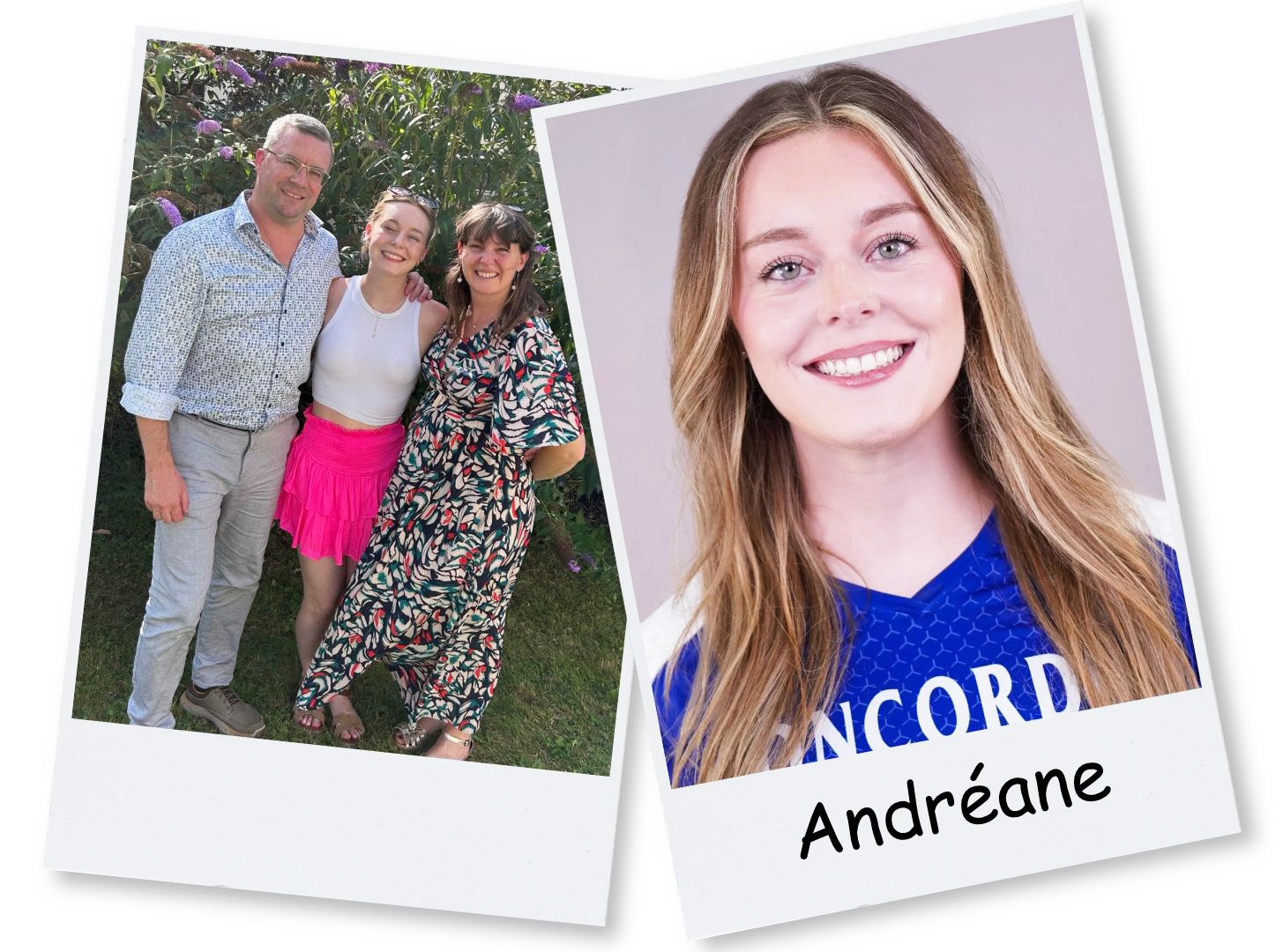
student on right and on left with her family
Andréane Hiron, a senior from France studying interior architecture and design, is also a member of CUW’s acrobatics and tumbling team. At left, Hiron, center, is pictured at home.

2. A few comforts waiting in your room

Luggage fills up quickly when you’re packing for college. Once you pack your clothes, electronics and personal belongings, there may be little room left for a pillow or blanket.

CUW provides an initial linen bag containing a blanket, pillow, sheet and towels. A welcome gift bag in your room typically includes snacks and small toiletries, such as a toothbrush and toothpaste.

Tadeo recommends bringing your clothes, phone, computer and photos from home. You can purchase additional toiletries and larger items after arriving.

Leave a little space for something personal, too. After about 15 hours of air travel from France, Andréane Hiron arrived in fall 2023 with stuffed animals, printed photos and gifts from her mother. Now a senior studying interior architecture and design, she still remembers those gifts: a letter with messages from family and friends and a personalized blanket she slept with during her first few days.

These reminders made her room feel more comfortable and kept her connected to loved ones back home.


3. Help with everyday needs

Once you unpack and see your room, it’s easier to decide what else you need.

A store trip during international student orientation gives you a chance to purchase personal supplies and anything that didn’t fit in your luggage without arranging transportation yourself.

If you’re buying bedding, look for Twin XL to fit CUW’s residence hall beds. Laundry is free, which also helps when planning your living expenses.

Support continues during university breaks if you can’t travel home. You can sign up to remain in campus housing, and the Concordia International Center provides a grocery shuttle before breaks so you can stock up on food. Campus food services typically offers boxed meals during some holidays.

Many CUW families also welcome international students for holiday meals—a chance to get to know people, experience their traditions and share your own.

Check with housing staff and the CIC before each break about arrangements, meals and transportation.


4. People to help you feel connected

Some connections happen through a shared interest. Others begin when you ask for help.

Before arriving, Hiron worried about whether people would understand her English and whether she would make meaningful friendships. Saying goodbye to her father was difficult, and she spent her first night without her roommates, who had not yet moved in.

The next day, cheerleading gave her something to do and people to meet. Friendships followed as her roommates arrived.

“We immediately became really good friends,” she said. She also liked her classes and could understand everything. “That helped me feel better and more at home.”

Lucas also knows whom to turn to for assistance. He credits Jessie Peters, international operations manager, with helping Canadian students with their documents and keeping them informed about travel updates.

“I have helped students in a variety of ways, from signing their paperwork to connecting them with a counselor or helping them get groceries,” Peters said. “Every student has different needs, and we are happy to help explore solutions with you.”

The international admissions and ISSS teams help you find answers and connect with other campus offices. International student workers offer guidance based on their own experiences adjusting to college in another country.

Housing staff, resident directors, resident assistants and faith associates are also available as you settle in. The friendship families program connects international students with U.S. families, while the CIC activities offer opportunities to meet people and spend time together.


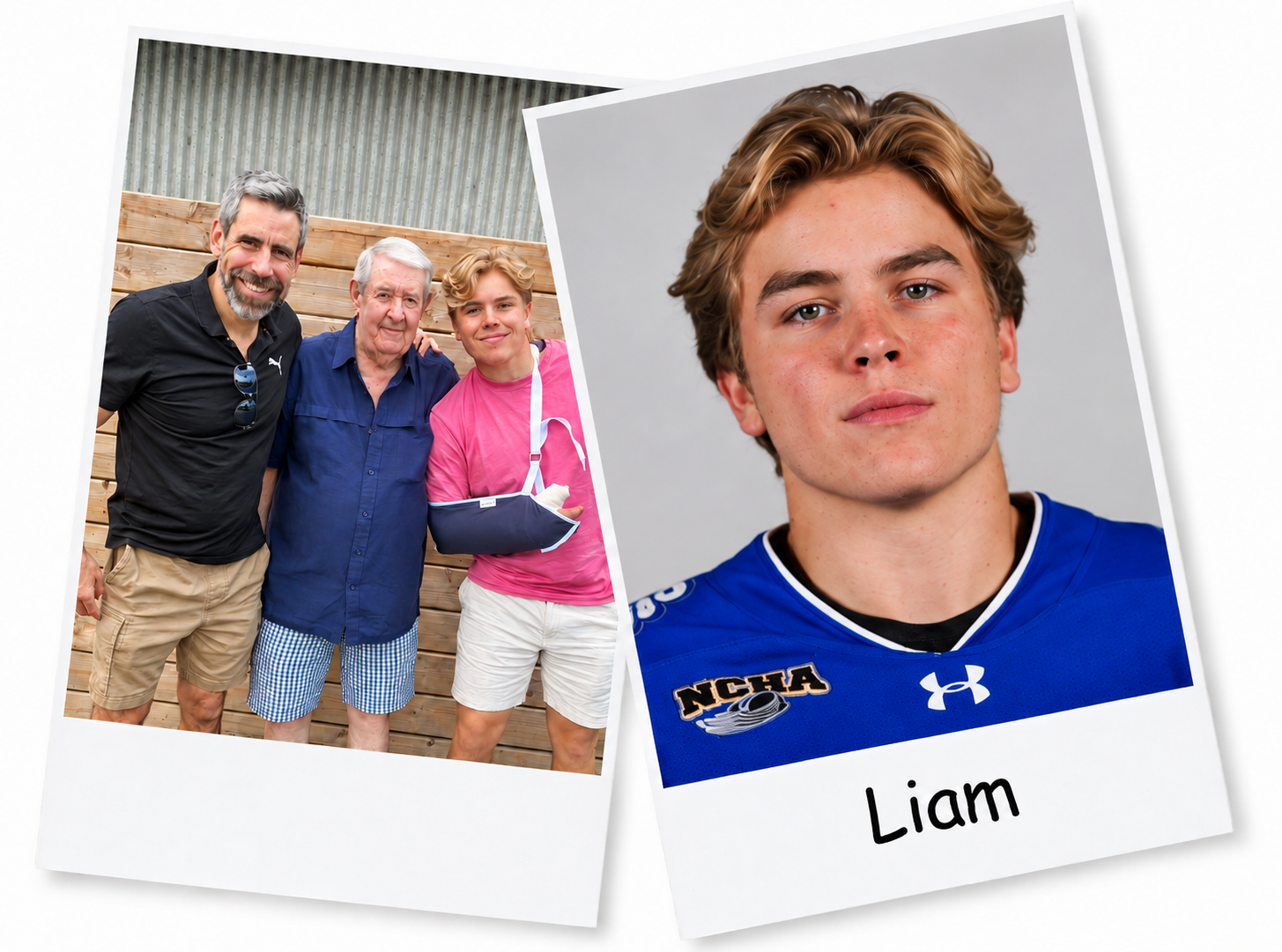
male student on right on left with family
Liam Lucas, a finance and communications student from Canada, finds friendship and a familiar routine on CUW’s men’s hockey team. In the photo at left, Lucas stands at right next to his grandpa and uncle back home.

Finding your everyday routine

Developing familiar routines and finding people to turn to takes time. Questions don’t end after orientation, and ISSS staff are available by email and phone during normal business hours. Walk-in advising hours are posted on the International Student Hub.

“Do not be afraid to reach out to the international admissions team!” Peters said. “They have a lot of experience helping students from all different backgrounds. They are dedicated and happy to assist you.”

Lucas’ first week included his first Major League Baseball game at Wrigley Field, a Milwaukee Bucks game and a Pitbull concert. Yet when asked what really helped him feel at home, he said hockey practice.

His connection started before most students arrived. Upperclassmen welcomed Lucas and his parents, showed them around campus and helped him move into his room. Now he shares daily practices with teammates who understand just what it means to live far from family.

Looking back on their arrivals, both Lucas and Hiron point to the people and friendships that help make CUW feel like home.

“I love my teammates,” Lucas said.

“What I wished I had known before I arrived was just that everything was going to work out,” Hiron said.

Ready to take your next step? Learn more about applying to CUW as an international student.


Want in?

Concordia University Wisconsin is a Lutheran higher education community committed to helping students develop in mind, body and spirit for service to Christ in the Church and the world.

Travel the world without leaving campus: Celebrate International Education Week at CUW


What if you could experience cultures from around the world, learn about international opportunities and enjoy music, food and fellowship, all without leaving Concordia University Wisconsin’s campus?


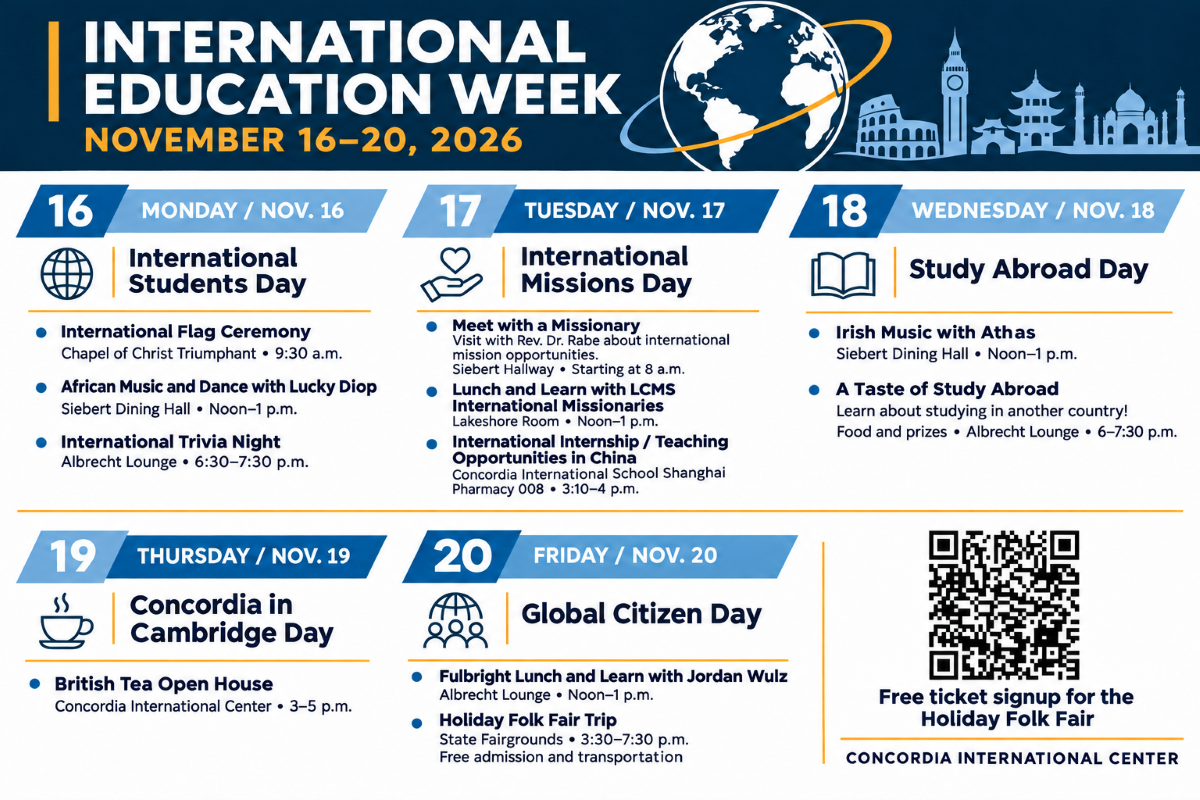
International Education Week, Nov. 16-20, invites the CUW community to do just that. Throughout the week, students, faculty and staff can explore different cultures, learn about global opportunities and celebrate the connections that bring people together.

“What excites us most this year is that we are looking beyond simply highlighting different regions of the world,” said Jennifer Tadeo, EdD, International Student and Scholar Services manager.

“We want to create opportunities for our campus community to explore cultures, broaden perspectives, and experience the world through the international programs CUW supports.”

From an opening flag ceremony and international performances, to study abroad conversations and opportunities to connect with missionaries, the week offers something for everyone.


A week of global experiences

Here’s a look at what’s happening each day:

Monday, Nov. 16

Opening flag ceremony: 9:30 a.m. | Chapel of Christ Triumphant
Kick off International Education Week by gathering for an opening flag ceremony celebrating the cultures represented in the CUW community.

African drum and dancing performance by Lucky Diop: Noon-1 p.m. | Siebert Dining Hall
Experience the energy of African music and dance during a special performance by Lucky Diop.

International trivia night: 6:30-7:30 p.m. | Albrecht Lounge
Put your global knowledge to the test with an evening of international trivia.

Tuesday, Nov. 17

Meet with a missionary: 8 a.m. | Siebert Hallway
Connect with a missionary and learn more about opportunities to serve around the world.

Lunch and learn with Rev. Dr. Rabe, LCMS director of missionary recruitment: Noon-1 p.m. | Lakeshore Room
Enjoy lunch while learning about missionary service and opportunities through the Lutheran Church-Missouri Synod.

Learn about international internship and teaching opportunities in China: 3:10-4 p.m. | Pharmacy 008
Discover international internship and teaching opportunities in China and learn more about ways to gain experience abroad.

Wednesday, Nov. 18

Athas Irish Band: Noon-1 p.m. | Siebert Dining Hall
Take a musical trip to Ireland with a performance by Athas Irish Band.

A taste of study abroad: 6-7:30 p.m. | Albrecht Lounge
Curious about studying abroad? Learn about CUW’s study abroad programs while enjoying international snacks and discovering opportunities to experience another part of the world.

Thursday, Nov. 19

British open house: 3-5 p.m. | Concordia International Center
Enjoy tea, biscuits and scones while learning about CUW’s Cambridge program. Stop by the CIC to discover what studying abroad in England could look like.

Friday, Nov. 20

Fulbright lunch and learn with Jordan Wulz: Noon-1 p.m. | Albrecht Lounge
Learn more about Fulbright opportunities during this lunchtime conversation with Jordan Wulz.

Holiday Folk Fair trip: 3:30-7:30 p.m. | Wisconsin State Fair Park
Close out the week with a trip to the Holiday Folk Fair. Students can enjoy this celebration of international cultures with free tickets and transportation provided.


Discover the world and our place in it

International Education Week is about more than exploring different cultures. It’s also an opportunity to recognize the ways our campus community connects with people around the world and to consider how those experiences shape our understanding of others and our own vocations.

 “Ultimately, it’s about celebrating the ways we connect with, learn from, and serve people around the world,” Tadeo said.

Join us Nov. 16-20 and discover how far a week on campus can take you.

Want in?

Concordia University Wisconsin is a Lutheran higher education community committed to helping students develop in mind, body and spirit for service to Christ in the Church and the world.

Caregiving is a labor of love, so leave room for grace


More than 100 women gathered at CUW’s Living Grace Women’s Luncheon for fellowship, faith and encouragement for the holiday caregiving season.


The cookies, the cards, the Christmas Eve service. Holiday traditions can mean so much. But when you’re also caring for someone you love, even your favorite things can start to feel overwhelming. Consider the familiar airplane analogy. You know the one flight attendants share before takeoff: Put on your own oxygen mask before helping others. It’s a reminder worth keeping when caring for someone else leaves little room to care for yourself.

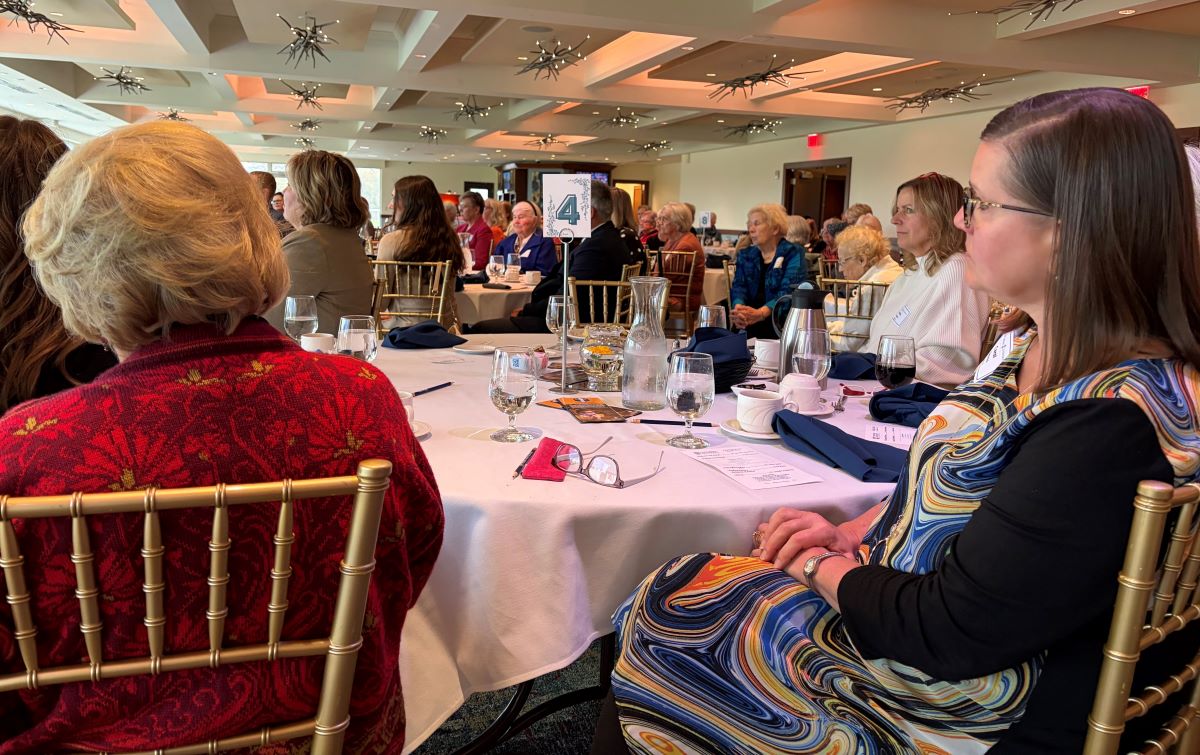
Since November is National Family Caregivers Month, this message is especially timely. At Concordia University Wisconsin’s Living Grace Women’s Luncheon on Nov. 11, Susan Hurst, a medical and geriatric social worker with 30 years of experience, encouraged women to approach the holidays with realistic expectations, shared responsibilities and grace for themselves. Hosted by CUW’s Office of Advancement, the event took place at the River Club of Mequon.

The gathering began with a welcome and prayer from Jennifer Ankerberg, wife of President Erik Ankerberg. A student testimonial from senior Payton Steward and a university update from Executive Vice President Steve Taylor, EdD, preceded Hurst’s presentation, “Finding Balance During the Holidays.”


Faith in everyday life

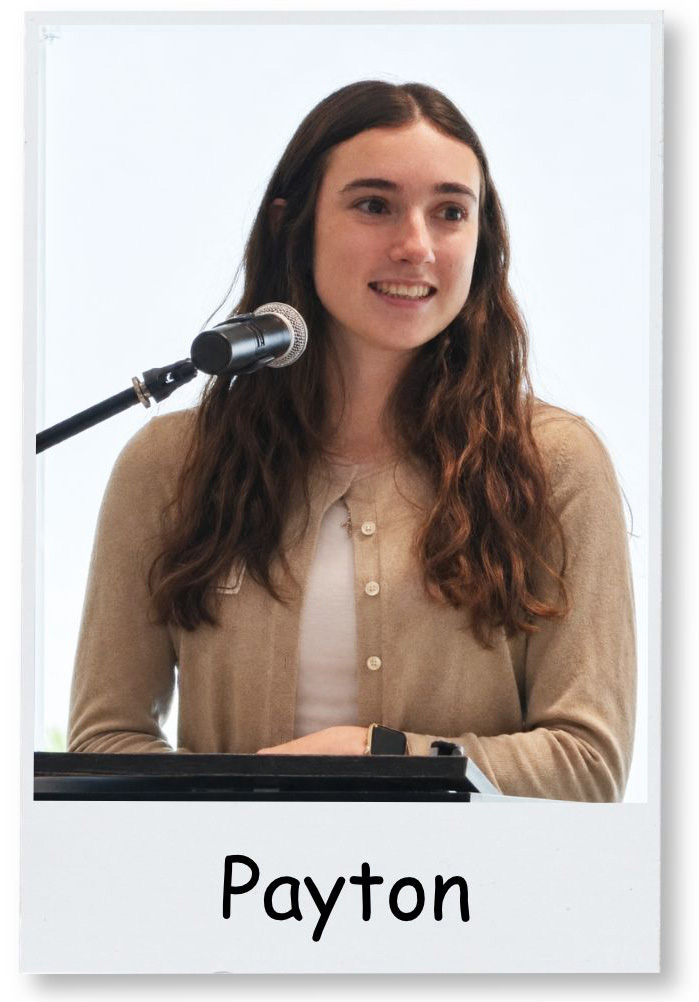
girl at podium with long brown hair
Payton Steward speaks at the Living Grace Women’s Luncheon.

Steward, an Appleton native studying human resources with a minor in business communications, shared a heartfelt reflection on how CUW has shaped her faith and career goals. She began MBA classes this semester and hopes to return to the Fox Valley after graduating in May.

“I chose Concordia because I wanted to study Human Resources with a foundation rooted in Christ,” Steward said. “I was looking for a place where I could gain practical, professional skills and also be formed as a Christian for today’s workplace.”

She described her time on CUW’s women’s tennis team as a blessing, with opportunities to encourage teammates through difficult losses and pray together before matches. Campus leadership roles have also helped prepare her to serve others through a career in HR.

“Over these four years, I’ve learned what it means to live for Christ in every setting, studying, competing, working, or resting,” Steward said. “I’ve learned that faith isn’t a separate box from academics or athletics, it’s the foundation under both.”

She also recognized the women’s support of her education.

“Your prayers, your hospitality, and your generous giving have made it possible for students like me to study and to grow in faith,” she said.

Her message resonated with attendee Colleen Mueller, who thought about her own grandchildren.

“This is exactly what I would hope for each of my college age grandchildren as they pursue their career goals and find their calling from the Lord,” Mueller said.


women at tables

A family tradition

Following Steward’s speech, Taylor invited attendees to support CUW by praying, sharing its story, referring prospective students and giving.

Since 1996, Living Grace has brought women together for Christian growth and fellowship while strengthening their connection to CUW and its mission. The university hosts luncheons in late fall and early summer, welcoming alumnae, parents and community friends, particularly women from churches throughout the greater Milwaukee area.

For Mueller and her family, the gathering became a cherished tradition. Her father, Dick Schmidt, served as CUW’s development director, and her mother began attending before inviting Mueller and her sister, Holly, to join her.

“My mom is not able to attend anymore, at 98 years young, but my sister and I find ourselves carrying on this tradition!” Mueller said.

Now, the sisters are caring for their mother, who wishes to remain at home. They are considering assisted living, a possibility Mueller described as overwhelming. The Scripture passages Hurst shared reassured them of God’s strength and guidance as they navigate those decisions.

Their experience was one of many stories among the more than 100 women gathered, reflecting the encouragement Living Grace was created to offer.


Making room for what matters

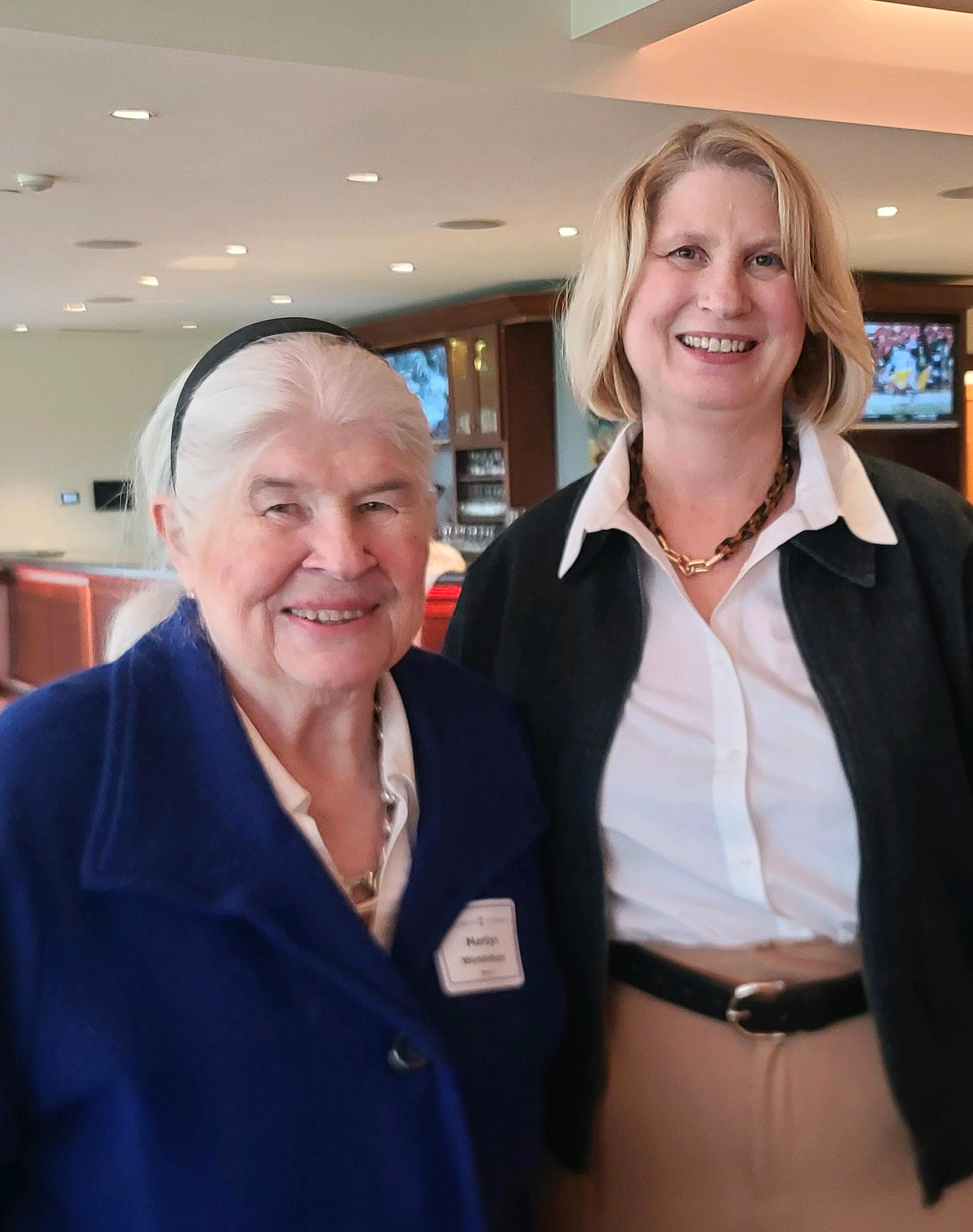
two women, a mom and a daughter
Susan Hurst, right, with her mother at CUW’s Living Grace Women’s Luncheon Nov. 11 at the River Club of Mequon. Hurst credited her mother’s example of caring for family members with helping shape her own calling to serve older adults.

During the presentation, Hurst acknowledged how holiday expectations can add to the daily demands of caregiving.

“What I want caregivers to remember is that they don’t have to create a perfect holiday to create a meaningful one and that they are not alone in their journey,” she said. “God sees their sacrifices, understands their struggles, and walks alongside them, even in the most difficult moments.”

Turning to the biblical account of Mary and Martha, Hurst noted that caregivers may relate to Martha’s frustration over everything that needs to be done. She encouraged making room for both serving others and sitting with Jesus, even through a brief prayer or devotion.

“Choosing presence over perfection means giving ourselves permission to let go of the expectation that everything needs to be done exactly as it always has been,” Hurst said.

Her suggestions for making the holidays more manageable included small, specific adjustments:

  • Simplify the celebration. Choose a favorite tradition and scale back elsewhere, whether that means preparing a less complicated meal or baking fewer cookies.
  • Consider a different schedule. An earlier Christmas Eve service may work better for an older adult or a family with young children.
  • Ask for specific help. Someone could bring a meal, wrap gifts or stay with a loved one while the caregiver runs errands.
  • Make space for quieter visits. Look through photo albums, listen to favorite Christmas carols or read the Christmas story together.
  • Talk before the gathering. Let family members know about routines, energy limits and what help would make a difference.

“Simplifying holiday plans doesn’t mean you’re giving less love or care, and reaching out for help doesn’t mean you’re failing,” Hurst said. “Taking time for yourself doesn’t mean you’re being selfish.”

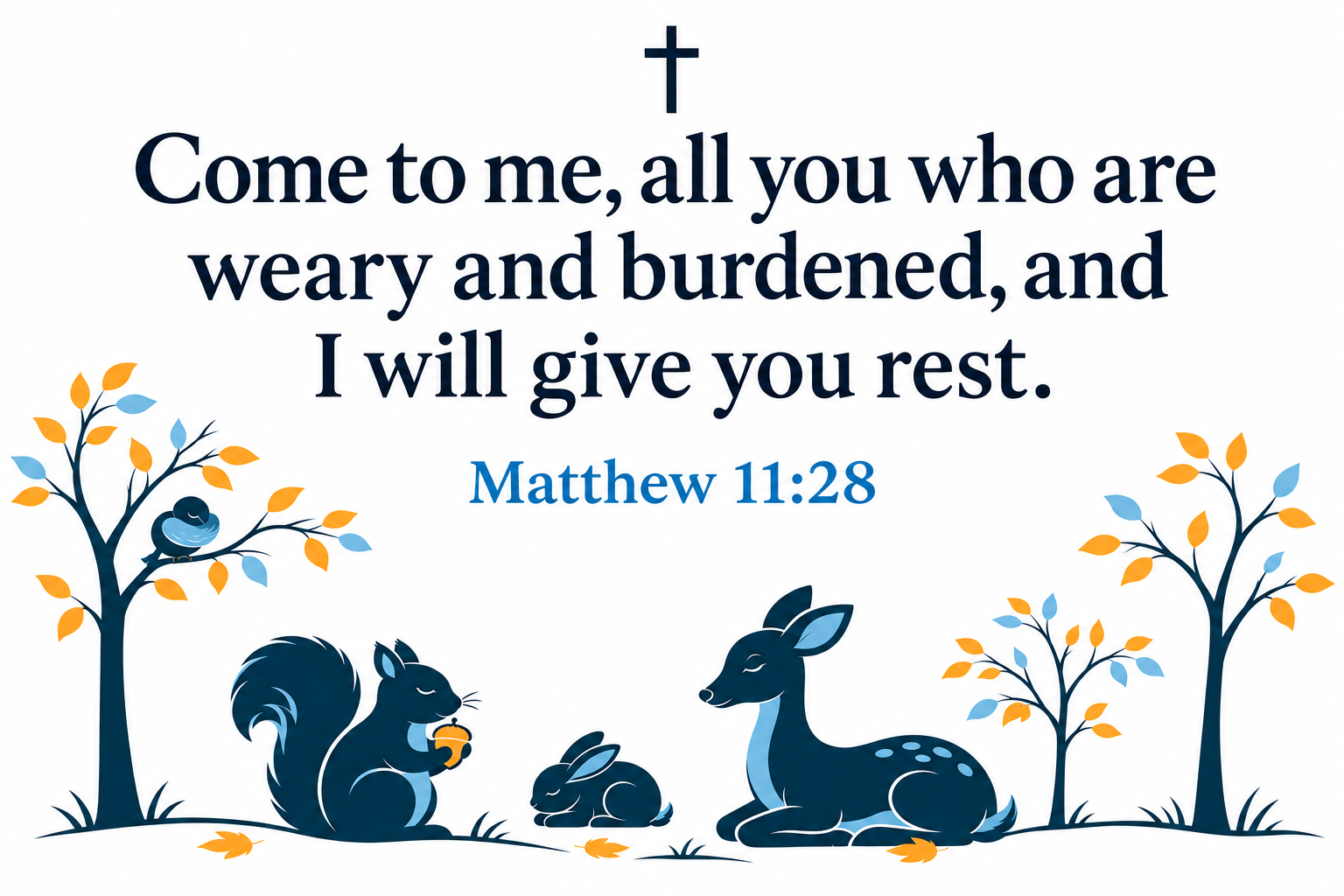
She pointed to Matthew 11:28 and Christ’s invitation to the weary and burdened to find rest in Him.

“If you feel guilty about taking time for yourself, I encourage you to replace the guilt with grace,” Hurst said. “Give yourself the same grace and compassion that you give others.”

To learn more about Living Grace and future gatherings, contact Michelle Buss at michelle.buss@cuw.edu or 262-243-4337.

graphic with bible quote and woodland animals

Want in?

Concordia University Wisconsin is a Lutheran higher education community committed to helping students develop in mind, body and spirit for service to Christ in the Church and the world.

Veterans Day luncheon at Concordia honors service, sacrifice and lives of purpose


Community members and veterans gathered at Concordia University Wisconsin for a moving celebration of faith, service and the bonds that unite those who have served.


Concordia welcomed veterans, community members and local leaders to campus Nov. 11 for the Mequon-Thiensville Chamber of Commerce Veterans Day Celebration Luncheon. The event honored the service and sacrifice of America’s military veterans while highlighting the lasting impact of serving others.

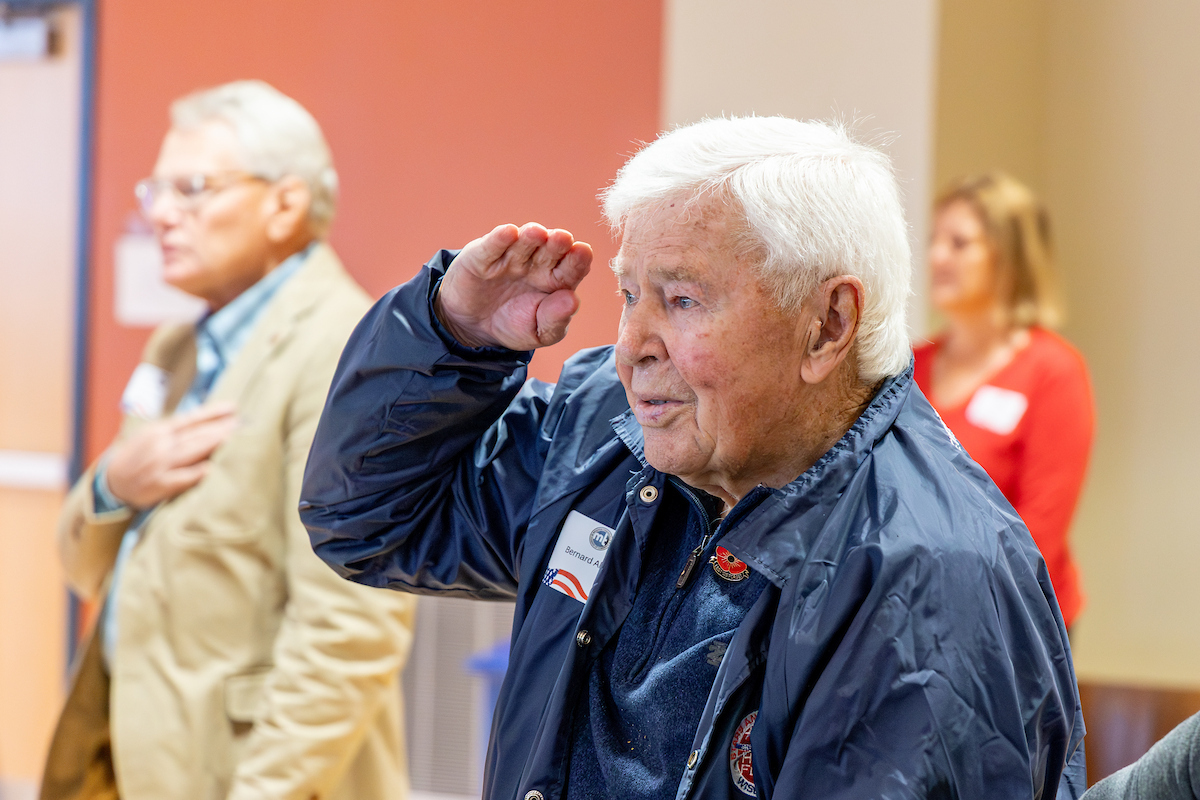
Among those recognized was Bernard “Bernie” Alberg, a 100-year-old World War II veteran who served in the U.S. Army. His presence offered a powerful reminder of the courage, sacrifice and enduring legacy of those who served during World War II.

CUW President Dr. Erik Ankerberg opened the celebration by recognizing veterans’ deep commitment to faith, service and learning. He thanked them for their sacrifices and for the example they set for others.


A bond built on honor

Rev. Dr. Kurt S. Taylor, CUW professor of theology and director of the Church Ministries program, delivered a heartfelt welcome address reflecting on his more than 24 years of service as a U.S. Air Force chaplain.

Taylor explained why veterans often wear hats, shirts or other items identifying their branch of service. It’s not about seeking recognition, he said, but about finding others who share a unique connection.

“We’re looking for each other because we have a bond,” he said. “And this bond has to do with honor.”

He said when he is asked why he became a military chaplain, his answer is simple:  “I want to serve God and my country.”

But he admitted to another, more personal motivation. “I want to hang out with heroes.”

One of the morning’s most powerful moments came as Taylor tearfully recalled honoring fallen service members whose caskets passed through his military base on their journey home.

Typically, hundreds of military personnel would line the route to salute their fallen comrades. On one occasion, a delayed flight arrived in the early morning hours. Taylor expected few people to gather at such an inconvenient time. Instead, hundreds turned out in the darkness to pay their respects.

The story underscored the extraordinary bond among service members and the profound importance of honoring those who made the ultimate sacrifice.

Reflecting on Wednesday’s luncheon, Taylor emphasized how much that recognition and support mean to veterans.

“It’s an honor to have served in the military, and it is also an honor to see all the people who support what we did and are doing. Being at an event like the one on Wednesday reminds all of us who served that there is not only appreciation, but partnership, patriotism, and support.”


Finding purpose through service

Keynote speaker Deb Paschke, director of outreach and camp programming for Camp Hometown Heroes, continued the theme of service by sharing stories of hope, healing and volunteerism.

The Wisconsin-based organization operates a national summer camp for children ages 7 to 17 who have lost a parent or sibling in the military.

Paschke shared a particularly moving note from a mother grieving the loss of her husband. Before her son attended camp, the mother struggled so deeply with grief that she would get out of bed only to see him off to school, then return to bed until he came home.

After attending Camp Hometown Heroes, her son began to heal and, in turn, helped his mother learn how to grieve.

Through stories like this, Paschke reminded attendees that sharing their time, talents and compassion can make a life-changing difference for others.

She closed with a message of hope and encouragement: “We’re built for lives of purpose.”

The luncheon, offered free to veterans thanks to a generous sponsor, served as a reminder that honoring military service extends beyond a single day. It is reflected in gratitude, remembrance and a willingness to serve others.

At Concordia, where faith and service are central to the university’s mission, the morning offered a meaningful opportunity to celebrate those who have served and the enduring example they provide.


Want in?

Concordia University Wisconsin is a Lutheran higher education community committed to helping students develop in mind, body and spirit for service to Christ in the Church and the world.


Caring for mind and body: New grants enhance student well-being at Concordia


Funding for suicide prevention initiatives and 10 new automated external defibrillators will help Concordia University Wisconsin strengthen mental health support and emergency preparedness on campus.


At Concordia, caring for students means supporting their well-being in mind, body and spirit. Two recently awarded grants will help the university build on that commitment by expanding mental health and suicide prevention efforts and increasing access to lifesaving emergency equipment on campus.

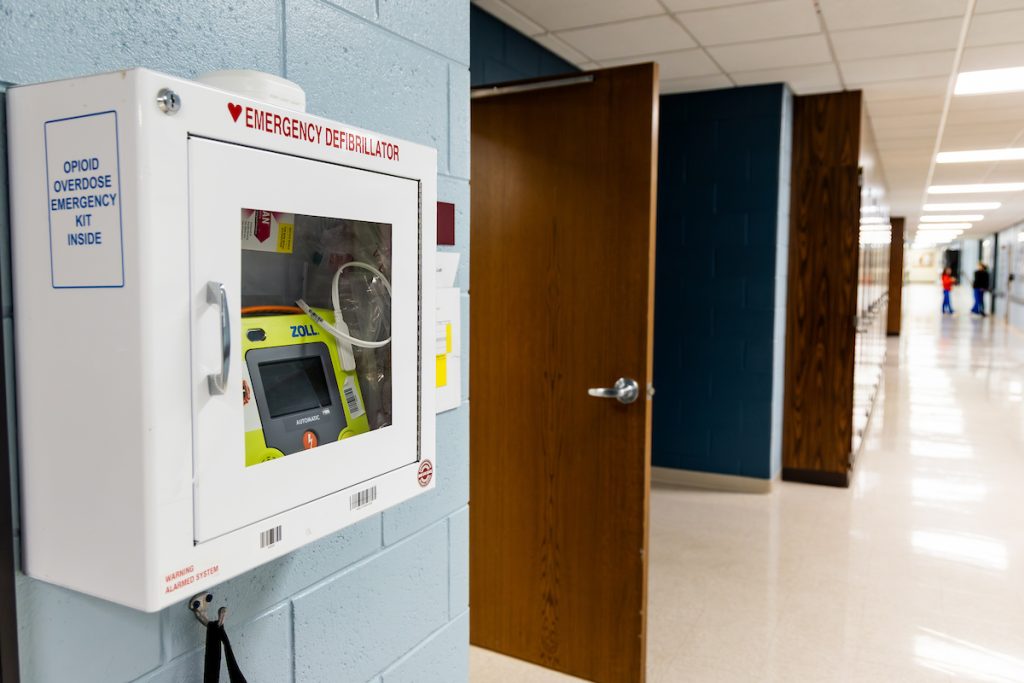
The Garrett Lee Smith Campus Suicide Prevention Grant will provide federal funding to support student mental health and suicide prevention initiatives, while a grant from the Firehouse Subs Public Safety Foundation has provided 10 automated external defibrillators (AEDs) to enhance campus emergency preparedness. Together, these investments reflect Concordia’s ongoing commitment to creating a campus community where students feel supported, connected and safe.


Garrett Lee Smith grant expands mental health support and suicide prevention efforts

CUW has taken an important step toward strengthening student mental health services and suicide prevention efforts through the Garrett Lee Smith Campus Suicide Prevention Grant.

Awarded in September, the grant provides $124,940 in first-year federal funding, with anticipated federal support totaling $495,972 over four years, contingent on continued funding and satisfactory progress. Concordia is also providing institutional matching support.

“This award is a major step forward in how we care for students at Concordia,” said Rebecca Hasbani, Counseling Center coordinator and project director for the grant. “It gives us resources to recognize concerns earlier, help students access care, and follow through so they remain supported.”

The grant will strengthen several areas of student support, including access to counseling, early identification of mental health concerns, crisis response and care coordination. It will also expand suicide prevention training for faculty, staff and student leaders, helping more members of the Concordia community recognize when someone may be struggling and connect them with appropriate resources.

The grant will also support campus initiatives that foster connection and belonging, including the Falcon Outreach Group, Mental Health Week and Love Week. These programs are especially important for students navigating academic pressures, loneliness, relationship challenges and other difficulties that can affect their well-being.


Building connections and a sense of belonging

For Natalie Raymond, a psychology major with an educational studies minor who is set to graduate in December 2027, helping fellow students build meaningful relationships is an important part of campus well-being.

As leader of the Falcon Outreach Group, Raymond helps create opportunities for students to connect, encourage one another and develop friendships. The group’s activities are designed to welcome students whether they arrive with friends or on their own.

“Every student has a place in FOG, regardless of their major, background, or interests,” Raymond said.

One of her favorite examples of that mission in action was the group’s Fiddleheads & Fellowship event at Fiddleheads coffee shop in Cedarburg. Students received journals and reflected together on their personal strengths, positive habits they hoped to develop and ways to put their strengths into practice.

“This group of students who previously did not know one another were soon relating to and encouraging each other,” Raymond said. “It was so cool to see this unfold!”

Experiences like these demonstrate how friendship and belonging can support students through the challenges of college life. The Garrett Lee Smith grant offers an opportunity to build on those connections.

“I hope that students will become more aware of the support that is offered here, both from trained counselors and from students, faculty and staff,” Raymond said.

Her perspective reinforces the importance of combining professional mental health services with a campus culture in which students look out for one another.


Caring for students in mind, body and spirit

Hasbani said the grant represents more than expanded services. It reflects Concordia’s Lutheran mission.

“Our Lutheran identity calls us to recognize each person’s God-given worth and respond to our neighbors with compassion,” Hasbani said.

Over the next four years, the project aims to strengthen follow-up services and expand suicide prevention efforts across campus. A key goal is to reach 700 to 800 students annually through Question, Persuade, Refer (QPR) training. The project will also expand QPR instructor certification opportunities for faculty and staff, increasing the number of trained individuals who can deliver the training. These efforts will help equip more faculty and staff to recognize warning signs, respond appropriately and connect students experiencing suicidal thoughts with the resources they need.

Just as important is helping students feel comfortable seeking support before challenges become crises.

“We want students to hear this clearly: you matter to this community, your struggles deserve care, and you do not have to face them alone. You do not have to wait until you are in crisis to reach out,” Hasbani said.


Firehouse Subs grant brings lifesaving AED technology to campus

Concordia has strengthened its ability to respond to cardiac emergencies, thanks to a grant from the Firehouse Subs Public Safety Foundation. The grant provided 10 new automated external defibrillators, an in-kind gift valued at $19,075. Now installed throughout campus, the devices put lifesaving technology within reach of students, faculty, staff and visitors when every second matters.

AEDs are designed to help save lives when someone experiences sudden cardiac arrest. The new ZOLL devices help Concordia maintain reliable emergency equipment while providing technology that can guide rescuers through a potentially lifesaving response.

Matthew Fox, a 2001 Concordia graduate with a degree in exercise leadership and now a channel partner manager at ZOLL Medical, says keeping this equipment current is essential.

He explained that AEDs perform regular self-tests to help ensure they are ready when needed. The new ZOLL units also feature real-time CPR feedback, which measures the depth of chest compressions and prompts rescuers to push harder when necessary.

Preparing the campus community to respond

But having the right equipment is only part of being prepared. Ensuring that members of the campus community know how to respond during an emergency is equally important.

“Having accessible equipment is essential when responding to a cardiac emergency. Just as important is ensuring that our CUW community knows how to recognize a medical emergency and feels confident taking action,” said Rhonda Verdegan, PhD, professor in Concordia’s Athletic Training Education Program and a CUW first aid and CPR trainer.

Through first aid and CPR training, faculty and staff develop the skills and confidence to recognize emergencies, call for help, perform CPR and use an AED.

“Most importantly, I want people to remember that they can make a difference, even if they are not medical professionals. Knowing what to do and having the confidence to act can save a life,” Verdegan said.

Fox also addressed what it takes to use an AED in an emergency. “The most important thing to understand about any AED is that they are designed to be easy to use,” he said.

He added that seeing his alma mater invest in campus safety is especially meaningful. “It is always great to see the university continue to make investments in its own community to keep the students, staff, visitors and alumni safe when they are on campus,” he said.

For Verdegan, preparing others to respond in an emergency also reflects something deeper.

“At Concordia, we recognize that we are called by God to serve and care for our neighbors,” Verdegan said. “That commitment extends to how we care for one another within our campus community, especially during a medical emergency.”

With new AEDs installed across campus and ongoing opportunities for first aid and CPR training, Concordia is helping equip its community not only with lifesaving technology, but also with the knowledge and confidence to act when someone needs help.


Want in?

Concordia University Wisconsin is a Lutheran higher education community committed to helping students develop in mind, body and spirit for service to Christ in the Church and the world.

LeRoy Butler shares lessons on making connections and lifting others up


The Packers legend joined students at CUW’s Meet & Network event, sharing the story behind the Lambeau Leap and advice for finding their next step.


You might not know much about football, but there’s a good chance you’ve seen it: A Green Bay Packers player scores and leaps straight into the crowd, landing in the arms of cheering fans. LeRoy Butler started it all with a celebration now known as the Lambeau Leap.

On Thursday, Nov. 5, Butler came to Concordia University Wisconsin as the keynote speaker for the Batterman School of Business Meet & Network event, where students connected with more than 30 sport and hospitality organizations from across Wisconsin. Representatives from the Milwaukee Bucks, Milwaukee Brewers, Milwaukee Admirals, Marquette Athletics, ESPN Milwaukee, iHeartMedia and Road America gathered to meet the next generation of industry professionals.

Before Butler took the stage, CUW social media specialist Jason Smith sat down with him to ask whether that famous jump was planned. The answer? Not even close. It was his first touchdown, the crowd was loud and something just told him to jump.


Life lessons beyond the leap

The conversation also offered a look at the experiences that shaped Butler beyond football. He grew up in the projects of Jacksonville, Florida, where his mom raised four kids on her own. He shared why he chose to make Wisconsin home long after his playing days ended and the advice his grandmother gave him that he still lives by: Talk to someone who doesn’t look like you every single day.

On a night built around making connections, that advice hit home. Whether you’re a first-year student, chasing an internship or starting over later in life, Butler’s message was simple: Find what you’re good at. If you’re not sure, ask the people who know you best. And once you make it, reach back and pull someone else up with you.

Hit play below to hear it straight from a legend.


Want in?

Concordia University Wisconsin is a Lutheran higher education community committed to helping students develop in mind, body and spirit for service to Christ in the Church and the world.