This isn’t a program on campus. It’s part of campus.

Why Hesed’s record enrollment is about more than numbers.


There are two sides to every story. This one just happens to help parents and caregivers breathe a little easier.

Since Concordia University Wisconsin took over the Hesed Transition Program from AbleLight roughly two and a half years ago, enrollment has climbed to a record 18 students for fall 2026.

But that number tells only part of the story, according to Elizabeth Polzin, vice president of Student Success.

“The continued growth of Hesed shows that our mission of preparing students for lives of service in the Church and the world truly extends to all learners,” Polzin said.

Program Director Erik Halling (’96) credits that growth to something Concordia has been very intentional about: making Hesed part of everyday campus life. Rather than existing as a program apart from the university, Concordia expanded opportunities for Hesed students to learn, serve and participate alongside their peers.

The university also revised the curriculum, expanded student support and placed a greater emphasis on campus involvement.

“We encourage participation in student organizations, academics, athletics, intramurals and other campus activities. The goal is to fully integrate our students into the university community,” Halling said.
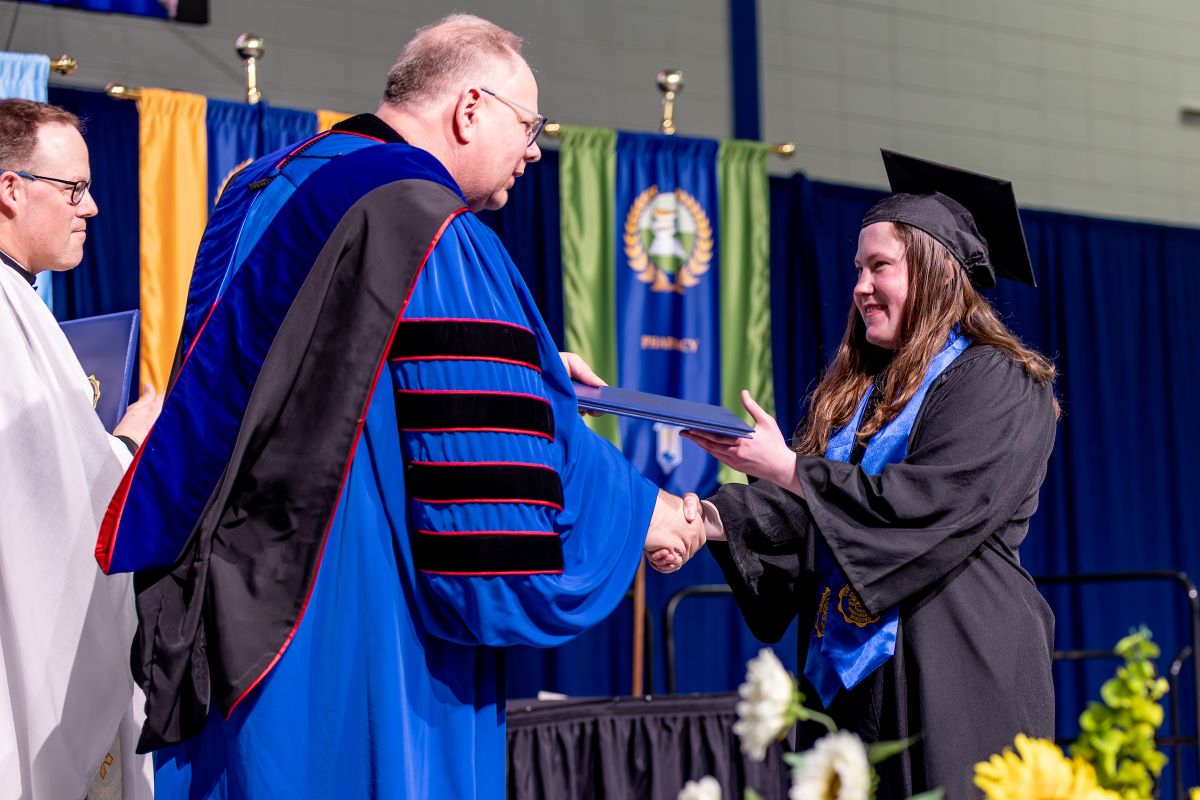

woman in graduation outfit being handed diploma

Choosing Concordia

Students who complete the Hesed Transition Program earn an Applied Learning Certificate that emphasizes the skills needed to increase their autonomy. What they learn helps with vocational exploration, independent living and self-advocacy.

Applicants may choose either a two- or three-year program and live on campus, making a certain level of independence an important part of the admissions process. They must have a documented intellectual disability and demonstrate the foundational skills needed to live successfully in a campus environment.

Halling said families are encouraged to understand exactly what Hesed is and what it means to attend CUW.

“We’re very transparent from the beginning that Concordia is a Christian university and that the Hesed program is grounded in the university’s mission,” he said.

Beyond a student’s diagnosis, Halling said the strongest applicants are those who genuinely want the college experience.

“They need to want to attend college,” he said. “They should want to participate, build friendships, become involved in campus life, develop new skills and prepare for competitive employment and independent living after graduation.”
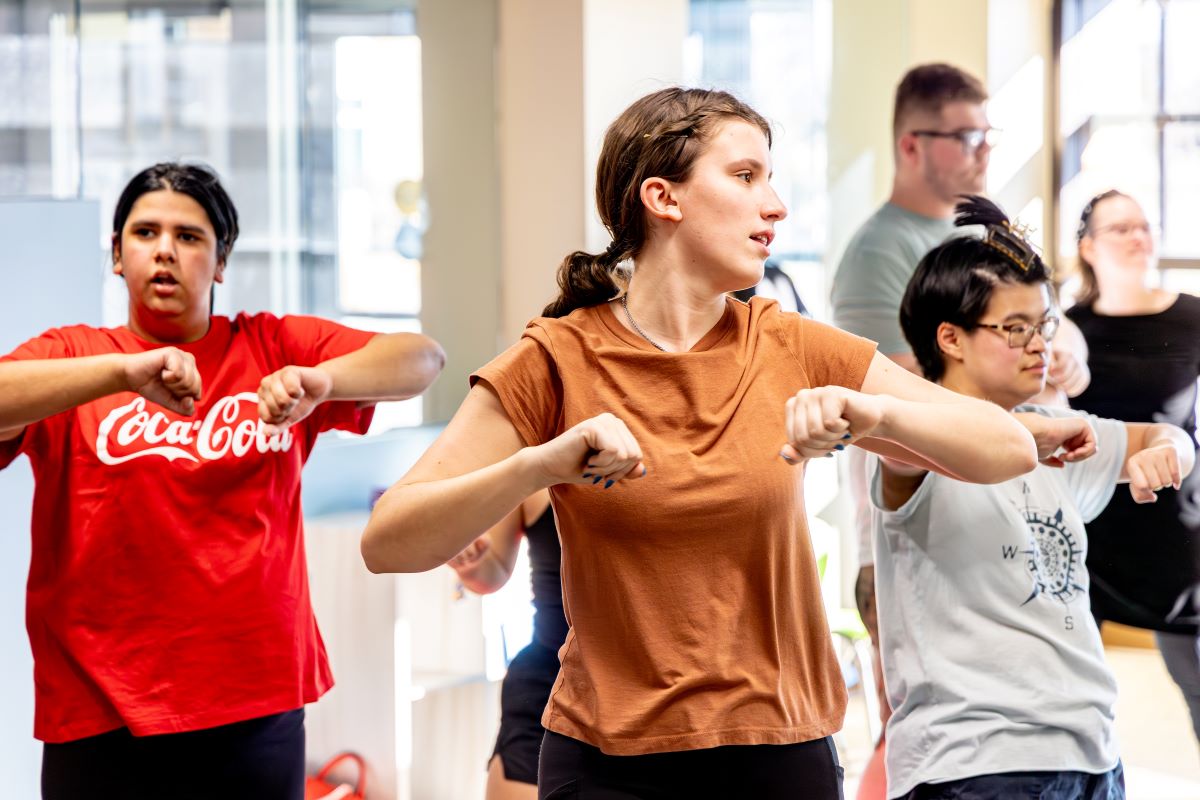

students doing aerobic dance

Is Hesed the right fit?

Parents or caregivers wondering whether Hesed is the right fit for their high school-aged student should look closely at the student’s abilities, personality and goals, Halling said.

Autism is a spectrum, and no two students are exactly alike. That’s why he encourages families to look beyond a diagnosis and honestly assess whether their student is ready for the responsibilities of college life.

Successful Hesed students can communicate their needs, express themselves in writing, advocate for themselves, manage personal care and stay on top of everyday responsibilities, such as cleaning their room and organizing their schedule.

“We support them with tools and coaching, but they need to arrive with a basic level of independence,” Halling said. “Our role is to build on those skills so they’re prepared to live independently with minimal support after graduation.”
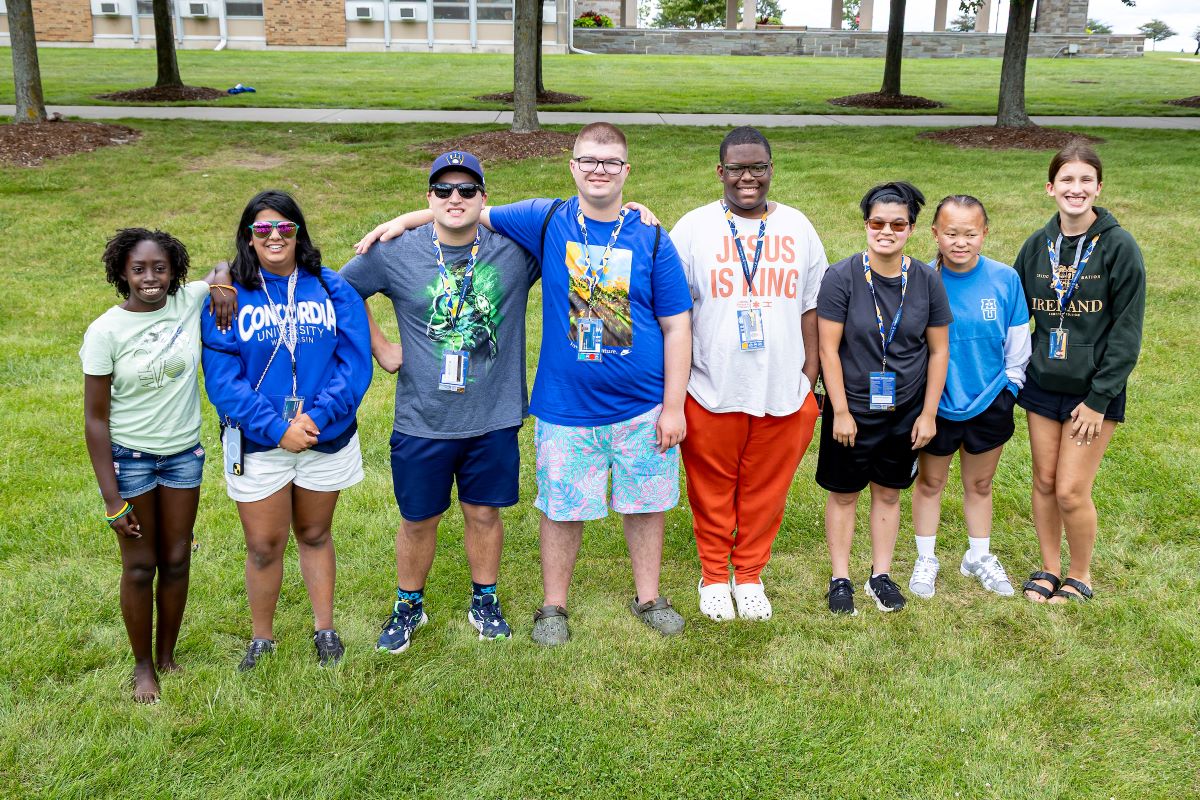

group of students from the Hesed program

A community that cares

Many students enrolled in the Hesed Transition Program fall somewhere on the autism spectrum. Autism is a lifelong condition, and each person experiences it differently. At Concordia, every student is encouraged to discover where their God-given gifts may lead them.

According to the Centers for Disease Control and Prevention, an estimated 1 in 31 8-year-old children were identified with autism in 2022. In Wisconsin, 89.5% of students with autism received a high school diploma (Autism by the Numbers).

Graduating from high school opens the door to new opportunities, but it also brings another question for students and their families: What comes next?

Hesed offers one possible answer. Students have the opportunity to experience college while continuing to develop the skills they’ll need for employment and greater independence after graduation.

Families choosing Concordia’s Hesed Transition Program are searching for more than the autonomy that comes with college life. They are also looking for a community, and Halling has witnessed this firsthand. He said traditional undergraduate students have embraced Hesed students in a way that is really special.

That sense of acceptance can be seen through everyday campus interactions. Hesed students participate in student organizations, academics, athletics, intramurals and other campus activities alongside traditional undergraduate students. In doing so, opportunities for friendships and relationships happen naturally.

And Hesed students aren’t the only ones benefiting from those relationships.

According to Polzin, traditional undergraduate students learn empathy, patience and leadership through their interactions with Hesed students, lessons that aren’t necessarily learned sitting in a classroom. Faculty and staff are challenged to think differently about accessibility and belonging as well.

“Hesed reminds all of us that every member of our community has something valuable to contribute,” Polzin said.

So why does a program like Hesed work so well at Concordia? The answer, according to Halling, is simple.

“It is the perfect place for a program like this because everything we do flows from our faith and from the university’s mission,” he said.


Want in?

Concordia University Wisconsin is a Lutheran higher education community committed to helping students develop in mind, body and spirit for service to Christ in the Church and the world.
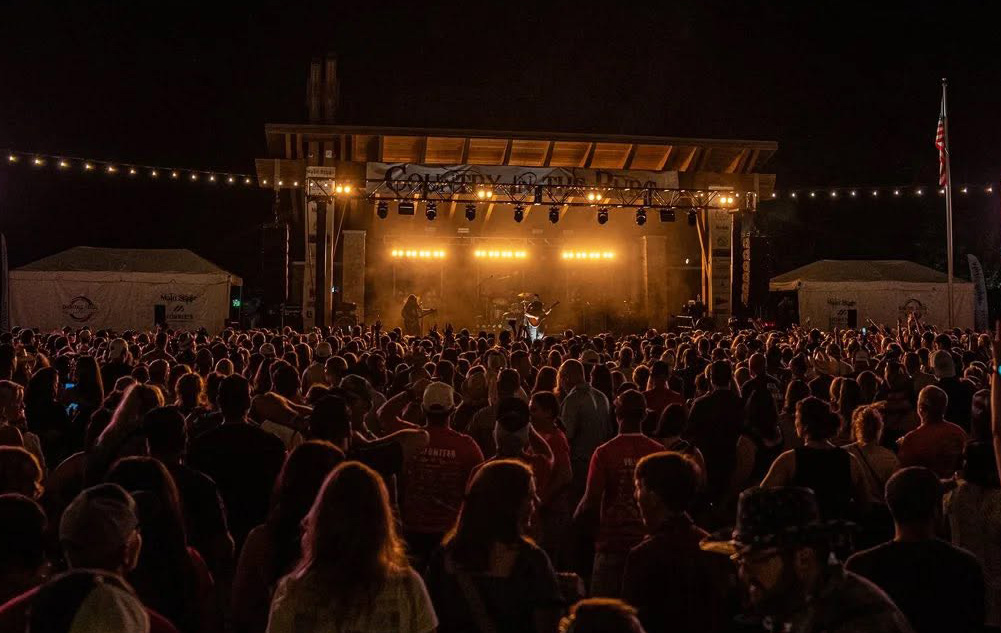

More Than a Music Festival

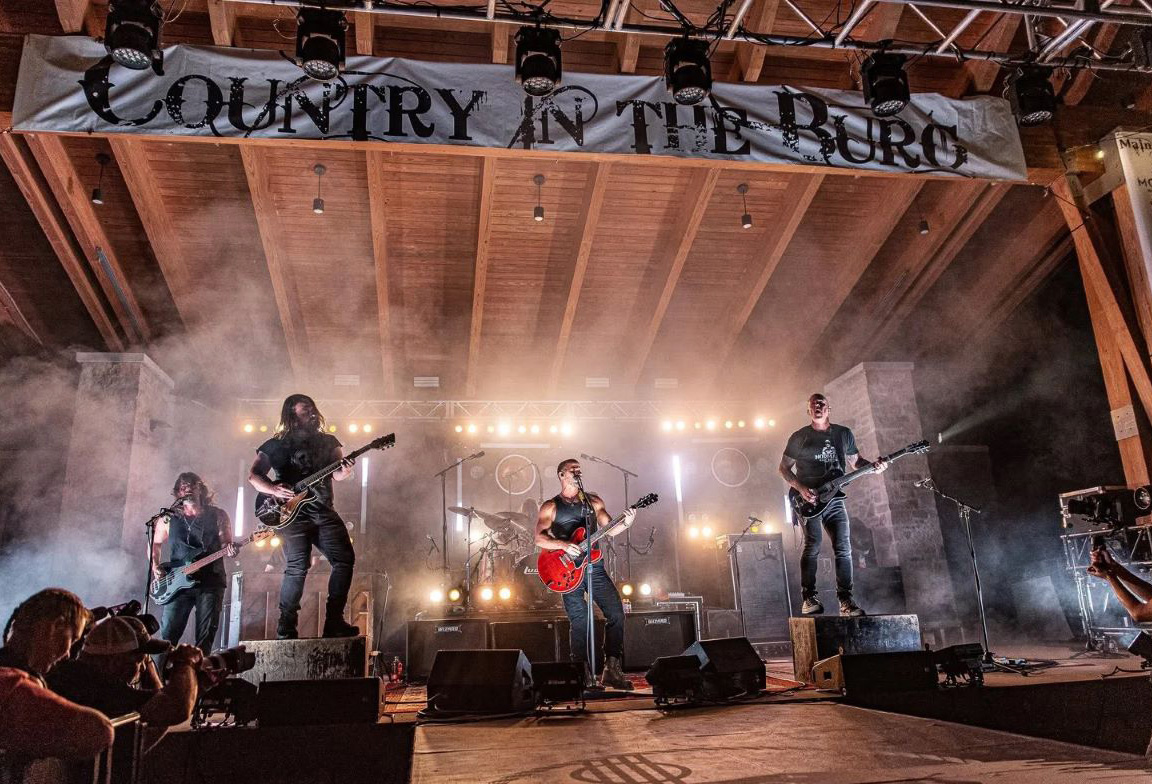
Country in the Burg (CITB) has become a weekend that brings together nonprofits, local businesses, volunteers and visitors—all while showcasing the community Concordia calls home.


Thousands of people make their way to Cedarburg for Country in the Burg each year. Some come for the nationally recognized country artists. Others come for a weekend with family and friends. But many return year after year because they’ve fallen in love with more than the music itself.

What began as a country music festival has become one of Cedarburg’s signature traditions. Since its debut in 2019, CITB has welcomed visitors from 36 states and around the world while giving back more than $525,000 to more than 30 charitable organizations.

According to founder Alex Uhan, the festival’s greatest success isn’t measured by ticket sales or headline acts. It’s measured by the people who keep coming back.


A dream rooted in Cedarburg

lit up crowd

The idea for Country in the Burg started more than a decade ago.

Originally, Uhan envisioned a large country music festival capable of hosting 20,000 people. After years of planning, setbacks and searching for the right location, he needed someone willing to believe in the vision. That person was Randy Groth.

Groth became Uhan’s business partner, believing in the vision despite those who questioned its feasibility. “He looked at everything I presented and said, ‘I’ll take a chance. I think what you’re telling me is good,'” Uhan recalled.

Later, while the two sat together at Maxwell’s in Cedarburg, Groth asked one question. “‘Do you think you can do this?'”

“I know for a fact I can make it happen,” Uhan replied.

Groth’s response was simple. “‘All right. Let’s do it.'”

A short time later, inspiration struck while Uhan was playing softball across from Cedar Creek Park. He returned with a lawn chair and a piece of paper and sketched out what would eventually become Country in the Burg.

As the festival has grown, Uhan has considered moving to a larger venue. However, after a conversation with country artist Jake Owen, his perspective changed.

“He looked at me and said, ‘That’s your purple elephant—this venue,'” Uhan recalled. “If you have something people can’t duplicate—and people love coming because of it—that’s worth protecting.”

Rather than relocating, Uhan chose to embrace what makes the festival unique. Cedar Creek Park remains one of the festival’s signature features. “The venue itself sells part of the experience,” Uhan said.

Nestled along Cedar Creek, the venue pairs live music with the sounds of nature, towering trees and the occasional deer wandering nearby. Just steps away, festivalgoers can explore historic downtown Cedarburg.

That decision has helped transform CITB into more than a concert, with visitors spending the day exploring Cedarburg’s shops, restaurants and locally owned businesses before gathering along the creek for hours of entertainment.


Inspired by Concordia’s culture

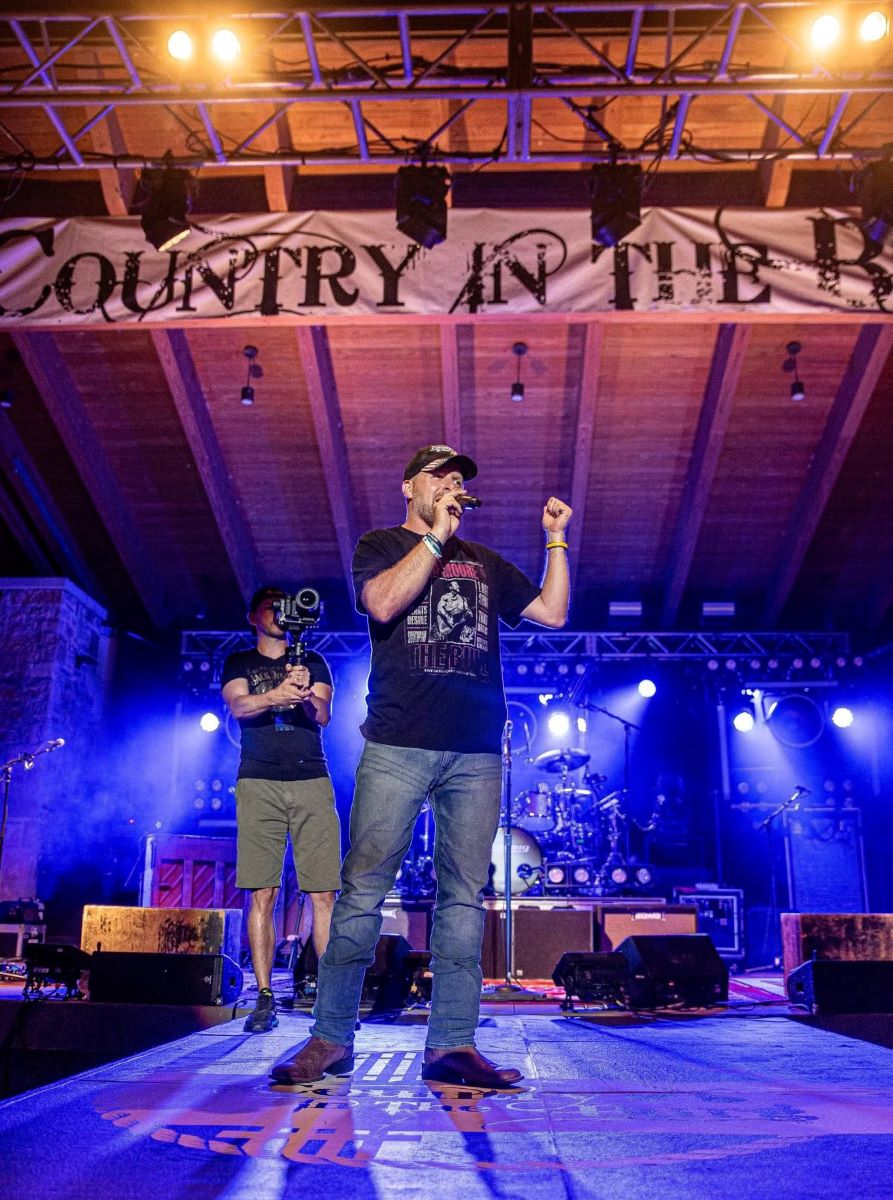
man speaking on stage

Long before founding Country in the Burg, Uhan spent three years coaching women’s volleyball at Concordia University Wisconsin. Although he isn’t an alumnus, he says the university helped shape the kind of community he wanted to create.

“When you come to Concordia, one of the first things that stands out is the view,” Uhan said. “But beyond the scenery, what really stood out to me was the people. Everybody was friendly. People took the time to say hello.”

That sense of hospitality became part of CITB’s foundation. Whether someone is scanning tickets, pouring drinks, directing traffic or greeting guests at the entrance, volunteers help create a welcoming experience from the moment attendees arrive.

Emily Hiltzik, the festival’s VIP and volunteer lead, has watched that culture grow alongside the festival.

“The moment someone arrives at Country in the Burg, I want them to feel welcomed, excited and like they’re part of something special,” Hiltzik said. “Every interaction matters, and our volunteers understand that they help set the tone for the entire festival experience.”

Many volunteers have been part of the festival since its inaugural event. “Every year, concertgoers see how much fun our volunteers are having, and many decide they want to join the team the following year,” she said.

Today, Uhan says CITB has a waitlist of people hoping to volunteer.


Giving back together

musician touching crowd

The festival’s impact has always extended beyond the concert grounds.

CITB has donated thousands of dollars to organizations including Ozaukee Food Alliance, Mel’s Charities, Children’s Wisconsin, Wisconsin Stars and Stripes Honor Flight, Ozaukee Family Services and numerous local service organizations. Those partnerships aren’t an afterthought.

“They help us by providing volunteers, selling tickets and helping spread the word,” Uhan said. “It really takes a community.”

Uhan says Groth’s commitment to serving others helped define the festival’s mission from the start.

“He has been instrumental to that mission,” Uhan said. “Randy is one of the most generous people I know. His commitment to giving back is a big reason Country in the Burg has become what it is today.”

The festival also creates opportunities for local businesses, restaurants and hotels throughout Cedarburg and Ozaukee County as attendees spend the weekend shopping, dining and exploring the area.

Andrea Acosta, executive director of Ozaukee Food Alliance and co-owner of That Taco Guy, says Country in the Burg’s support extends far beyond a single weekend.

“Country in the Burg’s annual unrestricted donation has been incredibly meaningful because it allows us to respond to our community’s most immediate needs,” Acosta said. “Those funds can be used wherever they are needed most—whether that’s purchasing food for our pantry, buying school supplies for our Back-to-School Fair or stocking inventory for our food deliveries to local students.”

As both a nonprofit leader and local business owner, Acosta has also seen how the festival benefits Cedarburg as a whole.

“Country in the Burg shines a spotlight on everything that makes our community special,” she said. “It brings together local nonprofits, small businesses, community organizations and thousands of attendees for a weekend that celebrates and supports Cedarburg.”


More than the lineup

woman singing

For all of its growth, Uhan believes the festival’s success comes down to something much simpler.

“The music is what brings people here,” he said. “The experience is what brings them back.”

One moment continues to stand out. A group from New Hampshire reached out before the following year’s lineup had even been announced to say they were coming back. When Uhan asked who they wanted to see, their answer surprised him.

“It doesn’t matter.”

Instead, they said they had fallen in love with Country in the Burg, Cedarburg and the people they met during the weekend. Today, they make the trip every year.

“We’re the smallest country music festival in Wisconsin, but we’ve been able to make a really big impact,” Uhan said.

That impact isn’t measured by the size of the stage. It’s reflected in the visitors who plan annual vacations around the festival, the local businesses they support and the charitable organizations that benefit from the weekend.

Artists have noticed what makes the festival special, too. Country star Kip Moore has returned to perform multiple times, often spending his free time exploring Cedarburg’s coffee shops, restaurants and downtown rather than staying backstage. Other artists have reached out after seeing Moore’s social media posts about the festival and the community surrounding it.

Those experiences confirmed what Uhan had been witnessing all along: Country in the Burg had become much more than a music festival.


A tradition worth returning to

band on stage
All photos courtesy of Country in the Burg

The festival has also become a summer tradition for many members of the Concordia community. Students, alumni, faculty and staff have attended concerts, volunteered throughout the weekend and supported the nonprofits that make the event possible.

For Concordia alumnus Ryan Lehr (’15), Country in the Burg has become an annual tradition worth making the trip for. Although he moved away from the area more than two years ago, Lehr returns each summer to support the festival that gives back to so many worthwhile causes.

“CITB has had nothing but a positive impact on Cedarburg,” Lehr said. “Each year it improves and has never let me down with great performances and atmosphere.”

Lehr encourages first-time attendees to experience everything the weekend has to offer.

“Expect delicious local food vendors, a smaller, more intimate setting, award-winning country artists and plenty of singing, dancing and summer refreshments,” Lehr said. “It’s the party of the summer before life starts getting busy again.”

Uhan hopes others leave feeling rejuvenated. The weekend, he says, should give people a chance to slow down, connect with the community and enjoy something simple.

“I hope they fall in love with the festival, with Cedarburg and with Ozaukee County, and leave with memories they’ll never forget,” he said.

He is also quick to credit the people who make that possible. CITB’s success reflects the dedication of countless volunteers, nonprofit partners, sponsors, local businesses, artists and, of course, Groth, who have helped shape the festival into the community tradition it is today. Uhan also gives a special shout-out to his staff, a close-knit group of friends and family members who volunteer their time each year.

“They take their time to volunteer at this event, making it what it is today, and I’m so grateful for all their passion and hard work,” Uhan said.

Hiltzik agrees, saying the volunteers remain at the heart of the event’s success.

“Our volunteers generously donate their time to support the great causes the festival benefits, and that’s something we never take for granted,” Hiltzik said. “Seeing them build friendships, have fun and take pride in making the festival a success reminds me every year that they truly are the heart of Country in the Burg. The music brings people together, but it’s our volunteers who create the atmosphere that keeps them coming back.”


Want in?

Concordia University Wisconsin is a Lutheran higher education community committed to helping students develop in mind, body and spirit for service to Christ in the Church and the world.