Taylor Van Brocklin is Concordia’s November Student of the Month

Congratulations to CUW’s November Student of the Month, Psychology and Public Relations double major Taylor Van Brocklin!


The CUW faculty have selected Taylor Van Brocklin as the November Student of the Month. Taylor is a senior Psychology and Public Relations double major. She is an excellent student, and her Christian character shines as she strives to lead by example and foster a positive climate on campus. She is a leader on the Psychology Club board and a director of the Peer Support Network. Taylor has poured her time and energy into organizing service initiatives as well, such as a service night to create cards of comfort and fleece blankets for individuals who have experienced domestic violence. Furthermore, Taylor volunteered her time to facilitate an Inspiring Comfort training this fall, where over 300 CUW students learned how to provide Christian care and comfort to their peers who are struggling with mental or emotional health. Taylor is an outstanding leader and will certainly make a positive impact as she follows her vocation to serve others! 

Meet our previous Students of the Month here!

Taylor was nominated by Prof. Vittoria Sipone on behalf of the Psychology faculty


Want in?

At Concordia University Wisconsin, we believe that education is at the junction of faith and learning. That means that we get to know you personally – your unique gifts and skills – so that we can help you develop fully in mind, body, and spirit to achieve your highest potential. To learn more or to apply, click the link below.

5 Signs You Belong in Business

Have you ever considered going into business? Curious to see if you belong in the business field? Here are a few key characteristics that successful business people have.

The world of business spans many disciplines. In almost every corner of the world and within every kind of operation, good business people are needed. If you have an interest in entering the business world and filling that need, here are a few key characteristics you must possess.

Leadership Skills

Leadership skills not only set you apart, but they also equip you to climb the ladder and even build your own business someday. Part of being a good leader is proving to others (peers and managers!) that you are reliable and trustworthy. If you expect people to follow you, they have to be able to trust you. So, work on establishing trust by keeping your appointments, bringing others new opportunities, and refusing to fuel office politics.

Competitive Ambition

Being in business comes with risks. A good business person has to have an ambitious drive and be able to quickly identify new opportunities. They should have a competitive streak and the ability to take the risk necessary to follow through on the opportunity. And when those risks don’t pan out, which does happen eventually happen, a good business person has to be able to learn, move forward, and try again.

Curious & Adventurous Spirit

Right along with competitive ambition follows a curious and adventurous spirit. It takes a lot of intellect to survive the business world, and with constant changes, you have to maintain a curious spirit. The term “life-long learner” defines a successful business person; always eager to learn more.

Solid Communication Skills

When you’re not selling, you’re building relationships. So, no matter what sector of business you work in, you have to be a good communicator. The good news is that communication is a skill that you can learn. If you don’t already have a solid grip on communication, focus on developing and growing your skills. A few ways to be a more effective communicator are, to be an active listener, be clear, and be aware of your body language.

Integrity

We emphasize integrity a lot here at Concordia. You have the opportunity to stand apart in the business world by having a steadfast dedication to integrity in everything that you do. Integrity in business looks like playing fair, maintaining promises, looking out for your coworkers or staff, and keeping your customers’ best interests in mind.

If you already possess these characteristics and are interested in pursuing a business career, your next step is to invest in training and education. Whether it’s starting with a bachelor’s degree or elevating your education to a master’s degree, we’ve got you covered here at Concordia.

Learn more about the benefits of getting an MBA here.

This blog was originally published on March 19, 2019. It has been updated to reflect current information.

Niederjohn co-authors Washington Times op-ed proposing CRT improvements

Scott Niederjohn is the co-author of a paper, and now Washington Times op-ed, that offers suggestions on how to improve race lessons for the classroom.


America’s overarching story is one of hope, so how can teachers echo that tone within their own instruction?

Concordia’s Scott Niederjohn co-authored a paper that was recently published by The Wisconsin Institute for Law and Liberty. In it, the authors suggest that combining the economic way of thinking with invisible-hand stories can illustrate how the operation of largely free markets promotes positive, even if unintended, social outcomes. While Critical Race Theory demands a “ruthless” examination of American history, there are examples that exist that can provide a much more hopeful, and less polarizing, message about markets and race.

Click here or on the image below to read the article.


Learn more

Dr. Scott Niederjohn is Professor of Economics and Director of the Free Enterprise Center (CFEC) at Concordia University Wisconsin. He holds undergraduate and master’s degrees from Marquette University and a Ph.D. in economics from the University of Wisconsin–Milwaukee. CFEC promotes the ideals of a free and virtuous society, which ultimately unleashes the nearly unlimited creative potential of the human spirit while producing remarkable levels of economic and human flourishing.


Chapel schedule: December 2022


Join us in the Chapel of Christ Triumphant for daily Chapel services, Monday-Friday at 9:30 a.m.


Schedule subject to change. In-person attendance is always encouraged, but Chapel services can also be livestreamed HERE.

Thursday, Dec. 1  Preacher: Harald Tomesch | Psalm 122 | LSB 585

Friday, Dec. 2  Preacher: Steve Smith | Installation Anniversary | LSB 681 | Chapel Choir


Monday, Dec. 5  Preacher: Val Keiper | Matthew 3:1-12 | LSB 347

Tuesday, Dec. 6  Preacher: Tom Saleska | Romans 15:4-7 | LSB 342 | Chapel Ringers

Wednesday, Dec. 7   Preacher: Steve Smith | Isaiah 11:1-10 | Haven

Thursday, Dec. 8  Matins | Leader: Doug Bender | Psalm 72:1-7 | Hymn: LSB 331 | Canticle: LSB 936

Friday, Dec. 9  Preacher: Kurt Taylor | James 5:7-11 | LSB 351 | Chapel Choir


Monday, Dec. 12  Preacher: William Cario | Psalm 25:4-5 | LSB 355

Tuesday, Dec. 13  Morning Prayer | Leader: Steve Smith | Psalm 146 | LSB 334

Wednesday, Dec. 14  Service of Christmas Hymn Favorites | Leader: Steve Smith

Thursday, Dec. 15  Preacher: Daniel Paavola | Matthew 11:2-15 | LSB 346

Friday, Dec. 16  Preacher: Doug Bender | Isaiah 35:1-10 | LSB 357


Learn more

For more information about worship opportunities on campus, click the link below.


Parish Nursing 101

Parish nursing is a form of nursing with deep roots in the Christian faith. It is focused on healing the mind, body, and spirit. It’s about the whole person’s wellness rather than just care after diagnosing and treating a physical symptom.  

Although parish nursing holds great significance for many congregations throughout the United States, it’s a mission-based occupation that is often not fully understood by everyone. To clear up some of the confusion, here are a few frequently asked questions about the occupation, its application, and its mission.

What is a parish nurse?

A parish nurse is a registered nurse who works for a congregation to provide for a variety of needs. They provide medical, emotional, and spiritual ones. They are individuals who are passionate about their congregation and have expertise in holistic wellness. Parish nurses can be volunteers, part-time employees, and full-time employees—depending on the church’s needs. Oftentimes parish nurses also work at a local healthcare facility.   

What does a parish nurse do?

In some rural communities, a parish nurse can be the quickest route to health care for congregation members. However, rather than tending to medical needs firsthand, a parish nurse works with the patient to recommend and plan for the best route of care. The care has special emphasis given to emotional and spiritual care. Oftentimes a parish nurse can be found doing a variety of tasks. Driving elderly people to and from appointments, providing a listening ear for a lonely individual, recommending a nutrition plan for a sick person, and more.  

Why do parish nurses exist?

Alongside the Lutheran Church—Missouri Synod, we see parish nursing as a vocation tied directly to the Great Commission. It mirrors the same concern that Christ had for the people He encountered. Complete holistic care for mind, body, and spirit. Because parish nurses focus on the wellness of the whole person, they’re able to bear witness to the Gospel message. They help individuals experience God as they tend to their emotional, social, spiritual, and physical needs.

How do I become a parish nurse?

In order to become a parish nurse, you must first obtain your nursing degree. You will also need a license to practice in your state. After completing your degree and license, you can then receive parish nurse training. This allows you to officially function as one in your congregation.

But nurses aren’t the only ones who should consider learning more about parish nursing. In fact, any healthcare professional with a desire to help patients experience true healing in every part of their mind, body, and spirit can benefit from parish nursing training.

Here at Concordia, we provide this training through traditional education. We also have a conference that is offered every summer. The Christian Caregiving Conference is open to any health care provider, parish nurse, and clergy member. Come and spend four days on our Mequon campus to learn all the basics of Christian caregiving. This conference is even available for credit by audit for nurses who are seeking continuing education opportunities for their RN license renewals.

What if I don’t have a medical background? Can I still get involved?

Absolutely! Parish nurses often function best when supported by a group from the congregation. Locate your parish nurse and ask what needs he/she might have. It could be something as simple as providing transportation for a member or helping to coordinate a prayer ministry. Either way, your parish nurse will be grateful for the help.

If your congregation doesn’t yet have a parish nurse, consult with your ministry leaders on the possibility of adding one. By starting this conversation, you could help to provide much-needed assistance to the most vulnerable in your community.

If you’re interested in parish nursing or our annual Christian Caregiving Conference, please contact Carol Lueders Bolwerk at carol.lueders.bolwerk@cuw.edu

This blog was originally published on January 11, 2019. It has been updated to reflect current information.
New memorial benches honor valued members of the Concordia family

This year, three new memorial benches have been installed on campus. Learn more about the individuals they honor.


I came that they may have life and have it abundantly.

John 10:10b ESV

Concordia has a few new resting places on campus in honor of those who have been called to their heavenly rest. This year, three new benches were donated in memory of individuals who had a close connection to the university.

This Giving Tuesday, we take a moment to thank all donors who have contributed these and other gifts for the betterment of the Concordia community. 

Memorial bench near the CCES

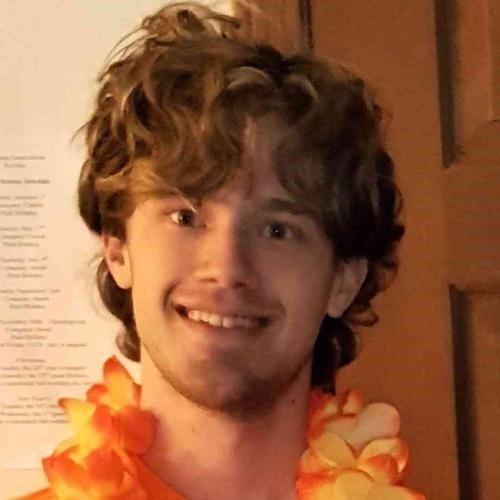
In honor of Zach Pugh

Zach was diagnosed with a rare cancer while he was enrolled at Concordia. He ultimately lost the battle to the disease on Aug. 2, 2022. A friend to many Concordia students, Zach was involved in Campus Ministry, Student Government Association, New Student Experience, ultimate frisbee, and band during his time at CUW. He was in pursuit of his environmental science degree and spent a great deal of time at the Concordia Center for Environmental Stewardship (CCES), taking pictures of nature and, particularly, the bluff.

Zach’s memorial bench is yet to be installed, but the family identified a spot that boasts a fantastic view of Lake Michigan, near the CCES and next to a favorite birch tree.

Following graduation, Zach planned to pursue a career in water conservation. He desired to make a positive impact on the world through his stewardship efforts.

“Zach was pure in heart. He spread kindness and joy like wildflowers,” said his mom, Tracy Pugh. “He blossomed so much while he was at Concordia. He really found his home there. Concordia gave him, and us, a lot through the process of him being there.”

The Pugh Family has established an endowment in Zach’s honor. It is meant to support students who wish to pursue a degree in environmental science at Concordia. Those interested in contributing to the fund may contact President of the Concordia Foundation Dean Rennicke at 262-243-4580 or Dean.Rennicke@cuw.edu.   

Memorial bench near the football field

In honor of Tommy Stueckroth

In 2020, Tommy graduated from Concordia with his bachelor’s degree in sport and entertainment management. While at CUW, he served as the team equipment manager for the Falcons football program. His memorial bench is located on the Tomasini Stadium sidelines to honor his contributions to the team.

Tommy would have loved to compete as an athlete but a disability prevented him from playing. He lived with a tracheotomy, which was implanted following a serious illness he endured as an 8 month old. Despite being ventilator-dependent, however, he never complained about his circumstances.

“He didn’t let it bring him down,” said Amy Stueckroth, Tommy’s mom. “He still wanted to support the team in whatever way that he could. He loved being with people and he was always so positive and upbeat.”

Tommy died on Aug. 14, 2021 and became a heart and liver donor. Two busloads of Concordia football players and coaches showed up to his funeral.

“It meant the world to our family to have them all there,” said Stueckroth. “We are so happy he had a place at Concordia.”

Memorial bench overlooking Lake Michigan

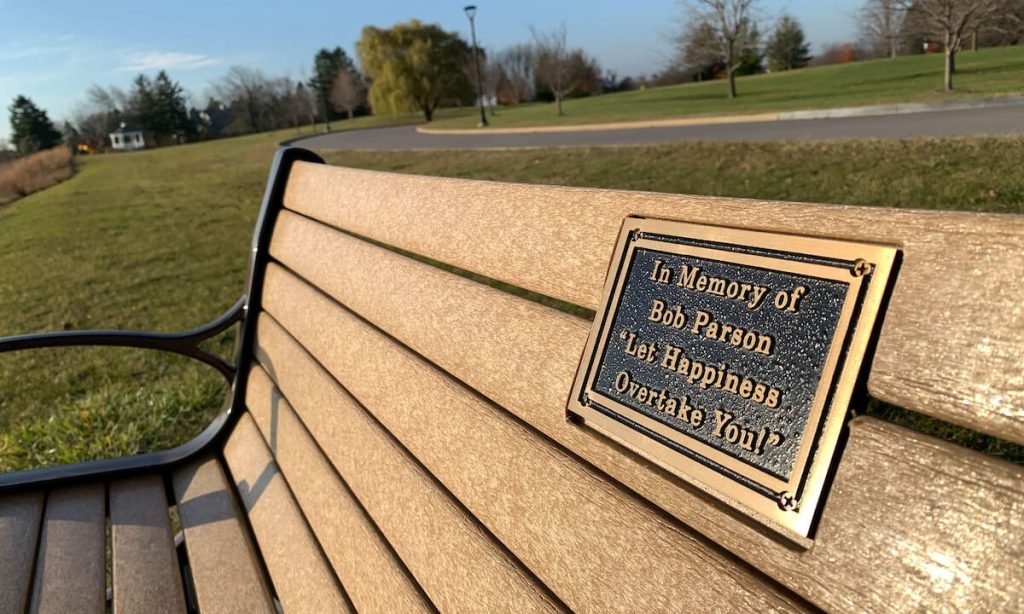
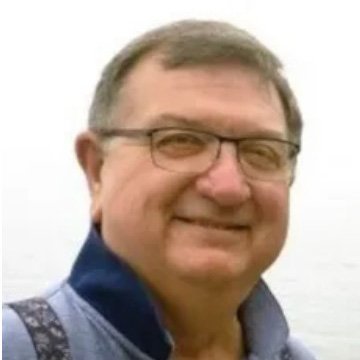
In honor of Bob Parson

Bob Parson was a friend and supporter of Concordia who passed away on Oct. 2, 2021. When he and his former college sweetheart, Diane Lane, reconnected in 2018 they quickly found ways to embed themselves into the Concordia community, as Diane’s home is located in Mequon, not too far from campus. The two were proud members of the Concordia Civic Chorale (a student choir that is also open to community members). They also loved to take walks along the bluff to enjoy the serenity and the breathtaking views of Lake Michigan.

One location, in particular, was a fond spot for the pair. This is the location Diane chose for the bench.

Bob is described in his obituary as someone who lived each day robustly and without complaint. He was known for his wonderful smile, deep kindness, avid curiosity and the vast knowledge it spurred, a quick wit and offbeat sense of humor, and an ability to say “yes” to just about anything.


Want to support Concordia?

Generous gifts from our alumni and friends help us advance Concordia’s mission. Your gifts help keep a CUW education affordable. They help provide state-of-the-art learning and living spaces for our students, and they provide us with the resources needed to fully equip our learners to go out into the world and serve in Christ’s name. Click below to learn more about our giving options.


Alumni Spotlight on Austin Starkey

Austin Starkey, PharmD, MBA, is a Concordia University Wisconsin School of Pharmacy Alumni. Since his graduation, Austin has taken a role as Manager of Clinical Initiatives at NCODA (National Community Oncology Dispensing Association). While at Concordia, Austin found the specialty he was passionate about and it helped determine his career path.

Why did you decide to become a pharmacist?

I’ve always had the goal to work within the healthcare field. Growing up I was mostly figuring out exactly what I wanted to do in the field. In middle school, I took a chemistry class that got me hooked on pharmacy.

Then it really hit me how a single molecule can influence and impact our bodies so much. Molecules could be both beneficial and harmful depending on the amount. I wanted to learn as much about pharmacy as possible and pursuing a PharmD would allow me to do that.

How did your experience at Concordia influence your interest in oncology pharmacy?

During school, I became involved in organizations and classes that allowed me to learn as much as I could about those roles. Part of my experience at CUWSOP was founding the IPhO (Industry Pharmacists Organization) chapter and helping to educate other classmates about different roles within the industry. Additionally, I took classes geared toward the industry side such as the Big Pharma elective course.

We all know someone who has been affected by cancer. As far as my interest in oncology, that did not develop until my fourth year APPEs. I wanted to challenge myself and take an oncology elective. Since oncology was taught so late in our 3rd year it was hard to really develop an appreciation for it. I realized that I could apply everything I learned throughout my program in this disease state.

Working in oncology truly allows me to practice at the top of my license. I couldn’t be happier as I absolutely fell in love with the field. It is one of the few places where patients truly take every word you say to heart. If a recommendation is made, they listen and follow through with it.

What is NCODA and what do they do in healthcare?

NCODA is a grassroots, not-for-profit organization with a commitment to developing unique resources to help medically integrated oncology teams deliver top-tier care. We create educational resources for oral and IV anti-cancer therapies. Whether it’s through thoughtful community-building networking at our annual events or utilizing our complimentary suite of tools, we’re here to deliver quality and sustainable value to all stakeholders involved in cancer care.

What is your current role at NCODA?

My current role at NCODA is Manager of Clinical Initiatives. In my role, I get to collaborate with a variety of different stakeholders ranging from clinical practice members, pharmacy students, and industry sponsors. A lot of my initiatives and day-to-day tasks focus on some of our real-world evidence data initiatives and help to develop educational resources for both patients and providers.

How were you initially exposed to opportunities at NCODA and what about the organization impressed you most?

I came across NCODA during my APPE rotations. While completing an oncology elective, I used NCODA’s Oral Chemotherapy Education resources to help me educate patients about their new oncology medications. The thing that I was most impressed with about the organization was the culture. Everything they do is unique and done in a way that is not traditionally seen.

All NCODA membership and most resources are offered complimentary, which as an organization is almost unheard of. After interviewing with a few team members, I could tell right away that the organization is truly there to support and better the field of oncology. It was very evident that they were a patient-centered organization.

What has been the most memorable moment of working as a pharmacist?

The most memorable moment for me has been the ability to give back. I’m currently in the position to take on APPE students for myself and to help shape their future. I’m able to provide resources that touch so many more lives than I could as an individual in a more traditional setting.

I have the opportunity to create healthcare resources and publish articles that are seen by thousands of people across the nation and even the world. I recently published an article about the Financial Impact of Medically Integrated Pharmacy interventions on Oral Oncolytic Prescriptions.

It’s crazy to think that I grew up in a town of around 3,000 people and I work for an organization that has over 6,000 people. It’s truly impressive to see how many lives I am able to impact.

What advice do you have for future pharmacists?

My advice for future pharmacists is “growth lies at the end of your comfort zone.” In other words, you need to try and become comfortable with being uncomfortable. It’s easy to get stuck in your ways and just push through but that doesn’t lead to growth for yourself or others. Take on those challenges because that is how you are going to grow both personally and professionally.

If you would have asked me during school if I could ever see myself as a preceptor, publishing articles, or giving presentations I would have told you no, to all of it. Now I can proudly say that I do them all. I owe a lot of it to my current team and my professors for always pushing me to achieve my best and could not picture myself in any other career.

Interested in a career in pharmacy?

If you are considering a career in pharmacy, check out information on how to become a pharmacist. Or if you are ready to get started learn more below.

Social Work Jobs: Three Areas to Consider

Most of us, if prompted with the right question would say that we care about human struggle. To some degree, the suffering of others tugs at our hearts. Sometimes the tug is even strong enough that we follow through on the conviction to do something about it. But then there are people who feel so strongly to create a direct impact that they dedicate their entire careers to the work.

“Social work is extremely broad in scope, in terms of practice and employment opportunities,” said Dr. Elizabeth Talbot, chair and professor of social work. “They work with individuals, families, groups, communities, and organizations. . . I think people don’t realize how broad the profession is, or how many options there are with a degree in social work.”

All of those employment opportunities fall into one of three categories of social work, according to Social Work Guide. These jobs can include roles of big-picture planning and policy change in politics all the way to one-on-one work as an advocate for a child or a family.

So, if you’re someone who is passionate about dedicating your career to this kind of work, here are the three areas of social work where you can make a difference.

MICRO

Micro social work focuses on helping a family or an individual. These are jobs that often come to mind when people think about social work. They’re the common child and family social worker jobs that focus on getting people the resources they need right now to help change their individual circumstances. Some job options include:

  • Clinical social worker
  • Psychiatric social worker
  • Child and family social worker
  • Social and human service assistant
  • Healthcare social worker (including roles like a geriatric social worker and a hospice social worker)
  • Mental health and substance abuse social worker

MACRO

Macro social work is work done to create an impact on a large scale in areas like community systems or institutions. Because of the nature of this type of social work, most efforts are done through a government or non-profit agency. Some job options include:

  • Public policy social worker
  • Administrative social worker
  • Health care administrator
  • Research social worker
  • Environmental health worker and administrator
  • Public health administrator

MEZZO

Mezzo social work is the catch-all bucket that covers any of the areas that fall between micro and macro work. It typically includes work that focuses on support groups, task forces, and neighborhoods. Some job options include:

  • School social worker
  • Community social worker
  • Community health worker and administrator
  • Social and community service manager
  • Health educator
  • Group social worker

Social Work Guide notes that not everyone within the field of social work agrees on how these three areas of micro, macro, and mezzo should be split up. However, it’s still important to understand the function of each one as the success of social work in each category feeds into the success of the other categories. When each one is given the proper tools and resources to impact individuals and large groups, then sustainable, long-term change begins to happen.

Pursuing a social work degree at Concordia

The promise of that long-term change is what motivates us forward here at Concordia. We’re excited to help shape the next generation of social workers who will change the circumstances of those who need it most.

“One of the nice things about a Christian University is that we can talk about our faith. We integrate the impact of Christianity on social work across the curriculum,” Dr. Talbot said. “Here, faculty talk about how our faith in God impacts our work with people. Likewise, we talk about how our faith in God changes our practice behaviors and changes our perspective of people and their situations. We have the freedom to talk about God and our faith in the classroom. It is a privilege that does not exist in public schools.”

Theoretically, we emphasize the strengths perspective in practice. We hope the added benefit of a Christian perspective will help our students make an even stronger impact on the people and organizations they serve.

Wanting to advance your career in social work? Check out our Bachelor of Social Work and Master of Social Work degrees.

This blog was originally published on December 6, 2018. It has been updated to reflect current information.

Online Learning: What sets Concordia apart?

Online learning is continually evolving and growing. Since the pandemic we have all learned how much we can do online and the benefits of online education. Here at Concordia, we invest in our online learning experience to ensure that online students receive the same benefits as on-campus learners.

Online learning is nothing new. Did you know its roots can be traced back to British education by way of correspondence degrees? Online learning has and continues to transform the educational landscape throughout the world. Today, universities are offering many different types of degrees. Students desire fully-online degrees that are very flexible. 

Education at a distance was originally created out of a need to provide alternative education opportunities to individuals who weren’t able to go the traditional educational route. However, now it’s seen as a tool that anyone from a recent high school graduate to seasoned professional can use.

Are you just beginning your educational journey? Maybe you’re looking for a doctorate degree. No matter what path you’re on, you can take advantage of the convenience that online education provides—even if you’re just five minutes down the road from a university.

Concordia’s Online Learning

Concordia is proud to offer more than 90 degrees, certificates, and licenses. These programs are accessible to both undergraduate and graduate students through our online learning platform.

We know that the “typical student” no longer looks typical. Individuals that are seeking first-time or additional degrees are doing so at many different stages of their professional lives with a variety of lifestyles and needs. That’s why we put so much of our resources and energy into creating a robust online experience. We want every single student, regardless of age, demographic, or background, to have an experience that creates a ripple effect of success in both their personal development and professional advancement.  

Below are just a few of the items that make our online learning experience unique.

1. You get a personalized guide.

From the first step you take to start your enrollment process with Concordia, you’ll have a guide at your side. This guide will help you navigate your academic needs, goals, interests, and God-given strengths. We call them Academic & Career Advisors and Student Engagement Specialists. Both of these roles are your one-stop shop to connect you with university resources.

They walk you through the enrollment process. They’ll also help you stay on track with your program for timely completion. Their single purpose is to ensure that you succeed both during and after your education. Our advisors and specialists are the backbones of the online experience—priceless advocates who truly care for you.

2. You get online help and tutoring, whenever you need it.

As you’re working through your online classes and assignments, you have a number of resources available to you at just a click away. And they’re free! Just because you’re not on campus physically doesn’t mean that you have to miss out on all of the help opportunities that our traditional students get.

Whether you need someone to review and proofread a paper before you turn it in, or you just want to chat about a homework assignment, we’ve got you covered. Check out the recourses that you get to take advantage of as a student enrolled in one of our online learning programs. The Academic Resource Center staff is ready and eager to assist you.

3. You get access to courses that are specially designed with you in mind.

The last thing you need in an online course is confusion. That’s why we value our team of instructional designers so much; this dedicated team works in tandem with online instructors, to design courses that make sense for what you need in online education. They ensure that the material an instructor wants to teach is organized thoughtfully and intelligently to give you all of the same benefits that you’d encounter in a traditional education setting. Lastly, our instructional designers make sure that your online user experience is intuitive and seamless so you never have to worry about where to find homework, how to submit assignments, or where you can get in touch with instructors.  

We know online education isn’t going away anytime soon. But we also want to make sure that it’s just as valuable of a route as traditional education. That’s why our OSSAs, help services, and instructional designers are so important to us; they ensure that you don’t lose any of the traditional benefits of higher education as you gain additional ones of flexibility and affordable learning.  

4. Your courses are flexible

Our online degrees give you the option to obtain your degree at your own pace. You can create a schedule that works best for you and for your lifestyle. There is also the option for a hybrid-model education if there are specific courses you would want to take traditionally in person. Our team works hard to make sure you are getting the education that you desire while working with your schedule.

The opportunities are endless, and our experienced faculty are reading to work with you and help you achieve your goals.

This blog was originally published on November 12, 2018. It has been updated to reflect current information.

Athletic Training Beyond the Field

An athletic trainer might make you think of someone working on the sidelines, or someone in professional sports. And it’s no surprise. According to the National Association of Athletic Trainers, 66% of all athletic trainers work in college/university settings, professional sports, secondary schools, or with students. But emerging settings are also on the rise. With them come new job opportunities that extend far beyond the field.

“Many prospective athletic training students and young athletic training professionals think this is all nights, weekends, and sports,” said Dr. Katherine Liesener, Athletic Training Program Director and Assistant Professor of Health and Human Performance. “And yes, if they choose to work in the sports setting, there may be non-traditional work hours. But many of my students are eager to learn about, and possibly seek employment in, our emerging settings. Settings that may provide opportunities to work more traditional hours.”

So, if you’ve been thinking about an athletic training career but have held off making a move because you fear that your options are too limited, fear no more. Athletic trainers are present in several emerging workplaces and can hold traditional 9-5 jobs. Here are just a few of the settings that you could work in as an athletic trainer. Settings that you may not have considered before.

Occupational or Industrial Settings

Companies and organizations that require their employees to maintain high levels of activity on the job are continuing to see the value of having an athletic trainer on staff. Working in this type of industrial setting can include companies like Harley-Davidson. Municipal organizations like the local fire department, police force, and public works also are lifting and transporting heavy objects.

In the past, these types of companies would simply send employees to the hospital by ambulance whenever something went wrong. This avenue of care, especially for less serious injuries like simple sprains, can drive up employee care costs. But with an athletic trainer on staff, injuries can be vetted more thoroughly. Companies can seek out more cost-efficient routes of medical care. For example, if someone were to suffer a sprain on the job, an athletic trainer can quickly identify the type of sprain and how serious the injury is. From there, the athletic trainer can recommend the next steps for care like seeing a primary care doctor in an office setting. This can often save an organization thousands of dollars by avoiding ambulance trips to the ER when that level of care is not needed.

Traditional Medicine

Many healthcare facilities are also seeing the value of having athletic trainers on staff to assist doctors and other care providers in areas like sports medicine and orthopedics. For example, when a patient comes in with an injury, an athletic trainer can take care of the initial evaluation to assess the injury and even provide a suggested diagnosis to the primary care provider, saving the doctor valuable time. By having athletic trainers on staff, healthcare facilities are also saving thousands of dollars, while also having more time for patients who actually need more care and medical attention.

According to Dr. Liesener, some surgeons are even making a practice of taking their athletic trainers into surgery to give them a chance to follow a patient from initial evaluation through treatment and possibly rehabilitation.

Military

Yes! Even the military needs athletic trainers. According to the Armed Forces Athletic Trainers’ Association, athletic trainers can be found throughout the Air Force, Navy, Army, Marines, and Coast Guard. In addition, they are represented throughout other areas of the military including US Service Academies, Navy Special Warfare, School of Infantry, Officer Basic School, Initial Entry Training/Basic Training Units, Recruiting Depots, Navy SMART Centers, and Army Musculoskeletal Action Teams.

In these roles, athletic trainers work to both prevent injury as personnel complete training and transition into active duty as well as rehabilitate individuals when they sustain injuries. For athletic trainers who want to take their work a step further by serving those who serve our country, this is the perfect fit.

Concordia University was announced as one of the Nation’s most Military friendly universities. The athletic training program at Concordia provides a number of opportunities and those looking to serve our country can do so by becoming an athletic trainer.

Professional Sports

While professional sports are typically what comes to mind when athletic trainers are mentioned, even the jobs in this area of athletic training can be uncommon ones. For example, Cirque du Soleil, professional bull riding, and NASCAR are all considered to be a part of the professional sports category and they all use athletic trainers, too. Here in the Greater Milwaukee Area, we even have athletic trainers working with our local ballet company, the Milwaukee Ballet, and the Brewcity Bruisers, our local female roller derby team.

If professional sports are not where your goals are, there are always organizations looking for athletic trainers in your community. Local high schools, club sports programs, and community colleges are all places that need athletic trainers.

Athletic Training at Concordia

With so many job options and career avenues to choose from, you really can find a career wherever you want. With our Master of Science in Athletic Training program, we immerse our students in many different clinical settings to give them a wide range of experiences. All of this helps to inform their career path and make them aware of the many different opportunities they really do have.  

Athletic trainers play a vital role in the health system. They are often the first step in the prevention of injuries related to physical activity. Concordia offers a unique education with hands-on clinical experience in numerous settings and is supervised by healthcare professionals. The program equips students with skills to be ready to succeed in the athletic training field. While also accomplishing the goal of training students through the holistic development of mind, body, and spirit.

Want to learn more about our athletic training degree? We offer the program at both our main Wisconsin campus as well as our Ann Arbor campus in Michigan. 

This blog was originally published on November 12, 2015. It has been updated to reflect current information.