From the first Lutheran hymnals to the concerns of today’s students, explore how Concordians have reflected on the Reformation and its enduring message over the years.
What comes to mind when you think of the Reformation? Martin Luther? A church door? The opening notes of “A Mighty Fortress Is Our God”?
Each offers a connection to a history we remember on Oct. 31. But at the heart of Reformation Day is a message that reaches into our lives today: Salvation is God’s gift, given by grace through faith in Jesus Christ.
Over the years, members of the Concordia University Wisconsin community have explored that message through theology, music, education and their own experiences. This Reformation Day, we’re revisiting several of those reflections, including a student perspective on finding community and hope amid the pressures of college life.
Understanding the Reformation
On Oct. 31, 1517, Martin Luther proposed his 95 Theses for debate, challenging the sale of indulgences. The questions he raised helped spark the Reformation and a renewed focus on the Gospel.
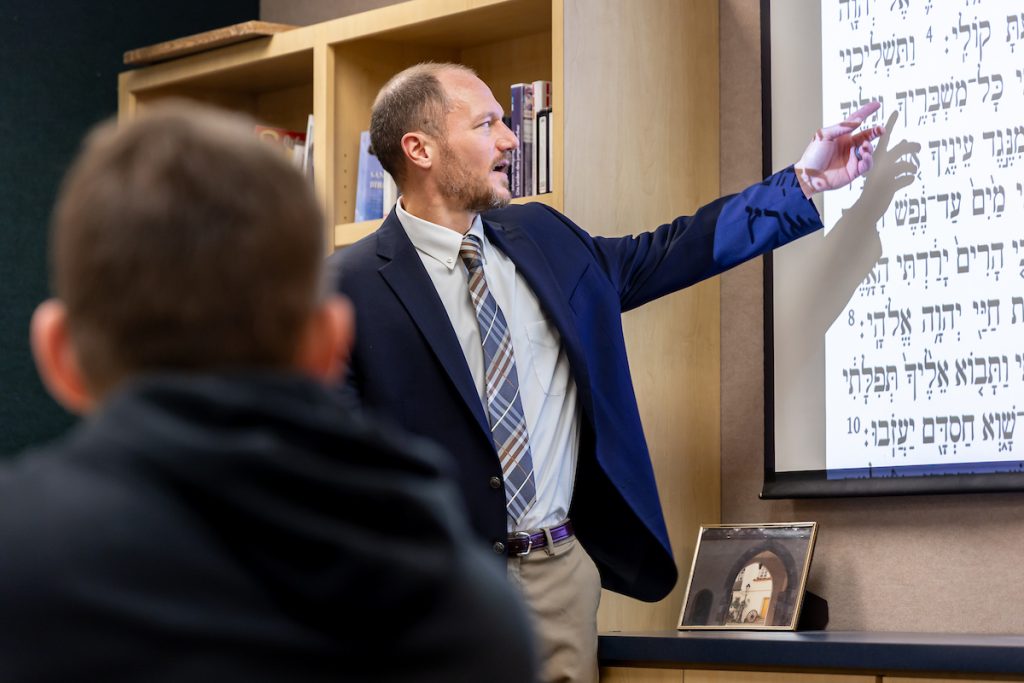
In his 2019 reflection, Dr. Jason Lane explores that history and the teachings central to the Reformation: Christ alone, grace alone, faith alone and Scripture alone. His article also invites readers to consider our continuing need for repentance and God’s mercy.
We’re accustomed to working toward something. Study for the exam. Finish the assignment. Meet the deadline. Somewhere along the way, it can become easy to apply that same thinking to our relationship with God.
“Solas Applied,” originally published in 2017, explores the freedom found in knowing that salvation cannot be earned. Through reflections from Concordia faculty and alumni, the article considers how Scripture alone, faith alone and grace alone shape our understanding of God and our relationships with one another.
For many Christians, hymns become familiar companions throughout life. We sing them in chapel, remember them during difficult seasons and return to their words for comfort.
“Reformation Hymnals 500 Years Later,” published in 2024, explores Luther’s efforts to restore congregational singing and the publication of the first Lutheran hymnals in 1524. It offers a look at how music helps bring the Gospel into the voices and lives of God’s people.
What connections might students draw between the Reformation and their own experiences?
In “The 95 Theses of a modern student,” theology majors Adam Everroad (’26) and Rachel Webb (’27) consider academic burnout, the need for meaningful relationships and Christian hope for the future.
Their 2025 reflection invites the campus community to listen, support one another and consider how students can carry their faith into their future vocations.
The Reformation also provides an opportunity to reflect on what it means to learn and serve at a Lutheran university.
In his 2025 reflection, President Erik Ankerberg considers how Concordia’s identity takes shape through its daily work. He connects education with faith in Christ, care for others and preparation for lives of service.
As we observe Reformation Day, these perspectives invite us to open Scripture, listen to one another and give thanks for the grace we receive in Christ. It is a message we need on Oct. 31—and every day that follows.
Want in?
Concordia University Wisconsin is a Lutheran higher education community committed to helping students develop in mind, body and spirit for service to Christ in the Church and the world.
A lighthearted exchange about homework, baseball and a little grace has put Concordia University Wisconsin in the social media spotlight.
It all started Tuesday night at a Milwaukee Brewers World Series watch party, when FOX6 Milwaukee caught up with Concordia University Wisconsin student Gabe Hengst. With the excitement of the World Series in full swing, Hengst admitted that his homework might not get finished on time. He even gave his professor a shoutout on television, hoping Dr. Jonathan Balsman might extend a little grace.
The next day, FOX6 decided to follow up. The station tracked down Balsman, CUW assistant professor of education and mathematics, and brought him on live to respond to his student’s televised plea. Adding to the fun? Balsman is a Chicago Cubs fan, making the exchange between professor and student an especially entertaining moment during Milwaukee’s championship run.
But the story didn’t end with the television interview. On Oct. 28, CUW shared the FOX6 segment across its social media channels, and the response was extraordinary. As the Brewers celebrated their World Series victory, the lighthearted Concordia moment was finding an audience of its own.
As of Oct. 29, the post had generated 3.45 million views across Instagram, Facebook, TikTok and YouTube, along with 284,924 engagements. That included more than 10,600 shares, 8,000 saves and 2,100 reposts. Viewers had spent a combined 4,116 hours watching the video on Facebook, TikTok and YouTube alone, the equivalent of approximately 172 days of continuous viewing.
What began as a student’s playful request for a homework extension became a memorable moment of connection between a student, his professor and millions of viewers. It’s a reminder that the relationships formed at Concordia can make an impression far beyond the classroom. And while the Brewers may have taken home the World Series trophy, Hengst and Balsman gave CUW a victory worth celebrating, too.
Want in?
Concordia University Wisconsin is a Lutheran higher education community committed to helping students develop in mind, body and spirit for service to Christ in the Church and the world.
New Social Work pathway offers students a more efficient path to earning a bachelor’s degree
Concordia University Wisconsin has received approval from the Higher Learning Commission to offer a reduced-credit bachelor’s degree program in Social Work, creating a new pathway for students to complete their degrees in less time and at a lower overall cost.
The new structure is part of Concordia’s efforts to make earning a college degree more accessible and affordable while preparing graduates to serve in their professions and communities. The Bachelor of Social Work program will now offer a program that requires only 92 credits, in addition to the current 120-credit option.
More opportunities, fewer barriers
CUW already offers students choice through two Council on Social Work Education (CSWE)-accredited BSW formats: an in-person program on our Mequon campus and a fully online program designed to provide flexibility for working adults and students across a wide geographic area.
“What excites me most about offering Social Work as a reduced-credit bachelor’s degree is the opportunity to make a BSW more accessible to students who may not otherwise see a four-year degree as attainable,” said Nichole Ostrowski, Bachelor of Social Work (BSW) program director and assistant professor.
“Educational equity and accessibility have been guiding values throughout the design of this proposal. By creating a more affordable and faster pathway to a BSW, we hope to reach more students who have the passion and potential to become caring, skilled social workers but may face financial, family, or work-related responsibilities, including first-generation, veteran, low-income, and nontraditional learners.”
Expanding access to a mission-driven education
The new program reflects Concordia’s commitment to finding innovative approaches to higher education that meet the needs of today’s students while supporting its mission to develop students in mind, body and spirit for service to Christ in the Church and the world.
Classes within this new program begin in fall of 2027. The 92-credit BSW is one of the first programs of its kind in Wisconsin.
While the number of credits differs, the professional preparation does not. Both 92-credit and 120-credit BSW students complete the same rigorous upper-division social work courses, assignments, field education, and competency-based learning outcomes consistent with the Council on Social Work Education standards.
Want in?
Concordia University Wisconsin is a Lutheran higher education community committed to helping students develop in mind, body and spirit for service to Christ in the Church and the world.
Concordia University Wisconsin has announced plans to establish a School of Theology, reaffirming its Lutheran identity and longstanding commitment to preparing students for service to Christ in the Church and the world.
Scheduled to launch in fall 2027, the School of Theology will become a distinct academic school within the university. Previously housed within the School of Arts and Sciences, theology will now have its own academic leadership and a focus on advancing biblical and doctrinal studies, theological languages and church worker preparation.
Strengthening Concordia’s Lutheran identity
The decision represents more than an organizational change. It is a deliberate investment in Concordia’s Lutheran identity and a bold affirmation of the mission that has guided the university since its founding in 1881.
“The new School of Theology aligns with our priorities and leverages our faculty members as leaders in the area,” said Erik Ankerberg, PhD, president of Concordia. “This decision reflects our commitment to keeping theology at the heart of our university and strengthening our service to the Church for generations to come.”
The establishment of the School of Theology directly supports Concordia’s strategic commitment to live its mission, create transformational student experiences and maximize its impact on the Church and the world.
Looking ahead to fall 2027
The university plans to hire a dean to lead the School of Theology, with an appointment anticipated in late spring 2027. Additional details about the school’s leadership and future plans will be shared in subsequent announcements.
Concordia University Wisconsin is a Lutheran higher education community committed to helping students develop in mind, body and spirit for service to Christ in the Church and the world.
Concordia pharmacy students Jocelyn Wilson and Tsu Ming Ong spend their research days working with machine learning, chemical reactions, plenty of questions and, occasionally, a flask filled with black goop.
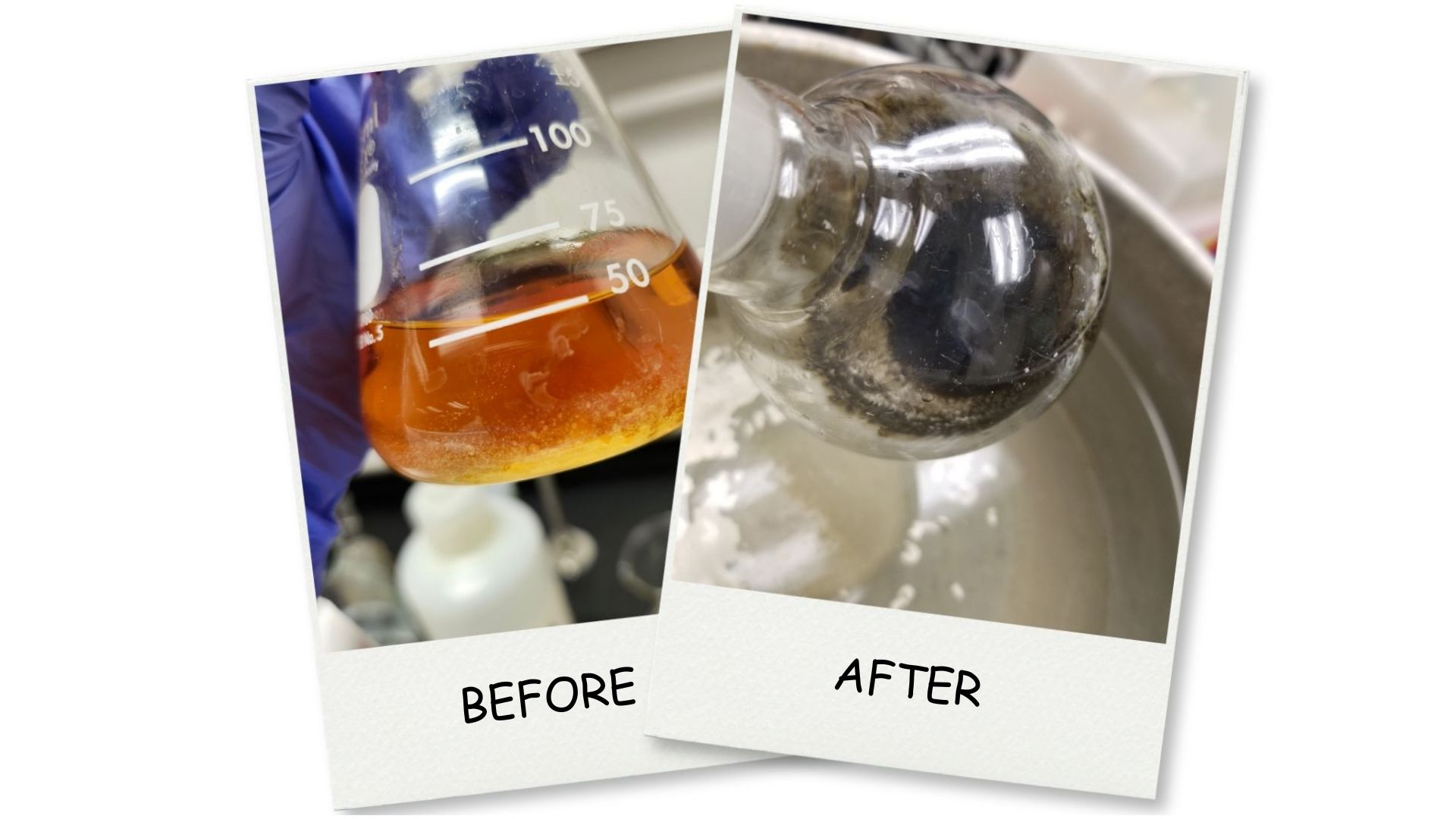
Fourth-year PharmD student Jocelyn Wilson has burned her research product more times than she would probably like to admit. She vividly remembers walking into the chemistry lab at Concordia University Wisconsin, looking at the round-bottom flask and finding the same thing waiting for her: sticky black oil.
“Like something out of a horror movie,” she said. Then, like so many students before and after her, she would try again.
Third-year PharmD student Tsu Ming Ong knows something about that feeling, although his research looks very different from Wilson’s. His work doesn’t involve standing over chemical reactions. He uses computational chemistry and machine learning to study compounds that interact with opioid receptors. And sometimes his models don’t work either.
“One thing I’ve learned is that research isn’t always about getting an exciting result,” Ong said. “Sometimes the most important part of the day is figuring out why something didn’t work.”
So, welcome to a day in the life of a research-focused PharmD student. At Concordia, that “day” can look remarkably different depending on the student, the project and even the hour. Wilson’s research has meant synthesizing compounds in a chemistry lab. Ong’s means working with chemical structures, datasets and computer models. Both are learning that research rarely moves in a straight line.
And maybe that’s part of the point.
Morning: Check the notebook
Wilson isn’t spending her days in the research lab anymore, but she remembers them vividly, especially how early they began. She would arrive at the chemistry lab, turn on the fume hood and check her notebook to figure out exactly where she had left off the day before. Some of her reactions required hours of heating and stirring, so the earlier she could get one started, the better.
Equipment came out. Reagents were measured. The reaction began. Then came the waiting, checking and documenting.
Wilson worked on the SCPI-1 project with Chris Cunningham, PhD, associate professor of pharmaceutical sciences, performing chemical synthesis and extraction of a compound being studied for its potential to treat symptoms of opioid withdrawal. Throughout a reaction, she would remove small samples and use thin-layer chromatography and UV light to see how things were progressing.
A successful reaction still meant there was more to do: extraction, more testing, an NMR run to confirm the compound’s identity, labeling, documentation and preparing samples to be sent to research partners. An unsuccessful one meant going back to the notebook. Those notes helped Wilson remember what changed, what failed and what might be worth trying next.
Ong, meanwhile, is still actively involved in research, although his days look quite different. His work begins with data.
Midday: Teach a computer about chemistry
Ong didn’t arrive at Concordia with plans to become a researcher. Originally from Malaysia, he grew up primarily in Wisconsin and became interested in pharmacy partly because his father is a community pharmacist. When he entered pharmacy school, Ong pictured himself working directly with patients as a clinical pharmacist.
Then Cunningham gave him an opportunity to try research.
“I knew I enjoyed science, but I didn’t initially understand what research in pharmacy could look like,” Ong said. He soon became interested in drug discovery and computational methods. Coding, cheminformatics and machine learning followed.
Today, his research uses machine learning and computational chemistry to identify and predict compounds that interact with opioid receptors. Rather than testing every compound individually, Ong uses computer models to study the relationship between a compound’s chemical structure and how it interacts with a receptor. The goal is to narrow the possibilities and identify compounds worth studying further.
Before he can do that, though, Ong has to make sure the information going into his models is accurate. He spends part of his day reviewing datasets, verifying chemical structures and checking activity values. He uses programs including KNIME, Mordred and RDKit to process molecular structures and generate descriptors of their chemical properties.
Then he trains and evaluates his models. Sometimes he gets what he hoped for. Sometimes he doesn’t.
Afternoon: Get comfortable with failure
Research has a way of making “didn’t work” part of the daily vocabulary, and Wilson learned that lesson repeatedly in the chemistry lab.
“Sometimes you can think you’re following a protocol to a T and still fail to get any yield,” she said.
A reaction might need a change. An extraction method might need another attempt. Even after she finally produced something, Wilson still had to determine whether she had made what she intended to make. It could be slow and frustrating, but she learned to be more comfortable when things didn’t work out.
“I became a lot more resilient to failure by doing research, which really helped with starting pharmacy school,” she said. Before beginning research, Wilson didn’t consider chemistry one of her strongest subjects. Working with Cunningham helped build her confidence in what she could do. “I realized I didn’t need to be an A+ chemist to be a part of research,” she said.
Ong has had his own lessons in persistence. He remembers developing a machine learning model that initially performed poorly. Rather than assume the entire approach was wrong, he kept working. He cleaned and restructured the dataset, changed how variables were represented and experimented with different modeling approaches. Little by little, the results improved.
“Research progress isn’t always one big breakthrough,” Ong said. “Sometimes it’s a series of small improvements that eventually lead to something meaningful.”
The experience also taught him something he didn’t expect. Research isn’t always about finding the right answer. Sometimes it’s about figuring out whether you’re asking the right question in the first place.
Whenever possible: Find people who help you figure it out
Neither student has done this work alone. Wilson first connected with Cunningham while she was still an undergraduate student at Concordia. Curious about the opportunities available, she contacted the School of Pharmacy Admissions Office and received a list of faculty members conducting research. Cunningham’s work caught her attention, so she reached out. That email eventually put her in a lab coat.
Cunningham became Wilson’s main research mentor and encouraged her to present their work at symposiums and conferences. “He was really in my corner supporting me for the whole process,” Wilson said.
Ong describes his relationships with CUW faculty Cunningham and Terry-Elinor Reid, PhD, associate professor of pharmaceutical sciences, in a similar way. Both offer guidance when he needs it, but they also trust him enough to make his own decisions and mistakes. That freedom led to one of Ong’s most memorable realizations.
While working through a modeling workflow, he noticed something had changed. He wasn’t simply following instructions anymore. He was deciding how to handle the data, determining which variables were meaningful, choosing how to evaluate the model and interpreting what it produced.
“At some point, I realized that I wasn’t simply learning about research anymore,” Ong said. “I was starting to think like a researcher.”
Late afternoon: Research gets bigger
Eventually, the compound Wilson had worked on left the lab. Literally. Her work was one piece of a project involving researchers at multiple institutions. Wilson helped produce the compound at Concordia. Partners at UW-Milwaukee performed further purification and in vitro metabolism studies, while partners at Johns Hopkins conducted in vivo studies to evaluate its effects.
That surprised her. When Wilson first pictured research, she imagined the work happening in one place. Instead, she found herself part of a network of people bringing different skills and resources to the same project.
One presentation at AACP’s Pharmacy Education 2025 meeting in Chicago also stands out. Wilson remembers arriving nervous, worried that she might forget what they had done or wouldn’t know enough to answer questions. By the end of the night, things felt different. “I was talking with other pharmacists and credentialed researchers with ease,” she said.
Wilson, who served as president of CUW’s Industry Pharmacists Organization (IPhO) chapter during the 2025-26 academic year, is now completing her advanced pharmacy practice experience (APPE) rotations. Her time in the lab, opportunities to present research and experiences in pharmacy practice have helped her see just how many places research and pharmacy intersect.
When research meets patient care
Ong sees that connection from another angle. As an intern at Froedtert West Bend’s inpatient pharmacy, he sees patients who rely on specialized medications. That experience puts him close to the individuals affected by those therapies.
Research allows him to see that work on a larger scale. Drug development and health outcomes research can influence therapies used by patients far beyond one hospital or community, and that possibility has changed the career Ong once pictured for himself.
“I still really value patient care, but my perspective has expanded significantly,” he said. Ong is now interested in bringing together pharmacy, research, data and the pharmaceutical industry. Health economics and outcomes research, real-world evidence, data analytics and medical affairs are among the areas that have caught his attention.
Wilson’s picture has changed, too. She entered pharmacy school knowing she wanted research somewhere in her future, although she wasn’t sure what that meant. She considered becoming a clinical research associate in the pharmaceutical industry for a time. Her APPE rotations now have her thinking about another possibility: finding a career that allows her to remain close to patients while continuing to participate in research.
Oncology pharmacy and investigational drug services are among the possibilities she is considering. “Research has expanded my idea of what pharmacists can be and do,” Wilson said.
So, is research for you?
Wilson’s advice to students who are curious about research is simple: Give it a try. Spend a few hours a week on a project. Stop by a lab before class. Stay a little later. Ask a faculty member what they’re working on. Students with a research idea of their own can start by talking with a faculty member or advisor who can help connect them with someone who shares that interest.
“The worst thing that can happen is you don’t have the time, or you don’t like it,” Wilson said.
Ong didn’t know research would become such a large part of his pharmacy experience when he initially started college. His involvement has grown in other ways, too. After serving as Wilson’s vice president in CUW’s IPhO chapter last year, Ong is serving as president for this 2026-27 school year.
His advice to students curious about research is much the same as Wilson’s: Try it before deciding it isn’t for you. As both students discovered, there are probably a few possibilities you don’t yet know exist.
More than a job
Figuring out where pharmacy might take him is tied to a larger question for Ong: How will he use what he has been given to serve God?
“As a Christian, I believe we are called to use the talents and abilities we’ve been given to glorify God and serve others,” he said. He doesn’t know exactly where his career will take him, but he wants his faith to guide the decisions he makes and the way he uses his knowledge. Research has given him another way to think about that calling.
Wilson came to Concordia already looking for research. Ong found it after he arrived. Wilson worked in a chemistry lab, while Ong found his place working with computers and data. What do they have in common? Neither has every detail of the future figured out, and neither needs to.
There are still questions to ask, experiments to run, models to test and probably a few things that won’t work the first time. Tomorrow, they’ll try again.
Want in?
Concordia University Wisconsin is a Lutheran higher education community committed to helping students develop in mind, body and spirit for service to Christ in the Church and the world.
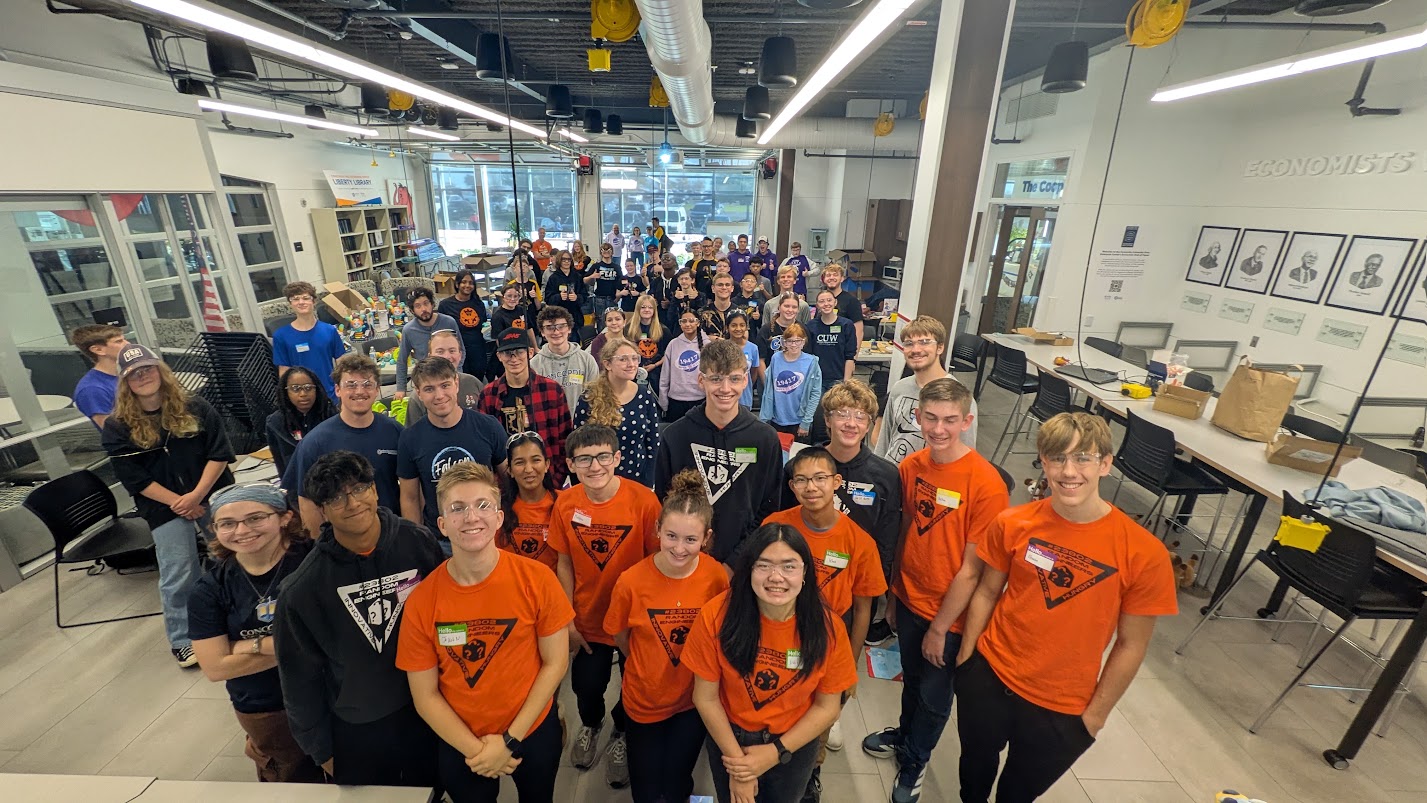
Engineering students, campus volunteers and 54 high school robotics students joined forces to adapt toys for children with disabilities.
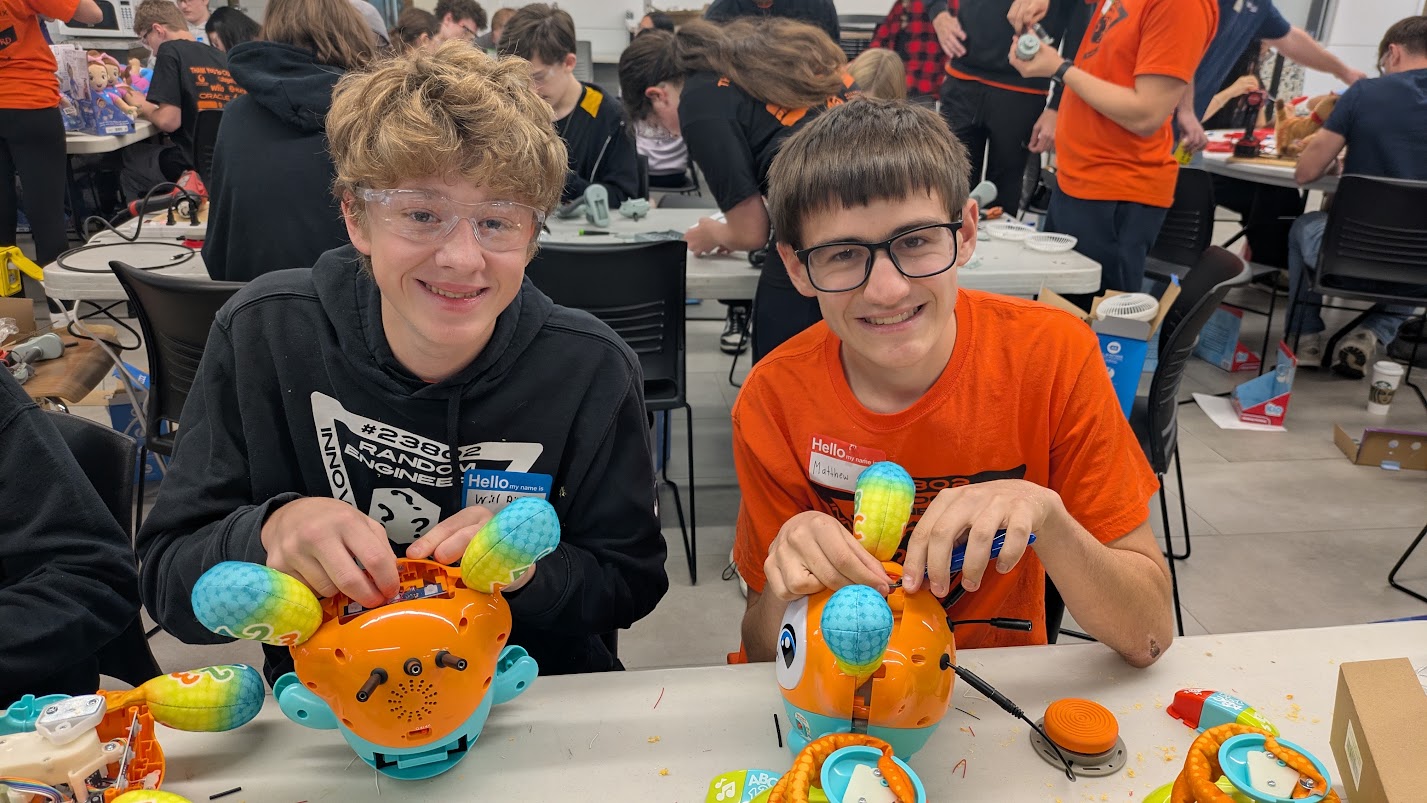
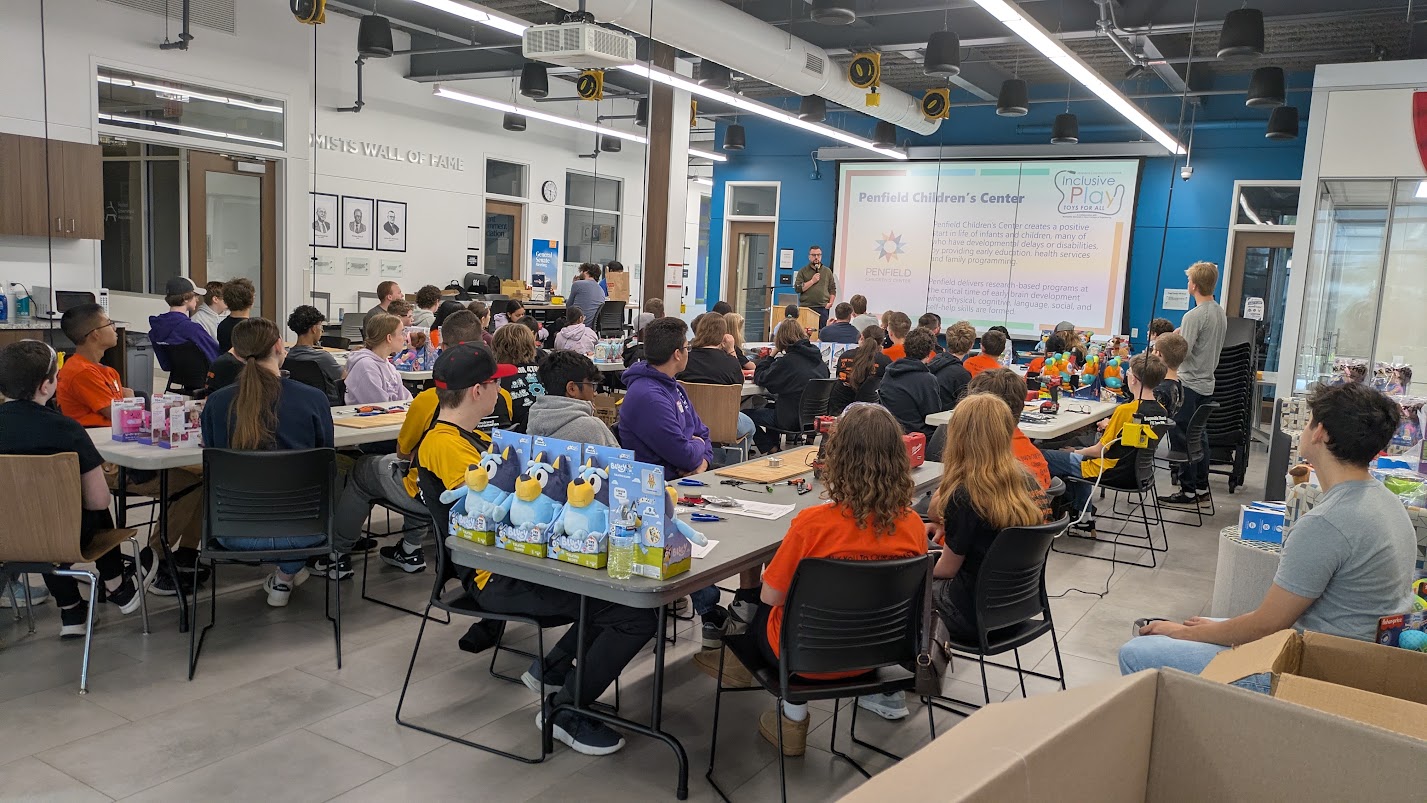
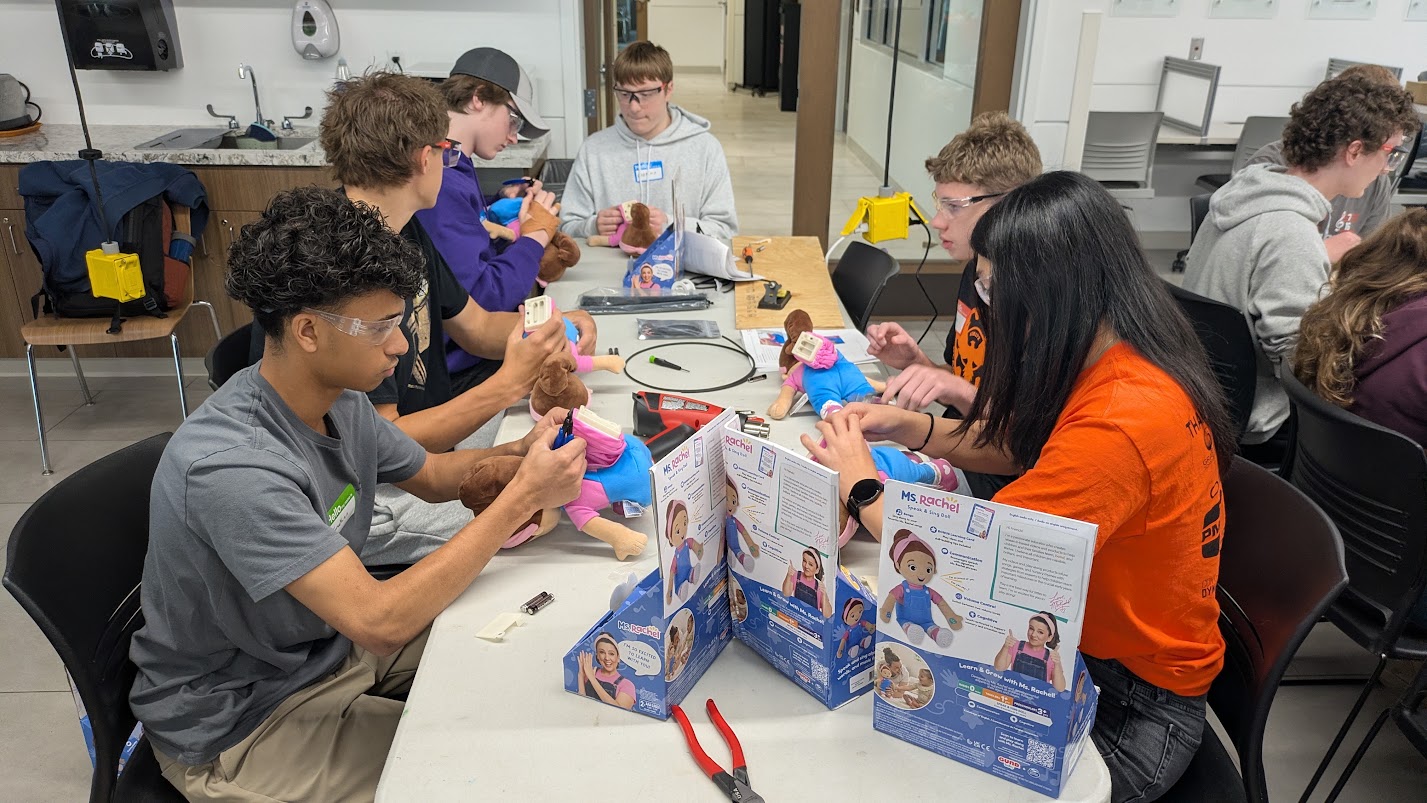
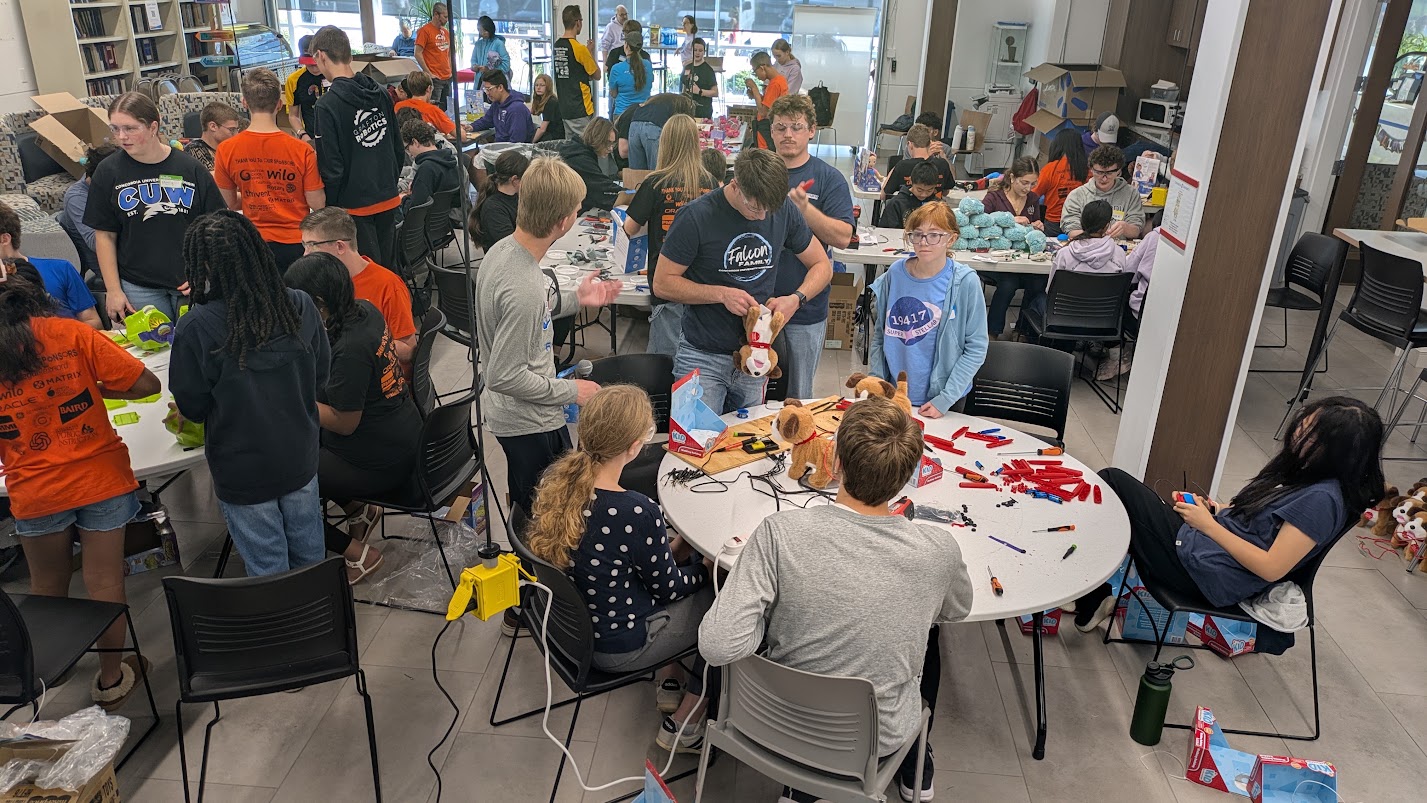
By 2 p.m. Saturday, Oct. 24, approximately 120 toys had been adapted at Concordia University Wisconsin, each offering a child with disabilities a new way to play.
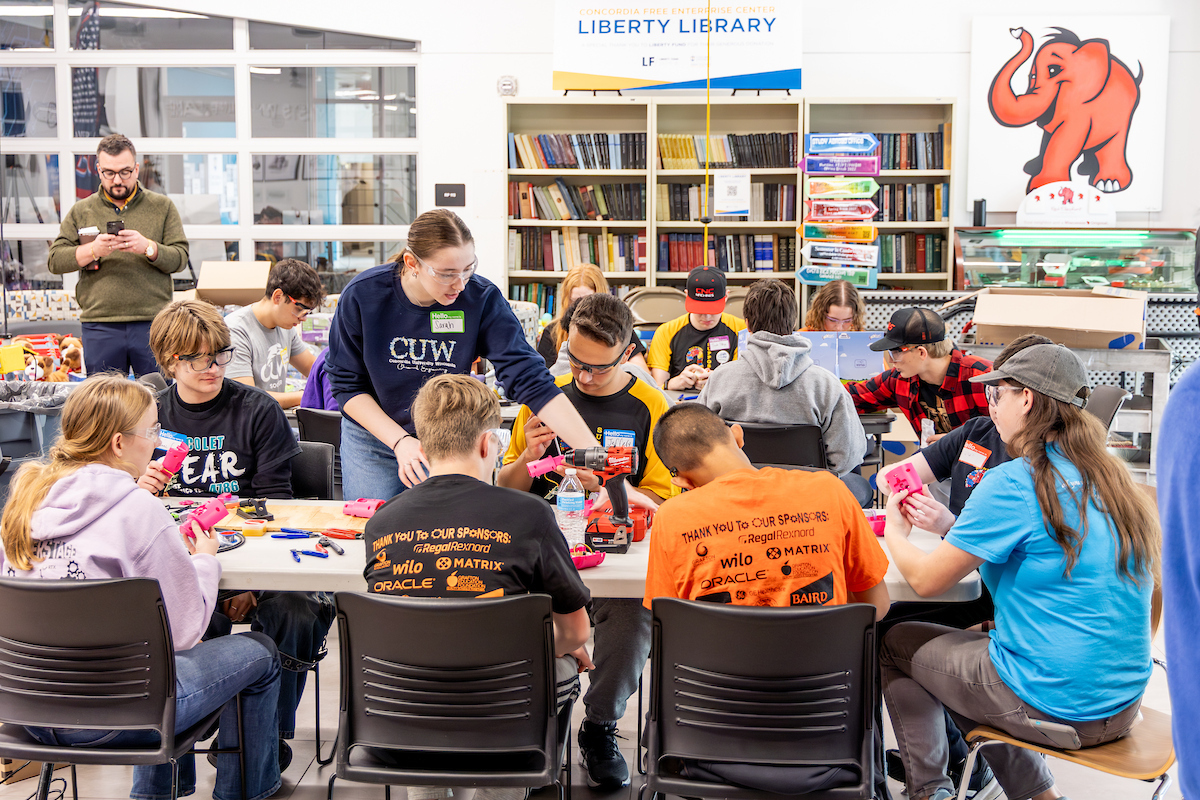
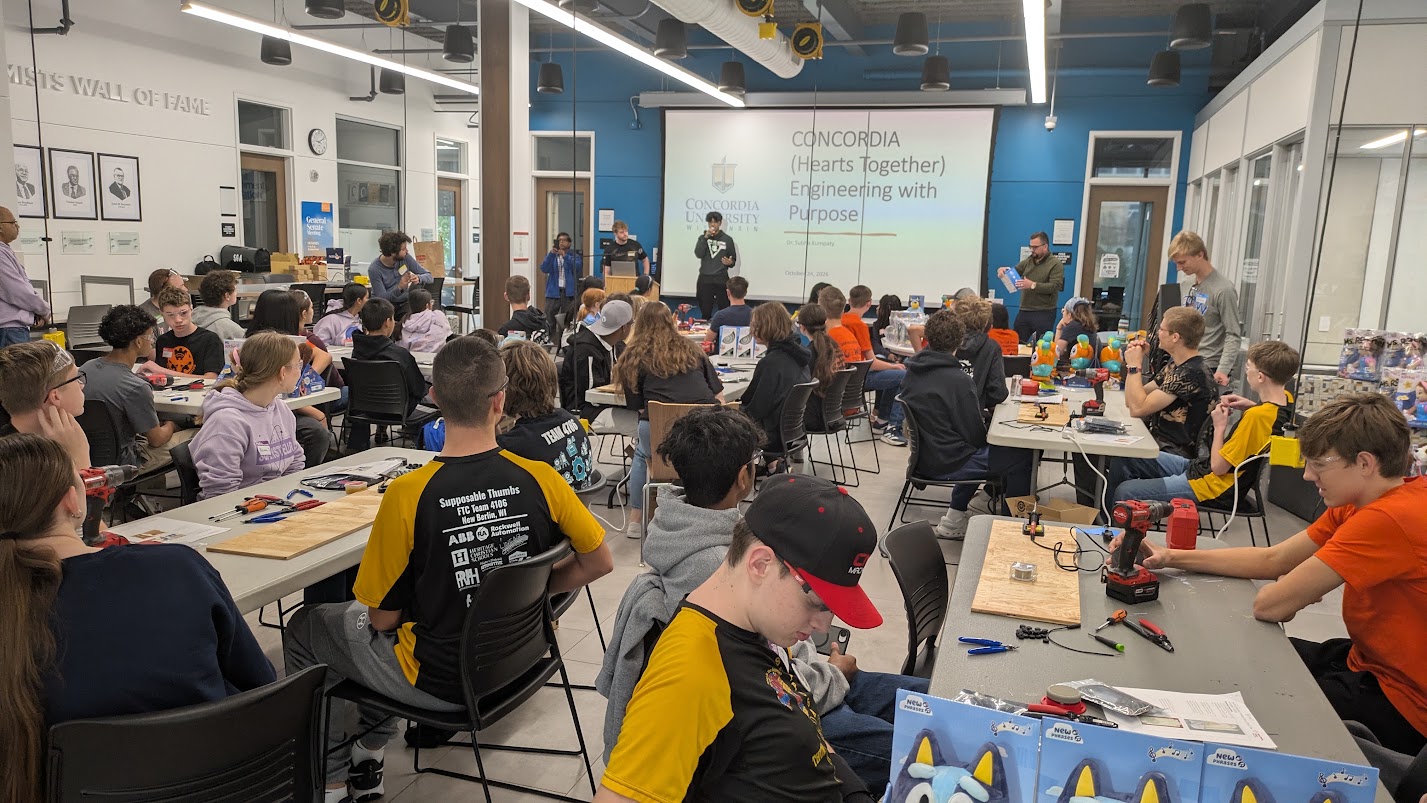
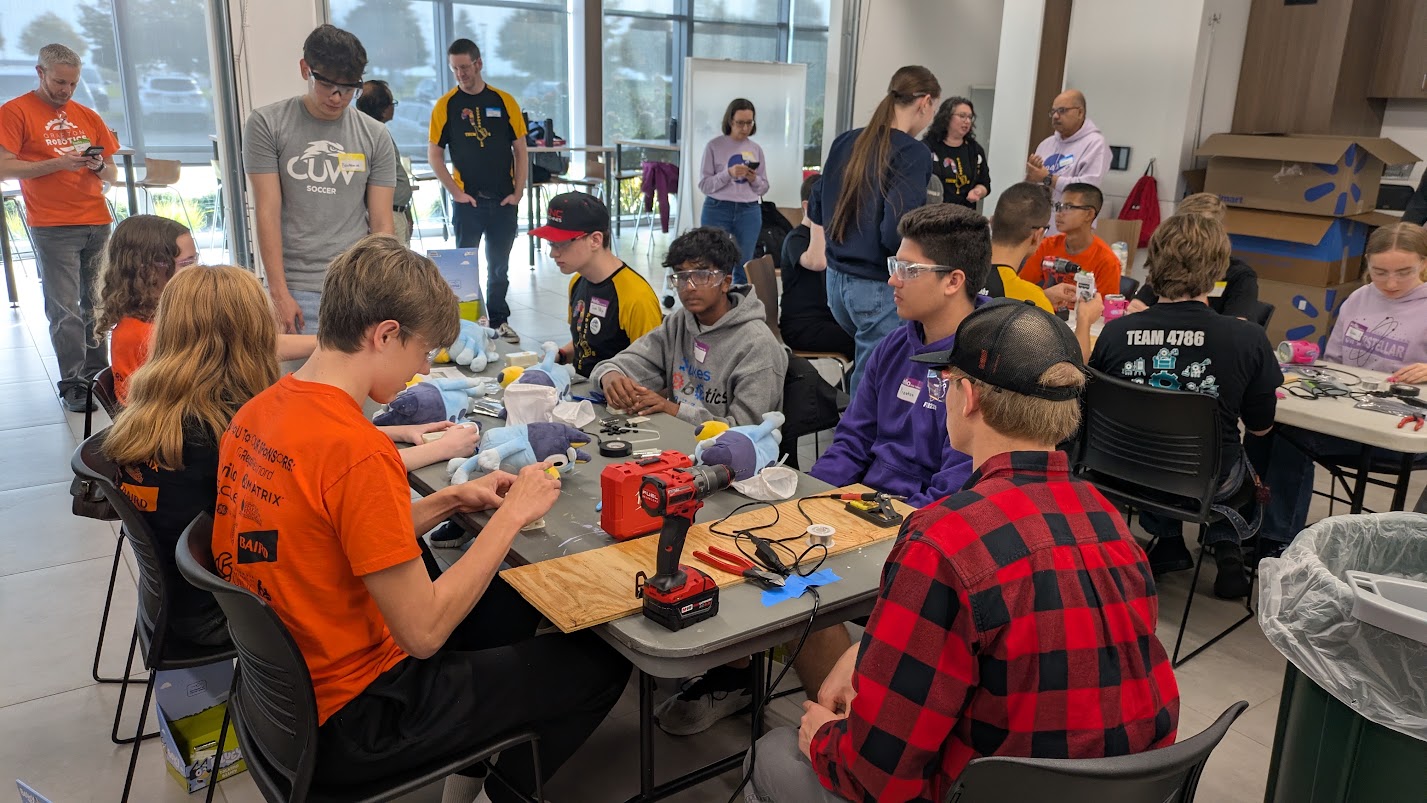
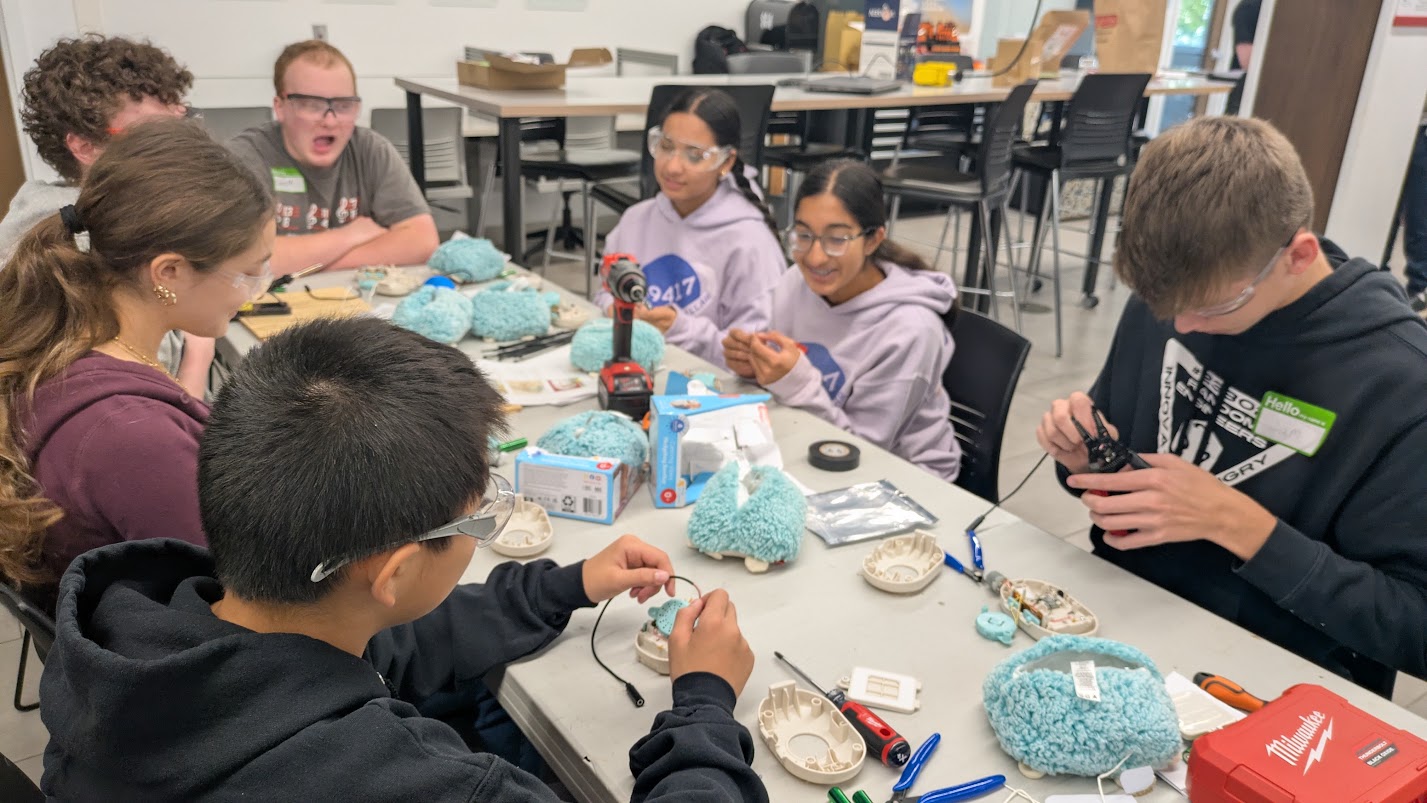
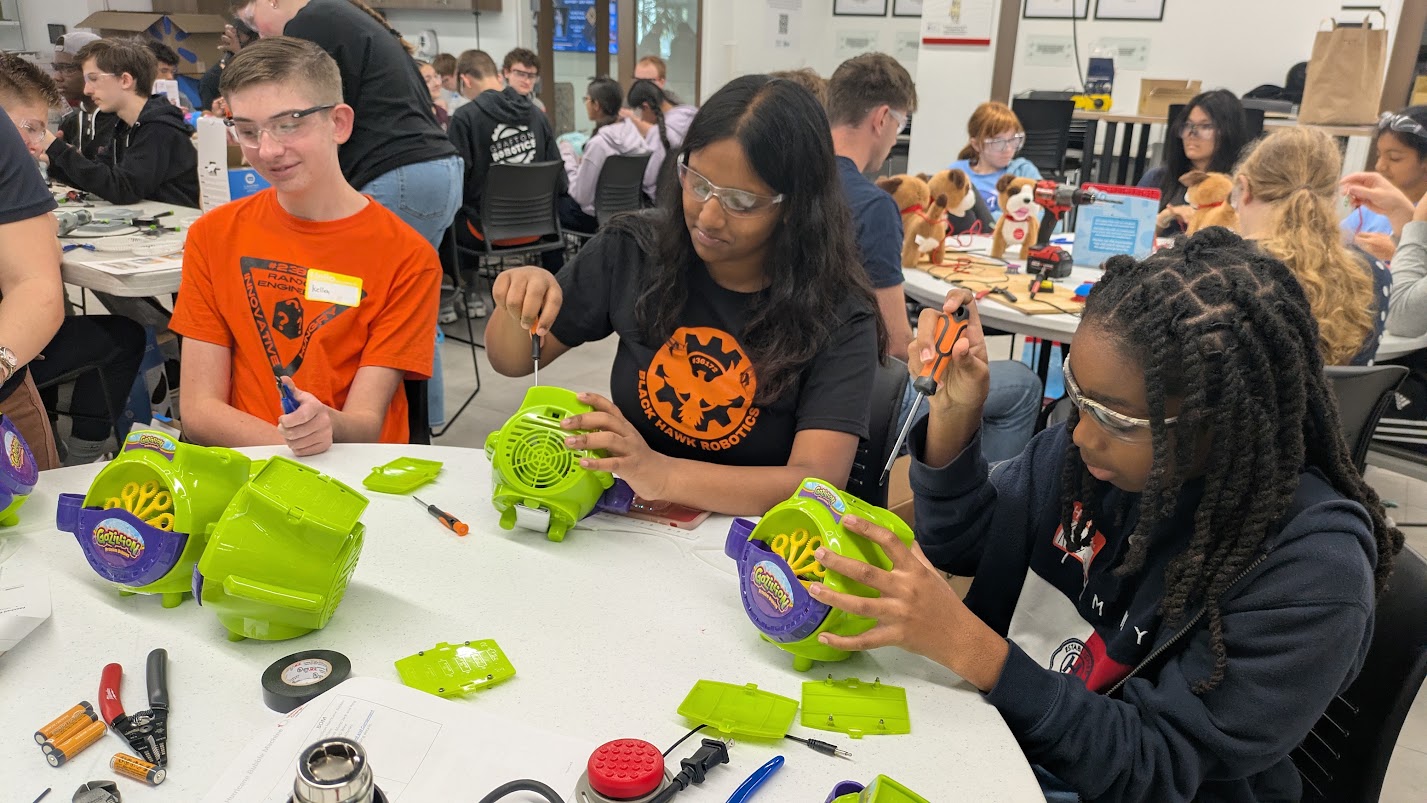
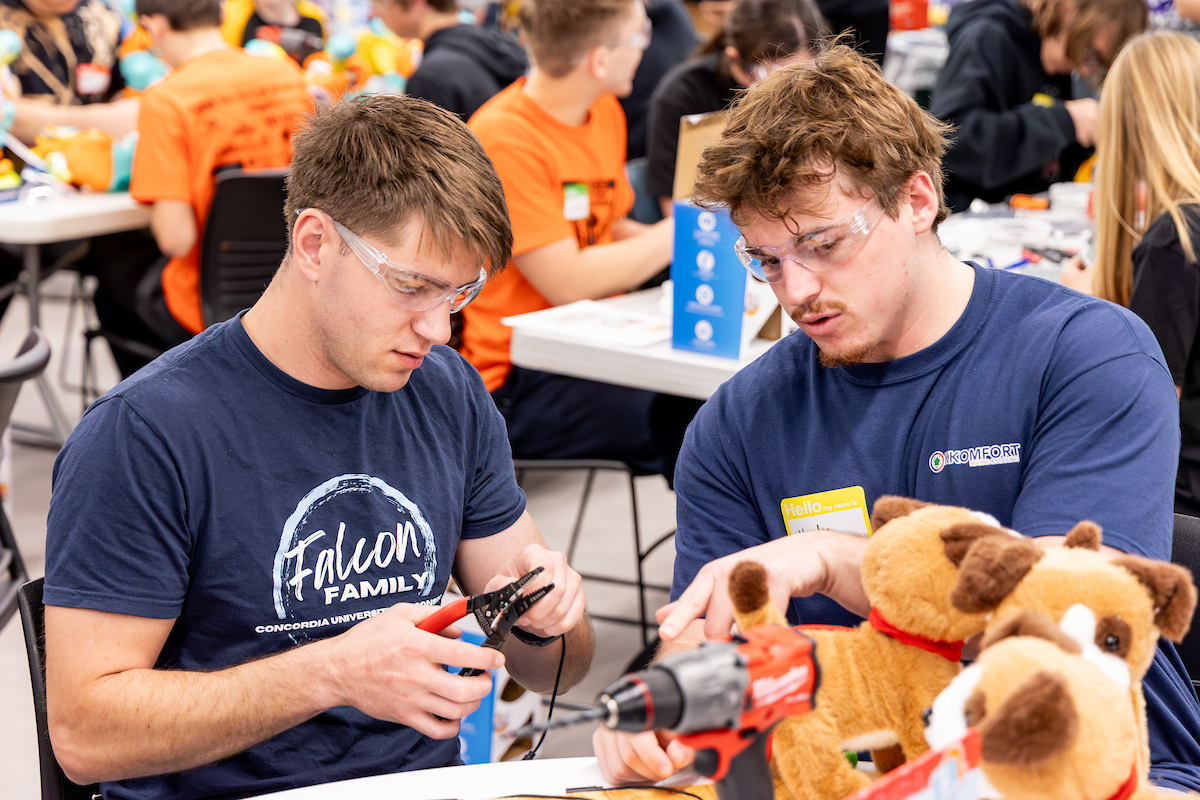
The university’s first adaptive toy build day brought together CUW engineering students, occupational therapy volunteers and eight area high school robotics teams. Working side by side, they modified ordinary toys so children with physical or developmental disabilities could operate them using accessible external buttons.
A battery-operated toy that sings, moves or lights up may seem simple enough to use. But for a child who struggles to press a small, inconspicuous button, that simple action can become a barrier to play, learning and development.
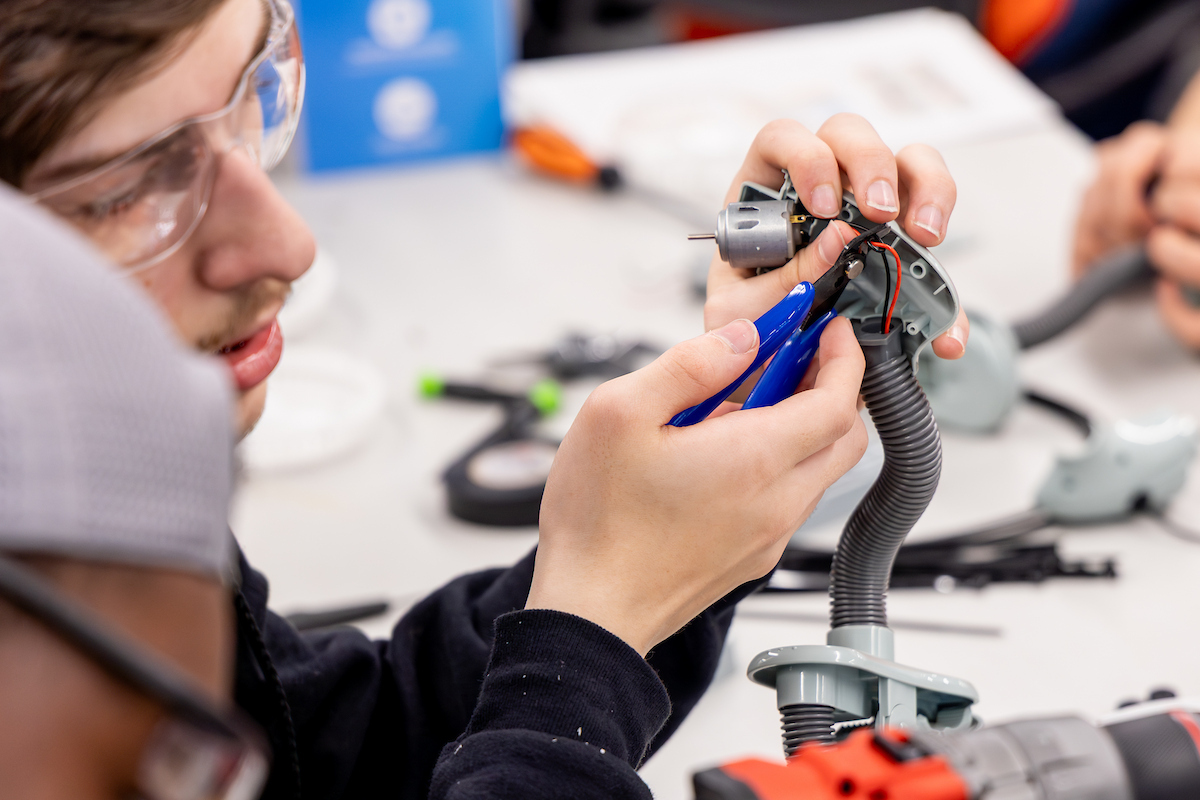
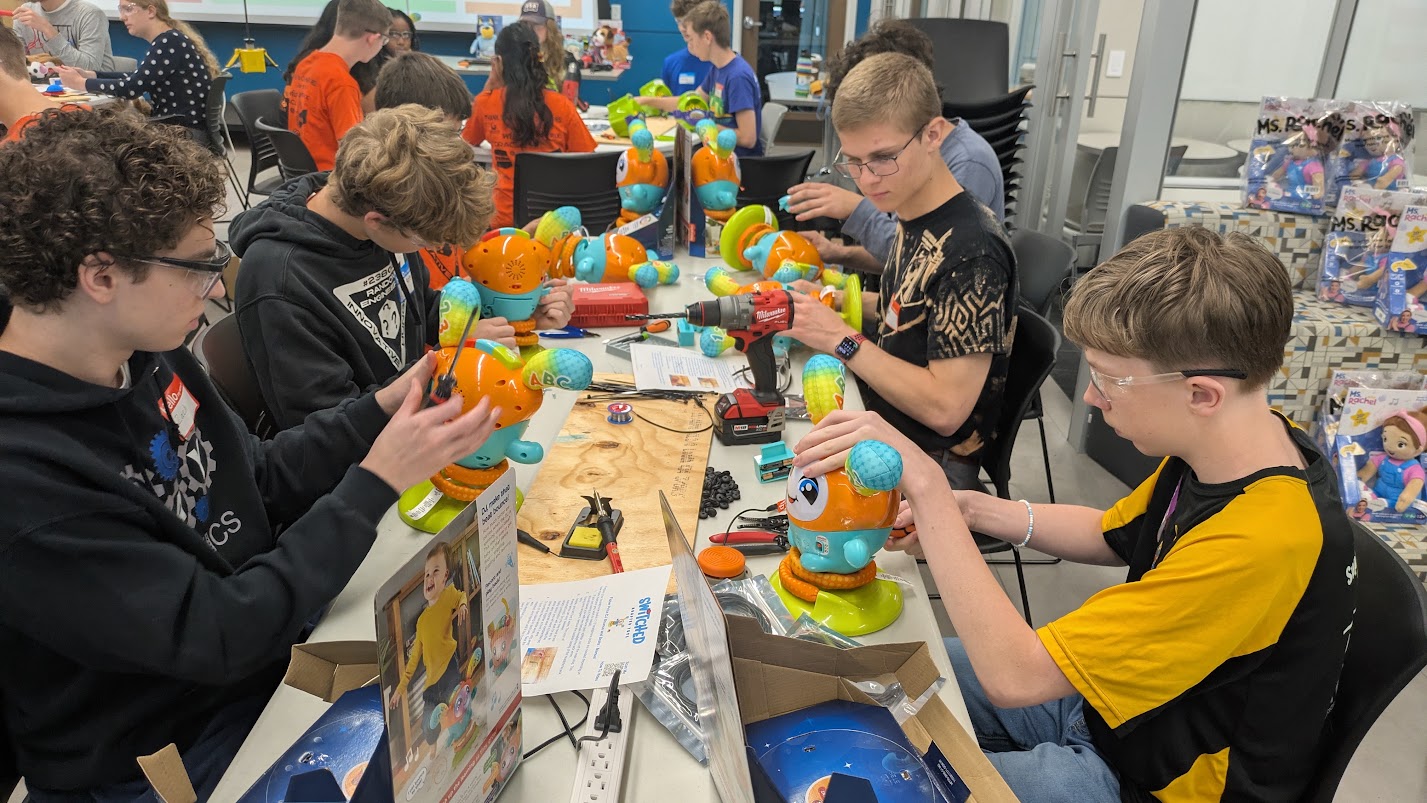
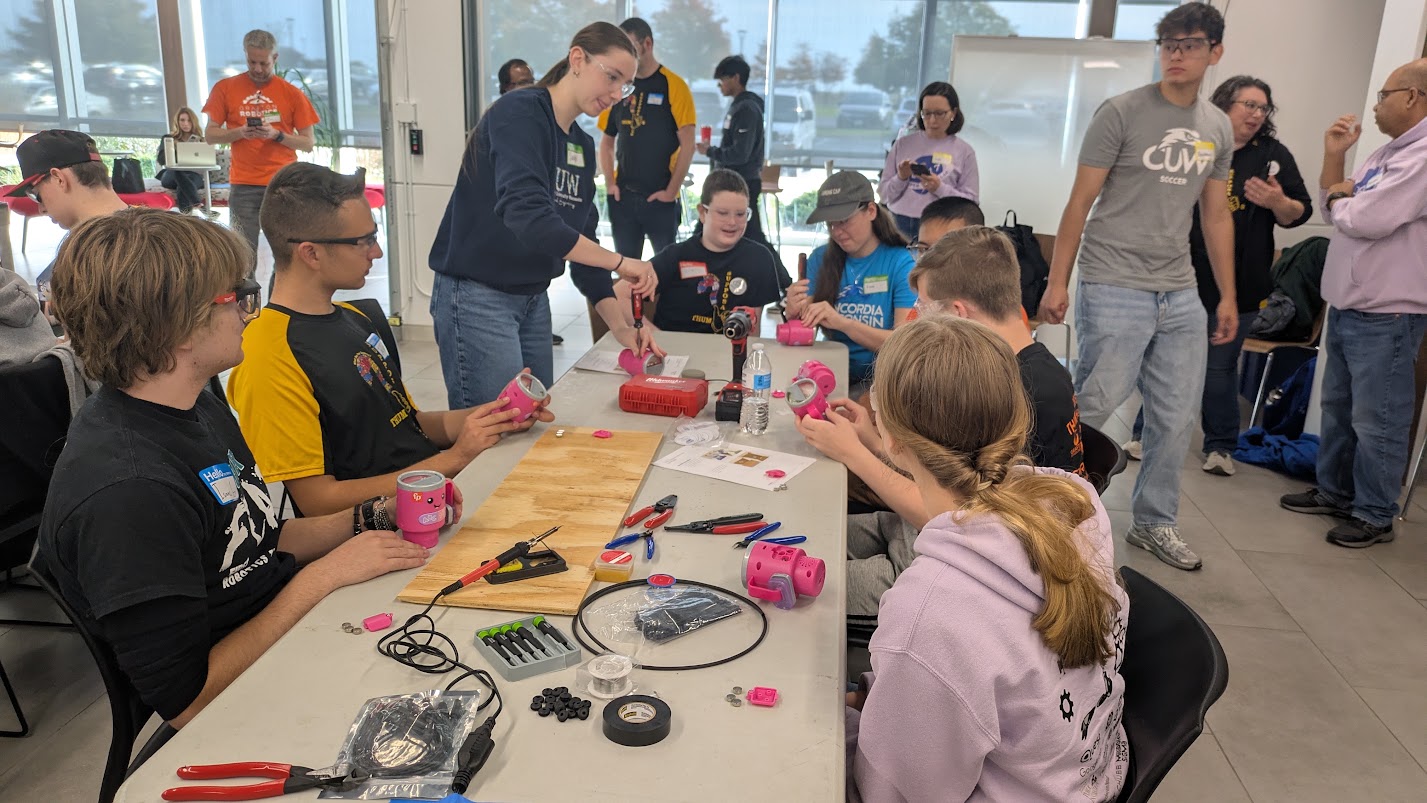
That’s where adaptive toy build days come in. Volunteers open commercially available toys, locate their activation circuits and add connections for external buttons. These modifications allow children to activate the toys independently, using larger buttons that are easier to press based on their physical abilities.
The process requires students to have patience and attention to detail. They must identify the appropriate wiring, solder new connections and secure them before reassembling each toy. A final test ensures the toys’ existing features and new adaptations work safely.
This event marked a milestone in Concordia’s growing involvement with Inclusive Play: Toys for All, an initiative developed through Penfield Children’s Center and Marquette University’s Opus College of Engineering.
Students leading students
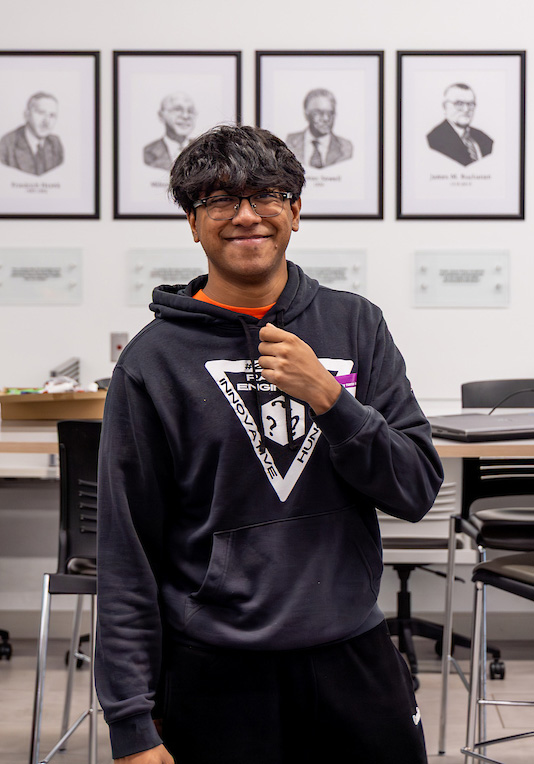
Grafton High School senior Shaunak Chaudhuri was one of four student organizers behind CUW’s first adaptive toy build day.
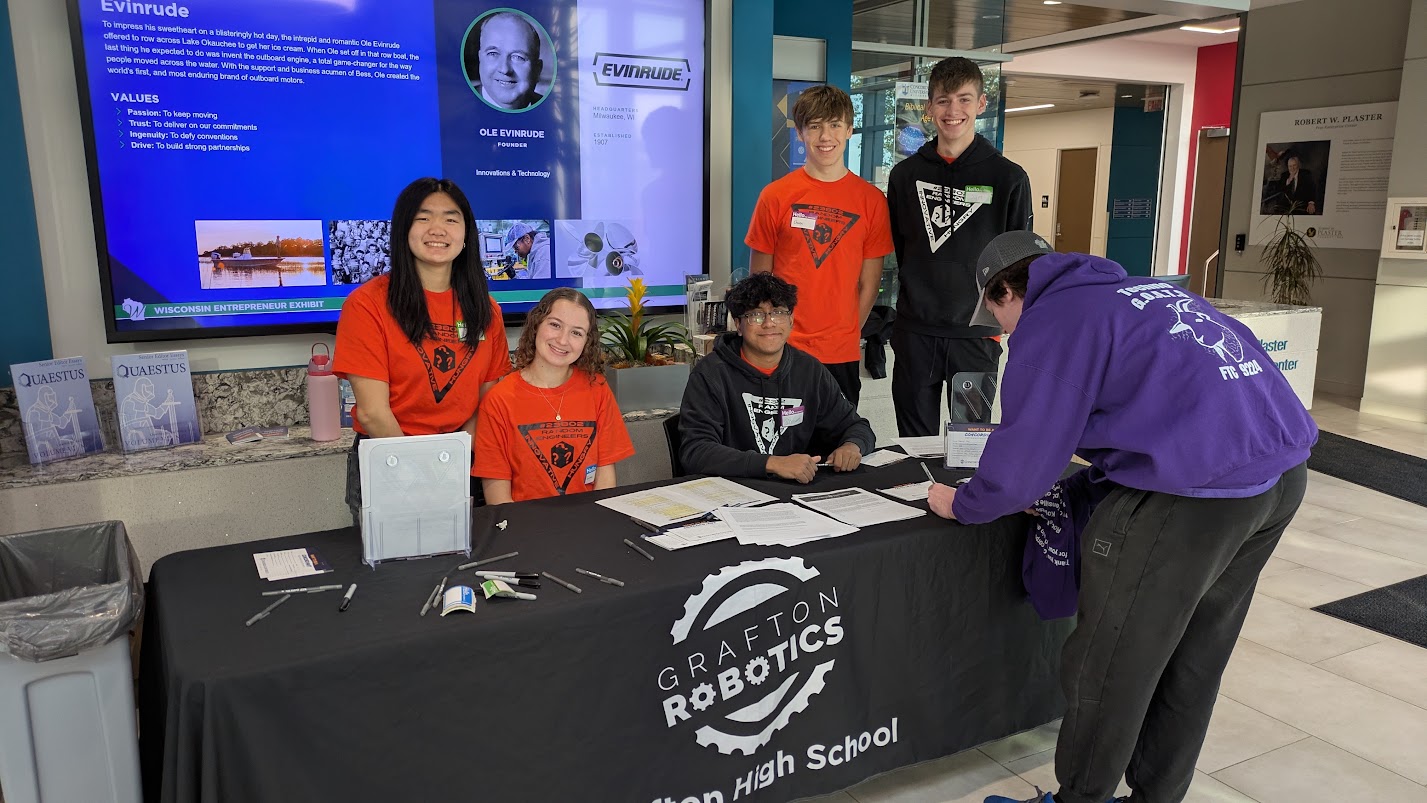
CUW engineering students Lucas Kearney and Evan Delvaux joined forces with Grafton High School seniors Shaunak Chaudhuri and Libbie Coleman, members of the Random Engineers robotics team, to organize the event. Together, they coordinated logistics, supplies, volunteers and participation from area high schools.
Kearney said the experience reinforced the importance of using one’s education and skills to serve others, even when challenges arise. “Solving problems to be of service of others is the real purpose to our education and skill development,” he said.
Delvaux found it rewarding to see months of planning come together as high school students adapted toys. “Seeing that many people give their Saturday to build something for someone else is what stood out most to me,” he said.
Chaudhuri enjoyed meeting students from different schools and backgrounds while putting his communication and leadership skills to work encouraging participation. “Though I’m on the business and marketing team, I can still use my strengths to make a difference!” he said.
High school robotics students from eight area teams had an opportunity to put their technical skills to work helping others. Participants came from Grafton, Whitefish Bay, Elm Grove, Mequon and Nicolet, as well as Heritage Christian and homeschool programs. Four students from Sheboygan Lutheran also participated.
Katie Eippert, an academic advisor in CUW’s Office of Undergraduate Advising who works with Grafton’s Random Engineers robotics team, helped connect the high school robotics community with Concordia. Kumpaty praised her involvement, recognizing the enthusiasm and connections she brought to the event.
“My team had so much fun working with the Concordia engineering students, and it was an incredible cause as well!” she shared afterward. “So cool to see all the toys created!”
A shared purpose
Concordia’s involvement began in 2023, when Kumpaty connected with Vladimir Bjelic, a speech-language pathologist at Penfield Children’s Center, through CUW professor Yiming Liao. Kearney, then a pre-engineering student, was also involved in the early efforts. Engineering students soon began designing and 3D printing adaptive buttons. They also participated in Inclusive Play: Toys for All build days at Marquette University in 2024 and 2025.
The project continued to grow. Students explored alternative designs during the 2024-25 academic year, and Delvaux received additional training in summer 2025. Concordia donated 50 adaptive buttons to Penfield in April 2026.
Seeing those early efforts come together at this event was a dream come true for Kumpaty. During his opening remarks, he drew from Isaiah 55, reflecting on God’s invitation to be a blessing to others and the assurance that His Word accomplishes its purpose. The passage also speaks of going out in joy and being led forth in peace, a message that resonated with Kumpaty as he watched his students guide high school participants through the builds.
The day also provided opportunities to connect beyond the workstations. Participants enjoyed conversations over lunch, and Tim Meyer, chief organizational officer of the Student Government Association, stopped by to see the work firsthand, expressing appreciation and continued support for the project.
Afterward, Kumpaty described feeling overwhelmed with joy and gratitude to God as he reflected on how far the effort had come. “What a remarkable way God used you to lead the teams and complete the builds safely,” he wrote to the student leaders. “You are terrific and I thank God for you.”
All photos, excluding the gallery, were taken by Jason Smith.
More than a day’s work
Bjelic, who works primarily with young children through Milwaukee County’s Birth to 3 Program, knows what these adaptations can mean for families. Imagine watching your child activate a toy on their own for the first time. That simple action can help them understand cause and effect, encourage communication and create new opportunities to play with others.
Recognizing what a toy can mean to a child gave the day’s work a deeper purpose. Volunteers also gained insight into inclusive design and how engineering decisions can affect someone’s ability to participate in everyday activities.
Support came from across campus and beyond. CUW’s Student Government Association funded toy purchases through the Concordia Engineering Network. The engineering department helped secure supplies and accessories, while Milwaukee Tool provided many of the tools used at the workstations.
Although the event has ended, the most rewarding moments are still to come. Each adaptation has the potential to give a child greater independence, whether that means activating a favorite song, making a toy move or playing alongside a sibling. Sometimes, simply seeing a child smile is all the encouragement needed to keep going.
Kumpaty has summed up the purpose behind Concordia’s involvement in a few simple words: “Even if one child has benefited, it’s worth it.”
Want in?
Concordia University Wisconsin is a Lutheran higher education community committed to helping students develop in mind, body and spirit for service to Christ in the Church and the world.
A newly dedicated space honors the former LCMS South Wisconsin District president and his lifelong commitment to theological education, faithful leadership and service to Christ’s Church.
Members of the Concordia University Wisconsin community gathered Monday, Oct. 19, to dedicate the Rev. Dr. John C. Wille Conference Room, honoring the life and legacy of a faithful servant of the Lutheran Church-Missouri Synod.
Formerly known as the Lakeview Conference Room, the newly named space honors Wille, who served as president of the LCMS South Wisconsin District until his death in 2024.
The dedication and improvements to the conference room were made possible through a generous gift from the Walter C. Dissen Charitable Trust in Wille’s memory.
The ceremony brought together university leaders, theology faculty, pre-seminary students, district leadership and friends to remember Wille’s legacy and give thanks for his faithful service.
Campus Pastor Rev. Jonathon Bakker opened the ceremony with Scripture and prayer, asking God’s blessing upon the room and all who will use it.
Concordia President Dr. Erik Ankerberg reflected on the significance of theology at CUW and its role in preparing students for lives of service.
“At Concordia University Wisconsin, theology holds a special place in the life of our university. It is not simply one discipline among many. It helps give shape to our mission,” Ankerberg said. “It reminds us who we are, whose we are, and why this work matters.”
Ankerberg emphasized that theological formation helps students understand their lives through the lens of vocation, recognizing their gifts and callings as opportunities to love and serve their neighbors.
“It is especially fitting that this room bear the name of Rev. Dr. John Wille,” Ankerberg said. “His life and ministry have reflected a deep love for the Gospel, for theological education, and for the work of forming servants for Christ’s Church.”
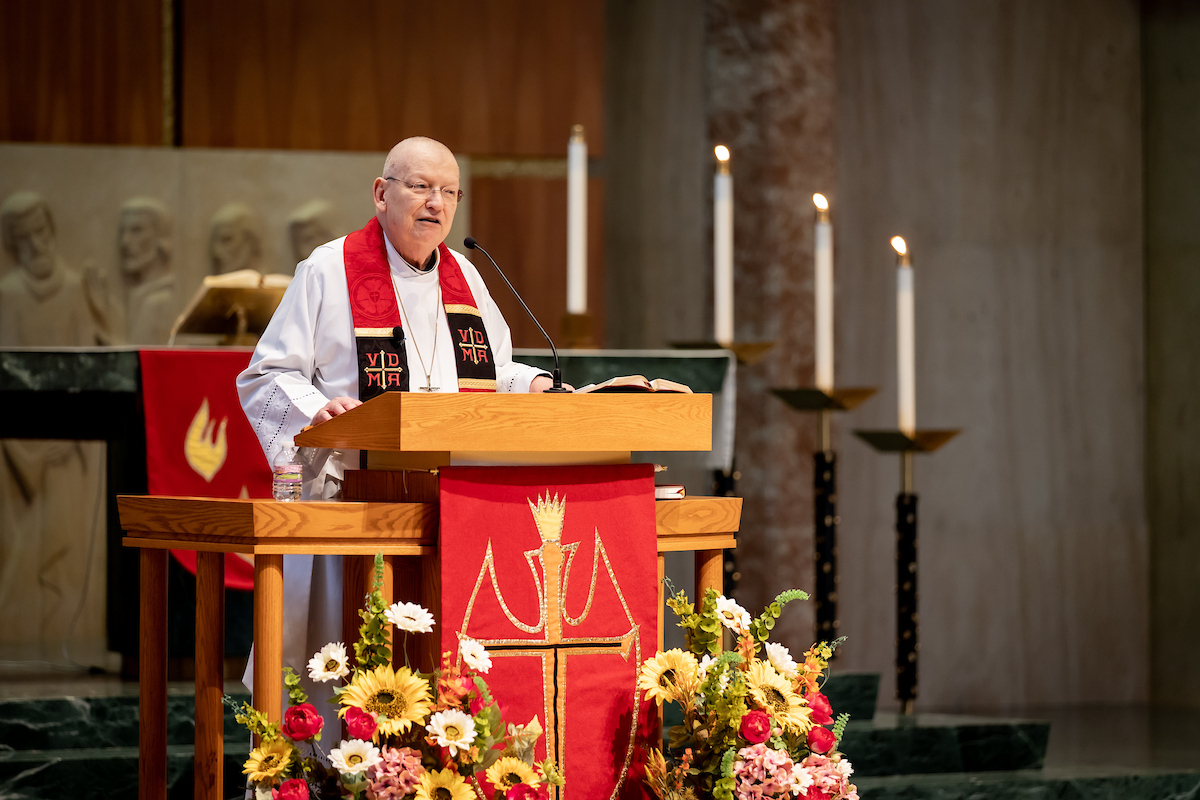
Rev. Dr. John C. Wille in the Chapel of Christ Triumphant.
A legacy of faithful leadership
Wille’s life was marked by decades of service to the LCMS, theological education and the preparation of future church workers.
His leadership extended throughout the Synod. In addition to serving as district president, Wille served on the LCMS Council of Presidents; the boards of regents for Concordia Seminary, St. Louis, and Concordia University Wisconsin and Ann Arbor; and numerous other district and Synod boards and committees.
In 2009, CUW recognized Wille’s contributions to the Church and Lutheran higher education by awarding him an honorary Doctor of Divinity degree.
Rev. Dr. Nathan Meador, current president of the LCMS South Wisconsin District and a 1992 CUW graduate, shared reflections on Wille’s character and leadership during the dedication.
With a touch of humor, Meador noted the irony of naming a conference room after a man who disliked meetings. But behind that observation was a recognition of Wille’s tenacity, a defining part of his legacy and his steadfast commitment to serving the Church.
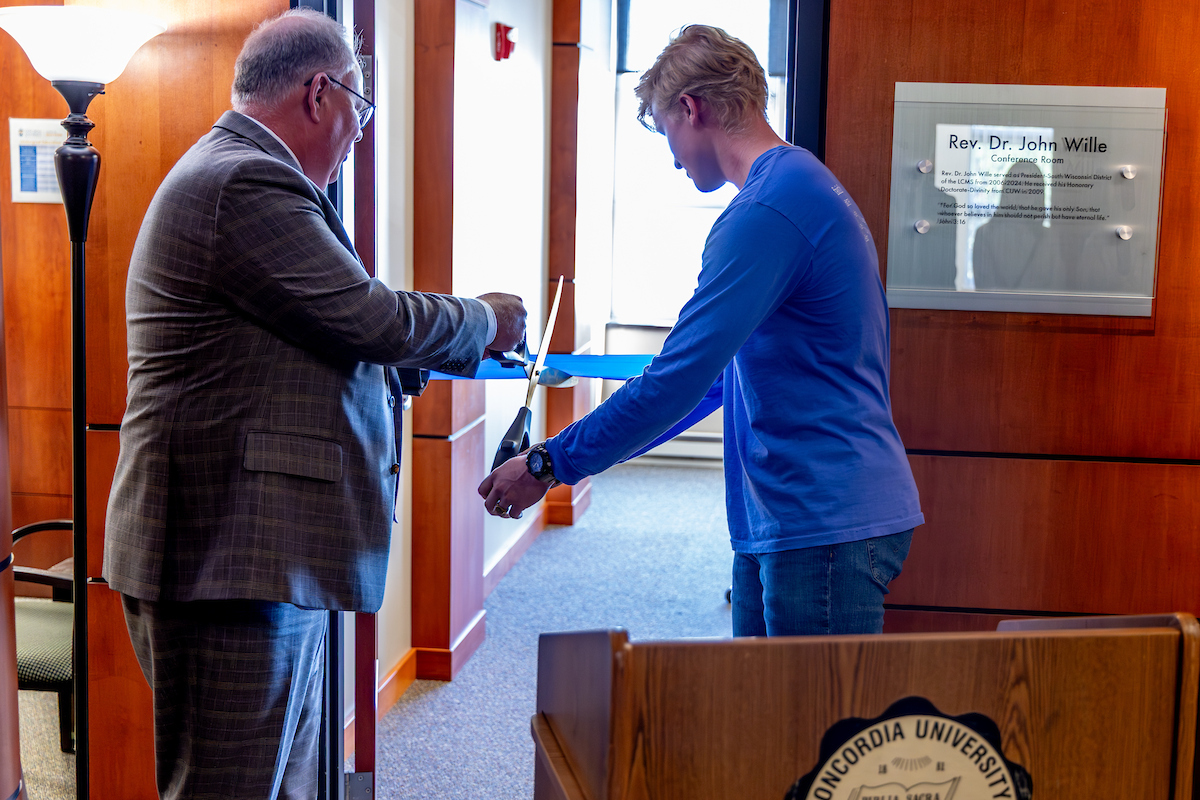
President Dr. Erik Ankerberg and student Quinn Miller cut the ribbon during the Rev. Dr. John C. Wille Conference Room dedication.
Preparing the next generation for service
The dedication also provided an opportunity to celebrate the students preparing to carry forward the work of the Church.
Quinn Miller, a junior studying philosophy and theological languages, and president of Concordia’s Pre-Seminary Student Association (PSSA), shared reflections on his experience at CUW.
Miller spoke about the relationship between the active and contemplative life, describing how his studies, vocations and experiences have helped shape his preparation for ministry.
He highlighted opportunities to grow through seminary visits, conferences, mission trips, internships and the guidance of Concordia’s professors and teachers.
Miller also expressed gratitude to the donors whose generosity supports theological education and helps prepare future servants of the Church.
Following the remarks, Miller joined Ankerberg for a ceremonial ribbon cutting, using scissors to officially mark the dedication of the newly named conference room.
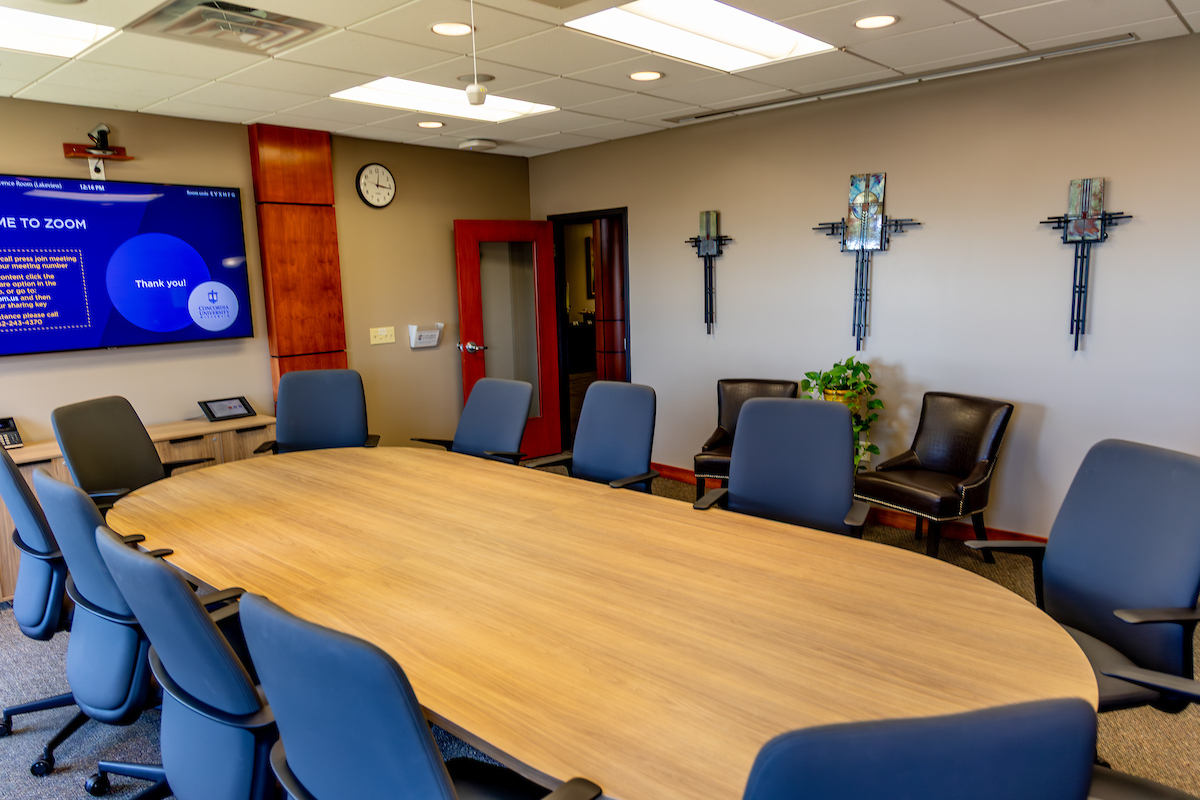
The Rev. Dr. John C. Wille Conference Room.
A renewed space with a lasting purpose
The Rev. Dr. John C. Wille Conference Room has received several updates through the generosity of the Walter C. Dissen Charitable Trust, including new tables, chairs, window treatments and permanent signage recognizing its namesake.
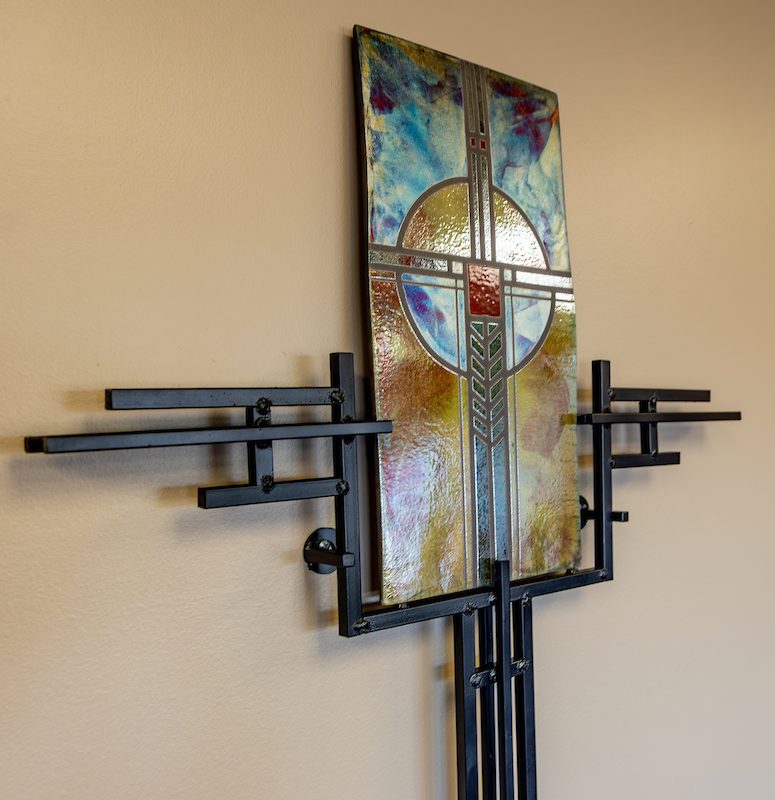
Just inside the conference room, visitors will encounter a distinctive work of art created by Jeff Shawhan, associate professor in Concordia’s School of Arts and Sciences and director of the Art Gallery on campus. The installation features three ironwork discs with a cross motif, displayed along the curved wall near the room’s entrances.
The artwork serves as a visual reminder of the Christian faith that grounds Concordia’s mission and the purpose of the space it now adorns.
Together, these improvements create a welcoming gathering place for faculty, staff, students and university guests while honoring a life devoted to Christ and His Church.
The dedication concluded with prayer and fellowship, offering guests an opportunity to share memories and reflect on Wille’s enduring influence.
As the Concordia community looks toward the future, the Rev. Dr. John C. Wille Conference Room will serve as a lasting reminder of faithful leadership, generosity and the university’s calling to prepare students for lives of service.
As Ankerberg shared:
“May the conversations that happen here be thoughtful and faithful. May the work done here serve the Church well. And may Christ be honored in all that is said and done within these walls.”
Want in?
Concordia University Wisconsin is a Lutheran higher education community committed to helping students develop in mind, body and spirit for service to Christ in the Church and the world.
Design and athletics may have brought her to Concordia. But the relationships she formed, experiences she gained and faith she developed gave her so much more.
It doesn’t take much for alumna Jessi Alexander (’23) to recognize how her time at Concordia University Wisconsin helped shape who she has become today, both professionally and as a child of God.
“I’m absolutely honored,” Alexander said. “I never could have imagined something like this coming from simply showing up each day and trying to do my best.” Alexander was quick to acknowledge the recognition wasn’t hers alone.
“It’s hard to look at an award that I’ve received and not see all the people who are also standing behind it,” she continued. “It’s truly not me. It’s God first and foremost, but it’s also the community and fellowship that we have in this industry.” She acknowledged that much of the industry is about who you know and the people willing to encourage you along the way.
“I have a million amazing people behind me who have pushed me to try different things and made me comfortable enough to spread my wings,” she said.
Alexander’s story begins with creativity and curiosity. By her junior and senior years of high school, she knew she wanted to be involved in design and architecture. She loved playing sandbox-style video games where she could move around, try new things and just build. What started as a hobby became a passion and eventually a stepping stone toward her calling.
“I loved them so much,” she said with a chuckle. “I was like, ‘I just want to keep designing things.’ It sounds silly, but games like The Sims or Minecraft—truly, that’s what I loved.” That same feeling of getting lost in a project, where it can be hard to come up for air because you’re so engulfed in the work, followed her into 3D design and digital drafting programs like SketchUp, Revit and AutoCAD.
“You’re working with forms and shapes and models,” Alexander said. “You get to tinker around, and you truly can get lost in it.”
Strength beyond the mat
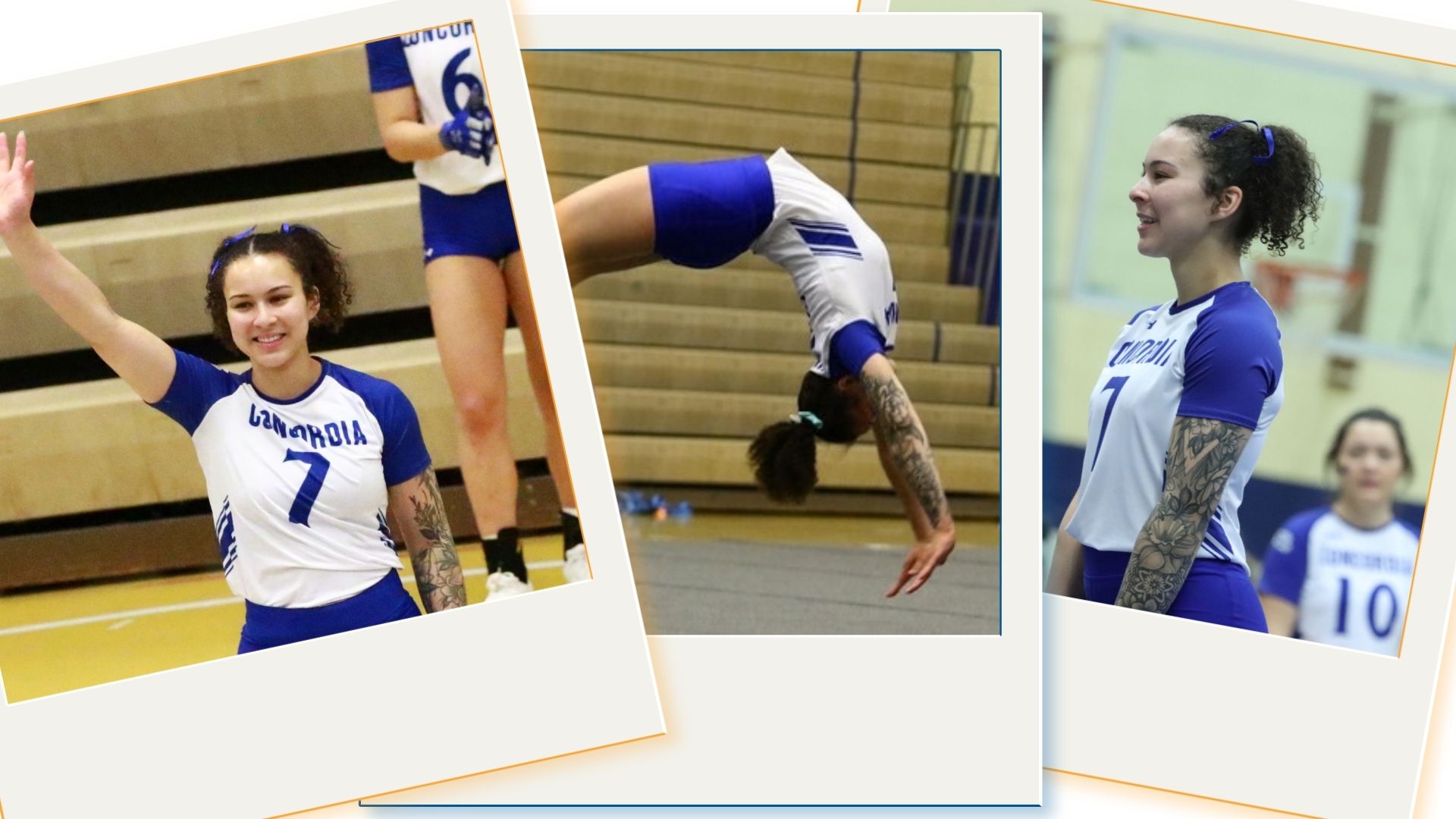
Growing up in Plainfield, Illinois, Alexander was also a high school cheerleader who earned multiple regional and national titles while maintaining honor-roll status. When it came time for college, she sought a place where she could pursue design while being recognized for her strength and technical ability as an acrobat.
CUW offered her both. Alexander joined the university’s acrobatics and tumbling team, which was a major draw in her decision to attend Concordia. Being part of an athletic team helped her with time management, problem-solving, collaboration and building stronger relationships with people.
“Those skills have carried directly into my professional life,” Alexander said. “No matter where you go or what career you might pursue, you’re going to have to work with other people. You’re going to have to communicate. You’re going to have to manage your priorities and solve problems.”
During her senior season at CUW, Alexander competed in eight meets and helped the Falcons earn a Division III national event title in the 450 salto toss, a skill in which athletes launch a teammate into the air to perform a rotation before catching her.
The best of both worlds
Athletics was only one part of what drew Alexander to Concordia. She also wanted a traditional college experience without giving up her passion for design. CUW’s Interior Architecture and Design program, offered in partnership with the Milwaukee Institute of Art and Design (MIAD), gave her what she described as “the best of both worlds.”
“I got to have that well-rounded balance of Concordia with the incredible design program that MIAD offered,” Alexander said. Along the way, she found friends and professors who would influence her life well beyond graduation and was introduced to a faith that would become increasingly important to her.
“A friend of mine at Concordia invited me to church time and time again, and I turned them down every single time until I finally decided to go,” she said. “I found a community of believers that were the most welcoming, down-to-earth people that I have ever met in my life.” Today, Alexander continues to grow in her faith and is actively involved with her church.
One CUW professor and mentor who stands out in particular is Theresa Kenney, PhD, who played an instrumental role in Alexander’s college experience. “She absolutely poured so much love into me and into my fellow students,” Alexander said. “You could tell that she really breathed life into my artwork and creative process, and gave me plenty of room to grow.”
Having that steady person throughout all four years meant a lot to her. “I remember being so nervous walking into her class freshman year. She really helped me feel more comfortable. Then fast forward to graduation day, one of the flowers on my cap started falling off, and she was right there to help me glue it back on,” she said.
Kenney remembers Alexander vividly and how her presence helped guide those around her. “Jessi is the kind of student every professor hopes for. Throughout her time at CUW, she combined exceptional talent with genuine kindness, always meeting deadlines and always ready to help a classmate.”
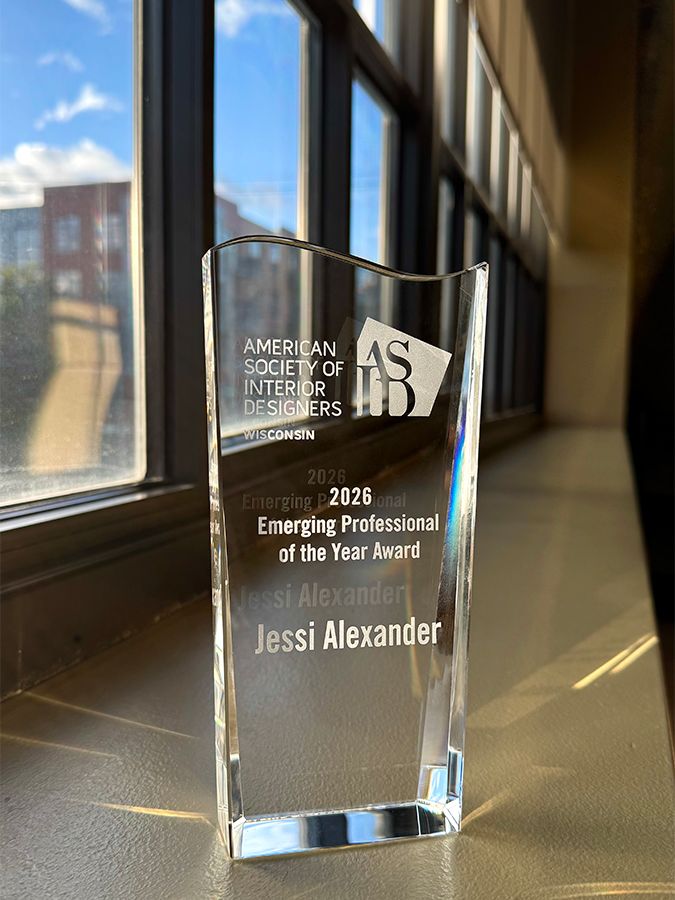
Regardless of the medium, Alexander lifted up those around her while producing outstanding work of her own, according to Kenney. She believes the recognition from ASID is well deserved. “I can’t wait to see the spaces she creates and the designers she inspires next.”
Another professor who was instrumental in shaping Alexander’s future was the late Rev. Dr. Daniel Paavola. His influence extended far beyond the classroom, helping shape her faith as well.
“Dr. Paavola’s influence on both my education and my faith has left me with an appreciation for not only what he taught, but the way he taught it,” Alexander said. “His passion, teaching style, and genuine ability to connect with anyone he met made a lasting impression on me. He was truly a once in a lifetime kind of person. It’s hard to put into words just how much of an impact he had.”
While keeping up with her academics, Alexander was named to the National Collegiate Acrobatics & Tumbling Association (NCATA) Academic Honor Roll multiple years, received Concordia’s Visual Arts Award and landed an internship with La Macchia Group, a design-build firm specializing in banks and credit unions.
Finding fulfillment all around her
Much of what Alexander learned at CUW and MIAD has carried directly into her professional life. One skill she developed that proved especially useful was learning how to confidently present her work and ideas to colleagues.
“I think that is a very underrated part of studying in this profession,” she said. “How you present yourself and your ideas and your projects can make a world of difference in how someone is interpreting them. You can have a great design, but knowing how to communicate it and present it confidently is just as important.”
Alexander first joined La Macchia Group as an intern while still a student and transitioned into a full-time role after graduating. “I’m truly fulfilled by the work that I do here,” she said. “That is something I’ve been holding on to because it’s just not something everyone gets to say.”
Professionally, Alexander has her sights set on ASID Wisconsin’s Design Excellence Awards, where she will be submittingsome of her own projects for consideration. Personally, she recently got engaged. And spiritually, she plans to continue serving at her church, Rise MKE.
Overall, she has found herself exactly where she wants to be. The Concordia-MIAD program brought her to an area rich in art and design, while introducing her to the people, opportunities and community she calls home.
Now, just a few years into her career, she gets to do work she loves in the city she has a hand in designing. “I love what I do, I love who I do it with, and I love who I do it for,” Alexander said.
Want in?
Concordia University Wisconsin is a Lutheran higher education community committed to helping students develop in mind, body and spirit for service to Christ in the Church and the world.
Annual workshop connects future church workers with experienced ministry leaders for practical wisdom, mentorship and encouragement
What does it really look like to serve in the Church? For students preparing for lives of ministry, some of the most valuable lessons come from those already doing the work.
On Thursday, Oct. 15, Concordia University Wisconsin students preparing for careers in church ministry gathered with experienced church workers for the annual Parish Professionals Workshop at the Concordia Center for Environmental Stewardship on campus.
Held each October, the workshop brings together Concordia students and called church workers, including teachers, deaconesses, directors of Church Ministries (DCMs) and directors of Christian Education (DCEs). The gathering offers an opportunity to explore the realities of ministry, ask questions and build relationships with those already serving Christ and His Church.
“The idea is that the people out there (the Parish Professionals), working in the church as our students aspire to do, will offer practical wisdom on the practice of it,” said Rev. Dr. Kurt Taylor, professor of theology and director of Church Ministries at CUW.
Rev. Dr. John Oberdeck, a 1972 alumnus and former professor at Concordia, shared information at the workshop about burn out and how to avoid it.
Learning from those who have been there
The morning began with chapel before transitioning into presentations addressing burnout, church hurt and ministering in a changing world.
Nicole Dollevoet, a 2000 CUW graduate who studied lay ministry and theology, helped organize and facilitate the event. She serves as director of Church Ministries and youth director at St. Paul Lutheran Church in Sheboygan Falls, Wis., and is a member of the Parish Professionals group.
For Dollevoet, connecting experienced church workers with students is a natural partnership.
“It just makes sense. You have Parish Pros that meet monthly, and you have a university in our backyard. The idea of mentoring is a natural one!”
The workshop also featured small-group conversations in which students rotated among parish professionals to discuss practical ministry topics, including youth ministry, confirmation instruction, fundraising, congregational communication and supporting pastors.
Lucy Meyer, a CUW sophomore in the Director of Church Ministries program, appreciated the opportunity to ask questions and learn from those already serving in congregations.
“Connecting with people who are already in ministry is so special and helpful. They have so much wisdom to pass on and are so willing to help us learn and grow. They show so much humility and true care for us. It is such a blessing to be able to learn from them.”
Adam Homann
Honest conversations about church work
CUW senior Adam Homann, a theology major with a Director of Church Ministries minor, said the workshop has been a valuable experience throughout his time at Concordia.
“I have been at every one of the Parish Pros events from the start of them my freshman year at CUW. They have been really great to connect with people and hear the ‘real life’ stories that are maybe more on the ‘ugly side’ of ministry and how to deal with them in the best way possible.”
Those honest conversations help students understand that church work brings challenges as well as opportunities to share the Gospel.
Dollevoet, who has served in ministry for 26 years, hopes students leave knowing they do not have to navigate those challenges alone.
“I think a big take away of my 26 years in ministry is, you are not in it alone! Church work is not your average 9-5 job. We work weird hours and the only people that ‘get it’ are other church workers. It is important for our students to know that wherever God calls you, (you should) find people that can support you.”
Steve Wilson, a 2003 Concordia University Ann Arbor graduate who studied psychology and religious studies, shares that perspective. Wilson serves as director of NextGen Ministry at Hales Corners Lutheran Church and is a member of the Parish Professionals group.
“Often in ministry, it can be lonely. Finding people you can connect with in ministry outside your own congregation is important. It gives you a place to share frustrations, new ideas, struggles and joys.”
Grace Sugg, ’24, (left) and Savannah Henn, ’22, came back to Concordia to help church work students learn more about a career in church ministries.
From Concordia students to ministry mentors
For Savannah Henn and Grace Sugg, the workshop offered an opportunity to return to Concordia in a different role, sharing what they have learned since entering professional ministry.
Henn, a 2022 CUW graduate of the Director of Church Ministries program, now serves as director of Children and Family Ministry at St. Paul Lutheran Church in Sheboygan Falls.
“It is so exciting to see so many young men and women preparing to answer God’s call to ministry. I remember being in their shoes and looking to DCMs serving in the field for guidance and encouragement. It is a blessing to now be in a different role and have the opportunity to mentor and encourage these future church workers as they prepare to serve God and His people.”
Henn credits her Concordia education with helping her develop the relationships, knowledge and practical skills she uses in her ministry. Her experiences since graduation have also reinforced the importance of building relationships throughout a congregation.
“My advice to DCM students would be to prioritize relationships,” she said. “Some of the greatest support you will find in your congregation comes from the people you serve alongside and the parishioners who surround you. Step outside your comfort zone and connect with people throughout the entire church, not just the ministry area you serve in.”
Sugg, a 2024 CUW graduate of the Director of Church Ministries program, serves as community engagement officer and administrator for A Place of Refuge Ministries in Milwaukee. Returning to campus gave her an opportunity to reflect on the mentors who helped shape her own preparation for ministry.
“While I know he would hate me saying this, one of the most influential and equipping parts of my DCM experience was having a relationship with Dr. Kurt Taylor. Not only did he teach the curriculum in class, he shared his faith, love of his family, personal experiences and testimonies, flaws, everything with us DCMs. It is through his service to the Lord and his stewardship of us students that I learned relationship building and servant leadership.”
Sugg said the lessons she learned about servant leadership continue to influence her work. She recalled Taylor emphasizing that no church leader is above even the smallest acts of service, an approach that has stayed with her throughout her ministry experiences.
Reflecting on the students she met at the workshop, Sugg encouraged them to recognize that serving Christ does not begin only after graduation.
“Notice the ways He is already working through you right now,” she said. “Being God’s hands and feet doesn’t just start when you have a DCM degree!”
Lucy Meyer
Different callings, one mission
For Meyer and Homann, the workshop offered encouragement as they prepare to serve the Church in different ways.
Meyer grew up involved in congregational life and LCMS youth ministry opportunities, experiences that helped inspire her interest in professional church work. At Concordia, she has continued growing through Bible studies, campus worship, ministry activities and faculty mentorship.
“I am excited to be able to teach others about what Christ has done for them,” she said. “I look forward to making connections with people in my congregation and showing them the love and compassion of Christ. I hope that in all that I do, I am able to reflect the love of Christ.”
Homann hopes to pursue camp ministry, a calling that took shape during his first summer as a counselor at Camp CILCA. At CUW, he has developed leadership skills through his involvement with BUILD (Brothers United In Life and Devotion), a campus ministry where he has served as a coordinator.
“While my goal is to be in a camp setting, the church and camp, when they work together, can be an extremely powerful duo of ministry.”
The workshop also held personal significance for Wilson, whose son, James, is a CUW senior majoring in family life and planning to attend seminary next fall.
“We talked after the event about the importance of connecting with other workers,” Wilson said. “I will always be there to talk with him about life and ministry, but I believe it is so important to have other mentors and people that are not your family to get other perspectives. Watching him build those relationships and become his own man is a blessing to me.”
Preparing the next generation to serve
The workshop concluded with lunch, allowing students and parish professionals to continue conversations and strengthen the relationships formed throughout the morning.
For Dollevoet, the purpose of preparing future church workers ultimately comes back to the message they are called to share.
“Our message of Christ is more important now than ever,” Dollevoet said. “We have a changeless message to get out to an ever-changing world.”
Through the annual Parish Professionals Workshop, Concordia connects classroom learning with the experiences of those serving in the field, encouraging students as they prepare to share Christ’s love through their own vocations.
Want in?
Concordia University Wisconsin is a Lutheran higher education community committed to helping students develop in mind, body and spirit for service to Christ in the Church and the world.
Listening to students is an important part of serving them well.
This fall, Concordia reviewed results from the Ruffalo Noel Levitz student satisfaction surveys, gathering feedback from traditional undergraduate, face-to-face graduate and online students. The surveys reveal what students value, where they are satisfied and where opportunities exist to improve their experience.
For Elizabeth Polzin, EdD, vice president of Student Success and associate professor of Education, the survey reflects a larger commitment to listening.
“Conducting a student satisfaction survey is one important way Concordia lives out its commitment to students,” Polzin said. “While we interact with students every day in classrooms, residence halls, advising conversations, athletic spaces, Chapel, student activities, etc., a survey gives us a broader and more systematic way to hear from them.”
That listening connects directly to Concordia’s mission.
“Concordia’s mission calls us to care about the whole student,” Polzin said. “Listening to students is one way we honor that mission.”
Listening across the student experience
The analysis included three Ruffalo Noel Levitz instruments that measures both satisfaction and importance, helping identify where student expectations and experiences align or differ. Results are also compared with Council for Christian Colleges & Universities institutions or national benchmarks, depending on the survey.
“Listening directly to students helps us understand not only what is working well, but also where there may be gaps between what students expect and what they experience,” Polzin said. “That perspective is essential if we want to continue improving the student experience in meaningful ways.”
Finding reasons for encouragement
Several findings from CUW’s traditional undergraduate students confirmed the strengths of the Concordia experience.
“It was encouraging to see students affirm that campus feels safe and secure, that instruction in their major field is excellent, and that they are experiencing intellectual growth at CUW,” she said. “Those are foundational pieces of the student experience, and they speak to the quality of our academic community and the care that faculty and staff bring to their work each day.”
Abbey Proctor, a senior studying biology with minors in Spanish and chemistry, has experienced that academic commitment through professors who connect learning with faith.
Abbey Proctor
“The academic programs and faculty at CUW are some of the university’s strongest assets,” she said. “All of my professors have been wonderful, but the most memorable has been Dr. Tom Saleska, who taught general biology my freshman year. Even in a class of 30, he knew each student’s interests and would regularly ask about our activities, even going so far as to collect our favorite jokes and telling one or two each Friday before class.
“He, along with all the other science faculty, demonstrate the importance of the subject matter in our everyday lives and integrate a faith perspective, which has led to some of my most fascinating conversations as a biology student. As a result, I feel that I have not only gained a high level of knowledge in my field, but have learned to think critically across disciplines.”
The survey also affirmed an important aspect of Concordia’s Lutheran identity.
“I was also grateful to see students recognize opportunities for involvement in ministry, which is central to who we are as a Lutheran university,” Polzin said.
Relationships matter
Among traditional undergraduate students, several of the largest gaps compared with CCCU institutions involved relationships and individual support.
Academic advising was prominent, including advisors’ knowledge of major requirements. Other items addressed administrators’ approachability and faculty members’ attention to individual student needs.
Proctor described the personalized support she has received through advising.
“I am an organized and proactive person by nature, so I admittedly have not used CUW’s advising resources as much as other students might have,” she said. “My academic advisor knows this and instead takes a second when we pass in the hall to ask how my classes are going, check if I am registered on time, or see if I have any questions.
“I appreciate the understanding with which the academic and faculty advisors approach their students to tailor course progression, suggest experiences, and offer advice. My faculty advisor, Dr. Michael Young, has been of great help in planning my road to veterinary school, from application advice to encouraging me to take on a second minor.”
While Proctor’s experience demonstrates the value of individualized advising, survey findings point to opportunities to make that support more consistent.
Polzin said students also provided feedback about campus engagement, food access and connections with university leadership.
“We are grateful for that honesty because it helps us take meaningful action,” she said.
Polzin acknowledged that CUW is strengthening advising, adding fresh food options, creating opportunities for campus engagement through the Concordia Community Cup and developing the Presidential Student Representative Program to improve communication with university leaders.
Building connections across campus
For Proctor, student employment and campus involvement have strengthened her sense of belonging.
“Being a student worker helps me feel quite connected to the campus community,” she said. “While I am only involved in one club (the Sustainability Club, which I co-founded last year), my three on-campus jobs keep me busy and foster connections with various departments.
“As a Student Ambassador, I have gotten to know many faculty and staff members as they meet with prospective students and have kept informed on their departments to share more accurate information on tour. Additionally, I work with students in all different majors and have met some of my best friends this way, even though we may have never taken classes together. I am unsure if any one group can do more to help the campus community feel more connected, but I would certainly encourage any student to find a job on campus.”
Her experience illustrates how opportunities beyond the classroom can foster meaningful relationships and a stronger sense of community.
Turning feedback into priorities
Among face-to-face graduate students, some of the largest gaps compared with national institutions involved the ease of processing payments, class scheduling, and convenient food options.
These findings help university leaders identify where improvements could have the greatest impact.
“Feedback like this helps Concordia prioritize,” Polzin said. “There are always many things a university could work on, but student input helps us identify which areas have the greatest impact on students’ sense of belonging, success, and overall experience.
“It also helps us look for patterns rather than isolated concerns. Ultimately, this kind of feedback helps us focus our attention where it can make the most meaningful difference.”
An ongoing conversation
The Ruffalo Noel Levitz surveys offer a snapshot of the student experience, but listening continues beyond the results.
“I would simply add that surveys like this are part of an ongoing conversation,” Polzin said. “They are not a one-time event or a final word.”
Students should understand the importance of their participation. “I would want them (students) to know that their voices matter,” she said. “Concordia is better when students are honest with us about both what they appreciate and what they hope will improve.”
For Concordia, listening is part of serving students as whole people and living out the university’s mission.
“We are grateful to the students who shared their experiences with us,” Polzin said. “Their feedback helps us see Concordia through their eyes. Listening is not separate from our mission; it is part of how we live it out.”
Want in?
Concordia University Wisconsin is a Lutheran higher education community committed to helping students develop in mind, body and spirit for service to Christ in the Church and the world.