CUW Justice Summit confronts tough questions about the future of justice

Faculty, professionals and alumni encouraged students to think deeply about the responsibilities they will carry into their careers and communities.


Before panelists explored artificial intelligence, violence against women, missing persons investigations and the future of justice leadership, Kenneth Harris, PhD, had a question for the room.

With everyone gathered in the Collaboratorium of CUW’s Robert W. Plaster Free Enterprise Center, Harris asked: How can people participate meaningfully in the justice system if they struggle to read or think critically?

The room was quiet. Thank goodness for the complimentary coffee on the back table. It’s an important question, but a heavy one to process at 9 a.m. A wake-up call in more ways than one.

According to Wisconsin Literacy, 1 in 7 Wisconsin adults struggle with low literacy, which can make tasks such as completing forms and following written instructions difficult.

As chair of the Department of Justice and Public Policy, Harris wanted attendees to dig deep and think about what that challenge means for their communities. If people struggle to understand the system, how can they ask questions, weigh information or have a voice in decisions that affect their lives?

Organized by Harris and held Wednesday, Oct. 14, the Justice Summit brought faculty, justice professionals, alumni and students together under the theme “Old Wine in New Bottles: New Challenges Facing the American Justice System.” Members of Beyond a Reasonable Doubt (BARD), CUW’s law and law enforcement club, helped with the event.

Preparing students for those challenges was a focus of Rachel Ware Carlton’s opening remarks. The dean of the School of Arts & Sciences highlighted the “&” in the school’s name, explaining that students need both dimensions to be informed and formed for their future vocations.

President Erik Ankerberg emphasized Concordia’s role in advancing conversations about justice and preparing students to lead with strength and compassion. He encouraged students to listen carefully and consider the kind of leaders the world needs.

Throughout the day, conversations returned to questions of truth, accountability and human dignity.

“Justice Summit 2026 was more than a gathering of professionals; it was an opportunity to exchange ideas, challenge assumptions, inspire future justice leaders, and strengthen the relationships between education and professional practice,” Harris said.
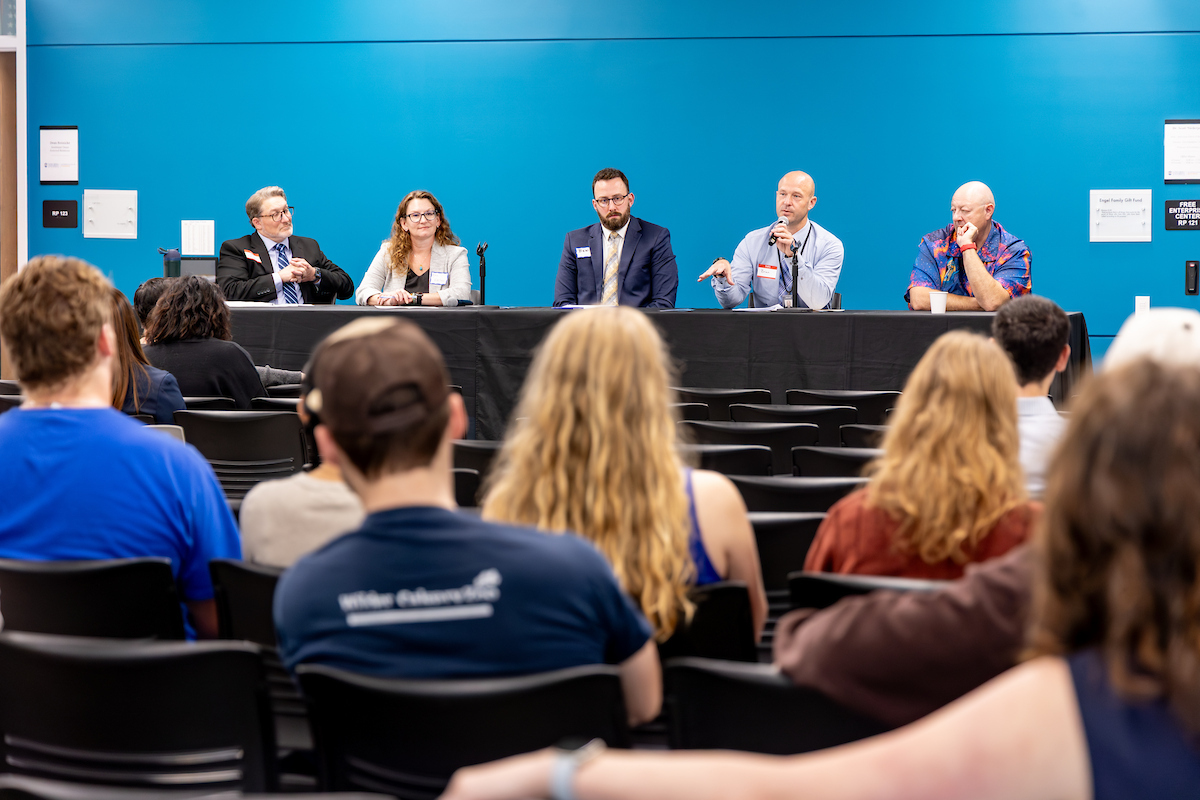

5 panelists at table
From left: Matthew Mac Kelly, JD, EdD, associate professor of justice and public policy; Erin Karshen, an assistant district attorney in Milwaukee County’s Sensitive Crimes Unit; Benjamin Lindsey, Ozaukee County district attorney; Capt. Brian Damon of the Milwaukee Police Department; and Michael Litman, PhD, professor of computer science.

Panel 1: Artificial Intelligence in the Justice System

Artificial intelligence can help investigators analyze information, identify leads and prepare transcripts. But when a decision could change someone’s life, what responsibility must remain with a human being?

The summit’s opening panel explored that question with Michael Litman, PhD, professor of computer science; Matthew Mac Kelly, JD, EdD, associate professor of justice and public policy; Capt. Brian Damon of the Milwaukee Police Department; Benjamin Lindsey, Ozaukee County district attorney; and Erin Karshen, an assistant district attorney in Milwaukee County’s Sensitive Crimes Unit.

Panelists emphasized using AI as a starting point, with people responsible for verifying information. Lindsey explained that an arrest can damage relationships and a person’s standing in the community, making the consequences of inaccurate information significant.

“We must be thoughtful on how we proceed,” he said.

Harris pressed the panel on accountability: Who bears responsibility when these tools contribute to injustice? Mac Kelly acknowledged the difficulty of assigning accountability while emphasizing the shared responsibility of policymakers, educators and justice professionals.

Throughout the discussion, panelists returned to the importance of experience, empathy, integrity and compassion. Using AI responsibly requires professionals who can evaluate its output, recognize its limitations and exercise sound judgment.
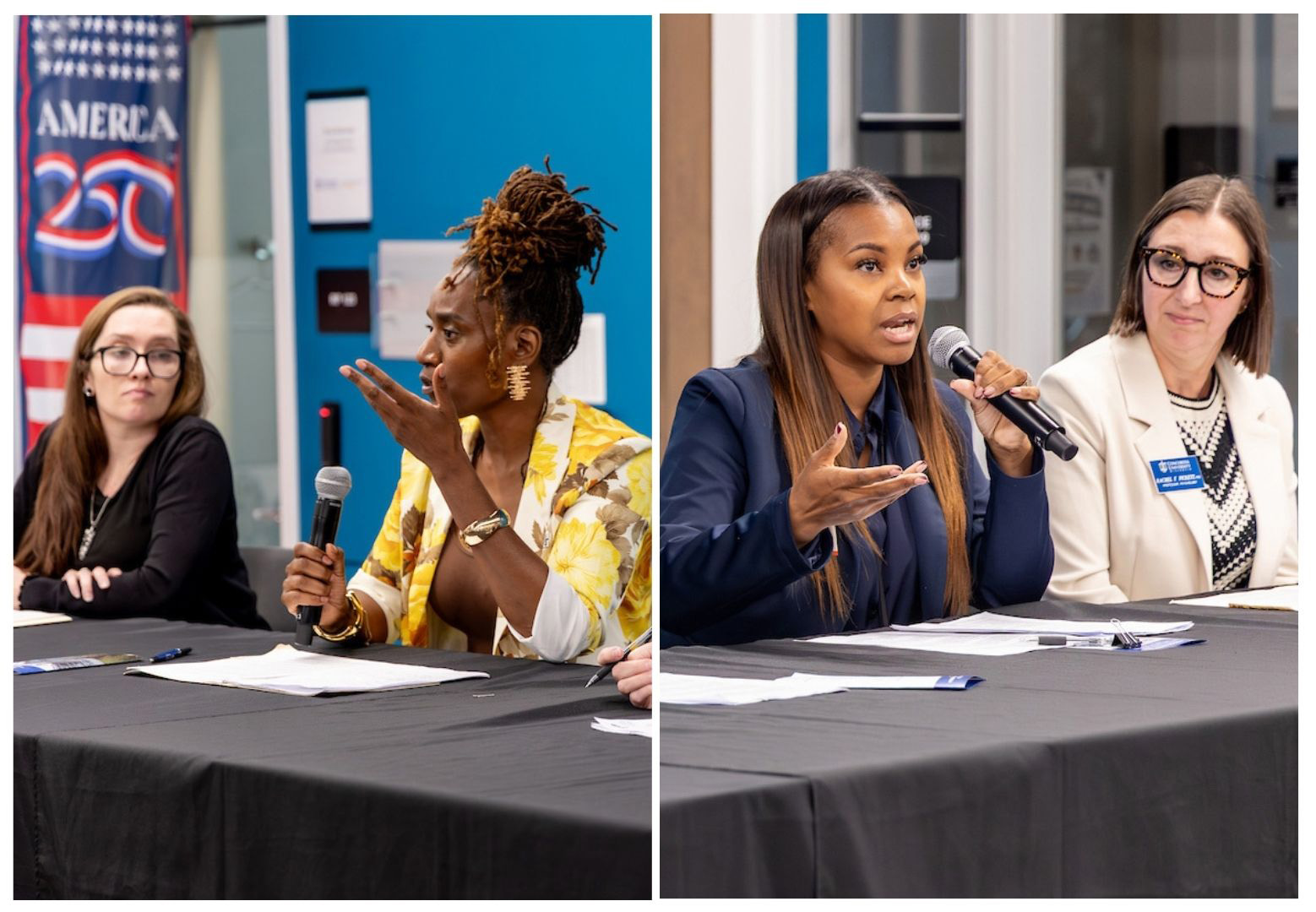

4 women panelists
From left: Jessica Behling, an assistant district attorney in Milwaukee County’s Domestic Violence Unit; Assistant Professor Lisa Adams-Qualls of CUW’s social work program; Milwaukee Police Detective Shirley Thomas-Baldwin; and Rachel Pickett, PhD, chair of CUW’s Department of Psychology.

Panel 2: Violence Against Women

Leaving an abuser can mean losing housing, money or transportation. It can also bring greater danger. During the panel, Rachel Pickett, PhD, chair of CUW’s Department of Psychology, explained that harmful behavior may feel normal to someone who grew up around it, making the need to leave harder to recognize.

Pickett joined assistant professor Lisa Adams-Qualls of CUW’s social work program; Milwaukee Police Detective Shirley Thomas-Baldwin; Maria Rozek, a trauma counselor and victim advocate with the Milwaukee Police Department’s Sensitive Crimes Division; and Jessica Behling, an assistant district attorney in Milwaukee County’s Domestic Violence Unit.
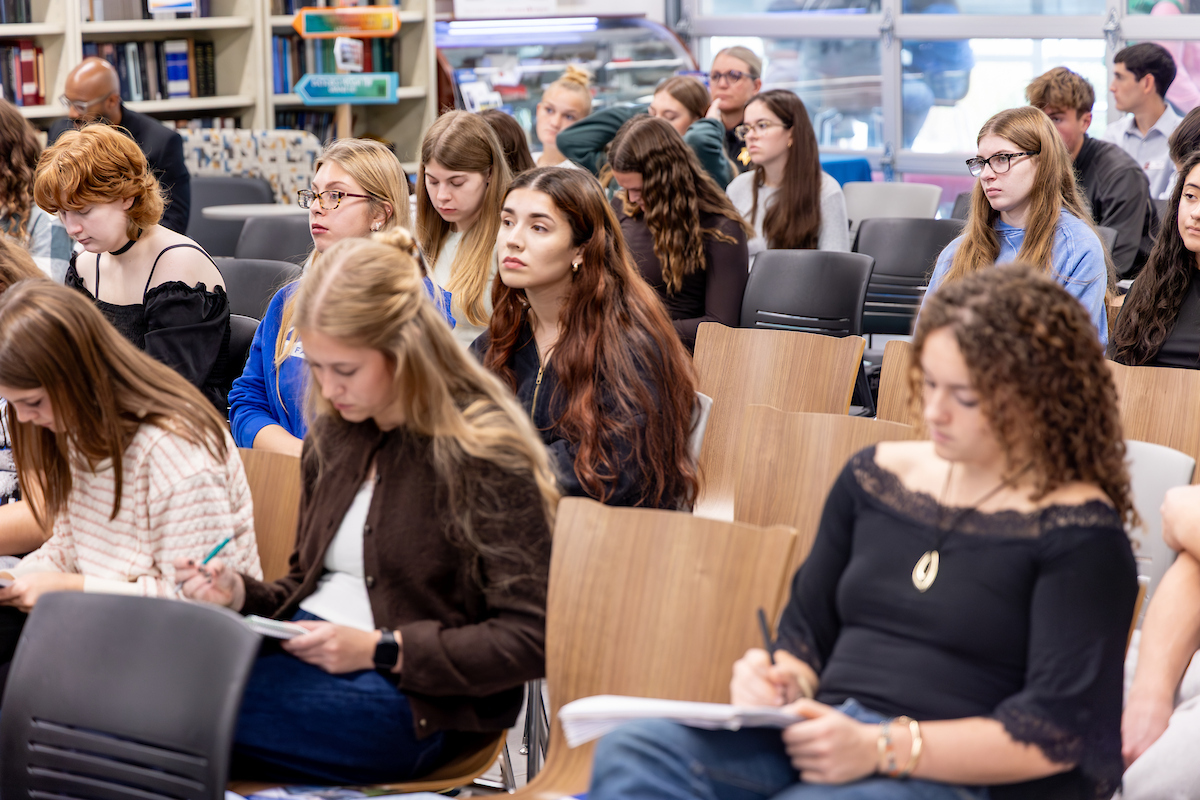
students in crowd

Adams-Qualls explained how financial dependence, shared housing and concerns involving children can complicate leaving. “As a social worker, I understand it is not enough to simply tell someone to leave an abusive relationship,” she said.

Pickett emphasized preparing Concordia students to recognize those practical challenges alongside the emotional toll. “My goal as a psychology professor is to help them understand that as therapists it is important to support survivors’ mental health and safety, as well as their practical needs,” she said. She also noted that judgment or blame after someone discloses abuse can cause further harm.

Harris broadened the conversation by challenging the assumption that victims are always women. Panelists shared examples of men experiencing abuse and discussed how fear of others’ reactions can keep them from seeking help. According to the National Domestic Violence Hotline, citing a 2010 CDC survey, approximately 1 in 4 women and 1 in 7 men in the U.S. have experienced severe physical violence by an intimate partner during their lifetime.

When Harris asked about preventing victimization, Thomas-Baldwin responded: “Speak up!” But as the group acknowledged, that can be easier said than done. Fear can keep someone silent and make investigations more difficult when victims hesitate to participate.

The conversation ultimately returned to prevention.

“Prevention before intervention,” Adams-Qualls said.

She explained that families can model respectful communication, teach boundaries and show children how to handle conflict, while schools reinforce those lessons through age-appropriate education.

Rozek also emphasized that prevention starts with teaching healthy relationships at home. Behling called for communities to rethink funding priorities, while Pickett highlighted early childhood development and programs that help parents keep children safe and healthy.
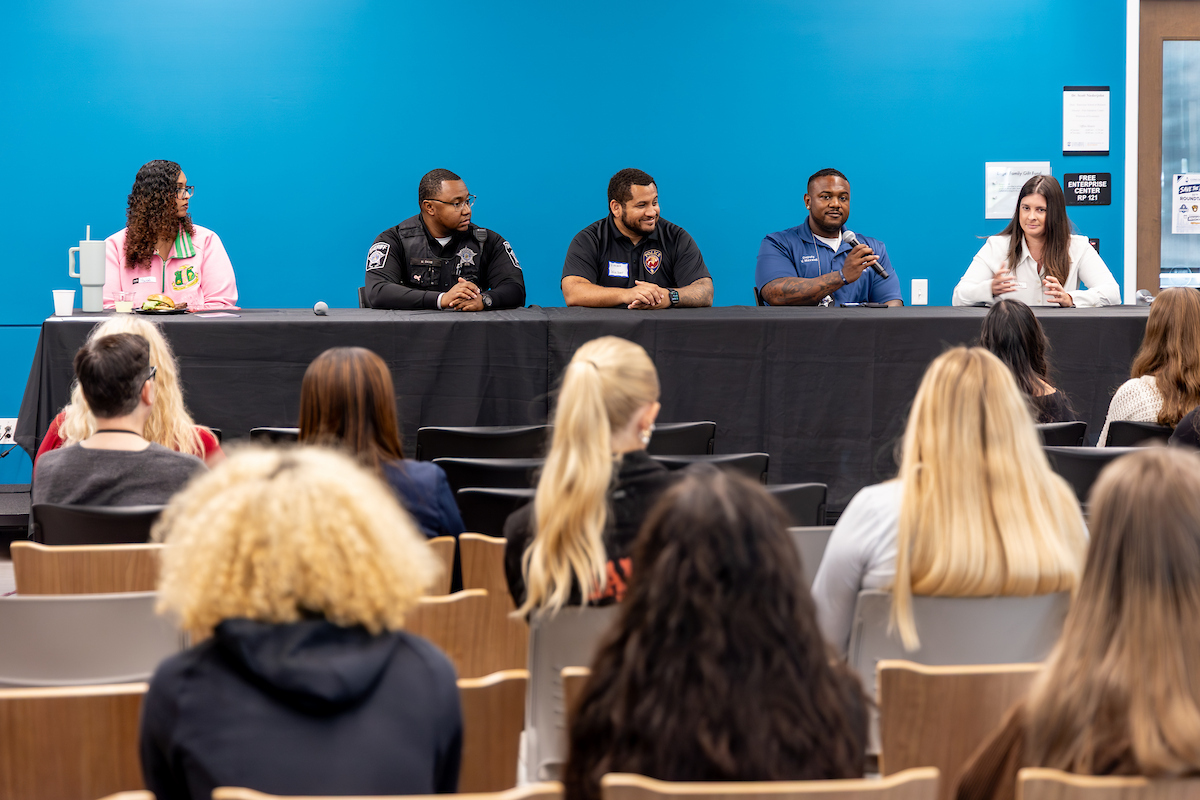

Five alumni panelists
Former JPP graduates discussing career preparation.

Alumni: JPP Graduate Panel

During the lunchtime alumni panel, justice and public policy graduates shared advice about internships, professional skills and finding their way after graduation.

Isaiah Lubner, a current justice and public policy major in the Class of 2027, left with plenty to think about—and a new career interest.

“After speaking with an alumnus, I developed a strong interest in pursuing a future career with the FBI,” he said. “These conversations helped me better understand my own career goals and gave me a clearer direction for my future.”

CUW alumna Veronika Metanova’s advice also stuck with him: Make a plan, work toward your goals and understand that mistakes are part of learning along the way. Fellow alumna Hayat Ibrahim reminded students that it’s also OK to change course.

“Give yourself permission to change direction,” said Ibrahim, who graduated in May 2025 with a bachelor’s degree in justice and public policy.

Ibrahim’s most recent contract position was as a legal administrative assistant at Associated Bank. She credited Concordia with strengthening the research, analytical and communication skills she put into practice during an internship at Ritter Law Office. Along the way, Harris and Mac Kelly offered guidance beyond the classroom.

“Being away from home, they provided guidance, encouragement, and support in ways that felt very much like having father figures there for me,” she shared.

Now navigating life after graduation, Ibrahim encouraged students to give themselves that same room to grow. “Your first job does not have to be your forever job, and your original plans do not have to define your future,” she said.

Other advice shared during the panel included “Take risks and be brave” and “Be adaptable.” Ibrahim echoed that encouragement, urging students to ask questions, advocate for themselves and remain open to opportunities they had not anticipated.
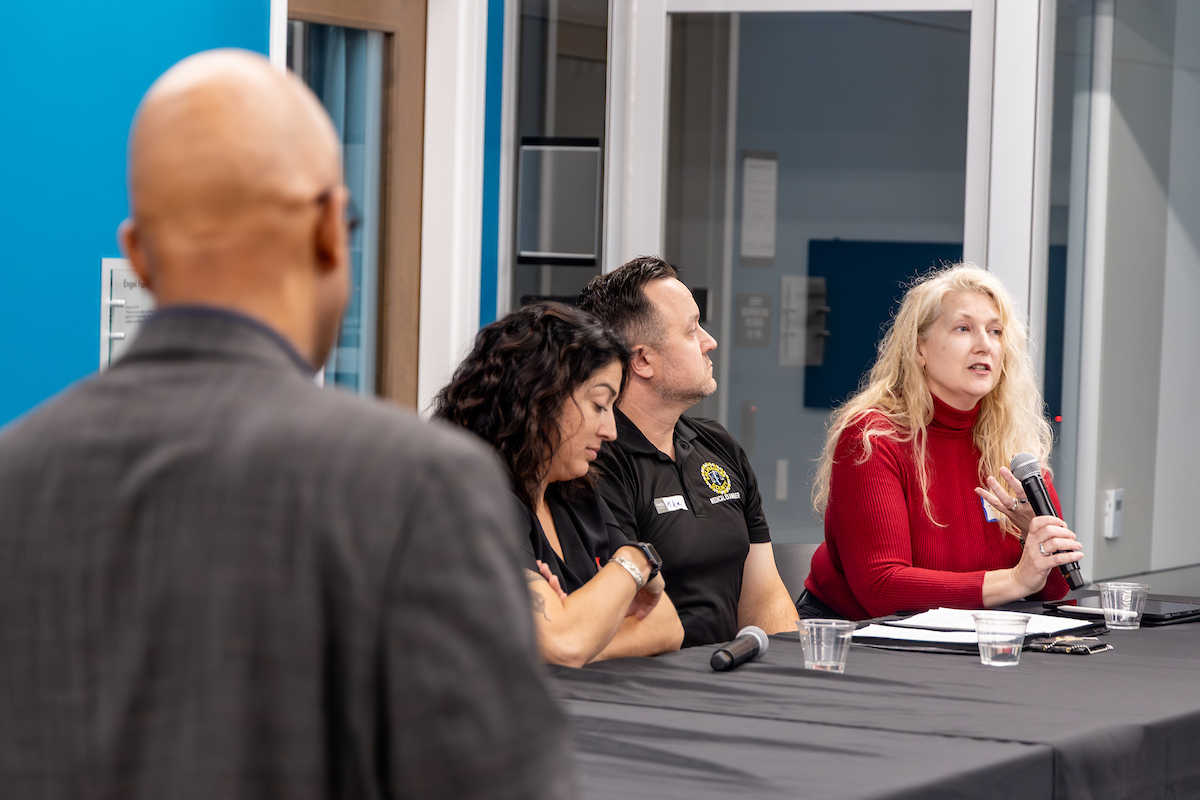

three panelists
From left: Milwaukee Police Officer Jamie Sromalla, Michael Simley of the Milwaukee County Medical Examiner’s Office and Kim Sternhagen of the Milwaukee Police Department’s Sensitive Crimes Division discussed finding missing people and identifying unknown individuals.

Panel 3: Missing and Unidentified Persons

The third panel focused on missing persons investigations, perhaps one of the day’s most difficult topics to grasp.

“It’s a bigger problem than we think,” said Jamie Sromalla, who has served with the Milwaukee Police Department for 10 years, including the past two years working on missing persons cases.

Sromalla joined Kim Sternhagen of the department’s Sensitive Crimes Division and Michael Simley of the Milwaukee County Medical Examiner’s Office to discuss finding missing people and identifying unknown individuals.

Milwaukee alone has approximately 450 open missing persons cases, about half involving juveniles, Sromalla reported. Thirty-five are cold cases dating back 10 to 20 years. While that’s down from more than 700 when she started, keeping up remains difficult. Closing 10 cases can be followed by 15 more coming in, she said.

All three panelists emphasized an important distinction, one that can be hard for people to accept: Going missing is not a crime. An adult may choose to leave without sharing their location with friends and family, limiting what investigators can do.

Other challenges include accessing phone records and social media accounts, along with finding people willing to share information. Sromalla said community members sometimes fear coming forward, especially in front of others in their neighborhoods.

Identifying someone who has died presents another set of challenges. Simley, who has 18 years of experience, emphasized careful observation and thorough information gathering.

“The truth is in the details,” he said.

Identification may involve a black-and-white photograph of the deceased or scientific methods such as fingerprints, DNA and dental records. Details from those reporting someone missing, including an old injury or tattoo, can help investigators narrow the search.

Panelists also discussed reviewing older records and the time required for testing. Helping families understand that process is part of the work, especially when answers come more slowly and with less certainty than television might suggest.
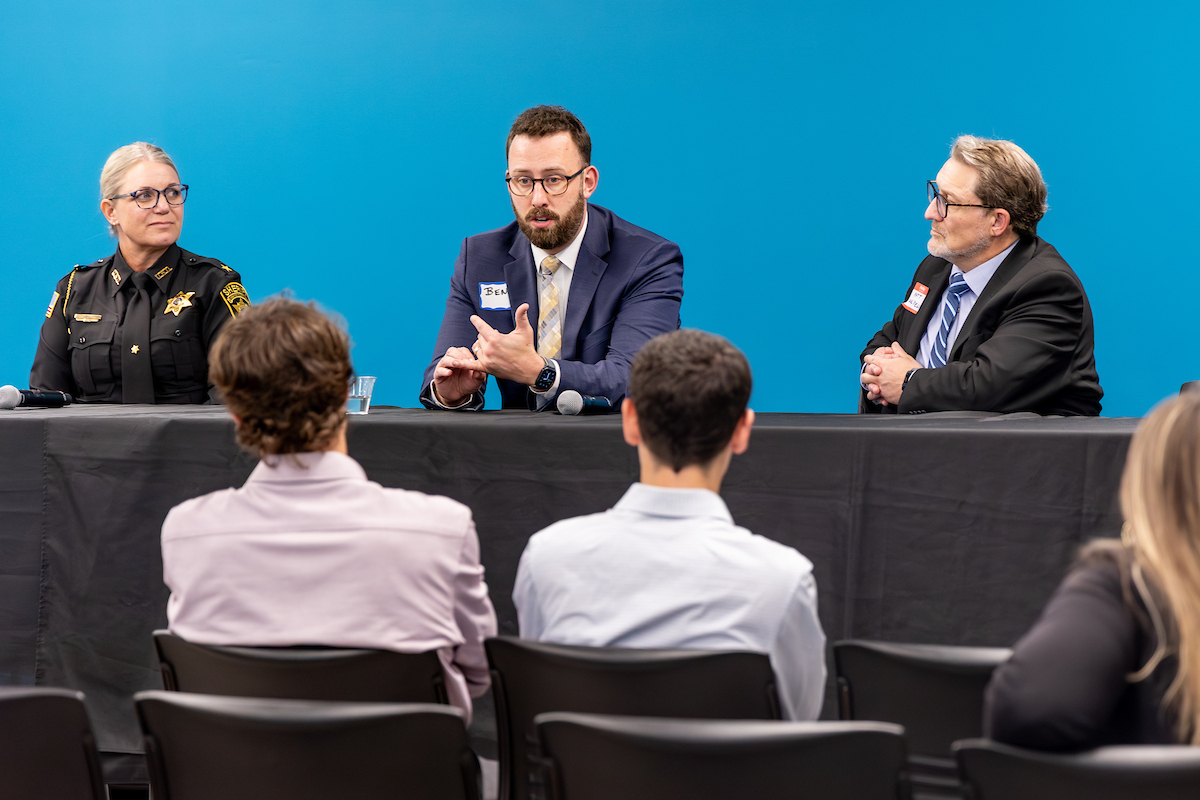

3 panelists
From left: Ozaukee County Sheriff Christy Knowles, Ozaukee County District Attorney Benjamin Lindsey and Matthew Mac Kelly, JD, EdD, associate professor of justice and public policy at CUW.

Panel 4: The Future of Justice Leadership

The day ended with a conversation about what it takes to lead. Harris and Mac Kelly joined Ozaukee County Sheriff Christy Knowles and Lindsey to discuss the qualities justice professionals need, especially when stepping into positions of power.

Lindsey emphasized humility first and foremost. Knowles spoke about having a strong value system, staying true to what you stand for and remaining adaptable as you work toward your goals. Both agreed that leaders must make difficult decisions, including some that others will not like.

Knowles also acknowledged that the “letter,” or political affiliation, attached to a leader’s name can influence how people perceive them. Lindsey agreed that leadership changes a person’s relationship with the community. Remaining anonymous in a crowd is a luxury leaders don’t have, he said.

Above all, the panelists emphasized integrity. Listening, owning your mistakes and taking responsibility matter when people are looking to you for leadership. Mac Kelly connected those everyday choices to the future students will help shape.

“The future of the criminal justice system, public policy, and society as a whole depends on empathy, compassion, communication; how we carry out our collective responsibilities to one another today determines our future,” he said.

That message resonated with BARD president Makayla Runyon, a sophomore studying philosophy, politics and economics who hopes to fight human trafficking through a career in the legal field.

“The sheriff and DA’s conversation about how necessary good character is really stuck with me and challenged me to continue to strengthen the character I believe Jesus has helped cultivate in me, not just for my own peace of mind, but for my future vocation too,” she said.
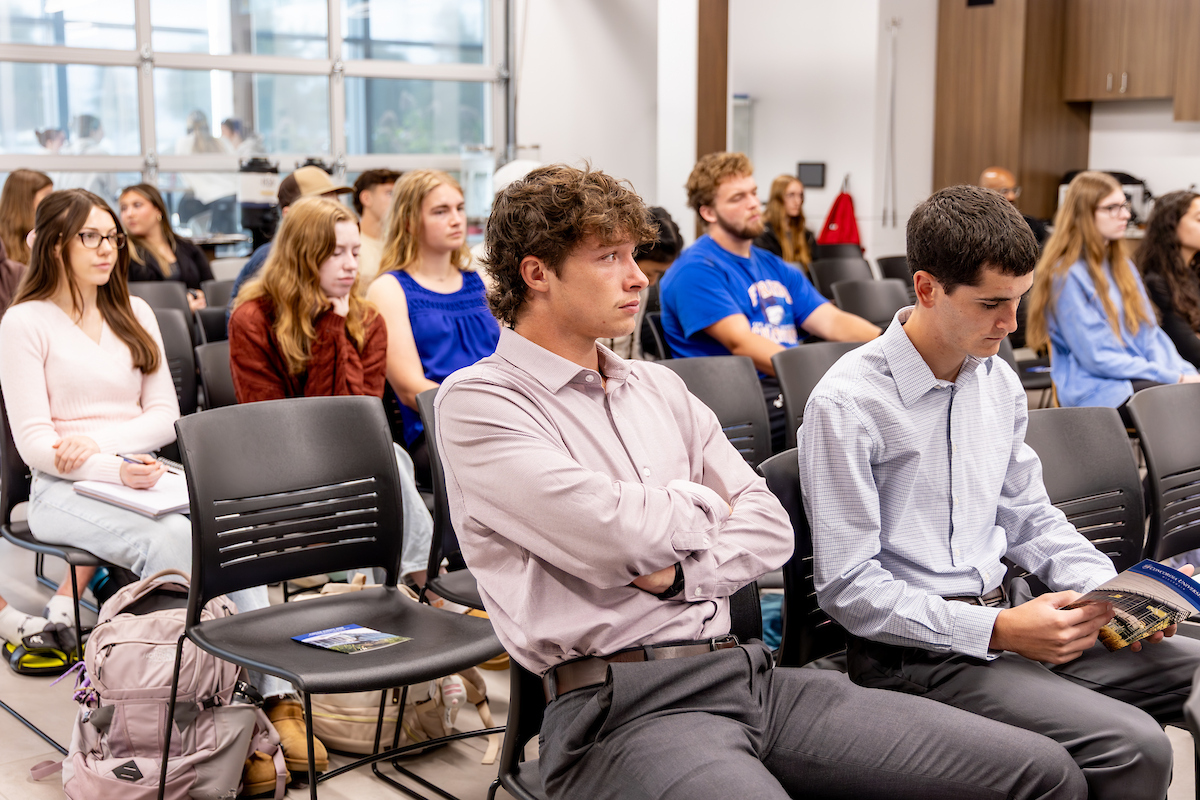

Students in crowd

Get to know BARD

Beyond a Reasonable Doubt (BARD) is CUW’s law and law enforcement club, open to students of any major. The club helps students understand the criminal justice system and how laws apply to their everyday lives. To learn more, contact club president Makayla Runyon at makayla.runyon@cuw.edu.


Want in?

Concordia University Wisconsin is a Lutheran higher education community committed to helping students develop in mind, body and spirit for service to Christ in the Church and the world.


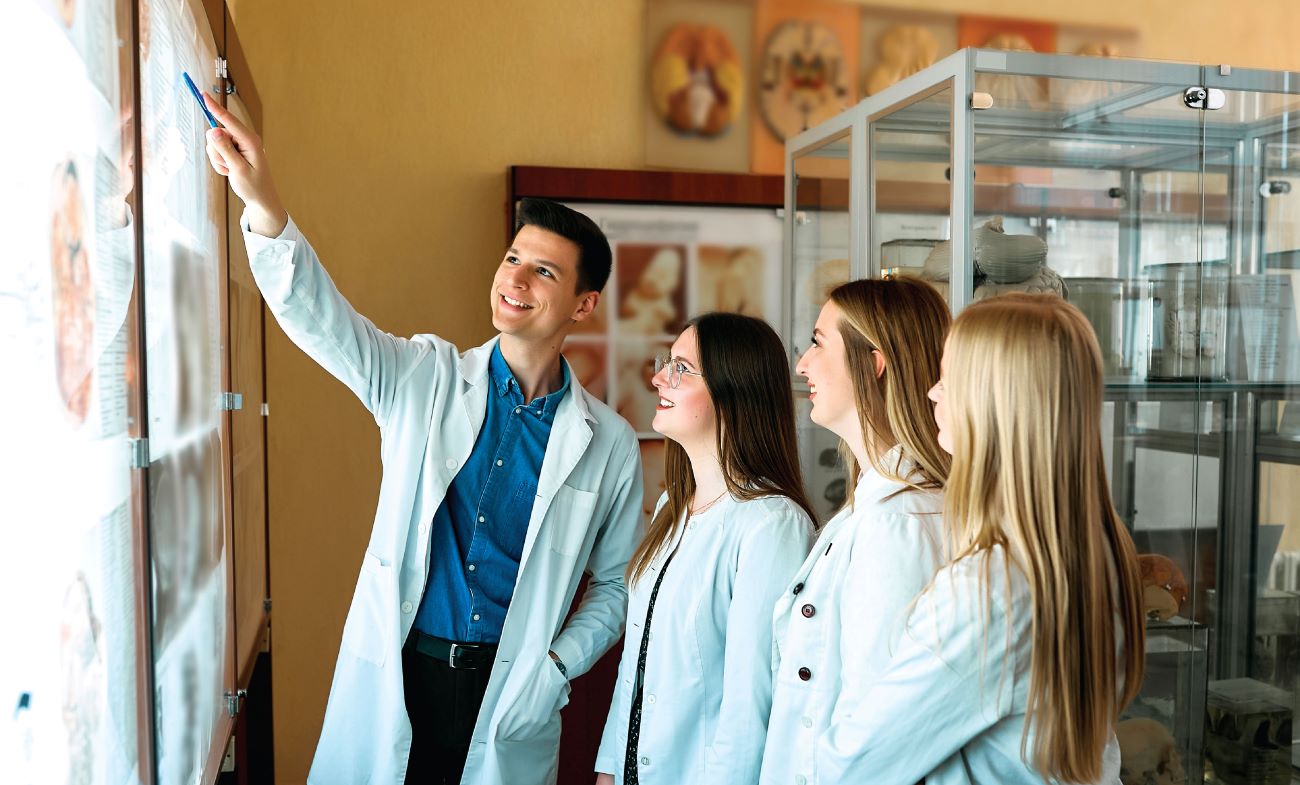
DO vs. MD: What’s the difference? A guide for future physicians

Are you thinking about medical school? Learn how DO and MD programs compare and what each path could mean for your future.


If you’re planning a career in medicine, you’ve probably come across two degrees during your research: a Doctor of Osteopathic Medicine (DO) degree from an osteopathic medical school and a Doctor of Medicine (MD) degree from an allopathic medical school.

At Concordia University Wisconsin, students preparing for medical school have multiple pathways to becoming physicians. Whether your goal is a DO or an MD, CUW provides the academic foundation, faculty mentorship and medical school partnerships to help you take the next step.

At first, the difference between a DO and an MD may seem confusing. Are they both doctors? Can they practice in the same hospitals? Can they become surgeons? The short answer is yes.

Whether you earn a DO or an MD, you’ll become a licensed physician who can diagnose illnesses, prescribe medications, perform procedures and practice in every medical specialty.

What’s the difference? While both MD and DO programs prepare students to provide comprehensive patient care, osteopathic medical education includes training rooted in the principles and practices of osteopathic medicine.

“It’s important for students to understand the different pathways available to practice medicine because although the endpoint of becoming a physician is the same between MD and DO programs, the medical training and philosophies are slightly different, and students may find one a better fit than the other,” said Joseph Fisher, PhD, associate professor of natural science and CUW’s pre-med, pre-PA and pre-pharmacy coordinator.


Two degrees. One goal: Becoming a physician

No matter which path you choose, the route to becoming a physician looks very similar.

Your journey begins with earning a bachelor’s degree, completing your pre-med coursework, gaining healthcare experience and preparing for the Medical College Admission Test (MCAT). Throughout that process, you will receive personalized advising, hands-on learning opportunities and faculty mentorship as you prepare for medical school.

Whether you pursue a DO or an MD, you’ll enter the same residency accreditation system, with opportunities to pursue training across medical specialties.

If your goal is family medicine, emergency medicine, surgery, pediatrics, psychiatry or another specialty, both paths can get you there.

Why are we talking about DOs? Because Concordia has created a new opportunity for students interested in osteopathic medicine.


student in robe looking at water

A new opportunity for you

Concordia University Wisconsin recently partnered with the Idaho College of Osteopathic Medicine (ICOM), creating a direct pathway for qualified students to pursue a Doctor of Osteopathic Medicine degree.

For Biomedical Science majors, the partnership expands the opportunities available after graduation while allowing students to remain connected to the supportive learning environment they experience on campus.

“This pathway is an amazing opportunity for CUW students looking for a seamless transition from undergraduate studies directly into medical school,” said Fisher. “ICOM shares many of the same values as CUW, and we know our graduates will be well supported when they begin their medical program.”

Founded to prepare physicians for rural and medically underserved communities, ICOM emphasizes primary care and helping meet healthcare needs where physicians are needed most. That mission aligns closely with Concordia’s commitment to educating graduates who serve others through their vocations.

“This is particularly exciting because ICOM’s focus is on preparing physicians for primary care, which is the area of greatest need,” added Dr. Leah Dvorak, professor of biology and special assistant to the president. “Students will study medicine on CUW’s beautiful lakeside campus and will learn alongside Concordia’s pharmacy, nursing, physical therapy, and other healthcare students, all of whom are preparing to serve others through their healthcare vocations.”


medical students looking at X-Rays

More pathways to medical school

One of the advantages of choosing CUW is that students interested in medicine don’t have just one pathway to medical school—they have multiple.

Students enrolled in CUW’s Bachelor of Science in Biomedical Science program may also be eligible for the Lake Erie College of Osteopathic Medicine (LECOM) Early Acceptance Program (EAP). Through the program, qualified students can reserve a seat at one of LECOM’s campuses while completing their undergraduate education at CUW.

Benefits of the CUW-LECOM pathway include:

  • Early provisional admission to LECOM for students who continue to meet program requirements, including maintaining a 3.4 GPA.
  • An MCAT waiver for eligible students who meet specific academic requirements, helping simplify the medical school admissions process.
  • No requirement to submit an AACOMAS application, saving both time and application costs.
  • A clear path to earning both a Bachelor of Science in Biomedical Science from Concordia and a Doctor of Osteopathic Medicine degree from LECOM.

“The provisional early acceptance and potential MCAT waiver make the LECOM pathway an outstanding opportunity for qualified students,” said Fisher. “Those benefits can simplify the medical school application process and provide added confidence as students work toward their goal of becoming physicians.”

Before deciding whether the DO pathway is right for you, it’s helpful to understand how a Doctor of Osteopathic Medicine differs from a Doctor of Medicine—and what the two have in common.


What’s the difference?

The differences between MD and DO programs are found primarily in their educational philosophies, training and historical areas of emphasis.

What is a DO?

A Doctor of Osteopathic Medicine (DO) is a fully licensed physician. Like MDs, DOs diagnose and treat illnesses, prescribe medications and practice across medical specialties. Osteopathic medical education also places an emphasis on how factors such as lifestyle, environment and overall well-being can influence a person’s health.

DO students receive training in Osteopathic Manipulative Medicine (OMM), a hands-on approach that uses manual techniques to diagnose and treat certain musculoskeletal conditions. Osteopathic medicine also emphasizes preventive care, patient relationships and serving communities with limited access to healthcare.

For CUW students, that focus complements Concordia’s commitment to educating the mind, body and spirit.

“Students often ask whether earning a DO degree limits their career options, and the answer is no,” said Kevin Wilson, DO, dean and chief academic officer at ICOM. “DO and MD physicians share the same scope of practice and can enter any medical or surgical specialty. At ICOM, we emphasize whole-person care while preparing students to match into primary care and highly competitive specialties alike.”

What is an MD?

The term allopathic medicine refers to the traditional model of medical education used by MD-granting institutions. MD programs provide extensive training in the biomedical sciences, clinical medicine, diagnosis and treatment as students prepare to practice across medical specialties.

MD programs have traditionally placed a strong emphasis on biomedical research, and graduates are more commonly found in academic medical centers and research-focused institutions. At the same time, both MDs and DOs pursue careers in research, teaching and clinical practice.

While DOs can practice internationally in many countries, MD credentials are more widely recognized around the world. Students interested in practicing medicine outside the U.S. should research licensing requirements in the countries where they hope to work.

Like DOs, MD physicians practice across every specialty and work in hospitals, clinics, research institutions and healthcare systems throughout the country.

For Matthew Lee, MD, assistant professor in Concordia’s School of Health Professions, whole-person care is something all physicians should strive for, regardless of the letters behind their name.

“The osteopathic philosophy is an important reminder of what excellent physicians strive to do every day: combine scientific excellence with genuine compassion, seeing not just the illness but the person who has it,” Lee said. “That commitment to whole-person care is something every future physician should embrace, and that starts at CUW.”


Does one degree offer more career options?

Both DO and MD graduates can pursue residency training across medical specialties.

Since 2020, DO and MD graduates have participated in the same residency accreditation system and can pursue training in specialties ranging from family medicine and internal medicine to surgery, dermatology and other specialized fields.

There are differences in residency match patterns between DO and MD graduates, particularly in some highly competitive specialties. If you are considering either pathway, you should think about your long-term career interests and work with your pre-med advisor to understand how your choice of an MD or DO program may factor into your residency goals.

Both degrees can lead to careers in:

  • Surgery
  • Pediatrics
  • Emergency medicine
  • Psychiatry
  • Dermatology
  • Family medicine
  • Internal medicine
  • And every other medical specialty

What about salary?

One of the most common questions asked is whether DOs and MDs earn different salaries. A physician’s salary depends on specialty, geographic location, years of experience and practice setting, rather than simply whether they earned a DO or an MD.


Why choose one over the other?

Choosing between osteopathic and allopathic medicine often comes down to your interests, career goals and the type of medical education you want to pursue. You may apply to both DO and MD programs or decide to focus on one pathway.

Osteopathic medical education includes OMM training and has historically had a strong presence in primary care and rural and medically underserved communities. Allopathic medical education does not include OMM training and has historically had greater representation in some highly competitive specialties and academic medicine.

Both pathways prepare you to become a physician, with opportunities to build relationships with patients, focus on preventive care and serve communities in need.

As you consider your options, look beyond the letters attached to the degree. Consider each medical school’s curriculum, residency outcomes, location, mission and approach to medical education, and talk with your pre-med advisor about which programs fit your goals.


Which path is right for you?

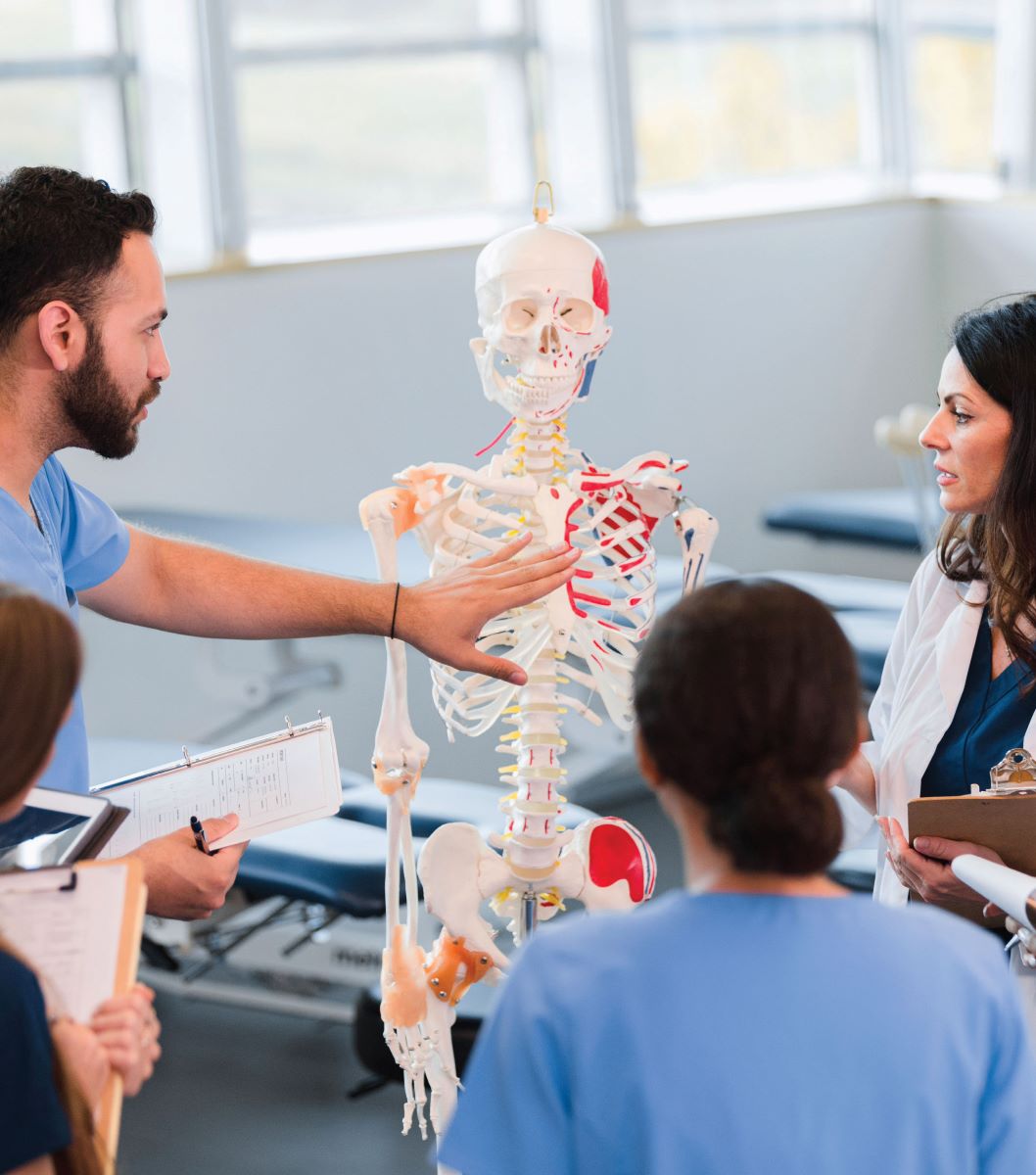
students looking at skeleton

There isn’t one right answer.

As you compare DO and MD programs, consider your career goals, each school’s curriculum and mission, residency outcomes and the type of learning environment you’re looking for. If osteopathic medicine interests you, you may also want to consider whether OMM training is something you want as part of your medical education.

Whichever path you choose, both degrees can prepare you for a career as a physician.

The first step is choosing an undergraduate program that prepares you for success. The Biomedical Science major is designed to prepare students for admission to both DO and MD programs through rigorous academics, individualized advising, undergraduate research opportunities and partnerships with medical schools.

Whether your future leads to ICOM, LECOM or another medical school, CUW provides the foundation to help you pursue your calling as a physician.


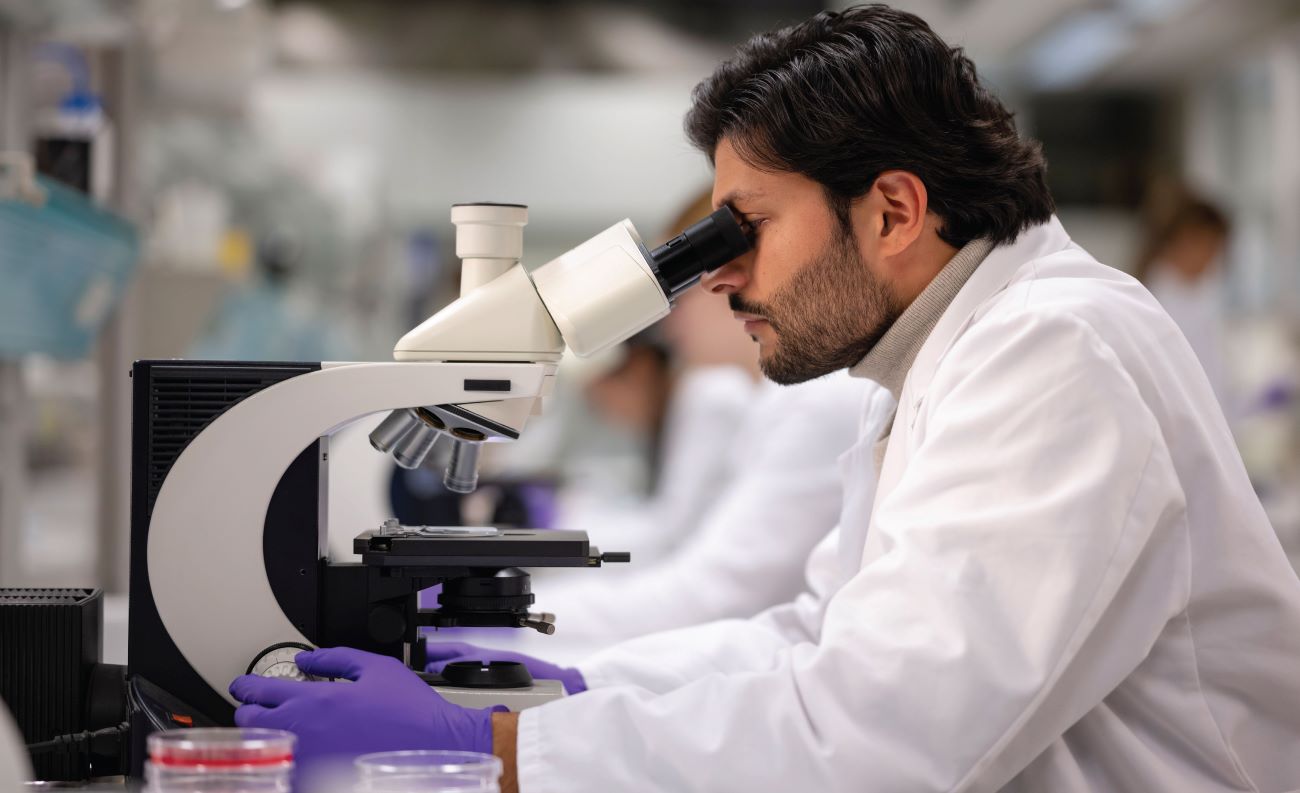
student with white coat and microscope

Ready?

Every physician begins somewhere.

Here, you’ll find more than a strong science curriculum. CUW’s Biomedical Science major prepares pre-med students for application to both DO and MD programs. You’ll also become part of a community that challenges you academically, supports your professional goals and prepares you to serve others through a career in medicine.

Whether you’re pursuing a Doctor of Osteopathic Medicine or a Doctor of Medicine degree, Concordia offers the preparation, faculty mentorship and medical school partnerships to help you move confidently toward medical school and your calling as a physician.

Explore CUW’s Biomedical Science program and discover where your journey can begin.


Frequently asked questions

Is a DO the same as an MD?

Both are licensed physicians with similar education and training. Osteopathic medical education emphasizes a whole-person approach to care, considering how different aspects of a patient’s health and well-being are connected.

Is it harder to become a DO or an MD?

Admission to both programs is highly competitive. Both Allopathic and Osteopathic Medical schools consider many factors, including GPA, MCAT scores, healthcare experience, leadership and service. Generally speaking, the average GPAs and MCAT scores of students accepted to MD programs are higher than students accepted to DO programs.

Can DOs become surgeons?

Yes. DO physicians enter every medical specialty, including surgery.

Do hospitals treat DOs and MDs differently?

No. DOs and MDs train together, work side by side and are equally recognized throughout the U.S. healthcare system.


For more reading:


Want in?

Concordia University Wisconsin is a Lutheran higher education community committed to helping students develop in mind, body and spirit for service to Christ in the Church and the world.

Finding connection through ministry

Senior Rachel Webb discovered the importance of relationships, cross-cultural ministry and compassionate service while interning with immigrant youth in Milwaukee.


Rachel Webb did not know exactly what to expect when she walked into Benediction Lutheran Church for the first time.

In fall 2025, she had recently transferred from CUAA and was beginning her first semester in CUW’s Director of Church Ministries program. Looking for an internship centered on outreach and missions, she was drawn to Benediction’s uniquely diverse ministry setting and began interning there in January 2026.

“What drew me was the fact that it’s one church, but they minister to four different ethnic groups,” Webb said. “I was just looking for something different, and I found it.”

Benediction serves multiple congregations under one roof, including traditional English-speaking worshippers, a Hmong congregation, a French African congregation and a German-speaking ministry. Webb spent most of her semester-long internship serving with the church’s French African youth group.

“At first, I thought the kids didn’t like me because they reacted differently than students I was used to working with,” Webb said. “Later, I realized that once I learned more about their culture and built relationships with them, I was able to be more confident.”

Rev. Dr. Kurt Taylor, professor of theology and director of Church Ministries, said Webb’s compassion and commitment to ministry stood out from the beginning.

“Rachel is one of the most talented and passionate students I’ve ever had,” Taylor said. “I can’t wait to see what God has in store for her. And I am certain that, strengthened by Him, she is going to be a powerful instrument toward changing lives with the Gospel of Jesus Christ. Her internship at Benediction is an early step in what will be an amazing life of service.”


Faithfully stepping into unfamiliar spaces

From the beginning, Webb knew the experience would stretch her in ways she had not anticipated. “I had never been to a French African service before, so I didn’t really know what to expect,” she said.

The service structure looked different from the traditional Lutheran services Webb grew up attending. There were no printed bulletins. Worship flowed naturally between music, prayer, preaching and conversation. At first, the spontaneity caught her off guard.

“Everyone just kind of started praying, but it wasn’t the same prayer, and I didn’t know what was going on,” Webb recalled with a laugh. “I was like, ‘Okay … what is happening right now?’”

Still, what stood out most to her was how quickly the congregation welcomed her in.

“After the service, even though I had never met any of them before, I had them coming up to me, talking to me like they had known me my entire life,” she said. “They were so welcoming.”

Throughout the semester, Webb worked primarily with the church’s youth. She led Sunday school lessons, guided discussions, helped with Bible studies and built relationships with students ranging from elementary school to high school.


Building relationships first is key

What surprised Webb most was the students’ eagerness to engage. “A lot of them genuinely wanted to be there,” Webb said. “You can really tell that a lot of them are passionate about Christ and passionate about the gospel.”

The students regularly asked thoughtful questions about Scripture and theology—questions Webb admits she was not asking at their age.

“We were talking about the Beatitudes one day, and they started coming up with ways we can apply those things to people today,” she said. “I was like, ‘This is not stuff that I would have thought to do in ninth and 10th grade.’”

Many of the students and families at Benediction had emigrated from the Congo within the last several years. This internship quickly became an opportunity not only to teach, but to learn.

“A lot of them were learning a second language, and they were also learning a new culture, too,” she said. “That added another layer to everything.”

The experience ultimately reshaped her understanding of ministry itself. Before entering the internship, she believed ministry centered primarily on preaching and teaching. What she discovered instead was the importance of relationship-building, especially in cross-cultural and inner-city ministry settings.

“You cannot do it without having relationships with every single person you’re working with,” she said. “If you don’t have a relationship established with the people you’re serving, especially in inner-city ministry, it’s hard to do ministry well. People in challenging situations need that relationship more than anything.”

Understanding that trust often opens doors for deeper conversations about faith helped shape her approach. “The gospel message and everything else of your ministry is going to flow from that,” Webb said.


Growing through any new challenge

The internship initially pushed her outside her comfort zone as she adapted her teaching style to a different cultural environment. Eventually, she realized the students were simply interacting with authority differently than what she experienced growing up. As she learned more about the culture and built stronger relationships, her confidence grew.

“Adaptability and flexibility are huge,” Webb said. “That was something I learned very well.”

The students quickly became the highlight of her semester. One student named Joey jokingly asked her on the first day, “Why are you here? Did none of the other churches take you?”

By the end of the internship, Joey had become one of her most engaged participants in class discussions.

The older girls in the youth group also began asking Webb questions about school, friendships and preparing for college. “It kind of turned into one of those moments where I became kind of like an older sister to them,” she said.

When her internship ended near the close of the spring semester, the students surprised her with a party after church. “I was so sad when I left,” Webb said. “They were probably some of the best kids I’ve ever worked with.”


Looking ahead

Webb said the experience has influenced the direction of her future vocation. Alongside ministry work, she is considering graduate studies in social work or Christian counseling.

“I want to be someone that is in the church that not only can help with the spiritual aspects of things, but also can help with the outside aspects of that,” she said.

For her, Benediction offered more than internship hours. It offered a clearer picture of ministry rooted in compassion, relationships and meeting people where they are.

“You really got to be there for people,” she said.


Want in?

Concordia University Wisconsin is a Lutheran higher education community committed to helping students develop in mind, body and spirit for service to Christ in the Church and the world.

Concordia launches new dual acute care MSN program to prepare nurses to care across the lifespan

New Master of Science in Nursing program prepares advanced practice nurses to provide acute care for pediatric, adult and geriatric patients, with particular value for rural communities


Concordia University Wisconsin is expanding its graduate nursing offerings with a new program designed to prepare advanced practice nurses to care for patients across the lifespan, from children to older adults.

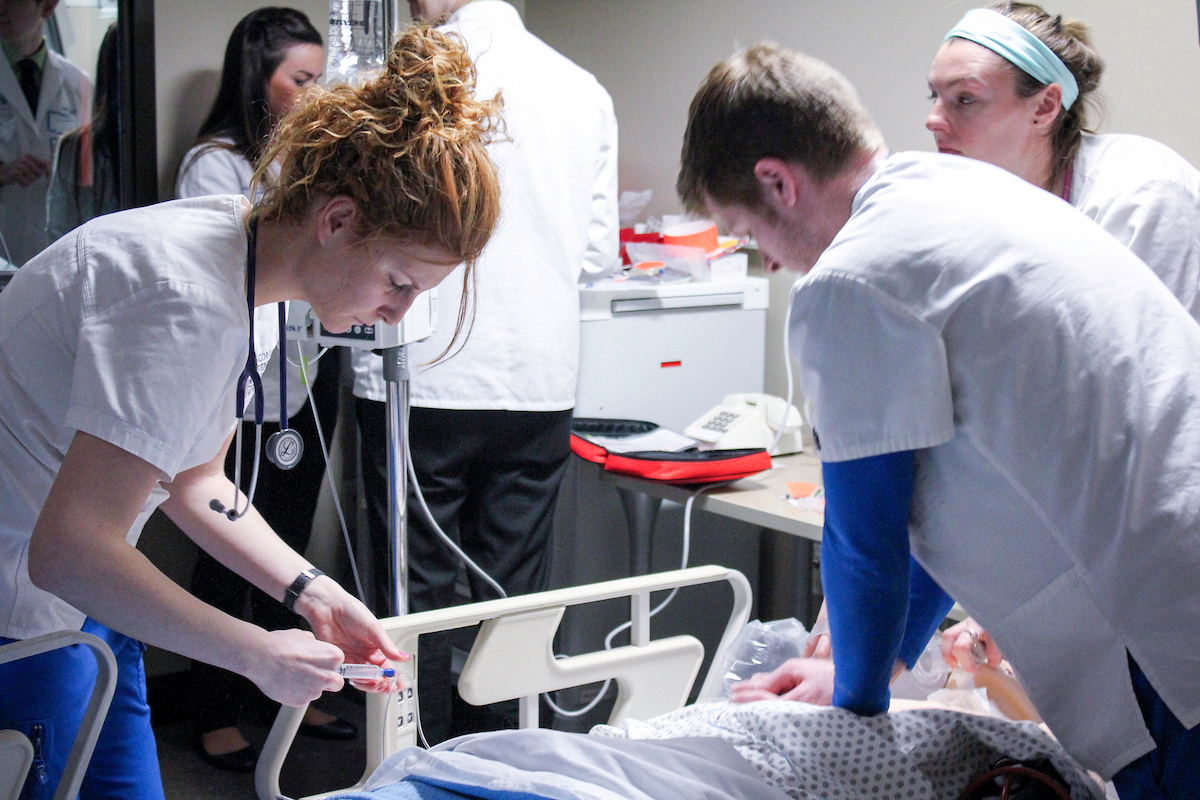
The new Master of Science in Nursing: Dual Acute Care Pediatric and Adult/Gerontology program integrates pediatric and adult-gerontology acute care preparation into one 50-credit graduate program. Designed for BSN-prepared registered nurses seeking to advance into acute care nurse practitioner roles, the program provides preparation to assess, diagnose and manage complex acute health conditions in pediatric, adult and geriatric populations.

Students will also prepare to pursue two national board certifications, one in pediatric acute care and another in adult-gerontology acute care.

“This program prepares nurses to serve people of all ages with confidence and compassion,” said Jennifer Nicpon, DNP, FNP-BC, director of Graduate Nursing and assistant professor. “That breadth of preparation gives graduates greater flexibility to respond to complex needs in acute care.”


Greater flexibility in urban and rural healthcare

The dual acute care program is designed to address needs in both urban and rural healthcare settings.

As acute care credentials become increasingly important in urban hospitals, preparation in two acute care specialties can give nurse practitioners greater flexibility to serve pediatric and adult populations within larger health systems.

That versatility may be especially valuable in rural communities, where hospitals need providers who can serve patients across a broader continuum of care. Preparing nurse practitioners to work with patients from childhood through older adulthood can help equip them to meet the varied needs of the communities they serve.

“Rural hospitals need practitioners with the versatility to serve people of all ages,” said Jessica Leiberg, PhD, DNP, dean of the School of Nursing. “By preparing nurse practitioners in both pediatric and adult specialties, we’re helping strengthen the healthcare workforce in communities where that range of expertise can make a strong impact.”


One program, two acute care specialties

The 50-credit program is designed to be completed over eight semesters and combines online coursework with in-person clinical experiences in high-acuity healthcare settings.

Students will study advanced pathophysiology, pharmacotherapeutics, advanced health assessment, evidence-based nursing practice, diagnostic skills for advanced practice registered nurses, healthcare policy and pediatric and adult-gerontology acute care.

Concordia nursing professionals also help match students with clinical locations, allowing students to focus on developing the knowledge and advanced practice skills they will need in their careers.

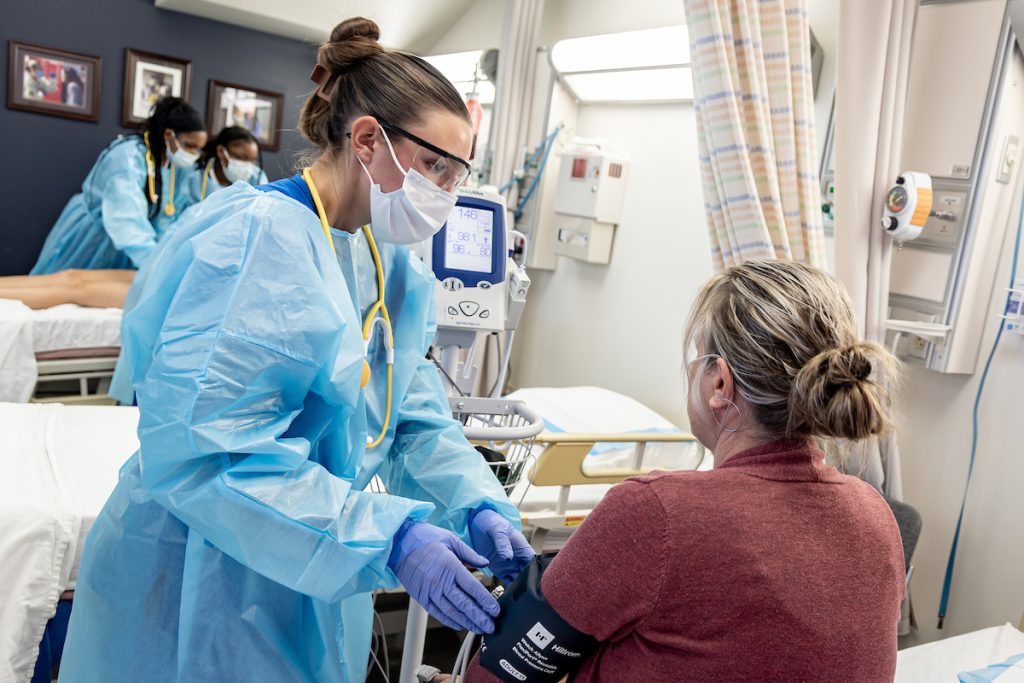
Graduates may pursue opportunities in settings such as hospital emergency departments, trauma centers, intensive care units and pediatric intensive care units.


Christ-centered care when patients need it most

The new program builds on Concordia’s approach to graduate nursing education by combining rigorous clinical preparation with a Christ-centered understanding of service.

Students in the Master of Science in Nursing: Dual Acute Care Pediatric and Adult/Gerontology program will integrate evidence-based practice, advanced clinical knowledge and interprofessional collaboration as they prepare to care for patients and families during some of their most critical moments.

That approach reflects Concordia’s mission as a Lutheran higher education community committed to helping students develop in mind, body and spirit for service to Christ in the Church and the world.
Applicants must hold a BSN from an accredited institution and possess a current, unencumbered registered nurse license. Additional admission requirements apply.

For more information about the Master of Science in Nursing: Dual Acute Care Pediatric and Adult/Gerontology, visit https://www.cuw.edu/academics/programs/dual-acute-care-msn/.


Want in?

Concordia University Wisconsin is a Lutheran higher education community committed to helping students develop in mind, body and spirit for service to Christ in the Church and the world.

A family interest in politics becomes a path all her own

With political science and history claiming the majority and philosophy still in the running, Danika Burkett is preparing for law school without giving up the subjects she simply loves.


Growing up, Concordia University Wisconsin senior Danika Burkett and her dad talked politics. A lot. So, it isn’t surprising that she chose to study political science. What is surprising is that she found time for all three.

By the time she arrived at Concordia, Burkett was already envisioning law school. Political science was a natural fit, while philosophy offered a chance to consider other viewpoints and make stronger arguments. History? Well, she wasn’t giving that up either. “I just really like it,” she said with a smile.

The more history courses she took, the more she wanted to keep going. Burkett wondered whether she could squeeze a second major into an already busy schedule.

Turns out, she could.

“I really enjoyed the classes and the professors,” Burkett said. “I thought, ‘If I can already do some of it, why not do more?’”


woman in front of White House

What each subject brings

Political science, history and philosophy may sound like natural companions, but Burkett finds something different in each. In political science, she looks at power and why people seek it. History asks her to consider the motivations of different groups of people and how their actions affect one another. Philosophy takes her outside of both to consider ideas from a broader point of view.

“Philosophy does a good job of broadening your horizons,” Burkett said. “Even if you don’t agree with certain philosophers, they might have valid points that can help bolster your own arguments.”

Not bad preparation for a future lawyer.

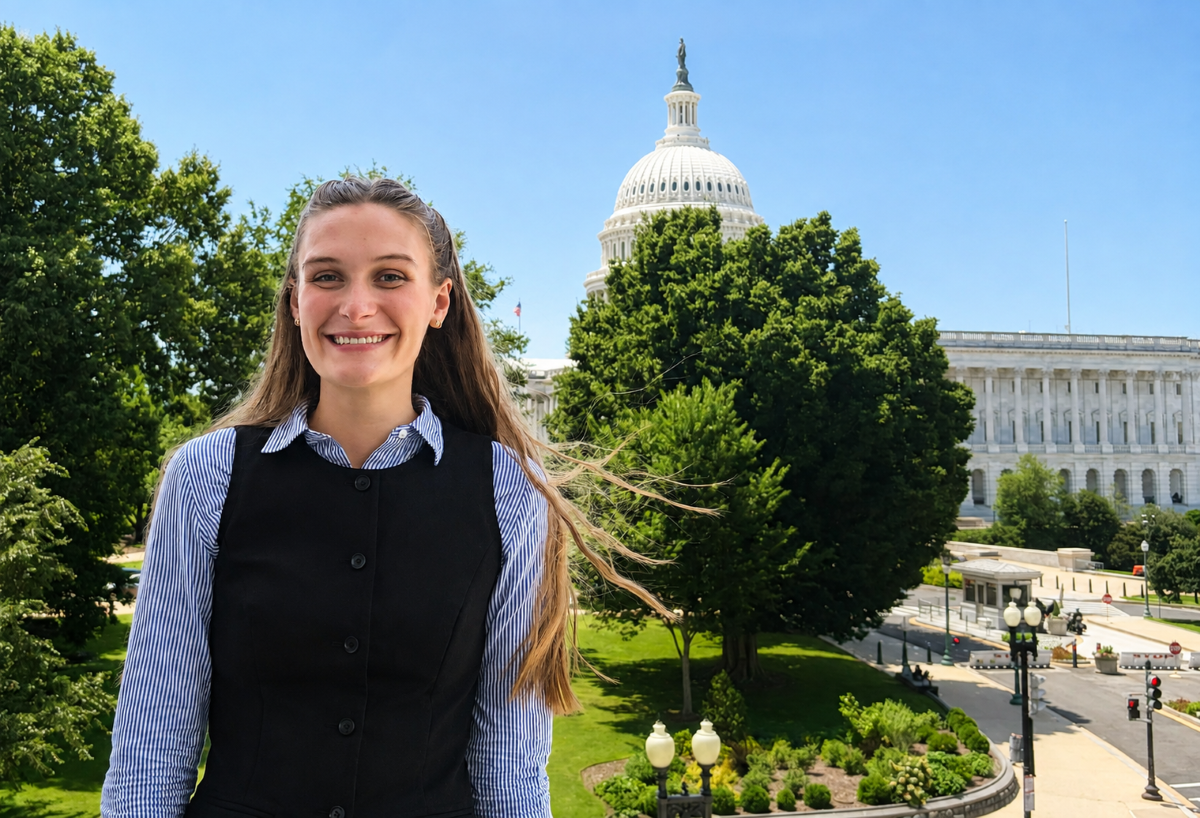
This summer, Burkett interned in Washington, D.C., for Iowa Sen. Chuck Grassley on the Senate Judiciary Committee. She wrote memos, spoke with witnesses, helped write letters and spent time in the hearing room, where she observed Senate votes, meetings and hearings.

“I got to see the Capitol and watch things I’d studied in both my history and political science classes come to life in D.C.,” she said.

Back at Concordia, her professors have seen those interests develop in the classroom, too. Jeff Walz, PhD, professor of political science, first met Burkett in a Christian Citizen course. Since then, he has watched her become more involved on campus, take on leadership roles in Student Government Association and grow as a thinker.

“In the classroom, I have been struck by Danika’s attentiveness to class ideas, her classmates’ thoughts and why the issues matter,” Walz said. “She works ahead on assignments and explores each class with great depth.”

Walz believes those qualities, coupled with her willingness to study across disciplines, will serve her well in law. “Danika has a very keen mind that is so attuned to details and specifics while seeing the big picture,” Walz said. “She has an incredible work ethic, is thoughtful and will bring a Christian scholar’s perspective to the law profession.”


More than a future career

Burkett admits that fitting two majors and a minor into four years hasn’t necessarily been easy. She has carried a course overload for the past couple of years while also staying active on campus. She has served in Student Government Association since her freshman year, including as vice president and Rules Committee chair. Burkett also finds time for Campus Ministry and Quaestus.

How does she do it? Burkett credits her professors with helping her make it all work.

“The professors here are very collaborative, have hallway conversations on a regular basis, and work hard to see that students can fulfill their academic interests, including across multiple disciplines,” Walz said.

That freedom mattered to Burkett. Had she attended somewhere else, she isn’t sure she would have pursued the same path. She suspects she might have felt pressure to choose.

“Could I have chosen? Yes,” she said. “But it was great to have the opportunity not to say, ‘I prefer this,’ or, ‘This would be better for my career.’”


woman in chapel

Called to serve others

Burkett’s time at Concordia has also helped her think about law through the lens of vocation. “How can I be a good citizen? How can I help people? How can I serve people?” Burkett said.

Those questions are closely tied to her faith. She grew up Lutheran and wanted a college where she could continue growing in that faith. At CUW, she has served through Campus Ministry, including as a leader and coordinator for LIGHT women’s ministry and now as coordinator of Campus Fellowship.

“Everything I do, I hope I’m doing because that’s my calling from God,” she said. “I want to serve Him, and I want to serve my neighbors by serving Him.”

Graduating in May 2027, Burkett hopes to attend law school in St. Louis, where her fiancé, whom she met at Concordia, plans to attend seminary. As for students still figuring out their own academic paths, she has a bit of advice:

“I think people get so focused on what they hope to do when they leave Concordia that they forget to study the things they enjoy while they’re still here,” Burkett said. “Yes, you’re doing it for a future career, but there’s more to the experience than just that.”


“The School of &” blog series highlights the distinctive identity of Concordia University Wisconsin’s School of Arts & Sciences, where interdisciplinary connections shape learning and purpose. Each month, the series features students and alumni who have paired majors, minors and certificates in thoughtful and creative ways.

Their stories show how connecting areas of study can help students develop their gifts, discover their calling and prepare to serve the Church and the world.


Want in?

Concordia University Wisconsin is a Lutheran higher education community committed to helping students develop in mind, body and spirit for service to Christ in the Church and the world.

Learning to abide

From an unexpected role at her home church to a new career in higher education, Emma Kaiser (’26) discovered that every workplace is an opportunity to serve Christ.


Who gets their dream job right out of college, anyway?

Emma Kaiser, who graduated from Concordia in May with a bachelor’s degree in business communication and a minor in psychology, certainly didn’t expect to return home without a job lined up. Like many recent graduates, she anxiously awaited what would come next.

This summer, Kaiser began her new role in Bellin College’s High School Initiatives Department, helping high school students earn college credit while exploring careers in healthcare.

“It’s essentially like Concordia’s dual credit program,” Kaiser said. “If a student wants to earn college credit while they’re still in high school, they’ll work through me.”

A position like this was exactly what Kaiser had hoped to find right after graduation. Before that opportunity came along, though, she found herself serving as a church secretary in a place she never expected. For two months, she worked alongside her parents at their home congregation, where her father serves as pastor and her mother teaches kindergarten.

“I felt like I was somewhere God wasn’t calling me,” Kaiser said. “Looking back, though, I realize I was wrong.”


People walking in hallway

Learning to serve

Long before Bellin College entered the picture, Kaiser found a second home in Concordia’s Admissions Office. “I interviewed before I even started at Concordia,” she laughed. “And I was hired as an incoming freshman.”

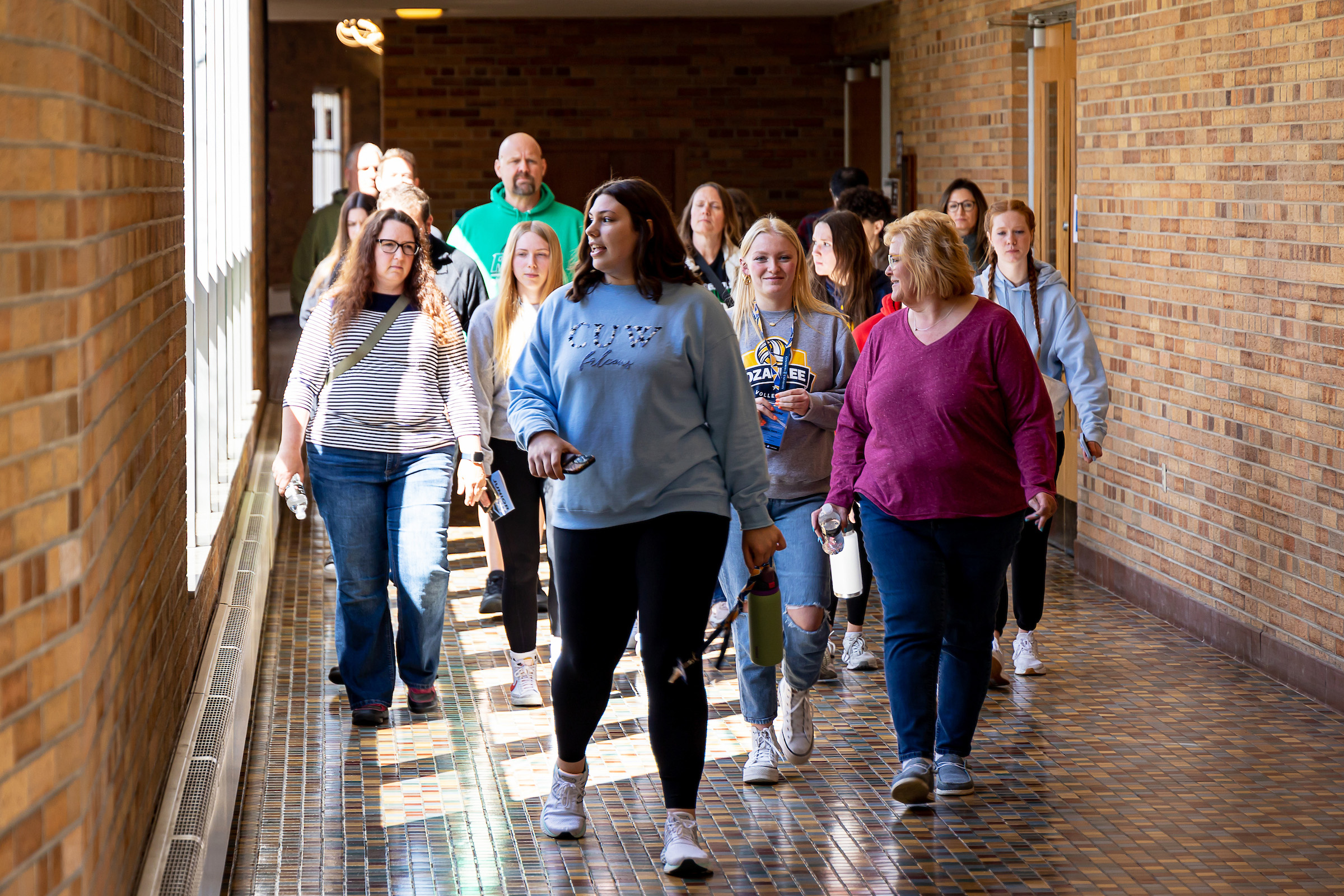
Over the next four years, she welcomed prospective students and their families to campus. During her junior and senior years, she served as Lead Student Ambassador, leading tours, representing the university at special events like the LCMS Youth Gathering and helping create new initiatives for the department.

One initiative she’s especially proud of is the student ambassador retreat at Whispering Pines in her hometown of Shawano.

“The reason I wanted to create it was because our staff came from so many different backgrounds,” Kaiser said. “Some of us were athletes. Some studied computer science. Others were involved in theater. Outside of Admissions, many of us probably never would’ve crossed paths. I wanted everyone to actually know each other.”

Her goal was simple: build a stronger sense of community among the student ambassadors. What started as Kaiser’s idea became the Admissions team’s first Student Ambassador Retreat in fall 2024. This fall, the team is preparing to host it for the third consecutive year.

“One of Emma’s most impactful contributions was her idea to host a Student Ambassador Retreat at Whispering Pines to foster team development, leadership and community,” said Cassandra Chmielewski, assistant director of admissions for guest experience. “What began as Emma’s vision has since become a valued tradition.”


An unexpected season

Reflecting on her academic journey, Kaiser doesn’t sugarcoat the transition from college to career.

“I graduated without having a job lined up, and I don’t think we talk enough about that,” she said. “I walked across the graduation stage fully expecting I’d already have a job. That wasn’t reality.”

Having grown up in Lutheran education, Kaiser expected life after graduation to unfold a certain way. Teachers receive a divine call, and somewhere along the way, she assumed her own next step would naturally fall into place.

“It didn’t,” she said. “So I moved home.”

At the beginning of the year, Kaiser chose one word to intentionally focus on, an idea introduced to her by a woman in her home congregation. For 2026, that word was abide.

“I’ve been learning what it means to remain rooted in Christ and trust His direction even when life doesn’t unfold the way I expected it to.”

Those two months serving as the secretary at her hometown church ultimately reshaped her understanding of vocation. The church needed someone, and Kaiser stepped in. Looking back, she now sees that season not as a setback, but as preparation.

“I learned to find joy in the small things,” she said. “The church needed someone, and nobody else had stepped forward. God placed me in a position where I could help for a season, train someone else and leave things in a good place before moving on.”

That season also gave new meaning to the word she had chosen months earlier. “For me, abiding means accepting God’s plans as the final word and saying, ‘Okay, this is where You have me.'”


A new understanding of vocation

Kaiser’s experience at her home church also reinforced something she had begun to understand during her time at Concordia: vocation wasn’t necessarily tied to a particular major, career or workplace.

“That’s probably the biggest thing Concordia taught me,” Kaiser said. “I have a completely different understanding now of what vocation really looks like. A nurse can share God’s love while standing beside a hospital bed. Someone in business can share God’s love during a board meeting. Whatever job God places you in is where you’re supposed to be at that point in His timeline.”

That understanding developed in part as Kaiser navigated her own academic path. Academic advisor Barb Tyler watched as Kaiser reconsidered her studies and the career possibilities ahead of her.

“She realized that changing her major, or adding a major, wouldn’t change her purpose; it aligned her academics with her vocation,” Tyler said. “She remained flexible and open-minded throughout the process, realizing that adjusting her major provided options she hadn’t previously considered.”

Realizing that God’s plan looked different than her own wasn’t easy, but it strengthened Kaiser’s trust that her purpose would remain the same regardless of where she worked.

“I believe that no matter what your job title is, your purpose is still the same,” she said. “It’s to serve others and share the love of Christ.”

That lesson has also changed the way Kaiser sees herself. Although she admits she’s often been her own toughest critic, those who watched her grow at Concordia saw something different.

Chmielewski remembers Kaiser questioning whether she had the skills and abilities to succeed, particularly before high-pressure moments. Whether she was preparing to lead an important VIP tour or speak in front of more than 20,000 people at the National Youth Gathering in New Orleans, the nerves would inevitably come.

“Eventually, I learned to smile whenever she expressed those doubts because I knew exactly what would happen next,” Chmielewski said. “She would step up, do an exceptional job, and wonder why she had been worried in the first place.”

Watching Kaiser grow into a confident leader throughout her four years at Concordia was one of the most rewarding parts of working with her, Chmielewski said. All of those experiences taught Kaiser never to underestimate the ways God can work through her, and now she hopes other students do the same.

“I know myself. I know my flaws, and I know my sins,” she said. “But God is going to use you in ways that are so much bigger than you ever imagined. You might not think you’ve made an impact, but I promise someone is going to remember something you said or something you did. It may mean far more to them than you ever realize. So do everything with joy because you’re where you are for a reason.”

The path to Bellin College didn’t unfold the way Kaiser expected. Looking back, though, she wouldn’t change it. The unexpected season after graduation gave her something more valuable than the career path she had planned—it gave her a new understanding of vocation.

And perhaps, just as importantly, it taught her what it means to abide.


Want in?

Concordia University Wisconsin is a Lutheran higher education community committed to helping students develop in mind, body and spirit for service to Christ in the Church and the world.

CUW Justice Summit to examine emerging challenges facing American justice system

Artificial intelligence, violence against women and the challenges of investigating missing and unidentified persons will be among the issues explored during Concordia University Wisconsin’s Justice Summit 2026 on Wednesday, Oct. 14.


Hosted by Concordia’s Justice & Public Policy program, the free summit will bring together students, justice and public policy professionals, faculty, staff and community members for conversations about challenges facing the American justice system.

The summit, themed “Old Wine in New Bottles: New Challenges Facing the American Justice System,” will take place from 9 a.m. to 3 p.m. in the Collaboratorium of the Robert W. Plaster Free Enterprise Center on Concordia’s Mequon campus.

“At a time of growing uncertainty and concern about the justice system, Concordia University Wisconsin’s Justice & Public Policy program is bringing together representative perspectives for the 2026 Justice Summit,” said Dr. Ken Harris, associate professor and chair of the Department of Justice & Public Policy. “Our purpose is straightforward: to encourage honest conversation, strengthen mutual understanding and build trust between institutions and the communities they serve.”


EVENT DETAILS

What: Justice Summit 2026
Theme: “Old Wine in New Bottles: New Challenges Facing the American Justice System”
When: Wednesday, Oct. 14, 9 a.m. to 3 p.m.
Where: Robert W. Plaster Free Enterprise Center, Collaboratorium, Concordia University Wisconsin, 12800 N. Lake Shore Drive, Mequon
Cost: Free
Registration required: https://events.hometownticketing.com/boxoffice/cuw/L2VtYmVkL2V2ZW50LzUzNQ==


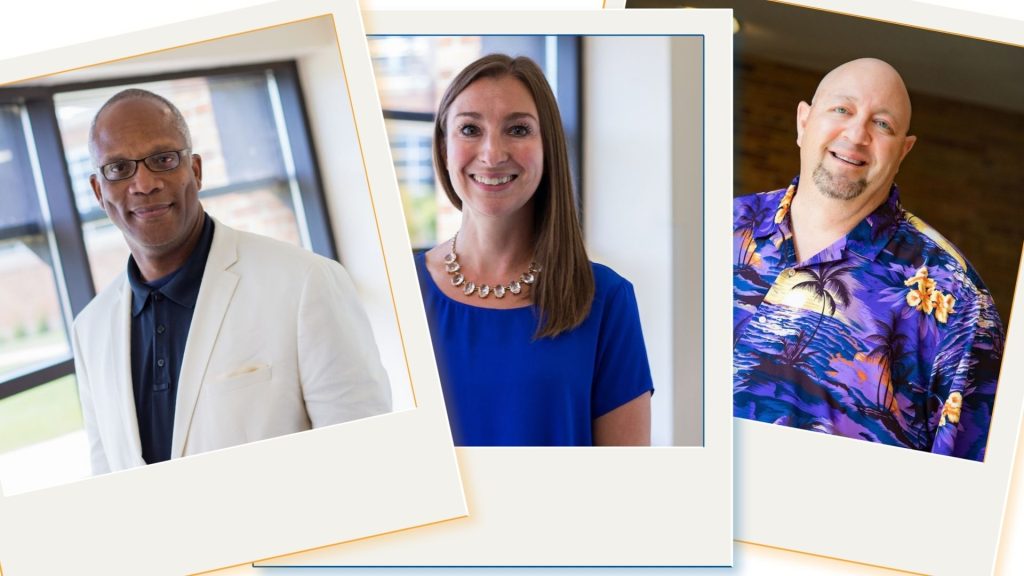
Head and shoulder shots of a man in a white shirt, woman in blue shirt and a man in a Hawaiian shirt
From left: Dr. Ken Harris, associate professor and chair of the Department of Justice & Public Policy; Rachel Pickett, PhD, professor of Psychology, department chair, and Summit presenter; and Dr. Michael Litman, professor of computer science and Summit presenter.

The summit will feature three panel discussions examining timely issues within the justice system.

The first, “Artificial Intelligence in the Justice System,” will explore topics including constitutional and ethical considerations, investigative benefits, privacy, public trust and accountability, and emerging AI technologies.

A second panel, “Violence Against Women,” will address domestic violence, sexual assault, human trafficking, victim advocacy, prevention, investigation and prosecution, and community collaboration.

The afternoon panel, “Missing and Unidentified Persons,” will examine DNA technology, forensic genealogy, interagency cooperation, national databases, victim identification and cold case investigations.

Panelists will include representatives from the Milwaukee Police Department, Milwaukee County Medical Examiner’s Office and CUW, with additional invited participants from area district attorney offices.

“We want this event to expose our students to the people who actually do this work and to the ideas, challenges and responsibilities that come with serving in the justice system,” Harris said.

The summit will also include a Lunch & Learn featuring Justice & Public Policy graduates discussing career preparation, internships, professional development and leadership. The day will conclude with a conversation about the future of justice leadership and the importance of interdisciplinary collaboration.

While the summit is free, registration is required. Click here.

Want in?

Concordia University Wisconsin is a Lutheran higher education community committed to helping students develop in mind, body and spirit for service to Christ in the Church and the world.

Engineering a better way to play

CUW students will put their engineering skills to work making play more accessible for children with disabilities.


A toy that sings, dances or lights up at the push of a button may seem simple. But for some children, pushing that button is anything but. That is where Concordia University Wisconsin engineering students are stepping in.

On Oct. 24, students will gather in CUW’s Collaboratorium, located inside the Robert W. Plaster Free Enterprise Center, for the university’s first build day modeled after Inclusive Play: Toys for All, a collaboration between Penfield Children’s Center and Marquette University’s Opus College of Engineering. Their goal is to adapt as many as 120 off-the-shelf toys so children with physical or developmental disabilities can operate them using accessible external switches.

Subha Kumpaty, PhD, chair of Concordia’s engineering and mathematics department, says the project brings together technical learning, student leadership and service in a way that fits naturally with Concordia’s mission.

“Service learning is part of our DNA,” Kumpaty said. “We want to develop students who will serve Christ in the Church and the world. This is right in that alley.”


It only takes a few to move a mountain

Concordia’s involvement began in 2023, when Kumpaty connected with Vladimir Bjelic, a speech-language pathologist at Penfield Children’s Center, through CUW Professor Yiming Liao. Soon after, engineering students began designing and 3D printing adaptive switches for toys used by children with disabilities.

Last spring, the effort resulted in approximately 50 to 60 adaptive switches for Penfield. Kumpaty also sent groups from CUW to Marquette University’s Inclusive Play: Toys for All build days in 2024 and 2025, where they gained hands-on experience adapting the toys themselves.

Those who participated came back wanting more of their classmates to have the same experience. As interest grew, Bjelic and Kumpaty began working to bring a build day to Concordia for the first time.

“All of our students should be doing it, not just four of us or eight of us,” Kumpaty said. “When the students themselves started saying we should really be involved in this, I started thinking, ‘How can we do a build day ourselves?’”

On Oct. 24, they’ll get that chance. The event calls for eight workstations with teams of four or five at each. Trained student leaders will guide them through opening each toy, locating its activation circuit, installing a 3.5 mm jack, soldering and insulating the new connection, reassembling the toy and testing both its original and adapted controls. The goal is not simply to make the toy work. It also has to be safe, durable and ready for use by a child.

Organizers Lucas Kearney and Evan Delvaux have helped turn the idea into a working plan, coordinating funding, toy selection, tools, volunteer training and station logistics. Kearney, a junior, is studying industrial and mechanical engineering with a minor in computer science emphasizing AI and robotics. Delvaux, a sophomore, is pursuing bachelor’s degrees in industrial engineering and computer science, with an emphasis in AI and robotics. He is also pursuing a master’s degree in artificial intelligence through the CS Scholars program.

Planning this event has required both to manage budgeting, scheduling, problem-solving and coordination with campus and community partners. The experience has also made the importance of inclusive design more tangible for both.

Just think about it. A relatively small design change can determine whether a child can independently interact with an everyday object. That makes every detail matter. “The work cannot stop at ‘it turns on,’” Kearney and Delvaux explained. “We have to think about durability, loose parts, strain relief, clean wiring and consistent testing.”


kid in wheel chair
Two photos courtesy of Penfield Children’s Center.

The power of a button

Bjelic has spent 13 years working as a speech-language pathologist. At Penfield, he works primarily with children from birth to age 3 through Milwaukee County’s Birth to 3 Program. But adaptive switches can benefit people well beyond early childhood.

The same concept can be applied to everyday items such as fans, drink dispensers, mixers and blenders, allowing someone to operate them using a larger, more accessible switch. A child learning to cook, for example, could activate a mixer while making cookies with a parent. Similar adaptations can give children, teenagers and adults greater access to everyday activities.

The possibilities are endless. Bjelic has also worked with older students using adaptive switches for functional activities, including one student who used a switch to operate a fan during a school activity. For him, the goal is the same at any age: finding ways for people to participate more independently in everyday life.

For those unfamiliar with adapted toys, their importance goes well beyond playtime. Many commercially available toys require a child to squeeze a small foot, press a particular switch or make another precise movement to activate the toy. A child with cerebral palsy or another physical disability, for instance, may understand perfectly well what the toy does but be physically unable to make it respond. That often leaves the child watching while someone else, such as a parent, activates it.

“It’s a nice way of playing, but it’s a different feeling when a child is able to activate the toy herself,” Bjelic said.

Adapted toys change that by giving children another way to interact with a toy independently. Engineers can bypass the toy’s original switch and connect it to a larger external button. Depending on a child’s movement, that button can be pressed with a hand, elbow, foot, head or another part of the body.

Once a child makes the connection, “I hit the button, the dog barks,” Bjelic said, something special begins to happen. “They get this little glimpse in their eye and you see that they comprehend that,” he said.

Bjelic has seen children vocalize, smile or show other expressions while interacting with the toys. For some families, it can even create new opportunities for a child to play alongside a parent or sibling.

That understanding of cause and effect can also help therapists learn more about what a child understands and may open the door to other forms of communication, including augmentative and alternative communication systems.

“For me, yes, I can work on speech and language and all these other areas,” Bjelic said, “but I think the most important thing is that it gives these kids a chance to be a child and play and engage with their parents and siblings.”


three photos collage with engineering students

Removing the barriers to play

Cost is one reason this work matters. Bjelic recalled finding that an ordinary toy costing about $40 could cost roughly $120 once adapted for accessibility. In some cases, adapted versions were several times more expensive than their off-the-shelf counterparts.

That price difference helped lead to the creation of Inclusive Play: Toys for All about five years ago through Bjelic and Marquette engineer Molly Erickson.

To date, the program has adapted 942 toys and distributed more than 800 to roughly 35 clinics and organizations in the United States and abroad, including locations in Wisconsin, Illinois, Indiana, South Carolina and Kansas, as well as Mexico City, Belize and Manila, Philippines.

Support for Concordia’s build day has come from across campus and beyond. Student Government Association is providing $2,000 to the Concordia Engineering Network, a student organization for engineering students, to purchase toys, while the engineering department has procured additional supplies and accessories needed for the build.

Milwaukee Tool has also generously supplied many of the tools needed to equip the event’s eight stations. The company sees the partnership as an opportunity to support the next generation of problem-solvers and makers while strengthening the communities it serves.

“We’re proud to partner on projects that provide students with hands-on experiences while making a positive impact for others,” said Jake Schaller, senior talent acquisition manager at Milwaukee Tool.

With the necessary tools at hand, teams can work simultaneously rather than wait for equipment.


Building with purpose

High school students, including members of the Grafton High School robotics team and students from Living Word, are also expected to participate or observe. They’ll have lunch with CUW students and tour the engineering labs.

Kearney and Delvaux hope the experience shows them that engineering is collaborative, creative and useful now, not something they have to wait until college to experience.

Bjelic hopes the experience stays with students long after the last toy is tested, showing them how their engineering skills can be used to help others.

“You’re giving these kids who require assistance and require more help than other kids an opportunity to play and live and laugh and just be a child.”

It is an opportunity Kumpaty believes is worth the time, resources and effort behind Concordia’s first build day.

“Even if one child has benefited, it’s worth it,” he said.


Want in?

Concordia University Wisconsin is a Lutheran higher education community committed to helping students develop in mind, body and spirit for service to Christ in the Church and the world.

A legacy that lives on: Concordia honors Dr. Rob Barnhill

During Welcome Back Weekend, Concordia University Wisconsin celebrated the life and legacy of longtime Director of Athletics Dr. Rob Barnhill with two lasting honors: induction into the CUW Athletics Hall of Fame and the dedication of the Dr. Rob Barnhill Lobby inside the R. John Buuck Field House.


For more than 25 years, Dr. Rob Barnhill helped shape CUW Athletics.

He helped build programs, develop facilities and create new opportunities for student-athletes. He coached, led and cast a vision for what Concordia Athletics could become.

But for those who knew Barnhill, who died in July, his legacy was never simply about what he built. It was about the people he served along the way.

That legacy took center stage during Concordia’s Welcome Back Weekend on Saturday, Oct. 3, when the university honored Barnhill in two significant ways.

Barnhill was inducted posthumously into the CUW Athletics Hall of Fame, with his son Ty accepting the honor on his father’s behalf. Later that morning, members of the Concordia community gathered at the R. John Buuck Field House to dedicate its newly renovated lobby as the Dr. Rob Barnhill Lobby.

Together, the honors recognize a leader whose influence will remain a part of Concordia Athletics for generations.


Article content

More than buildings and championships

Barnhill began his Concordia career as the offensive coordinator for the Falcons football program, a position he held for nine seasons. During that time, the Falcons compiled a 70-20 record, captured four conference championships and qualified for the NCAA Tournament three times.

In spring 2001, Barnhill was named Concordia’s director of athletics. Over the decades that followed, he helped lead a remarkable transformation of Falcon Athletics.

New sports brought new opportunities for students. Athletic facilities across campus were built or improved. Barnhill was instrumental in the development of Kapco Park, Fitting Field, Catalyst Park, Tomasini Stadium and the Catalyst Training Center, among other projects.

Those who worked alongside him saw something beyond the physical transformation.

In an interview with the Ozaukee County News Graphic following Barnhill’s death, Stacey Brunner Jones, CUW women’s basketball head coach and interim athletic director, spoke about his impact on the growth of Concordia Athletics.

“When I started, it was the normal Midwest sports, if that makes sense. We have added new sports almost every year. And I think that is huge,” Brunner Jones said. “Then, yes, you can talk about all of the new fields and the new buildings, and all of that. He was always just looking to make sure we kept growing, and he always had a hand in that. He was our leader.”


A leader who cared for people

Barnhill’s leadership extended well beyond facilities, programs and competition.

For generations of Falcons, he was a mentor, advocate and steady presence who cared deeply about the students and colleagues entrusted to him.

Lennie Childs (’16), who played hockey at Concordia from 2012-16 and now serves as head coach and general manager of the Janesville Jets, remembers Barnhill’s influence personally.

“Incredible leader of people. Took care of his students like they were his own. I will never forget the impact he had on me and the others who had the honor to know him.”

That care for others also stood out to Concordia President Dr. Erik Ankerberg. In a message to the Concordia community following Barnhill’s death, Ankerberg reflected on what he believed mattered most about Barnhill’s years of service.

“What I will remember most is not the buildings, the championships, or the growth of our programs. I will remember Rob’s steadfast commitment to people,” Ankerberg wrote. “He cared deeply for our students, believed in the work God had called this university to do, and faithfully served that calling until the very end.”

Barnhill’s influence reached beyond Concordia, too.

In a statement following Barnhill’s death, Northern Athletics Collegiate Conference Commissioner Jeff Ligney reflected on Barnhill’s impact not only at CUW, but throughout the conference.

“Rob Barnhill’s impact on the Northern Athletics Collegiate Conference extended far beyond the success of Concordia University Wisconsin’s athletics programs. Throughout his career, Rob was a visionary leader who understood that athletics are ultimately about developing people. His unwavering commitment to student-athletes, his support of coaches and administrators, and his collaborative approach to leadership helped strengthen not only his own institution but the entire NACC.

“Rob was a friend, trusted colleague, respected mentor, and thoughtful voice whose leadership was guided by integrity, humility, and a genuine desire to create opportunities for others to succeed, Ligney continued. “His legacy will be reflected for years to come in the thousands of student-athletes whose lives were enriched by his leadership and in the countless colleagues who were fortunate to work alongside him.”


Article content

A name that will welcome Falcons home

Now, Barnhill’s name has a permanent place inside a building that represents so much of the athletics community he spent decades serving.

The newly renovated Dr. Rob Barnhill Lobby welcomes student-athletes, alumni, families, friends and visitors into the R. John Buuck Field House, Concordia’s gymnasium. The Field House itself bears the name of former Concordia President Rev. Dr. R. John Buuck, who served from 1979 to 1996.

For future Falcons, Barnhill’s name on the lobby will offer an opportunity to learn about the man who helped build the athletics experience they inherit. For alumni, coaches and colleagues who knew him, it will be a reminder of a leader, mentor and friend.

The dedication and Hall of Fame induction also point to something deeper about Barnhill’s legacy at Concordia.

His work was ultimately about creating opportunities for people to grow.

That calling reflects Concordia’s mission to develop students in mind, body and spirit for service to Christ in the Church and the world. Barnhill lived out that mission through athletics, using his vocation to serve students, support colleagues and help others develop the gifts God had given them.

Even through illness, he continued serving the university community and the mission in which he believed.

Barnhill leaves behind his wife, Stephanie, and their sons, Ty and Caden, along with generations of Falcons whose lives bear witness to his service.

Buildings will change. Records will be broken. New teams will take the field.

But the people Barnhill invested in will continue to carry his influence forward.

And now, every time Falcons enter the Dr. Rob Barnhill Lobby, they will be reminded of a life spent serving them.

“God is our refuge and strength, an ever-present help in trouble.” (Psalm 46:1)


Want in?

Concordia University Wisconsin is a Lutheran higher education community committed to helping students develop in mind, body and spirit for service to Christ in the Church and the world.

CUW ranks No. 2 among Wisconsin’s private national universities

Concordia University Wisconsin is the second-highest-ranked private institution in Wisconsin, according to the 2027 U.S. News & World Report National Universities rankings. CUW ranks No. 4 among all national universities in Wisconsin, with only one private institution ranking higher.


The university also climbed 30 spots to No. 299 among national universities and ranks No. 142 among private universities.

President Erik Ankerberg acknowledged the rise in the rankings but said they are only one measure of the work happening across the university.

“The ranking is an encouraging external validation of the work we see happening across this campus every day,” he said. “But rankings are only one way of looking at a university. What matters most is the education we provide, the opportunities we create for our students and the impact our graduates have in the communities they serve.”


Gaining breadth without losing identity

The rankings reflect a university with an increasingly broad academic reach while maintaining the Lutheran identity at the heart of its mission.

Students come from 49 states and 23 countries to attend a university that offers more than 70 undergraduate programs, more than 30 master’s programs and eight doctoral programs.

CUW continues to expand opportunities in the health professions while building new academic partnerships. Its partnership with Idaho College of Osteopathic Medicine creates pathways for qualified students pursuing medical education and includes plans for an ICOM instructional site on the campus, contingent on accreditation.

Faculty scholarship and research continue across disciplines, while partnerships with schools, churches, healthcare organizations and businesses extend Concordia’s reach beyond campus.

The larger story is not simply one of growth. It is about expanding academic opportunities while maintaining a commitment to excellence and Concordia’s Lutheran identity.


Deep roots and a growing reach

Concordia’s roots remain central to its identity. The university continues to serve students and communities throughout the state through partnerships with schools, churches, employers and other organizations.

At the same time, CUW’s graduate programs, research activity and health professions programs are extending its reach. Doctoral programs, graduate education and partnerships in healthcare position the university to serve students and communities in new ways.

None of that guarantees a higher ranking next year. Rankings and methodologies change. What the latest results show is where Concordia stands today, even as the university remains focused on its Lutheran mission.


Finding the right fit

Each year, students choose Concordia for reasons that extend beyond rankings. For some, it is the university’s Christ-centered, confessional Lutheran identity. For others, it is particular academic programs, career pathways, athletics, fine arts opportunities or student organizations.

For many, it is the combination of those things within a close-knit university community.

Senior Jenna Piwowarczyk, who is majoring in politics, philosophy and economics, said her experience at Concordia has shaped several areas of her life.

“It’s no surprise to me that Concordia University Wisconsin continues to flourish and climb the rankings,” Piwowarczyk said. “Since coming to Concordia, I have grown in every aspect of my life: faith, academics, social life and even physical health. All of my classes offer discussion and one-on-one work with astounding professors, so I always feel set up to succeed. Faith on campus guides the strong community among students and gives each person the chance to grow in their own way. It’s been one of the best decisions of my life!”

U.S. News considers factors including graduation and retention, academic reputation, faculty and financial resources, graduate earnings and research when compiling its Best Colleges rankings.

Those measures can provide useful context, but they cannot capture every factor that shapes a student’s college experience. Choosing a college is about finding a place that fits who students are and helps prepare them for who God has called them to be. That is something a national ranking cannot fully measure.

At Concordia, the goal is not simply to move higher on a list. The university is committed to helping students develop in mind, body and spirit for service to Christ in the Church and the world. That mission is lived out through strong academics, meaningful experiences and preparation for lives of vocation and service.
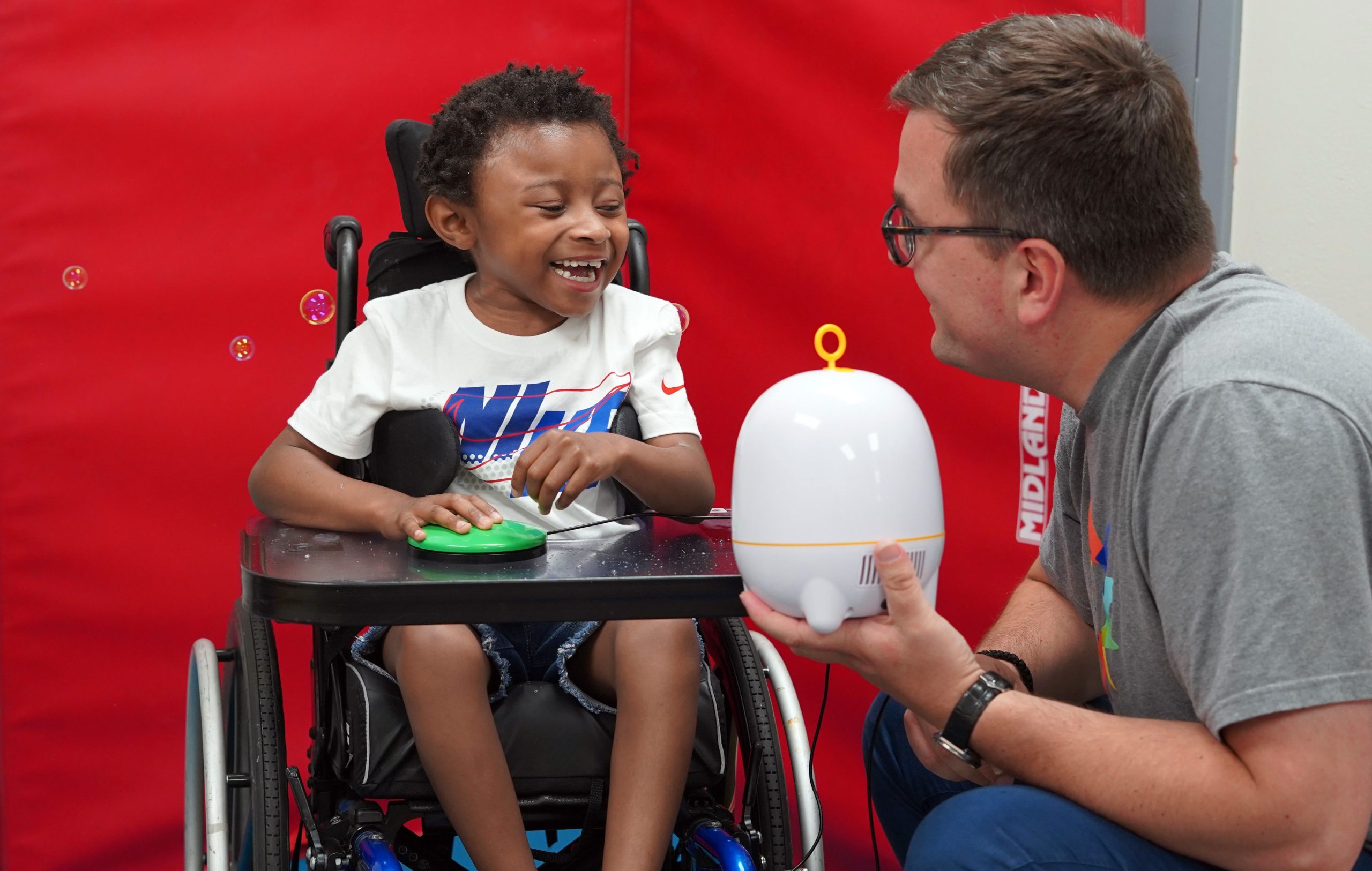
For a Lutheran university with deep Wisconsin roots and an expanding academic portfolio, moving 30 places in the rankings marks an important moment. But Concordia’s greater measure of success remains what happens beyond the rankings: how students grow during their time at the university and how they use their education in service to Christ, the Church and the world.
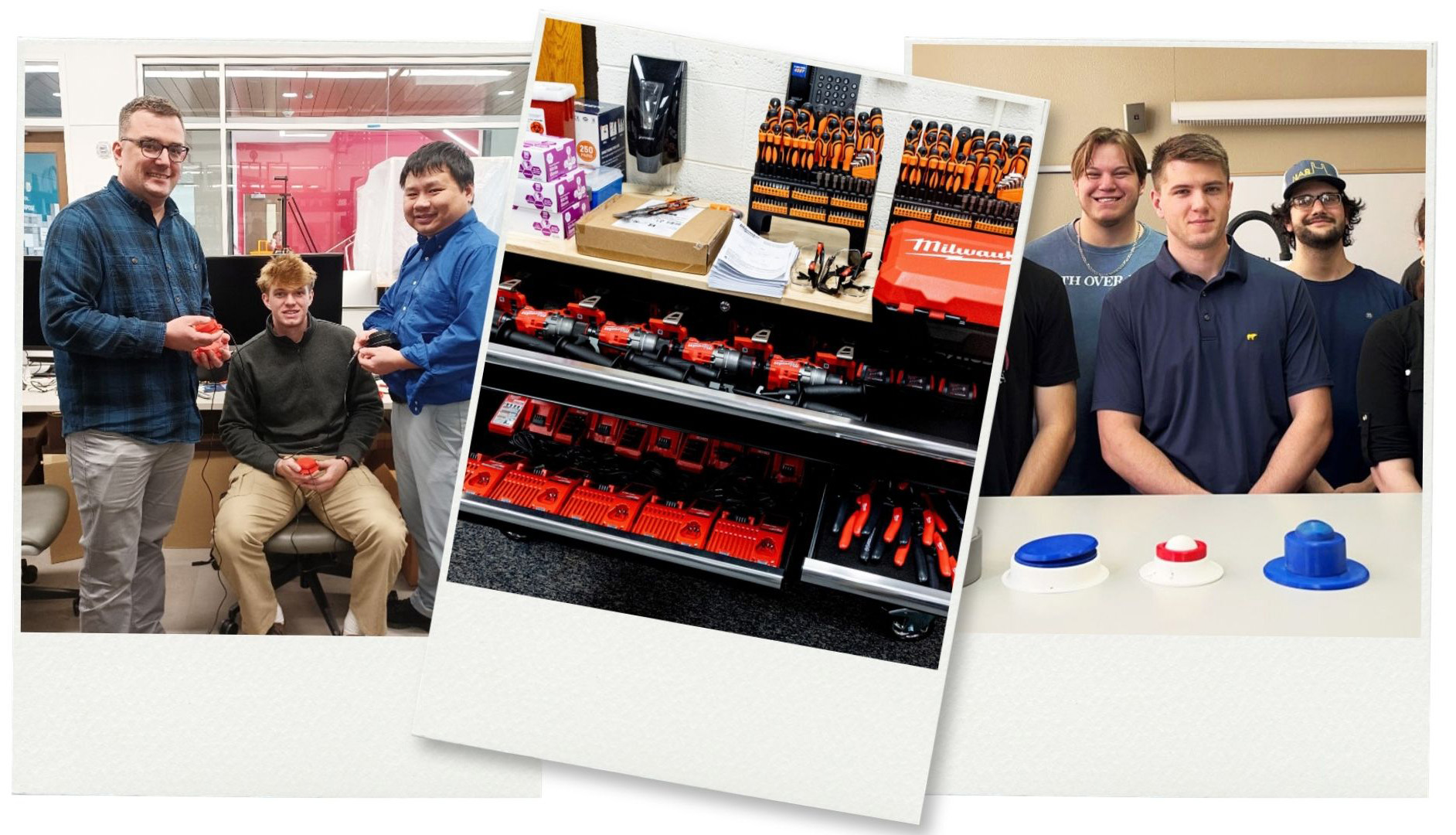
Lead. Teach. Serve.


In the news: CUW’s rise in the U.S. News & World Report rankings has also drawn attention from local media. The Milwaukee Journal Sentinel, Milwaukee Business Journal and KDHL Radio have reported on Concordia’s movement in the latest rankings.


Want in?

Concordia University Wisconsin is a Lutheran higher education community committed to helping students develop in mind, body and spirit for service to Christ in the Church and the world.