
Faculty, professionals and alumni encouraged students to think deeply about the responsibilities they will carry into their careers and communities.
Before panelists explored artificial intelligence, violence against women, missing persons investigations and the future of justice leadership, Kenneth Harris, PhD, had a question for the room.
With everyone gathered in the Collaboratorium of CUW’s Robert W. Plaster Free Enterprise Center, Harris asked: How can people participate meaningfully in the justice system if they struggle to read or think critically?
The room was quiet. Thank goodness for the complimentary coffee on the back table. It’s an important question, but a heavy one to process at 9 a.m. A wake-up call in more ways than one.
According to Wisconsin Literacy, 1 in 7 Wisconsin adults struggle with low literacy, which can make tasks such as completing forms and following written instructions difficult.
As chair of the Department of Justice and Public Policy, Harris wanted attendees to dig deep and think about what that challenge means for their communities. If people struggle to understand the system, how can they ask questions, weigh information or have a voice in decisions that affect their lives?
Organized by Harris and held Wednesday, Oct. 14, the Justice Summit brought faculty, justice professionals, alumni and students together under the theme “Old Wine in New Bottles: New Challenges Facing the American Justice System.” Members of Beyond a Reasonable Doubt (BARD), CUW’s law and law enforcement club, helped with the event.
Preparing students for those challenges was a focus of Rachel Ware Carlton’s opening remarks. The dean of the School of Arts & Sciences highlighted the “&” in the school’s name, explaining that students need both dimensions to be informed and formed for their future vocations.
President Erik Ankerberg emphasized Concordia’s role in advancing conversations about justice and preparing students to lead with strength and compassion. He encouraged students to listen carefully and consider the kind of leaders the world needs.
Throughout the day, conversations returned to questions of truth, accountability and human dignity.
“Justice Summit 2026 was more than a gathering of professionals; it was an opportunity to exchange ideas, challenge assumptions, inspire future justice leaders, and strengthen the relationships between education and professional practice,” Harris said.
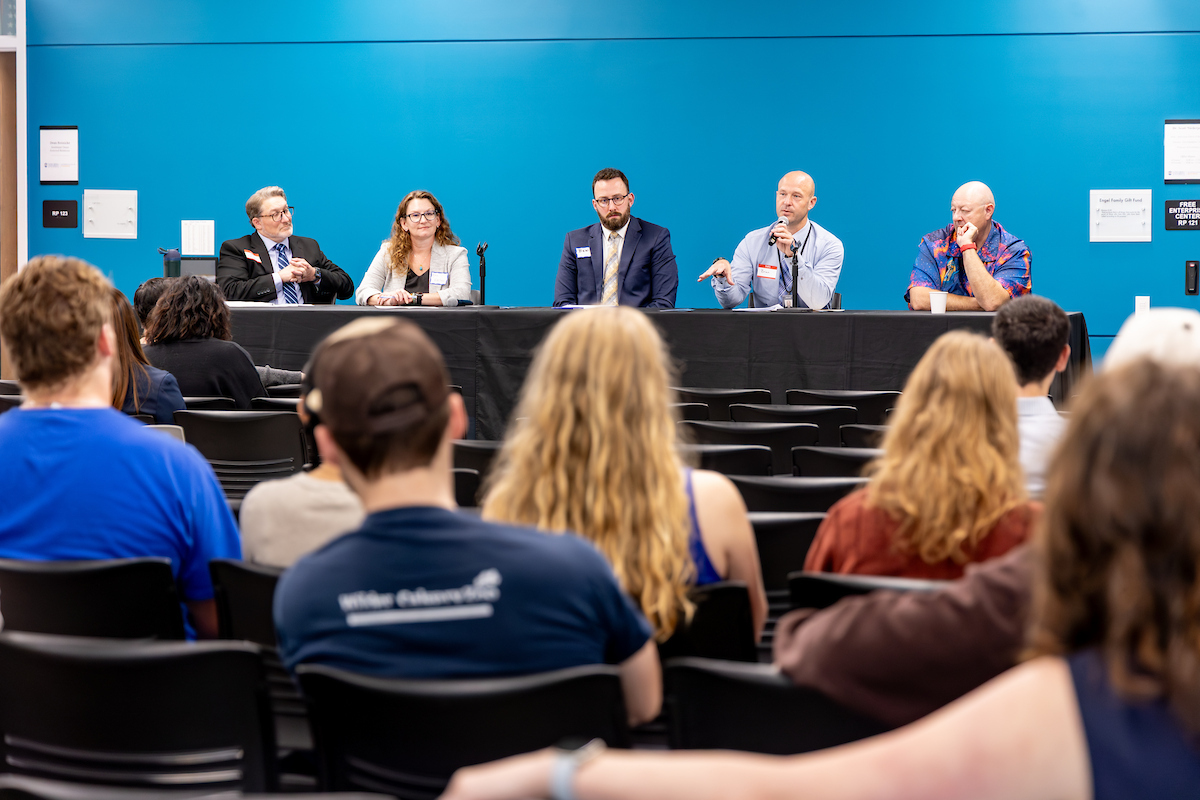
Panel 1: Artificial Intelligence in the Justice System
Artificial intelligence can help investigators analyze information, identify leads and prepare transcripts. But when a decision could change someone’s life, what responsibility must remain with a human being?
The summit’s opening panel explored that question with Michael Litman, PhD, professor of computer science; Matthew Mac Kelly, JD, EdD, associate professor of justice and public policy; Capt. Brian Damon of the Milwaukee Police Department; Benjamin Lindsey, Ozaukee County district attorney; and Erin Karshen, an assistant district attorney in Milwaukee County’s Sensitive Crimes Unit.
Panelists emphasized using AI as a starting point, with people responsible for verifying information. Lindsey explained that an arrest can damage relationships and a person’s standing in the community, making the consequences of inaccurate information significant.
“We must be thoughtful on how we proceed,” he said.
Harris pressed the panel on accountability: Who bears responsibility when these tools contribute to injustice? Mac Kelly acknowledged the difficulty of assigning accountability while emphasizing the shared responsibility of policymakers, educators and justice professionals.
Throughout the discussion, panelists returned to the importance of experience, empathy, integrity and compassion. Using AI responsibly requires professionals who can evaluate its output, recognize its limitations and exercise sound judgment.
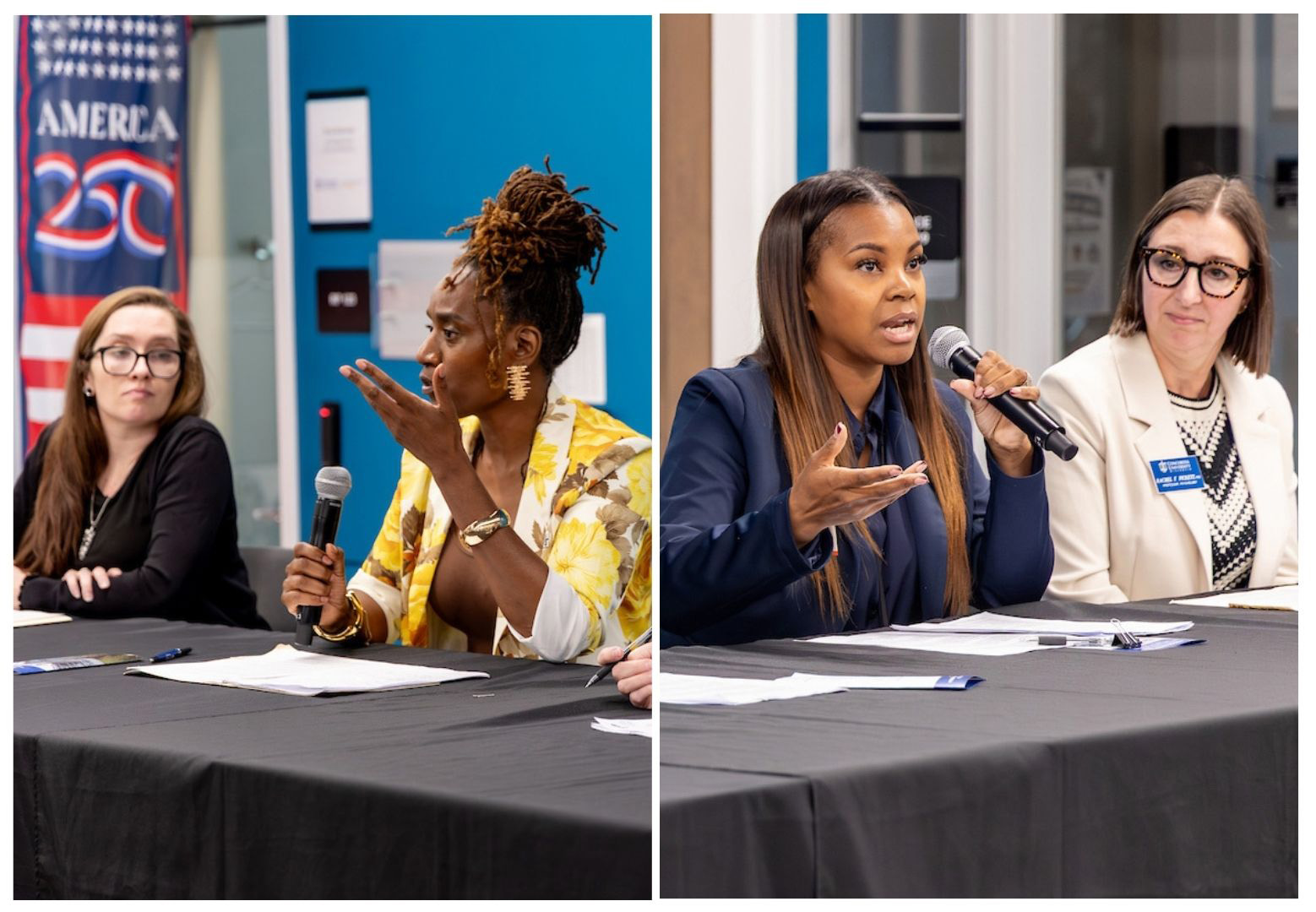
Panel 2: Violence Against Women
Leaving an abuser can mean losing housing, money or transportation. It can also bring greater danger. During the panel, Rachel Pickett, PhD, chair of CUW’s Department of Psychology, explained that harmful behavior may feel normal to someone who grew up around it, making the need to leave harder to recognize.
Pickett joined assistant professor Lisa Adams-Qualls of CUW’s social work program; Milwaukee Police Detective Shirley Thomas-Baldwin; Maria Rozek, a trauma counselor and victim advocate with the Milwaukee Police Department’s Sensitive Crimes Division; and Jessica Behling, an assistant district attorney in Milwaukee County’s Domestic Violence Unit.
Adams-Qualls explained how financial dependence, shared housing and concerns involving children can complicate leaving. “As a social worker, I understand it is not enough to simply tell someone to leave an abusive relationship,” she said.
Pickett emphasized preparing Concordia students to recognize those practical challenges alongside the emotional toll. “My goal as a psychology professor is to help them understand that as therapists it is important to support survivors’ mental health and safety, as well as their practical needs,” she said. She also noted that judgment or blame after someone discloses abuse can cause further harm.
Harris broadened the conversation by challenging the assumption that victims are always women. Panelists shared examples of men experiencing abuse and discussed how fear of others’ reactions can keep them from seeking help. According to the National Domestic Violence Hotline, citing a 2010 CDC survey, approximately 1 in 4 women and 1 in 7 men in the U.S. have experienced severe physical violence by an intimate partner during their lifetime.
When Harris asked about preventing victimization, Thomas-Baldwin responded: “Speak up!” But as the group acknowledged, that can be easier said than done. Fear can keep someone silent and make investigations more difficult when victims hesitate to participate.
The conversation ultimately returned to prevention.
“Prevention before intervention,” Adams-Qualls said.
She explained that families can model respectful communication, teach boundaries and show children how to handle conflict, while schools reinforce those lessons through age-appropriate education.
Rozek also emphasized that prevention starts with teaching healthy relationships at home. Behling called for communities to rethink funding priorities, while Pickett highlighted early childhood development and programs that help parents keep children safe and healthy.
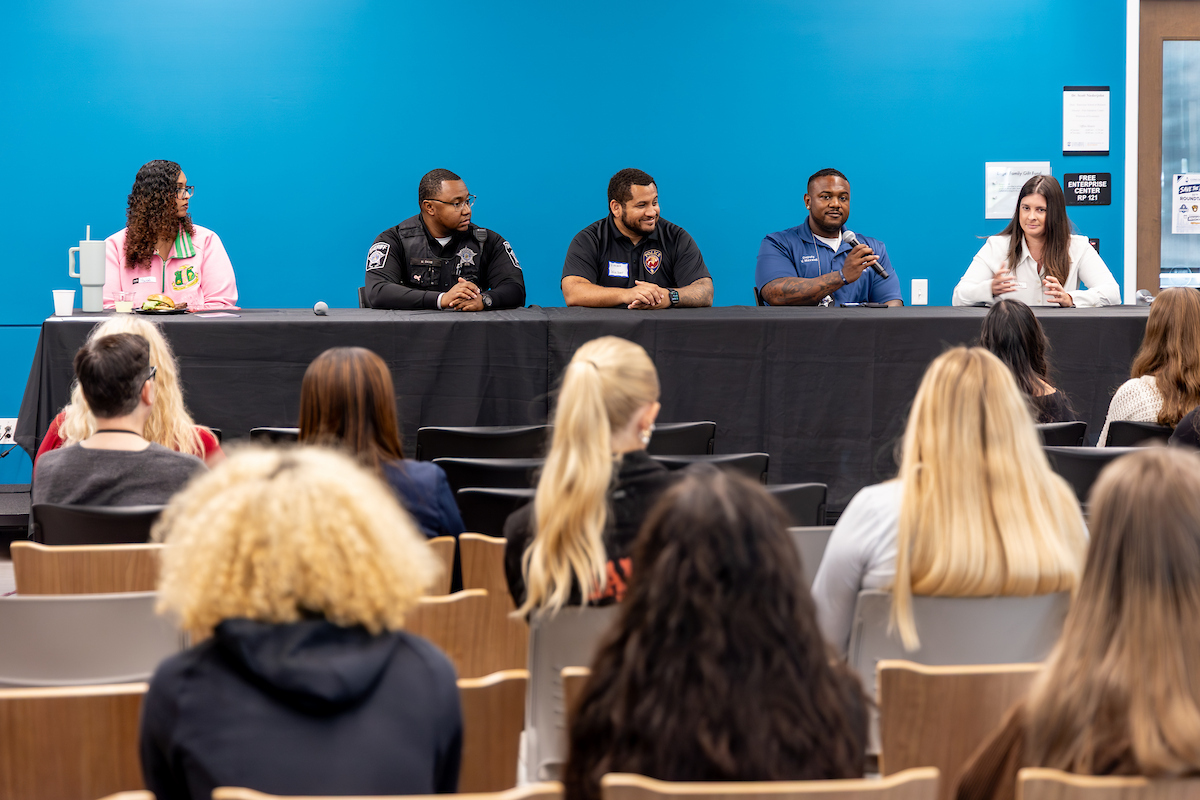
Alumni: JPP Graduate Panel
During the lunchtime alumni panel, justice and public policy graduates shared advice about internships, professional skills and finding their way after graduation.
Isaiah Lubner, a current justice and public policy major in the Class of 2027, left with plenty to think about—and a new career interest.
“After speaking with an alumnus, I developed a strong interest in pursuing a future career with the FBI,” he said. “These conversations helped me better understand my own career goals and gave me a clearer direction for my future.”
CUW alumna Veronika Metanova’s advice also stuck with him: Make a plan, work toward your goals and understand that mistakes are part of learning along the way. Fellow alumna Hayat Ibrahim reminded students that it’s also OK to change course.
“Give yourself permission to change direction,” said Ibrahim, who graduated in May 2025 with a bachelor’s degree in justice and public policy.
Ibrahim’s most recent contract position was as a legal administrative assistant at Associated Bank. She credited Concordia with strengthening the research, analytical and communication skills she put into practice during an internship at Ritter Law Office. Along the way, Harris and Mac Kelly offered guidance beyond the classroom.
“Being away from home, they provided guidance, encouragement, and support in ways that felt very much like having father figures there for me,” she shared.
Now navigating life after graduation, Ibrahim encouraged students to give themselves that same room to grow. “Your first job does not have to be your forever job, and your original plans do not have to define your future,” she said.
Other advice shared during the panel included “Take risks and be brave” and “Be adaptable.” Ibrahim echoed that encouragement, urging students to ask questions, advocate for themselves and remain open to opportunities they had not anticipated.
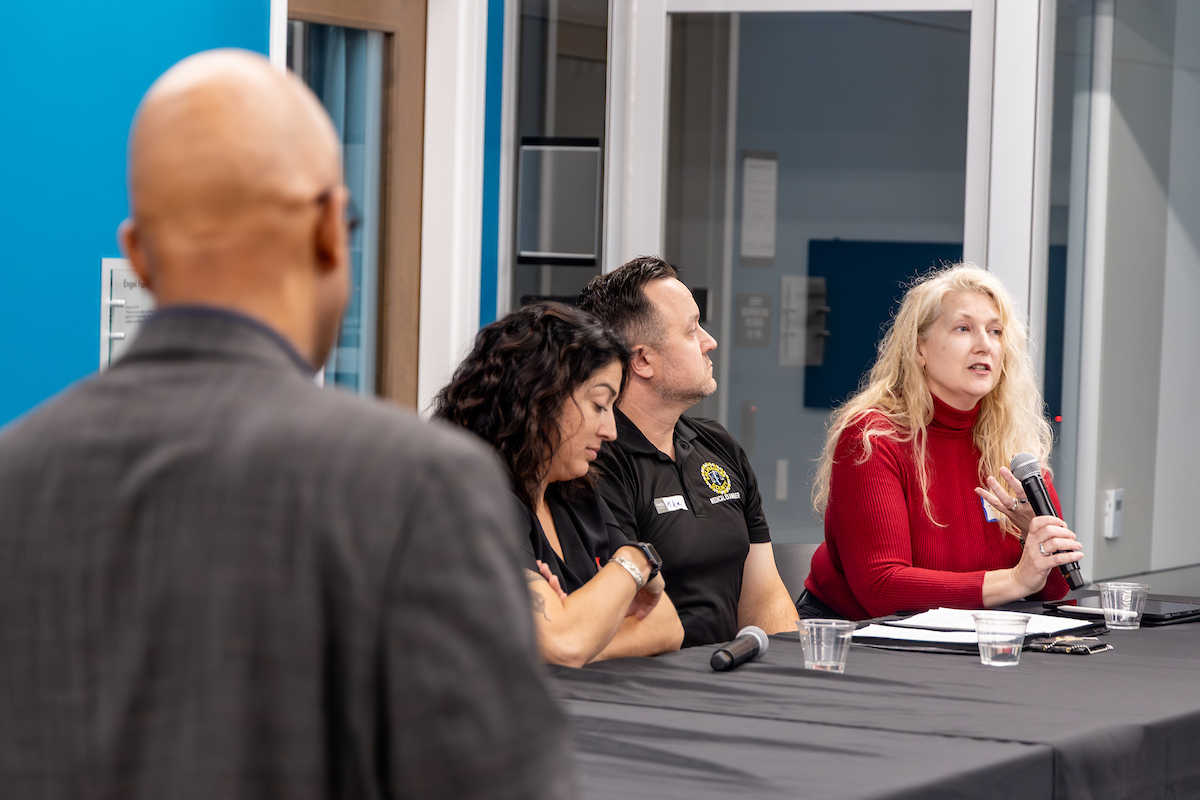
Panel 3: Missing and Unidentified Persons
The third panel focused on missing persons investigations, perhaps one of the day’s most difficult topics to grasp.
“It’s a bigger problem than we think,” said Jamie Sromalla, who has served with the Milwaukee Police Department for 10 years, including the past two years working on missing persons cases.
Sromalla joined Kim Sternhagen of the department’s Sensitive Crimes Division and Michael Simley of the Milwaukee County Medical Examiner’s Office to discuss finding missing people and identifying unknown individuals.
Milwaukee alone has approximately 450 open missing persons cases, about half involving juveniles, Sromalla reported. Thirty-five are cold cases dating back 10 to 20 years. While that’s down from more than 700 when she started, keeping up remains difficult. Closing 10 cases can be followed by 15 more coming in, she said.
All three panelists emphasized an important distinction, one that can be hard for people to accept: Going missing is not a crime. An adult may choose to leave without sharing their location with friends and family, limiting what investigators can do.
Other challenges include accessing phone records and social media accounts, along with finding people willing to share information. Sromalla said community members sometimes fear coming forward, especially in front of others in their neighborhoods.
Identifying someone who has died presents another set of challenges. Simley, who has 18 years of experience, emphasized careful observation and thorough information gathering.
“The truth is in the details,” he said.
Identification may involve a black-and-white photograph of the deceased or scientific methods such as fingerprints, DNA and dental records. Details from those reporting someone missing, including an old injury or tattoo, can help investigators narrow the search.
Panelists also discussed reviewing older records and the time required for testing. Helping families understand that process is part of the work, especially when answers come more slowly and with less certainty than television might suggest.
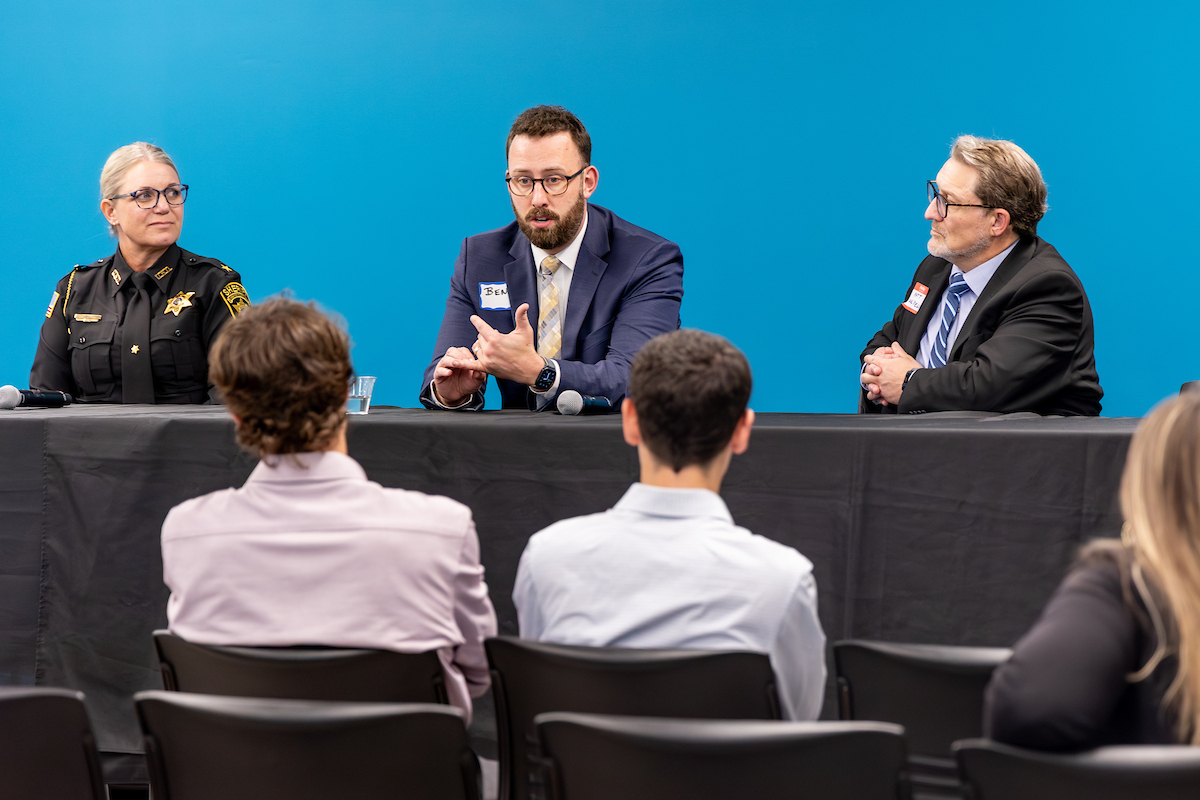
Panel 4: The Future of Justice Leadership
The day ended with a conversation about what it takes to lead. Harris and Mac Kelly joined Ozaukee County Sheriff Christy Knowles and Lindsey to discuss the qualities justice professionals need, especially when stepping into positions of power.
Lindsey emphasized humility first and foremost. Knowles spoke about having a strong value system, staying true to what you stand for and remaining adaptable as you work toward your goals. Both agreed that leaders must make difficult decisions, including some that others will not like.
Knowles also acknowledged that the “letter,” or political affiliation, attached to a leader’s name can influence how people perceive them. Lindsey agreed that leadership changes a person’s relationship with the community. Remaining anonymous in a crowd is a luxury leaders don’t have, he said.
Above all, the panelists emphasized integrity. Listening, owning your mistakes and taking responsibility matter when people are looking to you for leadership. Mac Kelly connected those everyday choices to the future students will help shape.
“The future of the criminal justice system, public policy, and society as a whole depends on empathy, compassion, communication; how we carry out our collective responsibilities to one another today determines our future,” he said.
That message resonated with BARD president Makayla Runyon, a sophomore studying philosophy, politics and economics who hopes to fight human trafficking through a career in the legal field.
“The sheriff and DA’s conversation about how necessary good character is really stuck with me and challenged me to continue to strengthen the character I believe Jesus has helped cultivate in me, not just for my own peace of mind, but for my future vocation too,” she said.
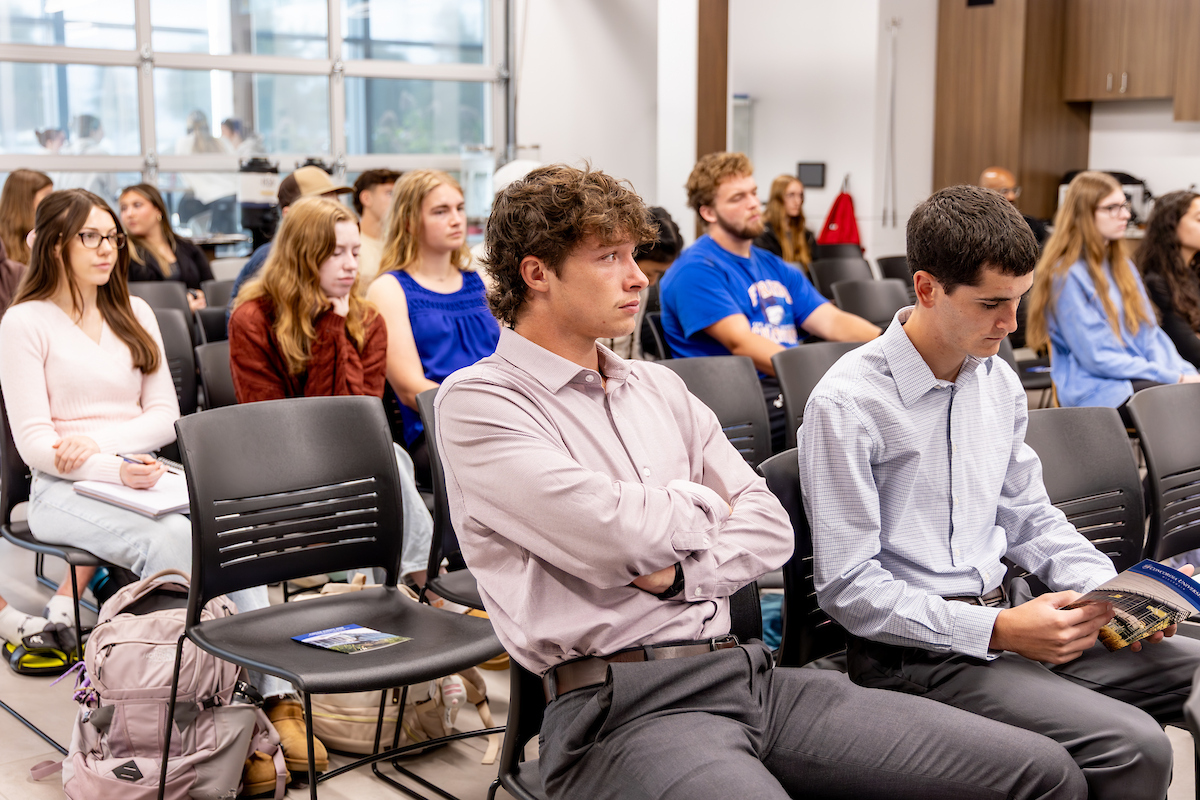
Get to know BARD
Beyond a Reasonable Doubt (BARD) is CUW’s law and law enforcement club, open to students of any major. The club helps students understand the criminal justice system and how laws apply to their everyday lives. To learn more, contact club president Makayla Runyon at makayla.runyon@cuw.edu.
Want in?
Concordia University Wisconsin is a Lutheran higher education community committed to helping students develop in mind, body and spirit for service to Christ in the Church and the world.