A legacy in glass and grace: Living Word Lutheran High School students honor Concordia through sacred art

One visit to Concordia University Wisconsin’s campus is often enough to sense something deeper at work — God’s presence revealed in the beauty of the lakefront horizon, the quiet strength of its buildings, and the faithful lives of students and alumni. For Heather Oechsner, a 2002 graduate in elementary education, that beauty left a lasting impression.


Alongside her art students at Living Word Lutheran High School in Jackson, Wis., she has helped transform that inspiration into art. Together, they created four large mosaic panels depicting scenes from campus and donated them to the university. The pieces, set to be installed later this year, stand as a colorful tribute to the place that continues to shape hearts, minds and callings.

“The mosaic is four parts and represents the four values CUW makes as part of their mission — Christ-centered, integrity & faith, excellence, and service,” Oechsner said. “Together they are quite big, each being 5 feet high and 3 feet wide.

“Each panel has a well-known, iconic component of the CUW campus — the famous floor tile (we re-created it); the driftwood cross at the bottom of the bluff; the courtyard path with trees; and the legendary gazebo. In addition, the Lutheran solas are tied in with the first panel, the Christ-Centered themed one — Christ Alone, Faith Alone, Scripture Alone, Grace Alone.” 


The artists

Eleven students worked with Oechsner for five hours a day for three weeks during their winterim, planning, measuring, forming clay pieces, and placing them on the boards along with broken glass and ceramic tile pieces.

The students and Mrs. O., as they affectionately call her, loaded up a vehicle earlier in February with the four pieces of art, ready to gift them to CUW. The panels were temporarily displayed against the wall outside of the Chapel of Christ Triumphant so that faculty, staff and students could see the result of the group’s creativity, skill and love for the Lord, as well as meet the artists that defined that love in clay, ceramic and glass.

“It’s cool that our artwork is going to be displayed on campus. To see Jesus’s love,” said high school junior Emree Kellerman. Her favorite of the four panels is the one depicting Concordia’s well-known gazebo. “I like the details and all of the colors,” she said, adding how “cool” it is for the group to leave a legacy on campus.

Nancy Eiff, grandmother of junior Megan Hauser, came out to Concordia for the presentation to the school. “She (Megan) showed me a picture in progress and I was amazed,” Eiff said. “They’re so talented.”

Megan said she enjoyed working on the integrity & faith panel, although it was a lot of work. “But it was really worth it,” she added, “because it turned out so beautiful.”


Why Concordia University

As an alumna, Oechsner experienced Concordia firsthand and visited each of the places depicted on the mosaic panels. She decided to represent her alma mater in art with her students because of the impact Concordia has made on her and her family.

“My dad went to CUW when it was in Milwaukee and also a high school boarding school in the 60s,” she said. “My brother graduated there in ’89 and my sister in ’95. Much of my family and extended family has gone to CUW and has worked there, too.

“Concordia became even more special to me in 2024 when they opened their chapel up to host our son Denny’s Celebration of Life service after losing him tragically,” she said. “The support from the entire faith community from Living Word to Concordia, our church First Immanuel and everyone in between was extremely supportive and caring to our family.

“Finally, I never thought I’d be a CUW parent, but my oldest son, Cole, transferred to Concordia for pre-med last year and loves it here.” 

Oechsner’s family is truly a Concordia legacy family, spanning three generations. It is fitting, then, that she chose Concordia as the place to leave a legacy in art.


Students standing by art

Student team

  • Eliza Anderson, senior
  • Max Ball, senior
  • Avery Cassidy, junior; father currently works at CUW and is an alumnus
  • Megan Hauser, junior
  • Emree Kellerman, junior; both parents are CUW alumni
  • Alayna Kurozawa, senior
  • Madison Lawrence, senior
  • Elaina Raymond, junior
  • Lilly Roltgen, senior
  • Anna Sileno, senior; attending CUW in the fall
  • Peytra Traska, junior; both parents are CUW alumni

By the numbers

4
hand-designed mosaic panels crafted and gifted to Concordia University Wisconsin

3
weeks of dedicated, creative work

5
hours set aside each day for hands-on artistic creation

11
high school students from Living Word Lutheran High School

1
teacher — an alumna whose talent, creativity, and love for her alma mater guided the project

24
hands working together to shape each panel, representing CUW’s mission

1
grateful university community in awe of this generous gift


Want in?

Concordia University Wisconsin is a Lutheran higher education community committed to helping students develop in mind, body and spirit for service to Christ in the Church and the world.


Letters to the King

Concordia students Isaac Brashaw, Rachel Pope, and Tirzah Schmickle are excited to introduce their new Christian pop band, Letters To The King, in hopes of sharing the truth and love of Christ.

The musicians began writing their music in late summer 2024, and their debut performance was at Concordia’s Got Talent in April 2025, where they won the talent competition. The audience loved their original music, which led them to record their single “More Like You” the following summer.

With Rachel and Tirzah as lead vocalists – also playing guitar and piano – their full ensemble consists of Isaac Brashaw on electric cello, Ayden Dunst on lead guitar, and Elliot Fortuine on the drum set.

The band’s name, Letters to the King, reflects their inspiration drawn from their connection with the Lord. “We feel like a lot of our music is conversations that we have with God, and what He says to us in Scripture,” Pope said.

Their first live performance after CGT was a band opener at X-Ray Arcade, where they performed their newest song, “What is the Truth.”

The trio described it as a contrast between repetitive spiraling thoughts and the chorus of the truth of God that sets them free. “It’s an anthem against anxiety,” Schmickle said. “The chorus is meant to be a breath of fresh air.”

The group plans to continue writing songs with a full album recording this summer.

“We’re still figuring out what’s all going to go on the album, because we’re still writing, and there’s one or two songs on that album that we won’t have performed before. So, we might want to swap something out,” Pope said, “It’s kind of cool just to have that freedom.”

Catch Letters to the King at X-Ray March 16, at a CAB study and live music event April 20, or at open mic during Life Fest, from July 9th-12th.

— Erica Herzog is a writer for the Beacon and a sophomore at Concordia, majoring in Mass Communication and minoring in Law and Politics. 

Called to walk with others

How one Concordia learner is discerning vocation through faith, compassion and community.


For many adult learners in CUW’s professional counseling program, the decision to pursue counseling is more than a career choice. It is a calling. For Rachel Morton, who earned her undergraduate and graduate degrees from CUW in 2011 and 2016 respectively, it was not simply about professional advancement. It was about responding faithfully to a call that had been taking shape for years.

Currently serving as assistant worship director at St. John’s Lutheran Church in West Bend, Wis., Morton has long walked alongside people in moments of joy, struggle and spiritual reflection. Over time, that work revealed something deeper stirring within her.

“I decided to pursue a degree in counseling because I have a drive to help people live whole, abundant lives right where they are,” she said. “Some people just need someone to walk with them.”


Led by God

With a path shaped by prayer, discernment and trusted community, Morton began to sense God’s gentle nudges.

“It started to feel more like shoving,” she said, smiling. “I spent a lot of time in prayer and talking with mentors and close friends. Their response was always, ‘It’s about time.’ That felt like confirmation.”

What began as a growing sense of calling soon became a clear next step, rooted in faith, service and vocation. Her decision to pursue graduate studies at Concordia felt both familiar and grounded.

“I chose Concordia for graduate studies for pretty much the same reason I did for my undergraduate work,” she explained. “Something about the community here, especially within the program, just felt right.”

That sense of belonging is a defining part of the counseling experience at CUW. Learners consistently point to strong faculty relationships, peer support and a shared commitment to faith-informed practice.


A way of being

At the heart of Morton’s formation as a counselor is Concordia’s emphasis on compassion—not as a concept, but as a lived practice.

“Concordia is preparing me to embody who I am,” she said. “I care about people physically and mentally, but I also care about them spiritually.”

She traces her understanding of compassion directly to Scripture.

“When Jesus healed people, Scripture says He was moved with compassion,” Morton reflected. “I’ve always thought of compassion as empathy in action. That’s something Concordia does well—preparing us to live that out.”

This integrated approach equips learners to serve clients holistically, honoring each person’s story, dignity and humanity.


It’s a puzzle

Balancing graduate school with professional and ministry responsibilities requires flexibility—something Morton values deeply in CUW’s counseling program.

“A day in the life looks different from week to week,” she said. “I loved my in-person courses and wish all of them could be that way, but when you’re working while going through school, that’s not always possible.”

The program’s online components allow learners to remain engaged academically while meeting the realities of work, ministry and family life.

“It’s about making it all fit,” Morton added. “I’m very grateful for the flexibility the program offers.”


Walking with others

Through rigorous coursework, faith-centered formation and a supportive learning environment, CUW’s professional counseling program is preparing Morton to step confidently into service-driven work.

For her, the journey is about more than earning a degree. It is about answering God’s call to walk alongside others with compassion, wisdom and hope.

For more information on counseling, read “Finding meaning in the counseling profession: From inspiration to vocation.”


Want in?

Concordia University Wisconsin is a Lutheran higher education community committed to helping students develop in mind, body and spirit for service to Christ in the Church and the world. Learn more about CUW’s professional counseling pathways, explore program options, or connect with an admissions counselor to discern whether this next step is right for you. Whether you are beginning to explore counseling or ready to move forward, Concordia is here to walk with you.


MBA in Healthcare Administration: The Next Step for Clinicians

An MBA in Healthcare Administration helps nurses and physicians build financial, operational, and strategic leadership skills. For clinicians ready to influence system-wide decisions, not just patient-level care, it can be a practical and purpose-driven next step.

Healthcare Needs Clinicians Who Can Lead

Healthcare is under pressure. Margins are tighter. Staffing shortages persist. Regulatory requirements continue to expand. Technology is reshaping care delivery at a rapid pace.

According to the U.S. Bureau of Labor Statistics, employment of medical and health services managers is projected to grow much faster than average over the next decade, reflecting the increasing demand for leaders who can manage complex healthcare systems.

Clinical expertise remains essential. But for those who want to influence policy, budgets, staffing models, and long-term strategy, clinical experience alone is no longer enough.

Hospitals and healthcare organizations need leaders who understand both patient care and organizational performance. That’s where an MBA in Healthcare Administration can make a meaningful difference.

For nurses and physicians who feel called to lead, not just practice, this degree builds the business toolkit needed to match clinical insight with strategic influence.


Keep Your Clinical Credibility—Gain Boardroom Fluency

Clinicians bring something invaluable to leadership: credibility. You understand workflow realities. You’ve worked the shifts. You’ve navigated patient complexity firsthand.

However, advancement often requires fluency in areas such as:

  • Budget development and financial statements
  • Capital requests for equipment or staffing
  • Operational metrics like length of stay and throughput
  • Strategic planning and service line growth

An MBA helps you translate patient-care priorities into clear, data-informed business cases.

Instead of saying, “We need more staff,” you can demonstrate how staffing models affect outcomes, efficiency, and long-term sustainability. Instead of reacting to financial constraints, you understand how reimbursement models shape decisions in the first place.

You’re not stepping away from your clinical identity; you’re expanding it.


Lead System-Level Change, Not Just Patient-Level Care

Many of healthcare’s toughest challenges are systems problems:

  • Workflow bottlenecks
  • Readmission trends
  • Staffing inefficiencies
  • Supply chain constraints
  • Fragmented care transitions

An MBA strengthens skills in:

  • Operations management
  • Process improvement
  • Change leadership
  • Strategic decision-making

That foundation equips you to redesign processes that affect thousands of patients, not just one at a time.

For clinicians who frequently think, “There has to be a better way,” business education provides the framework to make that improvement sustainable and measurable.


Expand Your Impact with Financial and Operational Expertise

Clinicians are often tapped for leadership because they understand care delivery. Yet advancement can stall without deeper knowledge of:

  • Cost drivers and reimbursement structures
  • Investment and capital allocation
  • Capacity planning and workforce optimization
  • Organizational culture and team performance

An MBA in Healthcare Administration fills those gaps.

When you understand how value-based care models affect revenue—or how operational inefficiencies influence margins, you’re positioned to shape strategy rather than simply implement it.

Healthcare organizations increasingly seek leaders who can integrate clinical quality with financial stewardship. This combination of clinical expertise and business acumen is becoming central to leadership pipelines.


Step Confidently into Emerging Leadership Roles

An MBA in Healthcare Administration aligns naturally with roles such as:

  • Nurse manager → director → executive leadership
  • Physician leader → medical director → service line leader
  • Clinical operations leadership
  • Quality, safety, and patient experience leadership
  • Population health and value-based care management
  • Practice or ambulatory operations administration
  • Healthcare consulting or healthtech partnerships

Even clinicians who remain partially in practice often become trusted voices for evaluating vendors, chairing committees, or leading cross-functional initiatives.

The MBA signals readiness for broader responsibility, without requiring you to abandon patient-centered values.

Healthcare Administration

Understand the “Why” Behind Healthcare Decisions

Healthcare decisions are rarely purely clinical.

Payment models, regulatory frameworks, compliance requirements, and resource constraints all shape what is possible. An MBA prepares clinicians to:

  • Understand organizational trade-offs
  • Communicate effectively with finance, HR, and compliance teams
  • Make decisions that are clinically sound and financially sustainable

For those who want a voice in shaping internal policy and long-term direction, this literacy is essential.

It’s not about compromising care. It’s about protecting care models by making them sustainable.


Future-Proof Your Career in a Changing Industry

Healthcare continues to evolve:

  • AI-enabled workflows
  • Expanding telehealth models
  • Consolidation and mergers
  • Rising patient expectations
  • Value-based reimbursement structures

Clinicians with business training are often well-positioned to:

  • Evaluate emerging technologies responsibly
  • Lead implementation without disrupting care delivery
  • Align clinical excellence with operational realities

An MBA does not replace clinical training. It strengthens your ability to navigate change with clarity and confidence.


Is an MBA in Healthcare Administration Right for You?

You may want to explore this path if:

  • You’re frequently asked to lead committees or initiatives.
  • You’re interested in influencing policy or operations decisions.
  • You’re considering director or executive-level roles.
  • You see system inefficiencies and want authority to address them.
  • You feel called to serve patients by strengthening the systems around them.

At its core, this degree expands your sphere of service.


FAQ

Is an MBA in Healthcare Administration worth it for nurses?

For nurses pursuing leadership or administrative roles, an MBA provides financial, operational, and strategic skills that complement clinical expertise and prepare them for broader organizational responsibility.

Can physicians benefit from an MBA?

Yes. Physicians in leadership roles often need formal training in finance, operations, and strategy. An MBA supports system-wide decision-making beyond clinical outcomes.

Will an MBA move me away from patient care?

Not necessarily. Many clinicians remain involved in care while assuming leadership duties. The degree expands influence rather than replacing clinical identity.

What roles can I pursue with an MBA in Healthcare Administration?

Common roles include nurse director, clinical operations leader, medical director, service line leader, quality executive, and healthcare consultant.


Expanding Your Leadership with Purpose

Healthcare needs leaders who understand both the bedside and the balance sheet.

An MBA in Healthcare Administration helps nurses and physicians grow from expert clinicians into strategic leaders, equipped to influence people, processes, and long-term direction while staying grounded in patient-centered care.

At Concordia University Wisconsin, leadership development goes beyond technical knowledge. Rooted in faith and guided by integrity, CUW prepares professionals to lead with both competence and character. Flexible formats, including online and hybrid options, allow working clinicians to advance their education while continuing to serve.

If you’re ready to expand your impact and lead with purpose, CUW’s MBA in Healthcare Administration can help you take that next step.


Concordia’s new master’s in AI makes regional headlines

Concordia University Wisconsin’s newly launched Master of Science in Artificial Intelligence is garnering strong attention across regional media, underscoring both the timely relevance of the program and Concordia’s role as a leader in preparing graduates for an AI-driven future.


The fully online graduate degree is designed to equip students with advanced technical skills, ethical grounding, and real-world AI experience needed to lead responsibly in today’s data-driven industries.

Stories have been recently featured in the following four news outlets.


No. 1: 620 WTMJ: In-depth radio coverage

On 620 WTMJ-AM, CUW’s Michael Litman, professor of computer science, joined Wisconsin’s Midday News to discuss the new AI master’s program and its impact. During the interview, he addressed the importance of ethical, vocationally informed AI education and explained how the program prepares students for work across a range of industries.

The broadcast expanded the university’s reach beyond print and digital platforms to radio listeners throughout Wisconsin.


No. 2: BizTimes Milwaukee features CUW’s forward-looking initiative

BizTimes Milwaukee reported on the launch of the AI master’s program, noting the growing demand for artificial intelligence expertise and the need to develop skilled professionals in the region.

The story positioned Concordia as contributing to Wisconsin’s technology sector and detailed how the program responds to industry needs.


No. 3: Urban Milwaukee amplifies the announcement

Urban Milwaukee published coverage of the official press release announcing the fully online program.

The story noted the program’s flexibility for working professionals and its emphasis on practical application and ethical discernment. The coverage introduced the program to a broad Milwaukee-area audience and underscored Concordia’s continued expansion in graduate education.


No. 4: Fox 11 WLUK in Green Bay

Fox 11 News (WLUK) in Green Bay published a story highlighting how the curriculum blends technical competencies with ethical decision-making and is structured for working professionals.

The report emphasized how the program prepares graduates not only to develop AI systems, but also to manage them responsibly. It also addressed the program’s appeal to professionals seeking career advancement or transition in a changing technology environment.


Preparing graduates

The media attention reflects the significance of the moment. As a Lutheran university committed to developing students in mind, body and spirit for service to Christ in the Church and the world, Concordia’s entrance into artificial intelligence education extends beyond industry response.

The program is designed to prepare graduates to think critically, lead ethically and serve faithfully within a rapidly evolving technological landscape.

Regional coverage signals that this is more than a program launch. It is a story about a university engaging emerging technology while remaining grounded in mission and purpose.


Want in?

Concordia University Wisconsin is a Lutheran higher education community committed to helping students develop in mind, body and spirit for service to Christ in the Church and the world.

The Quiet Reality of Quitting College Sports

A former university student athlete recently made the decision to leave the sport after playing for more than a decade because the love for the sport turned into a burden. 

According to the student athlete, the relationship with the coach was generally positive but not with teammates. They often felt valued based on skills rather than the person. 

The student athlete’s mental health suffered during the two years on the team, lost the love of the sport, and therefore decided to quit. 

According to the student athlete, a meeting with the coaches took place to explain their decision to quit the team. The coach was surprised at their decision, and since leaving, interactions have been brief but polite exchanges.

They also sent a text to the group chat to inform teammates. According to the student athlete, some teammates expressed understanding but others cast blame. 

“I felt like I was being blamed for the downfall of the team. Because of me leaving, the team would fail next season,” the student athlete said. 

The experience made them reevaluate friendships. According to the student athlete, some teammates stopped communicating and any form of contact. 

Although quitting the sport wasn’t easy, the student athlete hopes other athletes know it’s ok to make that choice. 

“If quitting the sport means bettering yourself, then you need to do it,” the student athlete said. “I knew that if I stayed on that team any longer, I would have lost myself.”

— Grace Partain is a writer for The Beacon. She is a Mass Communication major graduating in 2027. She is a member of the acrobatics and tumbling team.

A legacy that lives on at Concordia

Black Student Union President Za’Nadia Young reflects on faith, perseverance and the enduring impact of Black history beyond the month of February.


Black History Month invites reflection — not only on more than a century of federal recognition of Black history, but on the generations of courage, perseverance and faith that continue to shape the present and future.

For BSU President Za’Nadia Young, Black history is not simply something to commemorate — it is something to carry forward.

“As I reflect on 100 years of federal recognition of Black history, I am reminded that meaningful change occurs when we rise to the occasion and anchor ourselves in faith,” Young said. “Whether drawn from historical accounts or the lived experiences of my own family, the path has not been easy or clear. Yet one truth remains: giving up was never an option.”

Her words echo a truth that resonates across Concordia’s campus — that perseverance, grounded in faith, shapes leaders prepared to serve with purpose.


A journey rooted in purpose

Young views her BSU journey as more than personal achievement. It is a continuation of legacy.

“Black history is not simply a narrative I study — it is a source of inspiration that pushes me further and drives me to contribute to the ongoing legacy of achievement,” she said. “My journey is not motivated by trends or title, but by purpose. I am driven by the long-term impact this work will have on my community and the generational wealth it will help cultivate.”


Rising to the occasion

At Concordia, students are challenged academically and spiritually. For Young, that environment has been formative.

“My experience at Concordia has instilled in me the mindset to rise to every occasion, whether academically or spiritually,” she said. “The standard of excellence modeled daily has not only guided me through young adulthood but has also shaped how I carry myself and represent my culture and community.”

Serving as president of the BSU, she helps foster belonging, dialogue and celebration on campus.

“While navigating life as a minority can present unique challenges, I have embraced those challenges as opportunities to write my own story of perseverance and success — just as those before me have done,” she said.


More than a month

Black History Month provides a dedicated time for recognition, but its significance extends well beyond February.

“As we reflect on Black history, we are reminded that it is far more than a designated month,” Young said. “It is a movement, a lived experience, and most importantly, a legacy — one that continues to unfold through each of us.”

At Concordia, that legacy lives on through individuals like Young — scholars and leaders grounded in faith, committed to excellence and driven by purpose.

Black history is not only remembered at Concordia. It is lived, studied, celebrated and carried forward.


Upcoming free event for all

On Thursday, Feb. 26, from 6 to 8 p.m. in the Terrace Room, Unidos: A Heritage Celebration will honor multicultural success. Attendees will enjoy dinner and an evening of fashion, poetry and global music highlighting the beauty and diversity of cultures.


Updated as of Feb. 27.


Want in?

Concordia University Wisconsin is a Lutheran higher education community committed to helping students develop in mind, body and spirit for service to Christ in the Church and the world.

Confronting today’s opioid crisis through science

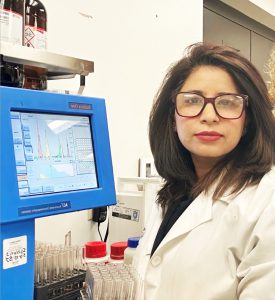
At Concordia University Wisconsin, Dr. Hina Andleeb is advancing pain treatments designed to restore function and dignity.


Chronic pain is something humans have sought to relieve for centuries, with research revealing pain management attempts as early as 1500 B.C. in Egypt. A brief look at the timeline shows that in the 1600s, opium was explored; in the 1800s, early narcotics were developed along with anesthesia using ether and chloroform; in the mid-to-late 1800s, cocaine was introduced; and by the 1900s, morphine and heroin were being used to manage pain. Today, opioids like Oxycodone and Fentanyl are being widely distributed and misused.

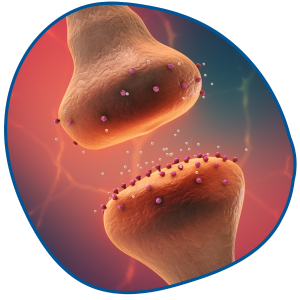
brain receptor graphic
Opioid binding to brain receptors reduces pain perception while increasing the risk of addiction.

What most of these pain management drugs have in common is their overwhelming potential for addiction, which has contributed to today’s opioid crisis. According to the Centers for Disease Control and Prevention, as of 2023, roughly 24% of adults experience chronic pain, and 8.5% experience high-impact pain that limits life or work activities. That same year, the CDC reported approximately 105,000 people died from drug overdoses, with nearly 80,000 of those deaths involving opioids — an average of about 217 opioid-related deaths per day.

Pain is a fact of life. It lets us know we are alive and, at times, protects us from further harm — yet it can drastically alter our ability to live fully. A double-edged sword. Researchers at Concordia are searching for innovative approaches that address pain without creating additional long-term harm to the mind, body and spirit.

As Romans 12:2 reminds us, “Do not be conformed to this world, but be transformed by the renewal of your mind, that by testing you may discern what is the will of God, what is good and acceptable and perfect.” In that spirit of renewal, there is hope that the way we approach pain — and the opioid crisis — can also be transformed. No more meaningless deaths in a time when faith and science together can help restore the whole person.

The following Q&A with Dr. Hina Andleeb, senior research scientist in CUW’s School of Pharmacy, addresses a global public health crisis. At Concordia, currently working alongside Christopher Cunningham, Ph.D., associate professor of pharmacy science, she continues her research on advancing safer therapeutic strategies for individuals living with persistent pain.


Q&A with Dr. Hina Andleeb

1. What first drew you to pain research, and what keeps you committed to it today?

I was drawn to pain research because so many patients still rely on opioids despite profound risks: dependence, tolerance, respiratory depression, cognitive and sedative effects, and hormonal disruption with long-term use. These harms are not abstract. In 2023 alone, drug overdoses claimed more than 100,000 American lives, the majority involving opioids, and misuse remains widespread — affecting nearly 9 million people age 12 and older each year. Clinically, opioids suppress breathing and are linked to opioid-induced endocrinopathies, reinforcing the urgency for alternative therapies.

That urgency shaped my path at the University of Florida and Northeastern University, where we pursued nicotinic acetylcholine receptor (nAChR)-based strategies. Our team discovered the first-in-class small-molecule a9 nAChR selective agonists for chronic and neuropathic pain, highlighted by compound 3h. That work continues to guide my research as I focus on advancing safer alternatives for patients living with persistent pain.

2. Was there a moment when you realized this work could truly change lives?

Yes. When I first saw the biological data showing our newly developed α9-selective agonist was highly potent and acting as we hoped, I realized we had created something unprecedented. Until then, only large, toxic peptide antagonists like conotoxins and bungarotoxins existed for this receptor. No small-molecule a9 nAChR selective agonist had ever been reported.

The emotional shift came when I spoke with individuals living with chronic and neuropathic pain who had exhausted treatments and feared opioid dependence yet still had no relief. I understood then that this discovery could one day offer a safer alternative.

3. How do you stay connected to the human side of technical laboratory work?

I remember that every scientific decision affects a real patient’s quality of life. Working on a novel drug target like the α9 receptor — where almost no small-molecule literature existed — keeps that responsibility clear.

I don’t define success only by potency or a clean assay. I ask: Will this be safe? Will it avoid off-target effects? Will it preserve function rather than introduce new risks?

Conversations with clinicians and patients living with chronic pain also keep the science grounded. The goal is not only effective compounds, but ones that are safe, selective and meaningful for patients.

4. How would you describe chronic and neuropathic pain?

Chronic pain is a constant burden that drains energy, disrupts sleep and makes simple tasks overwhelming. Neuropathic pain adds burning, tingling, stabbing or electric shock sensations that can flare without warning. Even gentle touch or temperature changes can trigger discomfort. Together, they create physical suffering and emotional exhaustion, often leaving patients feeling isolated because their pain is invisible yet relentless.

5. Why are these conditions so difficult to treat?

They involve deeper nervous system changes that traditional medications were never designed to fix. Pain pathways become hypersensitive, and damaged nerves fire abnormally. NSAIDs and opioids target inflammation or broad pathways but do not address faulty nerve signaling or long-term neural rewiring. Once circuits become entrenched, pain can persist for months or years.

6. What sparked your interest in the α9 receptor?

It grew from a simple question: Can we deliver potent pain relief without opioids? The α9 nAChR sits at the crossroads of pain signaling and inflammation. For years, only toxic peptide antagonists existed — no small-molecule agonists.

Seeing our first clean selectivity data — especially APA-diEPP emerging as a lead — signaled a new therapeutic path aimed at effective, nonsedating analgesia.

7. When did you realize you were onto something new?

When our early compounds showed strong, clean α9 selectivity — greater potency, lower toxicity and minimal α7 activation — I knew we were breaking new ground. Developing the first highly potent, small-molecule α9 agonists opened a new therapeutic direction for chronic and neuropathic pain.

8. Why is avoiding motor impairment meaningful?

Many current treatments cause sedation, dizziness or impaired movement, limiting independence. Our α9-selective agonists produced strong, long-lasting pain relief in animal models without disrupting motor control. That suggests targeted action rather than broad nervous system depression — allowing the possibility of functional pain relief.

9. How hopeful are you about nonaddictive options?

Very hopeful. Our α9-selective agonists do not act on addiction-related reward pathways and show analgesic effects without sedation or motor impairment. The data suggest we are moving toward therapies that are effective and non-habit-forming.

10. How are pain, stress and inflammation connected?

Chronic pain, stress and anxiety share overlapping biological pathways. Long-lasting pain activates the stress response, raising cortisol and increasing nervous system sensitivity. Stress and anxiety amplify pain signals, creating a feedback loop.

Inflammation plays a central role. Chronic pain sensitizes nerves, and chronic stress elevates inflammatory mediators. The cholinergic anti-inflammatory pathway regulates this response, and α9-containing receptors participate in immune modulation. Targeting them may influence both pain signaling and inflammation.

Safer, nonsedating therapies are essential because treating pain without addressing emotional well-being leaves patients struggling.


Impacting lives tomorrow

After receiving a U.S. patent and earning a Best Podium Presentation Award for her novel research work, Andleeb feels hopeful that her work will one day make a profound difference.

“The opportunity to advance innovative approaches to pain and stress disorders in a collaborative, mission-driven environment excites me,” Andleeb said. “The Cunningham Laboratory’s expertise in neuropharmacology and endocannabinoid pharmacology creates a platform to explore new therapeutic mechanisms.”

For Andleeb, working within Concordia’s faith-centered environment strengthens her commitment to developing treatments that honor both scientific excellence and human dignity. With the future of pain management at the forefront of her research, she hopes to see significant progress in how chronic pain is treated over the next five to 10 years. She anticipates seeing therapies that restore function and dignity for individuals and families living with chronic pain — free from the risk of addiction.

“I see science as one of the ways God equips us to care for others. Developing new therapies allows us to live out that purpose by bringing hope and healing to those who suffer,” she said. “It would be the most meaningful impact.”


Want in?

Concordia University Wisconsin is a Lutheran higher education community committed to helping students develop in mind, body and spirit for service to Christ in the Church and the world.


Professor Spotlight: Mario Macari, The Digital Chameleon

Assistant Professor Mario Macari in the Department of Digital Media and Design is a digital chameleon in academia and industry. 

Macari grew up in the Milwaukee area and always wanted to become an animator or a comic book illustrator. His childhood consisted of reading superhero comics in the 60s and 70s, and watching Warner Bros. animations on TV, which furthered his artistic passion. 

After being initially rejected by the art director of DC Comics, Macari persisted in creating his own comics, but later encountered the harsh reality of comic book making. 

“There are so many people into it, and you can’t make much money in it,” Macari said. 

Macari graduated from the Milwaukee Institute of Art and Design in 1983 and entered the workforce just as the digital revolution began. He had to recondition his style with the times, transforming himself into a digital chameleon. 

He launched his career in commercial and illustration sketching for Dungeons and Dragons children’s books. Then he transitioned to early technology, where he used computers to place perspective into his drawings and learned the art of Photoshop as it became standardized in the industry. 

In the 1990s, Macari wore many hats, developing CD-ROMs, programming websites, and transitioning towards teaching. From there, he would come to travel the country, instructing at a corporate level.

He taught thousands the art of Photoshop in a seminar form, until it became too much for him and his newly growing family. 

“You don’t even remember where you are. You’re living in a hotel room all the time,” he said. After decades of freelancing and agency work, Macari returned to instructing. 

Now in academia, he is exploring AI and intends to utilize it in his creations and teaching style. 

Student Josh Bowen appreciates Macari’s unique teaching approach. 

“I think he had a fairly progressive take on AI in education. He always wanted to make sure that we were being shown that it is, in fact, a tool that is being used by creatives,” Bowen said. 

Though Macari views the constant need to keep up with technology as “exhausting,” his primary advice to students is to never stop learning and to integrate their faith into their professional life.

— Erica Herzog is a writer for The Beacon. She is a sophomore at Concordia, marjoing in Mass Communications and minoring in Law & Politics.

Falcon Field Trips: Off Campus Entertainment Destinations

3rd Street Market Hall

The 3rd St. Market Hall is an option for students to visit Milwaukee and experience a hub of food, activity and social connection. The hall includes a variety of cuisine and entertainment for young children to adults. 

The open seating and communal tables create a relaxed environment appropriate for a night out. 

“It was actually the perfect place for my family,” a student said. “We all have different preferences of what we like but we were all able to pick something different to eat, and everyone enjoyed what they had.” 

The hall’s entertainment includes shuffleboard, virtual top golf, indoor turf with yard and board games, and video games. 

“It didn’t feel crowded or stressful. We were able to sit together, relax, and even play a few games after we finished eating,” the student said. 

The 3rd Street Market Hall provides a space where food, fun, and community come together for anyone.

— Rosa Yadgir is a sophomore majoring in Mass Communications with a minor in Public Relations. She is a writer for The Beacon.