The Quiet Reality of Quitting College Sports

A former university student athlete recently made the decision to leave the sport after playing for more than a decade because the love for the sport turned into a burden. 

According to the student athlete, the relationship with the coach was generally positive but not with teammates. They often felt valued based on skills rather than the person. 

The student athlete’s mental health suffered during the two years on the team, lost the love of the sport, and therefore decided to quit. 

According to the student athlete, a meeting with the coaches took place to explain their decision to quit the team. The coach was surprised at their decision, and since leaving, interactions have been brief but polite exchanges.

They also sent a text to the group chat to inform teammates. According to the student athlete, some teammates expressed understanding but others cast blame. 

“I felt like I was being blamed for the downfall of the team. Because of me leaving, the team would fail next season,” the student athlete said. 

The experience made them reevaluate friendships. According to the student athlete, some teammates stopped communicating and any form of contact. 

Although quitting the sport wasn’t easy, the student athlete hopes other athletes know it’s ok to make that choice. 

“If quitting the sport means bettering yourself, then you need to do it,” the student athlete said. “I knew that if I stayed on that team any longer, I would have lost myself.”

— Grace Partain is a writer for The Beacon. She is a Mass Communication major graduating in 2027. She is a member of the acrobatics and tumbling team.

Meet the Spring 2026 Beacon Writers!


girl sitting on stairs in suit

Alexandra Princeton

Position: Student Editor, Student Writer
Year: Junior
Major: Mass Communications
Minor: Marketing
Involvement: Content Intern at Baird in Downtown Milwaukee


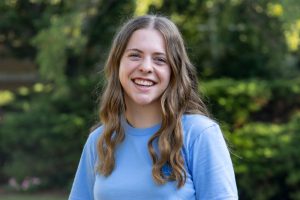
girl in blue shirt with brown hair

Melena Weber

Position: Student Editor, Student Writer
Year: Junior
Major: Mass Communications
Minor: Hospitality & Event Business
Involvement: Campus Activities Board – Membership Coordinator, Concordia Crew – Student Engagement Intern


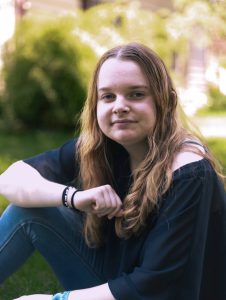
Kirsten Harrington

Position: Student Writer
Year: Junior
Major: Photography
Minor: Mass Communications
Involvement: Student Photographer at campus events


Erica Herzog

Position: Student Writer
Year: Sophomore
Major: Mass Communications
Minor: Law and Politics


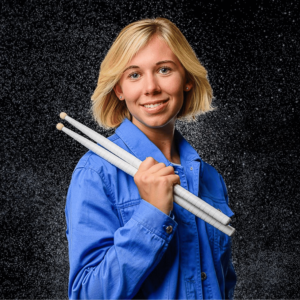
Grace Partain

Position: Student Writer
Year: Junior
Major: Mass Communications
Involvement: Acrobatics and Tumbling


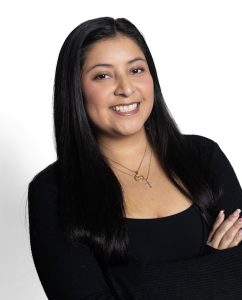
Rosa Yadgir

Position: Student Writer
Year: Sophomore
Major: Mass Communications
Minor: Public Relations


Get ready for Welcome Back Weekend!

It’s a big week on the CUW campus as we welcome families and alumni to celebrate our university and its students with sporting events, games, special activities, food, and—most important of all—each other!


Welcome Back Weekend: October 10-12

Friends, family, students, alumni … this is for you! We are excited to welcome everyone back to campus! This weekend will be full of creating memories, reuniting with CUW students, and celebrating all that Concordia has to offer. For more details, including answers to Frequently Asked Questions, go to cuw.edu/welcomebackweekend.

Registration is recommended! To sign up, fill out the form using this link:


Friday, October 10

CUW Spirit Themed Dinner | 4-6:30 p.m. | Siebert Dining Hall

Bonfire and Fireworks | 7:30-9 p.m. | Bluff Amphitheater (weather permitting)


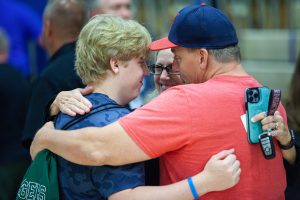
Families reunite during Concordia's Welcome Back Weekend.

Saturday, October 11

Women’s Field Hockey Game | 9-10 a.m. | Tomasini Stadium

Family Check-in & Welcome | 10 a.m.-1 p.m. | Outside Parking Lot H (weather location: Catalyst Building)

Falcon Alumni Club | 11 a.m.-1 p.m. | Alumni Tent (Catalyst Lawn)

Brunch | 11 a.m.-1 p.m. | Siebert Dining Hall

Live Music | 11 a.m.-1 p.m. | Catalyst Building

Tailgate Festivities | 11 a.m.-3 p.m. | Catalyst Building

Mason Jar Painting | 11 a.m.-3 p.m. | Regents Courtyard

Petting Zoo | 11 a.m.-3 p.m. | Football Practice Field

Outdoor Basketball and Lawn Games  | 11 a.m.-3 p.m. | Football Practice Field

Women’s Volleyball Game | noon | Buuck Field House

Men’s Football Game | 1 p.m. | Tomasini Stadium

Comedy Sportz | 3:15-4:15 p.m. | Luptak Terrace Room

Dinner | 4-6:30 p.m. | Siebert Dining Hall (or on your own)

ACHA Men’s Ice Hockey | 7 p.m. | Ozaukee Ice Rink

Sibling Sleepover: Lilo & Stitch Movie Night | 7-9 p.m. | Albrecht Lounge


Sunday, October 12

Sibling Sleepover: Breakfast | 9-10 a.m. | Albrecht Lounge

Worship Service | 10-11 a.m. | Chapel of Christ Triumphant

Brunch | 11 a.m.-1 p.m. | Siebert Dining Hall


Learn more

Concordia University Wisconsin is a Lutheran higher education community committed to helping students develop in mind, body, and spirit for service to Christ in the Church and the world. For more information about student life and the Campus Activities Board (CAB) at CUW, click the link below.


From the ‘Land of the Rising Sun’ to the Shores of Lake Michigan

At Concordia University Wisconsin, international visiting students don’t just experience an American school; they join a community where faith, learning, and friendship cross every border.


This month, two groups of Japanese students and professors—Matsuyama University’s Pharmaceutical Sciences Department and the other from Keiai University’s International Studies Department—traveled across the world to visit Concordia, where they learned and shared cultures. The two-week visit was coordinated by Dr. Uvidelio Castillo, an associate professor in the School of Pharmacy.

Castillo has organized similar exchanges over the years, with both Japanese students visiting CUW and Concordia students visiting Japan. Professor Toshihiro Okubo, from the Faculty of Economics at Keiai University, and Castillo have been instrumental in maintaining the relationship between the two institutions.

This year, the Matsuyama group attended various pharmaceutical classes and labs as observers.

“Throughout our short visit, my students and I attended lectures and participated in practical training sessions with the aim of gaining valuable insights into the differences between Japanese and American educational methodologies, as well as acquiring meaningful experience,” said Satoshi Okuyama, a Pharmaceutical Sciences professor and leader of the Matsuyama group.

The Keiai students, on the other hand, participated in a Concordia business class.

“We participated in Professor Daniel Underberg’s Sports Business class,” said Nobuhiko Tsuchihiro, a professor in the International Studies at Keiai University, who is the leader of the Keiai group. He added that the group was also able to “get acquainted with Concordia students, learn about a different culture, and brush up on their English.” Tsuchihiro noted that the trip is part of the “Overseas Schooling Program,” in which students learn about different cultures and languages through communication with students in other countries.

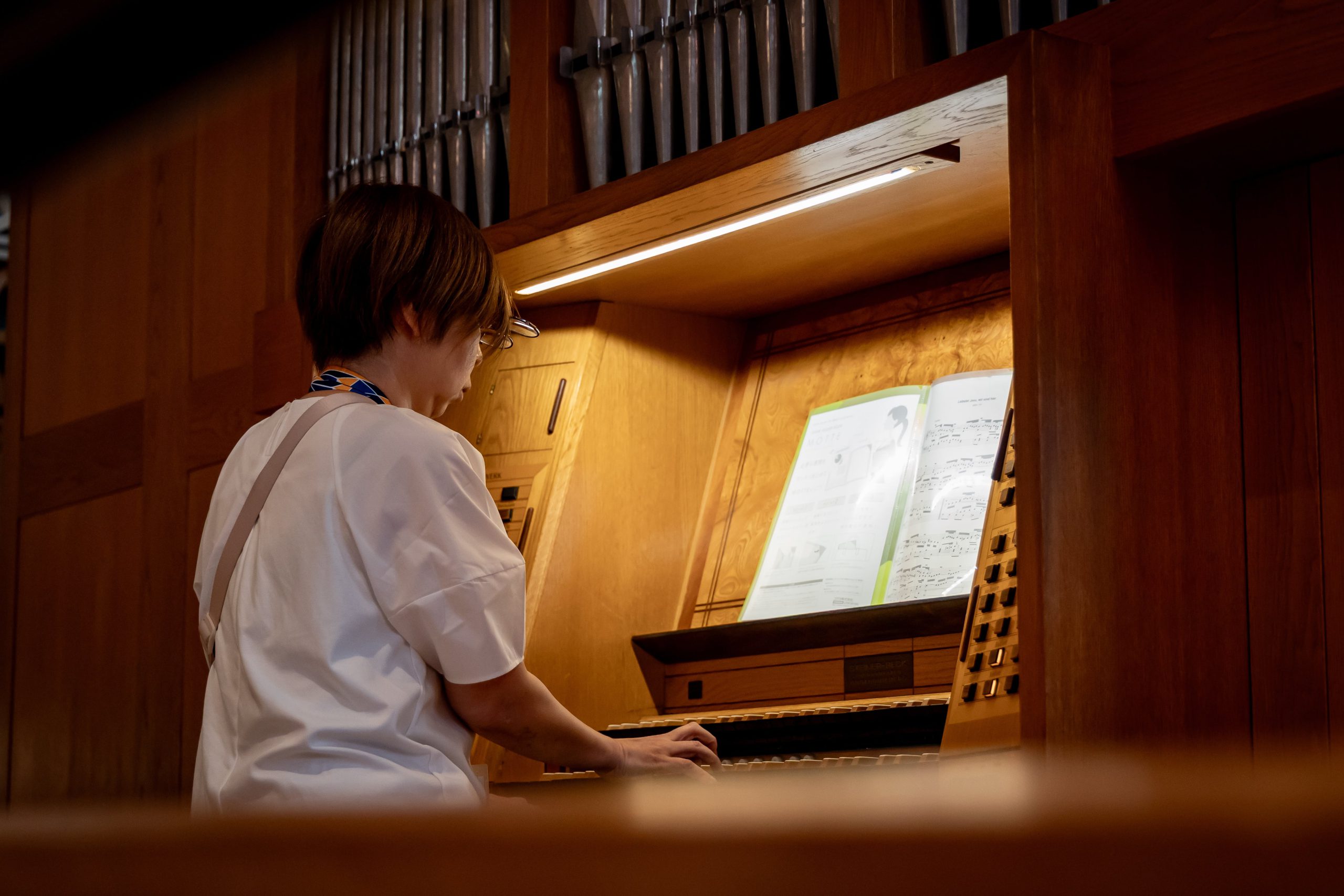
Yoriko Hasegawa, a Keiai professor and organist, was excited to play Concordia’s pipe organ when the group sang hymns in the chapel.
Yoriko Hasegawa, a Keiai associate professor, was excited to play Concordia’s pipe organ when the group sang hymns in the Chapel.

The Keiai visitors also shared their talents with the Concordia community. Associate Professor Yoriko Hasegawa, of International Studies at Keiai University, played Concordia’s pipe organ as the group sang hymns in the Chapel. Hasegawa wanted her students to experience singing hymns in a sacred place such as the CUW Chapel with a traditional organ.

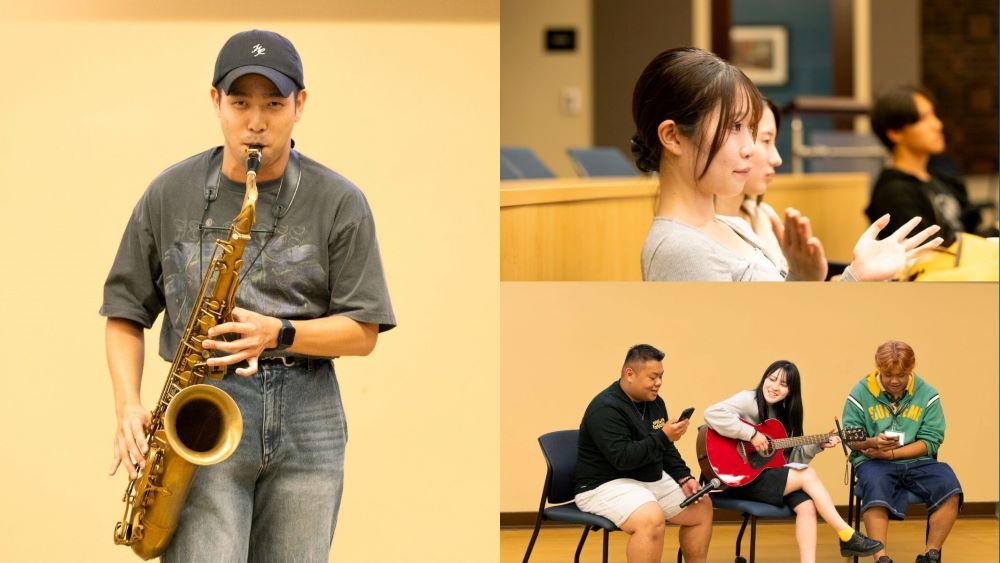
Later, the Keiai students hosted a “Meet and Greet” at the School of Pharmacy, in which the students played a tenor saxophone and guitars to share their culture with students who will be traveling to Japan with Castillo in the summer of 2026.

Leaders from both universities met with the deans and professors of the Business and Arts & Sciences departments to promote collaboration and future visits to CUW. Overall, it was a wonderful and enriching time for the visitors as well as for Concordia as the host, Castillo said.

Japanese students in various rooms
Photos by Kirsten Harrington

Want in?

Concordia University Wisconsin is a Lutheran higher education community committed to helping students develop in mind, body, and spirit for service to Christ in the Church and the world. To explore CUW’s international programs, visit International Admissions. 


5 tips for getting “unstuck” as an online learner

Life is full of ups and downs, patterns and ruts, surprises and challenges. Years ago, during a summer spent performing odd jobs and fieldwork in the farmlands of Nebraska, I assisted in repairing fences for a farmer who owned several sheep. As we moved along the fence line, we came upon the first of several sheep that poked their heads through the fence trying to reach greener grass on the other side. As a result, their heads got stuck. Have you ever been stuck? 

While I waited for some instructions on what to do, the farmer simply said “do something about it.”  No five-step plan. No warnings. Just, “do something about it.”

I work with many online learners who have stopped working on their degrees. Many of them seem stuck, unsure of how to proceed or if they can restart their academic plans. My advice? Do something about it.

Tips to get “unstuck” an adult learner

Whether you are returning to finish your degree through Concordia’s accelerated programs or at another college, you can use these tips to get “unstuck” and accomplish your goals.

Do something

This begins with a new application. University systems make changes often, therefore submitting a new application will help get you started. When you apply to Concordia’s online programs you will be connected with an admissions counselor (like myself) who can help resurrect or start your file.

Locate your records

While not required, digging out your old records and communications with advisors and other staff will help you become familiar with your academic standing. Many times, we remember things differently than they actually are. Therefore, this process will help you pick up where you left off. Some students may even have unpaid balances that must be resolved before being re-admitted.

Understand the evaluation process

Concordia’s degrees and programs are routinely updated to reflect current trends and requirements of the professional community. The records of returning students must be evaluated first. Then, degree plans may need to be adjusted if changes have occurred.

Concordia’s student record analyst, who works in the registrar’s office, Amy Hillenbrand states “Students need to fulfill the requirements of the catalog year in which they are re-entering. This may mean that previously taken courses may no longer apply to their major or core plan and new courses may be required.”

The leadership of each program is given responsibility for considering older courses and determining if older credits can continue to be counted within a degree. This may create some delays as the registrar’s office works with the departments. Once completed, your assigned Career & Academic Advisor will discuss the evaluation and how best to re-start your degree.

Trust the professionals

Getting back into your classes involves a variety of changes. That’s why we have many professionals in place to assist you such as advisors, tutors, resource professionals, IT specialists, and financial aid counselors. The online program is designed to be flexible for you as an adult learner. Our professionals are familiar with changes and helping each individual. Trust them and the process!

Have faith in yourself

Past failures and challenges don’t define your academic future. Like a sheep stuck in the fence, you do not have to stay there. Once you make the decision to return, address everything that you can control like your finances, schedule, and motivation.

Students just like you have returned to finish degrees and most, through the experiences of life, have found a new attitude and passion for completing their degree.

Ready to dive in?

To learn more about the online degrees and programs offered for adult learners, please visit CUW Accelerated Admissions or CUW Graduate Admissions. You can also call us at 262.243.4300

DBA Student Story: Part One

This DBA Student Story features Jennifer Kowal, a doctoral student concentrating on Organizational Performance and Change in the Doctorate of Business Administration (DBA) program at Concordia University Wisconsin. Outside of her education, she manages a full-time job and is a wife and a mother of three young adult children. She hopes to inspire and motivate others by sharing her academic experience.

Discover a little about Jennifer’s background and what led her to enroll in our DBA program.


Tell us about yourself

Hello, my name is Jennifer Kowal and I’m a student in the DBA program in Cohort #2 at CUW. I’m currently 5/12th done with the program, but who is counting? In addition to being a student, I’m a wife and mother of two college students, a high school student, and a full-time professional. Yes, I have a lot on my plate but I am determined to earn my DBA.

Why was now the right time to become a student again?

Well, simply put I have always wanted to be a Dr. It is an achievement I have wanted to conquer. However, I was unsure what kind of Doctorate or Ph.D. it would be, though certainly not a medical degree. Everything came together in the fall of 2021. Before I knew it, I was committed to making this goal happen. I started with some online research and found the DBA degree pretty quickly.

The DBA sounded familiar and maybe a bit comfortable since it is so close to the MBA. So, I continued my discovery by looking for schools that offered a DBA. I filled out forms for a few universities online. Within a week, I had scheduled introductory calls. As you can see, I can move pretty quickly in my decisions, once I know what I want.

The introduction calls with a few universities validated which DBA program was right for me. Also, from those conversations I knew which university would be the best fit.

What made you choose CUW’s DBA program?

I chose the DBA program at CUW because it checked all the boxes. Also, the decision just felt right. Follow your heart and gut, as it’s often said.

Two main criteria for me were the number of residencies and the cohort model. I knew I needed some on-campus time, but not too frequently. Furthermore, I knew I wanted the community offered by the cohort model in CUW’s DBA program. Within a couple of months, my acceptance letter arrived and I embraced being a student again in all ways.

What is your research focus?

My research focuses on motivation, curiosity, and a growth-oriented mindset in organizational development at the individual level. CUW’s Organizational Performance and Change concentration is teaching me to apply methods and theories for improving performance at all levels of an organization.

Describe the DBA program in your own words

The Doctor of Business Administration (DBA) program aims to develop individuals into scholar-practitioners. A scholar-practitioner integrates academic learning with practical experience in their chosen field of study. DBA students use theoretical knowledge and academic expertise to improve their practical work. Their valuable work experience also informs how they apply academic knowledge.

Students come from various fields, including education, business, and public policy. They typically possess a terminal degree and significant practical experience in their area of expertise.

What is a DBA scholar-practitioner exactly?

I like to think of being a scholar-practitioner as a bridge. On one side of the bridge is your day job, your work, your profession. On the other side is academic research. The DBA program develops its students to be that bridge, the conduit, between the practice of one’s profession and research. The bridge, in my mental model, is built with Legos and each scholar-practitioner adds more Legos to the body of knowledge in their field. Thereby strengthening both the academic and practitioner sides.

One aspect of being a scholar-practitioner that I find exciting is the opportunity to engage in research, evaluation, and critical analysis. I get to contribute to the development of new knowledge in my field. I’ll explain more about this opportunity in future articles.

The DBA program also opened a whole new community of like-minded individuals committed to bridging the gap between theory and practice in their respective fields.

Any words of wisdom?

Here’s a quote from my cohort during our first residency. It sums up the program and is a daily reminder that some things, like this program, need to be challenging.

A terminal degree is so much more than a degree.  It can break you down to your most vulnerable form but has the potential to build you back together to become a resilient, determined, humble, and knowledgeable researcher.  This process takes time and patience.  Please don’t give up on yourself.  It’s not just about getting the degree.  It’s about becoming who you are meant to be.

Unknown Author
50 questions to ask on a college tour

Choosing the right college can be a stressful task. After doing your online research and narrowing it down, how do you choose? The best way to decide if a college is right for you is to be there.

Colleges offer campus tours throughout the year for students and families to check out. But what exactly is important to find out when visiting? To help you get all the answers you need, we’ve put together a list of questions to ask on a college tour.

College Overview

First, it’s important to understand the college as a whole. Getting to know the culture of the university can help you determine if it fits your personality. A good way to do this is by asking your tour guide (normally they’re a student).

  1. What are the students like? What would you say if you could describe the “typical student”?
  2. Why did you choose [name of college]?
  3. How many students go here?
  4. What would you say are the college’s strengths? What is the most significant benefit of being a student here?
  5. Do you feel safe on campus?
  6. Is it easy to get around campus? What is the most common way to get around?
  7. What’s most unique about the college?
  8. What are the college’s most important values, and how does it demonstrate this to students?
  9. How does your school demonstrate commitment to diversity, equity, and inclusion?
  10. What would you say is the biggest challenge on your campus?

Academics

This is why you go to college right? So of course it’s critical to ask about the courses, faculty, and opportunities within your major. It’s essential to know exactly what type of education you will be receiving.

  1. What majors are the most popular?
  2. How big are most classes?
  3. Do you like the faculty and staff?
  4. How many courses do most students take per semester?
  5. Is there an opportunity to study abroad?
  6. Do students have access to tutoring or writing centers?
  7. How successful are your graduates? What’s the job placement rate after graduating?
  8. What type of support can I receive during courses?
  9. How satisfied are you with academic advising?
  10. How often are collaborative work or group presentations required?

Student Life

It’s helpful to know the place you will be spending the majority of your time. Getting to know the campus culture, facilities, and students can you help vision yourself as a student.

  1. What types of clubs and sports are on campus?
  2. What does an average day for a student look like on campus?
  3. What facilities are available to students?
  4. What makes the student body unique?
  5. Are students required to live on campus?
  6. How are the dorms? How are they assigned?
  7. Can I choose a roommate or am I assigned one?
  8. How’s the food on campus?
  9. What are some of the school’s main traditions or events?
  10. Are there medical resources close by if needed?

Resources

Being aware of the resources available to you on campus can help you to be successful throughout your college experience.

  1. Are there accessibility services for students?
  2. How easy is it to find summer jobs and other kinds of work through your school?
  3. What type of career services are available?
  4. What types of support services are available for students?
  5. Can I apply for financial aid?
  6. Are there any scholarships available to students?
  7. Can you receive help from professors outside of the classroom?
  8. What types of work-study jobs are available on campus?
  9. Is there a tuition payment plan to pay monthly installments?
  10. What services are available for struggling students?

Questions for online learners

Even online students should make sure the college is a good fit for them and their goals. Here is a list of online-specific questions to ask before choosing a program.

  1. How flexible is the program?
  2. How easy is it to balance work, school, and life during the program?
  3. Do you have many working students?
  4. Are there any support resources for online students?
  5. How accessible are professors if I have questions?
  6. Do I have access to on-campus resources?
  7. How are classes structured? Will my online classes be mostly synchronous (live courses in real-time) or asynchronous (prerecorded, available at my own pace?)
  8. May I take classes on campus, if possible?
  9. Do you have technical support available?
  10. How long has the college been doing online learning?

RELATED: Online Learning: What sets Concordia apart?

Before you go

College visits are the perfect way to immerse yourself in the campus and see how it feels to be there. Remember, there are no silly questions on a tour, so make sure to ask anything you are unsure of or want to learn more about. Campus staff and tour guides are there to make sure you have the best visitor experience possible. If you’re interested in visiting Concordia University Wisconsin’s campus, click the button below. Happy touring!