New tuition rates expand affordability for online and graduate students

At a time when many colleges and universities are increasing costs, Concordia University Wisconsin is taking a different approach.


The university has lowered tuition for its online undergraduate programs and several graduate programs, helping remove financial barriers for working adults and students seeking to advance their careers.

This decision reflects Concordia’s ongoing commitment to expanding opportunities for learners who may have delayed their educational plans because of cost.

For many students, cost remains one of the biggest obstacles to pursuing a degree. Concordia’s new tuition model lowers costs directly while helping students better understand the true cost of attendance from the start.

“Concordia decided to lower tuition because we wanted to make our online undergraduate and graduate programs more affordable, transparent and accessible,” said Kevin Sheridan, vice president for Enrollment. “While scholarships had helped offset costs in the past, they also made the published tuition price appear higher than what many students actually paid. By reducing tuition directly, we are giving students a clearer understanding of their investment from the beginning.”


Making education more attainable

“This tuition reduction tells prospective students who may have delayed completing or starting a degree, because of cost, that Concordia is working to make that next step more attainable,” Sheridan said. “By lowering tuition directly and making pricing more transparent, we are reducing uncertainty and helping students better understand the true cost of their investment. The message is clear: If cost has been holding you back, now may be the right time to reconsider Concordia.”

The change also makes Concordia’s programs more competitive and easier for prospective students to evaluate alongside other institutions.

“These reductions are significant because they make Concordia’s online undergraduate and several graduate programs more transparent, more competitive and easier for prospective students to evaluate against other programs in the region,” Sheridan said. “Many students compare programs before applying, and a lower, more straightforward tuition rate can make Concordia stand out as an affordable, high-quality option.”
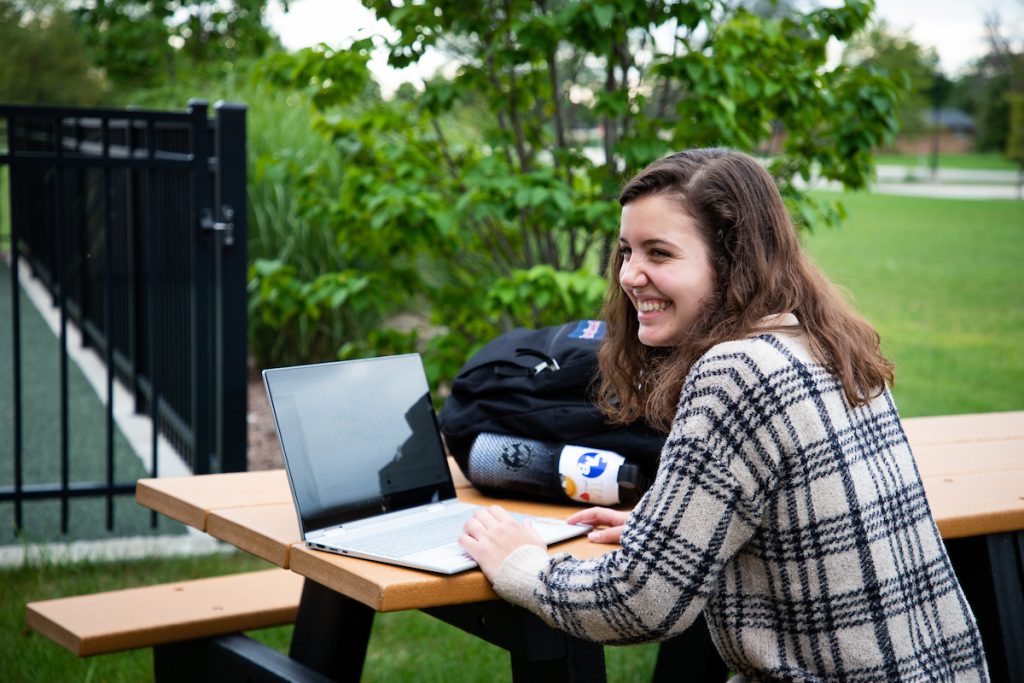

Supporting working adults and career-minded learners

The new tuition rates are expected to benefit a wide range of learners, particularly those who are carefully weighing cost, value and return on investment.

“The students who will benefit most are working adults, career changers, first-generation graduate students, and those who are paying out of pocket, using loans or relying on employer reimbursement,” Sheridan said. “These students are often very focused on affordability, transparency and return on investment. By lowering tuition directly, Concordia is making our high-quality education more financially realistic for students who may have delayed or dismissed the possibility because of cost.”

For students balancing careers, families and financial responsibilities, the reduced tuition rates provide a more predictable pathway toward educational advancement and long-term career goals.


Addressing workforce needs in education

The impact of affordability extends beyond individual students. It also affects communities and professions facing critical workforce shortages.

Across Wisconsin and the nation, schools continue to seek qualified teachers, administrators, counselors and educational leaders. Dr. James Pingel, dean of Concordia’s School of Education, says affordability plays an important role in helping address those challenges.

“‘Affordability’ has been the term that’s been spoken about and felt, perhaps more than any other the last five years,” Pingel said. “Since so many people are living paycheck to paycheck, anything universities can do to lower costs, including tuition, the more affordable higher education becomes for families and prospective teachers.”

Current educators often face two significant barriers when considering graduate education.

“Time and money have always been barriers for earning a post-bachelor’s degree,” Pingel said. “Most people who would like to pursue a master’s degree are already working fulltime jobs and they also are living paycheck to paycheck. Moreover, many schools used to provide extra professional development funds that teachers could use to earn their master’s degree, but many schools are no longer providing this monetary support. So current teachers have to weigh if the time, money and lack of employer-funded scholarships are worth it.”

Reducing tuition helps make advanced degrees, certifications, and leadership preparation more attainable for those already serving in classrooms and schools.


More than a degree

While affordability is important, Concordia leaders emphasize that education is about more than earning a credential.

“While earning your advanced degree can do a lot for you (that’s the transactional), it’s what the learning does to you that matters even more (that’s the transformational aspect of lifelong learning),” Pingel said. “And as you grow and learn, you become a more effective teacher or administrator and a better citizen. You are modeling the way!”

As educators and professionals continue to grow, they share their knowledge and experience with others, creating a ripple effect throughout schools, organizations, churches and communities.


Living out Concordia’s mission

The tuition reduction reflects Concordia’s mission of helping students develop in mind, body and spirit for service to Christ in the Church and the world. It also aligns with the university’s commitment to increasing access and opportunity for learners.

“This decision reflects Concordia’s commitment to affordability, access and student success because we are always looking for ways to increase student access by making our education more affordable,” Sheridan said. “By lowering tuition directly, we are reducing financial barriers, making costs more transparent, and helping students better understand the investment required.”

Looking ahead, university leaders see affordability initiatives as an investment in both students and the communities they serve.

“Affordability initiatives like this help Concordia strengthen the leadership pipeline by making our online undergraduate and graduate education more accessible to talented students who are already serving their communities,” Sheridan said. “In turn, communities benefit from graduates who are equipped to lead with skill, purpose and a commitment to service.”

For Pingel, the significance goes beyond the numbers.

“The real story is that we care about our students beyond a transaction, a tuition payment,” he said. “We know the affordability challenge is real for many of them, and a tuition reduction—of any size—demonstrates that we are listening and attuned to their circumstances and needs.”

By lowering costs and increasing transparency, Concordia continues its commitment to helping students pursue their calling, advance their careers, and prepare to make a meaningful difference in the Church and the world.


Want in?

Concordia University Wisconsin is a Lutheran higher education community committed to helping students develop in mind, body and spirit for service to Christ in the Church and the world.

Continuing your education with confidence: Concordia University Wisconsin welcomes Lourdes students

The announcement that Lourdes University will close at the end of this academic year is truly heartbreaking. Concordia University Wisconsin extends its sincere prayers to Lourdes students, faculty, staff, alumni and the Sisters of St. Francis, who have faithfully served that community for decades.


We know this news brings uncertainty. Educational transitions can feel overwhelming. At CUW, we want to provide reassurance, stability, and a clear path forward. As a Lutheran Christian university with a strong foundation, Concordia is prepared to help Lourdes students continue their academic journey without interruption.


Stability rooted in mission

CUW is part of the Concordia University System and operates with a strong strategic plan, broad academic portfolio, and sustainable enrollment model. Our commitment to Christ-centered higher education remains firm. We are here. We are stable. And we are ready to serve.

Our goal is simplicity and speed.

Concordia is prepared to:

  • Accept previously earned credits toward degree completion
  • Provide rapid transcript reviews
  • Offer competitive transfer scholarships
  • Maintain comparable or lower tuition for online programs
  • Assign a dedicated transfer advisor to guide each student

Whether students need to relocate or prefer to remain where they are, CUW offers flexible pathways to continue their studies.


Broad program portfolio with flexible delivery

One of Concordia’s greatest strengths is the breadth of its academic offerings — available on campus and online.

Concordia offers 130 academic programs across undergraduate, graduate and professional fields, including:

Our online infrastructure allows students to continue from anywhere with minimal disruption.


Clarity and financial transparency

We understand that financial questions are immediate.

Our team will:

  • Provide clear cost comparisons
  • Outline scholarship eligibility upfront
  • Assist with FAFSA processing (FAFSA code: 003842)
  • Explain timelines and credit applicability clearly

No guesswork. No surprises.


Next steps

If you are a Lourdes student seeking options:

  1. Email Admissions@cuw.edu
  2. Request an expedited transcript evaluation
  3. Speak directly with a program director
  4. Review scholarship and aid packages
  5. Begin your transfer application

You are also invited to schedule a virtual or in-person visit to explore Concordia’s Lake Michigan campus or learn more about our online options. Transitions are difficult. But they do not have to derail your calling. At Concordia University Wisconsin, we are ready to help you continue your education with confidence, clarity and Christ at the center. We would be honored to welcome you. Schedule an in-person visit below or take a virtual tour here.


Want in?

Ethical. Hard working. Respectful. Curious. Welcoming. Christ-minded. While all our students are different, certain qualities unite our community and make us Concordians. We look forward to welcoming you!

If you have preliminary questions or concerns, please contact our Admissions Office at Admissions@cuw.edu. Otherwise, we invite you to go ahead and start your application.

CUW Named a Top 10 University in Wisconsin

Concordia University Wisconsin has once again been recognized among the top universities in the state, earning a place in the Top 10 of the 2025 Niche rankings.


The Milwaukee Journal Sentinel reported on the announcement, highlighting the best colleges across Wisconsin and affirming CUW’s standing among the state’s leaders in higher education.

Niche is a national leader in college research and rankings, drawing on millions of student reviews and comprehensive data about academics, campus life, affordability, and outcomes. Its widely used rankings help prospective students and families compare schools.

Niche’s rankings combine data sources with student perspectives. Drawing on information from the U.S. Department of Education, the National Science Foundation, and verified student reviews, Niche evaluates colleges on factors ranging from academics and value to campus life and safety.

“Students, alumni, faculty, and staff already know what these rankings confirm: Concordia University Wisconsin offers a transformational educational experience—one that blends academic excellence, personal support, and a Christ-centered mission,” said President Dr. Erik Ankerberg. “Rankings capture important data points, but the true measure of CUW’s impact is found in the lives of our graduates—women and men shaped by faith, knowledge, and service who go on to lead with integrity in their communities, workplaces, and churches.”

At the heart of CUW’s mission is the integration of faith and education. Every discipline is grounded in a commitment to forming students not only in mind, but also in body and spirit. This holistic approach ensures graduates are ready for their careers while also equipped to serve as compassionate leaders in the Church and the world.

From the liberal arts and business to health professions, pharmacy, education, and theology, CUW offers more than 70 rigorous academic programs. These programs are continuously refined to meet workforce needs while remaining rooted in Concordia’s Lutheran identity.

Want in?

Concordia University Wisconsin is a Lutheran higher education community committed to helping students develop in mind, body and spirit for service to Christ in the Church and the world. To learn more about what makes CUW so special, click the link below.

5 tips for getting “unstuck” as an online learner

Life is full of ups and downs, patterns and ruts, surprises and challenges. Years ago, during a summer spent performing odd jobs and fieldwork in the farmlands of Nebraska, I assisted in repairing fences for a farmer who owned several sheep. As we moved along the fence line, we came upon the first of several sheep that poked their heads through the fence trying to reach greener grass on the other side. As a result, their heads got stuck. Have you ever been stuck? 

While I waited for some instructions on what to do, the farmer simply said “do something about it.”  No five-step plan. No warnings. Just, “do something about it.”

I work with many online learners who have stopped working on their degrees. Many of them seem stuck, unsure of how to proceed or if they can restart their academic plans. My advice? Do something about it.

Tips to get “unstuck” an adult learner

Whether you are returning to finish your degree through Concordia’s accelerated programs or at another college, you can use these tips to get “unstuck” and accomplish your goals.

Do something

This begins with a new application. University systems make changes often, therefore submitting a new application will help get you started. When you apply to Concordia’s online programs you will be connected with an admissions counselor (like myself) who can help resurrect or start your file.

Locate your records

While not required, digging out your old records and communications with advisors and other staff will help you become familiar with your academic standing. Many times, we remember things differently than they actually are. Therefore, this process will help you pick up where you left off. Some students may even have unpaid balances that must be resolved before being re-admitted.

Understand the evaluation process

Concordia’s degrees and programs are routinely updated to reflect current trends and requirements of the professional community. The records of returning students must be evaluated first. Then, degree plans may need to be adjusted if changes have occurred.

Concordia’s student record analyst, who works in the registrar’s office, Amy Hillenbrand states “Students need to fulfill the requirements of the catalog year in which they are re-entering. This may mean that previously taken courses may no longer apply to their major or core plan and new courses may be required.”

The leadership of each program is given responsibility for considering older courses and determining if older credits can continue to be counted within a degree. This may create some delays as the registrar’s office works with the departments. Once completed, your assigned Career & Academic Advisor will discuss the evaluation and how best to re-start your degree.

Trust the professionals

Getting back into your classes involves a variety of changes. That’s why we have many professionals in place to assist you such as advisors, tutors, resource professionals, IT specialists, and financial aid counselors. The online program is designed to be flexible for you as an adult learner. Our professionals are familiar with changes and helping each individual. Trust them and the process!

Have faith in yourself

Past failures and challenges don’t define your academic future. Like a sheep stuck in the fence, you do not have to stay there. Once you make the decision to return, address everything that you can control like your finances, schedule, and motivation.

Students just like you have returned to finish degrees and most, through the experiences of life, have found a new attitude and passion for completing their degree.

Ready to dive in?

To learn more about the online degrees and programs offered for adult learners, please visit CUW Accelerated Admissions or CUW Graduate Admissions. You can also call us at 262.243.4300

How to choose the right graduate program

Choosing the right graduate program can be tough. If you know that you want to attend graduate school, but you’re not sure which program to choose, you’re not alone. The Bureau of Labor Statistics showed that even in favorable economic times, grad school could still be worth it. People with graduate degrees tend to have lower rates of unemployment, while also having higher weekly salaries. In other words, graduate school makes sense for a lot of people. But, only you can decide if it’s the right move for you.

If more education is in your future, you’re going to want to choose a program. How do you even do that?

4 Tips for choosing the right graduate program

#1 Choose based on outcome

Leah Herr, Concordia University Wisconsin’s Director of Graduate Counseling, advises people to think about outcome first.

“It’s important to really think through your goals and evaluate where you want to end up,” she suggests. Additionally, you should try to be as clear as possible with your end goal. That way, you can brainstorm the path or paths toward reaching this goal. In doing your research, you might find that you don’t actually need a graduate degree. It’s better to figure that out before you invest time and money into school. On the other hand, your research might confirm that grad school is the right choice for you, and that there are actually multiple programs that will help you achieve your desired outcome.

Herr offers suggestions for people who don’t have a clear outcome in mind yet. “Talk to admissions counselors and program directors,” she says. “Attend webinars and open houses if you can. This will help you get a real feel for the programs you’re looking at and allow your heart to help guide you.”

Furthermore, you can ask to talk to recent graduates and/or current students about what their experience has been like. In doing this, you’ll get to see how the particular program you’re looking at helped someone else meet their goals. Obviously, what works for one person doesn’t necessarily fit for all people. But, actually talking to someone who experienced the program could help you picture yourself in it.

#2 Choose based on return on investment

For some professions, a graduate degree is a sure way to increase your earning potential. Before choosing a program, be sure to research salaries in the location you want to work to get a realistic picture of what could be available to you after you finish your program. Then, when you look at the cost of graduate school, you’ll be able to calculate if your return on investment is worthwhile. Herr reminds people: “Master’s degrees aren’t always going to gain you a new job or bump you up in pay, but they can make you better at the job you’re currently doing.”

When you’re considering your return on investment, don’t forget to include factors beyond finances. Alumni networks and clubs are great ways to stay connected after graduation and to foster professional development. Does your program offer lend itself well to these things?

Concordia University Ann Arbor‘s Director of Enrollment, Kyle Thoms, weighs in on this: “Graduate school is a great way to expand your educational and professional journey. Building your network and collaborating with the professors, students, and other professionals is a benefit of graduate school no matter what program you choose.”

Don’t overlook these crucial factors when determining which program is right for you.

#3 Choose based on program delivery

With so many options available for graduate school, chances are that you can “do school” the way you want to. If program flexibility is one of your top priorities, choosing a program that you can complete online might be ideal. Some programs will allow you to complete your coursework at your own pace, without needing to attend class at the same time throughout the duration of the course.

Other programs might have courses with specific virtual meeting times where attendance is taken. If online learning is new to you, you’re not alone.  There is still the option to go to graduate school in-person, if that’s a high priority for you. However, online learning platforms have come a long way. You can talk with your admissions counselor as well as your program director about what support is available to you as an online student.

In addition to considering your learning medium, think about whether you’d prefer to attend grad school part-time or full-time.

#4 Choose based on university focus

When you’re looking for the right-fit graduate program, start by researching the university’s specialties. While a university might be considered a “good school”, it might not have what you’re looking for in your particular area of study. This is why Herr’s point about talking to admissions counselors and program directors is so important. Some of the best scholars in your chosen program might be serving at universities that you weren’t even considering. Researching the faculty is always a good idea when choosing the right graduate school program.

Gathering information and going for it

Ultimately, only you can decide which graduate school program is right for you. While no program is perfect, taking time to research these four aspects will help you make a choice that meets your needs. If you want more information about graduate school programs, or if you want to talk to someone about what your options are, you can request more information here.

—

If this story has inspired you, why not explore how you can help further Concordia’s mission through giving.

Scholarships for Accelerated Programs

A common question from potential accelerated students is, “Do you have any scholarships?”. That’s a loaded question and often means a variety of things to different people.

What are accelerated programs?

To be clear, accelerated degrees at Concordia University are fully accredited college bachelor or associate degrees. There are also accelerated pathways for earning two degrees at the same time. Our Master’s in Athletic Training and our Business Scholars dual-degree programs are perfect examples. Both of these accelerated pathways require a large investment of time and resources by the student. While accelerated degrees save you time and money, they are not easier to earn. Ultimately the degree enables the student to achieve their academic and career goals. Often, the degree is non-negotiable to get where they want to go.

Are there different scholarships for accelerated programs?

Accelerated, non-traditional students have different scholarship opportunities from the traditional, on-campus format. Yes, accelerated students may qualify for Federal Financial Aid. However, it is required to register for at least six credits within a semester to be eligible for federal grants and loans.  But for many students, the obvious concern is, “Will this aid cover the cost?”

Traditional degrees offer a variety of aid from the university and a multitude of outside sources for scholarships & grants. Yet accelerated students often wonder if there are other sources for them to find assistance.  Concordia strives to bridge the gap for accelerated students by offering a variety of Uncommon Scholarships. We have developed these scholarships through various partnerships with employers, alumni, and military programs.

Business partnership scholarship opportunities

Edcor Member Employees:  Accelerated programs for Edcor partners

Advocate Aurora Employees:  Advocate Aurora/Atrium Health

Bright Horizons Member Employees:  Bright Horizons

MATC Graduates:  Welcome MATC Graduates, Faculty, and Staff

View all other Uncommon Scholarships including Christian Churches & Schools, CUWAA Alumni, and Veterans & Dependents.

College degrees bring a wealth of opportunity and satisfaction, but require persistence, sacrifice, and financial investment.  There are resources available as investment in your future. A great first step is to complete the FAFSA and explore federal funding at www.fafsa.gov. However, accelerated students must consider all available options. These may include our Uncommon Scholarships and potentially, tuition benefits and reimbursements from their employers.

Martin Luther King, Jr. famously said:

“Take the first step in faith. You don’t have to see the whole staircase, just take the first step.”

Take your next step

For many years Concordia’s accelerated degrees have been helping adult learners complete degrees and improve career opportunities. The first step is to determine the financial cost. While the journey comes with an investment, students should take the first step by exploring all of their financial options.

So, do we have scholarships for accelerated programs? Yes! And applications are now open for the 2023-24 school year. Take the first step to find out if you qualify and learn more about your options. Visit Financial Aid for Accelerated Students to learn more.  Encourage your employer to become a partner with Concordia. Concordia Community Partnerships and Why partner with Concordia as an employer? are excellent resources for that conversation.

To learn more about all of the accelerated degrees and programs offered for busy adults including those in Arts & Sciences, Business, Computer Science, Education, Health Care, and Public Service, as well as graduate degrees, visit CUWAA Accelerated Admissions or call 262-243-5700.

Why choose a Lutheran university?

When choosing a college, many students today are looking for a specific program, from an institution with credibility and strong outcomes. Others might look for an established campus in a beautiful and safe area. Considering a private-college typically means a faith-based, well-rounded approach to education is a priority. Well, at Lutheran universities, you can have it all, but what does this mean for Concordia University’s Wisconsin & Ann Arbor campuses? 

First, let’s define what Lutheranism means to us.

Lutheranism: what does this mean?

Rev. Dr. Ted Hopkins is the Program Director for the Pre-Seminary and Family Life Ministry programs at Concordia University Ann Arbor. He also serves as Associate Professor of Theology.

Hopkins suggests a framework that might help when trying to understand Lutheranism. “Lutheranism is all about justification. Justification focuses on Jesus’ death on the cross and resurrection to save all people from sin. Jesus is at the center of Lutheranism.” Lutherans trust that Jesus has saved sinners, all people, by his work alone.

Jesus gives this gift of salvation through the Holy Spirit by the sacraments, baptism and Holy Communion, and by preaching and teaching the good news of salvation in Jesus. Lutherans also affirm the importance of unity with the Church of all time, especially in the creeds since those teachings help us focus on Jesus, the Son of the eternal Father.

Now, Concordia University and other Lutheran universities, live out their Lutheran-confession through a number of central concepts built into the campus experience.

Lutheran universities have strong faith community

Community is vital for all members of a higher education institution. From students and staff to community members and families, Lutheran universities like Concordia aim to connect all those who are involved with their campus. At a Lutheran college, you will find smaller class sizes where professors serve as mentors to their cherished students.

Also, we place an emphasis on family and relationships that makes its way into every classroom. Being on a Lutheran campus will give you the opportunity to connect with like-minded students and staff who will help you to grow in your faith.

Lutheran universities have faith-filled education

Lutheran universities are also committed to educating the whole person. At Concordia, we put the Lord before all else, including our academics, using our common faith to guide us through challenging and practical content in our courses. We have weave ethics and personal values into our academics, as well. Because of this, you will have the opportunity to pursue Christian coursework and majors to move your faith into all aspects of your life.

Is church work in your future? We are proud to offer programs for those interested in professional ministry.

Also, because Concordia University has such a focus on community, as a student you are more likely to receive scholarships based on academics, extracurriculars, and other factors of merit than a student attending a prominent public college. For example, Concordia offers an audition based music scholarship, as well as athletic talent awards. We also offer a number of scholarships that are open to any student that qualifies.

Lutheran universities are built with faith in mind – literally

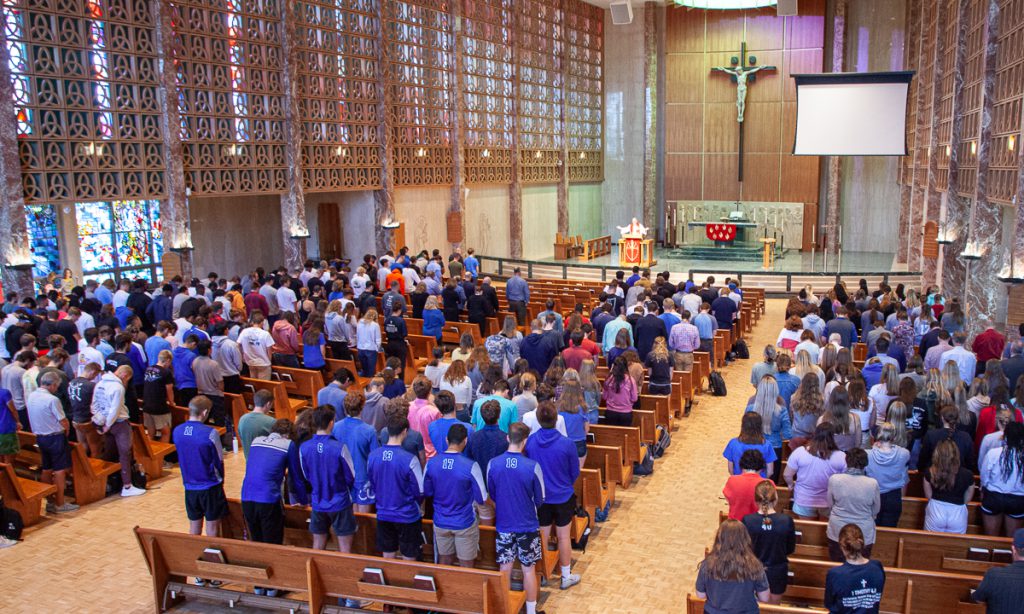
Another wonderful aspect about being at a Lutheran university is the ability to worship on campus. Many Lutheran colleges have chapels or other locations on-site so that students, faculty, and staff may attend church services together. At Concordia, students participate in the services offered, as well as volunteer in other ways on campus. They even lead in prayer before or during school related activities such as athletics, concerts, or club meetings.

Students may be involved in musical groups that perform not only in on-campus locations, but other places of worship nearby, like CUW’s choral ensembles. Actually, students at Lutheran colleges are more likely to participate in all of those activities and more. Here at Concordia, we  promote learning abroad as well as service and missionary work, which helps our students to develop a global mindset which they can apply to their future vocations. We also have a robust, student-led Campus Ministry Leadership Team that encourages students to engage in Christian fellowship regularly. 

What’s Next

Want to learn more about the opportunities Concordia can offer you?

We praise God for the success of our alumni. Below you’ll find just a few examples of what you could experience:

To learn more about our Lutheran Christian identity here at Concordia, visit us here.

This blog was originally published on November 23, 2021. It has been updated to reflect current information.

Concordia’s accelerated programs: What’s being promised?

As we say goodbye to the past year, we must look back on our Christmas celebration to consider the true gift we have been given. A sincere hope for Christians is that all people will understand the Christmas message of John 3:16:

For God so loved the world that he gave his one and only Son, that whoever believes in him shall not perish but have eternal life.

What’s being promised? Eternal life and salvation. Why do we forget that?

When considering a higher education degree, it’s wise to ask the same question — what’s being promised? When it comes to Concordia’s accelerated programs “what’s being promised?” Concordia students provide the best answers. Here are a few benefits mentioned by our students.

Adjusting to a changing world

Life in the information world is changing everything. Concordia’s accelerated programs in online and virtual formats help students develop skills in our changing society. Real-world application and encouragement by instructors in the field help prepare students to excel in a changing world.

Better paying jobs & economic stability

The Indeed 2021 career guide reviewed the average salaries of various education levels. Results show that those over the age of 25 with no college degree earn an average of $774 per week and hold an unemployment rate of 4.0%. Those who hold a two-year associate degree earn $836 with unemployment dropping to 3.4%. 

The news gets even better for bachelor degree holders, like the CUW alums of the accelerated bachelor programs, who on average earn $1,173 per week with a significantly lower unemployment rate of 2.5%.  Earning an undergrad degree significantly enhances job opportunities and security. Furthermore, it can easily set the stage for further potential growth through graduate and professional degrees.

Taking advantage of employee benefits

“My boss has been encouraging me to go back to school and will even help me pay for the cost,” says one current student. “It would be foolish for me to not take advantage of that!” 

Employers have adjusted to a competitive hiring market. More and more offer back-to-school incentives through tuition reimbursement and grants for employees. Additionally, the military community continues to provide education benefits to veterans and active military members.

Joining a respected institution in the community

Many students received encouragement from relatives, friends, and co-workers who are either alumni of CUWAA or see the community’s respect for Concordia. “Concordia changed my life in so many ways and I appreciate the Christian perspective to my degree,” said a recent graduate.

Setting an example

A common sentiment expressed within the accelerated community is the desire to leave a legacy for children and family members. When a student returns to finish a degree, they quickly learn the program allows for a favorable number of credits to transfer in from accredited programs. 

This policy has assisted many students who thought their previous academic struggles brought about through medical, behavioral, or financial challenges of the past limited their degree potential to set an example of persistence. It has now become a common occurrence for a parent to be earning a degree alongside their own child.

Satisfaction

Finally, a major benefit for many accelerated students is the self-satisfaction that comes from knowing they have done all they could with the talent and abilities the Creator endowed within them. The accelerated format provides the flexibility to move through the program at a pace that works for you. That satisfaction provides an overwhelming sense of achievement.

Ready to move forward?

For the adult learner or even the recent high school graduate who found themselves lost in the traditional world of on-campus coursework, there may be plenty of benefits for you in Concordia’s adult accelerated program. This – and more – is what’s in it for you!

To learn more about all of the accelerated degrees and programs offered for busy adults including those in Arts & Sciences, Business, Computer Science, Education, Health Care, and Public Service visit CUWAA Accelerated Admissions or call 262-243-5700.

Being a servant leader as an educator

When I began my graduate program back in 2020, I wrote a reflection on how I can be a servant leader in the public school system. While reflecting on it, there is much that is true today.

How I’m a servant leader

As a servant leader in public schools, I see it as my role to let my faith shine for Christ as I lead by example and serve others to give glory to Him. Truly, I believe that my degree is not only for me, but a way to serve my students, parents, community, and my Savior.

As a reading specialist, literacy coach, or interventionist, I can lead by example when I put others first, stay positive amongst the negativity, and show humility in all that I do. I must remember that God is the one who has given me the talents and knowledge to serve in this profession. I eagerly await sharing those talents and knowledge with my students and the learning community as I teach and continue to grow as a literacy leader.

Overcoming challenges

Graduate school presented many challenges for me including learning independently, challenging the way I think, and keeping up with the demands of readings and courses. Doing work while keeping up with the demands of being a full-time classroom teacher, especially during the pandemic, was not easy. Through all of it, I had to learn to lean on Christ for strength, patience, perseverance, and wisdom. Thankfully, my faith in Jesus has been strengthened through the difficult experiences he has helped me overcome.

Many days I listened and sang along to Matt Maher’s song, “Lord, I need You”. I relied on Him and His almighty power and grace when things got difficult and needed to ask for his forgiveness in my moments of distrust. Everything I was able to come to know and do during my graduate coursework journey is because of Him. Moving forward, I can take this experience and its impact on my faith and apply it to future challenges that I may encounter in any aspect of life.

Growing in mind, body, and spirit

Furthermore, my graduate experience has broadened my understanding of how I can lead in mind, body, and spirit.

Mind

Specifically, my Supervision of Instruction for Literacy course comes to mind. Throughout this course, I learned how I can be a literacy leader in various roles whether that be a reading interventionist, reading specialist, or literacy coach.

Body

No matter the role, I must be a servant leader through my body in the way that I carry myself and how I interact with others. As a coach, I need to practice patience with my listening skills, positivity in my directions, and confidentiality in my conversations. I will show servant leadership with my body as I lead my students in the best instruction I can provide them. I must ask God to help me use these talents to serve others.

Spirit

Finally, I can be a servant leader through spirit. Recently I was inspired by my literacy coach and her response to why she teaches. I cannot remember her exact words but they were along the lines of “Even if I am a light for just one child, that is why I teach.” In a room full of educators, not everyone may have fully understood what she meant by that. Having formed a personal relationship and being able to talk about our faith together, I knew that she didn’t just mean in an academic light. Instead, she meant in a spiritual light for her students as well.

Although I may not be able to proclaim the gospel to my students as I teach them how to become better readers and writers, I can pray that God uses my words and actions to shine a light on Him. I pray for my students that they may know Jesus as their Savior and that the Holy Spirit fills them with faith. I too desire to be a light, even if that impacts just one child or one teacher along the way.

This reflection was written by Masters of Literacy student, Kate Schleif.

Concordia’s Veteran Services Office is here to assist accelerated students

This week Concordia University Wisconsin & Ann Arbor Veteran Services and community are taking time to reflect and honor all who have served in the military of our nation. We recognize the sacrificial service that is the embodiment of the Concordia mission “to help students develop in mind, body, and spirit for service to Christ in the Church and the world,” as well as the call of Jesus that instructs:

There is no greater love than to lay down one’s life for one’s friends.

  John 15:13

Concordia’s Director of Veteran Services, Keith Casey, and his staff recently took time to answer common questions for accelerated students who may be eligible for military benefits in paying the cost of their degrees.

Why are Concordia and the accelerated program a good option for Veterans?

Our accelerated degree programs are designed for working adults like Veterans. You have the option to choose between online learning and evening classes that meet virtually once a week. Therefore, you get complete control over your education without sacrificing your family life or work schedule. Additionally, tuition is paid by term either to Concordia or you depending on the VA educational benefit the veteran is eligible for.

What does it mean for Concordia to be a Yellow Ribbon School?

The Yellow Ribbon Program can help you pay for a private university or graduate school tuition and fees that the Post-9/11 GI Bill doesn’t cover. Concordia is unlimited in amount and in the number of eligible undergraduate students that can use the Yellow Ribbon program. This means that what the VA doesn’t pay for in tuition and fees under the Post 9/11 GI Bill ®, the Yellow Ribbon Program may cover the remaining tuition. 

READ MORE: CUW name Top 10 Military Friendly School

Who do I talk to about my military benefits?

Our Veteran Services team of Barb Ellmaker, Kari Metts, and I can each assist students with questions and processes. Students on our Ann Arbor campus can also contact Bryant Lepic, Veteran Outreach Coordinator.

What military credits typically transfer in at Concordia?

We accept up to 63 transfer credits from your military education. Credits transfer into three categories: Core, Electives, and Program of study. As a requirement, you must request a Joint Military Transcript or a transcript from the Community College of the Air Force.

What are the differences in benefits for Veterans and active military personnel?

Active-duty personnel can use Federal Tuition Assistance from their branch of service or any VA educational benefits. Veterans use VA educational benefits for which they would qualify.

Since Concordia is a private institution, do you accept the WI State GI Bill?

No, we don’t. The WI State GI Bill is for students at UW Public Universities and Technical Colleges. Instead, Concordia accepts the WI Veterans Assistance Grant for Private Non-Profit Schools.

How are benefits dispersed for accelerated students?

This is really dependent upon the Veterans’ educational benefit eligibility. Certain VA chapters are for tuition and fees only and thus paid directly to Concordia, while other benefits are dispersed to the student.

What documents need to be submitted to Concordia? 

Students should submit the following to our department:

  1. VA Educational Benefits Certificate of Eligibility (COE)
  2. Joint Service Transcript (US Army, US Navy, US Coast Guard, and US Marine Corps) or Community College of the Air Force Transcript
  3. For the WI Veterans Assistance Grant for Private Non-Profit Schools, the Wi Department of Veteran Affairs Certificate of Eligibility

Any questions, we can help

Thank you for your service! We are happy to answer any questions you have about Veteran or military benefits. To get in contact with us or learn more about our degrees, click the buttons below.