Faith in Action: How Concordia University Wisconsin Integrates Christian Values in Online Degrees

In an increasingly digital world, CUW remains committed to offering more than just flexible education—it offers an education rooted in Christ


For students pursuing online degrees, the integration of faith into every course provides an experience that nurtures not only the mind but also the heart and soul.

Whether you’re balancing work and family or seeking a career change, CUW’s online programs are designed to equip you for your profession and your purpose. 

Rachel Ware Carlton, CUW’s Dean of the School of Arts & Sciences, gives her perspective in this article.


How Faith is Woven into CUW’s Online Experience
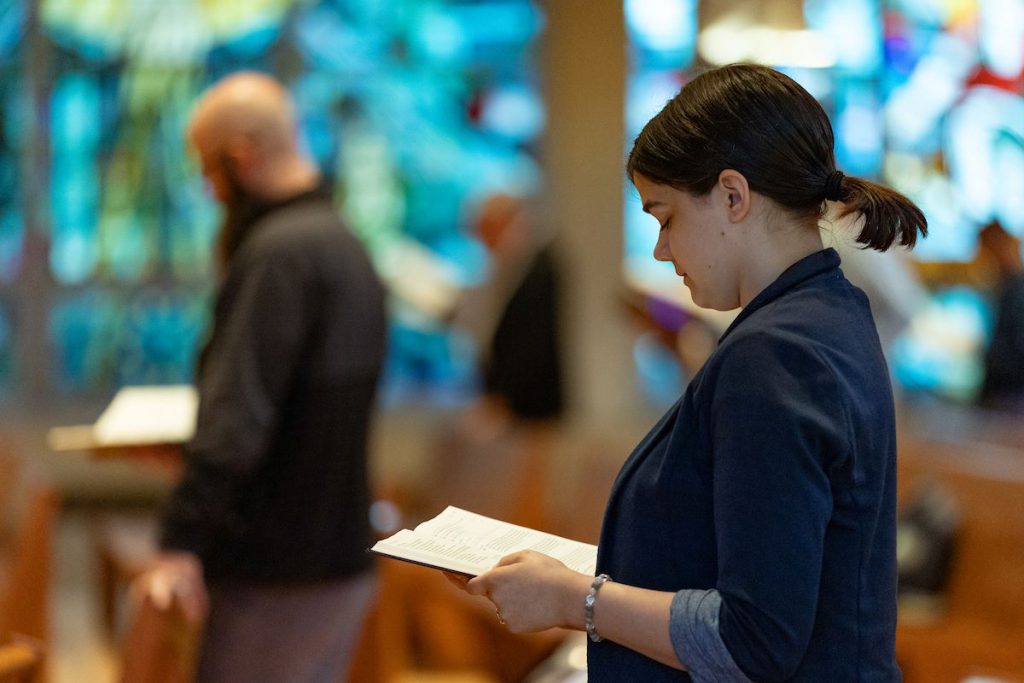
girl reading bible in chapel

Christ-Centered Curriculum

At CUW, learning doesn’t just focus on facts and theories—it reflects the truth of Scripture. Every course is designed to reflect a Christian worldview, often including ethical discussions, theological reflection, and real-world applications through a lens of faith.

“The integration of faith within our academic programs is embedded deeply within the design of each course and every program. Our course and program learning outcomes directly align with the Concordia Cornerstones—Christ at the Center, Excellence & Truth, and Vocation as Service,” says Carlton. 

Whether you’re studying education, healthcare, business, or another discipline, you’ll be invited to reflect on how your work can serve God and others.

Faithful Faculty Mentorship

Online students benefit from instructors who are not only academic experts but also committed Christian mentors. Professors often pray for their students, open class discussions with devotions, and encourage faith-based reflection.

They’re more than instructors—they’re partners in your spiritual and academic journey.

Devotionals and Worship

Just because you’re learning online doesn’t mean you’re disconnected from spiritual resources. CUW offers livestreamed chapel services, campus ministry opportunities, and devotional content that students can engage with at their own pace.

You’re invited to grow in faith as part of a larger Christian learning community—even from your laptop.

Vocation with a Christian Focus

CUW emphasizes the Lutheran understanding of vocation—that every career is a calling from God. Whether you’re called to teach, lead, heal, or innovate, you are encouraged to pursue excellence not for personal gain alone, but to glorify God and serve your neighbors.

“Our programs are grounded in the Lutheran doctrine of vocation. Because of what God has done and won for us through his son, Jesus Christ, we are called to serve Him and our neighbor in all of walks of life and all our relationships. This understanding is foundational across our programs,” says Carlton


Why a Christian Degree Matters in Today’s Culture
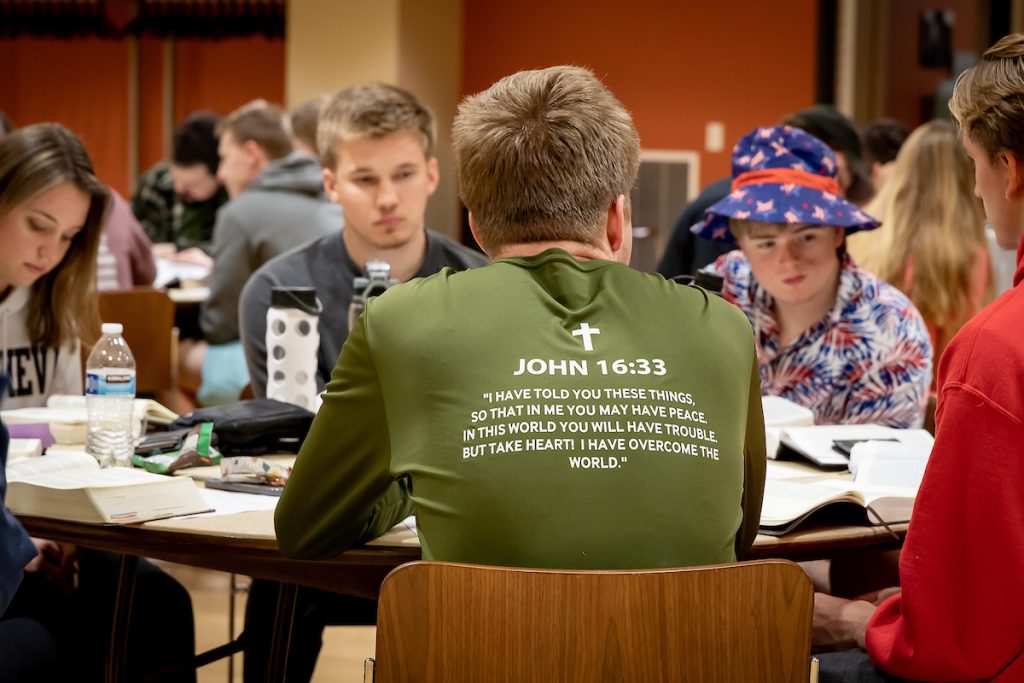
table of students

In a time when truth feels relative and culture often pulls people in conflicting directions, earning a degree from a Christian university like CUW offers lasting value. Here’s why:

Moral and Ethical Foundation

With Biblical values at the core of each program, students graduate equipped to navigate life and leadership with integrity, compassion, and wisdom.

“Employers are looking for value-driven employees who think critically, work well with colleagues, and are driven to develop oneself to perform to the best of their abilities. Our programs directly address the development of these skills to prepare graduates for successful careers and meaningful lives of service,” says Carlton,

Purpose That Transcends Career

At CUW, students are reminded that success is not just about what you do—but why you do it. A Christian education cultivates purpose, helping you see your work as part of God’s plan to impact the world.

Courage to Live Out Your Faith

Online students are empowered to live boldly and faithfully, even in professional environments where Christian beliefs may be tested. CUW helps build that confidence through encouragement, Scripture, and Christ-centered community.

“For God gave us a spirit not of fear but of power and love and self-control.” – 2 Timothy 1:7

A Community of Believers

Even online, CUW fosters deep connections through shared faith and mission. This kind of spiritual support is increasingly rare—and incredibly valuable—in a digital age that often feels isolating. Whether you’re in business meetings, classrooms, hospitals, or homes, a CUW education prepares you to be salt and light (Matthew 5:13–16), bringing hope and healing to a world in need.


Pursue Your Degree—and Your Purpose

beach, sunrise, and students

At Concordia University Wisconsin, earning an online degree is more than a path to a new career. It’s a journey of spiritual growth, ethical leadership, and purpose-driven learning—all rooted in the truth of Christ.

If you’re looking for a university that will challenge your mind, strengthen your faith, and prepare you to make a meaningful difference, CUW is ready to walk with you—wherever you are.

For more information regarding your online degree, check out this article, “Don’t miss your opportunity: What online students at Concordia University Wisconsin need to know when applying for grants and financial aid.”

Want in?

Concordia University Wisconsin is a Lutheran higher education community committed to helping students develop in mind, body, and spirit for service to Christ in the Church and the world. CUW’s Online undergraduate and graduate classes are offered year-round, with students beginning courses in two eight-week mini-terms during the Spring, Summer, and Fall for most programs.  Take action and connect with Concordia University’s admission team by visiting CUW Online Undergraduate Admissions for undergraduate degrees or Graduate Admissions for master’s degrees and licenses or by calling 262-243-4300.



Don’t miss your opportunity: What online students at Concordia University Wisconsin need to know when applying for grants and financial aid

CUW offers a robust selection of online programs designed to help you pursue academic and spiritual growth. But what about financial help?


After scrolling through Concordia’s rich online program selection, and perhaps narrowing down a preferred field of study, a common question among prospective online students often is: “Can I receive financial aid like the Federal Pell Grant or Wisconsin Tuition Grant?” The answer is yes.

Here’s a breakdown of available aid for online undergraduates and graduate students, and what it means for your Concordia journey.


Undergraduate online students

Federal Pell Grant

  • What it is: A federal need-based grant for students pursuing their first bachelor’s degree.
  • Eligibility: Determined through the FAFSA; awarded to students with significant financial need.
  • Award range: Up to $7,395 per year (for full-time enrollment; prorated for part-time).
  • CUW online students: Fully eligible, regardless of learning format—on-campus or online.

Wisconsin Tuition Grant

  • What it is: A state grant for undergraduate Wisconsin residents attending private colleges like CUW.
  • Eligibility: Based on financial need and completion of the FAFSA by August 1. This grant is only awarded at the beginning of each fall semester.
  • Award range: Up to $4,850 per year.
  • CUW online students: Eligible if they live in Wisconsin and are enrolled at least half-time. This grant can be applied for through our financial aid office.

Graduate online students

Graduate students are not eligible for Federal Pell Grants or the Wisconsin Tuition Grant, as those are reserved for undergraduate programs. However, financial aid is still available for graduate-level online programs at CUW:

Federal Direct Unsubsidized Loans

  • What it is: A federal student loan available to graduate students regardless of financial need.
  • Loan limit: Up to $20,500 per academic year.
  • Interest: Begins accruing immediately, but repayment is deferred while enrolled at least half-time.
  • CUW online graduate students: Fully eligible by completing the FAFSA.

Concordia Scholarships and Employer Discounts

CUW offers institutional aid, especially for graduate students who are:

  • Teachers, school administrators, or employees of Christian or partner schools.
  • Working for Concordia system partners (e.g., healthcare, education, church organizations).
  • Part of corporate partnerships that provide tuition discounts or reimbursement.

Tip: Check with your CUW Admissions Counselor to see if your employer or church qualifies you for a 10–25% discount on graduate tuition.


Applying for Financial Aid

blue sign with white letters and arrow
  1. Complete the FAFSA at studentaid.gov (use CUW code: 003842).
  2. Apply early—especially for the Wisconsin Grant, which requires FAFSA submission by August 1.
  3. Review your estimated award—contact the CUW Financial Aid Office after you receive your award letter if you have any questions about your award.
  4. Ask about employer discounts and scholarships—especially if you’re in education, ministry, or healthcare.

Reminder: Kim Mittelsteadt, CUW’s associate director of financial aid reminds students, “the Financial Aid Office is here for you throughout your entire time at Concordia. We are here to help you understand your available financial aid each school year, but also after graduation with loan repayment information as well.


Investing in your purpose

Earning an online degree from Concordia University Wisconsin is an investment not only in your future career but in your God-given calling. Through generous federal, state, and institutional aid options, CUW strives to make Christian higher education affordable and accessible for all learners—undergraduate and graduate, online or on-campus.

“For I know the plans I have for you,” declares the Lord, “plans to prosper you and not to harm you, plans to give you a hope and a future.”
– Jeremiah 29:11

CUW’s online undergraduate and graduate classes are offered year-round, with students beginning courses in two eight-week mini-terms during the spring, summer, and fall for most programs. Take action and connect with Concordia University’s admission team by visiting CUW Online Undergraduate Admissions for undergraduate degrees or Graduate Admissions for master’s degrees and licenses or by calling 262-243-4300.


Want in?

Concordia University Wisconsin is a Lutheran higher education community committed to helping students develop in mind, body, and spirit for service to Christ in the Church and the world.


Building Meaningful Relationships in CUW’s Online Programs

At Concordia University Wisconsin (CUW), students in online programs have many opportunities to build meaningful relationships with professors, classmates, and the broader university community.


Online education offers flexibility and convenience. However, it also raises concerns about connectivity and engagement. As a writer, commentator, and comedian Ben Stein famously said: “Personal relationships are the fertile soil from which all advancement, all success, all achievement in real life grow.” At CUW, students in online programs have opportunities to build meaningful relationships with professors, classmates, and the broader university community.

Here’s how CUW fosters connection in its virtual learning environment—and how you can make the most of it.

1. Engage in Online Discussions

Many CUW online courses use discussion forums, group chats, and live video sessions to encourage interaction. These platforms provide a space to exchange ideas, ask questions, and build rapport with classmates. Actively participating in these discussions can help you establish a strong presence and foster connections with peers and faculty. Jon Balsman, an instructor at CUW’s School of Education said, “The strongest relationships I have with my online students are with those who take the time to introduce themselves, ask questions, seek clarification, and engage in meaningful discussions. I can most quickly assist those who make the effort to reach out and stay engaged. Students who consistently communicate and advocate for themselves are the ones who thrive.”
Tips for Success
– Respond thoughtfully to posts and discussions.
– Share personal insights and experiences to make interactions more meaningful.
– Reach out privately to peers whose perspectives resonate with you.

2. Utilize Virtual Office Hours

CUW instructors are dedicated to supporting students. They offer virtual office hours where you can ask questions and get to know them better. Taking advantage of these sessions not only enhances your academic experience but also helps build a strong student-professor relationship. Dr. Jim Pingel, the Dean of the School of Education, reminds students to “Take advantage of the Pray & Chat section to help your instructors get to know more about you.”
How to Make the Most of It:
– Prepare questions in advance to maximize your time.
– Attend even if you don’t have urgent questions—conversation can lead to unexpected insights.
– Follow up via email or discussion boards to continue the dialogue.

3. Form or Join Study Groups

Collaboration is key to success in online programs, and CUW provides tools to facilitate study groups. Whether through video conferencing, group chats, or collaborative documents, forming a study group can boost both academic performance and relationships.
Benefits of Study Groups:
– Gain diverse perspectives and insights on coursework.
– Stay accountable and motivated with group support.
– Build friendships that extend beyond the classroom.

4. Get Involved in Virtual Campus Activities

CUW offers various virtual events, webinars, and student organizations that allow online students to engage with the university community. Whether it’s a career development seminar, a faith-based discussion group, daily chapel live-streams, or an alumni networking event, these activities provide excellent opportunities for connection.
Ways to Stay Involved:
– Check CUW’s online student portal for upcoming events.
– Join professional or interest-based groups related to your field of study.
– Participate in leadership opportunities within online student organizations.

5. Network with Alumni and Faculty

Building relationships at CUW doesn’t stop with your classmates. Professors and alumni can be valuable mentors, offering career guidance, industry insights, and networking opportunities. CUW’s strong alumni network can help open doors for future career growth. As Dr. Kimberly Schave of CUW’s MBA program suggests, “Students should make an effort to proactively reach out to their online instructors to begin building a relationship. They should not be afraid to ask questions or request assistance, as faculty are eager to offer guidance. Not only is this helpful for navigating coursework, but also for allowing the instructor to get to know you better should you need a letter of recommendation in the future.”
Networking Strategies:
– Connect with faculty and alumni on LinkedIn and CUW’s networking platforms.
– Attend virtual networking events or career panels.
– Reach out to alumni in your field of interest to ask about their experiences.


Building relationships in CUW’s online programs takes initiative, but the rewards are well worth it. These relationships will not only enrich your time at CUW but also support your long-term academic and professional success. Jon Balsman adds, “Online students who connect with their instructors, program directors, and peers will not only enhance their learning experience but also help them build relationships that can benefit their careers long after graduation.”


Want in?

CUW’s Online classes are offered year-round, with students beginning courses in two eight-week mini-terms during the Spring, Summer, and Fall for most programs. Take action and connect with Concordia University’s admission team by visiting CUW Online Undergraduate Admissions for undergraduate degrees or Graduate Admissions for master’s degrees and licenses or by calling 262-243-4300.


—This blog was written by Jon Cain with the assistance of AI. Jon Cain, MS Ed, serves as the Online Admission Counselor for Concordia University Wisconsin’s undergraduate degrees in Education and Theological Studies.

Solutions for setbacks, obstacles, and challenges for Online learners

Online learning at Concordia University offers flexibility and accessibility, but it also presents unique challenges. Here are some tips for navigating the journey.


Online learning at Concordia University offers flexibility and accessibility, but it also presents unique challenges. Whether you’re a first-time online student or a seasoned digital learner, overcoming these obstacles can help you succeed in your academic journey. Here are some common issues online college students face and strategies to overcome them.

1. Time Management Struggles

Many online students juggle work, family, and other responsibilities alongside their studies. Without a structured schedule, it can be easy to fall behind.

Solutions: 

  • Create a dedicated study schedule and stick to it.  Most students set aside a designated amount of regular time per week.  Plan for a few hours each weekday and allow a longer catch-up time on the weekends.
  • Use productivity tools like calendars, task managers, or study apps to stay organized.
  • Set specific deadlines for assignments and break tasks into smaller, manageable parts.

2. Lack of Motivation and Discipline

With limited in-person interactions with professors and classmates, staying motivated can be challenging.

Solutions:

  • Establish clear academic goals and remind yourself of your long-term objectives.
  • Join online study groups or virtual discussion forums to stay engaged.
  • Reward yourself for completing tasks to maintain motivation.

3. Technical Issues

Reliable internet access, software compatibility, and hardware problems can be major hurdles for online students.

Solutions:

  • Utilize the Concordia University IT HelpDesk for any technical troubles you may have. Call 262-243-4357 or mail them at ithelpdesk@cuw.edu.
  • Become familiar with tutorials and prompts on your Student Portal.
  • Ensure you have a stable internet connection and necessary software before starting courses.
  • Familiarize yourself with the online learning platform and troubleshoot issues ahead of time.
  • Have a backup plan, such as using a library or a friend’s computer if necessary.

4. Feeling Isolated

Without the traditional classroom setting, some students may feel disconnected from peers and instructors.

Solutions:

  • Participate actively in online discussions and group projects.
  • Reach out to professors and classmates via email, chat, or video calls.
  • Take advantage of virtual networking opportunities, like webinars and student organizations.

5. Difficulty Staying Focused

Studying from home comes with distractions like household chores, social media, and family responsibilities.

Solution:

  • Designate a quiet, clutter-free workspace for studying.
  • Use focus techniques like the Pomodoro method (25-minute study sessions with breaks).
  • Turn off notifications and set boundaries with family members during study time.

6. Struggles with Self-Paced Learning

Online courses often require self-directed learning, which can be difficult for those used to traditional classroom instruction.

Solutions:

  • Set specific, achievable learning goals each week.
  • Reach out to instructors for clarification when needed.
  • Make use of supplementary learning materials like videos, articles, and tutoring services.
  • Utilize the services offered by Concordia’s Academic Resource Center including the Writing Center, Online Tutoring, and the use of the TutorMe Online Tutoring program featuring 24/7 access.

7. Managing Stress and Mental Health

Balancing studies with personal responsibilities can be overwhelming.

Solutions:

  • Practice stress management techniques such as deep breathing, meditation, or exercise.
  • Maintain a healthy work-life balance by taking breaks and getting enough rest.
  • Seek support from school counselors, mental health resources, or supportive friends and family.
  • Utilize Concordia’s Student Wellness Programs which provide access to Wellness, Health, and Counseling services.

While online learning presents unique challenges, developing strong habits and utilizing available resources at Concordia can help you navigate these obstacles successfully. With proper planning, discipline, and motivation, you can excel in your online education and achieve your academic goals!


Want in?

CUW’s Online classes are offered year-round, with students beginning courses in two eight-week mini-terms during the Spring, Summer, and Fall for most programs. Take action and connect with Concordia University’s admission team by visiting CUW Online Undergraduate Admissions for undergraduate degrees or Graduate Admissions for the master’s degrees or by calling 262-243-4300.


For Concordia’s Post-Traditional Education Students, their Classroom is the Classroom

Concordia University’s Online Education programs continue to grow with a unique blend of online coursework and in-person classroom clinical experiences. While the flexibility of the online class is appealing for many students, the clinical field experiences stoke the passion for becoming a teacher and inspiring young minds!

Concordia’s Online Education Degrees

Concordia undergraduate degrees in Early Childhood Education, Elementary Education, Cross Categorical Special Education, and Secondary Education in English and Language Arts, Math, and Broad Field Social Studies lead to Wisconsin teacher licensing. The Wisconsin Department of Instruction has certified that these programs meet the standards for students to earn their license in their teaching area. Additionally, the department has approved field experience requirements outlined by Concordia’s School of Education. Students can complete the clinical credits in various school settings, including both public and private schools. Let’s take a look at a few examples of our students.

From Paraprofessionals to Teachers

Students Angie and Kristi have served as paraprofessionals in the Appleton School District. Each individual, through their classroom work history, applied for Prior Learning credits and received approval for six of their required clinical credits. From there, each has been able to complete observation hours with Special Education teachers and with other certified teachers. Working with their building administrators allowed them to accumulate these hours on the job. As they continue with their online classes, they will be able to meet all of their clinical and student teaching in the district.

Changing Paths

Brittany chose to pursue teaching after starting a Nursing program at a local technical college. After transferring some of those credits to Concordia, Brittany hit the ground running with field clinics in local schools, both public and private, by reaching out to former teachers and contacts with schools in her area. Concordia’s field coordinator confirmed that her experiences were conducted under the supervision of teachers who held licenses for at least three years and had been at their school for at least one year.


Brittany enjoyed the flexibility offered by those schools. She could spread her required hours over a more extended period or bunch them into full-day sessions as needed. “I enjoyed interacting with teachers, talking about highs and lows in education. So often, people only highlight the bad in teaching when it is so rewarding,” said Brittany. “Public speaking is not my favorite thing, but being in front of kids was a different story, and I am thankful a few of my host teachers let me take the lead and go for it. This has strengthened my interest in teaching.”

Reaching Students Outside Wisconsin

As these unique programs have grown, Concordia’s reach outside Wisconsin has grown, including helping teachers in Lutheran and Christian schools. Jenna was pursuing a degree through a national university when she learned there would be obstacles in her field experiences. As a parent and classroom assistant at her Lutheran grade school in Colorado, Jenna hopes to become fully licensed and certified to teach in the school her family chose.

Midway through her program, she learned she could only observe and student-teach in public school settings. Wanting a different experience, her research led her to Concordia’s program. Despite being set back a few credits through transferring, she will now be able to complete many of her clinicals. Additionally, she will do her student teaching at the Lutheran school, where she will work under the supervision of Colorado licensed teachers. Concordia’s accelerated program helped Jenna and many other students pursue opportunities to teach in private schools. It also enabled them to complete clinical experiences in settings most relevant to them.

The Unique Experience of Concordia Programs

To sum it all up, Melissa, who recently completed her degree and license, said more about learning in the classroom. “I have been able to apply what I’ve learned to a classroom setting during field clinical and also as a substitute in elementary schools. Clinical field experiences are Concordia’s way of providing hands-on learning before student teaching. For example, during the reading clinical experience, we worked one-on-one with a student conducting literacy lessons. So, I could apply what I learned in the Art and Science of Teaching Reading course to this clinical, which was intimidating but highly beneficial.” 

Program director Dr. Adam Paape adds, “The unique nature of these programs allows students amid their online courses to accomplish their clinical fieldwork in their local schools, near their home. And even though the coursework is online, there will be substantial in-person interaction as Concordia representatives visit with students during their clinical experiences.” For more comments from Dr. Paape, view Overview of Teacher Accelerated Programs.

Want in?

CUWAA’s Adult Accelerated classes are offered year-round, with students beginning courses in two eight-week mini-terms during the Spring, Summer, and Fall.  Take action and connect with Concordia University’s accelerated programs by visiting CUWAA Accelerated Admissions or calling 262-243-5700.

Turning Self-Doubt into Growth

When considering starting or returning to college as an adult an all-too-familiar companion often lurks in the shadows – self-doubt. It’s that nagging voice inside that questions our abilities, worthiness, and potential, leaving us cautious and uncertain. But what if we could transform this seemingly negative force into a catalyst for growth?

According to a survey of Americans interested in online learning, nearly half (45%) of individuals fear they won’t be successful in school. Self-doubt makes us question our ability to accomplish anything from meeting class deadlines to paying for school.

But, by understanding the power of self-doubt and embracing it as a stepping stone rather than a roadblock, we can unlock a remarkable path of personal and intellectual development. This journey not only enriches our time in college but also shapes our future endeavors. So, let’s explore the art of turning self-doubt into growth.

The nature of self-doubt in college

Earning your degree, while exciting and transformative, can simultaneously be challenging. This is where self-doubt tends to creep in. Several scenarios commonly lead to self-doubt in college students such as academic pressure, social comparisons, change in routine, and imposter syndrome.

So, what does self-doubt do for us? Well, the real question is, what does self-doubt do to us? It can take a great toll on our psychological and emotional well-being, impacting various aspects of our lives. Self-doubting can lead to anxiety and stress, low self-esteem, procrastination or avoidance, isolation, and mental health issues. In order to recognize self-doubt in ourselves and others, it’s important to be aware of the signs.

  • Negative Self-Talk: Students experiencing self-doubt may be talking negatively to themselves, such as constantly criticizing themselves and being skeptical of their own abilities.
  • Fear of Failing: When facing new challenges, students may have an intense fear of failing and belief that they are incapable of success. This can lead to less engagement in academic work.
  • Perfectionism: Unrealistic standards and a relentless pursuit of perfection.
  • Avoidance: Students may avoid challenges or opportunities that require stepping outside of their comfort zone.
  • Emotional Distress: Common displays of emotional distress, such as sadness, frustration, or anger, without an apparent cause, could be linked to underlying self-doubt.

We must see self-doubt for what it is by understanding the impact it has on ourselves and others. Recognizing and facing self-doubt is the first step in addressing the challenge.  

Embracing Self-Doubt as a Catalyst for Growth

Rather than shying away from self-doubt, embracing this feeling can lead to transformative growth. By reframing it as a natural part of the learning process, students can change their mindset and see it as an opportunity for self-improvement. Recognizing that self-doubt is a common experience for many individuals, students can approach challenges with greater resilience and adaptability.

Contrary to its negative connotation, self-doubt can serve as a powerful motivator. When students doubt their abilities, they become determined to prove themselves wrong and achieve their goals. This inner conflict motivates them to work harder, explore new possibilities, and strive for excellence. By harnessing self-doubt as a driving force, students can unlock untapped potential and push beyond their perceived limitations.

As discussed, many students face self-doubt. Recently, I worked with a student returning to school as an adult who feared starting a degree in education. Despite her desire to move her career forward, she stalled. Her self-doubt got in the way and it was holding her back from reaching her goal. After being in school for a couple semesters, she came to the realization of her self-doubt and was no closer to the full-time teaching position she sought. When she reached out, she told me, “I have to just jump in, enroll, and get going!”

Coming to the realization, that we are holding ourselves back out of fear, is when we start to cultivate our resilience.

Trust in the Lord with all your heart and lean not on your own understanding; in all your ways submit to him, and he will make your paths straight.  

Proverbs 3:5-6  

The Power of Resilience

Resilience is a powerful tool that can help individuals overcome self-doubt and navigate the challenges that life throws their way. By being able to adapt to difficult situations individuals can develop the strength to confront doubts head-on and emerge stronger.

It requires effort and practices to build resilience and self-confidence, and some effective strategies to strengthen resilience include:

  • Embrace a Growth Mindset: A growth mindset is a belief that abilities and knowledge can be strengthened through dedication and hard work. Students will see challenges as chances to learn and improve, rather than as limitations or barriers. This perspective empowers them to tackle self-doubt with determination.
  • Set Realistic Goals: We all tend to bite off more than we can chew, which can create an overwhelming sense of self-doubt. Creating attainable goals allows students to achieve goals in smaller steps, rather than too much at once. This can lead to greater self-confidence, proving they can overcome obstacles and grow.
  • Nurture a Supportive Network: Having a network of friends, family, or mentors who encourage personal growth and resilience can provide much-needed reassurance and guidance.
  • Practice Self-Compassion: Recognizing that everyone has moments of doubt and failure is essential for self-compassion. Rather than being overly critical of oneself, students should treat themselves with kindness and understanding, knowing that self-improvement is a gradual process.
  • Learn from Setbacks: Resilient individuals view setbacks as learning opportunities. Analyzing what went wrong and identifying lessons from the experience helps them grow and develop better strategies for future challenges.

By adopting strategies to build resilience and fostering a growth mindset, students can develop the inner strength and confidence needed to thrive in the face of adversity.

Combating Uncertainty in College

As a student, self-doubt can be a common and challenging experience. The academic environment, combined with social pressures and personal expectations, can lead to feelings of inadequacy and uncertainty. However, there are effective strategies to combat self-doubt and foster a positive and confident mindset.

First, don’t hesitate to seek guidance and clarification if facing academic challenges. Reach out to professors or an academic advisor. Then you can ask questions to gain a better understanding of the topics to gain clarity.

Next, avoid comparing yourself to other students, as it can be detrimental to your self-confidence. Each individual’s learning journey is unique, and it’s essential to focus on your own progress and growth.

Finally, celebrate your strengths and talents, both academically and personally. Acknowledging your unique qualities can help build a positive self-image and counteract self-doubt. Overcoming self-doubt is an ongoing process. Be patient with yourself and recognize that building self-confidence is a journey that takes time and effort.

Facing Self-Doubt as an Adult Student

Returning to school as an adult or even attending college as a parent comes with its own unique set of challenges. Many adults returning to school have concerns about adequate time to devote to homework, too many years away from school, tuition costs, and the length of time it will take to finish. 

Yes, these are legitimate and important concerns that you may have. Here at Concordia, we are in the business of making your educational dreams a reality. If it’s your goal to reskill or upskill, reinvent your professional self, or discover your true potential, let us make a way for you. It’s never too early to take that next step toward achieving your goals.  

So, how can we help?

CUWAA’s Adult Accelerated programs are offered year-round. As an adult returning to school, you still have time to register and enroll for the upcoming Fall 2023 Semester. The next mini-term begins on Monday, August 28th. 

Whether you have already been admitted to a Concordia Adult Accelerated program; have yet to enroll; have started but never completed an application; or are considering the possibility of a degree, connect with our team for personalized solutions to your unique situation.

If you feel like self-doubt might be holding you back, take your next step toward that goal today. You might just find you’re more ready than you thought.

Ready to Lead? Consider a degree in Communication & Leadership

For better or worse, communication and leadership go hand-in-hand. Many have assumed leadership roles or aspire to leadership in the future. However, they may not have personal experience themselves or good examples of leaders. One solution is more opportunities to experience leadership concepts in a safe environment and discover your natural leadership style. Undoubtedly, communication and leadership are critical to a successful business and engaged teams.

Why are communication and leadership important?

Employers are hungry for excellent communication skills. They want leaders that are articulate and clear in their direction. So, becoming skilled in both makes you a very valuable hire.

Excellence in communication enhances every relationship that is held dear, from our significant others to our co-workers, friends, and even acquaintances. Communication is the skill that could take an acquaintance and springboard that relationship to an important part of a social or career network. 

Today communication is more important than ever as technology has largely replaced personal interaction. Covid further exacerbated the decline of the richest communication: face-to-face. Upper management and business owners seek to find good leaders and good communicators, they understand that these skills improve productivity and profits. It could be said that good communicators and leaders are critical to both profitability and growth.

How does a degree in communication and leadership benefit me?

Having communication skills as a strength segues directly into the importance of strong leadership skills and abilities. Anyone interested in leadership or management can benefit from higher education in this field. A degree will equip you with the skills you need to be an effective leader and communicator, in an environment conducive to accelerated learning.

The skills learned will help you to create an enjoyable, comfortable, and profitable work environment. We know that improved relationships in the workforce reduce absences and improve engagement. People that work well together are able to accomplish more and a degree will help you develop the skills you need to become the effective and ethical leader already inside.

What can I do with a communication and leadership degree?

The beauty of this degree is that it is applicable to just about any workplace. It could be healthcare, manufacturing, tech, retail, wholesale, and the list goes on and on. Leaders with strong communication skills are able to facilitate, network, encourage and support others to do their best work; these skills are valuable no matter the industry.

Some fields of work may include:

  • Social and digital media
  • Public Relations
  • Marketing and advertising
  • Writing and publishing
  • Event Planning
  • Human Resources
  • Politics
  • Nonprofits
  • Customer Service
  • Fundraising

What makes Concordia’s program different than others?

Firstly, our Accelerated Bachelor’s in Communication and Leadership program was created with adult learners in mind. We are pleased to enable students with the ability to complete their degree online alongside their busy life. Our excellent faculty understand how busy life can get and are happy to work with students to balance their education with their lives.

Additionally, within the program servant leadership and multicultural leadership are two core approaches we teach. These cores help to prepare students to serve others in leadership roles. Furthermore, students learn how to build equity and support into their teams.

We’re passionate about this approach to leadership. It enables our students to live out Concordia’s mission of service to Christ in the Church and the world, particularly, through our vocations of serving our neighbors.

How is Concordia University unique?

Concordia is a Lutheran Christian school that integrates those Christian values with our programs. In this model, students acquire knowledge and skills in liberal arts disciplines that prepare them to be of service to Christ in the Church and the world. We bring a holistic approach to every class we offer our students. We challenge our students academically but also give them the chance to grow spiritually with us in ways that they may not find at other universities. Concordia is a community of people whose calling is to ensure both student success and well-being. 

In addition, we have designed paths bridging traditional undergraduate degrees to graduate degrees, such as our Business Scholars program. This unique program offers highly qualified incoming freshmen the opportunity to earn their bachelor’s degree and their MBA in four years, for example.

Another perk of our undergraduate programs is that students can transfer up to 84 credits. This makes the transfer process easy and saves students time and money. Our admissions counselors can provide transcript evaluations for a more accurate amount of credits. All we need is your unofficial transcripts from previous schools attended.

How long does it typically take to complete the degree?

It will take 3 to 5 years to earn a bachelor’s degree, depending on credit transfer amount and course load. If you already have your bachelors degree and are looking for a master’s, consider our Master’s in Leadership program. This degree can be completed in just 1.5 years.

What format is offered? How long are the classes?

Our Bachelor of Arts in Communication and Leadership program is offered fully online. Classes are eight weeks each. The online format is very flexible but requires discipline and organization to set up a schedule to complete coursework on time.

How much does the program cost?

This program is $475 per credit hour and 120 total credits. Depending on the number of credits a student transfers in and if they qualify for a scholarship, most students end up spending far less on their degree.

Are there scholarships available?

Yes! We have Uncommon Scholarships available for many qualified students. Our available scholarships include:

  • Business Community Scholarship: If you are an employee of one of our corporate partners you may qualify for this scholarship.
  • Academic Community Scholarship: If you are an employee of one of our Preferred Education Partner schools or districts you may qualify for this scholarship. 
  • Christian Community Scholarship: If you are an employee of any qualifying Christian church or Christian K-12 school you may qualify for this scholarship. 
  • Alumni Scholarship: If you are a graduate of one of Concordia University System school programs you may qualify for this scholarship.
  • Veterans and Dependents Scholarship: If you are a veteran, the spouse of a veteran, or a child of a veteran(age 17-26), you may qualify for this veteran scholarship when federal veteran education benefits are exhausted or unavailable to you. 

When it comes to funding your education, have a conversation with your employer to see if they will be willing to pay a portion of your tuition. There may be funds, scholarships, or benefits their companies may offer.

Entrance Requirements

  • High School Diploma/ GED
  • Cumulative undergrad GPA of 2.0 for full acceptance

Admissions Requirements

  • Online Application
  • All official transcripts
    • Student only needs to submit a high school or GED transcript if the student has less than 60 transferrable credits.
    • An unofficial transcript evaluation is almost always done to gauge understanding of approximate transfer credits and the length of the program. We are able to accept a maximum of 84 credits with a grade of D or better from regionally accredited schools.

Check it out: Does your college have an articulation agreement with Concordia?

Ready to start?

To learn more about the accelerated associate and bachelor’s in Communication & Leadership offered for busy adults visit CUWAA Accelerated Admissions or talk to one of our support specialists.

Information provided by Sandra Jahns, Concordia’s Program Director for the Accelerated program in Communication & Leadership.

Scholarships for Accelerated Programs

A common question from potential accelerated students is, “Do you have any scholarships?”. That’s a loaded question and often means a variety of things to different people.

What are accelerated programs?

To be clear, accelerated degrees at Concordia University are fully accredited college bachelor or associate degrees. There are also accelerated pathways for earning two degrees at the same time. Our Master’s in Athletic Training and our Business Scholars dual-degree programs are perfect examples. Both of these accelerated pathways require a large investment of time and resources by the student. While accelerated degrees save you time and money, they are not easier to earn. Ultimately the degree enables the student to achieve their academic and career goals. Often, the degree is non-negotiable to get where they want to go.

Are there different scholarships for accelerated programs?

Accelerated, non-traditional students have different scholarship opportunities from the traditional, on-campus format. Yes, accelerated students may qualify for Federal Financial Aid. However, it is required to register for at least six credits within a semester to be eligible for federal grants and loans.  But for many students, the obvious concern is, “Will this aid cover the cost?”

Traditional degrees offer a variety of aid from the university and a multitude of outside sources for scholarships & grants. Yet accelerated students often wonder if there are other sources for them to find assistance.  Concordia strives to bridge the gap for accelerated students by offering a variety of Uncommon Scholarships. We have developed these scholarships through various partnerships with employers, alumni, and military programs.

Business partnership scholarship opportunities

Edcor Member Employees:  Accelerated programs for Edcor partners

Advocate Aurora Employees:  Advocate Aurora/Atrium Health

Bright Horizons Member Employees:  Bright Horizons

MATC Graduates:  Welcome MATC Graduates, Faculty, and Staff

View all other Uncommon Scholarships including Christian Churches & Schools, CUWAA Alumni, and Veterans & Dependents.

College degrees bring a wealth of opportunity and satisfaction, but require persistence, sacrifice, and financial investment.  There are resources available as investment in your future. A great first step is to complete the FAFSA and explore federal funding at www.fafsa.gov. However, accelerated students must consider all available options. These may include our Uncommon Scholarships and potentially, tuition benefits and reimbursements from their employers.

Martin Luther King, Jr. famously said:

“Take the first step in faith. You don’t have to see the whole staircase, just take the first step.”

Take your next step

For many years Concordia’s accelerated degrees have been helping adult learners complete degrees and improve career opportunities. The first step is to determine the financial cost. While the journey comes with an investment, students should take the first step by exploring all of their financial options.

So, do we have scholarships for accelerated programs? Yes! And applications are now open for the 2023-24 school year. Take the first step to find out if you qualify and learn more about your options. Visit Financial Aid for Accelerated Students to learn more.  Encourage your employer to become a partner with Concordia. Concordia Community Partnerships and Why partner with Concordia as an employer? are excellent resources for that conversation.

To learn more about all of the accelerated degrees and programs offered for busy adults including those in Arts & Sciences, Business, Computer Science, Education, Health Care, and Public Service, as well as graduate degrees, visit CUWAA Accelerated Admissions or call 262-243-5700.

What can non-degree coursework do for you?

Non-degree coursework: Learn why it’s so valuable

Why would anyone ever want to take college courses if they weren’t part of a degree plan? Hidden in Concordia’s Accelerated and Online programs are several students who are completing accelerated courses without looking to complete a degree.

Let’s take a look at why these courses may be helpful. We’ll explore how students are using them to achieve their academic goals. Also, we’ll see how the process works for being admitted and registered to take stand-alone classes.

Why students choose non-degree coursework

In most cases, the non-degree student attends classes to gain specific skills in their field without having to take a full degree program. They do this to fulfill certain prerequisite or introductory classes necessary for another program, or even for their own interests.

How non-degree coursework helped Mark

For example, Mark earned a bachelor’s degree in Business Administration nearly 20 years ago. He worked his way up into a mid-level management position for a financial services company. Despite completing a variety of licensing programs, Mark still felt his options for promotion have been limited. He knew his skill sets lagged as his company responded to issues of diversity and new digital technologies.

After discussions with his supervisors, Mark’s company encouraged him to complete updated and more relevant coursework to round out his resume. They even offered tuition benefits to help cover the cost. Mark completed the course in Diversity & Inclusion and will continue with an introductory course in data management. With a regained sense of confidence in returning to classes, Mark is considering applying for Concordia’s MBA program.

Sara used non-degree courses to meet requirements

Sara was set back in her plan to attend a church worship music program in the southern part of the country during the pandemic.  She had completed an associate’s degree at a technical college. But, she had overlooked a requirement at her school of choice. Sara needed to have completed two electives related to Bible training. Since she had delayed moving onto campus, Sara found Concordia’s offerings in theology would fill the gap.  She completed online accelerated courses in Old Testament and New Testament in the spring and summer before heading off to start the music program.

Non-degree coursework can help when life happens

Similarly, another music student with acceptance to a highly-acclaimed music program experienced a medical setback. This delayed the start of her program for at least a year.  She chose in the meantime to earn general elective credits in courses approved by her future school to transfer in as earned credits.  While rehabilitating at home, she was able to complete credits online through Concordia!

And in the past year, several students from other institutions in the Concordia University System throughout the country were directed to CUWAA’s Accelerated program to complete theology requirements in order to meet graduation requirements. Rather than enroll part time in traditional on-campus classes at their schools, these students enrolled as non-degree accelerated students to complete the courses online without having to return to their home institutions to finish.

Concordia’s Director for Accelerated Admissions, Linda Szczerbinski, sums up the non-degree path:

“Non-degree options at Concordia help students achieve their ultimate goal or fill in gaps of their previous education. The quick and easy enrollment allows students to find courses to suit their needs. Concordia’s flexibility in course options and preferred learning formats (virtual via Zoom, or online) allows us to help students set a strong foundation in their educational journey.”

“The non-degree student attends classes to gain specific skills in their field without having to take a full degree program, to fulfill certain prerequisite or introductory classes necessary for another program, or for their own interests.”

Want to take a class?

If you have a class you would like to complete, visit www.cuw.edu/apply to complete an application for non-degree programs.

  • If interested in online or evening virtual classes through the Accelerated program, indicate this by selecting your student type as “Undergraduate Evening & Online Accelerated Certificates and Courses.”
  • You may list specific desired courses in the comment section. The application is free and does not require previous transcripts.

Do you have questions? CUWAA via email or calling 262-243-5700.

This blog was originally published on December 8, 2021. It has been updated to reflect current information.

Concordia’s accelerated programs: What’s being promised?

As we say goodbye to the past year, we must look back on our Christmas celebration to consider the true gift we have been given. A sincere hope for Christians is that all people will understand the Christmas message of John 3:16:

For God so loved the world that he gave his one and only Son, that whoever believes in him shall not perish but have eternal life.

What’s being promised? Eternal life and salvation. Why do we forget that?

When considering a higher education degree, it’s wise to ask the same question — what’s being promised? When it comes to Concordia’s accelerated programs “what’s being promised?” Concordia students provide the best answers. Here are a few benefits mentioned by our students.

Adjusting to a changing world

Life in the information world is changing everything. Concordia’s accelerated programs in online and virtual formats help students develop skills in our changing society. Real-world application and encouragement by instructors in the field help prepare students to excel in a changing world.

Better paying jobs & economic stability

The Indeed 2021 career guide reviewed the average salaries of various education levels. Results show that those over the age of 25 with no college degree earn an average of $774 per week and hold an unemployment rate of 4.0%. Those who hold a two-year associate degree earn $836 with unemployment dropping to 3.4%. 

The news gets even better for bachelor degree holders, like the CUW alums of the accelerated bachelor programs, who on average earn $1,173 per week with a significantly lower unemployment rate of 2.5%.  Earning an undergrad degree significantly enhances job opportunities and security. Furthermore, it can easily set the stage for further potential growth through graduate and professional degrees.

Taking advantage of employee benefits

“My boss has been encouraging me to go back to school and will even help me pay for the cost,” says one current student. “It would be foolish for me to not take advantage of that!” 

Employers have adjusted to a competitive hiring market. More and more offer back-to-school incentives through tuition reimbursement and grants for employees. Additionally, the military community continues to provide education benefits to veterans and active military members.

Joining a respected institution in the community

Many students received encouragement from relatives, friends, and co-workers who are either alumni of CUWAA or see the community’s respect for Concordia. “Concordia changed my life in so many ways and I appreciate the Christian perspective to my degree,” said a recent graduate.

Setting an example

A common sentiment expressed within the accelerated community is the desire to leave a legacy for children and family members. When a student returns to finish a degree, they quickly learn the program allows for a favorable number of credits to transfer in from accredited programs. 

This policy has assisted many students who thought their previous academic struggles brought about through medical, behavioral, or financial challenges of the past limited their degree potential to set an example of persistence. It has now become a common occurrence for a parent to be earning a degree alongside their own child.

Satisfaction

Finally, a major benefit for many accelerated students is the self-satisfaction that comes from knowing they have done all they could with the talent and abilities the Creator endowed within them. The accelerated format provides the flexibility to move through the program at a pace that works for you. That satisfaction provides an overwhelming sense of achievement.

Ready to move forward?

For the adult learner or even the recent high school graduate who found themselves lost in the traditional world of on-campus coursework, there may be plenty of benefits for you in Concordia’s adult accelerated program. This – and more – is what’s in it for you!

To learn more about all of the accelerated degrees and programs offered for busy adults including those in Arts & Sciences, Business, Computer Science, Education, Health Care, and Public Service visit CUWAA Accelerated Admissions or call 262-243-5700.