A legacy in glass and grace: Living Word Lutheran High School students honor Concordia through sacred art

One visit to Concordia University Wisconsin’s campus is often enough to sense something deeper at work — God’s presence revealed in the beauty of the lakefront horizon, the quiet strength of its buildings, and the faithful lives of students and alumni. For Heather Oechsner, a 2002 graduate in elementary education, that beauty left a lasting impression.


Alongside her art students at Living Word Lutheran High School in Jackson, Wis., she has helped transform that inspiration into art. Together, they created four large mosaic panels depicting scenes from campus and donated them to the university. The pieces, set to be installed later this year, stand as a colorful tribute to the place that continues to shape hearts, minds and callings.

“The mosaic is four parts and represents the four values CUW makes as part of their mission — Christ-centered, integrity & faith, excellence, and service,” Oechsner said. “Together they are quite big, each being 5 feet high and 3 feet wide.

“Each panel has a well-known, iconic component of the CUW campus — the famous floor tile (we re-created it); the driftwood cross at the bottom of the bluff; the courtyard path with trees; and the legendary gazebo. In addition, the Lutheran solas are tied in with the first panel, the Christ-Centered themed one — Christ Alone, Faith Alone, Scripture Alone, Grace Alone.” 


The artists

Eleven students worked with Oechsner for five hours a day for three weeks during their winterim, planning, measuring, forming clay pieces, and placing them on the boards along with broken glass and ceramic tile pieces.

The students and Mrs. O., as they affectionately call her, loaded up a vehicle earlier in February with the four pieces of art, ready to gift them to CUW. The panels were temporarily displayed against the wall outside of the Chapel of Christ Triumphant so that faculty, staff and students could see the result of the group’s creativity, skill and love for the Lord, as well as meet the artists that defined that love in clay, ceramic and glass.

“It’s cool that our artwork is going to be displayed on campus. To see Jesus’s love,” said high school junior Emree Kellerman. Her favorite of the four panels is the one depicting Concordia’s well-known gazebo. “I like the details and all of the colors,” she said, adding how “cool” it is for the group to leave a legacy on campus.

Nancy Eiff, grandmother of junior Megan Hauser, came out to Concordia for the presentation to the school. “She (Megan) showed me a picture in progress and I was amazed,” Eiff said. “They’re so talented.”

Megan said she enjoyed working on the integrity & faith panel, although it was a lot of work. “But it was really worth it,” she added, “because it turned out so beautiful.”


Why Concordia University

As an alumna, Oechsner experienced Concordia firsthand and visited each of the places depicted on the mosaic panels. She decided to represent her alma mater in art with her students because of the impact Concordia has made on her and her family.

“My dad went to CUW when it was in Milwaukee and also a high school boarding school in the 60s,” she said. “My brother graduated there in ’89 and my sister in ’95. Much of my family and extended family has gone to CUW and has worked there, too.

“Concordia became even more special to me in 2024 when they opened their chapel up to host our son Denny’s Celebration of Life service after losing him tragically,” she said. “The support from the entire faith community from Living Word to Concordia, our church First Immanuel and everyone in between was extremely supportive and caring to our family.

“Finally, I never thought I’d be a CUW parent, but my oldest son, Cole, transferred to Concordia for pre-med last year and loves it here.” 

Oechsner’s family is truly a Concordia legacy family, spanning three generations. It is fitting, then, that she chose Concordia as the place to leave a legacy in art.


Students standing by art

Student team

  • Eliza Anderson, senior
  • Max Ball, senior
  • Avery Cassidy, junior; father currently works at CUW and is an alumnus
  • Megan Hauser, junior
  • Emree Kellerman, junior; both parents are CUW alumni
  • Alayna Kurozawa, senior
  • Madison Lawrence, senior
  • Elaina Raymond, junior
  • Lilly Roltgen, senior
  • Anna Sileno, senior; attending CUW in the fall
  • Peytra Traska, junior; both parents are CUW alumni

By the numbers

4
hand-designed mosaic panels crafted and gifted to Concordia University Wisconsin

3
weeks of dedicated, creative work

5
hours set aside each day for hands-on artistic creation

11
high school students from Living Word Lutheran High School

1
teacher — an alumna whose talent, creativity, and love for her alma mater guided the project

24
hands working together to shape each panel, representing CUW’s mission

1
grateful university community in awe of this generous gift


Want in?

Concordia University Wisconsin is a Lutheran higher education community committed to helping students develop in mind, body and spirit for service to Christ in the Church and the world.

Called to educate: Libby MacGillis named 2026 SWD Teacher of the Year

Shepherding a school community through faith, leadership and service.


This week, Concordia University celebrates four alumni who have been recognized with 2026 South Wisconsin District Teacher of the Year Awards.

Their work reflects a deep commitment to excellence, compassion and purpose. Grounded in faith and called to serve, each educator lives out their vocation in the classroom, making a lasting difference in the lives entrusted to their care. This recognition is not only a professional honor, but also a testament to the way a Concordia education prepares graduates to lead and serve with integrity in the world.


Libby MacGillis

Principal at St. John Lutheran School in Plymouth, Wis.
2004 and 2011 alumna with a bachelor’s degree in Secondary Education, Biology, as well as a master’s in Educational Administration and Curriculum and Instruction

How has your understanding of teaching as a Christian vocation shaped the way you serve your students and school community each day?

I view teaching — and especially school leadership — as a calling rather than simply a career. Understanding my work as a Christian vocation means I approach each day with the mindset that God has placed me exactly where I am for a purpose. My role as principal is not just about academics or operations, but about shepherding students, families and staff with Christ-centered care. That view shapes how I make decisions, how I lead conversations and how I respond to challenges. I strive to reflect Christ with patience, grace and consistency, while also holding high expectations. Whether I am in classrooms, greeting students at the door or supporting teachers, I see each interaction as an opportunity to serve others and point them to Jesus through both words and actions.

Can you share a moment in your teaching journey when you clearly saw God at work through your classroom or relationships with students?

One of the clearest ways I see God at work is not always in a single dramatic moment, but in the steady growth of relationships over time. I have experienced moments when a struggling student finally feels safe enough to open up, or when a family expresses gratitude for being supported during a difficult season. Those moments are reminders that God is working through relationships — often quietly and patiently. There have also been times when conversations, prayers or even simple encouragement came at exactly the right moment, far beyond my own planning or ability. Those experiences reaffirm that God is present in our schools each day, using imperfect people to accomplish His perfect will.

Looking back on your time at Concordia, what experiences or mentors most prepared you to teach with excellence, compassion and confidence in Christ?

My time at Concordia University Wisconsin laid a strong foundation for both my professional skills and my faith. The integration of rigorous academics with a clear Lutheran identity helped me understand that excellence and faith are not separate — they belong together. Professors who modeled servant leadership, integrity and care for students made a lasting impression on me. They challenged me to think critically, reflect deeply, and teach and lead with purpose. Field experiences also prepared me to navigate real-world challenges with confidence, knowing that Christ is at the center of all we do. Concordia helped shape my identity as an educator who teaches and leads with both competence and compassion.

What encouragement would you offer to current Concordia students or future teachers who feel called to serve in Lutheran education today?

I would encourage them to trust God’s calling, even when the work feels overwhelming or uncertain. Truly listen to what God is saying and jump in ready to do the work. Lutheran education is deeply meaningful work, and it matters more than we often realize. You may not always see immediate results, but God is using you to plant seeds of faith, knowledge and character that will grow over time. Lean into your community, continue growing professionally, and stay rooted in God’s Word. Remember that you do not serve alone — God equips and sustains those He calls.

What’s your favorite thing about CUW?

My favorite thing about CUW is the way faith is intentionally woven into every aspect of the educational experience. Concordia does not just prepare students for careers; it prepares them for lives of service, leadership and purpose. I also deeply value the strong CUW connection within Lutheran education. Many of the teachers I work with have come through the Concordia system, and that shared foundation in faith and excellence is evident in our schools. On a personal level, it is especially meaningful to now experience CUW as a parent, as my oldest son is currently a freshman studying elementary education and theological languages. Seeing the next generation being formed for service in the Church and Lutheran schools makes CUW’s mission feel both personal and enduring.


Additional 2026 SWD Teachers

Read about the teachers featured in this series:


Want in?

Concordia University Wisconsin is a Lutheran higher education community committed to helping students develop in mind, body and spirit for service to Christ in the Church and the world.
Called to educate: Kyle Jagler named 2026 SWD Teacher of the Year


Leading students in faith, service and life through classroom and competition.

This week, Concordia University celebrates four alumni who have been recognized with 2026 South Wisconsin District Teacher of the Year Awards.

Their work reflects a deep commitment to excellence, compassion and purpose. Grounded in faith and called to serve, each educator lives out their vocation in the classroom, making a lasting difference in the lives entrusted to their care. This recognition is not only a professional honor, but also a testament to the way a Concordia education prepares graduates to lead and serve with integrity in the world.


Kyle Jagler

Middle school math/athletic director at Immanuel Lutheran in Brookfield, Wis.
2006 alumnus with a bachelor’s degree in Elementary Education

How has your understanding of teaching as a Christian vocation shaped the way you serve your students and school community each day?

I truly value the opportunity I have each day to be part of building young lives. As a Christian educator teaching in a Lutheran school, I not only have the privilege but also the responsibility to instruct each student to live a God-pleasing life, serving Him and others. I believe leading by example is a powerful way to accomplish this God-given task.

Can you share a moment in your teaching journey when you clearly saw God at work through your classroom or relationships with students?

It has been a joy and privilege to teach in many different places where God has called me to serve. I have witnessed students being baptized and students coming to understand who God is and the plan He has for them. Some of my favorite memories with students, when I have seen God at work, are during opportunities to serve together. We have served at Soles For Jesus and Feed My Starving Children. In those moments, I have seen students work together purposefully, with big smiles on their faces, for people they will most likely never meet.

Sadly, I have also attended multiple funerals for former and current students. At each funeral, I connected with students. In those moments of sadness and grief, there were reflections of a “bigger picture.” Through tears and hugs, we were able to have conversations rooted in the knowledge that heaven is our home someday through our hope and faith in Jesus.

Looking back on your time at Concordia, what experiences or mentors most prepared you to teach with excellence, compassion and confidence in Christ?

Concordia was a place where I felt my faith was ignited. Being on your own and managing your own time can be tricky at that age, but making the decision to worship with other believers of a similar age was important to me.

As I reflect on my education at Concordia, I have to say a big thank you to all of my block teachers. Each one of them was an excellent educator. They were personable, relatable and transparent in their teaching, and they were willing to share their experiences and faith. They had the best interests of every student in mind, which was evident in their teaching. I appreciated being able to go to them with questions and receive thoughtful feedback based on their experiences.

What encouragement would you offer to current Concordia students or future teachers who feel called to serve in Lutheran education today?

You never know where God is calling you to serve, but it is important to trust in that calling. God has a plan for each of us. We do not always know or understand that call, but He has a purpose for placing us where we need to be and where He needs us to be. Wherever God places us, it is important to establish and build positive relationships with students and families.

What’s your favorite thing about CUW?

I loved my time at CUW. During my years there, my favorite experiences were playing tennis and being part of Resounding Joy. I had the privilege of forming lifelong friendships and connections during my time on campus. It has been exciting to see the continued growth of CUW as it expands and provides meaningful degrees across a variety of vocations.


Additional 2026 SWD Teachers

Read about the teachers featured in this series:


Want in?

Concordia University Wisconsin is a Lutheran higher education community committed to helping students develop in mind, body and spirit for service to Christ in the Church and the world.

Called to educate: Amber Curtis named 2026 SWD Teacher of the Year

Sharing Jesus with joy through the hearts of the youngest learners.


This week, Concordia University celebrates four alumni who have been recognized with 2026 South Wisconsin District Teacher of the Year Awards.

Their work reflects a deep commitment to excellence, compassion and purpose. Grounded in faith and called to serve, each educator lives out their vocation in the classroom, making a lasting difference in the lives entrusted to their care. This recognition is not only a professional honor, but also a testament to the way a Concordia education prepares graduates to lead and serve with integrity in the world.


Amber (Schauland) Curtis

3K teacher at Divine Redeemer in Hartland, Wis.
1998 alumna with a degree in Early Childhood Education

How has your understanding of teaching as a Christian vocation shaped the way you serve your students and school community each day?

Teaching in a Lutheran school allows me the unique opportunity to speak about Jesus each and every day. Every part of our school day revolves around Jesus. He is present in the relationships I have with the children, parents and coworkers. What a blessing it is to be surrounded by so many people who love Him.

Can you share a moment in your teaching journey when you clearly saw God at work through your classroom or relationships with students?

Each year, our 3K classes present a Christmas program to family members. The joy the little children have for Jesus radiates from them as they worship Him with their voices. Their faith shines through as they praise Him. They are always so proud to proclaim how much they love Jesus.

Looking back on your time at Concordia, what experiences or mentors most prepared you to teach with excellence, compassion and confidence in Christ?

Candy Seider and Val Keiper were amazing professors. We knew they were always cheering for us to succeed while at CUW and in our careers. Dr. J was also incredibly helpful when I was looking for my first job.

What encouragement would you offer to current Concordia students or future teachers who feel called to serve in Lutheran education today?

Listen to what God is telling you. Talk to teachers you know and ask them how they feel about serving God in Lutheran schools. I absolutely love working with Christian people who have become some of my closest friends.

What’s your favorite thing about CUW?

I met my husband at CUW and am still friends with my roommates. I have many friends who also attended CUW, and it is great to have that connection.


Additional 2026 SWD Teachers

Read about the teachers featured in this series:


Want in?

Concordia University Wisconsin is a Lutheran higher education community committed to helping students develop in mind, body and spirit for service to Christ in the Church and the world.

Dr. Don Galster: A Passion for Education, Leadership, and Faith

Through his work, Dr. Galster is preparing the next generation of educators to teach with focus, grace, and purpose.


Dr. Don Galster has dedicated over 30 years to education, working in diverse settings across multiple states. His journey has taken him from public school classrooms to administrative leadership, and now, to a meaningful role at Cross Trainers Academy, a Christian school serving students in Milwaukee and a part of the Milwaukee Rescue Mission. As an adjunct professor at Concordia University, Dr. Galster brings a wealth of experience and wisdom to future educators and aspiring school leaders. His work is deeply shaped by his faith, his belief in the transformative power of education, and his commitment to serving where he is most needed.

Bringing Experience into the Classroom

Dr. Galster teaches ED 1103 – Human Relations for the Educator/Teacher and EDG 6100 – Leadership in Administration and Cultures of Change at Concordia. He particularly enjoys working with non-traditional students in his undergraduate course, many of whom are already employed as teaching assistants.

“I did not have this course in my own teacher preparation program, and I had no knowledge of how to communicate with key parties, including students, colleagues, administrators, and parents. ED 1103 provides this valuable learning, essential to the success of new teachers,” he explains. “It’s also rewarding to help TAs, who already understand the classroom setting, take the final steps toward earning their teaching degree.”

His graduate-level course allows him to mentor aspiring school administrators, many of whom already have experience in education. “I enjoyed being able to share my practical knowledge with these professionals,” he says. “And I even learned a few things about organizational leadership from students coming from healthcare backgrounds!”

From Business to Education: A Calling to Teach and Lead

Dr. Galster initially studied economics and business administration but soon realized his true calling was education. He pursued a master’s degree in curriculum development with secondary education certification and began his career as a high school social studies teacher on the west side of Chicago.

“It was valuable experience, but a rough area. After a few years, I moved to the suburbs and later to Florida, where I enjoyed the beach life,” he recalls. “There, I was encouraged to explore school administration, and after starting a family, the idea of making a greater impact—and earning a better salary—became appealing.”

What initially felt like a reluctant move away from coaching basketball soon became his passion. “I realized it was the leadership aspect that motivated me—the ability to create and facilitate improvement and change in an entire school rather than just in my own classroom. I became a leadership-theory junkie, and that’s been my path ever since.”

After earning a specialist’s degree in school administration, principal certification, and eventually a PhD and superintendent’s license, Dr. Galster served in various educational leadership roles before moving back to the Midwest.

Finding Purpose at Cross Trainers Academy

Nine years ago, Dr. Galster experienced a deepening of his faith and a shift in his career path. “Through God’s guidance, I moved from 25 years in public education to Christian education. I transitioned from the highest-performing schools in Wisconsin to some of the lowest. I prayed for God to lead me where I was needed, and He led me to Cross Trainers Academy.”

The transition was humbling. “I had to admit that all of those suburban districts I worked in would have done just fine with or without me. But going somewhere where people feel achieving success is almost impossible—that’s where I am meant to be. I am exhausted by the challenges, but I am more motivated by challenge than anything else.”

Dr. Galster sees the impact of his work daily. “Many of our students come from trauma-filled backgrounds. Some don’t have any role models at home, and many parents are incarcerated. Schools become social workers, teachers, and providers of basic needs. If there’s still time and space, there can even be schooling.”

But the rewards are immeasurable. “The most meaningful moments are watching seniors graduate because I know how hard their journey has been. I love when they finally ‘get’ why I have high expectations. And when students come to faith in Jesus Christ, the change is something only God can bring about.”

The Realities and Rewards of Urban Education

Dr. Galster is a strong advocate for educators considering careers in urban education. “It is the best place to learn. Educators who gain strong experience in an urban setting can succeed anywhere. The same cannot be said for those who start in suburban schools.”

But he is also honest about the challenges. “It’s a marathon, not a sprint. It’s not for everyone, and many walk away. But there is nothing more genuine than helping a child in an urban setting succeed when so many obstacles exist in their path. In an urban school, when a child succeeds, you know you played a part.”

Faith in Action: A Christ-Centered Approach to Leadership

Dr. Galster’s faith is central to his work as both an educator and administrator. “Before my faith journey became real, I existed as two separate people—a neutral professional at work and a Christian believer outside of work. It dawned on me that if I could apply the strength and wisdom of my Christian faith to being a school leader, the result would be powerful. That’s when I left public education for private Christian education. My work is now a ministry, not just a job.”

This perspective has reshaped his leadership style. “As a Christian leader, I still maintain high standards, but I lead with more gentleness, grace, and forgiveness. Helping struggling students succeed through love does not mean we are weak—it means we are strong, resilient, and determined.”

A Lasting Impact on Education

Dr. Galster’s work at Concordia is an extension of his ministry. “Every time I am asked to teach a course at Concordia, I am thrilled. Seeing students improve based on my feedback, hearing how they’ve landed new jobs, and receiving their thank-you notes at the end of a term—it all reinforces why I do this.”

Through his leadership at Cross Trainers Academy and his teaching at Concordia, Dr. Galster continues to shape the next generation of educators and administrators, equipping them with the knowledge, skills, and faith to transform lives.


Want in?

Concordia University Wisconsin is a Lutheran higher education community committed to helping students develop in mind, body, and spirit for service to Christ in the Church and the world. Our Education programs focus on optimizing your abilities to serve students, schools, and the community through education. We develop well-rounded educational professionals that can teach and lead in rural and urban communities. With a Christian-centered focus, relevant curriculum, and engaging faculty you can play a meaningful role in the world of education.


Dr. Adam Paape is assistant dean of the School of Education at Concordia University Wisconsin.

Concordia’s Post-Traditional Programs Assist Students Who Are Set Apart to Serve!

Whether it be in social work or seminary, Concordia has a path for you.


Familiar ads for Concordia University Wisconsin mention that each of us is created to have an uncommon impact in a common world.  That’s the mission of Concordia – to prepare students, all students, to use their gifts in the service of others.  This includes post-traditional students in online undergraduate and graduate programs. Students who have recognized the call to serve later in life or after disruptions to their academic pursuits.  Concordia’s post-traditional programs have grown to allow these students to pursue service-minded degrees and careers that will allow them to serve in a variety of ways.

For many, this includes serving in Lutheran churches and schools. Others are led to serve in public schools or other private and Christian schools, non-profit ministries, and various social programs.

Dr. Aaron Moldenhauer, Concordia’s Vice-President for Mission, Identity, and Church Relations is intimately familiar with the ongoing importance for Concordia to help students prepare for careers in the Lutheran Church, but also in other Christian settings:

“Concordia offers flexible options for students seeking to serve the church in various offices. For men considering Seminary, we offer programs such as Theological Studies online. This allows students to complete a degree without moving. It also prepares them for the Seminary after completion of a bachelors or associates degree. Other online programs also create a path to serving in rostered church offices, such as Lutheran Education or Director of Church Ministries. These programs are part of Concordia’s commitment to preparing church work students for service in Christ’s church.”

Concordia’s Online Post-Traditional programs allow students to earn degrees related to serving the community while meeting current obligations.  Designed with flexibility in mind, students can develop an individual path to completion.  Concordia University continues to lead the way with unique online programs not offered by many institutions.

Theological Studies

The worldwide Church looks to support pastors and professional Church workers. Concordia offers scripture-based Theological Studies degrees that can help qualify students for seminary studies:

Theological Studies – Accelerated BA

Theological Studies – AA

Rev. Jesse Kueker, an admissions counselor for Concordia Seminary St. Louis states:

“The seminary encourages men to look at our outstanding Concordia University System. When a man is unable to relocate for his undergraduate degree, there are online programs available through Concordia University that have helped many take the next step toward pastoral ministry! May the Lord bless all those in these programs and all those considering enrolling in them. The church needs pastors. Please continue to pray to the Lord of the harvest to send laborers into His harvest fields.”

Concordia Wisconsin also offers a unique program for the Director of Church Ministry. It allows adult students to use previous college degrees to earn LCMS credentials.  Few professional church commissions can be earned completely through online coursework. This opportunity allows students to earn the certificate while working a full-time job in another field.

Director of Church Ministry Certificate

Christian Education

Concordia offers a variety of teacher licensing programs at both the undergraduate and graduate level through its post-traditional online programs.  Students volunteering or assisting in classrooms can earn Wisconsin state teaching licenses necessary to teach in public schools. They can also earn Lutheran Teacher Diplomas or Christian Teacher Certificates. 

Dr. Adam Paape, the program director for CUW’s Accelerated Teacher programs, has seen tremendous growth in these flexible programs. They provide new pathways for post-traditional students looking to build personal ministry through impacting young people:

“Our online teacher programs lead to Wisconsin State teaching licenses, but can also provide the pathway for Lutheran teachers to earn credentials for LCMS schools, as well as other Christian schools.  CUW students can take a uniquely Christian perspective into their ministry as teachers through a program offered by very few institutions.”

And for those that are unable to complete these additional courses, upon beginning work in an LCMS school, some may earn credentials through the LCMS online colloquy program called CUE.net.

For more information see all of the potential graduate and undergraduate options for new and current educators in Education Pathways

Social Work

Other students hear the call to simply serve others, both through church-related organizations, and also in the public sector through both undergraduate and graduate programs in Social Work.

https://www.cuw.edu/academics/programs/social-work-bachelors/index.html

https://www.cuw.edu/academics/programs/social-work-masters/index.html

As Nichole Ostrowski, Assistant Professor for Social Work and the Field Coordinator for internships relates:

“Our Christian social workers work in a variety of settings. They work in every facet of community life, including churches, schools, hospitals, senior centers, child welfare, food banks, and in numerous public and private agencies.  These individuals serve vulnerable populations and meet societal needs.  They combine their social work education and the love of Christ to positively impact communities and individuals.”

Are you hearing God’s call to serve others?  Consider the Post-Traditional options for degrees to pursue professional opportunities to impact the world around you!  Concordia University Wisconsin’s mission is to help you do that!


Want in?

CUW’s Online classes are offered year-round, with students beginning courses in two eight-week mini-terms during the Spring, Summer, and Fall for most programs.  Take action and connect with Concordia University’s admission team by visiting CUW Accelerated Admissions for undergraduate degrees and  Graduate Admissions or calling 262-243-4300.


NLSW: Payton Bickett


Meet Payton Bickett (’24) from Lake Country Lutheran, majoring in Elementary/Special Education.


Why should someone from Lake Country Lutheran consider CUW?

CUW is a great school for students from LCL looking to transition to college but keep the Lutheran education foundation. The university’s commitment to academic excellence, combined with its Lutheran heritage, creates a unique and supportive environment for students navigating the crucial step from high school to college.The supportive network at CUW understands the importance of preserving the sense of community that student similar to what they would have experiences at LCL. The university strives to recreate this sense of belonging through various student organizations, faith-based activities, and mentorship programs, ensuring that students feel connected and supported as they navigate the college landscape.

One of the key strengths of CUW lies in its ability to provide a nurturing atmosphere that upholds the values and principles of the LCMS. The university’s Lutheran identity fills various aspects of campus life, fostering a community where students can continue to grow spiritually and intellectually. The chapel services, religious studies programs, and campus ministries serve as pillars, ensuring that students have ample opportunities to deepen their faith while pursuing higher education.

CUW, similar to LCL, has a commitment to academic rigor that encourages success for its students. The university offers a diverse range of programs, providing students with the flexibility to explore various disciplines while rooted in a faith-based context. The faculty play a pivotal role in guiding students through their academic journey. This integration of academic excellence and spiritual growth sets CUW apart as an ideal choice for students seeking a holistic college experience.

How did Lake Country Lutheran HS prepare you for life after high school?

Lake Country Lutheran High School (LCLHS) has been instrumental in preparing me for college. The school’s commitment to academic excellence, character development, and a supportive community has equipped me with the skills and mindset necessary for success. The rigorous curriculum challenged me academically, fostering critical thinking and problem-solving skills. The emphasis on spiritual growth provided me with a strong moral foundation, while the focus on character development instilled qualities like integrity and responsibility. Engaging in leadership opportunities such as LIFT leader and extracurricular activities allowed me to develop essential skills like teamwork and communication. The supportive community at LCLHS created an environment where I felt known and valued, contributing to a positive transition to college at Concordia. The school’s emphasis on college and career readiness and involvement in extracurricular activities further enriched my overall educational experience. In summary, LCLHS has not only prepared me academically but has also nurtured my personal and spiritual growth, laying a solid foundation for success in high school and beyond.

What has been the impact of a Lutheran education in your life?

The impact of Lutheran education on my life has been transformative, beginning with my transfer to a Lutheran school in fourth grade. Since then, attending Lutheran schools has not only provided an environment of academic excellence but has also fostered spiritual growth and a strong sense of community. The decision to make this transition marked a pivotal moment, introducing me to an educational setting where Christian values were seamlessly integrated into the learning experience. This shift in perspective influenced not only my academic journey but also shaped my character and deepened my faith.

Have any teachers or professors impacted your life while at CUW and Lake Country Lutheran?

Gratitude fills my heart as I reflect on the faculty in these Lutheran schools, who have played a central role in my educational experience. Their commitment to academic excellence has been complemented by a genuine extension of God’s love through personalized guidance, encouragement, and support. The integration of faith into daily learning, coupled with a strong sense of community, has provided a nurturing environment that goes beyond traditional education. The faculty’s dedication to fostering an atmosphere of love and care has left an indelible mark on my life, making my educational journey within Lutheran schools truly enriching and spiritually fulfilling.

What is the most underrated element of CUW?

The dance team! ?

What is your favorite spot on campus?

Evelyn’s place or the business building

What drew you to Concordia?

The Education department offers a dual certification without dual major program. This is very rare and saves education majors a lot of time in their studies by combining coursework that would otherwise crossover.

What has been your favorite class here at CUW and why?

My favorite class during my time at CUW was Teaching Students with significant disabilities. This class was taught by Dr. Hensel and was very interactive. This course was crucial in my preparation for becoming a special education teacher.


Want in?

Our comprehensive program, guided by experienced faculty, nurtures your passion and skills to support K-9 students, including those with disabilities. Starting in your freshman year, you’ll engage in education coursework and fieldwork, gaining content knowledge, instructional strategies, and management skills. Graduates with dual licensure in general and special education are highly sought after. Rooted in a liberal arts foundation with a Christian emphasis, our focus extends beyond academics to develop the mind, body, and spirit of teacher candidates. The program leads to a Wisconsin teaching license in Elementary/Middle Education (K-9th) and Cross Categorical Special Education (K-12), with options for a Lutheran Teaching Diploma (LTD) or a Christian Teaching Certificate (CTC). Enjoy small class sizes and diverse student teaching opportunities locally and beyond.


Why should I invest in a Tech Bootcamp?

Recently, Concordia University Wisconsin announced a new partnership with Upright Education to offer new tech bootcamps. This collaboration aims to fill the need for focused training in a short amount of time that leads to new employment opportunities. Sounds great, but what exactly are bootcamps, and are they right for everyone?  Our business partnership team went looking for some answers.

What is a tech bootcamp?

More specifically, tech bootcamps are training opportunities that allow students to gain specialized knowledge and develop skills needed for a range of careers in the tech-industry. Judson VanAntwerp is the Director of University Partnerships at Upright Education. He says, “Tech bootcamps will train adult learners into career paths such as software development, UX/UI, and Tech Sales, and for a variety of positions within those career pathways.”

Bootcamps vary in price ($3,200-$10,000) and timeline (8 weeks-24 weeks) depending on the program. You will only pay for the essential, job-related training needed for your career. This gets you into the workforce quicker than a traditional route.

What does a tech bootcamp look like, how much time per week?

These bootcamps were built for active learners.  In most cases, students are coming to the camp with little to no skills and will be ready for employment within several weeks.  To get the most out of the experience, learners can expect to spend significant time engaging the material.

For part-time learners, 20-30 hours per week is a good expectation for success. A full-time commitment should anticipate over 40-hours of engagement. This time includes things like working with instructors, practicing concepts in homework, and collaborating with classmates on group projects.

Who is a tech bootcamp best for?

According to VanAntwerp, these bootcamps are often best for adult learners who are interested in career-switching.  They have typically been in the career world for a while, are highly motivated, may already have a degree, and are looking to make a change. These career changers have a surprising demographic makeup. An Indeed study released on CNBC in 2019 revealed that of the 58% of participates that were willing to take a pay cut to change careers, the average age was 39-years old.

Other evidence indicates that these pre-pandemic career-changers were primarily comprised of middle-income earners. This more recent survey further discovered in 2021 that “Close to half (48%) of six-figure salaried workers are plotting their switches”. Workers are looking for better career opportunities that allow for more flexibility to their work-life balance.

Why is CUW collaborating with Upright Education?

This is a collaborative effort. Sarah Pecor, AVP for Continuing Education Studies at CUW, explains, “Upright has cultivated a robust team of knowledge experts from the tech industry. These experts have built the curriculum and are teaching the bootcamps. We were looking to expand our offerings in this field, so it was a natural fit for us to work and grow together. We are excited to be partnering with Upright.”

What types of tech jobs do bootcamp participants seek?

According to Antwerp, many completers achieve employment in the roles of Sales Development Representative, Account Executive, or Customer Success Manager.  However, the roles vary based on the specialized tech boot camps. 

For instance, those learners that complete the Software Development bootcamp will likely find roles as a junior software developer. Similarly, UX and UI designers may get there start from a specialized bootcamp taught by leading industry experts.

Could businesses use these tech bootcamps to upskill or reskill employees?

Yes! “All of our bootcamps offer flexible, part-time options which are great for adults working at organizations in order to advance at the company,” says VanAntwerp.

Many companies offer generous tuition reimbursement and education benefits that could help offset the costs to the individual. Some may even cover them entirely!

What are the recruitment opportunities?

We all know that this remains a challenging time in workforce recruitment.  Concordia’s Business Community Partners will now have access to an additional pipeline of trained professionals in the tech space for recruitment. Often times these professionals are ready to enter this space within 3-6 months.  In addition, we will seek companies to collaborate with Upright Education and CUW by sponsoring a student’s capstone project. 

These projects allow students to build their portfolio and showcase the specialized skills they have gained. These opportunities alone make tech-bootcamps a great fit for future employment.

Are there any scholarships or discounts available?

If companies are looking to provide these opportunities for multiple staff, please reach out about possible additional savings for your employees.  

What else should we know?

“Don’t let the news of tech layoffs distract you,” says VanAntwerp, “We are in the ‘great tech talent redistribution’. While the big players in tech may not have the roles they once had, many new and growing organizations have more tech openings right now than there are available job-seekers to fill them. These are still in-demand fields that offer fantastic career growth.”

Explore all of these tech bootcamps at bootcamp.cuw.edu. Business Community Partners can reach out to me at Christy.call@cuw.edu to discuss all of these bootcamps, as well as customized professional development for your company.

Faculty Spotlight: Dr. Michael McKinnis

Dr. Michael McKinnis, fondly nicknamed “Dr. Mac”, is an associate professor in the occupational therapy department. Not only does he teach for CUW OT, Dr. Mac is an alumnus of Concordia University Wisconsin’s occupational therapy program!

His clinical background is acute care occupational therapy, specializing in fall prevention. Dr. Mac started with the OT department in 2007 as an adjunct instructor, and then joined as a full-time professor in 2013. In May 2021, he completed his PhD in Leadership from Cardinal Stritch University.

What do you love about the CUW OT program?

I have been involved with Concordia’s OT program in different roles for the last 16 years. The one constant of our program is change. We are always adapting to stay up with the latest in education and the OT field. Our latest change was the development of a new OT curriculum. The new curriculum allows our students to build fundamental skills in advocacy, leadership, integration of faith and practice, best practice and professional and clinical skills. The first year allows the students to develop a strong foundation in these key areas. The 2nd year allows students to stand on this foundation as they expand their knowledge and explore opportunities in the field of OT. 

What is your area of expertise within Occupational Therapy? Share a little bit about the ways you involve students/community?

My areas of expertise are teaching in simulation lab, fall prevention, and interprofessional education.

Simulation Lab

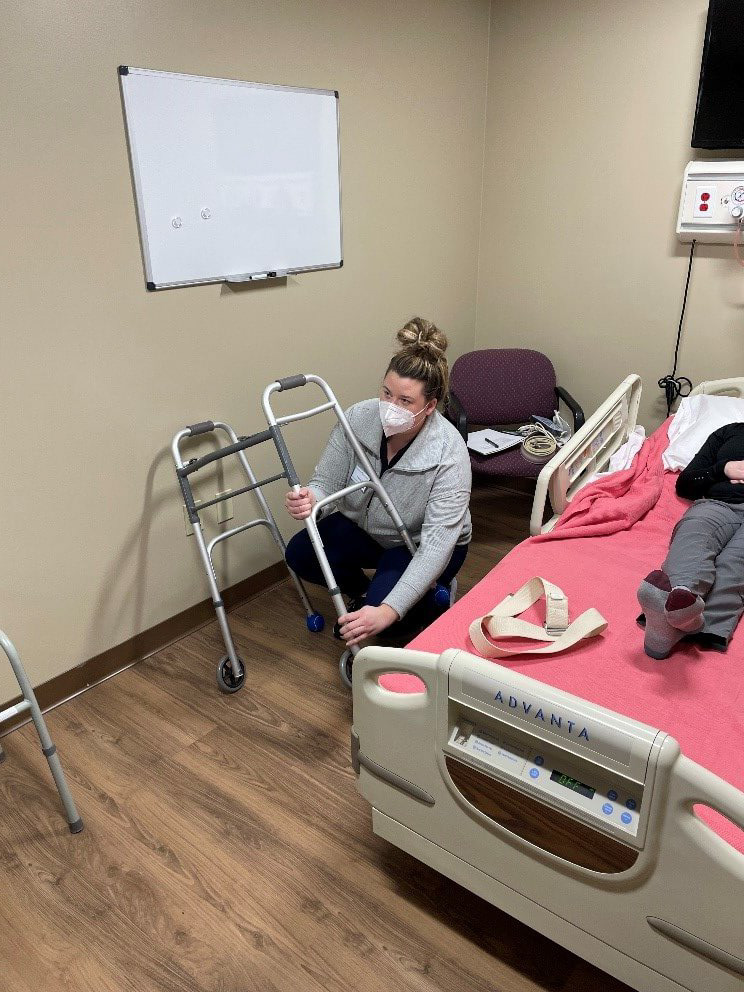
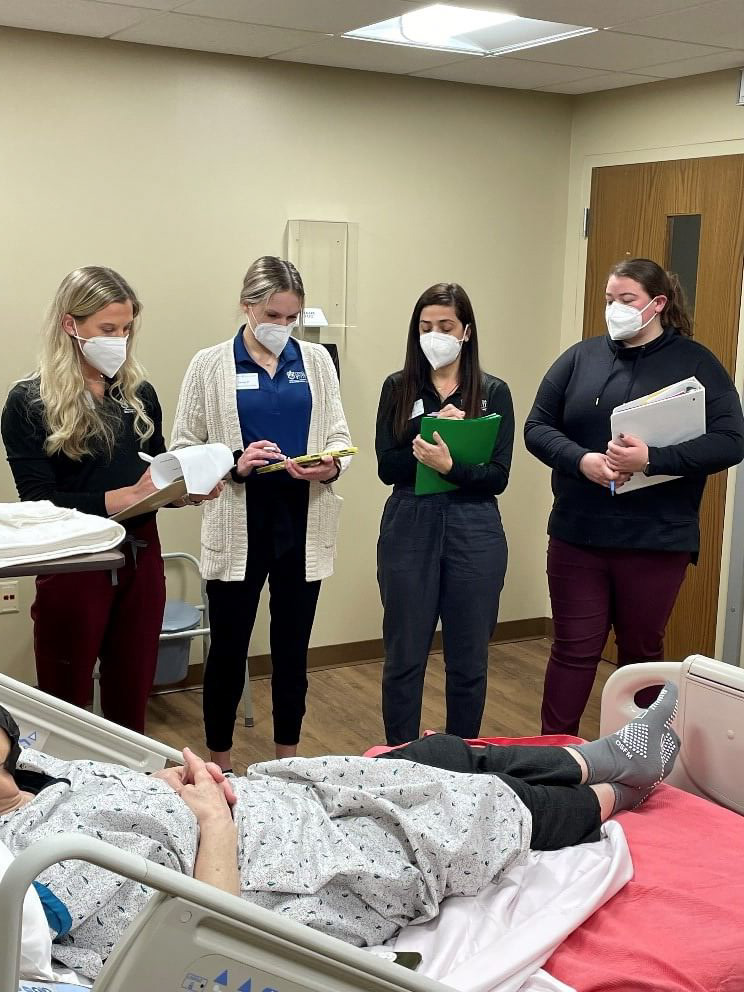
My experience in multiple adult areas of practice provides me the clinical background for teaching in our simulation lab. In January of 2023 we opened our brand-new simulation lab. The new space allows student to experience a “real world” hospital room equipped with hospital beds, vital monitors, medical lines, and chair lifts. The students, often working in pairs, receive the case study prior to lab which allows them to develop a plan. Each week the simulation is designed with a variety of patient diagnoses, vital signs, patient psychosocial factors and is portrayed by a standardized patient actor.

This lab offers students the opportunity to work in real-time on interview skills, provide evidenced-based assessments and interventions. The session is completed with a debriefing session. This is one of the most important parts of the lab. The students participate in the feedback process with faculty and peers. This safe space allows them the opportunity to reflect on what went well and discuss areas of growth. This reflective exercise helps the students improve with communication, therapeutic use of self, and critical thinking skills. The new lab also offers the ability to record the sim session and allows students the ability to review the session at a later time.

As a professor, sim lab allows me to engage with students as we discuss important questions about the patient and OT practice. It is one of the best modalities to teach and assess clinical skills. The lab allows a paper case to come alive.  Where else can you learn and interact with a “patient” a day after a heart surgery? It’s a safe place to learn because regardless of the outcome, everyone including the patient goes home at the end of the session! 

Fall prevention

My two other areas of expertise, fall prevention and interprofessional education, are often combined. People will often ask me, “Why do I care about fall prevention?” My passion for addressing fall prevention comes from a desire to see older adults have an increased quality of life. I hear stories all the time about someone’s relative falling and injuring themselves. The number is too high. It is estimated in the United States that an older adult dies every 20 minutes from a fall and roughly 25-33% of older adults sustain a fall each year, decreasing qualify of life and increasing health care cost (CDC, 2023). In Wisconsin, it is estimated that over 270,000 adults 65 and older fall each year (CDC, 2023). This means my neighbors are having unnecessary injuries from a fall.

Interprofessional education

Evidence-based practice recommends an interprofessional team to address this concern. OT is one of the disciplines uniquely qualified to assess and educate older adults on how to decrease falls in their home and community.

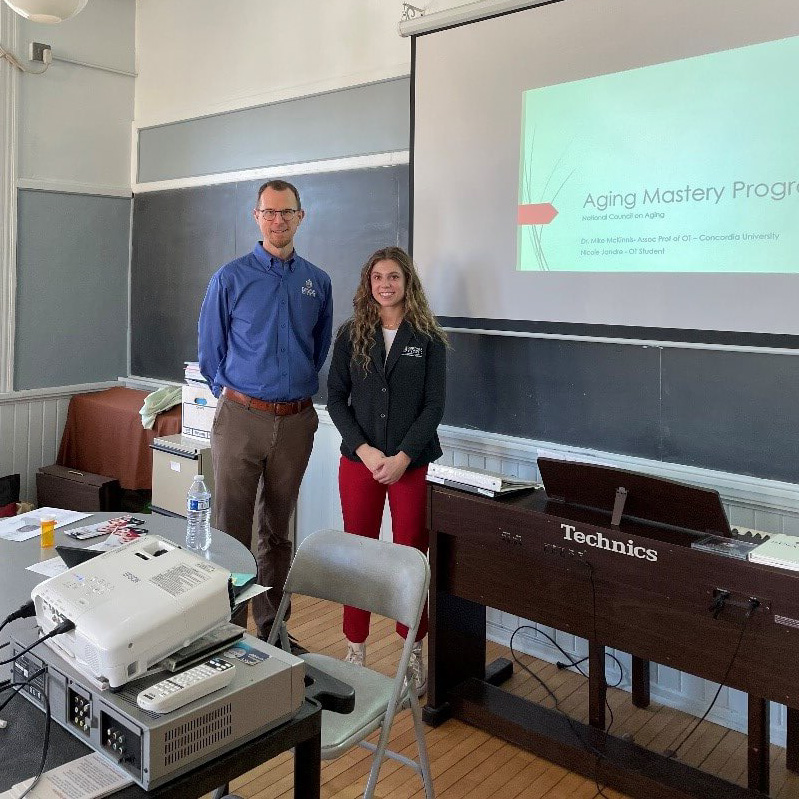
As a leader in falls prevention, I use my skill in this area to help meet our university and OT mission of serving and empowering communities. My desire to serve communities has been put on hold for the last few years due to the global pandemic. I was very happy this year when things began to return to normal. In September of 2022 I was able to connect with older adults as part of Milwaukee County Falls Prevention Coalition (MCFPC) fall prevention event. This spring, I was able to share the updated fall prevention guidelines with Concordia physician assistant students. I was able to connect with the area community by presenting at Stepping On and providing at the fall prevention session for the National Council on Aging (NCOA) Aging Mastery Program.

In addition, I love when I am able to mentor students and bring them along with me to events. Nicole Jandre was able to assist me in giving talks to the physician assistant students and the Aging Mastery Program. During fall prevention week in September of 2023, I will be leading a group of OT students to participate in the MCFPC fall prevention event.  


How to become a successful pharmacist and instructor

Dr. Kristen Korankyi received her PharmD in 2021 from High Point University’s Fred Wilson School of Pharmacy. She is now a resident in Concordia University’s 24-month Pharmacy Practice and Academic Leadership Resident program. Currently, she practices as an ambulatory care pharmacist at Lakeshore Community Health Care two days a week. For the rest of the week, she serves as an instructor at Concordia’s School of Pharmacy.

In this blog, learn about Kristen’s experiences as she has worked to earn her master’s in education and advance her pharmacy expertise. Dr. Korankyi has found her calling to serve her patients and educate future pharmacists.

Why do you want to have a career as both a pharmacist and instructor?

As a college tutor, I began to realize I really enjoy helping others learn. My diverse background offers a unique perspective to help mentor and educate a variety of students as I’m originally from Ghana, West Africa. Concordia offers one of the only programs I could find for pharmacy and education, and it has proven to be a robust training.

I like that the instructor and pharmacist learning in the Pharmacy Practice and Academic Leadership program run concurrently to each other and are given equal importance. For the education portion, I have spent 25% of my time being an instructor in various courses and labs in the School of Pharmacy. Then, I have dedicated another 25% to instructor-based courses in teaching and learning. For the pharmacist part of the program, I completed my first year of residency at a community health center. Currently, I am finishing up my second year serving in ambulatory care services as a pharmacist.

What were the key lessons for you from the master’s of education program?

I learned how to utilize multimedia in the classroom to create the best learning experience. The curriculum has taught me how to write appropriate learning objectives and assessment questions for courses. I have learned how to create my own personalized educational philosophy as I develop as an instructor. I will be earning a graduate degree in education with an emphasis on teaching and learning.

How have you served as an instructor in Concordia’s School of Pharmacy?

I have been able to instruct in applied patient care labs for first and third year pharmacy students. Within two months of starting as a resident, I coordinated a module on drug information to first-year pharmacy students. Subsequently, this led to a research project which IRB (Institutional Review Board) approved. And that led to me presenting this project as a poster at the 2022 AACP Annual Meeting. This abstract and poster is titled, “Measuring professional confidence and growth mindset in first-year pharmacy students’ drug information responses.” Now, I am working on a full manuscript for a pharmacy journal on this same topic.

I have taught classes for Medical Literature Evaluation, Ambulatory Care Pharmacy, and Pharmacy and the Underserved. In the Pharmacotherapy III course, I had the opportunity to co-coordinate the pulmonary unit. One of my current projects is working on integrating social determinants of health awareness. I am also providing training in a third-year pharmacy applied patient care lab this spring semester.

What are the highlights from your ambulatory care pharmacy residency?

I had the opportunity to participate as a clinical director of a collaborative chronic disease management program. Chiefly, this involved conducting visits that consisted of medication reviews, and reviews of blood pressure and blood sugar readings. It was a great learning experience getting to implement hypertension and diabetes visits for patients.

Another highlight is that I recently wrote an abstract for a podium presentation at a Pharmacy Society of Wisconsin (PSW) event. It was titled, “Integrating interprofessional collaboration into an ambulatory care pharmacy service in a federally qualified health center (FQHC)”. This came from my pharmacy work that I completed at the Lakeshore Community Health Care which is a designated FQCH. For the most part, it is through these patient experiences that I have developed a passion to care for the underserved and uninsured.

Find your vocation in pharmacy

So, maybe being a pharmacy instructor at an academic institution isn’t the thing for you. There are many different ways to serve as a pharmacist, and it can be a bit overwhelming trying to decide the right path for you. Through coursework, labs, pharmacy practice experiences, volunteer opportunities, and more you will find the pharmacy specialization that fits you.

Starting in your first year of pharmacy school, Concordia will have you involved in both hospital and community pharmacist experiences. The on-site experiences in healthcare settings will continue throughout your time in pharmacy school. In your final year of pharmacy school, you will receive first-hand experience in the following pharmacy specializations:

  • Community Pharmacy
  • Acute Care Medicine
  • Hospital/Health System Pharmacy
  • Ambulatory Care

Do you have a different pharmacy specialization in mind? Our faculty can get you first-hand experience in any area that interests you. For example, Andrea Thooft, a 2022 PharmD graduate, wanted to pursue work in women’s health and pharmacy. She approached Dr. Bartelme and Dr. LaDisa about doing an independent study course on women’s health. Through their pharmacy network, they set up a custom program for Andrea.