CUW OT Students Dive into Aquatic Therapy

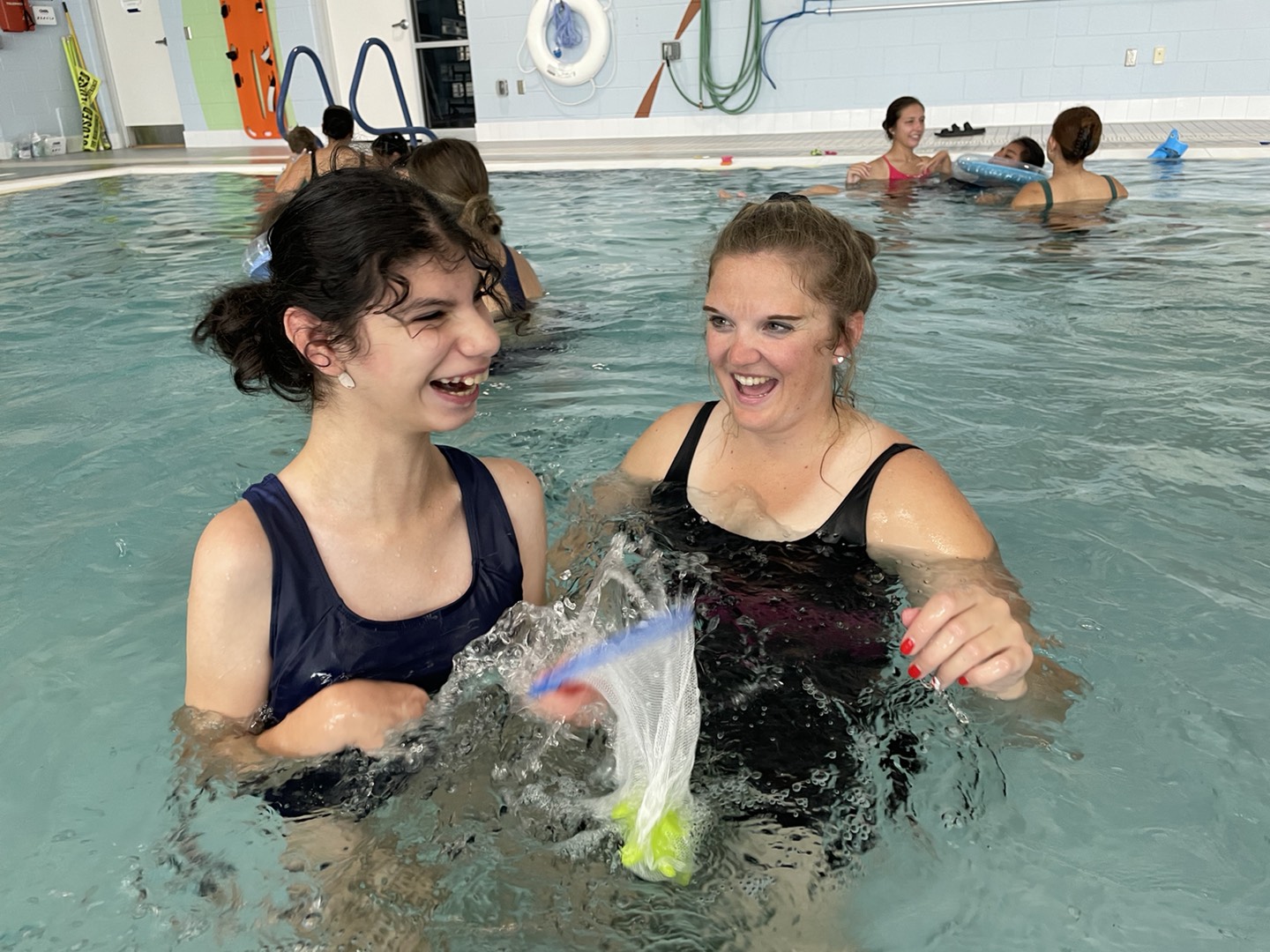
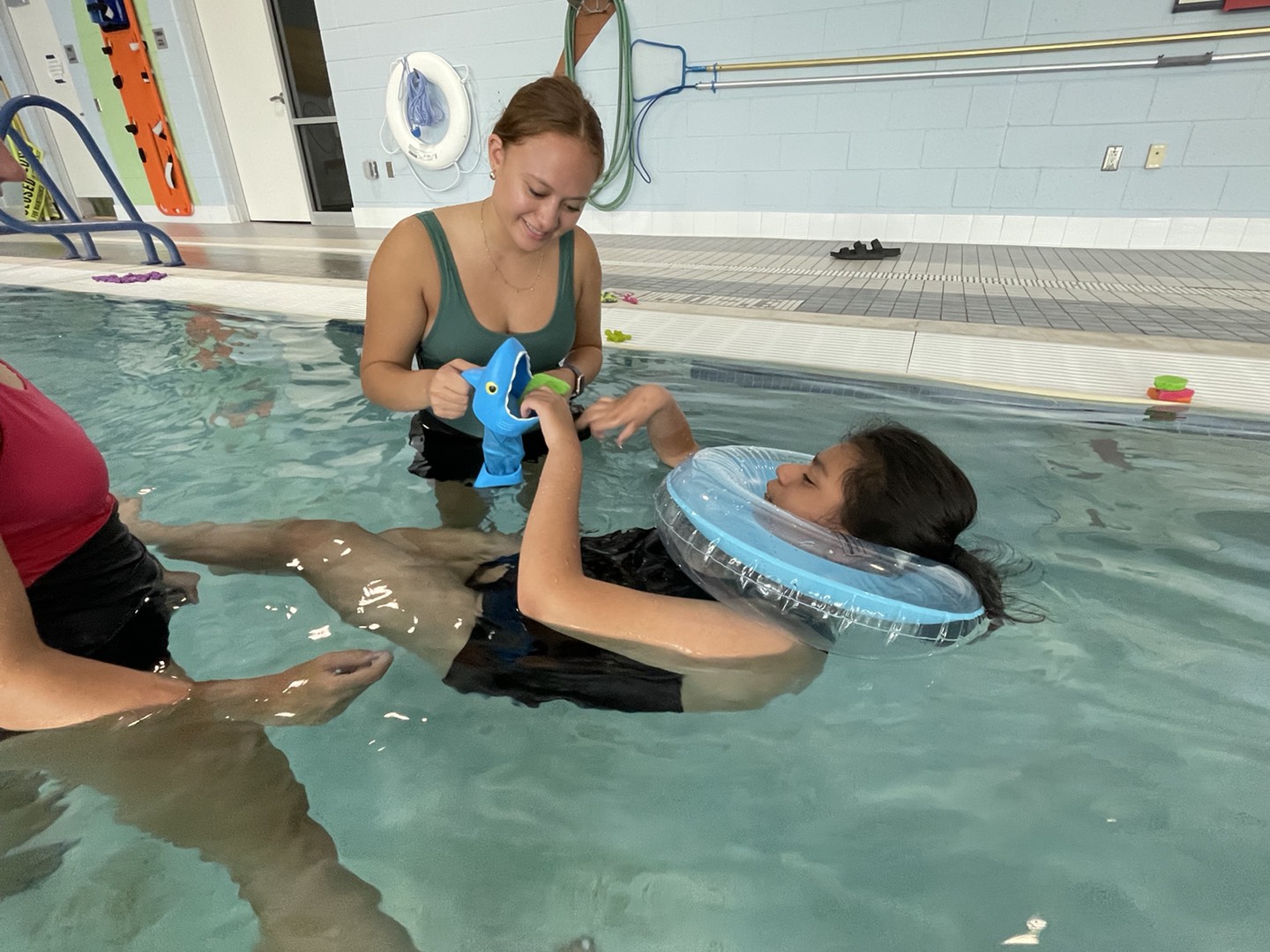
This summer, the CUW OT program dove into a level-one aquatic therapy experience!


In this fieldwork experience, CUW OT students partnered with Lakeland School, a public school in Walworth County, WI. They educate children with significant, cognitive disabilities, physical disabilities, and sensory needs.

The experience consisted of a one-week program in which nine Masters and Doctoral level OT were introduced to the aquatic environment. The goal was to meet therapeutic outcomes with Lakeland students. The experience allowed Lakeland students to participate in therapeutic services they otherwise would not have access to during the summer. Generally, only students who qualify for extended school year therapy services receive therapy over the summer. CUW OT students worked with licensed physical and occupational therapists. This also gave them the experience of working in an interprofessional environment.

The Program

The program included three sessions per day including group therapy, individual therapy, and health promotion.

First, aquatic therapy interventions were implemented with an early childhood group. This was to improve IEP outcomes including social skills, motor skills, cognitive skills, and functional skills.

In the second session, CUW students worked individually with Lakeland students. They assisted in increasing occupations and client factors needed for school function. These functions include wheelchair and toileting transitions, range of motion, strength and self-initiated movement.

CUW OT student, Hannah Gueller said, “I learned how effective the water can be as a medium for OT. I saw my client’s lower extremity range of motion increase through passive range of motion and activities in the water which translated to better wheelchair positioning.”

Finally, CUW OT students were introduced to the role of health promotion in occupational therapy. This was through participation in a water aerobics class with adolescents and young adults.

The Benefits

The program proved successful for both Lakeland Students and CUW OT students. It will run again in the summer of 2025. CUW OT student, Landry Elliott, said “Water is beneficial for all abilities. It can provide resistance for strengthening, can provide heat for contractures. It can be calming, or it can be used to rev clients.”


Want in?

Wherever you are in your journey into occupational therapy, Concordia University has options for you at the undergraduate, master’s, and doctoral levels. As a Christ-centered university, our program will help you advance in your calling, by learning from experienced therapists in a hands-on environment and developing a foundation in ethical leadership.


Concordia’s Post-Traditional Programs Assist Students Who Are Set Apart to Serve!

Whether it be in social work or seminary, Concordia has a path for you.


Familiar ads for Concordia University Wisconsin mention that each of us is created to have an uncommon impact in a common world.  That’s the mission of Concordia – to prepare students, all students, to use their gifts in the service of others.  This includes post-traditional students in online undergraduate and graduate programs. Students who have recognized the call to serve later in life or after disruptions to their academic pursuits.  Concordia’s post-traditional programs have grown to allow these students to pursue service-minded degrees and careers that will allow them to serve in a variety of ways.

For many, this includes serving in Lutheran churches and schools. Others are led to serve in public schools or other private and Christian schools, non-profit ministries, and various social programs.

Dr. Aaron Moldenhauer, Concordia’s Vice-President for Mission, Identity, and Church Relations is intimately familiar with the ongoing importance for Concordia to help students prepare for careers in the Lutheran Church, but also in other Christian settings:

“Concordia offers flexible options for students seeking to serve the church in various offices. For men considering Seminary, we offer programs such as Theological Studies online. This allows students to complete a degree without moving. It also prepares them for the Seminary after completion of a bachelors or associates degree. Other online programs also create a path to serving in rostered church offices, such as Lutheran Education or Director of Church Ministries. These programs are part of Concordia’s commitment to preparing church work students for service in Christ’s church.”

Concordia’s Online Post-Traditional programs allow students to earn degrees related to serving the community while meeting current obligations.  Designed with flexibility in mind, students can develop an individual path to completion.  Concordia University continues to lead the way with unique online programs not offered by many institutions.

Theological Studies

The worldwide Church looks to support pastors and professional Church workers. Concordia offers scripture-based Theological Studies degrees that can help qualify students for seminary studies:

Theological Studies – Accelerated BA

Theological Studies – AA

Rev. Jesse Kueker, an admissions counselor for Concordia Seminary St. Louis states:

“The seminary encourages men to look at our outstanding Concordia University System. When a man is unable to relocate for his undergraduate degree, there are online programs available through Concordia University that have helped many take the next step toward pastoral ministry! May the Lord bless all those in these programs and all those considering enrolling in them. The church needs pastors. Please continue to pray to the Lord of the harvest to send laborers into His harvest fields.”

Concordia Wisconsin also offers a unique program for the Director of Church Ministry. It allows adult students to use previous college degrees to earn LCMS credentials.  Few professional church commissions can be earned completely through online coursework. This opportunity allows students to earn the certificate while working a full-time job in another field.

Director of Church Ministry Certificate

Christian Education

Concordia offers a variety of teacher licensing programs at both the undergraduate and graduate level through its post-traditional online programs.  Students volunteering or assisting in classrooms can earn Wisconsin state teaching licenses necessary to teach in public schools. They can also earn Lutheran Teacher Diplomas or Christian Teacher Certificates. 

Dr. Adam Paape, the program director for CUW’s Accelerated Teacher programs, has seen tremendous growth in these flexible programs. They provide new pathways for post-traditional students looking to build personal ministry through impacting young people:

“Our online teacher programs lead to Wisconsin State teaching licenses, but can also provide the pathway for Lutheran teachers to earn credentials for LCMS schools, as well as other Christian schools.  CUW students can take a uniquely Christian perspective into their ministry as teachers through a program offered by very few institutions.”

And for those that are unable to complete these additional courses, upon beginning work in an LCMS school, some may earn credentials through the LCMS online colloquy program called CUE.net.

For more information see all of the potential graduate and undergraduate options for new and current educators in Education Pathways

Social Work

Other students hear the call to simply serve others, both through church-related organizations, and also in the public sector through both undergraduate and graduate programs in Social Work.

https://www.cuw.edu/academics/programs/social-work-bachelors/index.html

https://www.cuw.edu/academics/programs/social-work-masters/index.html

As Nichole Ostrowski, Assistant Professor for Social Work and the Field Coordinator for internships relates:

“Our Christian social workers work in a variety of settings. They work in every facet of community life, including churches, schools, hospitals, senior centers, child welfare, food banks, and in numerous public and private agencies.  These individuals serve vulnerable populations and meet societal needs.  They combine their social work education and the love of Christ to positively impact communities and individuals.”

Are you hearing God’s call to serve others?  Consider the Post-Traditional options for degrees to pursue professional opportunities to impact the world around you!  Concordia University Wisconsin’s mission is to help you do that!


Want in?

CUW’s Online classes are offered year-round, with students beginning courses in two eight-week mini-terms during the Spring, Summer, and Fall for most programs.  Take action and connect with Concordia University’s admission team by visiting CUW Accelerated Admissions for undergraduate degrees and  Graduate Admissions or calling 262-243-4300.


Developing Leaders in a VUCA World from Online Master’s through Doctorate

Written by DBA faculty member Dr. Dana M. Sendziol, Ph.D. and MSL faculty member Dr. Elisabeth E. Bennett, Ph.D.

Leaders often acquire technical expertise to enter and advance within their professions. Yet, they might be unprepared to handle the complexities of leading and driving change in today’s volatile, uncertain, complex, and ambiguous (VUCA) industries. When developing leaders in a VUCA world, factors like digital transformation, AI revolution, post-pandemic shifts, regulations, workplace generations, and cyber threats shape this landscape.

Learning skills in a changing world

The fast pace of change necessitates the gradual development of advanced skills. These skills combine technical knowledge with social abilities or “power skills.” As leaders advance in their careers, certain skills become increasingly important. These skills include communication, cultural understanding, and strategic thinking. They are particularly crucial for mid-level and executive positions. (Bennett, 2022).

These power skills complement the foundational technical competence and can be cultivated through scholar-practitioner programs that facilitate simultaneous learning and practical application (Bennett & Gorman, 2018). Important qualities for top leaders include strategic thinking, understanding concepts, and the power to influence others.

Further education helps leaders in a changing world. They need to understand their environment, find opportunities and threats, imagine different possibilities, and guide their team toward a positive future. This means encouraging new values, helping people change their behavior, recovering from problems, and creating flexible processes that show leadership agility.

Nicholas Horney (2021, pp. 22-23) introduced a model of leadership agility that comprises three core elements: people, processes, and technology. This model includes five essential abilities:

  1. Anticipating Change
  2. Instilling Confidence
  3. Taking Initiative
  4. Promoting Innovative Thinking
  5. Evaluating Outcomes

These capabilities harmonize with diagnostic and change methodologies related to human resources and organizational dynamics. Furthermore, they underscore the imperative for leaders and their followers to rapidly learn and adapt their mindsets. Concordia University Wisconsin and Ann Arbor provide a supportive and immersive online platform for leaders to nurture their leadership agility.

Online degrees for leadership development

The landscape of online learning has evolved significantly, propelled by the growth of proficient educators and sophisticated learning management systems. Today, it’s the favored route for professionals seeking flexibility in institution choice and practical experience alongside their graduate studies.

Concordia’s Master of Science in Leadership (MSL) and the Doctor of Business Administration (DBA) programs cater to the needs of working individuals, offering an accelerated curriculum structured with one course at a time. This approach aids learners in maintaining focus and steady advancement. These programs not only enhance knowledge and competencies but also facilitate the growth of your professional network. They connect you with peers from diverse regions and roles.

Master’s of Leadership degree

The MSL program introduces students to a range of leadership assessments. This enables them to identify their distinct leadership styles, pinpoint areas for enhancement, and grasp the variations in approaches among other leaders and team members. This self-awareness is a crucial stride in personal leadership progression. It equips students to design corporate leadership development initiatives. These initiatives stand as pivotal pillars in talent strategies and achievement planning.

The program places a strong emphasis on honing communication skills. This encompasses both practical and scholarly aspects. This empowers our leaders to communicate with assurance—a skill of paramount importance for executives. The curriculum encompasses a spectrum of competencies, encompassing both general and domain-specific realms, including conflict resolution and problem diagnosis.

The program reaches its pinnacle through an inquiry project, a graduate research capstone that illuminates a real-world problem. This project involves cultivating leadership agility by exploring alternative perspectives that “liberate thinking” and evaluating data to formulate tangible recommendations.

Streamlining master’s to doctorate for informed leaders

The MSL program’s design includes shared course content. This enables a seamless transition into advanced professional development by completing up to four doctoral courses before starting Concordia’s DBA program. Within this framework, students have the flexibility to customize their learning journey. Students can choose an elective aligned with their interests. For instance, they can explore technical areas such as project management or financial analysis through the MBA program. They can also engage in experiential learning, participating in activities like service projects or internships.

Alternatively, they can opt for another DBA course. For example, enrolling in a scenario planning course can equip you with skills to develop viable alternative futures. This enhances your organization’s agility in addressing both crises and opportunities.

The shared course structure promotes smoother learning and lowers costs. Courses relevant to the DBA program have reduced tuition rates within the MSL curriculum. Additionally, Concordia University alumni may be eligible for scholarships.

Both the MSL and DBA programs follow an interdisciplinary cohort model, nurturing the next generation of transformative leaders. These leaders make a positive impact globally, employ creative and generous leadership, and empower individuals and organizations. Similar to the MSL program, DBA students assess their scholar-practitioner orientation by exploring ethical Christian leadership practices. They develop insights into relational skills, nurture emotional intelligence, and explore organizational culture.

The programs combine power skills with data analysis, addressing the rising demand for these proficiencies in line with technological advancements. In the DBA framework, students select from four specialized dissertation areas, guided by an advisor at the journey’s outset. The curriculum enhances communication, presentation, and evidence-based decision-making skills—critical for VUCA conditions.

Using skills in the real world

Leaders in various domains beyond business can enhance MSL-acquired skills in the DBA curriculum. The foundational concepts gleaned from leadership studies serve as a robust framework for doctoral research and advanced practitioner roles. In contemporary times, possessing a doctoral qualification is becoming more common for industry experts. This is especially true for those in positions like chief innovation officers, learning officers, or roles focused on institutional evaluation and research and development (R&D).

When pursued effectively, a doctorate can revolutionize cognitive patterns. This enhances one’s ability to drive organizational and individual transformation, fueled by a heightened aptitude for complexity, innovation, observation, and a more robust understanding of empirical evidence needed to support knowledge assertions and strategic decisions (Bennett & Gorman, 2018).

This explains the growing trend of scholar-practitioners attaining doctorates while concurrently pursuing their professional careers, whether continuing along their current trajectory or transitioning to novel vocations. In either trajectory, you can pursue continuous and advanced professional development through Concordia University’s online learning platform.

The ongoing industry trends indicate that developing leaders in a VUCA world will remain significant for an extended period. Professions once deemed immune to automation are now disappearing or experiencing substantial changes due to rapid advancements in artificial intelligence. Amidst this context, individuals, whether leaders or learners, who adopt agility gain a notable competitive advantage. Academic programs fostering leadership, innovation, and knowledge provide exceptional chances for both survival and thriving in the future of work.