New virtual reality lab at Concordia University Wisconsin brings hands-on learning to a new dimension


CUW’s new VR lab will help students develop practical skills, build confidence and prepare to serve others.


What if nursing students could practice caring for multiple patients, navigate difficult conversations and make critical clinical decisions before encountering those situations in a hospital?

At CUW, a new virtual reality lab will make those learning experiences possible, giving students another way to develop the skills and confidence they need for their future careers.

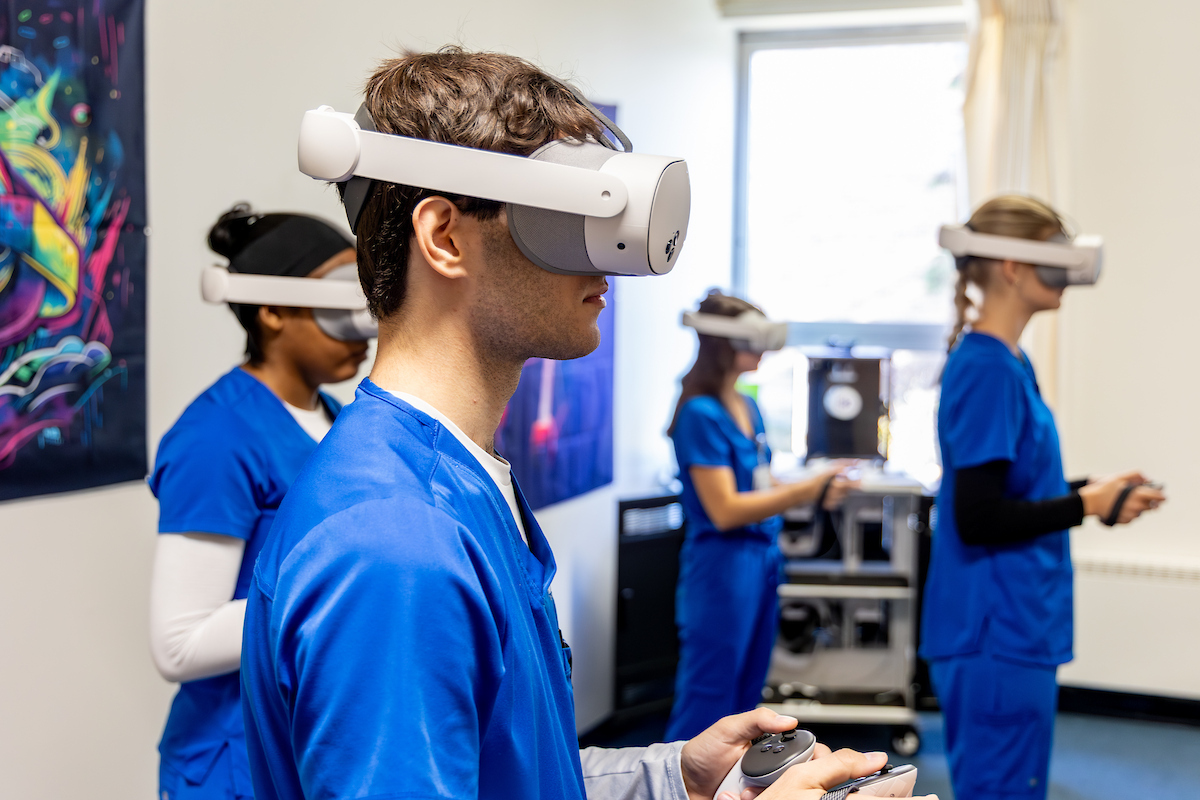
While nursing students will be among the primary users, the lab is designed to serve disciplines across campus, opening new possibilities for hands-on learning through immersive technology, artificial intelligence and realistic simulations.

More than a technological advancement, the lab represents another way CUW is preparing students to put their knowledge into practice and serve others with competence and compassion.


Preparing nurses for real-world decisions

For nursing students, clinical experiences are an essential part of their education. Working alongside health care professionals in real clinical settings allows students to apply classroom knowledge, develop critical thinking skills and learn to care for patients.

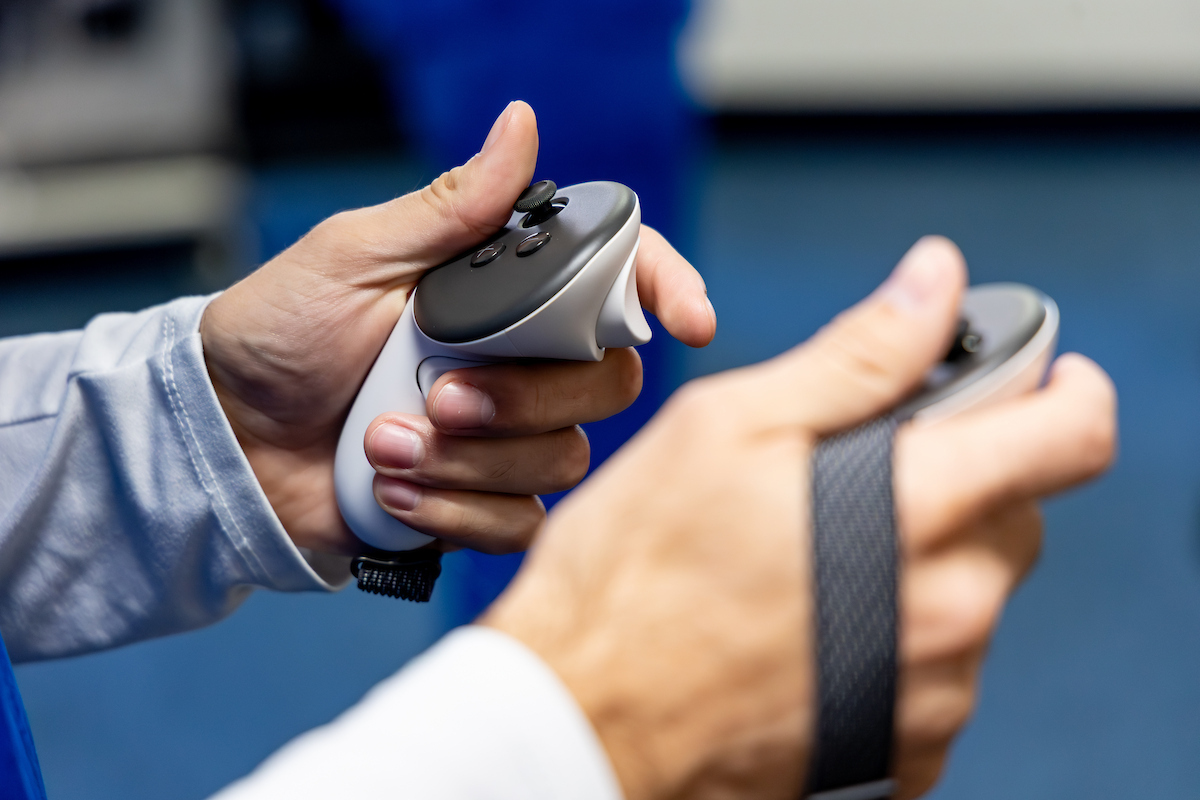
Virtual reality offers an additional layer of preparation.

“VR provides multi-patient access to specifically practice assessments, delegation, prioritization, and communication. These are key aspects of nursing that maximize patient safety and the care provided to them,” said Tina Gaffney, CUW’s simulation and VR center director, psychiatric wellness coordinator and nursing instructor.

Through virtual simulations, students can practice managing multiple patients and determining which needs require their immediate attention. They can also work through decisions about delegating responsibilities, communicating with patients and coordinating care.

These are skills that can be challenging to practice extensively during traditional clinical rotations, where students generally focus on providing bedside care to individual patients.

The lab will use clinical simulation scenarios from Wolters Kluwer, a company whose educational programs are already familiar to CUW nursing students. Faculty and staff will guide students through preparation and reflection sessions before and after each simulation, helping them evaluate their decisions and identify opportunities for improvement.

Unlike real clinical encounters, virtual scenarios can be repeated, giving students additional opportunities to practice, learn from mistakes and strengthen their clinical judgment in a controlled environment.

Gaffney believes this additional preparation will help bridge the gap between nursing education and the demands of professional practice.

“VR will test these concepts further for the students to be more practice ready at graduation,” she said.

Combining clinical skills with compassionate care

Although VR introduces new technology into nursing education, the ultimate goal remains deeply human: preparing nurses to care for people.

At CUW, nursing education emphasizes treating the whole person, recognizing that physical health is only one part of a patient’s well-being.

“At Concordia in nursing we educate on caring for the patient mind, body, and spirit,” Gaffney said. That approach reflects CUW’s Christian mission.

Nursing students learn to consider the physical, psychological, social, spiritual and financial factors that can influence a person’s health. Understanding those circumstances helps future nurses develop care plans that address individual needs while respecting the realities of each patient’s life.

Virtual reality, particularly when combined with AI, creates opportunities to practice those important interpersonal skills.

Students could encounter virtual patients facing complex health challenges, work through sensitive conversations and explore how their responses influence patient care. Such experiences can help them develop not only sound clinical judgment but also the communication skills and compassion essential to the nursing profession.

“We have to show compassion for each person individually and make care plans that fit into their needs and are attainable with their lives in the community,” Gaffney said.

By providing opportunities to practice those conversations, the lab can help students become more comfortable responding to patients with different needs and circumstances.


A resource for learning across campus

Although nursing will be a major focus, the new VR lab has the potential to benefit students throughout Concordia.

Gaffney said the lab will be available to nursing students at every level, from undergraduate education through the upcoming certified registered nurse anesthetist (CRNA) program. Faculty in occupational therapy, social work, psychology and pharmacy have also expressed interest in exploring its applications.

For students preparing to enter professions that involve direct interaction with patients or clients, the technology could offer valuable opportunities to practice communication, assessment and decision-making.

For example, students may be able to rehearse challenging conversations with people living with dementia or those with mental health conditions. Pharmacy students could practice patient education and sensitive discussions, while students in other disciplines could explore scenarios relevant to their future professional responsibilities.

AI-powered interactions are especially promising because they could allow students to practice responding to a range of situations in a simulated environment.

“It really comes down to practice, practice, practice – with VR being another tool for students to become practice ready in whatever field they are going to be using their degree in moving forward,” Gaffney said.


Looking ahead: The future of immersive learning

While the new lab offers exciting possibilities today, advances in technology could make immersive learning even more accessible in the years ahead.

Dr. Michael Litman, professor and chair of computer science, program director for the master’s programs in computer science and artificial intelligence, and co-founder of Concordia’s AI & Quantum Innovation Lab, sees virtual reality evolving into experiences that blend digital information with the physical world.

“I think VR is going to become more immersive with less hardware moving forward,” Litman said.

As headsets become lighter and more comfortable, augmented reality (AR) could allow students to interact with virtual elements while remaining present in their actual surroundings.

Rather than entering a completely virtual environment, students could one day practice skills using digital objects and scenarios integrated into familiar classrooms and shared learning spaces.

Litman envisions a future in which students can practice together without relying on physical training materials for every exercise, potentially reducing waste while creating new opportunities for collaboration.

He also sees significant possibilities in the convergence of AI, robotics and other emerging technologies, particularly in health care.

These advances could eventually help health care professionals perform complex procedures with greater precision while retaining the human judgment essential to patient care.

For Concordia students, learning to engage thoughtfully with emerging technologies may become an increasingly important part of professional preparation.

Innovation with a purpose

As Concordia explores the possibilities of virtual reality, the new lab reflects a commitment to combining innovative education with meaningful service.

For nursing students, that means more opportunities to practice making decisions, communicating with patients and coordinating compassionate care. For students across campus, it offers a new environment to develop professional skills and prepare for real-world challenges.

And for faculty, it creates opportunities to explore new approaches to teaching that connect classroom knowledge with practical experience.

Gaffney hopes the technology will ultimately help students develop the confidence and critical thinking skills needed to serve patients as individuals.

“We can really challenge them to critically think through what they will need to do as a nurse, who is expected to often play many roles, while giving patients that individual whole person-centered care required,” she said.

At Concordia, the technology may be new, but the purpose behind it is familiar: equipping students with the knowledge, skills and compassion to make a difference in the lives of others.

Note: CUW nursing has a story to tell through the students, faculty, alumni and experiences shaping the next generation of compassionate, skilled nurses. As we look ahead to the completion of our expanded nursing wing, we will showcase the strength of our program, the people behind its success and the opportunities this new space will create. Each feature will explore how nursing education brings together academic excellence, hands-on learning, faith and a commitment to serving others.


Want in?

Concordia University Wisconsin is a Lutheran higher education community committed to helping students develop in mind, body and spirit for service to Christ in the Church and the world.

Travel the world without leaving campus: Celebrate International Education Week at CUW


What if you could experience cultures from around the world, learn about international opportunities and enjoy music, food and fellowship, all without leaving Concordia University Wisconsin’s campus?


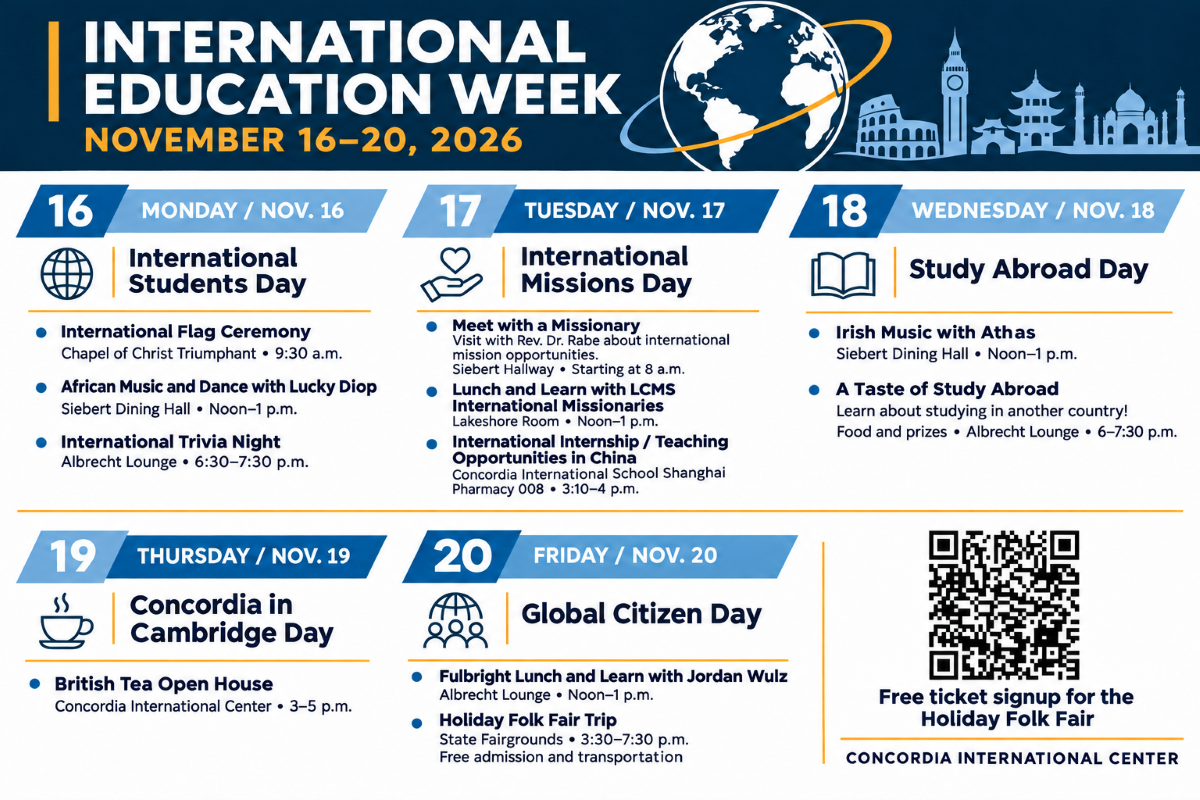
International Education Week, Nov. 16-20, invites the CUW community to do just that. Throughout the week, students, faculty and staff can explore different cultures, learn about global opportunities and celebrate the connections that bring people together.

“What excites us most this year is that we are looking beyond simply highlighting different regions of the world,” said Jennifer Tadeo, EdD, International Student and Scholar Services manager.

“We want to create opportunities for our campus community to explore cultures, broaden perspectives, and experience the world through the international programs CUW supports.”

From an opening flag ceremony and international performances, to study abroad conversations and opportunities to connect with missionaries, the week offers something for everyone.


A week of global experiences

Here’s a look at what’s happening each day:

Monday, Nov. 16

Opening flag ceremony: 9:30 a.m. | Chapel of Christ Triumphant
Kick off International Education Week by gathering for an opening flag ceremony celebrating the cultures represented in the CUW community.

African drum and dancing performance by Lucky Diop: Noon-1 p.m. | Siebert Dining Hall
Experience the energy of African music and dance during a special performance by Lucky Diop.

International trivia night: 6:30-7:30 p.m. | Albrecht Lounge
Put your global knowledge to the test with an evening of international trivia.

Tuesday, Nov. 17

Meet with a missionary: 8 a.m. | Siebert Hallway
Connect with a missionary and learn more about opportunities to serve around the world.

Lunch and learn with Rev. Dr. Rabe, LCMS director of missionary recruitment: Noon-1 p.m. | Lakeshore Room
Enjoy lunch while learning about missionary service and opportunities through the Lutheran Church-Missouri Synod.

Learn about international internship and teaching opportunities in China: 3:10-4 p.m. | Pharmacy 008
Discover international internship and teaching opportunities in China and learn more about ways to gain experience abroad.

Wednesday, Nov. 18

Athas Irish Band: Noon-1 p.m. | Siebert Dining Hall
Take a musical trip to Ireland with a performance by Athas Irish Band.

A taste of study abroad: 6-7:30 p.m. | Albrecht Lounge
Curious about studying abroad? Learn about CUW’s study abroad programs while enjoying international snacks and discovering opportunities to experience another part of the world.

Thursday, Nov. 19

British open house: 3-5 p.m. | Concordia International Center
Enjoy tea, biscuits and scones while learning about CUW’s Cambridge program. Stop by the CIC to discover what studying abroad in England could look like.

Friday, Nov. 20

Fulbright lunch and learn with Jordan Wulz: Noon-1 p.m. | Albrecht Lounge
Learn more about Fulbright opportunities during this lunchtime conversation with Jordan Wulz.

Holiday Folk Fair trip: 3:30-7:30 p.m. | Wisconsin State Fair Park
Close out the week with a trip to the Holiday Folk Fair. Students can enjoy this celebration of international cultures with free tickets and transportation provided.


Discover the world and our place in it

International Education Week is about more than exploring different cultures. It’s also an opportunity to recognize the ways our campus community connects with people around the world and to consider how those experiences shape our understanding of others and our own vocations.

 “Ultimately, it’s about celebrating the ways we connect with, learn from, and serve people around the world,” Tadeo said.

Join us Nov. 16-20 and discover how far a week on campus can take you.

Want in?

Concordia University Wisconsin is a Lutheran higher education community committed to helping students develop in mind, body and spirit for service to Christ in the Church and the world.

Veterans Day luncheon at Concordia honors service, sacrifice and lives of purpose


Community members and veterans gathered at Concordia University Wisconsin for a moving celebration of faith, service and the bonds that unite those who have served.


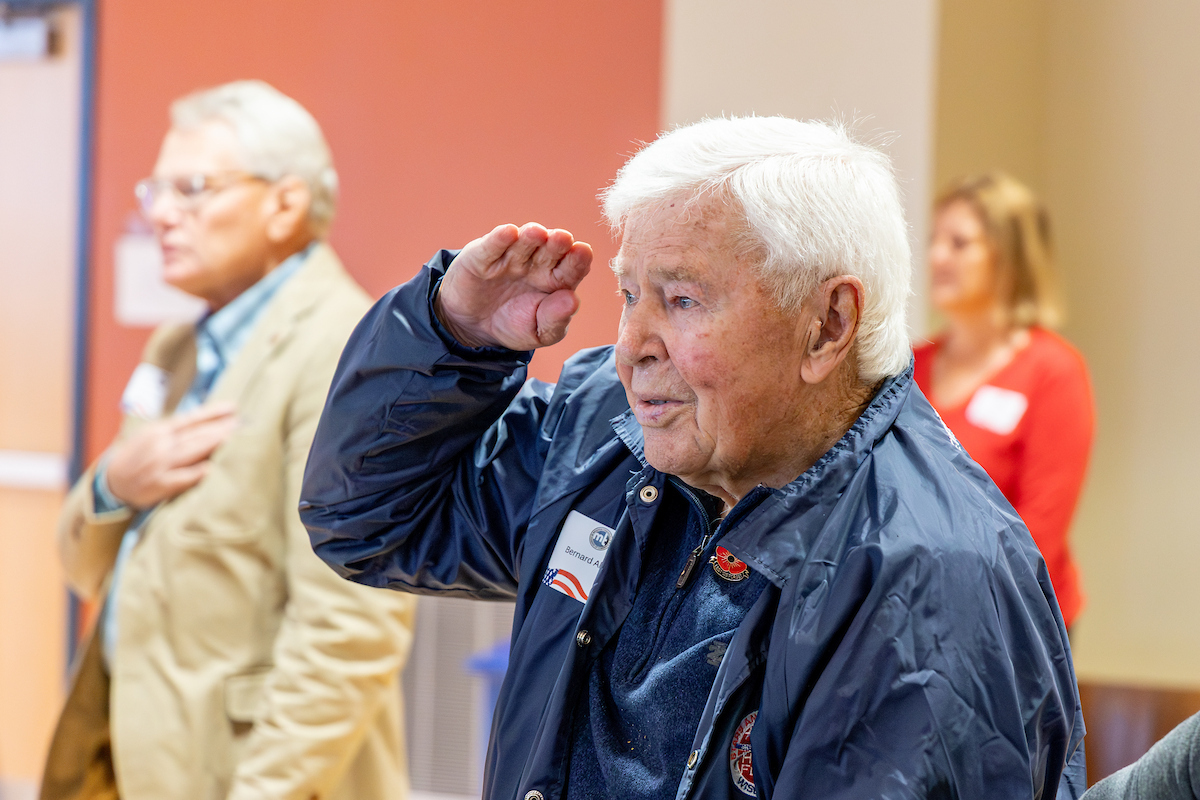
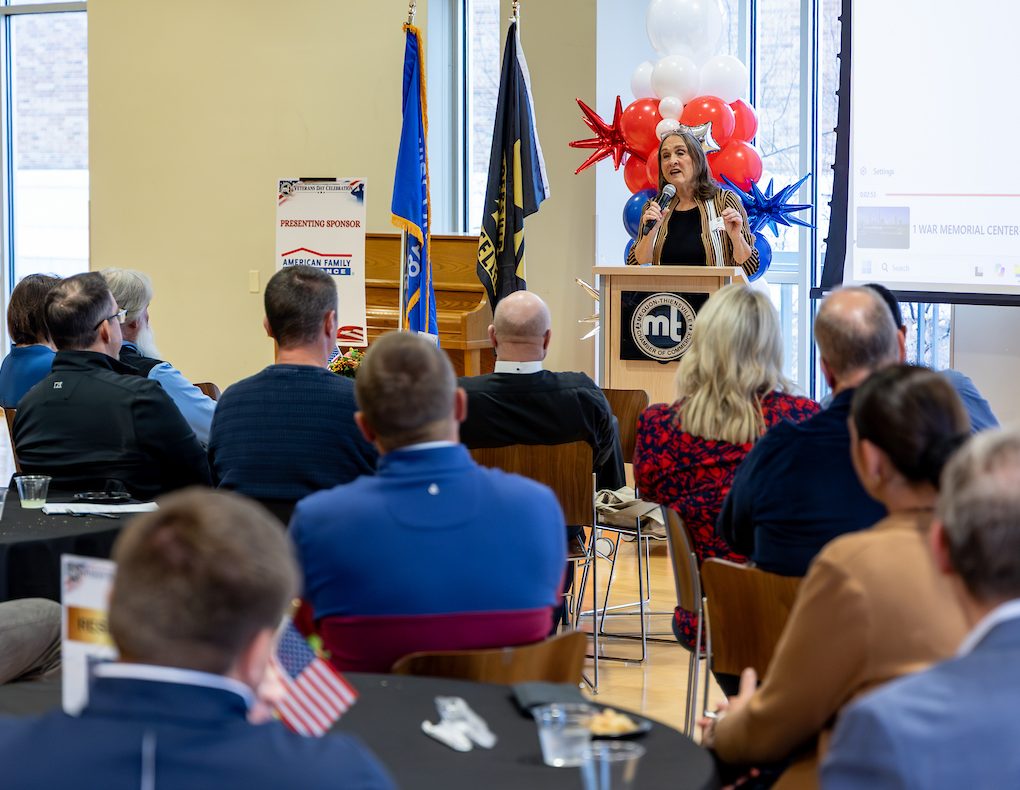
Concordia welcomed veterans, community members and local leaders to campus Nov. 11 for the Mequon-Thiensville Chamber of Commerce Veterans Day Celebration Luncheon. The event honored the service and sacrifice of America’s military veterans while highlighting the lasting impact of serving others.

Among those recognized was Bernard “Bernie” Alberg, a 100-year-old World War II veteran who served in the U.S. Army. His presence offered a powerful reminder of the courage, sacrifice and enduring legacy of those who served during World War II.

CUW President Dr. Erik Ankerberg opened the celebration by recognizing veterans’ deep commitment to faith, service and learning. He thanked them for their sacrifices and for the example they set for others.


A bond built on honor

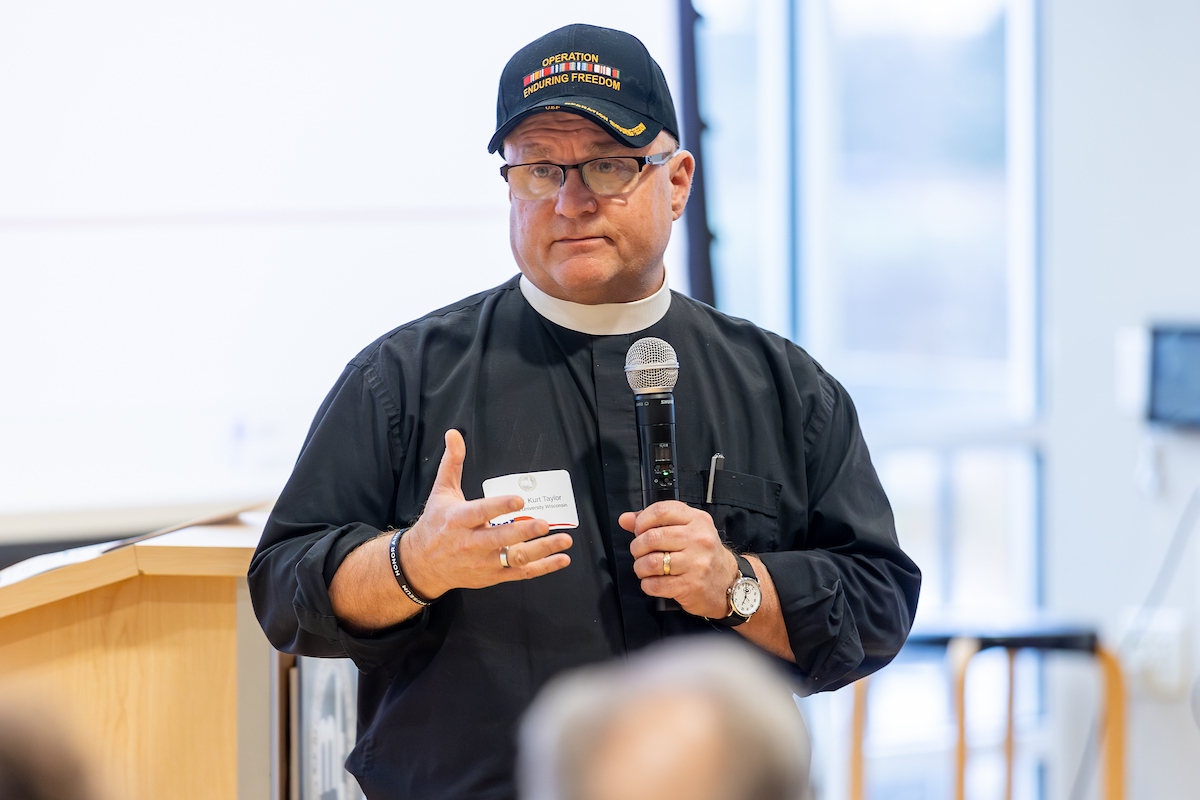
Rev. Dr. Kurt S. Taylor, CUW professor of theology and director of the Church Ministries program, delivered a heartfelt welcome address reflecting on his more than 24 years of service as a U.S. Air Force chaplain.

Taylor explained why veterans often wear hats, shirts or other items identifying their branch of service. It’s not about seeking recognition, he said, but about finding others who share a unique connection.

“We’re looking for each other because we have a bond,” he said. “And this bond has to do with honor.”

He said when he is asked why he became a military chaplain, his answer is simple:  “I want to serve God and my country.”

But he admitted to another, more personal motivation. “I want to hang out with heroes.”

One of the morning’s most powerful moments came as Taylor tearfully recalled honoring fallen service members whose caskets passed through his military base on their journey home.

Typically, hundreds of military personnel would line the route to salute their fallen comrades. On one occasion, a delayed flight arrived in the early morning hours. Taylor expected few people to gather at such an inconvenient time. Instead, hundreds turned out in the darkness to pay their respects.

The story underscored the extraordinary bond among service members and the profound importance of honoring those who made the ultimate sacrifice.

Reflecting on Wednesday’s luncheon, Taylor emphasized how much that recognition and support mean to veterans.

“It’s an honor to have served in the military, and it is also an honor to see all the people who support what we did and are doing. Being at an event like the one on Wednesday reminds all of us who served that there is not only appreciation, but partnership, patriotism, and support.”


Finding purpose through service

Keynote speaker Deb Paschke, director of outreach and camp programming for Camp Hometown Heroes, continued the theme of service by sharing stories of hope, healing and volunteerism.

The Wisconsin-based organization operates a national summer camp for children ages 7 to 17 who have lost a parent or sibling in the military.

Paschke shared a particularly moving note from a mother grieving the loss of her husband. Before her son attended camp, the mother struggled so deeply with grief that she would get out of bed only to see him off to school, then return to bed until he came home.

After attending Camp Hometown Heroes, her son began to heal and, in turn, helped his mother learn how to grieve.

Through stories like this, Paschke reminded attendees that sharing their time, talents and compassion can make a life-changing difference for others.

She closed with a message of hope and encouragement: “We’re built for lives of purpose.”

The luncheon, offered free to veterans thanks to a generous sponsor, served as a reminder that honoring military service extends beyond a single day. It is reflected in gratitude, remembrance and a willingness to serve others.

At Concordia, where faith and service are central to the university’s mission, the morning offered a meaningful opportunity to celebrate those who have served and the enduring example they provide.


Want in?

Concordia University Wisconsin is a Lutheran higher education community committed to helping students develop in mind, body and spirit for service to Christ in the Church and the world.

Caring for mind and body: New grants enhance student well-being at Concordia


Funding for suicide prevention initiatives and 10 new automated external defibrillators will help Concordia University Wisconsin strengthen mental health support and emergency preparedness on campus.


At Concordia, caring for students means supporting their well-being in mind, body and spirit. Two recently awarded grants will help the university build on that commitment by expanding mental health and suicide prevention efforts and increasing access to lifesaving emergency equipment on campus.

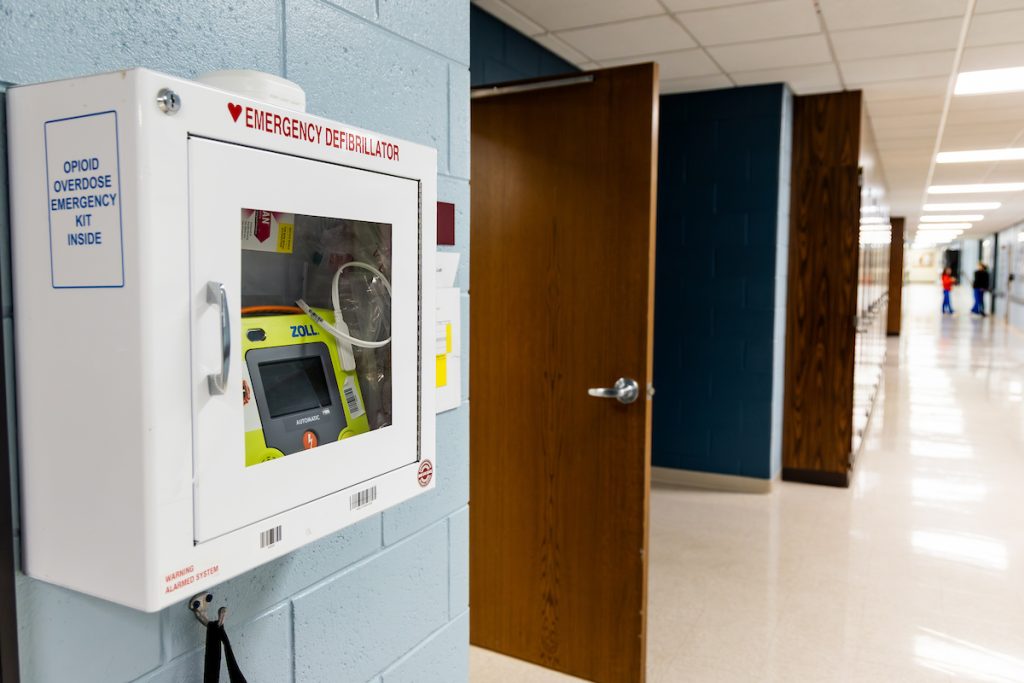
The Garrett Lee Smith Campus Suicide Prevention Grant will provide federal funding to support student mental health and suicide prevention initiatives, while a grant from the Firehouse Subs Public Safety Foundation has provided 10 automated external defibrillators (AEDs) to enhance campus emergency preparedness. Together, these investments reflect Concordia’s ongoing commitment to creating a campus community where students feel supported, connected and safe.


Garrett Lee Smith grant expands mental health support and suicide prevention efforts

CUW has taken an important step toward strengthening student mental health services and suicide prevention efforts through the Garrett Lee Smith Campus Suicide Prevention Grant.

Awarded in September, the grant provides $124,940 in first-year federal funding, with anticipated federal support totaling $495,972 over four years, contingent on continued funding and satisfactory progress. Concordia is also providing institutional matching support.

“This award is a major step forward in how we care for students at Concordia,” said Rebecca Hasbani, Counseling Center coordinator and project director for the grant. “It gives us resources to recognize concerns earlier, help students access care, and follow through so they remain supported.”

The grant will strengthen several areas of student support, including access to counseling, early identification of mental health concerns, crisis response and care coordination. It will also expand suicide prevention training for faculty, staff and student leaders, helping more members of the Concordia community recognize when someone may be struggling and connect them with appropriate resources.

The grant will also support campus initiatives that foster connection and belonging, including the Falcon Outreach Group, Mental Health Week and Love Week. These programs are especially important for students navigating academic pressures, loneliness, relationship challenges and other difficulties that can affect their well-being.


Building connections and a sense of belonging

For Natalie Raymond, a psychology major with an educational studies minor who is set to graduate in December 2027, helping fellow students build meaningful relationships is an important part of campus well-being.

As leader of the Falcon Outreach Group, Raymond helps create opportunities for students to connect, encourage one another and develop friendships. The group’s activities are designed to welcome students whether they arrive with friends or on their own.

“Every student has a place in FOG, regardless of their major, background, or interests,” Raymond said.

One of her favorite examples of that mission in action was the group’s Fiddleheads & Fellowship event at Fiddleheads coffee shop in Cedarburg. Students received journals and reflected together on their personal strengths, positive habits they hoped to develop and ways to put their strengths into practice.

“This group of students who previously did not know one another were soon relating to and encouraging each other,” Raymond said. “It was so cool to see this unfold!”

Experiences like these demonstrate how friendship and belonging can support students through the challenges of college life. The Garrett Lee Smith grant offers an opportunity to build on those connections.

“I hope that students will become more aware of the support that is offered here, both from trained counselors and from students, faculty and staff,” Raymond said.

Her perspective reinforces the importance of combining professional mental health services with a campus culture in which students look out for one another.


Caring for students in mind, body and spirit

Hasbani said the grant represents more than expanded services. It reflects Concordia’s Lutheran mission.

“Our Lutheran identity calls us to recognize each person’s God-given worth and respond to our neighbors with compassion,” Hasbani said.

Over the next four years, the project aims to strengthen follow-up services and expand suicide prevention efforts across campus. A key goal is to reach 700 to 800 students annually through Question, Persuade, Refer (QPR) training. The project will also expand QPR instructor certification opportunities for faculty and staff, increasing the number of trained individuals who can deliver the training. These efforts will help equip more faculty and staff to recognize warning signs, respond appropriately and connect students experiencing suicidal thoughts with the resources they need.

Just as important is helping students feel comfortable seeking support before challenges become crises.

“We want students to hear this clearly: you matter to this community, your struggles deserve care, and you do not have to face them alone. You do not have to wait until you are in crisis to reach out,” Hasbani said.


Firehouse Subs grant brings lifesaving AED technology to campus

Concordia has strengthened its ability to respond to cardiac emergencies, thanks to a grant from the Firehouse Subs Public Safety Foundation. The grant provided 10 new automated external defibrillators, an in-kind gift valued at $19,075. Now installed throughout campus, the devices put lifesaving technology within reach of students, faculty, staff and visitors when every second matters.

AEDs are designed to help save lives when someone experiences sudden cardiac arrest. The new ZOLL devices help Concordia maintain reliable emergency equipment while providing technology that can guide rescuers through a potentially lifesaving response.

Matthew Fox, a 2001 Concordia graduate with a degree in exercise leadership and now a channel partner manager at ZOLL Medical, says keeping this equipment current is essential.

He explained that AEDs perform regular self-tests to help ensure they are ready when needed. The new ZOLL units also feature real-time CPR feedback, which measures the depth of chest compressions and prompts rescuers to push harder when necessary.

Preparing the campus community to respond

But having the right equipment is only part of being prepared. Ensuring that members of the campus community know how to respond during an emergency is equally important.

“Having accessible equipment is essential when responding to a cardiac emergency. Just as important is ensuring that our CUW community knows how to recognize a medical emergency and feels confident taking action,” said Rhonda Verdegan, PhD, professor in Concordia’s Athletic Training Education Program and a CUW first aid and CPR trainer.

Through first aid and CPR training, faculty and staff develop the skills and confidence to recognize emergencies, call for help, perform CPR and use an AED.

“Most importantly, I want people to remember that they can make a difference, even if they are not medical professionals. Knowing what to do and having the confidence to act can save a life,” Verdegan said.

Fox also addressed what it takes to use an AED in an emergency. “The most important thing to understand about any AED is that they are designed to be easy to use,” he said.

He added that seeing his alma mater invest in campus safety is especially meaningful. “It is always great to see the university continue to make investments in its own community to keep the students, staff, visitors and alumni safe when they are on campus,” he said.

For Verdegan, preparing others to respond in an emergency also reflects something deeper.

“At Concordia, we recognize that we are called by God to serve and care for our neighbors,” Verdegan said. “That commitment extends to how we care for one another within our campus community, especially during a medical emergency.”

With new AEDs installed across campus and ongoing opportunities for first aid and CPR training, Concordia is helping equip its community not only with lifesaving technology, but also with the knowledge and confidence to act when someone needs help.


Want in?

Concordia University Wisconsin is a Lutheran higher education community committed to helping students develop in mind, body and spirit for service to Christ in the Church and the world.

Concordia dedicates Rev. Dr. John C. Wille Conference Room

A newly dedicated space honors the former LCMS South Wisconsin District president and his lifelong commitment to theological education, faithful leadership and service to Christ’s Church.


Members of the Concordia University Wisconsin community gathered Monday, Oct. 19, to dedicate the Rev. Dr. John C. Wille Conference Room, honoring the life and legacy of a faithful servant of the Lutheran Church-Missouri Synod.

Formerly known as the Lakeview Conference Room, the newly named space honors Wille, who served as president of the LCMS South Wisconsin District until his death in 2024.

The dedication and improvements to the conference room were made possible through a generous gift from the Walter C. Dissen Charitable Trust in Wille’s memory.

The ceremony brought together university leaders, theology faculty, pre-seminary students, district leadership and friends to remember Wille’s legacy and give thanks for his faithful service.

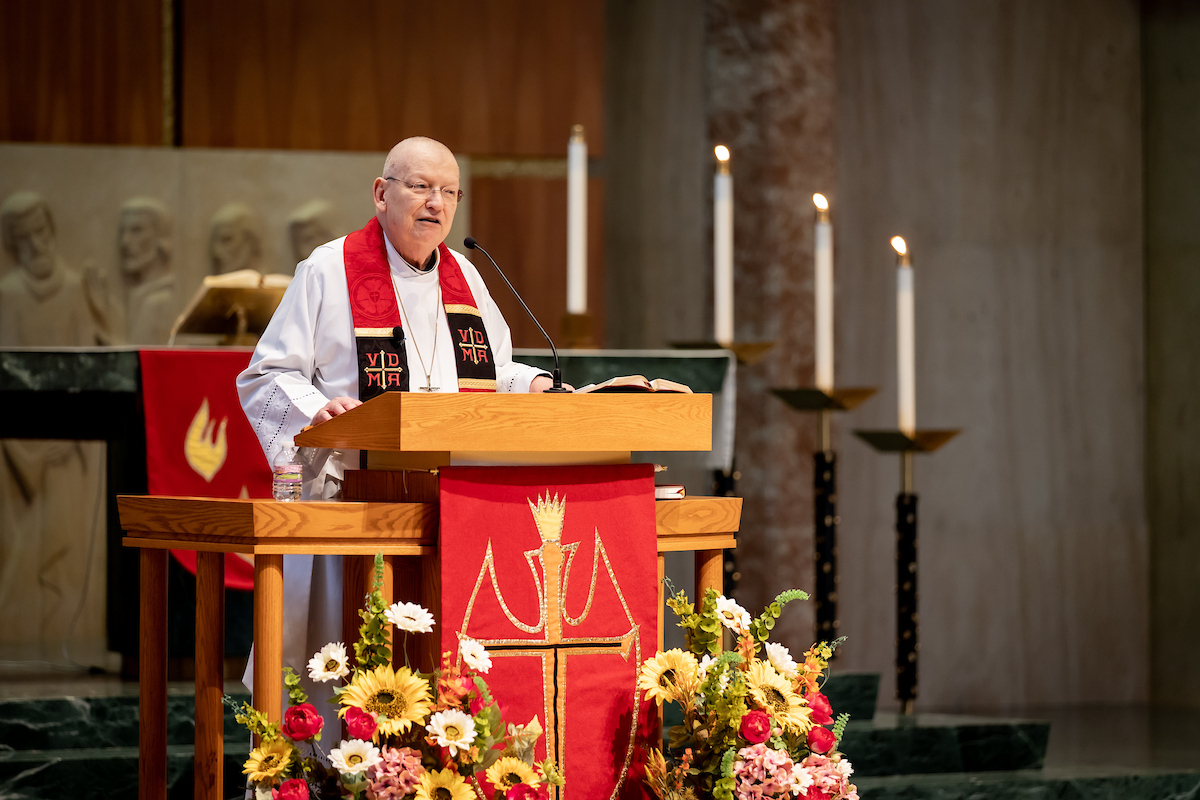
Campus Pastor Rev. Jonathon Bakker opened the ceremony with Scripture and prayer, asking God’s blessing upon the room and all who will use it.

Concordia President Dr. Erik Ankerberg reflected on the significance of theology at CUW and its role in preparing students for lives of service.

“At Concordia University Wisconsin, theology holds a special place in the life of our university. It is not simply one discipline among many. It helps give shape to our mission,” Ankerberg said. “It reminds us who we are, whose we are, and why this work matters.”

Ankerberg emphasized that theological formation helps students understand their lives through the lens of vocation, recognizing their gifts and callings as opportunities to love and serve their neighbors.

“It is especially fitting that this room bear the name of Rev. Dr. John Wille,” Ankerberg said. “His life and ministry have reflected a deep love for the Gospel, for theological education, and for the work of forming servants for Christ’s Church.”


A legacy of faithful leadership

Wille’s life was marked by decades of service to the LCMS, theological education and the preparation of future church workers.

His leadership extended throughout the Synod. In addition to serving as district president, Wille served on the LCMS Council of Presidents; the boards of regents for Concordia Seminary, St. Louis, and Concordia University Wisconsin and Ann Arbor; and numerous other district and Synod boards and committees.

In 2009, CUW recognized Wille’s contributions to the Church and Lutheran higher education by awarding him an honorary Doctor of Divinity degree.

Rev. Dr. Nathan Meador, current president of the LCMS South Wisconsin District and a 1992 CUW graduate, shared reflections on Wille’s character and leadership during the dedication.

With a touch of humor, Meador noted the irony of naming a conference room after a man who disliked meetings. But behind that observation was a recognition of Wille’s tenacity, a defining part of his legacy and his steadfast commitment to serving the Church.


Preparing the next generation for service

The dedication also provided an opportunity to celebrate the students preparing to carry forward the work of the Church.

Quinn Miller, a junior studying philosophy and theological languages, and president of Concordia’s Pre-Seminary Student Association (PSSA), shared reflections on his experience at CUW.

Miller spoke about the relationship between the active and contemplative life, describing how his studies, vocations and experiences have helped shape his preparation for ministry.

He highlighted opportunities to grow through seminary visits, conferences, mission trips, internships and the guidance of Concordia’s professors and teachers.

Miller also expressed gratitude to the donors whose generosity supports theological education and helps prepare future servants of the Church.

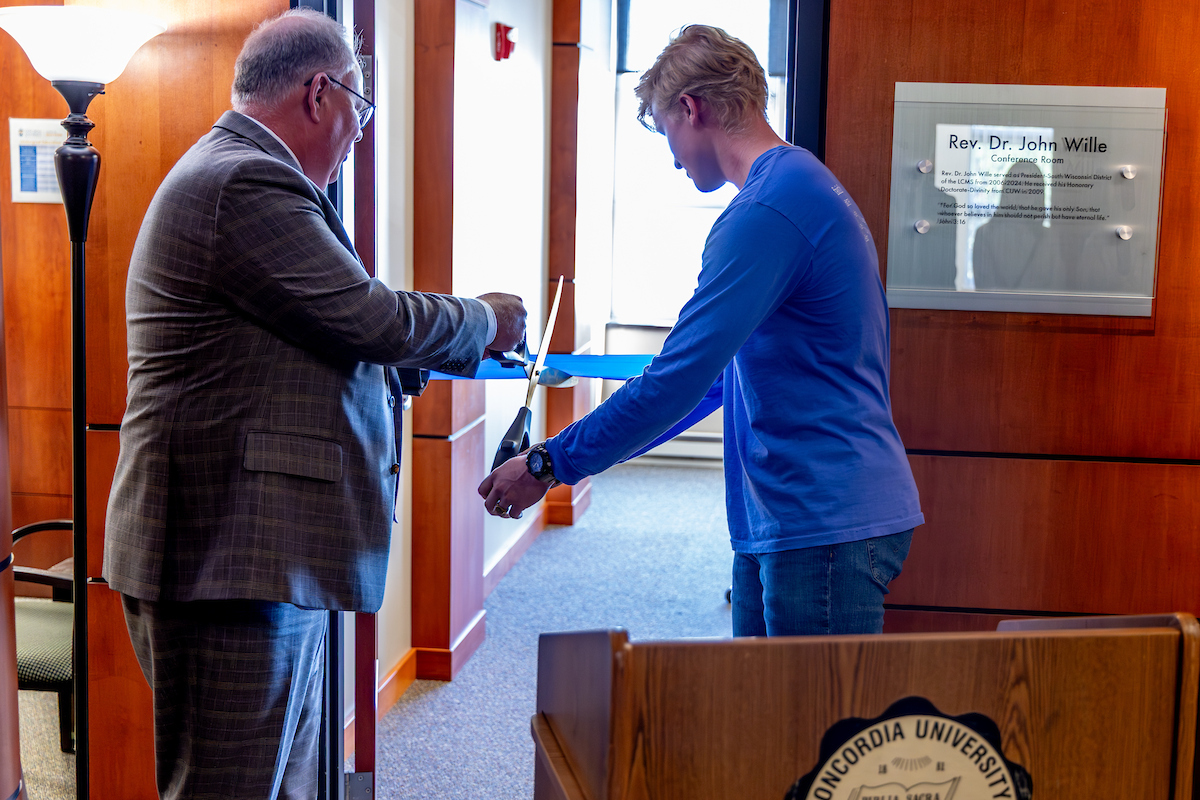
Following the remarks, Miller joined Ankerberg for a ceremonial ribbon cutting, using scissors to officially mark the dedication of the newly named conference room.


A renewed space with a lasting purpose

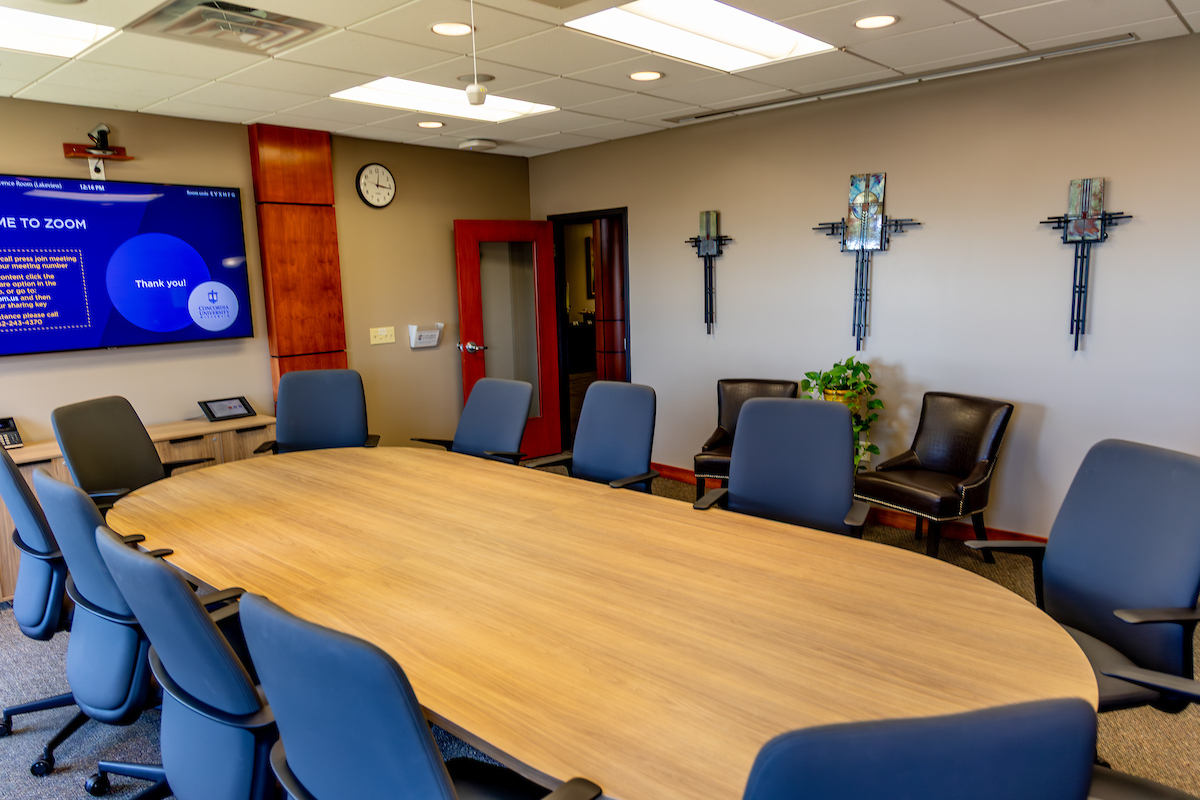
The Rev. Dr. John C. Wille Conference Room has received several updates through the generosity of the Walter C. Dissen Charitable Trust, including new tables, chairs, window treatments and permanent signage recognizing its namesake.

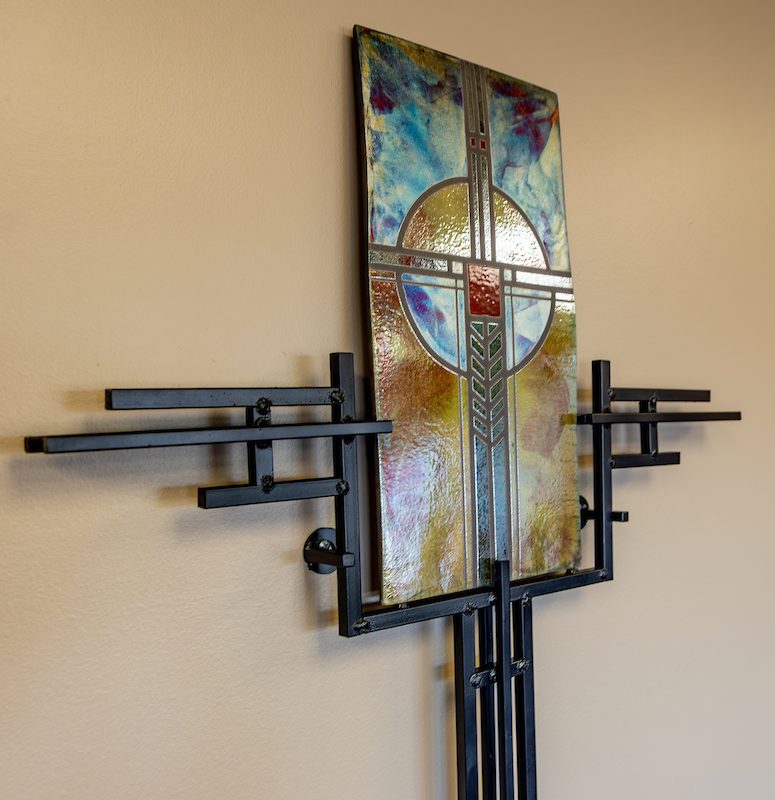
A cross made out of colored glass and ironwork

Just inside the conference room, visitors will encounter a distinctive work of art created by Jeff Shawhan, associate professor in Concordia’s School of Arts and Sciences and director of the Art Gallery on campus. The installation features three ironwork discs with a cross motif, displayed along the curved wall near the room’s entrances.

The artwork serves as a visual reminder of the Christian faith that grounds Concordia’s mission and the purpose of the space it now adorns.

Together, these improvements create a welcoming gathering place for faculty, staff, students and university guests while honoring a life devoted to Christ and His Church.

The dedication concluded with prayer and fellowship, offering guests an opportunity to share memories and reflect on Wille’s enduring influence.

As the Concordia community looks toward the future, the Rev. Dr. John C. Wille Conference Room will serve as a lasting reminder of faithful leadership, generosity and the university’s calling to prepare students for lives of service.

As Ankerberg shared:

“May the conversations that happen here be thoughtful and faithful. May the work done here serve the Church well. And may Christ be honored in all that is said and done within these walls.”


Want in?

Concordia University Wisconsin is a Lutheran higher education community committed to helping students develop in mind, body and spirit for service to Christ in the Church and the world.

From classroom to congregation: CUW students learn from parish professionals

Annual workshop connects future church workers with experienced ministry leaders for practical wisdom, mentorship and encouragement


What does it really look like to serve in the Church? For students preparing for lives of ministry, some of the most valuable lessons come from those already doing the work.

On Thursday, Oct. 15, Concordia University Wisconsin students preparing for careers in church ministry gathered with experienced church workers for the annual Parish Professionals Workshop at the Concordia Center for Environmental Stewardship on campus.

Held each October, the workshop brings together Concordia students and called church workers, including teachers, deaconesses, directors of Church Ministries (DCMs) and directors of Christian Education (DCEs). The gathering offers an opportunity to explore the realities of ministry, ask questions and build relationships with those already serving Christ and His Church.

“The idea is that the people out there (the Parish Professionals), working in the church as our students aspire to do, will offer practical wisdom on the practice of it,” said Rev. Dr. Kurt Taylor, professor of theology and director of Church Ministries at CUW.


Learning from those who have been there

The morning began with chapel before transitioning into presentations addressing burnout, church hurt and ministering in a changing world.

Nicole Dollevoet, a 2000 CUW graduate who studied lay ministry and theology, helped organize and facilitate the event. She serves as director of Church Ministries and youth director at St. Paul Lutheran Church in Sheboygan Falls, Wis., and is a member of the Parish Professionals group.

For Dollevoet, connecting experienced church workers with students is a natural partnership.

“It just makes sense. You have Parish Pros that meet monthly, and you have a university in our backyard. The idea of mentoring is a natural one!”

The workshop also featured small-group conversations in which students rotated among parish professionals to discuss practical ministry topics, including youth ministry, confirmation instruction, fundraising, congregational communication and supporting pastors.

Lucy Meyer, a CUW sophomore in the Director of Church Ministries program, appreciated the opportunity to ask questions and learn from those already serving in congregations.

“Connecting with people who are already in ministry is so special and helpful. They have so much wisdom to pass on and are so willing to help us learn and grow. They show so much humility and true care for us. It is such a blessing to be able to learn from them.”


Honest conversations about church work

CUW senior Adam Homann, a theology major with a Director of Church Ministries minor, said the workshop has been a valuable experience throughout his time at Concordia.

“I have been at every one of the Parish Pros events from the start of them my freshman year at CUW. They have been really great to connect with people and hear the ‘real life’ stories that are maybe more on the ‘ugly side’ of ministry and how to deal with them in the best way possible.”

Those honest conversations help students understand that church work brings challenges as well as opportunities to share the Gospel.

Dollevoet, who has served in ministry for 26 years, hopes students leave knowing they do not have to navigate those challenges alone.

“I think a big take away of my 26 years in ministry is, you are not in it alone!  Church work is not your average 9-5 job.  We work weird hours and the only people that ‘get it’ are other church workers.  It is important for our students to know that wherever God calls you, (you should) find people that can support you.”

Steve Wilson, a 2003 Concordia University Ann Arbor graduate who studied psychology and religious studies, shares that perspective. Wilson serves as director of NextGen Ministry at Hales Corners Lutheran Church and is a member of the Parish Professionals group.

“Often in ministry, it can be lonely.  Finding people you can connect with in ministry outside your own congregation is important. It gives you a place to share frustrations, new ideas, struggles and joys.”


From Concordia students to ministry mentors

For Savannah Henn and Grace Sugg, the workshop offered an opportunity to return to Concordia in a different role, sharing what they have learned since entering professional ministry.

Henn, a 2022 CUW graduate of the Director of Church Ministries program, now serves as director of Children and Family Ministry at St. Paul Lutheran Church in Sheboygan Falls.

“It is so exciting to see so many young men and women preparing to answer God’s call to ministry. I remember being in their shoes and looking to DCMs serving in the field for guidance and encouragement. It is a blessing to now be in a different role and have the opportunity to mentor and encourage these future church workers as they prepare to serve God and His people.”

Henn credits her Concordia education with helping her develop the relationships, knowledge and practical skills she uses in her ministry. Her experiences since graduation have also reinforced the importance of building relationships throughout a congregation.

“My advice to DCM students would be to prioritize relationships,” she said. “Some of the greatest support you will find in your congregation comes from the people you serve alongside and the parishioners who surround you. Step outside your comfort zone and connect with people throughout the entire church, not just the ministry area you serve in.”

Sugg, a 2024 CUW graduate of the Director of Church Ministries program, serves as community engagement officer and administrator for A Place of Refuge Ministries in Milwaukee. Returning to campus gave her an opportunity to reflect on the mentors who helped shape her own preparation for ministry.

“While I know he would hate me saying this, one of the most influential and equipping parts of my DCM experience was having a relationship with Dr. Kurt Taylor. Not only did he teach the curriculum in class, he shared his faith, love of his family, personal experiences and testimonies, flaws, everything with us DCMs. It is through his service to the Lord and his stewardship of us students that I learned relationship building and servant leadership.”

Sugg said the lessons she learned about servant leadership continue to influence her work. She recalled Taylor emphasizing that no church leader is above even the smallest acts of service, an approach that has stayed with her throughout her ministry experiences.

Reflecting on the students she met at the workshop, Sugg encouraged them to recognize that serving Christ does not begin only after graduation.

“Notice the ways He is already working through you right now,” she said. “Being God’s hands and feet doesn’t just start when you have a DCM degree!”


Different callings, one mission

For Meyer and Homann, the workshop offered encouragement as they prepare to serve the Church in different ways.

Meyer grew up involved in congregational life and LCMS youth ministry opportunities, experiences that helped inspire her interest in professional church work. At Concordia, she has continued growing through Bible studies, campus worship, ministry activities and faculty mentorship.

“I am excited to be able to teach others about what Christ has done for them,” she said. “I look forward to making connections with people in my congregation and showing them the love and compassion of Christ. I hope that in all that I do, I am able to reflect the love of Christ.”

Homann hopes to pursue camp ministry, a calling that took shape during his first summer as a counselor at Camp CILCA. At CUW, he has developed leadership skills through his involvement with BUILD (Brothers United In Life and Devotion), a campus ministry where he has served as a coordinator.

“While my goal is to be in a camp setting, the church and camp, when they work together, can be an extremely powerful duo of ministry.”

The workshop also held personal significance for Wilson, whose son, James, is a CUW senior majoring in family life and planning to attend seminary next fall.

“We talked after the event about the importance of connecting with other workers,” Wilson said. “I will always be there to talk with him about life and ministry, but I believe it is so important to have other mentors and people that are not your family to get other perspectives. Watching him build those relationships and become his own man is a blessing to me.”


Preparing the next generation to serve

The workshop concluded with lunch, allowing students and parish professionals to continue conversations and strengthen the relationships formed throughout the morning.

For Dollevoet, the purpose of preparing future church workers ultimately comes back to the message they are called to share.

“Our message of Christ is more important now than ever,” Dollevoet said. “We have a changeless message to get out to an ever-changing world.”

Through the annual Parish Professionals Workshop, Concordia connects classroom learning with the experiences of those serving in the field, encouraging students as they prepare to share Christ’s love through their own vocations.


Want in?

Concordia University Wisconsin is a Lutheran higher education community committed to helping students develop in mind, body and spirit for service to Christ in the Church and the world.

Where history comes to life


CUW alumna combines passions for history, graphic design and travel into a museum career that proves curiosity can become a calling.


Take a passion for history, pair it with a creative eye for design, and add a love of travel and museums, and you have alumna Erin Rice (’21). At Concordia University Wisconsin, Rice found a way to combine all of those interests by studying history and graphic design. Today, she’s carrying that unique blend of passions into a career that brings the past to life.

For the last three years, Rice has worked at the Wisconsin Automotive Museum, 147 N. Rural St., in the heart of historic downtown Hartford. The museum is the state’s largest automotive museum, with a 75,000-square-foot facility spanning two floors. It features a rotating collection of more than 120 classic automobiles, along with antique gas pumps and vintage petroliana that showcase the rich history of America’s automotive culture.

Visitors can explore automobile makes spanning nearly a century, from 1902 through the 1990s, with standout collections featuring iconic American brands such as Pontiac, Studebaker, Chevrolet, Kaiser, Ford and AMC. Beyond its impressive vehicle collection, the museum celebrates Wisconsin’s transportation heritage through exhibits including the Southeastern Wisconsin Short Track Hall of Fame, the Nash Car Club of America archives, a display of outboard motors manufactured in Hartford, and the beautifully restored Soo Line Steam Locomotive No. 1003.


Wearing many hats

“Working in a smaller institution means I get to wear many hats,” Rice said. “My role ranges from handling the admission window while I create the newest t-shirt design, to moving cars and building the latest temporary exhibit.”

Rice primarily serves as the museum’s graphic designer, and has worked on everything from the logo, to t-shirts, puzzles, books, administrative supplies like envelopes and letterhead, to countywide and national advertisements.

“There’s always something new to do,” Rice said. “On the more research-focused and incredibly nerdy side, I take so much joy in digging through 100-year-old newspapers and organizing advertisements in our archive. I think all aspects of myself are represented in this job (and I consider myself someone with a near infinite amount of facets), so working at the Auto Museum definitely is a dream come true.”

Her education mirrors her interests and has prepared her for her current role. As one of Rice’s professors and mentors at CUW, Betsy Pease, PhD, has witnessed that firsthand.

“Erin’s story is inspiring because she shows what an education in the humanities and the arts can lead to,” Pease explained. “She is building a career out of that interest, but she also has used her education to deepen her travel experiences and her cultural understanding of new people and new places. This is exactly what we think a liberal arts education provides for our students.”


Studying history where it happened

After graduating from CUW, Rice traveled to Europe to continue her studies at the University College London, ultimately earning a master’s degree in the history of art in 2024. There, she was able to delve into history topics she enjoyed.

At UCL, her research explored art and technology in 19th century France. “(That) sounds rather dry, but we were talking about early automatons, the monumentality of guillotines, and phantasmagorias (the combination of a seance and haunted house attraction),” she explained.

In addition, her dissertation focused on print technologies and the mass media that made commercial artist J. C. Leyendecker’s work synonymous with 1920s American culture.

“J. C. Leyendecker painted gorgeous covers for the Saturday Evening Post and is most famed for his Arrow Collar Man. I did a small presentation on him in one of my American history classes. My interest in him evolved at UCL, turning from fashion towards the technological. My dissertation focused on the print technologies and the mass media that made his work synonymous with 1920s American culture.”


Learning beyond the lecture hall

Rice discovered that there was nothing quite like studying art in London.

“The opportunities it affords cannot be understated,” she said. “I would pop into the National Gallery when I was bored after class. I attended gallery openings and exhibitions by famous artists like Yoko Ono and Sarah Lucas. For a brief period of time, I practically lived at the John Singer Sargent exhibit at the Tate. We took class trips to Paris and to the Venice Biennale.”

The opportunity also gave her the privilege of writing about history that she experienced first-hand.

She explained: “(That) sounds silly, but an example: One Wednesday, I set up an appointment with the Victoria and Albert Museum’s Prints and Drawings room. After class, I took the Tube down to South Kensington, rode a well-hidden lift up to their archives, and physically held a poster of Jules Chéret’s La Loïe Fuller, which was printed in 1900.

“By viewing the piece in person, I noticed that there were tiny speckles of blue paint on Fuller’s dress that don’t typically appear on the image you get off of Google photos. These speckles (known as crachis) cast an almost phantasmal glow on her figure. That discovery, in turn, connected to my main thesis (about) 1880s French posters (that) exhibit themes of lights, technology and entertainment.

“What this story shows, in a fairly roundabout way, is that I was really living the academic’s dream. It felt like the world was at my fingertips and most research was only a Tube stop away.”


A Concordia education in action

Rice’s ability to bring those experiences to life reflects a curiosity that extends well beyond the classroom. Pease described Erin’s enthusiasm for learning as “infectious.”

“This was evident in the monthly newsletters Erin shared during her time pursuing a master’s degree at University College London,” Pease said. “She wrote extensive updates on what she was learning, what museums or exhibits she had seen, where she had traveled, and even what music inspired her recently. As Erin’s former instructor, it was fun to see her engaging at a deeper level (about) many of the ideas we had begun exploring during her time at CUW.”

At Concordia University, students are able to customize their learning experiences, incorporating their interests into their lines of study. And Rice did just that with her history major.

“Our program builds in several opportunities for students to pursue projects on historical topics of their own choosing,” Pease said. “Erin was able to bridge her interest in art and history in a number of ways. She has an interest in the emergence of commercial art from the turn of the 20th century, and she was able to pursue a project on that in a U.S. history course with me.”

Those experiences didn’t happen by accident. Rice said they began with taking advantage of the people and opportunities around her at Concordia. That’s the same advice she now offers current students.

“Really take advantage of Concordia’s small class size and get to know your professors and classmates. You’ll be surprised by how those connections can shape the path of your life.”


“The School of &” blog series highlights the distinctive identity of Concordia University Wisconsin’s School of Arts & Sciences, where interdisciplinary connections shape learning and purpose. Each month, the series features students and alumni who have paired majors, minors and certificates in thoughtful and creative ways.

Their stories show how connecting areas of study can help students develop their gifts, discover their calling and prepare to serve the Church and the world.


Want in?

Concordia University Wisconsin is a Lutheran higher education community committed to helping students develop in mind, body and spirit for service to Christ in the Church and the world.

The uncommon pharmacist who serves patients and country

‘Service’ is not a word that 2026 pharmacy graduate Gracie Wilson takes lightly.


She lives it out every day, whether serving her community as a pharmacist, or serving her country as a staff sergeant in the Air National Guard.

The Deerfield, Wis., native graduated earlier this month and has accepted a residency to work at the Milwaukee VA.

“Matching to a residency at the Milwaukee VA is incredibly meaningful to me, both personally and professionally,” Wilson said. “Through my military service, I have developed a deep respect for those who have served, making the VA’s mission especially significant to me… More than anything, it will allow me to continue serving others in a way that aligns with both my values and long-term goals as a pharmacist.”

Wilson added that being part of the military community has given her a “greater appreciation for the sacrifices service members make, and has created a strong desire to continue supporting veterans through different stages of life, whether they are navigating some of their most difficult health challenges or working to improve their quality of life.”

During her residency, she said, she hopes to “make an impact by contributing to patient care in a meaningful and consistent way while continuing to strengthen my clinical decision-making skills.”


A calling rooted in service

Dr. Michael Brown, associate dean for Academic Affairs and professor in the School of Pharmacy, calls Wilson a “remarkable person,” citing her service in the Concordia community as well as to her patients.

“In addition to service in our Concordia community and service to her patients as a student and now graduate, Dr. Gracie Wilson serves in the United States military, protecting our freedoms,” Brown said. “Her selflessness and courage are inspiring.”

Wilson, who graduated with an undergraduate degree in biochemistry from Wisconsin Lutheran College in 2022, said Concordia University Wisconsin enabled her to retain a “close-knit environment” where she could get to know classmates and build meaningful connections with professors.

“When I visited CUW, it immediately felt like a good fit in that sense. The class sizes were smaller, the faculty seemed very approachable, and it felt like a place where I would feel supported throughout the program.”


Building confidence through community

Throughout her training at Concordia, Wilson grew to appreciate the pharmacy staff, clinical preceptors and their support. She is grateful for their guidance, mentorship and dedication to teaching, which have played a key role in her growth as a student and future pharmacist.

“I am especially appreciative of the time they took to share their knowledge, encourage learning and provide meaningful feedback, all of which have helped shape my clinical skills and confidence,” Wilson said.

Her experiences in the Air National Guard have also helped her grow as a leader and pharmacist. In fact, she says, some of the most important skills she has learned—discipline and time management—have been instrumental in her education and career.

“Balancing military responsibilities with pharmacy school has required me to be intentional with my time, stay organized and learn how to prioritize responsibilities effectively,” Wilson said. “My experience has also reinforced the importance of clear communication and teamwork. Working in a military setting requires effective collaboration, and I’ve found those same skills to be essential in interprofessional healthcare environments.”


A servant leader in pharmacy

Brown said what stands out most about Wilson’s impact on her peers, faculty and patients is that she always puts others first in everything she does.

 “She has spent her time at Concordia developing into a highly gifted and talented pharmacy professional, and has the knowledge, skills and attitude to make a difference in the lives of her patients.

“She is going to be an amazing pharmacist!”


cat head
Emmy
cat scottie
Scottie

At a glance

  1. Who has made the biggest impact on your college journey? It’s incredibly hard to choose just one person, but my husband, Sid, has had the greatest impact on my college journey. He’s been there through all the daily struggles and stress, and has supported me in every way throughout pharmacy school. Whether it’s helping me think through career paths, offering encouragement on difficult days, or simply being a steady source of support, he has truly helped me stay grounded and motivated the entire time.
  2. If your life had a theme song right now, what would it be? Right now, it would be “Good Time” by Niko Moon because it has such an upbeat and positive vibe. Lately, I have been trying to focus on enjoying the moment and appreciating the simple things with friends and family, even during busy seasons.
  3. What’s your go-to comfort food when you need a pick-me-up? Any type of pasta. It’s always simple, comforting and just a perfect meal to make a long day a little better.
  4. If you could teleport anywhere for a weekend getaway, where would you go? Italy. It’s always been a dream vacation for me as I’m really drawn to the culture, history and, of course, the food. I love the idea of spending time exploring different cities and enjoying authentic Italian.
  5.  What’s something small that never fails to make you laugh or smile? I would have to say my two cats, Emmy and Scottie, at home. Whether they are running around chasing each other or just curling up to cuddle, they never fail to make me smile or brighten my day.

Editor’s note: This is one in a series of stories highlighting a few Concordia’s uncommon graduates. Faculty and staff submit candidates for consideration. Stories are posted in the days leading up to or after commencement. View more uncommon graduates here.


Want in?

Concordia University Wisconsin is a Lutheran higher education community committed to helping students develop in mind, body and spirit for service to Christ in the Church and the world.

Timothy Conner: The uncommon balance of computer science, creativity and faith

At first glance, computer science and music may seem to have little in common.


After all, computer science centers on technology and data, while music is rooted in creativity and performance. But for 2026 Concordia graduate Timothy Conner, pursuing both music and computer science has been a rewarding way to combine his creative and analytical interests.

Conner, a native of Manning, Iowa, graduated summa cum laude after earning both his bachelor’s and master’s degrees in computer science through the Computer Science Scholars program. He concentrated on cybersecurity and plans to pursue a career in information technology after graduation.

Outside of the classroom, Conner engaged his music side by performing as a member of the Wind Ensemble and Pep Band, and serving as an organist in Concordia’s Chapel of Christ Triumphant as well as Beautiful Savior Lutheran Church in Mequon.

During his search for the right university, Conner knew it had to offer opportunities in music and computer science. “As I love and enjoy both Computer Science and music, my future college not offering both was a deal-breaker for me,” he said. “While at Concordia, in addition to my major-specific classes, I have been blessed to be able to take music theory and music history classes as well.”


Computers since a child

Conner said he “has always enjoyed using computers to solve problems.” He’s been using and studying them since he was just a child, so it makes sense that he would pursue a degree and career in computer science as an adult.

“When I was young, I loved to dissect old computers to see what was inside, as well as see what exciting things I could do with old computers, such as a file server or a media server,” he said. And when it came to his 10th birthday, a fond memory includes requesting a cake with a circuit board design. Quite apropos for the budding computer scientist.

His interest in cybersecurity developed over time. It wasn’t until one summer when he realized he actually enjoyed it. That’s when he discovered the “Security Now” podcast with cybersecurity guru Steve Gibson. “I could not only listen to (it) without falling asleep, but I actually really enjoyed it,” Conner said.


Music and worship on campus

Serving as an organist helped shape Conner’s faith and college experience while deepening his appreciation for the meaning and richness of hymnody and liturgy. This ministry, along with his extracurricular experiences—from hackathons to ping-pong—allowed Conner to connect with others at Concordia, the majority of whom were studying completely different subjects.

“College is not only about the classes taken, although Concordia’s curriculum is designed to produce well-rounded graduates,” Conner said. “Taking the time to step out and participate in events has allowed me to have conversations and experiences that will stay with me well after my final exams are finished.”

While the classroom played an important role, Conner said it was the relationships he built and the experiences he embraced that truly shaped him into the person he is today.


A look ahead

What Conner appreciates most about pursuing a future as a systems administrator is the opportunity to build a career doing something he both loves and excels at.

“Information technology and computer science are so fascinating in that, as technology continues to advance, there are always new problems to solve and challenges to overcome,” Conner said. “One of the reasons I decided to focus more on information technology and systems administration is, in this field, I have the privilege of directly interacting with and supporting end users as they carry out their vocations, which can be anything from metal stamping to food service to accounting.”

Dr. Gary Locklair, computer science professor, said he will remember Conner as “an exceptional student who has excelled at both computer science and music. Timothy accepts nothing at face value, but questions everything in order to understand the concepts and then apply that knowledge well.”

He added: “Computer science is a vocation where we love and serve our neighbor by creating true, beautiful and good computer systems. Timothy has internalized the vocational aspect of computer science. He will be an excellent computer scientist who considers people the most important aspect of his technological endeavors.”


Other notables

  • Conner’s parents also attended CUW, where they married in the chapel.
  • He participated in English Contra Dancing, an unofficial group at CUW. According to Wikipedia, Contra dancing is a social, community-focused folk dance where couples form two long, parallel lines, facing a partner.
  • He loved “rounding up friends to play ping-pong as a study break.”
  • Conner participated in “hackathons” on campus.
  • Whenever possible, he took advantage of opportunities to attend CUW plays, musicals, and events on campus, especially those put on by Philosophy Club.

At a glance

  1. Who has made the biggest impact on your college journey? My fiancée, Allis. She has taught me that there is more to life than studying and homework; all the cool people are in Chapel Choir; and that coffee makes the world go round.
  2. If your life had a theme song right now, what would it be? I’ve got to go with a classic here: “The Final Countdown,” by Europe. Graduation, preparing to work full-time, and marriage coming up…I am counting down the days!
  3. What’s your go-to comfort food when you need a pick-me-up?  A wrap at the Landing with sriracha mayo, tuna, provolone, and spinach, lettuce, olives, and onions. It’s just good. Somehow, Siobhan at the Landing manages to fit it all in the wrap.
  4. If you could teleport anywhere for a weekend getaway, where would you go? My brother, who is studying to be an auto mechanic up in northern Iowa, has been visiting some beautiful parks in South Dakota. If I could teleport anywhere, I’d head over there and join him for an outing for a day.
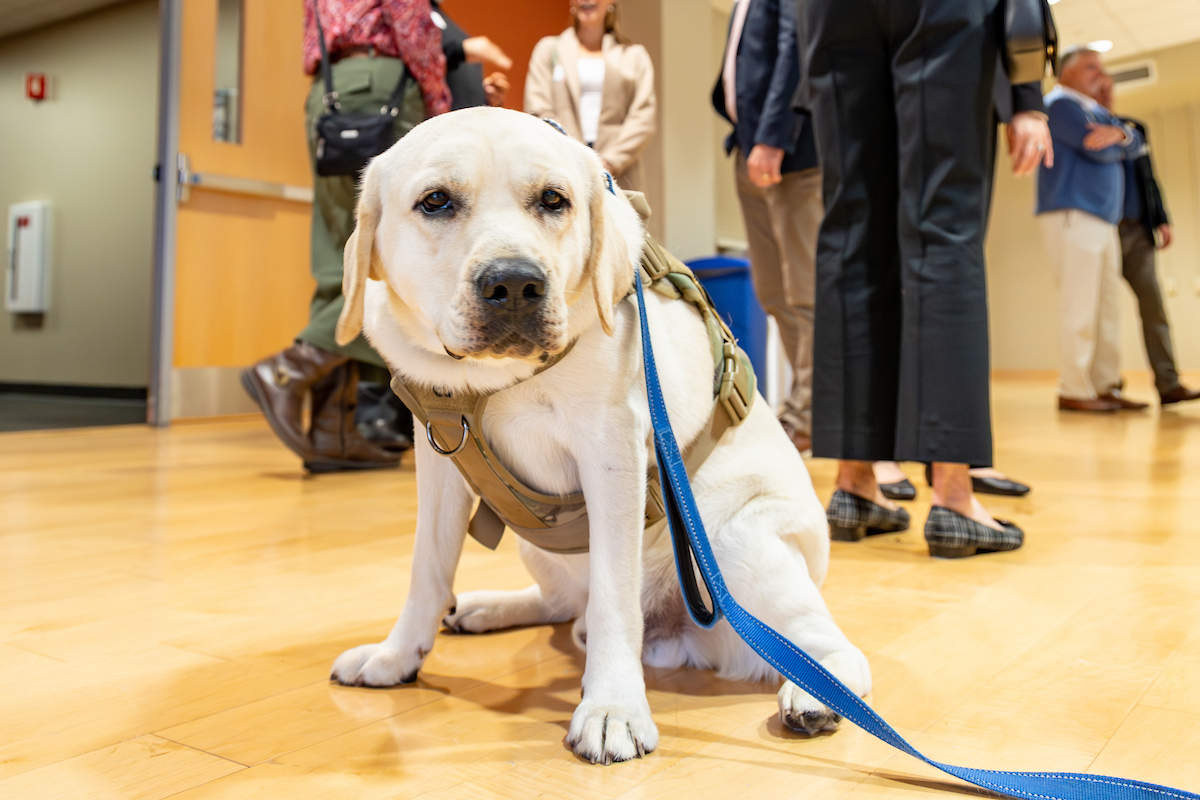
  5. What’s something small that never fails to make you laugh or smile? I love seeing comfort dogs walking around campus. It is quite a nice change of pace to see them around!

Editor’s note: This is one in a series of stories highlighting a few Concordia’s uncommon graduates. Faculty and staff submit candidates for consideration. Stories are posted in the days leading up to or after commencement. View more uncommon graduates here. 

Want in?

Concordia University Wisconsin is a Lutheran higher education community committed to helping students develop in mind, body and spirit for service to Christ in the Church and the world.

The uncommon scholar-athlete who defined success beyond the ice

One piece of advice stuck with 2026 Concordia graduate Noah Roitman throughout his four years of school, and it came from his mom: “You are more than just an athlete.”


Roitman, who hails from Inver Grove Heights, Minn., graduated magna cum laude and earned a bachelor’s degree in Investments & Corporate Finance. Known for excellence in the classroom, he has also distinguished himself on the ice.

“The moment Noah became a Falcon, he wanted to help build the hockey program and to get himself in a position to pursue professional hockey,” said Nate Eminger, associate head coach of Concordia’s men’s hockey team.


Built through discipline

Throughout his life, Roitman has logged a lot of play and practice time as a hockey player. Prior to college, Roitman spent three seasons splitting time between the NAHL and NA3HL, most notably with the Rochester Grizzlies, where he was named NA3HL Defenseman of the Year and won a league championship in 2021–22.

Then his path led him to play NCAA hockey at the university that helped shape him into a leader.

“After finishing my junior hockey career, I was looking for a place where I could grow in my faith, get a strong business education, and live in a great city that would give me real opportunities after college. I also wanted to keep playing hockey at a high NCAA level,” Roitman said. “Concordia checked all of those boxes and felt like the right fit for me.”

Over the course of his Concordia career, Roitman appeared in 106 games and totaled 35 points with seven goals and 28 assists.

But Roitman’s career on the ice doesn’t end with Concordia. He recently signed with the Macon Mayhem, Georgia’s professional hockey team and part of the SPHL. “When the conclusion of my senior season on the men’s NCAA hockey team (at CUW) ended, I had the opportunity to play professionally, which was an incredible experience and something that I had worked toward for a long time,” Roitman said.


Preparing for purpose

Despite his obvious successes in hockey, Roitman said he was “never someone people expected to go far in hockey or in other areas.”

“So, I developed a strong work ethic early on because I knew I was the only one who could truly influence my path,” he explained. “That mindset carried through my hockey career after high school, in the classroom, and even financially. Because of that, I have learned to push myself in my studies the same way I do in hockey, staying disciplined and trusting that the hard work will pay off. I always remind myself that there’s a light at the end of the tunnel, which keeps me motivated to keep going.”

And did he keep going.

In addition to playing hockey at Concordia, being an assistant captain on the team and graduating magna cum laude, he served as vice president of the Student Government Association, which taught him “how to serve others and understand different perspectives to make the best decisions.”

He added: “I learned that good leadership is not just about having a voice, but about listening and putting others first. (My) experiences have taught me that success is not just about personal achievements, but about making a positive impact.”


Ready for more

All of his pursuits—on campus and off—have prepared Roitman for graduation, a career and, as his mother says, a life of being more than just an athlete.

“I have seen Noah grow from a young adult to the very mature person he is today. He has a passion to lead, and he has led by example on the ice, in the classroom, and in the business world,” Eminger said. “Noah has a bright future and I am glad we are able to help guide him here at CUW.”


At a glance

1. Who has made the biggest impact on your college journey? My mom and dad, Wade Pruitt, Dr. Tom Scholz, Aaron Siekmann, and Beth Kern have had the biggest impact on my college journey.

2. If your life had a theme song right now, what would it be? “This Bar” by Morgan Wallen

3. What’s your go-to comfort food when you need a pick-me-up?  Steak dinner or Chipotle

4. If you could teleport anywhere for a weekend getaway, where would you go? My friend’s lake cabin in Minnesota

5.  What’s something small that never fails to make you laugh or smile? My family and friends


Editor’s note: This is one in a series of stories highlighting a few Concordia’s uncommon graduates. Faculty and staff submit candidates for consideration. Stories are posted in the days leading up to or after commencement. View more uncommon graduates here.


Want in?

Concordia University Wisconsin is a Lutheran higher education community committed to helping students develop in mind, body and spirit for service to Christ in the Church and the world.