Surviving Pharmacy School: Tips & Tricks

Enrolling in pharmacy school is a commitment. Students dedicate time to academic courses, labs, on-site clinical experiences, networking, studying, and more. The journey as a pharmacy student can be exhilarating and equally overwhelming.

Here are helpful tips from students at Concordia’s School of Pharmacy to guide and support you. These tips & tricks aim at bolstering the confidence of current and prospective pharmacy students as they navigate their educational path.

Academic Tips

  • Treat each class as if you’ve never taken it before. Taking an undergraduate anatomy, microbiology, or biochemistry class doesn’t make you an expert. Embrace each course because there is so much more to learn.
  • Make a calendar with important dates like exams, quizzes, and projects at the beginning of the semester. Being organized and knowing exactly what is coming and when is the way to go. There will be weeks when your workload is heavier. Using a simple calendar can help you prepare better and possibly reduce stress and anxiety.
  • Create a study group that fits your learning style and personality. Studying with others allows you to learn from those who may understand a concept better.
  • Study ahead of time. If you procrastinate it will be much more stressful and overwhelming.
  • Don’t be afraid to ask questions. Speaking up can lead to great discussions and help you to learn more about specific pharmacy topics. This includes not being afraid to visit a professor during their office hours.
  • Schedule study breaks. Taking care of yourself is essential for your well-being during school and beyond.

Extracurricular Tips

  • Don’t be afraid to explore student organizations! They are a great way to meet people and build connections with your peers. It’s good to have people who will continue to support you throughout your years in pharmacy school.
  • Take time to do an activity that you enjoy and that is relaxing. This is different for everyone, but find your thing and try to do it on a regular basis.

Pharmacy Career Tips

  • Be open to different pharmacy career paths. There are various opportunities to serve in pharmacy.
  • Talk to the professors about their specializations. They are eager to share their love for a specific field of pharmacy. Concordia has professors with experience in inpatient clinical pharmacy, ambulatory pharmacy, and compound pharmacy.
  • Keep your resume (CV) updated. You never know when you will need it.
  • Develop a network with other pharmacy students. You’ll develop lifelong relationships with some of your classmates. Additionally, get to know other pharmacists and professors who can possibly serve as mentors.

Well-being Tip

  • When you feel overwhelmed, take a deep breath. Imagine that breath collecting all the anxiety and scattered thoughts, so when you breathe out, you’ll be clearing your mind. Repeat as necessary.

Pharmacy school is rigorous. It’s meant to be so that you handle a variety of medications and patients as a licensed pharmacist. Learning and practicing with pharmacists will improve your skills and empathy. The more you learn and practice, the better you will become.

What is an Infectious Diseases Pharmacist?

When exploring career paths, it’s best to talk to a professional in the field. Fortunately, Concordia University has Dr. Lynne Fehrenbacher, PharmD, BCPS-AQ ID, as a professor in the School of Pharmacy. Dr. Fehrenbacher also serves as a preceptor for pharmacy APPE students on infectious diseases rotations and for pharmacy residents.

Apart from her faculty role, she also practices as infectious diseases (ID) and antimicrobial stewardship clinical pharmacist at Aurora St. Luke’s Medical Center in Milwaukee, WI. Actually, she helps support antimicrobial stewardship across all of the Aurora hospitals in Wisconsin. Check out her insight as to why being an ID pharmacist is such an “infectious” career path.


What is an Infectious Diseases and Antimicrobial Stewardship Pharmacist?

An ID pharmacist is usually part of a multidisciplinary team working to care for patients with infections. Their main focus is ensuring that medications (antimicrobials) prescribed to treat a patient’s infection are optimized for the best possible outcome.

And just as importantly, ID pharmacists are champions for antimicrobial stewardship, which means using antimicrobials to appropriately treat infections only when they’re indicated. Since there isn’t an endless supply of new antimicrobials in the drug pipeline, it’s important to use existing medications wisely to preserve them for the future.

In this role, we track antimicrobial use to identify areas for improvement and trending antimicrobial resistance. And it’s critical that we educate caregivers and patients about the importance of using antibiotics appropriately.

Evaluating the ‘bugs and drugs’

We use the electronic health record (EHR) system to extract real-time reports based on either positive culture results (the ‘bugs’) or selected antimicrobial medications (the ‘drugs’). We then review patients’ therapy plans and identify whether they are on optimal drug therapy to cover their bugs. Interventions that we make regularly include the following.

  • Identifying safety or efficacy concerns related to antimicrobial dosing and working to optimize a patient’s dose.
  • Recommending de-escalation (changing from a broader coverage antimicrobial to a more targeted option) when culture information is available.
  • Assisting with therapy selection when a patient is infected with difficult-to-treat organisms that may be resistant to one or several antimicrobials.

Antimicrobial Stewardship

Infectious disease pharmacists are a key part of antimicrobial stewardship teams. These teams work on projects to identify areas to improve antimicrobial use. This can involve working in partnership with infection prevention teams to track and trend resistant organisms.

It may include doing patient-based research to develop protocols for antimicrobial dosing or infection-specific recommendations within a hospital. The main goal is simple: optimize patient outcomes while using antimicrobials in a way that will minimize the risk of antimicrobial resistance.

Teaching and Learning

There are usually multiple pharmacy residents and a 4th-year pharmacy student on rotation with our service at Aurora Healthcare each month. We do patient rounds together and work to develop their knowledge and confidence through exposure to a variety of patient situations and infection types.

Using a layered learning approach, residents, students, and preceptors all teach and learn from one another in a collaborative environment. In addition, we work closely with physicians, physician assistants, nurse practitioners, microbiology laboratory technicians, and other health professionals daily. We are a reference for one another and infectious diseases pharmacists serve as the drug experts on a healthcare team.


How do I become an Infectious Diseases Pharmacist?

First, you must receive a Doctor of Pharmacy (PharmD) degree. Following graduation, you’ll complete a PGY-1 pharmacy residency followed by either a PGY-2 ID pharmacy residency or a research fellowship. Most ID pharmacists who want to practice in patient care traditionally choose the PGY-1/PGY-2 pathway, while those who are more interested in research will opt for pursuing a fellowship.

While not required, most ID pharmacists will have advanced certifications such as board certification with the Board of Pharmaceutical Specialties (BPS). As a pharmacist who has been practicing for greater than 20 years, Dr. Fehrenbacher took an exam in addition to her licensing exams and is a Board Certified Pharmacotherapy Specialist (BCPS).

In addition, she submitted a portfolio for review and received Added Qualifications in Infectious Diseases (AQ-ID). While the AQ-ID will be sunsetting, there is a new BPS board exam to award Board Certification in Infectious Diseases Pharmacotherapy (BCIDP) that new ID pharmacists can take to become certified.


Professional Service and Advocacy

Dr. Fehrenbacher has chosen multiple ways to serve and advocate for those with infectious diseases.

  • She is an active member of the Society of Infectious Diseases Pharmacists (SIDP) and has chaired several committees over the years.
  • She is the past chair of the Education Committee, which is responsible for coordinating educational activities not only for members but for other pharmacists and members of healthcare teams as well.

Being involved in organizations has allowed her to expand both her network and professional involvement locally and internationally. Whatever area of pharmacy practice you pursue, align yourself with a professional organization that will:

  • Support your development
  • Allow you to network and mentor others
  • Work to advocate for the advancement of the profession for the good of those whom we serve

Dr. Fehrenbacher is willing to answer any further questions and offer insight to those interested in becoming infectious diseases pharmacists. You’re welcome to contact her below to discuss how this field can provide you a rewarding career for a lifetime.

What is a compounding pharmacist?

One of the best ways to learn about the career of a compounding pharmacist is to go to an expert in the field. And luckily, Concordia University has Dr. Nancy Stoehr as an Associate Professor in the School of Pharmacy. She has successfully found her niche in compounding pharmacy since earning her PharmD from the University of Wisconsin-Madison in 2006.

Dr. Stoeher earned her Board Certification of Compounded Sterile Preparations from the Board of Pharmacy Specialties in 2021. And in 2022, she earned her Master’s of Education in Teaching and Learning at Concordia to enhance her skillset as a pharmacy professor. Her teaching focus is pharmaceutical dosage forms and pharmaceutical compounding for the community patient.

Compounding pharmacists are chemical problem solvers

Typically, most patients can safely take manufactured products (medicines) that are made in a factory. Some patients cannot take these manufactured products for various reasons. They might be allergic to other chemicals in the manufacturing process. Or the manufactured product is in a dose or dosage form that the patient is unable to take. For example, babies cannot swallow tablets. If an infant’s medication is only produced as a tablet, a pharmacist can make a liquid solution that the baby can swallow.

Pharmacists can make medications for specific patients using individual chemicals. Think about the process of baking a cake using several individual ingredients. You combine eggs, flour, sugar, and other ingredients. The result? Well, your results may vary, but ideally, you end up with a perfect dessert. Similarly, the medications we take include more than a single drug. There are a lot of other components or inactive chemicals that go into the medication. These other components help to create a form of medication that can be safely administered to patients on their own. Inactive chemicals are added to the medication during the manufacturing process to help make a product of a certain quality.

Compounding pharmacists are scientific artists

Pharmacists need to develop an in-depth knowledge of science to understand what chemicals they can combine safely. Beyond book knowledge, it also takes a level of creativity and innovation to treat a specific patient for a specific outcome. Again, like the culinary sciences, pharmaceutical compounding requires pharmacists to be able to make a “pharmaceutically elegant” product. It has to be something that someone wants to take for the duration of their therapy. This could be as simple as matching a mint flavor with a green color. Or it can be as complex as making sure a cream is aesthetically pleasing as well as effective as a medication.

Compounding pharmacists work very closely with the prescriber and the patient before setting to work. A relationship must be formed between the prescriber, the pharmacist, and the patient before it is even legal to compound a medication for a patient. We call this the “compounding triad”. As a healthcare team, you want to try the manufactured drug products that are currently available before making a compounded medication. This relationship also allows the patient to advocate for their preferences and ideas in their medication treatment.

How do I become a Compounding Pharmacist?

First, you must receive a Doctor of Pharmacy (PharmD) degree. You can continue your education after pharmacy school by participating in a residency. There are some residencies throughout the United States that specialize in compounding pharmaceutical preparations. An independent pharmacy, owned by an individual or small group, is often the setting for a compounding residency. These are not big chain pharmacies that you see in department or grocery stores. A quality pharmacy program will provide you access to their network of connections for gaining residencies.

Alternatively, you may also earn board certification and add the letters BCSCP after your name (Board Certified Sterile Compounded Preparations). To maintain this certification, you need to earn 100 hours of continuing education every seven years, or you can simply retake the test.

Where else can I serve as a compounding pharmacist?

Using Dr. Stoehr as an example, she has chosen multiple pathways to serve others in compounding pharmacy.

  • She is teaching this area of pharmacy to the next generation of pharmacists.
  • She obtained her certification as a PCAB (Pharmacy Compounding Accreditation Board), Pharmacy, and DMEPOS (Durable Medical Equipment, Prosthetics, Orthotics & Supplies) Consultant through the Accreditation Counsel of Health Care in 2020.
  • She has background experience as a pediatric compounding pharmacist for Skywalk Pharmacy. This is an affiliation of the Children’s Hospital of Wisconsin.
  • Her past work also includes sterile compounding as a home infusion pharmacist and as a hospital pharmacist.

Dr. Stoehr also finds time to dedicate to research in the area of compounding pharmacy. Her research focuses on the stability and quality of compounded dosage forms, formulation development, and community compounding documentation systems. She looks forward to continuing the incorporation of service to patients in the community, with interprofessional communication, team building, and research for the betterment of community patients. She enjoys incorporating practice and research into her education of pharmacy technicians, pharmacists, and future pharmacists.

Dr. Stoehr is willing to further discuss the role of a compounding pharmacist with others interested in this field. You are welcome to contact her below to discuss how this field can provide you a rewarding career for a lifetime.

How to become a successful pharmacist and instructor

Dr. Kristen Korankyi received her PharmD in 2021 from High Point University’s Fred Wilson School of Pharmacy. She is now a resident in Concordia University’s 24-month Pharmacy Practice and Academic Leadership Resident program. Currently, she practices as an ambulatory care pharmacist at Lakeshore Community Health Care two days a week. For the rest of the week, she serves as an instructor at Concordia’s School of Pharmacy.

In this blog, learn about Kristen’s experiences as she has worked to earn her master’s in education and advance her pharmacy expertise. Dr. Korankyi has found her calling to serve her patients and educate future pharmacists.

Why do you want to have a career as both a pharmacist and instructor?

As a college tutor, I began to realize I really enjoy helping others learn. My diverse background offers a unique perspective to help mentor and educate a variety of students as I’m originally from Ghana, West Africa. Concordia offers one of the only programs I could find for pharmacy and education, and it has proven to be a robust training.

I like that the instructor and pharmacist learning in the Pharmacy Practice and Academic Leadership program run concurrently to each other and are given equal importance. For the education portion, I have spent 25% of my time being an instructor in various courses and labs in the School of Pharmacy. Then, I have dedicated another 25% to instructor-based courses in teaching and learning. For the pharmacist part of the program, I completed my first year of residency at a community health center. Currently, I am finishing up my second year serving in ambulatory care services as a pharmacist.

What were the key lessons for you from the master’s of education program?

I learned how to utilize multimedia in the classroom to create the best learning experience. The curriculum has taught me how to write appropriate learning objectives and assessment questions for courses. I have learned how to create my own personalized educational philosophy as I develop as an instructor. I will be earning a graduate degree in education with an emphasis on teaching and learning.

How have you served as an instructor in Concordia’s School of Pharmacy?

I have been able to instruct in applied patient care labs for first and third year pharmacy students. Within two months of starting as a resident, I coordinated a module on drug information to first-year pharmacy students. Subsequently, this led to a research project which IRB (Institutional Review Board) approved. And that led to me presenting this project as a poster at the 2022 AACP Annual Meeting. This abstract and poster is titled, “Measuring professional confidence and growth mindset in first-year pharmacy students’ drug information responses.” Now, I am working on a full manuscript for a pharmacy journal on this same topic.

I have taught classes for Medical Literature Evaluation, Ambulatory Care Pharmacy, and Pharmacy and the Underserved. In the Pharmacotherapy III course, I had the opportunity to co-coordinate the pulmonary unit. One of my current projects is working on integrating social determinants of health awareness. I am also providing training in a third-year pharmacy applied patient care lab this spring semester.

What are the highlights from your ambulatory care pharmacy residency?

I had the opportunity to participate as a clinical director of a collaborative chronic disease management program. Chiefly, this involved conducting visits that consisted of medication reviews, and reviews of blood pressure and blood sugar readings. It was a great learning experience getting to implement hypertension and diabetes visits for patients.

Another highlight is that I recently wrote an abstract for a podium presentation at a Pharmacy Society of Wisconsin (PSW) event. It was titled, “Integrating interprofessional collaboration into an ambulatory care pharmacy service in a federally qualified health center (FQHC)”. This came from my pharmacy work that I completed at the Lakeshore Community Health Care which is a designated FQCH. For the most part, it is through these patient experiences that I have developed a passion to care for the underserved and uninsured.

Find your vocation in pharmacy

So, maybe being a pharmacy instructor at an academic institution isn’t the thing for you. There are many different ways to serve as a pharmacist, and it can be a bit overwhelming trying to decide the right path for you. Through coursework, labs, pharmacy practice experiences, volunteer opportunities, and more you will find the pharmacy specialization that fits you.

Starting in your first year of pharmacy school, Concordia will have you involved in both hospital and community pharmacist experiences. The on-site experiences in healthcare settings will continue throughout your time in pharmacy school. In your final year of pharmacy school, you will receive first-hand experience in the following pharmacy specializations:

  • Community Pharmacy
  • Acute Care Medicine
  • Hospital/Health System Pharmacy
  • Ambulatory Care

Do you have a different pharmacy specialization in mind? Our faculty can get you first-hand experience in any area that interests you. For example, Andrea Thooft, a 2022 PharmD graduate, wanted to pursue work in women’s health and pharmacy. She approached Dr. Bartelme and Dr. LaDisa about doing an independent study course on women’s health. Through their pharmacy network, they set up a custom program for Andrea.

Why is alternative education important for youth?

Alternative education is a growing need among at-risk youth. This is a dynamic field that continues to grow as parents, educators, administrators, and other youth-centered professionals recognize the need to provide effective and high-quality education beyond the traditional classroom.

I want to introduce you to Wanda Routier, the program director for our graduate special education and alternative education programs. She shares her expertise in both areas, and highlights the features of alternative education that can create successful outcomes for those that do not fit in the traditional educational system.

Understanding at-risk students

At-risk individuals have needs that are not met in the average school, home, or community environment. These needs range from learning, mental health, physical, psychological, behavioral, emotional, or others. They are present regardless of race, gender, socio-economic level, family situation or other factors. A student can be at-risk at any time due to environmental factors, trauma, or other circumstances beyond their control. The average structured school setting can be a difficult experience for these individuals

Many students who have been identified as being at-risk also have undiagnosed disabilities or other conditions. These challenges impair their ability to achieve in the traditional classroom, which lacks the necessary resources to meet those needs. The at-risk student population can also include individuals of Adverse Childhood Experiences (ACEs). These individuals may require alternative education for the short-term or possibly a longer duration.

Regardless of the challenges, it is essential to help these students feel safe and connected to others who care, so they can be empowered to believe in and work to their full potential.

Why develop alternative education in schools and other youth focused communities?

Alternative education should be provided at all levels of education, because early intervention can largely influence student success. It also helps reduce more severe difficulties in high school. A flexible program that is student-centered will help students get back on track, prepare them for adult life, and help them graduate high school. Individualized instruction in an alternative setting is important because each student has different needs and reasons for the challenges they are facing. 

Alternative education programs are more essential than ever to help students find their way to becoming productive citizens and adults. Working in alternative education goes beyond classroom learning. It means teaching life lessons and personal strategies that help students identify issues, take on challenges, and cope with the wins and losses.

A caring, interested, and kind adult can make all the difference in the life of a student at-risk.

Wanda Routier, MA in Special Education, Ed.D. in Management of Programs for Children and Youth

What is the current law for alternative education programs in schools?

According to WI State Statue PI 25, “every school board shall identify students at risk of not graduating from high school enrolled in their respective school district on an annual basis by August 15, and develop a plan describing how the school board will meet their needs.”

Currently, many school districts have implemented alternative education programs, but at some schools they are just plans on paper and not being acted on. Unfortunately, this is ignoring students for whom traditional school does not work or is inappropriate.

What are the current trends in alternative education?

The educational environment is becoming a key focus in this area. However, many districts are going to online credit recovery as the only option for at-risk students.  This is not an appropriate solution because the student sits at the computer all day with very little interaction with anyone, including the teacher. 

Other school districts are doing a “school within a school” program where students attend school with others, but have their own courses and classrooms. Still other districts have an actual physical building where only at-risk or alternative education students attend. These approaches incorporate the critical aspect of the student feeling connected and supported. Another positive trend is a special focus on the mental health needs of students, and implementing trauma-sensitive approaches to student education.

Finally, an exciting trend we’re seeing is the work-study program within alternative education. Students are in school part-time and are later released from school to work and learn on-the-job. These real world, job experiences are often more relevant to these students than high school courses. Successful programs are flexible and meet the individual needs of each student.

How can you serve in alternative education?

You can work as a licensed educator at an alternative school or in a specified at-risk class or program. Enhance your skills and awareness in this specialized area with Concordia’s add-on licensure for current teachers. This is a quick but impactful, two-course program. You will learn more about Response to Intervention (Rtl) and Positive Behavioral Interventions and Supports (PBIS), along with other important alternative education topics.

However, alternative education needs more than teachers to help at-risk students succeed as future adults in the real world. Professionals who are working with at-risk students are encouraged to take our online program, but note that you would not be eligible to earn a full teacher licensure. Individuals that work in the following settings would benefit from coursework in alternative education:

  • Juvenile justice settings (boot camps, work programs)
  • Group homes and other alternative living communities
  • Alternative employment settings
  • Youth programs

What is the program director’s background?

Wanda Routier has served as a licensed special education teacher in private and public schools. She has also served as a teacher at a state residential home for the deaf. This has provided her the opportunity to teach individuals from birth to 21 years of age.

She was a Director of Law-Related Education for Students with Disabilities for an international non-profit law organization in Washington, D.C. , for four years. In this role, Wanda worked with teachers from across the U.S. and with Congress. She was actively involved in the re-authorization of the Individuals with Disabilities Act (IDEA) which continues to govern special education. She also worked with alternative education teachers at the Washington, D.C. juvenile justice agency.

Wanda is dedicated to teaching her special education and alternative education students both through coursework and hand-on experiences. She dedicates class time to take CUW students to the Vel R. Phillips Juvenile Justice Center School in Milwaukee to demonstrate special education in an alternative educational setting.

Student Spotlight: Kayla Gritzmacher

In this student spotlight, Kayla Gritzmacher recalls her experience as she considered her educational future. How she decided on a Doctor of Business Administration program and choosing Concordia University Wisconsin. She also tells about her experience in the program so far and what she hopes for her future after earning her DBA.

What is your current job? 

I am currently working as a Director of Clinical Services with a Home Hospice Company in Milwaukee, WI. 

What inspired you to pursue your DBA? 

I was approaching the completion of my master’s degree in Nursing Leadership and trying to decide what I wanted to do after graduation. I knew that I had placed the majority of my education-focus on my clinical skills. However, I felt my non-clinical skills needed more development. Since obtaining my RN license, I have worked primarily in leadership roles. To continue progressing up the corporate ladder, I would need to learn the business operation side of healthcare administration.

I was not sure what degree I would need to pursue, but I had looked through Concordia’s offerings. It was during an exploration call with an admissions counselor, when this new DBA program was brought up. After learning what the program entailed and speaking with a mentor of mine, I decided this degree would present me with the skills I needed. Furthermore, it also offers a variety of opportunities to me after graduation.  

Why did you choose Concordia? 

Concordia University is local to where I live and has always held a positive reputation within the community. While I really discovered this specific program by a series of clicks through graduate degrees online, I believe that everything in my life happens for a reason and this program was something I was meant to find and be a part of.  

Why did you choose the Healthcare Administration concentration? 

I did look at the other concentration options but with my entire career being in healthcare, I felt that this concentration would serve me best for skill development. Healthcare is where my heart has always been and will continue to be throughout my career, it just felt like the right path to choose for the DBA program.  

What do you like about the cohort format? 

For me, the best part of the cohort format is the relationships that I have formed with my fellow students. We really have bonded and rely on each other when we are facing challenges, both in our personal lives and in the coursework. These relationships were mostly formed during the unique process of beginning the program with an on-campus residency. Having that support system in place on the front-end has been a pillar to my success in this program.

I also like the flow of the classes we take and the scheduling of certain classes. For example, working on our dissertation over a longer period of time. The chapter focus classes are spread out and this last Fall we wrote our first section, the literature review. Now, after this current 8-week course, we will write our Chapter 1. It’s exciting to be making real progress on such a massive project!

Furthermore, I think having each class being 8 weeks in duration helps keep the program manageable. We are not handed an overwhelming amount of coursework all at one time. I would say up until this point (1.5 years into the program), I have not felt overwhelmed with the requirements of the degree. I know that as I approach year 3, the requirements will increase, and I will feel the pressure and drive to finish strong. However, Concordia has been preparing me for this large task of completing my dissertation over the past year and half of coursework. I know I’ll finish, and it will be well worth the effort.

What course has had the biggest impact on you so far? 

This is a difficult choice, because I truly feel that every class in this program has made significant impacts on me. For example, in the leadership focused classes, I learned how to carry out research in both qualitative and quantitative methods. More recently, my healthcare finance class is providing education that’s improving my healthcare work, today. Every single class has taught me more skills than I had anticipated going into this degree.

If I had to choose one class though, I would say my qualitative research class. Now, my dissertation research is based in quantitative methods. However, while taking this qualitative class I realized what a great impact these methods have on the healthcare industry. Going into the class, I thought I had an idea of what qualitative research would entail, but I was quickly proven otherwise. Our coursework consisted of carrying out a very small research study. While doing these assignments, I realized that following graduation I will likely move towards qualitative methods for future research. With the current situation in the healthcare world, there is much I can observe, analyze, and communicate to society. Especially regarding the global changes we are seeing and experiences of workers in the field.  

What has been your most memorable experience in the DBA program? 

Again, the residency component has been the most memorable experience for me. There is something special about being physically present on the campus, which is absolutely beautiful, and feeling that connection with your fellow cohorts and professors. During our first residency, we started creating those relationships with each other and also started working on our research topics. Day one included discussions about what we saw as the focus of our dissertation. While that original research plan has changed, it was the experience of learning and collaborating with others that made the difference.  

How have the faculty supported you? 

The CUW faculty are by far some of the most caring, dedicated, and amazing individuals I have met in my academic life. You can tell that they truly are our biggest supporters and are rooting for us all to reach graduation day. The regular check-ins became more important than I thought. And my chair being available to talk to me when I was having those feelings of doubt or anxiety. Then the feedback given during our classes, all of this support I have never experienced before.

I can think of a few instances where I was having doubt about my research topic, my ability to complete the program, and stress in my work life and home life. For example, I was able to send my chair an email and have him respond with words of encouragement. This email was then followed up with a meeting to discuss further. In truth, I would not be this far into the program without that support system.  

How has the DBA program transformed you so far? 

I think the biggest transformation I have experienced is the confidence I’ve gained within my personal and professional life. My ability to handle tasks at work has significantly increased since starting this program. I have learned how to better support my staff, carry out quality improvement initiatives, and support clinical decisions with evidence-based research. Also, I enjoy talking about my research interests with others. What’s more, my interest in conducting research has also changed since starting this program. I have seen how impactful research can be and believe that I will find fulfillment in my lifetime being able to properly conduct research and make those impacts on society and the healthcare industry.  

What are your professional goals when you graduate? 

This topic has been something I frequently think about. I have discussed it with my mentors and with my chair here at Concordia. Frankly, I do not know, I’m confident doors will open to me that I never imagined possible. I could see myself teaching, carrying out impactful research, or touring the country talking about leadership in healthcare. I feel that the possibilities will be many. Most importantly, I will have the tools and skills needed to achieve my ultimate goal of making positive impacts on the healthcare industry.  

Please share something interesting about yourself (hobbies, family, etc.) 

I live locally to Concordia University, being only about a 30-minute drive. I have been with my significant other for 9 years and we have four cats, Meeko, Mowgli, Enzo, and Simba, and our 4-year-old Irish Wolfhound named Willow. We enjoy frequent camping trips to the motocross tracks on weekends in the Summer spent with family and friends. I am an avid Disney fanatic with an annual pass, and I am a member of the Disney Vacation Club. I try to get down there about every other month with a majority of those trips being solo, sometimes even just 24 hours on a weekend. 

We are so thankful for Kayla’s contribution to our program and can’t wait to share how she impacts the healthcare industry in the future! If you would like to read more about how our DBA program can impact your work, check out our article on Creating a Healing Organization. Or, learn more about our school of business linked below.
Earn your initial teacher licensure in this accelerated program

Tatiana was already dedicating her time and talent to education when she decided to fulfill her dream of becoming a licensed teacher. Through the Concordia Accelerated Plan for Teacher Licensure (CAPTL), Tatiana is now leading a classroom as a certified teacher. Learn about her experiences in our online program.

The CAPTL program is for individuals that already hold a bachelor’s degree in any field. We will develop and enhance your teaching skills and strategies through coursework, observation, and the ever important student teaching. Faculty will provide continuous support and feedback throughout the program to ensure your teaching career will flourish.


What was your bachelor’s degree in?

I earned a Bachelor of Arts in English Literature and in Spanish from the University of Wisconsin-Madison. I knew I was passionate about English and Spanish, but I wasn’t sure which profession I wanted those subjects to translate to at the time. A campus priest suggested I work at St. Peter for a year, I figured I had nothing to lose. That first year in teaching was a whirlwind especially because it was when COVID hit, but I still fell in love with teaching.

Are you currently teaching in a school?  If so, where?

Yes! I teach at St. Peter Catholic School in Ashton, Wisconsin. I am confident that the Lord has called me to education, and I love serving my students everyday. 

What made you interested in our CAPTL program?

I jumped headfirst into teaching with not much thought about long-term plans in education. As it became clearer and clearer that teaching was my calling, I began the hunt for a flexible program to earn my Wisconsin teacher license. Concordia’s CAPTL program was the perfect fit! It helps non-traditional students like me earn their teacher licensure and their master’s degree in education.

Tell us about your experiences in the CAPTL program. 

My cohort was absolutely the best part of my experience in the CAPTL program. We worked together to reach success in all of our classes, and we also keep in touch about personal struggles and achievements.

One assignment that was really memorable was in the course “Interdisciplinary Instruction — Teaching in the Middle School.” We were asked to reach out to thank a teacher that had been influential during our time in school. It was nostalgic to be back in touch with a teacher from our past. Everything comes full circle, I suppose! 

As for student teaching, honestly, after the balance of teaching full-time and keeping up with classwork, student teaching was a breeze. It reminded me why I love what I do. 

What grade level(s) do you see yourself teaching during your career?

I thought I would really enjoy teaching middle school. I’ve been teaching 4th and 5th graders for the last four years and I truly love this age.

What made Concordia stand out versus other institutions?

After speaking with other universities, it was clear that Concordia’s CAPTL program would be best for me. It was the most cost effective option per credit. Also, the elementary education licensure range was broad (Kindergarten through 9th). The staff that I spoke with on the phone were incredibly helpful and encouraging. I knew I would be valued and supported at Concordia.

Read more CAPTL student experiences and what to expect in our accelerated teaching licensure program.


Are there other pathways to teaching license?

Concordia’s School of Education has multiple pathways to help individuals earn their teaching license.

The CAPTL program

In this accelerated program, your core courses will focus on building your teaching skills and strategies. Then you fulfill required hours in the classroom observing and student teaching which will further establish your teaching abilities and confidence. Tatiana pursued her teacher licensure in elementary education but we offer other grade levels to meet your needs!

The 3YR teacher licensure + bachelor’s degree program

Our 3-year online accelerated program is also for non-traditional students. If you are seeking to earn your teacher license and your bachelor’s degree together, this is the program. You can select from one of the following grade levels.

The School of Education at Concordia is working to deliver programs to non-traditional students that want to have a career in teaching. If you want to teach, we can help your earn your teaching licensure. It is a rewarding career that gives you the opportunity to work with today’s youth and prepare them for promising futures.

Why should you get a degree in public health?

Decide if a public health degree is worth it by listening to a current student in Concordia’s public health program. Nataysia Swopes shares her calling to serve in public health. Discover her interests within public health, and how much she has learned in her final year of the program. If you’re new to public health, don’t miss this article where we explain the basics of public health.

What interests you about public health?

My biggest interest in public health is maternal and infant mortality. Research has shown that black and brown women and children are dying at a disproportionate rate compared to their white counterparts. I feel called to improve that statistic within public health. I am a black woman that may one day have children. Several minority women and children are part of my family and friend group and I want to help keep them alive and healthy. I am passionate about advocating for others and helping people learn to advocate for themselves.

The health literacy rate in America is very low. This is defined as the ability to access, understand, and act on information and services that inform health-related decisions. If you cannot properly understand what you are hearing about your health, you cannot advocate for yourself. I want to help minorities, and all individuals, understand their healthcare options and how to fight for what they want and deserve.

What public health career do you envision for yourself?

I want to become a Certified Nurse Midwife. I am passionate about women’s health and want to serve the female population the best way I can.

The key principles of public health are prevention and health equity. Which one interests you more and why?

I would choose health equity. I believe health equity will lead to better prevention, and then that will help improve the overall health of people and the population. A lot of health complications occur because everyone is not treated equitably.

If you take a look at a community and assess their needs, you would see that there are many different social determinants of health. These social determinants keep individuals from having equitable treatment and equitable access to healthcare. I believe that people should not be scared to seek medical help and should expect to be treated fairly.

What has been your favorite public health course?

Dr. Arletta Frazier taught the course, “A Public Health Perspective on Community, Culture, and Advocacy” that I really liked. I love how open she was with her students and how comfortable she made us feel as we discussed sensitive issues regarding race and cultures.

What concentration have you chosen, community health or pre-clinical, and why?

I am on the community health track in the public health program. I’m passionate about helping people advocate for themselves, and health literacy interests me as well. I think that being on the community track is a good stepping stone for me and it has helped me to hone in on my passion. It is giving me the tools to really make a difference.

Do you participate in extracurricular activities at Concordia?

I am the Black Student Union President and I serve as a Resident Assistant in the Katharine dorm. I am an academic senator in the Student Government Organization. And I’m a Concordia cheerleader!

Now you can probably see that a public health degree is worth it because it gives you the opportunity to become a knowledgeable and influential figure in your health community.

Concordia University makes list of best online colleges

Online learning rich in experience

Concordia University has been offering online education since 1998. That gives us quite a bit of experience in online degrees. Today, we have a robust online program to serve the needs of higher education students pursuing their bachelor’s or master’s degrees. Online college opens the doors for so many more to pursue their goals.

Concordia’s overall online program has been recognized as one of America’s Top Online Colleges for 2023. In fact, our ranking was #37 and that places us in the Top 20%!  There’s something to be said for a smaller-sized, more personalized approach as an online learning provider.

We recognize and fully support the need for flexibility in our online degree programs. It’s about understanding that every student has demands outside of the online classroom and that school sometimes isn’t the main priority. At Concordia, maintaining a healthy mind, body, and spirit is critical to academic success.

Degree offerings for online undergraduate and graduate college

Dive into the world of online learning at Concordia. There are numerous online degrees to pursue based on your interests, skills, and goals. Take a leap of faith in our Christian learning community to earn your first degree or enhance your current college degree.

  • School of Arts and Sciences
  • School of Business
  • School of Education
  • School of Health Professions
  • School of Nursing
  • School of Pharmacy

Enroll at Concordia University as online student. Reach your full potential and achieve your goals!

Pharmacy students volunteer in underserved communities

Choosing to become a pharmacist represents a dedicated commitment to healthcare. And with that commitment comes the responsibility to provide optimal care to every patient. Concordia’s School of Pharmacy teaches students how to apply their skills and compassion by volunteering in communities. Developing pharmacists that are servant leaders is actually in our mission statement. Our pharmacy students participate in volunteer work from orientation week until graduation.

Pharmacists help others

It’s clear from the title of this elective class, Servant Leadership, that we get pharmacy students to engage in the community. This pharmacy class is taught by Professor James Lokken who is a Concordia alumnus. Dr. Lokken has established relationships with Milwaukee area non-profit organizations that serve underprivileged communities and are in need of pharmacy-related services.

This class also requires students to support a cause important to them or even help launch a new healthcare-related program. Dr. Lokken wants to develop gratitude and empathy in the students which will benefit their pharmacist careers and personal lives.

Community Outreach

free monthly pharmacy services at city on a hill

The pharmacy students in this servant leadership class go to City on a Hill every second Saturday of the month. At this time, they provide services and support during the monthly neighborhood health outreach. City on a Hill is on a mission to end poverty in all its form; currently, 20% of the individual they serve are homeless. This non-profit organization wants to restore hope, strengthen families and neighborhoods, and work for justice.

While there, comprehensive medical services are available to the individuals that visit. Everything from doctor visits to pharmacy services, dental screenings, and more is on-site. This service project is giving our students first-hand pharmacy experiences, and a deeper understanding of the healthcare challenges for underserved and mostly unreached populations.

How we help

Concordia’s pharmacy students assist with the inventory and quality control of medications. This involves verifying the safety and effectiveness of donated or expired pharmacy drugs. Students also get to practice therapeutic interchange where they evaluate prescribed medications to see if they can be utilized in a different way. They are working to expand the scope of the medications and help more people.

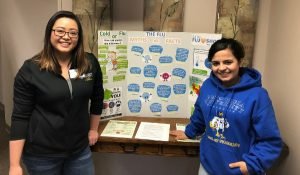
Our students also provide consultations and answer questions at a designated pharmacy table. They ensure patients are utilizing their medications safely and understand dosages. They are treating medical conditions and diseases in individuals with limited access to healthcare, and also helping provide preventative care.

More volunteer opportunities

This servant leadership class also offers pharmacy services and care to the Rohingya American Society which is located in Milwaukee. This organization serves Burmese and Rohingya refugees that fled Myanmar. One of the biggest challenges when helping this underserved population is that English is their second language. Concordia’s pharmacy students work with Hayat Pharmacy and translators to provide pharmacy-related services. The students also educate the refugees about our country’s complex pharmacy and healthcare systems through videos and printed materials.

administer covid vaccine on concordia university campus

From administering COVID vaccinations to other volunteer programs, faculty and staff at the pharmacy school are helping our community.

We are proud to have a focus on servant leadership that is developing pharmacists that do more for humankind through healthcare.