Why should you get a degree in public health?

Decide if a public health degree is worth it by listening to a current student in Concordia’s public health program. Nataysia Swopes shares her calling to serve in public health. Discover her interests within public health, and how much she has learned in her final year of the program. If you’re new to public health, don’t miss this article where we explain the basics of public health.

What interests you about public health?

My biggest interest in public health is maternal and infant mortality. Research has shown that black and brown women and children are dying at a disproportionate rate compared to their white counterparts. I feel called to improve that statistic within public health. I am a black woman that may one day have children. Several minority women and children are part of my family and friend group and I want to help keep them alive and healthy. I am passionate about advocating for others and helping people learn to advocate for themselves.

The health literacy rate in America is very low. This is defined as the ability to access, understand, and act on information and services that inform health-related decisions. If you cannot properly understand what you are hearing about your health, you cannot advocate for yourself. I want to help minorities, and all individuals, understand their healthcare options and how to fight for what they want and deserve.

What public health career do you envision for yourself?

I want to become a Certified Nurse Midwife. I am passionate about women’s health and want to serve the female population the best way I can.

The key principles of public health are prevention and health equity. Which one interests you more and why?

I would choose health equity. I believe health equity will lead to better prevention, and then that will help improve the overall health of people and the population. A lot of health complications occur because everyone is not treated equitably.

If you take a look at a community and assess their needs, you would see that there are many different social determinants of health. These social determinants keep individuals from having equitable treatment and equitable access to healthcare. I believe that people should not be scared to seek medical help and should expect to be treated fairly.

What has been your favorite public health course?

Dr. Arletta Frazier taught the course, “A Public Health Perspective on Community, Culture, and Advocacy” that I really liked. I love how open she was with her students and how comfortable she made us feel as we discussed sensitive issues regarding race and cultures.

What concentration have you chosen, community health or pre-clinical, and why?

I am on the community health track in the public health program. I’m passionate about helping people advocate for themselves, and health literacy interests me as well. I think that being on the community track is a good stepping stone for me and it has helped me to hone in on my passion. It is giving me the tools to really make a difference.

Do you participate in extracurricular activities at Concordia?

I am the Black Student Union President and I serve as a Resident Assistant in the Katharine dorm. I am an academic senator in the Student Government Organization. And I’m a Concordia cheerleader!

Now you can probably see that a public health degree is worth it because it gives you the opportunity to become a knowledgeable and influential figure in your health community.
What is an ambulatory care pharmacist

Dive into a helpful overview that will introduce you to the career of an ambulatory care pharmacy from one of Concordia’s pharmacy professors. Concordia will set you up for success as a pharmacist in the healthcare setting of your choice.

Meet pharmacy faculty

Dr. Kassy Bartelme, PharmD, BCACP, is an Associate Professor in Concordia’s School of Pharmacy and has been with the program since 2011. She earned her Doctor of Pharmacy from the University of Minnesota in the Twin Cities. Dr. Bartelme then completed a 2-year post-graduate residency with the University of Minnesota College of Pharmacy (COP). During her residency, Kassy spent time teaching in the COP and gaining experience in ambulatory care pharmacy practices. She currently practices as an ambulatory care pharmacist at Ascension Columbia St. Mary’s Cardiology Clinic in Mequon, WI.

What is an ambulatory care pharmacist?

An ambulatory care pharmacist cares for patients that go to a clinic for an appointment in an outpatient setting. These pharmacists primarily manage chronic medical conditions, such as high blood pressure, diabetes, atrial fibrillation, heart failure, asthma, pain management, mental health, and others in collaboration with physicians and other prescribers.

A key part of being a pharmacist is to ensure patient’s medications are necessary, effective, and safe. The pharmacists also evaluate the accessibility of medications and address potential adherence issues. As a specialized pharmacist, you can work in primary care clinics, outpatient disease-state management clinics in hospitals, and pharmacies. You can also provide services through telepharmacy.

What are the responsibilities of an ambulatory care pharmacist?

The pharmacist meets with the patient to discuss medications, therapy goals, and also assess for side effects or adherence issues. In this role, you may also perform physical assessments, such as blood pressure and heart rate, order labs, and assess results. The pharmacist helps patients when a condition is deemed uncontrolled or they experience side effects. This can also include helping patients that are unable to adhere to a drug regimen. It is the pharmacist’s responsibility to adjust the patient’s current medications, add new medications, and/or discontinue medications. As a pharmacist, you may need to educate patients on lifestyle changes and other nonpharmacologic ways to manage a condition. Ambulatory care pharmacists have the opportunity to create long-term relationships with patients through frequent follow-ups.

These pharmacists are also required to document each patient visits. This includes reporting subjective information (what the patient told them), objective information (labs, vitals, physical assessment results), their assessment (is the patient at goal and if not, what needs to be done), and the plan (what will be done, such as starting or discontinuing a medication, adjusting doses, ordering labs, and when to follow-up). This documentation is in the patient’s chart and is available for any other health care providers to read.

How does this pharmacy specialization serve in a cardiology clinic?

As an ambulatory care pharmacist in the cardiology clinic, Dr. Bartelme primarily manages anticoagulation for patients with atrial fibrillation or a history of blood clots. These patients take a blood-thinning (anticoagulant) medication called warfarin. She measures the effectiveness of warfarin by checking a patient’s INR (International Normalized Ratio). Dr. Bartelme also ensures the INR is within the patient’s goal range and if not, she adjusts the warfarin dose. Patients who take warfarin must have their INR checked at least every four weeks or sooner as needed. In this type of practice, she gets to know her patients well through frequent visits.

What other roles does an ambulatory care pharmacist serve?

Ambulatory care pharmacists frequently precept students and also residents. All pharmacist students must complete an ambulatory care pharmacy rotation during their Advanced Pharmacy Practice Experiences (APPE) in their fourth year. Post-graduate residents may opt to do an ambulatory care-focused residency, or complete this specific pharmacy rotation during their general pharmacy residency.

How do I become an Ambulatory Care Pharmacist?

First, you must receive a Doctor of Pharmacy (PharmD) degree. In general, pharmacists complete one to two years of post-graduate residency. You can complete a focused ambulatory care residency in your first year or as a specialized second-year residency. You may also earn board certification and add the letters BCACP after your name (Board Certified Ambulatory Care Pharmacist). After residency, you take a test to become a Board-Certified Ambulatory Care Pharmacist. To maintain your certification, you need to earn 100 hours of continuing education every seven years, or you can simply retake the test.

Why Concordia for pharmacy school?

Concordia’s school of pharmacy will help you discover the area of pharmacy that best fits your skills and interests as a healthcare provider. You might know from year one how you want to serve in pharmacy, or maybe you find out later on during your pharmacy practice experiences. Whatever your path, the coursework, patient labs, and experiential education will advance your abilities, knowledge and compassion to provide pharmacy services.

Want more information on this pharmacy specialization?

Contact Dr. Kassy Bartelme about her work as an ambulatory care pharmacist. She can also give you more details on our manageable and patient-centered pharmacy school.

Pharmacy students volunteer in underserved communities

Choosing to become a pharmacist represents a dedicated commitment to healthcare. And with that commitment comes the responsibility to provide optimal care to every patient. Concordia’s School of Pharmacy teaches students how to apply their skills and compassion by volunteering in communities. Developing pharmacists that are servant leaders is actually in our mission statement. Our pharmacy students participate in volunteer work from orientation week until graduation.

Pharmacists help others

It’s clear from the title of this elective class, Servant Leadership, that we get pharmacy students to engage in the community. This pharmacy class is taught by Professor James Lokken who is a Concordia alumnus. Dr. Lokken has established relationships with Milwaukee area non-profit organizations that serve underprivileged communities and are in need of pharmacy-related services.

This class also requires students to support a cause important to them or even help launch a new healthcare-related program. Dr. Lokken wants to develop gratitude and empathy in the students which will benefit their pharmacist careers and personal lives.

Community Outreach

free monthly pharmacy services at city on a hill

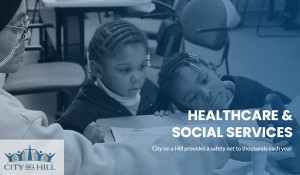
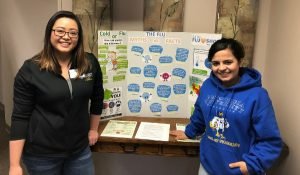
The pharmacy students in this servant leadership class go to City on a Hill every second Saturday of the month. At this time, they provide services and support during the monthly neighborhood health outreach. City on a Hill is on a mission to end poverty in all its form; currently, 20% of the individual they serve are homeless. This non-profit organization wants to restore hope, strengthen families and neighborhoods, and work for justice.

While there, comprehensive medical services are available to the individuals that visit. Everything from doctor visits to pharmacy services, dental screenings, and more is on-site. This service project is giving our students first-hand pharmacy experiences, and a deeper understanding of the healthcare challenges for underserved and mostly unreached populations.

How we help

Concordia’s pharmacy students assist with the inventory and quality control of medications. This involves verifying the safety and effectiveness of donated or expired pharmacy drugs. Students also get to practice therapeutic interchange where they evaluate prescribed medications to see if they can be utilized in a different way. They are working to expand the scope of the medications and help more people.

Our students also provide consultations and answer questions at a designated pharmacy table. They ensure patients are utilizing their medications safely and understand dosages. They are treating medical conditions and diseases in individuals with limited access to healthcare, and also helping provide preventative care.

More volunteer opportunities

This servant leadership class also offers pharmacy services and care to the Rohingya American Society which is located in Milwaukee. This organization serves Burmese and Rohingya refugees that fled Myanmar. One of the biggest challenges when helping this underserved population is that English is their second language. Concordia’s pharmacy students work with Hayat Pharmacy and translators to provide pharmacy-related services. The students also educate the refugees about our country’s complex pharmacy and healthcare systems through videos and printed materials.

administer covid vaccine on concordia university campus

From administering COVID vaccinations to other volunteer programs, faculty and staff at the pharmacy school are helping our community.

We are proud to have a focus on servant leadership that is developing pharmacists that do more for humankind through healthcare.