Concordia University Wisconsin continues to contribute to important conversations shaping the future of technology, business and innovation in Wisconsin.
Most recently, Michael Litman, professor of computer science, was featured in the Milwaukee Business Journal as part of a panel of experts discussing the rapidly evolving AI data center frontier and the opportunities and challenges tied to Wisconsin’s growing data center development efforts.
The panel explored how data centers can positively impact local communities, the importance of long-term financial planning and infrastructure forecasting, and why Wisconsin is emerging as a leading destination for large-scale data center projects.
This latest feature follows Litman’s March contribution to the Milwaukee Business Journal, where he authored an article examining the intersection of artificial intelligence, data centers, and the future of technological growth.
As conversations around AI infrastructure continue to accelerate nationwide, Concordia University Wisconsin remains committed to engaging thoughtfully with emerging industries and preparing students and communities to lead with wisdom, innovation, and purpose.
CUW’s mission is to help students develop in mind, body, and spirit for service to Christ in the Church and the world.
Want in?
Concordia University Wisconsin is a Lutheran higher education community committed to helping students develop in mind, body and spirit for service to Christ in the Church and the world.
At first glance, computer science and music may seem to have little in common.
After all, computer science centers on technology and data, while music is rooted in creativity and performance. But for 2026 Concordia graduate Timothy Conner, pursuing both music and computer science has been a rewarding way to combine his creative and analytical interests.
Conner, a native of Manning, Iowa, graduated summa cum laude after earning both his bachelor’s and master’s degrees in computer science through the Computer Science Scholars program. He concentrated on cybersecurity and plans to pursue a career in information technology after graduation.
Outside of the classroom, Conner engaged his music side by performing as a member of the Wind Ensemble and Pep Band, and serving as an organist in Concordia’s Chapel of Christ Triumphant as well as Beautiful Savior Lutheran Church in Mequon.
During his search for the right university, Conner knew it had to offer opportunities in music and computer science. “As I love and enjoy both Computer Science and music, my future college not offering both was a deal-breaker for me,” he said. “While at Concordia, in addition to my major-specific classes, I have been blessed to be able to take music theory and music history classes as well.”
Computers since a child
Conner said he “has always enjoyed using computers to solve problems.” He’s been using and studying them since he was just a child, so it makes sense that he would pursue a degree and career in computer science as an adult.
“When I was young, I loved to dissect old computers to see what was inside, as well as see what exciting things I could do with old computers, such as a file server or a media server,” he said. And when it came to his 10th birthday, a fond memory includes requesting a cake with a circuit board design. Quite apropos for the budding computer scientist.
His interest in cybersecurity developed over time. It wasn’t until one summer when he realized he actually enjoyed it. That’s when he discovered the “Security Now” podcast with cybersecurity guru Steve Gibson. “I could not only listen to (it) without falling asleep, but I actually really enjoyed it,” Conner said.
Music and worship on campus
Serving as an organist helped shape Conner’s faith and college experience while deepening his appreciation for the meaning and richness of hymnody and liturgy. This ministry, along with his extracurricular experiences—from hackathons to ping-pong—allowed Conner to connect with others at Concordia, the majority of whom were studying completely different subjects.
“College is not only about the classes taken, although Concordia’s curriculum is designed to produce well-rounded graduates,” Conner said. “Taking the time to step out and participate in events has allowed me to have conversations and experiences that will stay with me well after my final exams are finished.”
While the classroom played an important role, Conner said it was the relationships he built and the experiences he embraced that truly shaped him into the person he is today.
A look ahead
What Conner appreciates most about pursuing a future as a systems administrator is the opportunity to build a career doing something he both loves and excels at.
“Information technology and computer science are so fascinating in that, as technology continues to advance, there are always new problems to solve and challenges to overcome,” Conner said. “One of the reasons I decided to focus more on information technology and systems administration is, in this field, I have the privilege of directly interacting with and supporting end users as they carry out their vocations, which can be anything from metal stamping to food service to accounting.”
Dr. Gary Locklair, computer science professor, said he will remember Conner as “an exceptional student who has excelled at both computer science and music. Timothy accepts nothing at face value, but questions everything in order to understand the concepts and then apply that knowledge well.”
He added: “Computer science is a vocation where we love and serve our neighbor by creating true, beautiful and good computer systems. Timothy has internalized the vocational aspect of computer science. He will be an excellent computer scientist who considers people the most important aspect of his technological endeavors.”
Other notables
Conner’s parents also attended CUW, where they married in the chapel.
He participated in English Contra Dancing, an unofficial group at CUW. According to Wikipedia, Contra dancing is a social, community-focused folk dance where couples form two long, parallel lines, facing a partner.
He loved “rounding up friends to play ping-pong as a study break.”
Conner participated in “hackathons” on campus.
Whenever possible, he took advantage of opportunities to attend CUW plays, musicals, and events on campus, especially those put on by Philosophy Club.
At a glance
Who has made the biggest impact on your college journey? My fiancée, Allis. She has taught me that there is more to life than studying and homework; all the cool people are in Chapel Choir; and that coffee makes the world go round.
If your life had a theme song right now, what would it be? I’ve got to go with a classic here: “The Final Countdown,” by Europe. Graduation, preparing to work full-time, and marriage coming up…I am counting down the days!
What’s your go-to comfort food when you need a pick-me-up? A wrap at the Landing with sriracha mayo, tuna, provolone, and spinach, lettuce, olives, and onions. It’s just good. Somehow, Siobhan at the Landing manages to fit it all in the wrap.
If you could teleport anywhere for a weekend getaway, where would you go? My brother, who is studying to be an auto mechanic up in northern Iowa, has been visiting some beautiful parks in South Dakota. If I could teleport anywhere, I’d head over there and join him for an outing for a day.
What’s something small that never fails to make you laugh or smile? I love seeing comfort dogs walking around campus. It is quite a nice change of pace to see them around!
Editor’s note: This is one in a series of stories highlighting a few Concordia’s uncommon graduates. Faculty and staff submit candidates for consideration. Stories are posted in the days leading up to or after commencement. View more uncommon graduates here.
Want in?
Concordia University Wisconsin is a Lutheran higher education community committed to helping students develop in mind, body and spirit for service to Christ in the Church and the world.
One piece of advice stuck with 2026 Concordia graduate Noah Roitman throughout his four years of school, and it came from his mom: “You are more than just an athlete.”
Roitman, who hails from Inver Grove Heights, Minn., graduated magna cum laude and earned a bachelor’s degree in Investments & Corporate Finance. Known for excellence in the classroom, he has also distinguished himself on the ice.
“The moment Noah became a Falcon, he wanted to help build the hockey program and to get himself in a position to pursue professional hockey,” said Nate Eminger, associate head coach of Concordia’s men’s hockey team.
Built through discipline
Throughout his life, Roitman has logged a lot of play and practice time as a hockey player. Prior to college, Roitman spent three seasons splitting time between the NAHL and NA3HL, most notably with the Rochester Grizzlies, where he was named NA3HL Defenseman of the Year and won a league championship in 2021–22.
Then his path led him to play NCAA hockey at the university that helped shape him into a leader.
“After finishing my junior hockey career, I was looking for a place where I could grow in my faith, get a strong business education, and live in a great city that would give me real opportunities after college. I also wanted to keep playing hockey at a high NCAA level,” Roitman said. “Concordia checked all of those boxes and felt like the right fit for me.”
Over the course of his Concordia career, Roitman appeared in 106 games and totaled 35 points with seven goals and 28 assists.
But Roitman’s career on the ice doesn’t end with Concordia. He recently signed with the Macon Mayhem, Georgia’s professional hockey team and part of the SPHL. “When the conclusion of my senior season on the men’s NCAA hockey team (at CUW) ended, I had the opportunity to play professionally, which was an incredible experience and something that I had worked toward for a long time,” Roitman said.
Preparing for purpose
Despite his obvious successes in hockey, Roitman said he was “never someone people expected to go far in hockey or in other areas.”
“So, I developed a strong work ethic early on because I knew I was the only one who could truly influence my path,” he explained. “That mindset carried through my hockey career after high school, in the classroom, and even financially. Because of that, I have learned to push myself in my studies the same way I do in hockey, staying disciplined and trusting that the hard work will pay off. I always remind myself that there’s a light at the end of the tunnel, which keeps me motivated to keep going.”
And did he keep going.
In addition to playing hockey at Concordia, being an assistant captain on the team and graduating magna cum laude, he served as vice president of the Student Government Association, which taught him “how to serve others and understand different perspectives to make the best decisions.”
He added: “I learned that good leadership is not just about having a voice, but about listening and putting others first. (My) experiences have taught me that success is not just about personal achievements, but about making a positive impact.”
Ready for more
All of his pursuits—on campus and off—have prepared Roitman for graduation, a career and, as his mother says, a life of being more than just an athlete.
“I have seen Noah grow from a young adult to the very mature person he is today. He has a passion to lead, and he has led by example on the ice, in the classroom, and in the business world,” Eminger said. “Noah has a bright future and I am glad we are able to help guide him here at CUW.”
At a glance
1. Who has made the biggest impact on your college journey? My mom and dad, Wade Pruitt, Dr. Tom Scholz, Aaron Siekmann, and Beth Kern have had the biggest impact on my college journey.
3. What’s your go-to comfort food when you need a pick-me-up? Steak dinner or Chipotle
4. If you could teleport anywhere for a weekend getaway, where would you go? My friend’s lake cabin in Minnesota
5. What’s something small that never fails to make you laugh or smile? My family and friends
Editor’s note: This is one in a series of stories highlighting a few Concordia’s uncommon graduates. Faculty and staff submit candidates for consideration. Stories are posted in the days leading up to or after commencement. View more uncommon graduates here.
Want in?
Concordia University Wisconsin is a Lutheran higher education community committed to helping students develop in mind, body and spirit for service to Christ in the Church and the world.
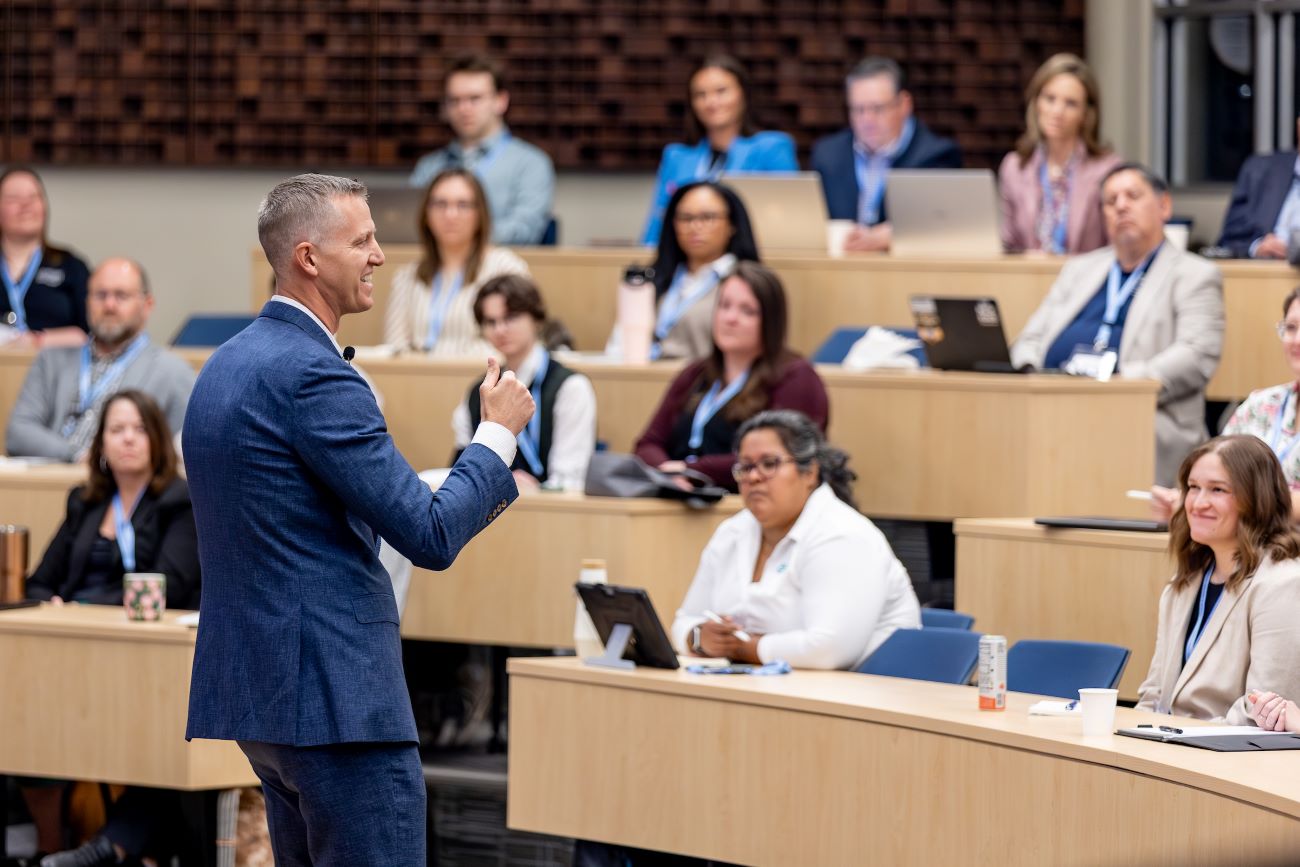
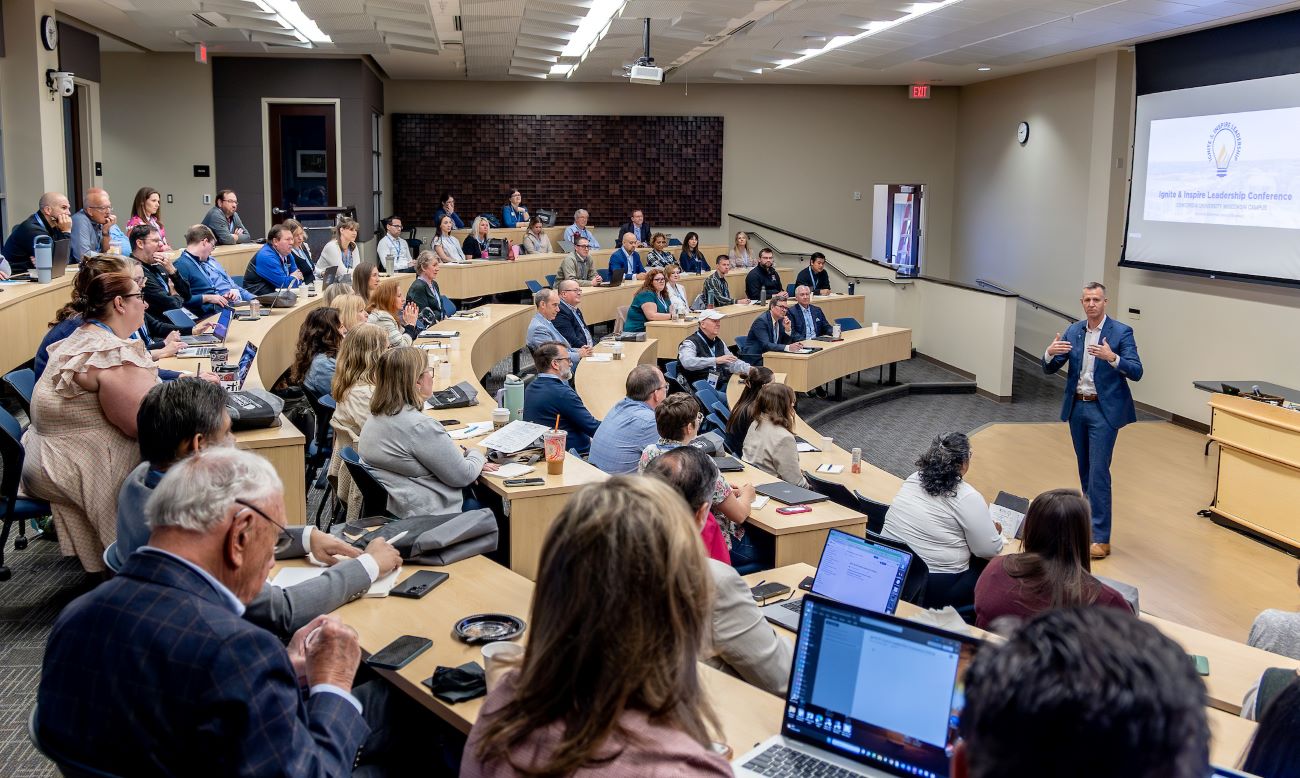
Dale Kooyenga’s keynote speech at the third annual Ignite & Inspire Leadership Conference left attendees with more than just inspiration—it left them motivated.
In a time shaped by artificial intelligence, smartphones, and endless digital content, the ability to think independently and read a physical book from cover to cover has never been more important. In fact, one of the most impactful statements Dale Kooyenga made during the conference was simple: “Your phone is the enemy.”
Kooyenga, president and CEO of the Metropolitan Milwaukee Association of Commerce and a current School of Business board member, delivered an hour-long presentation at the conference, hosted by the Batterman School of Business in CUW’s pharmacy building. What began as a memoir of his life evolved into a lesson on leadership in today’s economy.
As a growing regional leader in business education, the Batterman School of Business prepares future professionals not only with the hands-on skills needed to enter their chosen fields, but also with the mindset to become strong industry leaders. One way the school accomplishes this is through its network of professionals who come to campus to share their experience and knowledge with students and community leaders alike.
“The Concordia Batterman School of Business wants to be a resource and a destination for area businesses, their executives, employees and their families,” said Dean Rennicke, assistant dean for external relations. “Kooyenga’s willingness to serve on the Batterman School of Business Advisory Board helps connect our students and faculty with leaders in the business community while giving us insight into the needs of regional employers.”
From basketball benchwarmer to CEO
At 21 years old, Kooyenga dreamed of playing college basketball. In front of conference attendees, he joked about his struggles with the sport during high school and college, which eventually led him to shift his focus toward accounting. After earning his CPA from Lakeland University, he worked at KPMG for a decade before spending 12 years as CFO of a startup company.
While building his accounting career, the Sept. 11 terrorist attacks occurred. Kooyenga recalled exactly where he was at that moment, as many people still can. Having recently moved into a new apartment on Milwaukee’s east side, he remembered yelling to his roommates, “America is being attacked.”
“That day changed everything for me,” he said.
He felt called to enlist in the Army. With a deep conviction to serve, he deployed to Iraq. He later worked as an economic officer using his accounting and business background.
“One lesson from Iraq stayed with me forever: War is not just about combat. It’s about rebuilding communities,” he said. “Those experiences changed how I viewed leadership, sacrifice and purpose.”
He has served for more than 21 years in the U.S. Army Reserve and currently holds the rank of lieutenant colonel. He also spent eight years in the Wisconsin State Assembly and four years in the Wisconsin State Senate.
Today, he is president and CEO of MMAC, representing more than 2,000 businesses and 300,000 employees across southeastern Wisconsin.
Why are we doing this?
After sharing a bit about his life’s journey, Kooyenga, in a behind-the-scenes interview, shared an important message about what is needed from the next generation of leaders.
He said they need to be able to adapt, create and innovate.
Using artificial intelligence as an example, Kooyenga explained that AI is only as good as what it is querying. He called it “Garbage in, garbage out.” A term used to explain that the quality of output is only as good as the quality of input.
Workers need to constantly evaluate how their work can improve. “The next generation has to constantly think about productivity. How can I get more out of what I’m doing?” Kooyenga said. “Working harder matters, but working smarter matters more.”
Artificial intelligence is a tool that helps workers move beyond mundane tasks and focus on innovation, he explained.
Five tips for today’s leaders
To “win” in the professional world, Kooyenga said people need to be smart, adaptable and intentional about how they grow. He shared five lessons that have guided his own career.
No. 1 and No. 2: Build experience and maintain balance Kooyenga encouraged attendees to build expertise in multiple areas rather than becoming narrowly focused on a single discipline. Exploring different industries is valuable, he said, but constantly jumping from job to job without direction is not.
“Every industry has its own language,” he noted. People should not be afraid to build expertise in one area while continuing to explore others.
“You have to develop the networks and the knowledge,” he said. “Simultaneously try to create expertise, network, knowledge, dive in—all while not being afraid to experience other industries and lay that on top of that.”
“I put 10,000 hours into politics. I put 10,000 hours into the Army, and I’ve put 10,000 hours into my CPA career,” he said.
He also emphasized maintaining balance outside of work through what he called the “four-legged stool” of life: physical health, intellectual growth, relationships and community, and spiritual grounding.
Without one of those areas, he said, balance becomes difficult to maintain.
No. 3: Read constantly Kooyenga remembers the moment his principal caught him reading Stephen King’s It during a Christian junior high assembly. After passing the book among classmates and drawing their attention to an inappropriate section of text, the incident ended with a phone call home to his parents.
What happened next shaped his relationship with reading for the rest of his life.
“I remember coming home, and my dad tossed a book at me and said, ‘Keep reading, don’t bring it to school,’” Kooyenga said. “And I think that was the right answer because I subsequently got into the classics, and now I read Christian stuff and C.S. Lewis.”
For Kooyenga, the lesson was simple: keep reading.
“I didn’t want to read what they told me to read. I just wanted to read my own stuff,” he said.
He described himself as “not a very good high school student” with a 2.9 GPA, but said he was an avid reader growing up and remains one today. Now, he finishes approximately 50 books a year across a wide range of subjects.
No. 4: Communication matters Kooyenga encouraged attendees to approach conversations with curiosity instead of trying to prove something. He said leadership is about listening more, learning constantly and treating networking as a service rather than extraction. Suggested reading: The Next Conversation by Jefferson Fisher.
No. 5: Meaningful work and meaningful relationships Kooyenga referenced Harvard professor and social scientist Arthur Brooks, whose research focuses on happiness. He encouraged attendees to evaluate how they spend their time and whether those activities contribute to meaningful work or meaningful relationships.
Concordia University Wisconsin is a Lutheran higher education community committed to helping students develop in mind, body and spirit for service to Christ in the Church and the world.
For Rishi Preetham Sanagala, the journey to Concordia University Wisconsin began with a dream—and became something far greater.
Originally from India, Sanagala came to the United States with a clear goal: to pursue graduate studies in computer science in a place known for innovation and advanced research. After learning about Concordia through family and attending a faculty-led webinar, he quickly saw the potential.
“I felt that Concordia would be the ideal place to develop my technical expertise, explore cutting-edge technologies, and achieve my academic and professional goals,” he said.
Now a Concordia alumnus, Sanagala earned his master’s degree in December 2025 with a specialization in business data applications, building a strong foundation for his future in the field.
Discovering a place to grow
What stood out most to Sanagala was Concordia’s balance of innovation and community.
“Concordia provides the right environment to stay ahead in technology,” he said. “The combination of hands-on learning, research-driven education, and a close-knit academic community made it the perfect place for me to grow.”
That sense of connection was evident from the beginning—not only in his own experience, but in how others responded to him.
According to Dr. Michael Litman, professor and chair of the Department of Computer Science, Sanagala quickly emerged as a leader among his peers.
“From day one, he was a leader among a very large group in our master’s program. This was a year with 300+ new students, all from Hyderabad, India, and Rishi immediately became someone they turned to,” Litman said. “During his time at CUW, he was very involved in activities around campus and with other students. He was the easy choice for graduate assistant in our program and took pride in the work he did.”
When Sanagala first arrived, that sense of belonging was immediate.
“The moment I entered the campus, I was amazed by its beautiful environment and peaceful atmosphere,” he said. “It immediately felt like a place where I could grow both academically and personally.”
Learning beyond the classroom
At Concordia, Sanagala discovered that education goes beyond theory.
“What I really appreciated is that learning here is not just about theory—it’s about becoming a better thinker, problem solver, and professional,” he said.
Through hands-on projects, collaboration, and faculty mentorship, he connected classroom concepts to real-world impact. His professors played a key role in that growth.
“They didn’t just make me a better student. They helped me become a better thinker and problem solver,” he said. “They encourage creativity, critical thinking, and collaboration, and guide us to understand the real-world impact of what we learn.”
That leadership extended beyond the classroom. Sanagala played an active role in the computer science club, where he led workshops and helped other students build technical skills.
“Rishi was among the leaders in our CS club and led multiple workshops in various technical areas,” Litman said. “He was someone who brought folks together and wanted to do a great job for them.”
Leading innovation on campus
Sanagala’s passion for emerging technology led him to the AI & Quantum Innovation Lab, where he contributed to innovative, real-world solutions.
He quickly embraced opportunities to collaborate across disciplines, working with students and faculty from multiple departments to bring ideas to life.
“Rishi immediately took advantage of the AI & Quantum Innovation Lab by collaborating on projects across multiple departments and schools on campus,” Litman said.
One of his standout projects is an Agentic AI system that allows students to submit 3D printing requests through a conversational interface, simplifying what was once a manual process.
“It simplifies workflows and improves efficiency for both students and lab staff,” Sanagala explained.
He also worked on a conversational AI tool to support language learning, helping students engage in real-world dialogue.
“The goal of the lab is to create a space where students can explore, build, and collaborate,” he said. “It’s about turning ideas into impactful solutions.”
Growing in purpose
Beyond technical growth, Sanagala’s time at Concordia shaped his sense of purpose.
“That holistic approach helped me grow as a well-rounded individual,” he said. “It taught me to see technology not just as a tool, but as a way to serve others and make meaningful contributions.”
“Technology isn’t just about innovation,” he added. “It’s about solving real problems and improving people’s lives.”
A transformative experience
Before graduating, Sanagala secured a full-time role with a global banking software company, where he now continues building impactful solutions.
But when asked to describe his Concordia journey in one word, his answer reflects something deeper.
“Transformative. Before coming here, I was passionate but unsure of my potential,” he said. “Concordia helped me discover it. It gave me the confidence to push boundaries, take initiative, and grow beyond academics.”
His story reflects Concordia’s mission to develop students in mind, body, and spirit, preparing graduates to lead with purpose and make a meaningful difference in the world.
Want in?
Concordia University Wisconsin is a Lutheran higher education community committed to helping students develop in mind, body and spirit for service to Christ in the Church and the world.
Brooke Trendel didn’t always know exactly what she wanted to do, but she always knew two things: she loved sports, and she wanted to help people.
Growing up in Waukesha, Wisconsin, she spent her childhood immersed in athletics, playing basketball and soccer and staying active year-round. But it wasn’t until an injury in high school changed her path that everything began to come into focus.
“I dislocated my shoulder twice,” she said. “I had to get surgery, and I was out for about five months.”
That recovery process introduced her to something new. While rehabbing, she began shadowing her high school athletic trainer.
“I just fell in love with it,” said Trendel, who is graduating with a Master of Science in Athletic Training. “It’s sports and helping people combined into one. That’s exactly what I wanted to do.”
It was a turning point that would ultimately lead her to Concordia.
Finding the Right Fit
Concordia offered a strong reputation in athletic training, an accelerated program, and early immersion in the major.
“They jump you into your classes right away,” Trendel said. “And the reputation really precedes the school.”
There were other factors, too—proximity to home, the campus environment, even the view of Lake Michigan. But what mattered most was the sense that she had found the right place to grow.
From Student to Professional
During her time at Concordia, her commitment to her studies led to one of the most competitive and defining experiences of her college career: securing the Milwaukee Brewers athletic training internship.
“I was floored when I got it,” she said. “I went to my dorm room and I was like, ‘I can’t believe it!’ Because growing up around here, I went to Brewers games. I was so excited.”
The opportunity didn’t come easily. After being turned down the first time she applied, Trendel leaned into feedback, worked closely with faculty mentors, and tried again.
“The second time, it went my way,” she said.
What followed was a full season embedded with a Major League Baseball organization, an experience that helped shape her understanding of the profession. From early afternoons preparing the training room at American Family Field, to late nights focused on player recovery, the work was intense and constant.
“Every home game, I was there,” she said. “We had a lot to do before the game and then a little bit afterwards, but it was super fun. I felt like I became a different student after the internship, and I fell in love with the sport. I fell in love with the intensity of it.”
Brooke Trendel leads a patient through athletic training exercises.
Memories with the Brewers
She was part of the Brewers’ historic 2025 season, highlighted by 97 regular-season wins and a dramatic Game 5 playoff victory over the rival Chicago Cubs in the National League Division Series.
“The champagne showers after we beat the Cubs,” she said. “That’s something I’ll never forget.”
There were moments, too, when she felt fully part of the clubhouse. During one stretch, players Christian Yelich and Trevor Megill jokingly challenged her to sing the national anthem in front of the team.
“It just showed how welcoming they were,” she said.
She quickly discovered that athletic training at the professional level is very much about relationships and routine.
“Players all have their routines, and we’d help them out with those routines,” she said. “You’re helping them prepare, recover, and stay ready every single day.”
Saving a Life
While her work with the Brewers highlighted her growth in sports medicine, another moment revealed something deeper: her readiness under pressure.
For four years, Trendel has worked as an EMT, balancing coursework, clinicals, and long shifts in emergency response. That experience proved critical one evening on Concordia’s campus.
When she arrived, others had already begun CPR. Trendel stepped in alongside fellow students and campus safety officers, continuing life-saving efforts and helping apply a defibrillator. The situation was dire. The student had flatlined multiple times and spent days in a coma before beginning a long recovery. Against all odds, he survived.
Later, seeing him walking again brought the moment into full perspective for Trendel.
“Sometimes as an EMT, you don’t get to see the after effects of what you do,” she said. “But seeing him walking around was really great to see and very gratifying.”
Brooke Trendel was among a group of first responders who were honored for saving a student’s life.
The Path Forward
Trendel credits much of her journey to persistence and to faith. There were setbacks along the way, including early rejections while applying for professional roles. But each moment, she said, ultimately led her where she was meant to be.
“There’s a reason for everything,” she said. “Looking back, the timing worked out exactly how it was supposed to.”
That perspective carried her through the next major step in her journey: securing a position after graduation with the Houston Astros organization.
After months of applications, interviews, and networking, she received an offer to join the Corpus Christi Hooks, the Houston Astros’ Double-A affiliate in Corpus Christi, Texas. Just days after graduation, she will relocate to begin her role, stepping fully into the professional world she has worked toward for years.
“They were willing to hold a spot for me,” she said. “I was so grateful.”
Faith and Resilience
Looking ahead, Trendel hopes to continue working her way up through professional baseball, with the long-term goal of reaching the major leagues. In addition she wants to continue as a role model for women in what is a traditionally male-dominated field.
“I knew I could always rely on God in moments of need,” she said. “There would be hard times where I was kind of burnt out from everything I’d be going through, but no matter what was going on, whatever high stress was going, I always knew this is part of God’s plan, and he’s going to set you on the right path.”
Editor’s note: This is one in a series of stories highlighting a few Concordia’s uncommon graduates. Faculty and staff submit candidates for consideration. Stories are posted in the days leading up to or after commencement. View more uncommon graduates here.
Want in?
Concordia University Wisconsin’s Master of Science in Athletic Training program combines classroom learning with extensive clinical experience to prepare students for careers in sports medicine. The CAATE-accredited program equips graduates with the skills needed to pass the Board of Certification exam and work in a variety of healthcare and athletic settings.
“As a friend’s dad often says, ‘With every close of a season in life, there’s a lot of sadness. You kind of grieve that moment. But each new season gets better if you look for it.’”
For Mikayla Sells (’26), graduating with a bachelor’s degree in business management, a minor in marketing and an MBA through the Business Scholars program, postgraduation life feels bittersweet. Over the past four years, she intentionally shaped her experience to grow as a leader and build her professional network.
Through campus involvement, internships, and faculty mentorship, she built a strong portfolio of experience and connections.
“Each year, I learned how to prioritize so I could do everything well instead of overextending myself,” Sells said. “I’m excited to take what I’ve learned and bring it into the professional world.”
Sells recently completed an internship with Robert W. Baird, an employee-owned financial services firm. As part of its conference team, she assisted with event planning, supported client experiences, and contributed to business operations.
Looking ahead, she is exploring careers in event management and marketing coordination.
“I have been blessed with a few opportunities for postgrad,” Sells said. “I am looking forward to all that God has in store.”
She will begin full-time this May as an event manager at Tripoli Country Club—a path chosen with clarity and purpose, shaped by the lessons she carried with her each year at Concordia.
Growing as a leader
From left to right names are: Micah Hoehner, Jenna Piwowarcyk, Mikayla Sells, Noah Roitman and Aaron Fritz.
Sells’ time at CUW has played a meaningful role in shaping her future aspirations. She began her involvement with the Student Government Association during her freshman year as a senator. As a sophomore, she led SGA’s PR and social programming committee. By her junior year, she stepped into the role of chief administrative officer, culminating in her service this year as the SGA president.
Sells said her time in SGA has had a lasting impact.
“Student Government has been a blessing throughout my time at Concordia,” she said. “It has shaped me as a leader, connected me with students and faculty across disciplines, and opened doors to serve others. More importantly, it has given me the opportunity to lead with purpose and be a light for the Lord.”
Learning through experience
Her path to Concordia was also influenced early on by the Business Scholars program, which she first learned about through a cousin who previously attended CUW. The program initially drew her to CUW and quickly became a defining part of her college experience.
“I think God really worked things out very beautifully, because Concordia just kind of fell into place exactly when I needed it to,” said Sells. “God really was faithful in that season.”
Sells continues to give back to the program that first drew her in. She serves on the Business Scholars board and previously held the role of president for two and a half years, beginning in just her second semester as a freshman.
In that role, she learned from working with faculty members such as Dr. Scott Niederjohn, dean of the Batterman School of Business, to plan events such as an etiquette dinner and a personal branding dinner—both designed to prepare students for professional settings.
During her sophomore year, Sells studied abroad in London.
“It was really impactful for a lot of students,” she said. “It also helped grow my interest in event planning.”
Niederjohn said Sells has taken full advantage of every opportunity CUW has offered and has emerged as a campus leader.
“She is not only respected by her fellow students, but also by faculty and staff in the Batterman School of Business for her dedication and strong work ethic,” he said.
“I’ve been especially proud to watch her grow from a quiet freshman in my microeconomics class into a leader in SGA, a student who has studied abroad, and someone who is at the center of so much happening on campus.”
A voice for campus
As for her experience in marketing and communications, Sells was involved in CUW’s marketing department for three years and also spent two years on the staff of the student newspaper, the Beacon.
“Sells immediately stood out as a natural leader and effective communicator, skills she has developed and honed while serving in the many roles she’s held on campus—from working alongside me on the student newspaper to her current position as SGA president,” said Dr. Marnie Lawler McDonough, assistant professor of communications. “She leads with confidence, generosity, and a true servant spirit. Her compassionate and perceptive nature allows her to understand the needs of others. She is a committed student and professional, as well as a dedicated friend and colleague. I am so proud of her many accomplishments, and I know she will continue to excel wherever her path leads after graduation.”
Ready for the next step
From left to right: Ellie, Mikayla and Lauren, sisters.
With experience across business, marketing, and event planning, Sells has positioned herself for a range of job opportunities.
“It’s been really fun to be in lots of these different positions,” Sells said. “I do think it’s true of many Concordia students that we tend to overwork ourselves a little bit, but in the long run, I think it works out in our favor. Over the years, it does sound like a lot that I have done, and there were certain years when it was too much.”
She added that she has had strong support, especially from her parents and her younger sister, Ellie, whom she calls a younger version of herself.
Sells is also grounded in her faith and calls her church, StoryHill, one of her favorite places. It’s where she has built a strong sense of community.
“It’s one of my favorite parts of my week. I make the drive every Sunday to be with fellow believers and to enjoy time with the Lord,” she said.
With strong prioritization skills, Sells is ready to enter the workforce, though there is a particular sadness that accompanies any major life transition.
She chose the word “bittersweet.”
“I’ve loved my time here. I’ve loved the people I get to meet and the routine that I’ve kind of set for myself,” she said. “It’s going to be very different entering adulthood in the working world.”
At a glance
Who has made the biggest impact on your college journey? My friends Mya and Brigid
What does graduation mean to you in one word or phrase? Tenacity
If your life had a theme song right now, what would it be? “Happy & Sad” (Kacy Musgraves)
What’s your go-to comfort food when you need a pick-me-up? Sushi
If you could teleport anywhere for a weekend getaway, where would you go? New Zealand
What’s something small that never fails to make you laugh or smile? Catching a sunset
Editor’s note: This is one in a series of stories highlighting a few Concordia’s uncommon graduates. Faculty and staff submit candidates for consideration. Stories are posted in the days leading up to or after commencement. View more uncommon graduates here.
Want in?
Concordia University Wisconsin is a Lutheran higher education community committed to helping students develop in mind, body and spirit for service to Christ in the Church and the world.
Concordia University Wisconsin will host its Annual Parish Nurse and Congregational Health Ministries Conference on May 13–14, welcoming parish nurses, pastors, lay ministers, and others engaged in health ministries and Christian caregiving.
Centered on the theme, “Living Well,” this year’s conference draws inspiration from Deuteronomy 5:33: “Walk in obedience to all that the LORD your God has commanded you, so that you may live and prosper and prolong your days in the land that you will possess.”
The conference is designed to equip and encourage those serving in health and ministry roles within their congregations and communities. Attendees will have opportunities to learn from experienced pastors, nurses, and Christian caregivers, while also building connections with peers and sharing valuable resources.
Equipped to serve
Dr. Carol Lueders Bolwerk
This annual gathering reflects Concordia’s mission as a Lutheran higher education community committed to developing individuals in mind, body and spirit for service to Christ in the Church and the world.
“This conference creates space for connection, learning, and shared purpose,” said Dr. Carol Lueders Bolwerk, director of Parish Nursing and Congregational Health Ministries at CUW. “Together, we strengthen one another to better serve our congregations and communities through Christ-centered care.”
Event details
Dates: Wednesday, May 13, 2026, and Thursday, May 14, 2026
Cost: $100 per day
Those interested in attending are encouraged to complete a registration form and submit it along with payment to:
Dr. Carol Lueders Bolwerk Concordia University Wisconsin Parish Nursing and Congregational Health Ministries 12800 North Lake Shore Drive Mequon, WI 53097
Concordia University Wisconsin is a Lutheran higher education community committed to helping students develop in mind, body and spirit for service to Christ in the Church and the world.
Heather Kelley (’26) is graduating with her master’s degree in nursing, supported by her professors, faith and family.
Shortly after Heather Kelley began the Master of Science in Nursing program in March 2023, her son Kaleb—4 years old at the time—was diagnosed with acute lymphoblastic leukemia. The question quickly became unavoidable: How could she manage life’s challenges while pursuing a demanding academic program?
“God answered my prayer,” Kelley said. “It hit me kind of out of nowhere. If I quit now, what am I showing my 4-year-old son?”
She knew, deep down, that this was a defining moment—not only for her, but for him.
“It was literally life or death for him, so I stuck with it, and now I’m glad I did,” Kelley said.
Facing unexpected challenges
This was not the only challenge her family faced. Her 15-year-old, Kameron, began experiencing mental health issues and attempted suicide. Her husband was also diagnosed with skin cancer, and Kelley herself discovered she was carrying a breast cancer gene.
Through it all, she stayed in close communication with her professors. “They were just like, oh my gosh, what else could you be going through?” she said. She continued forward with God’s grace, meeting each challenge as it came. Still, there were decisions she had to make.
“I can’t hear the word cancer in this house again right now, so I elected to undergo a double mastectomy and experienced complications. What was supposed to be two pretty easy surgeries turned into four,” Kelley said.
Looking back on this time, Kelley says she can finally breathe. It was a difficult season, one that tested her in new ways, but she never felt alone. Her professors remained in touch. “I felt very supported at Concordia throughout this whole experience,” Kelley said.
Jennifer Nicpon, DNP, FNP-BC, DCNP, APNP, assistant professor in the School of Nursing, said, “Despite facing significant challenges, Kelley remained steadfast in her dedication and focus, never wavering from her calling to become an advanced practice nurse. Guided by her faith and commitment to serving others, she continually listened for God’s direction. She is both knowledgeable and compassionate, and her future patients will be truly blessed to have her on their care team. Her strength is an inspiration to those around her.”
As a caregiver
Even in the midst of her own challenges, Kelley remained grounded in her faith and her commitment to others.
As a mother of four, she is no stranger to caring for others, especially during difficult times. She has also been a registered nurse since graduating with her RN in 2017, followed by her BSN in 2020. Kelley believes in lifelong learning. She was originally premed when she met her husband.
With her husband in the military, however, she chose a slightly different educational path. She knew it would be difficult to attend medical school where he was stationed or secure a nearby residency, short of joining the military. So she chose to go for her RN and then become a nurse practitioner, which was kind of the plan all along. “It’s just taken me a while to get there.”
Kelley’s passion for caregiving stems from an experience she had in high school when her grandpa was sick with lung cancer.
With a variety of problems occurring because of the cancer, he needed around-the-clock care. “As a family, we took shifts,” Kelley said. She was only 17 at the time. “I would stay the night at the hospital and go to school the next day. I fell in love with caring for him.”
Kelley saw how the nurses treated him like family. “It was pretty inspiring, and I could see myself doing this for the rest of my life.”
God’s gifts
From earning her master’s degree with the encouragement of her professors to seeing improvements in her family’s health and the care she received at home, the gifts kept coming.
“My husband, my children, my in-laws and my parents have been extremely supportive,” Kelley said. “I think God just kind of took care of it from all angles.”
Kelley experienced God’s grace in both large and small ways.
“My in-laws and my parents watched our family falling apart from afar, and they felt kind of helpless, but they showed up for us every day. They were texting and checking in on us,” she said. “Their support meant everything to me. I’m very blessed, and I’m very loved.”
Today, Kelley is grateful that her sons are doing better and her husband is healthy.
“I am forever grateful that God guided me each day, turning a difficult situation into a lesson that shaped my perspective as a future provider,” she said. “It reminded me of the importance of compassion, individualized care and showing up for others during life’s most difficult moments, while never forgetting the family behind the patient.”
Editor’s note: Today, her son is 7 years old and doing fantastic. He has been off chemotherapy for nearly a year and now undergoes regular lab work, which will continue for five years to monitor for any signs of the cancer returning.
At a glance
Who has made the biggest impact on your college journey? My husband and children, through their endless support
What does graduation mean to you in one word or phrase? Rewarded perseverance!
If your life had a theme song right now, what would it be? “Fight Song” (Rachel Platten)
What’s your go-to comfort food when you need a pick-me-up? Broccoli and cheese soup
If you could teleport anywhere for a weekend getaway, where would you go? A cozy cabin in Alaska under the Northern Lights
What’s something small that never fails to make you laugh or smile? My kid’s laughter
This is one in a series of stories highlighting a few Concordia’s uncommon graduates. Faculty and staff submit candidates for consideration. Stories are posted in the days leading up to or after commencement. View more uncommon graduates here.
Want in?
Concordia University Wisconsin is a Lutheran higher education community committed to helping students develop in mind, body and spirit for service to Christ in the Church and the world.
Leadership is changing quickly. Managers are being asked to guide teams through digital transformation, shifting workplace expectations, AI adoption, and organizational change, often all at once. For many professionals, the next step is clear: build stronger leadership skills. The harder question is how to do that while balancing work, family, and future academic goals.
That is why executive leadership training in a shorter, applied format can be so valuable. It gives working professionals a way to grow now without immediately committing to a full graduate degree.
Why Today’s Leaders Need Flexible Upskilling
Leadership today requires more than managing tasks. Strong leaders communicate clearly, coach others, make ethical decisions, interpret data, and guide teams through uncertainty.
At the same time, many working adults are not ready to pause their careers for a full degree. A shorter certificate can offer a practical starting point. It allows professionals to strengthen targeted skills, build confidence, and explore whether additional graduate study may be the right next step.
What Is the Executive Leadership Academy?
The Executive Leadership Academy is a set of certificate programs designed for working professionals who want executive-level development without the full-time or cost commitment of a traditional degree. The format includes online coursework and live instructor-led sessions. Each certificate includes nine two-week courses, takes about four months to complete, and awards 13.5 Continuing Education Units upon successful completion.
The academy is built around immediate application. Instead of studying leadership concepts in isolation, participants focus on tools they can bring back to their teams, departments, and organizations.
Three Certificate Paths Built Around Career Goals
Leadership Effectiveness, Communication, and Coaching
This certificate focuses on the people side of leadership. Participants explore self-awareness, decision-making, communication styles, trust-building, coaching conversations, conflict management, feedback, and leadership effectiveness. The program is designed to help leaders build stronger relationships, navigate conflict, and develop others through coaching.
This path is a strong fit for emerging leaders, team managers, and professionals who want to lead with greater clarity and confidence.
Artificial Intelligence and Business Analytics
AI is changing how organizations solve problems and make decisions. This certificate helps professionals understand AI foundations, business intelligence, predictive analytics, AI strategy, organizational adoption, and ethical AI use. It is designed to equip participants with foundational AI knowledge, data-driven decision-making skills, and frameworks for creating business value with AI.
This option may be especially useful for leaders who do not need to become technical specialists but do need to ask better questions, evaluate tools responsibly, and guide teams through digital change.
Strategic Business Leadership
Strategic leadership requires the ability to look beyond daily operations and connect people, priorities, and long-term direction. This certificate emphasizes ethical leadership, people-centered management, analytics, corporate responsibility, high-performance teams, workforce development, and data-informed insight. The program also includes an optional global capstone experience.
This path is well-suited for professionals preparing for broader leadership responsibility or seeking to lead change with integrity and purpose.
Who Should Consider Executive Leadership Training?
The academy is not only for people with “executive” in their job title. It can serve professionals at several stages, including:
Emerging leaders preparing for promotion
Mid-level managers leading teams or departments
Senior leaders refining strategy and communication
Professionals navigating AI integration or organizational change
Lifelong learners who want a focused credential before considering graduate study
The common thread is readiness. Participants should be prepared to reflect on their leadership habits, apply new ideas, and grow in how they influence others.
Why the Format Works for Working Professionals
The academy’s structure gives professionals room to keep working while building new skills. The four-month timeline creates momentum, while the live sessions provide interaction and accountability.
Another important benefit is the pathway into further study. CEUs may convert to nine graduate credits toward a Graduate Certificate in Leadership, which can apply toward the MSLOC or MBA. That stackable model gives learners options: start with a focused certificate, apply what they learn right away, and decide later whether to continue toward a graduate credential.
FAQ
How long does the Executive Leadership Academy take? Each certificate takes about four months and includes nine two-week courses.
Is the program online? Yes. The format includes online coursework and live instructor-led sessions.
How many CEUs do participants earn? Participants earn 13.5 Continuing Education Units after successful completion.
Can CEUs convert to graduate credit? Yes. CEUs may convert to nine graduate credits toward a Graduate Certificate in Leadership.
Do participants need management experience? The program is designed for current leaders as well as professionals preparing for leadership roles.
Lead With Skill, Confidence, and Purpose
Leadership development should meet professionals where they are. Concordia University Wisconsin’s Executive Leadership Academy offers a practical path for working adults who want to grow now while keeping future academic options open.
With flexible certificate pathways, online learning, live instruction, and a graduate-credit option, CUW helps professionals build skills they can use immediately and continue building over time. Rooted in values-driven leadership, the academy supports learners who want to lead with integrity, serve their organizations well, and prepare for what comes next.