Chapel schedule: Jan./Feb. 2023


Join us in the Chapel of Christ Triumphant for daily Chapel services, Monday-Friday at 9:30 a.m.


Schedule subject to change. In-person attendance is always encouraged, but Chapel services can also be livestreamed HERE.

Monday, Jan. 23  Preacher: Erik Ankerberg | Psalm 25:4-5 | LSB 918 | Induction of new faculty

Tuesday, Jan. 24  Preacher: Doug Bender | 1 Timothy 6:11-16 | LSB 517 | St. Timothy

Wednesday, Jan.25   Preacher: Daniel Paavola | Matthew 4:12-25 | LSB 688

Thursday, Jan. 26  Matins | Leader: Steve Smith | Titus 1:1-9 | Hymn: TLH 485; Te Deum: LSB 941 | St. Titus

Friday, Jan. 27  Preacher: Steve Smith | 1 Cor. 1:10-18 | LSB 857 | Installation for Pastor Eric Kolonich


Monday, Jan. 30  Preacher: Steve Smith | Printed hymn | Sophomore Nurses Dedication

Tuesday, Jan. 31  | Matins | Leader: Steve Smith | Matthew 5:1-12 | LSB 932

Wednesday, Feb. 1  Preacher: Doug Bender | 1 Cor. 1:18-31 | Haven Musicians

Thursday, Feb. 2  Preacher: Steve Smith | Luke 2:22-32 | LSB 519 | Presentation of our Lord

Friday, Feb. 3  Preacher: Nathan Jastram | Micah 6:1-8 | LSB 848 | Chapel Choir


Monday, Feb. 6  Matins | Leader: Doug Bender | Psalm 112:1-9 | Hymn: LSB 872; Te Deum: LSB 941

Tuesday, Feb. 7  Preacher: Steve Taylor | Matthew 5:13-16 | LSB 578

Wednesday, Feb. 8  Preacher: Steve Smith | Matthew 5:17-20 | Haven Musicians

Thursday, Feb. 9  Preacher: Jason Soenksen | Isaiah 58:3-9a | LSB 690

Friday, Feb. 10  Preacher: Doug Bender | 1 Cor. 2:1-5 | LSB 425 | Chapel Choir


Monday, Feb. 13  Preacher: Brian German | Deuteronomy 30:15-20 | LSB 689

Tuesday, Feb. 14  Preacher: Kurt Taylor | 1 Cor. 3:1-9 | LSB 652

Wednesday, Feb. 15  Preacher: Roy Peterson | Matthew 5:21-37 | | Haven Musicians

Thursday, Feb. 16  Matins | Leader: Steve Smith | Romans 3:21-28 | LSB 834 | Philipp Melanchthon

Friday, Feb. 17  Preacher: Steve Smith | Psalm 119:1-8 | LSB 698 | Chapel Choir


Learn more

For more information about worship opportunities on campus, click the link below.


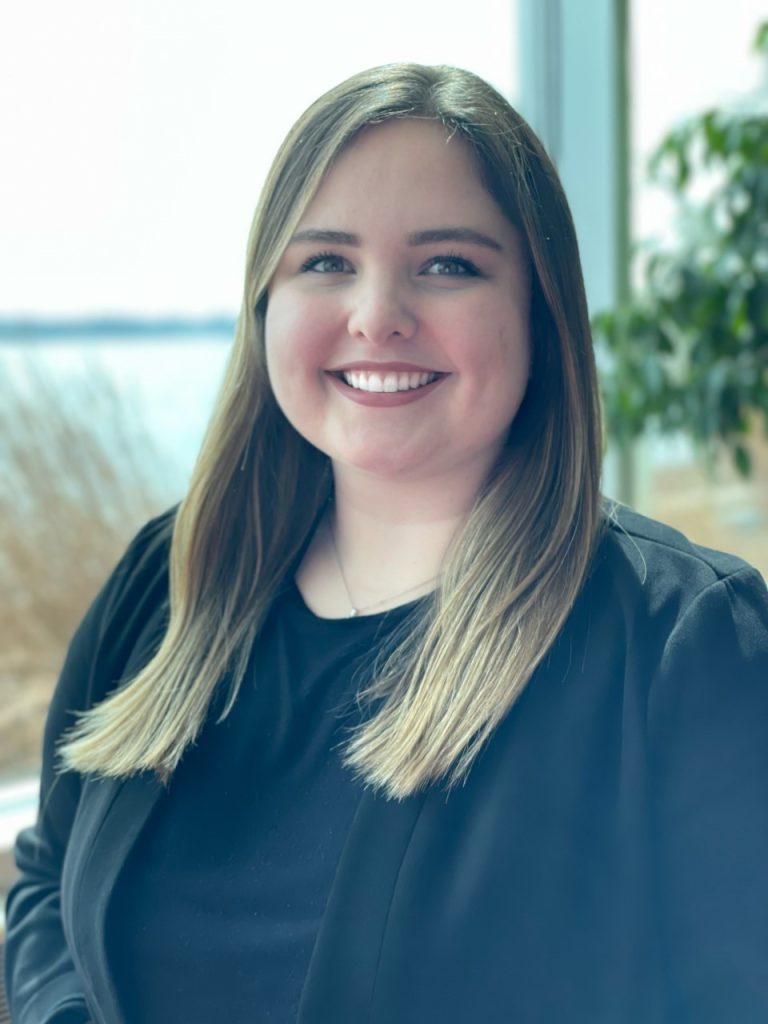
Alumni Showcase: Karina Rauenhorst

Concordia University Wisconsin loves to hear updates from alumni. Last year, graduate Karina Rauenhorst, shared her story as a School of Pharmacy student. In the time since graduation, Karina has been busy with her residency and being active in the pharmacy community. Let’s catch up with her and see where she’s headed.

Where are you practicing during your residency?

I started my residency in July 2022 at Progressive Community Health Center, an ambulatory care clinic that serves the underserved in the Milwaukee area. In my position, I provide health education for patients with chronic health conditions, such as diabetes, hypertension, and hyperlipidemia. My second-year site is yet to be determined.

When not in the clinic, I also teach at CUW in various coursework. Most of my time is spent as a lab instructor for our Applied Patient Care (APC) labs but I have also lectured in Pharmacotherapy coursework. It’s fascinating to learn some of the “behind the scenes” work that goes into the courses that I took only a couple years ago.

What are the most challenging and rewarding parts of the residency?

Navigating the balance of multiple long-term projects from a variety of sources is my biggest challenge. In pharmacy school, most projects were brief, but my two-year residency will involve long-term projects. My program director, preceptors, and mentors on campus have given me the skills needed to manage these challenges, but putting them into practice is a whole new learning process.

The most rewarding part of my residency so far has been the impact I have made on my patients in the clinic. I love the unique opportunity to serve and provide quality care to an underserved population here in Milwaukee. I strive to form a trusting and collaborative relationship with my patients and serve as a reliable resource in their disease state management. Seeing the joy in a patient’s eyes after achieving a health goal, I feel like I am answering my true calling in life.

Continuing to learn

Why did you choose to pursue a Master’s in Education while in your residency?

After graduating with my PharmD I wanted to further develop my teaching skills and enrolled in the Master of Education program at CUW. I found my passion for teaching during my second year of pharmacy school. While serving as a teaching assistant in the APC labs, I knew I wanted to incorporate teaching into my future career. The coursework in my master’s program provides me a foundational framework and essential skills that will help me better connect with and educate future learners.

How have your first classes in the School of Education been so far?

My first class was an elective, Multimedia in the Classroom, and I loved it! I’ve always been passionate about making content engaging and interesting, so this course was right up my alley. Another resident and I sent a presentation suggestion to the AACP, hoping to present the course’s findings at their yearly conference to pharmacists all around the US.

What has been easier and harder than you expected in the Master of Education?

The style of education and learning in the master’s curriculum is different from what I experienced in the PharmD program. The courses have been requiring a lot more insightful reflection, creative writing, and direct application of knowledge, instead of intensive content retention and exams. I’m grateful to not be up late studying various topic materials and taking exams anymore.

I really enjoy the self-paced nature because it allows for flexibility in my already busy schedule. However, this does add to my previously mentioned challenge of managing long-term responsibilities and balancing my schedule.

Being active in the pharmacy community

With the goal of connecting with other professionals in the field, Karina continues to stay active in the Kappa Psi Pharmaceutical Society. Kappa Psi is the oldest and largest pharmacy fraternity. It has the mission to develop leaders with a passion for service to their community while creating lifelong professional connections. Once a brother of Kappa Psi, you become a brother for life.

How long have you been involved with this fraternity? Why should others join?

I was initiated into the Zeta Theta chapter at Concordia University Wisconsin (CUW) in the Fall of 2018. I first heard of Kappa Psi while completing my undergraduate degree at the University of Minnesota – Duluth. The comradery and professional growth mindset sparked my interest. I joined with the goal of meeting new pharmacists from across the world while promoting the profession of pharmacy.

Throughout my time so far, I have been able to:

  • Meet some of the most incredible and inspiring pharmacists
  • Volunteer for over 200 hours at a local free clinic
  • Develop leadership skills that will help me be a better servant to the community

Pledging Kappa Psi has been one of the best decisions I have made in my pharmacy career to date and will recommend joining to everyone.

What are your responsibilities as the next President of the Northern Plains Province (NPP)?

As President of the Northern Plains Province, I oversee 10 collegiate and 6 graduate Kappa Psi chapters across North Dakota, South Dakota, Nebraska, Iowa, Minnesota, and Wisconsin. One of my most significant responsibilities is to organize and facilitate our three-day biannual regional conference for over 200 attendees.

Between these conferences, I arrange regular meetings with the NPP executive board, assign charges to our various regional committees, and establish goals that support our overarching vision for the province. In addition, I serve as a resource to my fellow NPP brothers and represent them to the best of my ability.

Do you have specific initiatives or goals that you want to achieve during your time as president of this fraternity?

The main goal of the NPP executive committee this year is to be innovative with our events while staying true to our traditions. With the recent return to in-person conferences, it’s a pivotal time to enhance the experiences of our brothers while continuing the traditions. It’s our hope that through educational webinars, brotherly competitions, and improved communication throughout the region, we will see an increase in participation and retention by both collegiate and graduate brothers.

Want to find out more?

If you want to learn more about Concordia University Wisconsin’s School of Pharmacy, visit us here.
What does an Inpatient Clinical Pharmacist do?

There is a misconception that Pharmacists only work in retail store pharmacies. And while that is one setting they operate in, there are so many other settings in which they are active. We want to start this year by highlighting these numerous settings with an interview with our faculty about their area of expertise. Let’s kick things off with Inpatient Clinical Pharmacists.

Concordia Pharmacy Faculty

Dr. Anne Graff LaDisa, PharmD., BCPS, received her Pharm.D. (2001) from Drake University in Des Moines, IA. In 2012, she joined the faculty at CUWSOP in the Department of Pharmacy Practice. Dr. LaDisa practices as an inpatient clinical pharmacist in an acute care GI/GU surgical unit at Aurora St. Luke’s Medical Center in Milwaukee, WI. She also serves as a preceptor for pharmacy IPPE and APPE students, as well as PGY-1 residents. Check out her insight into being an inpatient clinical pharmacist.

What is an Inpatient Clinical Pharmacist?

A clinical pharmacist is responsible for ensuring the medications prescribed for a patient contribute to the best possible health outcomes. Clinical pharmacists work in various settings, but I work in the inpatient setting, which means I work in a hospital and my patients are hospitalized with acute health issues. Inpatient clinical pharmacists can work in critical care settings, like an ICU (intensive care unit) or an acute care floor (non-intensive care). In larger hospitals, these ICUs or acute care floors can be designated for specific types of patients, like patients with cardiac, neurologic, oncologic, surgical, or internal medicine issues.

What does an Inpatient Clinical Pharmacist do?

I work in a large hospital in Milwaukee on an acute care surgical floor, so my patients are primarily those awaiting or recovering from surgery.

Identifying drug issues

During my shift, I review patients’ new medication orders and monitor their current medication therapy. Additionally, I help to identify drug therapy problems for the patients. These problems can include:

  • A patient may need a different antibiotic based on microbiology and culture results.
  • Perhaps there is a new medication prescribed for a patient that will interact with a medication they are currently taking and we need to stop or modify one of the two drugs for safety.
  • A patient could be taking a medication that could potentially be causing a side effect and I’ll recommend we draw a blood sample to assess the level of medication in their blood.
  • Perhaps a patient’s kidneys aren’t functioning properly and the dose of their medication needs to be reduced. Kidneys are one of the ways we clear medications from our bodies.

Working hand in hand with others

Simultaneously we work closely with physicians, nurses, and other health professionals almost daily. We answer any questions they may have about medications and make recommendations on any drug therapy problems. Generally, we will attend patient care rounds with everyone to identify barriers to discharging the patient efficiently and safely.

Transitions in care

In the hospital, we first review the medications a patient was taking prior to admission. This is necessary to evaluate what is appropriate for them to continue taking while they are in the hospital. Next, we identify any problems with the medications that may have led to their acute issue.

Then we may decide to put patients on a new medication, change their dosing, or fully stop taking a medication previously used. Finally, we educate patients on any new medications that they will take after discharge.

Educating residents

Another task I have as a clinical pharmacist is working with graduate students and residents. I regularly work with P4 CUW students who are on their Acute Care clinical rotation. In addition, I work with pharmacy residents who are in their first year of residency training after graduation. Together we take care of our patients while they learn with hands-on experience.

How do I become an Inpatient Clinical Pharmacist?

First, you must receive a Doctor of Pharmacy (PharmD) degree. Pharmacy residencies aren’t required to be inpatient clinical pharmacists, but many working in this area have residency training. Following graduation, I completed a 1-year pharmacy practice residency. Now I’ve been working as an inpatient clinical pharmacist for 20 years.

Additional certifications are also not required, but many clinical pharmacists have advanced certifications. Inpatient clinical pharmacists can specialize in Internal Medicine, Cardiology, Critical Care, Infectious Diseases, Oncology, or Transplant to name a few. After completing my residency I took an exam in addition to my licensing exams and I’m now a Board Certified Pharmacotherapy Specialist (BCPS).

Interested in this specialization?

If the area of Inpatient Clinical Pharmacy peaks your interest, feel free to learn more about our School of Pharmacy and apply for more information.

New CPA Exam Blueprints Released

The long wait for the highly-anticipated new CPA exam blueprints has ended. This month, the AICPA released the finalized blueprints for the revised CPA exam, launching in 2024. Check out the quick highlights below of what changes you can expect and how to prepare for the revised exam.

Over time, the CPA exam has evolved to meet the needs of the profession. A notable revision was in 2004 when the CPA exam transitioned from a paper and pencil exam to a computerized exam. In 2024, the CPA exam will undergo another major revision. This time, instead of a simple format change, there will be a major change to the content of the CPA exam.

The governing bodies responsible for the CPA Exam (NASBA & AICPA) received feedback from over 3,000 stakeholders regarding the future direction of the CPA exam. Results determined that modern CPAs need deeper skill sets in critical thinking, problem-solving, understanding of business systems, controls, and risk, data management and analysis, and SOC engagements.

Coupling these new skills with the fact that standards have changed immensely, a reimagining of the CPA exam was overdue. As the body of knowledge continues to grow, the need for specialization has become apparent.

What’s changing?

The highlights of the changes to the 2024 exam are described below:

3 Core + Discipline Model

Currently, the exam includes four stand-alone sections. However, the new exam will have three core sections that each candidate must take. Each candidate will then select their fourth exam from a choice of three discipline-specific exams. The goal of the 3 Core + Discipline model is to move some of the more specialized content out of the core sections, and into a discipline-specific exam. Therefore, candidates may select another exam based on their area of interest in developing expertise.

For instance, those not specializing in tax don’t need to study the more complex details if they don’t take the Tax Compliance and Planning exam. Note that the discipline selected will not be identified on the CPA license.

Elimination of BEC

The stand-alone Business Environment and Concepts (BEC) section goes away in 2024. Although this exam had the highest pass rates, it was also one of the more troublesome exams for students, as the content often seemed random. The elimination of the BEC exam does not mean that content is eliminated, however. Content currently covered in BEC will be shifted to other exams.

Exam Content Changes by Section

AUD

The Auditing and Attestation (AUD) section of the exam will cover four main areas:

  • Ethics, Professional Responsibilities, and General Principles
  • Assessing Risk and Developing a Planned Response
  • Performing Further Procedures and Obtaining Evidence
  • Forming Conclusions and Reporting
FAR

The Financial Accounting and Reporting (FAR) section of the exam will cover three main areas:

  • Financial Reporting
  • Select Balance Sheet Accounts
  • Select Transactions
REG

The Taxation and Regulation (REG) section of the exam will cover six main areas:

  • Ethics, Professional Responsibilities
  • Federal Tax Procedures
  • Business Law
  • Federal Taxation of Property Transactions
  • Federal Taxation of Individuals
  • Federal Taxation of Entities

New Discipline Exams

BAR

The new Business Analysis and Reporting (BAR) discipline exam is intended for those who wish to demonstrate specialized knowledge in financial accounting, analytics, and reporting. This exam will cover three main areas:

  • Business Analysis
  • Technical Accounting and Reporting
  • State and Local Governments
ISC

The new Information Systems and Controls (ISC) discipline exam is designed for those who wish to demonstrate specialized knowledge in information systems and security. This exam will cover three main areas:

  • Information Systems and Data Management
  • Security, Confidentiality, and Privacy
  • Considerations for System and Organization Controls (SOC) Engagements
TCP

The new Tax Compliance and Planning (TCP) discipline exam is intended for those who wish to demonstrate specialized knowledge in taxation. This exam will cover four main areas:

  • Tax Compliance and Planning for Individuals and Personal Financial Planning
  • Entity Tax Compliance
  • Entity Tax Planning
  • Property Transactions

Preparing for this new exam

Preparing for the exam is a marathon, not a sprint. Success starts with a solid educational foundation. Although requirements vary by state, generally, candidates should start with a bachelor’s degree that provides a solid foundation in business courses. Most states require a set number of credits in business courses plus specific accounting courses in order to qualify to sit for the exam. 

It’s important to note that educational requirements to sit for the exam can differ from the requirements to be licensed as a CPA. For example, in Michigan, an undergraduate degree is required to sit for the exam, but 150 credits are required to be licensed. Most students choose to earn a master’s degree in accounting to meet this 150-hour requirement. 

Additionally, candidates will find that extra practice with CPA exam review services is a necessary ingredient to their success in passing the exam. Concordia’s new Master of Science in Accountancy combines the best of both worlds by providing students with relevant, up-to-date courses that were developed around the needs of the CPA exam revisions and incorporating Gleim CPA review right into the courses.

What’s next?

The new CPA exam will have more focus on critical thinking skills and analytics, as well as the opportunity to learn more specialized skills. If you’re planning on taking your Exam before these changes take effect in 2024, consider if these changes are in your favor. Concordia’s new Master of Science in Accountancy program is ready to help you learn and grow in your skills, and prepare for this exam. Find out more information about our program below.

What are the requirements for OT school?

Wherever you go to college, each place will have a different set of requirements for OT school. Here at Concordia University Wisconsin, we want to make it easy for you to find and understand what steps you need to take to apply. Below we have outlined our admissions requirements for OT school and how to apply.

Master of Occupational Therapy admission requirements

To apply for our MOT program you must have the following:

  • Minimum undergraduate GPA of 3.0
  • Bachelor’s degree from a regionally accredited institution -OR- current enrollment in a BSRS degree program at Concordia University Wisconsin
  • 8-semester credits of Human Anatomy & Physiology, from a Biology, Anatomy, or Physiology department with a lab component, completed with a grade of B or better in each course
  • 3-semester credits of Statistics, completed with a grade of B or better
  • Ability to perform Essential Functions of an occupational therapist
  • Official college transcripts from all previously attended institutions
  • Three letters of recommendation
  • Essays as designated per track

MOT Tracks

Bridge Track

Our bridge track is designed for Certified Occupational Therapy Assistants that want to further their education. Check out the requirements below.

  • Licensed OTA with at least 1 year of work experience as an OTA or currently working at least 80 hours per month
  • 4 credits of Anatomy & Physiology (with lab) with a C or better
  • Cumulative GPA of 3.0 or better from an OTA program
  • 1 letter of recommendation from a current employer
  • Current resume including proof of current license to practice

Post-baccalcalaureate Track

You have options if you have a bachelor’s degree in another field but want to become an OT. Our post-baccalaureate track gives you that chance. In addition to the MOT requirements, you will need the following:

  • Documentation of 40 hours of job shadowing
  • Applicants for the Post-Baccalaureate Track must submit an online application through OTCAS

Accelerated Track

The Accelerated track is designed for high school graduates who are prepared to pursue both a bachelor’s and graduate degree. Students who begin their undergraduate career as a freshman in Concordia University Wisconsin’s Bachelor of Science in Rehabilitation Science (BSRS) program may apply to the MOT program – Accelerated track during the fall of their sophomore year. Some requirements include:

  • Must have a high school GPA of 3.2 or higher
  • ACT score of 21 or higher
  • Documentation of 40 hours of job shadowing

Doctor of Occupational Therapy admission requirements

Students interested in the entry-level Occupational Therapy Doctorate (OTDe), must first apply to the MOT program. At the end of the second semester of the MOT program, you may apply for the OTDe program, if you meet the following requirements:

  • Cumulative and semester OT GPA of 3.0 or better
  • Current enrollment in the Concordia MOT program
  • No current or past professional or academic probation

The following must be completed by the end of your second MOT semester:

  • Year 1 Student Portfolio
  • OTDe Application
  • OTDA Admissions Interview

Applying for the MOT and OTDe

To apply for our Master of Occupational Therapy program, click below if interested in the bridge or accelerated track. Students in the MOT program interested in the doctorate should speak to their advisor about applying.

Need more information?

If you need more information about earning a Master of Occupational Therapy, or Doctor of Occupational Therapy, or about our program, visit our page below.

Concordia’s accelerated programs: What’s being promised?

As we say goodbye to the past year, we must look back on our Christmas celebration to consider the true gift we have been given. A sincere hope for Christians is that all people will understand the Christmas message of John 3:16:

For God so loved the world that he gave his one and only Son, that whoever believes in him shall not perish but have eternal life.

What’s being promised? Eternal life and salvation. Why do we forget that?

When considering a higher education degree, it’s wise to ask the same question — what’s being promised? When it comes to Concordia’s accelerated programs “what’s being promised?” Concordia students provide the best answers. Here are a few benefits mentioned by our students.

Adjusting to a changing world

Life in the information world is changing everything. Concordia’s accelerated programs in online and virtual formats help students develop skills in our changing society. Real-world application and encouragement by instructors in the field help prepare students to excel in a changing world.

Better paying jobs & economic stability

The Indeed 2021 career guide reviewed the average salaries of various education levels. Results show that those over the age of 25 with no college degree earn an average of $774 per week and hold an unemployment rate of 4.0%. Those who hold a two-year associate degree earn $836 with unemployment dropping to 3.4%. 

The news gets even better for bachelor degree holders, like the CUW alums of the accelerated bachelor programs, who on average earn $1,173 per week with a significantly lower unemployment rate of 2.5%.  Earning an undergrad degree significantly enhances job opportunities and security. Furthermore, it can easily set the stage for further potential growth through graduate and professional degrees.

Taking advantage of employee benefits

“My boss has been encouraging me to go back to school and will even help me pay for the cost,” says one current student. “It would be foolish for me to not take advantage of that!” 

Employers have adjusted to a competitive hiring market. More and more offer back-to-school incentives through tuition reimbursement and grants for employees. Additionally, the military community continues to provide education benefits to veterans and active military members.

Joining a respected institution in the community

Many students received encouragement from relatives, friends, and co-workers who are either alumni of CUWAA or see the community’s respect for Concordia. “Concordia changed my life in so many ways and I appreciate the Christian perspective to my degree,” said a recent graduate.

Setting an example

A common sentiment expressed within the accelerated community is the desire to leave a legacy for children and family members. When a student returns to finish a degree, they quickly learn the program allows for a favorable number of credits to transfer in from accredited programs. 

This policy has assisted many students who thought their previous academic struggles brought about through medical, behavioral, or financial challenges of the past limited their degree potential to set an example of persistence. It has now become a common occurrence for a parent to be earning a degree alongside their own child.

Satisfaction

Finally, a major benefit for many accelerated students is the self-satisfaction that comes from knowing they have done all they could with the talent and abilities the Creator endowed within them. The accelerated format provides the flexibility to move through the program at a pace that works for you. That satisfaction provides an overwhelming sense of achievement.

Ready to move forward?

For the adult learner or even the recent high school graduate who found themselves lost in the traditional world of on-campus coursework, there may be plenty of benefits for you in Concordia’s adult accelerated program. This – and more – is what’s in it for you!

To learn more about all of the accelerated degrees and programs offered for busy adults including those in Arts & Sciences, Business, Computer Science, Education, Health Care, and Public Service visit CUWAA Accelerated Admissions or call 262-243-5700.

Harrison Hulse is Concordia’s December Student of the Month

Congratulations to CUW’s December Student of the Month, Theological Languages and Applied Theology double major Harrison Hulse!


The CUW faculty have selected Harrison Hulse as the December Student of the Month. Harrison is a Senior double major in Theological Languages and Applied Theology and is also pursuing a Philosophy minor.  Harrison, from Apex, North Carolina, is a brilliant student with a strong and articulate faith.  He always comes to class prepared, asks questions that help the whole class, and always contributes to class discussions.  Harrison is a gifted student of Greek, he mentors every student imaginable (serving as a Peer Tutor), and he is a self-managed scholar.  He is a good collaborator, working with other students on the Quaestus Student Journal as Publication Editor and is a coordinator for CUW Youth Ministry.  Harrison plays in the Symphonic Wind Ensemble, and he works in the Mail Room.  Harrison strives for excellence in mind, body, and spirit!

Meet our previous Students of the Month here!

Harrison was nominated by Dr. Kevin Voss.


Want in?

At Concordia University Wisconsin, we believe that education is at the junction of faith and learning. That means that we get to know you personally – your unique gifts and skills – so that we can help you develop fully in mind, body, and spirit to achieve your highest potential. To learn more or to apply, click the link below.

Watch FLAME’s commencement address


Grammy-nominated rapper FLAME shares wisdom with CUW’s Class of 2022 December grads.


Concordia welcomed Grammy-nominated artist FLAME to serve as its December 2022 commencement speaker.

Born and raised in inner-city St. Louis, FLAME dropped his first studio album in 2004. In 2008, he received a Grammy nomination for his album “Our World: Redeemed”. He has topped the Billboard Gospel charts and garnered multiple Dove and Stellar Award nominations.

In recent years, Flame converted from Reformed Baptist theology to Lutheranism. He earned a Master of Arts from Concordia Seminary, St. Louis, along with a minor in counseling.

Related: FLAME answers Concordians’ burning questions

In his commencement address to Concordians, he encouraged graduates to grab ahold of the “sub-lessons” learned during their time at CUW:

“There are skills that I developed (in the wake of the deaths of my mother and father) that are transferable. It may not be directly what I studied in school, but there were these sub-lessons that I learned through persevering, through prayer, through creatively working through things, through being able to grieve and reach out to others for help.

“And you too have developed those same skills in your time here at Concordia University Wisconsin, and you’re going to have to tap into those in life. But I want you to know you can do it. I want you to reflect back on this time when you were creative and pushing through the pain and pushing through the moments when you wanted give up, and I want you to know you can do it.”

Click on the video below to watch the full address.


Want in?

Concordia University is an uncommon community of students, faculty, alumni, and staff who are gifted by grace and ever-preparing to live out our purpose to serve Christ in the Church and world. For more information about our academic programs and campus life, click on the link below.


50 questions to ask on a college tour

Choosing the right college can be a stressful task. After doing your online research and narrowing it down, how do you choose? The best way to decide if a college is right for you is to be there.

Colleges offer campus tours throughout the year for students and families to check out. But what exactly is important to find out when visiting? To help you get all the answers you need, we’ve put together a list of questions to ask on a college tour.

College Overview

First, it’s important to understand the college as a whole. Getting to know the culture of the university can help you determine if it fits your personality. A good way to do this is by asking your tour guide (normally they’re a student).

  1. What are the students like? What would you say if you could describe the “typical student”?
  2. Why did you choose [name of college]?
  3. How many students go here?
  4. What would you say are the college’s strengths? What is the most significant benefit of being a student here?
  5. Do you feel safe on campus?
  6. Is it easy to get around campus? What is the most common way to get around?
  7. What’s most unique about the college?
  8. What are the college’s most important values, and how does it demonstrate this to students?
  9. How does your school demonstrate commitment to diversity, equity, and inclusion?
  10. What would you say is the biggest challenge on your campus?

Academics

This is why you go to college right? So of course it’s critical to ask about the courses, faculty, and opportunities within your major. It’s essential to know exactly what type of education you will be receiving.

  1. What majors are the most popular?
  2. How big are most classes?
  3. Do you like the faculty and staff?
  4. How many courses do most students take per semester?
  5. Is there an opportunity to study abroad?
  6. Do students have access to tutoring or writing centers?
  7. How successful are your graduates? What’s the job placement rate after graduating?
  8. What type of support can I receive during courses?
  9. How satisfied are you with academic advising?
  10. How often are collaborative work or group presentations required?

Student Life

It’s helpful to know the place you will be spending the majority of your time. Getting to know the campus culture, facilities, and students can you help vision yourself as a student.

  1. What types of clubs and sports are on campus?
  2. What does an average day for a student look like on campus?
  3. What facilities are available to students?
  4. What makes the student body unique?
  5. Are students required to live on campus?
  6. How are the dorms? How are they assigned?
  7. Can I choose a roommate or am I assigned one?
  8. How’s the food on campus?
  9. What are some of the school’s main traditions or events?
  10. Are there medical resources close by if needed?

Resources

Being aware of the resources available to you on campus can help you to be successful throughout your college experience.

  1. Are there accessibility services for students?
  2. How easy is it to find summer jobs and other kinds of work through your school?
  3. What type of career services are available?
  4. What types of support services are available for students?
  5. Can I apply for financial aid?
  6. Are there any scholarships available to students?
  7. Can you receive help from professors outside of the classroom?
  8. What types of work-study jobs are available on campus?
  9. Is there a tuition payment plan to pay monthly installments?
  10. What services are available for struggling students?

Questions for online learners

Even online students should make sure the college is a good fit for them and their goals. Here is a list of online-specific questions to ask before choosing a program.

  1. How flexible is the program?
  2. How easy is it to balance work, school, and life during the program?
  3. Do you have many working students?
  4. Are there any support resources for online students?
  5. How accessible are professors if I have questions?
  6. Do I have access to on-campus resources?
  7. How are classes structured? Will my online classes be mostly synchronous (live courses in real-time) or asynchronous (prerecorded, available at my own pace?)
  8. May I take classes on campus, if possible?
  9. Do you have technical support available?
  10. How long has the college been doing online learning?

RELATED: Online Learning: What sets Concordia apart?

Before you go

College visits are the perfect way to immerse yourself in the campus and see how it feels to be there. Remember, there are no silly questions on a tour, so make sure to ask anything you are unsure of or want to learn more about. Campus staff and tour guides are there to make sure you have the best visitor experience possible. If you’re interested in visiting Concordia University Wisconsin’s campus, click the button below. Happy touring!

Featured Alumni: Kourtney Anderson

Alumni, Kourtney Anderson, graduated from Concordia University Wisconsin and Ann Arbor’s Doctorate of Education program. Anderson is currently an Academic & Career Planning Coordinator for the Milwaukee Public School District. Take a look at Anderson’s experience as a graduate student at Concordia.

Why did you choose the Doctor of Leadership in Innovation and Continuous Improvement (LICI) program at Concordia?

I chose to enroll in the LICI program at Concordia based on my past experience within the Master of Science-Professional School Counseling program. During the counseling program, the CUW staff not only showed care and concern for my studies but for my personal life as well.

If I missed a class or didn’t seem like myself, I could always count on the professors to check on my well-being. No matter the professor, I felt worthy, supported, and understood by all of my professors during my educational journey. For this specific reason, I knew that if I was to continue to further my education, it would be here.

How did this program help take your career to the next level?

My goal in this program was to increase my impact in an educational environment. The LICI program gave me the expertise to effectively help students by assessing both small and large organizations.

Discuss your experiences with the cohort model.

The cohort model was a wonderful and supportive experience. Since each cohort begins their study together and progresses through the program collectively, there is an opportunity to build relationships and utilize classmates’ strengths. Having the opportunity to work together and progress through the program together provided an extra layer of support that is greatly needed when pursuing a doctorate degree.

What did you learn from your cohort peers?

I learned from my peers that there is always room to improve and grow. They showed me new educational techniques and practices I hadn’t seen before. This helped me understand that you can always make progress when introducing ideas and curricula to students.

What are your goals with your new Ed.D.?

I got a job in an educational environment that enables me to apply the knowledge I obtained with my Ed.D. My aim is to make use of my place as an Academic & Career Plan Coordinator by designing academic and career planning curricula and tools to assess programs. I hope to also generate materials for counselors and students. My ultimate goal is to establish academic and career planning chances and lessons tailored to students in urban settings, to bring back hope in this particular student group.

How did the LICI program transform you?

It has transformed me by enhancing my creativity and innovation skills. Since participating in the program, I’m more creative in the development and implementation of educational programs and activities with students. Additionally, I develop innovative materials and documents that can be useful for both families and counselors during the enrollment process.

What was a pleasant surprise about the LICI program?

I was pleasantly surprised by the support received throughout each course on the formation and completion of the dissertation. At the start, I was nervous and worried about how I would progress in the creation of the dissertation.

After beginning, I quickly received support and direction on how to choose and construct a dissertation topic. From constructing dissertation topics and ideas to researching supporting themes, and constructing each chapter within the document, the LICI professors offered support with the entire dissertation journey.   

What were the hardest and easiest aspects of completing a dissertation?

The easiest aspect of completing the dissertation is the formation of a dissertation question or problem. If you are passionate and knowledgeable about a topic, finding new research for the dissertation will come easily.

The hardest aspect is narrowing down the exact themes, research articles, and information to use. During the research process, numerous research articles are reviewed and determined for usage. If you determine all information is useful within the dissertation, the narrowing of articles can be difficult and can become overwhelming.

How did you grow personally and academically during your dissertation process?

Personally, the dissertation process helped me to gain knowledge about topics of interest within my field which helped me to evolve professionally and be considered for promotions within my organization. Academically, the dissertation process has helped me to strengthen my critical thinking and writing skills to properly contribute to my field of study.

What connections did you make with your LICI professors?

The strong connections I made with the LICI professors ultimately resulted in meaningful and long-lasting relationships. They provide me with professional references who can elaborate on my academic performance and personal growth.

These connections also are a great network for a plethora of career opportunities, as well as valuable guidance from distinguished individuals within the field. I will be forever grateful for the knowledge received, skills gained, and relationships built from my participation in the LICI program.

What were your most memorable experiences in the LICI program?

My most memorable experience was the completion of the group project during the second residency. During the project, I worked with peers who had various strengths to create a new educational program or system. The most valuable takeaway was understanding the value of having a team that is diverse in abilities, career backgrounds, and perspectives.  

If you’re interested in hearing more stories from alumni, start here. Or if you’re looking for information on the LICI program, click below.