Featured Alumni: Kourtney Anderson

Alumni, Kourtney Anderson, graduated from Concordia University Wisconsin and Ann Arbor’s Doctorate of Education program. Anderson is currently an Academic & Career Planning Coordinator for the Milwaukee Public School District. Take a look at Anderson’s experience as a graduate student at Concordia.

Why did you choose the Doctor of Leadership in Innovation and Continuous Improvement (LICI) program at Concordia?

I chose to enroll in the LICI program at Concordia based on my past experience within the Master of Science-Professional School Counseling program. During the counseling program, the CUW staff not only showed care and concern for my studies but for my personal life as well.

If I missed a class or didn’t seem like myself, I could always count on the professors to check on my well-being. No matter the professor, I felt worthy, supported, and understood by all of my professors during my educational journey. For this specific reason, I knew that if I was to continue to further my education, it would be here.

How did this program help take your career to the next level?

My goal in this program was to increase my impact in an educational environment. The LICI program gave me the expertise to effectively help students by assessing both small and large organizations.

Discuss your experiences with the cohort model.

The cohort model was a wonderful and supportive experience. Since each cohort begins their study together and progresses through the program collectively, there is an opportunity to build relationships and utilize classmates’ strengths. Having the opportunity to work together and progress through the program together provided an extra layer of support that is greatly needed when pursuing a doctorate degree.

What did you learn from your cohort peers?

I learned from my peers that there is always room to improve and grow. They showed me new educational techniques and practices I hadn’t seen before. This helped me understand that you can always make progress when introducing ideas and curricula to students.

What are your goals with your new Ed.D.?

I got a job in an educational environment that enables me to apply the knowledge I obtained with my Ed.D. My aim is to make use of my place as an Academic & Career Plan Coordinator by designing academic and career planning curricula and tools to assess programs. I hope to also generate materials for counselors and students. My ultimate goal is to establish academic and career planning chances and lessons tailored to students in urban settings, to bring back hope in this particular student group.

How did the LICI program transform you?

It has transformed me by enhancing my creativity and innovation skills. Since participating in the program, I’m more creative in the development and implementation of educational programs and activities with students. Additionally, I develop innovative materials and documents that can be useful for both families and counselors during the enrollment process.

What was a pleasant surprise about the LICI program?

I was pleasantly surprised by the support received throughout each course on the formation and completion of the dissertation. At the start, I was nervous and worried about how I would progress in the creation of the dissertation.

After beginning, I quickly received support and direction on how to choose and construct a dissertation topic. From constructing dissertation topics and ideas to researching supporting themes, and constructing each chapter within the document, the LICI professors offered support with the entire dissertation journey.   

What were the hardest and easiest aspects of completing a dissertation?

The easiest aspect of completing the dissertation is the formation of a dissertation question or problem. If you are passionate and knowledgeable about a topic, finding new research for the dissertation will come easily.

The hardest aspect is narrowing down the exact themes, research articles, and information to use. During the research process, numerous research articles are reviewed and determined for usage. If you determine all information is useful within the dissertation, the narrowing of articles can be difficult and can become overwhelming.

How did you grow personally and academically during your dissertation process?

Personally, the dissertation process helped me to gain knowledge about topics of interest within my field which helped me to evolve professionally and be considered for promotions within my organization. Academically, the dissertation process has helped me to strengthen my critical thinking and writing skills to properly contribute to my field of study.

What connections did you make with your LICI professors?

The strong connections I made with the LICI professors ultimately resulted in meaningful and long-lasting relationships. They provide me with professional references who can elaborate on my academic performance and personal growth.

These connections also are a great network for a plethora of career opportunities, as well as valuable guidance from distinguished individuals within the field. I will be forever grateful for the knowledge received, skills gained, and relationships built from my participation in the LICI program.

What were your most memorable experiences in the LICI program?

My most memorable experience was the completion of the group project during the second residency. During the project, I worked with peers who had various strengths to create a new educational program or system. The most valuable takeaway was understanding the value of having a team that is diverse in abilities, career backgrounds, and perspectives.  

If you’re interested in hearing more stories from alumni, start here. Or if you’re looking for information on the LICI program, click below.
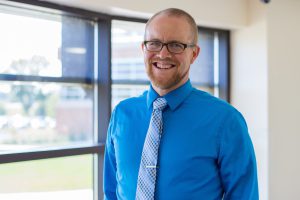
Featured Alumni: Arthur Martinez

In May 2022, Arthur Martinez graduated from Concordia University Wisconsin and Ann Arbor’s Doctorate of Education program. Martinez is currently the Head Principal at Neidig Elementary School in Texas and an Adjunct Professor at Huston-Tilotson University. Take a look at Martinez’s experience as a graduate student at Concordia.

Why did you choose the Doctor of Leadership in Innovation and Continuous Improvement (LICI) program at Concordia?

When choosing a program, I wanted an online, flexible program, as I live in Austin. The CUWAA program had a continuous school improvement component, which won me over. I learned so much about school improvement, which helps in my job daily. I love CUWAA! It was the absolute right/best choice for me.

How did this program help take your career to the next level?

The program provided me skills and content knowledge to elevate my leadership capacity. Halfway through the course, I realized my abilities were much stronger than I first thought. My professors and classmates helped to shape me into a stronger leader and learner, even when I doubted myself. I’m so thankful I stayed and fought through the self-doubts.

Discuss your experiences with the cohort model.

It was a benefit to go through the courses together with cohort members. We would struggle and strive together. It was exciting to see which cohort members were going to be in each new class. From class to class, interacting with the same members helped to create a space for deeper discussions, which were very helpful.

What did you learn from your cohort peers?

The greatest lesson I learned from my cohort peers was to think more critically outside of my own, subjective opinions. My peers came to the discussions and classes with other beliefs giving me the chance to listen to and understand different perspectives.

What are your goals with your new Ed.D.?

My goals are to use what I learned from the LICI program to be a more vital principal and professor and to continue my education. After a few years serving in the role of campus principal, I seek to attain a superintendent certificate and will use my Ed.D. and certification to be a serious superintendent candidate for my school district.

How did the LICI program transform you?

The program helped me to believe in myself again. The first half of the program…I experienced imposter syndrome, wondering why CUWAA let me into the program. After having a class with Dr. Cosgrove, that syndrome went away. From that point on, I have transformed into a confident educator and leader. I believe in myself and hope to encourage and elevate the skills of others, so they can be confident in their abilities.

What was a pleasant surprise about the LICI program?

Most programs would market their programs by saying it could be done in three years. At CUWAA I finished in exactly three years, by following the model provided by my advisor. It was wonderful to get done in the time I was told. Also, all the staff/professors are so kind and helpful.

What were the hardest and easiest aspects of completing a dissertation?

The hardest – hands down were the literature reviews. It took me almost six months to complete the review. The easiest parts were chapters four and five. Once the literature review was completed and the study was approved, the rest went super fast.

How did you grow personally and academically during your dissertation process?

The dissertation process…! The juggernaut process was the most learning I have ever done. I’m so thankful I had such a knowledgeable and encouraging chair. Anytime I would dip, she was right there to pick me back up, reminding me of my goal to complete the program in three years.

Thinking at a higher level when drafting the literature review was essential. There was so much information to take in, so I chunked it and just kept learning. As a scholar, I gained more knowledge, and as a writer, I gained confidence in the writing process and was excited to take my writing to the next level.

RELATED: 4 tips for overcoming dissertation anxiety

What connections did you make with your LICI professors?

They pushed me and held me accountable for being successful. Learning at a minimal level was just not an option. I graduated from the program with a 4.0 because they pushed me. The professors demanded high levels of learning, and I thrived in that environment, especially with quantitative statistics. Never in a million years would I have thought that I could get an A in a class that challenging. The professor knew it was for me.

What were your most memorable experiences in the LICI program?

The day of the defense was a memorable moment. Defending my study was such a wonderful experience, especially after three years of working toward that moment. I believed in my study and in myself. Hearing them call me Dr. Martinez for the first time changed my life forever.

Additionally, graduation was an extraordinary time for me. I appreciated the LICI department having a separate special ceremony before graduation. This was a moment for our professors and peers to celebrate together. It was something I will never forget.

Learning to teach reading

In case you didn’t know—we are in the midst of a “new” reading war. Triggered by Emily Hanford’s podcast, Hard Words (American Public Media, 2018), the new reading war focuses on the science of teaching reading instead of balanced literacy instruction. The balanced literacy approach has no predefined structure and can sometimes leave out critical phonics and other evidence-based instruction whereas the science of reading follows a systematic structure based on mastering specific reading skills.

As a result of this change, higher education is taking hits on how teacher candidates are preparing to teach reading. Mark Seidenberg’s (2017) Reading at the Speed of Light is particularly critical of how schools of education prepare teacher candidates to teach literacy.

Preparing our teachers

CUW’s School of Education is committed to preparing our teacher candidates to meet the changes in how reading is being instructed. Lexia Learning states that “literacy is one of the cornerstones of educational equity, and is crucial for lifelong success.” Here are some of the ways CUW’s teacher candidates are being prepared to teach reading and literacy through the integration of the science of teaching reading:

  • Explicit and systematic phonics instruction is key to reading success for some children, and it certainly will not hurt any child to learn phonics.
  • Teacher candidates need exposure to high-quality phonics curriculums because creating phonics lessons that are not part of an effective scope and sequence has limited impact.
  • Ensure teacher candidates learn the Simple View of the Reading model introduced by Gough and Tumner (1986). This scientific model demonstrates how reading comprehension is the product of decoding and language comprehension.
  • Ehri’s (1995) work on the phases of reading development and orthographic mapping is also essential for teacher candidates learning how to teach reading.

Teachers need quality literacy resources and professional learning opportunities. Then followed by instructional coaching focused on high-quality instruction to increase reading achievement. For instance, Concordia University Wisconsin’s annual Literacy Institute on June 12th features nationally known speaker Wiley Blevins, who understands the importance of developing high-quality instructors.

One text I have found particularly helpful in ensuring I am preparing my students to teach reading effectively is Shifting the Balance: 6 Ways to Bring the Science of Reading into the Balanced Literacy Classroom by Jan Burkins and Kari Yates. I have blended these shifts into the two reading courses that teacher candidates take as part of their major. We’ve worked hard on our literacy curriculum and welcome you to take a look at it here.

Finding middle ground: A comprehensive approach

The debate over how to teach reading has been ongoing for decades, pitting advocates of phonics against proponents of a balanced reading approach. Phonics focuses on teaching letter-sound relationships and decoding skills. On the other hand, balanced literacy emphasizes the importance of comprehension, meaning-making, and all five pillars of reading. These five pillars are skills that include phonemic awareness, phonics, fluency, vocabulary, and comprehension. This divide has been dubbed the “reading wars.”

In recent years, the science of reading (SOR) has gained attention as an evidence-based approach to effective reading instruction. The SOR places phonics instruction first, recognizing its crucial role in helping children recognize and decode words, leading to improved reading comprehension. Whole language instruction, on the other hand, emphasizes reading for meaning and context, which is essential for building vocabulary and comprehension skills.

However, current research (Shanahan, 2023) indicates that to directly improve reading achievement, we need to focus on three things: the amount of instruction, the content or curriculum, and the quality of instruction. Rather than viewing phonics and balanced literacy as opposing approaches, a more effective approach is to view them as complementary models.

What’s next?

If you’re interested in teaching reading in Wisconsin, read more about our reading specialist program.

References

Ehri, L. (1995). Phases of reading development in learning to read words by sight. Journal of Research in Reading, 18 (2), 116-125.
Gough, P. B., & Tunmer, W. E. (1986). Decoding, reading, and reading disability. Remedial and Special Education, 7(1), 6–10.
Hanford, E. (Producer) (2018). Hard words. American Public Media. https://www.apmreports.org/episode/2018/09/10/hard-words-why-american-kids-arent-being-taught-to-read
Siedenberg, M. (2017). Language at the speed of sight: How we read, why so many can’t, and what can be done about it. Basic Books.

Being a servant leader as an educator

When I began my graduate program back in 2020, I wrote a reflection on how I can be a servant leader in the public school system. While reflecting on it, there is much that is true today.

How I’m a servant leader

As a servant leader in public schools, I see it as my role to let my faith shine for Christ as I lead by example and serve others to give glory to Him. Truly, I believe that my degree is not only for me, but a way to serve my students, parents, community, and my Savior.

As a reading specialist, literacy coach, or interventionist, I can lead by example when I put others first, stay positive amongst the negativity, and show humility in all that I do. I must remember that God is the one who has given me the talents and knowledge to serve in this profession. I eagerly await sharing those talents and knowledge with my students and the learning community as I teach and continue to grow as a literacy leader.

Overcoming challenges

Graduate school presented many challenges for me including learning independently, challenging the way I think, and keeping up with the demands of readings and courses. Doing work while keeping up with the demands of being a full-time classroom teacher, especially during the pandemic, was not easy. Through all of it, I had to learn to lean on Christ for strength, patience, perseverance, and wisdom. Thankfully, my faith in Jesus has been strengthened through the difficult experiences he has helped me overcome.

Many days I listened and sang along to Matt Maher’s song, “Lord, I need You”. I relied on Him and His almighty power and grace when things got difficult and needed to ask for his forgiveness in my moments of distrust. Everything I was able to come to know and do during my graduate coursework journey is because of Him. Moving forward, I can take this experience and its impact on my faith and apply it to future challenges that I may encounter in any aspect of life.

Growing in mind, body, and spirit

Furthermore, my graduate experience has broadened my understanding of how I can lead in mind, body, and spirit.

Mind

Specifically, my Supervision of Instruction for Literacy course comes to mind. Throughout this course, I learned how I can be a literacy leader in various roles whether that be a reading interventionist, reading specialist, or literacy coach.

Body

No matter the role, I must be a servant leader through my body in the way that I carry myself and how I interact with others. As a coach, I need to practice patience with my listening skills, positivity in my directions, and confidentiality in my conversations. I will show servant leadership with my body as I lead my students in the best instruction I can provide them. I must ask God to help me use these talents to serve others.

Spirit

Finally, I can be a servant leader through spirit. Recently I was inspired by my literacy coach and her response to why she teaches. I cannot remember her exact words but they were along the lines of “Even if I am a light for just one child, that is why I teach.” In a room full of educators, not everyone may have fully understood what she meant by that. Having formed a personal relationship and being able to talk about our faith together, I knew that she didn’t just mean in an academic light. Instead, she meant in a spiritual light for her students as well.

Although I may not be able to proclaim the gospel to my students as I teach them how to become better readers and writers, I can pray that God uses my words and actions to shine a light on Him. I pray for my students that they may know Jesus as their Savior and that the Holy Spirit fills them with faith. I too desire to be a light, even if that impacts just one child or one teacher along the way.

This reflection was written by Masters of Literacy student, Kate Schleif.

Earning a Lutheran Teaching Diploma

“Go therefore and make disciples of all nations, baptizing them in the name of the Father and of the Son and of the Holy Spirit, teaching them to observe all that I have commanded you. And behold, I am with you always, to the end of the age.” Matthew 28:19-20.

Our loving Lord and Savior, Jesus, gave us the Great Commission in Matthew 28 as a call to reach all the world with the Gospel. Within the School of Education, we have always taken this call to Gospel action to heart. To continue our focus on the Great Commission, we are excited to be able to expand our reach. We have created five accelerated bachelor’s degree programs for Lutheran teacher preparation.  

Concordia’s teaching programs

In the Fall of 2021, we launched the first program of its kind in the state of Wisconsin. Our Elementary Education teacher preparation program is done in an online-only fashion. In the year since its inception, this program now has close to fifty students from all over Wisconsin and the nation.  

This year we added four more programs that are delivered completely online with fieldwork accomplished near where our students live. These innovative programs include Cross Categorical Special Education and Secondary Education (grades 4 to 12) in English and Language Arts, Mathematics, and Social Studies. All five of these online programs lead to a state of Wisconsin teaching license.  

Receiving a Lutheran Teacher Diploma

An added option embedded into each of these wonderfully-accessible programs is the ability to earn a Lutheran Teacher Diploma (LTD). What does this mean? Within the Lutheran Church – Missouri Synod, teachers are eligible to receive Calls as Commissioned Ministers of the Gospel, if they have received specific theological training.

We have built this training option into the online licensure programs at the CUW School of Education. In collaboration with the Theology department at CUW, we built the six courses necessary for the Lutheran Teacher Diploma including:

  • New Testament
  • Old Testament
  • Biblical Theology
  • Lutheran Confessions
  • The Gospel of Luke
  • Teaching the Faith

Moreover, our licensure programs can be experienced from anywhere in the United States. Currently, we have students in Wisconsin, Michigan, Indiana, Illinois, and Minnesota. As we have an increased need for new teachers in our LCMS K-12 schools, our programs can serve a major need during our nationwide teacher shortage crisis.  

Hypothetical situations

Is this program for you? These three hypothetical student examples show the flexibility of CUW’s online and accelerated bachelor’s programs for teacher licensure. 

Kaitlyn, 18 years old, Florida

Kaitlyn just graduated from high school and has always been active in her Lutheran church. She wants to serve the church in a Lutheran school someday. She needs to stay near home to help support her family after graduating from high school. Kaitlyn will be enrolling in CUW’s accelerated Elementary Education (AEE) program. She likes the 3-year model of the program which will allow her to complete her degree faster than other licensure programs.

She also can complete her coursework on her own time (all of the AEE courses are asynchronous – you do not need to be present at a particular time for any of the coursework). Kaitlyn can work a full-time job during the day to help support her family. Upon completing the AEE, Kaitlyn hopes to receive a Call to Serve at her local K-8 Lutheran school to teach second-grade students. 

Stephanie, 26 years old, Washington

Stephanie got married shortly after high school and has two young children at home. She works as an educational assistant at the local Lutheran school. Her principal has repeatedly told Stephanie that she would be a great teacher. Stephanie enjoys reading to the students in her school but she notices that some of the students have very particular developmental delays and could use more support.

Stephanie is going to be enrolling in Concordia’s Cross Categorical Special Education (ASPED) program while also earning the Lutheran Teacher Diploma. She sees herself supporting students with special needs once she earns her license. Since Concordia’s online licensure program allows for credit based on lived experience, Stephanie will earn credit for her work as an educational assistant after completing a process called the Prior Learning Assessment (PLA). 

Brian, 35 years old, New York

Brian earned his associate’s degree in Information Technology right out of high school. He worked for close to 15 years using his degree. However, once he started to volunteer at his daughter’s Lutheran school to help tutor middle schoolers in mathematics, he realized a love for teaching. Since he needs to keep working while going to school, he found Concordia’s program in accelerated and online Secondary Education – Mathematics (ASE-MATH).

The flexibility of the program will allow him to keep his day job, support his family financially, earn his Wisconsin mathematics teaching license in grades 4 to 12, and be eligible for a Call to a Lutheran school. Since Brian already holds an associate’s degree, he will be able to finish his teaching program in less than three years.  

Want to learn more?

No matter your situation, we can help you reach your goal of becoming a teacher within the Lutheran church. With the additional benefit of the built-in Lutheran Teacher Diploma, the AEE, ASPED, and ASE programs are ideal for anyone looking to enter the LCMS teaching ministry. For more information, you can contact us here. To learn more about the programs, check out our School of Education page below.

Concordia’s accelerated undergraduate teaching degrees

As Concordia’s accelerated programs have expanded, the undergraduate degrees in Education continue to strengthen Concordia’s historic reputation in preparing teachers of all levels. We offer bachelor’s degrees in various WI state teaching licenses including Early Childhood Education, Elementary Education, Secondary Education in English/Language Arts, Mathematics, Broadfield Social Studies, and Cross Categorical Special Education. Today, our undergraduate teaching degrees are helping working adults earn degrees and help fill the ever-increasing need for teachers.


Q & A with Program Director, Dr. Adam Paape

Assistant Dean of the School of Education, Dr. Adam Paape, is the Program Director for these increasingly popular programs. He recently took the time to answer some common questions:

Why is now a good time to become a teacher?

We are in a national teacher shortage crisis. There is a great need for teachers however, due to the low number of candidates, there are so many opportunities within the teaching field. Many of our graduates have multiple options for jobs when they complete our programs. We are also in a time of educational innovation as schools and districts incorporate creative ways of teaching and learning.  


What makes a good teacher?

Great teachers care for their students in mind, body, and spirit. They think deeply about how they can engage their students in the content they teach. Great teachers connect the world outside the classroom to the learning inside the classroom. 
Above all, they incorporate their love for the Lord into their teaching and learning.  

What is the format and nature of the online courses and how many interactions do students have with their instructors? 

Candidates interact on a regular basis with their instructors regardless of the style of class. We offer all of our content courses in 8-week asynchronous formats. This means that students do not need to be present on any particular day/time for classes. Instead, they are able to engage in the learning process when it fits best in their daily schedule. 

Additionally, our 8-week classes can either be collaborative (this includes interactions with peers via discussion posts or video posts) or self-paced (students primarily interact with the content and their instructor).

Can you really learn enough online to be a qualified classroom teacher?

Absolutely! We’ve embedded all of the same performance-related assessments that we require of our in-person students into our online program. We’ve aligned our online program with high-quality, on-site fieldwork that ensures our candidates are fully qualified to teach in their own classrooms upon program completion.  

What are the classroom clinic hour requirements and how are those arranged?

Most semesters, our online bachelor’s students will perform 45 clinical observation hours in K-12 schools nearby where they live. Those hours will vary in kind – discovery, special education, and multicultural.  These hours are designed to allow our students to learn in classroom settings and to reflect on the practices they’ve learned in our online classes.  

How can students who work as paraprofessionals or teacher aides gain credit for their work experience? 

During the first semester of clinical work in our programs, a student will have the opportunity to submit an application for credit, based on lived experience. If a candidate works as a paraprofessional or teacher aide, that work aligns very well with the university’s Prior Learning Assessment (PLA). In this case, the candidate will submit a written narrative of the learning experiences. 

In addition, the candidate will collect written confirmation from supervisors of their previous learning to submit to the PLA. Many students also enter the program with transferrable credits from other accredited schools, including associate degrees. Students can potentially apply up to 84 credits toward these degrees. This can accelerate the completion of a degree!

Do students have to live in WI to complete the practicum and student-teaching requirements?

Students can live anywhere in the United States to participate in our undergraduate teaching degrees. The only requirement is that our candidates work with qualified host teachers. The host needs an active teacher license from the state in which they serve. Also, they need at least three years of teaching experience, and one year of service in that building or district. 

What tests are required to earn a state teaching license in Wisconsin and how can that license be used in other states?

This depends on the teaching license. For the K-9 Elementary Education license, the candidate will need to pass the Foundations of Reading Test (FORT). If a candidate has a GPA below 3.0 in their core content area, they would need to take the Praxis 2 test in that content. Additionally, if a student has below a B in their core math, reading, and writing classes, they would need to take the Praxis Core test.

Ready to get started?

To learn more about all of our accelerated undergraduate teaching degrees and programs offered for busy adults including those in Education, visit CUWAA Accelerated Admissions or call 262-243-5700.

Join us!

We are hosting a live webinar on October 26, 2022, at 4:00pm CDT, which will give you the opportunity to hear from faculty and admissions to get more program specifics. We will also have a live chat feature to answer your questions.

LEA Convocation 101: the CUWAA guide


Starting Oct. 6, over 3,000 people from around the world will come “Together” in Milwaukee for the 2022 LEA Convocation. Be sure to connect with Concordia if you’ll be at the event!


Since 1984, the Lutheran Education Association has facilitated these rich and robust gatherings for Lutheran educators around the world. This week’s convocation is the 14th in LEA’s history. According to LEA Executive Director Dr. Jonathan Laabs: “The convocation exemplifies everything LEA embraces: networking, encouragement, professional growth, and, of course, celebration and joy in our callings.”

Perhaps you are a first-time attendee and/or want to experience this LEA Convocation to the fullest. Convocationing has never been easier than with “LEA Convocation 101: the CUWAA guide,” with five insider tips for optimal engagement enjoyment.

1. Keynotes are key.

The Convocation Steering Committee goes to great lengths to develop a program that will meet the needs and capture the imagination of thousands. This year’s keynote line-up is no exception. Where else can you hear from a best-friend pair of acting, comedic, and improvisation aficionados and an Olympic gold medalist at one event?  Accordingly, The Skit Guys and Scott Hamilton promise to bring new insights and inspiration to this week’s convocation.

As Lutheran educators, we have the privilege of sharing the joy of the Lord each and every day. Shouldn’t our triennial convocation feature keynote speakers who can share that with us as well?

2. Get your swag on.

A distinctive draw of professional conferences is promotional merchandise, aka swag, giveaways. The LEA Convocation is no exception, as thousands of Lutheran educators will attest. Be sure to visit the Exhibit Hall during your time at this year’s convocation to gather the myriad of stickers, pens, and apparel that is yours for the taking. 

Spoiler alert: if you like chocolate (and/or have always wanted to claim a Golden Ticket), you must stop by the Concordia University Wisconsin and Ann Arbor exhibit booth!

3. Break out your schedule and attend those breakout sessions.

One of the challenges and realities of full-time ministry as a Lutheran educator is that one spends so much time in the classroom with students that it is hard to make time for professional growth and development. The LEA Convocation offers amazing sessions on an astronomical array of relevant topics, and they are facilitated by caring and expert practitioners from throughout the LCMS. 

In honor of this 14th LEA Convocation, CUWAA faculty members will be facilitating 14 sessions this week! (Preview their upcoming sessions on the School of Education Facebook page.) Be sure to not only take in their sessions, but also plan to meet with our faculty facilitators afterward at the CUWAA exhibit booth.

4. Spend time, well, TOGETHER.

After navigating daily life and ministry through COVID-19, who doesn’t want to spend time with three thousand of their Lutheran brothers and sisters?! The 2022 LEA Convocation theme of “Together” from Ephesians 2:19-22 comes at a perfect time.

So then you are no longer strangers and aliens, but you are fellow citizens with the saints and members of the household of God, built on the foundation of the apostles and prophets, Christ Jesus himself being the cornerstone, in whom the whole structure, being joined together, grows into a holy temple in the Lord. In him you also are being built together into a dwelling place for God by the Spirit.

Ephesians 2:19-22

How does this look, practically? In addition to myriad informal opportunities to meet, reconnect, laugh with, and/or encourage one another, there are also formal opportunities to be together in Christian fellowship each day of the convocation:

  • Thursday, October 6 | The Convocation Banquet
  • Friday, October 7 | Alumni receptions surrounding the Wisconsin Center (Please make plans to join us at Oak Barrel Public House)
  • Saturday, October 8 | Convocation Closing Worship

5. Renew your mind, body, and spirit!

“Convocation is a compelling word, and it’s one we use with great intent,” shares Dr. Laabs. “A convocation is literally a ‘calling together’ of people, usually for a formal academic purpose. These educators come because of their shared dedication to the Lutheran teaching ministry. They come to be equipped and encouraged, both by the formal elements of the program, but most of all by one another.”

Whether this will be your first LEA Convocation or your fourteenth, God has great things in store for you!  Embrace this opportunity for growth and renewal at the convocation through the power of the Holy Spirit.

This now concludes LEA Convocation 101. We at Concordia University Wisconsin and Ann Arbor look forward to being together with you this week. Please stop and visit us at Booth 101 in the Exhibit Hall!


Connect with us!

We can’t wait to see you at the LEA Convocation! Here are three can’t-miss opportunities to connect with us:

  • Stop by our booth – We’re at Booth 101 in the Exhibit Hall!
  • Snag a Concordia chocolate bar (with the chance to win a golden ticket which grants major discounts for anyone looking to enroll in one of Concordia’s grad ed programs) – Look for a Concordia employee roaming the Convention Hall with the bars.
  • Attend the CUWAA alumni reception at Oak Barrel Public House (on Friday, Oct. 7 from 6-9 p.m.) Please be sure to reserve your spot!

This story is written by Dr. Michael Uden. In his role as Vice Provost of Student Enrollment and Engagement, Dr. Uden oversees efforts to enroll students and to provide them with the support to complete their academic goals successfully.