Nurturing Excellence: Dr. Johnson’s Influence in Concordia’s Accelerated Early Childhood Program

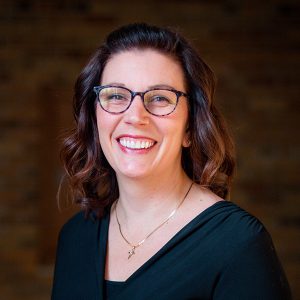
In the dynamic world of education, exceptional mentors play a pivotal role in shaping the future of teaching. Dr. Tanya Johnson, the Program Director of Concordia’s Accelerated Early Childhood Education program, proves the transformative power of knowledge, experience, and faith. Dr. Johnson has an impressive background of over 30 years, showing dedication and commitment to holistically developing young minds.

A Wealth of Expertise

Dr. Johnson’s educational journey is a testament to her commitment to lifelong learning. She has a Bachelor’s in Early Childhood. She also has a Master’s in Curriculum and Instruction, a Master’s in Education Leadership, and a Certificate in Special Education. Additionally, she holds a Doctorate in Educational Leadership, an Infant Specialist Certificate, and an Infant Mental Health Endorsement.

Due to her extensive education, she possesses a deep understanding of early childhood education. These credentials form the bedrock upon which she nurtures future educators.

The Heartbeat of Concordia’s Accelerated Early Childhood Program

Under Dr. Johnson’s astute guidance, Concordia’s Accelerated Early Childhood Education program transcends geographical constraints. Through a blend of online courses and real-time Zoom sessions, students from across the state, including the vibrant city of Milwaukee, find a home here.

The program’s standout feature lies in its accessibility, offering clinical experiences in schools near the candidates’ homes. Graduates gain knowledge and a Wisconsin teaching license for birth to 3rd grade, preparing them for classroom challenges.

Faith Integration: Nurturing Souls Alongside Minds

For Dr. Johnson, education is a holistic endeavor encompassing the mind and the soul. In her classes, faith seamlessly intertwines with the curriculum. Each session begins with scripture, devotion, and prayer, creating a sense of community and belonging. Students find knowledge and solace in this nurturing environment, making every class a journey.

As one student beautifully expressed, “I started writing down the Bible verses of the devotion. The devotion helps me out in every class! It’s like having mini church on a Thursday.”

Dr. Johnson’s Influence: Transformative Teaching Unveiled

In Dr. Johnson’s philosophy, education is a collaborative journey marked by meaningful, reflective, and relevant conversations. Transformative learning experiences equip students with tools drawn from their experiences, ensuring theory melds seamlessly with practice.

Dr. Adam Paape, Assistant Dean in the School of Education, beautifully encapsulates her impact, stating, “Dr. Johnson is a thoughtful and caring colleague. She is a wonderful role model for her students. Her wealth of experience in all areas of early childhood education is so valuable to our students. Tanya was recognized this past academic year as a top 10 adjunct faculty in faith integration and overall learning in her classes. This top 10 designation is based on her students’ responses in end-of-the-course surveys. It is a true joy to serve with Dr. Johnson.”

The Invitation: Cultivating Passion in Aspiring Educators

For post-traditional learners seeking an enriching educational journey, the accelerated program is more than just an academic pursuit; it’s an experience. Dr. Johnson’s leadership fosters an environment where learning goes beyond textbooks, touching the core of one’s being. Aspiring educators, consider this your invitation to embark on a transformative journey. Join Concordia’s Accelerated Early Childhood Education program, where knowledge meets faith and teaching becomes a transformative endeavor, shaping futures and nurturing the essence of future generations.

Dr. Johnson is a testament to an educator’s profound influence on education. As you contemplate your educational path, remember her words: “Be committed to being a champion for young children and doing the right thing for them.” Your journey begins here.

CUWAA announces new business school appointments

Congratulations to these three outstanding faculty members for being named to new positions within the Concordia schools of business!

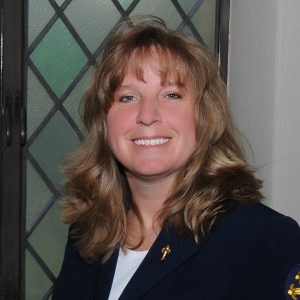
Concordia University Wisconsin and Ann Arbor is pleased to announce new positions for two of our outstanding faculty: Dr. Laura Hurtienne and Dr. Kim Schave. May the Lord be with you as you continue to guide and teach our students in fulfilment of our university’s mission.


Laura Hurtienne, EDD

Director of DBA programs

Dr. Hurtienne will be leading the DBA program and continuing to pursue the Ph.D. program in the School of Business. Her role is to support faculty, students, and staff while advancing the program and living out the university’s mission.

“I’m looking forward to leading the DBA program as we take the foundation that was laid and continue to grow nationally and internationally. Additionally, I have the great opportunity to support individuals with research that can provide new understandings for organizations throughout the world.”


Kim Schave, PHD, CPA

Director of MBA and MSBA Programs

A CPA with a background in public accounting, non-profit accounting, and higher education budget administration, Dr. Schave, assistant professor of accounting, is also a rostered Deaconess in the LCMS, as well as a U.S. Army Veteran (Military Police, Ohio Army National Guard).

“I hope to expand upon our recently launched continuing education program that equips professional church workers with business skills and also serves as a gateway to our MBA program. Our reputation is quickly growing on an international level, which provides us with an opportunity to be witnesses to the ends of the earth as we welcome students from other countries and cultures into our Christian community. I am excited to build upon our corporate partnerships, emphasizing the competitive advantage our faith-based curriculum offers—our students are well-prepared to uphold high ethical standards and exercise responsible stewardship.”


Want in?

The Batterman School of Business (CUW) and the Haab School of Business (CUAA) embolden a network of transformational and collaborative Christian leaders, dedicated faculty, entrepreneurial students, and active alumni who come together to create maximum social impact through ethical practice, innovation and service.

Led by our Christ-centered values, we believe that the best business leaders demonstrate both uncompromising compassion and unmatched competitive skill. Because of this, our education uniquely develops and empowers uncommon leaders who lead beyond the norm, igniting transformative change in themselves, their organizations, and society.


Hector Dominguez and Erin Mitchell are CUW’s September students of the month

Congratulations to Hector Dominguez, a junior Psychology major, and Erin Mitchell, a Doctor of Occupational Therapy student, students of the month for September!


We had a busy September, but let’s not forget that in the midst of the bustle our faculty nominated two exemplary students for Student of the Month! This year faculty are electing an undergraduate and a graduate. Congrats to Hector and Erin!


Undergraduate Student of the Month

The CUW faculty have selected Hector Dominguez as the September Undergraduate Student of the Month. Hector is a junior Psychology major with a Human Biology minor.  He is an engaged, supportive, and positive student, as well as a faith-centered servant leader. He excels both academically and in service, embodying strong Christian values in his classes and community interactions. For example, as a Peer Leader in the General Psychology course, Hector displayed commitment and willingness to go above and beyond what was required of him to create a supportive and engaging learning environment for the students in the course. Additionally, Hector is the President of the Psychology Club, showcasing his eagerness to learn and setting an outstanding example for his peers. As a servant leader, he shows Christ-like love through helping each of his peers feel heard, appreciated, and cared for.

Nominated by Dr. Vittoria Sipone.


Graduate Student of the Month

The CUW faculty have selected Erin Mitchell as the September Graduate Student of the Month. Erin is in the Doctor of Occupational Therapy (OTD) program and consistently goes above and beyond! She works in the OT field as a COTA and simultaneously has been completing coursework. OTD students must plan and execute a 14-week capstone experience in the community. Her capstone site was changed unexpectedly halfway through the planning course. Erin kept a calm, professional, enthusiastic demeanor during this whole process and completed the vigorous written components in a very condensed timeframe.  She produced high quality work that is going to greatly impact the site where she will serve. Erin always finds opportunity amid challenge. She is deeply committed not just to her own success as a student, but also to helping others succeed through her work and service.

Nominated by Dr. Stephanie Bonk.


Want in?

At Concordia University Wisconsin, we believe that education is at the junction of faith and learning. That means that we get to know you personally – your unique gifts and skills – so that we can help you develop fully in mind, body, and spirit to achieve your highest potential. To learn more or to apply, click the link below.


Concordia Director of Church Ministries students learn from the pros

The LCMS South Wisconsin District’s Parish Pro’s group held its bi-monthly meeting on CUW’s campus this week and met with a few of the next generation of church workers.


A first-ever event occurred on Oct. 12 at CUW. Parish Pro’s is a group of LCMS professional church workers in the South Wisconsin District. The group is mostly made up of Directors of Christian Education (DCEs) with a couple of Concordia’s recent Director of Church Ministry (DCM) graduates in the mix.

This group meets bi-monthly at a rotation of locations to discuss their joys, challenges, and ideas for better ministry. Many in Parish Pro’s are DCE Youth Directors in various LCMS congregations. Some hold other congregational leadership positions as called workers. But all of them were excited to meet the next generation of church workers in CUW’s DCM program. 

About 20 on-campus DCM students met with the Parish Pro’s at Concordia for an afternoon in-service occasion. The two groups were mutually excited to meet each other, but the Parish Pro’s were exceptionally eager to pass along the wisdom they’ve accumulated from years of church work. 

DCM students had a hand in selecting the topics of interest to them: 

  • “Interview Do’s and Don’ts” was a session dealing with how to be most prepared for a congregation’s call committee interview as the church considers extending a call. 
  • “Your First Two Years in Ministry” addressed how to best get started at a first call. 
  • “Healthy Team Ministry” considered how a DCM will incorporate into an existing ministry, and how best to support the pastor. 
  • Finally, “Resources for Ministry” gave an overview of websites and LCMS networks to support a church worker. 

Members of the Parish Pro’s group led all sessions, with students asking many questions. The DCM students especially appreciated hearing perspectives from those actually doing the work these students aspire to do. As an added benefit, the Parish Pro’s distributed a bag of “study helps,” consisting of candy and gum.  This first annual event is thanks to Nicole Dollevoet, Youth Director at St. Paul-Sheboygan Falls and current president of the Parish Pro’s; Greg Witto, a DCE and CUW Director of Alumni and Parent Relations; and Rev. Dr. Kurt Taylor, who leads the CUW DCM program. The goal is to make this an annual event at Concordia.         


Want in?

Concordia offers two Director of Church Ministries programs: a bachelor’s degree and a certificate program. Students usually complete the 47-credit DCM certificate in two-and-a-half years. Cohorts only start once per year. Meanwhile, the DCM program for traditional undergraduate students is a 126-credit program that is typically completed in four years.

Christians of other denominations may enroll in the DCM program to receive theological training and grow in knowledge of God’s Word. But, only members of The Lutheran Church–Missouri Synod will be eligible to serve as a rostered worker within the LCMS.


Creating community collaborations: the CUW Social Work Department

One of the ways Concordia’s School of Health Professions achieves a quality educational experience for students is by cultivating and developing meaningful community collaborations. Learn how you can partner with the Department of Social Work.  


In January, Concordia University Wisconsin opened its Interprofessional Clinic, a 9,150-square-foot space designed to enhance student learning opportunities and extend valuable health and social care services to the community. This newly renovated clinic provides much-needed spaces devoted to educating all students to become interprofessional (IP) practitioners. 

Later this month, School of Health Professions alumni are invited to learn more about the important role they can play in supporting the mission of the clinic and Concordia.

Creating Community Collaborations: A CUW Alumni Event

Wednesday, Oct. 25 | 5:30-7:30 p.m.

Department of Social Work IP Clinic applications

The Interprofessional Clinic is utilized by a variety of School of Health Professions programs, including Concordia’s Bachelor of Social Work students. The implications of the space for the social work department are exciting, says BSW Program Director Nichole Ostrowski.

In the near future, the Department of Social Work plans to partner with professions within the School of Health Professions to collect biopsychosocial information on clients seeking services at the clinic. The Department also hopes to use the space to record interviews with students in the BSW program who are learning engagement skills, and the Child Welfare class plans to use the apartment to conduct a mock home visit.

“The Social Work department is excited to collaborate with other health professions to educate our students and comprehensively serve the community,” said Ostrowski.

About the Social Work Department

The Department of Social Work offers both a BSW and a MSW.  The Department of Social Work is housed in the School of Health Professions. The Department currently has six full-time faculty and several dedicated, long-term adjuncts.

On June 16, 1997, the Council on Social Work Education (CSWE) granted initial accreditation for a Bachelor of Social Work (BSW) program at CUW. The program has remained fully accredited since that time. In 2017, the BSW program was expanded to CUAA. In April 2022, the BSW program applied for a substantive change with CSWE to transition its face-to-face accelerated program to a fully online, asynchronous program.  The BSW program has seen some exciting growth and averages a cohort size of roughly15 in both the traditional program and accelerated program. 

The Master of Social Work degree is designed to prepare students for professional practice with individuals, families, groups, organizations, and communities. The MSW is a competency-based degree that emphasizes the significant contribution of knowledge, values, skills, and the importance of cognitive/affective responses to practice situations. CUW offers MSW students an Advanced Generalist specialization. The program also offers students the opportunity to take courses that prepare them to be eligible for clinical licensure in Wisconsin. The MSW program was granted initial accreditation through CSWE in February 2020. In April 2022, the MSW program applied for a substantive change with CSWE to transition to a fully online, asynchronous program. CSWE granted this program change in August 2022. Since the transition to becoming a fully online program we have enrolled students from across the country. The MSW program has seen consistent and steady growth with an average graduating class of 22 students.

The Department of Social Work works with over 250 agencies around the country to place both BSW and MSW students in their field placements.


Want in?

Concordia’s social work program uses Christian service, quality research, and hands-on learning to grow you as a competent professional. Earn your bachelor’s degree at CUW and then continue on to acquire an MSW, the most sought-after social services degree. Learn more about our programs by clicking below.


Former Wisconsin Gov. Scott Walker talks benefits of capitalism at CUW Liberty, Faith, and Economics Summit


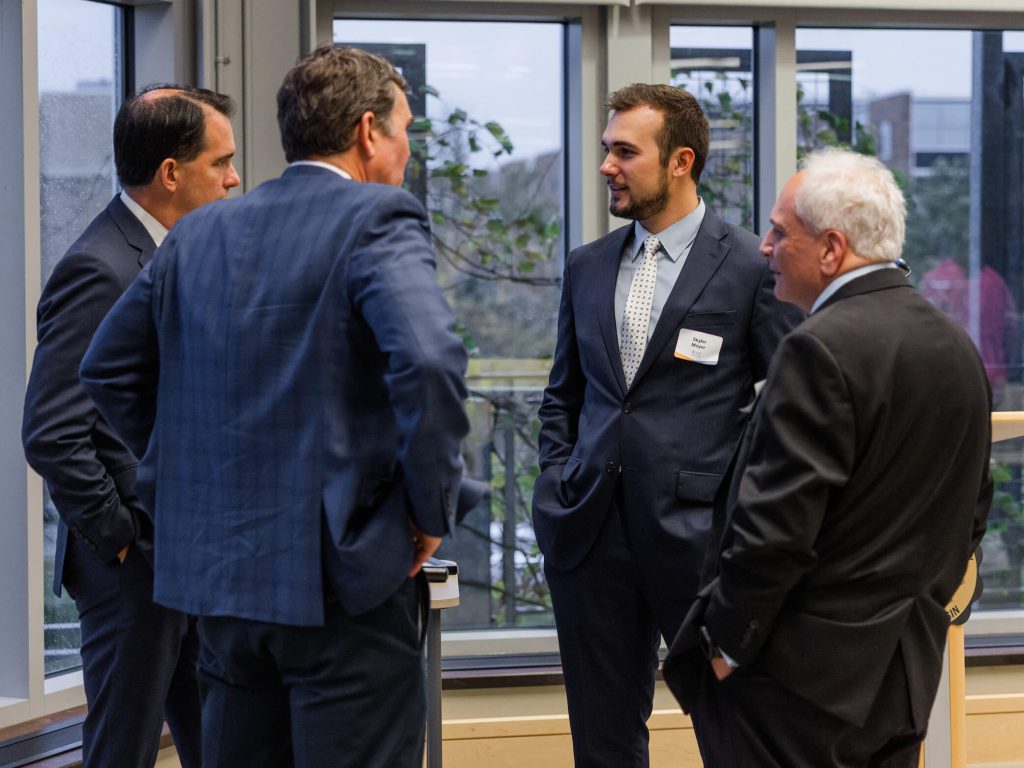
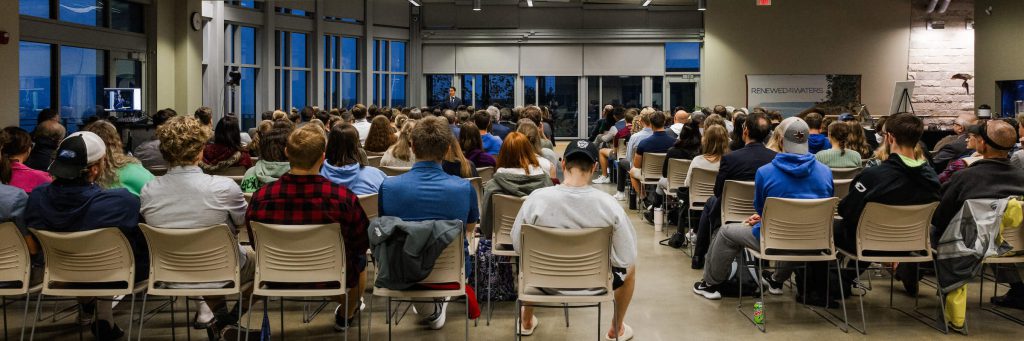
Former Wisconsin Gov. Scott Walker spoke on the dangers of “big government” at Thursday night’s Liberty, Faith, and Economics Summit at CUW.


It’s no secret that former Wisconsin Gov. Scott Walker is a fan of the 40th president of the United States. U.S. President Ronald Reagan espoused an eternal optimism and belief in the American people, Walker said during a Thursday night event at Concordia University Wisconsin.

“More than just ideas and policies, he made me proud to be an American again,” Walker told those gathered. “He rallied what we, as the American people, already knew to be true and compelled us to stand up for it.”

Among the ideas that Reagan championed was the benefits of a free market economy.

“He went out and made the case to the American people about why giving them more of their money back would work,” Walker explained. “And history shows that it worked.”

The benefits of capitalism and its intersection with the Christian faith was the focus of this year’s Liberty, Faith, and Economics Summit. The event, which the Concordia Free Enterprise Center organizes, annually explores topics related to the event’s namesake. Previous year’s summits have drawn speakers of international repute including North Korea defector Yeonmi Park, tech titan Jaron Lanier, and Stanford epidemiologist Jay Bhattacharya.

In addition to Walker, this year’s Liberty, Faith, and Economics Summit welcomed a variety of speakers earlier in the day to address the theme of “Is Capitalism Consistent with a Christian Identity?”:

  • Dr. Greg Beabout | Professor of Philosophy at Saint Louis University
  • Dr. Rachel Ferguson | Director of the Free Enterprise Center at Concordia University Chicago; Assistant Dean of the College of Business; Professor of Business Ethics
  • Rev. Dr. Jason Lane | Assistant Vice President of Academics for the Core Curriculum at CUWAA; Associate Professor of Theology
  • Mr. Bob Simi | Executive Director of the Milwaukee Regional Medical Center
  • Dr. Tyler Watts | Professor of Economics at Ferris State University
  • Mr. Larry Reed | President Emeritus of the Foundation for Economic Education

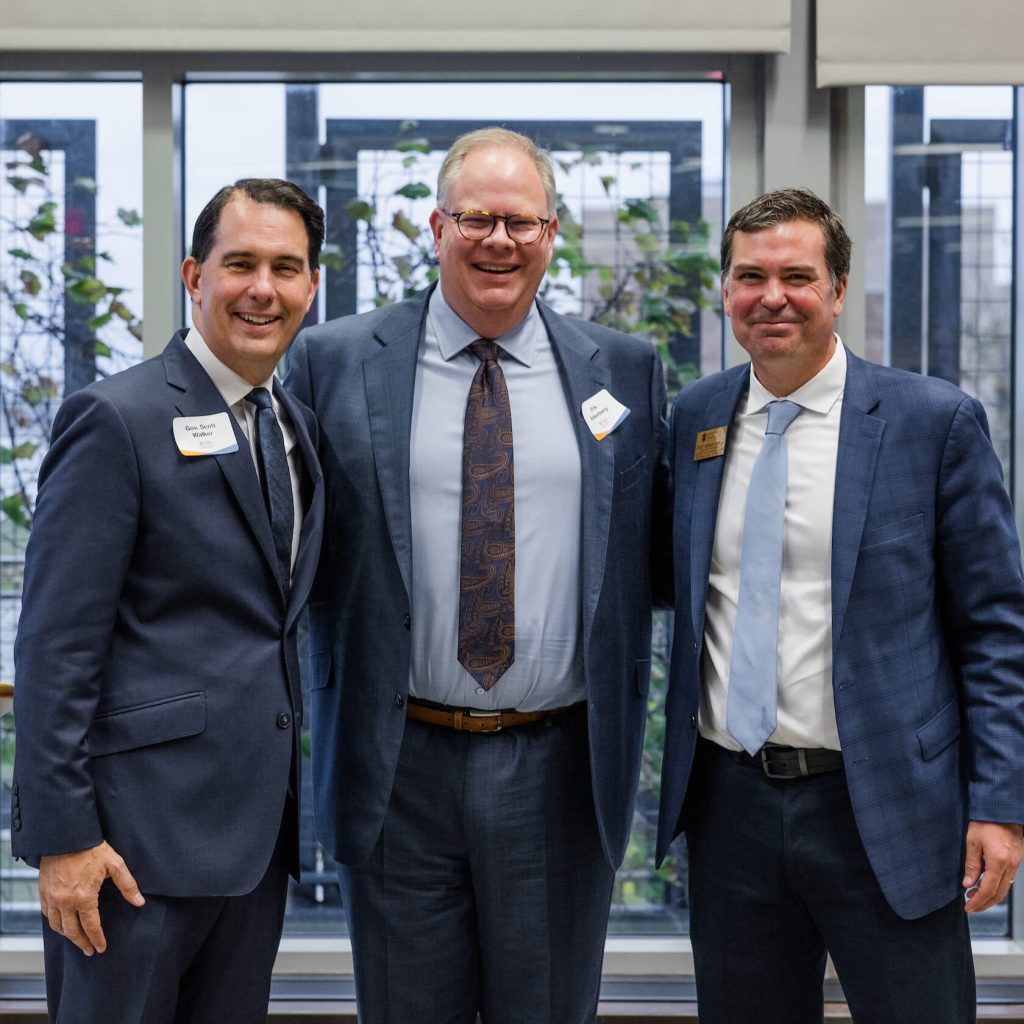
Above: Gov. Scott Walker, CUWAA President Erik Ankerberg, Concordia Free Enterprise Center Director Scott Niederjohn

Concordia launches YAF student chapter

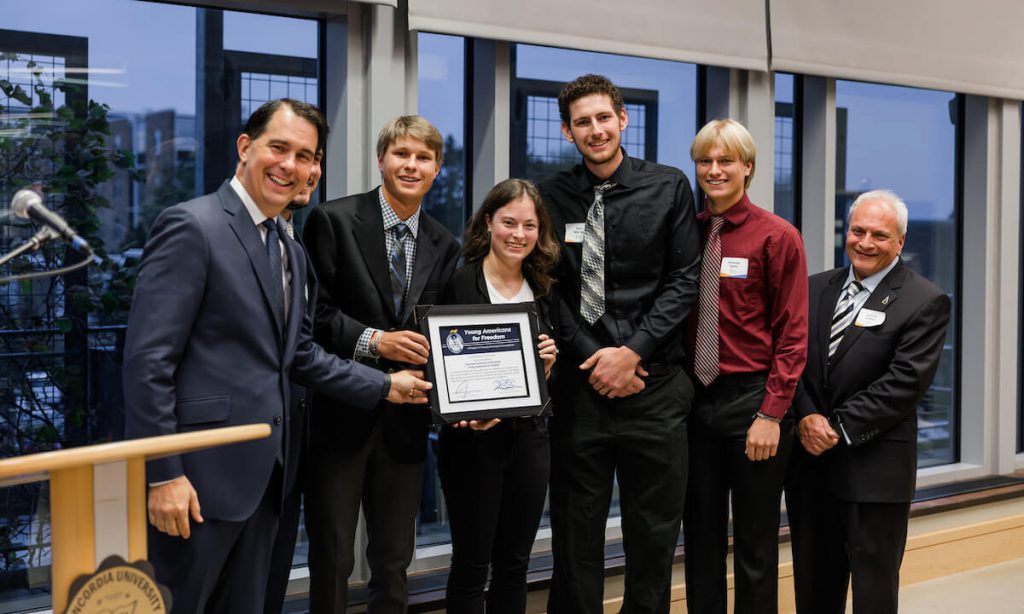
Ahead of Walker’s keynote address, the former governor took a moment to recognize the launch of Concordia’s Young Americans for Freedom (YAF) chapter. YAF is a national nonprofit affiliated with Young America’s Foundation, for which Walker currently serves as board president. Young America’s Foundation is the leading organization for young conservatives, and has contacts on more than 2,000 college campuses. Dr. Lamont Colucci will serve as the faculty advisor for the new Concordia chapter.


Want more?

The Concordia Free Enterprise Center (CFEC) hosts the annual Liberty, Faith, and Economics Summit. The Center opened in fall 2021 under the leadership of Scott Niederjohn, a nationally recognized economist and scholar who now serves as a professor of economics at CUW. The Center aims to support the ideals of a free and virtuous society through four areas: research, education, application, and public policy.

The next CFEC-hosted event will take place Thursday, Oct. 26 at 6 p.m. in Concordia’s Todd Wehr Auditorium. Jason Riley, a senior fellow at the Manhattan Institute and a columnist for the Wall Street Journal, will speak on “Why Thomas Sowell Matters.”

Registration for Riley’s talk is preferred, but the event is free.


What They Do: Student Government Association


You have probably seen the signs outside the cafeteria: “SGA Board,” “Sponsored by SGA,” or “SGA Pop-Out.” But do you actually know what SGA does? Honestly, do any of us remember what the acronym means anymore?

Student Government Association President Abigail (Abby) McGue sat down with me to discuss what SGA is and what they plan for this year.

“SGA stands for Student Government Association; it’s completely student-led and run. Our executive board, committee chairs, and senate make sure there’s a place for every student to be involved somehow,” McGue explained.

SGA exists for a number of purposes: they fund activities, provide charters and funding for student clubs, and take on big projects and events that no one organization could necessarily host alone.

“This year we’ll be doing our Pop-outs, which I’m sure you’ve seen signs for around campus. We also host the Dance Through the Decades in spring,” McGue said.

How do they have all this money? Most of it comes from the student government fee in your tuition. In turn, SGA focuses primarily on supporting traditional undergraduate students, as they’re the ones who pay the fees to make sure SGA can keep working.

“The way we decide to support anything is ‘Could it benefit most students?’ For example, a Res Life event will benefit a lot of students but might not have a lot of funding,” McGue said.

Other big projects on the docket for SGA this year include replacing the “outdated” glass panels in the chapel hallway so that students can see faces they might know from the past two years “instead of the last twenty.”

“General facelifts we want to see: SGA has been working to improve the undercroft and the tunnels for years. Students walk through and spend time in them, the commuter lounge, the landing, these spaces we see every day, we make sure that either we improve them or someone else gets the project done,” McGue said.

SGA might not be for everyone, but because everyone is affected, McGue encouraged everyone to learn more.

“I know not everyone is interested in joining student government, but we all have ideas to make things better. That’s what SGA is here to do,” McGue said. “Think of SGA as how you start a club, do big projects: if someone has a big idea I don’t want it to stop there.”


To learn more about SGA, follow them on social media or email the president at abigail.mcgue@cuw.edu.


an image of Samuel Boehlke

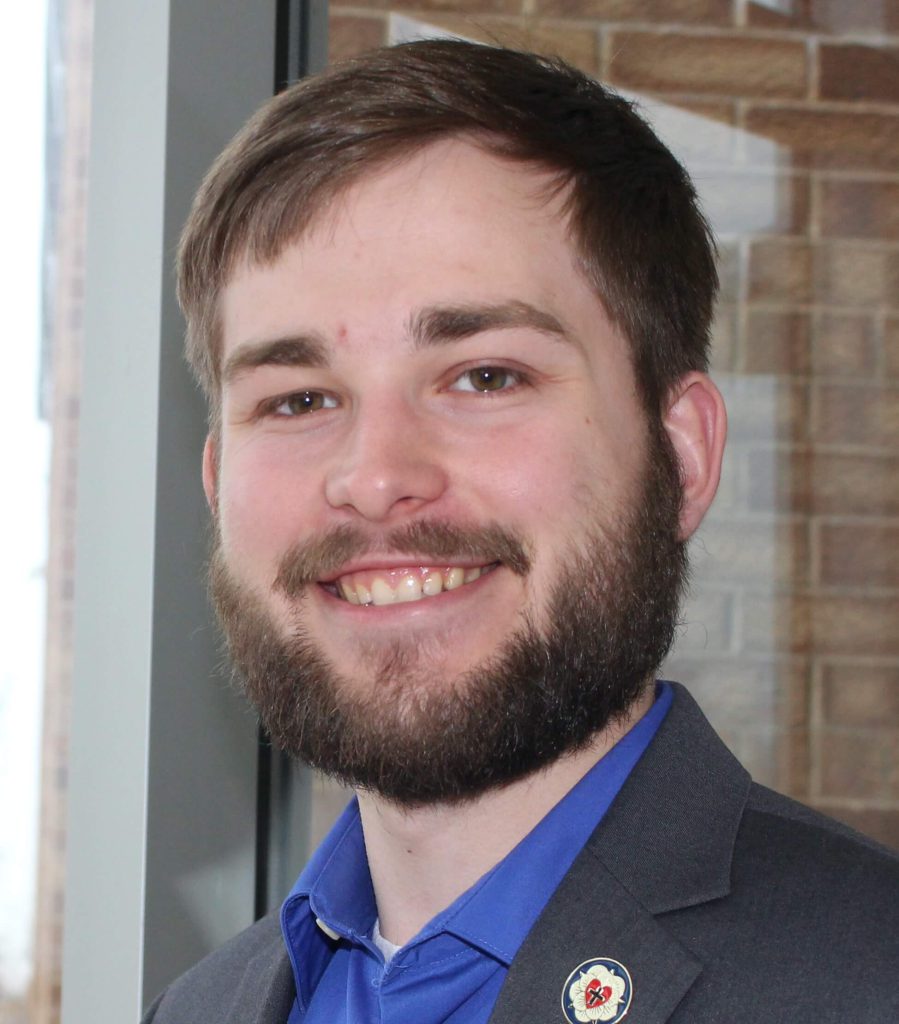
—Samuel Boehlke is an editor, blog manager, and photographer for The Beacon, the official student newspaper of Concordia University Wisconsin. He is a Senior Editor with New Guard Press and Veraffinitas and a contributor at Wisconsin Right Now and The Federalist. He will graduate in May 2024 with his bachelor’s degree in Mass Communication and a minor in Law and Politics.

CUW fall music roundup

Don’t miss out on experiencing one—or all—of the memorable music performances coming up at Concordia University Wisconsin during the fall semester!


Those lovely sounds you hear floating through various hallways of CUW are the echoes of our gifted student instrumentalists and vocalists preparing for fall concert season at Concordia. Will you be there to hear them when they perform? Now is the time to mark your calendars and reserve tickets for these upcoming events! Things kick off in a few weeks with the Instrumental Pops Concert (always an audience favorite!) and wrap up with the time-honored, always wonderful Christmas at Concordia. Don’t miss out—make plans today!


All events take place in the Chapel of Christ Triumphant on the CUW campus. Tickets for all concerts, except Christmas at Concordia, are free for CUW students, faculty, and staff.

Instrumental POPS Concert

Friday, November 3 | 7:30 – 9:00 p.m.

Celebrate the start of the Fall season with the CUW 2023 Fall Instrumental POPS concert! This concert features performances by our University Band, Jazz Ensemble, String Orchestra, and Symphonic Wind Ensemble.

Get Tickets


Jake Brennan Senior Recital

Saturday, November 4 | 7:00 p.m.

Senior Jake Brennan of Grafton, Wisconsin, will showcase his God-given talents and hard work throughout his time at CUW in this saxophone recital. All are welcome to come and listen to some excellent music, and support Jake in this benchmark event of his college career. Admission is free.


Civic Chorale and Handbells Fall Concert

Saturday, November 11 | 3:30 – 5:00 p.m.

Our Civic Chorale choir consists of faculty/staff, students, and community members coming together to sing these beautiful works. The handbell performances will be by both our touring handbell choir, Alleluia Ringers, and our Chapel Ringers. This concert is a perfect way to celebrate the Fall season.

Get Tickets


Christ the King Celebration

Sunday, November 19 | 3:30 – 5:00 p.m.

This concert series is an annual tradition. Come see Kammerchor, our touring choir, and Selah, our treble choir, perform in celebration of the last Sunday of Pentecost.

Get Tickets


Christmas at Concordia

Friday & Saturday, December 1 & 2 | 7:30 – 9:30 p.m.

This event features all of CUW’s instrumental, vocal, and handbell ensembles; including Kammerchor, Selah, Chapel Choir, Alleluia Ringers, Chapel Ringers, Symphonic Wind Ensemble, University Band, Jazz Ensemble, String Ensemble, and Civic Chorale. Welcome in the glory of Christmas with all the hard work put forth this year by Concordia’s music ensembles!

Tickets go on Sale November 1.


Grace Amundson Senior Recital

Saturday, December 9 | 3:30 p.m.

Senior Grace Amundson of West Bend, Wisconsin, will showcase her God-given talents and hard work throughout her time at CUW in this piano recital. All are welcome to come and listen to some excellent music, and support Grace in this benchmark event of her college career. Admission is free.


Want in?

Since 1881, Concordia University’s mission has been teaching and preparing students for careers and vocations that serve The Lutheran Church—Missouri Synod. Music has always been an integral part of that mission. The music department contributes to the spiritual, cultural, artistic, academic and co-curricular aspects to University life on campus. As the campus has grown in scope and size the music department has become more integral to the University mission.


The Essential Guide to Earning a Rehabilitation Science Degree

Are you someone who has a deep love for people? Does helping someone recover from an injury or a medical condition sound right for you? Rehabilitation sciences could be the perfect field for you.

What is rehabilitation science?

Rehabilitation science is an interdisciplinary field that studies and applies principles to enhance the quality of life, functional abilities, and independence of individuals with disabilities or those recovering from injury, illness, or surgery. It encompasses many disciplines, including physical therapy, occupational therapy, speech-language pathology, kinesiology, psychology, and more.

Rehabilitation professionals have a vital role in mitigating the effects of a health condition on an individual’s daily life. They work to maximize functioning and minimize the impact of disability. The scope of rehabilitation extends beyond preventive and curative care, aiming to enable those with health conditions to maintain independence and engage in education, employment, and meaningful life roles. Rehabilitation can be relevant to anyone during their lifetime, whether due to injury, illness, disease, or age-related decline in functioning.

Why are rehabilitation professionals important?

The biggest reason rehabilitation professionals are crucial is that they provide services that allow people to return to regular life functions. This includes the person’s physical, emotional, psychological, and economic functions. What is often overlooked in the medical field is what happens after someone is released from the hospital or treatment. Rehabilitation professionals are there every step of the way after an initial accident or treatment. Rehabilitation professionals want to get clients back to their regular everyday activities and ensure their procedures/ practices have long-term effects rather than short-term benefits.

What are some pros and cons of being a rehabilitation professional?

While a career in rehabilitation sciences can be highly fulfilling, it can also be exhausting. Here are some pros and cons of becoming a rehabilitation professional.

Pros:

  1. Rewarding work: People go into this field primarily to help clients overcome challenges and improve their quality of life.
  2. Diverse Opportunities: Rehabilitation includes various disciplines such as physical therapy, occupational therapy, speech-language pathology, and more.
  3. Variety: Every client will have a different condition, story, and reason they are there. Professionals get the opportunity to work in several different settings.
  4. Work-life balance: The ability to have a schedule that accommodates an individual’s lifestyle is a top priority for many people. Rehabilitation professionals have the opportunity for a flexible work schedule.

Cons:

  1. Physical Demand: Working in this field will take a physical toll on the body. Standing most of the day, heavy lifting, and coming home sore can be exhausting. 
  2. Challenging Patients: Everything is about the client, but occasionally, you will encounter patients who are challenging to work with. The job is not always easy, and there will be patients who will resist the help you are trying to give them. Sometimes, it will be uncomfortable, and issues could become complex.
  3. Paperwork on Top of Paperwork: For every patient you work with, there will be piles of documentation to fill out.
  4. Exposure to Germs: When working with people, sickness is always possible. Especially when working with patients because you might treat people with a contagious disease.

Working in this field is extremely rewarding, but it does have its demands.

What are rehabilitation sciences jobs?

There are numerous jobs to get within rehab sciences; here are a few:

  1. Case Manager: Coordinates treatments for clients and helps them understand what they need specifically for their condition.
  2. Occupational therapist: Assists patients recovering from injuries or disabilities to develop everyday skills.
  3. Physical Therapist: Helps patients lessen the pain caused by an illness, injury, or disability.
  4. Rehabilitation Director: Responsible for all of the operations at a rehab facility.
  5. Design engineer: Creates products for people with disabilities, such as prosthetics, to assist with daily household activities.
  6. Clinical research coordinator: Does medical studies, runs clinical trials, and collects data obtained from research.

You can find opportunities in diverse sectors depending on your interests and additional skills. However, many career opportunities in rehabilitation sciences require additional education. Let’s look at two career opportunities Concordia offers to further your career.

All About Occupational Therapists

Occupational therapists use functions of everyday life to promote health and allow patients to participate in life activities. These activities include getting ready in the morning, cooking, going to school, working, running errands, etc.

An occupational therapist differs from other healthcare professionals. Occupational therapy focuses on the entire person rather than one specific thing. When a patient goes home from the hospital after surgery or an injury, a nurse might help with the pain or explain how to take care of dressing changes. An occupational therapist will tailor their recommendations to each client specifically. Based on each person’s lifestyle and situation, occupational therapists assist patients with their own needs.

Here are some key responsibilities and skills of an occupational therapist:

  1. Evaluating the patient: Each patient is assessed for their specific condition and needs.
  2. Develop a plan: Once the patient is evaluated, a treatment plan can be created based on the patient’s specific lifestyle.
  3. Documentation: Throughout the process, documentation is always being filled out.
  4. Communication: Occupational therapists must communicate effectively with their patients to understand their needs.
  5. Problem-solving: Every patient will be different; flexibility and exploring other options is essential.

How to become an occupational therapist

Similar to other healthcare professions, occupational therapy requires extensive education and training. Occupational therapists enter the workforce with a master’s degree or an entry-level doctorate degree in occupational therapy.

  1. Do research and gain experience: No matter what profession someone goes into, it is always important to research the occupation. Before entering the medical field, having some experience is helpful. 
  2. Obtain a bachelor’s degree: Start by earning a bachelor’s degree in pre-occupational therapy or a degree in a health or science field.
  3. Earn an advanced degree: To work as an occupational therapist, at least a master’s degree is required. A doctorate is also common for many occupational therapists.
  4. Obtain state licensure: To practice as a professional occupational therapist, you must obtain a license from your state’s licensing board. Licensure requirements vary by state but will all require passing the National Board for Certification in Occupational Therapy (NBCOT) exam.

Remember that the specific steps and requirements can vary based on your location. It’s important to research the requirements in your state to ensure you’re on the right path toward becoming a licensed occupational therapist.

According to the Bureau of Labor Statistics, occupational therapists earn a median salary of $85,570.

All About Physical Therapists

Physical therapy is all about preventing injury and recovering. Physical therapists find cost-effective ways to improve mobility. Their treatments help relieve pain and reduce the need for surgery and other prescription drugs. Every treatment and recovery plan is designed for each patient’s individual needs.

A physical therapist can work in various settings. Examples include hospitals, private practices, schools, and fitness facilities. These locations need physical therapists to help people develop healthier physical lifestyles.

Here are some key responsibilities and skills of a physical therapist:

  1. Examination of the patient: Every physical therapist must evaluate patients’ medical history, review medications, and perform tests to ensure they treat each patient accurately.
  2. Make a diagnosis: A physical therapist must develop a diagnosis once the evaluations are complete.
  3. Treat a variety of different conditions: There are several types of conditions physical therapists will work with; some include arthritis, brain injury, chronic pain, obesity, or sports injuries, along with others.
  4. Detail-oriented: Physical therapists need to pay close attention to detail. Different diagnoses and documentation will have detailed questions and things to note.

How to become a physical therapist

Similar to other healthcare professions, physical therapy requires extensive education and training. Physical therapists enter the workforce with an entry-level doctorate degree.

  1. Do research and gain experience: No matter what profession someone goes into, it is always important to research the occupation. Having some experience in the medical field may be helpful.
  2. Obtain a bachelor’s degree: Start by earning a bachelor’s degree in pre-physical therapy or obtain a degree in a health-related field.
  3. Earn an advanced degree: To work as a physical therapist, a master’s degree is required. Just like occupational therapy, many people get a doctorate degree as well.
  4. Obtain state licensure: To practice as a professional physical therapist, you must obtain a license from your state’s licensing board. Licensure requirements vary by state but will all require passing the National Physical Therapy Examination (NPTE) exam.
  5. Complete a residency (optional): Some physical therapists choose to complete a residency before entering the job market. More experience and credibility with patients can be gained by completing a residency.

Remember that the specific steps and requirements can vary based on your location. It’s important to research the requirements in your state to ensure you’re on the right path toward becoming a licensed physical therapist.

According to the Bureau of Labor Statistics, physical therapists earn a median salary of $97,720.

Are rehabilitation professionals in high demand? Why?

Yes! Any health profession occupation, specifically within rehabilitation professions, is always important and in high demand.

People seek occupational or physical therapy to recover from an accident or illness. These injuries and conditions are always apparent. There are always clients who need rehabilitation. Some people will specialize in a specific therapy area because of the increased demand for those services.

Rehabilitation professionals work with people of all ages. There is continually a need for more and more workers in the field.


What makes Concordia’s Bachelor’s in Rehabilitation Science program unique?

Concordia’s Bachelor in Rehabilitation Science program offers two options: pre-occupational therapy and pre-physical therapy.

Our exceptional instructors contribute to a personalized learning experience for our students. These dedicated educators actively engage in their respective fields, offering individualized attention and bringing current real-life examples and research into the classroom.

Additionally, the flexibility of our online coursework proves invaluable to students leading busy lives and other commitments outside of their educational journey.

How is Concordia University unique?

Concordia is a Lutheran Christian school that integrates those Christian values with our programs. In this model, students acquire knowledge and skills in liberal arts disciplines that prepare them to serve Christ in the Church and the world. We bring a holistic approach to every class we offer our students.

We challenge our students academically but allow them to grow spiritually with us in ways they may not find at other universities. Concordia is a community whose calling is to ensure student success and well-being.

How long does it typically take to complete the degree?

Pre-occupational therapy students can complete the Master of OT in 4.5 years or the Doctor of OT degree in 5 years. Pre-physical therapy students can complete the Doctor of PT degree in 6 years rather than 7.

What format is offered? How long are the classes?

Our Bachelor’s in Rehabilitation program is offered in person with options for some online classes. Classes vary in length depending on the class type. Lab requirement courses will be longer than other traditional courses. Online classes will either be asynchronous or self-paced.

Who are the faculty in the program? Will students have regular communication with them?

Backed by a dedicated team, our program benefits from the expertise of faculty members actively in the field or experienced rehabilitation professionals.

Our professors want the best for our students. They are here to help with any questions or concerns students may have. There will be a constant flow of communication between professor and student. Additionally, if students have questions or need to contact a professor, they will have ways to do that.

How much does the program cost?

Check here for tuition prices and fees. There are 120 total hours required.

Are there scholarships available?

Yes! We have many scholarships and grants available for undergraduate students. Additionally, you can fill out a Free Application for Federal Student Aid (FASFA) to find out if you qualify for any Federal or State aid.

Entrance Requirements

  • High School Diploma
  • 3.0 GPA for full acceptance

Admission Requirements

  • Apply Online
  • Official High School transcripts (College transcripts if applicable)
  • Official ACT or SAT scores

Ready to start?

Check out our program page below to learn more about the Bachelor’s in Rehabilitation Science degree.

Information provided by Steven M. Cope, ScD, a Professor and Chairperson for the Department of Rehabilitation Science at Concordia Wisconsin and Ann Arbor.