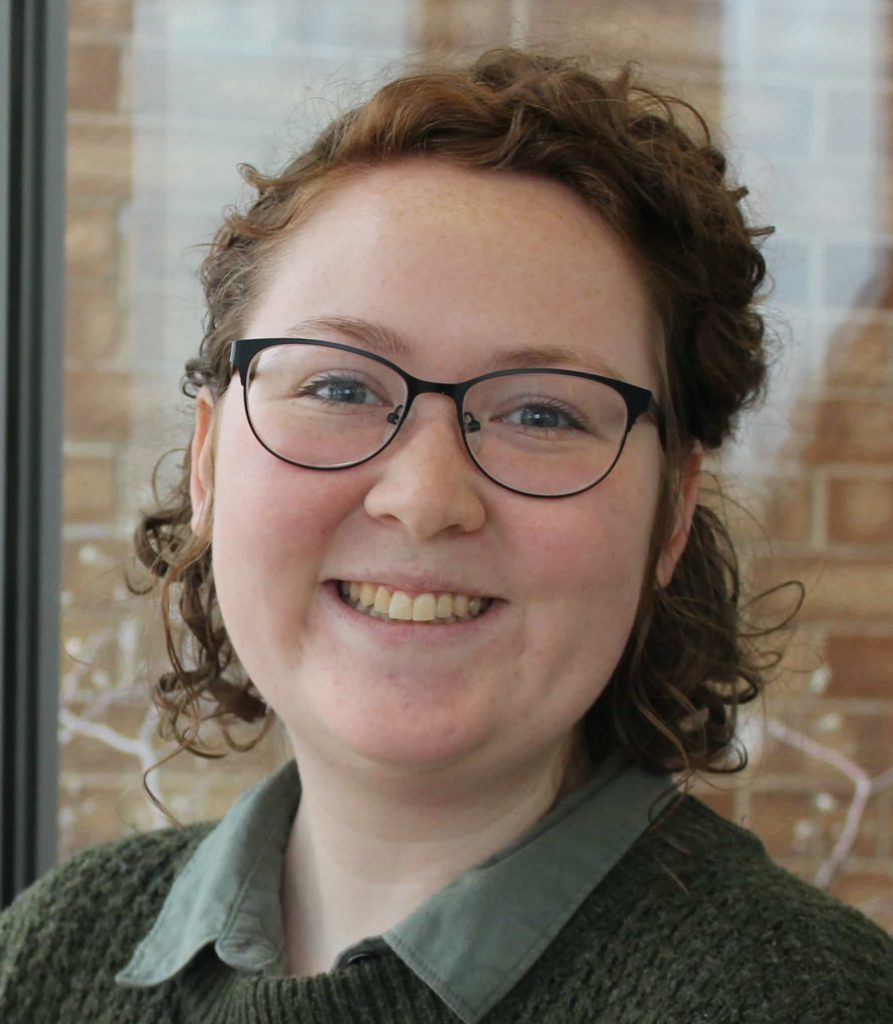
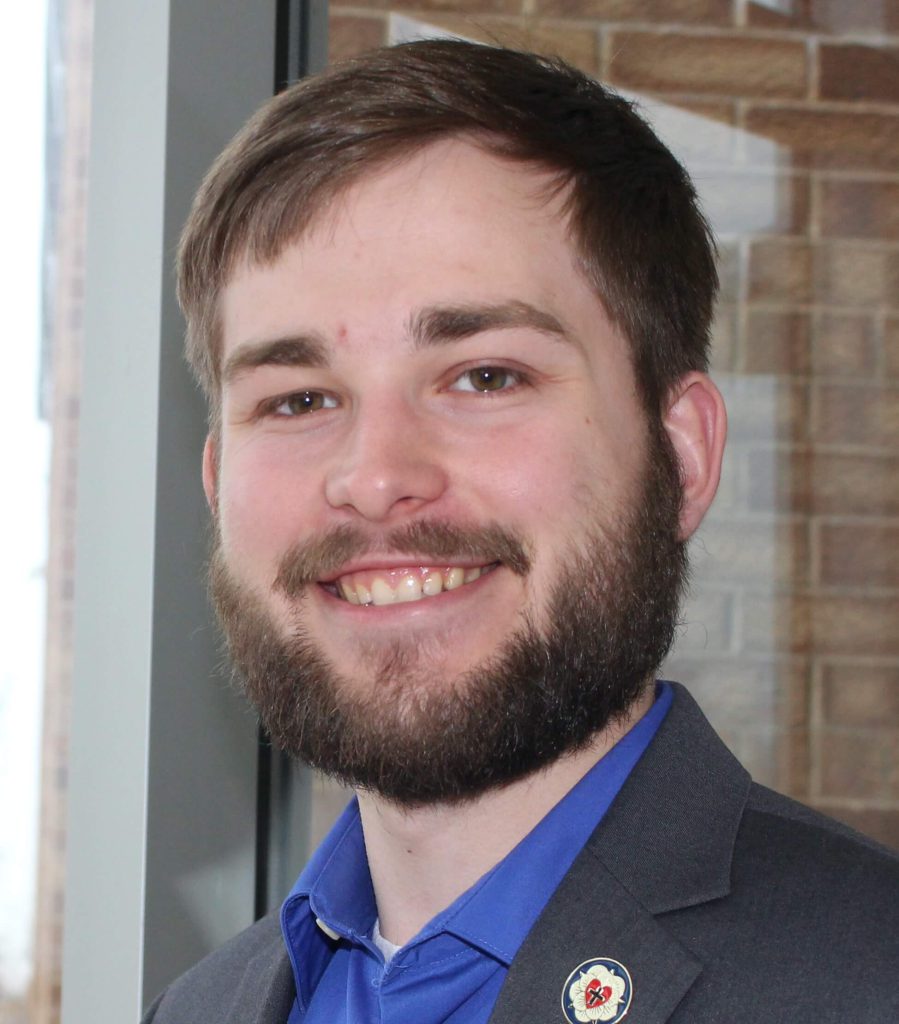
Concordia University starts new compassion care certificate as they welcome new Comfort Dog, Grace


Compassion Care Certificate

Concordia University Wisconsin recently began a new certification program called Compassion Care Certificate. In this program, students are able to earn two certificates; one through Concordia University and one through a local dog training facility, Dawgs in Motion. Department of Education-Elementary professor Dr. Nicole Muth, one of the leading professors of the program, explains the difference between the two certificates.

​“You earn a certificate through [Dawgs in Motion] in handling and training a dog for a vocational setting… [The Compassion Care Certificate] provides you with skills and experiences in providing compassionate caregiving skills in different vocational settings.” These settings can include a school setting, counseling office, etc.

​The Compassion Care Certificate is earned through Concordia University. This program may not work directly with the comfort dogs and has more do to with putting caregiving into practice. Unlike the certificate through Dawgs in Motion, this one will also be reflected on the student’s transcript.

​While the program is open to all students, the certificate is mainly directed towards students with majors such as education, athletic training, psychology, and social work, as many of the students within these majors will later on require the skills they offer.

​The program is made up of twelve credits and offers two courses per semester. The courses are not required to be taken in a specific order besides taking comfort dog handling and skill development first.

Concordia’s Newest Comfort Dog

While this program does earn you a certificate to be a comfort dog handler, students must still apply to be a handler for one of Concordia’s own comfort dogs on campus. During this process, students will be required to submit an application and complete an interview with either,Dr. Muth, school counselor Dave Enters or Department of health and human performance professor, Dr. Rhonda Verdigan. Although, the number of handlers needed each year is limited, the number will be increased due to the addition of Grace, Concordia’s newest comfort dog.

​Grace has been working hard and has completed all training needed to be a certified comfort dog. She is set to join the Concordia University Wisconsin campus this coming fall.

​“She’s been on campus twice so far and we are hoping to have her on campus a couple more times this spring to start to acclimate her to our campus,”said Dr. Muth.

​For more information on how to become a handler for Grace, please reach out to Dr. Muth at Nicole.muth@cuw.edu.

—Tess Miller is writer for The Beacon, the official student newspaper of Concordia University Wisconsin. She is a junior pursuing her bachelor’s degree in mass communication.

A Day in the Life as a Student Athlete 


Being a college student can be draining, stressful, and very busy. Students have endless daily commitments: class, sports, clubs, clinicals, etc. In addition to all of that, we have homework, exams, and projects to do. Have you ever wondered what it is really like to be a college student? 

I am a junior studying mass communication and minoring in social work, plus a part of Concordia University Wisconsin’s Acrobatics & Tumbling team. A day in my life consists of many different things and I am going to give you a little preview of it.  

Schedule: 

4:40 A.M. Wake up 

6:00-9:00 A.M. Practice  

9:00 A.M. AT Recovery and Breakfast 

9:30-11:00 A.M. Get ready for the day 

11:30 A.M. Lunch 

12:00-4:00 P.M. Class 

4:15-5:00 P.M. Lift 

5:30 P.M. Dinner 

6:00-10:00 P.M. Homework and Free Time 

Repeat tomorrow! 

When you’re a collegiate athlete, responsibilities and time management are crucial. School, practice, weightlifting, meetings, and all the other demands student athletes face can become exhausting, but we are so much more than just our routine. A student athlete’s commitment is amazing, and Concordia creates an environment that encourages mental and physical growth. 

I live by the mantra, “Drive, discipline, and determination is all it takes.” Each day should include setting goals, following your heart, and not letting anything stop you from achieving your dreams. Remembering why you started helps you succeed; greatness is achieved by working hard. Even when you’re tired and ready to quit, remind yourself that hard work makes champions, and every day is a new day.  

God’s word is always within us, and with him we should not fail. “My flesh and my heart may fail, but God is the strength of my heart and my portion forever.” Psalm 73:26. Love what you do because if you don’t, you won’t have the drive to accomplish your goals.


—Paityn Taormina is writer for The Beacon, the official student newspaper of Concordia University Wisconsin. She is a junior mass communications major with a minor in social work.

Nurse practitioner graduates excel on AANP certification exams

Congratulations to CUW’s recent School of Nursing masters degree recipients who performed so well on their certification exams!


Concordia University Wisconsin celebrates our 2022 nurse practitioner graduates from the School of Nursing. Not only did they achieve 95-100 percent first-time pass rate on their AANP (American Academy of Nurse Practitioners) certification exams, they beat the national averages across the board—by a substantial margin.


2022 AGNP (Adult-Gerontology Primary Care Nurse Practitioner) Certification Exam
  • CUW First-time Pass Rate: 100%
  • CUW Average Score: 659 | National Average Score: 565
2022 FNP (Family Nurse Practitioner) Certification Exam
  • CUW First-time Pass Rate: 95%
  • CUW Average Score: 600 | National Average Score: 537

In addition, CUW graduates also surpassed all of the national averages in the Assess, Diagnose, Plan, and Evaluate sections for both the AGNP and FNP exams.

“These results reflect what a rigorous program we offer, and what an exceptional group of students we have,” said, Diane Ames, DNP, FNC-BC, dean of the CUW School of Nursing. “I and the entire Nursing faculty are extremely proud of our students and their accomplishments. They are wonderful representatives of our school and our mission for Christ.”

Congratulations to all these fine graduates! Thank you for making our university so proud.


Want in?

The School of Nursing is dedicated to providing a rigorous Christ-centered education that develops and inspires highly skilled professional nurse leaders who are prepared to serve diverse communities with excellence, truth, integrity, and compassion to promote health and healing.


Should I still get an MBA?

Is an MBA still relevant? Ask this question to several people across a variety of industries and you’ll get a number of different responses.

Is an MBA Still Relevant?

It’s a popular question these days. Even Forbes, the global media company devoted to finance, has gone back and forth on it, posting back in 2016 about reasons not to get an MBA and then posting again in 2019 about how to determine who should get an MBA.

So the question remains…is an MBA still relevant?

The answer is a clear, firm…maybe. It might just depend on your chosen industry and career goals.

The myth that everyone needs an MBA to “make it” in business has been debunked time and again, but are there still really good reasons to pursue your MBA? Read about some reasons why alumna Elaine Ruh pursued her MBA.

Why Should I Get an MBA?

Specialized for Your Career Goals

The modern MBA can be specialized to suit your needs. In fact, many programs have core courses that align with both the university’s philosophies along with industry-required skills. Then, outside of this core content, you can choose the path that best aligns with your goals. These different paths we call specializations, which are a great way to show competency within your industry. For example, Concordia University offers 14 specializations for the MBA program. These specializations build expertise that translates into greater impact in your field and stronger outcome potential.

Grow your skill set

Taking MBA courses gives you the dedicated time and space to dabble in different areas. If you’re already in finance, you’ll have a chance to explore management or marketing at a high level, for example. If you’re pivoting in your career, an MBA can be a great way to solidify your skill set so that future employers understand that you’re competent in business administration.

Beyond the subject matter, getting your MBA can help you develop other skills, too. You will experience significant growth as a communicator throughout your time as an MBA student. Whether it’s written communication through research papers and discussion posts or it’s verbal communication in presentations and discussions, expect to grow as a communicator.

In addition to communication, you’ll grow in your understanding of data. Business Analytics is a buzzword these days, and for good reason. You should expect to be challenged when it comes to working with data. After all, you can expect to be responsible for some level of data analysis and communicating your findings to a variety of stakeholders in the future.

What experience are you hoping for?

Understanding your why is critical to your success in any graduate program. Working out why you want to pursue an MBA enables you to focus on the habits that will lead to your successful outcome and keep you motivated. You will need to set aside time specifically for growth in business-related skills. While that may sound intimidating, it also can be really freeing. When you have classes to attend and deadlines to meet, it’s a commitment to bettering yourself. Leadership formation and personal growth happen gradually and over time.

While the coursework is central, a lot of the learning and personal growth during your MBA happens through networking and interacting with classmates. Everybody brings their own life experience, knowledge, and story with them to class. By engaging in class discussions, whether virtual or in-person, you will broaden your mindset. You’ll have to remember how to organize your ideas logically and disagree charitably. When hearing your classmates share their work or their perspectives, you’ll be growing as a listener and a thinker.

Learn from Industry Experts

Additionally, relationship-building goes beyond your peers. Many MBA professors are adjunct professors, and that’s usually because they’re current, industry professionals. You have a front-row seat to watch an industry expert teach from their own experience in the field. These professors teach in their spare time because they love what they do, and they’re passionate about inspiring and preparing the next group of leaders.

Networking opportunities make an MBA extremely relevant today. While networking can be more straightforward these days due to LinkedIn and other social media advances, often connecting directly with a guest speaker from your Strategic Management course or interviewing for an internship your professor recommended can open up opportunities for you that wouldn’t be possible otherwise. 

Yes, an MBA is still relevant! But is an MBA relevant for you?

Hopefully, by now, you have the understanding to answer this question. If not, tell us your story, and we can advise you through our industry knowledge whether or not the MBA meets your personal and professional goals.

This blog was originally published on October 27, 2020. It has been updated to reflect current information.

How to become a speech pathologist

Speech-language pathology is a great career choice if you are interested in assisting patients in overcoming speech and language disorders.

What is speech pathology?

Speech pathologists help patients improve their speech and language disorders. A speech disorder is a condition that prevents a patient from producing sounds needed for speech. Whereas, a language disorder prevents a patient from understanding and communicating their feelings and thoughts. Becoming a speech pathologist is a wonderful way to impact your community and help those in need. But how do you become a speech pathologist?

There are so many degrees and pathways available for college students. As a result, finding a way to become certified for a career can be overwhelming. Before applying for certification through ASHA (American Speech-Language-Hearing Association), a linear pathway can be hard to find. To start, here is a step-by-step process to becoming a certified speech pathologist:

Becoming a certified speech pathologist

To begin, you’ll need to get an undergraduate degree. Any bachelor’s degree in a similar field will be useful for preparing yourself to get your master’s degree. Already have a bachelor’s degree? Continue to the next section!

Classes in degrees like a bachelor’s in communication sciences and disorders, English, education, or psychology will give you a great  springboard for the more challenging content of a master’s degree. After you have your bachelor’s sorted you will be ready to go for your master’s.

How long is speech pathology school?

Next, you will need to take all of the knowledge you have gained and apply it to your master’s degree in speech-language pathology. At Concordia University Wisconsin, we have an excellent Master’s in Speech-Language Pathology program that pushes students to have a positive influence on their communities by challenging critical thinking within their vocation. Over the course of 2-years, you will build confidence in your skills of prevention, diagnosis, and effective treatment.

Graduating with a master’s in speech-language pathology

Our program is CAA (Council on Academic Accreditation) certified. This means you will be fully prepared for the next steps after graduation, like applying for licensure and certification. Also, our own state-of-the-art, on-campus Speech, Language, and Hearing clinic will help prepare you with real world experience to excel in your future vocation.

After you have graduated with your master’s in speech-language pathology, you will be ready to apply for certification through ASHA. Post-graduation and pre-application you also need a passing Praxis Exam score. The Praxis Exam is a content exam that will assess your knowledge in your field developed by ASHA. 

When you pass the Praxis Exam, your final task is to complete your clinical fellowship with an ASHA certified mentor. After all your fellowship documents have been received and approved, you will officially be ASHA certified! At this point, you will be able to apply to hospitals or clinics as a licensed speech-language pathologist.

Looking for more on how to become a speech pathologist?

Learn more about the good speech-language pathologists do in the world and paths that brought students success. Take a look at these blog posts for more information:

This blog was originally published on November 18, 2021. It has been updated to reflect current information.

The Weekly Gallery Deck (March 6th)

Looking to get off campus?


Spring break is just around the corner, but that doesn’t mean you can’t take a short break sometime this week. This is The Gallery Deck: your weekly guide to off-campus activities in and around Mequon.

Sip & Purr

Can’t wait to get home to your cat? Unwind in Milwaukee’s local cat café. Sip & Purr’s cat lounge offers reservations for sixty minutes of playing, cuddling, and relaxing with a clowder from Lakeland Animal Shelter. You can meet some of their cats here!

Sip & Purr is open from 12:00 P.M. to 8:00 P.M. on Wednesdays through Saturdays and 12:00 P.M. to 6:00 P.M. on Sundays. An hour in the cat lounge costs $12.72 per person. You can also take advantage of their reduced prices on Whisker Wednesdays and Feline Fridays. Make your reservation here.

Call for Artists

On Tuesday, March 7th, you can enter one piece of artwork at the Cedarburg Cultural Center for the opportunity to have it displayed in Ozaukee County’s 76th Annual Art Show. The exhibition will run from March 11th to April 16th. Entry costs $10. Click here to learn more.

Milwaukee Journal Sentinel Sports Show

This one is for the outdoorsman! This celebration of everything outside runs from March 9th-12th at State Fair Park. You can’t miss the lumberjack show, archery tournament, or trophy deer contest; not to mention the many guest professionals slated to present their best tips for upping your fishing, hunting, or grilling game. You can get the full scope of the event’s offerings on their website. Tickets are available for $10 when you purchase in advance online. Admission is $12 at the door.

The Oriental Theatre

Visit an ornate piece of Milwaukee history and architecture at The Oriental Theatre. Built in the 1920s, the movie palace incorporates extravagant East Indian artwork and currently serves as home to the Milwaukee Film Festival. The theater shows a variety of films, including film festival winners, throwbacks, and current movies found in theatres elsewhere. This Friday night for $10 you can enjoy a throwback to Disney’s Freaky Friday starring Lindsey Lohan and Jamie Lee Curtis.

Comedy Tonight at Cedarburg Cultural Center

The Cultural Center is partnering with Milwaukee Comedy on March 11th to bring you a night of laughter with comedians A.J. Grill, Rich D’Amore, Luise Noé, and Ryan Mason.

You can purchase tickets online for $15 before 3:30 P.M. on the show date. The show begins at 7:30 P.M. Doors open one hour in advance.

Earth Science Show

If you’re an “oh look, pretty rock” person, do we have the event for you! The Kettle Moraine Geological Society presents the 61st Annual Rock, Mineral, Gem & Earth Science Show at the Washington County Fair Park & Conference Center. This expo offers a wide display of geodes, gemstones, crystals, fossils, and handcrafted artwork for your enjoyment and education.

Admission is $3. The event runs from 10:00 A.M to 5:00 P.M. on Saturday, March 11th and 10:00 A.M. to 4:00 P.M. on Sunday, March 12th.


Did you take one of these suggestions? Tag us in your adventures on Instagram (@cuwbeacon)!

Have an event you think the CUW student body would enjoy? Let me know!


Mikayla Amack, editor of The Beacon

—Mikayla Amack is an editor, webmaster, and writer for The Beacon, the official student newspaper of Concordia University Wisconsin. She is pursuing her bachelor’s degree in mass communication, enjoys theater and music, and plans to graduate in 2023.

A Day in the Life of a Physical Therapy Student

What does a typical day look like for Physical Therapy Student and Graduate Assistant Ashley Nelson?


Hello! My name is Ashley Nelson, and I am a 2nd –year Physical Therapy student here at Concordia University- Wisconsin. I’m also the Graduate Assistant for the Physical Therapy Department, so my schedule might look a little different than other second year students, but I hope this gives you a good idea of what a day looks like as the Graduate Assistant while also a Physical Therapy student. Please follow along as I take you through a typical day for a Physical Therapy student with a job on campus.

6:00 am: Wake up

My first class of the day starts at 7:30 am, so I like to get up early to get ready for the day. After getting ready, I eat breakfast while I look at my planner to prioritize my tasks for the day. I write everything in my planner: assignment due dates, exam dates, guest speakers in class, etc. This allows me to stay on top of my week, which is very important, especially as a student who works.  

6:45 am: Drive to Campus

I only live about 15 minutes from campus, so it’s a quick drive to get to class by 7am. I’m someone that likes to arrive early because it allows me to review my notes before class or get some work done on a short assignment. You definitely don’t have to arrive this early, but a few classmates also get to class early, so this is a great time for us to ask each other questions about topics we might struggle to understand.  

7:30 am: Class

I have two classes Thursday mornings: Exercise Science I and Management of Musculoskeletal Disorders II. In both classes, we spend a lot of time with hands-on labs, but we also discuss the lecture content for that week. Our classes are typically an hour and fifty minutes and almost all of it is spent with hands-on practice, especially as a 2nd –year student.

One of the things I like most about Concordia is the small class size. My class currently has 23 students, and we take all our classes together. In between these two classes is our campus-wide chapel time, held every morning for students to attend. It’s about 25 minutes, and I personally use this time to work on short assignments, do a quick reading for class, or just take a break and hang out with classmates.

12:00 pm: Lunch

Concordia sets aside an hour for lunch every day, so I make sure I take at least a half hour as a schoolwork-free time. It’s an excellent time to recharge from the morning classes and to hang out with my cohort. There are a couple of places on campus I like to go. One is The Landing, which has a great sandwich shop if I buy lunch that day. I typically bring my lunch, so another place is the library. That’s where many of my classmates go to hang out and study. After I eat, I will do a little schoolwork before I start work.  

1:00 pm: Work

I work as the Graduate Assistant for the Physical Therapy Program, which is a position offered to 2nd –year students. For this job, I keep the lab spaces organized and assist the faculty with projects like finding journal articles, data entry for a research project, finding participants for classroom activities, etc. This job is great because I get to set which hours I work and it allows me to work more closely with the faculty. I work 10 hours a week, and today I am working 2 hours.

3:30 pm: Study

When I get home from work, I spend the next few hours studying or doing homework. By Thursday afternoon, I typically have most of the assignments done for the week but if not, I get those finished now. Once those are done, I spend the rest of this time studying the content learned this week.  

6:00 pm: Dinner

I always find time for myself each day because self-care is how I manage my stress level. I like to try and have dinner no later than 6 pm, so I usually stop studying around 5:30 pm. But really, I stop whenever I find my brain needs a break from school. I don’t try to push through being tired. You don’t retain much of what you study while you aren’t awake and ready. Depending on how I feel that night, I might do a quick workout, or just shower and settle in for the night with a movie or TV show. By 8:30 pm, I put away my phone and start to unwind for the night.

In conclusion…

Life as a working graduate student can be hectic. Time management and self-care are two of the essential skills I utilize. Without prioritizing those, my life might be a lot more stressful than it is. If you don’t care for yourself physically and mentally, you will not be setting yourself up for success working a job and working in school. I hope you enjoyed this small insight into a day in the life of a PT student.


More questions about PT?

Check out some of our other blog posts about things like

The School of Health Professions (SHP) offers a wide variety of accredited programs at both the undergraduate and graduate level. Our programs are provided in a variety of teaching formats (face-to-face, online, blended) and curriculums emphasize service to the community and inter-professional collaboration. Students are able to work with community members very early in their educational experience. Explore your options! 


—Ashley Nelson is a second year student and Graduate Assistant in the Physical Therapy program. She is pursuing her doctorate degree in physical therapy and is a member of the class of 2024.

Students Share Hope and Concern for University, President Ankerberg


President Ankerberg’s installation has revived many of the hopes and concerns which surrounded Concordia University Wisconsin’s Presidential Search process early last year.

Few students are particularly intense about their ideas, but those who are demonstrate a full spectrum of conviction both in support of and opposition to the new president.

All sources were interviewed before the Student Listening Sessions (scheduled for March 1, 2023), and therefore represent a snapshot of initial thoughts shortly after President Ankerberg’s installation. Students that were willing to share their thoughts most often requested to remain anonymous, and their wishes have been respected.

The Office of the President declined an interview due to time constraints, but recommended that students attend the Listening Sessions for Ankerberg’s responses to their concern.

A Passive, Anonymous Majority

Although students were universally aware that Concordia has a new president, their thoughts on the change had much more variance.

Most students declined to comment on their anticipations for the new administration, with the most common response being, “I don’t know, man.” Email requests received only 18 responses out of 71 sent, and face-to-face interview requests were rejected in all but one case.

Some students were willing to respond and held a neutral position.

One student, when asked about significant concerns they had, responded that there were none which they believed President Ankerberg should address.

“Because Concordia is an institution run by humans (just as the church is) it is bound to have its flaws and shortcomings, as we’ve seen in the past and will continue to see in the future. President Ankerberg cannot fix those failures, and we should not expect him to,” the student wrote.

Referencing the commonly expressed concern about the Lutheran identity of the university, the student affirmed their confidence in the university’s current direction.

“I am not one of [the students concerned about Concordia’s theological foundation] because I’ve seen firsthand the impact that Campus Ministry, our campus pastors, individual professors, and individual students have had on the people around them,” they wrote.

Ezekiel Potts (‘24) said that the only problem he could think of was the lack of a president.

“Concordia has been a great university and my concerns have generally been limited.  I was slightly concerned last year when we didn’t have a President, and when the Presidential process was delayed, but Ankerberg has fixed that with accepting the job,” Potts said.

Minority Concerns

In the minority of student opinion were those who shared concerns about university mission and treatment of individuals or programs.

Trinity Kelly (‘24) was primarily concerned with the lack of racial awareness at Concordia and hopes that President Ankerberg will commit to protecting diversity and solving racial issues.

“As a Black student here at CUW, I have first-hand experience with racial ignorance presented by my professors and peers alike… With the lack of accountability for these individuals, CUW is sending a message of disregard and indifference toward all its POC students,” Kelly said.

Hallie Barteau (‘23) shared a uniquely blended hope for the new administration, supporting welcome for all regardless of identity but also concerned about the negative effects of some diversity-driven movements.

“I hope that President Ankerberg will help to reduce the prevalence of critical race theory within our university and minimize the negative aspects of diversity, equity, and inclusion on our campus… At the same time, I hope that President Ankerberg takes steps to make all students feel welcome and loved at our university no matter their race, gender, or sexual orientation.”

Vocal Confusion

Most students with a willingness to express their opinion shared common themes: concern for Lutheran identity and values, lack of administrative transparency, food safety, and an increase in anti-Christian culture among students and student-athletes.

Individual students asked for transparency about administrative changes such as class cancellations in Spring of 2023, resident sexual assault convictions, and financial support for theatre and church work programs.

Their shared wish for transparency centered primarily around areas for which Dr. Ankerberg is directly responsible: the mission and vision of the university.

Ambrose Shaltanis (‘24) said he has been left with many questions due to the confusion surrounding Concordia’s end goal.

“Is the goal of CUW merely expansion? What demographic is it catering to and why?… The purpose of betterment of mind, body and spirit is for service to Christ. How is this being carried out both at school and after?”, asked Shaltanis.

Isaiah Mudge (‘23) has been left with concerning answers to those questions. Looking to the original purpose of Concordia, he expressed his belief that expansion has so far been harming church worker education.

“Our Pre-Seminary students are dwindling right now and little is being done about it. Classes that churchwork students need are being cancelled because there aren’t enough churchwork students. Defending this mission has fallen from CUW’s focus when it should be number one,” he said.

Hope

Although students expressed significant concerns, a vast majority are hopeful for the future of the university under Ankerberg.

One student wrote, “I trust fully that God is in control of all situations and will use President Ankerberg as He sees fit.”

When asked if they had more hope or concern for the university under President Ankerberg, the majority of students answered, “Hope.”


—Samuel Boehlke is a writer and web editor for The Beacon, the official student newspaper of Concordia University Wisconsin. He is a Junior pursuing a degree in Mass Communications.
Why choose a Lutheran university?

When choosing a college, many students today are looking for a specific program, from an institution with credibility and strong outcomes. Others might look for an established campus in a beautiful and safe area. Considering a private-college typically means a faith-based, well-rounded approach to education is a priority. Well, at Lutheran universities, you can have it all, but what does this mean for Concordia University’s Wisconsin & Ann Arbor campuses? 

First, let’s define what Lutheranism means to us.

Lutheranism: what does this mean?

Rev. Dr. Ted Hopkins is the Program Director for the Pre-Seminary and Family Life Ministry programs at Concordia University Ann Arbor. He also serves as Associate Professor of Theology.

Hopkins suggests a framework that might help when trying to understand Lutheranism. “Lutheranism is all about justification. Justification focuses on Jesus’ death on the cross and resurrection to save all people from sin. Jesus is at the center of Lutheranism.” Lutherans trust that Jesus has saved sinners, all people, by his work alone.

Jesus gives this gift of salvation through the Holy Spirit by the sacraments, baptism and Holy Communion, and by preaching and teaching the good news of salvation in Jesus. Lutherans also affirm the importance of unity with the Church of all time, especially in the creeds since those teachings help us focus on Jesus, the Son of the eternal Father.

Now, Concordia University and other Lutheran universities, live out their Lutheran-confession through a number of central concepts built into the campus experience.

Lutheran universities have strong faith community

Community is vital for all members of a higher education institution. From students and staff to community members and families, Lutheran universities like Concordia aim to connect all those who are involved with their campus. At a Lutheran college, you will find smaller class sizes where professors serve as mentors to their cherished students.

Also, we place an emphasis on family and relationships that makes its way into every classroom. Being on a Lutheran campus will give you the opportunity to connect with like-minded students and staff who will help you to grow in your faith.

Lutheran universities have faith-filled education

Lutheran universities are also committed to educating the whole person. At Concordia, we put the Lord before all else, including our academics, using our common faith to guide us through challenging and practical content in our courses. We have weave ethics and personal values into our academics, as well. Because of this, you will have the opportunity to pursue Christian coursework and majors to move your faith into all aspects of your life.

Is church work in your future? We are proud to offer programs for those interested in professional ministry.

Also, because Concordia University has such a focus on community, as a student you are more likely to receive scholarships based on academics, extracurriculars, and other factors of merit than a student attending a prominent public college. For example, Concordia offers an audition based music scholarship, as well as athletic talent awards. We also offer a number of scholarships that are open to any student that qualifies.

Lutheran universities are built with faith in mind – literally

Another wonderful aspect about being at a Lutheran university is the ability to worship on campus. Many Lutheran colleges have chapels or other locations on-site so that students, faculty, and staff may attend church services together. At Concordia, students participate in the services offered, as well as volunteer in other ways on campus. They even lead in prayer before or during school related activities such as athletics, concerts, or club meetings.

Students may be involved in musical groups that perform not only in on-campus locations, but other places of worship nearby, like CUW’s choral ensembles. Actually, students at Lutheran colleges are more likely to participate in all of those activities and more. Here at Concordia, we  promote learning abroad as well as service and missionary work, which helps our students to develop a global mindset which they can apply to their future vocations. We also have a robust, student-led Campus Ministry Leadership Team that encourages students to engage in Christian fellowship regularly. 

What’s Next

Want to learn more about the opportunities Concordia can offer you?

We praise God for the success of our alumni. Below you’ll find just a few examples of what you could experience:

To learn more about our Lutheran Christian identity here at Concordia, visit us here.

This blog was originally published on November 23, 2021. It has been updated to reflect current information.

Concordia’s RN to BSN completion program could be right for you

If you’re a Registered Nurse but have been consistently overlooked for promotions and raises, it might be time to upgrade your RN to a BSN. And the timing couldn’t be more perfect. As facilities scramble to accommodate the rising nursing shortage, you have the unique opportunity to stand out and position yourself as the prime candidate to step into new roles.

Taking the step toward earning your BSN not only improves your career options but also strengthens and increases your knowledge of nursing best practices. You can then take this knowledge back to your facility to improve patient care and qualify for leadership roles.

The process of upgrading your credentials from RN to BSN is simple. Schools know that you’re busy with demanding schedules to fulfill as a nurse, so many of them offer flexible formats that help you pursue your education without needing to sacrifice your work or life. Here at Concordia, we offer the BSN completion program 100% online.

Concordia’s BSN Completion Program

As a nurse, you’re well aware that many hospitals are looking for nurses who have BSN degrees. If you’re currently working as an RN with your associate’s degree, Concordia’s accelerated online RN to BSN program allows you to complete your BSN degree efficiently. Earning your BSN puts you in a great position to advance your career. Plus, if you want to keep advancing in your nursing studies, you’ll be able to earn advanced degrees afterward.

Earning your RN to BSN degree shouldn’t completely disrupt your life. Our 100% online BSN Completion program gives you the opportunity to accomplish this goal around your busy schedule. The curriculum progression is self-paced, allowing you to work at your own speed.

You never have to worry about falling behind or missing a course, because you decide when you have time to take a class. While most students complete the program in just three to four semesters, participants can take up to five years to complete it—leaving room for life to happen.

  • Earn your BSN in as little as 24 months while you continue working.
  • Complete your clinical hours at your own organization.
  • Flexible, year-round format designed to accommodate working adult students.
  • Transfer up to 84 credits.
  • Choose your class format by taking one class at a time fully online.

Not already a nurse? If you are considering a rewarding second career in Nursing, your existing bachelor’s degree will accelerate your progress considerably! Read more about our Accelerated 2nd Degree Nursing program.

How much does the BSN Completion program cost?

This program is $475 per credit hour and 120 total credits. Depending on the number of credits a student transfers in and if they qualify for a scholarship, most students end up spending far less on their degree.

Are there scholarships available?

Yes! We have Uncommon Scholarships available for many qualified students. Our available scholarships include:

  • Business Community Scholarship: If you are an employee of one of our corporate partners you may qualify for this scholarship. Check out our partnership with Advocate Aurora Healthcare.
  • Alumni Scholarship: If you are a graduate of one of Concordia University System school programs you may qualify for this scholarship.
  • Veterans and Dependents Scholarship: If you are a veteran, the spouse of a veteran, or a child of a veteran(age 17-26), you may qualify for this veteran scholarship when federal veteran education benefits are unavailable to you. 

When it comes to funding your education, have a conversation with your employer to see if they will be willing to pay a portion of your tuition. There may be funds, scholarships, or benefits their companies may offer.

Entrance Requirements

  • Completed an Associates Degree in Nursing (ADN)
  • Passed the NCLEX exam and hold a current, unencumbered RN license in the U.S.
  • Must be working as an RN throughout the program
  • Cumulative undergrad GPA of 2.75 or higher for full acceptance

Admissions Requirements

  • Online Application
  • All official transcripts
    • Student only needs to submit a high school or GED transcript if the student has less than 60 transferrable credits.
    • An unofficial transcript evaluation is done to gauge understanding of approximate transfer credits and the length of the program. We are able to accept a maximum of 84 credits with a grade of D or better from regionally accredited schools.
  • Resume
  • Copy of current RN license

Check it out: Does your college have an articulation agreement with Concordia?

Preparation for the Future

One of the best features of our BSN completion program is the quality and quantity of preparation it provides for hard-working nurses who want to take their education beyond the bachelor’s level. Nurses seeking a future as nurse practitioners or nurse educators gain valuable preparation for their master’s program. In fact, many graduates go on to obtain an MSN right here at Concordia after completing the BSN program.

Are you ready for the next steps?

If you’d like more information about Concordia’s RN to BSN program, you can visit us here.

This blog was originally published on October 8, 2021. It has been updated to reflect current information.