Visit Day spots are filling up!

Are you just starting to explore your college options? A Visit Day at Concordia is the place to start.


Although guests can schedule a visit for pretty much any day of the year, Visit Day experiences promise a little extra pizazz. They are a great way to step into life at CUW for a day and interact with current students, professors, or coaches.

There are three Visit Days left for the spring 2023 semester, but one of them is nearly at capacity. So don’t miss your opportunity to attend one of the remaining two:

General Visit Day | March 24

Especially appropriate for high school seniors or anyone looking to start an undergraduate program

Junior Visit Day | April 21

Specifically designed for high school juniors

So, what will you learn about on your Visit Day?

Learn about life at CUW

Your visit will include a guided tour led by one of our amazing student ambassadors. You’ll hear from a professor and get an up-close look at classrooms, labs, athletic facilities, residence halls, dining options, the Chapel, and so much more. A concluding Q&A session helps make sure you get all your questions answered.

Learn about the area

If you’re traveling from out of town, your Visit Day is a great opportunity to explore the area surrounding our campus. The “North Shore” area offers plenty of exciting things to do, including great restaurants, parks, lake access, and more. Downtown Milwaukee (home of the two-time world champion Milwaukee Bucks!) is just a 20-minute drive away, opening up a whole other world of cultural opportunities.

Learn about who we are

As a Lutheran higher education community, we take our mission seriously—and it shows. There’s something truly special about our campus, in how we love one another, care for one another, and strive to show the love of Christ in everything we do. The best way to experience that is to come and pay us a visit.


Why should you get a degree in public health?

Decide if a public health degree is worth it by listening to a current student in Concordia’s public health program. Nataysia Swopes shares her calling to serve in public health. Discover her interests within public health, and how much she has learned in her final year of the program. If you’re new to public health, don’t miss this article where we explain the basics of public health.

What interests you about public health?

My biggest interest in public health is maternal and infant mortality. Research has shown that black and brown women and children are dying at a disproportionate rate compared to their white counterparts. I feel called to improve that statistic within public health. I am a black woman that may one day have children. Several minority women and children are part of my family and friend group and I want to help keep them alive and healthy. I am passionate about advocating for others and helping people learn to advocate for themselves.

The health literacy rate in America is very low. This is defined as the ability to access, understand, and act on information and services that inform health-related decisions. If you cannot properly understand what you are hearing about your health, you cannot advocate for yourself. I want to help minorities, and all individuals, understand their healthcare options and how to fight for what they want and deserve.

What public health career do you envision for yourself?

I want to become a Certified Nurse Midwife. I am passionate about women’s health and want to serve the female population the best way I can.

The key principles of public health are prevention and health equity. Which one interests you more and why?

I would choose health equity. I believe health equity will lead to better prevention, and then that will help improve the overall health of people and the population. A lot of health complications occur because everyone is not treated equitably.

If you take a look at a community and assess their needs, you would see that there are many different social determinants of health. These social determinants keep individuals from having equitable treatment and equitable access to healthcare. I believe that people should not be scared to seek medical help and should expect to be treated fairly.

What has been your favorite public health course?

Dr. Arletta Frazier taught the course, “A Public Health Perspective on Community, Culture, and Advocacy” that I really liked. I love how open she was with her students and how comfortable she made us feel as we discussed sensitive issues regarding race and cultures.

What concentration have you chosen, community health or pre-clinical, and why?

I am on the community health track in the public health program. I’m passionate about helping people advocate for themselves, and health literacy interests me as well. I think that being on the community track is a good stepping stone for me and it has helped me to hone in on my passion. It is giving me the tools to really make a difference.

Do you participate in extracurricular activities at Concordia?

I am the Black Student Union President and I serve as a Resident Assistant in the Katharine dorm. I am an academic senator in the Student Government Organization. And I’m a Concordia cheerleader!

Now you can probably see that a public health degree is worth it because it gives you the opportunity to become a knowledgeable and influential figure in your health community.

Space (thought) exploration takes place at Concordia University

When it comes to outer space, possibility is literally in the air, and on Tuesday, March 14, nearly 100 industry and thought leaders gathered at Concordia University Wisconsin to ruminate about the potential it holds.


More than a dozen speakers of international repute—including U.S. Space Force officials, a former NASA scientist, and leading space investment teams and developers of technology—visited campus for the inaugural Strategic Space Summit, which was put on by the Concordia National Security and Space Center (CNSSC).

Keynote speaker Rick Tumlinson, one of the world’s top visionaries in the field, kicked off the all-day event. Tumlinson is co-founder of Space Fund, Deep Space Industries, Orbital Outfitters, and the New World Institute. He is credited with helping create the new commercial industry highlighted by Elon Musk and Jeff Bezos.

“You are one of the luckiest generations to be able to be alive right now, when all of human history changes,” Tumlinson told those gathered. “That (change) is happening now, within the next year or so.”  

Yannik Gruner
Jason Lane
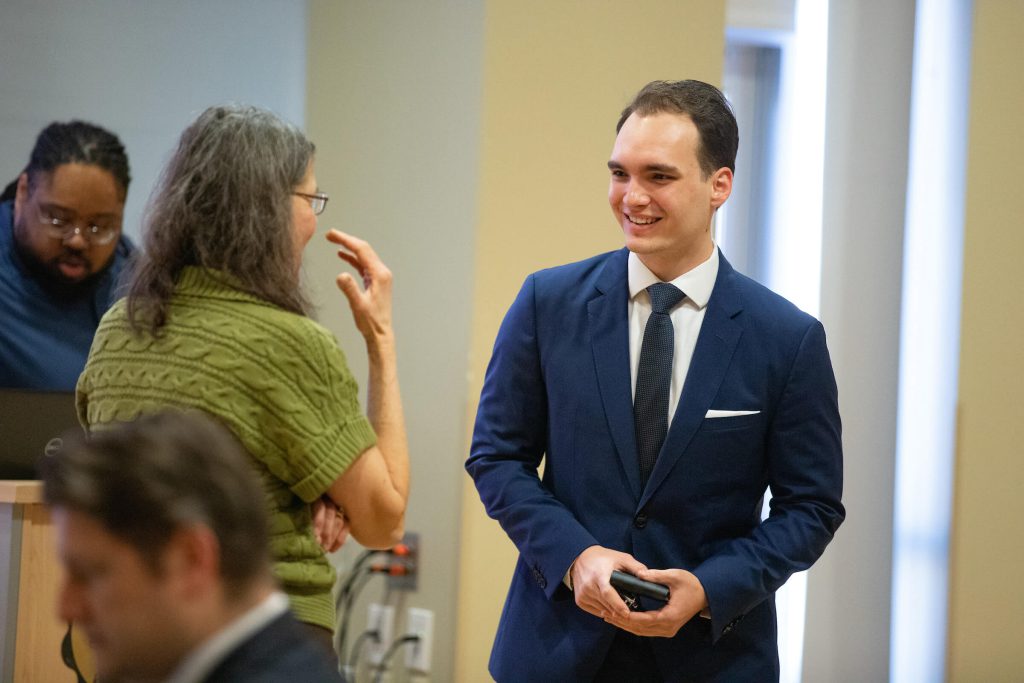
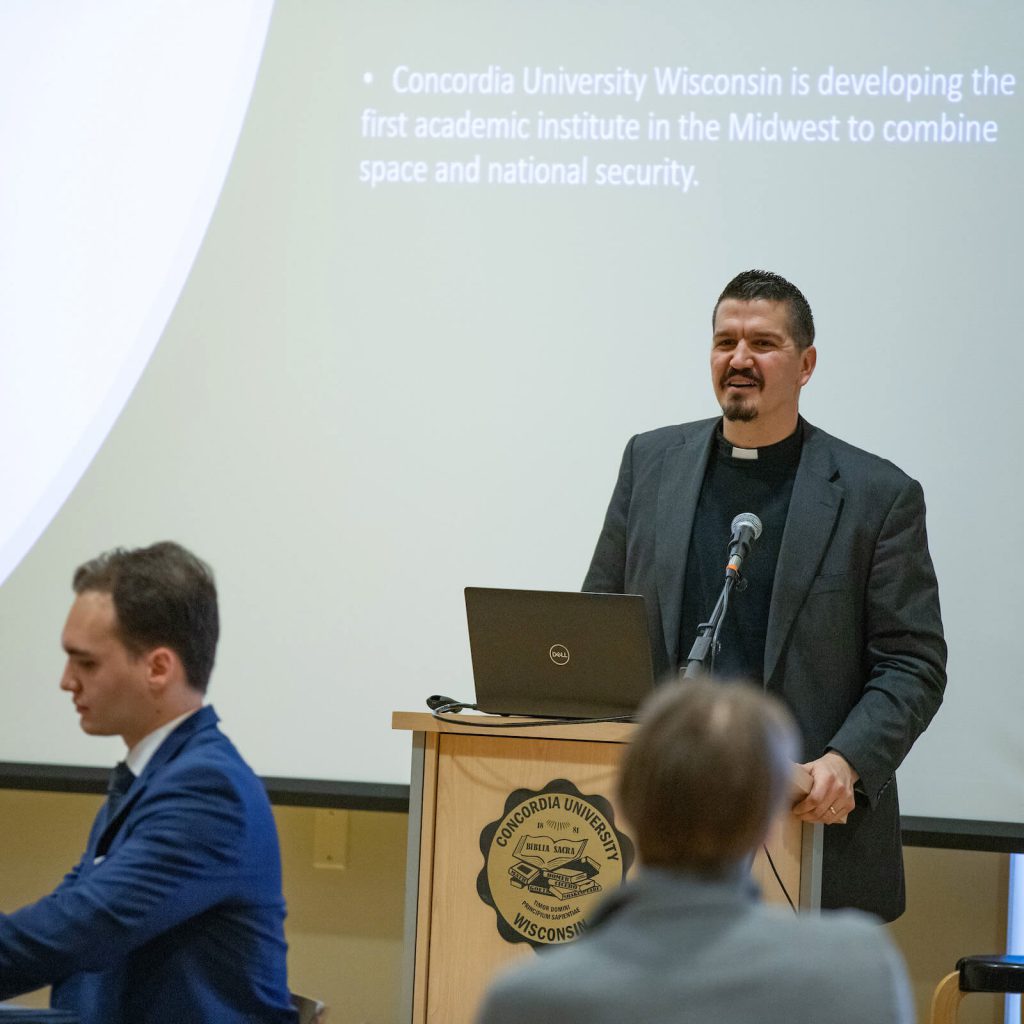
From top left clockwise: Dr. Lamont Colucci, George Pullen, John Quinn, CUW Theology Professor Rev. Dr. Jason Lane, and CUW student Yannik Gruner

Why space?

Speakers spent the day laying out the rationale for exploration beyond earth and explaining its impact for the average person. Space exploration holds implications in the political, national security, and economic realms, to name a few.

As Pullen explained on Tuesday, the space economy is estimated at $500 billion today; however, the forecast is projected to escalate to $4 trillion by the 2040s. The need for democratizing that system and applying free-enterprise principals is great.

“If we (America) don’t make those norms under which people conduct science in space, someone else will impose their norms,” Pullen said.

Impact on the economy

Just before lunch, several speakers joined in a panel discussion focused on the economic and business implications of the field. Panelists included (listed in order as shown from right to left in the video):

Impact on national security

The summit concluded with a second panel discussion focused on national security. Panelists included (listed in order as shown from right to left in the video):


Learn more about the Concordia National Security and Space Center

The CNSSC exists to promote American national security, space economics and power, science, and exploration, unifying the ideals of virtue, free enterprise, human potential, and American security. In addition, the activities of the Center serve to recognize each individual’s God-given talent and seek to develop students in mind, body, and spirit for a life of service to the Church and humanity.


6 Online learning myths

Online learning has been evolving and becoming more common, but with those changes come myths. If you’ve ever considered pursuing an online education, here are some statements you may have heard or even believe to this day.

1. You have to teach yourself

Just because you will not be sitting in a classroom in front of an instructor, does not mean your instructors are not there to help you. Online instructors have the same responsibility to engage and teach their students as a face-to-face instructor.

Online courses give you the freedom to pace yourself and learn on your own time. Courses will provide lectures, readings, textbooks, and outside resources all of which are offered in face-to-face classes. Students also have access to speak with their professors over email or live video chat.

2. Online learning is all online

Yes, a lot of online learning occurs online, but well-designed online courses also invite students to engage with the world around them. This comes through talking about what they are learning with family, friends, and colleagues. It also happens through creative assignments that might require students to do interviews, make observations at a business or in the natural world, participate in service-learning, or join dozens of other possible activities in the physical world.

3. Students don’t learn as much online as they do in person — online courses are easier

Now that online learning has been around for over 30 years, we have a body of research to help us address this myth. Look at resources like No Significant Difference, and you will find countless studies showing that there is frequently no significant difference between how much students learn from one delivery system to another. What matters is the quality of the course design, the commitment of the learner, and the mentoring of the teacher. When those are present, learning happens whether it is face-to-face or online.

If you are enrolling in an online course, do not expect it to be easier than courses you have taken in person. The course material is the same, with the same academic expectations as a face-to-face course. In some ways, if you are not a self-motivated student, an online course may actually be more difficult for you.

4. All online courses are the same

We hear comments about online learning versus face-to-face learning, and they often assume these online learning experiences are all equal. We know that isn’t true for face-to-face courses, and it certainly is also not true for online courses. There are hundreds, even thousands, of ways to design and teach online courses. In fact, this field of study is called instructional design and is arguably the most important element of any program.

If one style or approach doesn’t work for you, don’t be too quick to rule out online learning. Take what you learned about your needs for success and look for instructional design that will deliver.

5. Online learning is impersonal

It is unquestionable that the interaction with your teacher and classmates is different in an online class, but that doesn’t mean that it is impersonal. As many online learners will tell you, communication and interaction with others can be rich, personal, and substantive online. With the way our world has changed, it is important to learn how to develop and maintain relationships online. Learn more about How to Build Rewarding Relationships with Online Classmates.

There are different ways of communicating and interacting with other people online. These differences in online learning have their pros and cons. For example, when is the last time that you were in a face-to-face course where every student in the class contributed 500-1000 words of comments in a class discussion? That is common in an online course, but rare in a face-to-face class. However, you can’t usually read body language or nonverbal messages from others in an online class. This could increase the potential for miscommunication but typically encourages us to develop a different approach to building and maintaining relationships.

6. Employees don’t value online degrees

Online education has become more common and widely accepted. Hiring managers have started to view online degrees equally to traditional degrees. As long as the degree is earned from an accredited institution and the candidate can demonstrate the necessary knowledge and skills for the position.

The virtual classroom engages many modern technologies commonly used in the workplace. It’s not uncommon for colleagues to communicate and collaborate online, so your online learning experience would prepare you for that interaction. With the increasing demand for digital skills in the modern workplace, online courses are a valuable way to enhance those necessary skills, improve resumes, and be standout in the job market.

Want to learn more about online learning? Check out what sets Concordia apart from other universities in online education. 

This blog was originally published on January 17, 2020. It has been updated to reflect current information.
What Makes a Good Leader?

Whether you’re already leading a team or project or aspiring to become a leader this year, we need your leadership. Confident leaders are essential for organizations, businesses, and governments to succeed. But in order to reach your leadership goals, you need personalized, concrete actions to follow.

What does effective leadership look like? We will present 5 tips on becoming an effective leader: excellent communication skills, appropriate education, self-awareness, the ability to network, and a professional online presence. Let’s break down those tips so you can become the effective leader you aspire to be.

5 tips to become an effective leader

1: Effective leaders need communication skills

  • Read. Great communication will never develop in an echo chamber. You have to expose yourself to great writing in order to know what great writing looks like. Remember to read publications that pertain to your industry so you know what terminology and style are appropriate.
  • Sign up for Daily Page. The goal of this resource is to help you write regularly. You receive a daily prompt, write a response, and then decide if you want to keep it private or make it public. This resource is helpful because repetition is key to consistent improvement.
  • Join Toastmasters. Members improve their speaking and leadership skills by giving and/or listening to speeches. Toastmasters has over 15,900 clubs in 142 countries, so you can shop around and find the right club for you.
  • Body language. Pay attention to your body language. Focus on your posture, where your hands are, and your facial expressions when you are speaking. Your non-verbal communication speaks just as much as your verbal communication.

2: Effective leaders need appropriate education

  • Attend workplace training. This is a convenient way to receive a little more training that can benefit you in the long run. Not all employers offer such training, so you may need to seek education from an outside source.
  • Talk to HR about pursuing additional education. Find out what kind of financial support your employer provides to help you further your education. Understand your options. It is vital to get the right information to make an informed decision.
  • Enroll in a master’s program. It has become increasingly common for companies to only consider applicants with master’s degrees rather than bachelor’s degrees. Consider a degree designed to prepare leaders like the Masters of Leadership program offered online through Concordia University.

3: Effective leaders need self-awareness

  • Ask for a performance evaluation. Hopefully, your employer already prioritizes regular performance reviews. If not, ask for one. Performance evaluations provide an opportunity to identify areas for improvement, address personal concerns, and negotiate promotions and salary increases.
  • Take a personality quiz. Knowing how you think and act helps you identify your strengths and weaknesses. This is particularly helpful for understanding how you interact with team members. If you want the most accurate results, pay for the official Myers-Briggs test. Free variations sometimes give helpful information but are not especially credible.

4: Effective leaders need a network

  • Create and maintain your LinkedIn account. Companies use this resource to recruit new employees, and professionals use it to form mutually beneficial connections.
  • Set lunch dates with influential co-workers. In the digital world, it is vital to be building face-to-face relationships whenever possible. Enjoying lunch provides a great opportunity to casually get to know other people and their connections. Bonus: you get to work on your oral communication skills.

5: Effective leaders need an online presence

  • Research the basics of an online presence. One of our previous posts explores what a healthy online presence looks like with 4 Power Tips to Grow Your Online Presence. You don’t have to be a tech wizard to take control of your online information.
  • Create an online professional portfolio. Have you ever Googled yourself? If the obituary of someone you don’t know pops up, your online presence needs some work. PortfolioGen is a resource that allows you to share your professional achievements with peers and administrators. Your other social media platforms should also reflect your professional reputation.

Your Next Step to Become an Effective Leader

If you follow through on just one step per tip, you are well on your way to becoming an effective leader. Imagine the possibilities if you picked two steps per tip! If leadership is important for reaching your career goals, consider the Masters of Leadership program here at Concordia University. With this program, you have the opportunity to complete a master’s degree AND your goal to become an effective leader by this time next year!

This blog was originally published on January 16, 2020. It has been updated to reflect current information.

Alyssa Giese is Concordia’s March Student of the Month

Congratulations to CUW’s March Student of the Month, Broadfield Social Studies major Alyssa Giese!


March 2023 Student of the Month

The CUW faculty have selected Alyssa Giese as the March Student of the Month. Alyssa is a Broadfield Social Studies major with a keen interest in political science and policy. She has served as a Peer Leader in Christian Citizenship for multiple sections and also excels in her own studies. In addition, she is acting vice president of the Philosophy Club and a member of the Debate Club, Education Club, and CUW’s Action Shooting team. Alyssa also works as a student worker in the International Admissions office.

Alyssa was nominated by Dr. Lamont Colucci.

Concordia University Wisconsin has been awarding Student of the Month since 2016. Want to see our previous Student of the Month awardees? Take a look here!


Want in?

At Concordia University Wisconsin, we believe that education is at the junction of faith and learning. That means that we get to know you personally – your unique gifts and skills – so that we can help you develop fully in mind, body, and spirit to achieve your highest potential. To learn more or to apply, click the link below.

The Weekly Gallery Deck (March 13th)

Happy Spring Break!


For those of you looking for ideas of what to do during your week of free time, welcome to this week’s Gallery Deck: your weekly guide to affordable activities in and around Mequon.

Songburg Writers’ Circle

Calling all singer-songwriters! Join fellow artists at the Cedarburg Cultural Center for a free songwriting workshop this Wednesday from 7:00-9:00 P.M. Come prepared to share your ideas and offer constructive thoughts in a safe creative space. This workshop is offered every third Wednesday of the month.

Board Game Café

Looking for something new to play? Stop in at Beyond the Board and choose from their selection of over 300 board games. $10 gives you all-day access to the space and the freedom to try new games without the risk of purchasing one you won’t enjoy. Visit their website to view their game catalog and food menu.

Bored Teachers at Pabst Theater

See some of the biggest teacher-comedians share skits and bits they just can’t make up at the Bored Teachers Comedy Tour on March 15th at 7:00 P.M. The Pabst Theater doors open at 6:00 P.M. Tickets start at $25: you can purchase them here.

We Will Not Be Silent

See CUW alumni in Acacia Theatre’s production of “We Will Not Be Silent,” a show about a young woman arrested for her participation in a non-violent resistance group in Nazi Germany. This week the show runs at 7:30 P.M. on Thursday, March 16th and Friday, March 17th, 4:00 P.M. on Saturday, March 18th, and 3:00 P.M. on Sunday, March 19th. Performances are held at The Norvell Commons at St. Christopher’s Church in Milwaukee. Tickets are “pay what you can;” you can reserve your seats online.

Sprecher Tour

If you’ve never toured the Wisconsin-renowned brewery company, now is your chance. $12 gets you a 45-minute tour of Sprecher’s facility, complete with their history and production process. Plus, to conclude the tour, enjoy an unlimited sampling of their craft sodas and famous root beer. You can make a reservation on their website. Tours are available Friday through Sunday.

Build Your Own Mini Golf

Grab a group of friends and swing by Nine Below to design your own mini golf hole! With your reservation, your team of 2-6 mini golfers will spend one hour constructing your assigned green and the following hour playing the nine holes designed by you and other teams. Pricing ranges from $20-$25 per player depending on group size. Time slots are available for reservation on Friday and Saturday nights.

Road to WrestleMania

Wrestling fans can see WWE live in Milwaukee this Saturday, March 18th at Fiserv Forum. Tickets start at $20. You can see the lineup and purchase tickets here.


Did you take one of these suggestions? Tag us in your adventures on Instagram (@cuwbeacon)!

Have an event you think the CUW student body would enjoy? Let me know!


Mikayla Amack, editor of The Beacon

—Mikayla Amack is an editor, webmaster, and writer for The Beacon, the official student newspaper of Concordia University Wisconsin. She is pursuing her bachelor’s degree in mass communication, enjoys theater and music, and plans to graduate in 2023.

Why partner with Concordia as an employer?

Businesses can partner with universities like Concordia University Wisconsin (CUW) to provide educational opportunities for their employees. By partnering with CUW, businesses can offer discounted tuition rates and a clear path to higher education. This scholarship opportunity comes with no hidden strings. It can be used by both part-time and full-time employees.

How do educational partnerships benefit my company?

Supporting employees can be a challenge, but there are several ways to do it that can have a lasting impact. One of the best ways to provide for your employees is through offering scholarships, tuition reimbursement programs, and professional development opportunities. These programs can help employees get the education they need to advance in their careers, while also providing financial assistance and developmental skills they can apply directly to their roles. Furthermore, providing scholarship programs can also be used to attract top talent and ensure that the best people are working for the company. There are many benefits to investing in employee engagement that lead to serious return on investment.

What does partnering with Concordia look like?

CUW has several programs to help employers and employees engage in educational partnership. We offer online and hybrid classes that are convenient for busy schedules. They will also help employees gain knowledge quickly and easily. Additionally, employers can take advantage of the university’s employer tuition reimbursement program, which allows employers to reimburse employees for their tuition costs. By partnering with Concordia, employers can benefit from having a more educated and skilled workforce and a more engaged and motivated team.

CUW offers a comprehensive list of educational programs (graduate programs included) and a range of employee benefits. Together, we can help your business reach its long-term goals with the program. With CUW’s flexible degree options, employees can complete their studies without impacting their current employment. They often appreciate the ability to put what they learn into practice right away. Employees can also take advantage of the university’s convenient online learning platform, with multiple course formats. Furthermore, our unique Business Community Scholarship program also helps businesses provide their employees with affordable tuition.

Need a custom education solution?

CUW also offers customized corporate training opportunities. The university’s expert faculty can help develop custom courses to meet the needs of your business and can provide access to the latest industry trends and best practices. By partnering with Concordia University Wisconsin, your business can benefit from the university’s commitment to providing quality education and career-building opportunities for employees.

Ready to learn more about the business partnerships program and how it might fit for your business? Let us know below!

Here’s to our community’s Uncommon spring break travel plans!

Just in time to escape today’s heavy snowfall, many CUW students, faculty, and staff will be on the move for spring break, heading out for mission trips, musical tours, athletic competitions, and more!


Wherever you may be headed for spring break next week (hopefully someplace warm!), know that our prayers and best wishes are with you.

Mission Trips

  • A group of 32 DPT students, Nursing students, and faculty is traveling to Mexico to serve with Agua Viva Ministries in and around Ensenada.
  • The Campus Ministry Service to the World branch is is sending a group of 12 to Fort Meyers, Florida, to support ongoing Hurricane Ian relief efforts.

Music Tour

  • CUW’s renowned Kammerchor vocal ensemble will be touring churches in Indiana, Ohio, Maryland, and Pennsylvania (schedule) prior to their March 26 Spring Concert back at CUW.

Athletics

  • The Baseball and Softball teams are heading to Tucson, Arizona, for the TIG Sports Tucson Invitational.
  • Men’s and women’s Tennis and women’s Lacrosse teams will compete in tournaments in Hilton Head, South Carolina.
  • The Acrobatics and Tumbling teams will be competing at various meets in Indiana, Michigan, and South Dakota.
  • The ACHA Men’s Ice Hockey team is traveling to Marlboro, Massachusetts, to skate in the ACHA Division II National Tournament.

May God bless you all as you head out into the world to shine God’s light, be the hands and feet of Jesus, and do your best to represent Concordia University Wisconsin in mind, body, and spirit!


Want in?

Concordia University Wisconsin is a Lutheran higher education community committed to helping students develop in mind, body, and spirit for service to Christ in the Church and the world. At CUW, your faith and your knowledge will flourish because we are a community that cares about your whole self—and are committed to helping you reach your fullest potential.

:


.

CUW earns 2023-2024 Military Friendly School designation

In recognition of its efforts to help student veterans succeed, Concordia University Wisconsin has been named a Top Ten Military Friendly® School by the website MilitaryFriendly.com, ranking first in the nation among peer institutions: Private Schools Offering Doctorate.


Better than ever

The honor is CUW’s highest ever from the organization. It comes after CUW was ranked eighth last year and earned a silver ranking in 2021. Now in its 22nd year, the Military Friendly Schools list is considered one of the premier nationwide rankings that veterans and their families look to when considering higher education, according to Keith Casey, director of CUW Veteran Services.

Casey said ranking No. 1 in the nation this year is a testament to a “huge team effort” at Concordia University to provide support and resources to student veterans.

“There are so many gems on our campus—so many people and programs doing incredible things,” Casey said. “Once we connect students with these resources, and they utilize them, we see success.”

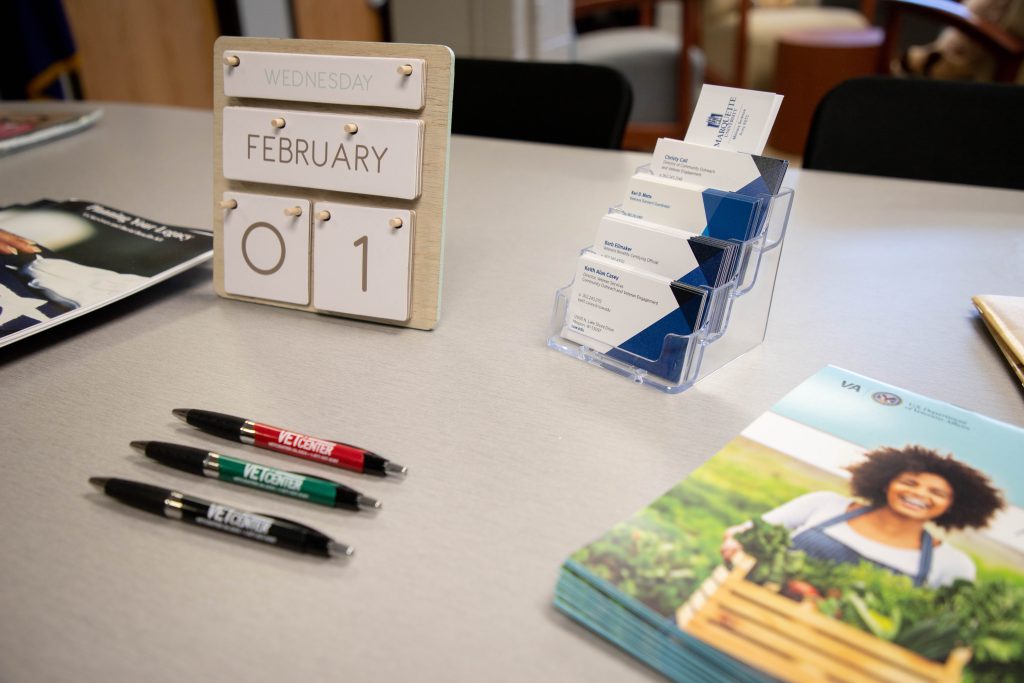
CUW Veteran Services offers multiple ways to help student veterans succeed. Among them are a veteran mentor program; emergency transition services, including assistance with housing, childcare and food security; and free tutoring and advising.

“CUW’s Veterans team would like to express our gratitude to the CUW faculty and staff for their support and dedication in assisting our VA students and dependents to succeed with their educational goals,” added Barb Ellmaker, VA Certifying Official for CUW Veteran Services.

New and improved spaces

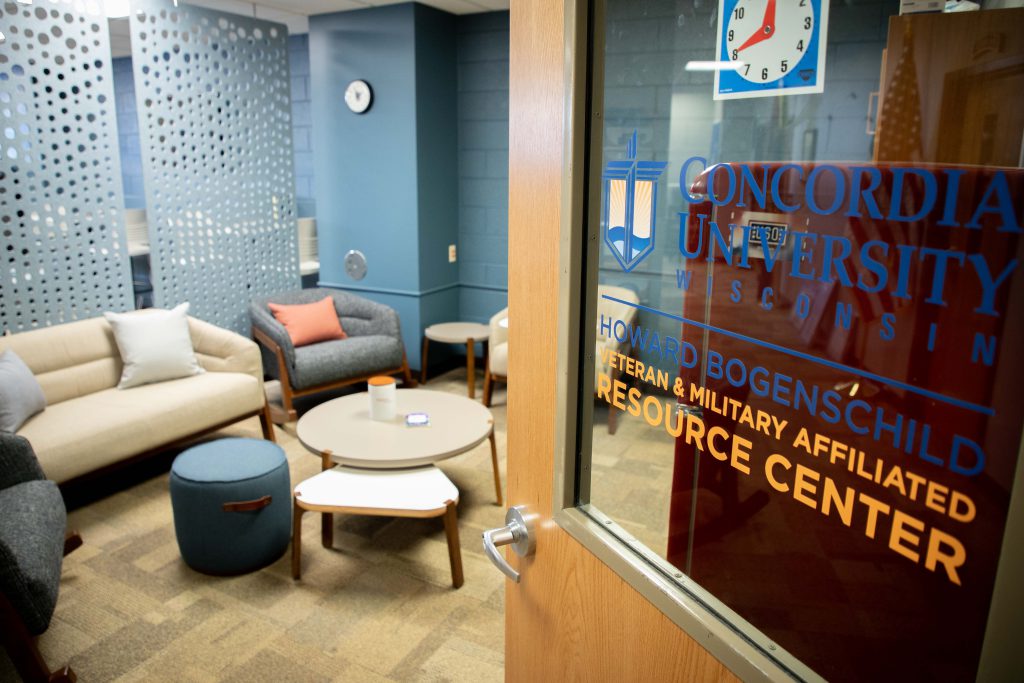
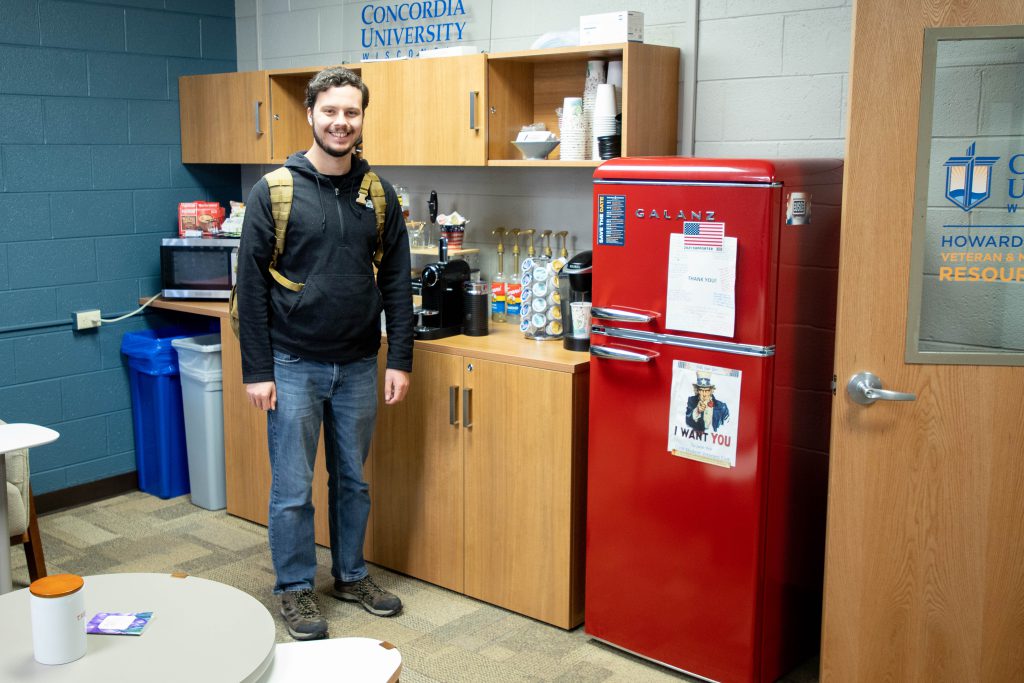
In August, CUW celebrated the opening of its new Howard J. Bogenschild Veteran and Military Affiliated Resource Center in Rincker Hall. The new facility is more than three times as large as the previous location and provides dedicated space in the heart of the Concordia University campus along with trained staff to help veteran students.

Casey called the new space a “huge commitment” from CUW. The Howard J. Bogenschild Veteran and Military Affiliated Resource Center was made possible through many private donations.

“Here at CUW you see the words ‘military friendly’ put into action through the allocation of resources and prioritization of services to help student veterans succeed,” Casey said. “We are grateful to the university and private donors for the new Howard J. Bogenschild Veteran and Military Affiliated Resource Center and for seeing this service to student veterans as valuable and important.”

Casey added that the team at CUW is excited about its work with student veterans, and the ranking from MilitaryFriendly.com is a great way to bring attention to that work.

“We hope folks see this as an opportunity to come here and be part of our community,” he said.


About Military Friendly® Schools

The Military Friendly Schools list is created each year based on extensive research using public data sources from more than 8,800 schools nationwide, input from student veterans, and responses to the proprietary, data-driven Military Friendly® Schools survey from participating institutions. The survey questions, methodology, criteria and weighting were developed with the assistance of an independent research firm and an advisory council of educators and employers. The survey is administered for free and is open to all postsecondary schools that wish to participate. Criteria for consideration can be found at www.militaryfriendly.com.


Want in?

Concordia University Wisconsin (CUW) is a Lutheran institution that is proud to be Military Friendly. You can be assured that we are committed to providing first class service to support our Active, Reserve, and Veteran personnel and their families. CUW has been serving the needs of students since 1881 as a Lutheran higher education community committed to helping students develop in mind, body, and spirit. Concordia is nationally recognized and fully accredited by the Higher Learning Commission-North Central Association of Colleges and Schools.