Concordia’s School of Pharmacy accepts eligible students that are looking to transfer from another pharmacy school. For whatever reason, if your previous pharmacy school didn’t work out as planned, we can offer you a second chance. We will help you fulfill your dream of becoming a skilled and caring pharmacist. Aditi Patel shared her experience transferring into Concordia’s pharmacy program to give you a student’s perspective.
Aditi’s Perspective
How did you hear about Concordia’s School of Pharmacy?
I had friends who attended Concordia School of Pharmacy. Also, I used to work as a pharmacy technician at Aurora Pharmacy in Milwaukee where Concordia students did rotations. They always seemed well-prepared. Students told me that Concorda’s program faculty and staff were excellent.
Why did you decide to become a pharmacist?
I chose pharmacy because of my brother. My brother has had cerebral palsy since birth. I have seen him, and my parents struggle to find medications that can treat the condition but there are none available. The only thing we can do is physical therapy and massages. I want to help patients and families like ours get the medications that can treat the medical conditions they are suffering from.
What about Concordia appealed to you as a transfer pharmacy student?
It’s so welcoming! The faculty, staff, and colleagues are all friendly and didn’t make me feel like a stranger. I was invited to all group sessions, orientations, games, and organizations and I never got the feeling of being a transfer student.
How was the transfer process?
The transfer process was very easy and smooth. I contacted admissions and they gave me information about the transfer application process followed by an in-person interview if approved by the admissions committee. I then submitted the Concordia University School of Pharmacy Transfer application along with a personal statement which was very easy.
Did the ability to transfer in prior PharmD credit appeal to you?
The appeal process was not hard. After getting admitted to the program, the super awesome Dr. Michael Brown, Assistant Dean of the Concordia School of Pharmacy, stayed in contact with me. He asked for the syllabus of all the previous biological sciences and pharmacy classes that I took as an undergrad, and from my previous pharmacy program. He checked each and every course syllabus to make sure it aligned with the Concordia pharmacy courses so that I can get the maximum amount of transfer credits. I did receive transfer credits for a lot of classes which meant I didn’t have to take specific courses in the P1 and P2 years here at Concordia.
What was your experience forming relationships with peers and faculty as a transfer student?
Forming relationships with classmates and faculty hasn’t been challenging. Everyone here at Concordia is super chummy. Faculty are practicing pharmacists, and serve both students and their patients daily. Faculty is always available via email and most of them have an open-door policy if you have questions, need to discuss things, build relationships, or increase your network. My classmates are all friendly and believe in embracing each other to be successful throughout pharmacy school. They are all competitive yet believe in collaboration to help each other out.
What has been the most memorable moment of being a pharmacy student?
Concordia University is located on the beautiful shores of Lake Michigan. My most memorable moment is taking a break from studying and relaxing by the lake. I am going to miss walking the pathway to the shore.
To future pharmacy students, you are going to be a part of the greatest pharmacy program in Wisconsin. You can expect to gain the practical, clinical, and scientific knowledge needed to be a successful pharmacist. The awesome faculty will help you prioritize your career goals and growing as a person. I wish you all the very best and good luck!
Aditi Patel
Transfer Process
If you are considering transferring to CUW, reach out to the Office of Recruitment and Admission here.
Why Concordia?
Our 4-year pharmacy program centers on a manageable and well-balanced schedule. There are no courses or clinical rotations in the summer. This gives you time to earn money at a job, volunteer, or pursue other opportunities. It’s a time to recharge and prepare mentally, physically, and spiritually for the classes, labs, and practice experiences involved with pharmacy school. And with smaller class sizes and personalized attention from faculty and staff, we can provide a more well-rounded and engaging experience at Concordia.
If you’re looking to transfer, Concordia would love to help you reach your goals. Find out more by clicking below.
Dr. Meghan Watry-Christian, Ph.D., OT/L, is Concordia University’s new program director for the master’s and doctorate occupational therapy programs. As program director, she is excited to lead a program where students may thrive and flourish. Watry-Christian is ready to bring our OT programs to the next level.
Tell us about your educational and career background.
I completed my undergraduate B.A. in psychology at Wisconsin Lutheran College, then my Master of Occupational Therapy from Concordia University WI– that’s right, I’m an alumnus! After completing my MOT, I worked full-time as a school-based occupational therapist in Glendale-River Hills School District. At the same time, I worked part-time at St. Luke’s Medical Center in acute care.
My professional background is mainly focused on pediatrics, however, I have worked in adult clinical care as well. In 2011, I started teaching as an adjunct instructor at CUW and then moved to a full-time instructor in 2013. In 2019, I completed my Ph.D. in Education, emphasizing Special Education.
What brought you back to CUW?
As an alumnus, I remember feeling like CUW was “home.” There are many special memories of my OT faculty and classmates. When I found out there was a full-time opening to teach, it felt like God was calling me to come back to CUW. I don’t think I would have left my clinical practice to teach anywhere else.
What do you like to do for fun?
I like working out and reading. Before I had my youngest daughter, I ran half-marathons and I’m slowly working my way back to getting into running. Crime mysteries are my favorite to read.
What are you most proud of in your career?
I am most proud of seeing the successes of my students. I want to pour into them and give them the support and encouragement needed for them to build confidence and skills to reach their dreams.
In March 2022, I completed the American Occupational Therapy Association’s Academic Leadership Certificate. This was an amazing 6-month process of connecting with leaders in our profession while working toward developing our educational curriculums. It was a really great professional experience for my own development, but I’m most excited about the connections, knowledge, and skills I gained which will support my students in their accomplishments.
As the new OT program director, what are you most excited about?
We have a new entry-level OT Doctorate so I’m excited to see what our OTD graduates will do. Part of the OTD is a capstone experience/project, and many of our students choose to do their capstones in non-traditional settings. I’m excited to see our graduates be change-makers for the future of our profession.
Spend time thinking about your “why.” Why do you want to go to college? Why do you want to be an OT? Knowing your big picture motivation will help carry you through the challenges of graduate school. Becoming an Occupational Therapist isn’t easy, but it’s doable. And it is SO, SO worth it!
Meghan Watry-Christian
What do you love about Concordia?
Teaching at Concordia allows me to be my whole self. I don’t have to leave my faith hidden away, and I love that! Getting to connect with students in really authentic ways as they develop into their professional selves is so fulfilling.
Our faculty and staff really care about students. I just did an orientation with my newest cohort of students and at lunch, one of the students said “At my undergrad school, I never ate lunch with my professors.”
Another student remarked “I really love the small cohort feel. It’s amazing that you already know my name and who I am.” Students are more than students to us, they are people and we’re genuinely excited to be a part of their professional journey.
What’s the most interesting part about OT?
Occupational therapy emerged in the mental health field that primarily worked with veterans coming back from WWI and struggling to re-integrate into society. While OT has adjusted to a more medical model, we are moving back to acknowledging our mental health roots. We are beginning to incorporate more mental health-based approaches in our repertoire of interventions.
Why should students join Concordia’s OT program?
I think there are so many reasons why Concordia University Wisconsin’s OT program is the place to be. Here are a few.
Hands-on experience
Students get a lot of hands-on experience in our program. In the first semester, students are observing OT treatment in our Interprofessional Community Clinic. Starting in semester two, students begin treating clients with their peer mentors and faculty supervisors each semester. This is built into the required coursework, so students get 3 full semesters of treating clients before they even get to fieldwork.
Having an individual mentor
Our program is built on a mentoring model. Every student is matched with a peer mentor and an OT faculty advisor when they start the program. Therefore they have support and encouragement every step of the way. This mentoring model, along with our university’s amazing Academic Resource Center and peer tutoring services, means students are set up for success from day one.
Integrating Christain values
Spirituality is a core component of what makes people human, according to the Occupational Therapy Practice Framework. This means that no matter what faith or belief system a student might come from, spirituality is a part of OT and the clients we work with. In CUW’s OT program, we intentionally integrate Christian faith into our courses and support students in considering how their faith can impact those they work with. This is an incredible opportunity for students to grow in a unique way, professionally and personally.
On March 3, award-winning ensemble The Lee Trio, along with Milwaukee Symphony Orchestra musicians, will deliver a concert at Concordia University Wisconsin. The Lee Trio will also offer a free masterclass the preceding day.
Music lovers from the Northshore region and beyond have a rare, up-close opportunity to learn from world-renowned musicians and experience their talent. The Concordia University Wisconsin Chamber Music Series is pleased to present two events featuring The Lee Trio and MSO musicians:
Masterclass
Thursday, March 2 | 2:30-4 p.m.
Concordia University Wisconsin, Chapel of Christ Triumphant
This is a FREE event, but reservations are requested. Email CUW Music Director Dr. Louis Menchaca to reserve your spot.
With the goal of providing community members edification, education, and enjoyment through high-quality musical performances, Concordia’s brand-new Chamber Music Series proudly kicks off with a free masterclass led by internationally renowned performers.
Attendees will have an intimate opportunity to see these impressive musicians in action and learn from some of the best. Following the masterclass clinic, a Q&A session will be held, giving audience members the chance to interact with the performers.
“It promises to be incredibly informative and engaging,” said CUW Music Department Chair Dr. Louis Menchaca. “To gain insight into these highly accomplished musicians’ process is invaluable to any young, or even seasoned musician.”
Concert Performers
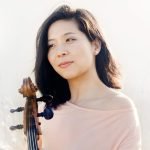
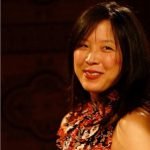
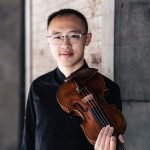
The March 3 concert will feature two of The Lee Trio sisters: Angela Lee on cello and Melinda Lee Masur on piano. Harvard alumnus and current doctoral candidate at Juilliard Max Tan will step in for sister Lisa Lee on violin.
The Lee Trio
Angela Lee | Cello
A graduate of The Juilliard School and Yale School of Music, cellist Angela Lee is a recipient of a Fulbright scholarship to study in London with William Pleeth, a grant from the Foundation for American Musicians in Europe, the Jury Prize in the Naumburg International Cello Competition, and a cello performance fellowship from the American-Scandinavian Foundation. She is a founding member of The Lee Trio, which has commissioned and premiered works of numerous living composers. Using music to foster peace and goodwill, she has made humanitarian trips to the Republic of the Philippines and the former Yugoslavia. While on a U.N.-sanctioned tour of six war-torn cities throughout Bosnia-Herzegovina, she performed for NATO troops and displaced civilians. In addition to coaching chamber music at the San Francisco Conservatory of Music, Ms. Lee serves on the San Francisco Symphony Youth Orchestra Alumni Association Leadership Council and on the Board of Directors of The Resonance Project (https://music-resonance.org), which promotes empathy through live music in mediation settings and international conflict resolution.
Melinda Lee Masur | Piano
Lauded for her “impeccable technique and artistic interpretation” [The Columbian], pianist Melinda Lee Masur has performed on all three stages of Carnegie Hall, at London’s Wigmore Hall and Purcell Room, the Berliner Philharmonie, Boston’s Symphony Hall, and at the Ravinia Festival. She has performed with such artists as Augustin Hadelich, Alban Gerhardt, Fanny Clamagirand, Adrian Brendel and Thomas Quasthoff, and is a founding member of The Lee Trio, celebrated for its “gripping immediacy and freshness” [The Strad]. A graduate of Harvard University and Hannover Hochschule für Musik, Melinda serves as Director of Piano Chamber Music and Co-Director of the Young Artist Piano Program at the BU Tanglewood Institute. Melinda Lee Masur is a Steinway Artist.
Max Tan | Violin
Praised as “eloquent” by the New York Times and “warmly rhapsodic” by the Boston Globe, Taiwanese American violinist Max Tan has appeared on stages across the United States, Europe, and Asia, forging a varied career as performer and educator. He has performed with the Chamber Orchestra of Wallonie, the Amadeus Chamber Orchestra of Polish Radio, the Hudson Valley Philharmonic, The Juilliard Orchestra, amongst others. Notable festival appearances include at the Ravinia Steans Music Institute, Yellow Barn, Chelsea Music Festival, and The Perlman Music Program. Mr. Tan is an alumnus of the Sylff and Kovner Fellowships and recipient of the Richard F. French Award from Juilliard and the Arthur Foote Prize from the Harvard Musical Association. A Harvard alumnus and current doctoral candidate at Juilliard, Mr. Tan’s mentors include Catherine Cho, Donald Weilerstein, Itzhak Perlman, Lynn Chang, and Albert Markov. He is assistant faculty of violin and chamber music at Juilliard’s Pre-College Division.
Milwaukee Symphony Orchestra contributors
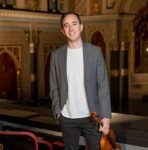
The Friday concert will feature by MSO musicians including Matthew Ernst, Dylana Leung, Alejandro Duque, and Nash Tomey.
Alejandro Duque | Viola
Violist Alejandro Duque joined the Milwaukee Symphony Orchestra in 2018 and is currently acting assistant principal. Previously, he performed with the Austin Symphony and various ensembles in the Texas area including the Kinetic Ensemble and Austin Camerata. He also received fellowships to numerous music festivals such as the Tanglewood Music Center, Aspen Music Festival, Music Academy of the West, and the New York String Orchestra Seminar. More recently, he has been a guest artist at the Sunset ChamberFest, Caroga Lake Music Festival, Lakes Area Music Festival, and with the Fine Arts Quartet. Alejandro received his Bachelor of Music degree at the University of Southern California under the mentorship of Donald McInnes and his Master of Music degree at UT Austin under Roger Myers and John Largess.
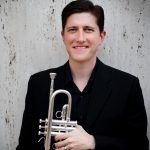
Matthew Ernst | Trumpet
Matthew Ernst currently serves as Principal Trumpet of the Milwaukee Symphony Orchestra, appointed by Edo de Waart in 2016. He was previously the Principal Trumpet of the Cincinnati Symphony Orchestra and Pops, Associate Principal Trumpet of the Louisiana Philharmonic Orchestra, and acted as Principal Trumpet for the Santa Fe Opera Orchestra and the Virginia Symphony Orchestra. A dedicated educator, Matthew maintains a private studio in Milwaukee, and he and his wife, Janna Ernst, a collaborative pianist, tour extensively as a duo, giving performances and masterclasses across the country. Matthew has a Bachelor of Music degree from the University of Michigan, also receiving the school’s prestigious Emerging Artist Award, and two Master of Music degrees from Southern Methodist University in trumpet performance and wind conducting. Matthew resides in Shorewood, Wisconsin, with Janna and their two daughters, Madeleine and Margaret.
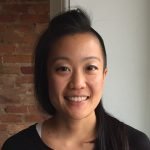
Dylana Leung | Violin
Dylana Leung is a first violinist with the Milwaukee Symphony Orchestra. Prior to holding this position, she was assistant concertmaster of the Elgin Symphony Orchestra, section member of the Syracuse Symphony Orchestra, and concertmaster of the Civic Orchestra of Chicago. Ms. Leung was second prize winner of the 2000 Stulberg International String Competition, and national finalist at the American String Teachers Association Competition. She dabbled in Civil Engineering as a double major candidate at the University of Michigan until it became clear that calculus was not her forte. Dylana credits her teacher Paul Kantor, and peers at the Cleveland Institute of Music for fostering an atmosphere that was both challenging, and nurturing. You can always find an assortment of dark chocolate stashed in her mailbox at work, and she enjoys running along Lake Drive across the Fox Point footbridge most mornings.
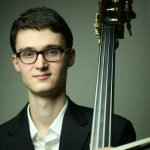
Nash Tomey | Bass
Nash Tomey joins the MSO as the new Assistant Principal Bass. A member of the Kansas City Symphony from 2017-2022, Mr. Tomey is an experienced orchestral bassist and chamber musician. He attended the New England Conservatory where he studied with Boston Symphony Assistant Principal Bass Lawrence Wolfe and Donald Palma of the Orpheus Chamber Orchestra. Under the tutelage of Boston Symphony Principal Bass Edwin Barker, he received his master’s degree from Boston University in 2017. During summers at the Tanglewood Music Center, Tomey has worked with several noted conductors including Andris Nelsons, Christoph von Dohnányi, Michael Tilson Thomas and Charles Dutoit. He also attended the Pacific Music Festival, Aspen Music Festival and Wabass Institute. He was the 2nd Prize Winner at the 2021 ISB Solo Bass Competition.
Music of the Midwest
The concert will open with Berceuse from Sonata for trumpet and piano, which was written by a local composer, Brian Packham.
Packham’s first compositions appeared shortly after he began piano lessons at age 9. He continued his education at the Peabody Conservatory, preparatory division and Berklee College of Music, where he studied composition with John Bavicchi and piano with Stephanie Plsek. While at Berklee Brian received two scholarships and was the first student to win the Wind Ensemble composition competition two years in a row, 1984 and 1985.
Packham’s music for the concert hall ranges from full orchestra to small chamber ensembles and much music for solo piano. Other musical endeavors include music for film and theater. Packham is currently interim music director at Brookfield Congregational Church.
Following Packham’s composition, selections from Felix Mendelssohn’s Piano Trio No. 2 in C Minor and Camille Saint-Saens’ Septet in E-flat Major will be performed.
More about The Lee Trio
Since its critically acclaimed Wigmore Hall debut in 2002, The Lee Trio’s “gripping immediacy and freshness” and “rich palette of tone colours” [The Strad] continue to move audiences and critics around the globe. The Trio’s awards include the Recording Prize at the Kuhmo International Chamber Music Competition in Finland, 2nd Prize in the G. Zinetti International Chamber Competition in Italy, and the Gotthard-Schierse-Stiftung grant in Berlin for rising international artists.
In recent seasons, the Trio has given recitals and masterclasses in cities from Shanghai, Hong Kong, Taipei, San Francisco, New York and Toronto to London, Copenhagen, Berlin, Paris and Kiev. The Lee Trio has performed as soloists with orchestras such as the Shanghai Philharmonic, Kiev Symphony Orchestra and Chorus, Shenzhen Symphony and Macao Youth Symphony. The Trio’s tours of China have included recitals and masterclasses in Hong Kong, Macao, Shenzhen, Hangzhou and Shanghai, at the Zhongshan Culture and Art Center, Hong Kong’s City Hall Theatre and Lee Hysan Concert Hall, recordings for RTHK4, Hong Kong’s classical broadcast radio, and a guest appearance on the televised program, Music of Friends.
Since 1881, Concordia University’s mission has been teaching and preparing students for careers and vocations that serve The Lutheran Church-Missouri Synod. Music has always been an integral part of that mission. The music department contributes to the spiritual, cultural, artistic, academic and co-curricular aspects of life on campus.
Students can choose to participate in any of CUW’s 12 choral, instrumental, or handbell ensembles. More than 250 undergraduates representing 47 academic programs elect to join music groups at Concordia each year.
By now, the Concordia community likely knows all about Dr. Ankerberg’s professional resume – the fact that he previously served as provost of Concordia Chicago, and before that, in academic leadership positions at Concordia Texas and Wisconsin Lutheran College. But there’s still plenty to know about him simply as a person. What are his likes and dislikes? Who or what inspires him? What songs should you blast if you’re looking for a jam-out session with him?
He’ll be at CIT this weekend, and his installation is just around the corner, so if you find yourself in the company of President Ankerberg, here are a few fun facts about CUWAA’s new president to get the conversation flowing.
Dr. Erik Ankerberg
President of Concordia University Wisconsin and Ann Arbor
What is one book you would recommend to others?
My favorite novel is Graham Greene’s The Power and the Glory.
How are you most likely spending your free time away from work?
Reading, writing, and traveling with my wife Jennifer and my sons, Peter and David
What would you choose to eat for your birthday meal?
A horseshoe sandwich
What genre of music do you prefer?
All ’80s all the time, especially The Smiths
Would you say you’re more of an extrovert or an introvert?
I’m more of an introvert, but I have my extroverted moments.
What is one thing that can instantly make your day better?
Spending time with students and colleagues and seeing firsthand how the extraordinary Christian care they experience with our university community transforms their lives.
Do you have any hidden talents?
I enjoy spoon carving. I also help edit a literary journal Scintilla, which is funded, in part, by the Welsh Books Council.
What’s your favorite city to visit?
London
What do you find most rewarding about your role at Concordia?
Every day I get to share stories about the wonderful work that our Lord carries out among us and through us at this remarkable university.
What is it that makes you excited about your new role?
I want to meet as many people as I can, hear the stories about how they came to Concordia, and listen to their hopes and dreams for our university.
Want in?
Concordia University is a nonprofit, Lutheran higher education community serving students worldwide through online programs and at two residential campuses in Mequon, Wisconsin, and Ann Arbor, Michigan. The school is affiliated with The Lutheran Church—Missouri Synod and is part of the Concordia University System, a national network of colleges.
Our Masters of Science in Leadership (MSL) program is committed to building strong leaders to be prepared for the communities and businesses they are a part of.
With this online program you can earn your MSL and position yourself for upward mobility in a variety of fields. Whether you’re an entrepreneur, employed by a large corporation, or just passionate about leadership, our MSL program is made for you.
At Concordia University, we want to honor your unique calling in life. Our programs are Christ centered and encourage leaders to bring meaningful values and strong ethics into their workplace.
Here are the details:
30 total credits
10 total courses
Classes take 8 weeks
All courses are 100% online
No GRE or GMAT required
Opportunity to earn a Certified Manager (CM) designation as part of coursework
Leadership is a process that involves setting a goals have having a solid foundation to build direction which should be guided by moral principles. Leading others is a tedious and difficult task that requires confidence and transparency. Our MSL program seeks to help you become the best leader you can become.
The program blends Christian leadership and ethics with theory and practice. It will provide you with a wide variety of working professionals to guide organizational efforts effectively with methods based on proven scientific study. Every aspect of the program is designed for you to be successful in any area of work you do.
The CUW Campus Activities Board (CAB) welcomes students back with a full slate of fun activities—one (or two!) for every day this week.
Monday, Jan. 23
Hot Cocoa Bar | 11 a.m. -12:30 p.m. | Library Staircase
Hot chocolate is the best (and most delicious) way to warm up this winter season. Join CAB for a cup of hot chocolate and some delicious toppings as we kick off the spring semester!
Tuesday, Jan. 24
Taylor Swift Trivia | 8 p.m. | Terrace Room
Drop everything now! How much do you know about THE MUSIC INDUSTRY, a.k.a. Taylor Swift? Play T-Swift Trivia and put your knowledge to the test and make queen Taylor proud!
Wednesday, Jan. 25
Co-Curricular Fair | 5 – 7 p.m. | Chapel Hallway
Stop by the Co-Curricular Fair to learn all there is to know about student activities and groups on campus. This is where you can sign up for everything you want to do for fun on campus. Plus, you can collect lots of fun freebies as you go!
Student Leader Info Night | 7:30 – 8:30 p.m. | Terrace Room
Interested in a student leader position on campus next school year? Stop by the Student Leader Info Night to learn about positions available for Residence Life, Faith Associates, Concordia Crew Leader, Campus Activities Board, Peer Leader, and AbleLight!
Thursday, Jan. 26
Winter Craft Night | 7 – 9 p.m. | Terrace Room
Time to thaw out with Winter Craft Night! Come to the Terrace Room to make a waterless snow globe, snowman lantern, or a winter pom-pom wreath! The perfect decorations to winterize your dorm room.
Head to Albrecht Lounge to see the sequel to Top Gun. After thirty years, Maverick is still pushing the envelope as a top naval aviator, but must confront ghosts of his past when he leads TOP GUN’s elite graduates on a mission …
Want in?
The CUW Campus Activities Board (CAB) creates, plans, and executes many exciting campus events throughout the school year. Some of these events include Brewer’s Games, Casino Night, Themed Bingo Nights, Open Mic Night, and Tunes Tuesdays. CAB also organizes trips at a discounted rate for students to attend. Some destinations include Six Flags, The Mall of America, Chicago, Downtown Milwaukee, and Madison.
Follow us @CUWCAB on Instagram, Twitter, and Facebook for event reminders, giveaways, and more! Check out the CUW calendar, CUW android app, or CUW ios app for upcoming events around CUW!
We’re excited to share that of the top 10 emerging jobs on the list, our master’s degree in computer science prepares graduates for half of them. It’s evident that jobs in tech are booming, and now, the statistics clearly show that graduating with a degree in computer science is going to prove valuable and necessary for today’s job market.
1. Data Scientist
This role has been featured on LinkedIn’s list for three years. These individuals are responsible for taking immense amounts of data and figuring out ways to make sense of it to help whatever company they work for. This job also spans multiple different industries—data scientists are found in financial services, internet services, computer software, higher education, and more.
How Concordia prepares you for this role:
Artificial Intelligence—an advanced course in current trends in artificial intelligence that builds on our undergraduate AI course. An emphasis is placed on emerging tools as well as robotics.
Applied RESTful APIs and Integrations—an advanced course in current trends in server-side web development that builds on our undergraduate web technology course. This course takes content from several undergraduate courses in data structures, software engineering, databases, and web technologies and focuses on creating HTTP-based CRUD services that provide real-time data to integrate applications.
Advanced Algorithms—an advanced course in current trends in problem-solving and algorithms that build on our undergraduate courses, data structure, and computer science theory. This course looks at emerging algorithms across the grand ideas of computer science. As new technologies emerge, new algorithms must be explored to support them.
2. Full Stack Engineer
With a 35% annual growth, this oldie but a goodie is seeing a renewed interest across industries as technology continues to change the landscape, putting companies in need of these individuals.
How Concordia prepares you for this role:
Cybersecurity—an advanced course in current trends in cybersecurity and penetration testing that builds on our undergraduate cybersecurity course. Emphasis is put on emerging threats and their detection, prevention, and recovery.
User Experience (UX)—an advanced course in current trends involving how humans use technology and the appropriate and changing interfaces required. This extends the undergraduate human-computer interaction course, emphasizing fundamental user experience theory. User experience tackles emerging technologies and their unique interface requirements with human beings.
Applied Computer Networking—an advanced course in current trends in computer networking and security that builds on our undergraduate networking course. Focus is placed on advanced topics still related to traditional computer networking concepts.
Applied RESTful APIs and Integrations—an advanced course in current trends in server-side web development that builds on our undergraduate web technology course. This course takes content from several undergraduate courses in data structures, software engineering, databases, and web technologies and focuses on creating HTTP-based CRUD services that provide real-time data to integrate applications.
Advanced Algorithms—an advanced course in current trends in problem-solving and algorithms that build on our undergraduate courses, data structure, and computer science theory. This course looks at emerging algorithms across the grand ideas of computer science. As new technologies emerge, new algorithms must be explored to support them.
Compilers—an advanced course in current trends of compiler design and implementation. Students will create a modern trends-inspired compiler for a well-known modern programming language.
Language Theory—an advanced course in current trends of programming language design and implementation. Students will create a modern trends-inspired programming language and solve traditional problems using their creation. This course builds on our undergraduate language theory class.
3. Data Engineer
Data engineers and data scientists go hand in hand. They are the ones behind all of the infrastructure that equips companies to use their most valuable asset—data. Industries demanding these professionals go beyond the typical computer software, financial services, and hospital & health care ones to now include retail and automotive. Everyone, it seems, is making use of data. Without a smart data engineer at the helm, opportunities get missed.
How Concordia prepares you for this role:
Cybersecurity—an advanced course in current trends in cybersecurity and penetration testing that builds on our undergraduate cybersecurity course. Emphasis is put on emerging threats and their detection, prevention, and recovery.
UserExperience(UX)—an advanced course in current trends involving how humans use technology and the appropriate and changing interfaces required. This extends the undergraduate human-computer interaction course, emphasizing fundamental user experience theory. User experience tackles emerging technologies and their unique interface requirements with human beings.
AppliedComputerNetworking—an advanced course in current trends in computer networking and security that builds on our undergraduate networking course. Focus is placed on advanced topics still related to traditional computer networking concepts.
AppliedRESTfulAPIsandIntegrations—an advanced course in current trends in server-side web development that builds on our undergraduate web technology course. This course takes content from several undergraduate courses in data structures, software engineering, databases, and web technologies and focuses on creating HTTP-based CRUD services that provide real-time data to integrate applications.
AdvancedAlgorithms—an advanced course in current trends in problem-solving and algorithms that builds on our undergraduate courses, data structure, and computer science theory. This course looks at emerging algorithms across the grand ideas of computer science. As new technologies emerge, new algorithms must be explored to support them.
Compilers—an advanced course in current trends of compiler design and implementation. Students will create a modern trends-inspired compiler for well-known modern programming.
Language Theory—an advanced course in current trends of programming language design and implementation. Students will create a modern trends-inspired programming language and solve traditional problems using their creation. This course builds on our undergraduate language theory class.
4. Cybersecurity Specialist
The rise of technology and data value makes cybersecurity specialists even more necessary to smooth and safely run companies. This is another role that is spread across industries, particularly as attacks and hackers get more and more sophisticated and data becomes increasingly personal and confidential.
How Concordia prepares you for this role:
Cybersecurity—an advanced course in current trends in cybersecurity and penetration testing that builds on our undergraduate cybersecurity course. Emphasis is put on emerging threats and their detection, prevention, and recovery.
Applied Computer Networking—an advanced course in current trends in computer networking and security that builds on our undergraduate networking course. Focus is placed on advanced topics still related to traditional computer networking concepts.
Advanced Networking—an advanced course that focuses on modern trends in computer networking technology. While this course will be related to the other networking courses in this curriculum, it takes a different approach. Focus is placed on advanced topics related to emerging computer networking concepts.
System Design—an advanced course that focuses on the design of software and hardware-based systems and their related integrations. This course explores the problem-solving approach of taking a project proposal and turning it into a working, multi-technology solution.
System Administration and Maintenance—an advanced course focusing on the administration and maintenance of existing systems. This course deals with the unique administration problems associated with system solutions for emerging technologies.
5. Artificial Intelligence Specialist
According to the LinkedIn report, this role has seen an annual hiring growth of 74% over the past four years and boasts rather large salaries. Individuals in these roles include engineers, researchers, and many others who specialize in machine learning and artificial intelligence.
How Concordia prepares you for this role:
Artificial Intelligence—an advanced course in current trends in artificial intelligence that builds on our undergraduate AI course. An emphasis is placed on emerging tools as well as robotics.
Where do you fit in?
As you think about your own future, do you see yourself filling any of these roles? If LinkedIn’s data says anything, it’s job security. And we would love to be the ones setting you up for success in the job of your choice. Click here to learn more about our master of science in computer science.
This is the first article in the series, “Tea with Mielke,” written by CUW student Hannah Mielke. The series chronicles Mielke’s study abroad adventures in England.
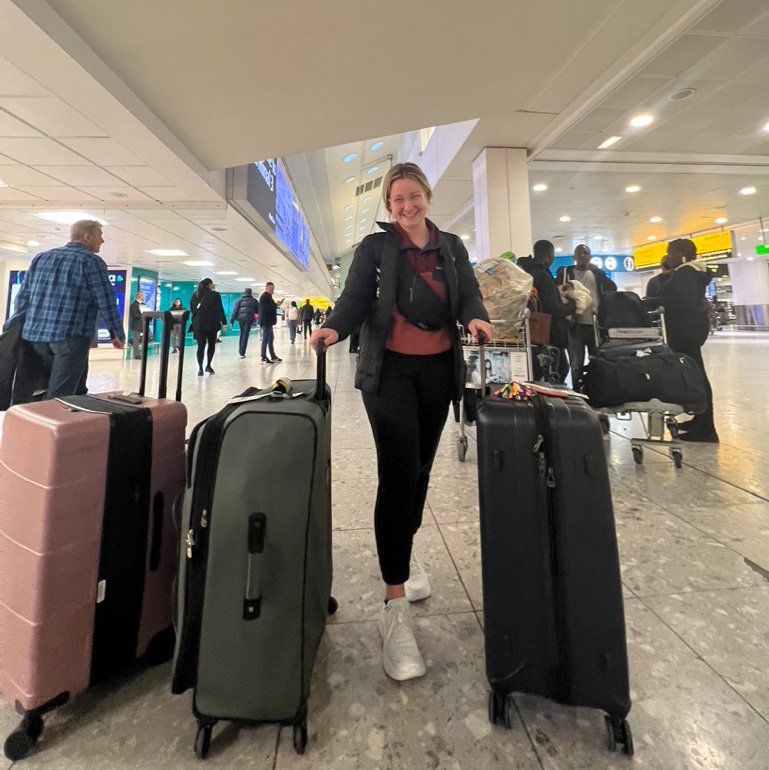
Flying to Cambridge was such a breeze! I hopped on a fight in Indianapolis, caught a layover in JFK where we then hopped on a five and a half hour flight to London! On the flight, I was served dinner which was chicken and rice with lots of little sides to go with it. After dinner was over, they dimmed the lights in the cabin allowing people the chance to sleep if they wanted. Or if you wanted to stay awake, they had movies and tv shows you could watch on the screen in front of you. After a couple of hours they came by again with refreshments and breakfast which consisted of yogurt, a granola bar, and a muffin. All around, the meals were very satisfying!
Once I landed in London, I went through customs which went smoothly, no problems at all! I walked over to get my luggage and it was there waiting for me! To finish my trip up to Cambridge, a driver drove me and a couple of friends up to Westfield House and we got to see the English countryside along the way!
Something that I realized very quickly is that jet lag is very real. I arrived at Westfield House around 12:00 p.m. but forced myself to stay awake all day to try and adjust to the new time zone. Let me just say, it was way harder than I thought it was going to be but it was absolutely worth staying up to make the adjustment easier.
Once I got there, I unpacked most of my things and then walked around Cambridge, grabbed food, and went to the grocery store to grab the essentials. I spent the rest of the night getting to know some of the people who are also staying here!
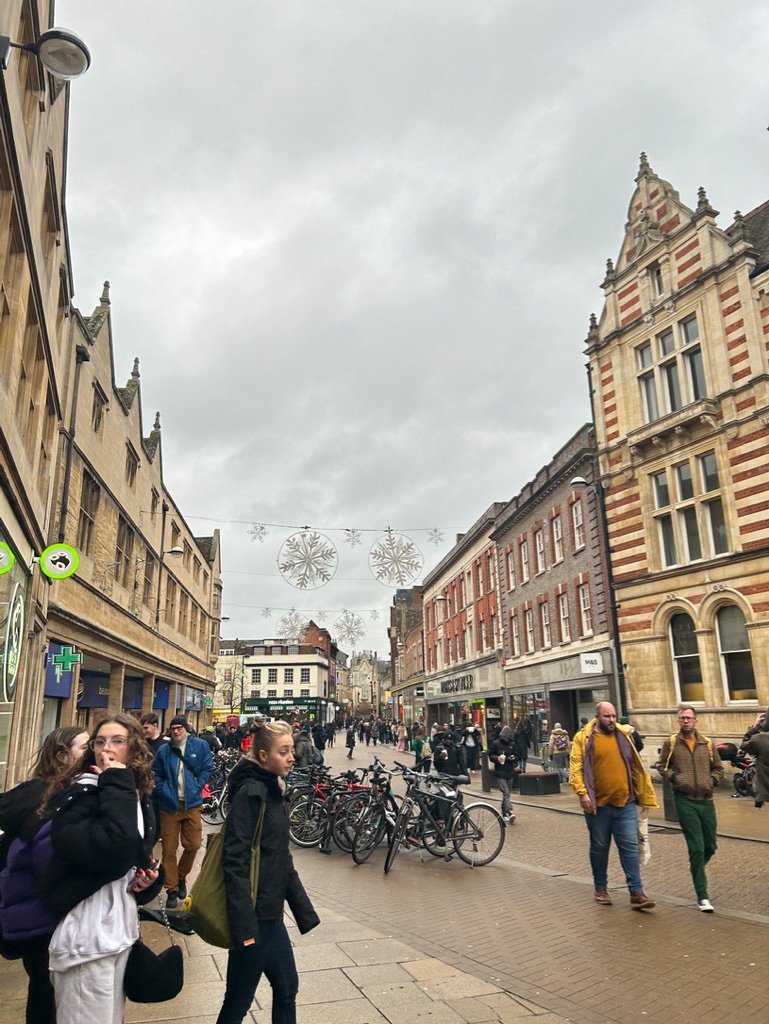
The next day we took a self-guided tour into downtown Cambridge, about a 10-15 minute walk, and got to see so many awesome things! There was market in the middle of the city where they sell everything you could think of. There’s a mall right in the area consisting of a lot of stores that we have in America. Yet, they also have restaurants and shops with the most interesting names like the Giggling Squid. We ended the day at pub where we saw a dog behind the counter of the bar, acting like he owned the place! It was definitely something we would never see in America. It was such a fun day of exploring the area and seeing what my new home is like! The exciting thing is that there always things to do in the area which means these next four months will be full of new adventures!
Where to?
CUW students, you have dozens of study abroad opportunities at your fingertips. Where will you go?
—This article is written by Hannah Mielke who is in her senior year as a Director of Church Ministries major at Concordia University Wisconsin. She’s currently on a 16-week study abroad experience to England. “Tea with Mielke” chronicles her adventure and shares some of the life lessons she’s learning along the way.
Occupational and physical therapists have many similarities. Both are healthcare professionals that work with patients of various ages to help them recover from injury or manage pain from a permanent disability faster and more effectively.
OTs and PTs have different goals and approaches to helping patients. Occupational therapists work to help patients become more independent in doing daily tasks. These patients are normally diagnosed with long-term disabilities that prevent or make it difficult to complete things without assistance. On the other hand, physical therapists focus on helping to reduce pain and rehabilitate a patient with chronic conditions or after an injury. Let’s take a further look at how OTs and PTs differ.
Occupational Therapist (OT)
The Bureau of Labor Statistics defines an Occupational Therapist as someone who “treat injured, ill, or disabled patients through the therapeutic use of everyday activities. They help these patients develop, recover, improve, as well as maintain the skills needed for daily living and working.” Their main goal is to empower patients to have more independence in their daily lives.
Who are their patients?
Occupational Therapists work with a variety of patients. Most often these patients exhibit:
Sensory processing disorders
Traumatic injuries to the brain or spinal cord
Permanent disabilities such as cerebral palsy
Autism and other developmental disorders
Down Syndrome
Birth injuries or defects
Mental or behavioral health problems
Any other issues that impact their ability to perform daily tasks
What do OTs do?
Remember that OTs have a holistic approach to helping patients become as independent as they are capable of. Therefore, their responsibilities reflect that goal. Their tasks may include:
Reviewing and evaluating a patient’s condition and needs
Helps clients perform daily tasks, practice self-care, and advises on adaptive equipment
Teaches basic tasks such as eating, bathing, getting dressed, etc.
Assist clients in developing fine motor skills
Records and assesses progress
And much more
Where do OTs work?
There are many settings that Occupational Therapists can work. The most common places include schools, hospitals, retirement homes, or in-home healthcare.
What’s the outlook and how much do OTs make?
The OT field is rapidly growing as they become an essential part of patient treatment. This is especially true for patients with Alzheimer’s, cerebral palsy, autism, or those who have lost limbs. From 2021 to 2031 job openings are projected to grow by 14%, which is much faster than other occupations. In 2021, according to the Bureau of Labor Statistics, the median salary for an occupational therapist was $85,570.
How do you become an OT?
To become an OT, you need to earn a master’s degree at minimum, although some get a doctorate. While in undergraduate studies, many students will choose a major related to occupational therapy, such as rehabilitation science, biology, or other sciences. Concordia University Wisconsin is proud to offer both a master’s and a doctorate in OT program. Check out our blog to learn all about occupational therapy at CUW.
Physical Therapist (PT)
The Bureau of Labor Statistics defines a Physical Therapist as someone who “helps injured or ill people improve movement and manage pain. They are often an important part of preventive care, rehabilitation, and treatment for patients with chronic conditions, illnesses, or injuries.” PTs are experts in movement and specifically help to treat the patient’s impairment. Their main goal is to reduce pain, rehabilitate, and prevent disability.
Who are their patients?
Similar to OTs, physical therapists may see a wide variety of patients, but this can vary depending on their specialty. There are many types of PT specializations to choose from, such as:
Orthopedic physical therapy: Treats injuries involving muscles, bones, ligaments, etc.
Geriatric physical therapy: Works with older adults that have conditions that affect mobility such as arthritis.
Neurological physical therapy: These PTs help patients with neurological conditions such as Parkinson’s and multiple sclerosis.
Cardiovascular and pulmonary rehabilitation: Treatment in this specialization can improve cardiovascular endurance and stamina.
Pelvic floor rehabilitation: Helps treat conditions that affect the pelvic floor, such as incontinence or pain.
What do PTs do?
The main goal of a PT is to regulate and manage the pain of patients. Although their duties may vary depending on their area of specialization. Responsibilities may include:
Listening to patient concerns and needs
Diagnosing patients to determine function level
Designing an individual care plan based on observations and goals
Use exercises and stretches to ease patient pain and prevent further injury
Evaluate progress and make adjustments as needed
Where do PTs work?
Physical Therapists can work in many settings, which can differ based on specialty. Common places include sports and fitness facilities, workplaces, retirement homes, schools, hospitals, and outpatient clinics.
What’s the outlook and how much do PTs make?
The physical therapy field is rapidly growing and is a main source of pain management and relief for patients. From 2021 to 2031 job openings are projected to grow by 17%, which is much faster than other occupations. In 2021, according to the Bureau of Labor Statistics, the median salary for a physical therapist was $95,620.
How do you become a PT?
To become a PT you need to receive a doctorate in physical therapy. While in undergraduate studies, many students will choose a major related to physical therapy, such as rehabilitation science, kinesiology, or other sciences. Concordia University Wisconsin is proud to offer a doctorate in PT program. Check out our blog to learn about the PT program at CUW.
Which should you choose?
Ultimately, whichever path you choose it should align with your values and goals. You should consider what type of goal you want to help patients work towards and who your patients are. No matter what you settle on Concordia is here to help. If you’re interested in OT or PT you can learn more below.