Aaron Muchenberger is Concordia’s May Student of the Month

Congratulations to CUW’s May Student of the Month, Third-Year Pharmacy Student, Aaron Muchenberger!


May 2023 Student of the Month

The CUW faculty have selected Aaron Muchenberger as the May Student of the Month. Aaron is a third-year pharmacy student. He displayed incredible servant leadership by being the chairperson of Concordia’s annual Mind-Body-Spirit Interprofessional Wellness Fair.  Aaron led meetings and coordinated planning efforts for 2 semesters prior to the fair. He recruited students to cover 12 health/wellness topics and tables, and handled all the logistics of planning, awards, and passports to health. Over 120 undergraduate and community members participated in the event this past April. Fair topics ranged from nutrition to mental health awareness to substance abuse.  This event is now part of our JED Mental Health and Wellness initiative and allows us to host a spring event annually.

Aaron was nominated by Dr. Michael Oldani.

Concordia University Wisconsin has been awarding Student of the Month since 2016. Want to see our previous Student of the Month awardees? Take a look here!


Want in?

At Concordia University Wisconsin, we believe that education is at the junction of faith and learning. That means that we get to know you personally – your unique gifts and skills – so that we can help you develop fully in mind, body, and spirit to achieve your highest potential. To learn more or to apply, click the link below.

OT, Speech-language students demonstrate academic excellence through research projects

The CUW School of Health Professions’ Occupational Therapy and Speech-Language Pathology departments hosted a bi-annual evidence in medicine symposium during which students presented their semester-long research projects.


The symposium, which took place on Wednesday, was the culmination of a semester of work by CUW students and faculty. A total of 40 individuals presented, either in poster or podium formats. Presentations covered best practices and current research in medical, educational, and clinical settings across disciplines.

Students and faculty presented various topics

Poster presentations included:

Allison Heersink – Investigation of Weighted Vests as a Sensory Strategy in the School Settings

Audrie Seabaugh – Cognitive Behavioral Therapy and Trauma-Informed Care

Carissa Egelser – The Speech-Language Pathologists’ Role with Spelling in the School System

Charlotte Groth – Vision Therapy and Improvements in Oculomotor Dysfunction in Children with ADHD

Hannah Daso – Promoting Autistic Clients’ Self-Advocacy Skills

Hannah Held – Effects of Physical Activity on Cancer-Related Fatigue and Occupational Engagement

Hannah Himmelman – Multifactorial Interventions for Fall Prevention in Memory Care

Hannah Lange – Animal-Assisted Therapy and Childrens’ Attitudes Towards Reading

Jenna Conforti – Classroom teacher and Speech-Language Pathologist Interprofessional Collaboration to Reduce Language Disorder Misdiagnosis in Children who Use the African-American English Dialect

Julia Wol – Infant development, Bonding Attachment, and Infant Massage

Kennedy Beyersdorf – Promoting Positive Stuttering Attitudes and Identities During School-Based Intervention

Khloe Koch – Dementia-Friendly Environments and the Impact on Occupational Performance

Lauren Fox – Effects of Early Language Intervention on Literacy Skills in School Age Children

Maggie Majewski – Doing Articulation Differently: Best Practices for School SLPs Using the HIHR Model

Payton Godbold – The Lives of Littles after Loss: Childhood Grief, Occupational Therapy, & Play

Aidan Stumpf – Culturally relevant literacy intervention strategies for Native American children

Taylor Graf – History and Best Approaches to Reading and Literacy Instruction

Elizabeth Behling – Utilizing the Attention Span of Preschool Students

Kailee Terracina – Phonological Awareness to Improve Literacy

Kelly Verbeke – Improving Social and Emotional Outcomes for Adolescents Who Stutter: A Meta-Analysis

Megan Buchheit – SLP’s Role in Transition Planning Services for High School Students

Maddie Nimocks – Mindfulness-Based and Cognitive-Behavioral Therapies for Opioid Use Disorder

Lauren Fox – Effects of Early Language Intervention on Literacy Skills in Elementary School-Age Children

Podium presentations included:

Kevin Gries – Age and Sex Differences in Excercise Responsiveness

Michael Oldani – Biologics and the high costs of low prescribing: Initial Report

Mackenzie Knoten and Kelly Verbeke – Sequential-Oral Sensory (SOS) Approach to Feeding

Aubrey Buchholtz – Backward Chaining Method for Children with Apraxia of Speech: Single Case Study Design

Lauren Fox – Combining the Phonological Cycles Approach and the Complexity Approach for Children with Speech Sound Disorders

Grace Gundrum – Teaching Pragmatic Skills to Preschoolers with Language Impairments in an Early Childhood Classroom

Kallia Reske – The Role of SLP in Mild TBI Cases: Current Best Practices

Natalie Borst, Britton Godbold, and Kathryn Ousdigian – Ultrasound Therapy for Carpal Tunnel Syndrome

Special awardees

At the end of the symposium, the School of Health Professions awarded individuals whose presentations stood apart:

Kenzie Knoten and Kelly Verbeke, SLP, won an award for “EBP Master: Best use of evidence to inform clinical practice”

Kallia Reske, SLP, won an award for “Change Maker: The line of inquiry most likely to impact clinical practice”

Bob Barnhart, PT faculty, won the award for “Academic Showmanship: Most creative presentation of content” (special shout out to his dinosaur slide)


Want in?

The School of Health Professions offers a range of professional programs and degrees at the bachelor’s, master’s, and doctoral levels. Whether you pursue your education through online instruction or through classroom learning (at our home campus in Mequon or at our extension campus centers located statewide), you can expect a distinctive learning environment that will prepare you for a career marked by excellence, compassion, and service. Health Professions undergraduate students also participate in the Concordia Core, a rigorous, liberal arts curriculum integrated with Lutheran distinctives.

Should I become a family nurse practitioner?

With a high need for medical professionals, becoming a family nurse practitioner (FNP) is a good career to consider. Since you’re reading this article, I’ll assume you are ready to explore the FNP role. Let’s jump in.

What is an FNP?

A family nurse practitioner (FNP) is an advanced healthcare provider who works in a variety of primary care settings. They provide care to patients across all stages of life and focus on preventative care. They can work in collaboration with physicians or can work independently (in most states).

Typical responsibilities include diagnosing and treating conditions and ordering and evaluating test results. There are some who additionally conduct research, train staff members, or provide consultation in specialty fields.

Why should I become an FNP?

As an FNP, you’ll focus on preventative care. You’ll have the ability to create genuine and long-term relationships with your patients and their families. If you’re looking for a role in which you can see patients for an extended time, being an FNP is a great path. To gain insight into the experience of being an FNP, find out what Concordia students have to say.

What’s the future outlook?

FNPs have one of the highest growth projections within the nursing field. Jobs are projected to grow 40% within the next 10 years. Therefore, you can enter a fast-growing industry knowing you’ll have various job opportunities when you graduate.

Additionally, the average annual wage for nurse practitioners is $123,780 annually. FNPs that make higher salaries usually work in outpatient centers or hospitals. As other FNPs retire, the needs and opportunities of the field will grow quickly.

How do I become an FNP?

First, you must earn your Bachelor of Science in Nursing (BSN). If you already have a non-nursing bachelor’s degree, you can earn an Accelerated Second Degree BSN (ABSN). After receiving your degree, you will have to pass the National Council Licensure Examination (NCLEX) to receive your RN licensure.

You then can start a Master of Science in Nursing (MSN) program. Concordia’s MSN- Nurse Practitioner program will prepare you to graduate with both the skillset and confidence to excel within your field.

Once you complete your degree, you must pass the national FNP certification board exam. Concordia’s success rates will give you the edge you need to start your career on the right foot and stand out from your peers.


Taking a step towards a new career can be nerve-racking, but having more information can help that fear. If you’re interested in learning more about becoming a family nurse practitioner (FNP) through our MSN program, feel free to read about our program below.

Faculty Spotlight: Dr. Michael McKinnis

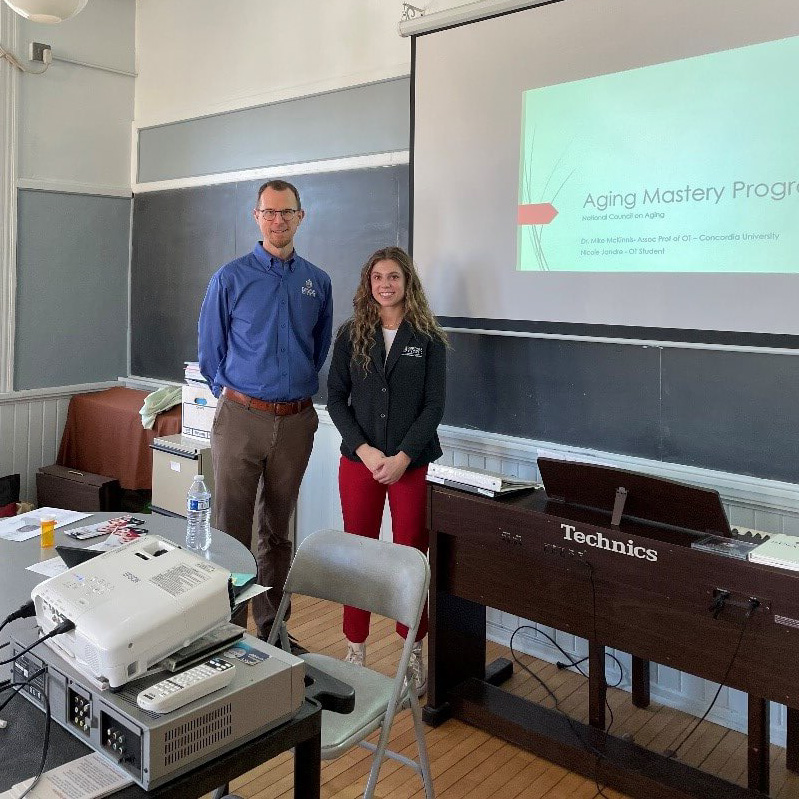
Dr. Michael McKinnis, fondly nicknamed “Dr. Mac”, is an associate professor in the occupational therapy department. Not only does he teach for CUW OT, Dr. Mac is an alumnus of Concordia University Wisconsin’s occupational therapy program!

His clinical background is acute care occupational therapy, specializing in fall prevention. Dr. Mac started with the OT department in 2007 as an adjunct instructor, and then joined as a full-time professor in 2013. In May 2021, he completed his PhD in Leadership from Cardinal Stritch University.

What do you love about the CUW OT program?

I have been involved with Concordia’s OT program in different roles for the last 16 years. The one constant of our program is change. We are always adapting to stay up with the latest in education and the OT field. Our latest change was the development of a new OT curriculum. The new curriculum allows our students to build fundamental skills in advocacy, leadership, integration of faith and practice, best practice and professional and clinical skills. The first year allows the students to develop a strong foundation in these key areas. The 2nd year allows students to stand on this foundation as they expand their knowledge and explore opportunities in the field of OT. 

What is your area of expertise within Occupational Therapy? Share a little bit about the ways you involve students/community?

My areas of expertise are teaching in simulation lab, fall prevention, and interprofessional education.

Simulation Lab

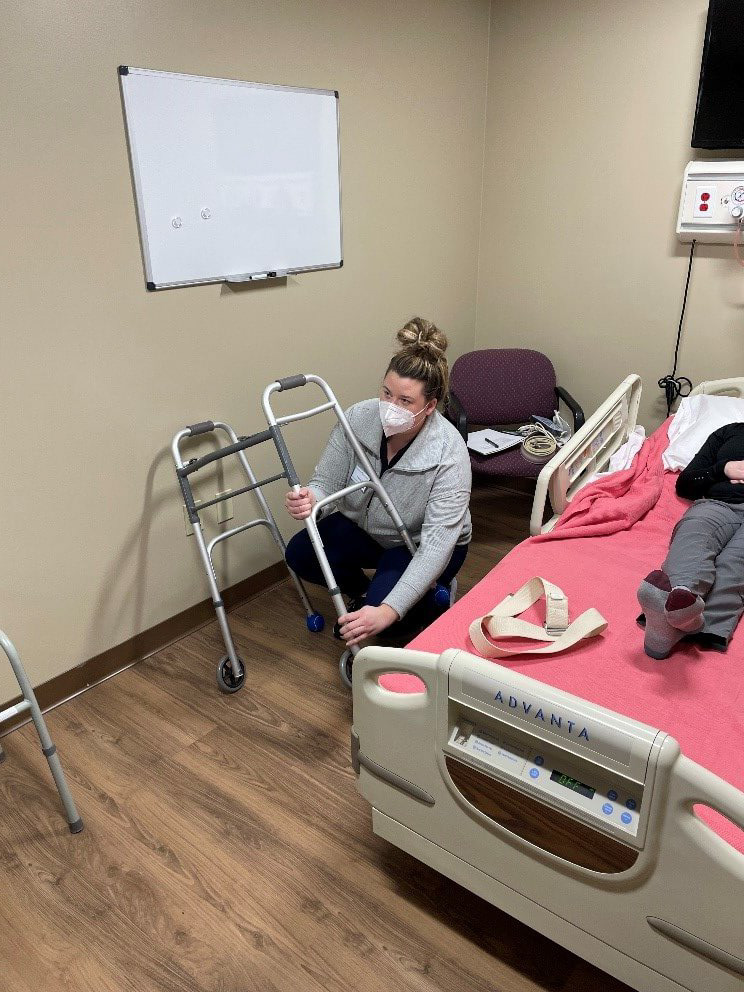
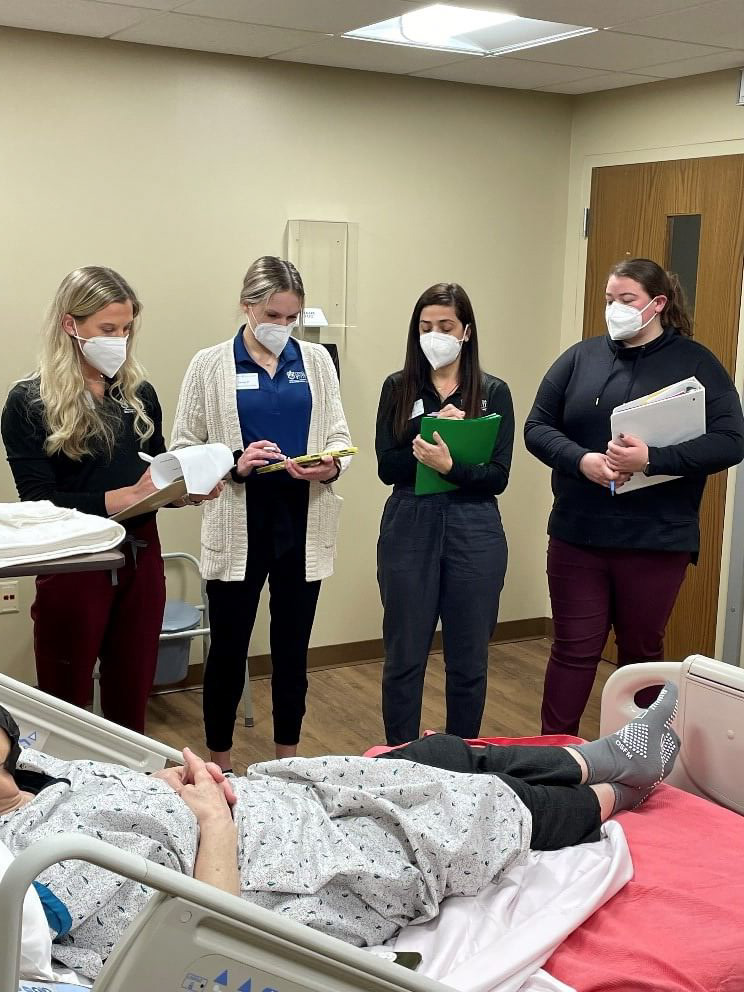
My experience in multiple adult areas of practice provides me the clinical background for teaching in our simulation lab. In January of 2023 we opened our brand-new simulation lab. The new space allows student to experience a “real world” hospital room equipped with hospital beds, vital monitors, medical lines, and chair lifts. The students, often working in pairs, receive the case study prior to lab which allows them to develop a plan. Each week the simulation is designed with a variety of patient diagnoses, vital signs, patient psychosocial factors and is portrayed by a standardized patient actor.

This lab offers students the opportunity to work in real-time on interview skills, provide evidenced-based assessments and interventions. The session is completed with a debriefing session. This is one of the most important parts of the lab. The students participate in the feedback process with faculty and peers. This safe space allows them the opportunity to reflect on what went well and discuss areas of growth. This reflective exercise helps the students improve with communication, therapeutic use of self, and critical thinking skills. The new lab also offers the ability to record the sim session and allows students the ability to review the session at a later time.

As a professor, sim lab allows me to engage with students as we discuss important questions about the patient and OT practice. It is one of the best modalities to teach and assess clinical skills. The lab allows a paper case to come alive.  Where else can you learn and interact with a “patient” a day after a heart surgery? It’s a safe place to learn because regardless of the outcome, everyone including the patient goes home at the end of the session! 

Fall prevention

My two other areas of expertise, fall prevention and interprofessional education, are often combined. People will often ask me, “Why do I care about fall prevention?” My passion for addressing fall prevention comes from a desire to see older adults have an increased quality of life. I hear stories all the time about someone’s relative falling and injuring themselves. The number is too high. It is estimated in the United States that an older adult dies every 20 minutes from a fall and roughly 25-33% of older adults sustain a fall each year, decreasing qualify of life and increasing health care cost (CDC, 2023). In Wisconsin, it is estimated that over 270,000 adults 65 and older fall each year (CDC, 2023). This means my neighbors are having unnecessary injuries from a fall.

Interprofessional education

Evidence-based practice recommends an interprofessional team to address this concern. OT is one of the disciplines uniquely qualified to assess and educate older adults on how to decrease falls in their home and community.

As a leader in falls prevention, I use my skill in this area to help meet our university and OT mission of serving and empowering communities. My desire to serve communities has been put on hold for the last few years due to the global pandemic. I was very happy this year when things began to return to normal. In September of 2022 I was able to connect with older adults as part of Milwaukee County Falls Prevention Coalition (MCFPC) fall prevention event. This spring, I was able to share the updated fall prevention guidelines with Concordia physician assistant students. I was able to connect with the area community by presenting at Stepping On and providing at the fall prevention session for the National Council on Aging (NCOA) Aging Mastery Program.

In addition, I love when I am able to mentor students and bring them along with me to events. Nicole Jandre was able to assist me in giving talks to the physician assistant students and the Aging Mastery Program. During fall prevention week in September of 2023, I will be leading a group of OT students to participate in the MCFPC fall prevention event.  


Concordians featured in special volume of AMA Journal of Ethics

Several faculty and pharmacy students contributed to a special volume of the American Medical Association Journal of Ethics.


The special volume focuses on interprofessional education (IPE) and innovation. CUW Director of Interprofessional Practice & Education Michael Oldani, PhD, MS, served as co-editor.

In addition to Oldani, these Concordians contributed:

  • Associate Professor of Physician Assistant Studies Michael Toppe, DMSc
  • Associate Professor of Pharmacy Practice Anne Graff LaDisa, PharmD
  • Associate Professor of Pharmacy Practice James Lokken, PharmD
  • Pharmacy student T. Lee
  • Pharmacy student E. Mauer

Founded in 1999, the AMA Journal of Ethics is an editorially independent, peer-reviewed journal devoted to helping students and clinicians navigate ethical decisions in service to patients and communities. The free digital journal, which publishes monthly, reaches a vast audience. According to the AMA JOE’s website, in 2022, the journal received more than 3.7 million visits to its website, over 150 thousand PDF downloads, and more than 110 thousand podcast downloads.

A member of the AMA JOE editorial team approached Oldani, who had previously contributed to the journal, about doing the special volume. He reached out to a peer, Erica Chou, who previously served as IPE director at the Medical College of Wisconsin, to serve as co-editor.

Click here or on the image below to view the special edition.

CUW’s Excellence in IPE

IPE at CUW provides opportunities for students enrolled in health and human services programs to learn and train together. The goal is for collaborative learning, where students build their IPE communication skills, knowledge base, and understanding of other health and human service specialties. This skill-building helps students more fully appreciate how IPE in practice positively impacts and nurtures patient-centered care.

Concordia received recognition for its exemplary IPE practices. In 2021, at the completion of Concordia School of Pharmacy’s scheduled accreditation review, the ACPE named CUW SOP one of only five “Noteworthy Examples” of exceptional achievement nationwide for CUW’s work in IPE. At the conclusion of each accreditation review cycle, the ACPE and the American Association of Colleges of Pharmacy (AACP) recognize model programs throughout the nation. CUWSOP was one of only two schools nationwide recognized for exemplary IPE activities.


Learn more

Advocating for Yourself and Your Program

DPT Faculty Kevin Gries shares his experience on promoting his program to politicians and public figures.


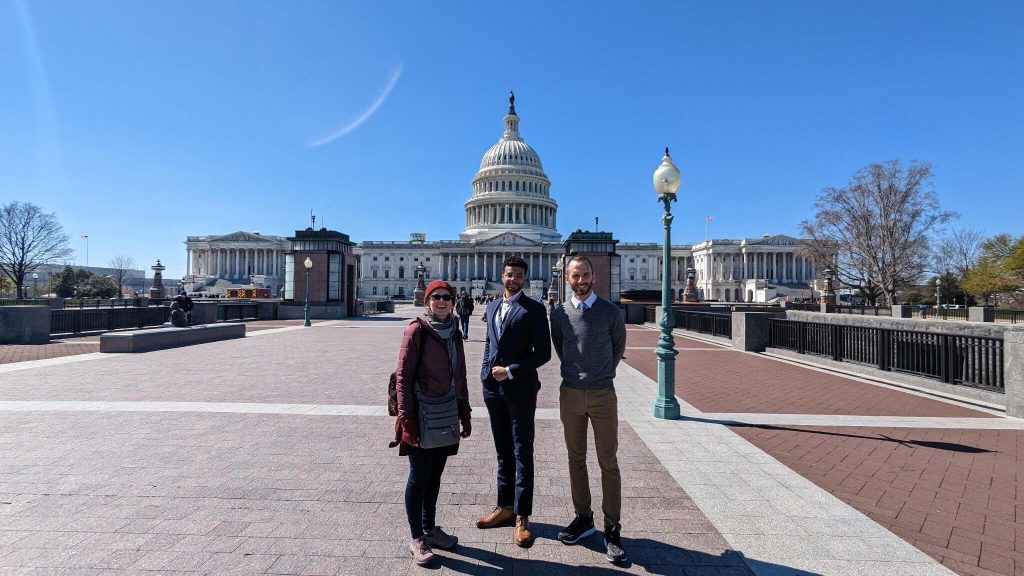
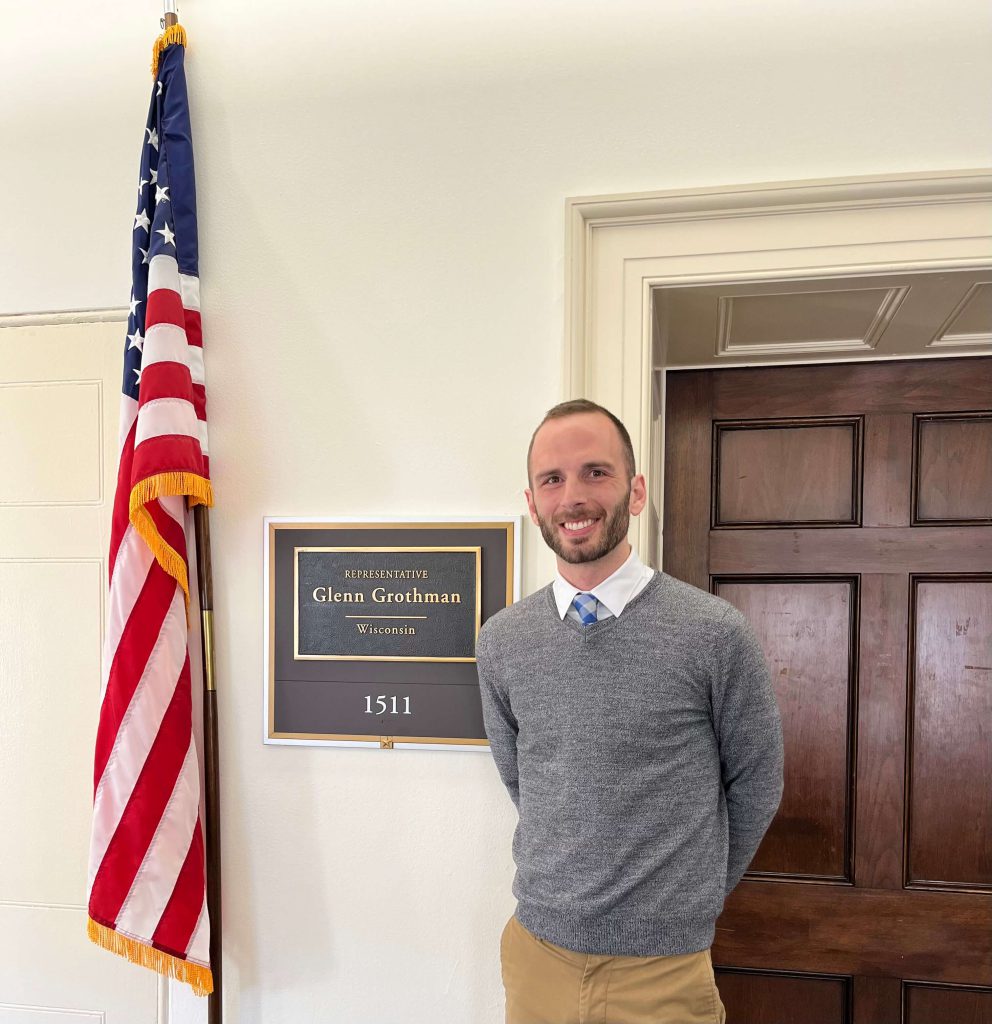
On March 14th, I had the opportunity to discuss scientific funding with federal lawmakers for the Federation of American Societies for Experimental Biology. As I write this blog while waiting for my flight from D.C. back to Milwaukee, I cannot help but think of the importance of advocating for what you believe in. This trip has taught me several things that I wanted to share as well as tips for advocating.

Kevin Gries in front of the US Capitol Building

Government influences our jobs, whether we like it or not

We underestimate how much governmental funding and regulations affect our day to day lives. However, those that are making these decisions are often several steps removed from the challenges we face and therefore misconceptions arise. An example of this occurred in our meetings where we stressed money distributed from the National Institutes of Health (NIH) is distributed based on a peer-review system of scientists across the country and not just officials within the NIH.  This small misunderstanding led to the staffer drastically changing their demeanor on increasing scientific funding. I sit here thinking how many misconceptions may be out there regarding all of our professions that can be fixed by meeting and advocating for your cause with politicians.

Have uncomfortable conversations

I also noticed the need to talk with people who disagree with us. We live in an increasing polarized world in all aspects of life, not just politics. When we disagree with people, we often find ourselves uncomfortable which leads us to find friends who affirm our believes, watch tv stations that only say what we want to say, and follow people on social media who agree with us.

However, it is uncomfortable conversations that make us grow and reflect, and make us think about if our beliefs are truly the right way to act. These conversations also allow us to least learn about “the other side” and see the people as humans rather than simply the opposition. We need to avoid echo chambers. We also need to see that leaders often want to help you, but their means just may be different than what you think. Having this attitude will help us see those we disagree with as still brothers and sisters in Christ.

Kevin Gries talks about how to advocate in DC

Ways to advocate

I am extremely fortunate to be asked to travel to Washington D.C. to advocate for what I believe. So, while this specific trip may not be for everyone, there are ways in which you can advocate for your beliefs:

Focus on your sphere of influence.

This isn’t an attractive piece of advice, but is the most effective. If you want to see good/a change in the world, start with the people you spend the most time with. Be good to your family, friends, neighbors, community, classmates, etc. It does not do any good to take our frustrations on your family based on things far away and that you cannot control.

Meet government officials.

This doesn’t mean travel to Washington D.C. Maybe your state capitol is more reasonable. Several public offices will hold Zoom meetings, which makes talking to your representatives as easy as a phone call. Perhaps you can speak with your representative directly when they visit your district. You can also write letters, use social media, and call their offices. You can make a difference.

Use the power of media.

This can include writing letters to the editors in journals or magazines (be sure to select the source based on your target audience). This can also mean use social media. However, to be an effective advocate on social media, you have to be ready to have your information scrutinized. If you want your opinion to be taken seriously, that means you need to be taken seriously. Clean up your profile before doing this.

Join an advocacy group.

I am a part of several scientific and other advocacy groups based on topics I am passionate about. If you feel uncomfortable speaking your opinion, you can donate to these groups (traveling is not free), or just give moral support by simply being there.

This trip to Washington D.C. is one I plan to make yearly. I enjoy communicating the importance of the scientific process to lawmakers to improve the health of our society. We need to remember the power that we have, no matter what stage of your career you are in (yes, even students), and use that power to improve the lives of those around us, no matter the topic.


Feeling Inspired?

If you want to learn more about becoming a physical therapist, feel free to check out our website.

You can also take a look at our most recent blog posts about A Day in the Life of a Physical Therapy Student or learn about Experiential Learning


  • Dr. Kevin Gries is a professor at CUW in the Physical Therapy department

Senior art show opening reception set for Friday

The Senior Exhibition is open in the CUW Art Gallery now through May 14. An opening reception is scheduled for Friday, May 5.


Senior students who are majoring in Graphic Design (aka BA in Visual Communication), Interior Architecture & Design, and Art have displayed their work in the Barth Gallery (B109). Work is also on display in the smaller galleries at the intersection of the Loeber, Rincker, and Barth hallways.

Don’t miss this opportunity to see some of the amazing work these talented students have produced.

Show run

April 10 through May 14

Hours

  • Monday-Thursday: 4-8 p.m.
  • Friday & Sunday: 12-4 p.m. (closed Saturday)

Opening Reception

Friday, May 5 | 6-8 p.m.

Senior exhibitors

Elena Cieszki | Art major

From Milwaukee, Wisconsin

I have always loved testing different medias, and never wanted to be confined to just one. Over the years, I have had the most experience with acrylic painting. I also have skills in gouache, watercolor, and oil painting. With my minor in photography, I have more knowledge in Adobe software and digital artwork as well. I am looking forward to growing and diving more deep into my interests to further develop my own personal style throughout my artwork.

I like to create art that captures the beauty in everything that surrounds us. I gain inspiration from my love for nature and traveling, along with faith and passion. I like to take my photography work and create paintings based off images I have captured.

Eleni Dalamangas

Eleni Dalamangas | Interior Architecture & Design major

From Muskego, Wisconsin

Hello, my name is Eleni Dalamangas! Archi-tecture has become a passion of mine from a young age. I aim to create spaces that are not only functional but also visually stunning and emotionally compelling. I believe that architecture has the power to shape our experience of the world and influence how we interact with one another. I am passion-ate about exploring the intersection of form, function, and meaning. Great architecture should tell a story and every element in a space should serve a purpose. I am also motivated by the interplay of light, texture, and color, and strive to create designs that are both timeless and modern.

Whether I am designing a private residence, a commercial building, or a public space, my goal is to create a space that not only meets the practical needs of its occupants but also inspires and uplifts them. The spaces we inhabit should be a reflection of our values and I am dedicated to helping my clients create homes and workspaces that are not only beautiful but also aligned with their unique vision and goals. I hope to help others to see the potential for beauty and meaning in every space, and to create environments that support and nurture the human spirit. I plan to start my career after I graduate in the Spring of 2023.

Anna Kuhnle

Anna Kuhnle | Interior Architecture & Design major

From Waunakee, Wisconsin

Artist Statement: The world around us begins as a blank canvas. As artists, we have the opportu­nity to paint our inner thoughts and ideas onto this canvas to bring it to life. As someone who has been searching for different canvases to paint my entire life, I am constantly locating beauty in the most unexpected places. I design because I am able to take a literal blank canvas and completely transform it into something that is not only functional, but powerful in the sense that it can make the beholder feel something.

Utilizing color is a technique I like to use to evoke emotion. Bright, triadic color schemes can create more energizing spaces while cool, monochromatic schemes can stimulate relaxation. I also like to use more interesting geometries as a way to define space and create not only captivating spaces, but floor plans as well. A lot of my inspiration comes from past styles when designing new spaces. Incorporating the successes of older designs in with newer designs generates a seamless blend of both that creates exciting and unique spaces.

Saul Leon

Saul A. Leon | Graphic Design major

From Twin Lakes, Wisconsin

Artist Statement: Hello, my name is Saul Leon. I was born in Harvard Illinois but was raised in Wisconsin, so I consider it my true home and state. I love Wisconsin because of its cold and snowy winters, the cheese of course, and the Green bay Packers. I come from a Mexican family that is originally from Mexico, making me the 2nd generation in my family and the first generation to receive a higher education.

I want my designs and work to help portray a message and meaning. I want there to be emotion and for the designs to evoke happiness, seriousness, and other emotions so that people who see these designs can understand the business approach. Yes, to create unique, fun, and modern designs, but I don’t want my work to just look cool, fancy, or pretty, I want there to be meaning behind it that the business is trying to portray and build a brand, poster, logo, menu anything that will catch the viewers eyes and tell what the business is trying to portray.

Sage Wojdyla

Sage Wojdyla | Graphic Design major

From Cedarburg, Wisconsin

Artist Statement: Hello! My name is Sage Wojdyla and I am a Graphic Designer based in the greater Milwaukee area. From a young age, I was immersed in a creative environment where art and design were central in everyday life. With a mother who is a lead graphic designer for her company, I was exposed to the world of design from an early age and was fascinated by the work I saw her produce. Drawing and designing became second nature to me, and my passion for the field only grew as I practiced and matured.

As a graphic designer, my work is a reflection of my passion for visual storytelling and communication. I believe that design has the power to shape the world around us. I believe that every project is unique and requires a tailored solution that addresses the specific needs of the client and the audience.

Ultimately, my goal is to create designs that are not only aesthetically pleasing but also impactful and meaningful. I believe it is important to inspire others to think more deeply about design and its role in our world.

14 Frames Gallery

Kelvin Kazibwe | Graphic Design major & Photography minor

From Uganda

Artist Statement: To help establish a means of sharing with the world what we’re about, I photographed individuals, their environments, and the world in an authentic and raw way, elevating the stories we all have. Shared conviction means a lot t me; I want to learn about the people I work with and what they like and dislike. Working together and growing together is easier when you find ways to connect with others.

Time spent with friends, criticism from people I respect, and encouragement from close friends all contribute to my work. Photographing is a beautiful process. Working with others and bringing out the best in them and what they stand for brings me joy. I strive to portray the world in a positive light, be it in my editing or subject matter.


Want in?

Concordia University Wisconsin is pleased to offer students plenty of academic and extracurricular activities in art. Students can express themselves creatively in a variety of ways. Opportunities range from showcasing their work in art gallery exhibitions or on the stage.
Kylie Nelson is Concordia’s April Student of the Month

Congratulations to CUW’s April Student of the Month, Psychology and Justice & Public Policy major Kylie Nelson!


April 2023 Student of the Month

The CUW faculty have selected Kylie Nelson as the April Student of the Month. Kylie is a senior double majoring in Psychology and Justice & Public Policy. She excels both academically and in service, and her Christian character shines in her classes and in the community. She is currently interning at Advocates of Ozaukee, where she has gone above and beyond in Christian service of individuals who have experienced domestic and sexual violence.

For example, Kylie organized a community event in Cedarburg this past fall to bring awareness to domestic violence. She also coordinated a supplies drive and blanket/card-making event where CUW students donated personal items and created cards with Scripture passages of hope and comfort for survivors of domestic violence. In addition, Kylie is Vice President of Psychology Club. Her eagerness to learn, servant heart, and dedication to her vocation make her stand out as an exceptional role model for her peers.

Kylie was nominated by Dr. Rachel Pickett.

Concordia University Wisconsin has been awarding Student of the Month since 2016. Want to see our previous Student of the Month awardees? Take a look here!


Want in?

At Concordia University Wisconsin, we believe that education is at the junction of faith and learning. That means that we get to know you personally – your unique gifts and skills – so that we can help you develop fully in mind, body, and spirit to achieve your highest potential. To learn more or to apply, click the link below.

CUW alumni celebrate Call Day 2023

This week, CUW alumni at Concordia Seminary, St. Louis and Concordia Theological Seminary, Fort Wayne received their calls or vicarage placements.


Second-year seminary students receive vicarage and internship assignments while fourth-year students receive their first calls to serve as pastors and deaconesses in Lutheran Church—Missouri Synod congregations throughout the country.

We congratulate and celebrate our most recent crop of Concordia University Wisconsin alumni who received their placements and calls this week. We pray the Lord’s blessings on their ministry work ahead.

Those who received vicarage assignments:

Ethan Boester – Our Redeemer Lutheran Church in Iowa City, Iowa

Daniel Brummet – Saint Stephens Lutheran Church in Hickory, North Carolina

Christopher Dhuse – Pilgrim Lutheran Church in Green Bay, Wisconsin

Michael Ewert – Saint Paul Lutheran Church in Saint Joseph, Michigan

Preus Hasselbrook – Memorial Lutheran Church in Houston, Texas

Matthew Machemer – Martini Lutheran Church and Saint Paul Lutheran Church in New Haven, Indiana

Those who learned of their pastoral calls:

Joshua Benish – Church planter within the LCMS South Wisconsin District

Jarod Fenske – Peace Lutheran Church in Antigo, Wisconsin

Oliver LaMie – Saint Peters Lutheran Church in Prairietown, Illinois

Hayden Lukas – Saint Martin Lutheran Church in Clintonville, Wisconsin

Daniel Reh – Trinity Lutheran Church in Mequon, Wisconsin

Mark Zieroth – Our Redeemer Lutheran Church in Dubuque, Iowa and Saint Matthew Lutheran Church in Sherrill, Iowa


Want in?

The good work of preparing future leaders for the Church continues at CUW today. We invite you to explore whether God is calling you to join the ranks of Concordia alumni who serve Christ as church workers throughout the world.

CUW celebrates Psychology Week April 23-29

In honor of Psychology Week, more than 50 students presented research posters on a variety of topics.


Psychology positively impacts our lives and our communities in many ways. Concordia’s Psychology Department celebrated the second annual National #PsychologyWeek by showcasing senior students’ original research projects at a university-wide poster fair.

On Wednesday, April 26 over 50 undergraduate and graduate students from various majors and schools presented their research posters to faculty, staff, family, and friends. These projects reflect the students’ hard work and effort on topics that fulfill CUW’s mission of using knowledge and education to serve to others.

Eighteen senior psychology students put a tremendous amount of effort into researching, analyzing data, and presenting their findings at the event. The topics they explored included why people are attracted to horror movies, impacts of social media, college student success, prayer’s relationship to stress reduction, student-athlete mental health, and attitudes of predestination among Christian missionaries – just to name a few!

Participating in a research poster fair is a valuable experience for our students and is one of the ways that a Concordia education is UNCOMMON. It provides them with an opportunity to develop important skills in communication and public speaking, as well as build their professional confidence. They connect with others who share their academic interests and learn from peers and mentors. All psychology majors at CUW create original research under the supervision of a faculty member. The department is one of the largest producers of undergraduate research on campus.

The mission of the psychology program is to increase the awareness of the boundaries and applications of psychology, foster intellectual development and problem solving, and encourage students to serve others within the context of Christian faith. The psychology program is committed to cultivating multicultural awareness and appreciation for the magnificence of God viewed through human diversity. The program prepares students to pursue helping professions and/or graduate study.


Feeling Inspired?

The mission of the psychology program is to increase the awareness of the boundaries and applications of psychology, foster intellectual development and problem solving, and encourage students to serve others within the context of Christian faith. The psychology program is committed to cultivating multicultural awareness and appreciation for the magnificence of God viewed through human diversity. The program prepares students to pursue helping professions and/or graduate study.