This is the first article in the series, “A Quid for Your Thoughts,” written by members of the MBA 568: Study Abroad in London course. The series captures reflections from students’ study abroad experience to the United Kingdom over spring break of 2024.
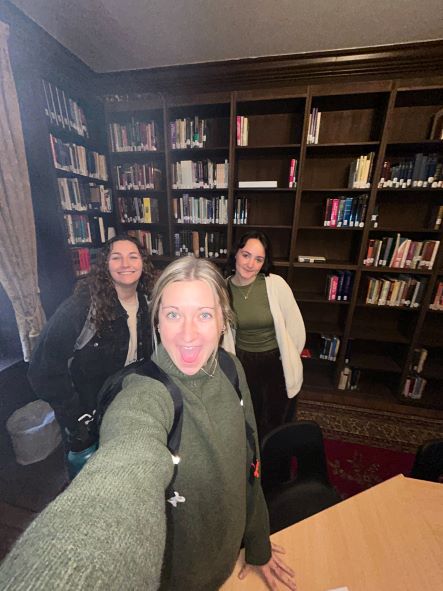
The Spring class of MBA 568 is on the ground in London! Our first ‘day’ began on the afternoon of Friday, March 1 at the Concordia University Robert W. Plaster Free Enterprise Center where the CUW students left for Chicago’s O’Hare Airport, and our Ann Arbor students set out to meet us there. Our group of 22 students and two professors, Dr. Scott Niederjohn and Dr. Tom Scholz, settled in for our night in the air. Only eight “short” hours after our 6:30 PM (CST) departure, we safely landed at London Heathrow Airport at about 8:30 AM local time on Saturday, March 2. Even though we have quite a large group, we all moved through customs quickly to make our way into the United Kingdom.
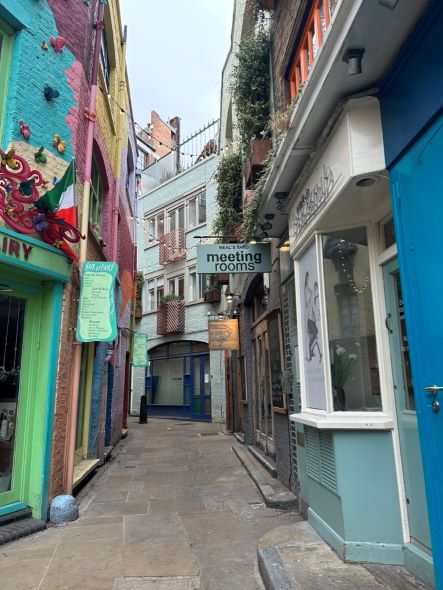
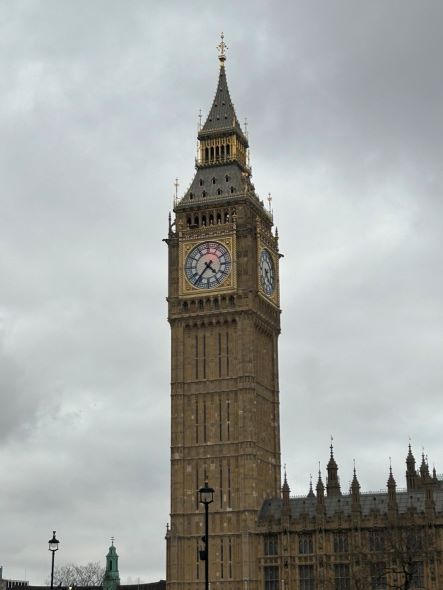
We were greeted by some English rain, but found ourselves sightseeing through puddles and sunshine. Our main form of transportation for the week will be the infamous London Underground, also called The Tube! The Tube brought us to our starting point at Big Ben as we waited for out hotel room to be free and we made our way through Westminster, St. James’ Park, up to Buckingham Palace, and then ended at Trafalgar Square for some lunch. Fish and chips were on the menu at Admirality Pub!
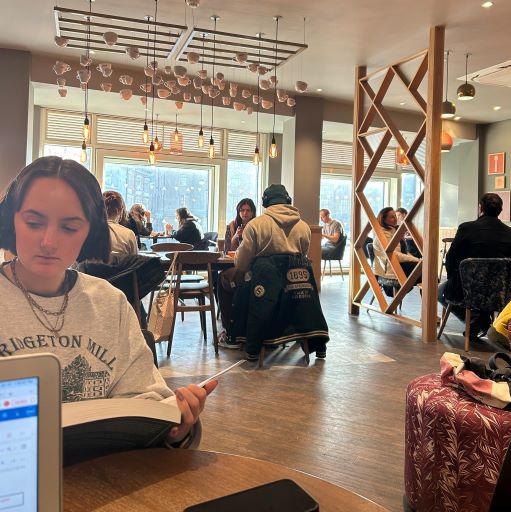
While we are in the United Kingdom, each student group is preparing a final presentation focused on a self-selected topic related to the British economy. The evening of our first day presented opportunities for each group to do their own research, going on their own adventures throughout London, and collecting first-hand knowledge about their topics. Most importantly, we will be resting to prepare for seven more days of learning in the UK!
Want in?
This course is one of the student offerings of the Concordia University Free Enterprise Center. Students met on-campus for the first eight weeks of this semester learning about the economy, government, politics, and culture of the United Kingdom. The course concludes with this trip over spring break to London with a day in Cambridge at Westfield House.
Concordia offers 500-plus study abroad programs in 48 different countries. Students have the opportunity to see the world and experience new places and people, while earning their degree from CUW. Expand your horizons and perspective, and gain professional benefits from exposure to new cultures.
—This story is written by MBA students Brian Williams, Cristina Stinson, and Jessica Anderson at Concordia University Wisconsin. We are currently on a week-long trip to the United Kingdom as part of our MBA 568 business course.
The second in a series of adolescent literature recommendations by CUW students/future educators.
“Oh, for Keip’s sake” is a blog series dedicated to the sharing of books with people who care—books that are especially for people who work with adolescent readers. And maybe even a few adolescent readers as well.
Dr. Val Keiper has charged the students in his Adolescent Literature course to review and recommend their favorites in the hopes of encouraging a love of reading. Learn more about this blog series here.
Isabel’s pick: The 5th Wave by Rick Yancey
What would you do if the world was ending? This is a question sixteen-year-old Cassie Sullivan is faced with when aliens start taking out the human population in waves. She has survived four waves with her family, but now she is alone and possibly the last human left. In this exciting fantasy book, you follow Cassie through her battle to find her family and keep her humanity in the face of total devastation. If you like fantasy, survival, or dystopian books, put this book on your list to read next! Would you survive the 5th wave? You’ll just have to read to find out. —Isabel M.
Alicia’s pick: The Crossover by Kwane Alexander
The two main characters in this book are Jordan Bell (JB) and Josh Bell. These brothers are identical twins and both on the basketball team. This book is written in a poetry style; however, it is not all rhyming but a variety of a reading style. Throughout this book it is not just about the brother’s playing basketball, but also their family. Some of the family history relates back to their grandpa. JB ends up talking to a girl who Josh calls Sweet Tea, which leads to jealousy, drama, and the start of distance brothers. Not only were their issues starting between the brother, but dad also starts an issue himself. First, he gets pulled over causing Josh to be late to his game and sit the first half. Later that night dads nose starts bleeding causing mom and dad to go to the hospital. The boys were very concerned about their father and their mother restated that dad will be fine. The boys are now in the championship game where they find out more about dad’s health. To find out what happens, you will have to read the book yourself. —Alicia S.
Natalie’s pick: Three Times Lucky by Sheila Turnage
Mo was found secured to a billboard when she was a newborn, she was born during a hurricane. Mo drifted away down the stream because of the amount of rain and water, she was found by the Colonel. Mo doesn’t know her mom and she has tried searching for her ever since she can remember. She has people release bottles down the river with a note inside whenever they drive somewhere farther away.
One day, a detective is driving through town and stopped for some lunch at the café Mo and her family own. Not long after he came to town, someone was murdered. No one is safe, no one knows who the murderer is. Ms. Lana (Mo’s adoptive mom) is kidnapped one day by the killer, and everyone figures out who he is after that. The story goes on to tell how they found him and all the clues he left because he was holding Ms. Lana for ransom. —Natalie L.
Alicia’s pick: Lawn Boy by Gary Paulson
The book, Lawn Boy, takes place in Eden Prairie, Minnesota in an upper-middle-class neighborhood. Lawn boy is a twelve year old boy who is looking to make some money. His parents and grandma are not very wealthy and struggle with giving money to their son/grandson. Grandma decided that she did not need her riding lawn mower and gave it to her grandson. One day Lawn Boy went out to mow his lawn, and his neighbor saw him and asked. The next day he went to go mow the neighbor’s lawn, and the neighbor to that neighbor, and pretty soon he was on the other side of town.
After a while of mowing lawns, his business took off and grew more and more each day. He could not do this work alone and needed help from other. Lawn Boy next meets Arnold, who just wanted his lawn mowed. Later, Arnold became Lawn Boy’s “bank” and helped Lawn Boy invest his money. Lawn Boy was hesitant and did not want to tell his parents about the money he was making; however, he wanted to help his family out. Later in the book, Lawn Boy has so much money and now he invested it with being a sponsor for a fighter, Joseph Powdermilk, that Arnold found. In the end of the book, Lawn Boy supports Mr. Powdermilk and tells his family everything about his business. This book shares about economics and I believe that older elementary to middle school boys would like this book especially. —Alicia S.
The School of Education at Concordia University focuses on optimizing your abilities to serve students, schools, and the community through education. Program develop well-rounded educational professionals who can teach and lead in rural or urban communities, parochial or public settings. With a distinctly Christ-centered approach to our curriculum, engaging faculty who have plenty of real-world experience and passion for their subjects can help play a meaningful role in preparing you for your next step.
The first in a series of adolescent literature recommendations by CUW students/future educators.
“Oh, for Keip’s sake” is a blog series dedicated to the sharing of books with people who care—books that are especially for people who work with adolescent readers. And maybe even a few adolescent readers as well.
Dr. Val Keiper has charged the students in his Adolescent Literature course to review and recommend their favorites in the hopes of encouraging a love of reading. Learn more about this blog series here.
Julia’s pick: Fish in a Tree by Lynda Mullaly Hunt
“I absolutely loved Fish in a Tree by Lynda Mullaly Hunt! Ally is a sixth grader who just can’t read. She is diagnosed with dyslexia with the help of her new teacher, Mr. Daniels (who is exactly the kind of teacher I want to be someday!). Along with her friends, Keisha and Albert, Ally slowly realizes that she can take on the world!” —Julia Schulteis
Ellie’s pick: The Secret Garden by Frances Hodgson Burnett
“A secretly wonderful classic, The Secret Garden is a classic written by Frances Hodgson Burnett. I know what you are thinking: “A classic, ugh!” But this classic is AMAZING. I had hesitations, of course, about this book, but it ended up being fantastic! I also would recommend listening to this book to fully understand the accents each character brings.
The Secret Garden starts out with Mary, a spoiled sad looking child living in India. Her parents both died, leaving her to move to Yorkshire to live in her uncle’s manor. It is a quite peculiar place. Hundreds of rooms that have been shut off, along with a garden following her aunt’s death 10 years ago. Mary’s uncle is barely around, and when he is he is shut off in his study. Mary soon becomes curious and starts discovering things. She is most curious about the garden. After a series of events, she finds the key and door to the garden. She allows Dickon, a friend of nature, into her secret. But one thing that Mary doesn’t understand is the crying at night. When she explores, she is told to get back in her room. Mary finally finds the source, her cousin, Colin, a sickly boy who believes he’s going to die. Mary tells him of the garden, and he slowly wants to go outside. Mary, Dickon, and Colin spend the summer growing in their own way.” —Ellie Lankey
Josie’s pick: Little House in the Big Woods by Laura Ingalls Wilder
“This book is based out of the woods of Wisconsin. This is about a family of five that lives in a log cabin in the woods. They lived a very basic life. The father went and worked out in the woods by finding food for the family. The MA fixed the food and took care of the children at home and worked and did the dishes.
They tell stories about during the wintertime when no one could go outside and play. They talked about their daily life’s and how they had certain days for everything they do, and Sunday was the day of rest like in the bible. They found it hard to do nothing on Sunday. They also talked about how it worked when it was time to harvest the wheat.
I did not know that Laura Ingalls was born in Wisconsin, non the less that that book was based out of Wisconsin until now. I like these older books. I like how you can find out how life was in the olden days. It was a very different way of living life and I find it interesting to how they did everything back then. It was a good reread book it had been a while since I read that book.” —Josie Zweifel
The School of Education at Concordia University focuses on optimizing your abilities to serve students, schools, and the community through education. Program develop well-rounded educational professionals who can teach and lead in rural or urban communities, parochial or public settings. With a distinctly Christ-centered approach to our curriculum, engaging faculty who have plenty of real-world experience and passion for their subjects can help play a meaningful role in preparing you for your next step.
Last week, the Concordia Center for Bioethics hosted a webinar featuring Dr. Katrina Furth, who shared how we all changed from one cell into organisms that can reason, remember, and relate to others.
As a senior biomedical sciences major and bioethics minor I made sure to be in the audience. Here’s a bit about what I learned.
About the speaker
Dr. Katrina Furth is an associate scholar at the Charlotte Lozier Institute in Washington, DC, which promotes science and statistics for pre-life causes. Since graduating with a PhD in Neuroscience from Boston University, she has worked as an adjunct professor at Catholic University in Washington, DC. She is also the lead author of the VoyageofLife.com website.
Dr. Furth addressed students and employees at Concordia University on Tuesday, Oct. 24 via a webinar that also reached many all over the country.
Definitions established
As any good argument does, Dr. Furth began her talk by explaining the differences in definitions used for the topic of fetal development. She described the confusion that surrounds the varying idea as to when life begins. According to her, the starting point of life occurs when a “unique living individual is formed.” Using this definition, her argument revolves around the idea that life begins at fertilization between the egg and sperm.
After establishing the meaning of her words, Dr. Furth moved into the meat and potatoes of her conversation by going over the timeline in which a fetus grows. As it develops, she highlighted anatomical stages of growth, such as structures necessary for the reception and awareness of pain, and the first detectable heartbeat. While it isn’t exactly clear when a fetus can feel pain, science is showing that it’s much earlier than the abortion deadline of 24-26 weeks gestational age. To add flavor to her talk, she also included visuals, one of those being a video captured by a 4D ultrasound which showed a fetus’ face in agony as its body was pierced by a needle containing anesthesia.
Application
To ensure the facts presented in her webinar could not be dismissed by those who are Pro-Choice, Dr. Furth left the religious aspect of fetal development at the door and strictly presented scientific facts with the hope that her Pro-Life stance would be powerful enough to dissuade those who listened from getting an abortion.
As someone who hopes to become a medical doctor one day, I found this talk enlightening as it equipped me with language and knowledge to utilize should the debate arise in my profession. While Dr. Furth did address certain times in which an abortion may be necessary, such as ectopic pregnancy, she also talked about the research scientists are conducting that would allow for the replanting of the zygote into the uterine lining. This procedure would be done as a way to maintain the life of the developing fetus as well as the mother.
After attending the talk, I am thankful to be attending a Christian university that instills moral ethics into the medical actions in which I hope to one day work with.
Want more?
The Concordia Center for Bioethics is a Christian academic center that applies God’s Word to issues involving biology and health care through teaching, service, and research. View the CCB website by clicking below.
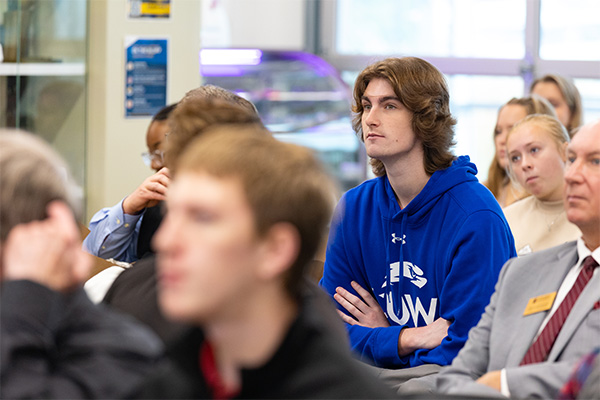
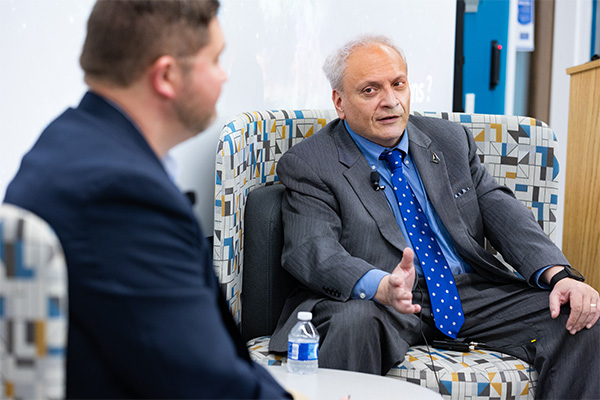
Prof. Pullen is the Chief Economist and Co-Founder of Milky Way Economy (MWE). A former Marine, he is also an economic facilitator to the Space Force Futures Workshops and Space Force Doctrine Group.
Pullen’s area of expertise is preparing for the future impact of space on the field of economics. As he explained, the world is on the brink of the fifth industrial revolution: the Space Revolution. Just as developments in steam power, electrical power, automation and digitalization each marked the beginning of a new industrial revolution, space exploration is already reshaping how we live and work. For instance, Pullen gave the example of nutrient-enhanced baby food, showing how space exploration can yield unexpected technological developments and applications.
Pullen explained that he was excited to bring his Christian faith into the conversation about the future of space, in a way that he had not been able to in previous speeches. For Christians, Pullen argued, space holds a special significance and place of wonder as we explore more of creation. Christians must bring their values and beliefs with them as space exploration continues.
In a Q&A panel with Dr. Colucci, Pullen made the case that anyone can have a place in this new space age. “There is likely a job for you connected to space,” he said. The economy of space will expand based on the earth economy. Therefore, students of all disciplines and careers should be prepared to work in or with space.
About NSSC
The National Security and Space Center (NSSC) intends to educate these Christian space leaders by inviting speakers like George Pullen. The NSSC is the first center in the Midwest to combine the topics of space, national security, and Christian values in conversations with students, faculty and community members. Through the NSSC, students will have the opportunity to learn how timeless truths and lessons from history apply to the next phase of technological revolution. Faculty and staff will have the opportunity to form partnerships with each other and outside organizations that assist in their efforts to bring Christianity to space.
One of the partnerships the NSSC has already established is the Concordia Free Enterprise Center (CFEC), who sponsored Pullen’s event. Allies like these will be crucial to future events and education. If you might like to work with the NSSC, click the link below.
As the NSSC looks towards the future, the hope is that many more valuable partnerships will be made. These partnerships enable events like Pullen’s to continue. The aim is to help educate our CUW community on issues of national security and space.
View the recorded live stream below.
Want in?
The Concordia National Security and Space Center is a nexus for commercial, civil, and military space partnerships. Get involved with the NSSC or show your support through the button below.
—Alyssa Giese is a Research Assistant for the Concordia National Security and Space Center. Alyssa is a junior studying Secondary Education, specializing in Social Studies.
One of the highlights of the summer for several CUW social work students was an inaugural study abroad opportunity to Austria.
By Lauren Rich (’24)
Lauren Rich was among the students who participated in the new learning experience. Rich plans to graduate in May 2024 with her bachelor’s in psychology and a minor in social work. She intends to earn her Master of Social Work degree through CUW as well.
Rich took time to journal throughout the experience. Scroll down to read excerpts from her reflections.
June 11
“It was so fun being able to walk around and explore Linz. The culture is similar in some ways, but there are so many little things that are vastly different. … Being able to experience something like this is absolutely amazing and I’m so so thankful to be given the opportunity to be here.”
June 12
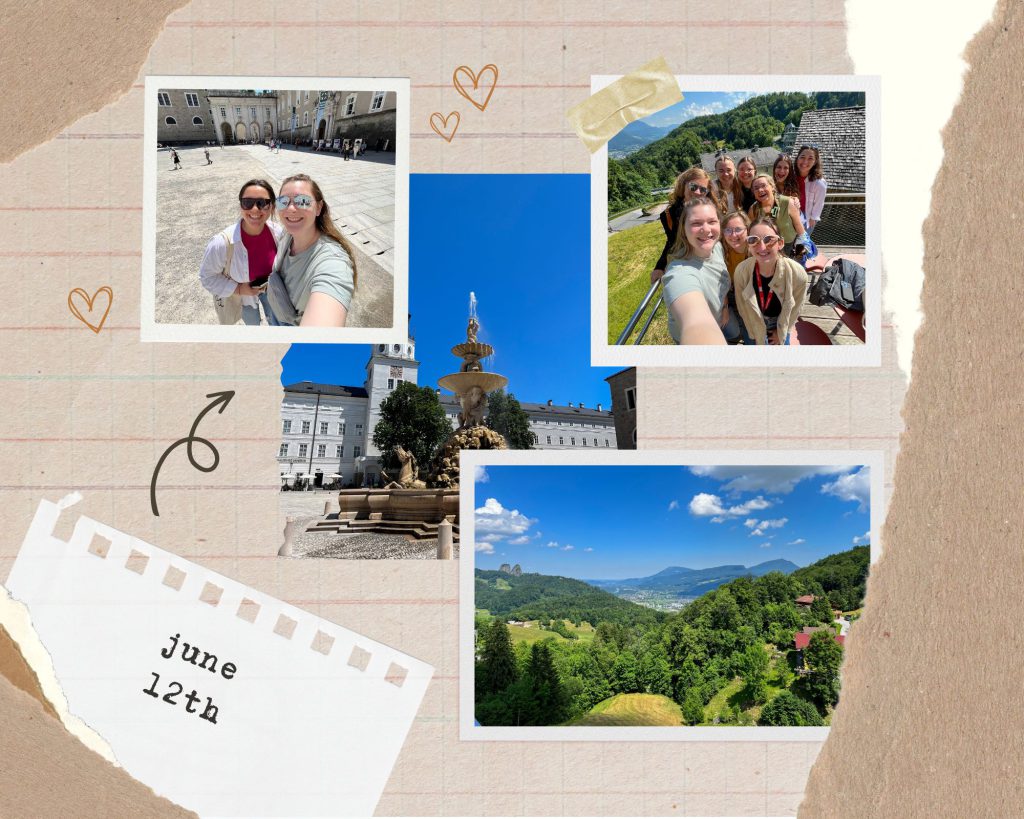
“The trip to the Hallein salt mine was such a fun and unique experience. From the Celtic village to the mine itself there was so much to learn.”
“The trip to Salzburg was also such an amazing experience. The city had so much to offer, especially in terms of its architecture. The churches, the fortress, and the Mirabell Palace were so fun to explore.”
June 13
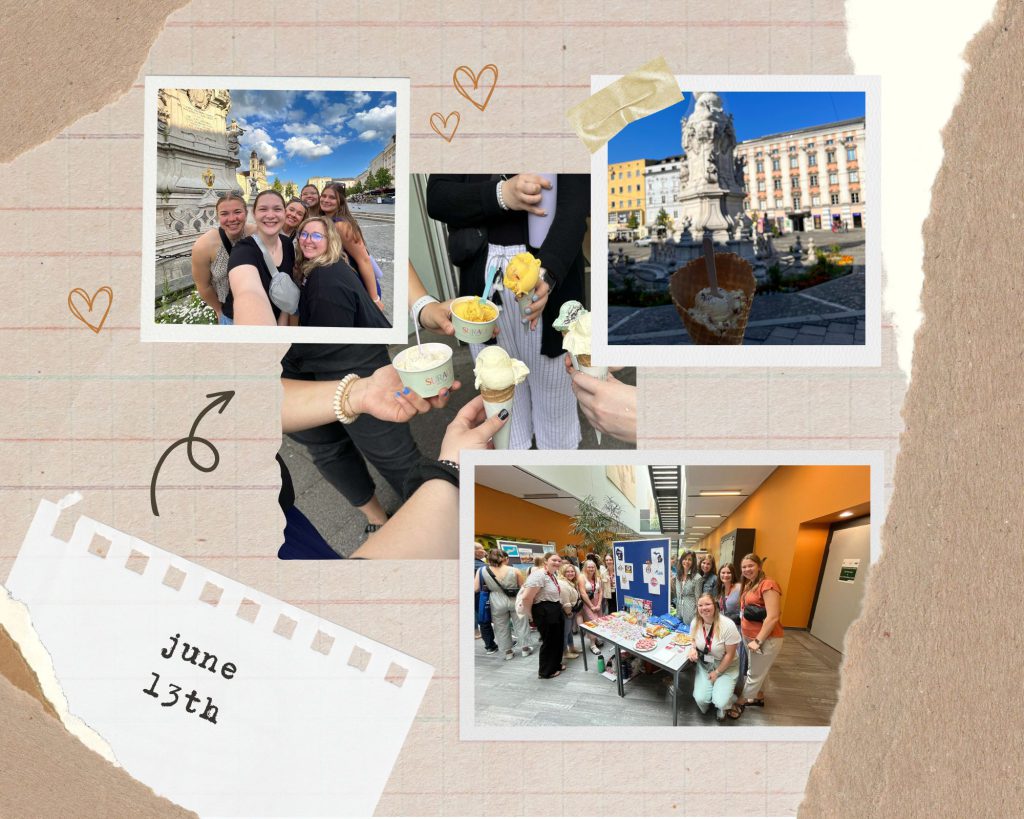
“Today was the first day of the conference and it was packed with lecture, the world cafe, and breakout rooms. The lecture I attended was about jailed mothers and the child welfare system in Milwaukee, a topic that hit close to home. Learning about how people who are in jail or prison have super limited connections with their family outside made my heart hurt for so many people. Even if they have committed a crime, they should still be given the right to be able to communicate with their spouses, children, and family. It made me realize that one day when I am a social worker myself, if I were to ever work with this population, I would try my hardest to be able to advocate for better communication means for those who are imprisoned and their family.”
June 14
“On the second day of the conference, I attended a lecture about the armed conflict in Armenia. Throughout the lecture, I kept getting choked up hearing about so many people who are displaced because of other countries’ greed and want for resources. It would be very heavy, but it made me realize how much I want to help people who are experiencing events like this.”
“After the first lecture, I sat in on the resilience lecture. There is so much secondhand trauma that comes with the social work profession, so being able to take care of ourselves is important so that we are able to better help others.”
June 15
“After attending two lectures in the morning, I went on a site visit to an emergency sleep center. It was so interesting hearing about how they have programs like this that allow for people to have a safe place to sleep. When comparing it to similar programs that exist in the US, it seemed like the European model was a lot more lax. For example, on paper those who use the resource are supposed to stay about 4 weeks, but a social worker can advocate to extend the stay if needed, which I think is ultimately beneficial.”
June 16
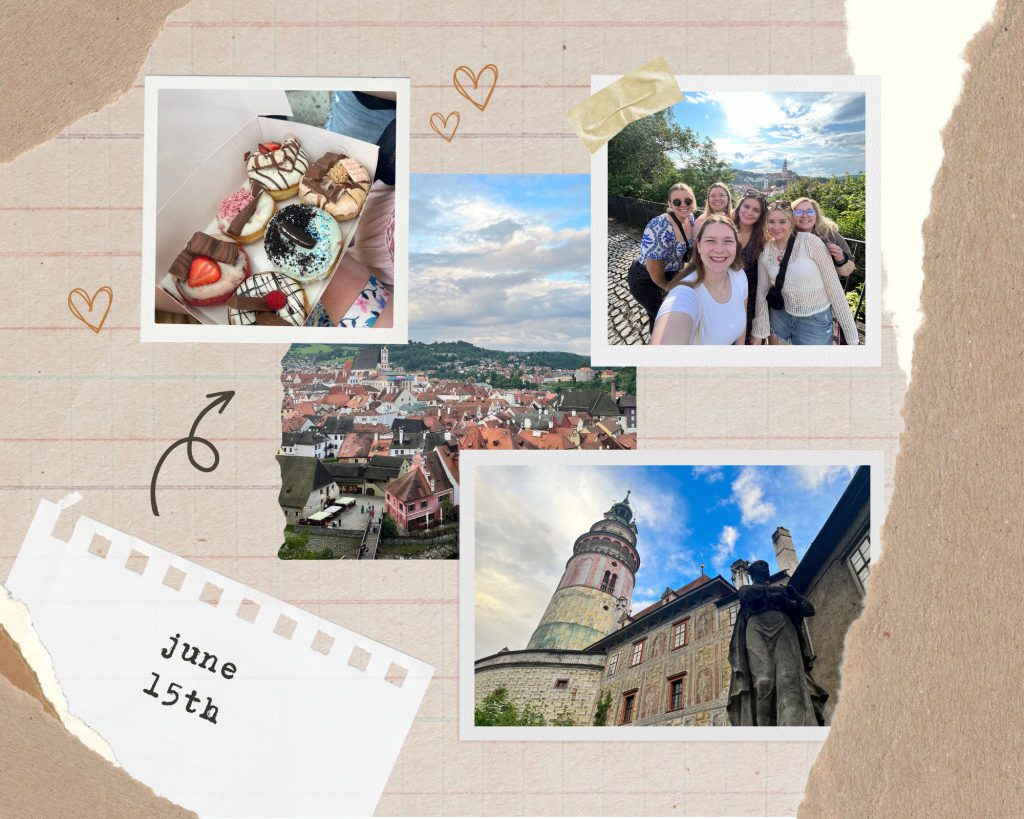
“Today we visited the Czech Republic. It was absolutely beautiful. There was a renaissance fair going on, so part of the city was closed off unless you had a ticket, so we ended up taking some pictures and walking to another side of the city to actually enter. There were so many pop-up stands with jewelry and other handmade items, probably because of the fair. The churches and the chateau were absolutely breathtaking and the architecture was so fun to look at. Overall, it was such a cool experience and it felt surreal the entire time. It was a bit stressful at the bus station as it was late and the signs were not helpful in finding our bus, but in the end it worked out and we made it back to the hotel safely.”
June 17
“Today was another packed day with going to Munich for the majority of the day. When we got in, we walked almost 40 minutes to go to this festival that was happening. It had a bunch of pop up stands with food, clothes, jewelry, and other handmade things. It was super fun walking around and seeing so many people there too. It was interesting listening to people and hearing a lot of English speaking people, which shows that it may have been a popular spot.”
“After that we got tickets for the tram and went into the historic city center. We walked around for a bit and then found St. Peters church and walked up the 14 flights of stairs for a beautiful view. … We walked further into some gardens, which turned out to be more of like a bunch of open fields with trees, a bunch of grass volleyball courts, and some streams that people swam in. It was absolutely full of people of all ages just laying out and enjoying the sun. It definitely made us all jealous of that lifestyle for a few minutes. There were so many teenagers living their best life and it would have been such an amazing experience to have lived in the area and got to do that for the weekend.”
June 18
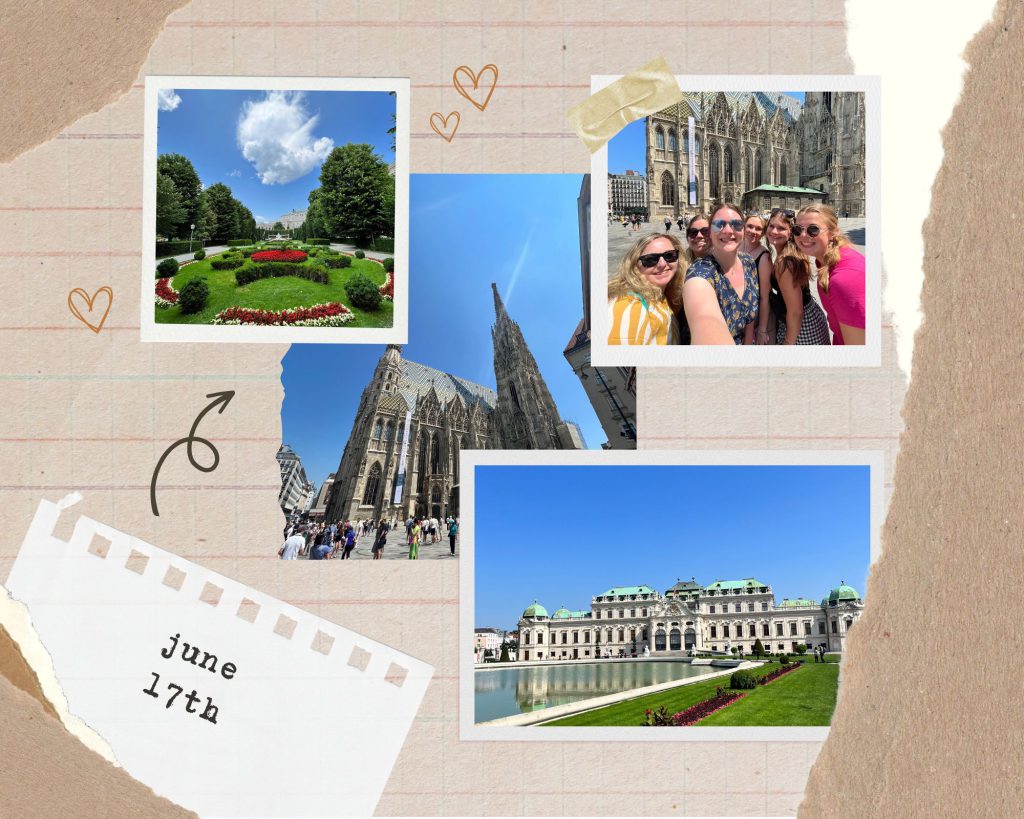
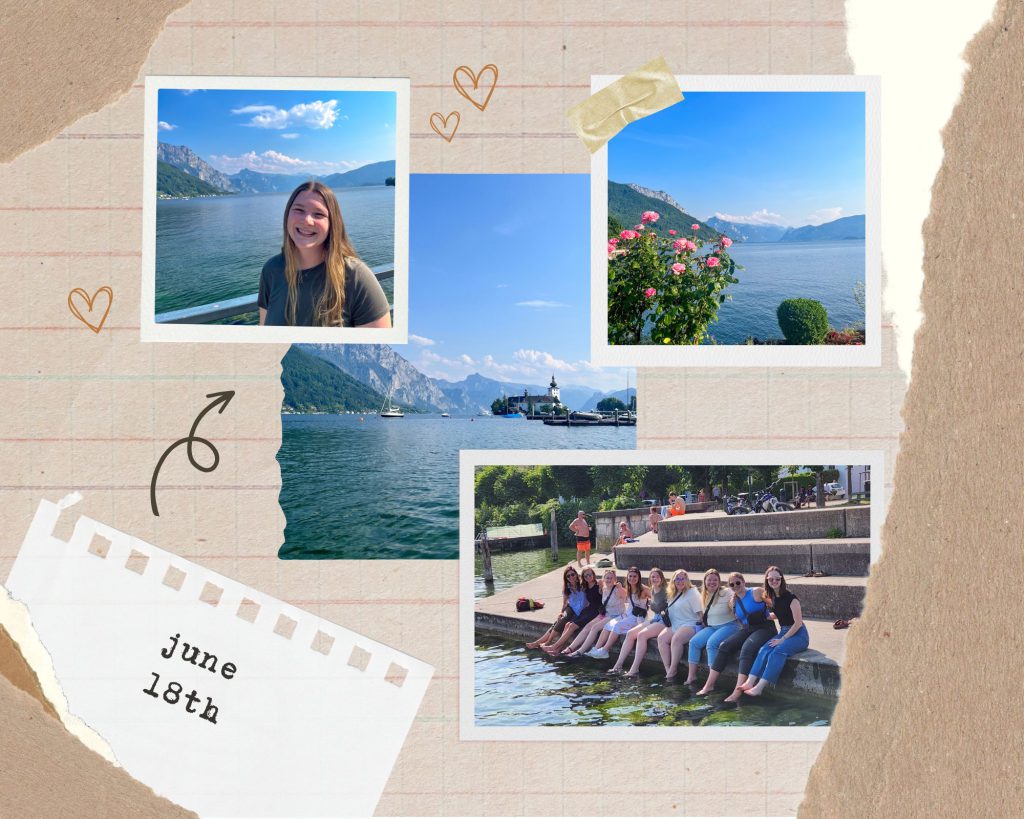
“We took a train in the morning to Vienna, and it was beautiful! The first place we stopped at was the Belvedere Palace. The grounds were pristine and the upper and lower palaces were beautifully built. It was surprising, too, that they were built more recently, in the 18th century. After walking around the palace grounds, we walked to an area that had a bunch of shopping. We went into so many souvenir shops and picked up some goodies. … Overall, today was a little less stressful walking around compared to yesterday, and the vibes of Vienna and Munich were a bit different, but overall was very fun and I can definitely see myself going back.”
June 19
“Today was a very heavy day starting off at Mauthausen. It was an experience that you could only prepare yourself so much for. I have done a decent amount of research on World War II and the Holocaust, but there was so much that I learned today. I thought the tour guide was absolutely incredible and did such a good job explaining the different areas but also asking us the deep questions that should be asked. It made me think a lot about what is happening in current day and how it reflects the absolute horrors of almost 80 years ago and much earlier. There is so much happening today that I do not know about, and as we talked about on the tour, a big reason behind that could be that I just don’t go out of my way to research those things because they are not right in front of me and don’t “directly” affect me. It really opened my eyes to how I could try to do better at this and educate myself and hopefully others around me.”
June 20
“Today was the first day of the week where we got to do the site visits for most of the day. I visited the Work and Life site, which turned out to be an amazing resource. It was located in an old cigarette/cigar factory and was home to about 150 business. The place we visited was just one of 150 in the building. The presenters explained that their organization helped people who needed help finding jobs. They have many resources, including counseling, but also have a special program that can help people who struggle finding work to get legal help to determine if they are fit to retire or help them rejoin the workforce. They also talked about how they have a bicycle shop that employs a few people to help them gain work skills to enter the workforce.”
June 21
“In the morning we visited a domestic violence center, a place for social workers and other staff members to have resources ready for those who suffered domestic violence. Something interesting that I learned there was that people who commit acts of violence are forced to leave the home for 2 weeks, not the survivor, and the survivor in that time has the option to submit a restraining order. Another thing the presenter emphasized was that the client makes their own choices and their choice needs to be honored. I feel like this is something that is seen in the US as well. There may be situations where a social worker may want to intervene and speak their opinion on what the client is choosing to do, but they must hold back, as everything needs to be the client’s decision.”
June 22
“The first workshop today was very interesting, as it was about the story of the presenter and his life as a refugee. He talked about how in Iran, he had next to no rights as a refugee from Afghanistan. Even though he was born on Iranian soil, he was considered a refugee and could not attend school, marry a woman from Iran, and grew up in fear of being shot by the police for doing one thing wrong. This was heartbreaking to hear, as it seems to be so different than the US. If you are born in the US, even if your parents weren’t, you still are considered a citizen. It hurt my heart to hear how he grew up in fear and when he got to Austria, it was the first time that he did not feel fear around the police because they were not holding guns. It really put into perspective how much trauma he must have.
June 23
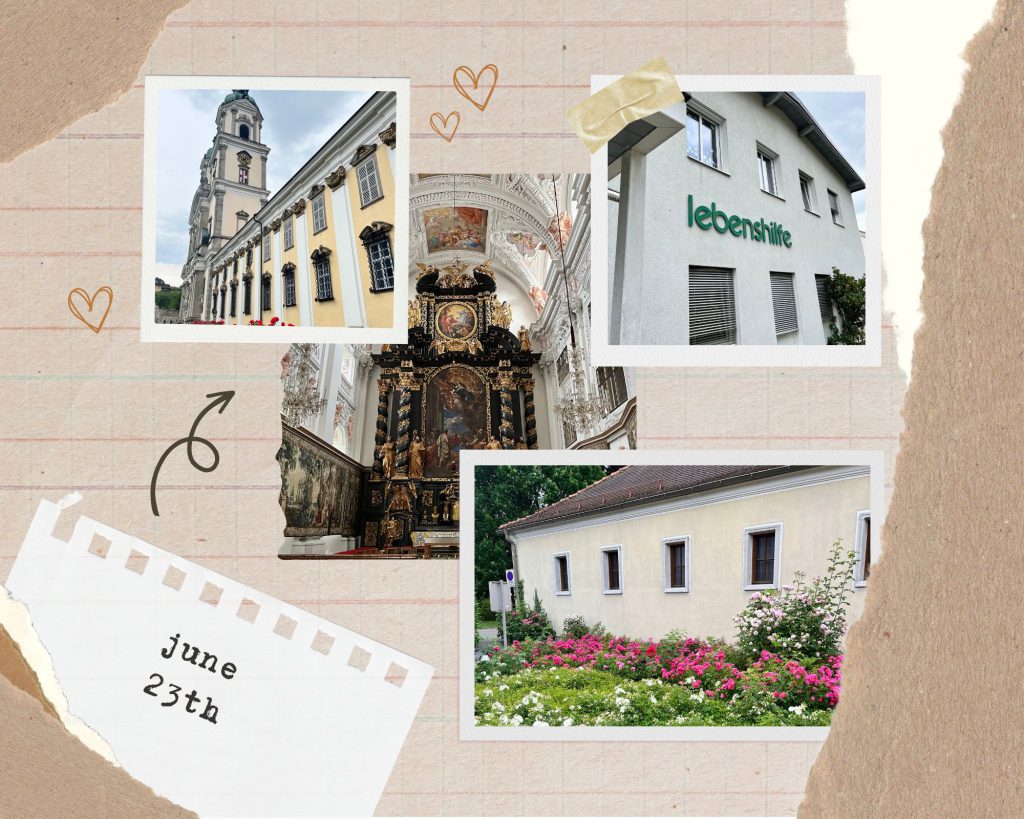
“On the last day of the conference, we were able to go to Steyr. I was in group B, so instead of going to the prison, we went to the facility for those with intellectual disabilities. This location made a huge impression on me. The facility is for adults with disabilities and it allows for them to be taken care of by caretakers and do little odd jobs in order to make money. There was a woodworking room where clients made objects out of wood and another room where clients could make things out of clay. At the end of the tour, they showed us the little shop filled with creations the clients made, and I of course had to grab a few things. I ended up with two pieces of clay that had little designed etched into them. The clients that we met were so sweet and I could tell that most of them enjoyed seeing new people.”
“After that, we were able to walk around Steyr and it was such a cute little city. After walking around, we got back to the bus to go pick up everyone in group A. While waiting, we went inside the church that is connected to the prison, and it was one of the prettiest churches I have been in. The artwork and carving in the walls and ceilings were so intricate and it was so beautiful. After that, we had our farewell ‘dinner’ in St. Florian, which was another cute little town. The church was beautiful and it was fun just walking around in the area surrounding the church. It was a wonderful last day in Austria! I’m sad to leave but am ready to go home.”
Want in?
Concordia’s social work program uses Christian service, quality research, and hands-on learning to grow you as a competent professional. Earn your bachelor’s degree at CUW and then continue on to acquire an MSW, the most sought-after social services degree. Learn more about our programs by clicking below.
This DBA Student Story features Jennifer Kowal, a doctoral student concentrating on Organizational Performance and Change in the Doctorate of Business Administration (DBA) program at Concordia University Wisconsin. Outside of her education, she manages a full-time job and is a wife and a mother of three young adult children. She hopes to inspire and motivate others by sharing her academic experience.
Discover a little about Jennifer’s background and what led her to enroll in our DBA program.
Tell us about yourself
Hello, my name is Jennifer Kowal and I’m a student in the DBA program in Cohort #2 at CUW. I’m currently 5/12th done with the program, but who is counting? In addition to being a student, I’m a wife and mother of two college students, a high school student, and a full-time professional. Yes, I have a lot on my plate but I am determined to earn my DBA.
Why was now the right time to become a student again?
Well, simply put I have always wanted to be a Dr. It is an achievement I have wanted to conquer. However, I was unsure what kind of Doctorate or Ph.D. it would be, though certainly not a medical degree. Everything came together in the fall of 2021. Before I knew it, I was committed to making this goal happen. I started with some online research and found the DBA degree pretty quickly.
The DBA sounded familiar and maybe a bit comfortable since it is so close to the MBA. So, I continued my discovery by looking for schools that offered a DBA. I filled out forms for a few universities online. Within a week, I had scheduled introductory calls. As you can see, I can move pretty quickly in my decisions, once I know what I want.
The introduction calls with a few universities validated which DBA program was right for me. Also, from those conversations I knew which university would be the best fit.
What made you choose CUW’s DBA program?
I chose the DBA program at CUW because it checked all the boxes. Also, the decision just felt right. Follow your heart and gut, as it’s often said.
Two main criteria for me were the number of residencies and the cohort model. I knew I needed some on-campus time, but not too frequently. Furthermore, I knew I wanted the community offered by the cohort model in CUW’s DBA program. Within a couple of months, my acceptance letter arrived and I embraced being a student again in all ways.
What is your research focus?
My research focuses on motivation, curiosity, and a growth-oriented mindset in organizational development at the individual level. CUW’s Organizational Performance and Change concentration is teaching me to apply methods and theories for improving performance at all levels of an organization.
Describe the DBA program in your own words
The Doctor of Business Administration (DBA) program aims to develop individuals into scholar-practitioners. A scholar-practitioner integrates academic learning with practical experience in their chosen field of study. DBA students use theoretical knowledge and academic expertise to improve their practical work. Their valuable work experience also informs how they apply academic knowledge.
Students come from various fields, including education, business, and public policy. They typically possess a terminal degree and significant practical experience in their area of expertise.
What is a DBA scholar-practitioner exactly?
I like to think of being a scholar-practitioner as a bridge. On one side of the bridge is your day job, your work, your profession. On the other side is academic research. The DBA program develops its students to be that bridge, the conduit, between the practice of one’s profession and research. The bridge, in my mental model, is built with Legos and each scholar-practitioner adds more Legos to the body of knowledge in their field. Thereby strengthening both the academic and practitioner sides.
One aspect of being a scholar-practitioner that I find exciting is the opportunity to engage in research, evaluation, and critical analysis. I get to contribute to the development of new knowledge in my field. I’ll explain more about this opportunity in future articles.
The DBA program also opened a whole new community of like-minded individuals committed to bridging the gap between theory and practice in their respective fields.
Any words of wisdom?
Here’s a quote from my cohort during our first residency. It sums up the program and is a daily reminder that some things, like this program, need to be challenging.
A terminal degree is so much more than a degree. It can break you down to your most vulnerable form but has the potential to build you back together to become a resilient, determined, humble, and knowledgeable researcher. This process takes time and patience. Please don’t give up on yourself. It’s not just about getting the degree. It’s about becoming who you are meant to be.
This is the fifth article in the series, “Tea with Mielke,” written by CUW student Hannah Mielke. The series chronicles Mielke’s study abroad adventures in England.
Discovering England
One of the hardest balances about studying abroad is trying to balance when to travel to other countries and when to stay in the UK and explore all of the beautiful cities near me!
The beauty about living here is that traveling to different cities within the UK is so easy because trains are so easily accessible. Day trips have become a great way to fill an open weekend or a day during the week where I don’t have class!
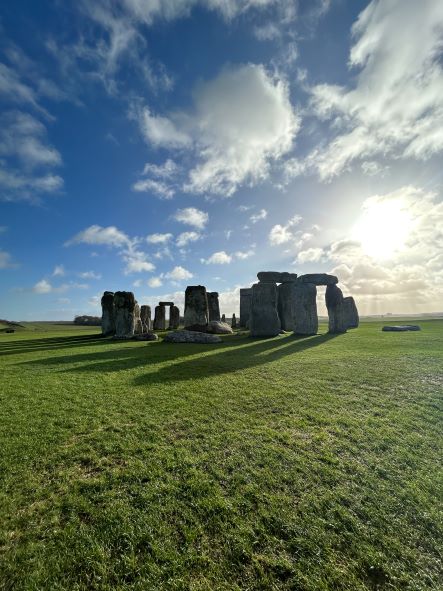
One of the first trips we did when we got here was going to see Stonehenge and a tour of Bath all within the same day! This was a day trip planned through my study abroad program at Westfield House with a tour guide and a driver. Meaning all I had to do was show up! It was so interesting learning about both of those places and recognizing the significance that each place has in the history of the UK. Bath was a very unique city to walk around, the structure and architecture of the city is extremely different than what Cambridge has to offer. A lot of it was rebuilt after WWII but they rebuilt it in a way that was similar to its original structure. It’s also a very “posh” area to live in.
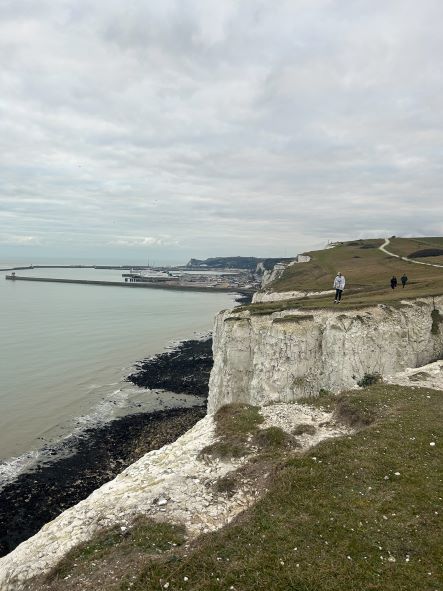
Another day trip we took was to the Cliffs of Dover, in southern England. The cliffs were somewhat similar to what you would think Ireland would look like. We walked about 13 miles that day with all the walking we did around the city along with walking around the cliffs. From the top of the cliffs, we were able to see France which I was not expecting! It appears to be an area where cruise ships go in and out of because of the short distance to France.
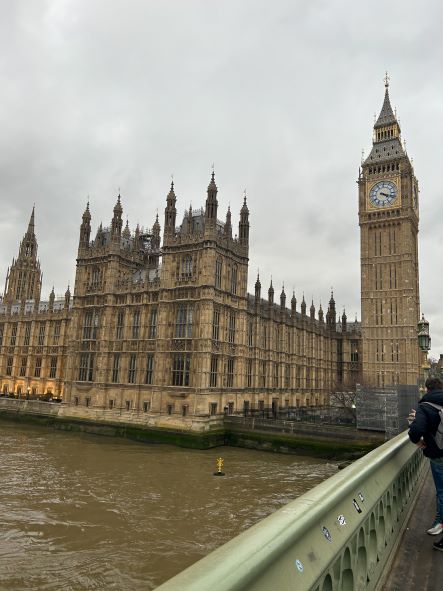
We’ve taken two day trips down to London and between each trip we’ve gotten to see the main sights that London has to offer. For example, we’ve seen Big Ben, the London Eye, Westminster Abbey, Camden Market, St. Paul’s Cathedral, the British Museum and Library, and Buckingham Palace. There are so many amazing and historical places to see within London that we will never run out of things to do there! It takes less than 50 minutes by train to get to London so it’s a great way to spend a free afternoon!
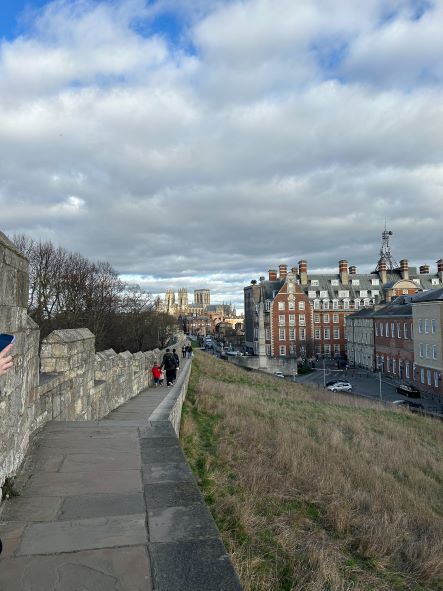
Another great day trip we’ve taken was to York! The original wall that surrounded the city is still there and you can walk on top of the wall all the way around the city. We slowly worked our way along the wall throughout the day while stopping at a café that is inside the wall. We walked around in the Old Town, stopping in the different markets they had going on. York was one of the more relaxed day trips that we’ve taken!
The best part about these day trips is that every night you are still able to come home and sleep in your own bed. You get to travel and explore a new city and still end up back in your bed. Sounds like a win-win to me!
Where to?
CUW students, you have dozens of study abroad opportunities at your fingertips. Where will you go?
—This article is written by Hannah Mielke who is in her senior year as a Director of Church Ministries major at Concordia University Wisconsin. She’s currently on a 16-week study abroad experience to England. “Tea with Mielke” chronicles her adventure and shares some of the life lessons she’s learning along the way.
This is the fourth article in the series, “Tea with Mielke,” written by CUW student Hannah Mielke. The series chronicles Mielke’s study abroad adventures in England.
Leading up to semester abroad, I had dreamt about what my life would be like and I kept asking myself so many questions.
Am I going to start to have a British accent?
How am I supposed to stop myself from going to a coffee shop every day?
Turns out, the answers to these questions were pretty simple once I got into a normal routine. However, when I was “dreaming up” what life would be like here, there were quite a few things I didn’t think about until I got here.
For starters, when crossing the street, I had to focus intently on which way cars were coming. They drive on the opposite side of the row which makes it very confusing when crossing the street. To add to that, biking is a main form of transportation for people, especially students, who live in Cambridge. The bikers own the road, they stop for no one. Sometimes I am more scared of getting run over by a bike than I am a car!
Since cars drive on the left side of the road, I also assumed that when people are walking on the sidewalk, they would also walk on the left side. In the states, since we drive on the right side of the road, we also walk on the right side of sidewalk. Here in Cambridge, there are no rules when walking on the sidewalk. People walk on whichever side they want to, which means I am constantly switching which side of the sidewalk I am on so I don’t run into people.
Another huge culture shock that I faced when first getting here is that if you were in the states and you pass another person on the sidewalk, you may give them a quick smile or say a general hello in passing. That is not the case here. People do not make eye contact with each other, they don’t acknowledge that there are others around them and they mind their own business. Whenever I go on walk back in the states, I typically say hello to the people I pass, but here, I’ve learned to keep my head down and go about my business. There has been one time that someone has said hi to me in passing and I was absolutely shocked when it happened. I was so shocked that I forgot to say hi back!
Overall, I have been exposed to be many cultural differences and I’m sure there are still so many more to encounter! My next big question is, will I have culture shock all over again when I go back to the states?!
Where to?
CUW students, you have dozens of study abroad opportunities at your fingertips. Where will you go?
—This article is written by Hannah Mielke who is in her senior year as a Director of Church Ministries major at Concordia University Wisconsin. She’s currently on a 16-week study abroad experience to England. “Tea with Mielke” chronicles her adventure and shares some of the life lessons she’s learning along the way.
This is the third article in the series, “Tea with Mielke,” written by CUW student Hannah Mielke. The series chronicles Mielke’s study abroad adventures in England.
The most common question I get asked by friends and family back home is, “Do you even go to any classes? It looks like all you do is travel!” I mostly fill people in on all of the places I’m traveling to and the new things I’m experiencing but classes are a huge part of my life during the week! Westfield House is part of the Cambridge Theological Federation which means it is a Lutheran institution. This is an added bonus to my studies because it allows me to take classes that are geared towards my faith, and coincidentally, towards my major! Most of the classes I take while I am here are held at Westfield House which is only about a 30 second walk from where I live. There is a small number of faculty, but it allows them to get to know you really well and vice versa.
Westfield House is not the only place where you can take classes while you are here, however. There is the option to take classes at Cambridge University which is called the Cambridge Experience. You sit in on the lectures and then meet with a tutor outside of classes to go through material and supervisions of the papers you are writing for the class. This allows students the opportunity to get to meet other students who are attending Cambridge University and it allows for a new learning experience.
The other method of taking classes is by attending lectures at the Cambridge Theological Federation, which I have the opportunity of doing! I got to lectures during the week and then I meet with one of the faculty at Westfield House and he gives us assignments and we talk through the material gone over in class. It’s incredibly interesting to be exposed to another countries views on Christianity.
All of these methods of learning are geared towards preparing for your final paper at the end of the term. There are little assignments throughout the semester but the major of your final grade comes from the term paper. This is a different form of education than what we are used to in the States but it allows you to learn a lot about new study habits and new ways to consume information.
Overall, classes are a great way to fill up time during the week and the faculty are very understanding and want to see us succeed in every way possible!
It’s safe to say that traveling is a huge part of my life here, but it’s not the ONLY thing that I do!
Where to?
CUW students, you have dozens of study abroad opportunities at your fingertips. Where will you go?
—This article is written by Hannah Mielke who is in her senior year as a Director of Church Ministries major at Concordia University Wisconsin. She’s currently on a 16-week study abroad experience to England. “Tea with Mielke” chronicles her adventure and shares some of the life lessons she’s learning along the way.