Advocating for Yourself and Your Program

DPT Faculty Kevin Gries shares his experience on promoting his program to politicians and public figures.


On March 14th, I had the opportunity to discuss scientific funding with federal lawmakers for the Federation of American Societies for Experimental Biology. As I write this blog while waiting for my flight from D.C. back to Milwaukee, I cannot help but think of the importance of advocating for what you believe in. This trip has taught me several things that I wanted to share as well as tips for advocating.
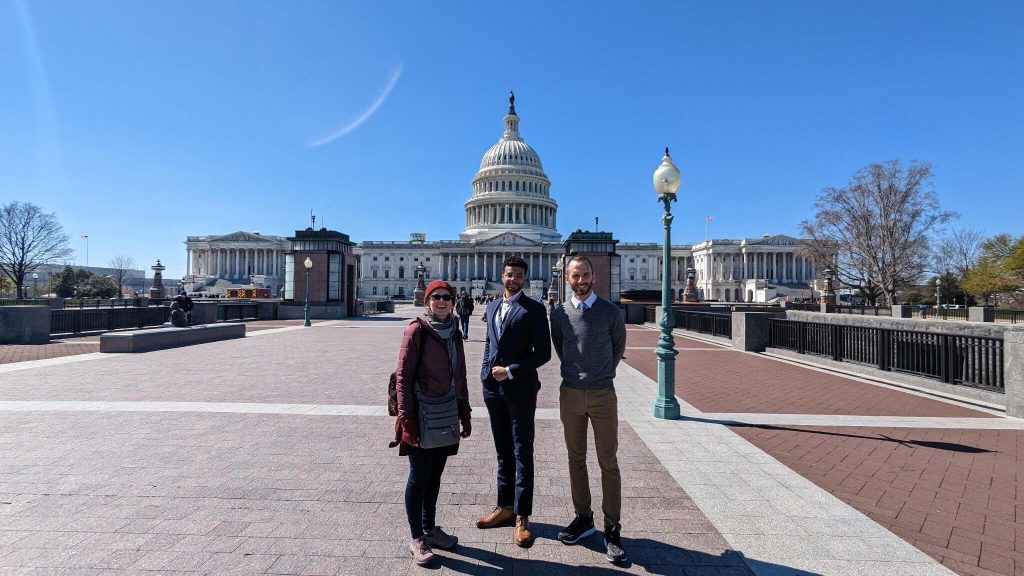
Kevin Gries in front of the US Capitol Building

Government influences our jobs, whether we like it or not

We underestimate how much governmental funding and regulations affect our day to day lives. However, those that are making these decisions are often several steps removed from the challenges we face and therefore misconceptions arise. An example of this occurred in our meetings where we stressed money distributed from the National Institutes of Health (NIH) is distributed based on a peer-review system of scientists across the country and not just officials within the NIH.  This small misunderstanding led to the staffer drastically changing their demeanor on increasing scientific funding. I sit here thinking how many misconceptions may be out there regarding all of our professions that can be fixed by meeting and advocating for your cause with politicians.

Have uncomfortable conversations

I also noticed the need to talk with people who disagree with us. We live in an increasing polarized world in all aspects of life, not just politics. When we disagree with people, we often find ourselves uncomfortable which leads us to find friends who affirm our believes, watch tv stations that only say what we want to say, and follow people on social media who agree with us.

However, it is uncomfortable conversations that make us grow and reflect, and make us think about if our beliefs are truly the right way to act. These conversations also allow us to least learn about “the other side” and see the people as humans rather than simply the opposition. We need to avoid echo chambers. We also need to see that leaders often want to help you, but their means just may be different than what you think. Having this attitude will help us see those we disagree with as still brothers and sisters in Christ.
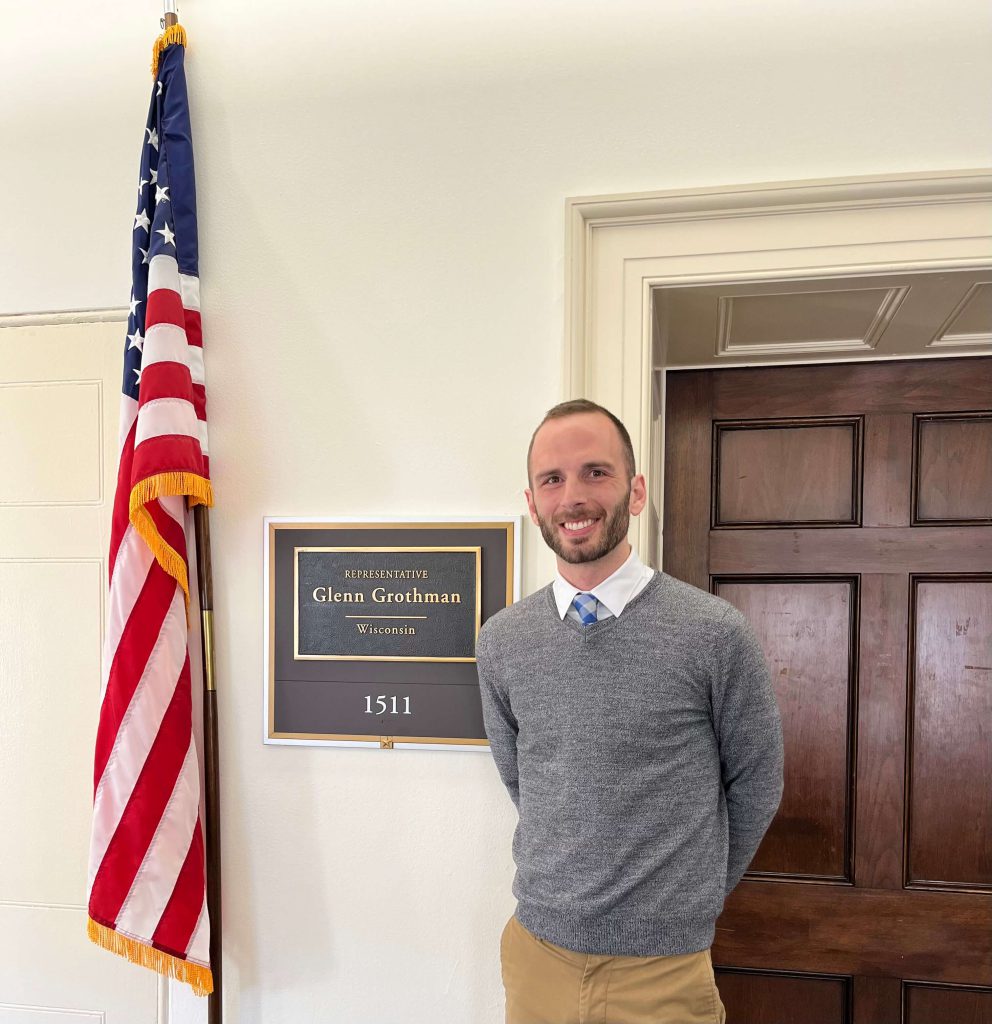
Kevin Gries talks about how to advocate in DC

Ways to advocate

I am extremely fortunate to be asked to travel to Washington D.C. to advocate for what I believe. So, while this specific trip may not be for everyone, there are ways in which you can advocate for your beliefs:

Focus on your sphere of influence.

This isn’t an attractive piece of advice, but is the most effective. If you want to see good/a change in the world, start with the people you spend the most time with. Be good to your family, friends, neighbors, community, classmates, etc. It does not do any good to take our frustrations on your family based on things far away and that you cannot control.

Meet government officials.

This doesn’t mean travel to Washington D.C. Maybe your state capitol is more reasonable. Several public offices will hold Zoom meetings, which makes talking to your representatives as easy as a phone call. Perhaps you can speak with your representative directly when they visit your district. You can also write letters, use social media, and call their offices. You can make a difference.

Use the power of media.

This can include writing letters to the editors in journals or magazines (be sure to select the source based on your target audience). This can also mean use social media. However, to be an effective advocate on social media, you have to be ready to have your information scrutinized. If you want your opinion to be taken seriously, that means you need to be taken seriously. Clean up your profile before doing this.

Join an advocacy group.

I am a part of several scientific and other advocacy groups based on topics I am passionate about. If you feel uncomfortable speaking your opinion, you can donate to these groups (traveling is not free), or just give moral support by simply being there.

This trip to Washington D.C. is one I plan to make yearly. I enjoy communicating the importance of the scientific process to lawmakers to improve the health of our society. We need to remember the power that we have, no matter what stage of your career you are in (yes, even students), and use that power to improve the lives of those around us, no matter the topic.


Feeling Inspired?

If you want to learn more about becoming a physical therapist, feel free to check out our website.

You can also take a look at our most recent blog posts about A Day in the Life of a Physical Therapy Student or learn about Experiential Learning


  • Dr. Kevin Gries is a professor at CUW in the Physical Therapy department

CUW celebrates Psychology Week April 23-29

In honor of Psychology Week, more than 50 students presented research posters on a variety of topics.


Psychology positively impacts our lives and our communities in many ways. Concordia’s Psychology Department celebrated the second annual National #PsychologyWeek by showcasing senior students’ original research projects at a university-wide poster fair.

On Wednesday, April 26 over 50 undergraduate and graduate students from various majors and schools presented their research posters to faculty, staff, family, and friends. These projects reflect the students’ hard work and effort on topics that fulfill CUW’s mission of using knowledge and education to serve to others.

Eighteen senior psychology students put a tremendous amount of effort into researching, analyzing data, and presenting their findings at the event. The topics they explored included why people are attracted to horror movies, impacts of social media, college student success, prayer’s relationship to stress reduction, student-athlete mental health, and attitudes of predestination among Christian missionaries – just to name a few!

Participating in a research poster fair is a valuable experience for our students and is one of the ways that a Concordia education is UNCOMMON. It provides them with an opportunity to develop important skills in communication and public speaking, as well as build their professional confidence. They connect with others who share their academic interests and learn from peers and mentors. All psychology majors at CUW create original research under the supervision of a faculty member. The department is one of the largest producers of undergraduate research on campus.

The mission of the psychology program is to increase the awareness of the boundaries and applications of psychology, foster intellectual development and problem solving, and encourage students to serve others within the context of Christian faith. The psychology program is committed to cultivating multicultural awareness and appreciation for the magnificence of God viewed through human diversity. The program prepares students to pursue helping professions and/or graduate study.


Feeling Inspired?

The mission of the psychology program is to increase the awareness of the boundaries and applications of psychology, foster intellectual development and problem solving, and encourage students to serve others within the context of Christian faith. The psychology program is committed to cultivating multicultural awareness and appreciation for the magnificence of God viewed through human diversity. The program prepares students to pursue helping professions and/or graduate study.


‘For Us’: Reflections on Maundy Thursday

“For us He prayed, for us He taught; for us His daily works He wrought. By words and signs and actions thus, still seeking not Himself but us.” (LSB 544, v. 4)


By the Rev. Dr. Theodore J. Hopkins
Associate Professor of Theology, Concordia University Ann Arbor
Program Director: Pre-Seminary and Family Life Ministry

“For us,” rings out the exquisite Thomas à Kempis hymn. For us Jesus blessed bread and cup and gave them to his disciples to eat and drink, delivering his own body and blood for the forgiveness of sin. For us Christ laid aside his robe and his place as master and washed his disciples’ feet. For us Jesus sweated blood in agony and tears in the Garden of Gethsemane, praying for the Father’s will to be done. For us Jesus trod the lonely road to Golgotha, each pace marking another step for our salvation. We will only grasp the truth and beauty of Maundy Thursday if we begin to see that it was all for us.

The Service

Maundy Thursday ushers in the holiest period of the holiest of weeks for Christians. Traditionally, it is the first day of the Triduum, three days of connected services including Holy Thursday, Good Friday, and the Easter Vigil. What I love about Maundy Thursday—and the Triduum more generally—is the sense of being incorporated into the holy history of Jesus and his passion, his suffering for our salvation. The traditional Maundy Thursday service refuses to let us remain distant from the first-century events, as if we could place the historical events of Christ into a museum. Instead, the service makes us participants in Christ and the apostolic church as we partake of the same meal that the Lord instituted the first Holy Thursday, and we receive Jesus’ own body and blood under bread and wine for our forgiveness.

Then, before the end of the service, our hearts and eyes are directed toward Good Friday, as we watch the altar stripped, piece by piece, slowly, painfully, agonizingly, gazing, as each item on the altar is deliberately taken away, folded up, carefully placed away, as we are also hearing the agony of our Lord in the words of David in Psalm 22 or contemplating our Savior’s wounds with a solemn Lenten hymn. During this somber and serious service, we do not forget that Jesus has already won the victory over sin, death, and the devil by his crucifixion and resurrection, but it is right to be somber and solemn because our sinfulness—yes, ours!—exacted such a heavy price from our Savior which he gladly suffered for us. Hence, Maundy Thursday services are often left in silence, to contemplate what Christ accomplished and suffered on Good Friday, and wait in anticipation for the joy of Easter.

Two central events take place on Holy Thursday: the institution of the Lord’s Supper as described in the synoptic gospels—Matthew, Mark, and Luke—and the washing of the apostles’ feet expounded upon in John’s Gospel. Both of these reveal Jesus seeking not himself but us.

The Supper

On the night in which Jesus was betrayed, the Lord Christ instituted the Supper, celebrating the Passover meal with his apostles but also making a new covenant and meal, the gift of forgiveness through his body and blood to be received by faith. As Israel was saved from slavery in Egypt and constituted as God’s own people through the blood of the unblemished lamb spread on the doorpost (Ex. 12:1-27) and the blood of the sacrifices thrown upon the people (Ex.24:6-8), Jesus proclaims his own body and blood as the new covenant for God’s people. Through his suffering, death, and resurrection for us, and the reception of his body and blood under bread and wine, Jesus redeems sinners from slavery to death and hell and constitutes them as not just the people but the family of God.

This is what we celebrate on Maundy Thursday. The Son of God who gave himself to death on a cross pledges us his own body and blood for us. Having him by faith and mouth, through his signs and actions thus, we have the certainty of forgiveness of sins and know ourselves as sons and daughters of God, part of the family.

The Mandate

The second major event of Holy Thursday is what gives the day its most common name. Maundy Thursday is so called—Maundy is derived from the Latin mandatum—because of the new mandate that Jesus gave to his apostles on that night. Jesus said, “A new commandment I give to you, that you love one another: just as I have loved you, you also are to love one another” (John 13:34). What is new in Jesus’ word is not the command to love. In fact, in Leviticus, God commanded his people, “You shall love your neighbor as yourself” (19:18). What is new in John 13 is the reference to Jesus: as I have loved you so you are to love one another.

This commandment is particularly striking in light of Jesus having just washed his apostles’ feet. Jesus gave up his place as master and stooped to the floor, washing their dirty, stinking toes. And he calls his church to follow after him in this way, not seeking our own power or good, but seeking instead to serve our neighbors. Seeking not himself but us: This is the way of our Lord on Maundy Thursday, and it is also the life to which we are called as Christians (See Phil. 2:4–11).

My Prayer

As you worship this holy week, I pray God will open your eyes to see how you are being brought into his holy history, and will lead you to an ever-greater sense of just what Jesus as accomplished for you, for us, and for them, culminating in the cross and the empty tomb. “For us by wickedness betrayed, for us, in crown of thorns arrayed, He bore the shameful cross and death; for us He gave His dying breath” (LSB 544, v. 5).

Note: This piece was originally published on Maundy Thursday in 2022.


Want in?

The Theology Department at CUW is responsible for several areas of theological study. The faculty provide the core classes in Bible and Christian Doctrine along with the many theology electives. A third elective Theology course is then chosen by students according to their interests and major area of study. For more information about theology programs at Concordia University Wisconsin, click on the link below:


What is “Experiential Learning” as a Physical Therapy student?


Graduating from your undergrad program to Physical Therapy school brings exciting learning opportunities in a variety of formats. Some you may already be familiar with, such as textbook readings and faculty lectures. Physical therapy, however, is a field that also requires hands-on experience and practical skills. One of the most effective ways to learn these skills is through experiential learning.

What is experiential learning?

Experiential learning involves hands-on experiences that allow you to apply what you’ve learned in the classroom to real-world situations. A powerful tool for developing practical skills, problem-solving abilities, and critical thinking, experiential learning is a necessary part of the physical therapy curriculum. By working with patients and addressing their unique needs and challenges, students learn to adapt their skills and techniques to different situations. This helps them become better prepared to handle the unexpected patient needs working physical therapists have learned.

What does experiential learning look like?

Compared to your undergrad programs, “labs” in Physical therapy programs might look a little different. Physical therapy programs call in-class experiential learning opportunities “labs”. A good example are chemistry labs, where you conduct chemical experiments while someone watches. Similarly, in a PT lab students work with classmates to role-play and act out situations. Lab simulations develop technical skills, expose you to different types of equipment, and allow you to modify exercises for patients with different abilities and conditions.   

What about clinical education?

Clinical education may be the most important part of experiential learning. Clinical education involves full-time immersion in a variety of clinical settings to complete your learning. This year, the CUW PT program moved many of the practical labs into the new Inter-professional Clinic. The on-campus clinic is always ready to use and allows students the space needed for active role-playing and realistic simulations. Experiential learning with healthy classmates is a starting point to develop your skills.

Another way students develop practical tools is by working with community members in the Inter-professional Clinic. Students have the opportunity to address the same conditions they are learning about in the classroom. Reflection is also an important aspect of Experiential Learning. Students grow by reflecting on their performance related to intellect, technical skills, interpersonal communication as well as feelings. To help students complete their reflection, we hold “debriefs” after our sessions with community members. This is a time for students to reflect on their faith because they see how patients continue to live their lives despite impairments related to their conditions.  


Here is a breakdown of other ways experiential learning goals are met:

Develops Critical Skills

One way experiential learning provides students with the opportunity to gain practical experience is through working with patients. This hands-on experience helps students develop skills by working to assess, diagnose, and treat a wide range of conditions.

Promotes Critical Thinking

Experiential learning encourages students to think critically about the problems they encounter while working with patients. By reflecting on their experiences and analyzing their actions, students can identify areas for improvement and develop more effective treatment plans.

Builds Confidence

Experiential learning helps students develop confidence in their abilities. By working with patients and seeing the positive impact their treatments can have, students gain a sense of satisfaction and accomplishment that boosts their confidence.

Fosters Professionalism

Experiential learning provides students with the opportunity to increase their professional presence. By working with patients and other healthcare professionals, students learn to communicate effectively, work collaboratively, and maintain a high level of ethical conduct.


Experiential learning is a crucial part of physical therapy education. Experiences help students prepare for full-time practice in a mentored environment. They reinforce knowledge and skills. They also help reduce students’ fears and anxieties because they encourage practice with “real” patients. Nothing can replace the opportunity to learn and grow in an active environment.


More questions about PT?

Check out some of our other blog posts about things like

The School of Health Professions (SHP) offers a wide variety of accredited programs at both the undergraduate and graduate level. Our programs are provided in a variety of teaching formats (face-to-face, online, blended) and our curriculum emphasizes service to the community and inter-professional collaboration. Students are able to work with community members very early in their educational experience. Explore your options! 


—Dr. Bennett shares her extensive (20+) clinical experience while teaching clinical application of adult neurologic rehab, pathological gait, and foundational skills.

‘You come too’: Reflections on Palm Sunday

“Look, the world has gone after Him!” (John 12:19) … You come too.


By the Rev. Dr. Jason D. Lane
Associate Professor of Theology, Concordia University Wisconsin

I’m a New Englander, and that means Robert Frost’s poetry is required reading. There’s a lovely little poem that Frost wrote about springtime on a farm. It’s called “The Pasture.” Frost’s invitation to come and to see life renewed is perfectly suited to Palm Sunday and to all of Holy Week. Here’s how it goes:

I’m going out to clean the pasture spring;
I’ll only stop to rake the leaves away
(And wait to watch the water clear, I may):
I shan’t be gone long. — You come too.

I’m going out to fetch the little calf
That’s standing by the mother. It’s so young,
It totters when she licks it with her tongue.
I shan’t be gone long. — You come too.

Jesus bids us come. He has gone up to Jerusalem not to clean the pasture spring, but to cleanse the world and every heart from sin. He calls to all those who are weary and heavy laden, “You come too.”

Save us, Lord

Palm Sunday is a celebration of Jesus’ triumphal entry into Jerusalem. Christians across the world imitate the children of God in Jerusalem and sing praise to their triumphant King. We wave our palm branches and sing “all glory, laud, and honor to You, Redeemer King” (LSB 442)! We lay down our palms before Him, and our lives, and say, “Hosanna to the Son of David!” The church goes out to meet Him. You come too.

Hosanna means in Hebrew “save us!” It’s what you say to your King, because it’s what your King comes to do. Jesus entered Jerusalem to save it and with it the whole world. But to save it from what? It doesn’t take long for those who know Christ to make a list. How about foolishness, pride, and lust? How about self-righteousness and laziness? How about all sin and everlasting death? Oh, Lord, help! Save us! They went out to meet Him with palms in hand and laying out their coats for Him. You come too.

Many Lutheran congregations use Palm Sunday as “Passion Sunday.” The triumphal entry of Jesus is read at the beginning of the service and then, with the procession of palms and joyful singing of Hosanna, it moves into the main service and the reading of Christ’s entire passion according to Matthew, Mark, and Luke. St. John’s passion is reserved for Good Friday. The reason for focusing on the passion is wonderful. Jesus came into Jerusalem pay for the world’s sin and to make peace for us with God by the blood of His cross. Come there too, and then to the empty tomb.

Let us together follow

But before Good Friday or Easter, there is Palm Sunday. There is this moment to shout for joy to our King who comes in the Name of the Lord (Luke 19:38) and who raised Lazarus and has power over death (John 12:18). There is a time to be children, to run in joyful procession to Jesus, to our King who has come to establish an everlasting Kingdom. According to St. Luke, it’s like Christmas again, when the children of God shout to creation’s King: “Peace in heaven and glory in the highest” (Luke 19:38b). They all came out to meet the King. You come too.

Jesus knew what that peace in heaven would cost. He knew that on Mount Zion it would be nails, spear that pierce Him through, and then the sin of the whole world and the wrath of God to crush Him. I like to think that the Pharisees who told Jesus, “Rebuke Your disciples” (Luke 19:39), were just trying to be reverent, that they recognized in some small measure that Jesus had come to pay for the sin of the world in a bloody death, and so they thought the joyful shouts at His triumphal entry were in bad taste. It’s as if they said, “Jesus, they don’t know what You’re here to do. Tell them to stop singing so joyfully. This is supposed to be a death procession.” But Jesus said, “Let them sing.” He really did say, “I tell you, if these children were silent, even the stones would shout” (Luke 19:40)!

What does it all mean? It means that Palm Sunday is time to welcome the King who comes to save us. He knows the terms of peace. He knows the cost, which is to say, He also knows how much each of us is worth. This week all the Christians of the earth are gathering and laying down their lives before the King. You come too. Let us together follow our King into the Holy City and up to Calvary and through the grave and into Paradise. Jesus says to me and you, “You come too.”

Note: This piece was originally published on Palm Sunday in 2022.


Want in?

The Theology Department at CUW is responsible for several areas of theological study. The faculty provide the core classes in Bible and Christian Doctrine along with the many theology electives. A third elective Theology course is then chosen by students according to their interests and major area of study. For more information about theology programs at Concordia University Wisconsin, click on the link below:


Can accelerated OT students still play sports at Concordia?

As the Occupational Therapy (OT) Department Chair, one question I frequently get is: “Can accelerated track OT students still play sports?” The answer is YES!


In fact, we have several student athletes in our program and I love going to games to cheer them on in one of their favorite occupations. This year, I made it a goal to attend at least one game of each sport I have a student athlete in. I also invited OT faculty and students as a way to build community within our program.

I got to cheer on students in soccer, football, field hockey, volleyball, basketball and softball. Getting to know my students outside of the classroom is so important to me. It’s one way our program supports CUW’s mission of “developing students in mind, body, and spirit.”

The occupational therapy program at Concordia University Wisconsin offers a fast-track to an entry-level master’s (MOT) or doctoral (OTD) degree in occupational therapy (OT) for incoming freshman who know they want to be an OT. This track, called the accelerated track, allows students in the Bachelor of Science in Rehabilitation Science, pre-OT major to join the graduate OT program in their junior year. This means students in the accelerated track can get their MOT degree in 4.5 years, or an OTD degree in five years.

Expectations are high with the accelerated program, and oftentimes, sacrifices are needed to ensure you have enough time to study and prepare for the requirements of the program. However, rigor doesn’t necessarily mean you have to sacrifice everything else you love. For those individuals who are willing to put in the work, you can make athletics and your pursuit of your OT degree possible, as many others before you have done.


Want in?

At Concordia University Wisconsin, we prepare uncommon OTs who are ready to serve their communities and clients. The OT program at CUW prepares students to obtain employment in a variety of settings. Three tracks are offered in both the master’s and doctoral programs: accelerated, bridge, and post-baccalaureate. Explore your options by clicking on either of the links below.


—Meghan Watry-Christian, PhD, OT-L, serves as chair of the department of occupational therapy at CUW. She received her bachelor’s in psychology from Wisconsin Lutheran College in 2003, a Master of Occupational Therapy degree from CUW in 2007, and PhD in Special Education from Northcentral University in 2019.

Concordia University Wisconsin ranked a top school for online master’s in education for 2023

CUW has been ranked as one of the nation’s best colleges for online master’s programs in education. Just 6 percent of regionally accredited post-secondary institutions earned a ranking position. 

Concordia University Wisconsin has been recognized as one of the best schools for online learning at the master’s level by OnlineMastersDegrees.org (OMD). CUW’s education programs earned top honors for overall quality, affordability, and commitment to student success. 

See where CUW ranked:

Steven Witt, PhD, director of the graduate literacy program, said the ranking is a testament to CUW’s science-based curriculum and expert adjuncts.

It’s not the first time the reading literacy program has received recognition. In 2019, CUW was the lone school in Wisconsin to earn a spot on Online Degrees’ list.

Each school on the list offers a fully or partially online master’s program in education. OMD Co-founder Kyle Darland said they focused this year’s list on the schools that are making it easier for students to compete in an increasingly difficult job market – one where earning a master’s has become a minimum barrier to entry for many.

A recent survey from CareerBuilder found that “33 percent of employers are hiring workers with master’s degrees for positions that had been primarily held by those with four-year degrees.” These employers cited an evolution of the skills needed to perform the jobs as the cause of the shift, and an increase in work quality, productivity and employee retention as the result.

“Providing students with opportunities to get a master’s online is only part of our rankings,” said Darland. “Top-ranked schools also had competitive tuition rates and/or scholarships to help drive costs down. And with grocery, gas and other expenses on everyone’s mind right now, an affordable master’s is key.”

OnlineMastersDegrees.org analyzed more than 7,700 accredited universities by using data pulled from the schools themselves and from the Integrated Postsecondary Education Data System (IPEDS). After the data was compiled, OMD’s data science team then applied a proprietary algorithm to rank all qualifying schools for each of the different master’s degrees specialties. Primary data points include:

  • Academic counseling services
  • Career placement services
  • Student/faculty ratio
  • Tuition
  • Percent of students receiving school-based aid
  • Amount of school-based aid per student

To be eligible for ranking, a university must hold active regional accreditation and have at least one partially online master’s program in the ranking subject. Just 6 percent of U.S. postsecondary institutions earned a ranking position. 

About OnlineMastersDegrees.org

OnlineMastersDegrees.org began in 2020 to support online learning at the master’s level. Our user-friendly, research-backed content helps students find scholarships, resources, financial aid, and connect with accredited colleges and universities across the country.

Literacy Institute

On June 12, Concordia will host its annual Literacy Institute for educators. Wiley Blevins will keynote. Blevins is a world-renowned early literacy expert. He is also an author, educational consultant, and researcher. Wiley earned his doctorate at Harvard University and has taught in the United States and South America.

At the workshop, he will share his expertise from 35 years of classroom research on the seven critical ingredients of phonics teaching that will produce the greatest learning gains in students.


Want in?

Interested in pursuing your master’s degree at CUW? Our education programs focus on optimizing your abilities to serve students, schools, and the community through education. We develop well-rounded educational professionals that can teach and lead in rural and urban communities. With a Christian-centered focus, relevant curriculum, and engaging faculty you can play a meaningful role in the world of education.


What is an ambulatory care pharmacist

Dive into a helpful overview that will introduce you to the career of an ambulatory care pharmacy from one of Concordia’s pharmacy professors. Concordia will set you up for success as a pharmacist in the healthcare setting of your choice.

Meet pharmacy faculty

Dr. Kassy Bartelme, PharmD, BCACP, is an Associate Professor in Concordia’s School of Pharmacy and has been with the program since 2011. She earned her Doctor of Pharmacy from the University of Minnesota in the Twin Cities. Dr. Bartelme then completed a 2-year post-graduate residency with the University of Minnesota College of Pharmacy (COP). During her residency, Kassy spent time teaching in the COP and gaining experience in ambulatory care pharmacy practices. She currently practices as an ambulatory care pharmacist at Ascension Columbia St. Mary’s Cardiology Clinic in Mequon, WI.

What is an ambulatory care pharmacist?

An ambulatory care pharmacist cares for patients that go to a clinic for an appointment in an outpatient setting. These pharmacists primarily manage chronic medical conditions, such as high blood pressure, diabetes, atrial fibrillation, heart failure, asthma, pain management, mental health, and others in collaboration with physicians and other prescribers.

A key part of being a pharmacist is to ensure patient’s medications are necessary, effective, and safe. The pharmacists also evaluate the accessibility of medications and address potential adherence issues. As a specialized pharmacist, you can work in primary care clinics, outpatient disease-state management clinics in hospitals, and pharmacies. You can also provide services through telepharmacy.

What are the responsibilities of an ambulatory care pharmacist?

The pharmacist meets with the patient to discuss medications, therapy goals, and also assess for side effects or adherence issues. In this role, you may also perform physical assessments, such as blood pressure and heart rate, order labs, and assess results. The pharmacist helps patients when a condition is deemed uncontrolled or they experience side effects. This can also include helping patients that are unable to adhere to a drug regimen. It is the pharmacist’s responsibility to adjust the patient’s current medications, add new medications, and/or discontinue medications. As a pharmacist, you may need to educate patients on lifestyle changes and other nonpharmacologic ways to manage a condition. Ambulatory care pharmacists have the opportunity to create long-term relationships with patients through frequent follow-ups.

These pharmacists are also required to document each patient visits. This includes reporting subjective information (what the patient told them), objective information (labs, vitals, physical assessment results), their assessment (is the patient at goal and if not, what needs to be done), and the plan (what will be done, such as starting or discontinuing a medication, adjusting doses, ordering labs, and when to follow-up). This documentation is in the patient’s chart and is available for any other health care providers to read.

How does this pharmacy specialization serve in a cardiology clinic?

As an ambulatory care pharmacist in the cardiology clinic, Dr. Bartelme primarily manages anticoagulation for patients with atrial fibrillation or a history of blood clots. These patients take a blood-thinning (anticoagulant) medication called warfarin. She measures the effectiveness of warfarin by checking a patient’s INR (International Normalized Ratio). Dr. Bartelme also ensures the INR is within the patient’s goal range and if not, she adjusts the warfarin dose. Patients who take warfarin must have their INR checked at least every four weeks or sooner as needed. In this type of practice, she gets to know her patients well through frequent visits.

What other roles does an ambulatory care pharmacist serve?

Ambulatory care pharmacists frequently precept students and also residents. All pharmacist students must complete an ambulatory care pharmacy rotation during their Advanced Pharmacy Practice Experiences (APPE) in their fourth year. Post-graduate residents may opt to do an ambulatory care-focused residency, or complete this specific pharmacy rotation during their general pharmacy residency.

How do I become an Ambulatory Care Pharmacist?

First, you must receive a Doctor of Pharmacy (PharmD) degree. In general, pharmacists complete one to two years of post-graduate residency. You can complete a focused ambulatory care residency in your first year or as a specialized second-year residency. You may also earn board certification and add the letters BCACP after your name (Board Certified Ambulatory Care Pharmacist). After residency, you take a test to become a Board-Certified Ambulatory Care Pharmacist. To maintain your certification, you need to earn 100 hours of continuing education every seven years, or you can simply retake the test.

Why Concordia for pharmacy school?

Concordia’s school of pharmacy will help you discover the area of pharmacy that best fits your skills and interests as a healthcare provider. You might know from year one how you want to serve in pharmacy, or maybe you find out later on during your pharmacy practice experiences. Whatever your path, the coursework, patient labs, and experiential education will advance your abilities, knowledge and compassion to provide pharmacy services.

Want more information on this pharmacy specialization?

Contact Dr. Kassy Bartelme about her work as an ambulatory care pharmacist. She can also give you more details on our manageable and patient-centered pharmacy school.

How to keep a New Year’s resolution

Assistant Professor of Psychology Holly Griskell, PhD, breaks down a sure-fire strategy for keeping resolutions you’ve made in 2023.


The New Year is the perfect opportunity to reset and recommit yourself to healthy habits—whether it is being more intentional about connecting with family, starting an exercise routine, or committing to better study habits.

However, the hardest part of New Year’s resolutions is keeping them! One strategy for keeping your resolution is by turning it into a “SMART” goal. SMART is an acronym for specific, measurable, achievable, relevant, and time-bound.  

Specific

When you create a resolution, it is important to be specific. If you want to be more intentional about connecting with your family, what does that mean to you? Instead of saying you want to connect with family more frequently, you can be more specific by including answers to questions like “who”, “how”, and “when” in your goal, such as aiming to call your grandparents at least once per week. 

Measurable

You will also want to be able to measure if you are fulfilling your resolution. Making your goal measurable means turning your goal into something that you can track. For example, exercising 3 times per week for 30 minutes each session is a measurable goal whereas “exercising more” is not. 

Achievable

One pitfall of making a New Year’s resolution is starting off with an overly ambitious goal that may end up feeling too overwhelming, which leads to breaking the resolution. For example, it would be great to exercise 7 days per week for an hour each day, but if you have too many other obligations with class, homework, and extra-curriculars, it might be better to start smaller. Committing to exercising twice a week for an hour each session is likely more achievable than exercising every day. 

Relevant

You will want to ensure that the tasks you engage in are relevant to your goal. If you are hoping to stay on track with your reading for class, reading 20 pages per day might be a better goal than spending 2 hours per day in the library. Because, let’s face it, you might spend 2 hours in the library on social media or chatting with friends rather than completing your actual goal! 

Time-Bound

Having specific deadlines can also be helpful in keeping a resolution. For example, if your goal is to submit your paper on time this semester, a time-bound goal might be to have at least 5 pages of the paper written by the end of the week rather than saying you will finish the paper “on time”. 

The University of California put out a helpful handbook on SMART goals in 2016. For more information on setting specific, measurable, achievable, relevant, and time-bound goals, click here.


Want in?

Do you have an interest in human behavior and want to be equipped to make a positive impact in others’ lives? A psychology degree from Concordia will equip you to do just that from a distinctly Christian lens!


—Dr. Holly Griskell is an assistant professor in CUW’s Psychology Department. She received her PhD in developmental psychology from Loyola University Chicago in 2021. She currently serves as a member of CUW’s JED Campus Committee and is interested in promoting students’ mental health and wellness.

Learning how to teach word problems to students

Word problems can be tricky, especially for students who struggle with reading or for whom English is not their primary language. Being able to teach these students to understand, is an important skill that our students in the elementary education program learn.

This semester, students in our Number Sense course spent time learning strategies for teaching students how to solve word problems. Each group was given a different type of addition or subtraction word problem based on the same fact family, although they weren’t told this initially. The students’ names were written into the problems to make them more engaged and relevant to the class.

Groups were then given resources with a few common representations for addition and subtraction problems. Additionally, they had examples of each of the types of addition and subtraction word problems with unknowns in any of the places. 

Each group worked together to identify the type and subtype. Then they would create a visual representation of the problem, write a number sentence, and identify wording that might be tricky for early elementary students. Here are the main concepts they learned during the activity.

Use visuals

Using pictures and other visuals helps young students to see how many of something there are, without counting. For example, drawing out five dots plus four dots is a lot easier to understand for younger students. This process is called subitizing. Defined by My Learning Springboard, subitizing is “the ability to instantly recognize the number of objects without actually counting them.”

Another visual method is called a tape diagram. A tape diagram is good to use when numbers in the problem get too large to draw each item. The tape diagram helps students make sense of the quantities in the problem and write a number sentence to model the problem. You could also use plastic bear counters, which are often part of math manipulatives in kindergarten and first grade, or stickers. We don’t recommend using food as manipulatives because so many children have food allergies. 

Acting it out

Having students “act out” the word problem is another visual way to picture the problem in the real world. This would be especially helpful to struggling readers and English language learners.

Three-reads strategy

The three-reads strategy is another way to help students comprehend the problem. 

  1. The teacher first reads the problem without the numbers and may have the students act out or talk with a partner about what is happening in the story. 
  2. Next, the class reads the problem together with the numbers, and the teacher models how to underline the important quantities in the problem. 
  3. Finally, the class reads the problem again and the students turn and talk about what question they are trying to solve. 

This could be a way to introduce a new type of problem to your students or may be especially helpful when working with a group of struggling readers or English language learners. 

We’re proud of the great conversations students had as they considered strategies they could use to help early elementary students decipher addition and subtraction word problems.

If you’re interested in becoming a teacher, you can learn more here.