A season of anticipation for ‘12.25’

CUW education alum Josh Atkinson (’09) leads a unique music ministry at Milwaukee Lutheran High School—one that just dropped its fourth album.


By Dr. Michael Uden

Upon his graduation from Concordia University Wisconsin with a degree in education in 2009, Josh Atkinson was called by the Holy Spirit to commissioned ministry as a Lutheran educator … as well as a Christian hip-hop performer? Josh indicates that early in his service at his alma mater, Milwaukee Lutheran High School, he realized even more acutely the importance of developing authentic relationships as well as mutual trust and respect with the students he was serving. Recognizing the overwhelming popularity of the hip-hop musical genre among his students, Mr. Atkinson spent hours listening and mimicking Christian hip-hop artists so he could connect the Gospel message with a musical style that was most popular with the audience of students he wanted to reach.

In many ways, he was attempting to do something quite authentically Lutheran. Martin Luther, whose compositions included music borrowed from secular sources, recognized the impactful way music could affect youth. One legacy that can still be felt today is Luther’s belief that there must be a balance between a simple, accessible musical style and the use of the vernacular in the text. As he put it, “Both text and music, accentuation, melody and gait, must come from the true mother tongue and voice.” (Holman, 2018).

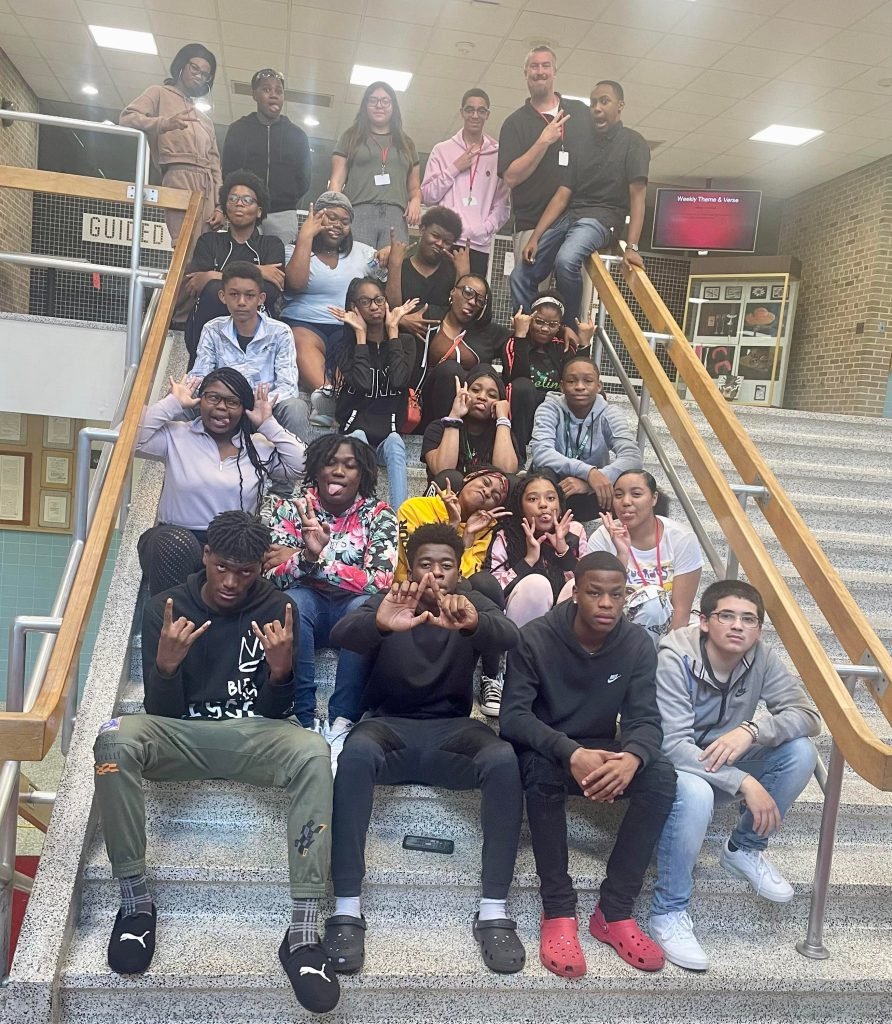
Beginning with the performance of a Christian hip-hop cover song during a chapel at Milwaukee Lutheran High School in 2016, Mr. Atkinson eventually began to write original Christian hip-hop music as well. That avocation not only gained the attention and admiration of many of his students but ignited an interest in them to participate in Christian music composition and performance. Within a few years, ATK Ministry, a 501(C)3 with a mission to share Jesus through music and the arts, was formed. Today the afterschool program of ATK Ministry mentors Milwaukee Lutheran High School students in hip-hop and contemporary gospel music composition, performance and production as well as in dance technique and performance.

IN THE NEWS: Josh Atkinson on CBS58

According to Josh, “The vision for ATK Ministry is to provide the appropriate tools and coaching to support the incredible artistic talents of the youth we serve. We seek to engage our youth with a high level of instruction, equipment and performance opportunities and, above all, to share the Gospel of Jesus Christ with them.”

Current Concordia University Wisconsin sophomores KaiJay Jiles and Za’Nadia Young are alumni of the ATK Ministry program and have had their original work featured on the organization’s professionally produced albums. ATK Ministry’s fourth album, 12.25, a Christmas collection, released yesterday. 12.25 is available for download through all of the major music streaming sites including iTunes and Spotify, and direct financial contributions can be made to ATK Ministry through its website.

I should like young people, who in any case should be instructed in music and in other proper arts, to have at their disposal something that will rid their minds of lascivious and sensual songs, and teach them instead something wholesome, and in their way they may become acquitted with goodness in a joyous manner, as benefits the young.

Martin Luther

Fans of Flame

Participating in the professional production of a studio album represents an amazing opportunity for Milwaukee Lutheran High School students involved in the ATK Ministry’s afterschool program, to be sure. Yet Christmas will also be “coming early” for these young musicians in another way.
Next week, current and alumni ATK Ministry student participants will engage with national Christian hip-hop artist Flame, CUW’s December commencement speaker. The artist, also known as Marcus Tyrone Gray, holds a MA from the Concordia Theological Seminary in St. Louis. As a confessional Lutheran since 2020, Flame has noted, “It wasn’t until I stumbled upon Lutheran thought that I discovered the treasure found in the liturgical and sacramental side of things.” According to the artist, Flame’s 2021 album release, Christ for You, was so named to reflect “the joy and freedom that I’ve found in the sacraments.”

During his time on the Mequon campus for the commencement service, Flame will host ATK Ministry for a private Q & A session and time of fellowship on Friday, December 16.  Their engaging discussion will focus upon the growing world of contemporary Christian music, all through a distinctly Lutheran lens.


Want in?

At CUW, our education programs focus on optimizing your abilities to serve students, schools, and the community through education. We develop well-rounded educational professionals that can teach and lead in rural and urban communities. With a Christian-centered focus, relevant curriculum, and engaging faculty you can play a meaningful role in the world of education.
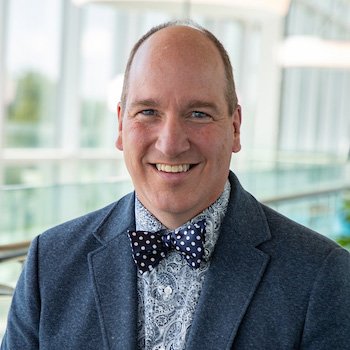

—Dr. Michael Uden is Vice Provost of Student Enrollment and Engagement at Concordia University Wisconsin.

What is co-teaching? 6 co-teaching models to explore & tips to get started

As classrooms gain more and more diverse students, teachers need assistance in meeting these students’ needs. Using co-teaching models is a common instructional approach employed by many schools to provide that assistance and improve education for students.

Furthermore, the Individuals with Disabilities Education Act (IDEA) requires that students with disabilities have a free and appropriate public education (FAPE) on a continuum of placement options in the least restrictive environment (LRE) with the general education classroom as the first setting considered. Co-teaching models are a solution that can help schools meet the IDEA requirement, and education studies show that all students benefit from having more than one teacher in the classroom. Both of whom fully share the leadership responsibilities of being a teacher.

What is co-teaching?

According to the Wisconsin Department of Public Instruction, “Co-teaching is generally defined as two licensed educators, often a special education teacher and a general education teacher, sharing equal responsibility for planning, delivering, evaluating instruction, and learning to meet the diverse needs of students in a shared space. The overarching goal of co-teaching is to combine and expand upon the expertise of both professionals for the benefit of all students assigned to them.”

Co-teaching models

Because each school, student, and educator is different, co-teaching models are also varied. Below are a few models along with definitions of what makes them unique.

  • Parallel Teaching: The class is divided into groups with each teacher teaching the same material separately to their group.
  • Station Teaching: Three stations (or however many you need)—one with a general ed. teacher who teaches one aspect of the material, one with a special ed. teacher who teaches a different aspect of the material, and one independent station to give students a chance to work on their own.  Students rotate from station to station.
  • Team Teaching: Both teachers contribute to the lesson while teaching the same material to the whole class.  Also called “teaming” or “tag-team teaching.”
  • Alternative Teaching: One teacher teaches a large group while the other teaches a smaller group of students.
  • One Teach, One Observe: One teacher teaches up front while the other teacher is in the back observing and often collecting data.
  • One Teach, One Assist: One teacher teaches up front while the other teacher moves around the classroom to help students as needed.

Planning for co-teaching

So, as you consider the possibility of using a co-teaching model in your classroom, keep the following planning steps and tips in mind. Remember, if one co-teaching model doesn’t work, try another. 

Steps to get started

  • Explore co-teaching models together.
  • Select two to explore further.
  • Identify one model to implement based on course content, the number of students with disabilities and their needs, the number of general education students, and the interest of both teachers in trying the model.
  • Recognize that there are often “turf” issues to discuss and work out before beginning co-teaching.
  • Co-teaching is teaching together. It is not one teacher plus another as an expensive paraprofessional.
  • Plan and implement the model. 
  • Acknowledge that you will learn more as you gain experience and it will take time to figure it out.
  • If the model doesn’t work, try another model.

Advice for general educators

  • Get to know the special education teacher with whom you will collaborate.
  • Read the IEPs of your students and learn about their strengths, weaknesses, and needs
  • Recognize that you are responsible for implementing the goals, accommodations, and other appropriate sections of the IEP that pertain to your class.
  • You are the content area expert. Share your knowledge with the special educator.

Advice for special educators

  • Get to know the general education teacher with whom you will collaborate.
  • Be familiar with the IEP requirements of the students in the class and help inform your co-teacher about student needs including goals and accommodations.
  • Learn about the content area and the general education classroom.
  • You are the expert on disabilities and special education. Share your knowledge with the general educator.

What about both?

  • Ask questions.
  • Be open to sharing teaching responsibilities-a good co-teaching partnership helps ease the load on both teachers.
  • Remember, it takes time to build trust between both teachers.
  • Adopt the mindset that they are “our students” not “your students” or “my students.”
  • Search online or other resources to learn more about co-teaching.
  • Seek professional development opportunities to learn more about co-teaching and meeting the needs of all of your students.

This post was written by Dr. Wanda Routier, the director of graduate special education programs and associate professor of education at Concordia University-Wisconsin. 

Interested in getting your education degree at Concordia click here.

This blog was originally published on January 10, 2020. It has been updated to reflect current information.

Niederjohn co-authors Washington Times op-ed proposing CRT improvements

Scott Niederjohn is the co-author of a paper, and now Washington Times op-ed, that offers suggestions on how to improve race lessons for the classroom.


America’s overarching story is one of hope, so how can teachers echo that tone within their own instruction?

Concordia’s Scott Niederjohn co-authored a paper that was recently published by The Wisconsin Institute for Law and Liberty. In it, the authors suggest that combining the economic way of thinking with invisible-hand stories can illustrate how the operation of largely free markets promotes positive, even if unintended, social outcomes. While Critical Race Theory demands a “ruthless” examination of American history, there are examples that exist that can provide a much more hopeful, and less polarizing, message about markets and race.

Click here or on the image below to read the article.


Learn more

Dr. Scott Niederjohn is Professor of Economics and Director of the Free Enterprise Center (CFEC) at Concordia University Wisconsin. He holds undergraduate and master’s degrees from Marquette University and a Ph.D. in economics from the University of Wisconsin–Milwaukee. CFEC promotes the ideals of a free and virtuous society, which ultimately unleashes the nearly unlimited creative potential of the human spirit while producing remarkable levels of economic and human flourishing.


Leading with Power Skills

Organizations are facing great changes after the pandemic and the rise of the second information age. This includes changes to their operations, business processes, and labor force expectations. The second information age involves changes to jobs and the economy due to automation and artificial intelligence. It’s important that we have leaders that can embrace the change and make their teams successful.

Working remotely

The name for these changes is called digital transformation which is the process of using technologies to create or modify business processes. This adds a new dimension that fully redesigns business processes to augment work with technology. There are also new work arrangements that challenge the notion of the traditional employee.

Remote work has become far more common and is unlikely to return to pre-pandemic levels. Working remotely is more accepted and valuable for decreasing infrastructure costs, reducing commuting time and pollution, and increasing productivity. It also creates a more fluid work-life balance.

Even employees who have traditional offices are doing more tasks mediated by technology and participating in virtual teams. They are also learning and developing through technology, which is called virtual human resource development. (Bennett, 2009). As working and managing remotely are fairly new, having the skills needed to lead effectively is essential.

Important power skills

For many years now, these essential leadership skills were labeled “soft skills”. However, there is a growing trend in the business world to refer to soft skills as “power skills.” This is because employers are increasingly recognizing the importance of these skills in the workplace. Power skills are those that are more focused on human interaction and relationships. They include things like communication, teamwork, and empathy.

And while they may not be as tangible as hard skills, they are essential to succeed. Yet power skills are some of the hardest skills to master. According to our recent study that gathered data from over 10,000 professionals, the top power skills range from adaptability, problem-solving, and agility all the way to social, emotional, empathetic, and creative skills.

Although we live in a time when there is a great concern for the loss of empathy, due to social media, human emotion and empathy skills were highly valued (Bennett, in press). We also concluded that both logic and intuition are necessary for both leadership and the workforce at large. Leaders must become agile with different modes of information processing as they work within systems faced with the change of digital transformation.

Similarly, Question Mark’s 2021 report has power skills as six of the top ten learning trends:

  1. Adaptability,
  2. Communication/Collaboration,
  3. Creativity,
  4. Critical thinking and Problem Solving,
  5. Empathy, and
  6. Teamwork (pp. 4-5)

These relate to the Society for Human Resource Management’s (SHRM) (2008) leadership competency model. However, SHRM adds managing politics, influence, change, and leadership stature to its list. Further, new leadership challenges, such as diversity and inclusivity, increase complexity and risk.

Future of leadership skills

As organizations require more adaptability, creativity, and agility from their members, leadership job descriptions and roles will increasingly emphasize power skills. Unfortunately, organizations failed to properly manage virtual teams and maintain social cohesion during the pandemic and recovery, according to early evidence. (Bennett & McWhorter, 2021).

One can develop power skills at any point in their life by practicing, reflecting, and making necessary adjustments; but mentorship, learning about human behavior, and experiential learning are key to developing these skills. Organizations that have in-house leadership development programs that support employees in exercising a range of power skills, combined with new technology and data literacies, tend to be more successful.

This is because these programs help employees to develop the skills they need to be effective leaders, while also staying up-to-date with new technologies and trends. However, this can be an area of frustration if internal options are not well executed or when limited time is a barrier to participation.

Advancing power skills with a degree

Degree programs have major advantages as they are naturally interdisciplinary. Therefore, they expand the range of innovation and application beyond a narrow field in order to foster flexibility. They also often combine data skills with power skills through inquiry projects.

LEARN MORE: Earn your master’s in leadership at Concordia University

Online programs help overcome space-time challenges while fostering practice in virtual environments with collaboration technologies. Practicing new skills in a safe space is more effective than trying them out for the first time with real employees. As a result, this may reduce a leader’s performance anxiety.

What’s next?

As technology advances and organizations change, humans should focus on what they do well and let technology handle the rest. In other words, the leadership of the future is leading with power skills.

About the author

Elisabeth E. (Liz) Bennett, Ph.D. is an associate professor of business and director of the Masters of Science in Leadership at Concordia University – Wisconsin and Ann Arbor. Research interests include organizational culture, creativity, informal learning, technology leadership, and virtual human resource development. Dr. Bennett brings industry experience from Fortune 500 financial services, manufacturing, information technology, continuing education, and academic medicine. She earned her Ph.D. from the University of Georgia with an emphasis in Human Resource and Organization Development (HROD) and an interdisciplinary graduate qualitative research certificate. She holds a Master’s in Adult Education with a cognate in Instructional Technology, earned with distinction, also from the University of Georgia. Dr. Bennett serves on multiple journal editorial boards as well as engages in international service that supports economic development for the socially vulnerable and inclusive prosperity.

References:

Bennett, E. E. (2009). Virtual HRD: The intersection of knowledge management, culture, and intranets. Advances in Developing Human Resources, 11(3), 362-374.

Bennett, E. E. (2022). Leveraging technology to design and deliver human resource development. In P. Holland, T. Bertram, T. Garavan, & K. Grant (Eds.) The Emerald Handbook of Work, Workplaces and Disruptive Issues in HRM. Emerald.

Bennett, E. E. (in press). Social media and HRD: Powerful tools and dark patterns. In T. F. Rocco, M. L. Morris, and R. Poell (Eds.), Handbook of Human Resource Development (2nd ed). Sage.

Bennett, E. E., & McWhorter, R. R. (2021). Virtual HRD’s role in crisis and the post Covid-19 professional lifeworld: Accelerating skills for digital transformation. Advances in Developing Human Resources, 23(1), 5-25. https://journals.sagepub.com/doi/full/10.1177/1523422320973288

Question Mark (2021). Modern skills for 2022: Measuring the strength of workforce skills and ensuring employees have what they need to face the future. Reported available at: https://www.questionmark.com/wp-content/uploads/2021/12/Modern-Skills-for-2022.pdf

SHRM (2022). https://www.shrm.org/ResourcesAndTools/hr-topics/behavioral-competencies/leadership-and-navigation/Pages/leadershipcompetencies.aspx

Learning to teach reading

In case you didn’t know—we are in the midst of a “new” reading war. Triggered by Emily Hanford’s podcast, Hard Words (American Public Media, 2018), the new reading war focuses on the science of teaching reading instead of balanced literacy instruction. The balanced literacy approach has no predefined structure and can sometimes leave out critical phonics and other evidence-based instruction whereas the science of reading follows a systematic structure based on mastering specific reading skills.

As a result of this change, higher education is taking hits on how teacher candidates are preparing to teach reading. Mark Seidenberg’s (2017) Reading at the Speed of Light is particularly critical of how schools of education prepare teacher candidates to teach literacy.

Preparing our teachers

CUW’s School of Education is committed to preparing our teacher candidates to meet the changes in how reading is being instructed. Lexia Learning states that “literacy is one of the cornerstones of educational equity, and is crucial for lifelong success.” Here are some of the ways CUW’s teacher candidates are being prepared to teach reading and literacy through the integration of the science of teaching reading:

  • Explicit and systematic phonics instruction is key to reading success for some children, and it certainly will not hurt any child to learn phonics.
  • Teacher candidates need exposure to high-quality phonics curriculums because creating phonics lessons that are not part of an effective scope and sequence has limited impact.
  • Ensure teacher candidates learn the Simple View of the Reading model introduced by Gough and Tumner (1986). This scientific model demonstrates how reading comprehension is the product of decoding and language comprehension.
  • Ehri’s (1995) work on the phases of reading development and orthographic mapping is also essential for teacher candidates learning how to teach reading.

Teachers need quality literacy resources and professional learning opportunities. Then followed by instructional coaching focused on high-quality instruction to increase reading achievement. For instance, Concordia University Wisconsin’s annual Literacy Institute on June 12th features nationally known speaker Wiley Blevins, who understands the importance of developing high-quality instructors.

One text I have found particularly helpful in ensuring I am preparing my students to teach reading effectively is Shifting the Balance: 6 Ways to Bring the Science of Reading into the Balanced Literacy Classroom by Jan Burkins and Kari Yates. I have blended these shifts into the two reading courses that teacher candidates take as part of their major. We’ve worked hard on our literacy curriculum and welcome you to take a look at it here.

Finding middle ground: A comprehensive approach

The debate over how to teach reading has been ongoing for decades, pitting advocates of phonics against proponents of a balanced reading approach. Phonics focuses on teaching letter-sound relationships and decoding skills. On the other hand, balanced literacy emphasizes the importance of comprehension, meaning-making, and all five pillars of reading. These five pillars are skills that include phonemic awareness, phonics, fluency, vocabulary, and comprehension. This divide has been dubbed the “reading wars.”

In recent years, the science of reading (SOR) has gained attention as an evidence-based approach to effective reading instruction. The SOR places phonics instruction first, recognizing its crucial role in helping children recognize and decode words, leading to improved reading comprehension. Whole language instruction, on the other hand, emphasizes reading for meaning and context, which is essential for building vocabulary and comprehension skills.

However, current research (Shanahan, 2023) indicates that to directly improve reading achievement, we need to focus on three things: the amount of instruction, the content or curriculum, and the quality of instruction. Rather than viewing phonics and balanced literacy as opposing approaches, a more effective approach is to view them as complementary models.

What’s next?

If you’re interested in teaching reading in Wisconsin, read more about our reading specialist program.

References

Ehri, L. (1995). Phases of reading development in learning to read words by sight. Journal of Research in Reading, 18 (2), 116-125.
Gough, P. B., & Tunmer, W. E. (1986). Decoding, reading, and reading disability. Remedial and Special Education, 7(1), 6–10.
Hanford, E. (Producer) (2018). Hard words. American Public Media. https://www.apmreports.org/episode/2018/09/10/hard-words-why-american-kids-arent-being-taught-to-read
Siedenberg, M. (2017). Language at the speed of sight: How we read, why so many can’t, and what can be done about it. Basic Books.

First entry-level OT doctoral students complete dissemination

On October 21, 2022, Concordia University Wisconsin’s Occupational Therapy (OT) program celebrated its first cohort of graduates from the newly accredited entry-level occupational therapy doctorate program.

Students returned to campus after completing a 14-week capstone experience in a variety of community and clinical sites. They then came to present their projects during OT’s bi-annual Continuing Education event.

The OTD capstone experience provides students with the opportunity to develop further skills in leadership, advocacy, academia, research, or program/policy development. They also explore ways to expand the reach of OT to a variety of populations and communities.

In addition to the capstone experience/project, OTD students complete additional assignments in their chosen area of interest and earn a badge, indicating the development of a specific skill set. Badge areas are advocacy, education, leadership, research, and administration/program and policy development.

Capstone projects 2022

  • Occupational Therapist and Occupational Therapy Assistant Intraprofessional Curriculum by Regina Zehnder, Education Badge
  • Curriculum and Faculty On-Boarding Program Development by Emily Furmanek, Education Badge
  • Exploring Facilitators and Barriers to Early Mobility in the ICU in Patients Post-Cardiovascular Procedure by Baylee Noe, Research Badge
  • Investigating the Effectiveness of Kinesiotaping for Patients with Subacromial Impingement Syndrome: A Clinical Exploration into Upper Extremity Pathologies by Kyra Lenzi, Research Badge
  • Effects of Outdoor Recreational Equipment and Recreational Activities on Adolescent Boys’ Mental Health by Caroline Holverson, Research Badge
  • Occupational Therapy and Secondary Traumatic Stress by Cherie Gauthier, Advocacy Badge
  • The Role of Occupational Therapy in Providing Functional Assessment of Chronic Pain in a Non-Traditional Pain Management Clinic by Brianna Casper, Leadership Badge
  • Investigating the Satisfaction and Impact of Occupational Therapy-based Interventions in the Dental Settings by Hannah Schultz, Administration/ Program and Policy Development Badge
OTDs and OT Faculty Advisors at the OTDs’ Project Dissemination

Congratulations OTDs — We are so proud of you!

Written by Meghan Watry-Christian, MOT, Ph.D., CUW OT Program Chair, MOT/OTD Program Director

Earning a Lutheran Teaching Diploma

“Go therefore and make disciples of all nations, baptizing them in the name of the Father and of the Son and of the Holy Spirit, teaching them to observe all that I have commanded you. And behold, I am with you always, to the end of the age.” Matthew 28:19-20.

Our loving Lord and Savior, Jesus, gave us the Great Commission in Matthew 28 as a call to reach all the world with the Gospel. Within the School of Education, we have always taken this call to Gospel action to heart. To continue our focus on the Great Commission, we are excited to be able to expand our reach. We have created five accelerated bachelor’s degree programs for Lutheran teacher preparation.  

Concordia’s teaching programs

In the Fall of 2021, we launched the first program of its kind in the state of Wisconsin. Our Elementary Education teacher preparation program is done in an online-only fashion. In the year since its inception, this program now has close to fifty students from all over Wisconsin and the nation.  

This year we added four more programs that are delivered completely online with fieldwork accomplished near where our students live. These innovative programs include Cross Categorical Special Education and Secondary Education (grades 4 to 12) in English and Language Arts, Mathematics, and Social Studies. All five of these online programs lead to a state of Wisconsin teaching license.  

Receiving a Lutheran Teacher Diploma

An added option embedded into each of these wonderfully-accessible programs is the ability to earn a Lutheran Teacher Diploma (LTD). What does this mean? Within the Lutheran Church – Missouri Synod, teachers are eligible to receive Calls as Commissioned Ministers of the Gospel, if they have received specific theological training.

We have built this training option into the online licensure programs at the CUW School of Education. In collaboration with the Theology department at CUW, we built the six courses necessary for the Lutheran Teacher Diploma including:

  • New Testament
  • Old Testament
  • Biblical Theology
  • Lutheran Confessions
  • The Gospel of Luke
  • Teaching the Faith

Moreover, our licensure programs can be experienced from anywhere in the United States. Currently, we have students in Wisconsin, Michigan, Indiana, Illinois, and Minnesota. As we have an increased need for new teachers in our LCMS K-12 schools, our programs can serve a major need during our nationwide teacher shortage crisis.  

Hypothetical situations

Is this program for you? These three hypothetical student examples show the flexibility of CUW’s online and accelerated bachelor’s programs for teacher licensure. 

Kaitlyn, 18 years old, Florida

Kaitlyn just graduated from high school and has always been active in her Lutheran church. She wants to serve the church in a Lutheran school someday. She needs to stay near home to help support her family after graduating from high school. Kaitlyn will be enrolling in CUW’s accelerated Elementary Education (AEE) program. She likes the 3-year model of the program which will allow her to complete her degree faster than other licensure programs.

She also can complete her coursework on her own time (all of the AEE courses are asynchronous – you do not need to be present at a particular time for any of the coursework). Kaitlyn can work a full-time job during the day to help support her family. Upon completing the AEE, Kaitlyn hopes to receive a Call to Serve at her local K-8 Lutheran school to teach second-grade students. 

Stephanie, 26 years old, Washington

Stephanie got married shortly after high school and has two young children at home. She works as an educational assistant at the local Lutheran school. Her principal has repeatedly told Stephanie that she would be a great teacher. Stephanie enjoys reading to the students in her school but she notices that some of the students have very particular developmental delays and could use more support.

Stephanie is going to be enrolling in Concordia’s Cross Categorical Special Education (ASPED) program while also earning the Lutheran Teacher Diploma. She sees herself supporting students with special needs once she earns her license. Since Concordia’s online licensure program allows for credit based on lived experience, Stephanie will earn credit for her work as an educational assistant after completing a process called the Prior Learning Assessment (PLA). 

Brian, 35 years old, New York

Brian earned his associate’s degree in Information Technology right out of high school. He worked for close to 15 years using his degree. However, once he started to volunteer at his daughter’s Lutheran school to help tutor middle schoolers in mathematics, he realized a love for teaching. Since he needs to keep working while going to school, he found Concordia’s program in accelerated and online Secondary Education – Mathematics (ASE-MATH).

The flexibility of the program will allow him to keep his day job, support his family financially, earn his Wisconsin mathematics teaching license in grades 4 to 12, and be eligible for a Call to a Lutheran school. Since Brian already holds an associate’s degree, he will be able to finish his teaching program in less than three years.  

Want to learn more?

No matter your situation, we can help you reach your goal of becoming a teacher within the Lutheran church. With the additional benefit of the built-in Lutheran Teacher Diploma, the AEE, ASPED, and ASE programs are ideal for anyone looking to enter the LCMS teaching ministry. For more information, you can contact us here. To learn more about the programs, check out our School of Education page below.

Qualities of successful doctoral students

What does it take to be a successful doctoral student? There are some inherent qualities that most would be able to identify such as, critical thinking, good writing, and so on. But those are skills, and the doctoral and dissertation journey is not completed by only intellectual components.  

What then are the dispositions needed to be a successful doctoral student? Dispositions by their nature are more holistic qualities that speak to one’s character. That is, they echo who you are more than what you can do. With over a decade spent teaching and advising doctoral students, I’ve come to realize there are three intangibles that are vital to success: curiosity, perseverance, and reflection. 

Curiosity 

Curiosity may seem an odd choice. After all, wouldn’t most successful doctoral students be innately curious and drawn to learn new things? Yes, but perhaps not in a way that will lead to their flourishing. As theologian Paul Griffith describes, classically understood, curiosity was a vice, not a virtue.

The curious were indeed interested in knowledge, but with the twin goals of owning and dominating it before discarding and seeking new knowledge. When disordered, curiosity becomes a form of intellectual consumerism. But when rightly oriented, it seeks to understand and participate in the knowledge; what the classical world recognized as studiousness. 

Applying curiosity as a student

For the doctoral student, becoming a scholar and student of a topic they (think) they know well is the first step before attempting to research and participate in that topic. This requires slowing down, reading the work of scholars who have come before you, and building from their work.

One consequence of disordered curiosity is that it leads to what philosopher Harmut Rosa calls a “frenetic standstill”—a mind that is constantly in motion, but going nowhere and achieving nothing. Not a disposition to inhabit when considering a dissertation.

Perseverance 

Doctoral students know there will be challenges along the way, but typically those difficulties are thought to be external, not internal. Engineer Peter James’ recent theory about the Egyptian pyramids helps reveal why such internal trials may actually prove beneficial. Tasked with restoring many ancient buildings in Egypt, James wondered why pyramids with the best construction techniques lost their smooth siding millennia ago, while the Bent pyramid—long believed to have worse construction methods—still retains most of its smooth finish.

His theory was that the massive temperature fluctuations in the desert caused the limestone rocks in the pyramids to expand and contract over thousands of years. The pyramids with the most accurate limestone cutting methods literally had no room for such volatility. Therefore, the smooth siding cracked and fell.

But the Bent pyramid and its flawed limestone blocks could weather the rock movements and thus retain its desired exterior. As one author described, the Egyptians’ “perfection became their imperfection.” 

Gaining perseverance

For doctoral students, it is critical to start a program knowing you are an imperfectly cut block. Not that you don’t bring the necessary knowledge and skills, but some of the challenges experienced are because of the growth you will need to experience internally. Persevering through such difficulties and the corresponding doubts they foster will ultimately lead to a stronger, more tested scholar who can reach the end of the journey.

The alternative is to assume that you have it all together; that you are a well-cut piece of limestone that can weather any trials. Perhaps… but perhaps just like the pyramids, such certainty leads to cracks. Embracing the role of perseverance in the doctoral experience will only lead to greater success.  

Reflection 

The final disposition is reflection, which builds from the previous two. Curiosity requires us to slow down, understand, and participate in the researchers gone before us. Whereas perseverance requires an acknowledgment of the necessary internal growth coupled with determination and persistence. Together they require an individual willing to reflect.

Doctoral students need guidance and should expect to receive feedback from their mentors in the form of appreciation, evaluation, and coaching. This feedback will help them understand where they need to improve and how they can improve.

In a culture obsessed with speed and efficiency, the patience and posture reflection asks of us can be a difficult pill to swallow. Patience because—quite literally—waiting on feedback takes time. But the posture is one that embraces the humility of learning along the way.  

So what does it take to be a successful doctoral student?

In addition to the obvious skills and intellectual capacities, it takes curiosity, perseverance, and reflection. Remember, achieving success and earning your doctorate has just as much to do with who you are as it does with what you can do. It may be one of the most challenging things you ever do, but you’ll never regret it.  

-Written by Dr. Preston Cosgrove, Associate Professor in the Doctor of Education program.