Dissertation Experience: Transitioning from dependent coursework to independent scholar

Students generally join a doctoral program after achieving academic excellence in their previous graduate degree. But they usually achieve success by being good students, completing work on time, and following instructions from their teachers. These qualities are undoubtedly valuable.

However, what distinguishes the doctoral experience is the undertaking of original research through the dissertation. As aptly stated in an article, “being a good course-taker is not enough.”

When thinking about their future dissertation experience, many students overlook the importance of doing independent research for their doctoral degree. The transition is gradual, not instant. Our Doctor of Education program helps students on this journey.

What is a dissertation?

A dissertation is a substantial paper that is based on original research. It allows students to explore a specific research question or topic of interest in great depth. Through this, students demonstrate their ability to conduct independent research, analyze data, and present coherent arguments.

It’s like a long essay where they explore a specific question or topic they’re interested in. Students have to do research, study what others have written, and come up with their own ideas. The goal is to add something new to what’s already known in that subject.

Writing a dissertation takes a lot of time and effort. Students need to carefully plan what they want to study, collect and analyze data, and then explain their findings in a clear and formal way. It’s not just a regular school assignment; it’s a significant piece of work that contributes to the knowledge of that subject and shows the student’s expertise.

Dependent vs. Independent

During the program, I ask students to think of terms that they associate with the words “dependent” and “independent.” Usually, the lists seem completely different, and the students agree that “dependent” and “independent” belong to different areas. However, they are hardly as mutually exclusive as we might think.

In order to understand this concept, I decided to present students with an image that would spark a debate on the ideas of dependence and independence. The image I showed them was that of a teenage individual with a beaming smile, confidently holding a set of car keys. This visual served as a starting point for our discussion about the extent to which this image portrayed dependence or independence. The answers diverge in either direction, with some claiming it’s both.

teen holding car keys
Teen holding car keys.

When a teenager embarks on the journey of learning how to drive, they find themselves in a position of reliance on an adult figure. The adult assumes the responsibility of guiding, teaching, and supervising the teenager as they navigate the complexities of the road. At this stage, the teenager does not possess the full freedom to drive wherever they desire. Therefore, they are bound by the rules and regulations set forth by their adult supervisor.

However, despite this initial reliance on an adult, the teenager gradually gains a sense of autonomy over time. As they improve their driving skills and become more confident, they begin to drive the car by themselves and become more independent.

Striving to be an independent scholar

The student driver example shows the gradual and intentional transition from dependence to independence. It’s a fitting illustration for doctoral students who excel as “dependent” course-takers, yet are also on the road to becoming more independent scholars. Such a transition takes time and hard work and fundamentally involves a process of identity formation.

Students must both recognize and accept that achieving a doctoral degree goes beyond simply gaining expertise in a subject matter. In addition, it involves a transformation of one’s identity, which is a fundamental aspect of becoming a self-sufficient academic.

The significance of an identity transformation lies in recognizing that dissertation work encompasses more than just acquiring techniques or skills. In fact, the journey toward becoming an independent scholar involves immersing oneself in the department’s social environment, exploring diverse methodological disciplines, and grappling with fundamental questions surrounding the essence of scientific research. This continuous learning process during one’s academic pursuit inevitably nurtures and supports profound shifts in students’ mindsets and worldviews.

In our Doctor of Education program, students begin their dissertation experience in the first month. This means that students will be working on the dissertation in manageable pieces throughout the program, something that makes our program unique. The dissertation work occurs through a series of independent study seminar courses that each tackle a specific phase of the dissertation.

The early seminars have built-in much more guidance to help support student knowledge and skill development. Students are, after all, just learning to drive a car.

But as the student’s dissertation progress moves forward, the amount of direction and instruction in the seminars is reduced. All of this is an intentional decision in our curriculum to offer support when needed most but phased out as independence grows.

What’s next?

Are you interested in such a journey? If so, I would encourage you to consider learning more about what the Doctorate of Education in Leadership program can do for you and your goals. It won’t be easy; then again, the transition from dependence never is. The good news is we will be there for you during your dissertation experience every step of the way. However, as you stride across the commencement stage, adorned with your doctoral degree, you do so as an accomplished independent scholar.
Artificial Intelligence in Healthcare

Artificial Intelligence (AI), is a smart technology that copies human thinking by using computers, robots, and math formulas to analyze real-time information. It can mimic human decision-making and judgment by analyzing large amounts of data, recognizing patterns, and making predictions.

Businesses can use AI to automate processes, optimize operations, and improve customer experiences. Various industries use this technology, particularly in transportation, finance, advertising, production, and healthcare industries.

AI can perform a variety of tasks, both simple and complex. Tasks may include data entry, customer service, medical diagnosis, and autonomous driving. This is an example of predictive healthcare technology, which can improve decision-making by providing insights and recommendations based on data analysis. AI is becoming increasingly important in the modern world, and its applications are growing rapidly.

Using AI in Healthcare

The healthcare industry is experiencing a significant transformation due to the emergence of Artificial Intelligence. AI and machine learning are helping doctors find and treat chronic illnesses using electronic health records, making personalized healthcare possible. For starters, IBM’s smart computer found a rare leukemia type that doctors couldn’t find for months.

Additionally, predictive healthcare is gradually gaining traction. These advancements are revolutionizing the healthcare sector and have the potential to improve patient outcomes and reduce healthcare costs. Apart from diagnosis, the healthcare field uses AI in areas like billing, scheduling, research, surgery, and virtual nursing.

Sensely, a virtual healthcare app, serves as a prime example of artificial intelligence in the healthcare field. Individuals can utilize the application to monitor their health concerns and medications, while also engaging in conversations with healthcare professionals. The Sensely platform helps patients with their medical needs using advanced technologies like speech recognition, machine learning, and wireless connection. Medical devices such as blood pressure monitors can connect to the app for instant tracking.

Key features this healthcare app provides include: 

  • Appointment scheduling
  • Nurse line 
  • ER direction 
  • Self-care 
  • Clinical advice 

AI in Surgery

The integration of robotics and artificial intelligence (AI) software has made AI a prevalent instrument in the realm of surgery. This advanced technology helps with various procedures, like those for women’s health, digestion, and cancer treatment.

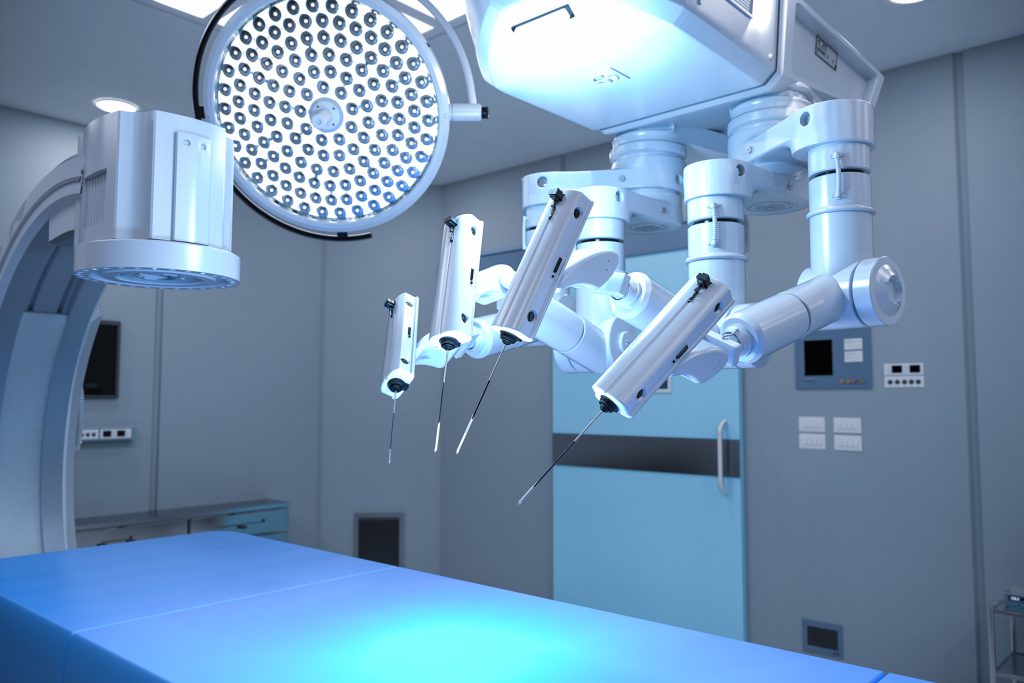
Da Vinci Surgical Robot

AI robots possess the capability to perform surgery from a distance. By utilizing a computer, a surgeon can control the robot without being physically present in the same room as the patient. Although not yet widely utilized, healthcare facilities are starting to embrace this technology. One notable example is the Da Vinci surgical robot system, which facilitates remote surgery with enhanced precision and reduced invasiveness.

Benefits and Concerns of AI

AI is increasingly being used in healthcare, including in hospitals, clinics, pharmaceutical companies, medical imaging, diagnostics, research, and healthcare management. With the growth of this new technology, it is crucial to consider its impact on patients and providers. We need to determine if it truly benefits them or if there are any pressing issues that require attention.

The advantages of expanding the use of AI in healthcare include, but are not limited to:

  • Increasing accessibility to healthcare
  • Providing real-time data to accelerate the timeframe and accuracy of the patient’s diagnosis
  • Aiding in the early detection of disease risks, such as hereditary genetic disorders
  • Streamlining daily tasks, allowing for more one-on-one patient care
  • Saving time and resources
  • Assisting in surgery
  • Expediating research data
  • Reducing provider stress

However, with any new technology, there are areas of concern and AI is no different. Potential disadvantages of AI include:

  • Requires human surveillance
  • Lacks personal involvement
  • Potentially overlooks the impact of social determents
  • Increases the possibility of incorrect diagnoses
  • Decreases healthcare jobs, negatively impacting the economy
  • Inserts social biases due to the programmer
  • Increases the risk of security breaches

Is AI Worth It?

AI is a valuable tool, not a replacement, for healthcare providers. The provider must utilize AI database information, training, and expertise to determine the correct diagnosis and treatment for their patient. This involves analyzing the data, applying their knowledge and skills, and making an informed decision.

Together, providers and AI technology are key to improving the quality and cost of patient care. With advancements in technology, it is crucial to enhance oversight. This is necessary to ensure that both providers and patients have access to the most accurate information. Overall, the provider’s goal is to ensure that the patient receives the most appropriate and effective care possible.

About the Author: James J. Tarasovitch, MBA, CPA is a Senior Healthcare Executive with over 30 years of healthcare experience. He has been the regional CFO for Ascension Wisconsin for the past 6 years and at the Mayo Clinic Health System for 10 years prior. James is also an adjunct professor at the Batterman School of Business at Concordia University.

How to be a Successful Student from Dr. Robert Barnhart


I have had the privilege of being a physical therapist for 44 years. Twenty-seven of those years have been as a faculty member in academic physical therapy programs. Prior to being a faculty member, I was a full-time clinician for 17 years in a wide variety of pediatric settings with various responsibilities in each of those settings. 

I have over the years developed perspective on how to be a successful student in the DPT program. If you would have asked me 15 years ago, I would have said “strong aptitude for the sciences, good grades in college, hard worker, and good communicator.”

However…

Today, I would instead ask “What do you mean by successful?” If you mean getting good grades and graduating from your DPT program, those characteristics will obviously help. However, if you view graduate/professional education as preparing you for success after graduation; my initial answer is not enough. Good grades are not enough to make a successful student in the Physical Therapy program.

So how can you be successful as a DPT student?

Very successful DPT students share the same traits as very successful people. For starters, successful people are active learners. Active learners question things around them, they push through their challenges, and they are humble enough to ask for help. As an active learner, your desire to learn is stronger than your desire to look good in front of others.

Being humble enough to ask questions translates to another trait of successful students: curiosity. Curiosity leads to seeking out knowledge from professors and peers. That level of knowledge-seeking will not only help you in your studies, but it will help you in your life. Curiosity also tends to lead to spending a lot of time listening to others, which gives you the opportunity to practice being a good listener. Good listeners know when it’s time to add opinions and when it’s time to listen to what others have to say. You learn from people who know more, rather than focusing on sharing your opinions all the time.

Another trait of successful students? They are willing to be risk takers. Risk taking means placing yourself in a learning/listening situation where you just might fail. You won’t learn anything if you aren’t engaging with situations where you don’t have all the answers. A willingness to fail means you try new things and learn from your mistakes. In order to be willing to fail, your identity needs to not be rooted in what you do or what people think of you. A successful CUW student, to me, has their identity rooted in the fact that they are made in the image of God (II Corinthians 5:17). Which regardless of whether you succeed or fail, that part of your identity never changes.


More questions about PT?

Check out some of our other blog posts about things like

The School of Health Professions (SHP) offers a wide variety of accredited programs at both the undergraduate and graduate level. Our programs are provided in a variety of teaching formats (face-to-face, online, blended) and curriculums emphasize service to the community and inter-professional collaboration. Students are able to work with community members very early in their educational experience. Explore your options! 


— Dr. Robert Barnhart is a Professor at Concordia University Wisconsin. He received his PT degree from Emory University (1979), his MS from the University of Tennessee Knoxville (1992), and his ScDPT from the University of Tennessee Health Science Center (2006). He has authored or co-authored 8 peer review articles on pediatric rehabilitation topics.

Residencies: Developing Relationships for the Journey

The Doctorate of Education in Leadership, Innovation, and Continuous Improvement (LICI) is an online program. However, one of the first experiences students have is an in-person residency. Our Wisconsin program hosts two residences on our Mequon campus. The first takes place in January, partially online. The second is a full, in-person residency in the month of July during the second year. Alternatively, our New York program has one in-person residency in February.

Importance of residencies

So, what is the rationale behind an in-person residency for an online program?

Time together in person provides an opportunity for students and faculty to learn about one another and have rich discussions. We build relationships as a foundation for students to know they have support from the start of their doctoral program. We strive to build trust between students and professors. This creates a supportive network of people that students can rely on when they need help.

Additionally, it provides time for talking through the program, research, and topics related to the courses. While we continue these conversations online, starting with face-to-face conversations helps to solidify the relationships for years to come.   

Connecting through faith

Residency is a chance for adult students to connect or reconnect with their faith. One of the most beautiful experiences I had with faith happened this year at our New York residency. Each day of residency, I always ask students if anyone would like to lead us in prayer.

In New York, I asked someone to lead the prayer on the first day of residency. After that, students asked me if they could lead the prayer on the subsequent days. I was moved by the student’s enthusiasm for leading prayer that week.

Unexpectedly, on the last day, the prayer was conveyed through a song. The powerful time together as a group, glorifying God, was a perfect ending to our residency.

Time together is worth it

The LICI team understands that, as adults, it can be hard to find time amid work and family commitments for residency. Nevertheless, the time spent with cohort members and professors is invaluable.

One student confided in me. She had been trying to find excuses not to attend a residency as the planning seemed too much. She eventually understood that it was a requirement of the program. Despite the obstacles that blocked her path, she persisted.

While she came to the residency looking at it as a requirement, she quickly changed her perspective. She realized the importance of her residency. On the second day, she told me she had already gained something from the experience that made it all worthwhile.

LICI students return for a second residency in the second year of the program. This time together is a joyous opportunity to reunite, share research topics and progress, and catch up with one another.

Our students come back together with new perspectives and insights to share and with renewed determination. They are excited to see the friends they have connected with and want to nurture their relationships with their professors, too. They have built these relationships throughout the program.


Residency is a time of preparing for the doctoral journey in mind, body, and spirit. Relationships formed during the doctoral program are often enduring. They provide strength and a sense of community throughout the program and beyond. Graduates benefit from these relationships even after they graduate.

If you’re thinking about starting a doctorate program, check out Concordia’s Doctorate of Education below.

Occupational Therapy Faculty Spotlight: Michael Borst

Meet CUW’s most tenured occupational therapy faculty member, Michael Borst, OTD.


The Occupational Therapy team at Concordia is made up of faculty with a variety of personal and professional backgrounds. Among them is Michael Borst, OTD.

Dr. Borst is CUW’s longest standing faculty member, having joined the CUW OT department in 2007. He has a rank of full professor, and is the team’s go-to person for technology troubleshooting.

What is your educational and career background?

I earned a B.A. in Psychology at Calvin University in Grand Rapids, Michigan. After a couple post-college gap years, I was ready to start graduate school, and I attended Western Michigan University, where I earned a M.S. in Occupational Therapy. At WMU, I was mentored by the legendary Dr. David L. Nelson, who taught me the essence of occupation and got me involved in research. After I started teaching, I earned a post-professional Doctor of Occupational Therapy degree with a focus on hand therapy from Rocky Mountain University of Health Professions.

I worked clinically at UW Hospital and at Meriter Hospital in Madison, WI. I have had lots of experiences in inpatient acute care, inpatient rehabilitation, and outpatient hand therapy. While working at Meriter Hospital, I earned a certificate in NeuroDevelopmental Treatment (Bobath), and became a Certified Hand Therapist.

What is your educational and career background?

Between family life and work life, I am kept pretty busy. When I do get some time away, I like being outdoors – hiking and camping in the summer, and cross-country skiing in the winter. I also enjoy tinkering. There’s always something to fix on our 1999 Coleman pop-up camper!

What brought you to Concordia?

It was a surprising path. I presented an educational institute at a Wisconsin Occupational Therapy Association annual meeting in 2004, and Carrie Scheel (an Occupational Therapy faculty member at CUW) was assigned to my room to introduce me, make sure everything went well, etc. We chatted for a bit, and went our separate ways. Three years later, Carrie called me out of the blue and asked me if I would be interested in a faculty position at CUW! A week later I interviewed, and two weeks after that, I was hired.

What is your area of expertise within Occupational Therapy? Share a little bit about the ways you share this with students/community.

I’ve worked with adults with physical limitations or injuries in a variety of settings, and my most focused experience is as a hand therapist. Hand therapists work with people who have had arm injuries or diseases and address their rehabilitation needs. I get to share this with students through the classes that I teach: “Occupational Kinesiology” and “Orthopedic Rehabilitation.”

What’s an interesting part of your field that people might not know?

The profession of Occupational Therapy originated in mental health practice in the 1910s. At the time, people with mental health problems were removed from society and thus lost access to many of their usual interactions with the world around them. The founders of Occupational Therapy saw that this occupational deprivation made people worse, not better, and started providing people with purposeful occupations in order to improve their health. 

These origins explain why the focus of Occupational Therapy is on occupation, rather than medical interventions (though we do that too!). The early Occupational Therapists saw that people had to engage the body, mind, and spirit in the process of healing – mirroring Concordia University’s mission of helping students develop in mind, body, and spirit for service to Christ in the Church and in the world.

What does your research line involve?

My research line is eclectic, which is a fancy way of saying I cannot stick to just one thing! I have published research on the integration of faith and learning in higher education, and have written textbook chapters on evidence-based practice, orthopedic intervention, and physical agents (like heat, cold, and ultrasound). Currently I am co-writing a textbook on applied kinesiology for occupational therapists.

What do you love about the CUW OT program?

I love that I get to share both my Christian faith and the profession that I love with students. That is a pretty unique opportunity in the field of occupational therapy! I also love the diversity of our students. Every semester I teach undergrad students, post-baccalaureate students, and occupational therapy assistants who are currently practicing. Our students come from a variety of backgrounds, and I think that strengthens our program.

What is your advice to potential OT students?

You don’t need to know exactly which part of occupational therapy you want to practice in yet. The beauty of occupational therapy is that you can work with any age range, in any setting, addressing pretty much any need. Occupational therapy is about occupation (i.e. the things that people do every day that give them a sense of purpose). Occupation is like vocation; it is not only about work, but rather all the activities that God gives us to do.


Want in?

Wherever you’re at in your journey into occupational therapy, Concordia University has options for you at both the undergraduate, master’s, doctoral levels.

As a Christ-centered university, our program will help you advance in your calling, by learning from experienced therapists in a hands-on environment and developing a foundation in ethical leadership. 

We offer the following programs in Occupational Therapy: 

  • Master of Occupational Therapy
    • Accelerated track (for incoming freshmen)
    • Bridge track
    • Post-Baccalaureate track
  • Entry Level Doctorate of Occupational Therapy (OTDe)
  • OTA to OT Bridge Program
  • Bachelor’s in Rehabilitation Science (BSRS)

CUW Occupational Therapy: New Partnership with Michigan Tech


Concordia’s Master of Occupational Therapy (MOT) or Doctor of Occupational Therapy (OTD) offers a possible path for individuals seeking to pursue their calling as occupational therapists, regardless of their current stage of the journey.


Concordia University recently signed an articulation agreement with the Michigan University of Technology.

This agreement will ensure that students enrolled in a bachelor’s degree program at Michigan Technological University (MTU) and seeking admission to the Wisconsin campus of Concordia University for the foundational Master of Occupational Therapy (MOT) or Doctor of Occupational Therapy (OTD) will be given priority admission status.

Why is priority admission important?

Priority admission allows us to review the applications from MTU students separately from and before the general applicant pool. Because of this, students applying with priority admission have a higher chance of selection for the program.

What is the significance and what factors contributed to CUW’s decision to partner with Michigan Tech?

We have a recent student who is an alum of MTU and their pre-healthcare professions advisor reached out to CUW’s admission team. MTU is located in the upper peninsula of Michigan and does not offer a graduate-level occupational therapy degree. Working with them to provide a pathway for students who want to become occupational therapists has been a great experience.

What are the fieldwork requirements for the program?

OT educational programs include 2 types of fieldwork experiences: Level I and Level II. At CUW, Level I experiences are provided in pediatrics and behavioral health through a 1-week intensive residency requirement during the second summer of the program. Level II experiences happen after students complete their didactic coursework. Every student will complete 2, 12-week Level II fieldwork experiences, each in a different practice setting. Level II experiences are the final step in the educational process. This is where students practice full-time, under the supervision of a licensed OT. Here they apply the knowledge they’ve acquired in the classroom.

What are the employment outcomes for graduates of the program?

  • An important metric of success for OT programs is Licensure Exam Pass Rate, and CUW Occupational Therapy’s current pass rate is 97%
    • Additionally, based on our last “new grad” survey — here’s where our recent grads are at now:
      • 75% of new grads were employed in OT
      • 20% were applying for further educational opportunities
      • 5% were still seeking employment

What are the most important skills and competencies that you aim to impart to students during the program?

Our students will graduate with the hands-on clinical skills needed to both evaluate and treat clients in a variety of clinical settings. Even more importantly, we highly value the professional reasoning skills, leadership skills, and advocacy skills that our students gain. Our hope is that they use these skills to become change agents in the profession.

What advice do you have for students who are considering pursuing a career in occupational therapy?

Spend time shadowing occupational therapists in at least 2 different settings. It’s important to have a sense of what makes us unique in the healthcare and educational setting we work in.

If potential students have a question about this program, or OT in general, who should they reach out to?

As the program director, I LOVE talking to future occupational therapists. Please reach out to me at Meghan.watry-christian@cuw.edu


Want in?

Concordia’s OT program makes stepping forward in your calling as an occupational therapist attainable no matter where you are in your journey. Our multiple program pathways and hybrid course formatting will prepare you holistically. Through our faith-based, student-centered curriculum, and diverse, hands-on, clinical experiences you will graduate confident in your skills. Learn more about our programs below.


—Dr. Meghan Watry-Christian, PHD, OT-L, is the Department Chair of the Department of Master of Occupational Therapy (MOT) and Doctor of Occupational Therapy (OTD) Programs and is an Associate Professor within the School of Health Professions.

Using CUW’s New Simulation Lab in Physical Therapy

Learn how CUW’s PT Faculty use the new SIM Lab


What is a PT?

Physical therapists (PTs) serve patients in outpatient clinics, skilled nursing facilities, patient homes, and hospitals. Specifically, within a hospital PTs help patients with complex medical diagnoses who have been immobile in beds for long periods of time due to their illness medical treatments. Long-term inactivity can lead to long-term disability, a reduced quality of life, and additional health care costs.

What does a PT do in a hospital?

PTs are movement specialists who facilitate early movement with patients across the lifespan to reduce the negative impacts of bed rest and immobilization associated with illness. PTs play an essential role in patient management, rehabilitation, recovery and discharge planning.


With an aging patient population and increased prevalence of critical illness, how do student PTs learn the necessary acute care skills to be competent health care providers for this patient population?  

Lectures and readings can provide students with some knowledge, but hands-on training is really important for student success. Acute care simulation lab learning is the gold standard in PT education. Simulation lab learning exposes students to a variety of patient scenarios and acute care equipment. It also increases cognitive and technical skills, behavioral performance, inter-professional communication abilities, critical thinking and confidence.

Physical Therapy students learning in in the SHP SIM lab

How has CUW created solutions?

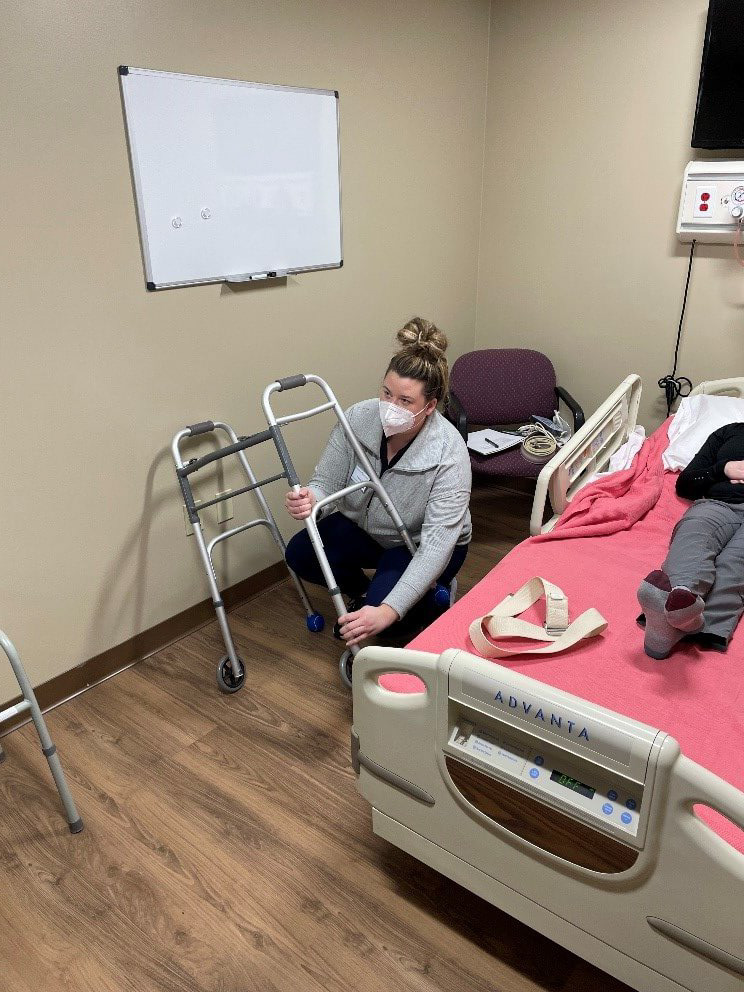
The School of Health Professions recently dedicated an acute care simulation lab with 4 acute care rooms each equipped with a hospital bed, bedside chair, vitals monitor, IV poles, oxygen, lines and monitors. Each room has video technology allowing students in the discussion space to view activities on monitors. The variety of equipment allows faculty to create patient scenarios from children through older adults in simple to complex acute care situations. One simulation room has a ceiling lift donated by Guldmann Inc. which allows students to practice a variety of transfers in and out of bed for patients with limited mobility. This donation was facilitated by the Wisconsin Safe Patient Handling and Mobility Network. 

Who teaches in the SIM Lab?

Dr. Stacy Stolzman was recently awarded a Concordia Intramural Teaching Grant (CITG). This allowed her to attend formal simulation training at Mayo Clinic in Rochester, MN. She was also able to purchase simulation lab equipment and develop multiple simulation scenarios. In her course Cardiopulmonary & Acute Care Physical Therapy, students now participate in standardized patient scenarios. They practice patient interview skills, inter-professional communication, identification of acute care equipment and mobility activities. Student outcomes will be assessed to determine the impact on performance within practical testing and future student clinical education.  

Why is Simulation Learning Important?

Students practicing acute care PT in the SIM lab

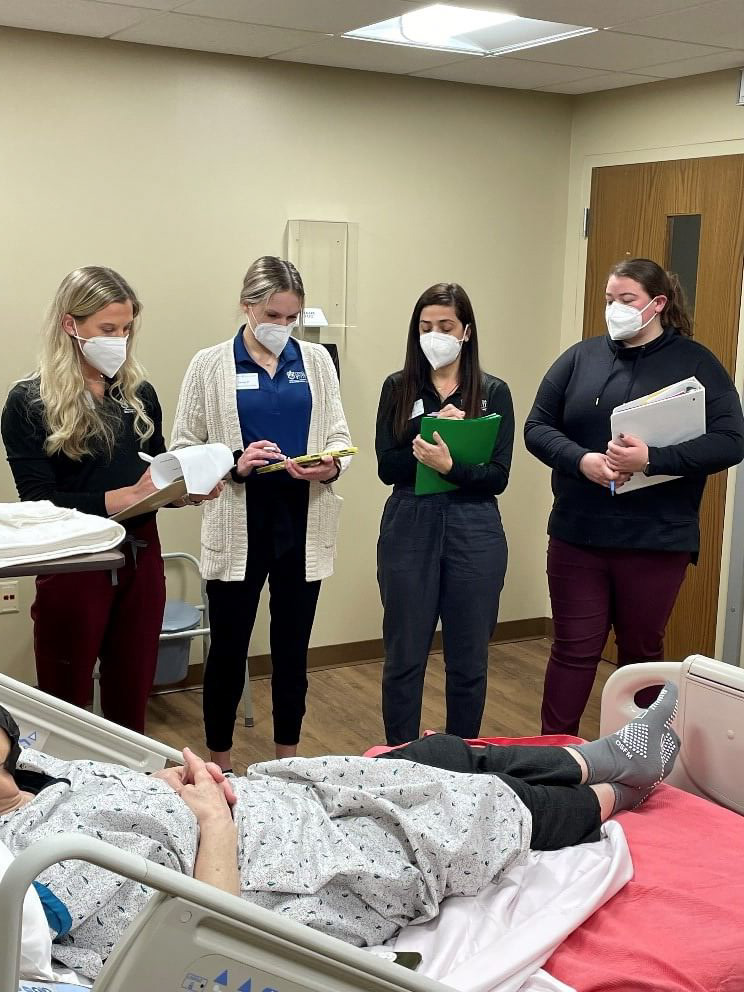
Simulation learning focuses on creating a safe space to learn and make mistakes. Before each scenario, students prepare for the learning topic by reviewing research articles, textbook readings, and viewing online lectures. Each scenario starts with pre-brief activities including patient information, learning goals and role designation of all participating students and faculty.  

During the scenarios, students perform skills in a close to real life acute care room with patient and healthcare actors. Professors allow time-outs to redirect activities or to allow students to ask for assistance and feedback from instructors. Additional students participate as observers and provide peer feedback. They end each scenario with a structured debrief time. This is where students reflect and share how they felt, what went well and what improvements could be made in the future. In addition, “SIM Lab” technology also allows recording of scenarios for future assessments. 

The new curriculum within the simulation lab provides students with learning opportunities to increase critical thinking, competence and confidence for the vocation of acute care physical therapy. Students often report the noises of monitors, number of lines and the monitors connected to their patients are overwhelming. They also report being unaware of how to manage all of this while safely mobilizing their patients in intensive care units and hospital rooms. Simulation learning creates a safe place to increase acute care confidence for future clinicals within the program. With a critical need for PTs in acute care settings, Dr. Stolzman strives to share her passion for acute care to PT students and foster the next generation of acute care PT clinicians.

Many thanks to the numerous donors who contributed to the School of Health Professions Simulation Lab.


More questions about PT?

Check out some of our other blog posts about things like

The School of Health Professions (SHP) offers a wide variety of accredited programs at both the undergraduate and graduate level. Our programs are provided in a variety of teaching formats (face-to-face, online, blended) and curriculums emphasize service to the community and inter-professional collaboration. Students are able to work with community members very early in their educational experience. Explore your options! 


—Stacy Stolzman, a pediatric physical therapist, is dedicated to teaching the next generation of physical therapy professionals through graduate coursework focused on how a PT addresses promotion of normal physiology and rehabilitation of pathophysiology across the lifespan. In addition, she engages students in simulation learning within cardiopulmonary and acute care physical therapy using evidence-based practice.

Congratulations to the Class of 2023!


On May 12th 2023, we welcomed a new group of physical therapists to the profession. Concordia University Wisconsin’s Doctorate of Physical Therapy program wants to congratulate all of its graduates in the Class of 2023! We are so excited to see what great things you achieve in your careers serving your communities through your commitment to excellence.

Creative ways to show learning in occupational therapy education

OT students think outside the box in creating patient educational resources, relating their assignments to course content, and considering the needs of older adults.


As professors plan for the semester, they may think about how can they make an assignment more engaging and meaningful for the students (and themselves, to be honest). An additional learning aspect a professor may consider when creating an assignment is Universal Design of Learning (UDL). UDL allows students to have flexibility in the ways they participate in a class and demonstrate an understanding of objectives. 

Concepts to consider

In occupational therapy, these are concepts to consider with working with clients, as well as what I consider for assignments in class. In OT 660 Clinical Reasoning: Gerontology, students are asked to create three to four patient education resources relating to the weekly content, such as:

  • Low vision
  • Hearing loss
  • Productive aging
  • Energy conservation
  • Community mobility

Students are taught that when they provide information to older adults, they need to take into consideration the needs of their audience. These considerations are especially important when providing written material. Some of these considerations include:

  • High contrast
  • Easily readable font
  • Bolding or underlining a word (not italicizing)
  • Use of bullets
  • Ensuring material is at the 5th- to 8th-grade reading level

One goal of this assignment is to transfer what students have learned in class and from their textbooks to meaningful information for their client. Students have access to the handouts they created as well as their classmates’ work to be used in future practice as occupational therapists.

Students put UDL into action

So, this semester, I challenged students to really think outside of the box when creating these educational resources. And the students hit it out of the park! I enjoyed grading these assignments to see what new ideas the students came up with. The students did an exceptional job of considering what the diagnosis or deficit may be and how an educational resource could best be presented to a client. For example, when creating a resource for someone with low vision, students included audio as part of it – podcasts, a radio commercial, or a PowerPoint with a video or voiceover. They created social media posts, YouTube videos, a website, Canva handouts, postcards, trifold brochures, and a handout in Braille.

Not only did this make grading the assignments more engaging for me, but students also enjoyed the process and the creativity of the assignments. In regards to ensuring the material was at a lower grade level, one student said “It helped me grow in my ability to simplify what I am trying to say which will help me so much in my future practice”. Multiple students also commented on enjoying the creativity of the assignment. A student stated, “This experience allowed me to think outside of the box about what types of educational material would actually benefit the population at hand.”

Example resources for individuals with hearing or vision loss

Example Handout
Example postcard

Learn more about occupational therapy at CUW

Wherever you’re at in your journey into occupational therapy, Concordia University has options for you. We offer programs at the undergraduate, master’s, and doctoral levels.

As a Christ-centered university, our program will help you advance in your calling. By learning from experienced therapists in a hands-on environment and developing a foundation in ethical leadership, students can grow in excellence. 


Faculty Spotlight: Dr. Michael McKinnis

Dr. Michael McKinnis, fondly nicknamed “Dr. Mac”, is an associate professor in the occupational therapy department. Not only does he teach for CUW OT, Dr. Mac is an alumnus of Concordia University Wisconsin’s occupational therapy program!

His clinical background is acute care occupational therapy, specializing in fall prevention. Dr. Mac started with the OT department in 2007 as an adjunct instructor, and then joined as a full-time professor in 2013. In May 2021, he completed his PhD in Leadership from Cardinal Stritch University.

What do you love about the CUW OT program?

I have been involved with Concordia’s OT program in different roles for the last 16 years. The one constant of our program is change. We are always adapting to stay up with the latest in education and the OT field. Our latest change was the development of a new OT curriculum. The new curriculum allows our students to build fundamental skills in advocacy, leadership, integration of faith and practice, best practice and professional and clinical skills. The first year allows the students to develop a strong foundation in these key areas. The 2nd year allows students to stand on this foundation as they expand their knowledge and explore opportunities in the field of OT. 

What is your area of expertise within Occupational Therapy? Share a little bit about the ways you involve students/community?

My areas of expertise are teaching in simulation lab, fall prevention, and interprofessional education.

Simulation Lab

My experience in multiple adult areas of practice provides me the clinical background for teaching in our simulation lab. In January of 2023 we opened our brand-new simulation lab. The new space allows student to experience a “real world” hospital room equipped with hospital beds, vital monitors, medical lines, and chair lifts. The students, often working in pairs, receive the case study prior to lab which allows them to develop a plan. Each week the simulation is designed with a variety of patient diagnoses, vital signs, patient psychosocial factors and is portrayed by a standardized patient actor.

This lab offers students the opportunity to work in real-time on interview skills, provide evidenced-based assessments and interventions. The session is completed with a debriefing session. This is one of the most important parts of the lab. The students participate in the feedback process with faculty and peers. This safe space allows them the opportunity to reflect on what went well and discuss areas of growth. This reflective exercise helps the students improve with communication, therapeutic use of self, and critical thinking skills. The new lab also offers the ability to record the sim session and allows students the ability to review the session at a later time.

As a professor, sim lab allows me to engage with students as we discuss important questions about the patient and OT practice. It is one of the best modalities to teach and assess clinical skills. The lab allows a paper case to come alive.  Where else can you learn and interact with a “patient” a day after a heart surgery? It’s a safe place to learn because regardless of the outcome, everyone including the patient goes home at the end of the session! 

Fall prevention

My two other areas of expertise, fall prevention and interprofessional education, are often combined. People will often ask me, “Why do I care about fall prevention?” My passion for addressing fall prevention comes from a desire to see older adults have an increased quality of life. I hear stories all the time about someone’s relative falling and injuring themselves. The number is too high. It is estimated in the United States that an older adult dies every 20 minutes from a fall and roughly 25-33% of older adults sustain a fall each year, decreasing qualify of life and increasing health care cost (CDC, 2023). In Wisconsin, it is estimated that over 270,000 adults 65 and older fall each year (CDC, 2023). This means my neighbors are having unnecessary injuries from a fall.

Interprofessional education

Evidence-based practice recommends an interprofessional team to address this concern. OT is one of the disciplines uniquely qualified to assess and educate older adults on how to decrease falls in their home and community.

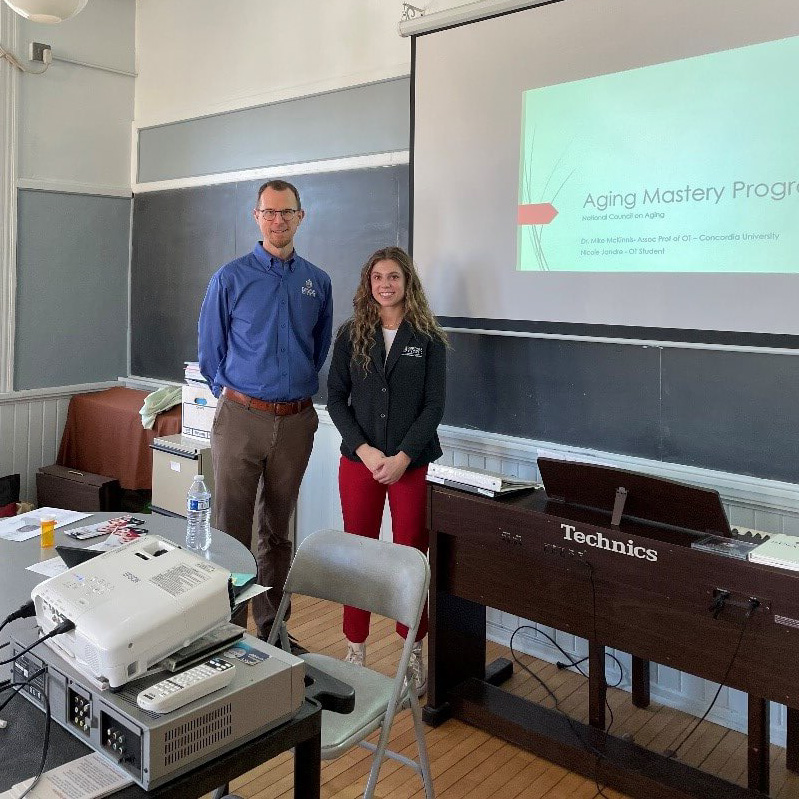
As a leader in falls prevention, I use my skill in this area to help meet our university and OT mission of serving and empowering communities. My desire to serve communities has been put on hold for the last few years due to the global pandemic. I was very happy this year when things began to return to normal. In September of 2022 I was able to connect with older adults as part of Milwaukee County Falls Prevention Coalition (MCFPC) fall prevention event. This spring, I was able to share the updated fall prevention guidelines with Concordia physician assistant students. I was able to connect with the area community by presenting at Stepping On and providing at the fall prevention session for the National Council on Aging (NCOA) Aging Mastery Program.

In addition, I love when I am able to mentor students and bring them along with me to events. Nicole Jandre was able to assist me in giving talks to the physician assistant students and the Aging Mastery Program. During fall prevention week in September of 2023, I will be leading a group of OT students to participate in the MCFPC fall prevention event.