Concordia Director of Church Ministries students learn from the pros

The LCMS South Wisconsin District’s Parish Pro’s group held its bi-monthly meeting on CUW’s campus this week and met with a few of the next generation of church workers.


A first-ever event occurred on Oct. 12 at CUW. Parish Pro’s is a group of LCMS professional church workers in the South Wisconsin District. The group is mostly made up of Directors of Christian Education (DCEs) with a couple of Concordia’s recent Director of Church Ministry (DCM) graduates in the mix.

This group meets bi-monthly at a rotation of locations to discuss their joys, challenges, and ideas for better ministry. Many in Parish Pro’s are DCE Youth Directors in various LCMS congregations. Some hold other congregational leadership positions as called workers. But all of them were excited to meet the next generation of church workers in CUW’s DCM program. 

About 20 on-campus DCM students met with the Parish Pro’s at Concordia for an afternoon in-service occasion. The two groups were mutually excited to meet each other, but the Parish Pro’s were exceptionally eager to pass along the wisdom they’ve accumulated from years of church work. 

DCM students had a hand in selecting the topics of interest to them: 

  • “Interview Do’s and Don’ts” was a session dealing with how to be most prepared for a congregation’s call committee interview as the church considers extending a call. 
  • “Your First Two Years in Ministry” addressed how to best get started at a first call. 
  • “Healthy Team Ministry” considered how a DCM will incorporate into an existing ministry, and how best to support the pastor. 
  • Finally, “Resources for Ministry” gave an overview of websites and LCMS networks to support a church worker. 

Members of the Parish Pro’s group led all sessions, with students asking many questions. The DCM students especially appreciated hearing perspectives from those actually doing the work these students aspire to do. As an added benefit, the Parish Pro’s distributed a bag of “study helps,” consisting of candy and gum.  This first annual event is thanks to Nicole Dollevoet, Youth Director at St. Paul-Sheboygan Falls and current president of the Parish Pro’s; Greg Witto, a DCE and CUW Director of Alumni and Parent Relations; and Rev. Dr. Kurt Taylor, who leads the CUW DCM program. The goal is to make this an annual event at Concordia.         


Want in?

Concordia offers two Director of Church Ministries programs: a bachelor’s degree and a certificate program. Students usually complete the 47-credit DCM certificate in two-and-a-half years. Cohorts only start once per year. Meanwhile, the DCM program for traditional undergraduate students is a 126-credit program that is typically completed in four years.

Christians of other denominations may enroll in the DCM program to receive theological training and grow in knowledge of God’s Word. But, only members of The Lutheran Church–Missouri Synod will be eligible to serve as a rostered worker within the LCMS.


Creating community collaborations: the CUW Social Work Department

One of the ways Concordia’s School of Health Professions achieves a quality educational experience for students is by cultivating and developing meaningful community collaborations. Learn how you can partner with the Department of Social Work.  


In January, Concordia University Wisconsin opened its Interprofessional Clinic, a 9,150-square-foot space designed to enhance student learning opportunities and extend valuable health and social care services to the community. This newly renovated clinic provides much-needed spaces devoted to educating all students to become interprofessional (IP) practitioners. 

Later this month, School of Health Professions alumni are invited to learn more about the important role they can play in supporting the mission of the clinic and Concordia.

Creating Community Collaborations: A CUW Alumni Event

Wednesday, Oct. 25 | 5:30-7:30 p.m.

Department of Social Work IP Clinic applications

The Interprofessional Clinic is utilized by a variety of School of Health Professions programs, including Concordia’s Bachelor of Social Work students. The implications of the space for the social work department are exciting, says BSW Program Director Nichole Ostrowski.

In the near future, the Department of Social Work plans to partner with professions within the School of Health Professions to collect biopsychosocial information on clients seeking services at the clinic. The Department also hopes to use the space to record interviews with students in the BSW program who are learning engagement skills, and the Child Welfare class plans to use the apartment to conduct a mock home visit.

“The Social Work department is excited to collaborate with other health professions to educate our students and comprehensively serve the community,” said Ostrowski.

About the Social Work Department

The Department of Social Work offers both a BSW and a MSW.  The Department of Social Work is housed in the School of Health Professions. The Department currently has six full-time faculty and several dedicated, long-term adjuncts.

On June 16, 1997, the Council on Social Work Education (CSWE) granted initial accreditation for a Bachelor of Social Work (BSW) program at CUW. The program has remained fully accredited since that time. In 2017, the BSW program was expanded to CUAA. In April 2022, the BSW program applied for a substantive change with CSWE to transition its face-to-face accelerated program to a fully online, asynchronous program.  The BSW program has seen some exciting growth and averages a cohort size of roughly15 in both the traditional program and accelerated program. 

The Master of Social Work degree is designed to prepare students for professional practice with individuals, families, groups, organizations, and communities. The MSW is a competency-based degree that emphasizes the significant contribution of knowledge, values, skills, and the importance of cognitive/affective responses to practice situations. CUW offers MSW students an Advanced Generalist specialization. The program also offers students the opportunity to take courses that prepare them to be eligible for clinical licensure in Wisconsin. The MSW program was granted initial accreditation through CSWE in February 2020. In April 2022, the MSW program applied for a substantive change with CSWE to transition to a fully online, asynchronous program. CSWE granted this program change in August 2022. Since the transition to becoming a fully online program we have enrolled students from across the country. The MSW program has seen consistent and steady growth with an average graduating class of 22 students.

The Department of Social Work works with over 250 agencies around the country to place both BSW and MSW students in their field placements.


Want in?

Concordia’s social work program uses Christian service, quality research, and hands-on learning to grow you as a competent professional. Earn your bachelor’s degree at CUW and then continue on to acquire an MSW, the most sought-after social services degree. Learn more about our programs by clicking below.


Serving the Students and Serving the Community through Physical Therapy

Concordia University Wisconsin commits to helping students develop in mind, body, and spirit to serve Christ in the Church and the world as a Lutheran higher education community. We invite our community partners and our valued alumni to be partners in advancing that mission.

Our Traditional Program Origins

Nearly 30 years ago, in the fall of 1994, the inaugural cohort of physical therapy (PT) students began their Master of Physical Therapy coursework at Concordia University Wisconsin (CUW). Two years later, the program was officially accredited. In the early 2000s, we converted the Master of Physical Therapy program to a Doctor of Physical Therapy degree, which is now the standard of education for the profession.

Currently, the traditional Doctor of Physical Therapy (DPT) program at CUW welcomes 28 students per cohort annually. The program offers several CUW students accelerated admission, enabling them to complete both a Bachelor of Science in Rehabilitation Science and a DPT degree within 6 years. The traditional program also welcomes other students from CUW and universities nationwide who have completed an undergraduate degree and meet prerequisite requirements for admission.

Other Programs We Offer

In addition to the traditional DPT program, the Physical Therapy Department will welcome its third cohort of students into the Physical Therapist Assistant (PTA) to DPT Bridge program this January. The hybrid nature of this program reaches PTAs across the nation, allowing them to advance their education and career without moving to a new city or state.

About 10 years ago, the Physical Therapy Department developed the Concordia University Orthopedic Residency as a subset. This nationally-accredited post-professional opportunity allows licensed physical therapists to advance their clinical practice in orthopedic care. Upon completing the residency, clinicians can sit for the Orthopedic Specialist Certification examination and earn the national distinction of Board-Certified Specialist in Orthopedic Physical Therapy.

About the Faculty

Eleven full-time faculty and numerous adjunct faculty and lab assistants (many are alumni of CUW) serve the physical therapy students and residents. The faculty hold various terminal-level degrees, including PhD, EdD, ScD, and DPT. Seven of the full-time faculty members also hold recognition as Board Certified Specialists in their respective domains of physical therapy practice.

Service in Practice

Service to the community is a cornerstone of the CUW DPT program. Traditional DPT students must complete at least 30 service hours over three years, but many students far exceed this requirement as they embody and live out the mission of CUW. The curriculum also embeds community outreach. Examples include educational outreach to local and at-risk schools, fall risk and health screens for community members and individuals in assisted-living facilities, and pro-bono physical therapy care. 

Students in the Community Clinic

In the traditional DPT program, students spend three semesters enrolled in a series of Community Clinic courses. During these courses, PT students collaborate with licensed supervising clinicians, classmates, and students/faculty from other healthcare disciplines to provide pro-bono care to community members in need. PT students have the opportunity to work with children, adults, and the elderly population throughout this time. These courses also allow third-year PT students to mentor second-year students, building confidence in knowledge and skills. Over the years, the location of the “Community Clinic” has varied; we have rearranged classrooms on campus and provided services at numerous off-site locations. The opening of the new Interprofessional Clinic on the CUW campus in January 2023 has created an optimal learning environment for conducting patient and client care.

The newly renovated Interprofessional Clinic provides much-needed spaces to continue our efforts to educate all of our students to be interprofessional practitioners.   The clinic includes a welcoming reception area, an ample open gym space, a splinting area, private treatment rooms, an observation room, an apartment, and a simulation lab.

Hear From the Faculty and Students

Elizabeth Paly, Associate Professor of Physical Therapy and Course Coordinator for the Community Clinic courses, speaks on the benefit this space provides the PT students. Dr. Paly has observed that “the IP (Interprofessional) Clinic provides a safe learning environment where our students can apply and practice clinical skills as they progress in the program.” 

The use of the new clinic space is not isolated to the Community Clinic courses. Kate Bennett, Assistant Professor of Physical Therapy, states, “I love using the space to welcome patients with the health conditions students are studying to be patient examples in the Management of Neuromuscular Disorders courses.” This past spring, Dr. Bennett utilized the IP clinic space for students to practice testing and assessing a client with a spinal cord injury. She also finds the space beneficial for conducting lab practical assessments and simulated patient interactions in an environment that closely resembles what students will experience on clinical rotations and in their future careers.

A current DPT student indicates, “The clinic space has been great for real-life application of skills.” The student elaborated that the clinic has “allowed me to connect with community members and students/professionals from other healthcare disciplines.”

In the Future

The PT department is excited to continue exploring opportunities for interprofessional student collaboration and service to the community. Ideas that have been proposed include development screens for infants and toddlers, group exercise classes, and fitness activities for AbleLight students. If you feel the IP clinic or a department within the School of Health Professions could address a community need, please let us know!

Join Us!

At Concordia University Wisconsin, our goal is not only to provide quality education to our students and prepare them to serve but to do so by continuing to cultivate and develop meaningful community collaborations and engage our alumni. Are you interested in becoming partners in the mission of Concordia? Come join us for our upcoming event, Creating Community Collaborations: A CUW Alumni Event, on Wed. October 25th, 5:30-7:30pm. Following a welcome address, our guests will receive a clinic tour and participate in a collective discussion to identify unmet community needs and ways our IP clinic can help address them. We hope you can join us on campus!
National Falls Prevention Awareness Week 2023

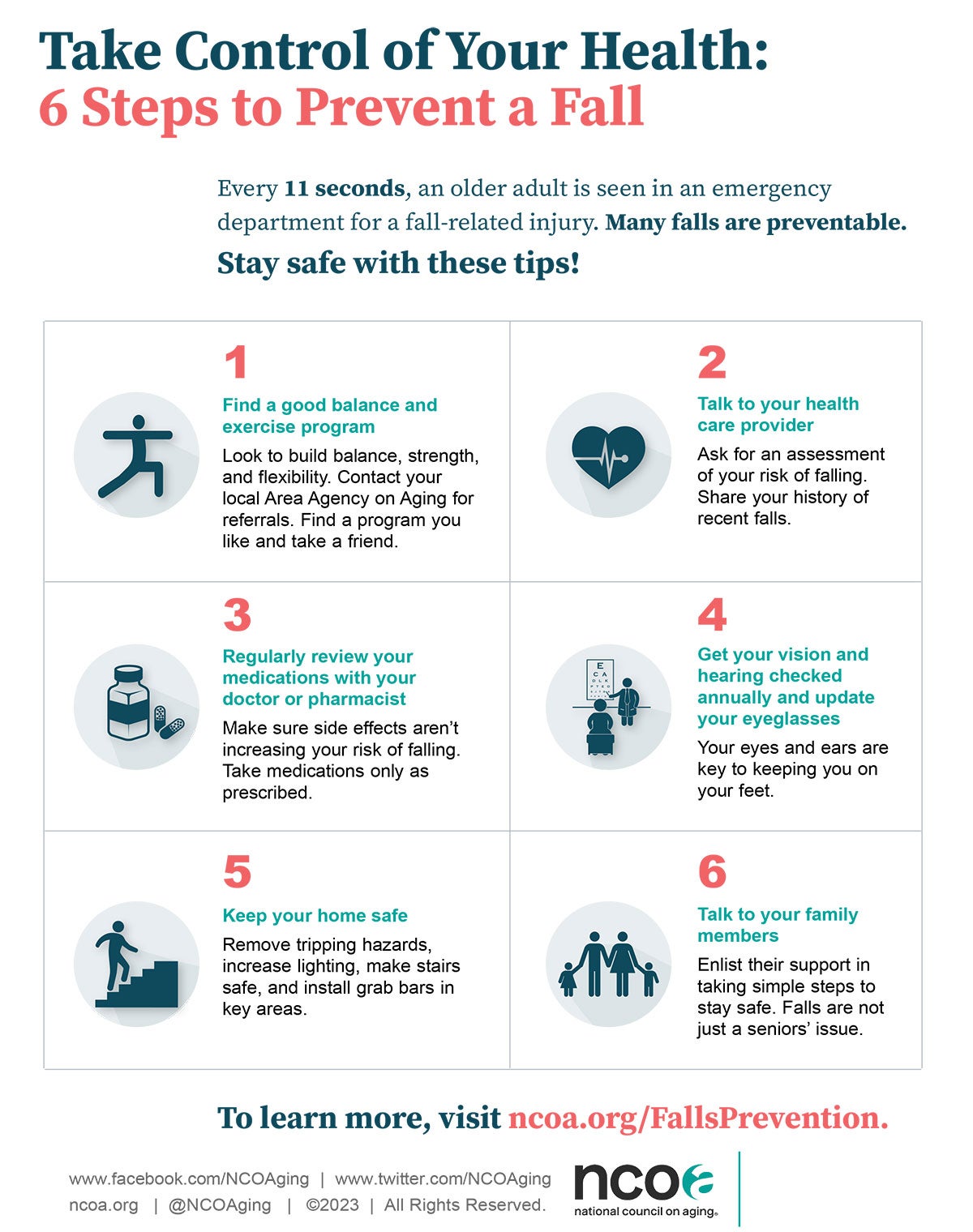
CUW’s Physical Therapy department talks about what you can do to help prevent falls this coming winter season.


As a practicing Physical Therapist for over forty years, who has been specializing in working with older adults for the past ten + years, accenting the importance of Falls Prevention comes natural to me. The week of September 18th-22nd is National Falls Prevention Awareness Week. In 2020 this expanded from a day to an entire week. According to the National Council on Aging (NCOA), on the first day of fall, their focus is to bring awareness to fall prevention initiatives for older adults throughout the country. To increase your awareness, I would like to share some facts and some helpful tips with you.

Facts about falls: 

Falls are the leading cause of fatal and non-fatal injuries among older adults that can result in serious injuries as well as increase the risk of additional falls. Falls Prevention programs are effective in saving lives, money and helping older adults remain independent and active members within their community. 

Falls are NOT a normal part of aging. 

For years NCOA has been committed to focusing on helping older adults improve their confidence and skills to prevent a fall.  Fall Prevention requires a team effort. The following individuals are members of this team, and each role is important in reducing the risk of falls. 

Family and friends:  

  • Can provide another set of eyes to assist with clearing fall hazards within your home.  
  • Can join you at your Dr. appointment and assist in asking questions and additional information on preventing falls. 

An Occupational Therapist (OT): 

  • They will identify hazards to be eliminated or modified to prevent falls within your home environment. 
  • They recommend assistive devices to fit your needs to ensure additional safety and independence. 

A Primary Care Physician (PCP):  

  • Important healthcare team member to begin the screening process of fall prevention due to seeing you regularly. 
  • Member of the healthcare team that knows your medical history and can address and refer you to other medical professionals/team members to assist in the process of fall prevention. 

A Pharmacist: 

They are a vital team member of any Fall’s Prevention program. Why?

  • Most adults take medication or supplements daily. 
  • Pharmacists will screen for medications that place an older adult at higher risk for falls.  
  • Consult with your pharmacist about any new medication that you are taking or any side-effects you may be experiencing. 

A Physical Therapist (PT):  

What is a PT? They are movement specialists that assist in identifying impairments contributing to falls. They can:

  • Prescribe exercises and activities to improve balance, strength, and mobility to prevent falls. 
  • Provide resources on evidence-based community programs to maintain and or improve strength and balance. 

These community programs might be found at…

Your local fire department: 

  • Offer home safety checks to spot hazards such as rugs without non-slip backing, too many electrical devices plugged into one outlet, and assist in testing and replacing smoke alarms. 

Your hardware stores: 

  • A place to purchase supplies and materials to make your home a safer place to age in place and remain independent. 
  • Some of these items may include grab bars, a hand-held shower head, nightlights, and brighter lightbulbs as well as non-slip pads for your rugs. 

Your faith-based organization(s): 

  • Individuals that can support you through encouragement and social support. 
  • Provide additional community resources such as providing transportation to medical visits, exercise classes, and or activities related to falls prevention. 

Your library:  

  • Valuable place within your community to access information about falls prevention. 
  • Often a common place for falls prevention programming. 

Your local sporting goods store: 

  • Provide the proper shoes and clothing as well as equipment to stay active and safe. 
  • Assist in obtaining the proper equipment for health and fitness programs such as yoga mats, ankle weights, dumbbells, water bottles, walking sticks and more. 

Additional Sources 

1. Facts About Falls. Centers for Disease Control and Prevention. Injury Prevention and Control. Found on the internet at https://www.cdc.gov/falls/facts.html 

2. Carande-Kulis, V., Stevens, J., Florence, C., Beattie, B.L., Arias, I. (2015). A cost-benefit analysis of three older adult falls prevention interventions. Journal of Safety Research, 52, 65–70. Found on the internet at https://pubmed.ncbi.nlm.nih.gov/25662884/ 

3. Report to Congress in November 2013: The Centers for Medicare & Medicaid Services’ Evaluation of Community-based Wellness and Prevention Programs under Section 4202 (b) of the Affordable Care Act. Found on the internet at http://innovation.cms.gov/Files/reports/CommunityWellnessRTC.pdf 

4. Ackermann RT, Williams B, Nguyen HQ, Berke EM, Maciejewski ML, LoGerfo JP. Healthcare cost differences with participation in a community-based group physical activity benefit for Medicare managed care health plan members. J Am Geriatr Soc. 2008 Aug;56(8):1459-65. doi: 10.1111/j.1532-5415.2008.01804.x. Found on the internet at https://www.sciencedirect.com/science/article/pii/S1551714414000330 

Ayelet Dunsky. The Effect of Balance and Coordination Exercises on Quality of Life in Older Adults: A Mini-Review. 2019. https://www.frontiersin.org/articles/10.3389/fnagi.2019.00318/full 

Falls Prevention Awareness Week is made possible in part by grant number 90FPSG0051 from the U.S. Administration for Community Living, Department of Health and Human Services, Washington, D.20201. Points of view or opinions do not, therefore, necessarily represent official Administration for Community Living policy.   

My clinical practice spans over forty years, with experience in all aspects of acute care and outpatient physical therapy. My areas of expertise are in the physical therapy management of the geriatric patients with special interest in working with the individual with Parkinson Disease. I am a Board Certified Geriatric Clinical Specialist. I recently applied for re-certification which is good for an additional 10 years

Seeing with Sound in Diagnostic Medical Sonography

Join us for our upcoming event, Creating Community Collaborations: A CUW Alumni Event on Wednesday, October 25.


By Lisa Reimer, Department Chair, Imaging Department, CUWAA
& Erica Brandt, Clinical Coordinator, DMS Program, CUWAA

The Diagnostic Medical Sonography (DMS) major was first offered at CUW in 2008. CUW gained sole sponsorship of a CAAHEP accredited DMS program in 2016. This transfer of sponsorship provided CUW students the opportunity to learn sonography (ultrasound) from dedicated university faculty in academic, clinical and lab settings.

CUW currently offers two award pathways: 1) Bachelor of Science degree in Diagnostic Medical Sonography 2) Certificate in Diagnostic Medical Sonography. Both award paths provide students an integrated clinical education with academic coursework specific to the profession.

Concordia University Wisconsin (CUW) is a Lutheran higher education community committed to helping students develop in mind, body, and spirit for service to Christ in the Church and the world. We invite our community partners and valued alumni to collaborate in advancing this mission.

CUW DMS partners with over 35 clinical sites within 10 healthcare groups in Southeastern, South Central and East Central Wisconsin. Near the completion of the program, CUW DMS students are eligible to take credentialing boards in Abdomen Extended, Obstetrics and Gynecology, and Vascular specialties. Over the past five years, 96% of CUW DMS graduates have earned credentialing in all of these specialties.

Currently, the CUW DMS program has two full-time faculty and is supported by five part-time adjunct instructors. The program targets a cohort of 8-10 students each year. The DMS program has maintained programmatic accreditation through The Commission on Accreditation of Allied Health Education (CAAHEP) and recently, as part of this process, completed the reaccreditation site visit through the Joint Review Committee on Education in Diagnostic Medical Sonography (JRC-DMS).

Our new clinic space

The Interprofessional (IP) Clinic opened on our campus this past January. The newly created area provides innovative learning spaces to continue our efforts to educate all of our students to be IP practitioners. The clinic includes a welcoming reception area, large open collaborative space, private exam rooms, and simulation areas.

Currently the DMS students have been utilizing the simulation lab for sonographic skills assessment. The space allows faculty to simulate a patient waiting area, intake and history and examination. The simulation lab has equipment comparable to a hospital setting which gives students an opportunity to navigate and trouble shoot challenges related to scanning bedside in a hospital room. In the future, the DMS program is looking at utilizing the IP clinic space to further educate and support community needs related to sonography. 

At Concordia University Wisconsin, our goal is to not only provide a quality education to our students and prepare them to serve, but to do so by continuing to cultivate and develop meaningful community collaborations and engage our alumni.

You’re invited!

Are you interested in becoming partners in the mission of Concordia? Come join us for our upcoming event, Creating Community Collaborations: A CUW Alumni Event:

Wednesday, October 25 | 5:30-7:30 p.m. 

Following a welcome address, our guests will receive a tour of the clinic and participate in a collective discussion to identify unmet community needs and ways in which our IP clinic can help address them. We hope you can join us on campus!

Learn more

Want to learn more about Diagnostic Medical Sonography at CUW? Click the link below.


Lisa Reimer, M.S., RDMS, RVT, R.T(R), is a registered Diagnostic Medical Sonographer specializing in abdomen, obstetrics & gynecology and vascular imaging. She is also a Registered Radiologic Technologist. She holds a Bachelor of Science Degree in Radiologic Technology and a Master of Science degree in Health Administration.


Erica Brandt is the Clinical Coordinator for the Diagnostic Medical Sonography program at Concordia University Wisconsin.

It’s ‘Baby Day’ for CUW OT students!

One of the highlights of the busy summer schedule in the Occupational Therapy program is when the babies come by for their annual visit.


By Kelly Osowski

As the OT Adult Clinic Coordinator and Professor in the OT program here at CUW, it has been my honor to coordinate the adult clients in the Community Clinic as well as coordinate “Baby Day” in Occupations Across the Lifespan class. This course is offered to our Post-baccalaureate, Accelerated, and Bridge OT students during their time here at CUW.

In the course Occupations Across the Lifespan, students learn the development of the human lifespan beginning at conception and ending at death through an occupational lens. This course covers the physical, cognitive, and emotional changes that occur across the eight major stages of development: prenatal, infancy, early childhood, mid-late childhood, adolescence, early adulthood, middle adulthood, and late adulthood.

Living dolls

“Baby Day” is when we coordinate babies ages birth to 5 years old from the community with students in the course Occupations Across the Lifespan to test infant reflexes. “Baby Day” is an unforgettable lab experience for OT students. As an occupational therapy practitioner for over 10 years, I still remember “Baby Day” in my graduate program. The hands-on learning experience with babies in order to learn development, reflexes, and how to interact with the baby and parent/caregiver is foundational as an occupational therapy student. The caregivers/parents appreciate the “play time” while students appreciate the low stakes opportunity to test out infant reflexes.

Students learn reflexes such as the palmer grasp which onset is at birth and integrates (disappears) at 3 – 4 months old. The Palmer Grasp is elicited when pressure is placed on the palm of the hand, the response then is the flexing of the fingers. The palmer grasp reflex is a precursor to voluntary grasp and fine motor tasks such as writing. OT students also learn about the Asymmetrical Tonic Neck Reflex (ATNR) which onset is birth and integrates (disappears) at 4-6 months. The ATNR occurs when a child actively turns their head or the student passively turns the child’s head to the right or left. The response is the child’s arm extends on the face side and the back arm flexes. The ATNR purpose is for hand-eye coordination and a precursor for rolling. These are just two of the many reflexes our OT students have the opportunity to elicit and observe in the “Baby Day” lab experience.

“Baby Day” is offered to students and the community fall, spring, and summer semesters and we invite babies from our OT alumni, CUW faculty/staff, and local families to join in the learning experience. “Baby Day” takes place in our new Interprofessional Community Clinic here on the CUW campus.


Want in?

Wherever you’re at in your journey into occupational therapy, Concordia University has options for you at the undergraduate, master’s, and doctoral levels. As a Christ-centered university, our program will help you advance in your calling, by learning from experienced therapists in a hands-on environment and developing a foundation in ethical leadership.


Kelly Osowski is the Occupational Therapy Adult Clinic Coordinator and Professor in the OT program at Concordia University Wisconsin,

Overview of the IP Clinic: “If You Build it, He Will Come” 


By Lois Harrison, Interprofessional Clinic Coordinator

Who doesn’t love the movie Field of Dreams? There are so many lessons we can learn from it … 

  1. Don’t be afraid to be innovative and have some “crazy” ideas.
  1. Building relationships and strengthening your community are important.
  1. When we follow our vision, it leads to purpose and fulfillment.

The quote in the title of this blog comes straight from the movie and embodies our dream of creating a dedicated interprofessional clinic space on Concordia’s campus to meet both the educational needs of our students, and unmet healthcare needs of our community. Well, we did build it and they are coming! The Interprofessional (IP) Clinic opened its doors in January. All of the current and future activities that will take place within it support Concordia’s mission of “helping students develop in mind, body, and spirit for service to Christ in the Church and the world.” It exemplifies the values we hold as a university … Christ-centered, truth/integrity, excellence, and service.  

This “innovative and crazy idea” has been over 25 years in the making. Physical Therapy (PT) and Occupational Therapy (OT) began providing pro bono services in our lower-level classrooms. This meant the faculty and students would remove all the desks/chairs, move the equipment around in the room, and then put everything back after each session. We found that this experiential learning format was valuable to the students and the community and started looking for physical space in the community. We were blessed to have had temporary space at Repairers of the Breach daytime homeless shelter, Gerald L. Ignace Indian Health Center, and Portal Inc. Then it was back to campus in the Concordia Center for Environmental Stewardship, Pharmacy building, once again down to the lower-level classrooms, and now finally in a dedicated clinic space. Whew! It’s been a long journey to be sure! 

Strength in numbers

The Interprofessional Clinic is certainly all about “building relationships and strengthening our community.”  The School of Health Professions (SHP) now has two clinics that will collaborate to provide services to the community and enhance the education of our students. The Speech Language and Hearing Clinic is adjacent to the new IP Clinic. Between the two clinic spaces, we can offer occupational and physical therapy, and speech, language and hearing services to children and adults.  

Together, these spaces are available for use by all SHP programs. In addition to the speech services provided 4 days per week, the occupational and physical therapy programs offer pro bono services to the community 2 days per week. In addition, diagnostic medical sonography, social work, physician assistant, and our rehabilitation science students may be involved in activities that utilize the clinic spaces. Specific spaces within the IP Clinic include … 

  • A large open gym space 
  • Private treatment/consultation rooms 
  • Simulated apartment 
  • Observation room 
  • State of the art simulation lab space 
  • Workspace for students 

We have followed our university’s vision and it has indeed led to “purpose and fulfillment.” The new clinic provides space that allows us to continue our efforts to educate all of our students to be effective interprofessional practitioners. Interprofessional education (IPE) occurs when two or more professions learn from, about and with each other. It is all about learning team-based care. Our medical and social care systems are so complex that we know that one discipline cannot provide the best care alone.  It takes a strong team to focus on the most effective care of future clients. 

A special alumni event

We are here to serve, and there are many underserved individuals in our community. These include those whose insurance no longer pays for services (as is often the case with rehab services), who don’t have any insurance at all, or who would simply benefit from additional services. Our goal is to continue our valuable collaborations with our community partners to enhance the quality of services they already provide, and work with them to help meet the unmet needs of our community.

To that end, we will be holding a special alumni event, “Creating Community Collaborations: A CUW Alumni Event” that will take place on Wed. Oct. 25, 5:30-7:30 p.m. At this event, we will provide tours of our clinic spaces, but it will also be a collaborative event where essential conversations can occur so we can hear from you what the unmet community needs are. So please save the date and consider joining us in October! Watch for additional blogs from each of the SHP programs that will come out next month to learn how each SHP program is currently, or will be, utilizing the IP Clinic spaces.


Want in?

The School of Health Professions at CUW offers a range of professional programs and degrees at the bachelor’s, master’s, and doctoral levels. Whether you pursue your education through online instruction or through classroom learning, you can expect a distinctive learning environment that will prepare you for a career marked by excellence, compassion, and service. Health Professions undergraduate students also participate in the Concordia Core, a rigorous, liberal arts curriculum integrated with Lutheran distinctives.

Lois Harrison, PT, DPT, MS, is an associate professor and the Interprofessional Clinic Coordinator at Concordia University Wisconsin.

Why Should I Consider a Career in Geriatric Physical Therapy?

What is Geriatric Physical Therapy, and why might it be the career path for you?


Put simply, “geriatric” physical therapists focus their care on older adult patients and clients. Typically, this means people 60 years and older, but the definition varies from age 50 (AARP age) to 65 (Medicare age). There is no upper limit for the ages seen—my oldest patient to date was 104 and didn’t retire until 102.

Other physical therapy specialties focus on specific body systems, like cardiovascular/pulmonary, neurologic, and orthopedic. However, geriatrics as a specialty pulls together all body systems as they relate to typical and atypical age-related changes.

Additionally, any conditions a person acquires during their lifetime might “stack up” in the same person as they get older. A unique challenge and opportunity for the geriatric physical therapist is to master a wide variety of information from all body systems and all areas of physical therapy to best treat the needs of older adult patients and clients.

Why specialize in Geriatric Physical Therapy?

My journey to physical therapy in general goes back at least to high school, when I had the opportunity to take several anatomy and physiology classes. Various life events have guided me toward PT school, though along the way I was (and still am) interested in many areas that physical therapy ties together.

My interest in geriatrics goes back to Year 2 of the program.

Orthopedic content was pretty interesting, but neurological rehabilitation content was even more interesting. I wasn’t sure at this point what population would be the most interesting for me to work with. However, the next three clinical rotations were in inpatient, skilled nursing facility, and outpatient settings. I noticed that working with older adults provided a good challenge for me.

Since then, I have grown to appreciate geriatrics as a specialty for even more reasons. I earned board certification in geriatric physical therapy in 2016.

My favorite aspects of working with older adults include…

The life stories they have to tell, and the need to use multiple areas of my knowledge every day. The visible health and happiness benefits that they can gain from simply being more physically active than they have been. There are certainly challenges. Some patients may not make it all the way through PT due to worsening illness or even death. However, even that has given me more appreciation for the life and health God has given me to serve them.

What Options Are Available for Geriatric Physical Therapy?

One of the best parts of geriatric physical therapy is the ability to practice in virtually any setting. Older adults are increasing in numbers in many countries. Most remain living independently in their communities until their 70s or 80s. If you like sports, so do many older adults. Even Senior Olympians who are just as competitive as their younger counterparts! If you prefer working with people in their own living environments, home care is a great option. Just about the only setting where you wouldn’t be likely to work with older adults would be exclusively pediatric clinics.

Besides clinics, hospitals, homes, and nursing homes, some geriatric physical therapists go less-traditional routes. These can include private practice, telehealth, consulting, and wellness. No matter where the PT practices, there are always older adults to serve and who can improve with therapy.

Okay, I’m Interested. What Do I Do?

A great place to start is right now, during DPT coursework. Pay attention to the “aging” aspects of the material you are learning. Aging affects every body system. On clinical rotations, note how working with older adults is similar to and different from working with younger adults. This will give you a more accurate view of what it’s like to work with older adults as a specialty.

After graduation, many continuing education and mentorship opportunities exist for PTs interested in geriatrics. Continuing education courses address varied issues related to health and the aging process, including specific diagnoses like vestibular problems. If you want to fast-track your expertise in working with older adults, consider also a geriatrics residency program. A unique benefit graduates appreciate the most about residency is the mentorship they receive. Particularly the mentorship relating to how they interact and clinically-reason with specific, complex patients. Currently, there are less than 20 geriatrics residencies in the United States. I am working at Concordia to develop one more that will hopefully get started in a few years.

Get to know Dr. Hannah Baker

  • What’s your name/degree/specialty?
    • Dr. Hannah Baker, PT, DPT, PhD, Board Certified Clinical Specialist in Geriatrics
  • How long have you been teaching at Concordia?
    • As a proud CUW DPT grad myself, I have been teaching full-time at Concordia for 2 years. I also had the opportunity to be a lab assistant and guest lecturer for 5 years before that.
  • Which classes do you teach?
    • A little bit of everything, including a pediatrics-geriatrics elective, electrotherapy/wound care, neuroscience, gait analysis, and psychosocial aspects of health care.
  • How did you decide to be a PT?
    • I’ve always been fascinated by how the human body works according to its design. My dad broke his leg when I was a freshman in college. Seeing his rehab process and the hiccups made me want to do better. However, I didn’t make the final decision until my senior year. The “light at the end of the tunnel” and the support of the faculty were a great help!
  • Favorite areas of research?
    • Currently, I am working on projects related to quality/process improvement and detecting fall risk early on. I’m also studying the effects of an annual PT “physical.”
  • What’s your favorite part of being a CUW faculty? The family atmosphere has allowed me to grow personally and professionally.
  • What lessons/courses/research projects do you have coming up that you’re excited about?
    • Besides my regular courses, I am particularly excited about the courses I’m developing for our geriatrics residency.
  • What do you do in your free time?
    • Play or walk with my son John (1 ½), read everything I can, and watch Star Trek with my husband.
  • What advice would you give to someone thinking about becoming a PT?
    • Count the cost (monetary, psychological, time…) and get used to practicing things that aren’t necessarily the most interesting. That skill and mindset will set you ahead of your peers!

Feeling Inspired?

If you’re interested in learning more about becoming a physical therapist, explore a day in the life of a physical therapy student. Feel free to check out our website.

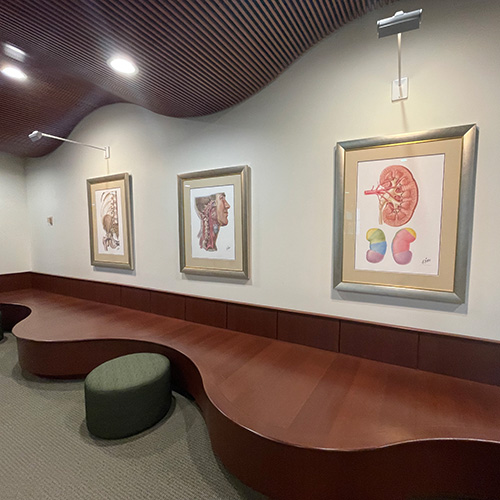
Virtual cadavers in anatomy education

Concordia Occupational Therapy faculty member teaches and learns about using virtual reality in anatomy education.


When people hear about virtual reality (VR) they might think of headsets and hand controls immersing someone is an artificial world, but virtual reality can take many forms, including options for students to engage in VR from their own computers or tablets. In the CUW Occupational Therapy and Physical Therapy programs, faculty are using a unique program called VH Dissector to support students in their understanding of human anatomy.

What is a Virtual Cadaver?

In 1994, the National Institutes of Health began the Visible Human Project. They created a dataset of images taken from a human cadaver using CT scans and MRIs. In the early 2000s, Touch of Life Technologies used the dataset to create an interactive 3-D cadaver that students can virtually dissect with just a few clicks of a mouse.

How is CUW using the VH Dissector?

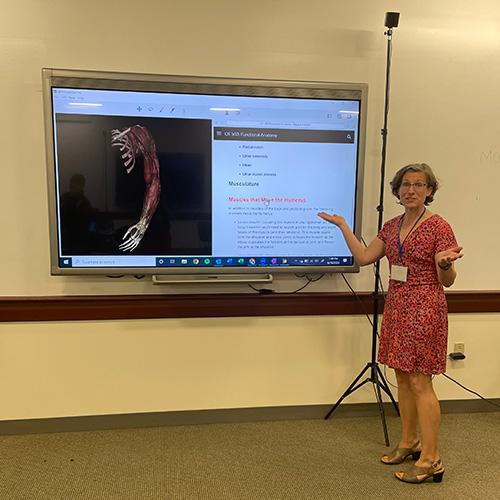
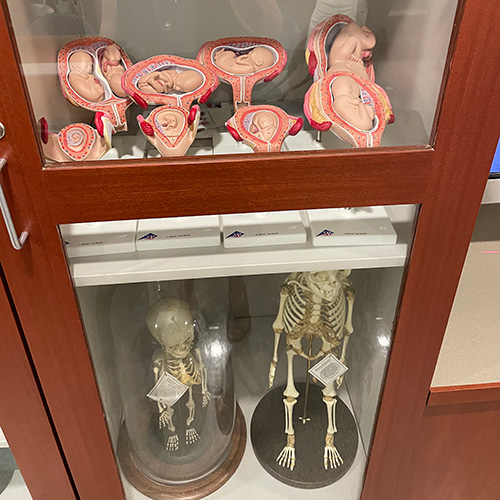
CUW School of Health Professions students have the unique opportunity to dissect and/or view real human cadavers in their anatomy education. CUW faculty use the VH Dissector to help students prepare for their hands-on lab time, and study the structures when they are off campus. Dr. Susan Wilbanks from the Occupational Therapy (OT) program has been working with the VH Dissector since 2021 and has created custom lessons in the program for the OT students.


CUW faculty are training instructors from around the world to use a virtual cadaver

Dr. Wilbanks was recently invited to the Frank H. Netter MD School of Medicine at Quinnipiac University in New Haven, CT, to teach other faculty from around the world about how she builds her custom lessons and incorporates them into coursework. At the meeting she also got to learn from other faculty about how they use the program, and had a chance to experience their virtual and augmented reality programs that allow the user to walk around the virtual cadaver and interact in an immersive 3-D environment.


Want in?

CUW School of Health Professions students receive expert instruction in Anatomy. By incorporating state-of-the-art technologies such as the VH Dissector, students have a leg up with these customized materials supporting their education. To explore all of the offerings in the School of Health Professions, click the link below:


Learning to ‘Write it Right’ at handwriting camp

For nearly a decade, this innovative program has helped kids reach their potential while providing CUW OT students with a valuable fieldwork opportunity.


By Maggie Aschenbrener, OTRL/M

As Pediatric Clinical Coordinator for the Occupational Therapy (OT) Department at Concordia University, I have the privilege of both teaching in the occupational therapy department and creating clinical opportunities for our students in the community, which includes our Write it Right Handwriting Camp.

During college, I spent two summers working as a camp counselor at Camp Gray in Baraboo, Wisconsin, and one summer as a camp counselor at Camp Adventure, on an American military base in Garmisch-Partenkirchen, Germany. I also spent the spring semester of my sophomore year of college living and studying in the Rocky Mountains as a student with the National Outdoor Leadership School (NOLS). Never would I have imagined that these amazing experiences would have led me to teach graduate level OT students at Concordia University of Wisconsin!

I think this week was more than just working on handwriting. I think we each learned something new from each other and I will be forever grateful for that.

Olivia Seng, CUW Occupational Therapy student

The ‘write’ partnerships

Pediatric occupational therapy helps children fulfill their roles as sons, daughters, siblings, students, and peers, among other things. Often, pediatric occupational therapy focuses on the fine motor skills that help children fulfill these roles. One area that pediatric occupational therapists often focus on in the school setting is handwriting. For nine years, the Concordia Occupational Therapy Department has partnered with local elementary schools in southeastern Wisconsin for the Write it Right Handwriting Camp to provide local children the opportunity to improve upon their handwriting skills in a fun, safe, and supportive environment.

This summer, the Concordia Occupational Therapy Department partnered with Ozaukee Christian of West Bend, St. Paul’s of Grafton, and St. Josephs Academy of Milwaukee for a week of handwriting camp which was free to the public. In the handwriting camp, CUW students gained experience with a multisensory approach to handwriting while K4-3rd grade students were able to improve upon and continue to practice their handwriting. The handwriting camps serve as a level one fieldwork experience for our occupational therapy students, which provides CUW OT students with an introduction to the pediatric population.

Undivided attention

During Write it Right Camp, CUW students are paired 1:1 with a camper to teach them the basic mechanics of handwriting in a fun, play-based environment. This summer, themes included outer space, dinosaurs, campout, and superhero. Campers participated in gross motor, fine motor, and handwriting activities that supported these themes. Throughout the week, campers engage in obstacle courses, relay races, games, outdoor activities, crafts and a variety of other activities that support physical and neurological development that work to improve handwriting. CUW’s comfort dog Sage even plays an integral part in the week’s activities!

Not only do campers learn, they also have fun. Cam Ruetz, a nine-year-old camper, said his favorite part of camp was “hanging out with his OT student Jeff,” and playing games that incorporated handwriting and his favorite sport, basketball. Cam reported that by the end of the week, he was able to write the lowercase alphabet “perfectly.” While Cam enjoyed the basketball, his mom, Katie Ruetz, was excited to see his handwriting and his overall confidence improve throughout the week! Occupational therapy student Olivia Seng said, “I think this week was more than just working on handwriting. I think we each learned something new from each other and I will be forever grateful for that.”


Want in?

Wherever you’re at in your journey into occupational therapy, Concordia University has options for you at the undergraduate, master’s, and doctoral levels. As a Christ-centered university, our program will help you advance in your calling, by learning from experienced therapists in a hands-on environment and developing a foundation in ethical leadership.


—Maggie Aschenbrener, OTRL/M, is the pediatric clinical coordinator for the Occupational Therapy Department at Concordia University Wisconsin.