The impact of getting a doctorate as a Christian

In this past summer’s blockbuster movie Top Gun: Maverick, Maverick sits in the office of his commanding officer and former rival, Ice Man. Maverick struggles to make a decision and wonders about his impact as a teacher and fighter pilot in the navy. “It’s not what I am,” Maverick says to Ice Man, “it’s who I am. How do I teach that?”

To me, this suggests a man who lacks a basic understanding of who he is and what skills make him a great pilot. We all have heard how critical self-awareness is to our growth and potential, both personally and professionally. What was that ancient Greek maxim again? Everyone together now, γνῶθι σεαυτόν! (“know thyself”). While the original intention was likely more classist in nature than our typical modern usage, clearly self-awareness has been crucial to civilized societies for millennia. But as Christ-followers, we know there is more to our story.

While treading softly on the cliché, considering who we are and whose we are is a question of identity. Here’s what we believe: You have been “fearfully and wonderfully made,” created in His image, chosen, and appointed to bear much fruit. You “are his workmanship, created in Christ Jesus for good works, which God prepared beforehand” for you to do. And God has grand plans for you and your future, even if you do not know precisely what those plans may be.

Who you are and Whose you are are two foundational reasons to consider getting a doctorate, allowing it to create a larger platform to impact and influence others for service to Christ in the church and the world. 

How will I use a doctorate degree?

One question we often get from prospective doctoral students is “how will I use this degree in the future?” It’s a fair question. Of course, we know that a doctorate gives people access to higher-level and higher-paying leadership positions—whether it be in education, business, health professions, non-profits, or other endeavors. But these responses answer the “what am I” questions, not the “who am I” ones. And the “who am I?” question is so essential for a doctoral student to wrestle with, reflect upon, and truly embrace.  

Learning at Concordia

CUWAA’s doctoral program, known as LICI (Leadership in Innovation and Continuous Improvement), is focused on both your future “employability” as well as the formation and maturation of your heart and mind. Just as important as answering the question, “what can I do with this learning?”, the LICI program will certainly have you reflecting upon the question, “what is all this learning doing to me?” 

Christian apologist G.K. Chesterton once noted that “education is not a subject and does not deal in subjects. It is instead a transfer of a way of life.” A Christian education integrates students into the life of the church and faith creating an accurate worldview even while our LICI cohorts welcome students of all faiths or no faith backgrounds.

A letter to Christians

Dear Christian brother or sister, we need you out there in the marketplace of ideas, the public square, the ivory towers, the business and corporate offices, the home, and the rooms where things happen. We need your influence and presence in the innovative and creative spaces which manifest important change and movements in our culture and society.

We need more biblically-inspired Christians with terminal degrees sharing God’s love and promises in unique ways and venues with terminally ill souls in our midst. Perhaps God is calling you to be a doctor so that you can serve in special places and spaces in these spiritually sick times.  

Explore your calling

If you feel God is leading you to investigate and solve a problem, create something special, explore your passions and interests in a deeper and scholarly way, personalize and build your expertise so that you make an essential difference and impact, make new connections or discover new opportunities to serve, start your doctoral journey today. We’d love to help you. With God, all things are possible.
7 reasons to file your FAFSA now


Financial aid plays a very large role in making it possible for most students to go to college. Applying for aid and filling out your FAFSA form in a timely manner is the key to maximizing your benefits.


What is the FAFSA?

FAFSA stands for the Free Application for Federal Student Aid. But it’s not just for federal aid! This form is used by colleges and universities across the country to determine your eligibility for all types of financial aid, including federal, state and institutional grants.

If you’re a current student or have already applied to attend Concordia University Wisconsin (or any college), NOW is best time to apply.

“Filling out the FAFSA guarantees that you’ll never pay the ‘sticker price’ at Concordia,” explains Director of Financial Aid Kevin Sheridan. “We understand that the process can feel overwhelming. At Concordia, we have a great number of scholarships and grants that can ease parents’ minds as they’re trying to make financial plans to send their children to college.”

Don’t wait! The sooner you apply, the more benefits you may be eligible to receive.


Seven reasons to get started on your FAFSA NOW

1. You’ll receive a $1,000 Early Filing Grant from Concordia University Wisconsin.

Yes, you read that correctly! If you’re a new, incoming student for the 2023-24 school year, an additional $1,000 will be added to your CUW student financial aid just for completing the FAFSA before December 31, 2022. Why? Because it helps us help you when you file your FAFSA early.

2. You’ll be maximizing your Wisconsin State Grant aid.

The Wisconsin State Grant is a need-based renewable scholarship for undergraduate students attending eligible private, non-profit institutions like Concordia. But you have to file the FAFSA early to be eligible for this aid from the State of Wisconsin.

You must be from Wisconsin to receive this grant; but if you’re not, don’t worry! You are still eligible for other aid at the same tuition cost as Wisconsin residents, because there is no difference between in-state and out-of-state tuition at CUW.

3. You’ll be maximizing the amount you may receive in Concordia specific aid.

CUW grants institutional financial aid based on the basis of academic merit, talent scholarships, and other factors. One of these other is the Estimated Family Contribution (EFC) determined by your FAFSA. Please be aware that the EFC does not represent the actual amount you would be charged at any given college or university but rather helps to determine how much need-based financial assistance you receive.

4. So you can check it off your to-do list and get some peace of mind!

As a college student or high school senior, you have plenty of things to think about besides getting your FAFSA done. Once you complete this very important form, you won’t have to do it again for another year. Think how good it will feel to get it done early!

5. The sooner you file, the sooner you’ll get your financial aid award from CUW.

We need your FAFSA information to create your individualized financial aid award letter from Concordia. The sooner you submit that to us (use our CUW school code 003842 when filling out your FAFSA), the sooner we can mail that to you. We begin sending out financial aid award letters as early as November 15!

6. Filing your FAFSA early gives you information you need to make your college decision sooner.

Knowing how much financial aid you’re going to get can be a big factor in choosing which college to attend, and receiving your financial aid award letter helps you and your family weigh your options. Also, the sooner you have your financial aid award letter, too, the more time you have to create your payment plans through Concordia and calculate out-of-pocket costs.

7. We can help you figure it all out.

Got questions about financial aid? We’ve got answers! Please don’t hesitate to reach out to our financial aid office:


Get started

To learn more about all the things that make Concordia University Wisconsin such a great place to spend your college years, visit cuw.edu. To get started on completing your application or filling out your FAFSA form, click the appropriate link below!


Concordia’s accelerated undergraduate teaching degrees

As Concordia’s accelerated programs have expanded, the undergraduate degrees in Education continue to strengthen Concordia’s historic reputation in preparing teachers of all levels. We offer bachelor’s degrees in various WI state teaching licenses including Early Childhood Education, Elementary Education, Secondary Education in English/Language Arts, Mathematics, Broadfield Social Studies, and Cross Categorical Special Education. Today, our undergraduate teaching degrees are helping working adults earn degrees and help fill the ever-increasing need for teachers.


Q & A with Program Director, Dr. Adam Paape

Assistant Dean of the School of Education, Dr. Adam Paape, is the Program Director for these increasingly popular programs. He recently took the time to answer some common questions:

Why is now a good time to become a teacher?

We are in a national teacher shortage crisis. There is a great need for teachers however, due to the low number of candidates, there are so many opportunities within the teaching field. Many of our graduates have multiple options for jobs when they complete our programs. We are also in a time of educational innovation as schools and districts incorporate creative ways of teaching and learning.  


What makes a good teacher?

Great teachers care for their students in mind, body, and spirit. They think deeply about how they can engage their students in the content they teach. Great teachers connect the world outside the classroom to the learning inside the classroom. 
Above all, they incorporate their love for the Lord into their teaching and learning.  

What is the format and nature of the online courses and how many interactions do students have with their instructors? 

Candidates interact on a regular basis with their instructors regardless of the style of class. We offer all of our content courses in 8-week asynchronous formats. This means that students do not need to be present on any particular day/time for classes. Instead, they are able to engage in the learning process when it fits best in their daily schedule. 

Additionally, our 8-week classes can either be collaborative (this includes interactions with peers via discussion posts or video posts) or self-paced (students primarily interact with the content and their instructor).

Can you really learn enough online to be a qualified classroom teacher?

Absolutely! We’ve embedded all of the same performance-related assessments that we require of our in-person students into our online program. We’ve aligned our online program with high-quality, on-site fieldwork that ensures our candidates are fully qualified to teach in their own classrooms upon program completion.  

What are the classroom clinic hour requirements and how are those arranged?

Most semesters, our online bachelor’s students will perform 45 clinical observation hours in K-12 schools nearby where they live. Those hours will vary in kind – discovery, special education, and multicultural.  These hours are designed to allow our students to learn in classroom settings and to reflect on the practices they’ve learned in our online classes.  

How can students who work as paraprofessionals or teacher aides gain credit for their work experience? 

During the first semester of clinical work in our programs, a student will have the opportunity to submit an application for credit, based on lived experience. If a candidate works as a paraprofessional or teacher aide, that work aligns very well with the university’s Prior Learning Assessment (PLA). In this case, the candidate will submit a written narrative of the learning experiences. 

In addition, the candidate will collect written confirmation from supervisors of their previous learning to submit to the PLA. Many students also enter the program with transferrable credits from other accredited schools, including associate degrees. Students can potentially apply up to 84 credits toward these degrees. This can accelerate the completion of a degree!

Do students have to live in WI to complete the practicum and student-teaching requirements?

Students can live anywhere in the United States to participate in our undergraduate teaching degrees. The only requirement is that our candidates work with qualified host teachers. The host needs an active teacher license from the state in which they serve. Also, they need at least three years of teaching experience, and one year of service in that building or district. 

What tests are required to earn a state teaching license in Wisconsin and how can that license be used in other states?

This depends on the teaching license. For the K-9 Elementary Education license, the candidate will need to pass the Foundations of Reading Test (FORT). If a candidate has a GPA below 3.0 in their core content area, they would need to take the Praxis 2 test in that content. Additionally, if a student has below a B in their core math, reading, and writing classes, they would need to take the Praxis Core test.

Ready to get started?

To learn more about all of our accelerated undergraduate teaching degrees and programs offered for busy adults including those in Education, visit CUWAA Accelerated Admissions or call 262-243-5700.

Join us!

We are hosting a live webinar on October 26, 2022, at 4:00pm CDT, which will give you the opportunity to hear from faculty and admissions to get more program specifics. We will also have a live chat feature to answer your questions.

What are the fastest-growing jobs in tech?

Did you know that according to Zippa, “there are at least 3.97 million tech jobs available in the US as of 2022? And this number continues to grow.” With advancements in technology almost daily, it’s no surprise that skilled individuals are needed in the field. Take a look at the top growing careers in the industry.

#5 Operations research analyst

Projected job growth, 2020-2023- 23%

Operations research analysts help organizations make decisions using math and logic and solve problems. O’Net states that their days can include tasks such as:

  • Collaborating with others to ensure successful implementation
  • Formulating mathematical or simulation models of problems
  • Identifying problems and solutions
  • Performing testing of models

Operations research analysts in 2021 made about $82,360 annually. In order to be in this career, you need a bachelor’s degree. Additionally, many employers require a master’s or doctorate degree, depending on where you work. A degree in business, math, engineering, computer science, or operations research can best help you be successful.

#4 Web developer

Projected job growth, 2020-2023- 23%

Not only do web developers use computer science, but they also need creativity to be successful in their position. The main task is to create and design websites for the organization or clients. In addition, they write code and update code for programs. According to O’Net, web developers made a median wage of $77,030 annually in 2021.

Your education needed in the career depends on where you work. However, most require at least an associate’s degree and knowledge of coding languages. Still, some require a bachelor’s degree or more in the field.

#3 Software developer

Projected job growth, 2020-2023- 25%

Software developers have been one of the fastest-growing jobs in tech for the past several years and continue to grow. Developers need to have strong knowledge and background in programming and computer languages. Some daily tasks include:

  • Designing and developing software
  • Updating programs
  • Performing software testing and maintenance

How do you get started? Recommended by the U.S. Bureau of Labor Statistics, “software developers typically need a bachelor’s degree in computer and information technology or a related field. Some employers prefer to hire developers who have a master’s degree.” In 2021, software developers were making around $109,000 per year.

#2 Information security analyst

Projected job growth, 2020-2023- 35%

If you’re interested in protecting networks, becoming an information security analyst could be a path for you. So, what would you do? The U.S. Bureau of Labor Statistics states, “Information security analysts are heavily involved with creating their organization’s disaster recovery plan. The recovery plan includes preventive measures such as regularly copying and transferring data to an offsite location.” Their job also includes researching new technology to decide what will work best for security.

In order to become an information security analyst, you will need a bachelor’s degree in computer science or a similar field such as math or engineering. Data shows that the median wage in 2021 was $102,600.

#1 Data scientist

Projected job growth, 2020-2023- 36%

Coming in as the number one fastest-growing job in tech is a data scientist. Data scientists, according to Coursera, “determine the questions their team should be asking and figure out how to answer those questions using data. They often develop predictive models for theorizing and forecasting.” Their daily tasks may include finding patterns and trends, communicating recommendations, and deploying data tools.

The U.S. Bureau of Labor Statistics reports that the average wage in 2021 was $100,910. To start a career in data science you need a bachelor’s degree in data science, statistics, or computer science.

Ready to pursue one of the fastest-growing jobs in tech?

Whether you are just pursuing a degree or already have one, getting into the tech industry is possible. Thankfully we offer many degrees that can get you to your career goal. Check out our website to learn more about our programs. Or you can contact us for more information here.

Introducing the CUW Athletic Hall of Fame Class of ’22


Concordia University Wisconsin is pleased to honor our 2022 inductees into the William C. Ackmann Memorial Athletic Hall of Fame.


Each year, Concordia University Wisconsin celebrates our most accomplished athletes by inducting exceptional CUW faculty, staff, students or alumni into the Hall of Fame for their contributions to CUW Athletics Department. Congratulations to this year’s honorees, who will be inducted officially in a pre-game ceremony on October 22.


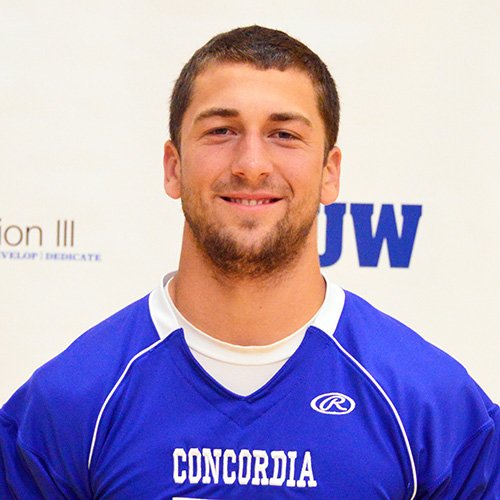
Garrett Wenzelburger

Garrett Wenzelburger

Class of 2015 | Football and Basketball

Wenzelburger was a four-year starter for the CUW football team as wide receiver, during which time he earned first-team all-conference honors in three consecutive seasons (2012-14). During his career, Wenzelburger caught 251 receptions—a program record—totaling 3,169 yards and 38 touchdowns. He set Falcon records for longest pass reception (85 yards in 2012) and single-game receiving yards (239 yards in 2014). He helped the Falcons post a perfect 8-0 record in the Northern Athletic Conference during the 2013 season and was a member of the men’s basketball program for three seasons.


Austin Damaschke

Austin Damaschke

Class of 2015 | Football

As quarterback for the Falcons, Austin Damaschke was named the North Athletic Conference Co-Offensive Player of the year (2014), NACC First-Team selection (2014), Wisconsin Football Coaches Association Private College player of the year (2-13), and NAC Freshman of the Year (2011). In addition, Austin recorded tremendous personal stats and set many individual career program records. Damaschke complete 821 passes for 9,963 passing yards and 85 passing touchdowns, all of which are Concordia football career program records. He also holds a wide range of single-season records, including completion percentage (66% in 2012), passing yards (3,171 in 2013), passing touchdowns (25 in 2012, and total yards (3,844 in 2013).


Luke Doedens

Luke Doedens

Class of 2012 | Basketball

Luke Doedens was a leading contributor to one of the most successful eras in Concordia men’s basketball history. During his two-year tenure at Concordia, the 6-6 guard averaged 15.5 points per game, which ranks second all-time in program history. Doedens was voted NAC Player of the Year for the 2011-12 season and was selected to the Second Team All-NAC following the 2010-11 season. Doedens also ranks second all-time in three-point field goals made in a single game with seven made versus Concordia Chicago and Silver Lake College in 2011. In his two seasons of play, the Falcons achieved an overall record of 44-11, including the first undefeated conference season (16-0) in program history in 2010-11.


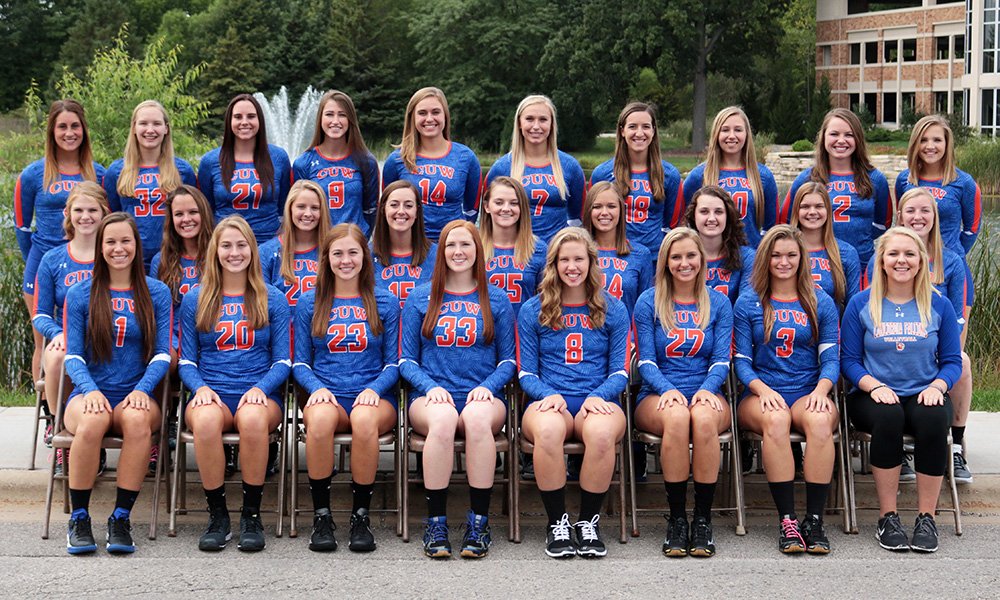
2016 Women’s Volleyball Team

2016 Women's Volleyball Team

The 2016 women’s volleyball team was the first to earn a berth into the NCAA tournament. In 31 matches, the Falcons recorded an undefeated conference record (11-0) and an overall record of 23-8. They finished the season as both NACC regular season and NACC tournament champions. As a result of their terrific season, coach Janelle Katz earned the NACC Coach of the Year title. Six players earned all-conference honors, including three on the First Team All-NACC: Lindsey Casper, Kailey Moegenburg, and Lauren Nevinski. In addition, Karina Klotz earned Second Team All-NACC recognition, and Megan Mayer was voted NACC Freshman of the Year, joining Kendall Stribling on the All-Freshman Team.


Want in?

Being a Concordia Falcon isn’t just about out-scoring competitors in the athletic arena. It’s about developing as an individual, both in and out of the game. To learn more about our wide range of men’s and women’s varsity-level sports, click on the link below.


The Concordia Parking Epidemic


Concordia University Wisconsin students are dealing with a parking epidemic that has been around for almost a decade. With many students comes many cars – and the issue of where to park. After speaking with several students, Concordia appears to be experiencing a parking shortage with no current solution in sight. 

Current CUW students feel strongly about this situation and want a resolution. Senior Matthew Young detailed his email exchanges between campus administrators and campus safety that seem to have left him with more questions than answers.  

“I think the best way to put it without being overdramatic is: hopeless. I’ve sent a few emails to administrators. Rather than just complaining I gave [campus safety] some helpful options,” Young said. “Basically [they] came back and said they sold more parking passes. This year around they didn’t limit it, anybody with 90 credits could get one. Essentially they sold more passes than they have spots to park in. Which I think isn’t a very ethical or a good idea to charge someone $200 on top of tuition so they can have a parking pass that is not very useful.” 

Campus Safety Director Michael Stolte provided statistics on the sale of parking passes. In the academic year of 2021-2022 there were a total of 185 surface level stickers sold with an additional 12 sold in the spring semester. That is compared to this year where a total of 213 surface level stickers have been sold just so far in the fall of 2022.  

But this issue does not just stop with surface level patrons. We spoke to commuters and students with structure parking as well and there seems to be a general consensus. Ruanda Diaz, a junior with a commuter pass, reflected on her parking experience: “There [are] definitely not enough spots. Sometimes I have to drive from one parking lot to another one and I might not find anything. It takes me a long time and I’m trying to park where my class is… but everyday you never know what’s going to happen. You never know if you’re going to find one or not.”  

Abigail Guziewicz, a junior with structure parking, weighed in on the tense topic.  

“It’s not bad but it can be inconvenient because I feel like we do not have enough spots for the amount of students that park here,” Guziewicz said. “With me leaving and coming back everyday after working off campus, I would prefer to have a spot for surface lot but I don’t have enough credits. I wish we could pay extra to reserve a spot in the structure. So first come first serve and you pay more but you would get your own spot.” Many students have come up with their own solutions to the parking problem but are unsure of what to do next. When asked if there is imminent resolution to this issue, Stolte shared that there are no current plans to increase parking but there are some ideas in the works. These ideas include potentially implementing a question on the housing application about parking or creating a waitlist for certain passes.  

With the semester now in full swing, parking tensions appear to be at an all-time high. Although solutions have been presented, there is no immediate answer to the parking crisis. Students can continue to voice their concerns through contacting Campus Safety, the Student Government Association, or Residence Life.


—Emma Druckmiller is a writer for The Beacon, the official student newspaper of Concordia University Wisconsin. She is currently a Junior at CUW. She loves sharing stories and getting people’s voices heard.

This article was originally published on October 18th, 2022.

New Communication leader takes a refreshing position


Tim Macafee, PhD, is the new chair for the Department of Communication at CUWAA.


Not one to step into the spotlight, Tim Macafee, PhD, didn’t dream of becoming an academic leader. He was happy teaching communication courses at Concordia University Wisconsin and Ann Arbor. But in spring 2022 he was shoulder tapped to become the Chair of the Department of Communication. After serious consideration, he accepted. Macafee felt an innate stirring to serve his team in a new way, a team that includes five full-time and a dozen part-time faculty members. This is his first leadership role at CUWAA.

The journey

Macafee is a native of Milwaukee. He was a biology major at UW-Milwaukee but switched to Journalism after he took a “TV and Society” general elective course. He became fascinated with how television could influence people’s worldviews. During his senior year, a professor suggested Macafee enroll in a master’s program.

“His faith in me was inspiring,” Macafee said of his professor.

Macafee continued with his master’s degree at UW-Milwaukee and then pursued a doctoral degree in Mass Communication from UW-Madison. He worked as a journalist for a year and in university communications for another year, bolstering his professional credentials.

Since 2014, Macafee has taught numerous communication and university core courses. Among his favorites is Media Writing, because the small class size is conducive to thoughtful discussion about media’s impact on society. The students work on individualized projects where they must demonstrate mastery of writing for various platforms.

“Traditional-aged college students have grown up with digital technology and whether they realize it or not, influences them in multiple ways. I want to encourage students to think critically about how their digital media use impacts their relationships with family, friends, professionals and government,” Macafee said.

He also likes teaching Interpersonal Communication because students of all majors take the course and bring diverse perspectives to class discussion.

“I think the pandemic outcomes have reestablished the importance of interpersonal connection in higher education. Technology certainly also will remain an important part of what we do, but to suggest everything can be online without potential negative consequence is inaccurate,” he said.

Macafee holds the rank of Associate Professor of Communication, in addition to the Chair position. His research focuses on how using digital media relates to civic engagement.

A “refreshing” set of goals

Macafee started as Chair July 1. In his words, his key goals seek to refresh the department:

  1. Update existing curriculum and add new courses to the Mass Communication major and minor
  2. Build out the alumni network by connecting with graduates to discuss their experiences in the program for continuous learning
  3. Increase awareness of the majors and minors housed within the program, both internally and externally

He knows he has his work cut out for him, considering the challenges in higher education. There is potential negative public perception of the role and impact of higher education, along with rapid advances in teaching modalities. Macafee is working to position the team to adapt to the technology-driven changes and become more information literate.

Macafee also emphasizes the human element in his leadership style. “This leadership role requires more frequent intimate connections with faculty, students and staff. I will need to make sure I approach each situation with flexibility and understanding.”

The after-hours life

In his non-working hours, he enjoys reading, running, and studying politics. He is also an active father of two young children.


Want in?

Concordia offers bachelor’s programs in Mass Communication and Technical & Professional Communication. Minors include Mass Communication, Christian Service Learning & Leadership, and Sports Media.


—This article is written by Sarah Holtan, PhD, special advisor to the president and professor of communication. Holtan teaches communication-related courses in the undergraduate and graduate programs, both face-to-face and online. Prior to teaching, she worked in media as a television news producer.

New scholarship makes a CUW Lutheran ed undergrad degree more affordable than ever


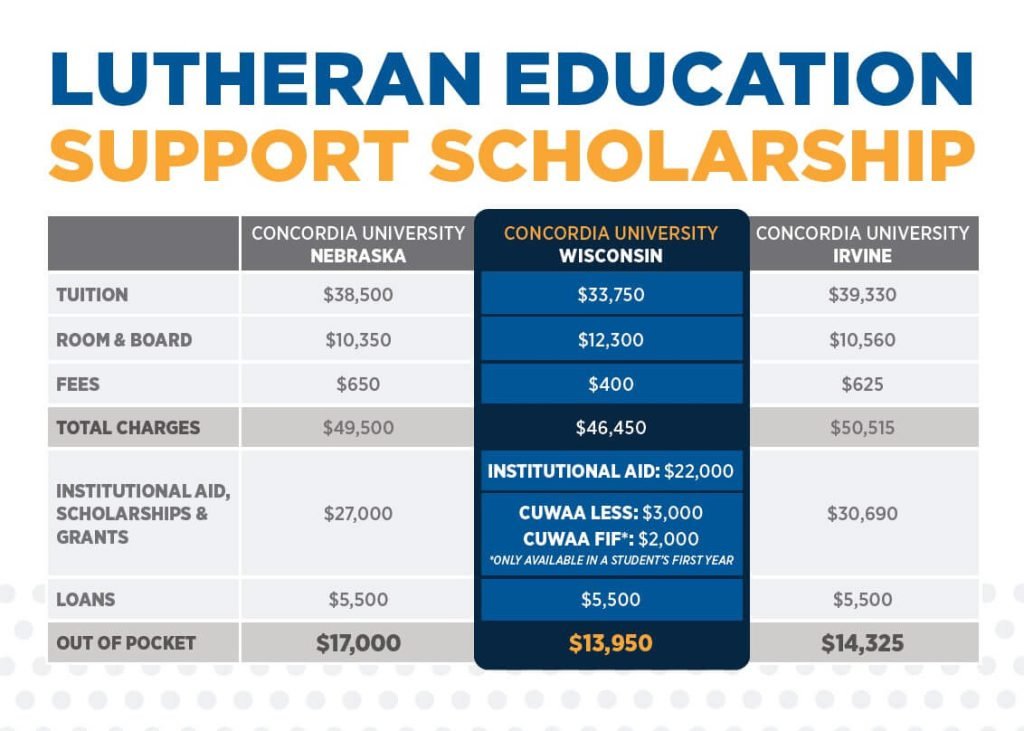
Recognizing the significant need for Lutheran educators, Concordia has debuted the Lutheran Educator Support Scholarship (LESS) for fall 2023.


In honor of Church Work Appreciation Month, Concordia is pleased to announce a new scholarship for Lutheran educators. LESS is a $3,000 renewable scholarship that provides support for traditional undergraduates preparing to be Lutheran teachers. It’s one of two distinct scholarships given to Lutheran Teacher Diploma (LTD) candidates. Concordia also offers the Forward in Faith scholarship, which may be “stacked” on top of the LESS offering.

The new offering now brings the assistance for LTD candidates up to par with Concordia’s financial aid opportunities for pre-seminary candidates. It also makes a CUW undergraduate education degree a more affordable option than peer Concordias in Nebraska and Irvine.

Highest numbers of church work candidates among the Concordias

Already, Concordia’s Wisconsin campus alone trains the most Lutheran teacher candidates for the LCMS, as well as the most church work candidates for the Church.

A comparative fall 2021 enrollment report of CUS schools (the most recent numbers available) shows CUW has:

  • The most undergraduate church work candidates enrolled (222 candidates)
  • The largest pre-seminary program in the CUS (58 candidates)
  • The largest Lutheran Teacher Diploma program (117 candidates)
  • Robust numbers enrolled in its Director of Church Ministries program (40—3 less than the highest DCE enrollment in the System)

Additionally, Concordia University Wisconsin maintains a strong Lutheran-Christian population among students pursuing non-rostered degrees, demonstrating the university’s dedication to preparing workers who will strengthen the Church in all of life’s vocations:

  • 88% of traditional undergraduates are Christian (The second-largest percentage, after CUAA’s 90%, within the CUS)
  • 1,155 of those, or 40%, are Lutheran (The largest number in the CUS and the second-highest percentage in the System)
  • 73% of graduate-level learners are Christian, with 21% of those identifying as Lutheran (The most in the CUS)

Explore our education offerings

Undergraduate

CUW offers more than a dozen bachelor’s programs within its School of Education. Any of these degrees may have the Lutheran Teacher Diploma added to make a candidate eligible to receive a call within the LCMS.

Graduate

CUWAA offers more than 20 graduate education degrees that will help you further your knowledge, experience, and career pursuits. Just a few options include:

  • Master’s in education administration
  • Master’s of Educational Leadership
  • Master’s in student personnel administration in higher education
  • Master’s in Counseling
  • Master’s of Curriculum & Instruction with teacher certification in elementary or secondary education
  • Superintendent Licensure
  • Master of Science in Instructional Leadership
  • Master’s in Literacy
  • Doctorate of Leadership in Innovation & Continuous Improvement

Want in?

Concordia University Wisconsin knows the urgent need for more skilled workers for the Church. The university annually commits a variety of support to students who indicate their desire to pursue church work.


Increasing scholarships to make pharmacy school affordable

There are multiple factors that determine what pharmacy school is the best fit for you. But one of the most important questions asked by prospective pharmacy students is, how can I afford pharmacy school? At Concordia, we can help answer that question.

More scholarship money

Concordia University is increasing the pharmacy school scholarship amount for 1st year (P1) students. We recognize the need to develop more pharmacists, the significant costs of pharmacy school, and that you need more help. Therefore, the Academic Merit Scholarship is now available for up to $14,000 per student in that first year.

About 79% of students in our current P1 class were awarded a Concordia pharmacy school scholarship. But don’t worry awards don’t stop there. We continue to offer scholarships throughout your four years in pharmacy school. For example, starting in the 2nd year (P2), there is $500 to $10,000 available for qualified students.

We are ecstatic about our scholarships and the ability to help students with the monetary investment of attending pharmacy school. Our recruitment and admissions team helps students through the entire college application process, including financial aid.

Kaylan Gaines, Director of Admissions and Recruitment

More opportunities to make pharmacy school affordable

Concordia University has more scholarships and financial aid available to all graduate students. You can discover more ways to make your pharmacy education more affordable.

There’s even more scholarship help out there too. Explore what is being offered by different organizations and foundations. Here are a few to start with as you look at funding your education to become a pharmacist.

More about our pharmacy program

Smaller school

Concordia’s School of Pharmacy has so much to offer. Our smaller-sized gives you more individualized attention to your education and pharmacy career goals.

READ MORE: Hear about the experiences of 2022 graduates.

Flexibility

Our focus is on developing well-rounded, caring pharmacists that will faithfully serve in healthcare. The PharmD program schedules courses, labs, and practice experiences in the fall and spring semesters with breaks in the summer.

Experienced faculty

Not to mention our faculty is dedicated to teaching the next generation of pharmacists. Additionally, faculty continue their own education in order to teach students the most up-to-date practices in pharmacy.

Beautiful location

Our amazing campus is on the shoreline of Lake Michigan in Mequon, Wisconsin. We are the perfect blend of urban and rural. Experience the benefits of city life in Milwaukee or dive into the suburban lifestyle. Most importantly, you will have access to a wide variety of healthcare facilities for your in-person experiences.

Apply to pharmacy school today! Or contact pharmacy admissions for more scholarship info.

Alumni Spotlight: Brooke Essig

At Concordia University, we are proud to offer flexible, accelerated programs for our adult learners. Alumni Brooke Essig shares what her experience in the Bachelor in Accounting program was like.

Tell us about yourself.

I am Brooke Essig, and I am a graduate of CUW. I have an associate degree in accounting from Southwestern Michigan College and a Bachelor of Science in Accounting from Concordia University Wisconsin. I enjoy reading, baking, and cooking, and going to the beach in my free time.

Why did you choose Concordia?

I chose Concordia Wisconsin because of its welcoming atmosphere and ties to the LCMS (Lutheran Church–Missouri Synod). The underground tunnel system was also a plus for me during the cold and snowy winters.

What is your favorite thing about the accounting program?

One of my favorite aspects was the scheduling process at Concordia. The accounting classes I needed to take were offered every year compared to other schools that only offer them every other year. 

Would you recommend this program to others?

All of the professors are extremely kind and helpful and they want you to succeed. Also, all of the professors have great real-world experiences that they bring into the classroom. I felt the program challenged me and prepared me for when I graduated.

Do you feel professors were supportive?

Yes! The professors in the accounting department were extremely supportive. All of the professors I encountered were always extremely friendly and always willing to help. As a transfer student, Professor Stinson and Dr. Brock went out of their way to make sure my class schedules were correct and that my previous school’s classes transferred over correctly.

What do you love about Concordia University?

I love that Concordia puts an emphasis on Christ. I feel that this makes it a very welcoming and supportive environment for all of its students.  

Make the most of your college experience and get involved with different campus organizations.

Brooke Essig

Want to follow Brooke’s path?

Learn more about our accelerated accounting program by visiting us below.