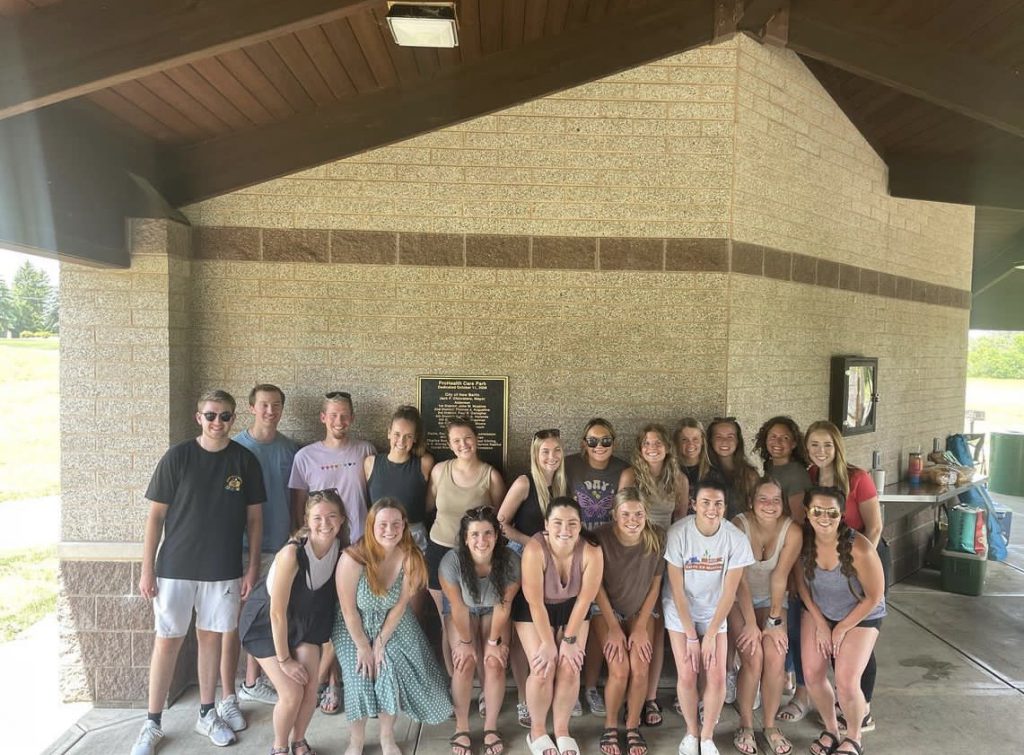
Dr. Don Galster: A Passion for Education, Leadership, and Faith

Through his work, Dr. Galster is preparing the next generation of educators to teach with focus, grace, and purpose.


Dr. Don Galster has dedicated over 30 years to education, working in diverse settings across multiple states. His journey has taken him from public school classrooms to administrative leadership, and now, to a meaningful role at Cross Trainers Academy, a Christian school serving students in Milwaukee and a part of the Milwaukee Rescue Mission. As an adjunct professor at Concordia University, Dr. Galster brings a wealth of experience and wisdom to future educators and aspiring school leaders. His work is deeply shaped by his faith, his belief in the transformative power of education, and his commitment to serving where he is most needed.

Bringing Experience into the Classroom

Dr. Galster teaches ED 1103 – Human Relations for the Educator/Teacher and EDG 6100 – Leadership in Administration and Cultures of Change at Concordia. He particularly enjoys working with non-traditional students in his undergraduate course, many of whom are already employed as teaching assistants.

“I did not have this course in my own teacher preparation program, and I had no knowledge of how to communicate with key parties, including students, colleagues, administrators, and parents. ED 1103 provides this valuable learning, essential to the success of new teachers,” he explains. “It’s also rewarding to help TAs, who already understand the classroom setting, take the final steps toward earning their teaching degree.”

His graduate-level course allows him to mentor aspiring school administrators, many of whom already have experience in education. “I enjoyed being able to share my practical knowledge with these professionals,” he says. “And I even learned a few things about organizational leadership from students coming from healthcare backgrounds!”

From Business to Education: A Calling to Teach and Lead

Dr. Galster initially studied economics and business administration but soon realized his true calling was education. He pursued a master’s degree in curriculum development with secondary education certification and began his career as a high school social studies teacher on the west side of Chicago.

“It was valuable experience, but a rough area. After a few years, I moved to the suburbs and later to Florida, where I enjoyed the beach life,” he recalls. “There, I was encouraged to explore school administration, and after starting a family, the idea of making a greater impact—and earning a better salary—became appealing.”

What initially felt like a reluctant move away from coaching basketball soon became his passion. “I realized it was the leadership aspect that motivated me—the ability to create and facilitate improvement and change in an entire school rather than just in my own classroom. I became a leadership-theory junkie, and that’s been my path ever since.”

After earning a specialist’s degree in school administration, principal certification, and eventually a PhD and superintendent’s license, Dr. Galster served in various educational leadership roles before moving back to the Midwest.

Finding Purpose at Cross Trainers Academy

Nine years ago, Dr. Galster experienced a deepening of his faith and a shift in his career path. “Through God’s guidance, I moved from 25 years in public education to Christian education. I transitioned from the highest-performing schools in Wisconsin to some of the lowest. I prayed for God to lead me where I was needed, and He led me to Cross Trainers Academy.”

The transition was humbling. “I had to admit that all of those suburban districts I worked in would have done just fine with or without me. But going somewhere where people feel achieving success is almost impossible—that’s where I am meant to be. I am exhausted by the challenges, but I am more motivated by challenge than anything else.”

Dr. Galster sees the impact of his work daily. “Many of our students come from trauma-filled backgrounds. Some don’t have any role models at home, and many parents are incarcerated. Schools become social workers, teachers, and providers of basic needs. If there’s still time and space, there can even be schooling.”

But the rewards are immeasurable. “The most meaningful moments are watching seniors graduate because I know how hard their journey has been. I love when they finally ‘get’ why I have high expectations. And when students come to faith in Jesus Christ, the change is something only God can bring about.”

The Realities and Rewards of Urban Education

Dr. Galster is a strong advocate for educators considering careers in urban education. “It is the best place to learn. Educators who gain strong experience in an urban setting can succeed anywhere. The same cannot be said for those who start in suburban schools.”

But he is also honest about the challenges. “It’s a marathon, not a sprint. It’s not for everyone, and many walk away. But there is nothing more genuine than helping a child in an urban setting succeed when so many obstacles exist in their path. In an urban school, when a child succeeds, you know you played a part.”

Faith in Action: A Christ-Centered Approach to Leadership

Dr. Galster’s faith is central to his work as both an educator and administrator. “Before my faith journey became real, I existed as two separate people—a neutral professional at work and a Christian believer outside of work. It dawned on me that if I could apply the strength and wisdom of my Christian faith to being a school leader, the result would be powerful. That’s when I left public education for private Christian education. My work is now a ministry, not just a job.”

This perspective has reshaped his leadership style. “As a Christian leader, I still maintain high standards, but I lead with more gentleness, grace, and forgiveness. Helping struggling students succeed through love does not mean we are weak—it means we are strong, resilient, and determined.”

A Lasting Impact on Education

Dr. Galster’s work at Concordia is an extension of his ministry. “Every time I am asked to teach a course at Concordia, I am thrilled. Seeing students improve based on my feedback, hearing how they’ve landed new jobs, and receiving their thank-you notes at the end of a term—it all reinforces why I do this.”

Through his leadership at Cross Trainers Academy and his teaching at Concordia, Dr. Galster continues to shape the next generation of educators and administrators, equipping them with the knowledge, skills, and faith to transform lives.


Want in?

Concordia University Wisconsin is a Lutheran higher education community committed to helping students develop in mind, body, and spirit for service to Christ in the Church and the world. Our Education programs focus on optimizing your abilities to serve students, schools, and the community through education. We develop well-rounded educational professionals that can teach and lead in rural and urban communities. With a Christian-centered focus, relevant curriculum, and engaging faculty you can play a meaningful role in the world of education.


Dr. Adam Paape is assistant dean of the School of Education at Concordia University Wisconsin.
A Legacy of School Spirit and Friendly Competition Mark CUW’s Last Annual CIT


This weekend, the 72nd annual Concordia Invitational Tournament (CIT) will bring Concordia universities from across the country to Concordia University Ann Arbor for one of the most storied basketball events in collegiate athletics. With a rich history spanning over seven decades, CIT is a celebration of tradition, fierce competition, and school spirit. 

The action kicks off on Friday, January 24th, with an exciting women’s basketball matchup between Concordia University Nebraska (CUNE) and Concordia University Chicago (CUC), marking the start of a weekend filled with high-stakes games. While CIT began in 1951 as a men’s basketball competition, the women’s teams joined in 1973, followed by cheer and dance competitions, expanding the tournament into a multi-faceted celebration of athleticism and school pride.  

As one of the longest-running collegiate tournaments in the country, CIT holds a special place in the hearts of players, coaches, and fans. It’s not just about the competition; it’s about the sense of community and legacy shared among the Concordia universities. Over the years, CIT has become known for its fierce rivalries and unforgettable moments.  

Currently, Concordia University Chicago (CUC) holds the most CIT titles, with 30 men’s and 32 women’s championships. In 2024, when Concordia University Wisconsin (CUW) hosted, CUC’s teams both defeated CUW, adding to their legendary status. With this year’s tournament approaching, the anticipation is high as teams, athletes, and fans gear up for another thrilling competition, with many hoping CUW will dethrone the reigning champions and claim the CIT titles this time around.  

If you managed to grab a ticket, hopefully the intensity of the competition will help warm up the chilly Michigan weather this weekend. Enjoy the action, and safe travels to all!  


—Alexandra Princeton is the social media manager and marketing designer for The Beacon. She is a sophomore mass communications major with a minor in marketing. 

Get to know Concordia’s new Pre-Seminary Director

A Concordia alumnus, Rev. Dr. Josh LaFeve brings a wealth of experience and a deep devotion to Christ to his new role at Concordia.


Concordia University Wisconsin is pleased to welcome a new Pre-Seminary Director this academic year. In his new role, Rev. Dr. Josh LaFeve is responsible for recruiting future pre-seminary candidates and nurturing the individuals who are currently enrolled at CUW and on track to further their studies at one of The Lutheran Church-Missouri Synod’s two seminaries.

CUW has long held the honor of enrolling more pre-seminary students than any other school in the Concordia University System. Here’s your chance to meet the new man who will continue to shepherd this vital group of future church leaders.

Get to know Pastor LaFeve

What is your background? 

I am from Lansing, Michigan. I have been married to my wife, Talitha, for over 15 years and have three
children: Eliana (10), Noah (7), and Daniel (5). Prior to accepting the Divine Call to serve as Assistant
Professor of Theology and Director of Pre-Seminary Studies at CUW, I served as a parish pastor for over
thirteen years, four on the west coast of California, and over nine on the west coast of Michigan, on
Lake Michigan.

I have a B.A. from Concordia University Ann Arbor (2005) with a major in religious studies and a minor
in history and political science. I earned my MDiv (2010) and STM (2017) from Concordia Seminary,
St. Louis. In 2021, I earned a doctorate from Duke University in the area of leadership theory and biblical
studies. My research interests include the New Testament Pauline Epistles, the engagement of Pauline
theology with 21st Century American cultural narratives, and the integration of leadership theory with
ministry in local Christian parishes.

What inspired you to pursue the role of pre-seminary director at CUW? 

Above all else, a love for the Church and the Pastoral Ministry. Having served as a parish pastor for over thirteen years, I enjoy preaching and teaching the gospel of Jesus Christ, and I am drawn to the opportunity, with the help of the Holy Spirit, to cultivate that enjoyment and love in the Church’s future pastors and deaconesses.

What are your primary goals for the program? 

I would like to see a vibrant, thriving Pre-Seminary Program that consists of many students engaged in
rigorous theological training and language study, and who model a Christ-like life of service, excellence,
and truth-telling in mind, body, and spirit. I envision this taking shape through relationships with faculty
in the classroom as students pursue academic excellence. I also envision this kind of formation
happening in relationships with staff and fellow students outside of the classroom, in chapel, through
service in various clubs, and during bi-monthly Pre-Seminary Student Association (PSSA) meetings.

What are you most excited about as you begin this new role? 

I am most excited about serving the students and being a part of this university. As a graduate of a
Concordia University System school, I know what kind of impact a place like this can have on a student’s
faith and life. So, I am looking forward to teaching students the Word of God and faithful Christian
doctrine in the classroom. I am also excited about getting to know students in the pre-seminary program
both in and outside of classroom settings and worshipping with them in chapel.

How do you plan to collaborate with other departments to enhance the pre-seminary program? 

The study of theology intersects so deeply with many other disciplines. I then look forward to
discovering ways that pre-seminary students can engage with other disciplines. For instance, the
integration of theology and medicine is a fruitful area to consider for collaboration. I also like the idea of
exploring how one’s faith in Christ and primary vocation as a baptized child of God impacts other
vocations that God gives to us. To this end, it could be valuable to invite faculty of other departments to
speak at Pre-Seminary Student Association meetings.

What can a student expect to get out of this program? 

A student in the Pre-Seminary Program at CUW can expect primarily three things: 1. Exceptional
development in the theological languages of Greek, Hebrew, and Latin. 2. Faithful study of the Bible with
solid biblical exegesis. 3. Sound biblical doctrine. A pre-seminary student will learn what confessional
Lutherans believe and he will be prepared to confess this truth with courage and love in the world.

As students prepare to exit the program, do you or other faculty help them decide which seminary will fit them best? 

I have had many meetings with the pre-seminary students in my first two weeks on campus. In those
meetings, especially with the seniors, we discuss seminary plans. My approach is always to ask the
question and then try to listen deeply and guide as appropriate. Having studied at both seminaries—
Concordia Seminary, St. Louis and Concordia Theological Seminary, Fort Wayne—for various lengths of
time, I feel that I can speak highly of both from personal experience and help the students weigh the
pros and cons for their specific life situation.

What is your favorite area within theology? 

I enjoy studying the Bible and opening up the Scriptures for others through solid biblical exegesis and a
close reading of the biblical text. Specific research and teaching interests include the New Testament
Pauline epistles, especially St. Paul’s letter to the Romans. I also enjoy engaging Pauline theology with
21st Century American cultural narratives.

What is one fun fact about you? 

I like playing ultimate frisbee with college students.


Want in?

If you feel the Lord is calling you to serve as a pastor, we would encourage you to schedule a visit at CUW. In March, the university will host a Vocation Visit Day. This special visit day is designed for students who are enthusiastic about exploring CUW’s programs in education, music, theology and pre-seminary studies, with a special focus on serving the Church. The visit provides an all-inclusive look into student life, including a look at Concordia’s campus ministries. Please expect to be on campus for five hours.  


CUW Alum steps into role of interim director of WLI

The interim director of the Women’s Leadership Institute shares thoughts on service through Christ and the future of WLI.


Katherine Pietrantonio believes every woman has the capacity to be a leader and a role model, no matter the titles she may or may not hold in life. Through an understanding of Christian vocation, all people are called by Christ to make the most of every opportunity He places in front of them.

“Leadership doesn’t have to look like anything in particular,” says Pietrantonio. “It can be a mother at home or in a work setting, in the community or within the church. We’re all serving in our own spheres in the way that God has called us to. We don’t need to be anything bigger or less than where we are right now.”

Pietrantonio is putting this philosophy into action as Interim Director of the Women’s Leadership Institute. WLI is a servant institute of Concordia University Wisconsin. She succeeds Darcy Paape, who served as director since 2014 before she accepted a call this past spring to serve as Youth Director at First Immanuel Lutheran Church and School in Cedarburg, WI.

Pietrantonio is a two-time CUW alumna. She earned a bachelor’s degree in management and a Master of Business Administration in nonprofit management in 2022. This year, she adds the interim director duties to her role as library assistant at Concordia. She began working in Concordia’s Rincker Memorial Library following her graduation. During this time, her husband, James, earned his PharmD from CUW’s School of Pharmacy.

What is the Women’s Leadership Institute?

Designed to serve the laity of the church, the Women’s Leadership Institute exists to educate, encourage, and embolden Christian women for exemplary leadership. The institute, which was founded in 2003, is one of several servant institutes at Concordia that serve as an arm of university operations but maintain their own operating boards and mission objectives. WLI’s vision is to be a growing community of confident and competent Christian women leaders who “shine brightly in the dark” and influence others towards godly excellence.

Through efforts such as an awards program, guest speakers, and the institute’s hallmark mentoring program, WLI serves predominantly two audiences: students of Concordia University Wisconsin and Christian women within the community and church at large.

Leadership through Christ

In her own life, Pietrantonio is leading in many ways. A mother to 1-year-old James, she balances her roles as a wife and mom with her responsibilities at Concordia. Pietrantonio says the interim director position will add some busyness to her life, but she’s up for the challenge. 

“I’m very good at coming in, assessing where things are at, and identifying where we need to go in the future,” she says. “Plus, the professors I learned from are now people I’m working alongside, which is really exciting.”

WLI in the next year

Foundationally, the institute remains centered in conversation, mentoring, and women connecting with women, but Pietrantonio’s contributions will add a new flavor to the mission.

Many of the same programs and events of WLI will continue through the next year, including the Women of Influence Award dinner and student awards in the fall. The Growing Together mentoring program will also continue, this year in partnership with the newly formed CMLT group EmpowHer.

In partnership with EmpowHer, WLI will implements its transformative Growing Together program to match Christian women in the community with CUW students on campus. These pairings will meet throughout the year for engaging and meaningful conversation.

“Concordia does a fantastic job at providing opportunities for peer leadership experiences, and then you obviously have the classroom dynamic where students are receiving teaching and guidance from professors in a group setting,” Pietrantonio explains. “The one-on-one conversation and guidance that a mentor can provide is so valuable too, and that’s what EmpowHer seeks to cultivate.”

WLI is seeking women who would be willing to mentor a CUW student as part of the EmpowHer program. Applications for the program at due Sept. 4. Click here to learn more and to sign up to become a mentor.

Want in?

Other events are in the works for the 2024-25 academic year. Be sure to watch CUW’s upcoming events page for the latest WLI events, or check out the Women’s Leadership Institute website.


Concordia’s Post-Traditional Programs Assist Students Who Are Set Apart to Serve!

Whether it be in social work or seminary, Concordia has a path for you.


Familiar ads for Concordia University Wisconsin mention that each of us is created to have an uncommon impact in a common world.  That’s the mission of Concordia – to prepare students, all students, to use their gifts in the service of others.  This includes post-traditional students in online undergraduate and graduate programs. Students who have recognized the call to serve later in life or after disruptions to their academic pursuits.  Concordia’s post-traditional programs have grown to allow these students to pursue service-minded degrees and careers that will allow them to serve in a variety of ways.

For many, this includes serving in Lutheran churches and schools. Others are led to serve in public schools or other private and Christian schools, non-profit ministries, and various social programs.

Dr. Aaron Moldenhauer, Concordia’s Vice-President for Mission, Identity, and Church Relations is intimately familiar with the ongoing importance for Concordia to help students prepare for careers in the Lutheran Church, but also in other Christian settings:

“Concordia offers flexible options for students seeking to serve the church in various offices. For men considering Seminary, we offer programs such as Theological Studies online. This allows students to complete a degree without moving. It also prepares them for the Seminary after completion of a bachelors or associates degree. Other online programs also create a path to serving in rostered church offices, such as Lutheran Education or Director of Church Ministries. These programs are part of Concordia’s commitment to preparing church work students for service in Christ’s church.”

Concordia’s Online Post-Traditional programs allow students to earn degrees related to serving the community while meeting current obligations.  Designed with flexibility in mind, students can develop an individual path to completion.  Concordia University continues to lead the way with unique online programs not offered by many institutions.

Theological Studies

The worldwide Church looks to support pastors and professional Church workers. Concordia offers scripture-based Theological Studies degrees that can help qualify students for seminary studies:

Theological Studies – Accelerated BA

Theological Studies – AA

Rev. Jesse Kueker, an admissions counselor for Concordia Seminary St. Louis states:

“The seminary encourages men to look at our outstanding Concordia University System. When a man is unable to relocate for his undergraduate degree, there are online programs available through Concordia University that have helped many take the next step toward pastoral ministry! May the Lord bless all those in these programs and all those considering enrolling in them. The church needs pastors. Please continue to pray to the Lord of the harvest to send laborers into His harvest fields.”

Concordia Wisconsin also offers a unique program for the Director of Church Ministry. It allows adult students to use previous college degrees to earn LCMS credentials.  Few professional church commissions can be earned completely through online coursework. This opportunity allows students to earn the certificate while working a full-time job in another field.

Director of Church Ministry Certificate

Christian Education

Concordia offers a variety of teacher licensing programs at both the undergraduate and graduate level through its post-traditional online programs.  Students volunteering or assisting in classrooms can earn Wisconsin state teaching licenses necessary to teach in public schools. They can also earn Lutheran Teacher Diplomas or Christian Teacher Certificates. 

Dr. Adam Paape, the program director for CUW’s Accelerated Teacher programs, has seen tremendous growth in these flexible programs. They provide new pathways for post-traditional students looking to build personal ministry through impacting young people:

“Our online teacher programs lead to Wisconsin State teaching licenses, but can also provide the pathway for Lutheran teachers to earn credentials for LCMS schools, as well as other Christian schools.  CUW students can take a uniquely Christian perspective into their ministry as teachers through a program offered by very few institutions.”

And for those that are unable to complete these additional courses, upon beginning work in an LCMS school, some may earn credentials through the LCMS online colloquy program called CUE.net.

For more information see all of the potential graduate and undergraduate options for new and current educators in Education Pathways

Social Work

Other students hear the call to simply serve others, both through church-related organizations, and also in the public sector through both undergraduate and graduate programs in Social Work.

https://www.cuw.edu/academics/programs/social-work-bachelors/index.html

https://www.cuw.edu/academics/programs/social-work-masters/index.html

As Nichole Ostrowski, Assistant Professor for Social Work and the Field Coordinator for internships relates:

“Our Christian social workers work in a variety of settings. They work in every facet of community life, including churches, schools, hospitals, senior centers, child welfare, food banks, and in numerous public and private agencies.  These individuals serve vulnerable populations and meet societal needs.  They combine their social work education and the love of Christ to positively impact communities and individuals.”

Are you hearing God’s call to serve others?  Consider the Post-Traditional options for degrees to pursue professional opportunities to impact the world around you!  Concordia University Wisconsin’s mission is to help you do that!


Want in?

CUW’s Online classes are offered year-round, with students beginning courses in two eight-week mini-terms during the Spring, Summer, and Fall for most programs.  Take action and connect with Concordia University’s admission team by visiting CUW Accelerated Admissions for undergraduate degrees and  Graduate Admissions or calling 262-243-4300.


Empowering faith-based leadership: The Siebert Lutheran Foundation grant at Concordia University Wisconsin

A new grant extended to Concordia University seeks to equip and train Lutheran pastors and administrators with business skills.


In the ever-evolving landscape of faith-based organizations, effective leadership and business acumen are essential for sustainability and growth. Recognizing this need, the Siebert Lutheran Foundation generously awarded a grant to Concordia University Wisconsin (CUW). The grant provided 25 Lutheran pastors/administrators with scholarships to participate in the Business Skills for Faith-Based Organizations professional development program. This initiative has proven to be a transformative experience for many, equipping them with skills to enhance their ministry’s operational and strategic capabilities.

The Program: A Bridge Between Faith and Business

The Business Skills for Faith-Based Organizations program at CUW is designed to address the unique challenges faced by faith communities. The program covers topics including financial management, strategic planning, social media communication, and employee engagement. Each is tailored to the context of faith-based organizations. This holistic approach ensures participants gain practical business skills and learn to apply them in alignment with their ministry’s mission and values.

Testimonials: Voices of Transformation

The impact of the Siebert Lutheran Foundation Grant is best understood through the experiences of the pastors/administrators who have benefited from it. Here are some heartfelt testimonials from program participants:

“I’m so thankful for the opportunity to complete the Business Skills for Faith-Based Organizations. Thanks to the generosity of the Siebert Lutheran Foundation. I would not have been able to afford a program like this, nor would my congregation have been able to budget for the expense. The award from the Siebert Lutheran Foundation allowed me to collaborate with leaders who, although from different denominations, face similar challenges in church operations.”

“The Business Skills for Faith-Based Organizations program has helped open my eyes to new ways of engaging in ministry methodically and planning for the future more effectively. I’m really grateful to Siebert for providing the funding for this study.”

“…I’d advocate that these courses should be mandatory for anyone with aspirations for leading ministry. It reminds me of Moses’ father-in-law Jethro telling Moses that his organizational skills were ‘not good’ (Ex. 18:17) for administrating Israel. God’s people often need help in organizing, and these courses assist in the direction of healthier organizations. They’ve been a blessing to me and would be to anyone considering ministry.”

“I am grateful for the opportunity to have participated in this program. It was uniquely crafted for pastors serving in 21st-century ministry. I’ve served as a church and school administrator, and finding resources that help develop administrative and leadership abilities in a ministry context is challenging. This program was financially accessible, time-efficient, and ministry-focused. We implemented several projects immediately, such as an Employee Engagement Plan, and a Social Media and Online Communication plan. They have significantly benefited our ministry. The finance classes helped me create specific action items. The capstone project provided a structured action plan for significant projects like transitioning to new Church Management Software and advancing our Mission Vision Objective process. The interaction with other pastors was invaluable, and I thank the Siebert Lutheran Foundation for this opportunity. It has been a blessing to my congregation and me.”

A Brighter Future for Faith-Based Organizations

The Siebert Lutheran Foundation Grant has made a profound impact on pastors/administrators by providing crucial business skills tailored to their unique needs. The knowledge and insights gained from the Business Skills for Faith-Based Organizations program empower faith leaders to manage their churches more effectively.

“We are grateful to the Siebert Lutheran Foundation in awarding Concordia University this grant. We look forward to a continued relationship with them,” said Sarah Pecor, Director of Continuing Education Studies at CUW. “With continued support, reach and impact will undoubtedly expand, benefiting more pastors and congregations.”

This initiative exemplifies how targeted educational professional development programs can create lasting positive change in faith-based communities.


Want in?

For more information about the Business Skills for Faith-Based Organizations program, please visit CUW Business Skills for Faith-Based Organization Program


Students Respond to CUWAA Financial News

On Tuesday, February 13th President Ankerburg sent an email out to Concordia students detailing news of the university’s recently conducted financial health report. This report detailed some “fiscal issues” impacting Mequon and Ann Arbor, and the resulting news caused panic and anxiety on both campuses. One statement that caused panic noted that the Ann Arbor campus would need to be “reimagined” as soon as this coming fall. It was also explained that action would need to be taken on the Mequon campus, but no further details were given. 

The vagueness of the email along with the ominous nature of undisclosed “financial issues” put students and staff alike in a state of anxiety. Lack of details in the original email allowed rumors to run rampant within the campus community. Meanwhile faculty and administration were trying to quickly and effectively reassure students that their education was still the highest priority. Soon after the email was sent out, another email announced a town hall meeting that would be given for students to provide more details about Concordia’s future and financial situation. This didn’t stop the rumors from spreading and people from worrying about the university’s future, but it did give students hope that answers to their questions were coming soon. 

Thoughts From Current Students

I had the opportunity to reach out to a few students and ask for their thoughts on the situation and how they believe the administration dealt with the issue. Kathryn Sitas, a junior nursing student, shared her initial thoughts on the situation: “At first I didn’t think much of it because every business operation goes through some struggles. However when I learned that there were rumors Ann Arbor might be closing I started to become more concerned. I didn’t think it could ever be possible for our school to be in such a panic. I love this school and I care for the wellbeing of everyone here.” That seemed to be the common narrative among students across campus, since there wasn’t enough distinction between the fates of the two campuses in the first email that was sent. Another student who gave his thoughts on the initial email was student athlete, Andrew Elmhorst: “I was worried because I didn’t know at all if the situation was bad and if we were about to go under or if it was just precautionary measures in place. So I definitely was worried if I could continue my education here or not. “

A week after the original email was sent out, President Ankerberg and fellow administrators held a town hall to give details about the situation and to allow students to ask any questions they had about the future of CUWAA. The town hall was well-attended and President Ankerberg had a presentation prepared to share more in-depth information about the university’s financial situation. After the meeting, the Board of Regents met to determine what action needed to be taken to ensure that both universities could continue to function to the best of their ability. Students were reassured that they would be able to finish their education and graduate as planned despite any changes that would take place. 

I asked both Kathryn and Andrew how they felt the administration and faculty handled the news of the situation and the time that followed. Kathryn said: “I feel that the original email sent out to students and staff was poorly written and its expectations were not clear. A lot of feelings were misled and hurt. I think administration realized quickly though that they needed to answer all the looming questions and put to rest some very valid concerns. The town hall meeting that President Ankerberg led was helpful in this matter and I think a lot of students appreciated the honesty. As of now, I believe that the Board of Regents has some difficult decisions to make but we also have to trust that God is watching over this entire situation and He is in control. ”Andrew also felt that the town hall meeting was helpful in answering student questions, saying, “I feel like the administration has done a good job at handling the issue. The new president has identified a problem and taken action to counteract that for future preservation. Also holding a town hall meeting to inform the students was a good way to make students more informed.”

Thoughts for the Future

The university has some tough decisions to make moving forward, but it is comforting to know we have an administration that is taking action. Junior Lydia Parish had some great thoughts about Concordia’s financial situation moving forward: “We have to trust that God has put leaders into their place at the right time to do what He wills. This situation is so hard, and no sinful human will be able to handle it perfectly, but they are trying to do what is best. It’s important to remember that we are putting our faith in our wonderful and loving Creator, and not just in the leaders of this institute and synod. I believe the best thing we can do is pray for all those involved and stand behind them united to fight for both schools.”


—Grace Velzke is a Blog Manager and Writer for The Beacon. She is a junior graduating in December of 2024 with a Mass Communication major and a Business Communication minor.

A Typical Week as a Echocardiograph Student

Senior, Kylee Barrett, tells us what its like being an Echocardiography student


As a sonography student, I start early most mornings, usually with coffee. From there, I head to either class or a clinical site. As a senior student, our clinics are three days a week, usually Monday, Wednesday, and Friday. Clinical consists of eight-hour days at various Southeast Wisconsin locations, where I practice my skills and apply the knowledge I learn in class. The Aurora St. Luke’s Medical Center, School of Diagnostic Sonography, is where didactic courses and clinical rotations occur. Clinical rotations are a month long and dedicated to a specific area of echocardiography, for example: cardiac stress testing, structural heart disease, and interventional cardiology. I visit a new hospital or clinic within the Advocate Aurora system each month and practice echocardiography or vascular sonography. These rotations allow me to see a wide variety of different scanning techniques and patient populations. Clinical experience is the most crucial part of sonographer education, enabling you to understand different anatomical features and pathologies further.

Aurora, St. Luke’s Medical Center School of Diagnostic Medical Sonography class of 2024 at summer picnic

The other two days of the week are lecture and scan lab days. I either have one class and a scan lab or two classes. These days are typically shorter and sometimes have independent study opportunities. During Independent study, professors are generally available to help with practice scanning. Practice scanning is done with another classmate in our scan labs. Our classmates work together developing study material and projects such as case studies and practical scanning techniques. Usually, my days end with studying, working out, or having dinner with friends. Overall, my time at Aurora St. Luke’s Medical Center, School of Diagnostic Sonography, has given me fantastic opportunities to learn the world of echocardiography and vascular sonography and prepared me to be a real-world sonographer.


The Cardiac Sonography program at Concordia University works with Aurora St. Lukes to provide the best educational model for those pursing cardiac sonography. This partnership allows students to get extensive clinical experience, as well as in-class learning opportunities.


Want in?

The Department of Imaging at Concordia University Wisconsin encompasses two bachelor’s degree programs.

The Bachelor of Science in Diagnostic Medical Sonography (DMS) offers three distinct pathways to prepare learners to step forward into their calling as a medical sonographer: the undergraduate DMS certificate, in-person bachelor’s degree, or an online sonography completion program.

Meanwhile, the Bachelor of Science in Radiologic Technology, or rad tech program, is a two-plus-two offering. Students spend the first two years on the Concordia campus taking prerequisite classes before applying for placement into one of our JRCERT-accredited partner rad tech programs. The second two years are within the professional phase of the major and will consist of didactic and clinical coursework.

Learn more by clicking on the links below.


—Kylee Barrett is a student majoring in Echocardiography through Concordia University Wisconsin. She is currently a senior, graduating in May 2024.

NLSW: Jonah Jurss


Meet Jonah Jurss (’25) from Sheboygan Lutheran, majoring in Rehabilitation Science – Pre Physical Therapy Accelerated.


Why should someone from Sheboygan Lutheran consider CUW?

Someone from Lutheran Hish should consider CUW because it is a great place to continue their faith walk as they earn their college degree. Everything normally thought about of a college like good programs, more freedom, and a bunch of fun are all at Concordia, but there is still the familiar small class sizes and faith integration.

How did Sheboygan Lutheran prepare you for life after high school?

Lutheran High did a great job getting me ready for college. As an accelerated Pre-Physical therapy major I especially appreciate how Lutheran High got me ready for difficult science classes. I am still challenged in every class to study harder and learn more, but Lutheran High helped me develop good study habits and a stick with it attitude.

What has been the impact of a Lutheran education in your life?

I have gone to a Lutheran school ever since I was in 3K. Therefore, Lutheran education is very important to me, and I am so thankful for how blessed I am. Lutheran education has helped me develop in my faith life tremendously. I have enjoyed religion classes at Concordia, daily chapel, and a prayer before class. All these experiences are unique to Lutheran education and have set me up for success and built a solid foundation of faith for the rest of my life.

What is the most underrated element of CUW?

The most underrated thing about Concordia is how fun it is. A lot of people think that it is not cool to go to a small private college in Mequon, Wisconsin. However, I have had a full college experience at Concordia and I have had a lot of fun and met a lot of new friends here.

What is your favorite spot on campus?

I really enjoy the bluff because the lake is so beautiful here.

What drew you to Concordia?

The small class sizes, great educational programs, the opportunity to play sports, and the faith aspect all drew me to Concordia.

What has been your favorite class here at CUW and why?

My favorite class at Concordia has been Advanced Anatomy because it gives me a chance to go into the cadaver lab as an undergraduate student to learn more about the human body. This is very rare to see in any college and is a great opportunity to learn about cadavers before graduate school.


Want in?

Embark on your journey towards a career in occupational or physical therapy with the Bachelor of Science in Rehabilitation Science (BSRS) degree, serving as the initial step. The BSRS Accelerated Program provides a targeted education, aligning with prerequisites for entry into our Master of Occupational Therapy (MOT), Occupational Therapy Doctorate entry-level (OTDe), or Doctor of Physical Therapy (DPT) Program. This program equips you with the essential skills and knowledge necessary for a seamless transition from undergraduate to graduate studies at CUW.


NLSW: Luke Witte


Meet Luke Witte (’27) from Lutheran Westland, majoring in Computer Science.


Why should someone from Lutheran Westland consider CUW?

They have some of the best people you will ever meet. Everyone is always very welcoming. There are also so many things to do outside of class, you’ll never feel bored.

How did Lutheran Westland prepare you for life after high school?

Most importantly, it gave me a Christian background that will stay with me the rest of my life. It also prepared me for the classes here. The teachers I had at Lutheran Westland pushed me in their classes and when I came CUW, the classes did not feel as difficult as they could have.

What has been the impact of a Lutheran education in your life?

I’ve gone to Lutheran schools for all my life. I’ve always enjoyed being surrounded by friends that for the most part, share my exact beliefs or very similar. They help me to think about what it means to be always Lutheran in my life, especially here at college when its easy to lose yourself in your regular school life and sports.

Have there been any teachers and or professors who have made an impact on you?

Yes. During high school, I had a teacher for Chemistry, AP Calc, Physics, and Programming named Mr. Montney. His programming class was one of the biggest reasons I decided to go into computer science. Not to mention, he was an amazing teacher, and model to look up to for me and many of my fellow classmates. He had a huge impact on all our lives and had a way of making arguably some of the hardest classes in high school much more enjoyable.

What is the most underrated element of CUW?

I would say the many clubs that they have here may be the most underrated part. Coming into college, I had no idea how many and what clubs they might have. I didn’t think I would find one I enjoyed, but I ended up finding a spot in a few of them. I joined the Ultimate Frisbee club team and they were the best group of people I have ever met and they helped me tremendously in adjusting to coming to college. Going to play frisbee with them was like an escape from school and track stress. I also joined the Computer Science club which meets every week to help younger students with their homework, and the Hackathon club which puts on coding events every semester with the aim of making fun competition and teaching out of coding.

What is your favorite spot on campus?

My favorite spot on the CUW campus would have to be the computer science lounge. Its been getting new furniture and renovations since I got here and it just keeps getting better and better. It’s a nice place to just sit down and work on homework. It feels like a technologically heavy place and to me it’s a good feeling to have going into computer science.

What drew you to Concordia?

I was drawn to Concordia Wisconsin first by their Lutheran education and environment. Secondly, their department of computer science is the best that I’ve seen in any of Concordia’s. The staff of professors they have in the department are amazing and so knowledgeable within each of their concentrations. The concentrations of computer science themselves that each new freshman gets to pick from also really helped me to decide to come here.

What has been your favorite class here at CUW and why?

My favorite class here so far was my Coding 1 class that I took for the first semester with Dr. Litman. Even when I didn’t understand how to code some of my assignments, Dr. Litman was understanding of that and always helped us to understand after the assignment was turned in. Despite the confusion, I always found the assignments to be fun to code too.


Want in?

Concordia’s computer science degree integrates liberal arts with technical training, offering a comprehensive approach to the dynamic field. Emphasizing problem-solving through technology, the program equips you to create and manage innovative solutions in the ever-evolving tech landscape. With five diverse concentrations and flexible electives, you can tailor your education to match your interests. The curriculum covers hardware, software, databases, coding, and user interfaces, providing a solid foundation through Concordia Core and Technology Core. After completing core courses, you have the flexibility to specialize in specific areas or explore additional fields, ensuring a well-rounded bachelor’s in computer science degree.