Alumni Showcase: Karina Rauenhorst

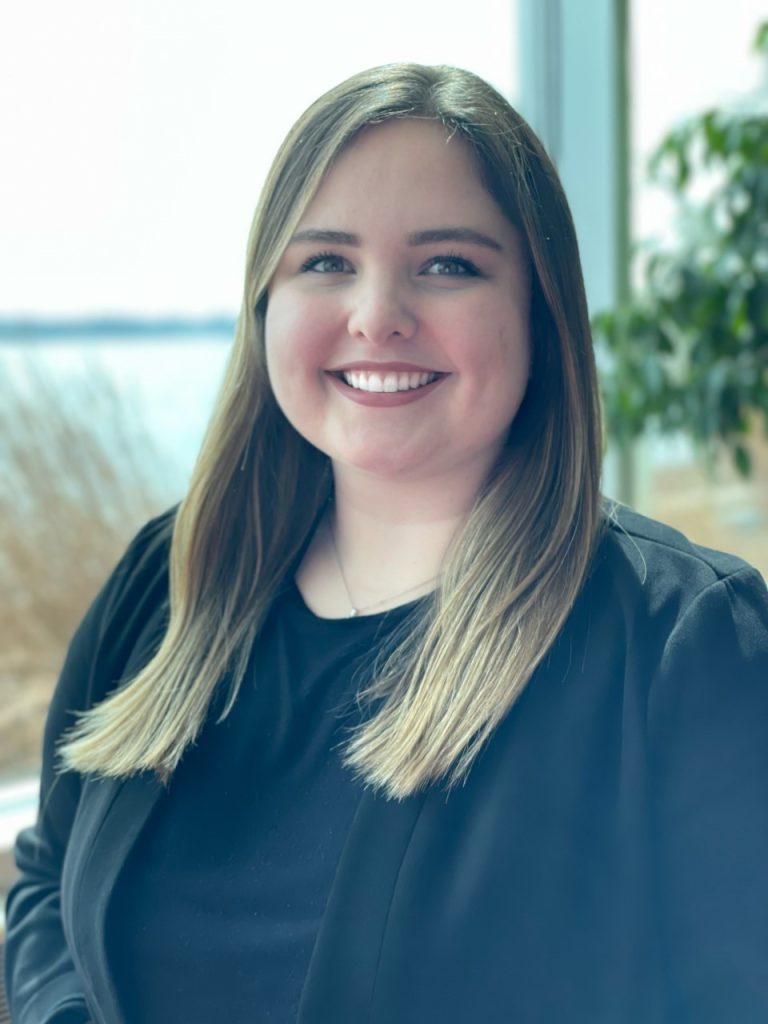
Concordia University Wisconsin loves to hear updates from alumni. Last year, graduate Karina Rauenhorst, shared her story as a School of Pharmacy student. In the time since graduation, Karina has been busy with her residency and being active in the pharmacy community. Let’s catch up with her and see where she’s headed.

Where are you practicing during your residency?

I started my residency in July 2022 at Progressive Community Health Center, an ambulatory care clinic that serves the underserved in the Milwaukee area. In my position, I provide health education for patients with chronic health conditions, such as diabetes, hypertension, and hyperlipidemia. My second-year site is yet to be determined.

When not in the clinic, I also teach at CUW in various coursework. Most of my time is spent as a lab instructor for our Applied Patient Care (APC) labs but I have also lectured in Pharmacotherapy coursework. It’s fascinating to learn some of the “behind the scenes” work that goes into the courses that I took only a couple years ago.

What are the most challenging and rewarding parts of the residency?

Navigating the balance of multiple long-term projects from a variety of sources is my biggest challenge. In pharmacy school, most projects were brief, but my two-year residency will involve long-term projects. My program director, preceptors, and mentors on campus have given me the skills needed to manage these challenges, but putting them into practice is a whole new learning process.

The most rewarding part of my residency so far has been the impact I have made on my patients in the clinic. I love the unique opportunity to serve and provide quality care to an underserved population here in Milwaukee. I strive to form a trusting and collaborative relationship with my patients and serve as a reliable resource in their disease state management. Seeing the joy in a patient’s eyes after achieving a health goal, I feel like I am answering my true calling in life.

Continuing to learn

Why did you choose to pursue a Master’s in Education while in your residency?

After graduating with my PharmD I wanted to further develop my teaching skills and enrolled in the Master of Education program at CUW. I found my passion for teaching during my second year of pharmacy school. While serving as a teaching assistant in the APC labs, I knew I wanted to incorporate teaching into my future career. The coursework in my master’s program provides me a foundational framework and essential skills that will help me better connect with and educate future learners.

How have your first classes in the School of Education been so far?

My first class was an elective, Multimedia in the Classroom, and I loved it! I’ve always been passionate about making content engaging and interesting, so this course was right up my alley. Another resident and I sent a presentation suggestion to the AACP, hoping to present the course’s findings at their yearly conference to pharmacists all around the US.

What has been easier and harder than you expected in the Master of Education?

The style of education and learning in the master’s curriculum is different from what I experienced in the PharmD program. The courses have been requiring a lot more insightful reflection, creative writing, and direct application of knowledge, instead of intensive content retention and exams. I’m grateful to not be up late studying various topic materials and taking exams anymore.

I really enjoy the self-paced nature because it allows for flexibility in my already busy schedule. However, this does add to my previously mentioned challenge of managing long-term responsibilities and balancing my schedule.
Being active in the pharmacy community

With the goal of connecting with other professionals in the field, Karina continues to stay active in the Kappa Psi Pharmaceutical Society. Kappa Psi is the oldest and largest pharmacy fraternity. It has the mission to develop leaders with a passion for service to their community while creating lifelong professional connections. Once a brother of Kappa Psi, you become a brother for life.

How long have you been involved with this fraternity? Why should others join?

I was initiated into the Zeta Theta chapter at Concordia University Wisconsin (CUW) in the Fall of 2018. I first heard of Kappa Psi while completing my undergraduate degree at the University of Minnesota – Duluth. The comradery and professional growth mindset sparked my interest. I joined with the goal of meeting new pharmacists from across the world while promoting the profession of pharmacy.

Throughout my time so far, I have been able to:

  • Meet some of the most incredible and inspiring pharmacists
  • Volunteer for over 200 hours at a local free clinic
  • Develop leadership skills that will help me be a better servant to the community

Pledging Kappa Psi has been one of the best decisions I have made in my pharmacy career to date and will recommend joining to everyone.

What are your responsibilities as the next President of the Northern Plains Province (NPP)?

As President of the Northern Plains Province, I oversee 10 collegiate and 6 graduate Kappa Psi chapters across North Dakota, South Dakota, Nebraska, Iowa, Minnesota, and Wisconsin. One of my most significant responsibilities is to organize and facilitate our three-day biannual regional conference for over 200 attendees.

Between these conferences, I arrange regular meetings with the NPP executive board, assign charges to our various regional committees, and establish goals that support our overarching vision for the province. In addition, I serve as a resource to my fellow NPP brothers and represent them to the best of my ability.

Do you have specific initiatives or goals that you want to achieve during your time as president of this fraternity?

The main goal of the NPP executive committee this year is to be innovative with our events while staying true to our traditions. With the recent return to in-person conferences, it’s a pivotal time to enhance the experiences of our brothers while continuing the traditions. It’s our hope that through educational webinars, brotherly competitions, and improved communication throughout the region, we will see an increase in participation and retention by both collegiate and graduate brothers.

Want to find out more?

If you want to learn more about Concordia University Wisconsin’s School of Pharmacy, visit us here.

New CPA Exam Blueprints Released

The long wait for the highly-anticipated new CPA exam blueprints has ended. This month, the AICPA released the finalized blueprints for the revised CPA exam, launching in 2024. Check out the quick highlights below of what changes you can expect and how to prepare for the revised exam.

Over time, the CPA exam has evolved to meet the needs of the profession. A notable revision was in 2004 when the CPA exam transitioned from a paper and pencil exam to a computerized exam. In 2024, the CPA exam will undergo another major revision. This time, instead of a simple format change, there will be a major change to the content of the CPA exam.

The governing bodies responsible for the CPA Exam (NASBA & AICPA) received feedback from over 3,000 stakeholders regarding the future direction of the CPA exam. Results determined that modern CPAs need deeper skill sets in critical thinking, problem-solving, understanding of business systems, controls, and risk, data management and analysis, and SOC engagements.

Coupling these new skills with the fact that standards have changed immensely, a reimagining of the CPA exam was overdue. As the body of knowledge continues to grow, the need for specialization has become apparent.

What’s changing?

The highlights of the changes to the 2024 exam are described below:

3 Core + Discipline Model

Currently, the exam includes four stand-alone sections. However, the new exam will have three core sections that each candidate must take. Each candidate will then select their fourth exam from a choice of three discipline-specific exams. The goal of the 3 Core + Discipline model is to move some of the more specialized content out of the core sections, and into a discipline-specific exam. Therefore, candidates may select another exam based on their area of interest in developing expertise.

For instance, those not specializing in tax don’t need to study the more complex details if they don’t take the Tax Compliance and Planning exam. Note that the discipline selected will not be identified on the CPA license.

Elimination of BEC

The stand-alone Business Environment and Concepts (BEC) section goes away in 2024. Although this exam had the highest pass rates, it was also one of the more troublesome exams for students, as the content often seemed random. The elimination of the BEC exam does not mean that content is eliminated, however. Content currently covered in BEC will be shifted to other exams.

Exam Content Changes by Section

AUD

The Auditing and Attestation (AUD) section of the exam will cover four main areas:

  • Ethics, Professional Responsibilities, and General Principles
  • Assessing Risk and Developing a Planned Response
  • Performing Further Procedures and Obtaining Evidence
  • Forming Conclusions and Reporting
FAR

The Financial Accounting and Reporting (FAR) section of the exam will cover three main areas:

  • Financial Reporting
  • Select Balance Sheet Accounts
  • Select Transactions
REG

The Taxation and Regulation (REG) section of the exam will cover six main areas:

  • Ethics, Professional Responsibilities
  • Federal Tax Procedures
  • Business Law
  • Federal Taxation of Property Transactions
  • Federal Taxation of Individuals
  • Federal Taxation of Entities

New Discipline Exams

BAR

The new Business Analysis and Reporting (BAR) discipline exam is intended for those who wish to demonstrate specialized knowledge in financial accounting, analytics, and reporting. This exam will cover three main areas:

  • Business Analysis
  • Technical Accounting and Reporting
  • State and Local Governments
ISC

The new Information Systems and Controls (ISC) discipline exam is designed for those who wish to demonstrate specialized knowledge in information systems and security. This exam will cover three main areas:

  • Information Systems and Data Management
  • Security, Confidentiality, and Privacy
  • Considerations for System and Organization Controls (SOC) Engagements
TCP

The new Tax Compliance and Planning (TCP) discipline exam is intended for those who wish to demonstrate specialized knowledge in taxation. This exam will cover four main areas:

  • Tax Compliance and Planning for Individuals and Personal Financial Planning
  • Entity Tax Compliance
  • Entity Tax Planning
  • Property Transactions

Preparing for this new exam

Preparing for the exam is a marathon, not a sprint. Success starts with a solid educational foundation. Although requirements vary by state, generally, candidates should start with a bachelor’s degree that provides a solid foundation in business courses. Most states require a set number of credits in business courses plus specific accounting courses in order to qualify to sit for the exam. 

It’s important to note that educational requirements to sit for the exam can differ from the requirements to be licensed as a CPA. For example, in Michigan, an undergraduate degree is required to sit for the exam, but 150 credits are required to be licensed. Most students choose to earn a master’s degree in accounting to meet this 150-hour requirement. 

Additionally, candidates will find that extra practice with CPA exam review services is a necessary ingredient to their success in passing the exam. Concordia’s new Master of Science in Accountancy combines the best of both worlds by providing students with relevant, up-to-date courses that were developed around the needs of the CPA exam revisions and incorporating Gleim CPA review right into the courses.

What’s next?

The new CPA exam will have more focus on critical thinking skills and analytics, as well as the opportunity to learn more specialized skills. If you’re planning on taking your Exam before these changes take effect in 2024, consider if these changes are in your favor. Concordia’s new Master of Science in Accountancy program is ready to help you learn and grow in your skills, and prepare for this exam. Find out more information about our program below.

Uncommon Business Part 2: Transforming Business Sustainability through Impactful Education

Impactful education develops modern leaders and generates valuable solutions. It moves beyond discussing problems, to focus on sustainable outcomes and positive impacts. In case you missed Part 1 of this series on business sustainability, make sure to check it out. Now our approach to impactful education in our Business Sustainability concentration highlights three main areas:

  1. Applying the most modern strategies to assess environmental risks
  2. Engaging science and economics to promote innovation and generate value
  3. Implementing solutions that are ethical and sustainable

The primary purpose of these focus areas is to support entrepreneurial leaders. We have established several advanced learning experiences for emerging leaders and business practitioners to support complex decision-making, innovation, and sustainable business practices.   

Assessing Environmental Risks

Transforming business sustainability requires the application of the newest strategies to assess environmental risks. Modern leaders in business sustainability are increasingly using Dynamic Systems-Thinking (DST), a multi-methods approach, to analyze complex problems. Our DST approach explores transformative business practices and strategies to manage supply chain risks, resource scarcity, energy security, and new patterns of production and consumption.

By the end of our new course, Environmental Risks and Sustainable Solutions for Business, our learners are able to:

  • Use multiple methods to assess environmental risks
  • Apply innovative practices to change the carbon trajectory
  • Address energy security
  • Implement commodity tracking systems
  • Develop sustainable solutions for their business

Engaging Science and Economics

Modern businesses need to be able to engage science and ecological economics to address environmental challenges facing businesses in the competitive global market. To meet the triple bottom line, people-planet-profit, we need to apply concepts of decision sciences, circular economies, lifecycle analysis, and commodity tracking.

Circular economies improve environmental sustainability and boost economic growth through innovation while reversing planned obsolescence and reducing negative externalities. We have developed several new courses to address these emerging strategies, including Engaging Science to Promote Business Innovation, Ecological Economics and Sustainable Development, and Circular Economies and Supply Chain Stewardship.

They examine the newest methods to manage the energy-water-food-climate nexus, including strategies to minimize systematic waste. The objective of engaging science and economics is to improve sustainability, evaluate resource scarcity, address supply chain risks, deliver innovative solutions, and advance responsible corporate stewardship.

Ethical and Sustainable Solutions

To support entrepreneurial leaders, businesses need to re-train or upskill their emerging leaders in strategic leadership and environmental stewardship. They also need to support ethical work environments for innovators and foster sustainable solutions, as well as support efforts to align sustainability goals with master strategic plans.

We have established a capstone learning experience for our students to develop custom environmental stewardship plans for their businesses. Advanced students can also develop environmental stewardship plans with corporate partners or conduct environmental consultancy practicums. In the new course, Environmental Stewardship Plan Development for Business, students apply stewardship and strategic planning to support business ethics and promote sustainable business practices and learn multiple methods to measure and report on progress and impacts.

Through project-based learning experiences, our students gain knowledge in sustaining vital ecosystem services, generating value, and supporting corporate responsibility through environmental stewardship.

Our work in Business Sustainability is committed to transformative practices in sustainability, innovative leadership, and sustainable solutions.

Learn more

For additional information about business sustainability or DBA-related questions, contact Professor Jenny Kehl at jenny.kehl@cuw.edu or visit us here.

You can also learn more about DBA faculty Dr. Jenny Kehl here.

Explore various MBA career paths

Are you looking to advance your education as a business professional? A Master of Business Administration (MBA) is a great route to advance your career. At Concordia University Wisconsin and Ann Arbor, MBA students are given the opportunity to specialize in an area of interest. As a result, you can focus on a topic that will give you the skills needed to reach your goals.

Not only do you have 13 concentrations to choose from, but our program also includes:

  • Can be done 100% online
  • Virtual and in-person options
  • Courses are 8 weeks
  • Taught by industry experts
  • Experiential learning is part of the program to help develop your employable skills

Check out our MBA career paths to choose from below.

Accounting

Accounting professionals work with financial transactions, including tax and financial planning. They also provide vital financial information in order for individuals or organizations to make informed decisions. Accountants can work in the government, for-profit or nonprofit organizations, schools, or firms. You can even become a CPA and work for yourself.

MBA students can expect to learn about intermediate accounting, advanced accounting, income taxes, and auditing. Your coursework will prepare you to sit for the national CPA exam and give you the skills you need to prepare for a career as a CPA.

Communications and Public Relations

Understanding how to convey thoughts and ideas in a compelling manner is an important skill in business. Communications and public relations professionals specialize in handling public communication for an individual, group, or organization. Those in the field can also find jobs in advertising, public image managers, consultants, and spokespeople.

MBA students will take courses in group dynamics, effective business writing, public relations, and public speaking. You will graduate will the skills to articulate and communicate your message.

Finance

If you have an interest in finance, our MBA in Finance is a great option. With an advanced education in finance, you have many opportunities for roles such as a finance manager, advisor, or analyst as well as an investment manager, or even a chief financial officer. You’ll learn how to master real estate investment, risk management, and corporate and international finance, to name a few. By graduation, you’ll have the knowledge and skills you need to be a powerful candidate in the field.

Healthcare Administration

Healthcare is one of the fastest-growing industries that need business-minded professionals to help run our facilities. A healthcare administrator has many responsibilities which can include developing work schedules, managing billing, and training staff members.

Having an MBA in Healthcare Administration, you will better understand management in healthcare. You’ll also develop the skills you need to oversee budgeting, human resources, public policy, and risk management.

Human Resource Management

Human Resource professionals work with employees in an organization. Usually, their tasks include recruiting, hiring, onboarding, firing, and managing employees. Additionally, HR professionals keep benefits and compensation fair, make sure practices are ethical, and work to decrease workplace burnout.

Our MBA in Human Resource Management will allow you to dive into a variety of topics that will prepare you for a significant impact in the field. You’ll have a deeper knowledge of labor and employment law, occupational fraud, unemployment, and disability.

Innovation and Entrepreneurship

Becoming an entrepreneur is both a pursuit and a mindset. It requires you to be a self-motivator and a determination to overcome challenges. Learning to think outside the box to turn your ideas into success is key.

Our innovation and entrepreneurship MBA will teach you how to pitch ideas, create successful startups, and manage a culture of innovation in your organization. Whatever your goals, we will help you start pursuing the ideas you’re passionate about.

Leadership

If you’re interested in developing your leadership skills and business knowledge, an MBA in Leadership may be a great path. You’ll discover your leadership strengths and integrate your technical competencies to lead teams and organizations. This approach will make you a well-rounded asset to your organization. During the program, your curriculum will dive into problem-solving in creative ways and learning about ethical leadership that enables and inspires teams of all sizes.

Management

Every organization needs leaders who are able to manage large-scale projects and diverse groups of people. Knowledge in management can equip you to build and manage strong teams and handle challenges when they arise. During the program, you’ll get hands-on experience in applying proven management techniques to bring into your role. Ultimately, you’ll come out as a stronger leader, a better communicator, and a strategic thinker.

Management Information Systems (MIS)

Individuals who study MIS learn about the relationship between people and technology in order to improve practices. By having a degree in MIS, you can work in many different roles such as IT consultant, web developer, systems or business analyst, or information systems manager.

An MBA in Management Information Systems will provide you with in-depth knowledge of database modeling, design, and implementation. You’ll gain experience implementing a database design by creating a physical database using the Oracle Application Express tool and SQL—and you’ll be prepared to sit for the Oracle Database SQL Expert exam.

Nonprofit Management and Public Relations

If you have an interest in working in the nonprofit sector, it’s essential to have the skills to motivate teams, implement new programs, and bring the mission of the organization to life. Working in nonprofit management requires knowledge of public relations, board governance, program evaluation, fundraising, and volunteer requirement. All of which our MBA program covers to make sure you are ready to take on your role.

Research for Business Applications

By choosing a concentration in research for business applications, you’ll take four research courses (12 credits) in our DBA program. You’ll learn the ins and outs of scholarly research, including statistics for research, quantitative research skills, and qualitative research skills.

While this program allows you to jumpstart your studies in the DBA program, it can also be used to improve your organization and your ability to sift through data driving the complex challenges your organization will face. As a result, it will also provide you with the skills necessary to perform solid academic research intended for peer-reviewed publications.

Strategic Marketing

According to Hubspot, strategic marketing involves research and establishing goals that will maximize the effectiveness and success of the overall marketing strategy. As a strategic marketer, you’ll be responsible for understanding your organization and grabbing the attention of customers.

As a graduate of our MBA in Strategic Marketing, you’ll understand the measurability and accountability of direct marketing and how it relates to your company’s overall strategy. This concentration was designed to teach you the skills you need whether you already work in advertising or you’re looking to break into the field.

Sustainability Management and Analytics

Corporations are discovering the value of social and environmental sustainability. Therefore, they need knowledgeable and well-rounded professionals to come to improve processes, reduce resource use and waste, and make better social and environmental decisions.

In our MBA in Sustainability Management and Analytics, you’ll dive into topics like micro and macroeconomics, decision science, statistical analysis, environmental chemistry and toxicology, environmental law, social entrepreneurship, and industrial ecology. Not only will you have knowledge of the field, but you’ll also have hands-on experience, certificates in sustainability methods, and exam prep if you decide to take the LEED Green Associate exam.

Interested?

We’re ready to help explore your MBA career path with you. Feel free to find out more about our MBA program below.

Leading with Power Skills

Organizations are facing great changes after the pandemic and the rise of the second information age. This includes changes to their operations, business processes, and labor force expectations. The second information age involves changes to jobs and the economy due to automation and artificial intelligence. It’s important that we have leaders that can embrace the change and make their teams successful.

Working remotely

The name for these changes is called digital transformation which is the process of using technologies to create or modify business processes. This adds a new dimension that fully redesigns business processes to augment work with technology. There are also new work arrangements that challenge the notion of the traditional employee.

Remote work has become far more common and is unlikely to return to pre-pandemic levels. Working remotely is more accepted and valuable for decreasing infrastructure costs, reducing commuting time and pollution, and increasing productivity. It also creates a more fluid work-life balance.

Even employees who have traditional offices are doing more tasks mediated by technology and participating in virtual teams. They are also learning and developing through technology, which is called virtual human resource development. (Bennett, 2009). As working and managing remotely are fairly new, having the skills needed to lead effectively is essential.

Important power skills

For many years now, these essential leadership skills were labeled “soft skills”. However, there is a growing trend in the business world to refer to soft skills as “power skills.” This is because employers are increasingly recognizing the importance of these skills in the workplace. Power skills are those that are more focused on human interaction and relationships. They include things like communication, teamwork, and empathy.

And while they may not be as tangible as hard skills, they are essential to succeed. Yet power skills are some of the hardest skills to master. According to our recent study that gathered data from over 10,000 professionals, the top power skills range from adaptability, problem-solving, and agility all the way to social, emotional, empathetic, and creative skills.

Although we live in a time when there is a great concern for the loss of empathy, due to social media, human emotion and empathy skills were highly valued (Bennett, in press). We also concluded that both logic and intuition are necessary for both leadership and the workforce at large. Leaders must become agile with different modes of information processing as they work within systems faced with the change of digital transformation.

Similarly, Question Mark’s 2021 report has power skills as six of the top ten learning trends:

  1. Adaptability,
  2. Communication/Collaboration,
  3. Creativity,
  4. Critical thinking and Problem Solving,
  5. Empathy, and
  6. Teamwork (pp. 4-5)

These relate to the Society for Human Resource Management’s (SHRM) (2008) leadership competency model. However, SHRM adds managing politics, influence, change, and leadership stature to its list. Further, new leadership challenges, such as diversity and inclusivity, increase complexity and risk.

Future of leadership skills

As organizations require more adaptability, creativity, and agility from their members, leadership job descriptions and roles will increasingly emphasize power skills. Unfortunately, organizations failed to properly manage virtual teams and maintain social cohesion during the pandemic and recovery, according to early evidence. (Bennett & McWhorter, 2021).

One can develop power skills at any point in their life by practicing, reflecting, and making necessary adjustments; but mentorship, learning about human behavior, and experiential learning are key to developing these skills. Organizations that have in-house leadership development programs that support employees in exercising a range of power skills, combined with new technology and data literacies, tend to be more successful.

This is because these programs help employees to develop the skills they need to be effective leaders, while also staying up-to-date with new technologies and trends. However, this can be an area of frustration if internal options are not well executed or when limited time is a barrier to participation.

Advancing power skills with a degree

Degree programs have major advantages as they are naturally interdisciplinary. Therefore, they expand the range of innovation and application beyond a narrow field in order to foster flexibility. They also often combine data skills with power skills through inquiry projects.

LEARN MORE: Earn your master’s in leadership at Concordia University

Online programs help overcome space-time challenges while fostering practice in virtual environments with collaboration technologies. Practicing new skills in a safe space is more effective than trying them out for the first time with real employees. As a result, this may reduce a leader’s performance anxiety.

What’s next?

As technology advances and organizations change, humans should focus on what they do well and let technology handle the rest. In other words, the leadership of the future is leading with power skills.

About the author

Elisabeth E. (Liz) Bennett, Ph.D. is an associate professor of business and director of the Masters of Science in Leadership at Concordia University – Wisconsin and Ann Arbor. Research interests include organizational culture, creativity, informal learning, technology leadership, and virtual human resource development. Dr. Bennett brings industry experience from Fortune 500 financial services, manufacturing, information technology, continuing education, and academic medicine. She earned her Ph.D. from the University of Georgia with an emphasis in Human Resource and Organization Development (HROD) and an interdisciplinary graduate qualitative research certificate. She holds a Master’s in Adult Education with a cognate in Instructional Technology, earned with distinction, also from the University of Georgia. Dr. Bennett serves on multiple journal editorial boards as well as engages in international service that supports economic development for the socially vulnerable and inclusive prosperity.

References:

Bennett, E. E. (2009). Virtual HRD: The intersection of knowledge management, culture, and intranets. Advances in Developing Human Resources, 11(3), 362-374.

Bennett, E. E. (2022). Leveraging technology to design and deliver human resource development. In P. Holland, T. Bertram, T. Garavan, & K. Grant (Eds.) The Emerald Handbook of Work, Workplaces and Disruptive Issues in HRM. Emerald.

Bennett, E. E. (in press). Social media and HRD: Powerful tools and dark patterns. In T. F. Rocco, M. L. Morris, and R. Poell (Eds.), Handbook of Human Resource Development (2nd ed). Sage.

Bennett, E. E., & McWhorter, R. R. (2021). Virtual HRD’s role in crisis and the post Covid-19 professional lifeworld: Accelerating skills for digital transformation. Advances in Developing Human Resources, 23(1), 5-25. https://journals.sagepub.com/doi/full/10.1177/1523422320973288

Question Mark (2021). Modern skills for 2022: Measuring the strength of workforce skills and ensuring employees have what they need to face the future. Reported available at: https://www.questionmark.com/wp-content/uploads/2021/12/Modern-Skills-for-2022.pdf

SHRM (2022). https://www.shrm.org/ResourcesAndTools/hr-topics/behavioral-competencies/leadership-and-navigation/Pages/leadershipcompetencies.aspx

How to become a CPA

Becoming a certified public accountant (CPA) is a great career to pursue and is well-praised in the world of finance. There are many benefits for accountants who become licensed CPA’s. Let’s get the easy one out of the way, yes, you will make more money as a licensed CPA. But don’t discount the numerous opportunities offered to CPAs along with the increased job security of a respected position. The list continues with improved benefits, incentives, and job flexibility.

Now, you want to know the steps involved in pursuing this promising career path.

Since every state has its own set of rules to become a CPA, make sure to check your states requirements. If you plan on getting your CPA in Wisconsin, take a look below at the steps you will need to take.

Get your education

Your first requirement is to have 150 semester hours of college credit and at a minimum, a bachelor’s degree. Most bachelor’s degrees in accounting consist of 120 credit hours. Therefore, many people earn a master’s degree or a post-baccalaureate certificate to gain the additional required 30 credits. However, business law and income taxation courses from an accredited bachelor program are required. Having knowledge in both those topics is helpful as a CPA.

According to the Wisconsin State Department of Regulation and Licensing, they will approve all accounting degrees that were earned through colleges and universities located anywhere in the country that have accreditation recognized by the U.S. Department of Education.

Take the CPA exam

After completing only 120 of the 150 required credit hours, applying for the CPA exam is the next step. Applying as soon as you have the courses completed will be important. It will pay off in the long run so that you don’t waste time taking the exam later. The benefit of becoming a CPA in WI is that students can take the exam 30 days before graduating. This saves you time and gives you the freedom to not worry about the exam after graduation.

You can apply through the National Association of State Boards of Accounting and send in all of the required documents. After a few weeks of processing, you then will be able to register for a date to take the exam. This exam comes at a cost, so a tip when registering is not to register for all four sections at the same time. It will end up costing less in the long run. If you end up needing to re-register for a new date to take the exam it will cost you less if you are only registered for one section rather than all four.

Most importantly, make sure you are prepared for the exam. Start by taking a practice exam to see where you would score. Based on that initial score create a study plan and don’t push it off.

Gain the necessary experience

Congratulations, you’re a certified CPA! But you’re not satisfied yet, you want that full license don’t you? Well, after becoming CPA certified, Wisconsin requires 1-year or 2,000 hours of paid public accounting experience. You will not be able to receive a license until you have the required experience. Before searching for your experience make sure to look at the boards’ qualified experience criteria. Also pay attention to the equivalents and jobs that are not viable for accounting. It would be devastating to find out after a few months that your hard work doesn’t qualify.

Some common experiences that people do take are accounting positions in industry and government. Any positions titled accounting, auditing, or financial analyst are common. But a bank teller, restaurant manager, or cash register clerk are not equivalent experiences to public accounting.

Get your CPA license

You’re in the final stretch. To get your CPA license, you must mail all required documentation to the Wisconsin Department of Regulation and Licensing. It will take 4-6 weeks for your documentation to be processed and approved. Then you will complete a 50-question, untimed ethics exam. This exam is taken online and there is a textbook available for preparation. The ethics exam will test your ethical principles and knowledge that are needed for a professional career. After this exam, all of your hard work has paid off. You are not a certified public accountant!

Continuing Education

Yes, there is more school in your future. This is not a requirement by the state of Wisconsin, but many CPAs will elect to join the Wisconsin Institute of Certified Public Accountants (WICPA) to keep their license intact.

It’s important to stay up to date on information and continuing education because you will need to renew your CPA license once every other year. Be sure to always continue your education and further your accounting knowledge to continue renewing your license. Concordia offers an MBA program for accounting which is a great option to continue your education and increase your level of influence and expertise at your company.

Accounting programs at Concordia

It can be overwhelming when searching for an accounting program, but Concordia makes it easy by having it all in one place. Each of these programs meets the requirements of the state of Wisconsin to take the CPA exam.

  • Traditional bachelor’s degree in accounting
  • Accelerated online bachelor’s degree in accounting
  • MBA in Accounting
  • Master of Science in Accountancy

Whether you are looking to get your bachelor’s, or master, or continue your education in accounting, at Concordia you can do it all. Our new Master of Science in Accountancy program offers a CPA exam review in the curriculum which further prepares students for their future as an accountant.

5 best practices for Human Resource Development leaders

As a leader, it’s essential to have the knowledge and skills to train and develop your employees. By studying human resource development (HRD), you can learn how to improve the performance of your team or organization. But, what is HRD exactly? Human resource development utilizes organizational development and personal training to improve employee and organizational performance (Hurtienne et al., 2017).

What do HRD leaders do?

Human resource development professionals will look for ways to unleash human expertise and potential (Swanson & Holton, 2009). For HRD to stay relevant and critical, the core foundations of HRD should be discussed and debated, and theories verified for accuracy through theory development (Hurtienne et al., 2017, p. 17).

By leading through the lens of HRD, leaders understand that if the organization is to improve, then they need to identify the unique differences between their employees and cope with demographic forces (Alshuwairekh, 2016). In fact, organizations should look for ways to understand employee factors that can lead to increased employee engagement (Hurtienne et al., 2021). Senge recommends that organizations find ways to connect with their workforce by tapping into the sense of commitment and ability of each employee to learn and grow.

Why is HRD important?

Successful organizations must find ways to increase employee engagement, performance, and retention. “Human potential and expertise are, and continue to be, a vital component to developing and implementing effective Human Resource Development principles” (Hurtienne et al., 2017, p. 3). Many HRD interventions and methods are acceptable, and not one is right for all situations due to individual experiences, cultures, and beliefs that play a vital role in developing a strategy for success. (Hurtienne et al., 2017).

But what is universal is that leaders need to meet employees where they are and support them in continuing to grow and learn. Applying these practices will improve training, career, and organizational development (Shalleh, 2012).

5 best practices for HRD

HRD professionals should focus their time on acceptance, community development, education, collaboration, and leadership (Hurtienne et al., 2021). Through a pragmatic process, HRD can stay relevant and meet the real needs of organizations and employees (Koranic & Shindell, 2014). Here are some best practices for an HRD leader:

  • Meet with employees often: In order to develop employees successfully, it’s important to form a relationship. Whether it’s individually or in small groups, meeting regularly with your employees is essential.
  • Don’t overload with information: When training employees, it’s important not to give too much information all at once. Split the information into manageable amounts. As a result, employees can immediately practice and use it in their own work. Then, at the next training, they can discuss the implementation.
  • Ask for feedback: Request frequent feedback about the training from employees, therefore, you can continue to improve it.
  • Learn more about learning styles: Remember that everyone learns differently. Provide different ways of digesting information. This can be information that is visual, auditory, kinesthetic, or through reading. You can also approach training in a multi-style approach that accommodates all learning types.
  • Use positive reinforcement: Make sure to give employees positive feedback for the skills they are developing. Employees will feel confident and motivated to further develop their skills while getting positive reinforcement.

Becoming a human resource development leader

You can learn to become an HRD professional at Concordia University Wisconsin/Ann Arbor through the Doctor of Business Administration (DBA). Our organizational performance and change concentration is your pathway to studying HRD. While in the program, our expert faculty will help shape and guide you on your own journey, learning how to improve employee and organizational success.

Reference

Alshuwairekh, K. (2016, October). Exploring the relationship between demographic variables on resistance to change: An empirical study for private sectors in Saudi Arabia. IOSR Journal of Business Management, 18(10), 41-54. https://doi.org/10.9790/487X-1810034154

Hurtienne, M., Hurtienne, L., & Kempen, M. (2021). Employee engagement: Emerging insight of the millennial manufacturing workforce. Human Resource Development Quarterly. DOI: 10.1002/hrdq.21453

Hurtienne, M, Ljubenko, B., & Hurtienne, L. (2017). Theoretical foundations of human resource development: Conceptual visual expansion. Peer-reviewed paper presented at the Academy of  Human Resource Development Conference – 2017, San Antonio, TX, USA

Koranic, M. B., & Shindell, T.J. (2014). Future direction of HRD. In N. E., Chalofsky, T. S. Rocco, & M. L. Morris (Eds.), Handbook of Human Resource Development (pp. 688– 708). Wiley & Sons, Inc.

Salleh, K. M. (2012). Human resource development practitioners’ perspectives on competencies:

An application of American society for training and development (ASTD) workplace learning and performance (WLP) competency model in Malaysi (Doctoral dissertation). Colorado State University, Fort Collins, CO.

Faculty Spotlight: Dr. Jenny Kehl

Welcome, Dr. Jenny Kehl to Concordia

Dr. Jenny Kehl is a new faculty member in Concordia’s DBA program. You can get to know Dr. Jenny Kehl in her responses below.

Tell us about yourself.  

I earned my Ph.D. in International Political Economy from the University of Colorado-Boulder. In my career, I have developed environmental stewardship plans for businesses to implement. I am also grateful that organizations have been receptive to my work on “Complex Decision-Making for Growth and Sustainability: How Businesses and Universities Can Structure Themselves to Create a Sustainable Future.” Outside of teaching, I enjoy hiking.

Why did you choose to come to Concordia?

I choose Concordia for its focus on student success, rigorous academics, and transformative experiences. I love that the Concordia community cares about each other and about our impact on the local and global communities.

Why should students consider Concordia?

Concordia cares about your learning experiences and your success. We also provide a high-quality education that will be transformative for you personally and professionally.

What’s the most interesting part of your field that the general public might not know?

New innovations and ideas are emerging that will transform sustainability practices, such as providing clean water and energy in an affordable way. You can explore the most transformative practices in corporate responsibility, leadership, technology, strategic planning, and sustainability in our new business sustainability concentration.

Check out more information about the Business Sustainability concentration here.

Why should students study in your field/ discipline/ degree?

There is a lot of cutting-edge work being done in environmental sustainability and there is a growing demand for leaders in stewardship. Studying sustainability will position students to be leaders in modern jobs and to have a positive impact on local communities, on global issues, and on the betterment of humanity.

What is your advice to students?

My advice to students is to recognize that the ability to learn and the ability to lead are interdependent.

Do you want to know more?

If you’re interested in learning more about the DBA program at Concordia University Wisconsin, visit us here.

Alumni Spotlight: Brooke Essig

At Concordia University, we are proud to offer flexible, accelerated programs for our adult learners. Alumni Brooke Essig shares what her experience in the Bachelor in Accounting program was like.

Tell us about yourself.

I am Brooke Essig, and I am a graduate of CUW. I have an associate degree in accounting from Southwestern Michigan College and a Bachelor of Science in Accounting from Concordia University Wisconsin. I enjoy reading, baking, and cooking, and going to the beach in my free time.

Why did you choose Concordia?

I chose Concordia Wisconsin because of its welcoming atmosphere and ties to the LCMS (Lutheran Church–Missouri Synod). The underground tunnel system was also a plus for me during the cold and snowy winters.

What is your favorite thing about the accounting program?

One of my favorite aspects was the scheduling process at Concordia. The accounting classes I needed to take were offered every year compared to other schools that only offer them every other year. 

Would you recommend this program to others?

All of the professors are extremely kind and helpful and they want you to succeed. Also, all of the professors have great real-world experiences that they bring into the classroom. I felt the program challenged me and prepared me for when I graduated.

Do you feel professors were supportive?

Yes! The professors in the accounting department were extremely supportive. All of the professors I encountered were always extremely friendly and always willing to help. As a transfer student, Professor Stinson and Dr. Brock went out of their way to make sure my class schedules were correct and that my previous school’s classes transferred over correctly.

What do you love about Concordia University?

I love that Concordia puts an emphasis on Christ. I feel that this makes it a very welcoming and supportive environment for all of its students.  

Make the most of your college experience and get involved with different campus organizations.

Brooke Essig

Want to follow Brooke’s path?

Learn more about our accelerated accounting program by visiting us below.

Alumni Spotlight: Elaine Ruh

Concordia University Wisconsin Alumna, Elaine Ruh, shares her experience in the MBA program. Take a look at how Elaine was able to use her life experience to get more out of her MBA program and reach her goals.

Tell us about yourself.

Hi, I’m Elaine Ruh, and I graduated from Concordia’s MBA program with a concentration in human resources. I have an associate’s degree from UW Fox Valley and a bachelor’s from UW-Oshkosh in human resources. I also obtained my PHR and the SHRM certification. Currently, I am the Director of Human Resources at Fox Valley Metal Tech.

Outside of work, I’m on the Board of Directors for Fox Valley SHRM, helping HR Professionals within the Fox Valley for the past 6 years.

Why did you choose Concordia?

My story is unique; I was bored at my job and wanted more. Deciding to pursue my MBA, I came across CUW. I met with an admissions counselor where I learned about the flexibility of the MBA program. This allowed me to maintain my schedule in my home life and the volunteer positions I had.

The hybrid approach gave me the chance to take classes online or in person. Almost all the classes were at night so I could still work my full-time job.

Additionally, I appreciated the Christian approach. Although I’m not religious, the faith components helped me keep an open mind for others and their stories.

What was your favorite thing about the program?

What I liked the most was one of the first classes I had the professor stated, “You have a full-time job, I have a full-time job. You have a family, I have a family. You have hobbies, I have hobbies. You want to be here, I want to be here. This class will be strategic to help push you mentally and not drain you with excessive papers, exams, readings, etc. What we will discuss is something you can actually relate to and implement.”

After that, I was sold for the rest of the program. Some professors did have a more intense syllabus, but for the most part, it was manageable and still very impactful.

Would you recommend our MBA to others? Why?

Yes! I already do tell others. First, I love that the classes are small. A few of us that started together actually graduated together, which I feel is harder in an MBA program.

Second, I liked having real-life projects and examples. During classes, we could use and apply concepts to real-life problems in our workplace. This helped us to better understand what we were learning.

Finally, the professors were awesome. I could tell they wanted to be there and were invested in helping us learn. The staff too was always helpful with all my questions, which believe me – I had a ton being a return student years after my BBA.

What do you like to do for fun?

For fun, I enjoy listening to audiobooks while commuting for work. I’m also a hobby photographer and I assist my husband in his business. I have a 7-year-old son, Maddox, who has Cystic Fibrosis. I’m a Co-Captain for the Advocacy Districts in WI, which means I meet with elected officials in WI and DC to tell Maddox’s story.

Any advice for future students?

Honestly, I’m glad I worked in the real world after my undergrad. If I would’ve jumped into my MBA, like I wanted to after graduation, I wouldn’t have appreciated the professors and what I received in these classes.

Thankfully, I was able to work with my employer to help with the costs of the program. The flexibility of classes fit within my work schedule. I just really enjoyed the program.