Festive Falcons: pick your favorite costumed Freddy


Faculty and staff at CUW helped Freddy get festive by dressing up their bobbleheads in costume.


As part of their on-boarding to Concordia, every new CUW employee participates in a day-long “Concordia Cares” orientation session. At the end of the session, Human Resources gifts employees with their very own Freddy bobblehead.

This year, HR invited employees to have a little fun with CUW’s mascot, and the results included pop culture references, nods to employees’ hobbies, and everything in between.

Scroll down to view the submissions and then vote on your favorite. Votes are due by 4:30 p.m. Nov. 1.


Graduate Freddy

Submitted by: Accelerated Admission Counselor Heidi Sternig

Turkey Freddy

Submitted by: Director of Accelerated Enrollment Linda Szczerbinski

Coach Freddy

Submitted by: Men’s Assistant Basketball Coach Jon Cain

Maverick Freddy

Submitted by: Registrar’s Office Student Worker Taylor Burford

“Little Ghost” Freddy

Submitted by: Library Access Services Coordinator Carol Mittag

Day of the Dead Freddy

Submitted by: Outreach Specialist Ana Sanchez

Ted Lasso Freddy

Submitted by: Director of New Student Programs Kara Janowski

Dean Rennicke Freddy

Submitted by: Corporate Communications Manager Mike Zimmerman

Chef Freddy

Submitted by: Assistant Director of Financial Aid Vicki Waschow

Storm Trooper Freddys

Submitted by: The Academic Resource Center team

Hula Freddy

Submitted by: Advancement Administrative Assistant Gail Milatz

Money Freddy

Submitted by: Cashier Chris Cesarz

Candy Freddy

Submitted by: Accelerated Admission Counselor Kathleen Siedenburg

Woody Freddy

Submitted by: Registrar’s Office Student Worker Sophia Stanke

Sombrero Freddy

Submitted by: Compliance Officer & Title IX Coordinator Joseph Niswonger

Corky Freddy

Submitted by: CUAA Director of Building and Grounds Jerry Novak

Mummy Freddy

Submitted by: Executive Director of Marketing Strategy Briena Jacob

Hockey Freddy

Submitted by: CUAA Director of Building and Grounds Jerry Novak

Luther Freddy

Submitted by: Assistant Director of AV/Educational Technology Justin Frisque

Price Is Right Freddy

Submitted by: Physical Sciences Lab Coordinator Mandy Schreiber

Monster Freddy (with verse)

Submitted by: Advancement Administrative Assistant and Creative Designer Sandy Barrette

Pulled out all the stops and got your candy ready / Doorbell rings, you open and it’s MONSTER FREDDY!

He screeches in a scary tone, “Yo! Trick-or-treat!” / But all that you can notice is his cold, bare feet.

Quick thinking on your part could help this frightnin’ cyclops / You run into the basement, bring him your old high tops.

Freddy shows his hand; “I’m not as cold as I seem / I have a caramel macchiato with a lotta cream!”

Now the night is over, you’re all tucked in your bed / You’re tossing and you’re turning, Freddy’s trapped in your head.

The goosebumps that you sense have got you feelin’ foolish / That costume Freddy wore was really super-ghoulish!

But then you crack a smile, and think of your sneakers / In younger days they made you hotter THAN paprika!

Ninja Turtle Freddy

Submitted by: Accelerated Admission Counselor Nicholas Deleon

Beetlejuice Freddy

Submitted by: Cashier Sharon Tarantino


Want in?

Concordia University Wisconsin has been named among the Milwaukee Journal Sentinel’s best places to work for the past three year.


In line with a growing national trend, Campus Safety proactively pads safety measures at Concordia


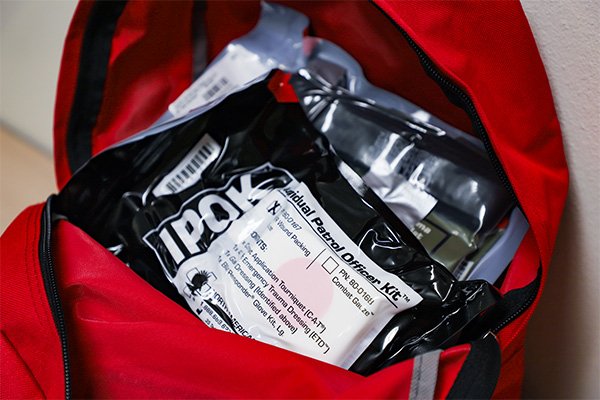
Concordia University Wisconsin is now fully equipped with “Stop the Bleed” kits around campus, a precautionary measure Campus Safety opted to install following the mass shootings in Uvalde, Buffalo, and Highland Park earlier this year.

The kits are housed in red backpacks that now hang at strategic locations throughout campus. A kit will also be delivered to Concordia’s Center locations. There are 39 backpacks in total. Each one includes eight individually sealed “Stop the Bleed” kits comprised of:

  • A tourniquet
  • Trauma dressing
  • Nitrile gloves
  • A permanent marker (to write the time of the treatment measures on the dressings)  
Each backpack contains 8 kits.

“Minutes can count when someone is bleeding heavily,” says Campus Safety Director Mike Stolte. “Our Campus Safety Officers have carried tourniquets for years, but when you’re talking about mass casualty incidents, you need more than just one.”

The kits offer a way for people to help treat injuries until first responders can arrive. Like CPR, no special medical expertise is needed. And the result of utilizing them could mean a life is saved, says Stolte.

The “Stop the Bleed” training isn’t just about responding to gunshot victims. It can be used to treat someone involved in a car accident, cooking accident, or any other situation where someone is bleeding. 

“The more people who know how to control bleeding, the better prepared we all are, both on and off campus,” explains Stolte.

Training opportunities

Twelve employees from the School of Health Professions, School of Pharmacy, Health Center, Athletic Training and Campus Safety Office at Concordia have completed “Stop the Bleed” instructor training, which certifies them to teach students and others at CUW how to utilize the kits. The training is free and consists of an interactive online course, as well as a hands-on, skills-only course where students or employees practice packing a wound and applying a tourniquet. A link to the online course and list of instructors is available on the Resources tab of the CUW Portal.

Safe campus

Concordia is one of the first universities in the state to make the kits widely accessible to students; however, it’s likely that other colleges will soon follow suit as, nationwide, more and more schools are adopting them. In California, for example, the State Legislature enacted a new bill last month that requires the installation of trauma bleeding control kits in newly constructed public and private buildings throughout the state.

Concordia places a high priority on students’ safety, and the campus’ architectural structure aids in that effort. The campus was originally constructed with a “cloistered” feel in mind and Concordia has maintained the unique architectural design of having the entirety of the campus be connected by tunnels. Nearly all of the Campus Safety team is retired law enforcement, with Assistant Director of Campus Safety Dan Buntrock having previously served as Chief of Police for the City of Mequon.

Recently, the Department of Transportation took on a construction project to add on- and off-ramps to aid ease of access to the highway for a new hospital that was constructed near CUW. The project provides easier access to Concordia as well, both for welcomed and unwanted guests. Campus Safety decided to add cameras that will capture the license plates of all vehicles entering campus and the technology will notify the Mequon Police Department within 15 seconds of any car that has been reported stolen, has an outstanding warrant, or any other concern.

As a result of all its efforts, CUW is routinely ranked among the safest college campuses in the state, or even the nation.


Want in?

We invite you to visit our safe campus and see if Concordia would be the right fit for you.


6 practical strategies if you’re a high schooler with the ‘lowest average ACT score in 30 years’


This year’s average ACT score was the lowest it’s been in three decades. If you’re a member of the graduating Class of 2022, here are some suggestions to help you get proactive about your lagging ACT score.


You may have seen the headlines. In fact, you may be among the students being featured…

If you’re a member of the graduating Class of 2022, don’t fret. Instead, it’s time to demonstrate your hustle and get proactive about your lagging ACT score.

Here are a few practical tips to help you along your way.

RELATED: Fox6 news visited Concordia’s campus to learn how one college is responding to the drop in standardized test scores

Before you decide on a college…

1. Don’t panic; consider a school’s admission criteria.

First off, you need to know that college admission teams look at more than just that one test score. In fact, multiple studies have found that there are even bigger indicators of student success than the ACT – like a student’s high school GPA. That’s part of the reason why, in 2019, Concordia decided to waive the ACT requirement for admission.

Instead, CUWAA began utilizing self-directed inventories and other short tests to determine which classes are the best fit for each individual student during their first year. This also helps ensure you’re getting plugged into the proper resources and support systems within our university. Ultimately, we want to get some kind of indication of where you’re starting so that you can be successful and get the most out of your Concordia experience.

2. Apply to a school with a low professor to student ratio.

One of the main advantages of attending a “small school” is the personalized attention you’re sure to get from professors, advisors, and other important support staff on campus. This kind of attention is especially important if you’re someone who might need a little extra support, academically speaking. 

With an overall enrollment of 5,192, CUW isn’t exactly a small school, but we’re able to blend the best of both environments: a small-school environment paired with big-school opportunities. We’re intentional about keeping our class sizes small despite our robust program offerings. Our faculty to student ratio is 11:1, and our average class size is 16.

Plus, our professors will attest that they’re at Concordia for the most important reason of all: you! Believe us when we say our expert faculty could easily find jobs within their disciplines with a much higher paycheck, but they’re quick to share that they are committed to Concordia because they love what they do, they care about students, and they’re committed to the mission of our university.

3. Don’t get stuck in the remedial education trap.

Make sure you don’t spend a lot of extra time and money on your degree just because the college you’re considering hasn’t caught up on the research! If you haven’t heard of the remedial education trap, here’s a bit of background:

There’s been a long-enduring practice within higher education where schools require students to enroll in remedial courses if they don’t achieve a high enough score on entrance exams. The goal is to help students “close the knowledge gap” and help them get up to speed with the level of rigor of the college classes they’ll eventually take. The problem: these remedial courses often don’t count as credits toward their major, and evidence shows that they don’t actually help students improve!

At Concordia, we won’t make you take a bunch of remedial-level courses that will only end up unnecessarily prolonging your time at our university and costing you more money. Instead, there are courses you may opt into that are designed to provide interventional support at the time you need it, instead of letting an ACT score determine a particular track you should be on.

Once you enroll…

4. Get plugged into the ARC (Academic Resource Center) early

Instead of remedial courses that you’re required to take in lieu of core classes, check to see what kind of “bridge” programs the college in question offers. Summer bridge programs are relatively new (Concordia piloted its program last summer). They’re designed specifically for the student who needs a little extra help transitioning from high school to the rigor of college.

Concordia’s First-Year Bridge Program is strategically timed to take place prior to the start of classes, in conjunction with orientation, so as not to conflict with core classes.  Plus, it comes at no extra cost to the learner. The program involves an orientation session, followed by biweekly personal, academic, and financial-aid support and counseling meetings throughout your first semester.

Concordia’s ARC provides a ton of free services beyond the bridge program, too. The ARC offers academic services and accessibility services, as well as additional resources in areas such as:

5. Find your study buddies

Professors are generally pretty good about making themselves available to you for support or feedback, but their on-campus hours are also limited. Instead, don’t delay in making friends with some of the peers who continue to show up in the same classrooms as you. There’s nothing more useful than having a late-night study buddy or likeminded learner to remind you of important deadlines. 

If you want to cut straight to the chase, Concordia has a program full of pre-vetted academic coaches and tutors for you to utilize. In fact, our peer academic coaching/tutoring program, offered by our ARC, is one of the most widely used academic services at Concordia. The peer academic coaching/tutoring program is equally great for students who have fallen far behind as it is for those who want to raise their Bs to As. And our peer academic coaches’ usefulness goes beyond straight academics; they’ll help you with things like stress management, motivation, goal setting, and overcoming test anxiety. 

You can learn more about it here.

6. Take care of your emotional health

It’s no secret that people’s mental health took a hit amid the pandemic, and studies show that there’s a strong correlation between mental health and academic success. That’s why Concordia has taken seriously the responsibility of caring for our students’ emotional health. In fact, our expansive and proactive approach earned us a write-up in The Washington Post.

Among our offerings:

  • Concordia is the only university in the state to offer a SMART Lab.
  • We were the first known university in the nation to pilot a comfort dog program on campus.
  • Within the past year, we’ve introduced a new, unique triage service to improve efficiency and allow our professionals to respond to urgent matters more quickly.

In short, Concordia is not afraid to innovate for the benefit of students’ emotional wellbeing.


Want in?

You still have time to earn a $1,000 Visit Scholarship from Concordia University Wisconsin. Click on the link below to schedule your visit.


10 tangible ways Concordia cares for students’ mental and emotional wellbeing


Concordia University Wisconsin continues to pursue excellence with the mental health and wellness services it offers students.


Earlier this year, CUW received a nod from The Washington Post for its innovative and proactive practices. After months of gathering information remotely and during an on-campus visit to Mequon, award-winning journalist Laura Pappano featured Concordia in the story, “Pandemic leads colleges to revise, improve mental health efforts,” which also ran in The Hechinger Report.  

Now, PNC has awarded CUW a grant that will allow the university to continue some of its programming or expand upon newer services. The grant covers:

  • More hours for Intake/Triage coordinators to streamline and prioritize services for students
  • The licensing of a Healthy Minds Study survey for distribution to students in order to assess effectiveness of current services
  • Supplies for CUW’s SMART Labs to meet the demand of student interest in the already existing rooms
  • The first Symposium on Mental Health to be held on CUW’s campus in spring 2023 to share valuable work with other universities.

“Concordia University has always done a tremendous job of individualizing each student’s academic journey; now, we are taking a giant leap forward in personalizing students’ wellness experience,” said Dr. Steve Gerner, dean of students. “Engaging and effective counseling is part of the solution, but only one part. Our menu of options is extensive and necessary for the unique needs of all our students.

“We are so thankful for our partners at PNC, who recognize these mental health needs and value our innovative work in this area. Our forward thinking matches PNC’s mission of great service and providing powerful expertise. Our community is strengthened because of PNC’s generosity.”

Dr. Steve Gerner, dean of students

Ongoing mental health support

Here are just a few of the ongoing programs CUW has in place to provide support for students’ mental and emotional wellbeing.

Intake/Triage Coordinators

In order to make the most efficient use of Concordia’s resources, the university piloted an Intake/Triage program last fall. Two employees now serve as the first stop for all student mental health queries and requests. These Intake/Triage Coordinators are tasked with helping students to navigate Concordia’s growing slate of wellness offerings. They also assess and prioritize students’ needs in order to allow CUW employees to provide a more efficient or immediate response.

Learn how to connect with an Intake/Triage Coordinator.

SMART Labs

Concordia is the only college campus in Wisconsin to offer stress management and resiliency training labs. The labs are accessible to students 24 hours a day and are meant to teach or reinforce self-care practices that help buffer daily stress, making students less emotionally and physically vulnerable to it. There are two designated SMART Lab rooms on campus – Evelyn’s Place, located next to the Luptak Terrace Room, and Evelyn’s Corner, located in PH129. There are also Evelyn’s Corner stations within each of the residence halls.

Learn more about Evelyn’s Place.

Counseling Center

Of course, Concordia maintains the baseline care that colleges across the nation fulfill by providing students with access to clinically certified counselors free of charge. Students don’t need to have a clinically diagnosed disorder to utilize the Counseling Center. Students may seek support for a variety of reasons, such as anxiety, depression, self-esteem issues, addictions, and more.

The Counseling Center is open Monday through Friday from 7 a.m. to 5 p.m. (evening hours by appointment).

If you or a friend find yourself in an emergency, call Campus Safety at 262-243-4344.

Learn more here.

Life coaches

Last fall, Concordia launched the first no-cost life coach program offered to college students in the state. Coaches include Veterans Outreach Coordinator Kari Metts and Professors Emeritus Tracy Tuffey and Eugene Pitchford.

The goal of the coaching program is to help students make progress in their lives through strategies such as goal setting, accountability, and confronting cognitive distortions.

Concordia is looking for additional faculty and staff to go through the training to become a certified life coach. Training is FREE and will take place Jan. 16. Email Rebecca Hasbani (Rebecca.Hasbani@cuw.edu) if you are interested.

Comfort Dog Ministry

In 2014, Concordia was the first known university in the nation to pilot a program that utilizes a certified comfort dog in a full-time capacity for students’ benefit and beyond. Through the Comfort Dog Program, which is overseen by Counseling Center Director Dave Enters, Concordia’s resident comfort dog, Sage, offers stress reduction, emotional relief, and improved well-being to all those who encounter him on campus.

Concordia’s Comfort Dog Program was honored as a “Model of Excellence” among higher education institutions nationwide. Learn more here.

U-Lifeline

Thanks to Concordia’s JED membership, students have access to U-Lifeline free of charge. U-Lifeline is a mental health resource designed specifically for college students. The site includes a self-evaluator to screen your own symptoms, as well as emergency resources available on and off campus, articles on wellness habits, and more.

Students can access CUW’s personalized U-Lifeline website here.


New efforts this year

This year, Concordia added to its faculty and student training/orientation repertoire:

Inspiring Comfort

A group of close to 100 CUW student-leaders and employees participated in an all-day, pre-term training at the beginning of this academic year. The training was led by Jen Marr, founder of Inspiring Comfort, and was designed to teach them how to provide comfort and care to peers in need of emotional support.

Read more.

QPR Training

Earlier this year, Concordia partnered with the QPR Institute to offer suicide or crisis intervention training for its faculty and staff. The goal was to help employees recognize a student who is at risk for suicide, know how best to intervene, and learn when to refer them to the appropriate resources.

Another QPR Training course will be offered Nov. 11 from noon to 1:30 p.m. or 1:30-3 p.m. For more information, email StudentWellness@cuw.edu.  

Mental Health and Wellness Fair

An outcome of its JED membership, Concordia hosted a Mental Health & Wellness Fair that was attended by several dozen students. The fair offered information, access to resources, and opportunity to win health-focused prizes.

Falcon Peer Support Network

Launched this year, the Falcon Peer Support Network is a student-run group designed to promote resiliency and to provide peer-to-peer support. There are six student-directors, six student-leaders, and 42 participants who have shown interest already. The group hosts Kickback Fridays, weekly group sessions, and other community-building events. Contact student Taylor.Vanbrocklin@cuw.edu if you are a student interested in getting involved.


Learn more

If you are struggling in any way whatsoever, there is someone or something that can help. Explore resources by clicking on the link below.


New scholarship makes a CUW Lutheran ed undergrad degree more affordable than ever


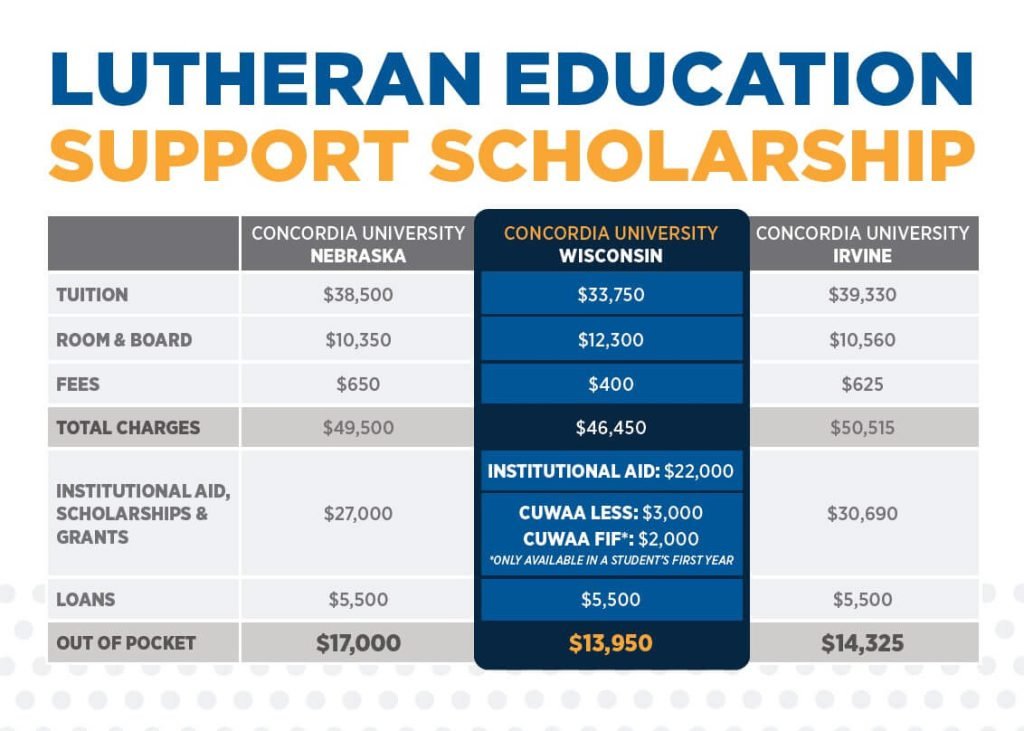
Recognizing the significant need for Lutheran educators, Concordia has debuted the Lutheran Educator Support Scholarship (LESS) for fall 2023.


In honor of Church Work Appreciation Month, Concordia is pleased to announce a new scholarship for Lutheran educators. LESS is a $3,000 renewable scholarship that provides support for traditional undergraduates preparing to be Lutheran teachers. It’s one of two distinct scholarships given to Lutheran Teacher Diploma (LTD) candidates. Concordia also offers the Forward in Faith scholarship, which may be “stacked” on top of the LESS offering.

The new offering now brings the assistance for LTD candidates up to par with Concordia’s financial aid opportunities for pre-seminary candidates. It also makes a CUW undergraduate education degree a more affordable option than peer Concordias in Nebraska and Irvine.

Highest numbers of church work candidates among the Concordias

Already, Concordia’s Wisconsin campus alone trains the most Lutheran teacher candidates for the LCMS, as well as the most church work candidates for the Church.

A comparative fall 2021 enrollment report of CUS schools (the most recent numbers available) shows CUW has:

  • The most undergraduate church work candidates enrolled (222 candidates)
  • The largest pre-seminary program in the CUS (58 candidates)
  • The largest Lutheran Teacher Diploma program (117 candidates)
  • Robust numbers enrolled in its Director of Church Ministries program (40—3 less than the highest DCE enrollment in the System)

Additionally, Concordia University Wisconsin maintains a strong Lutheran-Christian population among students pursuing non-rostered degrees, demonstrating the university’s dedication to preparing workers who will strengthen the Church in all of life’s vocations:

  • 88% of traditional undergraduates are Christian (The second-largest percentage, after CUAA’s 90%, within the CUS)
  • 1,155 of those, or 40%, are Lutheran (The largest number in the CUS and the second-highest percentage in the System)
  • 73% of graduate-level learners are Christian, with 21% of those identifying as Lutheran (The most in the CUS)

Explore our education offerings

Undergraduate

CUW offers more than a dozen bachelor’s programs within its School of Education. Any of these degrees may have the Lutheran Teacher Diploma added to make a candidate eligible to receive a call within the LCMS.

Graduate

CUWAA offers more than 20 graduate education degrees that will help you further your knowledge, experience, and career pursuits. Just a few options include:

  • Master’s in education administration
  • Master’s of Educational Leadership
  • Master’s in student personnel administration in higher education
  • Master’s in Counseling
  • Master’s of Curriculum & Instruction with teacher certification in elementary or secondary education
  • Superintendent Licensure
  • Master of Science in Instructional Leadership
  • Master’s in Literacy
  • Doctorate of Leadership in Innovation & Continuous Improvement

Want in?

Concordia University Wisconsin knows the urgent need for more skilled workers for the Church. The university annually commits a variety of support to students who indicate their desire to pursue church work.


Liberty, Faith, and Economics Summit draws North Korea defector


Yeonmi Park, North Korea defector and author of an international bestseller, was the keynote speaker of Concordia’s fourth annual Liberty, Faith, and Economics Summit.


Freedom is under pressure all around the world–a fact Yeonmi Park knows all too well.

The international bestselling author also knows full well the preciousness of freedom, having once fled a country that is notorious for its suppression of individuals’ freedoms.

Last night, Park shared with the Concordia community the story of her escape from North Korea and the atrocities she faced while living there. Her powerful address capped off an afternoon of civil discourse around the topic of freedom’s erosion on an international scale as part of Concordia’s fourth annual Liberty, Faith, and Economics Summit.  

Despite her desire to escape and the fact that she is now a U.S. citizen, Park shared with the Concordia audience that she is grateful to have been born in North Korea.

“If I wasn’t born in that darkness, if I wasn’t born in that oppression, I would not have known how unique, how amazing, how miraculous (it is) to be in this free country.”

Click below to view a recording of her full address.

Summit lineup

The Liberty, Faith, and Economics Summit also exposed attendees to a variety of other countries’ plight in the absence of basic human rights afforded to their citizens:

  • Two Concordia students who are involved in the production of the CUWAA Queastus Journal interviewed peers from Ukraine who are attending Ukrainian-American Concordia University.
  • CUW Professor of Political Science Lamont Colucci, PhD, discussed matters surrounding Taiwan and its fight for security amid China’s reassessment of its “peaceful unification” policy with them.
  • Acton Institute’s Dan Churchwell lead a discussion on the recently released documentary, The Hong Konger.

Check back for recordings of these presentations.

Want in?

The Liberty, Faith, and Economics Summit was put on by Concordia’s Free Enterprise Center. The Center opened in fall 2021 under the leadership of Scott Niederjohn, a nationally recognized economist and scholar who now serves as a professor of economics at CUW. The Center aims to support the ideals of a free and virtuous society through four areas: research, education, application, and public policy.

Its next event–the second of this year’s Economics, Politics, and Philosophy on the Bluff Speaker Series–will take place on Monday, Oct. 17 in the Robert W. Plaster Free Enterprise Center on Concordia’s Mequon campus. Matt Ridley will be the featured guest. His talk begins at 6 p.m., with a reception starting at 5 p.m.

Registration for this event is preferred, but the event is free.


CUW nursing turns 40


Can you believe it has been four decades since the first nursing class was admitted at Concordia College?!

Editor’s note: This story first appeared in the fall 2022 edition of Hearts Together, a Concordia University Wisconsin and Ann Arbor special magazine edition.


That was just the beginning of what has become a strong, enduring tradition of Concordia University Wisconsin nursing graduates fulfilling Concordia’s mission to serve Christ in the Church and in the world.

“It started with the Rev. Dr. John Buuck, the school president at the time, who really had a vision,” reflects Dr. Carol Lueders Bolwerk, professor of nursing and director of parish nursing and congregational health ministry. “Based on his background as both a minister and a biologist, he felt that nursing was a calling, a vocation. So when the school bought this campus in Mequon, they hired Dr. Marge Viehl, who was LCMS, to develop a nursing program.”

Ever since, the integration of faith into a nursing education is one thing that distinguishes the CUW program. One way that happens is through a dedicated course on Christian caregiving, which provides a Christ-centered framework to holistic health care. Since 1989, the program has also incorporated parish nursing—now often known as “faith community nursing”—into the curriculum.

This emphasis on faith is also reflected in the importance of annual nursing mission trips. Since 2005, hundreds of nursing students have traveled to places such as Mexico, Costa Rica, Honduras, and Belize, bringing much-needed medical care while spreading the Gospel of Christ.

Today, CUW’s fully accredited nursing programs truly stand out, with state-of-the-art simulation labs, diverse clinical opportunities (Including women’s health in OB/GYN), excellent student-teacher ratios, and a wide variety of degree paths (including BSN to DNP, BSN completion, second degree in nursing-accelerated format, and more) to name just a few.

As the health care industry continues to face a severe nurse shortage, faith-based education and care become ever more important.

“Nurses offer hope and inspiration, things that are needed now more than ever, so we’re going to continue to find new ways to train nurses to care for patients in mind, body, and spirit,” Lueders Bolwerk says. “And, of course, we continue to share the Gospel. Because when all is said and done that’s really the most important thing of all.”

Measures of Christ-centered care

As the CUW School of Nursing celebrates its 40th anniversary this year, here are just a few of the milestone numbers this outstanding program has reached:

#1

First among the Concordia University System to offer a nursing degree

3,642

Number of CUW nursing alumni in the field

93%

Most recent NCLEX first-tie pass rate (more than 6 points above the national average)

11

Number of bachelor’s, master’s, doctoral, and certificate program tracks available

14

Years of Doctor of Nursing Practice, the longest-running such program in Wisconsin

30

Number of annual parish nurse and congregational health ministries conference events held on campus to date

Decades of alumni in the field

Concordia is proud to call more than 3,500 nursing graduates our own. Here are just a few who have spanned the decades of CUW’s nursing history.

Cindy Witte (’90, ’02), DNP, RN, FNP, CNE

Associate professor of nursing at Concordia University Wisconsin

“Whether as a student or faculty member, CUW has been my home for the majority of my professional life. The opportunity to proclaim Christ amid coursework is paramount.”

Sue Hafemann (’92, ’08), RN, FNP, APNP-BC

Family nurse practitioner for Aurora Health Care Wisconsin

“I continue to see the blessings of a CUW education in the students I mentor in practice, and I’m also very proud that my three daughters have pursued their nursing education/careers at CUW!”

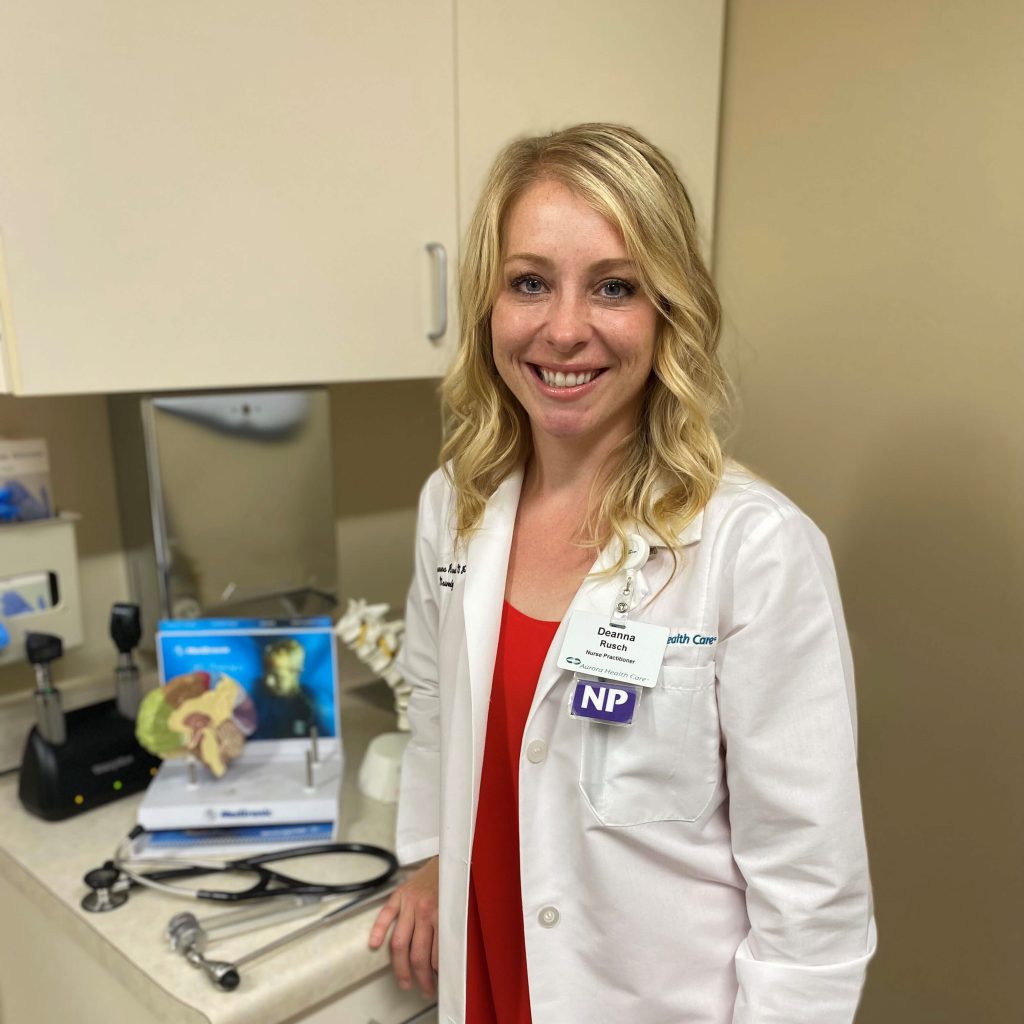
Deanna Rusch (’08, ’15), MSN, APNP, SNP-BS

Lead nurse practitioner-neurology for Aurora Advance Good Hope Clinic

“Concordia taught me how to use servant leadership and provide care holistically in the field of neurology.”

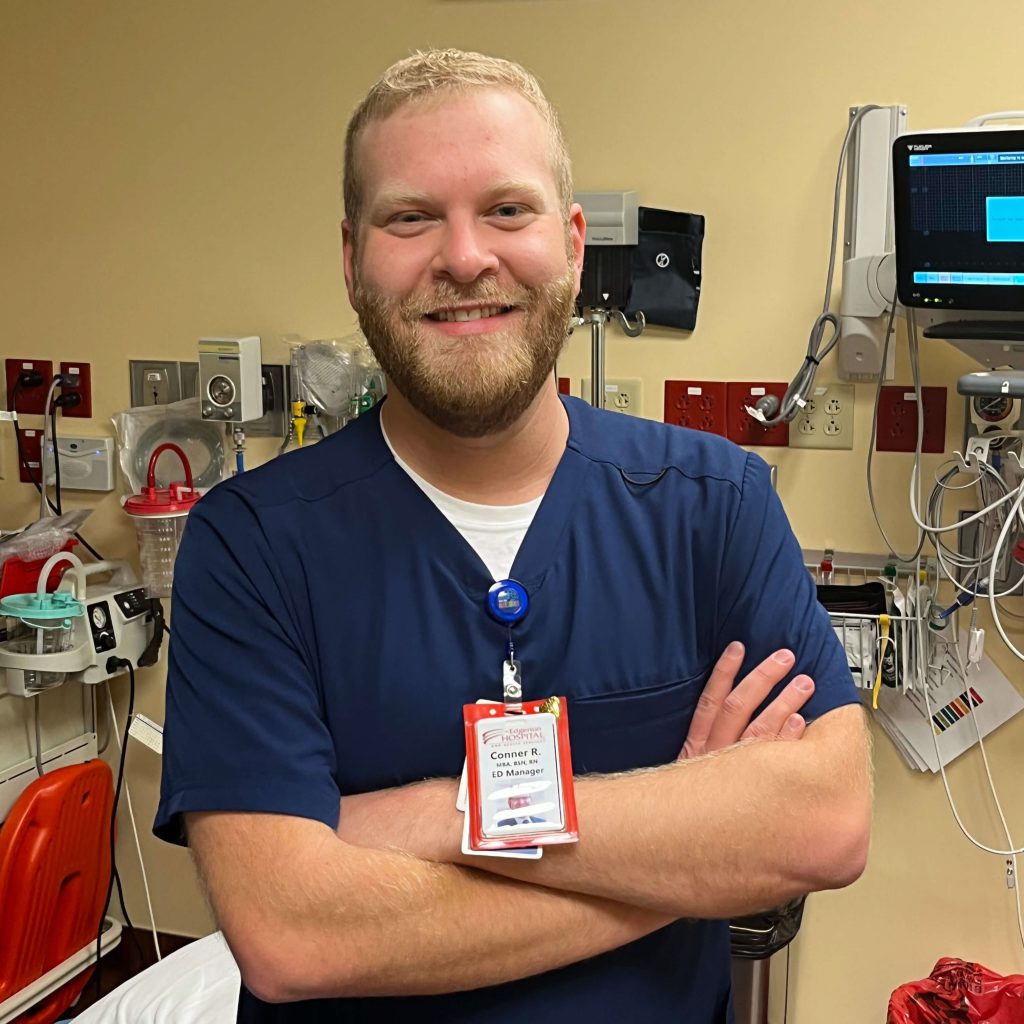
Conner Ruosch (’16), MBA, BSN, RN

Emergency department and med/surg unit manager at Edgerton Hospital and Health Services

“I absolutely loved the faculty and staff at Concordia. It was like having 10 extra moms and aunts all cheering me on.”


Want in?

CUW is proud to offer the longest-running Lutheran nursing degree in the nation, as well as the earliest established DNP in the state of Wisconsin. Click on the link below to learn more.


—The fall 2022 Hearts Together magazine hit mailboxes in early October. View a PDF version of the magazine here. If you are not on our mailing list, but are interested in receiving a free copy, email Jennifer.Hackmann@cuaa.edu.

Prescribing for prisons


Makayla Hopp (’18) serves as assistant pharmacy director for the Wisconsin Department of Corrections and oversees a team of 18 pharmacists who play a role in filling prescriptions for the entirety of the state’s prison population.

Editor’s note: This story first appeared in the fall 2022 edition of Hearts Together, a Concordia University Wisconsin and Ann Arbor special magazine edition.


It’s hard to grow up in Waupun and not be reminded of the criminal justice system. The Wisconsin city is home to three prisons, including the state’s oldest penitentiary. About one-fourth of Waupun’s 11,300-person population is incarcerated.

Although Makayla Hopp (’18) never had any direct experience with correctional institutions growing up, the Waupun native was acutely aware of their presence in her hometown. So when it came time to rank her rotation preferences while in her final year of pharmacy school at CUW, she naturally paired with the Wisconsin Department of Corrections (DOC), whose pharmaceutical facility is in Waupun.

Hopp stayed on with the DOC after earning her PharmD in 2018, and quickly rose to a leadership position due to her aptitude and affinity for her native city. She now serves as assistant pharmacy director and oversees a team of 18 pharmacists who play a role in filling prescriptions for the entirety of the state’s prison population. Altogether, Hopp and her team fill about 2,500 prescriptions a day.

“Our goal is patient care,” says Hopp. “Ultimately, we want to reduce recidivism. We want to provide the best possible care for our patients while they’re here in order to set them up for success.”

That attention to exemplary care was modeled to her at CUW.

“It’s more of a community at Concordia,” Hopp says. “The professors know you and care about you, and if you need to get ahold of them they’re available to you. At Concordia, they’re really invested in your education.”


Want in?

In 2021, the Accreditation Council for Pharmacy Education (ACPE) extended CUW School of Pharmacy’s accreditation for the maximum eight-year term and named it one of only five “Noteworthy Examples” of exceptional achievement nationwide. Learn more about SOP by clicking on the link below.


—The fall 2022 Hearts Together magazine hit mailboxes in early October. View a PDF version of the magazine here. If you are not on our mailing list, but are interested in receiving a free copy, email Jennifer.Hackmann@cuaa.edu.

Sweetening the deal


Life at Concordia is a little bit sweeter ever since the university acquired the assets of a successful Wisconsin chocolate business.

Editor’s note: This story first appeared in the fall 2022 edition of Hearts Together, a Concordia University Wisconsin and Ann Arbor special magazine edition.


Life at Concordia is a little bit sweeter ever since the university acquired the assets of a successful Wisconsin chocolate business.

Richard Koenings, an adjunct instructor at CUW, had previously owned Red Elephant Chocolate, a popular artisan shop with storefronts in Milwaukee’s historic Third Ward and downtown Madison. After more than a decade of operating the business, however, Koenings was looking to pass the torch. He saw the enterprise as a prime hands-on learning opportunity for Concordia business students and pitched the idea to Vice Provost for Research and Innovation Dan Sem, PhD, PharmD.

Now, the business is called Concordia Red Elephant Chocolates. There’s no longer a storefront. Instead, the operation runs out of CUW’s professional-grade kitchen on campus. Anyone nationwide can place an order to enjoy the handcrafted treats through Concordia’s e-commerce website. There’s even an opportunity to order chocolates with custom logos, which the LCMS English District took advantage of over the summer for its district convention.

Concordia Red Elephant Chocolates is made possible by the entrepreneurial nonprofit CU Ventures, which formed last year, and private investors, including CUW Assistant Dean of Professional Development Ken Harris Jr., PhD. Over the summer, the spin-out company and its investors acquired the industrial equipment necessary to make the chocolates, purchased the business assets, and hired the operation’s two employees: Sue Krawczyk, who crafts the chocolates, and Cherie Banner, who serves part time as a business manager. Also involved in the e ort is Jafar Payandeh, a graduate assistant enrolled in CUW’s Master of Science in Product Development food and beverage track.

Now that CUW students are back on campus for the fall 2022 semester, Sem says he’s eager to involve them as well.

“We are running this like a bona de business but then looking to involve students in multiple ways,” says Sem. “The applications are really endless—from marketing to bookkeeping to student projects. It gives them real, applied learning experiences. Plus, who doesn’t like chocolate?”


Want some?

Click on the link below to order your own Concordia Red Elephant Chocolates.


—The fall 2022 Hearts Together magazine hit mailboxes in early October. View a PDF version of the magazine here. If you are not on our mailing list, but are interested in receiving a free copy, email Jennifer.Hackmann@cuaa.edu.

Seeding growth


What does it mean to grow in faith? Ultimately, it is to become more like Christ.

Editor’s note: This story first appeared in the fall 2022 edition of Hearts Together, a Concordia University Wisconsin and Ann Arbor special magazine edition.


And we become more like Christ through obedience to the Lord. At Concordia, we are deliberate about the ways in which we encourage and inspire students to grow.

Daily Chapel

Each weekday at 9:30 a.m. Central/10:30 a.m. Eastern, the entire Concordia community pauses classes and business operations to allow for Daily Chapel. Chapel is optional, yet a couple hundred students, on average, elect to attend each day to immerse themselves in the Word of God, sing a hymn, and hear a message from one of Concordia’s many Biblical scholars.

Other worship opportunities

In addition to Daily Chapel, Concordia offers a variety of other evening services and opportunities for spiritual growth and praise, including a Wednesday night Candlelight Evening Prayer service on the CUW campus and Night of Worship on the CUAA campus.

Weekly Bible studies

There are upwards of 20 Bible studies offered weekly on each of our campuses. Some are organized and led by students, and others are hosted by faculty or staff. Either way, there is no shortage of opportunities for students to regularly engage in God’s Word.

Faith-filled liberal arts core

Concordia’s liberal arts core—a 45-credit course load required for all undergraduates, regardless of major—comprises more than a third of every Concordia undergraduate’s academic experience. Within the liberal arts core are three requisite faith courses: “The Bible,” “The Christian Faith,” and a faith elective course. Of the dozens of instructors who teach within the liberal arts core, a majority are Lutheran. All who teach the faith courses are rostered LCMS pastors, some of whom hold leadership positions at the synodical or district levels.

Campus Ministry programming

Under the faithful leadership and direction of Concordia’s campus pastors—Revs. Steve Smith, Randy Duncan, and Doug Bender—several dozen CUWAA students organize and lead ongoing ministry efforts designed to “seek the lost, strengthen the saved, and nurture Christian leaders.” The CUW and CUAA Campus Ministry teams are by far the most robust and active student organizations on each campus.


How are we doing?

80% of 2022 CUAA graduates indicated they grew in their Christian faith during their time at Concordia.

82% of 2022 CUW students said that faculty regularly integrate faith into the curriculum of their classes.

When surveyed about faith, here’s what students had to say

13%
7%

Non-believer: “I currently do not believe in Christ, and I am not interested in exploring what it means to be a Christian”

29%
28%

Beginner: “I believe in God, but I am not sure about Christ. My faith is not a significant part of my life.”

45%
41%

Believer: “I believe in Jesus and am working on what it means to get to know him and to share that love with others.”

16%
17%

Follower: “I see Christ as assisting me in life and it is leading me to a much deeper love of family and others.”

6%
6%

Disciple: “I have an intimate relationship with Jesus that drives my flourishing unity with others.”

Students’ survey responses ranked Concordia highest on these five faith indicators (out of more than 25)

  1. Concordia helps me develop a personal relationship with Christ.
  2. Concordia has teachers/faculty that model and consistently reinforce how to grow spiritually.
  3. Concordia teaches me the words, stories, and key messages of my faith.
  4. Concordia inspires me to make my faith an active part of my life.
  5. Concordia helps me understand the Bible in greater depth.

Concordia’s Office of Institutional Effectiveness is committed to the ongoing, objective assessment of our university’s progress and success. View more measures of success at cuw.edu/fastfacts or cuaa.edu/fastfacts.


—The fall 2022 Hearts Together magazine hit mailboxes in early October. View a PDF version of the magazine here. If you are not on our mailing list, but are interested in receiving a free copy, email Jennifer.Hackmann@cuaa.edu.