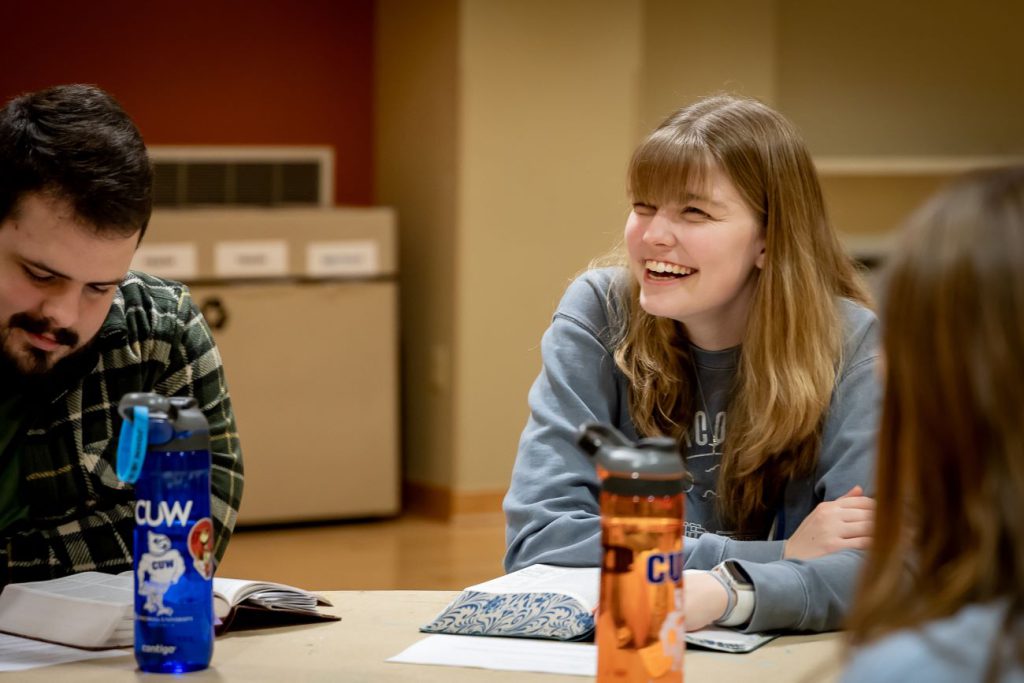
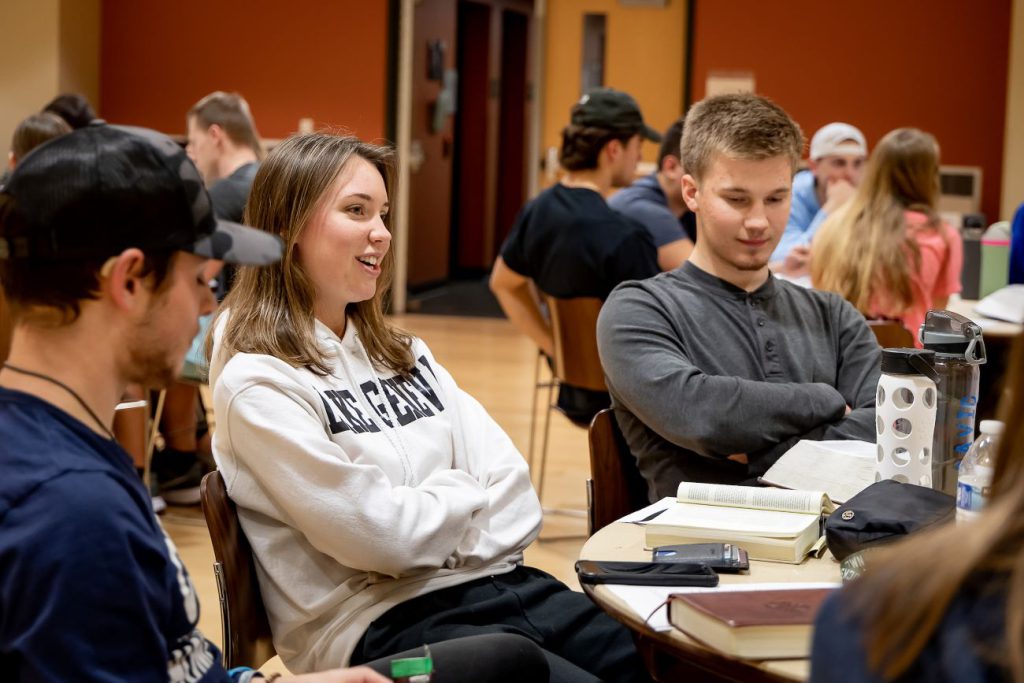
At Concordia University Wisconsin, the Doctor of Physical Therapy (DPT) program prepares students to become highly skilled clinicians who are equipped to serve patients with compassion, expertise, and purpose.
That commitment to excellence is reflected in Concordia’s recognition as a 2026 Best Graduate School by U.S. News & World Report.
Through a rigorous academic experience, hands-on clinical training, and a Christ-centered approach to care, Concordia equips future physical therapists to make a meaningful impact in the lives of their patients and communities.
Focused on what matters most: Outcomes and preparation
Physical therapy is a profession grounded in trust, expertise, and real-world application. Demand for physical therapists continues to grow nationwide, with job growth projected to increase 11% over the next decade, according to the U.S. Bureau of Labor Statistics. As a result, the need for well-prepared, patient-centered clinicians has never been greater.
An aging population, increased focus on mobility and quality of life, and advances in rehabilitation are all contributing to expanded opportunities across the field. Physical therapists play a critical role not only in recovery from injury, but in helping individuals maintain independence and long-term health.
The physical therapy profession continues to evolve with more clinical practice areas and increasing professional autonomy. For example, physical therapists are practicing in expanding practice areas such as oncology, women’s health and telehealth. Furthermore, professional privileges such as ordering medical imaging improve patient access and enhance the position of physical therapists as primary providers in the healthcare system.
Concordia’s doctoral program emphasizes clinical readiness—developing practitioners who can evaluate, diagnose, and treat movement dysfunction across diverse patient populations. Students engage in a comprehensive curriculum that blends foundational sciences with applied clinical practice, preparing them for licensure and long-term success in the field.
“Our focus has always been on preparing students to be excellent clinicians—individuals who can think critically, adapt to complex situations, and provide high-quality care,” said Dr. Dale Gerke, chair of the physical therapy program. “That’s what ultimately defines the strength of a program.”
Hands-on learning in a collaborative environment
Experiential learning is central to Concordia’s DPT program. Students gain extensive hands-on experience through lab work, simulation and multiple clinical education placements in a variety of healthcare settings.
Faculty bring deep clinical expertise into the classroom, creating a learning environment that is both academically rigorous and highly practical. Small class sizes and close faculty mentorship ensure that students are supported throughout their academic and professional journey.
Graduates leave the program well-prepared to meet the demands of the profession, with the skills and confidence needed to serve patients effectively and compassionately.
“Our Doctor of Physical Therapy program is designed to prepare students for meaningful, impactful careers in healthcare,” said Dr. Linda Samuel, dean of the School of Health Professions. “Our Christ-centered environment makes a difference by shaping graduates who not only excel clinically, but who approach each patient with compassion, integrity and a true sense of calling.
Want in?
The Doctor of Physical Therapy (DPT) program at Concordia University Wisconsin combines strong academic preparation with extensive hands-on clinical experience to develop practice-ready clinicians. Grounded in a Christ-centered learning environment, the program equips graduates to deliver high-quality, compassionate care across a variety of healthcare settings.
Life on our beautiful campus would not be the same without the dedication and hard work of our student employees.
From food service to campus ministry, and across countless essential offices, students play a vital role in the daily life of our university. Wherever there is work to be done, there is often a student faithfully serving behind the scenes.
“We are truly blessed to have such dedicated and talented student workers in many departments on the campus. Their energy, creativity, and commitment bring a fresh perspective to our daily work,” said Cheryl Weber, Human Resources engagement specialist. “Their contributions not only lighten the workload, but also enrich our campus community, reminding us of the bright future ahead.”
Each year we choose four of the best of the best for this award. Students are nominated by faculty and staff, based on the following criteria:
Exemplifies a strong, Christ-like character
Shows enthusiasm, dedication, initiative and reliability in service to their department
Performs excellent work
Willingly goes above and beyond expectations
Has a mind-set of service to others
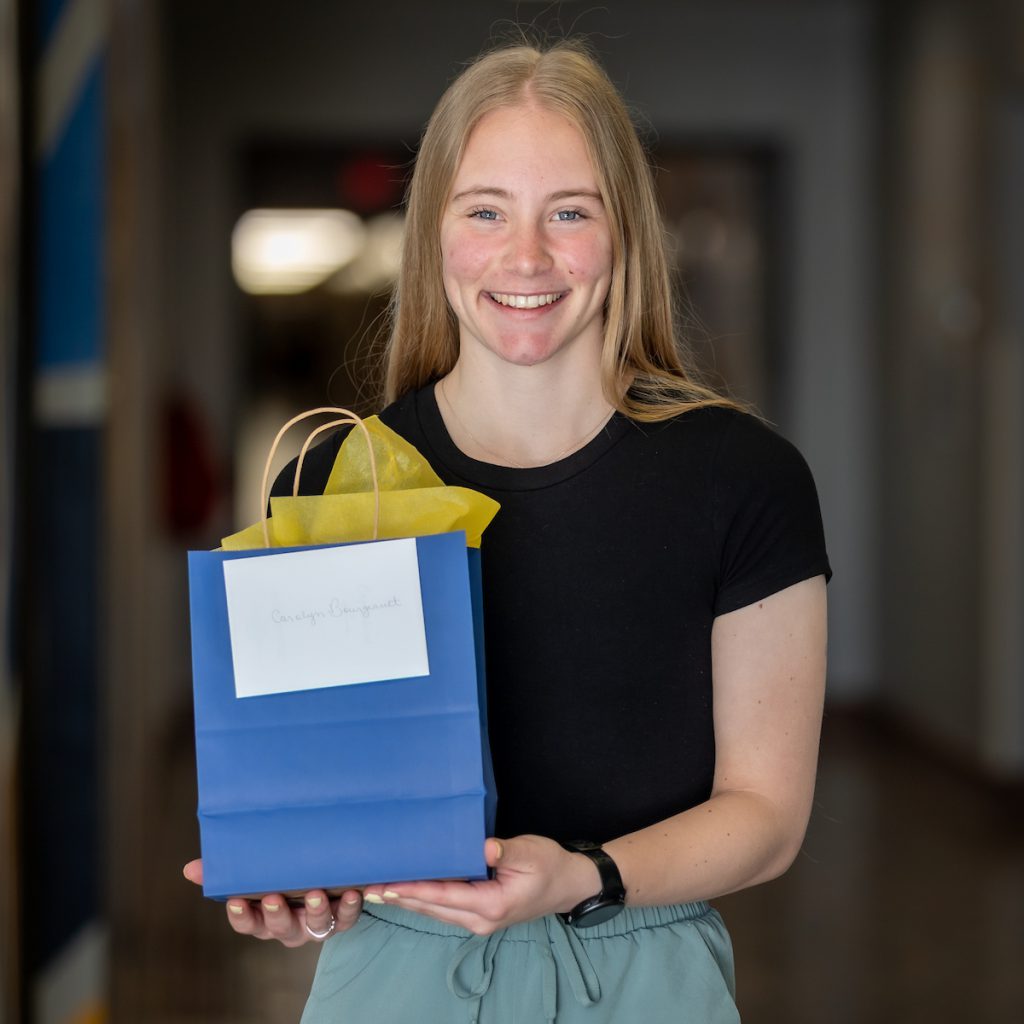
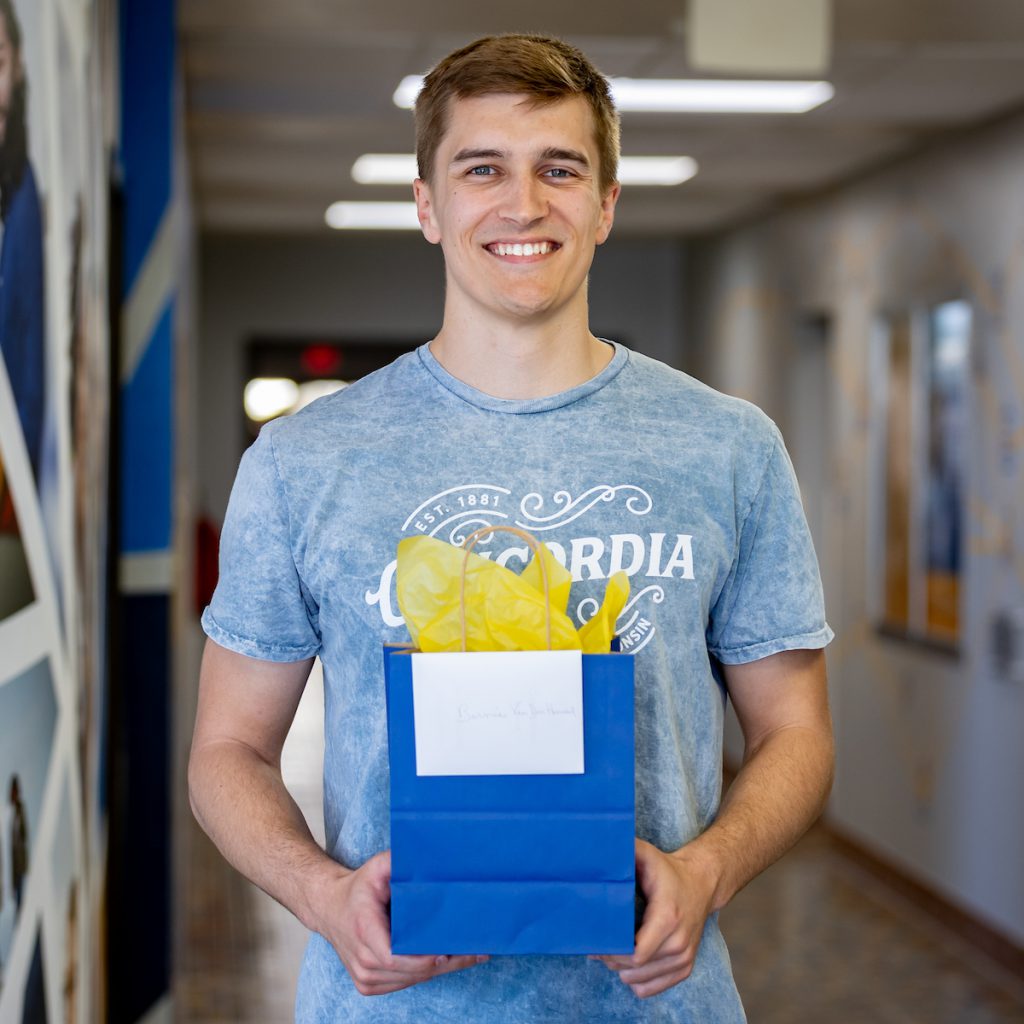
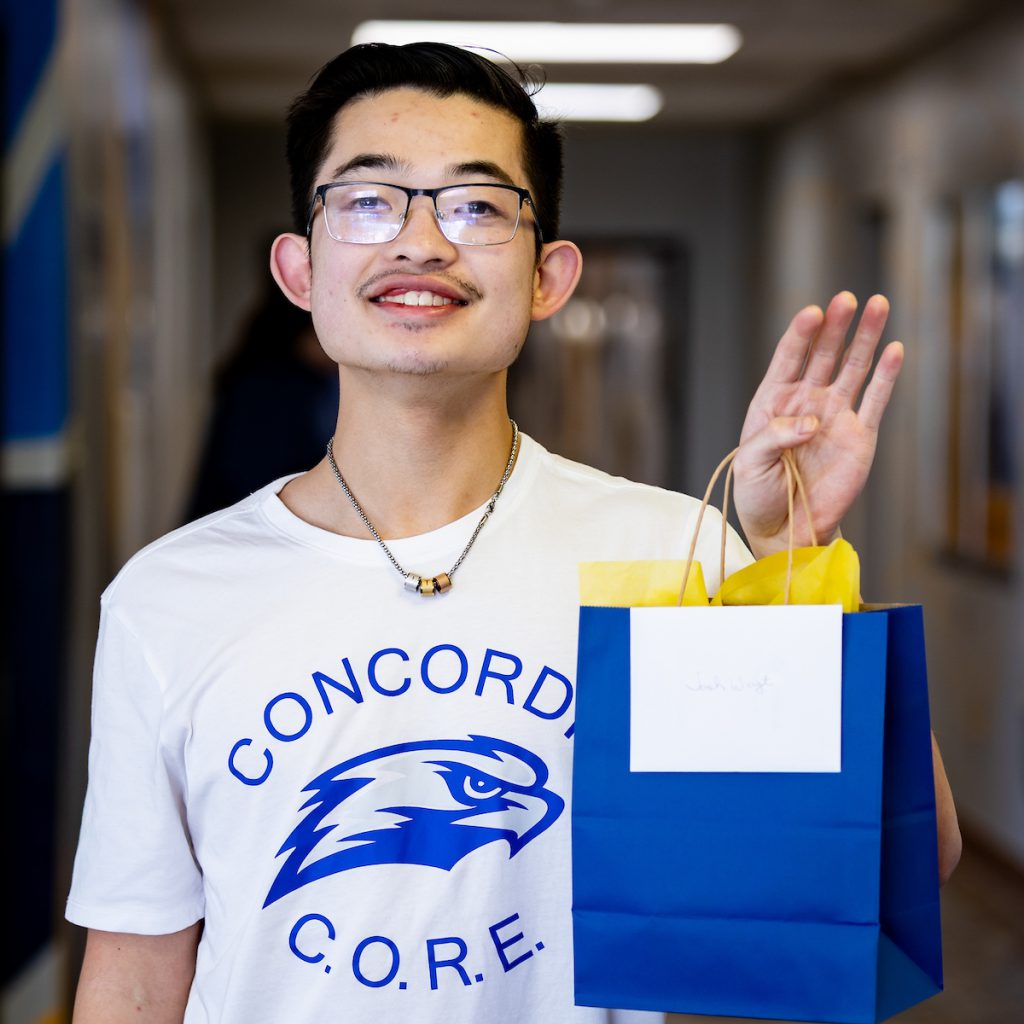
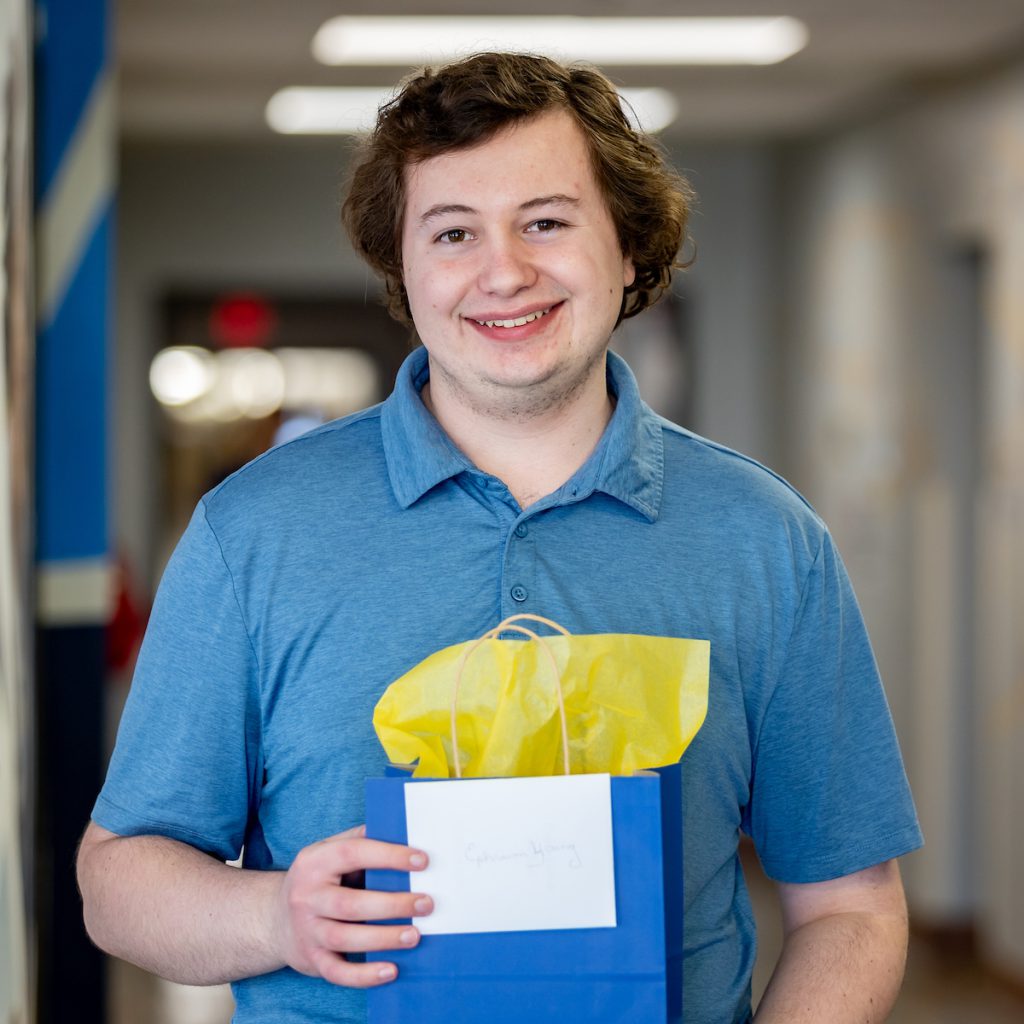
Congratulations to this year’s winners (shown below with their gift bag of prizes)! Thank you for making so many things on our campus run more smoothly, efficiently and cheerfully.
Carolyn Bourgeault | Junior | Buffalo, New York
Student Assistant, Athletics
Major: Pre-Occupational Therapy
Nominated by Jeremy Crawford:
“This fall, I had a handful of health problems that kept me working remotely and not on campus. Carolyn saved the Athletic Communications office, taking on tasks that are typically reserved for full-time staff. I was able to accomplish a lot from working while hospitalized, but I mean this when I say that she saved the Athletic Communications office.”
Bernie Van Den Heuvel | Graduate Student | Valders, Wisconsin
Student Ambassador. Admissions
Major: Doctor of Physical Therapy
Nominated by Cassandra Chmielewski:
“Bernie has served as a Student Ambassador in our Admissions Office since fall 2021. Over the years, it has been remarkable to witness his growth, not only as a student, but also as a seasoned leader within our Student Ambassador Team. In his role, Bernie consistently demonstrates outstanding communication skills, adaptability, and a genuine ability to connect with prospective students and their families. His infectious personality allows him to engage with individuals from all backgrounds, and he continually has a positive influence on everyone he meets. Bernie truly embodies the mission of CUW in his daily life and reflects the institution’s values as a student. His dedication to higher learning, combined with his commitment to serving others, has a lasting and positive impact on our CUW community.”
Josh Weigt | Senior | Franklin, Wisconsin
Peer Advisor, CAACE
Major: Visual Communications
Nominated by Devan Lenz-Fisher:
“Josh is an exemplary Peer Advisor, and also one of the most quality people I’ve had the privilege of working with. Empathetic, caring, respectful, humble, confident, professional, reliable, coachable, creative, and committed are just a few words I’d attribute to Josh, but the list is expansive as his willing attitude and servant-leader heart has made him an irreplaceable part of our Center for Academic Advising and Career Engagement family.”
Ephraim Young | Senior | Mequon, Wisconsin
On Call Student Worker, AV
Major: Computer Science
Nominated by Andrew Wahl:
“There’s so much to say about Ephraim. He’s been on our team since coming to CUW and, every year, has been an indispensable part of our team. He’s constantly reliable, thoughtful, and driven. Few people have the drive he does to see things improve, both from a technology standpoint, and from a personal and personnel standpoint. He invests very well in his fellow students, has trained many of them well, and is currently continuing to do that to prepare for his graduation this spring. He constantly serves well behind the scenes, prepping tech for Monday on the weekends, in the midst of serving in Haven and excelling in his studies. His work on the Chapel Tech team is also commendable, as he’s helped identify several fixes to make sure daily Chapel and the stream/recordings run smoothly.”
Want in?
Concordia University Wisconsin is a Lutheran higher education community committed to helping students develop in mind, body, and spirit for service to Christ in the Church and the world. To learn more about CUW, click the link below.
Concordia University Wisconsin today announced an important new partnership with the Idaho College of Osteopathic Medicine with the goal of bringing medical school education to its Mequon campus.
Through this agreement, ICOM and CUW will work together to create streamlined pathways for students pursuing careers in medicine, including eventual plans to establish an ICOM instructional site on the CUW campus. The partnership includes an articulation agreement that facilitates qualified Concordia students’ admission into ICOM’s Doctor of Osteopathic Medicine program. The articulation agreement is effective immediately, and plans to establish an ICOM-CUW satellite campus in Mequon are contingent upon the approval by the Commission on Osteopathic College Accreditation.
“This partnership builds directly on Concordia’s strong tradition in the health sciences,” said Dr. Erik Ankerberg, president of Concordia. “We are expanding what’s possible for our students—creating a clearer, more connected path from undergraduate study into medical school while strengthening our Christ-centered role as a leader in preparing healthcare professionals. This is a natural next step for Concordia and a significant benefit for the students and communities we serve.”
In addition to creating new medical school pathways, the partnership establishes opportunities for dual faculty appointments, shared research, interprofessional education and other collaboratives that will enhance the teaching, learning, and scholarly experiences for students and faculty at both institutions.
Importantly, the partnership will also create new and expanded opportunities for ICOM students to complete clinical rotations in the Midwest, broadening their exposure to diverse patient populations and large healthcare systems. At the same time, the collaboration is expected to strengthen the healthcare workforce pipeline—particularly in primary care—by helping bring more physicians to underserved communities across Wisconsin and the region.
“This partnership represents a meaningful step forward in our shared commitment to educating the next generation of physicians,” said Dr. Tracy J. Farnsworth, president of ICOM. “By working together, we are not only expanding opportunities for aspiring medical students but also helping to address critical physician workforce needs in our communities.”
ICOM, Idaho’s first osteopathic medical school, has a mission centered on training future physicians with a focus on service to communities with limited access to healthcare. CUW offers a range of health professions programs designed to prepare students for impactful careers in healthcare and related fields. Together, ICOM and CUW aim to build a stronger, more sustainable healthcare workforce while creating meaningful educational opportunities for students across the region.
Want in?
Concordia University Wisconsin is a Lutheran higher education community committed to helping students develop in mind, body and spirit for service to Christ in the Church and the world.
Six practical steps to help you choose an online program aligned with your strengths and calling.
Choosing an online degree program can feel overwhelming, especially if you know you want to continue your education but are unsure which path fits your personality, interests and God-given strengths. At CUW, we believe education is not simply about earning a credential. It is about discovering your vocation and preparing to serve Christ in the Church and the world.
If you are uncertain where to begin, here are six practical steps to help you discern the right online program for you.
No. 1: Start with your strengths
Every student brings unique gifts. Some thrive in analytical environments. Others are energized by helping people, leading teams or creating new ideas.
Ask yourself: • Do I enjoy solving complex problems and working with data? • Do I feel most fulfilled when I am caring for or guiding others? • Am I motivated by organization, leadership and strategy? • Do I enjoy creative expression, communication or storytelling?
Your natural strengths often point toward areas where you will both succeed academically and feel professionally fulfilled.
The key is alignment. When your studies connect with how God has wired you, your motivation and resilience increase.
No. 2: Consider how you like to work
Online learning offers flexibility, but programs still differ in structure and expectations.
Think about: • Do I prefer structured schedules or independent pacing? • Am I comfortable with technology and digital communication? • Do I enjoy discussion and collaboration, even in virtual settings? • How much time can I realistically dedicate each week?
Some programs require field experience or licensure components. Others are more research-based or project-driven. Understanding your preferred working style helps you choose a program that supports—not frustrates—your learning habits.
No. 3: Reflect on your long-term goals
Sometimes clarity comes not from personality, but from purpose.
Ask: • Where do I see myself in five or 10 years? • Do I want to advance in my current field or pivot to something new? • Am I seeking leadership opportunities? • Do I feel called to serve in a particular way?
At Concordia, we often talk about vocation—the place where your gifts meet the world’s needs. An online program should not just prepare you for a job, but for meaningful impact.
If your goal is classroom leadership, an education degree may be the right fit. If you feel drawn to organizational growth and strategic thinking, a business or leadership program could be a strong choice. If your heart is in serving vulnerable populations, health professions or social work may align well.
No. 4: Evaluate support systems
Success in an online program is not a solo effort. Strong support makes a meaningful difference. Look for programs that provide: • Dedicated academic advisors • Accessible and engaged faculty • Clear pathways for licensure or certification, if required • Academic support services designed for online learners
Online students are supported holistically—mind, body and spirit. Advisors, program directors, and student support teams walk alongside you from admission through graduation.
Choosing a program means choosing a community.
No. 5: Pray and seek wise counsel
As a Lutheran university, we believe discernment is both practical and spiritual. Prayerfully consider your options. Seek input from trusted mentors, pastors, family members and colleagues who know your strengths.
God has uniquely gifted you. Education is one of the tools He uses to shape your service.
No. 6: Take the next step—even if it’s small
You do not need to have every detail figured out today. Often, the best next step is a conversation.
Speak with an admissions counselor. Review program descriptions. Ask about career outcomes. Share your questions openly. These conversations can bring clarity.
Remember: Choosing a degree is not about finding the “perfect” program. It is about finding the right next step in your growth.
You were created for more
Online education offers flexibility, but it should still be transformational. The right program will challenge you, strengthen you, and prepare you to lead a life of purpose and service.
If you are unsure where to begin, that is OK. Discernment is part of the process. With reflection, prayer, and guidance, you will find a path that aligns with your strengths and your calling.
And when you do, you will not walk it alone.
Want in?
Concordia University Wisconsin is a Lutheran higher education community committed to helping students develop in mind, body and spirit for service to Christ in the Church and the world.
CUW’s online undergraduate and graduate classes are offered year-round. Students begin courses in two eight-week terms during the spring, summer and fall for most programs. Take the next step by connecting with Concordia University’s admissions team. Visit CUW Online Undergraduate Admissions for undergraduate degrees or CUW Graduate Admissions for master’s degrees and licensure programs, or call 262-243-4300.
At Concordia University Wisconsin, spring break often looks a little different. This year, a group of students headed south—and The Avery Journal featured their experience.
While many students head home or take time to rest, a group of Concordia students chooses something else entirely. They go to serve.
This year, more than 20 CUW students and staff traveled to Avery County, N.C., dedicating their spring break to hands-on service work alongside local partners. Their efforts—ranging from clearing debris along stream banks to repairing buildings and supporting recovery work—recently caught the attention of The Avery Journal, a local publication in the community they served.
Recognition in a local newspaper carries its own significance. But what makes this moment especially significant is where the recognition came from: the community itself. It is one thing to serve. It is another to have that service seen, received, and affirmed by the people and places directly impacted.
This kind of experience reflects something deeply rooted at Concordia.
We are grateful for The Avery Journal for telling this story and for the community of Avery County for welcoming our students so warmly. Most of all, we are thankful for students who continue to live out Concordia’s mission in meaningful, visible ways.
It is a tradition worth celebrating—and one that continues to shape lives, communities and futures.
Want in?
Concordia University Wisconsin is a Lutheran higher education community committed to helping students develop in mind, body and spirit for service to Christ in the Church and the world.
At Concordia University Wisconsin, a commitment to preparing students for lives of purpose and service continues to gain national recognition. Concordia’s Occupational Therapy program is ranked among the top 25% of programs nationwide by U.S. News & World Report in its 2026 Best Graduate Schools rankings.
With more than 500 occupational therapy programs across the country, this distinction reflects Concordia’s growing reputation for academic quality, hands-on preparation, and faith-centered formation.
A program grounded in purpose
Occupational therapy is about helping individuals live fuller, more independent lives—whether recovering from injury, navigating developmental challenges, or adapting to life changes. At Concordia, that work is rooted not only in clinical excellence, but in a deeper sense of calling.
Students in both the Master of Occupational Therapy (MOT) and entry-level Occupational Therapy Doctorate (OTD) programs are prepared to serve with compassion, skill, and integrity—equipped to make a difference in the moments that matter most.
“Being recognized among the top 25% of occupational therapy programs nationally is an affirmation of the work our faculty and students are doing every day,” said Dr. Meghan Watry-Christian, chair and director of Occupational Therapy. “We are proud to prepare occupational therapists who lead with both high levels of competence and a strong sense of purpose.”
Hands-on learning that makes a difference
Concordia’s OT programs emphasize experiential learning from the start. Through hands-on lab experiences, hospital simulations, treating in the campus clinic, community engagement, and fieldwork placements, students gain the practical skills needed to thrive in a wide range of settings—from hospitals and rehabilitation centers to schools and community-based organizations.
Faculty bring both academic expertise and real-world experience into the classroom, mentoring students as they develop clinical reasoning, problem-solving abilities, and a client-centered approach to care.
Flexible pathways to advance your calling
Whether students are beginning their journey or advancing their professional goals, Concordia offers pathways designed to meet them where they are:
The Master of Occupational Therapy (MOT) prepares students for entry-level practice with a strong foundation in clinical skills and client care
The Doctor of Occupational Therapy (OTD) provides training for entry-level clinical skills, leadership development, and opportunities for specialization and research
Both programs are designed to support students academically, professionally, and personally—within a Christ-centered community that values growth in mind, body, and spirit.
“This recognition speaks to the strength of our health professions programs and the intentional way we prepare students for impactful careers,” said Dr. Linda Samuel, dean of the School of Health Professions. “We are committed to developing graduates who are not only highly skilled, but who serve with compassion and purpose in their communities.”
Want in?
Concordia’s OT program makes stepping forward in your calling as an occupational therapist attainable no matter where you are in your journey. Our multiple program pathways and hybrid course formatting will prepare you holistically through our faith-based, student-centered curriculum, and diverse, hands-on, clinical experiences. You’ll graduate ready to help your patients thrive in a variety of settings.
Introducing the officers of the Student Government Association for the 2025-26 school year.
Each new school year, a new executive board takes the reins of the Student Government Association. This important group, funded by student fees, oversees student clubs and works with faculty, campus ministry and the university’s administration to make sure the student voice is heard.
This year’s president, Mikayla Sells (’26) lists these as her top three successes for SGA this year:
This year, we welcomed many new senators to SGA. It is always great to see emerging leaders and to watch Student Government continue to grow.
We are hosting the second annual Concordia’s Got Talent in conjunction with our Show Off Your Talent Career Fair, thanks to our sponsor, Northwestern Mutual North Shore.
We have passed a number of resolutions this year to support students. One we are especially excited about is the purchase of a new piano and new lighting for the Todd Wehr Auditorium.
“Student Government has been a blessing throughout my time at Concordia. It has shaped me as a leader, connected me with students and faculty across disciplines, and opened doors to serve others. More importantly, it has given me the opportunity to lead with purpose and be a light for the Lord.” — Mikayla Sells, SGA president
Best Job I’ve Had: Political Communications Strategist
Aaron Fritz (’26) | Chief Organization Officer
Hometown: Middleton, Wis.
Major: Finance
Career Ambition: Wealth Management
Fun Fact: I watched 168 movies last year.
Want to get involved? Feel free to attend a meeting, Mondays at 9:30 p.m. in Pharmacy 008. Or send an email to SGA@cuw.edu. To learn more about the SGA at CUW, click the link below.
From left to right:
Micah Hoehner, Jenna Piwowarcyk, Mikayla Sells, Noah Roitman (VP for the first half of the year) and Aaron Fritz
Learn more
Concordia University Wisconsin is a Lutheran higher education community committed to helping students develop in mind, body and spirit for service to Christ in the Church and the world. To learn more about the SGA and SGA chartered clubs and organizations, lick the link below.
For many Concordia University Wisconsin students, attending a private university requires balancing more than tuition bills, as long work hours, limited free time, and rising stress have become part of daily life.
A graduate student in the physical therapy program, Evelyn De Troye, works multiple jobs alongside her coursework. She works about 15 hours per week at a physical therapy clinic and an additional seven hours on campus while commuting 30 minutes to school.
“Working while being a student has pros and cons,” De Troye said. “I’ve learned a lot about my future career, but it also means cutting out fun things with friends or spending weekends catching up on homework.”
A recent survey, conducted on the Beacon Instagram page for CUW student followers, found that 23 out of 28 respondents work while attending school full-time, reflecting how common employment has become among students navigating the financial demands of a private university education.
While tuition costs are often the most visible expense, students say the real cost of Concordia also includes time, energy and academic pressure. Of 12 students who shared how they pay for school, four said they cover tuition on their own, while six rely on a mix of personal earnings and family support. Only two said someone else pays their tuition entirely.
“It limits availability and makes balancing everything harder,” De Troye said. “It can be stressful when grades are important and there’s only so much time in the day.”
Junior, Sydney Morgen, also balances multiple jobs while paying for school independently. Morgen works as a Resident Assistant, a nanny and an occasional respite caretaker, typically working between 20 and 30 hours per week.
“Having these jobs means I have to be really organized,” Morgen said. “Sometimes I have to cut back on social time, but I try to balance things week to week.”
Both students said working while being a full-time student can be exhausting, but necessary to afford a Concordia education. As tuition costs climb at private universities, students say managing work, academics and personal well-being will continue to be a major part of the college experience.
— Alexandra Princeton is a junior majoring in Mass Communications with a minor in Marketing, set to graduate in December 2026. She currently works at Baird in downtown Milwaukee and serves as Student Editor for The Beacon.
Through accessible teaching and Christ-centered focus, CBI equips learners to grow in faith wherever they are.
The Concordia Bible Institute (CBI) was created to help people understand Scripture in ways that are both faithful and practical.
Founded in 2000, the institute grew from the vision of a generous benefactor who wanted to promote biblical literacy at Concordia and throughout the surrounding region. The Rev. Dr. John Saleska, a longtime college and seminary professor in The Lutheran Church–Missouri Synod, served as its first director.
Today, that work continues through teaching grounded in the Lutheran tradition and attentive to real questions. CBI serves students, church leaders and lifelong learners alike. Some are opening the Bible for the first time. Others return with years of experience. Wherever they begin, CBI offers both a starting point and a path forward.
“It’s been said that the Bible is shallow enough for an infant to wade and deep enough for an elephant to drown,” said Rev. Dr. Brian German, director of the CBI. “When it comes to your life in Christ, there’s always more to see, and CBI can show you how to see it.”
A resource for every Christian
CBI’s approach begins with accessibility. Its growing collection of resources allows individuals to engage Scripture on their own time and in their own context. Podcasts, study guides, video content and blog reflections are designed to support steady, thoughtful learning.
Each resource is developed with care. The goal is to offer clarity while honoring the depth of Scripture. In doing so, CBI helps learners connect biblical teaching to daily decisions, relationships and callings.
This flexibility also serves congregations. Churches can use CBI materials to supplement Bible studies, support small groups or encourage individual growth beyond Sunday mornings.
CBI enjoys a loyal base of supporters across southeastern Wisconsin and beyond. German said he is humbled by many who have attended in-person studies and seminars. Today, hundreds subscribe to its weekly podcast and monthly newsletter, while thousands engage its online resources.
Learning beyond the classroom
German became CBI’s second director in 2014 when he joined the CUW faculty. At the time, the institute offered on-campus Bible studies each semester along with a weekly podcast. Since then, its reach has expanded.
“When I started directing CBI, I continued to offer on-campus Bible studies and a weekly podcast, but soon added Saturday seminars and a second weekly podcast,” German said. “In recent years, I’ve taken our seminars ‘on the road’ to local congregations and expanded our online audience.”
At the center of CBI’s work is a guiding phrase: “Christ in Every Word.” That focus shapes both content and the learning experience.
“Martin Luther once said that ‘the whole Christ is in every word [of the Bible] and wholly in each individual word,’” German said. “Whenever I lead a Bible study or record a podcast, I ask: How is this text showing us the person and work of Christ, and our life in him?”
This emphasis connects study with daily life. It invites learners to see Scripture as active and present.
CBI also extends beyond digital resources through in-person and virtual events. These gatherings bring participants into direct conversation with faculty and one another. They create a shared experience that continues beyond a single session.
Engaging conversations, real impact
A defining feature of CBI is its commitment to conversation. Ask questions. Reflect openly. Engage with Scripture in community.
That approach shapes how learning unfolds. It moves beyond quick answers and invites steady, meaningful engagement over time. In that process, learning takes root. It leaves a lasting impression. It deepens understanding, strengthens faith and builds connections among those seeking to grow together.
“CBI has been a meaningful opportunity to study Scripture more deeply through careful, exegetical work,” said David Koester, a senior pre-seminary student.
All resources are free. This opens the door for individuals and congregations across the country — and beyond — making teaching more accessible.
Faith in action at Concordia
With academic study and spiritual formation closely connected, CBI reflects the broader mission of CUW.
The institute’s mission states: “The Concordia Bible Institute provides Christ-centered Bible instruction from distinguished experts who teach ‘Christ in Every Word’ of the Old and New Testaments, to strengthen faith and spread belief in the one true God.” Its vision is to inspire people around the world to confess the saving truth of Christ throughout the Bible.
“At the heart of CUW’s mission is helping students develop in mind, body and spirit for service to Christ in the Church and the world,” German said. “CBI strengthens that mission and extends it into the surrounding region and beyond.”
German said he hopes to see greater engagement from both students and the wider church. Recent efforts include hundreds of Bible study guides, one for each podcast episode. These resources may support pastors, lay leaders and student-led Bible studies across the synod.
Through CBI, Concordia’s mission extends beyond campus. It invites learners everywhere to engage Scripture with clarity and purpose while remaining rooted in the truth of the Gospel.
A student perspective
For students preparing for ministry, CBI offers both academic depth and meaningful conversation across generations.
“I am a senior pre-seminary student studying applied theology and theological languages. In my experience, CBI has been a meaningful opportunity to study Scripture more deeply through careful, exegetical work.
Students would occasionally attend, which I appreciated. I also valued the presence of middle-aged and older participants. They brought thoughtful insight and helpful feedback that enriched the discussion.
Overall, CBI continues to offer a strong opportunity for students to grow in their understanding of God’s Word and how it shapes daily life. Dr. German has done an excellent job leading the institute and serving those involved. I am grateful to have been part of these studies—it was truly a blessing.” (David Koester, senior pre-seminary student)
Concordia University Wisconsin is a Lutheran higher education community committed to helping students develop in mind, body and spirit for service to Christ in the Church and the world. Whether you are looking to deepen your faith, return to Scripture with fresh perspective or join a meaningful conversation, the CBI offers a place to begin.
Explore resources, listen to the podcast or ask a question:
Many organizations already have future leaders on their teams. What they often lack is not talent, but a structured way to help strong technical employees build the business skills and strategic mindset leadership roles require.
Every organization has people others rely on. In healthcare, it may be a nurse who keeps the unit running smoothly. For IT, it could be the specialist everyone calls when systems fail. Within operations, it is often the employee who understands how to keep processes moving under pressure.
These professionals are valuable because they know how to solve problems, deliver results, and earn trust. That is exactly why they are often promoted. But success in a technical role does not automatically prepare someone to lead at a higher level.
The move from expert to executive requires a different skill set. It calls for financial awareness, strategic thinking, communication, and the ability to connect day-to-day decisions to long-term business goals. Organizations that invest in that development are better positioned to build strong leadership pipelines from within.
The hidden leadership gap
Promoting high performers makes sense. They know the work, understand the culture, and often have credibility with their peers. Still, many new managers struggle in their first leadership roles.
The problem is rarely effort or intelligence. More often, it is a gap in preparation.
Technical experts are trained to execute. Leaders are expected to guide. That means shifting from solving immediate problems to evaluating tradeoffs, managing people, and thinking beyond one department or function.
A strong nurse may know how to improve patient flow, but leadership also requires understanding staffing costs, team dynamics, and organizational priorities. A skilled IT professional may know how to implement a system, but leadership means deciding which projects deserve investment and how those decisions support broader goals.
Without that business foundation, capable employees can reach a ceiling just when their organizations need them most.
Why developing internal talent makes sense
Building leaders from within is not just a retention strategy. It is a smart business decision.
Internal candidates already bring context that outside hires need time to learn. They understand company values, workflows, and expectations. They often have established relationships across teams, which can make transitions into leadership more effective.
For employers, investing in internal development can help:
strengthen retention among top performers
reduce risk during leadership transitions
build a more consistent leadership culture
preserve institutional knowledge
This matters especially in fields where turnover is costly and leadership gaps can affect outcomes, including healthcare, manufacturing, education, and information technology.
Instead of waiting for ready-made leaders to appear, organizations can create clearer pathways for growth.
The skills technical professionals need most
The shift into leadership usually depends on more than one new competency. It requires a broader business lens.
Financial fluency
Many frontline experts have limited exposure to budgeting, forecasting, or return on investment. Yet leaders are expected to make recommendations that affect resources, staffing, and growth.
A nurse leader may need to justify a staffing decision. An IT manager may need to evaluate whether a technology investment will improve efficiency enough to warrant the cost. Understanding the financial side of leadership helps professionals move from good instincts to sound decisions.
Strategic thinking
Technical work often focuses on solving the problem at hand. Leadership requires stepping back and asking bigger questions.
What is the long-term impact of this decision? How does this choice affect other teams? What risks should we plan for now instead of reacting to later?
Managing tasks is not the same as leading people. New leaders must learn to coach employees, navigate conflict, delegate effectively, and communicate clearly across roles and departments.
These skills are essential for building trust and helping teams perform well over time.
Organizational awareness
Future leaders need to understand how different parts of the organization work together. A decision in one area often creates ripple effects elsewhere. Business education helps professionals see those connections more clearly.
The mindset shift from doer to decision-maker
Leadership development is not only about knowledge. It is also about identity.
Technical experts are often rewarded for being the person with the answer. Leaders, however, are called to think differently. They must move from individual contribution to shared outcomes. They shift from asking, “How do I fix this?” to asking, “What will serve the organization best?”
That change can feel uncomfortable at first. It requires letting go of being the sole problem-solver and learning how to guide teams, influence priorities, and make decisions with wider impact.
But when employees receive the right support, that shift becomes a source of confidence rather than hesitation.
How business education closes the gap
This is where structured learning can make a measurable difference.
Business education gives emerging leaders a framework for understanding finance, strategy, operations, and organizational leadership. More importantly, it helps them apply those concepts to real workplace situations.
That practical connection matters. A healthcare professional can learn to evaluate decisions through both patient and financial outcomes. An IT specialist can strengthen project leadership by aligning technical work with business priorities. An operations employee can become more effective at leading cross-functional teams.
Not every employee needs the same path. Some may be ready for graduate-level leadership preparation, while others need a more accessible starting point.
An MBA can support professionals preparing for broader management or senior leadership responsibilities. A Business Foundations-style certificate can help employees, earlier in their development, build confidence in core business concepts without immediately committing to a full graduate degree.
Your next leaders may already be on your team
Organizations do not always need to look farther to find leadership potential. Often, it is already present in the people who consistently show skill, discipline, and commitment.
What those employees need is development that expands their perspective and equips them to lead with clarity. When technical talent gains business knowledge, organizations benefit from leaders who understand both the work itself and the strategy behind it.
For working professionals ready to grow in that direction, Concordia University Wisconsin offers flexible pathways designed to support career advancement. Programs such as the MBA and Business Foundations options help learners build practical business knowledge, strengthen leadership skills, and grow with integrity and purpose. In that way, CUW supports not only professional progress but the formation of values-based leaders prepared to make a lasting impact.
FAQ
Can technical employees become effective leaders? Yes. With development in finance, strategy, communication, and people leadership, technical professionals can become strong and effective leaders.
What skills help frontline workers move into management? Financial literacy, strategic thinking, communication, coaching, and organizational awareness are among the most important.
Is an MBA useful for someone without a business background? Yes. For many professionals, an MBA provides the broader business perspective needed to move into leadership roles.
What if an employee is not ready for a full MBA? A shorter business education pathway can help build foundational knowledge and confidence before pursuing a graduate degree.