Ankerberg assumes presidency


Dr. Erik Ankerberg has begun his tenure as president of Concordia University Wisconsin and Ann Arbor.

Editor’s note: This story first appeared in the spring 2023 edition of Hearts Together. a publication of Concordia University Wisconsin and Ann Arbor.


Dr. Erik Ankerberg has begun his tenure as president of Concordia University Wisconsin and Ann Arbor. He is the ninth leader to hold office on behalf of CUW and the seventh for CUAA.

After a global call for candidates in the summer of 2021 and an endorsement from a Lutheran Church–Missouri Synod Prior Approval Panel, Concordia’s Board of Regents unanimously voted to extend Ankerberg a Divine Call on Oct. 25, 2022. He officially began his term on Jan. 9, 2023.

A lifelong Lutheran, Ankerberg has devoted his entire career to serving within Lutheran schools. His first position after graduating from Concordia University Chicago was as an English teacher at Martin Luther High School in Greendale, Wisconsin. From there, he made a transition to the collegiate level, serving as an English instructor at CUW for a year and then as assistant professor of English at CUAA from 1999–2004.

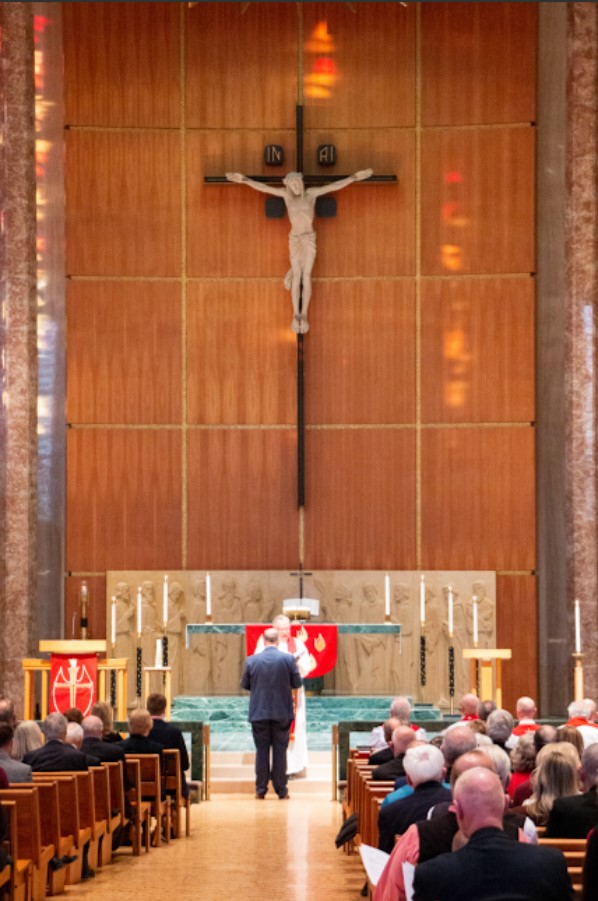
Installation service for Dr. Ankerberg
President Erik Ankerberg at his installation.

His acumen for strategic planning and curriculum oversight helped him quickly rise in the ranks. For the majority of his career, he has led academic operations for three separate Lutheran universities, most recently as provost for Concordia University Chicago.

“This university has a long and rich history of serving Christ, the Church, and the wider world through a rigorous, holistic, and Christ-centered approach to education,” said Ankerberg. “The Lord has richly blessed Concordia University Wisconsin and Ann Arbor, and I am humbled and honored to join this faithful university community, whose members are deeply committed to student success.”

An installation service was held on Sunday, Feb. 5. The Concordia community will again celebrate Ankerberg during his inauguration ceremony, which will occur closer to the start of the 2023–24 academic year.

From those who know him

Ankerberg’s professional resume includes nearly 15 years of experience in Lutheran higher education. Along the way, he gained a few supporters—individuals who understand what it takes to lead. Here’s what they had to say about their trusted colleague and friend.

“Erik is a gifted strategic thinker. His linear planning—getting from the current situation to the goal—is very sound and detailed, but it’s never merely linear. His strategies always reflect careful thought on an entire matrix of possible influences and outcomes. A complex institution like CUWAA will benefit from his leadership.”

—Concordia University Chicago President
Russell P. Dawn, DPhil, JD

“Dr. Ankerberg is a Christ-centered leader with a deep knowledge of higher education based on his experiences as a faculty member, researcher, and senior administrator. His calm presence is an encouragement to others as he intently listens to their thoughts, opinions, and concerns. At his core always will be a heart of humble vocational service toward those he leads in fulfilling the institution’s mission and vision.”

—Wisconsin Lutheran College Provost John Kolander, PhD

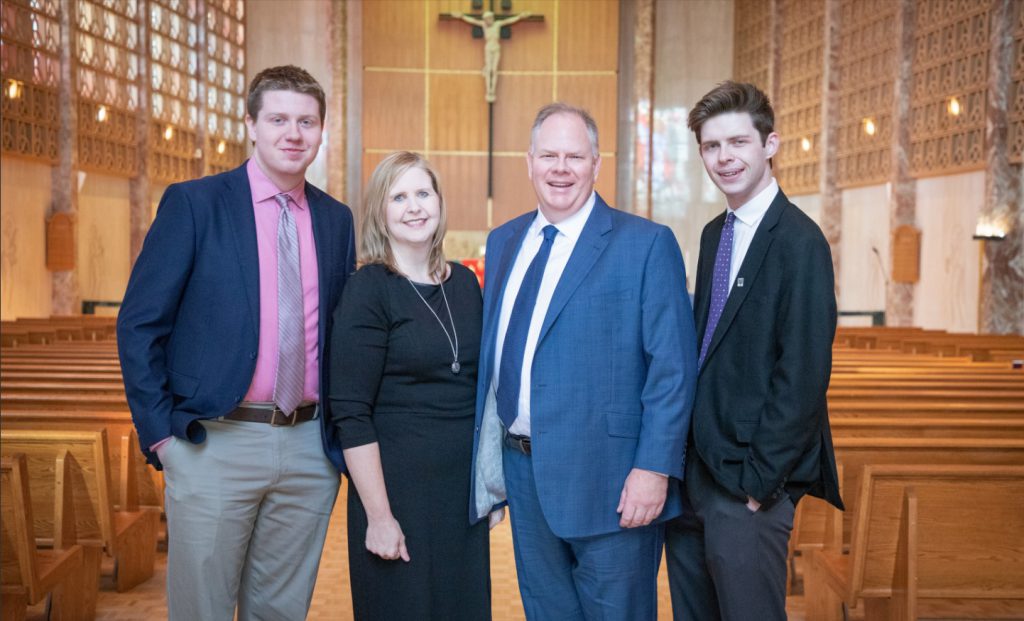
Erik Ankerberg, PhD, and his wife, Jennifer, have been married for 27 years. They have two sons, Peter (right) and David.

Want in?

Come and see what Concordia University Wisconsin and Ann Arbor has to offer you. Book a visit to either of our campuses to experience an all-inclusive view of student life and to learn more about programs.


The spring 2023 Hearts Together magazine hit mailboxes in April. View a PDF version of the magazine here. If you are not on our mailing list, but are interested in receiving a free copy, email Jennifer.Hackmann@cuaa.edu.


Alum Highlight: Kris Best (’93)


As CFO of one of the Top 25 largest independent ad agencies in the country, Kris Best has more than proven she has what it takes to rise to the top.

Editor’s note: This story first appeared in the spring 2023 edition of Hearts Together. a publication of Concordia University Wisconsin and Ann Arbor.


As CFO of one of the Top 25 largest independent ad agencies in the country, Kris Best has more than proven she has what it takes to rise to the top. How did she get there? She’ll tell you it has everything to do with diverse experiences.

At CUW, for example, Best studied accounting, competed in volleyball and softball, and played the pipe organ (under the legendary Dr. John Behnke). In other words, she was preparing for a career in advertising. “My life is full circle,” she says. “At BVK, I’m surrounded by creative and competitive people who feed my love of music and the arts, and who team up to bring something different and unexpected to our clients.”

Agency life is tough because it’s creating and creating again for multiple clients at once. And there’s always the potential for rejection. In Best’s experience, former student-athletes have tended to thrive because they produce under pressure, know the importance of every position, and accept wins and losses with humility.


Support Concordia

Kris is a generous donor and volunteer of CUWAA. She currently serves on the university’s Foundation Board and is a donor to the Concordia Fund. The Concordia Fund is a yearly giving opportunity that provides critical operational revenue for the university. Concordia uses your gifts in the year they are given. This allows the university to offer Concordia student the increased quality and excellence they deserve while offsetting the cost of tuition.


The spring 2023 Hearts Together magazine hit mailboxes in April. View a PDF version of the magazine here. If you are not on our mailing list, but are interested in receiving a free copy, email Jennifer.Hackmann@cuaa.edu.


Breaking the cycle of poverty


Pharmacy students help individuals who are low-income or in poverty to access essential health care services.

Editor’s note: This story first appeared in the spring 2023 edition of Hearts Together. The magazine is a biannual publication of Concordia University Wisconsin and Ann Arbor.


Classroom learning is essential, but some lessons are more profound when experienced firsthand. It’s a main reason why Associate Professor of Pharmacy James Lokken, PharmD, commits several of his “off days” each academic year to student-learning opportunities at City on a Hill. Founded in 2001, City on a Hill is a faith-based nonprofit located in Milwaukee. Its mission is to break the cycle of generational poverty in Milwaukee through training, education, and resource allocation.

About once a month, Lokken oversees onsite Saturday workdays for CUW students. The workdays allow CUW pharmacy students to fulfill course requirements or simply volunteer. The students have helped with a variety of programs over the years: an “ask a pharmacist” station, vaccine clinics, smoking cessation workshops, health screenings, and more.

The experience often stretches students to apply knowledge in new ways, said Lokken. For example, City on a Hill maintains a “med room” full of slightly expired or discarded medications. The medications are still safe for use—and for an uninsured, low-income population they fit the price tag—but prescribing them requires an extra-diligent eye from a licensed pharmacist. That’s where Lokken can help. CUW students play a role in meticulously inventorying the supply so that pharmacists like Lokken can assess their efficacy.

“That’s one of the beautiful aspects of our work at City on a Hill: It teaches students how to function in a resource-poor environment,” Lokken said.

City on a Hill also helps instill a core virtue of Concordia’s School of Pharmacy: servant leadership.

“It puts a whole new perspective on how we can use our God-given time, talents, and treasures to help those who need it most,” Lokken said. “There are so many opportunities to help if we just take the initiative to do so.”


Want in?

The School of Pharmacy at CUW is committed to the development of pharmacists who are servant leaders, dedicated to providing value-based, patient-centered care that improves the health of our communities in rural and urban areas through excellence in teaching, research, service, and practice.


The spring 2023 Hearts Together magazine hit mailboxes in April. View a PDF version of the magazine here. If you are not on our mailing list, but are interested in receiving a free copy, email Jennifer.Hackmann@cuaa.edu.


Take five: Director of Buildings and Grounds Steve Hibbard


Get to know one of our uncommon Concordians, Director of Buildings and Grounds Steve Hibbard.

Editor’s note: This story first appeared in the spring 2023 edition of Hearts Together, a magazine publication of Concordia University Wisconsin and Ann Arbor.


As Concordia University Wisconsin celebrates the 40th anniversary of its move to the Mequon campus, it’s the perfect time to highlight the person who knows more about its buildings and facilities than anyone else. Sure, many know Steve as the guy who has been keeping things together since 1999—and maybe some have noticed him playing organ during Chapel services from time to time. But there’s more to know about this musical, multifaceted Concordian than first meets the eye.

What brought you to Concordia in the first place?

My wife, Suzanne, had just started taking some classes when we drove up to Concordia from Hales Corners in 1989 to hear the new Steiner-Reck organ in the Chapel. After she decided to continue her education here, she became Concordia’s first graduate of the Master of Church Music program and later was Dr. John Behnke’s assistant director for the Milwaukee Handbell Ensemble. Meanwhile, I took advantage of the opportunity to study organ under Dr. Behnke. We became lifelong friends with John
and his wife, Chris.

Where does your love of music come from—and does it go beyond the organ?

I started young on the piano, and since my dad is a pastor, I started to play for church services occasionally. As a young man, I played in a professional music group, doing shows around the Midwest. From 1989–92, I was chief instrument tester for the Frank Holton Company, which made high-end brass instruments in Elkhorn, Wisconsin. I never got to meet Miles Davis, but I worked on his horns. In addition to playing occasionally at CUW, I am organist-choir director at Faith Lutheran Church in Cedarburg.

What’s your favorite story to tell about your job?

There are so many! Like when the NFL’s St. Louis (now Los Angeles) Rams had a three-week camp here in 2008. That was really exciting. But by far the biggest event was in 2004 when U.S. President George W. Bush came to campus to give the commencement speech. I got word of it on April 1, so when I tried to tell the team they all thought it was an April Fool’s Day joke! We had just six weeks to accomplish a lot of things for the May 14 graduation.

What’s the best part of the job—and what’s a pet peeve?

Favorites are working with the people and enjoying the view every morning when I arrive on campus. I always drive along the lake and never take that beauty for granted. As for a pet peeve, it’s definitely when people want to give me verbal “work orders” when I’m walking in the hallway. Please use the link on the portal!

How important is it to have a great team in your job?

Super important! CUW is blessed to have great craftsmen working on our campus. In addition to our skilled maintenance team, we have dedicated and thoughtful housekeepers led by Laurie Strommen, one of the most caring people I know. I enjoy coming to work every day and being able to interact with the entire team.


Want in?

Steve and his team are able to keep Concordia functional and fresh thanks to support from the Concordia Fund. The Concordia Fund is a yearly giving opportunity that provides critical operational revenue for the university. Gifts are used in the year they are given, allowing the university to offer Concordia student the increased quality and excellence they deserve while offsetting the cost of tuition.


The spring 2023 Hearts Together magazine hit mailboxes in April. View a PDF version of the magazine here. If you are not on our mailing list, but are interested in receiving a free copy, email Jennifer.Hackmann@cuaa.edu.


Why is alternative education important for youth?

Alternative education is a growing need among at-risk youth. This is a dynamic field that continues to grow as parents, educators, administrators, and other youth-centered professionals recognize the need to provide effective and high-quality education beyond the traditional classroom.

I want to introduce you to Wanda Routier, the program director for our graduate special education and alternative education programs. She shares her expertise in both areas, and highlights the features of alternative education that can create successful outcomes for those that do not fit in the traditional educational system.

Understanding at-risk students

At-risk individuals have needs that are not met in the average school, home, or community environment. These needs range from learning, mental health, physical, psychological, behavioral, emotional, or others. They are present regardless of race, gender, socio-economic level, family situation or other factors. A student can be at-risk at any time due to environmental factors, trauma, or other circumstances beyond their control. The average structured school setting can be a difficult experience for these individuals

Many students who have been identified as being at-risk also have undiagnosed disabilities or other conditions. These challenges impair their ability to achieve in the traditional classroom, which lacks the necessary resources to meet those needs. The at-risk student population can also include individuals of Adverse Childhood Experiences (ACEs). These individuals may require alternative education for the short-term or possibly a longer duration.

Regardless of the challenges, it is essential to help these students feel safe and connected to others who care, so they can be empowered to believe in and work to their full potential.

Why develop alternative education in schools and other youth focused communities?

Alternative education should be provided at all levels of education, because early intervention can largely influence student success. It also helps reduce more severe difficulties in high school. A flexible program that is student-centered will help students get back on track, prepare them for adult life, and help them graduate high school. Individualized instruction in an alternative setting is important because each student has different needs and reasons for the challenges they are facing. 

Alternative education programs are more essential than ever to help students find their way to becoming productive citizens and adults. Working in alternative education goes beyond classroom learning. It means teaching life lessons and personal strategies that help students identify issues, take on challenges, and cope with the wins and losses.

A caring, interested, and kind adult can make all the difference in the life of a student at-risk.

Wanda Routier, MA in Special Education, Ed.D. in Management of Programs for Children and Youth

What is the current law for alternative education programs in schools?

According to WI State Statue PI 25, “every school board shall identify students at risk of not graduating from high school enrolled in their respective school district on an annual basis by August 15, and develop a plan describing how the school board will meet their needs.”

Currently, many school districts have implemented alternative education programs, but at some schools they are just plans on paper and not being acted on. Unfortunately, this is ignoring students for whom traditional school does not work or is inappropriate.

What are the current trends in alternative education?

The educational environment is becoming a key focus in this area. However, many districts are going to online credit recovery as the only option for at-risk students.  This is not an appropriate solution because the student sits at the computer all day with very little interaction with anyone, including the teacher. 

Other school districts are doing a “school within a school” program where students attend school with others, but have their own courses and classrooms. Still other districts have an actual physical building where only at-risk or alternative education students attend. These approaches incorporate the critical aspect of the student feeling connected and supported. Another positive trend is a special focus on the mental health needs of students, and implementing trauma-sensitive approaches to student education.

Finally, an exciting trend we’re seeing is the work-study program within alternative education. Students are in school part-time and are later released from school to work and learn on-the-job. These real world, job experiences are often more relevant to these students than high school courses. Successful programs are flexible and meet the individual needs of each student.

How can you serve in alternative education?

You can work as a licensed educator at an alternative school or in a specified at-risk class or program. Enhance your skills and awareness in this specialized area with Concordia’s add-on licensure for current teachers. This is a quick but impactful, two-course program. You will learn more about Response to Intervention (Rtl) and Positive Behavioral Interventions and Supports (PBIS), along with other important alternative education topics.

However, alternative education needs more than teachers to help at-risk students succeed as future adults in the real world. Professionals who are working with at-risk students are encouraged to take our online program, but note that you would not be eligible to earn a full teacher licensure. Individuals that work in the following settings would benefit from coursework in alternative education:

  • Juvenile justice settings (boot camps, work programs)
  • Group homes and other alternative living communities
  • Alternative employment settings
  • Youth programs

What is the program director’s background?

Wanda Routier has served as a licensed special education teacher in private and public schools. She has also served as a teacher at a state residential home for the deaf. This has provided her the opportunity to teach individuals from birth to 21 years of age.

She was a Director of Law-Related Education for Students with Disabilities for an international non-profit law organization in Washington, D.C. , for four years. In this role, Wanda worked with teachers from across the U.S. and with Congress. She was actively involved in the re-authorization of the Individuals with Disabilities Act (IDEA) which continues to govern special education. She also worked with alternative education teachers at the Washington, D.C. juvenile justice agency.

Wanda is dedicated to teaching her special education and alternative education students both through coursework and hand-on experiences. She dedicates class time to take CUW students to the Vel R. Phillips Juvenile Justice Center School in Milwaukee to demonstrate special education in an alternative educational setting.

Student Spotlight: Kayla Gritzmacher

In this student spotlight, Kayla Gritzmacher recalls her experience as she considered her educational future. How she decided on a Doctor of Business Administration program and choosing Concordia University Wisconsin. She also tells about her experience in the program so far and what she hopes for her future after earning her DBA.

What is your current job? 

I am currently working as a Director of Clinical Services with a Home Hospice Company in Milwaukee, WI. 

What inspired you to pursue your DBA? 

I was approaching the completion of my master’s degree in Nursing Leadership and trying to decide what I wanted to do after graduation. I knew that I had placed the majority of my education-focus on my clinical skills. However, I felt my non-clinical skills needed more development. Since obtaining my RN license, I have worked primarily in leadership roles. To continue progressing up the corporate ladder, I would need to learn the business operation side of healthcare administration.

I was not sure what degree I would need to pursue, but I had looked through Concordia’s offerings. It was during an exploration call with an admissions counselor, when this new DBA program was brought up. After learning what the program entailed and speaking with a mentor of mine, I decided this degree would present me with the skills I needed. Furthermore, it also offers a variety of opportunities to me after graduation.  

Why did you choose Concordia? 

Concordia University is local to where I live and has always held a positive reputation within the community. While I really discovered this specific program by a series of clicks through graduate degrees online, I believe that everything in my life happens for a reason and this program was something I was meant to find and be a part of.  

Why did you choose the Healthcare Administration concentration? 

I did look at the other concentration options but with my entire career being in healthcare, I felt that this concentration would serve me best for skill development. Healthcare is where my heart has always been and will continue to be throughout my career, it just felt like the right path to choose for the DBA program.  

What do you like about the cohort format? 

For me, the best part of the cohort format is the relationships that I have formed with my fellow students. We really have bonded and rely on each other when we are facing challenges, both in our personal lives and in the coursework. These relationships were mostly formed during the unique process of beginning the program with an on-campus residency. Having that support system in place on the front-end has been a pillar to my success in this program.

I also like the flow of the classes we take and the scheduling of certain classes. For example, working on our dissertation over a longer period of time. The chapter focus classes are spread out and this last Fall we wrote our first section, the literature review. Now, after this current 8-week course, we will write our Chapter 1. It’s exciting to be making real progress on such a massive project!

Furthermore, I think having each class being 8 weeks in duration helps keep the program manageable. We are not handed an overwhelming amount of coursework all at one time. I would say up until this point (1.5 years into the program), I have not felt overwhelmed with the requirements of the degree. I know that as I approach year 3, the requirements will increase, and I will feel the pressure and drive to finish strong. However, Concordia has been preparing me for this large task of completing my dissertation over the past year and half of coursework. I know I’ll finish, and it will be well worth the effort.

What course has had the biggest impact on you so far? 

This is a difficult choice, because I truly feel that every class in this program has made significant impacts on me. For example, in the leadership focused classes, I learned how to carry out research in both qualitative and quantitative methods. More recently, my healthcare finance class is providing education that’s improving my healthcare work, today. Every single class has taught me more skills than I had anticipated going into this degree.

If I had to choose one class though, I would say my qualitative research class. Now, my dissertation research is based in quantitative methods. However, while taking this qualitative class I realized what a great impact these methods have on the healthcare industry. Going into the class, I thought I had an idea of what qualitative research would entail, but I was quickly proven otherwise. Our coursework consisted of carrying out a very small research study. While doing these assignments, I realized that following graduation I will likely move towards qualitative methods for future research. With the current situation in the healthcare world, there is much I can observe, analyze, and communicate to society. Especially regarding the global changes we are seeing and experiences of workers in the field.  

What has been your most memorable experience in the DBA program? 

Again, the residency component has been the most memorable experience for me. There is something special about being physically present on the campus, which is absolutely beautiful, and feeling that connection with your fellow cohorts and professors. During our first residency, we started creating those relationships with each other and also started working on our research topics. Day one included discussions about what we saw as the focus of our dissertation. While that original research plan has changed, it was the experience of learning and collaborating with others that made the difference.  

How have the faculty supported you? 

The CUW faculty are by far some of the most caring, dedicated, and amazing individuals I have met in my academic life. You can tell that they truly are our biggest supporters and are rooting for us all to reach graduation day. The regular check-ins became more important than I thought. And my chair being available to talk to me when I was having those feelings of doubt or anxiety. Then the feedback given during our classes, all of this support I have never experienced before.

I can think of a few instances where I was having doubt about my research topic, my ability to complete the program, and stress in my work life and home life. For example, I was able to send my chair an email and have him respond with words of encouragement. This email was then followed up with a meeting to discuss further. In truth, I would not be this far into the program without that support system.  

How has the DBA program transformed you so far? 

I think the biggest transformation I have experienced is the confidence I’ve gained within my personal and professional life. My ability to handle tasks at work has significantly increased since starting this program. I have learned how to better support my staff, carry out quality improvement initiatives, and support clinical decisions with evidence-based research. Also, I enjoy talking about my research interests with others. What’s more, my interest in conducting research has also changed since starting this program. I have seen how impactful research can be and believe that I will find fulfillment in my lifetime being able to properly conduct research and make those impacts on society and the healthcare industry.  

What are your professional goals when you graduate? 

This topic has been something I frequently think about. I have discussed it with my mentors and with my chair here at Concordia. Frankly, I do not know, I’m confident doors will open to me that I never imagined possible. I could see myself teaching, carrying out impactful research, or touring the country talking about leadership in healthcare. I feel that the possibilities will be many. Most importantly, I will have the tools and skills needed to achieve my ultimate goal of making positive impacts on the healthcare industry.  

Please share something interesting about yourself (hobbies, family, etc.) 

I live locally to Concordia University, being only about a 30-minute drive. I have been with my significant other for 9 years and we have four cats, Meeko, Mowgli, Enzo, and Simba, and our 4-year-old Irish Wolfhound named Willow. We enjoy frequent camping trips to the motocross tracks on weekends in the Summer spent with family and friends. I am an avid Disney fanatic with an annual pass, and I am a member of the Disney Vacation Club. I try to get down there about every other month with a majority of those trips being solo, sometimes even just 24 hours on a weekend. 

We are so thankful for Kayla’s contribution to our program and can’t wait to share how she impacts the healthcare industry in the future! If you would like to read more about how our DBA program can impact your work, check out our article on Creating a Healing Organization. Or, learn more about our school of business linked below.
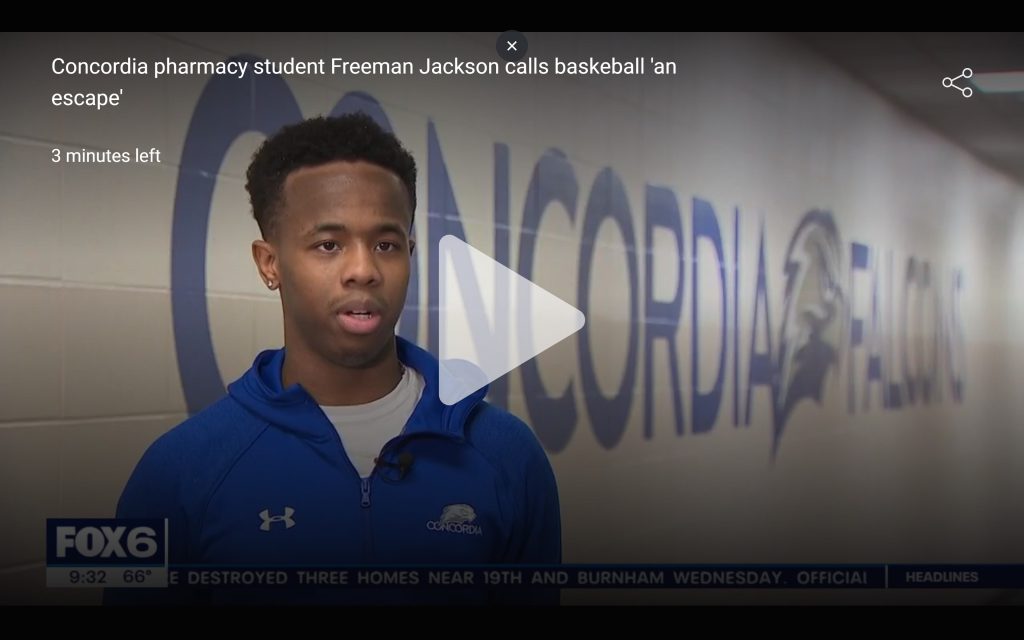
Fox6: Previously homeless, pharmacy student Freeman Jackson finds home at Concordia

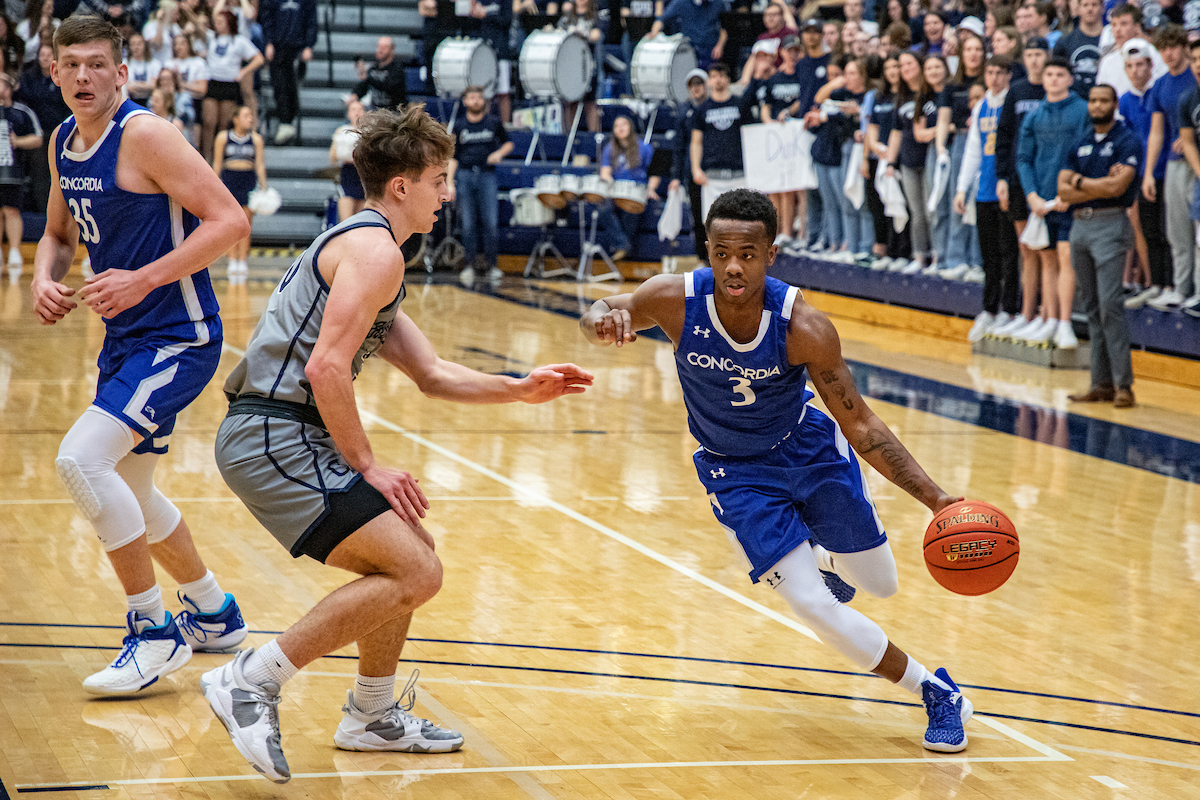
Freeman Jackson went from being a couch surfer in high school who began his collegiate tenure on academic probation to earning his spot within CUW’s School of Pharmacy and an ongoing place on the Falcon basketball team.


Jackson is currently in his first year of pharmacy school at CUW and recently wrapped up his second-to-last season on CUW’s basketball roster. He came to Concordia as an undergraduate because of the Unlimited Potential Scholarship program he was offered.

After struggling academically his freshman year, he put in the work to turn his trajectory around. He got himself off of academic probation and back onto the basketball court. As icing on the cake, last spring, he received official word that he had earned admittance to the CUW School of Pharmacy.

“I screamed for about an hour and, to be honest, I still haven’t come down from that high,” Jackson said. “It just felt so good to have my hard work pay off.”

Having previously been homeless, financial security is a big deal to Jackson. He’s thrilled to be heading into a career that can provide a stable income for him. Furthermore, he’s acutely aware of the good he can do for the profession.

“There’s an image with a pharmacist,” he said. “I’m black. I have tattoos. I play a sport. I don’t necessarily look the part, but it can still be me. I can still be a Doctor of Pharmacy, and that can mean a lot to a group of people who otherwise don’t have someone who looks like them as their pharmacist.”     

In the media

Sports reporter Lily Zhao and the Fox6 Sports team recently visited the CUW campus to speak with Jackson and tell his story in the station’s Beyond the Game feature. To watch the segment, click on the image below:


Learn more about CUW’s School of Pharmacy

As a CUW pharmacy student, you can expect to acquire a world-class clinical and scientific knowledge base and to experience active applied learning throughout your degree program. Our accomplished faculty teach and mentor each individual student in a welcoming Christ-centered environment. Our highest priority is helping you develop your talents for a rewarding life, not only a career.


Two CUWAA choirs named semi-finalists for elite national honor

Congratulations to the CUW Kammerchor choir and the CUAA Concordia Choir for being named National Semi-finalists for the American Prize.


In 2023, the University of Concordia Wisconsin and Ann Arbor is celebrating ten years together as “One university, two campuses.” What better way to mark that milestone than by having two choirs, one from each campus, competing for the same prestigious national award?

Earlier this month, CUW’s Kammerchor vocal ensemble and CUAA’s The Concordia Choir were both named National Semi-finalists in the choral performance—college/university (smaller program) division for the American Prize. It’s a high honor only a handful of ensembles are bestowed each year.

This week, Kammerchor and its director, Dr. Alexa Doebele, were named National Semi-finalists for the American Prize Ernst Bacon Memorial Award for the Performance of American Music in the college/university ensemble and conductor division.

“We love it when we’re able to celebrate student achievement on both our campuses at the same time,” says CUWAA President Erik Ankerberg, PhD. “We may be located in different time zones, but we remain one in the Spirit and one in our mission to serve Christ and glorify God, especially through the arts.”

A blessed coincidence

Ironically, neither of the groups’ directors knew the other was also entering the competition. Now they are very happy to be celebrating together.

“We are thrilled for our combined Music Department at CUWAA to be honored for choral excellence in this way,” says Dr. John Boonenberg, assistant professor of music at CUAA and the Kreft Endowed Chair in Music. “CUWAA is carrying on the time-honored tradition of top-notch choral performance at Lutheran collegiate institutions at both of our campuses, and our students continue to shine brightly and use their God-given gifts to inspire.”

The 2021-22 CUAA Concordia Choir was honored for its performance at the annual “Concordia at Hill” concert in May 2022. The 2021-22 CUW Kammerchor was honored for a performance at the 2022 Spring Concert.

Small schools, big accomplishment

Even though she feels confident that Kammerchor could compete at the highest levels, Doebele, director of choral activities at CUW, is glad the competition has recently instituted a separate division for smaller colleges and universities.

“It’s nice to have a greater opportunity to let the world know about the excellence of our choral programs,” says Doebele. “Neither CUW nor CUAA has a huge choral program like the big state schools do, but we’re just as proud of what our students are capable of accomplishing.”

Finalists for the prize will be announced later this spring, with winners named later in the year.


About Kammerchor (CUW)

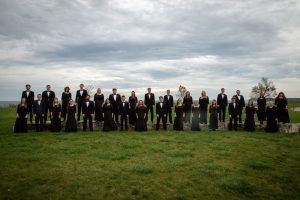
2021-22 Kammerchor

Director: Dr. Alexa Doebele

Kammerchor (German for “chamber choir”) is an auditioned mixed voice ensemble of approximately 40 singers, which sings a wide variety of choral literature from the Renaissance to the present, including concert pieces, anthems, spirituals, and hymns. As a touring ensemble, Kammerchor has sung in worship and concert virtually all over the continental USA, several times to Canada, and overseas to locations as varied as Brazil, China, and several locations in Europe.

About the Concordia Choir (CUAA)

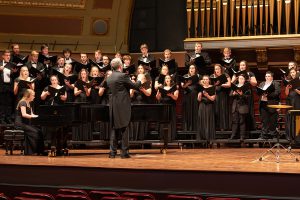
The CUAA Concordia Choir performs at Hill Auditorium in 2022.

Director: Dr. John Boonenberg

The Concordia University Choir is a select ensemble comprised of approximately 50 students from many academic disciplines of the university. The choir performs a wide variety of sacred choral literature ranging from Renaissance motets to the masterworks of the twentieth century. Since the founding of Concordia, Ann Arbor in 1963, the Concordia Choir has maintained a reputation of excellence in choral music and performs regularly both on and off campus.


About the American Prize

The American Prize sponsors a wide range of prestigious competitions designed to “evaluate, recognize and reward the best performers, ensembles, composers and administrators” across the United States. Since its inception in 2010, thousands of entrants from all 50 states have competed in divisions that include professional, college/university, community, and high school age solo artists and groups.

The Ernst Bacon Memorial Award for the Performance of American Music recognizes and rewards the best performances of American music by ensembles and individual artists worldwide, based on submitted recordings. Applications are accepted from professional, college/university, community and high school age solo artists, chamber ensembles or conducted ensembles, competing in separate divisions, and from composers with excellent recordings of their works.


Want in?

Since 1881, Concordia University’s mission has been teaching and preparing students for careers and vocations that serve The Lutheran Church—Missouri Synod. Music has always been an integral part of that mission. The music department contributes to the spiritual, cultural, artistic, academic and co-curricular aspects to University life on campus. As the campus has grown in scope and size the music department has become more integral to the University mission.


Ministries Reflect CUW’s Christian Community 


Many Christian values are reflected in the events and activities that take place on campus at Concordia University. Specific ministries are created and emphasize these values in a variety of settings including children’s ministry, Bible groups, chapel, and others. While you are thinking ahead to what clubs to join in Fall two ministries to consider are BUILD and LIGHT. These ministries focus primarily on building a Christian community for students attending Concordia. 

BUILD

BUILD stands for “Brothers United in Life & Devotion”. This is a ministry aimed at male students and helps make faith a focus. Co-leader Ezekiel (Zeke) Potts explains the goal of the ministry as “a safe environment to grow in relationship with each other and God.”. 

BUILD hosts biweekly Bible studies, alternating with other events for the community. These activities can include board games, basketball, kickball, and more. Zeke emphasized that while there may not be a specific fan favorite event, the BUILD members love anytime they get to enjoy activities outdoors. 

LIGHT

LIGHT, while similar to BUILD, is slightly different in how they are set up and what events they host. LIGHT is the women’s ministry on campus and stands for “Ladies in God’s Hands Together”. LIGHT’s co-coordinator, Allison O’Farrell, stated that LIGHT gives “women on campus an opportunity to get together and grow in their faith.” She goes on to say that they, “are here for fellowship and also to give women on campus a safe space where they can be with other women.” 

LIGHT hosts multiple events throughout “the semester, typically once a month as well as weekly Bible studies. Recently, they began an outreach aspect of the ministry which involves interacting with students or people outside of LIGHT. One way this is done is by writing notes to fellow women to be posted on dorm doors. 

BUILD and LIGHT Together

While BUILD and LIGHT are two different ministries, they have similarities in that their mission is closely related. Both ministries attend a retreat to Whispering Pines, though each ministry goes at separate times. They also do some combined events, with the Valentine’s Day dinner being one of the most popular. At this event, the men from BUILD serve the women from LIGHT a meal followed by a guest speaker.

If anyone is interested in joining either one of these groups, you can look for flyers around campus or reach out to Allison or Ezekiel via email to further discuss the ministry. Both ministries are open to new members anytime throughout the year and look forward to welcoming you!


—Tess Miller is writer for The Beacon, the official student newspaper of Concordia University Wisconsin. She is a junior pursuing her bachelor’s degree in mass communication.

Space to succeed: The ARC gets a new home to meet growing demand for services


Equipped with a new space, Concordia’s Academic Resource Center is stepping up to help pandemic-era high schoolers make up for lost academic progress.

Editor’s note: This story first appeared in the spring 2023 edition of Hearts Together, a magazine publication of Concordia University Wisconsin and Ann Arbor.


Countless studies have found that academic achievement across all grade levels slowed amid COVID-19. The latest national ACT scores seem to corroborate the findings, with last year’s test scores falling to a three-decade low. The delay in academic achievement has now carried over to colleges. At Concordia, the ARC has never been busier as a result.

Before the pandemic, center staff recorded roughly 1,600 student visits in an average academic year. That number more than tripled last school year, and this year the resource center is on track to surpass its
total yet again.

Of course, the increased demand requires the ARC team to be on their A game. The center has hired more student tutors, increased the number of classes in which support is offered, and expanded hours. It also refined the peer academic coaching model and introduced a summer bridge program to assist with students’ transition from high school to college.

A new space

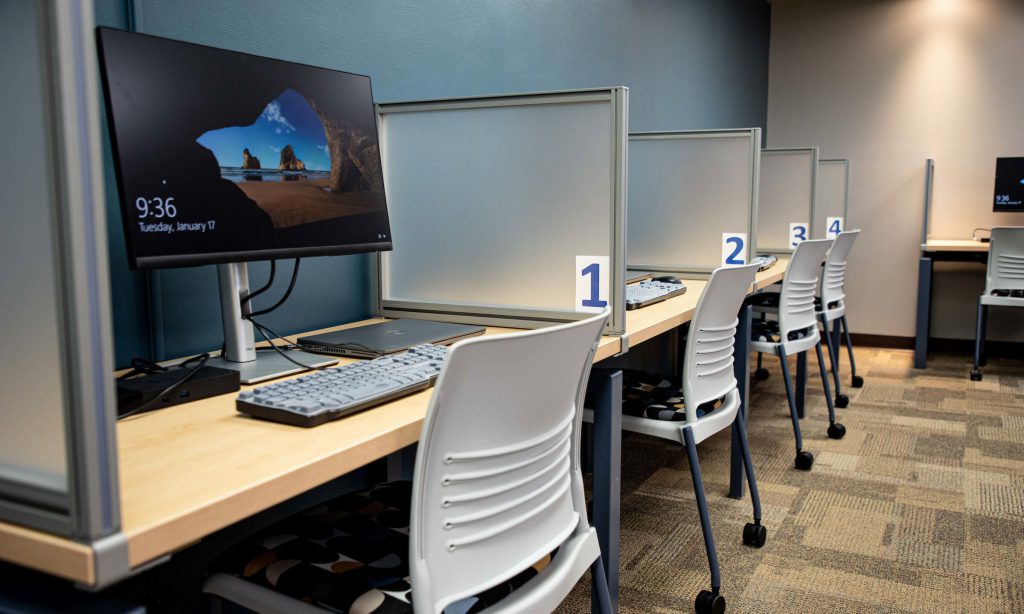
And now the ARC has a new home, with more space to better accommodate its heavily utilized services. Thanks to funds from a Title III grant and private donations, structural upgrades were made to offices and classrooms at the back of Rincker Memorial Library, allowing the ARC to expand its physical footprint to about 2,000 square feet. ARC staff moved into their new digs at the beginning of the year.

All their efforts are paying off. At the start of the spring 2022 semester, about 130 students were on academic probation, which means they had a GPA of 2.0 or lower. By the start of this year’s spring term, that number had shrunk by 23 percent.

“Students have invested a lot to come to Concordia, so it’s only fitting that we invest our best in them,” said ARC Director Jan Chapman. “We want to see students succeed, and all of them have it in them to be successful. We’re all working hard to bounce back from the pandemic.”

Upgraded

Ever since the pandemic, the Academic Resource Center has experienced a boom in demand for services. The ARC staff has managed to keep pace thanks in large part to an increase in physical space and resources.

3,167

ARC visits recorded in fall 2022

462

Individual students (or 16% of undergraduates) served in fall 2022

3.5x

More ARC visits in 2021-22 than 2018-19

71

Peer mentors and student tutors on staff

23%

Decrease in students on academic probation from spring 2022 to spring 2023


Want in?

The Academic Resource Center provides free services, programs, and support for all CUW students so they can grow into independent learners and adjust to life as a college student.


The spring 2023 Hearts Together magazine hit mailboxes in April. View a PDF version of the magazine here. If you are not on our mailing list, but are interested in receiving a free copy, email Jennifer.Hackmann@cuaa.edu.