President Erik Ankerberg has been the president of CUWAA for 100 days. To honor these first days on campus, President Ankerberg writes to the Concordia community about his experiences.
Dear Concordians,
I am humbled and honored to serve as the ninth President of Concordia University Wisconsin and the seventh President of Concordia University Ann Arbor. On my 100th day in this role, I would like to take a moment to express my gratitude for the warm welcome I have received. The outpouring of support and encouragement has been overwhelming, and I feel blessed to be part of such a caring and committed community.
Listening and learning
During my first 100 days, I’ve had the opportunity to meet with many of you on both campuses and to listen to your ideas and concerns, and your hopes and frustrations. These conversations have been invaluable in helping me better understand the ethos of our uncommon community.
I don’t have to tell you that CUWAA is filled with passionate, faithful, and mission-minded men and women who are committed to the flourishing of our students. Every single faculty and staff member I’ve met is here for the same reason: to prepare our students in mind, body, and spirit for service to Christ in the Church and the world.
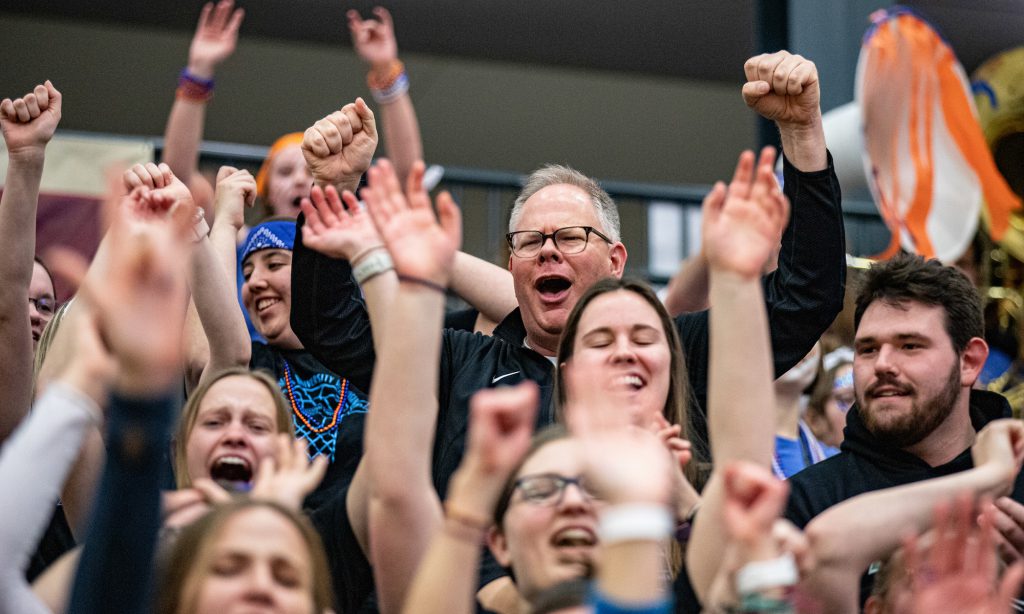
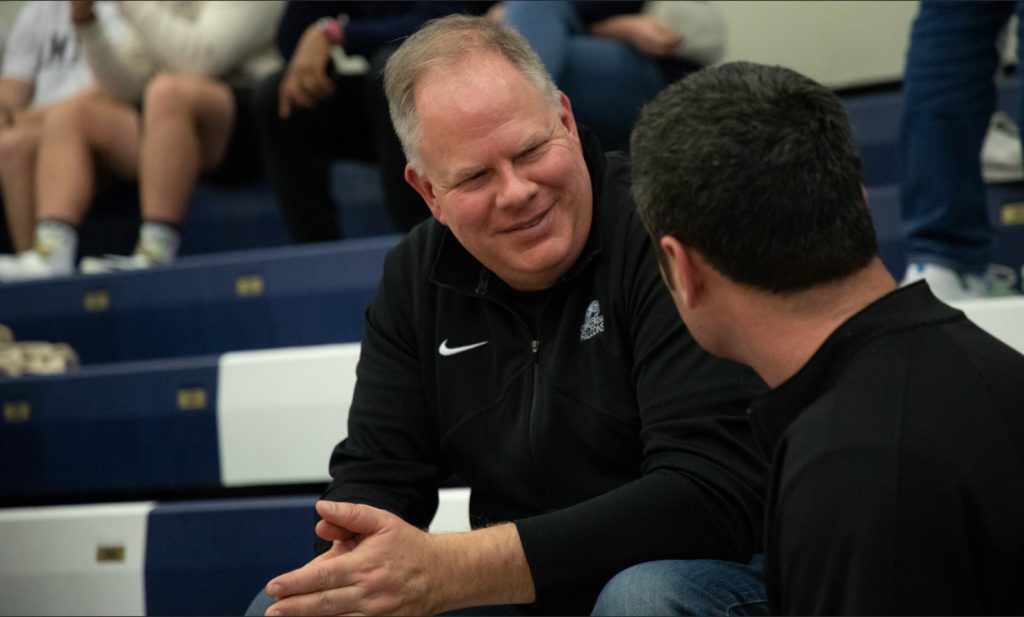
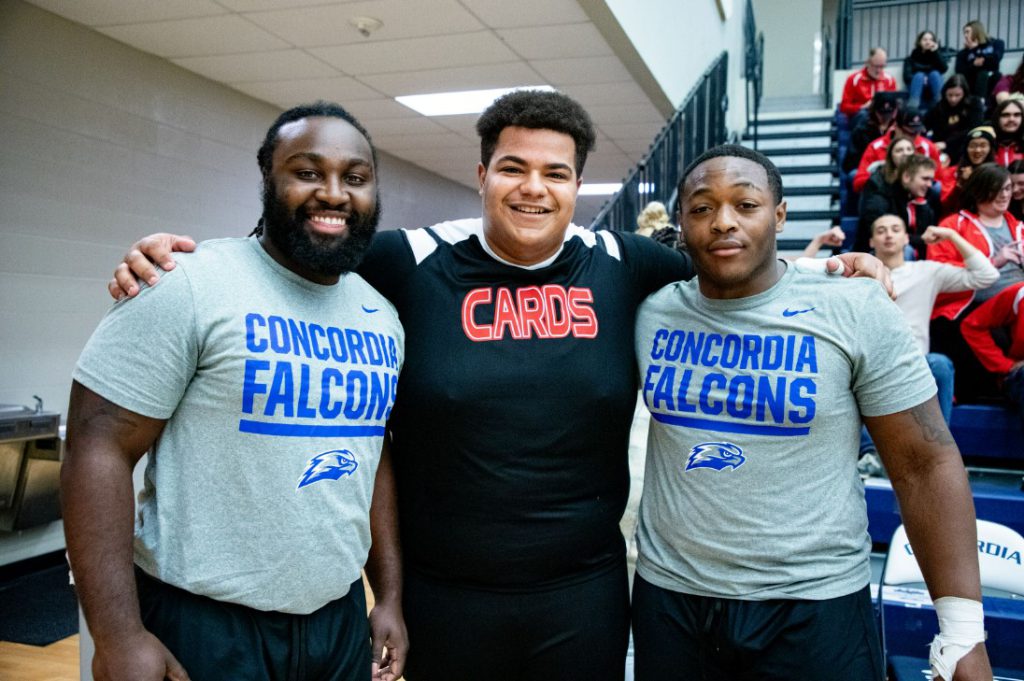
President Ankerberg with the CUW student section at this year’s Concordia Invitational Tournament.
And our students recognize the unequaled care and support they receive here and are grateful. They’re quick to share stories about professors who go out of their way to help them, campus pastors who have spiritually guided them through a rough time, coaches and leaders who push them to be braver and stronger than they ever imagined, and staff members who know them personally.
Celebrating
We’ve had much to celebrate these past three months.
Let’s start with the Concordia Invitational Tournament at Concordia University Nebraska.
There are very few opportunities for our Falcons and Cardinals to be together. A mere two weeks into my role, I had the pleasure of sitting among the fans from both campuses and taking in how complex and remarkable this “two campuses, one university” truly is. This year marks the 10th anniversary of this bold idea to become one, and we took a little time to recognize that fruition during the tournament.
Installation
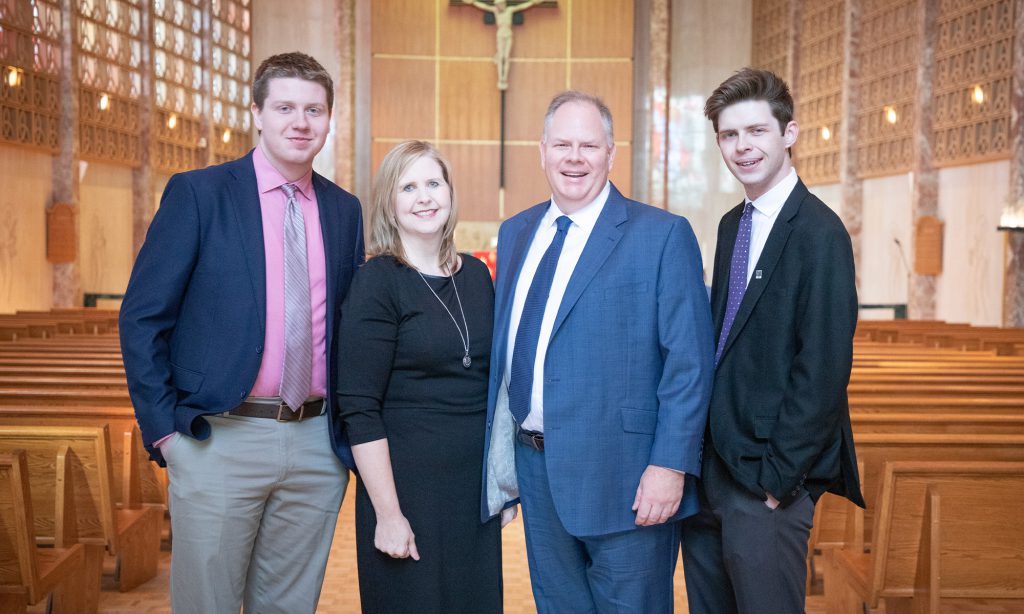
My wife, Jennifer, and my sons, David and Peter, were by my side during the afternoon of my installation service in the Chapel of Christ Triumphant on the CUW campus on February 5th. I am grateful to Rev. Dr. Matthew Harrison, President of the Lutheran Church–Missouri Synod, my home pastor, Rev. Dr. Mark Nuckols, who is pastor at Our Father’s Lutheran Church in Greenfield, CUW’s Kammerchor and student instrumentalists, and all the people who came to participate and witness that moment in CUWAA’s history.
Ankerberg, his wife, and two sons at his installation in February 2023.
Anniversaries
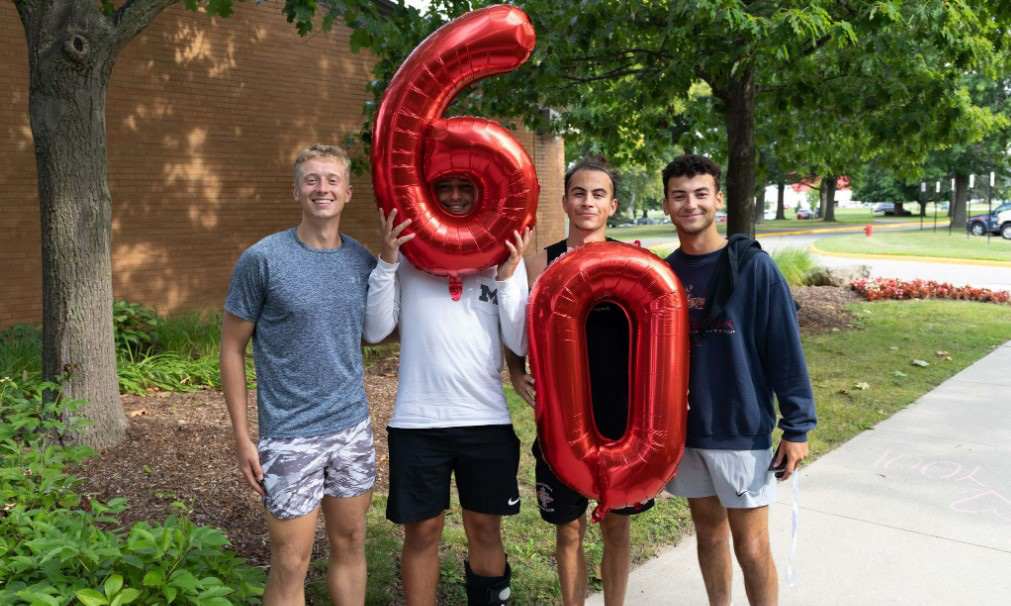
This year also marks the 60th anniversary of the Concordia University Ann Arbor campus and the 40th year since Concordia University Wisconsin moved to Mequon. We also dedicated new spaces on both campuses.
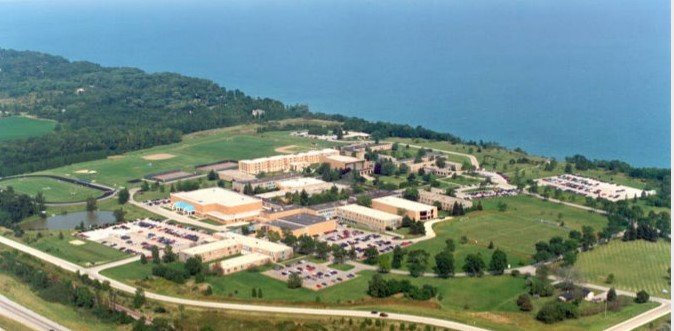
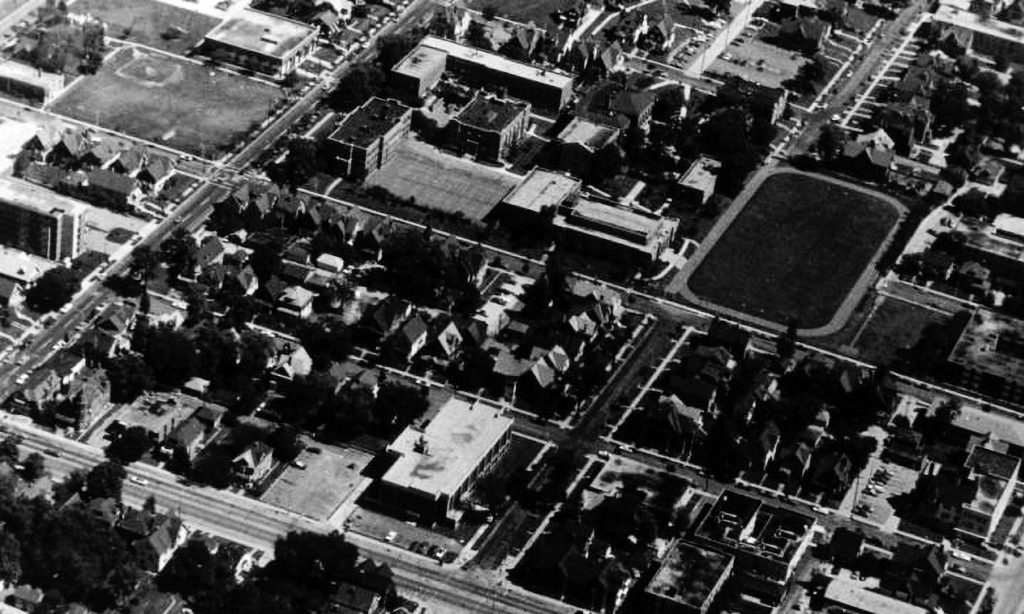
Aerial view of the Mequon campus (1981-1990)
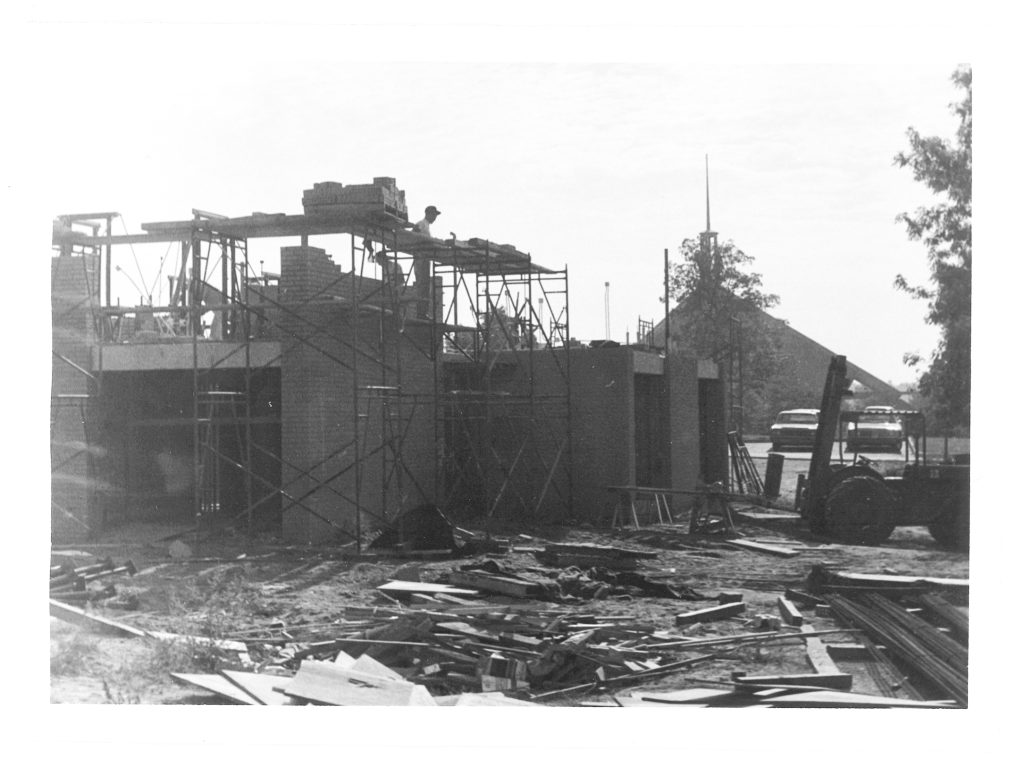
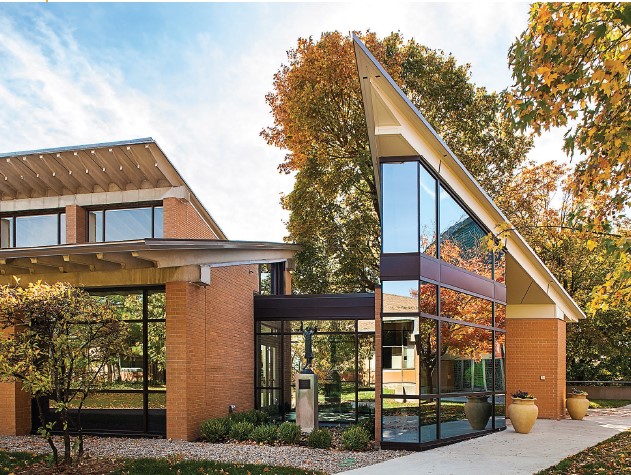
Construction of the Zimmerman Library on the Ann Arbor campus (1962)
Looking ahead
While there is much to celebrate, there is also deep work to be done. I’ve identified the following priorities as our focus for the next 100 days.
As a CHRIST-CENTERED university, we are creating a new Vice President for Mission and Identity position. This individual will coordinate activities related to the university’s mission and identity and lead our Pre-Seminary program.
Because of our commitment to TRUTH AND INTEGRITY, we are reviewing all policy and practice through our mission and identity lens.
As a university that cares deeply about EXCELLENCE, we are embarking on a comprehensive strategic planning process that will allow us to develop, prioritize, and live out a select number of initiatives over the next 3-4 years.
Because SERVICE is foundational to our life and works, we are exploring the intersection of the Christian faith, vocation, and culture to prepare our students faithfully to live boldly in our contemporary world.
Save the date!
The public inauguration activities of President Dr. Erik Ankerberg will be held Friday, September 29 at Concordia University Wisconsin and from October 1-3 at Concordia University Ann Arbor.
About Concordia
Concordia University Wisconsin and Ann Arbor is an uncommon community of students, faculty, staff, alumni, and supporters who are gifted by grace and ever-preparing to live out their purpose to serve Christ in the Church and world. The university serves more than 6,000 students at two residential campuses in Mequon, Wisconsin, and Ann Arbor, Michigan, and globally, through online programs. Click on the link below to learn more.
The weeks of the semester are winding down and the weather is warming up. Welcome back to the weekly Gallery Deck: your guide to affordable events in and around Mequon.
Swing Park
Embrace your inner child at this urban park in Milwaukee. Swing Park is a collection of swings hung under an overpass near the Milwaukee River. Enjoy an evening swinging, walking the neighboring bridge, and exploring Milwaukee. You can find directions here.
Mequon Nature Preserve
Enjoy the warm weather with a guided hike at Mequon Nature Preserve. Learn about the preserve’s history and ongoing projects from a staff member while enjoying a two-mile hike on the trails. These tours are available on Monday, April 17th and 26th at 4:30 P.M. or Friday, April 21st and 28th at 9:00 A.M. If you can’t make it to a guided hike, you’re always to welcome to explore on your own! The preserve has many trails for you to explore; consider hiking out to their observation tower.
New Art Exhibit
The Cedarburg Art Museum is having an opening reception on Friday, April 21st from 5:00 P.M. to 8:00 P.M. for a new exhibition by Marc Anderson. Meet the artist behind “Staycation”, a collection of oil paintings detailing Wisconsin’s landscapes. The exhibit will be on display from April 20th to July 16th.
The Cedarburg Art Museum is open Thursday through Saturday from 10:00 A.M. to 4:00 P.M. and on Sunday from 12:00 P.M. to 4:00 P.M. Admission is free with a recommendation of a $5 donation per person.
The Taylor Party
Turner Hall Ballroom is hosting “The Taylor Party: Taylor Swift Night” on Friday, April 21st at 9:00 P.M. Whether you can’t make it to her tour and you’re getting hyped, all Swifties are invited to sing and dance through her most iconic eras with their fellow fans. Tickets start at $20. Doors open at 8:00 P.M.
Missing Links Golf
Most students are familiar with Missing Links, the mini golf course and driving range that neighbors campus. With the weather warming up, now is a great time to make a return to the green. A round of 18 holes costs $11 per person. You can find their hours here.
If you’re tired of mini golf, consider footgolf; Missing Link’s combination of golf and soccer. The game is offered from 7:00 A.M. until 9:30 P.M. all week long at $16 per player.
Did you take one of these suggestions? Tag us in your adventures on Instagram (@cuwbeacon)!
Have an event you think the CUW student body would enjoy? Let me know!
—Mikayla Amack is an editor and writer for The Beacon, the official student newspaper of Concordia University Wisconsin. She is pursuing her bachelor’s degree in mass communication, enjoys theater and music, and plans to graduate in 2023.
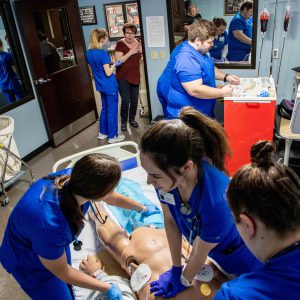
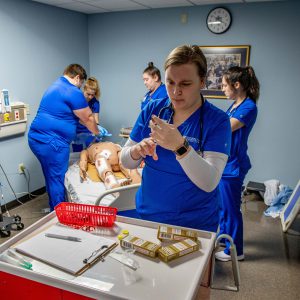
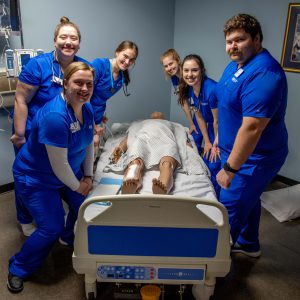
At the CUW School of Nursing, students put their skills to the test through rigorous simulation drills in our top-notch simulation labs.
Editor’s note: A version of this story first appeared in the spring 2023 edition of Hearts Together, a magazine publication of Concordia University Wisconsin and Ann Arbor.
Perhaps the first thing to understand is the difference between a nursing “skills lab” and a “simulation lab.” Both are important, and the CUW School of Nursing has great facilities in each category. As the name suggests, a skills lab is where students learn how to do things like start an IV or assess vital signs. High-tech mannequins are involved, but the emphasis is on learning in a low-pressure, hands-on environment with plenty of help available as you need it.
A simulation lab, on the other hand, is more about high stakes and high pressure. The scenes they’re acting out have life-or-death consequences and are made to feel as real as possible. In the current edition of Hearts Together magazine, a team of senior nursing students is pictured doing a “code” drill on a mannequin in a very realistic setting. At one point, their procedure is interrupted by an instructor pretending to be the patient’s very concerned wife.
If it can happen in the real world, it just might happen in a simulation.
“Simulations are set to challenge students critical thinking and allow for exploration of nursing assessments, interventions, and psychosocial care of a patient or group of patients,” says Nursing Simulation Lab Coordinator Tina Gaffney. These experiences prepare students for the many times during their careers they will need to think and act in critical situations.
“Students in the traditional undergraduate nursing program attend simulations starting their sophomore year and continue through their senior year,” she adds. “Each simulation is set up to mimic what they may see in their clinical experiences for that semester and includes education based on their learning in theory classes.”
Progressively challenging
As students gain knowledge and experience, the simulated scenarios they face become more complex and difficult. Sophomore students, for instance, include fairly basic patient care, including a lot of assessment skills. At all levels, the simulations are conducted in one of three simulated patient rooms.
As juniors, things get more complex. The mannequins get more detailed, even sometimes wearing makeup to simulate how a patient might present with different symptoms. Students start using skills such as starting an IV, inserting a Foley catheter, or performing tracheotomy care.
When students become seniors, the simulations become as real as possible. Parameters or patient status can change suddenly, and students have to make critical decisions. Isolation care is common. They also throw in variables such as language barriers or mental health conditions. They also may have to instruct the patient (who is voiced from the control room) on important home care of follow-up procedures.
Interactive high-tech
Everything that goes on is managed and monitored remotely from an interactive high-tech control room. Patient care decisions—for better or worse—can affect outcomes in real time. Patient status can change in an instant, sometimes without any warning.
In all cases, students are given a basic briefing on what they’re about to walk into—but no more than what they might know in a real-world situation. What might happen once they’re at work, however, is always uncertain. Highly trained and well-credentialed facilitators oversee the whole process.
“Facilitators are educated in simulation-based education pedagogy, having training in pre-brief, debrief, and areas of facilitation of simulation education,” Gaffney says. “In addition, all staff in the Concordia Nursing Simulation Lab are members of the INACSL [International Nursing Association for Clinical Simulation in Learning] members and continue education through the annual INACSL Conferences and Center for Learning.”
After each drill, students are debriefed on the experienced. They are asked evaluate their own performance and are given the chance to ask any questions they may have had.
It all adds up to a class of School of Nursing graduates who are more than ready to put their skills to the test in the real world.
“The experiences set the students up for the many times they will need to critically think and act as individuals and inter-professionals in their careers as Bachelor prepared nurses.” Gaffney concludes.
Want in?
The School of Nursing develops nurses ready to excel in today’s challenging health care context. As a nursing student, you will learn to care for people of all ages in both acute care settings and the community. Instructors and classroom experiences blend curricular rigor with a passion for care, a balance that develops you uniquely both to serve with professional excellence and to fulfill your sense of calling as you care and serve throughout your career.
One of the best ways to learn about the career of a compounding pharmacist is to go to an expert in the field. And luckily, Concordia University has Dr. Nancy Stoehr as an Associate Professor in the School of Pharmacy. She has successfully found her niche in compounding pharmacy since earning her PharmD from the University of Wisconsin-Madison in 2006.
Dr. Stoeher earned her Board Certification of Compounded Sterile Preparations from the Board of Pharmacy Specialties in 2021. And in 2022, she earned her Master’s of Education in Teaching and Learning at Concordia to enhance her skillset as a pharmacy professor. Her teaching focus is pharmaceutical dosage forms and pharmaceutical compounding for the community patient.
Compounding pharmacists are chemical problem solvers
Typically, most patients can safely take manufactured products (medicines) that are made in a factory. Some patients cannot take these manufactured products for various reasons. They might be allergic to other chemicals in the manufacturing process. Or the manufactured product is in a dose or dosage form that the patient is unable to take. For example, babies cannot swallow tablets. If an infant’s medication is only produced as a tablet, a pharmacist can make a liquid solution that the baby can swallow.
Pharmacists can make medications for specific patients using individual chemicals. Think about the process of baking a cake using several individual ingredients. You combine eggs, flour, sugar, and other ingredients. The result? Well, your results may vary, but ideally, you end up with a perfect dessert. Similarly, the medications we take include more than a single drug. There are a lot of other components or inactive chemicals that go into the medication. These other components help to create a form of medication that can be safely administered to patients on their own. Inactive chemicals are added to the medication during the manufacturing process to help make a product of a certain quality.
Compounding pharmacists are scientific artists
Pharmacists need to develop an in-depth knowledge of science to understand what chemicals they can combine safely. Beyond book knowledge, it also takes a level of creativity and innovation to treat a specific patient for a specific outcome. Again, like the culinary sciences, pharmaceutical compounding requires pharmacists to be able to make a “pharmaceutically elegant” product. It has to be something that someone wants to take for the duration of their therapy. This could be as simple as matching a mint flavor with a green color. Or it can be as complex as making sure a cream is aesthetically pleasing as well as effective as a medication.
Compounding pharmacists work very closely with the prescriber and the patient before setting to work. A relationship must be formed between the prescriber, the pharmacist, and the patient before it is even legal to compound a medication for a patient. We call this the “compounding triad”. As a healthcare team, you want to try the manufactured drug products that are currently available before making a compounded medication. This relationship also allows the patient to advocate for their preferences and ideas in their medication treatment.
How do I become a Compounding Pharmacist?
First, you must receive a Doctor of Pharmacy (PharmD) degree. You can continue your education after pharmacy school by participating in a residency. There are some residencies throughout the United States that specialize in compounding pharmaceutical preparations. An independent pharmacy, owned by an individual or small group, is often the setting for a compounding residency. These are not big chain pharmacies that you see in department or grocery stores. A quality pharmacy program will provide you access to their network of connections for gaining residencies.
Alternatively, you may also earn board certification and add the letters BCSCP after your name (Board Certified Sterile Compounded Preparations). To maintain this certification, you need to earn 100 hours of continuing education every seven years, or you can simply retake the test.
Where else can I serve as a compounding pharmacist?
Using Dr. Stoehr as an example, she has chosen multiple pathways to serve others in compounding pharmacy.
She is teaching this area of pharmacy to the next generation of pharmacists.
She obtained her certification as a PCAB (Pharmacy Compounding Accreditation Board), Pharmacy, and DMEPOS (Durable Medical Equipment, Prosthetics, Orthotics & Supplies) Consultant through the Accreditation Counsel of Health Care in 2020.
She has background experience as a pediatric compounding pharmacist for Skywalk Pharmacy. This is an affiliation of the Children’s Hospital of Wisconsin.
Her past work also includes sterile compounding as a home infusion pharmacist and as a hospital pharmacist.
Dr. Stoehr also finds time to dedicate to research in the area of compounding pharmacy. Her research focuses on the stability and quality of compounded dosage forms, formulation development, and community compounding documentation systems. She looks forward to continuing the incorporation of service to patients in the community, with interprofessional communication, team building, and research for the betterment of community patients. She enjoys incorporating practice and research into her education of pharmacy technicians, pharmacists, and future pharmacists.
Dr. Stoehr is willing to further discuss the role of a compounding pharmacist with others interested in this field. You are welcome to contact her below to discuss how this field can provide you a rewarding career for a lifetime.
For the Hearts Together closing devotional thought, CUW Professor of Theology Rev. Dr. Jason Soenksen reflects upon kardiokratia, the rule of the heart, and reminds us that our hearts do not rule. Instead, it is Christ who rules in our hearts.
Editor’s note: This story first appeared in the spring 2023 edition of Hearts Together. a publication of Concordia University Wisconsin and Ann Arbor.
“By this we shall know that we are of the truth and reassure our heart before him; for whenever our heart condemns us, God is greater than our heart, and he knows everything.” —1 John 3:19-20 ESV
In the fifth century BC, the ancient Greeks functioned under one of three forms of government: monarchia (monarchy), oligarchia (oligarchy), or demokratia (democracy), the rule of the people. While peoples, ancient and modern, have organized their civic affairs in various ways, so the affairs of the heart have, and still are, ruled in different ways. We live in an age where feelings rule. One might call such a rule kardiokratia (the rule of the heart).
Under kardiokratia (the rule of the heart) rational arguments are supplanted by emotional appeals. A well-ordered mind does not convince so easily as a wounded or outraged heart whose desires, whatever they may be, are perceived to be hampered by facts and ultimate realities. For many, truth is found within their own heart, and is subject to change as feelings and circumstances evolve. In this view, there can be nothing absolute, definitive, binding, or authoritative outside of ourselves. Even within, the hearts and the bodies of many are at odds with one another.
Kardiokratia is wreaking havoc on marriage and human sexuality. Sexual identity, rather than a given, a reality fixed by our Creator, is ruled by the heart, whose reign overrides the facts of biology, our divinely ordered existence in the body. The existence of a child in the womb is determined by the feelings of parents. If wanted, then the baby is a child. If unwanted, then not human. The heart would rule all, boast that it knows all, but the more it rules, and the more it asserts its authority against God, whose truth is revealed not only in nature, but perfectly and sufficiently in Holy Scripture, the more the heart is enslaved.
In the divine logic of Jesus, we learn that the one who saves his life, will lose it; the one who dies to himself and to his sin with Christ in baptism (Romans 6:3–5) is the one who finds, or rather, is given life greater than his heart could ever imagine (Mark 8:35). The mystery of godliness is indeed great!
Kardiokratia is not merely present in the world at large, but is a view with which even the sinner-saints of the church must contend in their own hearts. Our hearts desire peace with the world, and so seek mediating, compromising positions between the unfailing truth of God and the rolling waves and wandering stars of kardiokratia. To combat the effects of kardiokratia, our Triune God has caused Holy Scripture to be written for our instruction. Through its proclamation and in its sacred pages, our Father would transform our mind, guide our heart, and strengthen our will.
Threats of kardiokratia
The threat of kardiokratia is two-fold: first, that we would rewrite truth, attempting to become our own gods, or, more subtly, to change God into our image rather than being transformed into His image. We struggle against this form of pride. But we also struggle against despair, wondering whether we can be forgiven for our sins. We know the Law of God. It is written on our hearts, heard by our ears, and read with our eyes. And our hearts know that we are not as we should be. Our hearts condemn us. To be sure, we indeed deserve punishment. But the misguided heart would take the Law too far, condemning itself to damnation or making up its own rites and rules for reconciliation, rather than trusting in Christ as our one Mediator.
To this seditious form of spiritual governance, this evil and demonic kartiokratia, the apostle John speaks: “God is greater than our hearts.” Even when we do not feel loved by God, when we don’t feel forgiven, when we have grown weary of the struggle against sin and regard it as futile, God is greater than our hearts. For, John reminds us, “this is love, not that we have loved God but that He loved us and sent His Son as an atoning sacrifice for our sins” (1 John 4:12). Our Father knows that Jesus has fulfilled the Law for us and suffered all that our sins deserved. The only One who could condemn us is the very One who died and rose for us, who justified us, intercedes for us, and comes again to raise us from the dead (Romans 8:33—34).
A Christ-ruled heart
This is hope that does not disappoint. It is the truth that does not deceive. The truth, the promise of eternal life that is in Christ Jesus, that abides and sustains, that comforts and encourages, even when we don’t feel it. Our hearts do not rule, but it is Christ who rules in our hearts, even as He guides and governs all things for the sake of the church and the proclamation of His eternal Gospel.
It is the Christ-ruled heart that accepts and rejoices in what is given by God in this life; such a heart accepts and honors the body, saying about sexuality what God says about it, and so treating His name as holy and enjoying the rule of His kingdom even in this life. A Christ-ruled heart accepts the suffering that comes to Christians in this life. Such a heart accepts suffering even in marriage and family, where husbands lay down their lives for their wives (Ephesians 5:25) and wives show reverence and obedience to their husbands (Ephesians 5:33; 1 Peter 3:5—6). Christian men and women both are called to struggle against their hearts, confident that their struggle is pleasing to God through faith for the sake of Christ, and knowing that they are giving witnesses in their very bodies to the mystery of Christ and the Church, the greatest of all Lovers and His Beloved (Ephesians 5:32).
Want in?
Come and see what Concordia University Wisconsin and Ann Arbor has to offer you. Book a visit to either of our campuses to experience an all-inclusive view of student life and to learn more about programs.
Have you thought about becoming a reading specialist? Here is why they are a crucial part of a students reading journey.
Reading specialists are teachers who have special training in reading and literacy. They serve a critical role in the life of a child. They often work alongside teachers, as well as with small groups of students. Sometimes, they can train teacher aides to offer support alongside classroom teachers. Usually, reading specialists focus on specific reading skills. In it’s basic form, reading specialists might teach reading similar to the traditional classroom, but they might teach at a slower rate.
However, research has proven better methods of teaching literacy. Furthermore, it is critical to understand what factors help determine which students need additional reading support. Modern literacy programs equip teachers with these skills.
Becoming a licensed reading specialist helps elementary teachers
Kristen Braatz, Assistant Director of Graduate Literacy, is passionate about being a reading specialist. Right now, in her work with the graduate literacy program at Concordia, Braatz gets to primarily support teachers. She says, “helping teachers grow in their understanding of how literacy develops and how it is best taught are both vitally important and personally fulfilling.”
Braatz also shared the importance of quality instruction. “Evidenced-based literacy instruction is critical for students to learn and develop the literacy skills they need. This method is based upon empirical research. The skills we teach in literacy underpin the ability to both grow in knowledge and succeed in life.”
“Now, the key to quality literacy instruction is a teacher knowledgeable in the science of reading and the science of teaching reading. As we empower teachers to better understand how literacy develops, students demonstrate the benefits by becoming competent and curious readers.” Furthermore, literacy is an equity issue. It comes with innumerable benefits, including academic success and empowerment. The ability to develop knowledge, make informed decisions, and participate in society.
Additionally, she reminds us that there are several factors that can influence the reading development of a student. Often, these factors include both the home and school environments. “Of course, our most influential factor is the quality of instruction a student receives at school.”
Interested in becoming a reading specialist in Wisconsin?
Concordia University offers a pathway that leads to both the Reading Teacher and Reading Specialist licenses. These programs will enhance your literacy and leadership skills.
How to become a reading teacher or a reading specialist through CUW
Allows you to confidently teach reading with an evidence-based approach
Only 15 credits – five courses that usually take less than one year to complete
Continue to earn your master’s degree in literacy and your Reading Specialist license
Only an additional five courses
Administrative role managing reading curriculum for reading teachers
Includes an internship experience
Our programs are either 100% online or taken through our virtual accelerated format. Typical courses are 8-weeks in duration and are ideal for full-time teachers. Our instructors are licensed Reading Specialist, doctoral experts, and have practical field experience. Connect with us below and get answers to your questions today.
Becoming a reading specialist is a great way to grow your skills and impact children in a critical way.
Anniversary celebrations and the installation of a new president converge to make this year one for the books.
Editor’s note: This story first appeared in the spring 2023 edition of Hearts Together. a publication of Concordia University Wisconsin and Ann Arbor.
60 years ago: CUAA is born.
40 years ago: CUW moves to the bluff.
10 years ago: CUW and CUAA join forces.
This year: Dr. Erik Ankerberg becomes president of CUWAA.
Each of these milestones is monumental in its own way. We didn’t know how things would work out; but God did. As the prophet Jeremiah wrote, “For I know the plans I have for you, declares the Lord, plans for welfare and not for evil, to give you a future and a hope” (29:11 ESV).
In each case, the faithful called upon Him, prayed to Him, and sought Him with all their heart (29:12–13). God heard—and His plan came to fruition.
As we reflect on these milestones and celebrate where we are, there’s more reason than ever to feel thankful for our past, blessed in our present, and excited for our future in the Lord. Click on the buttons below to read more about each milestone celebration.
Dr. Kristen Korankyi received her PharmD in 2021 from High Point University’s Fred Wilson School of Pharmacy. She is now a resident in Concordia University’s 24-month Pharmacy Practice and Academic Leadership Resident program. Currently, she practices as an ambulatory care pharmacist at Lakeshore Community Health Care two days a week. For the rest of the week, she serves as an instructor at Concordia’s School of Pharmacy.
In this blog, learn about Kristen’s experiences as she has worked to earn her master’s in education and advance her pharmacy expertise. Dr. Korankyi has found her calling to serve her patients and educate future pharmacists.
Why do you want to have a career as both a pharmacist and instructor?
As a college tutor, I began to realize I really enjoy helping others learn. My diverse background offers a unique perspective to help mentor and educate a variety of students as I’m originally from Ghana, West Africa. Concordia offers one of the only programs I could find for pharmacy and education, and it has proven to be a robust training.
I like that the instructor and pharmacist learning in the Pharmacy Practice and Academic Leadership program run concurrently to each other and are given equal importance. For the education portion, I have spent 25% of my time being an instructor in various courses and labs in the School of Pharmacy. Then, I have dedicated another 25% to instructor-based courses in teaching and learning. For the pharmacist part of the program, I completed my first year of residency at a community health center. Currently, I am finishing up my second year serving in ambulatory care services as a pharmacist.
What were the key lessons for you from the master’s of education program?
I learned how to utilize multimedia in the classroom to create the best learning experience. The curriculum has taught me how to write appropriate learning objectives and assessment questions for courses. I have learned how to create my own personalized educational philosophy as I develop as an instructor. I will be earning a graduate degree in education with an emphasis on teaching and learning.
How have you served as an instructor in Concordia’s School of Pharmacy?
I have been able to instruct in applied patient care labs for first and third year pharmacy students. Within two months of starting as a resident, I coordinated a module on drug information to first-year pharmacy students. Subsequently, this led to a research project which IRB (Institutional Review Board) approved. And that led to me presenting this project as a poster at the 2022 AACP Annual Meeting. This abstract and poster is titled, “Measuring professional confidence and growth mindset in first-year pharmacy students’ drug information responses.” Now, I am working on a full manuscript for a pharmacy journal on this same topic.
I have taught classes for Medical Literature Evaluation, Ambulatory Care Pharmacy, and Pharmacy and the Underserved. In the Pharmacotherapy III course, I had the opportunity to co-coordinate the pulmonary unit. One of my current projects is working on integrating social determinants of health awareness. I am also providing training in a third-year pharmacy applied patient care lab this spring semester.
What are the highlights from your ambulatory care pharmacy residency?
I had the opportunity to participate as a clinical director of a collaborative chronic disease management program. Chiefly, this involved conducting visits that consisted of medication reviews, and reviews of blood pressure and blood sugar readings. It was a great learning experience getting to implement hypertension and diabetes visits for patients.
Another highlight is that I recently wrote an abstract for a podium presentation at a Pharmacy Society of Wisconsin (PSW) event. It was titled, “Integrating interprofessional collaboration into an ambulatory care pharmacy service in a federally qualified health center (FQHC)”. This came from my pharmacy work that I completed at the Lakeshore Community Health Care which is a designated FQCH. For the most part, it is through these patient experiences that I have developed a passion to care for the underserved and uninsured.
Find your vocation in pharmacy
So, maybe being a pharmacy instructor at an academic institution isn’t the thing for you. There are many different ways to serve as a pharmacist, and it can be a bit overwhelming trying to decide the right path for you. Through coursework, labs, pharmacy practice experiences, volunteer opportunities, and more you will find the pharmacy specialization that fits you.
Starting in your first year of pharmacy school, Concordia will have you involved in both hospital and community pharmacist experiences. The on-site experiences in healthcare settings will continue throughout your time in pharmacy school. In your final year of pharmacy school, you will receive first-hand experience in the following pharmacy specializations:
Community Pharmacy
Acute Care Medicine
Hospital/Health System Pharmacy
Ambulatory Care
Do you have a different pharmacy specialization in mind? Our faculty can get you first-hand experience in any area that interests you. For example, Andrea Thooft, a 2022 PharmD graduate, wanted to pursue work in women’s health and pharmacy. She approached Dr. Bartelme and Dr. LaDisa about doing an independent study course on women’s health. Through their pharmacy network, they set up a custom program for Andrea.
CUW celebrates 40 years since its move from downtown Milwaukee to its current location in Mequon.
Editor’s note: This story first appeared in the spring 2023 edition of Hearts Together. a publication of Concordia University Wisconsin and Ann Arbor.
CUW has come a long way since its 13-student start in the basement of Trinity Lutheran School in downtown Milwaukee.
From its inception in 1881 to today, CUW has grown to encompass thousands of students. Its student body is made up of on-campus, online, and hybrid learners at the undergraduate, master’s, and doctoral levels. CUW now offers more than 70 undergraduate programs, 50-plus graduate degrees, and six doctoral offerings. Program fields include education, church work, business, the liberal arts, and a wide variety of health care-related fields. And it has expanded its reach into Michigan thanks to the 2013 merge with Concordia University Ann Arbor. Together with the Ann Arbor campus, CUWAA is the largest LCMS school of higher education in the United States.
But before the university took a leap of faith in adopting a new campus in an entirely different state, school and Synod leaders made another decision that many deemed risky. They relocated CUW from its established home in the heart of Wisconsin’s largest city to a new home 20 miles north. And it has made all the difference.
Relocating to Mequon
The decision to move came at a pivotal point in the school’s history. In 1978, Concordia’s transition from a two-year school to a four-year accredited college prompted growth. For several years, university leaders hung their intentions on an expansion plan that would keep the school in Milwaukee. That plan would have required the school to purchase and raze an adjacent neighborhood of homes, however. When pushback from community members arose, the university’s leadership needed to pivot. Ultimately, university leaders made the decision to explore the feasibility of relocating to an entirely different campus.
The LCMS Board of Directors scouted the Notre Dame of the Lake campus in Mequon. At the time, the School Sisters of Notre Dame owned the property. They used it as a motherhouse/training center for teaching sisters. In July 1982, a momentous decision was made: Concordia would move to Mequon. The following year, CUW ushered in its first students—and its largest class yet—at 12800 North Lake Shore Drive in Mequon. And thus, “The Miracle of Mequon,” as it is colloquially called, officially began.
Many in the CUW community still hold a special place in their hearts for the downtown campus. However, the move to Mequon undisputedly afforded a plethora of possibilities and growth opportunities that would not have been feasible had the school remained. This year, CUW celebrates 40 years by the lake. We give thanks to the Lord for all of the opportunities the “new” location made possible.
Come and see what Concordia University Wisconsin and Ann Arbor has to offer you. Book a visit to either of our campuses to experience an all-inclusive view of student life and to learn more about programs.
The year 2023 marks 10 years since Concordia University Wisconsin’s merge with Concordia Ann Arbor.
Editor’s note: This story first appeared in the spring 2023 edition of Hearts Together. a publication of Concordia University Wisconsin and Ann Arbor.
It’s a dramatic tale of faithful people who came together to save a school from the brink of extinction.
At its start, Concordia in Ann Arbor, Michigan, existed to honor God and train up students to better serve the Lord throughout the world. The school prospered in its mission for several decades. However, somewhere around the turn of the century its path forward became difficult. By 2010, the institution was on the verge of closure.
But at the same time, the Lord was at work within the hearts of many faithful leaders who could not bear to see Concordia close. It took a collective effort to right the ship because the solution—merging two separate institutions in two separate states—was so Herculean that had one person been the only driver it surely would have failed.
It has been 10 years since Concordia University, Inc. became “one university with two residential campuses.” To celebrate, some of the champions of the merger gathered on a Zoom call to share a collective oral history of the momentous feat.
Merger leaders on the call
Rev. Patrick T. Ferry, PhD, president of CUW
Rev. David Maier, president of The Lutheran Church-Missouri Synod (LCMS) Michigan District
William Cario, PhD, senior vice president of academics for CUW
Kenneth Gaschk, senior vice president of enrollment for CUW
Jim Saalfeld, chairman of the Board of Directors for Michigan Church Extension Fund
Ferry: Our Board had not made any decisions to merger, so one of the things that we, from the CUW side, recognized was that unless we had a really strong agreement from the people who were in that room then we wouldn’t have anything to bring to our Board. So I felt like everything was kind of hinging on how would our partners, in this case, would join us in stepping up to the challenge. That included Church Extension Fund, Michigan Church Extension Fund, the LCMS, all kinds of folks. So I was cautiously optimistic but I knew without a really strong concurrence, we couldn’t bring it to our Board.
Saalfeld: We had been the primary lender to Concordia Ann Arbor for years and they struggled. We had gone so far as to talk at board meetings about what if? What if it closed, and would the University of Michigan be interested in buying the property, and all sorts of things like that. Going into that meeting I knew that the university was down to its last options, so I was hopeful but I was also concerned because I knew that in order to make it happen we were probably going to have to do something that we almost never ever do and that was forgive some debt.
Bates: God forgives. CEF does not. That’s our tagline. [Laughter] Yeah, we knew it was pretty precarious. We had a first mortgage on, not all the land but most of the land, and if we were just cold-hearted businessmen then probably the simplest thing to do would have been to foreclose and see what we could have gotten off the proceeds of a sale. But as ministry-hearted men, that didn’t seem to be the right direction to go. Now I remember that we knew we were probably going to have to take a little bit of a haircut but we weren’t quite sure what that number was going to be, and in our mind that number wasn’t quite as significant as it was in (Head of Financial Operations at CUW) Al Prochnow’s mind. But Al has a way of negotiating that he makes his point pretty clear, and part of that meeting was him saying, “Here’s the number. Now go huddle with yourselves and come back.”
If we were just cold-hearted businessmen then probably the simplest thing to do would have been to foreclose and see what we could have gotten off the proceeds of a sale. But as ministry-hearted men, that didn’t seem to be the right direction to go.
John Bates, CFO of Michigan Church Extension Fund
Saalfeld: I would just add that I do remember the meeting and the thing I recall is how relatively short it was on the front end. I think we opened it, went around the room and introduced ourselves, and Al just got right to it: “If we’re going to make this happen, these are the things we need.” And he just went down the line to the different entities that were in the room letting them know what they either needed to forgive or what they needed to take on. But again, as John notes, we all wanted the success of the school. We knew we were down to the last options and so it was a big day where we knew this was probably the last chance that this school was going to have.
Ferry: The other part of it was that CUW was going to take on half of all that. And we wanted to know that our partners – extension funds and the districts – were going to meet us halfway, and they did. Not every district was there, so we had to go make some pitches from there, but Michigan (District) led the way.
Dave Maier, he’s on the Mount Rushmore of those who made sure this was going to happen. He was a tremendous leader in that regard, and he encouraged his colleagues from the other districts to step up and do it, and they all did. John used the term haircut. I think we talked about that all morning; who would take a haircut? And it got to be a barber shop in there! Michigan Church Extension Fund, long before we ever got into the conversation, Concordia Ann Arbor would not have succeeded, so they have been collectively the heroes for sure in the story.
Bates: I will add one thing. It really was important to note that the room was filled with godly men who had Kingdom building at heart. It was financial people but it wasn’t strictly a financial decision. So when you think about working with Dave Maier and Pat Ferry and Ken Gaschk, godly men, they all want Kingdom building to happen. It made it a little easier to swallow our pride and accept what we had to accept.
Worth the investment
Maier: I think a lot has been said here. I would completely agree with John that there were godly, spiritual men there. Yes, they had to talk numbers, no question. Even Al (Prochnow), who I’ve come to know as a numbers guy, was very definitely devoted to the Lord. There was just a great spirit there. We knew it was a last chance, last ditch effort. I think Pat said correctly; I think we were talking about $18 million and CUW was going to come up with $9 (million) and everybody else had to come up with the other $9 (million) if we were serious about it.
You talked about a pit in your stomach. Actually I felt better going into the meeting than I did coming out, in a way, because our Council of Presidents meeting was within one week, and I had to then go talk to the English District and Ohio District and Indiana District and Michigan District. I can remember, with some of the other execs there, that we had to go and appear before the Indiana District Board of Directors. Pat, I think you were there too, weren’t you?
Ferry: I attended each of their conventions the following summers. So I had to kind of build on what was started.
Maier: There you go. So this was me and some others at their Board of Directors. It was in Carmel, Indiana. And English District came through. They actually were the first. Dave Stechholz (Bishop/President Emeritus of the English District) was so proud of that. He just wanted to see the school make it, and he’s been a great ambassador for the school. Terry Cripe (president of the Ohio District) was concerned but, man, did they come through also. Indiana, I just talked about them. English that was Stechholz. Michigan, really very thankful for our business manager, Chad, digging deep and coming up with $1.3. The CEF, what a God-send they are! So, altogether, the Holy Spirit was present and working, and it was nice to be along for the ride. Great men!
Maier: Keep this in mind, I had no idea what I was doing. This was nine days into the presidency and I was called down to the Board of Regents meeting with Al Borcherding from St. Louis telling us Ann Arbor was closing. And I talked with the chairman there and I just said, “You know what? Not on our watch. Not on our watch! It is not going to happen. God will not let this happen.” I didn’t know how formative that was. I meant it, but I didn’t know what I was quite saying. But God was good! The Regents rallied there too and really tried to think about what that would mean, but their support and encouragement was immense.
Ferry: As I mentioned “In the Room Where it Happened,” our Board took this question up a few years before the merger occurred and said no. They said no. They were sympathetic but they said we’ve got other things to talk about and think about and that from a business perspective, this was a little iffy and they just said no. And even with that, as we came to the decision finally, the Regents were very much supportive. Dave (Maier) had sent a letter to our Board. (LCMS) President Harrison had sent a letter to our Board. They were able to balance these mission-business questions pretty effectively, but there were a number of members of our Foundation Board who just simply said this is not a good idea. And we lost about a third of them from our Foundation Board because of that.
Maier: I didn’t know that. Pat, let me ask a question: So what was it that the Wisconsin team saw in Ann Arbor? What was it that tipped it in the scales of saying, ‘Okay, let’s go for it.’?
Ferry: I think when we looked at it, we thought, in so many ways, it’s just like what we have going on in Wisconsin, and better in some respects. CUAA had Michigan District and the other districts in that orbit. I mean you had more Lutherans in that region than anywhere else, and we just really believed that, with all due respect, that Ann Arbor was just hanging on because you can’t squeeze blood from a turnip. They were just trying to keep it afloat, but if we could infuse some programs and infuse some ideas–and some of the ones we thought would work did and some of them didn’t. So we just thought we could kind of replicate what we’d done because the demographics and the region seemed to mimic so much of what we’d already experienced. We were always just so surprised that Ann Arbor hadn’t been more successful, but they were just hanging on. There’s only so much you can do. They needed a bit of runway.
To elaborate on what programs didn’t work well. We really felt like adult education was going to take off there. Well, the fact is that it didn’t take off there and it just sunk in Mequon too. We were on the cusp of a changing model. We thought that would work and it didn’t, but other things did.
Gaschk: Well, from my perspective, I went to Concordia (Wisconsin) when it was a two-year school. There were people who talked about “maybe Concordia Milwaukee should close” at the time. And Pat went to St. John’s Winfield, and both of those schools were struggling. But Concordia Wisconsin was given that second chance. And that final chance. And my feeling was, “Look at how the Lord blessed Concordia with that second chance!” I didn’t want to see, if I had anything to do with it, another Concordia close. That was important to me. The impact that Concordia had on my life and on so many other people’s lives, I was going to do whatever I could, whatever small part I could play, to help it be successful.
I never doubted that Concordia Ann Arbor, that we could turn it around. One of the things that I always kept saying was, “I’m coming to Concordia Ann Arbor and I’m looking at it like I’m trying to buy something and go into the store and all the shelves are empty.” Because what happens is so often in higher education we look at “How do we balance the budget right now?” And education is different. You can’t balance the budget by cutting. There’s never been an organization anywhere in the world that has ever cut its way into prosperity.
You have to invest in new products, you have to invest in new things to move forward. I had thought Ann Arbor had cut everything off the shelves that, even the person that wanted to come into Concordia Ann Arbor and look at it, realistically, there was nothing there to buy. So developing those new programs was so important.
The one thing I was always blessed with through all the years I was at Concordia was, Mequon was never shy about starting new programs. I think that was the way I looked at it. I believed that if we started to offer new programs and find different ways to broaden our base– I look at the success of the athletic programs that are at Ann Arbor now. Those things have helped Ann Arbor grow. And the facilities are very important. Higher education is a very competitive market, and I just felt that it was important to do what Mequon did; offer programs, look at programs, and move forward.
Making it work post merger
Cario: I don’t know that there was a point in which I knew that this was going to work. Really from the beginning, higher education is like trying to turn a big ship around. It takes a while. We’re still trying to figure that out in some ways. What’s the balance, say, between athletics and encouraging music? Or, the emphasis that we have discovered has worked on some STEM and health care programs? Those types of things. We’re still trying to figure it out.
Probably the other challenge that we are still working through is what is the relationship between the two campuses academically, as well as in other ways. Of course, with athletics, it made a lot of sense to help keep campus identities separate from each other, and that has worked really well. Our thinking going into this– Pat, do you remember the discussions we had about that phrase: one university, two campuses? That paradoxical-type thing? It’s a good Lutheran way to look at things, but it doesn’t provide the assurance and the surety that, at least some people, have always wanted. Some people on both sides.
There’s always been a pull for the Ann Arbor campus to retain a good sense of autonomy. There’s also a pull from the Mequon campus to standardize. That’s been true on the academic side. Our first step was to align our programs for the sake of efficiency, and that actually cut down a number of Ann Arbor programs to begin with, and then we’ve been able to add programs after that.
There’s always been that tension though. What works in Mequon doesn’t always necessarily work in Ann Arbor, and vice versa. We’re still learning that balance.
Ferry: Talking about heroes, I have to just give so much credit, especially in the early days, to the faculties on both campuses. First of all in Ann Arbor, they changed everything. They changed their calendar, they changed their days, they accommodated every change for the benefit of our efficiencies.
Then on the Mequon side: there could have been a lot of grumbling about this, right? “Oh, we’ve got limited resources. We’re going to have to fit a lot of them into it over there.” But people did not complain. I mean, the faculty at Mequon really embraced this as a mission opportunity. Maybe they talked about it behind my back, but publicly people were very, very positive about it. Now, as Bill was alluding with this, there were lots of growing pains and challenges and trying to figure out how to actually make it work, but the initial response from the faculties on both campuses was just remarkably positive.
Gaschk: You know, I look back at my career and I was blessed to be at Concordia Wisconsin for 37 years, and I look back at the years of working with Ann Arbor and driving back and forth– I think I figured out one year I drove 46 times back and forth to Ann Arbor in one year. I look back at my career and that’s the thing I’m most proud of. The fact that Ann Arbor is still there and that Ann Arbor is doing well and providing workers for the Church, both professionally and in the broader sense. Like I was; I was a business student at Concordia Milwaukee, and there were people at the time who thought that a Concordia shouldn’t offer business as a program, but the Lord has used me in so many different ways in that time.
But the stories are, you know, it was such a team effort. I remember going to the first (LCMS) Youth Gathering we went to as a Concordia Wisconsin-Ann Arbor entity and we were the talk of the Gathering. One thing I was always blessed with was a president who never really held me back at Youth Gatherings, and it was just fun. Some people were worried about the identity of Ann Arbor, but I would tell you, most people were really excited about the fact that Concordia Wisconsin and Concordia Ann Arbor were coming together side by side to advance the Kingdom. And I think that the egos were pretty much put aside.
In all those trips that I would take to Ann Arbor, I would come back to Mequon with an “oh shoot” moment. “What did I just find out about today?” That happened for some time. For example, in maintenance, we went downstairs and there were over 150 refrigerators – and I’m not exaggerating – that were down there because they didn’t want to have to pay the cost to take out the freon that was in the thing, so we had to get rid of 150 refrigerators all at once.
A switch gear, I remember coming over one time and we lost power to the whole campus because a switch gear was literally under water so many times that the bottom of the switch gear rusted out and fell down so now we have no power on campus for a week. Those are the moments that you panic a little bit, but what was so neat about it was how everyone just worked together to figure it out. Those are the fond memories of this thing. You know, I can’t think of a single memory that I have in the whole process where I go, “Boy, I really hated that.” I just loved the fact that we were all working together for the common good and advancing the Church.
Saalfeld: If I could add a point on that. One thing that’s always struck me is what a good chemistry there’s been between the leadership at Concordia Ann Arbor and Concordia Wisconsin and the other entities involved, whether it was Pat (Ferry) or Al Prochnow, Bill (Cario), Roy Peterson, Ryan Peterson, Curt Gielow, Dean Rennicke – I just like talking to these people because they’re fun people to hang out with. I don’t know if God just blessed us in that regard or what, but it’s always been something I’ve noticed that has existed.
Ferry: Another group of people to note. You talk about this marketing challenge. The most important group is the students, and how did they respond to this and how did they react to it? There was one place where all the students came together and that was the Concordia Invitational Tournament. And just before the merger was occurring, the tournament as at Seward.
The Concordia Ann Arbor women had a really good team that year, but Seward’s women are always really good, and I just remember being so moved in that championship game when Seward was playing Ann Arbor and Mequon had a contingent of kids there, and they all got up and they all went over and they sat with the Ann Arbor fans, which was a little bit smaller and they cheered their hearts out the whole game. And Ann Arbor won, so that was even better. So that was one good example of it.
But then, it was maybe a year later after the merger occurred, and it was the men’s game. It was in Ann Arbor. It was a good game against Concordia Wisconsin and Ann Arbor. It was nip and tuck. The fans were standing and cheering. CUW fell behind and all of a sudden the Ann Arbor kids start yelling out – you know, like you do to kind of make fun – “We can’t hear you! We can’t hear you!” And then like a second later the Mequon kids start yelling, “We still own you! We still own you!” They were rubbing it in a little. And that became the cheer every year for a little while. That was a little embarrassing, but I think it was all in good fun ultimately.
And the Strategic Communications and Marketing Department has done a particularly good job of bringing students together in publications and in other ways to really help the wider world appreciate that this is one university with two residential campuses.
Cario: This does raise the issue of apparel of course. I’m wearing blue today, Mequon colors, but people who go back and forth often have to have either a different set of clothing, depending on which campus one was on, or Pat, sometimes at CIT you had some shirts that were purple or half and half and there were those types of things. The vast majority of Concordians still connect with their campus more than Concordia University, Inc. and I think that’s not a bad thing by any means. That’s important but, at least for those of us who do spend significant time going back and forth and spending time on both campuses, there is that reality of a pretty tight working group recognizing differences but seeking common solutions.
Gaschk: I enjoyed that because my wardrobe expanded. It doubled, so it made it easier to get dressed for work!
Change is good
Among the many changes since the 2013 CUWAA merger are several physical improvements to the Ann Arbor campus. Here are some of the significant upgrades, renovations, and additions CUAA has seen in the past decade.
Kreft Center for the Arts renovated (2015)
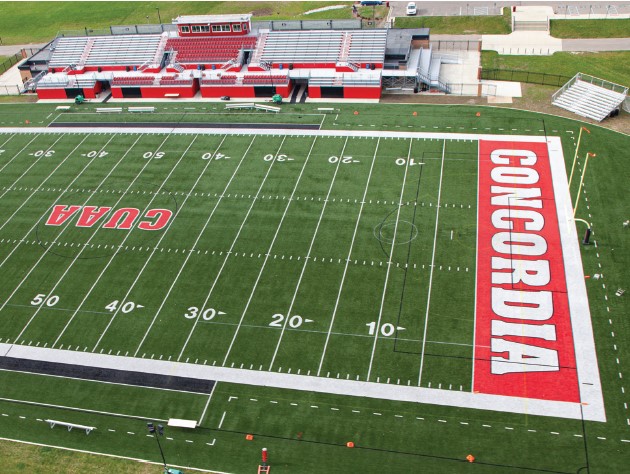
Cardinal Stadium constructed (2015)
North Building acquired (2016)
Thunder Sports Complex constructed (2018)
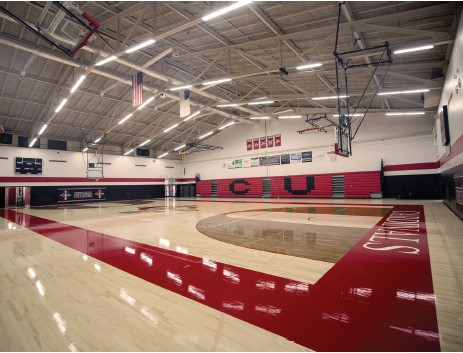
Cardinal Fieldhouse renovated (2019)
School of Health Professions wing at North Building created (2021)
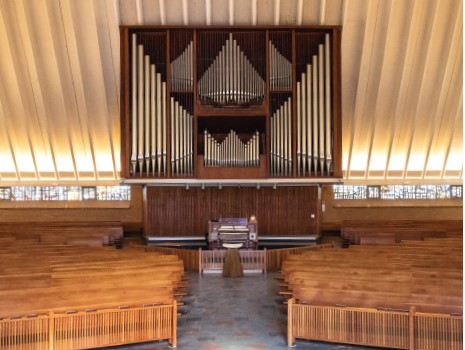
Chapel of the Holy Trinity pipe organ restored (2022)
The alumni perspective
Maier: As an alum, there was a joy in doing this and thankfulness. The university treated me well. I experienced being the first class that had the junior year added on and then we had the senior year added on, so we graduated, our class, with the first four-year degree. And we were blessed. We were just blessed. And the spiritual growth that we experienced was just tremendous, so it was just a part of the excitement and joy.
Cario: There were several of us faculty members on the Mequon campus who had Concordia Ann Arbor ties. Along with me, Randy Ferguson, who was in the Academic Office with me at the time, also was a Concordia Ann Arbor alum. So we did feel like we had a special tie there and a sense of, “We don’t want this to fail. We want to do this right.” It was really strange as a Concordia Wisconsin employee and faculty member going over to Ann Arbor and thinking about and seeing what had happened and contrasting that with my experiences. That was a bit jarring at times to see some of those struggles I hadn’t connected that much. So I wasn’t always aware of some of the challenges, and that encouraged my willingness to put some time into this thing.
Our God, our hope for years to come
Bates: We’re all part of a denomination that faces challenges these days, and to see this situation which was so dire, to see level-headed people come together, put aside whatever differences there were – and there weren’t a lot of differences between Concordia Wisconsin and Ann Arbor – but put those things aside and just work towards a solution that might not be perfect for me, but God-pleasing for the Church at large. And to just press forward to make wise decisions to make those things happen. I mean, there was no guarantee that this was going to work. But work with smart people, seek God’s guidance, and good things can happen. I’m always glad when I see that happening within the denomination. I think there’s more opportunities for that. So maybe there’s a lesson for our denomination to learn from this experience. That’s my takeaway.
Maier: My takeaway is “better together.” You would expect this of God’s people. God’s blessing was upon it, but it took great people. I look at John and Jim, certainly Pat, Bill, and Ken, I just want to say, in the end as I looked at it all, I think getting the money together probably was – no, it was the easier part. Looking at leaders like Pat Ferry, and the quiet Bill Cario that I had known from college – and he still is, but just brilliant too. Ken Gaschk who is just this constant muscle. These were incredible individuals who said, “I’m going to do it for the Lord,” and after the money thing was settled, that’s when the job really began and they did a phenomenal job. And I just want to say thank you to them again. Great courage.
Saalfeld: I would just say, “Anything’s possible with God.” There were lots of prayers put up and the course almost seemed like there was not much hope. I described the scenario that Concordia was in like a plane that was headed down, nose-diving, and it got pulled up at the last minute by the combination of the two universities. I don’t know if anybody really understood fully where this was going to go. Now, you see so many cars on the campus here that they have to park in grassy areas. It’s just like, “Wow, what can’t God do?” This is definitely an example.
Gaschk: I would tell you that I was blessed at Concordia to see God’s hand at work in such neat ways. Concordia Milwaukee was going to build a library on campus and a group of activists got together and blocked Concordia from building this library and tearing down some dilapidated houses that Concordia owned. And we sat back and said, “I don’t get it. Why is this happening?”
Well, shortly after that the Mequon campus became available for sale. The number was astronomical what the School Sisters wanted. The university says, “Great, but we just can’t afford it.” Came back two other times and finally the number came to a number that was doable. Now, Concordia had money because we had just completed this campaign to build this library but now we can’t build the library, so we have all these donors who have committed to this campaign and the Mequon campus becomes available.
People also don’t realize, shortly after that Mequon move, Jeffrey Dahmer was in Milwaukee. That was two and a half blocks away from the old Concordia campus. Marquette University lost about 25% of its enrollment because (they were afraid to live in Marquette campus housing because) of the Jeffrey Dahmer incident. And if Concordia would have still been there, Concordia would not have survived. There is no way, no how Concordia would have survived. So that’s how I saw God’s hand at work the first time.
The second time was with Ann Arbor. Because if we looked at this from a business decision, it made no sense at all. Absolutely none. But I remember looking at people from the Extension Fund and hearing that line: God forgives. The extension Fund doesn’t. That was the mantra that we heard over and over again. And so, I thought, there’s no way this is really going to happen, but we kept moving forward. So here again, God is showing us that he is really in charge.
I look back at this as my greatest achievement in my career at Concordia. I was blessed to be a part of Concordia during a time where I saw the first time we had 300 new students, 400 new students, 500, 600, 700, 8, and even 900 new students. But when I look back, this is the thing that I’m most proud of.
I’m talking about the 90 students on our two campuses who have been baptized into the faith in the last 10 years. The angels in heaven rejoice over that. Even if it was just one, it would have been worth whatever we could have invested in order for that to be made possible.
CUWAA President Emeritus Rev. Pat Ferry, PhD
Ferry: It’s great to be with all of you today. Thank you, all of you, for the part you have played in all this. We’re people of faith and people of faith sometimes need to take a step of faith – or even a leap of faith. In retrospect, what’s the worst thing that could have happened? Well, we all could have lost some money for sure. But look what has happened instead. And I’m not just talking about Ann Arbor’s growth in its enrollment. I’m talking about the 90 students on our two campuses, most of them in Ann Arbor by the way, the 90 students who have been baptized into the faith in the last 10 years. The angels in heaven rejoice over that. Even if it was just one it would have been worth whatever we could have invested in order for that to be made possible.
And it’s not just one, it’s 90, it’s more than that who have grown in their faith and who are having an impact. Ken said it well, Bill and Ken and I have enjoyed lots of things about our time at Concordia Wisconsin – some enormous, historic things, but this one will always be close to our hearts because it’s been such a wonderful experience and I’m truly grateful.
Want in?
Come and see what Concordia University Wisconsin and Ann Arbor has to offer you. Book a visit to either of our campuses to experience an all-inclusive view of student life and to learn more about programs.