Festive Falcons: pick your favorite costumed Freddy


Faculty and staff at CUW helped Freddy get festive by dressing up their bobbleheads in costume.


As part of their on-boarding to Concordia, every new CUW employee participates in a day-long “Concordia Cares” orientation session. At the end of the session, Human Resources gifts employees with their very own Freddy bobblehead.

This year, HR invited employees to have a little fun with CUW’s mascot, and the results included pop culture references, nods to employees’ hobbies, and everything in between.

Scroll down to view the submissions and then vote on your favorite. Votes are due by 4:30 p.m. Nov. 1.


Graduate Freddy

Submitted by: Accelerated Admission Counselor Heidi Sternig

Turkey Freddy

Submitted by: Director of Accelerated Enrollment Linda Szczerbinski

Coach Freddy

Submitted by: Men’s Assistant Basketball Coach Jon Cain

Maverick Freddy

Submitted by: Registrar’s Office Student Worker Taylor Burford

“Little Ghost” Freddy

Submitted by: Library Access Services Coordinator Carol Mittag

Day of the Dead Freddy

Submitted by: Outreach Specialist Ana Sanchez

Ted Lasso Freddy

Submitted by: Director of New Student Programs Kara Janowski

Dean Rennicke Freddy

Submitted by: Corporate Communications Manager Mike Zimmerman

Chef Freddy

Submitted by: Assistant Director of Financial Aid Vicki Waschow

Storm Trooper Freddys

Submitted by: The Academic Resource Center team

Hula Freddy

Submitted by: Advancement Administrative Assistant Gail Milatz

Money Freddy

Submitted by: Cashier Chris Cesarz

Candy Freddy

Submitted by: Accelerated Admission Counselor Kathleen Siedenburg

Woody Freddy

Submitted by: Registrar’s Office Student Worker Sophia Stanke

Sombrero Freddy

Submitted by: Compliance Officer & Title IX Coordinator Joseph Niswonger

Corky Freddy

Submitted by: CUAA Director of Building and Grounds Jerry Novak

Mummy Freddy

Submitted by: Executive Director of Marketing Strategy Briena Jacob

Hockey Freddy

Submitted by: CUAA Director of Building and Grounds Jerry Novak

Luther Freddy

Submitted by: Assistant Director of AV/Educational Technology Justin Frisque

Price Is Right Freddy

Submitted by: Physical Sciences Lab Coordinator Mandy Schreiber

Monster Freddy (with verse)

Submitted by: Advancement Administrative Assistant and Creative Designer Sandy Barrette

Pulled out all the stops and got your candy ready / Doorbell rings, you open and it’s MONSTER FREDDY!

He screeches in a scary tone, “Yo! Trick-or-treat!” / But all that you can notice is his cold, bare feet.

Quick thinking on your part could help this frightnin’ cyclops / You run into the basement, bring him your old high tops.

Freddy shows his hand; “I’m not as cold as I seem / I have a caramel macchiato with a lotta cream!”

Now the night is over, you’re all tucked in your bed / You’re tossing and you’re turning, Freddy’s trapped in your head.

The goosebumps that you sense have got you feelin’ foolish / That costume Freddy wore was really super-ghoulish!

But then you crack a smile, and think of your sneakers / In younger days they made you hotter THAN paprika!

Ninja Turtle Freddy

Submitted by: Accelerated Admission Counselor Nicholas Deleon

Beetlejuice Freddy

Submitted by: Cashier Sharon Tarantino


Want in?

Concordia University Wisconsin has been named among the Milwaukee Journal Sentinel’s best places to work for the past three year.


AnnaLyssia Abela is Concordia’s October Student of the Month

Congratulations to CUW’s October Student of the Month, Psychology and Social Work double major AnnaLyssia Abela!


The CUW faculty have selected AnnaLyssia Abela as the October Student of the Month. AnnaLyssia is a senior Psychology and Social Work double major. She is an excellent student, striving to integrate theories and concepts from psychology with ones from different domains to expand her knowledge and understanding of social issues. As president of Psychology Club, Anna has demonstrated fine leadership skills by spearheading service-learning projects and promoting opportunities for students to serve through legacy projects. Anna consistently demonstrates a strong vocation to serve CUW and the community. She has worked with faculty and other students to organize and promote the Inspiring Comfort event of October 5 that reached over 300 CUWAA students. Furthermore, Anna has poured her time and efforts in the multidisciplinary Mental Health and Wellness Fair. Anna will certainly make a positive impact and represent Concordia proudly as she follows her vocation to help others! 

Meet our previous Students of the Month here!

AnnaLyssia was nominated by Prof. Vittoria Sipone.


Want in?

At Concordia University Wisconsin, we believe that education is at the junction of faith and learning. That means that we get to know you personally – your unique gifts and skills – so that we can help you develop fully in mind, body, and spirit to achieve your highest potential. To learn more or to apply, click the link below.

6 practical strategies if you’re a high schooler with the ‘lowest average ACT score in 30 years’


This year’s average ACT score was the lowest it’s been in three decades. If you’re a member of the graduating Class of 2022, here are some suggestions to help you get proactive about your lagging ACT score.


You may have seen the headlines. In fact, you may be among the students being featured…

If you’re a member of the graduating Class of 2022, don’t fret. Instead, it’s time to demonstrate your hustle and get proactive about your lagging ACT score.

Here are a few practical tips to help you along your way.

RELATED: Fox6 news visited Concordia’s campus to learn how one college is responding to the drop in standardized test scores

Before you decide on a college…

1. Don’t panic; consider a school’s admission criteria.

First off, you need to know that college admission teams look at more than just that one test score. In fact, multiple studies have found that there are even bigger indicators of student success than the ACT – like a student’s high school GPA. That’s part of the reason why, in 2019, Concordia decided to waive the ACT requirement for admission.

Instead, CUWAA began utilizing self-directed inventories and other short tests to determine which classes are the best fit for each individual student during their first year. This also helps ensure you’re getting plugged into the proper resources and support systems within our university. Ultimately, we want to get some kind of indication of where you’re starting so that you can be successful and get the most out of your Concordia experience.

2. Apply to a school with a low professor to student ratio.

One of the main advantages of attending a “small school” is the personalized attention you’re sure to get from professors, advisors, and other important support staff on campus. This kind of attention is especially important if you’re someone who might need a little extra support, academically speaking. 

With an overall enrollment of 5,192, CUW isn’t exactly a small school, but we’re able to blend the best of both environments: a small-school environment paired with big-school opportunities. We’re intentional about keeping our class sizes small despite our robust program offerings. Our faculty to student ratio is 11:1, and our average class size is 16.

Plus, our professors will attest that they’re at Concordia for the most important reason of all: you! Believe us when we say our expert faculty could easily find jobs within their disciplines with a much higher paycheck, but they’re quick to share that they are committed to Concordia because they love what they do, they care about students, and they’re committed to the mission of our university.

3. Don’t get stuck in the remedial education trap.

Make sure you don’t spend a lot of extra time and money on your degree just because the college you’re considering hasn’t caught up on the research! If you haven’t heard of the remedial education trap, here’s a bit of background:

There’s been a long-enduring practice within higher education where schools require students to enroll in remedial courses if they don’t achieve a high enough score on entrance exams. The goal is to help students “close the knowledge gap” and help them get up to speed with the level of rigor of the college classes they’ll eventually take. The problem: these remedial courses often don’t count as credits toward their major, and evidence shows that they don’t actually help students improve!

At Concordia, we won’t make you take a bunch of remedial-level courses that will only end up unnecessarily prolonging your time at our university and costing you more money. Instead, there are courses you may opt into that are designed to provide interventional support at the time you need it, instead of letting an ACT score determine a particular track you should be on.

Once you enroll…

4. Get plugged into the ARC (Academic Resource Center) early

Instead of remedial courses that you’re required to take in lieu of core classes, check to see what kind of “bridge” programs the college in question offers. Summer bridge programs are relatively new (Concordia piloted its program last summer). They’re designed specifically for the student who needs a little extra help transitioning from high school to the rigor of college.

Concordia’s First-Year Bridge Program is strategically timed to take place prior to the start of classes, in conjunction with orientation, so as not to conflict with core classes.  Plus, it comes at no extra cost to the learner. The program involves an orientation session, followed by biweekly personal, academic, and financial-aid support and counseling meetings throughout your first semester.

Concordia’s ARC provides a ton of free services beyond the bridge program, too. The ARC offers academic services and accessibility services, as well as additional resources in areas such as:

5. Find your study buddies

Professors are generally pretty good about making themselves available to you for support or feedback, but their on-campus hours are also limited. Instead, don’t delay in making friends with some of the peers who continue to show up in the same classrooms as you. There’s nothing more useful than having a late-night study buddy or likeminded learner to remind you of important deadlines. 

If you want to cut straight to the chase, Concordia has a program full of pre-vetted academic coaches and tutors for you to utilize. In fact, our peer academic coaching/tutoring program, offered by our ARC, is one of the most widely used academic services at Concordia. The peer academic coaching/tutoring program is equally great for students who have fallen far behind as it is for those who want to raise their Bs to As. And our peer academic coaches’ usefulness goes beyond straight academics; they’ll help you with things like stress management, motivation, goal setting, and overcoming test anxiety. 

You can learn more about it here.

6. Take care of your emotional health

It’s no secret that people’s mental health took a hit amid the pandemic, and studies show that there’s a strong correlation between mental health and academic success. That’s why Concordia has taken seriously the responsibility of caring for our students’ emotional health. In fact, our expansive and proactive approach earned us a write-up in The Washington Post.

Among our offerings:

  • Concordia is the only university in the state to offer a SMART Lab.
  • We were the first known university in the nation to pilot a comfort dog program on campus.
  • Within the past year, we’ve introduced a new, unique triage service to improve efficiency and allow our professionals to respond to urgent matters more quickly.

In short, Concordia is not afraid to innovate for the benefit of students’ emotional wellbeing.


Want in?

You still have time to earn a $1,000 Visit Scholarship from Concordia University Wisconsin. Click on the link below to schedule your visit.


Dr. Erik P. Ankerberg will be extended call to become CUWAA president


The Concordia University Wisconsin and Ann Arbor Board of Regents is pleased to announce that Dr. Erik P. Ankerberg will be extended a Divine Call to serve as the University’s next president.


Dr. Erik Ankerberg

Ankerberg, who is currently serving as provost and senior vice president for academics & chief academic officer for Concordia University Chicago, would succeed Rev. Dr. Patrick T. Ferry, who served as president from 1997-2021.

Ankerberg earned his Bachelor of Arts degree from Concordia University Chicago, and also holds a Master of Arts and a PhD in British Renaissance Literature from Marquette University. Prior to joining CUC, he served as University Provost and Chief Academic Officer at Concordia University Texas. He also served in several roles at Wisconsin Lutheran College, and taught English at both CUAA and CUW. He is currently pursuing pastoral ordination within the Lutheran Church—Missouri Synod. He and his wife Jennifer, also a Concordia-Chicago alumna, currently reside in Wheaton, IL.

“As a Board of Regents, we give thanks to God that He has brought forth to Concordia University Wisconsin & Ann Arbor an experienced, God-filled, Lutheran Christian leader who appreciates our traditions and successes while recognizing that our faith-filled journey into the future will be guided by His divine hand,” said Mr. Terry Donovan, chair of the CUWAA Board of Regents. “The Board of Regents feels blessed and excited to begin our Lutheran Christian mission-focused journey with Dr. Ankerberg.”

The call that will be extended to Ankerberg to become the next CUWAA president is the result of a thorough, prayerful, Christ-centered search process. On May 12, 2022, the Board of Regents voted unanimously to interview three candidates who were approved by the Prior Approval Panel and appeared on the list of highly-qualified candidates identified by the search committee. Each of these three candidates was invited to visit both campuses and take part in a rigorous series of interviews. On October 25, following a unanimous vote, the Board announced that Dr. Ankerberg had been selected to receive the call to become the ninth president of CUW and seventh president of CUAA.

Ankerberg would likely begin his tenure as CUWAA president in January 2023. In the meantime, Interim President Dr. William Cario will remain at the helm. Please join us in supporting this transition in prayer as we look forward to a blessed new chapter in the history of Concordia University Wisconsin and Ann Arbor.


About CUWAA

Concordia University Wisconsin and Ann Arbor is an uncommon community of students, faculty, alumni, and staff who are gifted by grace and ever-preparing to live out our purpose to serve Christ in the Church and world. For more information about our academic programs and campus life, click one of the links below.


10 tangible ways Concordia cares for students’ mental and emotional wellbeing


Concordia University Wisconsin continues to pursue excellence with the mental health and wellness services it offers students.


Earlier this year, CUW received a nod from The Washington Post for its innovative and proactive practices. After months of gathering information remotely and during an on-campus visit to Mequon, award-winning journalist Laura Pappano featured Concordia in the story, “Pandemic leads colleges to revise, improve mental health efforts,” which also ran in The Hechinger Report.  

Now, PNC has awarded CUW a grant that will allow the university to continue some of its programming or expand upon newer services. The grant covers:

  • More hours for Intake/Triage coordinators to streamline and prioritize services for students
  • The licensing of a Healthy Minds Study survey for distribution to students in order to assess effectiveness of current services
  • Supplies for CUW’s SMART Labs to meet the demand of student interest in the already existing rooms
  • The first Symposium on Mental Health to be held on CUW’s campus in spring 2023 to share valuable work with other universities.

“Concordia University has always done a tremendous job of individualizing each student’s academic journey; now, we are taking a giant leap forward in personalizing students’ wellness experience,” said Dr. Steve Gerner, dean of students. “Engaging and effective counseling is part of the solution, but only one part. Our menu of options is extensive and necessary for the unique needs of all our students.

“We are so thankful for our partners at PNC, who recognize these mental health needs and value our innovative work in this area. Our forward thinking matches PNC’s mission of great service and providing powerful expertise. Our community is strengthened because of PNC’s generosity.”

Dr. Steve Gerner, dean of students

Ongoing mental health support

Here are just a few of the ongoing programs CUW has in place to provide support for students’ mental and emotional wellbeing.

Intake/Triage Coordinators

In order to make the most efficient use of Concordia’s resources, the university piloted an Intake/Triage program last fall. Two employees now serve as the first stop for all student mental health queries and requests. These Intake/Triage Coordinators are tasked with helping students to navigate Concordia’s growing slate of wellness offerings. They also assess and prioritize students’ needs in order to allow CUW employees to provide a more efficient or immediate response.

Learn how to connect with an Intake/Triage Coordinator.

SMART Labs

Concordia is the only college campus in Wisconsin to offer stress management and resiliency training labs. The labs are accessible to students 24 hours a day and are meant to teach or reinforce self-care practices that help buffer daily stress, making students less emotionally and physically vulnerable to it. There are two designated SMART Lab rooms on campus – Evelyn’s Place, located next to the Luptak Terrace Room, and Evelyn’s Corner, located in PH129. There are also Evelyn’s Corner stations within each of the residence halls.

Learn more about Evelyn’s Place.

Counseling Center

Of course, Concordia maintains the baseline care that colleges across the nation fulfill by providing students with access to clinically certified counselors free of charge. Students don’t need to have a clinically diagnosed disorder to utilize the Counseling Center. Students may seek support for a variety of reasons, such as anxiety, depression, self-esteem issues, addictions, and more.

The Counseling Center is open Monday through Friday from 7 a.m. to 5 p.m. (evening hours by appointment).

If you or a friend find yourself in an emergency, call Campus Safety at 262-243-4344.

Learn more here.

Life coaches

Last fall, Concordia launched the first no-cost life coach program offered to college students in the state. Coaches include Veterans Outreach Coordinator Kari Metts and Professors Emeritus Tracy Tuffey and Eugene Pitchford.

The goal of the coaching program is to help students make progress in their lives through strategies such as goal setting, accountability, and confronting cognitive distortions.

Concordia is looking for additional faculty and staff to go through the training to become a certified life coach. Training is FREE and will take place Jan. 16. Email Rebecca Hasbani (Rebecca.Hasbani@cuw.edu) if you are interested.

Comfort Dog Ministry

In 2014, Concordia was the first known university in the nation to pilot a program that utilizes a certified comfort dog in a full-time capacity for students’ benefit and beyond. Through the Comfort Dog Program, which is overseen by Counseling Center Director Dave Enters, Concordia’s resident comfort dog, Sage, offers stress reduction, emotional relief, and improved well-being to all those who encounter him on campus.

Concordia’s Comfort Dog Program was honored as a “Model of Excellence” among higher education institutions nationwide. Learn more here.

U-Lifeline

Thanks to Concordia’s JED membership, students have access to U-Lifeline free of charge. U-Lifeline is a mental health resource designed specifically for college students. The site includes a self-evaluator to screen your own symptoms, as well as emergency resources available on and off campus, articles on wellness habits, and more.

Students can access CUW’s personalized U-Lifeline website here.


New efforts this year

This year, Concordia added to its faculty and student training/orientation repertoire:

Inspiring Comfort

A group of close to 100 CUW student-leaders and employees participated in an all-day, pre-term training at the beginning of this academic year. The training was led by Jen Marr, founder of Inspiring Comfort, and was designed to teach them how to provide comfort and care to peers in need of emotional support.

Read more.

QPR Training

Earlier this year, Concordia partnered with the QPR Institute to offer suicide or crisis intervention training for its faculty and staff. The goal was to help employees recognize a student who is at risk for suicide, know how best to intervene, and learn when to refer them to the appropriate resources.

Another QPR Training course will be offered Nov. 11 from noon to 1:30 p.m. or 1:30-3 p.m. For more information, email StudentWellness@cuw.edu.  

Mental Health and Wellness Fair

An outcome of its JED membership, Concordia hosted a Mental Health & Wellness Fair that was attended by several dozen students. The fair offered information, access to resources, and opportunity to win health-focused prizes.

Falcon Peer Support Network

Launched this year, the Falcon Peer Support Network is a student-run group designed to promote resiliency and to provide peer-to-peer support. There are six student-directors, six student-leaders, and 42 participants who have shown interest already. The group hosts Kickback Fridays, weekly group sessions, and other community-building events. Contact student Taylor.Vanbrocklin@cuw.edu if you are a student interested in getting involved.


Learn more

If you are struggling in any way whatsoever, there is someone or something that can help. Explore resources by clicking on the link below.


Tanya’s road to becoming a doctor of nursing practice

Tanya Rettig is in her final year at Concordia University Wisconsin and Ann Arbor’s DNP program. She is also a current nursing intern at a middle school in her area. Check out her answers about her experience below.

Why did you choose Concordia?

I completed my Master of Science in Nursing from Concordia in 2017, so this was a smooth transition for me. I chose Concordia for my MSN because I could get a strong education in the form of a hybrid program. Although I moved states in the middle of my degree, CUW supported me as I found new rotations. I’m excited to be back in a program that I knew would support my lifestyle while still challenging me. 

What are you hoping to do with your degree when you finish? 

Upon graduating, I’m immediately moving with my husband in the military to a location that has not been decided for us as of yet. Moving around the country with a family very frequently, nursing and specifically the doctorate in nursing allows me the flexibility of practice. I enjoy teaching nursing, so my short-term goal is to continue teaching in the clinical setting and my long-term goal would be to have one foot in practice and the other in teaching collegiate-level nursing. 

RELATED: Read about an asthma detection program Tanya implemented at her local school.

What are a few challenges you encountered as a nursing student?

Nursing school is difficult. In fact, research supports that it is one of the most difficult undergraduate degrees. Additionally the same could be said for the graduate level. Time management, school/work/life balance, and stress can really feel overwhelming at times. 

However, nursing is not an island- not in work or in school. Advocating for yourself, asking for help, and being willing to help others will lead to more manageable success. Start practicing self-care in school and it will translate to your professional and personal life. 

CUW nursing has been so beneficial when it comes to flexibility and the collaboration with classmates and staff remotely. It is wonderful to feel so supported in my work despite being online for most meetings and classes. 

Tanya Rettig

What advice would you give an individual contemplating a nursing degree?

Nursing is a wonderful career. It’s flexible, gives back to you, and it’s life-changing for your patients. It’s hard work and some days are really tough. But, you wouldn’t be human if some days didn’t make you question your career choice.

However, every day you go to work remember that you’re dedicated to making an impact in someone’s life, possibly even saving it. In that case, it is the most rewarding career. 

What motivated/supported you through our program? 

Remembering my purpose was a key motivator throughout the program. My husband, my kids, my family, the students I teach, and the patients I care for remind me that I’m choosing a path that can support each of them. I also have had wonderful support from Concordia. 

I did experience a time in which I had to restart my doctoral project part of the way through the program. Without the support of my professors and program director, I’m not sure that I would be here providing this interview. 

Would you recommend your program to others and why?

Concordia’s online program is a great way to complete a degree with flexibility. This program feels like you are working alongside experienced colleagues in a collaborative effort to reach the terminal degree. 

The 8-week intensive classes are indeed thorough and challenging but allow for a focus on one class and topic at a time. Classes integrate experts in the field of nursing and business leadership to prepare nurses for certain leadership expectations in the future. 

What is your advice to future students?

Balance. Enjoy your time as a student. School is wonderful. It’s a time to socialize, grow, and learn what you like and what you don’t. You may even learn about something you never knew you wanted to learn about and grow as a human being. 

It doesn’t have to be just a means to an end if you can find ways for it to reinvigorate you along the way. Being a lifelong learner is a wonderful attribute to have, so keep that in your mindset. 

Ready to accomplish your dream?

We are here to help you in your educational journey. You can check out more information about our DNP program by clicking the button below. 

Concordia’s accelerated undergraduate teaching degrees

As Concordia’s accelerated programs have expanded, the undergraduate degrees in Education continue to strengthen Concordia’s historic reputation in preparing teachers of all levels. We offer bachelor’s degrees in various WI state teaching licenses including Early Childhood Education, Elementary Education, Secondary Education in English/Language Arts, Mathematics, Broadfield Social Studies, and Cross Categorical Special Education. Today, our undergraduate teaching degrees are helping working adults earn degrees and help fill the ever-increasing need for teachers.


Q & A with Program Director, Dr. Adam Paape

Assistant Dean of the School of Education, Dr. Adam Paape, is the Program Director for these increasingly popular programs. He recently took the time to answer some common questions:

Why is now a good time to become a teacher?

We are in a national teacher shortage crisis. There is a great need for teachers however, due to the low number of candidates, there are so many opportunities within the teaching field. Many of our graduates have multiple options for jobs when they complete our programs. We are also in a time of educational innovation as schools and districts incorporate creative ways of teaching and learning.  


What makes a good teacher?

Great teachers care for their students in mind, body, and spirit. They think deeply about how they can engage their students in the content they teach. Great teachers connect the world outside the classroom to the learning inside the classroom. 
Above all, they incorporate their love for the Lord into their teaching and learning.  

What is the format and nature of the online courses and how many interactions do students have with their instructors? 

Candidates interact on a regular basis with their instructors regardless of the style of class. We offer all of our content courses in 8-week asynchronous formats. This means that students do not need to be present on any particular day/time for classes. Instead, they are able to engage in the learning process when it fits best in their daily schedule. 

Additionally, our 8-week classes can either be collaborative (this includes interactions with peers via discussion posts or video posts) or self-paced (students primarily interact with the content and their instructor).

Can you really learn enough online to be a qualified classroom teacher?

Absolutely! We’ve embedded all of the same performance-related assessments that we require of our in-person students into our online program. We’ve aligned our online program with high-quality, on-site fieldwork that ensures our candidates are fully qualified to teach in their own classrooms upon program completion.  

What are the classroom clinic hour requirements and how are those arranged?

Most semesters, our online bachelor’s students will perform 45 clinical observation hours in K-12 schools nearby where they live. Those hours will vary in kind – discovery, special education, and multicultural.  These hours are designed to allow our students to learn in classroom settings and to reflect on the practices they’ve learned in our online classes.  

How can students who work as paraprofessionals or teacher aides gain credit for their work experience? 

During the first semester of clinical work in our programs, a student will have the opportunity to submit an application for credit, based on lived experience. If a candidate works as a paraprofessional or teacher aide, that work aligns very well with the university’s Prior Learning Assessment (PLA). In this case, the candidate will submit a written narrative of the learning experiences. 

In addition, the candidate will collect written confirmation from supervisors of their previous learning to submit to the PLA. Many students also enter the program with transferrable credits from other accredited schools, including associate degrees. Students can potentially apply up to 84 credits toward these degrees. This can accelerate the completion of a degree!

Do students have to live in WI to complete the practicum and student-teaching requirements?

Students can live anywhere in the United States to participate in our undergraduate teaching degrees. The only requirement is that our candidates work with qualified host teachers. The host needs an active teacher license from the state in which they serve. Also, they need at least three years of teaching experience, and one year of service in that building or district. 

What tests are required to earn a state teaching license in Wisconsin and how can that license be used in other states?

This depends on the teaching license. For the K-9 Elementary Education license, the candidate will need to pass the Foundations of Reading Test (FORT). If a candidate has a GPA below 3.0 in their core content area, they would need to take the Praxis 2 test in that content. Additionally, if a student has below a B in their core math, reading, and writing classes, they would need to take the Praxis Core test.

Ready to get started?

To learn more about all of our accelerated undergraduate teaching degrees and programs offered for busy adults including those in Education, visit CUWAA Accelerated Admissions or call 262-243-5700.

Join us!

We are hosting a live webinar on October 26, 2022, at 4:00pm CDT, which will give you the opportunity to hear from faculty and admissions to get more program specifics. We will also have a live chat feature to answer your questions.

What are the fastest-growing jobs in tech?

Did you know that according to Zippa, “there are at least 3.97 million tech jobs available in the US as of 2022? And this number continues to grow.” With advancements in technology almost daily, it’s no surprise that skilled individuals are needed in the field. Take a look at the top growing careers in the industry.

#5 Operations research analyst

Projected job growth, 2020-2023- 23%

Operations research analysts help organizations make decisions using math and logic and solve problems. O’Net states that their days can include tasks such as:

  • Collaborating with others to ensure successful implementation
  • Formulating mathematical or simulation models of problems
  • Identifying problems and solutions
  • Performing testing of models

Operations research analysts in 2021 made about $82,360 annually. In order to be in this career, you need a bachelor’s degree. Additionally, many employers require a master’s or doctorate degree, depending on where you work. A degree in business, math, engineering, computer science, or operations research can best help you be successful.

#4 Web developer

Projected job growth, 2020-2023- 23%

Not only do web developers use computer science, but they also need creativity to be successful in their position. The main task is to create and design websites for the organization or clients. In addition, they write code and update code for programs. According to O’Net, web developers made a median wage of $77,030 annually in 2021.

Your education needed in the career depends on where you work. However, most require at least an associate’s degree and knowledge of coding languages. Still, some require a bachelor’s degree or more in the field.

#3 Software developer

Projected job growth, 2020-2023- 25%

Software developers have been one of the fastest-growing jobs in tech for the past several years and continue to grow. Developers need to have strong knowledge and background in programming and computer languages. Some daily tasks include:

  • Designing and developing software
  • Updating programs
  • Performing software testing and maintenance

How do you get started? Recommended by the U.S. Bureau of Labor Statistics, “software developers typically need a bachelor’s degree in computer and information technology or a related field. Some employers prefer to hire developers who have a master’s degree.” In 2021, software developers were making around $109,000 per year.

#2 Information security analyst

Projected job growth, 2020-2023- 35%

If you’re interested in protecting networks, becoming an information security analyst could be a path for you. So, what would you do? The U.S. Bureau of Labor Statistics states, “Information security analysts are heavily involved with creating their organization’s disaster recovery plan. The recovery plan includes preventive measures such as regularly copying and transferring data to an offsite location.” Their job also includes researching new technology to decide what will work best for security.

In order to become an information security analyst, you will need a bachelor’s degree in computer science or a similar field such as math or engineering. Data shows that the median wage in 2021 was $102,600.

#1 Data scientist

Projected job growth, 2020-2023- 36%

Coming in as the number one fastest-growing job in tech is a data scientist. Data scientists, according to Coursera, “determine the questions their team should be asking and figure out how to answer those questions using data. They often develop predictive models for theorizing and forecasting.” Their daily tasks may include finding patterns and trends, communicating recommendations, and deploying data tools.

The U.S. Bureau of Labor Statistics reports that the average wage in 2021 was $100,910. To start a career in data science you need a bachelor’s degree in data science, statistics, or computer science.

Ready to pursue one of the fastest-growing jobs in tech?

Whether you are just pursuing a degree or already have one, getting into the tech industry is possible. Thankfully we offer many degrees that can get you to your career goal. Check out our website to learn more about our programs. Or you can contact us for more information here.

Introducing the CUW Athletic Hall of Fame Class of ’22


Concordia University Wisconsin is pleased to honor our 2022 inductees into the William C. Ackmann Memorial Athletic Hall of Fame.


Each year, Concordia University Wisconsin celebrates our most accomplished athletes by inducting exceptional CUW faculty, staff, students or alumni into the Hall of Fame for their contributions to CUW Athletics Department. Congratulations to this year’s honorees, who will be inducted officially in a pre-game ceremony on October 22.


Garrett Wenzelburger

Garrett Wenzelburger

Class of 2015 | Football and Basketball

Wenzelburger was a four-year starter for the CUW football team as wide receiver, during which time he earned first-team all-conference honors in three consecutive seasons (2012-14). During his career, Wenzelburger caught 251 receptions—a program record—totaling 3,169 yards and 38 touchdowns. He set Falcon records for longest pass reception (85 yards in 2012) and single-game receiving yards (239 yards in 2014). He helped the Falcons post a perfect 8-0 record in the Northern Athletic Conference during the 2013 season and was a member of the men’s basketball program for three seasons.


Austin Damaschke

Austin Damaschke

Class of 2015 | Football

As quarterback for the Falcons, Austin Damaschke was named the North Athletic Conference Co-Offensive Player of the year (2014), NACC First-Team selection (2014), Wisconsin Football Coaches Association Private College player of the year (2-13), and NAC Freshman of the Year (2011). In addition, Austin recorded tremendous personal stats and set many individual career program records. Damaschke complete 821 passes for 9,963 passing yards and 85 passing touchdowns, all of which are Concordia football career program records. He also holds a wide range of single-season records, including completion percentage (66% in 2012), passing yards (3,171 in 2013), passing touchdowns (25 in 2012, and total yards (3,844 in 2013).


Luke Doedens

Luke Doedens

Class of 2012 | Basketball

Luke Doedens was a leading contributor to one of the most successful eras in Concordia men’s basketball history. During his two-year tenure at Concordia, the 6-6 guard averaged 15.5 points per game, which ranks second all-time in program history. Doedens was voted NAC Player of the Year for the 2011-12 season and was selected to the Second Team All-NAC following the 2010-11 season. Doedens also ranks second all-time in three-point field goals made in a single game with seven made versus Concordia Chicago and Silver Lake College in 2011. In his two seasons of play, the Falcons achieved an overall record of 44-11, including the first undefeated conference season (16-0) in program history in 2010-11.


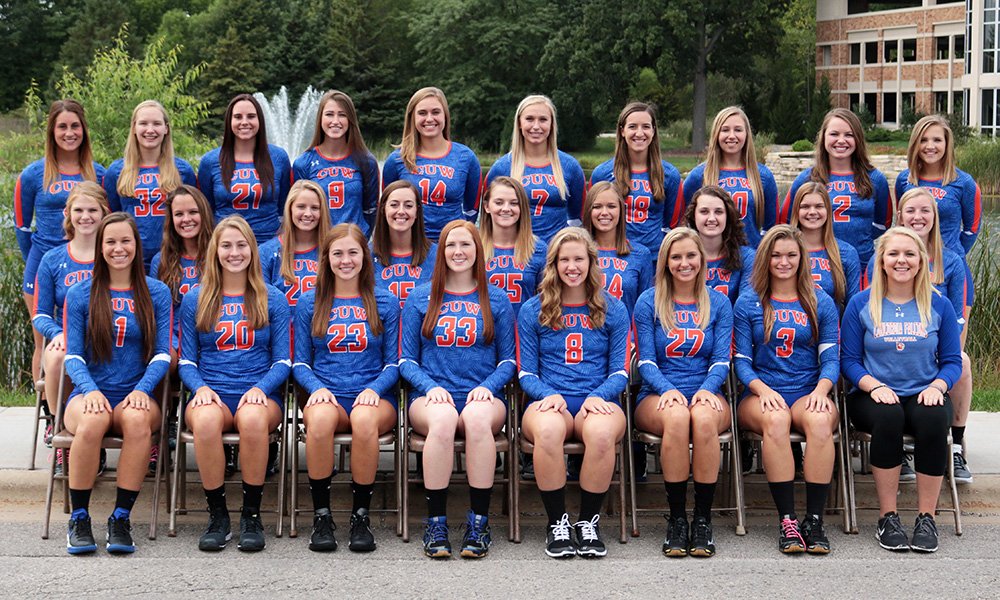
2016 Women’s Volleyball Team

2016 Women's Volleyball Team

The 2016 women’s volleyball team was the first to earn a berth into the NCAA tournament. In 31 matches, the Falcons recorded an undefeated conference record (11-0) and an overall record of 23-8. They finished the season as both NACC regular season and NACC tournament champions. As a result of their terrific season, coach Janelle Katz earned the NACC Coach of the Year title. Six players earned all-conference honors, including three on the First Team All-NACC: Lindsey Casper, Kailey Moegenburg, and Lauren Nevinski. In addition, Karina Klotz earned Second Team All-NACC recognition, and Megan Mayer was voted NACC Freshman of the Year, joining Kendall Stribling on the All-Freshman Team.


Want in?

Being a Concordia Falcon isn’t just about out-scoring competitors in the athletic arena. It’s about developing as an individual, both in and out of the game. To learn more about our wide range of men’s and women’s varsity-level sports, click on the link below.


Alumni Spotlight: Brooke Essig

At Concordia University, we are proud to offer flexible, accelerated programs for our adult learners. Alumni Brooke Essig shares what her experience in the Bachelor in Accounting program was like.

Tell us about yourself.

I am Brooke Essig, and I am a graduate of CUW. I have an associate degree in accounting from Southwestern Michigan College and a Bachelor of Science in Accounting from Concordia University Wisconsin. I enjoy reading, baking, and cooking, and going to the beach in my free time.

Why did you choose Concordia?

I chose Concordia Wisconsin because of its welcoming atmosphere and ties to the LCMS (Lutheran Church–Missouri Synod). The underground tunnel system was also a plus for me during the cold and snowy winters.

What is your favorite thing about the accounting program?

One of my favorite aspects was the scheduling process at Concordia. The accounting classes I needed to take were offered every year compared to other schools that only offer them every other year. 

Would you recommend this program to others?

All of the professors are extremely kind and helpful and they want you to succeed. Also, all of the professors have great real-world experiences that they bring into the classroom. I felt the program challenged me and prepared me for when I graduated.

Do you feel professors were supportive?

Yes! The professors in the accounting department were extremely supportive. All of the professors I encountered were always extremely friendly and always willing to help. As a transfer student, Professor Stinson and Dr. Brock went out of their way to make sure my class schedules were correct and that my previous school’s classes transferred over correctly.

What do you love about Concordia University?

I love that Concordia puts an emphasis on Christ. I feel that this makes it a very welcoming and supportive environment for all of its students.  

Make the most of your college experience and get involved with different campus organizations.

Brooke Essig

Want to follow Brooke’s path?

Learn more about our accelerated accounting program by visiting us below.