Concordia launches new dual acute care MSN program to prepare nurses to care across the lifespan

New Master of Science in Nursing program prepares advanced practice nurses to provide acute care for pediatric, adult and geriatric patients, with particular value for rural communities


Concordia University Wisconsin is expanding its graduate nursing offerings with a new program designed to prepare advanced practice nurses to care for patients across the lifespan, from children to older adults.

The new Master of Science in Nursing: Dual Acute Care Pediatric and Adult/Gerontology program integrates pediatric and adult-gerontology acute care preparation into one 50-credit graduate program. Designed for BSN-prepared registered nurses seeking to advance into acute care nurse practitioner roles, the program provides preparation to assess, diagnose and manage complex acute health conditions in pediatric, adult and geriatric populations.

Students will also prepare to pursue two national board certifications, one in pediatric acute care and another in adult-gerontology acute care.

“This program prepares nurses to serve people of all ages with confidence and compassion,” said Jennifer Nicpon, DNP, FNP-BC, director of Graduate Nursing and assistant professor. “That breadth of preparation gives graduates greater flexibility to respond to complex needs in acute care.”
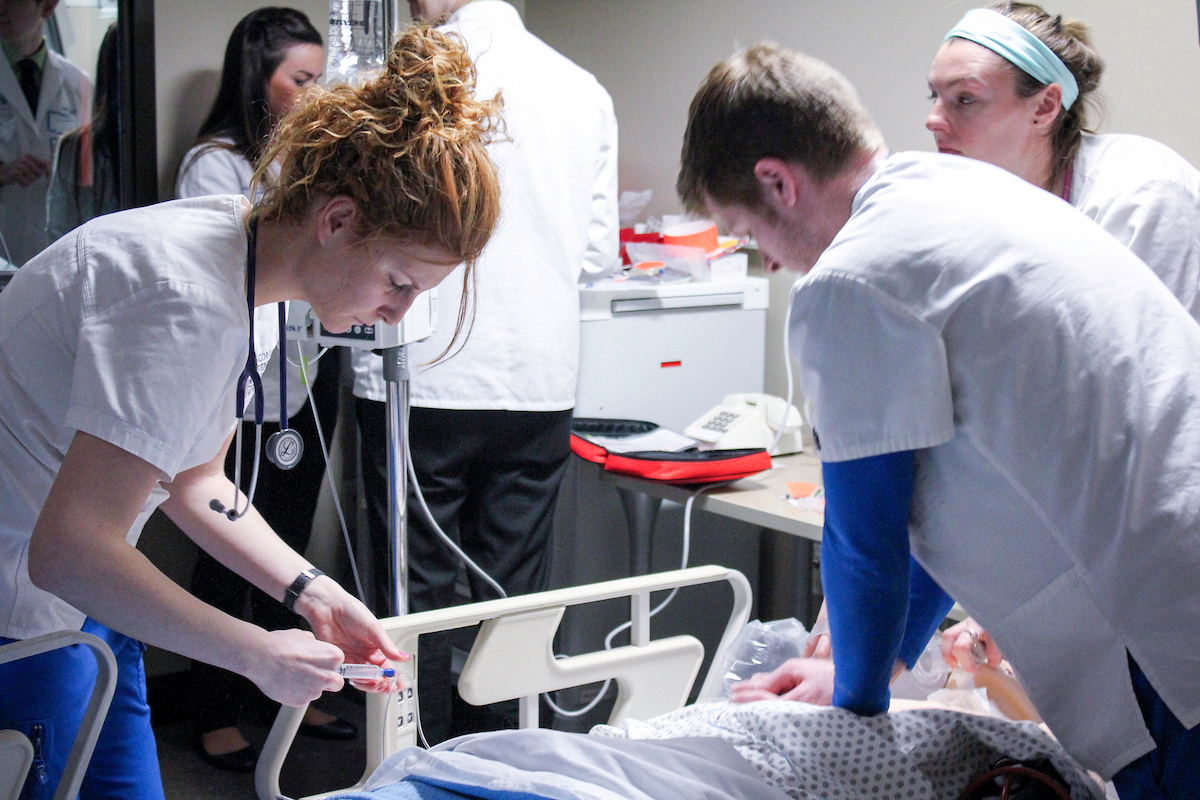

Greater flexibility in urban and rural healthcare

The dual acute care program is designed to address needs in both urban and rural healthcare settings.

As acute care credentials become increasingly important in urban hospitals, preparation in two acute care specialties can give nurse practitioners greater flexibility to serve pediatric and adult populations within larger health systems.

That versatility may be especially valuable in rural communities, where hospitals need providers who can serve patients across a broader continuum of care. Preparing nurse practitioners to work with patients from childhood through older adulthood can help equip them to meet the varied needs of the communities they serve.

“Rural hospitals need practitioners with the versatility to serve people of all ages,” said Jessica Leiberg, PhD, DNP, dean of the School of Nursing. “By preparing nurse practitioners in both pediatric and adult specialties, we’re helping strengthen the healthcare workforce in communities where that range of expertise can make a strong impact.”
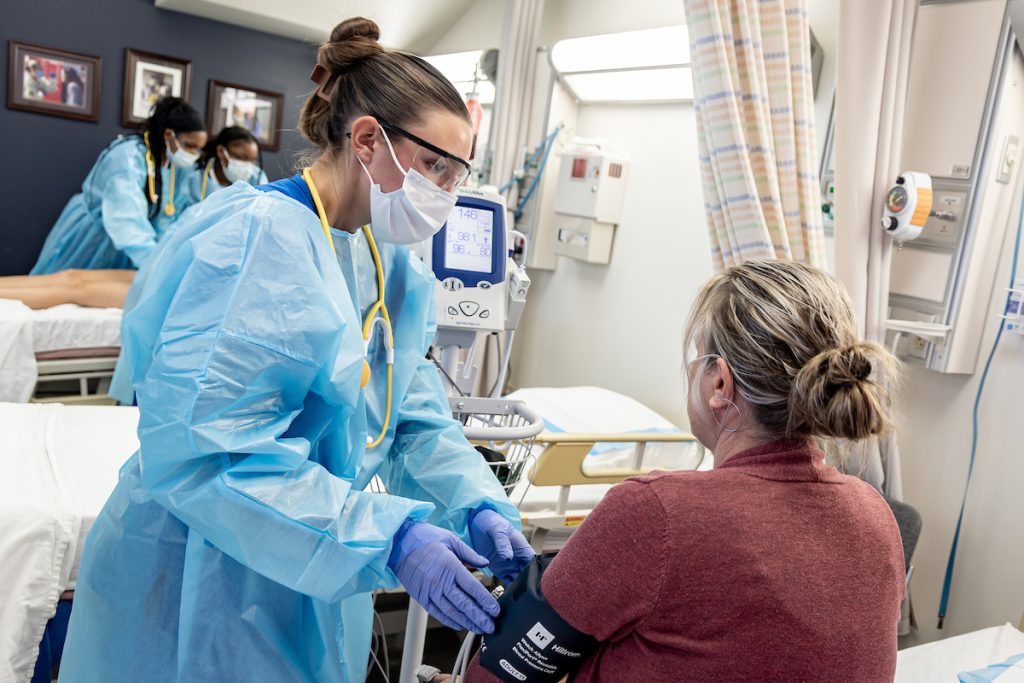

One program, two acute care specialties

The 50-credit program is designed to be completed over eight semesters and combines online coursework with in-person clinical experiences in high-acuity healthcare settings.

Students will study advanced pathophysiology, pharmacotherapeutics, advanced health assessment, evidence-based nursing practice, diagnostic skills for advanced practice registered nurses, healthcare policy and pediatric and adult-gerontology acute care.

Concordia nursing professionals also help match students with clinical locations, allowing students to focus on developing the knowledge and advanced practice skills they will need in their careers.

Graduates may pursue opportunities in settings such as hospital emergency departments, trauma centers, intensive care units and pediatric intensive care units.
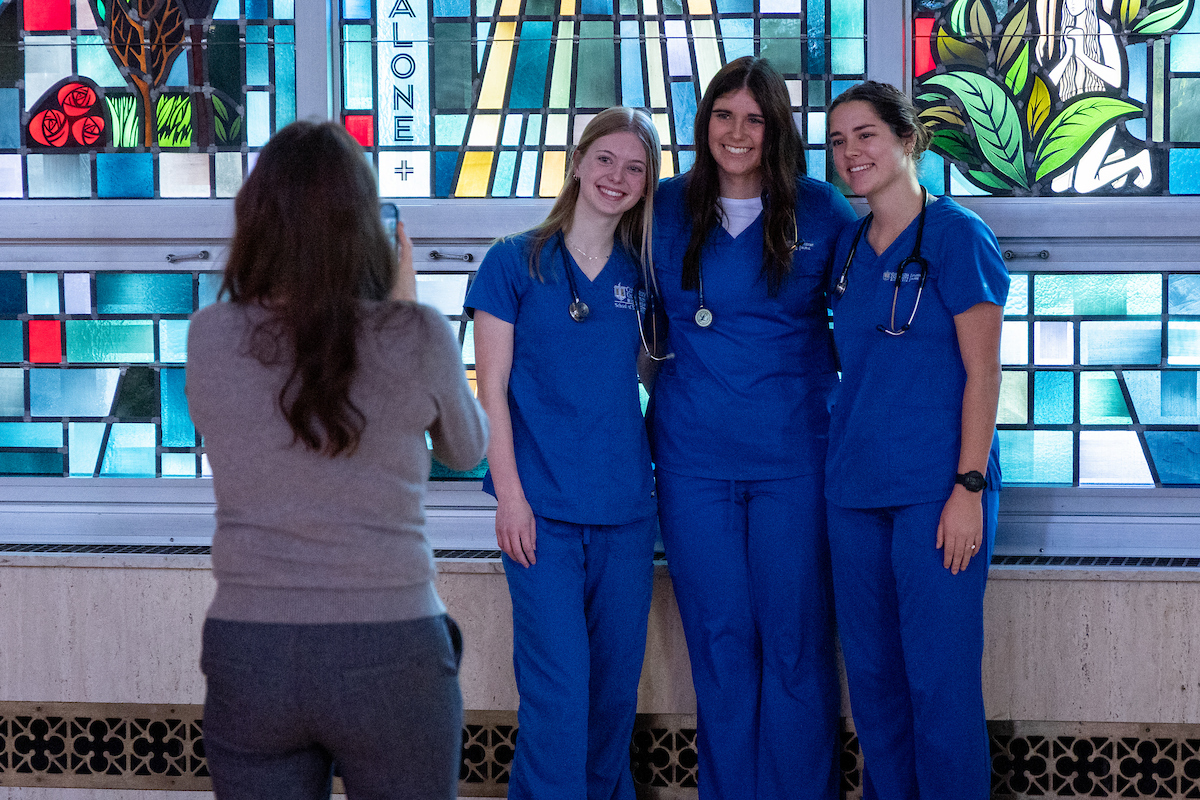

Christ-centered care when patients need it most

The new program builds on Concordia’s approach to graduate nursing education by combining rigorous clinical preparation with a Christ-centered understanding of service.

Students in the Master of Science in Nursing: Dual Acute Care Pediatric and Adult/Gerontology program will integrate evidence-based practice, advanced clinical knowledge and interprofessional collaboration as they prepare to care for patients and families during some of their most critical moments.

That approach reflects Concordia’s mission as a Lutheran higher education community committed to helping students develop in mind, body and spirit for service to Christ in the Church and the world.

Applicants must hold a BSN from an accredited institution and possess a current, unencumbered registered nurse license. Additional admission requirements apply.

For more information about the Master of Science in Nursing: Dual Acute Care Pediatric and Adult/Gerontology, visit https://www.cuw.edu/academics/programs/dual-acute-care-msn/.


Want in?

Concordia University Wisconsin is a Lutheran higher education community committed to helping students develop in mind, body and spirit for service to Christ in the Church and the world.


Why July 4 is special to me: A lifelong love of history

July 4 has always been a special holiday for me. I started out my teaching career as a high school American history teacher.


My master’s degree is in early American history. I read around 20-25 American history books and biographies each year. I love reading and studying American history, and don’t take for granted the freedoms and liberties we enjoy as Americans. And if I’m honest, the week of July 4 is one of the few times where I finally feel like I can “get away” and vacation with my family. There are few things I enjoy in life more than a family barbeque over the fourth.

Every July 4, I’m reminded of two great blessings in my life that I had absolutely no control over:

1. I was born into a Christian home with two loving, Christian parents.

2. I was born in the United States of America.

With these two realities alone, I can say I’ve been incredibly blessed by God. As an American, we can’t forget our history. On July 4, 2026, the United States will celebrate its 250th birthday—and well we should! While certainly a flawed and sin-filled nation, our country’s inalienable principles of “life, liberty and the pursuit of happiness” remain just as important today as it did at the founding. We are blessed!


Why remembering matters

As a Christian, we can’t forget our history either. Indeed, the Bible is literally filled with thousands of “remember” reminders and pleas from God. While American history is being taught less, or in a radicalized way, if at all, even fewer people are hearing or being taught the Word of God, at least as a percentage of the populace.

This is a sad reality because Christianity is a religion based on history and firmly grounded in historical facts and historical events. Jesus really did walk and live on earth. Numerous historical records, documents, witnesses and artifacts attest to these facts and truth claims. And Jesus really did die on the cross and really did rise from the dead. Abundant historical records, documents, witnesses, and artifacts attest to these facts and truths, too.

Recently I published, “Sacred Inspiration: A Devotional Journey Through the American Revolution and God’s Word.” The book is made up of approximately 40 devotions that lead with a story from the American Revolution and then finish with Scripture related to the topic.

As readers engage with these devotions, they’ll be looking back to the American Revolution and, more importantly, even farther back to the life of Jesus and the ancient and perfect Word. My prayer is that the Holy Spirit may work on readers’ hearts and minds and have their faith strengthened through these devotions.


The battle over history and truth

George Orwell’s “1984” has the often-quoted line, “Who controls the past, controls the future. Who controls the present, controls the past.” Indeed. If history can be destroyed, suppressed or forgotten, then people might forget about Jesus and what He has done for all people. This is precisely why Satan and so many in the secular world have declared war on history, truth and Jesus. The stakes are high and eternal.

Winston Churchill, who is not an American and did not fight in the American Revolution, once said, “The farther backward you look, the farther forward you are likely to see.” While not divine, his words ring true today and provide a useful metaphor for the hopes I have for “Sacred Inspiration.“


A July 4 prayer of thanksgiving

Every July 4 is like Thanksgiving for me. The holiday reminds me to give thanks for our country and the liberties and freedoms we have and that came at a cost. And it also reminds me of the cost of our redemption—with Jesus, who died on the cross to redeem us from our sins.

One of our most founding fathers, Patrick Henry, left these words in his last will and testament. “This is all the inheritance I can give to my dear family. The religion of Christ can give them one which will make them rich indeed.” Amen.

Blessed July 4 to you and your family. And happy birthday, America!

About the author: Dr. Jim Pingel is Concordia University Wisconsin’s dean of the School of Education and professor of Education.


Want in?

Concordia University Wisconsin is a Lutheran higher education community committed to helping students develop in mind, body and spirit for service to Christ in the Church and the world.


New tuition rates expand affordability for online and graduate students

At a time when many colleges and universities are increasing costs, Concordia University Wisconsin is taking a different approach.


The university has lowered tuition for its online undergraduate programs and several graduate programs, helping remove financial barriers for working adults and students seeking to advance their careers.

This decision reflects Concordia’s ongoing commitment to expanding opportunities for learners who may have delayed their educational plans because of cost.

For many students, cost remains one of the biggest obstacles to pursuing a degree. Concordia’s new tuition model lowers costs directly while helping students better understand the true cost of attendance from the start.

“Concordia decided to lower tuition because we wanted to make our online undergraduate and graduate programs more affordable, transparent and accessible,” said Kevin Sheridan, vice president for Enrollment. “While scholarships had helped offset costs in the past, they also made the published tuition price appear higher than what many students actually paid. By reducing tuition directly, we are giving students a clearer understanding of their investment from the beginning.”


Making education more attainable

“This tuition reduction tells prospective students who may have delayed completing or starting a degree, because of cost, that Concordia is working to make that next step more attainable,” Sheridan said. “By lowering tuition directly and making pricing more transparent, we are reducing uncertainty and helping students better understand the true cost of their investment. The message is clear: If cost has been holding you back, now may be the right time to reconsider Concordia.”

The change also makes Concordia’s programs more competitive and easier for prospective students to evaluate alongside other institutions.

“These reductions are significant because they make Concordia’s online undergraduate and several graduate programs more transparent, more competitive and easier for prospective students to evaluate against other programs in the region,” Sheridan said. “Many students compare programs before applying, and a lower, more straightforward tuition rate can make Concordia stand out as an affordable, high-quality option.”


Supporting working adults and career-minded learners

The new tuition rates are expected to benefit a wide range of learners, particularly those who are carefully weighing cost, value and return on investment.

“The students who will benefit most are working adults, career changers, first-generation graduate students, and those who are paying out of pocket, using loans or relying on employer reimbursement,” Sheridan said. “These students are often very focused on affordability, transparency and return on investment. By lowering tuition directly, Concordia is making our high-quality education more financially realistic for students who may have delayed or dismissed the possibility because of cost.”

For students balancing careers, families and financial responsibilities, the reduced tuition rates provide a more predictable pathway toward educational advancement and long-term career goals.


Addressing workforce needs in education

The impact of affordability extends beyond individual students. It also affects communities and professions facing critical workforce shortages.

Across Wisconsin and the nation, schools continue to seek qualified teachers, administrators, counselors and educational leaders. Dr. James Pingel, dean of Concordia’s School of Education, says affordability plays an important role in helping address those challenges.

“‘Affordability’ has been the term that’s been spoken about and felt, perhaps more than any other the last five years,” Pingel said. “Since so many people are living paycheck to paycheck, anything universities can do to lower costs, including tuition, the more affordable higher education becomes for families and prospective teachers.”

Current educators often face two significant barriers when considering graduate education.

“Time and money have always been barriers for earning a post-bachelor’s degree,” Pingel said. “Most people who would like to pursue a master’s degree are already working fulltime jobs and they also are living paycheck to paycheck. Moreover, many schools used to provide extra professional development funds that teachers could use to earn their master’s degree, but many schools are no longer providing this monetary support. So current teachers have to weigh if the time, money and lack of employer-funded scholarships are worth it.”

Reducing tuition helps make advanced degrees, certifications, and leadership preparation more attainable for those already serving in classrooms and schools.


More than a degree

While affordability is important, Concordia leaders emphasize that education is about more than earning a credential.

“While earning your advanced degree can do a lot for you (that’s the transactional), it’s what the learning does to you that matters even more (that’s the transformational aspect of lifelong learning),” Pingel said. “And as you grow and learn, you become a more effective teacher or administrator and a better citizen. You are modeling the way!”

As educators and professionals continue to grow, they share their knowledge and experience with others, creating a ripple effect throughout schools, organizations, churches and communities.


Living out Concordia’s mission

The tuition reduction reflects Concordia’s mission of helping students develop in mind, body and spirit for service to Christ in the Church and the world. It also aligns with the university’s commitment to increasing access and opportunity for learners.

“This decision reflects Concordia’s commitment to affordability, access and student success because we are always looking for ways to increase student access by making our education more affordable,” Sheridan said. “By lowering tuition directly, we are reducing financial barriers, making costs more transparent, and helping students better understand the investment required.”

Looking ahead, university leaders see affordability initiatives as an investment in both students and the communities they serve.

“Affordability initiatives like this help Concordia strengthen the leadership pipeline by making our online undergraduate and graduate education more accessible to talented students who are already serving their communities,” Sheridan said. “In turn, communities benefit from graduates who are equipped to lead with skill, purpose and a commitment to service.”

For Pingel, the significance goes beyond the numbers.

“The real story is that we care about our students beyond a transaction, a tuition payment,” he said. “We know the affordability challenge is real for many of them, and a tuition reduction—of any size—demonstrates that we are listening and attuned to their circumstances and needs.”

By lowering costs and increasing transparency, Concordia continues its commitment to helping students pursue their calling, advance their careers, and prepare to make a meaningful difference in the Church and the world.


Want in?

Concordia University Wisconsin is a Lutheran higher education community committed to helping students develop in mind, body and spirit for service to Christ in the Church and the world.


In the News: Rev. Thomas Pietsch discusses faith’s resurgence on WPR

Concordia University Wisconsin Assistant Professor of Theology Rev. Thomas Pietsch recently joined a Wisconsin Public Radio panel discussion exploring a growing national trend: a renewed interest in faith and religion in everyday life.

According to Pietsch, the data reflects something many church leaders have already been noticing. Throughout history, people have often turned toward faith during life’s most significant moments, whether in seasons of great joy or times of uncertainty.

“I’ve seen people have a baby for the first time and they receive a gift so great that it forces them outside of themselves and they start thinking spiritually,” Pietsch shared during the discussion. “But also in times of anxiety.”

As rates of anxiety continue to rise, particularly among teens and young adults, Pietsch said it is not surprising to see church attendance stabilizing and, in some places, increasing. In his own congregation, he has noticed more young men in the pews on Sunday mornings, a trend echoed by other church leaders participating in the conversation.

Still, Pietsch noted that curiosity about faith is only the beginning. The greater challenge is helping people move from intellectual interest to lived faith through worship, community, service and participation in the life of the Church.

“It’s one thing to intellectualize the faith or think that it’s good for society or good for me,” Pietsch said. “But it’s another thing to actually begin a life of love toward your neighbor.”

At Concordia, this integration of faith and daily life remains central to our mission of helping students develop in mind, body and spirit for service to Christ in the Church and the world.


Want in?

Concordia University Wisconsin is a Lutheran higher education community committed to helping students develop in mind, body and spirit for service to Christ in the Church and the world.


Building a Concordia legacy across five consecutive generations: The Zersen family story


New students at Concordia often have surprising histories, unknown even to them. Aiden Michael Zersen, a new student at CUW, only recently came to understand that his great-great-grandfather, Friedrich (Fred) Zersen, was the first to be educated at Concordia Wisconsin.

The Zersen family’s story is a powerful example of how faith-filled choices can echo across generations.

Fred was the first in the Zersen family ever to study in the United States. His ancestors had never gone past elementary school in Germany, but his father’s courage would change that. Carl Ludwig Zersen, the patriarch, knew he would inherit no land because his older brother held that right.

After being confirmed at St. John’s Lutheran Church in Fischbeck, where he had also been baptized, he set out with a friend named Tegtmeier for America.


A faithful beginning

On the ship, he met Johanna Clausing, whom he ultimately married. Together, they bought land near Russell’s Grove, Ill., and raised a family of seven children.

One day, Pastor Herman Lőssner, from St. Matthew’s Lutheran Church in today’s Hawthorn Woods, Ill., called on the couple and said, “God has blessed you with seven children. One you owe to the Lord”. He was surely thinking of 1 Samuel 1 when Hannah gave her son to Eli at the temple, but it was also a typical recruitment technique used by pastors to help the church prepare men for the ministry.

Carl (now “Charlie” to his friends) and his own “Hannah” decided they would send their second youngest son, a studious type, to Concordia in Milwaukee, a school built on the German Gymnasium model offering ultimately four years of high school and two years of college. The new institution was 10 years old.

So, Fred, his son, enrolled in 1891 with 66 students in a building that still stands on 31st Street, between Highland and State streets. Upon completing his studies, he attended Concordia Seminary in St. Louis, graduating in 1900. His first call sent him to Sikeston, N.D., to be a circuit rider responsible for establishing congregations among German immigrants from Russia. Circuit riders were clergy assigned to travel around specific geographic territories to minister.


Answering the call

After the first year in North Dakota, Fred returned to Illinois to court a young woman he had learned to know years before. A year’s correspondence led to a proposal, and Fred returned to marry Sophie Kirchhoff in August of 1902. They would return together and make a home in the Sikeston prairie parsonage. Carl was their firstborn, and William (Bill) followed a year later.

In 1907, the young family accepted a call to Itasca, Ill., a few miles from where Fred’s parents had married, and they served there for 38 years. Three more sons were born to the couple, and Fred surely remembered how, in his case, “one was owed to the Lord.” Instead, counting their blessings, Fred and Sophie decided to send three of their sons to Concordia Milwaukee.


A legacy tested and strengthened

Carl, the oldest, went first and enrolled in 1917. Bill, his brother, enrolled in 1919 and, after graduating from Concordia Seminary, was sent to Kelowna, B.C., in 1930. Ottomar (Otti) enrolled in 1922 but was only a student for a year before he succumbed to a diphtheria epidemic in Milwaukee. In June 1923, he was the first student in the school’s history to die on the campus.

Bill died of encephalitis in 1938 after eight years of service in British Columbia. That left Carl, who, after graduating from Concordia in 1923, went to the Milwaukee School of Engineering on the recommendation of renowned scientist Charles Steinmetz, and graduated in 1927. He would become a pioneer in the lighting industry, known throughout the U.S. as “Mr. Light.”

Carl married Alma Selle in 1935, and they had two children, David and Kathryn. With two Lutheran pastor grandfathers, David considered joining his friend at Concordia in 1956, but instead went to Valparaiso University and Concordia Theological Seminary, becoming a pastor in 1964. In 1966, he married Julie Schmid, and they served three parishes in Northern Illinois—Midlothian, St. Charles, and Itasca—for 20 years. They have two children, Kristin and Rolf.

David was hired in 1987 by then-university president, Dr. John Buuck, to become the dean of Adult and Continuing Education at Concordia, now Concordia University Wisconsin.

Concordia’s focus had changed in 1965 when it no longer provided just ministerial training. It became co-educational and offered courses to men and women in education and business.

An additional direction for the growing campus, which had moved to Mequon in 1983, began with the development of degree completion programs in seven cities.

David developed these programs, and his wife, Julie, became director of Continuing Education at Concordia in 1990. After seven years at Concordia, David and Julie moved to Austin, Texas, where in 1994, David became president of Concordia University Texas, serving there for an additional seven years.


The next generation

Rolf enrolled at Concordia in 1993, when the university had begun to offer new programs, including nursing and computer science. Unlike his great-grandfather, he could choose from numerous majors.

He decided to major in Broad Field Social Studies and to play soccer for Concordia, graduating in 1997. After teaching at Milwaukee Lutheran High School for 14 years, Rolf became head of the Women’s Soccer Program at Milwaukee School of Engineering in 2004. He served there as associate athletic director and earned an MBA.

Rolf married Leslie Verthein, and they have two children, Olivia and Aiden. Rolf continues to work at MSOE, now in his 25th year, having won more than 200 college games, four NACC Conference championships, three NACC Conference tournament championships, and four NCAA appearances.

Aiden enrolled at Concordia in 2026 after graduating from Hamilton High School in Sussex. Wis. Unlike his great-great-grandfather, Fred, he can now choose from the 70 majors available to all students. Given that he played soccer throughout high school, he plans to follow his father’s lead and play soccer at Concordia while earning a degree in business.  

135 years have passed since the first of the five Zersen generations became involved with Concordia in 1891. Concordia has undergone significant changes over the years, but continues to attract students from the Lutheran community, as well as those seeking to grow as Christian leaders in the world.

As time goes by, the Zersen family reflects positively on the gifts they have received from Concordia, knowing that other families may also wish to explore the blessings that come from a long-term commitment to an institution like Concordia.


man in suit with gray hair

David Zersen

This story was written by Dr. David Zersen, who worked at Concordia University Wisconsin as the dean of Adult and Continuing Education in the 1980s and 1990s. He was hired in 1987 by then-university president, Dr. John Buuck. David adds to the Zersen legacy through his involvement at Concordia, continuing a family connection to the university that now spans five consecutive generations.


Want in?

Concordia University Wisconsin is a Lutheran higher education community committed to helping students develop in mind, body and spirit for service to Christ in the Church and the world.


Preserving Concordia’s story: Faculty-led grant project chronicles two decades of transformation

Thirty-five interviews and years of research reveal the voices, values and vision behind a transformative era in Concordia’s history.


For more than two years, a team of Concordia University Wisconsin faculty and staff has been engaged in an ambitious effort to preserve and share an important chapter of the university’s history.

Supported by a $40,000 NetVUE grant, “Reframing the Institutional Saga” has documented the experiences, perspectives, and memories of those who helped shape Concordia during a period of significant growth and change. The project focuses on the years 2000-23, capturing an era marked by institutional growth, academic expansion, and an ongoing commitment to Lutheran higher education.

Originally proposed in 2023, the project was designed to preserve institutional memory, examine the role of the liberal arts in Concordia’s mission, and better understand how the university’s identity has evolved while remaining grounded in its Lutheran foundation. The research team officially began its work in February 2024.

“This project began with a simple conviction: if we didn’t capture these stories now, many of them would be lost,” said Dr. Bill Cario, former university interim president, provost, and professor of history who co-led the project. “The people who built Concordia’s culture and carried its mission forward have experiences worth preserving for future generations.”


Capturing voices before they are lost

At the heart of the project are 35 oral history interviews conducted with faculty and staff members, many of whom are also Concordia alumni. Together, these firsthand accounts provide a unique perspective on the university’s development during a transformative period in its history.

In addition to the oral histories, the project includes a collection of scholarly essays and personal vignettes exploring key themes, events and institutional milestones. The collection, Living Uncommon: Retrospections on Lutheran Identity and Mission at CUWAA, is currently registered with the U.S. Copyright Office.

The project was led by Cario, Dr. Susan Mobley and Dr. Sandra Jahns, all of the School of Arts and Sciences. Theresa Kenney contributed the book’s design work, while faculty contributors included Joshua La Feve, Lori Woodall, and Kenney. Brenda Jobe also assisted throughout the research process.

As researchers reviewed interviews and historical materials, three recurring themes emerged: Concordia’s mission-centered culture, the central role of spiritual life on its campuses, and the leadership that helped guide the university through seasons of growth and change.


Studying change while living through it

The project itself unfolded during a period of institutional transition. As Concordia navigated operational changes, staffing transitions, and revisions to university learning outcomes and the core curriculum, researchers found themselves documenting history while simultaneously living through it.

Head and shoulders shot of Sandra Jahns
Dr. Sandra Jahns

“As the university was experiencing change, we found ourselves studying change,” said Jahns, assistant professor of Communication. “That forced us to move beyond documenting events and ask deeper questions about identity, mission, and what it means to be a Lutheran university today.”

Those questions helped shape the project’s second phase and informed many of the essays and reflections included in the final publication.


Mission, worship and community

One of the strongest themes to emerge from the oral histories was the importance of Concordia’s spiritual life and mission-centered culture. Interviewees repeatedly pointed to Chapel, worship, and the integration of faith and learning as defining characteristics of the Concordia experience.

Researchers found that despite changes in programs, facilities, and organizational structures, Concordia’s commitment to developing students in mind, body and spirit has remained remarkably consistent. Participants described a university where faith is not simply discussed in the classroom, but lived out through relationships, service, worship and community.

Together, these stories reveal how mission and Christian community have remained defining characteristics of Concordia’s identity throughout periods of growth and change.


Leadership and stewardship

The oral histories also highlighted how leadership helped guide Concordia through significant periods of transformation. Participants reflected on the leadership of Rev. Dr. R. John Buuck and Rev. Dr. Patrick Ferry, whose combined decades of service oversaw major milestones in the university’s history, including enrollment growth, academic expansion, and the development of new programs and schools.

Yet one of the project’s most important findings was that mission and culture were sustained not only by presidents and administrators, but by faculty and staff across the university.

“One of the clearest findings from the project was that Concordia’s mission has never rested solely with its leadership,” Mobley said. “Faculty and staff have been the stewards of the culture, the people who translate mission into lived experience for students every day.”


The enduring role of the liberal arts

Researchers also found a remarkable continuity in Concordia’s historic commitment to the liberal arts. Across mission statements, curriculum documents, and personal recollections, a common theme emerged: Concordia seeks to prepare students not only for careers, but also for lives of purpose, service and Christian vocation.

Grounded in Lutheran educational tradition, the university’s approach to education has consistently emphasized the holistic development of students. The research concluded that Concordia equips graduates for vocations that encompass both career and calling.

“When we looked across two decades of interviews, documents, and reflections, we found a remarkable continuity,” Cario said. “Programs changed, campuses grew, and challenges emerged, but Concordia’s commitment to developing students in mind, body, and spirit remained constant.”


 A book years in the making

The project has culminated in the publication of a nearly 170-page book combining oral histories, essays, vignettes, and photographs documenting Concordia’s history and mission. Living Uncommon: Retrospections on Lutheran Identity and Mission at CUWAA has been self-published by Concordia University and will be made available through Amazon near the end of the summer.

In addition to the printed volume, a digital archive will preserve the material for future generations of students, faculty, staff, alumni, and researchers.


Want in?

Concordia University Wisconsin is a Lutheran higher education community committed to helping students develop in mind, body and spirit for service to Christ in the Church and the world.


Concordia named among Wisconsin’s most beautiful campuses

Where breathtaking beauty meets purposeful learning, faith and community on the shores of Lake Michigan.


There are some things that students, alumni, faculty and staff at Concordia University Wisconsin have known for years. The view of Lake Michigan at sunrise. The peaceful walking paths winding through campus. The iconic bluff overlooking the water. The way every season seems to bring a new kind of beauty to our Mequon campus.

Now, the rest of Wisconsin is taking notice, too.

Recently, Concordia University Wisconsin was recognized by Up North News as one of “The 8 Most Beautiful College Campuses in Wisconsin.” The statewide publication highlighted campuses across Wisconsin known for their distinctive settings and memorable landscapes, placing Concordia among some of the state’s most picturesque destinations.

For anyone who has spent time on Concordia’s campus, the recognition comes as little surprise.

Nestled along the shores of Lake Michigan, Concordia’s campus offers a unique blend of natural beauty and purpose-filled learning. Whether students are gathering for class, meeting friends in the campus center, attending Chapel, cheering on the Falcons, or simply taking a walk along the bluff, the environment serves as a daily reminder of God’s creation and the opportunities that lie ahead.

The beauty of Concordia extends beyond its scenery. As a Lutheran higher education community, Concordia is committed to helping students develop in mind, body and spirit for service to Christ in the Church and the world. The campus itself reflects that mission, providing a welcoming place where faith, learning and community come together.

While rankings and recognitions are always appreciated, what makes Concordia truly special is the people who call it home. The students pursuing their vocations, the faculty and staff who invest in their success, and the alumni who carry Concordia’s mission into their communities all contribute to a campus experience that is as meaningful as it is beautiful.

For those who have not yet visited, this latest recognition is one more reason to see CUW for yourself. Stand on the bluff, take in the view, and discover why so many people consider this corner of Wisconsin one of the most beautiful places to learn, grow, and live uncommon.


Want in?

Concordia University Wisconsin is a Lutheran higher education community committed to helping students develop in mind, body and spirit for service to Christ in the Church and the world.


Concordia in the news: Graduate’s perseverance story earns front-page recognition

Concordia University Wisconsin is, once again, making headlines for the right reasons.


The Ozaukee County News Graphic recently featured a front-page story highlighting the inspiring journey of 2026 graduate Brianna Lusk, whose determination, faith and resilience carried her through significant health challenges on her path to earning a Bachelor of Arts in visual communication with a minor in entrepreneurship. The story also spotlighted Lusk’s selection as the undergraduate commencement speaker, a fitting honor for a student whose experience exemplifies perseverance and purpose.

At Concordia, we often talk about helping students develop in mind, body and spirit for service to Christ in the Church and the world. Lusk’s story is a powerful reflection of that mission. Through setbacks that could have easily altered her plans, she remained committed to her education, continued pursuing her calling, and ultimately crossed the commencement stage as both a graduate and a representative voice for her fellow classmates.

The recognition from the Ozaukee County News Graphic serves as another reminder that Concordia students continue to make an impact far beyond campus. Their stories demonstrate what can happen when faith, learning and perseverance come together in pursuit of a greater purpose.

We are grateful to the News Graphic for sharing Lusk’s story with the broader community and proud to celebrate her accomplishments alongside those of her fellow graduates.

Read the full Ozaukee County News Graphic feature on Lusk to learn more about her remarkable journey and commencement message.


Want in?

Concordia University Wisconsin is a Lutheran higher education community committed to helping students develop in mind, body and spirit for service to Christ in the Church and the world.

Serving with excellence: Faculty, staff, student and alumni achievements (summer 2026)

As part of our ongoing commitment to recognizing excellence, we regularly celebrate the achievements of the Concordia community.


Twice each year, we gather stories that reflect the many ways members of the Concordia community are living out their callings in service to the Church, their professions and the world. Whether through professional advancement, academic achievement, creative pursuits or service to others, these milestones showcase the gifts and dedication of Concordians across generations.

We are grateful for the many ways they strengthen our university and serve their communities with purpose and care.


FACULTY/STAFF

Article published in Christian journal

HOSA Educational Excellence Award


STUDENTS

Student award winners

  • Graduate Mikayla Dolan exemplifies what it means to lead through service. A double major in psychology and social work, she has been a driving force across campus—serving as president of the Psychology Club, executive director of the Social Work Student Organization, and faith associate. This past spring, Dolan spearheaded the Feed My Starving Children initiative, leading a campus-wide effort that raised over $30,000 to combat global hunger. Her research, “Academic Self-Efficacy and Social Media Usage Among College Students,” reflects her commitment to student well-being, while her practicum at Lakeshore Regional Children’s Advocacy Center highlights her passion for advocacy and care. A recipient of the E. R. Brann Citizenship Award, Dolan will attend Marquette University Law School, where she will continue to serve as a powerful advocate for others. 
  • Autumn Snow’s work reflects both intellectual curiosity and a clear sense of purpose. Her research, “Cognitive Behavioral Therapy Techniques and Female Athlete Performance Anxiety,” demonstrates a thoughtful and applied approach to supporting student well-being. Through her practicum at Affiliated Clinical Services, she gained hands-on experience in therapy and psychological assessment. Snow will pursue a Master of Science in Clinical Mental Health Counseling at the University of Wisconsin–Milwaukee.
  • Micah Yurk distinguished himself through exceptional academic performance and thoughtful engagement throughout his time in the program. He approached his work with strong analytical thinking, creativity and a deep commitment to learning. Yurk’s research, “The Relationship Between Religious Participation and Coping Strategies,” reflects his ability to meaningfully integrate psychology and faith. Through his practicum at Lutheran Child and Family Services, he supported children and families in adoption and foster care settings, bringing compassion and purpose to his work. Yurk will attend Concordia Seminary in St. Louis as his prepares for ministry in the Lutheran Church—Missouri Synod. 
  • Sophia Simonson, a cross-registration student with MIAD, recently took first-place in the Pallas Textiles Competition. The contest challenges emerging designers to create original textile patterns.

Welcoming new Psi Chi members

  • CUW is proud to recognize six students who earned induction into Psi Chi—the International Honor Society in Psychology—this year. Membership is highly selective and recognizes excellence in scholarship, Christian character and commitment to the field of psychology. Inductees include juniors Alexis Anderson, Sarah Poynter, Lilly Stephan, Heidi Weber and Katherine Yinko, and senior Kadan LaFond.

Chinooks full-time announcer

  • Kyle Steiner recently earned a full-time announcer position with the Lakeshore Chinooks after interning with the team last year. He’ll be performing a mix of play-by-play, public address, and color commentary duties as a staff member.

ALUMNI

Doctorate completed

  • Dr. Celeste Cuffie, (’07, ’12) recently completed her coursework and research for her doctorate degree in strategic leadership from Liberty University, Lynchburg, Va.

Books published

  • Kristen Nelson-McKenzie (’78), wife of Rev. Patrick McKenzie (’78, ’80), recently published “When Your Genes Don’t Fit: Nutrigenomics for Transforming Your Metabolism, Immunity, and Health.” Her studies at Concordia and Valparaiso led her to pursue a career in science education and school administration. She also studied emergency medicine, working in advance cardiac life support training as a paramedic. Her new career in functional medicine has inspired her to write more about the relationship between genetics and health. Nelson-McKenzie and McKenzie collaborated recently on another series called “21st Century Christian Parenting: A Modeling Approach,” in which parents, small groups, and pastors counseling new parents can better understand the impact of modeling the faith in the lives of their children. 
  • Erica Gumieny (’18) recently published a book called “Journey from the Ashes: A Devotional,” a transformative 365 day devotional for women on a quest for healing, transformation, and spiritual growth through God’s unchanging love.

Exemplifying the power of practitioner-scholar leadership

  • Co-authored with LICI Assistant Director Dr. Angela Walmsley, Dr. Kristen McLoughlin Panzarella (’23) published “Assessing Our Assessments: Paper vs. Computer” in the professional magazine, Phi Delta Kappan, sparking timely dialogue on assessment practices.

30 under 30

  • Sophie Hengst (’20) earned a spot on Forbes’ 30 Under 30 list as a Creator to Watch in the retail and e-commerce category. The recognition highlights her influence in interior design, product development and digital entrepreneurship. She has built a combined social media following of 1.47 million through smart consumer products and a clean, accessible design aesthetic.

Stepping into influential leadership roles

Celebrating outstanding service and recognition

New instructor of music and Wind Symphony director

Alumni leaders in softball

  • Jasmine Freeze (’25), a first-year fifth-grade special education teacher at John Long Middle School, serves as head coach of the Grafton High School softball program. While at CUW, she scored 24 homeruns over her last three years with the Falcons.
  • Former college softball player and youth coach Julie Schueller (’98, ’00, ’07) is restarting Ozaukee High School’s softball program. Schueller played shortstop at first base at CUW in Mequon.

Have an accomplishment to share?

We want to celebrate the accomplishments of our Concordia community. If you know a faculty member, staff member, student or alumnus who has received an award, recognition or other notable honor, please let us know.

Submit a news request or email the details directly to Susan Suleski at susan.suleski@cuw.edu.


National recognition for Concordia’s veteran support earns local spotlight

Concordia University Wisconsin recently made headlines in the Ozaukee News Graphic after once again being recognized as a Military Friendly® Top 10 School and Military Friendly® Top 10 Military Spouse School.


The national designation places Concordia among the country’s top institutions for serving veterans, active-duty military members, and their families. It also marks the fifth consecutive year the university has earned Top 10 recognition, reflecting a sustained commitment to providing military-affiliated students with the resources, support, and community they need to thrive.

The local coverage shines a light on the work taking place every day through Concordia’s Howard J. Bogenschild Veteran and Military Affiliated Resource Center, where students can find academic support, career guidance, camaraderie, and encouragement as they pursue their educational goals.

The recognition aligns closely with Concordia’s mission of helping students develop in mind, body and spirit for service to Christ in the Church and the world. Through personalized care and a Christ-centered approach to education, the university continues to create opportunities for veterans and military families to flourish both in the classroom and beyond.
And speaking of local celebrities, Truman, the Veteran Resource Center’s newest therapy dog, recently enjoyed a moment in the spotlight himself. Truman appeared in a campus clips compilation featured by the LCMS Reporter. While he may not know much about national rankings, he has quickly become a favorite among students who stop by the center for encouragement, conversation, and a friendly wag.

Whether it’s national recognition for serving veterans or a therapy dog bringing a smile to someone’s day, Concordia remains committed to supporting those who have served and helping them discover what it means to live uncommon.


Want in?

Concordia University Wisconsin is a Lutheran higher education community committed to helping students develop in mind, body and spirit for service to Christ in the Church and the world.