CUW Takes Comfort, Care, & Connection Training Campus-Wide 

A group of 10 CUW faculty & staff got certified this summer to make the Inspiring Comfort “Showing Up” comfort & connection program readily accessible for all CUW students, faculty, and staff. 


Mental health concerns and social disconnect are increasingly prevalent among young adults today. Given the “loneliness epidemic” among college students, a dedicated group of CUW faculty and staff want to make a difference in their students’ lives. That is why this summer, 10 CUW faculty and staff volunteered their time to become certified trainers with Inspiring Comfort. 

Inspiring Comfort is a social good company that establishes effective human care and comfort as teachable skills. CUW has already hosted two pilot programs with Inspiring Comfort that taught 400 students how to “Show Up” for their peers when they are struggling with mental or emotional health. Given the success of the programs, psychology professor, Holly Griskell Ph.D, and her colleagues are making Inspiring Comfort’s “Showing Up” programming a permanent part of campus starting this academic year.  

CUW Staff Committed to “Showing Up” 

CUW staff certified in Inspiring Comfort have big plans to use “Showing Up” programs on campus this academic year. 

Beckie Kruse, Director of Residence Life, will be bringing the Showing Up programming to students in residence halls through training Resident Assistants and Faith Associates in the skills of comfort and connection. Beckie shares, “In Residence Life, one of our greatest responsibilities is to help students feel a sense of belonging. The specific, practical action steps from Inspiring Comfort are designed to help someone feel like they are not alone.” 

Beckie emphasizes that these care and connection skills are more critical now than ever: “Our Gen Z students have not had the same exposure to in-person experiences as generations before. They have not had the practice reading body language when their primary form of communication developed through messaging applications. They are hungry to learn the skill of listening with their eyes.  And this compassionate generation needs a place to focus their energy; Inspiring Comfort gives them that.” 

Rebecca Hasbani, Intake & Triage Coordinator in Student Wellness, has also been instrumental in bringing new mental health resources to CUW. Rebecca agrees that Inspiring Comfort’s “Showing Up” programming is fit for CUW’s mission. 

“Our Christ-centered mission to equip students to serve the church in the world is demonstrated by example when we show up and get through the Awkward Zone to truly connect with students through showing care. A person may underestimate the value of showing care when someone is struggling and think that kindness may go unnoticed or that it may be ‘awkward’.” 

Rebecca Hasbani, Intake & Triage Coordinator, Student Wellness

She shares that Inspiring Comfort’s previous programming on campus has already been very successful in bridging the gap between feeling empathy and knowing how to act on those feelings: “Showing care is so important but it can be hard to know how to show support when a person is going through a hard time.  Students have reported that their relationships improved after going through a “Showing Up” workshop- better communication with faculty, stronger friendships, and feeling more connected and less lonely on campus. These are all big wins from the perspective of Student Wellness!  I highly recommend this program– it is for everyone!” 

Teaching Faculty to “Show Up” 

It is not enough that only CUW students and staff know how show comfort and care. Faculty also play a critical role in supporting students’ wellness. In fact, according to a survey of 300 CUW students, the #1 most important thing for them to feel cared for on campus is professors who care. In fact, students rate “professors who care” as being even more important to them than “a friend who cares” and “access to mental health counselors”. This data demonstrates that teaching faculty how to “show up” for their students is essential. 

To ensure that CUW professors learn the critical skills of comfort and connection, Jen Marr, the CEO and Founder of Inspiring Comfort, will be bringing her “Showing Up” program to Faculty Summit on August 15th. This program will give all faculty an opportunity to learn how to provide effective Christian care and comfort to their students. Following Faculty Summit, CUW professors will have additional opportunities to get involved with “Showing Up” by participating in book groups, consulting with a Certified Inspiring Comfort Trainer, and taking part in CUW’s Mental Health Awareness & Suicide Prevention Week (September 18-21, 2023).  

Current CUW Certified Inspiring Comfort Trainers include: Rick Aamondt (Campus Safety), Beth Buckley (Pharmacy), Holly Griskell (Psychology), Rebecca Hasbani (Student Wellness, Intake & Triage), Kara Janowski (New Student Programs), Brenda Jobe (Nursing), Beckie Kruse (Residence Life), Natalie Ross (Nursing), Vittoria Sipone (Psychology), and Bobbie Vergo (Occupational Therapy). 


Want in?

For more information about Inspiring Comfort at CUW, email Dr. Holly Griskell at Holly.Griskell@cuw.edu.

For more information about mental health services at Concordia University visit the Student Wellness pages for our Mequon and Ann Arbor campuses.


—Dr. Holly Griskell PH.D is a assistant professor of psychology at Concordia University Wisconsin.
Embrace professional development with Concordia

Concordia University offers cutting-edge and personalized professional development programs that go beyond the one-size-fits-all mentality. We can help you create tailored opportunities for your company, by providing a one-of-kind learning experience for your employees.


Success Story: Sendik’s Bootcamp At Concordia

Recently, Concordia had the honor of hosting seven highly successful Sendik’s Bootcamps on our campus. Over 200 Sendik’s employees participated in these sessions. The bootcamps focused on identifying and nurturing individual strengths, enhancing team-building skills, and emphasizing the importance of unlocking each employee’s full potential.


The feedback received from Sendik’s was encouraging.

“We were very pleased working with the Concordia team on this workshop,” said Sendik’s President Mark Kahl. “They were open and honest and were very receptive to tailoring this class to the ‘Sendik’s Culture.’ Our leaders provided universally positive feedback. It was a valuable use of our time.”

What makes customized professional development from Concordia unique? 

“We take pride in listening to our clients, capturing their unique cultures and customizing professional development based on that feedback,” said Assistant Vice President, Continuing Education Studies Sarah Pecor. “It is an honor to hear our clients say they appreciated the partnership collaboration efforts and flexibility in order to make their learning experience personalized.”

Concordia’s bootcamp approach to professional development ensures a highly personalized learning experience for employees. Through targeted workshops, we offer hands-on activities, and interactive sessions, participants research into topics that directly relate to their roles and responsibilities.

We appreciate the collaboration and partnership efforts by both teams, which led to a program tailored to unique needs. The emphasis on personalized development was a hit, as employees felt a strong sense of connection to the training content.

Investing in your employee’s growth and development is crucial for the long-term success of your company. By choosing Concordia University for your professional development needs, you are not only providing your team with valuable knowledge and skills but also investing in a customized approach that aligns with your company’s vision and culture.


Want in?

The Division of Continuing Education Studies seeks to meet learners where they are, creating innovative lifelong learning opportunities that provide high-impact, flexible, accessible, transformational learning experiences for all through their life span—whether a youth, young adult, working professional or those on their retirement journey—in accordance with and advancement of Concordia’s mission.


Go for the gold…Vitality Gold!

Week 31

With the summer heat comes an increased risk of dehydration. You may have received a challenge from Vitality already, but regardless if you entered their sponsored challenge, you can set a goal in Vitality to track your hydration levels! Go to goals, set your personal goal plan, and check in weekly for those 30 points!

Week 32

SPIN THE WHEEL! This is for app users only, but each week in the app, Vitality sets a target activity point level for you (individualized based on your typical activity level). Each standard workout (10,000 steps) counts for 10 points each day. If you hit your weekly target, Vitality will prompt you to spin the wheel in your app. You can earn Vitality points or even gift cards!

Week 33

Even if you have perfect vision, an annual eye exam is important. Many eye diseases have no warning signs and can only be detected during an exam. Earn 200 Vitality Points per program year for completing an annual eye exam.

To receive Vitality Points, you must submit proof of your exam, which can include an explanation of benefits, medical record, or copy of your screening results.

Week 34

While your financial needs, goals and dreams may change, protecting your loved ones will always be important. Take a quick assessment to find out how much life insurance you really need. Complete your assessment with Benefit Scout and earn 100 Vitality Points. 

1. Log in to Benefit Scout
2. Complete the assessment
3. Come back to Vitality and submit a screenshot of the recommendations to this category and earn 100 Vitality Points.

Equine therapy might be the right fit for you

Concordia’s Director of Graduate Counseling shares about equine therapy.


When you hear the word therapy many different ideas, thoughts, and images may come to mind. For some, this word may bring up images of stuffy rooms and couches. Talk therapy may be the most common and accessible mode of therapy. However, it is not the only option if you are looking for ways to improve your mental health, well-being, and happiness.

Have you ever noticed how being around animals tends to make us happy? Calm? In the moment? Equine Assisted Therapy is a specific type of therapy that can help you do that while working on emotional and behavioral improvements.

What is Equine Assisted Therapy?

Equine Assisted Therapy is not therapy for horses. It is defined by Psychology Today as “activities with horses that are conducted while being supervised by a mental health professional and a horse trainer or other equine specialist.”

Horses have a tremendous ability to connect with humans and sense their feelings and emotions. Horses are extremely perceptive, sensitive, and tuned in to the environment around them. They are herd animals. This means they are naturally empathic as they always look out for those around them (others in their herd). This makes them great partners in the growth and healing journey as they create a relaxing environment to be in.

Horses can help clients experientially build trust, learn to navigate relationships, help increase self-confidence, decrease the sense of isolation and anxiety, and much more. Clinical documentation indicates changes in human brainwave patterns and heartbeat pace by simply being around horses.

You may be thinking: “No way, horses scare me!” That’s ok! A great part of this experience is learning to overcome those fears. And there is a dedicated equine specialist in the session that is there to keep both you and the horse safe.

From personal experience

I recently started volunteering at a local farm, Hopes Chariot, that offers Equine Assisted Therapy and Equine Assisted Learning. My lifelong love of horses led me to the farm for my own self-care and to get back to the calm that horses provide me. This quickly became an opportunity to join the therapy team at Hope’s Chariot.

We work with children, adolescents, and adults to provide experiential learning opportunities with horses. In fact, some clients come to the farm and have an initial fear of horses. Through observing, participating in horse care (brushing, walking, etc.), and working with horses, clients, in general, quickly find friendship and companionship in their new equine friends.

Hope’s Chariot, Inc. is a non-profit organization, and the mission is to provide “the opportunity to improve mental health and well-being for individuals with special needs. These experiences provide education and growth, empowering and building resiliency in all individuals participating therein.”

So if you are looking for a unique way to connect with yourself, others, and animals, as well as improve your mental health, be sure to check out local opportunities for Equine Assisted Therapy. After all, taking care of YOU is most important, and this is a unique and fun way to do that.


Want in?

Beyond Equine Assisted Therapy, Concordia offers a variety of services for students right here on campus, including peer support groups, a sensory room, a stress management lab, and more. Not sure where to start? Start by emailing the Student Wellness Intake/Triage Coordinator at StudentWellness@cuw.edu or visit the Counseling Center website to explore options.

If you’re interested in helping others through counseling, Concordia offers a master’s-level counseling program you should explore.


—This story is written by Leah Herr who serves as an assistant professor and director of Concordia’s graduate counseling program.

CUW-St. Louis Seminary course aims to help families, couples thrive

Developing couple and family strengths is important throughout the entire cycle of a family’s life. Beginning Aug. 24, a new online continuing education course will explore this topic and more.


“Helping Couples and Families Thrive Throughout the Lifespan,” is offered in partnership by Concordia University Wisconsin, Mequon (CUW) and Concordia Seminary, St. Louis (CSL)

The six-week online course takes place via Zoom from 4-5 p.m. (CT) Thursdays, Aug. 24, through Sept. 28.

The course will concentrate on the ongoing development of family life. It will also address challenges such as trauma, addiction, marital affairs and more. Special attention will be given to the counseling process. The course will help learners understand the reality of the presence of Jesus, which accompanies His followers, and the action of the Holy Spirit in their lives.

The course will be led by Dr. Bruce Hartung, professor emeritus at CSL and a retired clinical psychologist, and Debra Graf, presenter for Concordia University Wisconsin, a licensed professional counselor and director of children’s therapy at Kettle Moraine Counseling in West Bend, Wis.

“I am happy that we can continue to offer these partnership courses with St. Louis Seminary,” said Sarah Pecor, AVP of Continuing Education Studies at Concordia University. “Marriage and family counseling is a topic that people have been requesting and Bruce Hartung and Deb Graf will offer strong and unique content.”


Want in?

The fee for the course is $99, which includes one Continuing Education Unit (CEU). The deadline to register is Aug. 17. For more information, contact continuing.education@cuw.edu


Go for Vitality gold: Rewards

We are halfway through the year…let’s talk REWARDS! Vitality has continued to add new gift cards to improve your reward experience. Do you reward yourself each time you hit 2500 bucks for a $25 gift card? Or do you save it for Christmas shopping or another special occasion? New this year-there are now gift cards for several airlines! There are also a couple gift cards that require as little as 1000 points-including Spotify. One quick reminder-cashing in gift cards does qualify as a taxable “gift.” Consider whether it’s in your best interest to cash out slowly over time to minimize the impact of taxes withheld on your paycheck. Use Vitality to do what works for YOU and reward yourself as you go for GOLD!

Week 27

Is weight loss or weight management one of your goals? Vitality offers a program called Shapa that awards points for the accountability of daily weigh-ins. Shapa focuses on behavior change to help you achieve long term weight management. It pairs a numberless scale with an app that gives you a personalized program of daily missions based on your habits, personality and environment. This program is not free, but it is less than other weight loss programs you see advertised. You can use your reward bucks already accumulated to purchase the scale and year-long subscription. Earn up to 800 points annually, by doing regular daily check-ins!

Week 28

Consider attending a Health FYI Webcast. Each month Vitality offers a special health-related webcast. You can attend in person, or watch an archived video. Just be sure to pay attention to the whole thing-the video will prompt you to answer one question which verifies you are watching. July’s webcast is Thursday, July 20 at 3:00EST/2:00 CST and focuses on how gradual changes in your activity can make a big difference. Each webcast will net you 50 points, and you may learn some new tips and tricks to a healthier YOU!

Week 29

The month of June is big for retirements within CUWAA, as it’s the end of our fiscal year. Regularly running retirement scenarios can help you know if you are on track to retire or if you need to make adjustments. Earn 50 Vitality Points for running a retirement projection with either Retirement Connection or Vision.

To receive Vitality points, submit proof that you’ve done so: a photo or screen shot of your retirement model graph with Retirement Connection or your “on track” projection with Vision.

Week 30

Have you considered attending a spiritual retreat? Maybe you already do and didn’t know you could receive Vitality points for doing so! Earn 200 Vitality Points for attending a spiritual retreat organized and sponsored by your district, circuit, or congregation. In order to be eligible for points, the retreat should be at least one full day in length and focus on spiritual or emotional well-being.

To receive Vitality Points, you must submit proof of your spiritual retreat, which can include copy of your retreat registration, agenda or curriculum.

Occupational Therapy interventions: Adaptations

A major way for occupational therapists to support their clients with various activities is through adaptations.


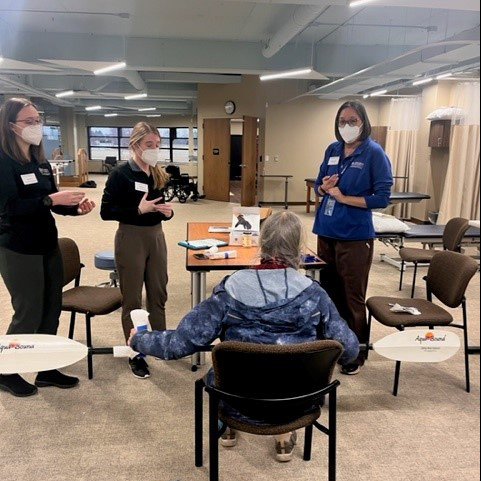
Getting to use one’s creativity to invent new tools or reimagine ways to utilize existing ones is an extremely fun part of the occupational therapy profession. At Concordia University Wisconsin, practicing adaptations happens in both the classroom and within the community clinic. Here are some examples from this semester!

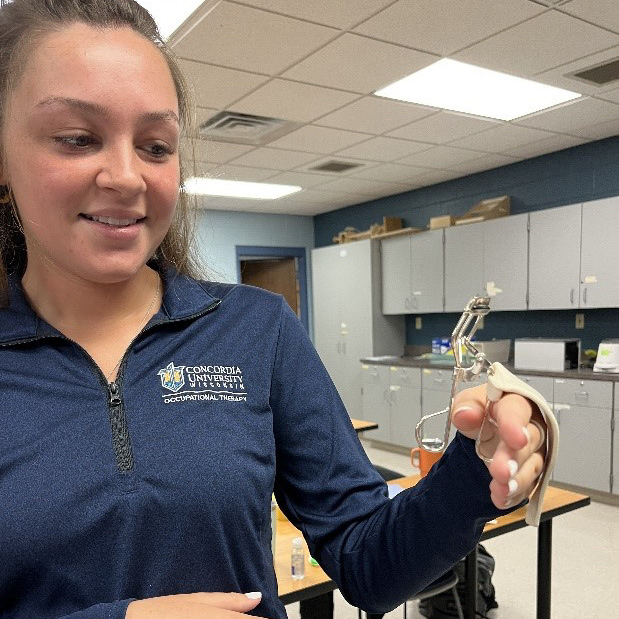
Eyelash curler for spinal cord injury

This past semester, students designed adaptations for patients with cervical spinal cord injuries or weak grasp, in general. Some of these adaptations are commercially available, but clients may have financial constraints preventing their ability to purchase.

“When cost is an issue, occupational therapists can support our clients by using scrap splinting material to adapt pretty much anything,” explains OT Professor Jessica Schmidt, who teaches OT 665: Clinical Reasoning–Neurorehabilitation 2. “As a bonus, salvaging splinting materials means that we reduce waste by having less of it go into the garbage.”

Schmidt says she beamed with pride when student Julia Wol adapted her eyelash curler using leftover splinting material. Pictured left, she demonstrates how her innovation could be used for a person with a C6 or C7 spinal cord injury.


3D-printed additive for gaming controller

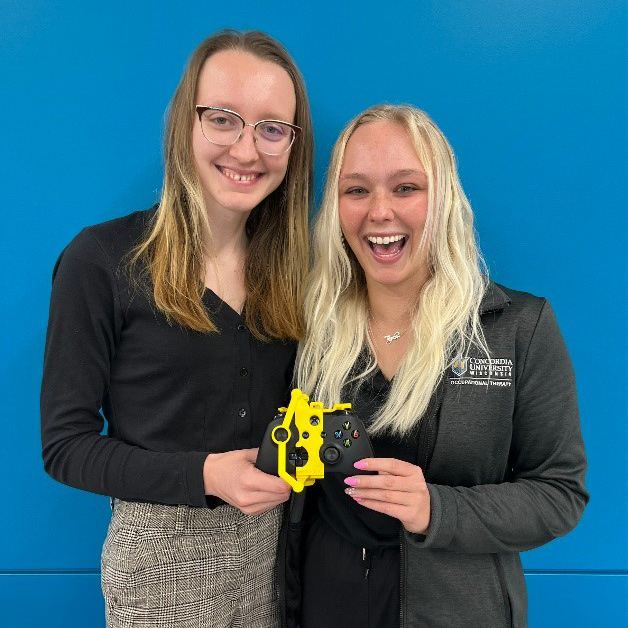
Taylor Haartman and Kenna Anderson, both third-semester OT students, helped a community client achieve a major therapy goal this past academic year: to be able to play video games with his son again. The client mentioned numerous times during his six-week session that his son frequently asked him to play the pair’s favorite video game together. Ever since the father suffered a stroke in 2019, he was unable to engage in this occupation that was so important to him due to limited use of his left hand.

After much research and with the help of CUW professors, Haartman and Anderson found a pattern for a 3D adaptor to make the controller one handed. They collaborated with the CUW Makerspace technicians to create and print the design and, ultimately, assemble the pieces together to be used on the controller. The students then introduced it to the client during the session and he was ecstatic.


Grip adaptation for kayaking paddle

Heidea Vaudt, a fourth-semester OT student, worked with a client who loves to kayak; however, a stroke made it more difficult to continue with her favorite hobby. During recovery, Vaudt’s client realized that she couldn’t hold the kayak paddle properly with her left hand anymore. Rather than give up on the occupation, which gave her client so much joy, Vaudt creatively adapted her client’s kayak paddle so she could have a neutral grip on it and get back in the water.


Want in?

Do you have a knack for creating and innovating? Maybe a vocation in occupational therapy is in your future.

Benefits update

The Public Health Emergency put in place by the Department of Health and Human Services due to COVID-19 is set to expire on May 11. This change will impact the benefits available through the Concordia Health Plan.

Vaccines

The cost of the COVID-19 vaccine will be covered at 100%. The member will not incur any expense. This includes booster vaccines.

Testing

  • Testing provided at a facility will be covered under the diagnostic lab benefit and the member’s applicable cost share (deductible/copay/coinsurance) will apply.
  • Over-the-counter COVID019 tests are no longer covered under the Concordia Health Plan*

*FSAs and HSAs can be used to purchase an OTC COVID-19 test.

Treatment

If a member is diagnosed with the coronavirus disease, treatment is covered as a regular medical benefit. The Plan deductible, coninsurance and copays will apply.

  • Once the federal government ceases to supply Antiviral drugs such as Paxlovid and Molnupiravir at no cost, the CHP will cover these drugs with the member’s applicable cost share (deductible/copay/coinsurance) applied.

Telehealth

So they don’t have to visit a doctor’s office, an urgent care or an emergency room in-person, members should consider using a telehealth provider. The Plan regular telehealth cost share will apply.


Members can reach out to Human Resources or call CPS Customer Care if they have any questions.

Go for Vitality gold: Summer goals

Summer has arrived and with it comes all the fun Michigan and Wisconsin have to offer!!! Some of your goals may be easier to attain as the sun is out longer and the warmer temps encourage people to get out and move. Others may find it more difficult as holidays, grad parties, weddings and vacations distract from routine. Planning your points helps you focus on what goals are important to you in this season (of the year and of your life)! Use Vitality to do what works for YOU as you go for GOLD!

Week 23

Have you wanted to become CPR or First Aid Certified? Did you know that if you get certified, Vitality gives 125 points? And if you are recertified, submit your most recent results for points as well. Certification gives you the peace of mind, knowing you can help in an emergency.

Week 24

Did you know you can receive 200 points (up to 800 annually) for blood donations? The American Red Cross noted there was a deficiency of 37,000 donations scheduled for the month of May compared to projected need. 1 hour is all it takes to help save a life!

Week 25

Financial literacy is just one more piece of the wellness puzzle. Concordia Plans and Vitality offer a host of resources to assist you in your financial goals. If you are setting a budget for the first time or want to make sure you are making the most of your finances, consider watching one (or all five) of the videos provided by Concordia Plans as a starting point. Each video is worth 20 points. Navigate to vitality/points planner/financial wellness and select the financial videos for instructions on watching and how to submit for points.

Week 26

Did you do your biometric testing this year and have any of your numbers not be within a healthy range? Let’s focus on those reasonable alternative standards (RAS). Navigate to Health Profile/Vitality Check and create a game plan for attaining RAS goals. You do not have to have perfect numbers in all categories to get points!