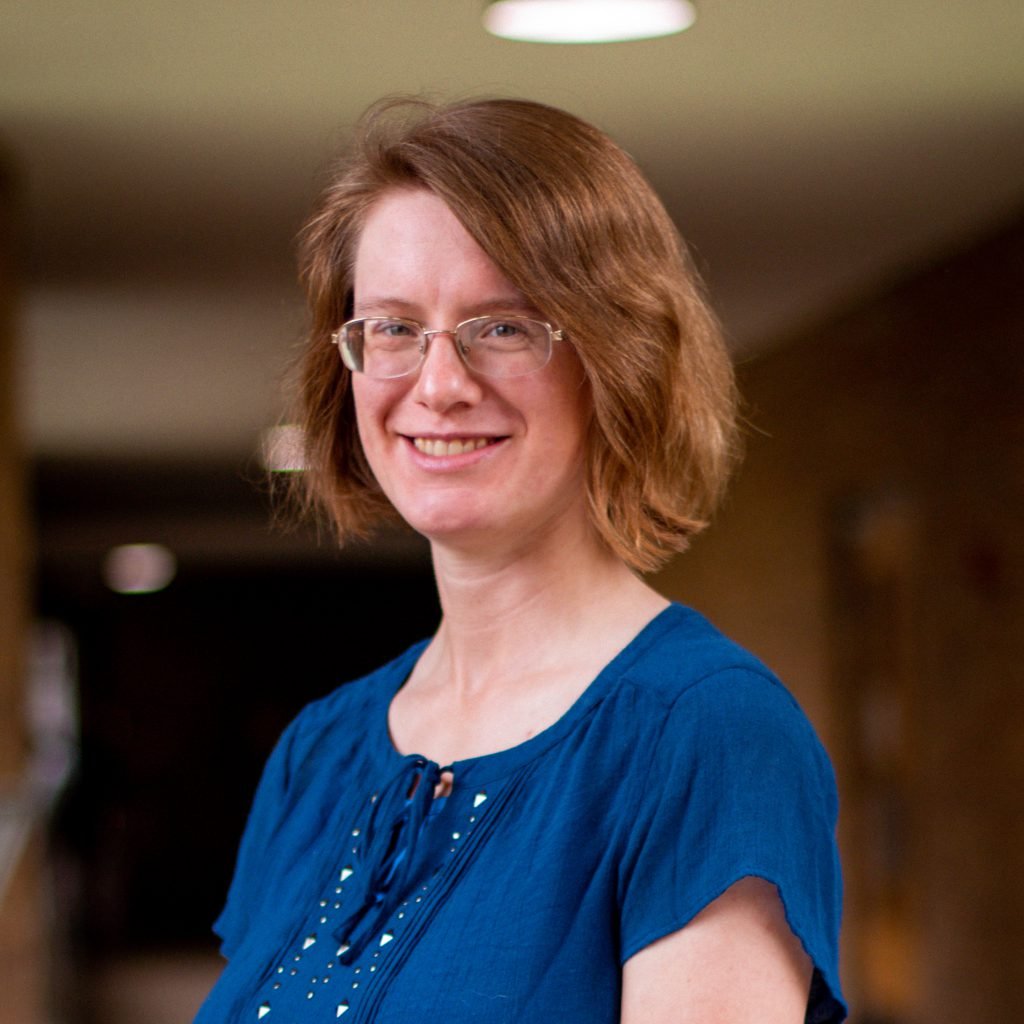
Faculty Spotlight: Assistant Professor of Finance Angela Brooks

Angela Brooks joined the finance department last fall after years of instructing as an adjunct professor at the CUW Centers around Milwaukee. Professor Brooks brings a ton of professional, on-the-job insight into her classes. She has experience in both the corporate world and small-business ownership. She is a great asset to the Batterman School of Business and the financial studies program.

Share a bit of your background.

Growing up in Milwaukee, Wisconsin, I was intrigued by the business and commerce presence in the city. This inspired me to study business and industry, specifically accounting. Completely focused on my career in the corporate world, I was blindsided by my passion for teaching and education when my mentor strongly encouraged me to teach my first math course at a university. Still corporate-driven, I moved to Chicago, Illinois to work in health care administration.

I returned to Milwaukee on an entrepreneurial mission. I owned and operated a pack-and-ship company for over seven years. During this time, I was able to reconnect with my joy for teaching in higher education by teaching as an adjunct instructor at several local universities, including Concordia University Wisconsin. In my spare time, I enjoy outdoor activities, community outreach, vacationing, and spending time with my family.

What brought you to CUW initially?

My journey with Concordia began as an adjunct instructor at one of the satellite center locations. My business was located in the same building structure as the CUW center, so I would frequently communicate with the center director about opportunities to get back into the classroom. After 15 years of being an adjunct at CUW, I was blessed with the opportunity to become a full-time faculty member last year.

What is your favorite course to teach?

Answering this question is like choosing a favorite child! I find something unique and interesting about all the courses I teach. I really enjoy teaching the introductory accounting courses because I love exposing often-uninterested business students to the interesting and fun areas of the accounting discipline.

What is your favorite course project?

Over the years, I have really enjoyed the group business plans and group project management plans and presentations. I feel like a proud parent when I see the final product of all the hard work and dedication the students put into developing their ideas into something extraordinary.

What do you like best about mentoring students?

I enjoy building meaningful relationships with students while offering a supportive presence in their life. It is incredibly rewarding to help students navigate academic, personal, or professional challenges and see them succeed. Also, students bring fresh perspectives, new ideas, and different experiences that I can learn from and stay connected to current trends and developments.

Favorite Bible verse?

Philippians 4:13, “I can do all things through Christ who strengthens me.”

Helpful advice you’ve received?

In order to get, you have to give. If you support, guide, and lead others, if you make contributions to their lives, you will reap the best rewards.

What is your favorite destination you visited, and why?

This past Christmas I visited Madagascar. My experience of traveling to the African continent was amazing and life changing. I had a chance to visit newly connected family members who were located through ancestral research. There is so much beauty and uniqueness to the island of Madagascar. I look forward to visiting again soon!

At Concordia, we offer a BS degree in Finance as well as an online MBA in Finance. If you’re interested in our programs but not quite ready to apply, you can connect with a counselor and request more information.

Meet the 2023 Concordia Crew Leaders

If you’re an incoming freshman or new transfer student this fall at CUW, the Crew Leaders are the people you’ll want to get to know!


The Concordia Crew Leaders will be on hand to welcome you to Concordia, get you oriented, and get you well on your way to an amazing first year at your new home. Each new student is assigned a specific Crew Leader who will guide you through all aspects of the Fall Welcome Weekend experience. It’s just one way we strive to make your New Student Experience special!


Sarah Deheck

Position: Coordinator of Student Activities
Hometown: Sheboygan Falls, WI
Fun Fact: I’ve never had a cavity!
Advice: Be sure to watch the sunrise on the bluff!


Kara Janowski

Position: Director of New Student Programs
Hometown: Littleton, CO
Fun Fact: I grew up in New Zealand and had a “kiwi” accent as a kid (called my Mom “Mum!”).
Advice: It is okay to not have it all figured out! Take it “one step at a time, with a general plan in mind,” – but be willing to adjust that plan if you need or want to! You might discover a passion or opportunity that leads you in a new direction!


Abby McGue

Position: Concordia Crew Leader Intern
Major: Mass Communications
Year: Senior
Hometown: 
St. Louis, MO
Fun Fact: I have been vegetarian for over 3 years!
Advice: Get out of your comfort zone. Do things that may feel uncomfortable at first because they will definitely pay off in the end!


Alicia Schroeder

Position: Concordia Crew Leader Intern
Major: Lutheran Elementary Education
Year: Junior
Hometown: 
Hilbert, WI
Fun Fact: I am a huge extrovert and love talking to people and drinking coffee.
Advice: Get out of your comfort zone and try something new. There are so many co-curricular activities to participate in or even just watching sporting events.


Abby Dare

Major: Nursing
Year: Junior
Hometown: 
Alexandria, MN
Fun Fact: My favorite animal is the giraffe! .
Advice: Get to know your professors! They are there to help you. They want to see you succeed!


Ally O’Farrell

Major: Elementary Education
Year: Junior
Hometown: Butler, WI
Fun Fact: I cross-country ski over break.
Advice: Step outside your comfort zone, and try something new or unique.


Amanda Eggebrecht

Major: Communication Sciences and Disorders
Year: Senior
Hometown: Horicon, WI
Fun Fact: I am a HUGE animal lover and have two rabbits, a bird, and dog under my roof.
Advice: To connect with others around you. Branch out from what your friends are doing, meet new people, and get involved!


Carley Kogutkiewicz

Major: Pre-Pharmacy
Year: Junior
Hometown: New Berlin, WI
Fun Fact: I have been to 25 of the 50 states.
Advice: Study groups! Using study groups for classes helps you meet more people and better learn the material!


Courtney Parker

Major: Secondary Education (Mathematics)
Year: Junior
Hometown: Shawano, WI
Fun Fact: I once broke my arm falling out of bed.
Advice: Get a hammock for the Chapel Courtyard you won’t regret it!


Eleanor Liebherr

Major: Social Work
Year:  Senior
Hometown: Port Edwards, WI
Fun Fact: I like bullet journaling, and make my weekly planner using it!
Advice: Being involved is good, but don’t forget to take time for yourself! Spreading yourself thin is so easy to do but your mental health is so crucial to exceeding in college!


Emily Brown

Major: Healthcare Administration
Year:  Sophomore
Hometown: Waupun, WI
Fun Fact: In middle school, I memorized 122 digits of pi.
Advice: Always ask questions. You may be nervous but trust me, everyone here at Concordia wants to help you.


Grace Buckman

Major: Nursing
Year:  Sophomore
Hometown: Mundelein, IL
Fun Fact: I grew up in new jersey and love bagels.
Advice: Make study groups and become friends with your professors.


Grace Lee

Major: Early Childhood and Special Education and Individualized Theatre
Year:  Sophomore
Hometown: Kewaskum, WI
Fun Fact: I have 6 pets. 4 cats, 1 dog and 1 fish.
Advice: Get involved with clubs you can meet a lot of amazing people and just be yourself.


Grace Velzke

Major: Communications
Year:  Junior
Hometown: Cedar Grove, WI
Fun Fact: I have watched all 10 seasons of Friends 5 times through, Phoebe is my favorite character.
Advice: Always be kind to everyone. And, don’t be afraid to try new things.


Jack Ramstack

Major: Athletic Training
Year:  Senior
Hometown: Germantown, WI
Fun Fact: I really want to move to Alaska when I am older.
Advice: Take a chance now because in a few years, it probably won’t matter. Get involved and make as many connections as possible because it’s about who you know, not what you know.


Julia Schulteis

Major: Lutheran Elementary Education (Double Minor in English & Theology)
Year:  Junior
Hometown: Parker, CO
Fun Fact: I can write backwards!
Advice: Try new things! There are plenty of ways to get involved in various activities!


Katie Slominsky

Major: Hospitality / Event Management and Spanish
Year:  Senior
Hometown: Appleton, WI
Fun Fact: My car’s name is Clifford (like the big red dog :)).
Advice: Use a planner and call your mom!


Katie Thomsen

Major: Rehabilitation Science: Accelerated Pre-Physical Therapy
Year:  Junior
Hometown: Valders, WI
Fun Fact: I love animals but have never owned one.
Advice: College is what you make of it! Put yourself out there, meet new people, go to events, do your homework, and take advantage of everything CUW has to offer! You belong here and we are so excited to have you!


Kayla Stenz

Major: Diagnostic Medical Sonography
Year:  Junior
Hometown: Chilton, WI
Fun Fact: I am a twin!
Advice: Keep an open mind and don’t be afraid to ask for help if you need it!


Lexington McKillips

Major: Event and hospitality business
Year:  Senior
Hometown: Edgerton, WI
Fun Fact: I play volleyball at CUW.
Advice: Get involved in everything and go to fun activities around campus!


Lydia Winans

Major: Able Light Program
Year:  Sophomore
Hometown: Milwaukee, WI
Fun Fact: I love listening to country music.
Advice: Get involved within college because that will benefit you to make long-lasting memories and friendships. Keep track of your student ID because that’s how you get in and out of buildings, your hall to your assigned dorms, and for getting meals and snacks.


Miranda Briones

Major: Lutheran Secondary Education – Mathematics
Year:  Junior
Hometown: Milwaukee, WI
Fun Fact: I love sleep!
Advice: Get a comfy mattress topper!


Nathan Bilan

Major: Healthcare Administration
Year:  Senior
Hometown: Greendale, WI
Fun Fact: I have been playing tennis since I was in 3rd grade
Advice: Get involved with events and clubs on campus, it’s a great way to meet new people!


Olivia Sherman

Major: Rehab Science – Accelerated OT
Year:  Junior
Hometown: McKinney, TX
Fun Fact: My left foot is a half size bigger than my right.
Advice: Go to events!! They are fun and will allow you to meet new people! 🙂


Zion Nelson

Major: Individualized Theater
Year: Junior
Hometown: Cedarburg, WI
Fun Fact: I can’t lick my elbow.
Advice: Introduce yourself and strike up a conversation cause you can do it!


Want in?

At Concordia University Wisconsin, we strive to make sure that all incoming students have a smooth transition into life on campus. The Concordia Crew Leaders are just one way we welcome new students. To learn more, click the link below:


Why Should I Consider a Career in Geriatric Physical Therapy?

What is Geriatric Physical Therapy, and why might it be the career path for you?


Put simply, “geriatric” physical therapists focus their care on older adult patients and clients. Typically, this means people 60 years and older, but the definition varies from age 50 (AARP age) to 65 (Medicare age). There is no upper limit for the ages seen—my oldest patient to date was 104 and didn’t retire until 102.

Other physical therapy specialties focus on specific body systems, like cardiovascular/pulmonary, neurologic, and orthopedic. However, geriatrics as a specialty pulls together all body systems as they relate to typical and atypical age-related changes.

Additionally, any conditions a person acquires during their lifetime might “stack up” in the same person as they get older. A unique challenge and opportunity for the geriatric physical therapist is to master a wide variety of information from all body systems and all areas of physical therapy to best treat the needs of older adult patients and clients.

Why specialize in Geriatric Physical Therapy?

My journey to physical therapy in general goes back at least to high school, when I had the opportunity to take several anatomy and physiology classes. Various life events have guided me toward PT school, though along the way I was (and still am) interested in many areas that physical therapy ties together.

My interest in geriatrics goes back to Year 2 of the program.

Orthopedic content was pretty interesting, but neurological rehabilitation content was even more interesting. I wasn’t sure at this point what population would be the most interesting for me to work with. However, the next three clinical rotations were in inpatient, skilled nursing facility, and outpatient settings. I noticed that working with older adults provided a good challenge for me.

Since then, I have grown to appreciate geriatrics as a specialty for even more reasons. I earned board certification in geriatric physical therapy in 2016.

My favorite aspects of working with older adults include…

The life stories they have to tell, and the need to use multiple areas of my knowledge every day. The visible health and happiness benefits that they can gain from simply being more physically active than they have been. There are certainly challenges. Some patients may not make it all the way through PT due to worsening illness or even death. However, even that has given me more appreciation for the life and health God has given me to serve them.

What Options Are Available for Geriatric Physical Therapy?

One of the best parts of geriatric physical therapy is the ability to practice in virtually any setting. Older adults are increasing in numbers in many countries. Most remain living independently in their communities until their 70s or 80s. If you like sports, so do many older adults. Even Senior Olympians who are just as competitive as their younger counterparts! If you prefer working with people in their own living environments, home care is a great option. Just about the only setting where you wouldn’t be likely to work with older adults would be exclusively pediatric clinics.

Besides clinics, hospitals, homes, and nursing homes, some geriatric physical therapists go less-traditional routes. These can include private practice, telehealth, consulting, and wellness. No matter where the PT practices, there are always older adults to serve and who can improve with therapy.

Okay, I’m Interested. What Do I Do?

A great place to start is right now, during DPT coursework. Pay attention to the “aging” aspects of the material you are learning. Aging affects every body system. On clinical rotations, note how working with older adults is similar to and different from working with younger adults. This will give you a more accurate view of what it’s like to work with older adults as a specialty.

After graduation, many continuing education and mentorship opportunities exist for PTs interested in geriatrics. Continuing education courses address varied issues related to health and the aging process, including specific diagnoses like vestibular problems. If you want to fast-track your expertise in working with older adults, consider also a geriatrics residency program. A unique benefit graduates appreciate the most about residency is the mentorship they receive. Particularly the mentorship relating to how they interact and clinically-reason with specific, complex patients. Currently, there are less than 20 geriatrics residencies in the United States. I am working at Concordia to develop one more that will hopefully get started in a few years.

Get to know Dr. Hannah Baker

  • What’s your name/degree/specialty?
    • Dr. Hannah Baker, PT, DPT, PhD, Board Certified Clinical Specialist in Geriatrics
  • How long have you been teaching at Concordia?
    • As a proud CUW DPT grad myself, I have been teaching full-time at Concordia for 2 years. I also had the opportunity to be a lab assistant and guest lecturer for 5 years before that.
  • Which classes do you teach?
    • A little bit of everything, including a pediatrics-geriatrics elective, electrotherapy/wound care, neuroscience, gait analysis, and psychosocial aspects of health care.
  • How did you decide to be a PT?
    • I’ve always been fascinated by how the human body works according to its design. My dad broke his leg when I was a freshman in college. Seeing his rehab process and the hiccups made me want to do better. However, I didn’t make the final decision until my senior year. The “light at the end of the tunnel” and the support of the faculty were a great help!
  • Favorite areas of research?
    • Currently, I am working on projects related to quality/process improvement and detecting fall risk early on. I’m also studying the effects of an annual PT “physical.”
  • What’s your favorite part of being a CUW faculty? The family atmosphere has allowed me to grow personally and professionally.
  • What lessons/courses/research projects do you have coming up that you’re excited about?
    • Besides my regular courses, I am particularly excited about the courses I’m developing for our geriatrics residency.
  • What do you do in your free time?
    • Play or walk with my son John (1 ½), read everything I can, and watch Star Trek with my husband.
  • What advice would you give to someone thinking about becoming a PT?
    • Count the cost (monetary, psychological, time…) and get used to practicing things that aren’t necessarily the most interesting. That skill and mindset will set you ahead of your peers!

Feeling Inspired?

If you’re interested in learning more about becoming a physical therapist, explore a day in the life of a physical therapy student. Feel free to check out our website.

The Recession That HR Needs to Be Ready For 

Economists continue to debate if we, in the United States, are heading into a recession. The belief is that after the Federal Reserve began raising interest rates, the recession would begin. But what is missed, unless you’re in a human resource management type of role, the country is already in a recession – not an economic recession, but an emotional one.

Decrease in employee engagement

Gallup has been tracking U.S. employee engagement since 2000; since 2020, we have been trending downward. Meaning those disengaged engaged employees will continue to experience a decrease in productivity, customer loyalty, and profitability.

In HRM, we face the fact that there is one role that fixes the situation. One role that, when developed to near-perfect performance, they carry the weight of their teams’ engagement up to 70%.

That role is the one leaders deem ‘manager.’ Manager of people, not process. Globally, Gallup found common answers to improve workplaces when asked, “What changes would you make to make your workplace better?”

Here are some quotes from the study results:

  • “I would change the boss” (Brazil)
  • “I would like it if the managers were more approachable” (UK)
  • “I would like there to be a good working environment where we all treat each other with equality and respect” (Mexico)
  • “The boss must treat everyone fairly” (South Africa)

Many HR leaders believe that employees generally enjoy their daily work, but what they really want is a good manager. A manager that acts more like a coach and less like a boss. HR Leaders must rely on managers to create a great employee experience for their organization and customers during this emotional downturn. The world depends on it.

The importance of strong managers

A coach-like manager is someone you can rely on to be on the field with you. Additionally coaching you through decisions and helping you remove workplace barriers for you to do what you do best every day. A coaching manager cares about the person well enough for them to know their employee’s talents and ways they can individualize to each team member.

The payoff to business is the most competitive edge attribute companies can tell their story about – employee engagement.  In years past, the term engagement was soft. It was considered more as a survey once a year. However, proven by scholars of behavioral economics, like Noble Prize winner Daniel Kahneman, that emotions elicit a reaction that is driven by behaviors.

In business, increasing the engagement of the employee yields performance excellence. The role who owns up to 70% of this process is the manager.

Finding and recruiting skilled managers is difficult and will remain a challenge in the competition for talented individuals. HR leaders can start immediately by ensuring that the competencies of what they expect of their leaders align with the techniques of a coaching manager.

For example, a coach’s primary purpose is to develop the skills of their team. Translated into a competency could be ‘develop people.’

Therefore, in your competencies, ensuring that the behaviors are aligned with developing people would start with ensuring your interview questions are aligned with this concept of hiring a coaching manager. After all, the desire for a coach like a manager remains among the top 3 reasons employees leave or join an organization.

About the author

Dr. Adam Hickman serves as the Vice President of Organizational and Cast Development at the Walt Disney Company and is an internationally known expert in workplace management practices. He consults with clients to develop integrated programs for employee development based on the latest scholarly resources and practitioner knowledge. As a scholar and practitioner, Dr. Hickman helps clients worldwide assess their human capital management needs and design performance optimization strategies.

Inauguration celebration: Help us usher in our new president!

Concordia will host eight days of events in Mequon and Ann Arbor to mark the inauguration of Erik P. Ankerberg, Ph.D. as president of Concordia University Wisconsin and Ann Arbor.


Students, employees, parents, alumni, and friends, help us celebrate our new leader! Dr. Erik P. Ankerberg officially began his tenure as president of Concordia University Wisconsin and Ann Arbor on Jan. 9, 2023, but now it’s time to celebrate him in full.

An eight-day lineup of speakers and celebratory activities has been planned to allow the Concordia community to celebrate the next steps in the life of our institution.

All events are free. Speakers and ceremonies will be available for viewing via livestream, but guests are encouraged to attend in person whenever possible.

Featured events include:

Inauguration Ceremony

Friday, Sept. 29 @ 2 p.m. CT

R. John Buuck Field House, CUW or livestream

Dr. Pano Kanelos Keynote Address

Thursday, Sept. 28 @ 7 p.m. CT

Todd Wehr Auditorium, CUW or livestream

Hearts Together Gala

Friday, Sept. 29 at 6 p.m. CT

Hilton Milwaukee City Center

For faculty, staff, students, and invited guests only


Inauguration theme—”Looking Back, Looking Forward, Hearts Together”

For generations in both Mequon and Ann Arbor, thousands upon thousands of students have learned of God’s love in Christ and have been equipped in mind, body, and spirit to serve Christ in the church and in the world. The theme for Ankerberg’s inauguration week celebration, “Looking Back, Looking Forward, Hearts Together,” invites our CUWAA community to look back with thanksgiving for God’s gracious providence, but also to look forward with confidence, knowing that the work that God has begun among us at CUWAA will, with His help, continue for generations to come.

The week’s daily themes (Christ-centered, Excellence, Truth and Integrity, and Service) summarize the promises that CUWAA intends to keep. We pledge to acknowledge that Christ is at the center of our life together, to pursue excellence in all that we think and do, to seek truth and act with integrity, and, finally, to continue to equip our students for service to Christ in every place that God puts them. We enter the start of this new chapter in our history with joy and thanksgiving that we are, by God’s grace alone, Concordia—those with hearts together.

Speaker Series

Throughout the celebration, special guests will unpack the daily themes of Excellence, Truth, Integrity, Service, and maintaining a Christ-centered community. We invite students, employees, alumni, church partners, and beyond to grow in wisdom and cultivate higher thought by joining in the Presidential Inauguration Speaker Series. All presentations will be available via livestream, but guests are invited to attend in person—at no charge—whenever possible.

The highlighted event of the Speaker Series is a Thursday night keynote by Dr. Panayiotis “Pano” Kanelos. Kanelos is the founding president of the University of Austin. He is widely acclaimed as one of the nation’s most powerful advocates for liberal arts education. In 2020, Forbes lauded him as one of higher education’s “academic entrepreneurs.”

Kanelos will speak in Concordia University Wisconsin’s Todd Wehr Auditorium on Thursday, September 28 beginning at 7 p.m. CT. His address will also be available via livestream.

Other speakers throughout the week will include:

  • Dr. William Cario, Special Assistant to the President at CUWAA | Monday, September 25 from 10-11 a.m. | Todd Wehr Auditorium
  • Rev. Dr. Scott Bruzek, Senior Pastor at St. John Lutheran Church in Wheaton, Illinois | Tuesday, September 26 from 10-11 a.m. | Todd Wehr Auditorium
  • Prof. Paul Burmeister, Assistant Dean of Advising and Professor of Art at Wisconsin Lutheran College | Wednesday, September 27 from 10-11 a.m. | Todd Wehr Auditorium
  • Drs. David Andersen, Erik Ankerberg, and Adam Francisco | Thursday, September 28 from 10-11 a.m. | Todd Wehr Auditorium
  • Dr. Richard Ray, Provost and Professor of Kinesiology, emeritus, at Hope College | Monday, October 2 from 9-10 a.m. | Livestream
  • Dr. Mark Looker, Professor Emeritus of Literature at Concordia University Ann Arbor | Tuesday, October 3 from 9-10 a.m. | Livestream

On-campus celebrations

The atmosphere on campus will be lively with plenty of activities for students and employees to participate in throughout the week. Events specific to students, faculty, and staff include:

Monday, September 25
  • Noon Poetry Contest Readings | Albrecht Lounge | Students may submit an original poem for a chance to win a $200 gift card. Poetry contest winners will be announced on this day. The campus community may hear the winners’ work read.
Tuesday, September 26
  • 4:00 p.m. Lawn Games & Wiffleball Tournament (Students vs. Faculty/Staff) | Chapel Courtyard | Sponsored by Chick-fil-A in Glendale
Wednesday, September 27
  • All Day Ankerberg Favorites Day | Represent Dr. Ankerberg’s favorite sports teams. Wear your Bucks, Brewers, Bears, Concordia gear or Concordia colors
  • 11:00 a.m.-2:00 p.m. Ankerberg ’s Favorite Community Non-profit | Rincker Lobby | Support Tailwaggers 911 Dog Rescue in Saukville. Sign up to volunteer, donate and visit rescue dogs.  
  • 11:30 a.m.-1:30 p.m. Ankerberg’s Food Favorites | Siebert Dining Hall | Enjoy Dr. Ankerberg’s favorite foods in the cafeteria
  • 7:00 p.m. Ankerberg’s Favorite Flick | Regents Courtyard (rain location: Albrecht Lounge) | Enjoy a showing of The Natural with popcorn
Thursday, September 28
  • 12:15 p.m. ’80s Kahoot-style Trivia | Siebert Dining Hall | How well do you know Dr. Ankerberg’s favorite decade? Play to win prizes!
Friday, September 29
  • 10:00 a.m. Pastries with the President | Chapel Hallway | Enjoy some of Dr. Ankerberg’s favorite treats after chapel

What is an inauguration?

Much like the baccalaureate and commencement ceremonies during graduation time, Concordia’s new president is celebrated with both a sacred (installation) and secular (inauguration) rite of passage. Ankerberg’s installation service, which already took place on Feb. 5, 2023, marked the Christological sanctioning and blessing of Concordia’s new president as a commissioned worker of The Lutheran Church—Missouri Synod.

The inauguration refers to the full eight-days of celebrations, including the formal ceremony on Friday, Sept. 29, during which Concordia’s Board of Regents will sanction Ankerberg as leader of the university. The larger-scale inauguration provides Concordia and its stakeholders the chance to come together in celebration of the university’s new leader and our institution’s bright future.


Show your support

In honor of Dr. Ankerberg’s Presidential Inauguration, please make a gift to Concordia University Wisconsin and Ann Arbor to support either our students through scholarship aid or to support the university’s greatest need, the Concordia Fund. Gifts of any size are appreciated and do make a difference!


Professional development for Lutheran educators hits the road

CUW’s School of Education provides professional development to 1,350+ Lutheran educators within one month.


More than a dozen CUW and CUAA faculty experts recently extended two days’ worth of professional development training to over 750 educators and administrators in Wisconsin and Minnesota. Over Labor Day, a CUW team will again hit the road to reach an additional 750 educators in Missouri.

That’s three states covered by 20-plus CUWAA professors in order to impact more than 1,350 school partners in ministry within one month.

It’s a massive undertaking for our Concordia professionals, especially given the timing. Concordia faculty are in the countdown of back-to-school bustle and preparations on behalf of Concordia students.

Why go to the effort? Simply put: to provide exemplary content, training, best practices, and insights from a distinctly Lutheran worldview for brothers and sisters in ministry, explains School of Education Dean Dr. James Pingel.

“There is something that sets our Lutheran schools apart, and that is our dedication to keeping Christ first in all that we do,” says Pingel. “There are thousands of teachers faithfully serving in Lutheran schools throughout the U.S. We were honored to connect with and support just a portion of them.”

Professional Development from Minnesota to Missouri

On Tuesday, Aug. 8, ten School of Education professors traveled to Mayer Lutheran High School, near the Twin Cities, to provide a day of professional development to teachers there. That was followed up with the first-ever Concordia Summit for Lutheran Teachers and Leaders, held on the CUW campus on Thursday, Aug. 10. And soon, CUW faculty will travel to the St. Louis area over Labor Day weekend to share best practices and connect with more than 750 Lutheran educators at two sites: Concordia Lutheran Church in Kirkwood and The Lutheran Church of Webster Gardens in Webster Groves.

Presentations cover a range of topics relevant to Lutheran school educators, such as:

  • Wholehearted Teaching: Innovative Instructional Strategies and Insights for Lutheran Educators
  • Clarity for Gender Confusion
  • Multimedia in the Classroom
  • Nature Journaling with Children
  • Stretched versus Stressed: What’s the Difference and Why Does It Matter?
  • The ABC’s of Defending Your Faith
  • Building Math Fact Fluency Through Games
  • Responding to Challenging Behavior with Love and Grace
  • Manipulation vs Motivation: Ways to Positively Influence People

And attendees weren’t the only ones to reap the benefits of the roadshow. Faculty carpools en route to Minnesota and Missouri provide ample bonding time.

“Road trips have a way of making you feel more like a family,” says Pingel. ”Bathroom stops together and all!”


Want in?

The Graduate Education department seeks to transform educators into servant leaders who pursue integrity and excellence in their professional services and personal lives. You can choose to focus on administration, special education, or any of the dozens other options we offer. We want you to emerge from Concordia with confidence and competence to boldly thrive in your calling. Our department places great importance on offering as many delivery options as possible to accommodate your busy life. Whether you join us in a seated class or online, you will learn from faculty with relevant real-world experience. Most importantly, our programs are Christ-centered. We aim to help you understand topics in education through a Christian worldview.

Not looking for a full-blown degree? There are still opportunities to continue learning and growing through Concordia. The Division of Continuing Education at Concordia University provides you with lifelong learning opportunities for all stages of life, with offerings that are especially attractive to educators.


You want to be a physical therapist. But, how long is PT school?

There are a lot of great reasons to become a physical therapist (PT). You get to be active at work and help people make improvements to their health. Also, you get to continue to learn while on the job. In addition to helping people and learning, the job outlook for physical therapists is great. The median salary is around $89,000 per year. The type of work plus the compensation makes becoming a physical therapist appealing to many people.

If you’ve decided that you’re comfortable with what a physical therapist actually does, and it sounds like a good fit for you, you should consider the next steps for your education.

How long is PT school?

The answer to this question depends on your background. Concordia University’s Doctor of Physical Therapy program offers a few different options for you.

You have a bachelor’s degree:

If you have a bachelor’s degree from an accredited institution, and you meet the admissions criteria, the program takes three years.

You’re a Physical Therapy Assistant (PTA):

Concordia offers a program geared exactly for PTAs. The Physical Therapy Assistant Bridge Program provides a pathway toward the Doctor of Physical Therapy. You begin with earning your Bachelor of Science in Rehabilitative Science in 1.5 years, and then you’d follow the 3-year Doctor of Physical Therapy track. If you follow this path, the program takes 4.5 years. 

You don’t have a bachelor’s degree:

Concordia’s Bachelor of Science in Rehabilitative Science would give you the foundation that you need to be successful in the DPT program. Plus, you can apply for the accelerated DPT program while you’re still finishing your bachelor’s. If you opt for the accelerated DPT program, this means you can become a physical therapist in 6 years, while it usually takes 7 years.

What PT school option is right for you?

No matter how you look at it, becoming a Doctor of Physical Therapy will require a significant time investment. That’s why it’s important to think about what your options are and find out what matches your personal and career goals.

Do you want to know more?

If you’re thinking about becoming a Doctor of Physical Therapy, feel free to request more information on our program page. Whatever your next step is, having the right information will help you take it with confidence.

This blog was originally published on 03/09/2021. It has been updated to reflect current information.

Developing Leaders in a VUCA World from Online Master’s through Doctorate

Written by DBA faculty member Dr. Dana M. Sendziol, Ph.D. and MSL faculty member Dr. Elisabeth E. Bennett, Ph.D.

Leaders often acquire technical expertise to enter and advance within their professions. Yet, they might be unprepared to handle the complexities of leading and driving change in today’s volatile, uncertain, complex, and ambiguous (VUCA) industries. When developing leaders in a VUCA world, factors like digital transformation, AI revolution, post-pandemic shifts, regulations, workplace generations, and cyber threats shape this landscape.

Learning skills in a changing world

The fast pace of change necessitates the gradual development of advanced skills. These skills combine technical knowledge with social abilities or “power skills.” As leaders advance in their careers, certain skills become increasingly important. These skills include communication, cultural understanding, and strategic thinking. They are particularly crucial for mid-level and executive positions. (Bennett, 2022).

These power skills complement the foundational technical competence and can be cultivated through scholar-practitioner programs that facilitate simultaneous learning and practical application (Bennett & Gorman, 2018). Important qualities for top leaders include strategic thinking, understanding concepts, and the power to influence others.

Further education helps leaders in a changing world. They need to understand their environment, find opportunities and threats, imagine different possibilities, and guide their team toward a positive future. This means encouraging new values, helping people change their behavior, recovering from problems, and creating flexible processes that show leadership agility.

Nicholas Horney (2021, pp. 22-23) introduced a model of leadership agility that comprises three core elements: people, processes, and technology. This model includes five essential abilities:

  1. Anticipating Change
  2. Instilling Confidence
  3. Taking Initiative
  4. Promoting Innovative Thinking
  5. Evaluating Outcomes

These capabilities harmonize with diagnostic and change methodologies related to human resources and organizational dynamics. Furthermore, they underscore the imperative for leaders and their followers to rapidly learn and adapt their mindsets. Concordia University Wisconsin and Ann Arbor provide a supportive and immersive online platform for leaders to nurture their leadership agility.

Online degrees for leadership development

The landscape of online learning has evolved significantly, propelled by the growth of proficient educators and sophisticated learning management systems. Today, it’s the favored route for professionals seeking flexibility in institution choice and practical experience alongside their graduate studies.

Concordia’s Master of Science in Leadership (MSL) and the Doctor of Business Administration (DBA) programs cater to the needs of working individuals, offering an accelerated curriculum structured with one course at a time. This approach aids learners in maintaining focus and steady advancement. These programs not only enhance knowledge and competencies but also facilitate the growth of your professional network. They connect you with peers from diverse regions and roles.

Master’s of Leadership degree

The MSL program introduces students to a range of leadership assessments. This enables them to identify their distinct leadership styles, pinpoint areas for enhancement, and grasp the variations in approaches among other leaders and team members. This self-awareness is a crucial stride in personal leadership progression. It equips students to design corporate leadership development initiatives. These initiatives stand as pivotal pillars in talent strategies and achievement planning.

The program places a strong emphasis on honing communication skills. This encompasses both practical and scholarly aspects. This empowers our leaders to communicate with assurance—a skill of paramount importance for executives. The curriculum encompasses a spectrum of competencies, encompassing both general and domain-specific realms, including conflict resolution and problem diagnosis.

The program reaches its pinnacle through an inquiry project, a graduate research capstone that illuminates a real-world problem. This project involves cultivating leadership agility by exploring alternative perspectives that “liberate thinking” and evaluating data to formulate tangible recommendations.

Streamlining master’s to doctorate for informed leaders

The MSL program’s design includes shared course content. This enables a seamless transition into advanced professional development by completing up to four doctoral courses before starting Concordia’s DBA program. Within this framework, students have the flexibility to customize their learning journey. Students can choose an elective aligned with their interests. For instance, they can explore technical areas such as project management or financial analysis through the MBA program. They can also engage in experiential learning, participating in activities like service projects or internships.

Alternatively, they can opt for another DBA course. For example, enrolling in a scenario planning course can equip you with skills to develop viable alternative futures. This enhances your organization’s agility in addressing both crises and opportunities.

The shared course structure promotes smoother learning and lowers costs. Courses relevant to the DBA program have reduced tuition rates within the MSL curriculum. Additionally, Concordia University alumni may be eligible for scholarships.

Both the MSL and DBA programs follow an interdisciplinary cohort model, nurturing the next generation of transformative leaders. These leaders make a positive impact globally, employ creative and generous leadership, and empower individuals and organizations. Similar to the MSL program, DBA students assess their scholar-practitioner orientation by exploring ethical Christian leadership practices. They develop insights into relational skills, nurture emotional intelligence, and explore organizational culture.

The programs combine power skills with data analysis, addressing the rising demand for these proficiencies in line with technological advancements. In the DBA framework, students select from four specialized dissertation areas, guided by an advisor at the journey’s outset. The curriculum enhances communication, presentation, and evidence-based decision-making skills—critical for VUCA conditions.

Using skills in the real world

Leaders in various domains beyond business can enhance MSL-acquired skills in the DBA curriculum. The foundational concepts gleaned from leadership studies serve as a robust framework for doctoral research and advanced practitioner roles. In contemporary times, possessing a doctoral qualification is becoming more common for industry experts. This is especially true for those in positions like chief innovation officers, learning officers, or roles focused on institutional evaluation and research and development (R&D).

When pursued effectively, a doctorate can revolutionize cognitive patterns. This enhances one’s ability to drive organizational and individual transformation, fueled by a heightened aptitude for complexity, innovation, observation, and a more robust understanding of empirical evidence needed to support knowledge assertions and strategic decisions (Bennett & Gorman, 2018).

This explains the growing trend of scholar-practitioners attaining doctorates while concurrently pursuing their professional careers, whether continuing along their current trajectory or transitioning to novel vocations. In either trajectory, you can pursue continuous and advanced professional development through Concordia University’s online learning platform.

The ongoing industry trends indicate that developing leaders in a VUCA world will remain significant for an extended period. Professions once deemed immune to automation are now disappearing or experiencing substantial changes due to rapid advancements in artificial intelligence. Amidst this context, individuals, whether leaders or learners, who adopt agility gain a notable competitive advantage. Academic programs fostering leadership, innovation, and knowledge provide exceptional chances for both survival and thriving in the future of work.

CUW Takes Comfort, Care, & Connection Training Campus-Wide 

A group of 10 CUW faculty & staff got certified this summer to make the Inspiring Comfort “Showing Up” comfort & connection program readily accessible for all CUW students, faculty, and staff. 


Mental health concerns and social disconnect are increasingly prevalent among young adults today. Given the “loneliness epidemic” among college students, a dedicated group of CUW faculty and staff want to make a difference in their students’ lives. That is why this summer, 10 CUW faculty and staff volunteered their time to become certified trainers with Inspiring Comfort. 

Inspiring Comfort is a social good company that establishes effective human care and comfort as teachable skills. CUW has already hosted two pilot programs with Inspiring Comfort that taught 400 students how to “Show Up” for their peers when they are struggling with mental or emotional health. Given the success of the programs, psychology professor, Holly Griskell Ph.D, and her colleagues are making Inspiring Comfort’s “Showing Up” programming a permanent part of campus starting this academic year.  

CUW Staff Committed to “Showing Up” 

CUW staff certified in Inspiring Comfort have big plans to use “Showing Up” programs on campus this academic year. 

Beckie Kruse, Director of Residence Life, will be bringing the Showing Up programming to students in residence halls through training Resident Assistants and Faith Associates in the skills of comfort and connection. Beckie shares, “In Residence Life, one of our greatest responsibilities is to help students feel a sense of belonging. The specific, practical action steps from Inspiring Comfort are designed to help someone feel like they are not alone.” 

Beckie emphasizes that these care and connection skills are more critical now than ever: “Our Gen Z students have not had the same exposure to in-person experiences as generations before. They have not had the practice reading body language when their primary form of communication developed through messaging applications. They are hungry to learn the skill of listening with their eyes.  And this compassionate generation needs a place to focus their energy; Inspiring Comfort gives them that.” 

Rebecca Hasbani, Intake & Triage Coordinator in Student Wellness, has also been instrumental in bringing new mental health resources to CUW. Rebecca agrees that Inspiring Comfort’s “Showing Up” programming is fit for CUW’s mission. 

“Our Christ-centered mission to equip students to serve the church in the world is demonstrated by example when we show up and get through the Awkward Zone to truly connect with students through showing care. A person may underestimate the value of showing care when someone is struggling and think that kindness may go unnoticed or that it may be ‘awkward’.” 

Rebecca Hasbani, Intake & Triage Coordinator, Student Wellness

She shares that Inspiring Comfort’s previous programming on campus has already been very successful in bridging the gap between feeling empathy and knowing how to act on those feelings: “Showing care is so important but it can be hard to know how to show support when a person is going through a hard time.  Students have reported that their relationships improved after going through a “Showing Up” workshop- better communication with faculty, stronger friendships, and feeling more connected and less lonely on campus. These are all big wins from the perspective of Student Wellness!  I highly recommend this program– it is for everyone!” 

Teaching Faculty to “Show Up” 

It is not enough that only CUW students and staff know how show comfort and care. Faculty also play a critical role in supporting students’ wellness. In fact, according to a survey of 300 CUW students, the #1 most important thing for them to feel cared for on campus is professors who care. In fact, students rate “professors who care” as being even more important to them than “a friend who cares” and “access to mental health counselors”. This data demonstrates that teaching faculty how to “show up” for their students is essential. 

To ensure that CUW professors learn the critical skills of comfort and connection, Jen Marr, the CEO and Founder of Inspiring Comfort, will be bringing her “Showing Up” program to Faculty Summit on August 15th. This program will give all faculty an opportunity to learn how to provide effective Christian care and comfort to their students. Following Faculty Summit, CUW professors will have additional opportunities to get involved with “Showing Up” by participating in book groups, consulting with a Certified Inspiring Comfort Trainer, and taking part in CUW’s Mental Health Awareness & Suicide Prevention Week (September 18-21, 2023).  

Current CUW Certified Inspiring Comfort Trainers include: Rick Aamondt (Campus Safety), Beth Buckley (Pharmacy), Holly Griskell (Psychology), Rebecca Hasbani (Student Wellness, Intake & Triage), Kara Janowski (New Student Programs), Brenda Jobe (Nursing), Beckie Kruse (Residence Life), Natalie Ross (Nursing), Vittoria Sipone (Psychology), and Bobbie Vergo (Occupational Therapy). 


Want in?

For more information about Inspiring Comfort at CUW, email Dr. Holly Griskell at Holly.Griskell@cuw.edu.

For more information about mental health services at Concordia University visit the Student Wellness pages for our Mequon and Ann Arbor campuses.


—Dr. Holly Griskell PH.D is a assistant professor of psychology at Concordia University Wisconsin.