Ready to Lead? Consider a degree in Communication & Leadership

For better or worse, communication and leadership go hand-in-hand. Many have assumed leadership roles or aspire to leadership in the future. However, they may not have personal experience themselves or good examples of leaders. One solution is more opportunities to experience leadership concepts in a safe environment and discover your natural leadership style. Undoubtedly, communication and leadership are critical to a successful business and engaged teams.

Why are communication and leadership important?

Employers are hungry for excellent communication skills. They want leaders that are articulate and clear in their direction. So, becoming skilled in both makes you a very valuable hire.

Excellence in communication enhances every relationship that is held dear, from our significant others to our co-workers, friends, and even acquaintances. Communication is the skill that could take an acquaintance and springboard that relationship to an important part of a social or career network. 

Today communication is more important than ever as technology has largely replaced personal interaction. Covid further exacerbated the decline of the richest communication: face-to-face. Upper management and business owners seek to find good leaders and good communicators, they understand that these skills improve productivity and profits. It could be said that good communicators and leaders are critical to both profitability and growth.

How does a degree in communication and leadership benefit me?

Having communication skills as a strength segues directly into the importance of strong leadership skills and abilities. Anyone interested in leadership or management can benefit from higher education in this field. A degree will equip you with the skills you need to be an effective leader and communicator, in an environment conducive to accelerated learning.

The skills learned will help you to create an enjoyable, comfortable, and profitable work environment. We know that improved relationships in the workforce reduce absences and improve engagement. People that work well together are able to accomplish more and a degree will help you develop the skills you need to become the effective and ethical leader already inside.

What can I do with a communication and leadership degree?

The beauty of this degree is that it is applicable to just about any workplace. It could be healthcare, manufacturing, tech, retail, wholesale, and the list goes on and on. Leaders with strong communication skills are able to facilitate, network, encourage and support others to do their best work; these skills are valuable no matter the industry.

Some fields of work may include:

  • Social and digital media
  • Public Relations
  • Marketing and advertising
  • Writing and publishing
  • Event Planning
  • Human Resources
  • Politics
  • Nonprofits
  • Customer Service
  • Fundraising

What makes Concordia’s program different than others?

Firstly, our Accelerated Bachelor’s in Communication and Leadership program was created with adult learners in mind. We are pleased to enable students with the ability to complete their degree online alongside their busy life. Our excellent faculty understand how busy life can get and are happy to work with students to balance their education with their lives.

Additionally, within the program servant leadership and multicultural leadership are two core approaches we teach. These cores help to prepare students to serve others in leadership roles. Furthermore, students learn how to build equity and support into their teams.

We’re passionate about this approach to leadership. It enables our students to live out Concordia’s mission of service to Christ in the Church and the world, particularly, through our vocations of serving our neighbors.

How is Concordia University unique?

Concordia is a Lutheran Christian school that integrates those Christian values with our programs. In this model, students acquire knowledge and skills in liberal arts disciplines that prepare them to be of service to Christ in the Church and the world. We bring a holistic approach to every class we offer our students. We challenge our students academically but also give them the chance to grow spiritually with us in ways that they may not find at other universities. Concordia is a community of people whose calling is to ensure both student success and well-being. 

In addition, we have designed paths bridging traditional undergraduate degrees to graduate degrees, such as our Business Scholars program. This unique program offers highly qualified incoming freshmen the opportunity to earn their bachelor’s degree and their MBA in four years, for example.

Another perk of our undergraduate programs is that students can transfer up to 84 credits. This makes the transfer process easy and saves students time and money. Our admissions counselors can provide transcript evaluations for a more accurate amount of credits. All we need is your unofficial transcripts from previous schools attended.

How long does it typically take to complete the degree?

It will take 3 to 5 years to earn a bachelor’s degree, depending on credit transfer amount and course load. If you already have your bachelors degree and are looking for a master’s, consider our Master’s in Leadership program. This degree can be completed in just 1.5 years.

What format is offered? How long are the classes?

Our Bachelor of Arts in Communication and Leadership program is offered fully online. Classes are eight weeks each. The online format is very flexible but requires discipline and organization to set up a schedule to complete coursework on time.

How much does the program cost?

This program is $475 per credit hour and 120 total credits. Depending on the number of credits a student transfers in and if they qualify for a scholarship, most students end up spending far less on their degree.

Are there scholarships available?

Yes! We have Uncommon Scholarships available for many qualified students. Our available scholarships include:

  • Business Community Scholarship: If you are an employee of one of our corporate partners you may qualify for this scholarship.
  • Academic Community Scholarship: If you are an employee of one of our Preferred Education Partner schools or districts you may qualify for this scholarship. 
  • Christian Community Scholarship: If you are an employee of any qualifying Christian church or Christian K-12 school you may qualify for this scholarship. 
  • Alumni Scholarship: If you are a graduate of one of Concordia University System school programs you may qualify for this scholarship.
  • Veterans and Dependents Scholarship: If you are a veteran, the spouse of a veteran, or a child of a veteran(age 17-26), you may qualify for this veteran scholarship when federal veteran education benefits are exhausted or unavailable to you. 

When it comes to funding your education, have a conversation with your employer to see if they will be willing to pay a portion of your tuition. There may be funds, scholarships, or benefits their companies may offer.

Entrance Requirements

  • High School Diploma/ GED
  • Cumulative undergrad GPA of 2.0 for full acceptance

Admissions Requirements

  • Online Application
  • All official transcripts
    • Student only needs to submit a high school or GED transcript if the student has less than 60 transferrable credits.
    • An unofficial transcript evaluation is almost always done to gauge understanding of approximate transfer credits and the length of the program. We are able to accept a maximum of 84 credits with a grade of D or better from regionally accredited schools.

Check it out: Does your college have an articulation agreement with Concordia?

Ready to start?

To learn more about the accelerated associate and bachelor’s in Communication & Leadership offered for busy adults visit CUWAA Accelerated Admissions or talk to one of our support specialists.

Information provided by Sandra Jahns, Concordia’s Program Director for the Accelerated program in Communication & Leadership.
4 Tips for growing your emotional intelligence

Emotional intelligence, often referred to as “EQ”, is the term used to describe the ability to “perceive, control, and evaluate emotions” (Cherry, 2020). There is a strong need for emotional intelligence in the workplace. We all can think of someone in our office or on a video call who could stand to grow their emotional intelligence. But, the truth is that all of us can improve in this area, most likely.

Why emotional intelligence?

Strong emotional intelligence can help you lead people more effectively and take them through projects. Check out these four tips to help you grow your emotional intelligence.

Tip #1 Practice self-awareness.

Self-awareness sounds a lot more intense than it actually is. Self-awareness just means that you’re recognizing your feelings at a given moment. Amy McManus, who is a marriage and family therapist, defines this term. She said, “Self-awareness is [also] the ability to look at your own words and actions from a perspective outside of yourself; to see yourself as others see you.”

Managing your own emotions in the workplace is crucial. Clinical psychologist and author John Duffy asserts that if you can manage yourself at work, you can exert an impact on the whole environment. What kind of impact would you want to have?

Improve your self-awareness

Concordia University Ann Arbor’s Dean of Students, John Rathje MA, MDiv, SPM, NBCC, LPC, offers some tips for finding the space to practice self-awareness.

  • Take intentional time to breathe each day. Really, just turn your chair or walk away from everything and take a few deep breaths to settle your body and mind.
  • While you breathe, pray about what you’re experiencing at that moment. Talk to Jesus about what you’re feeling. He loves to hear from you with this kind of honesty, whatever it is.
  • Take intentional time – once a week at a minimum – to talk with someone you trust (pastor, clinical therapist, spouse, friend, etc.). Be honest and talk about how you’re doing in your spirit, mind, and body. This form of self-assessment leads to being aware of how you’re doing throughout every day so that you can make any needed changes to care for yourself, set boundaries with others, etc. Self-awareness is vital for healthy EQ.

Tip #2 Practice active listening.

The New York Times posted an article about improving your listening. (You can read it here.) In this article, author Adam Bryant suggests preparing your mind when you know you have a lot of listening ahead of you. Taking a walk to clear your mind can help calm your brain and body for a time of extended listening. It can be helpful to silence your phone and avoid checking email or social media beforehand. Additionally, it might seem obvious, but you shouldn’t check your phone while listening to someone unless it’s an unusual circumstance. It’s important to minimize and avoid distraction to show the person/people you’re listening to that you value them.

Tip #3 Learn how to take criticism effectively.

Abhi Golhar suggests: “Instead of getting offended or defensive, [emotionally intelligent] people take a few moments to understand where the critique is coming from, how it is affecting others or their own performance, and how they can constructively resolve any issues.”

This is easier said than done. If you struggle to take criticism well, it’s never too late to improve this skill. Remember that growth can take time, and learning to embrace criticism instead of defending yourself won’t happen overnight. Also, taking criticism well will help you be a more approachable teammate.

Tip #4 Consider your communication style

Before you think that you need to completely scrap the way you talk, pause for a moment. Thinking about how you speak, write, and act around others can feel deeply personal. Emotionally intelligent people find a way to be themselves while continuing to show empathy and respect to those around them.

Communicating in the midst of a problem can prove to be challenging. When things get heated over a tense business decision or personal conflict, emotionally intelligent people do their best to respond to the issue at hand instead of reacting to it (Golhar, 2021).

Are you ready to start growing your emotional intelligence?

These four tips are great, but how do you actually get started on growing your emotional intelligence? There is no right way to pursue growth in this area, but if you want to see long-term results, you could try journaling your progress on one of these items each week. If that’s not your style, you could talk about this growth with your director or a workplace mentor to build in some accountability.

How will you choose to approach growing your emotional intelligence? 

How to prepare for the job market

Finding the right job is not always an easy task. However, there are ways to make sure you are ready to face the job market. By taking the time to develop your skills and knowledge, you’ll become an attractive candidate for employers.

To make sure you’re a strong candidate, focus on improving your communication skills and your ability to work with others. Finally, prepare to discuss your qualifications and experiences during the interview process. These steps can help you achieve the qualities desired by employers and become the perfect employee.

Research, research, research

The job market can be overwhelming. The first step is to do thorough research to know exactly what is out there and what you want. Think about these questions during your research process.

  • What industries or companies interest me?
  • What are my expectations for the position?
  • What skills do I need for the job?
  • What is the process to obtain the position I want?
  • What are the goals and values of the company?

After narrowing your search, choose positions that interest you, and review specifics on the role and the company. You want a position that fits your skills and values.

Interview the right way

Interviews are an inevitable part of getting a job. Many times there are many other candidates fighting for the same role. So, you need to stand out and show why you’re perfect for the job. How can you stand out in this job market?

Know the company

It’s critical that you have some background knowledge about the company. Don’t go in blind! Look closely at your resume and modify it to reflect why you are perfect for the position. Have specific examples that demonstrate how your skills will fit into the role.

Take time to understand more about the company and its mission. Hiring managers appreciate applicants who demonstrate their commitment by researching and familiarizing themselves with the company.

Have questions at the ready

Interviewer: “Do you have any questions for us?”

Candidate: “I don’t think so.”

Every interview always ends with this question, and most of us say no which then ends the interview. However, this is the part where you get to ask questions and make sure they are the right fit for you.

Prepare thoughtful questions about the position, the team or department, and the overall direction of the company. Some of my favorite questions to ask are:

  • What’s your favorite part about working here?
  • What you are looking for in an ideal candidate?
  • Can you tell me what the day-to-day will look like?

Preparing questions can demonstrate your intelligence, seriousness, and ability to provide value to the company fast. It’ll also spare you the awkward, “Nope, I’m good.”

Bring your notebook

Taking careful notes during interviews is a must. Being able to look back on information discussed with the interviewer, such as a department’s goals or difficulties, will help you stand out. Additionally, demonstrating an understanding of the company’s systems and how they fit together will display your value to the company.

Practice makes perfect

To be sure of yourself during an interview, it is necessary to PRACTICE beforehand. Doing mock interviews with a trusted friend or family member is a great way to prepare without anything being official. Try answering common interview questions until you feel comfortable. This will help you walk into your interview ready to represent yourself well and put your best foot forward.

Build a strong network

Forming professional relationships is one of the biggest sources of success when it comes to the job market. Your network can help you find jobs and different opportunities. 

You have more connections than you might even realize. Friends, family, neighbors classmates, your church congregation, and social media followers are all connections. 

Start to interact with people who might have a connection or are part of an industry you are interested in and build your network.

Cultural competence

Not everyone looks, thinks, or believes the same way you do. Can you navigate those differences to work well with others? If you’re culturally competent, you’re conscious of the difference between yourself and employees of other cultural, ethnic, or even socioeconomic backgrounds. Embrace your differences, appreciate them, and learn from them, to strengthen your working relationships.

Become a better communicator

Communication is something we all do, but are not all good at. Nevertheless, it’s a part of every area of our lives. Both written and oral communication are skills crucial to being a great employee. 

If you’re a weak communicator, you’ll have a hard time meeting expectations and being understood. Just like communication is the key to a relationship, it is also the key to any role.

Check this out: Unlock Your Dream Job With 3 Hirable Skills

Be ready to adapt

With the world constantly changing it’s important that you’re adaptable. Be flexible with new tools, teams, and environments. A company might make a number of changes to the workforce or company in general for a number of reasons.

So, how can you become adaptable? Be willing to learn. Keep up with current trends in your field. Or ask your employer for personal development opportunities.

When you are flexible and adaptable, you’ll become a valuable and better employee.

Feel ready to tackle the job market?

Don’t rush yourself if you don’t feel prepared; take some time to hone your skills and bolster your assurance. But, if you are confident and ready, you have the capability to accomplish your goal!

Unlock Your Dream Job With 3 Hirable Skills

Getting a job takes more than just what’s on your resume. The way you present yourself is what will make you stand out and become extremely hirable.

Regardless of what field you work in, there are key hirable skills that are in high demand. Mastering these three soft skills can set you up for success no matter where your career takes you.

Communication, Communication, Communication

Everyone is a communicator, but good communicators are hard to come by. Communication is not only an important skill for any job but it is also important in life. Effective communication helps people to express their needs and understand the world around them. So, what is effective communication? Effective communication is the ability to have a conversation with others that is engaged, focused, consistent, and offers value.

Why does being a good communicator matter in the workplace?

Employers search for professionals that can effectively communicate with co-workers, leadership, and clients. Effective communication can transform productivity and build stronger relationships with your peers. Communication has many benefits such as fewer misunderstandings, more motivation from team members, and better collaboration.

Here are some tips to develop stronger communication:

  • Think things through: Before you say something always take a step back. Make sure you know what is important to say and what you are trying to accomplish.
  • Keep things simple: Be clear and concise. The simpler you make your conversation the less room for misunderstanding.
  • Be prepared: Know what you are going to say and how you are going to say it.
  • Build your emotional intelligence: Check out these 4 tips for growing your emotional intelligence.

Teamwork

The ability to work well on a team is crucial. It creates a more collaborative and productive workplace. Employers look for candidates who work well with others and want to reach a common goal rather than just achieve things for themselves. They want their workplace to run smoothly, therefore having a team that can work well together helps accomplish that goal.

What teamwork skills are important?

In a team setting, it is important to possess a diverse range of skills. Having a diverse set of skills can help a team work together efficiently and effectively. In fact, having a variety of skills allows each team member to contribute to the team in different ways, ultimately leading to more successful outcomes. Some important skills to possess are:

  • Accountability
  • Adaptability
  • Communication
  • Conflict Resolution
  • Flexibility
  • Listening
  • Problem-Solving
  • Respectfulness
  • Supportiveness

How to become a better team player

There are many ways you can start to improve your teamwork skills:

  • Actively Listen: Listen and thoughtfully respond to what the speaker is saying. Try rephrasing and repeating what was said to you, showing that you heard and understand what was said.
  • Celebrate the successes of others: If a team member succeeds, make sure to recognize and celebrate it. Also, show interest in their personal lives and take the time to celebrate personal milestones.
  • Be a problem-solver: If there is a problem, take action to solve it by brainstorming solutions and asking for team feedback.
  • Communicate: You should be in constant communication with your team. Therefore, you ensure that you’re all working towards the same goal. Check in on each other’s progress.

Problem-Solving

We already said that teamwork involves problem-solving skills, but what does that mean? Problem-solving skills demonstrate that you have the ability to handle difficult or complex situations. Employers want employees that can act quickly when situations arise and think creatively. Furthermore, they are not afraid of the unknown, which is invaluable to employers who lean on employees to find and solve problems.

How to show your problem-solving skills

What is the STAR method? This is an interviewing method that helps you explain a situation where you problem-solved effectively.

  • Situation: Start by explaining what the situation was.
  • Task: What was the task at hand. What was the goal?
  • Action: What steps were taken to achieve that goal?
  • Result: What were the results of your actions?

This is also a great tool to use when you need to solve a problem. Ask yourself those questions when a problem or conflict arises.

Building your problem-solving skills

Whether you’re a natural problem-solver or need to learn, there are a couple ways you can improve these skills:

  • Brainstorm solutions with a team: Collaborating with others to gain insights on an issue provides a valuable opportunity to perceive alternative perspectives that might be challenging to discern in isolation.
  • Visualize the problem: Expressing the situation through writing or drawing can facilitate a quicker and clearer understanding, enabling more efficient problem-solving.

How to build these hirable skills

In order to develop these skills and continue to work on them, you need to be intentional. Set goals for yourself aimed to be a better communicator, teammate, and problem-solver. Surround yourself with people who encourage you and want you to succeed. Lastly, when you are in the hiring process, seek out jobs that will help you grow and develop these skills further.

This blog was originally published on 07/01/2019. It has been updated to reflect current information.

Enjoy the Beauty of Being a College Student

Advice for freshmen from graduating seniors.


I am an Alum from Concordia University Wisconsin with a Bachelor’s degree in Sport and Entertainment Business, with lots of experience in the classroom and in the field. With that I can say firsthand that it isn’t always easy, but it is always going to be worth it in the end. I think that it is important to hear encouragement from those who have been through it recently and still have the experiences fresh in their mind. Transitioning into college can be nerve-racking and overwhelming but with the support of those who have been through it, everything is possible. It may be some of the same things you’ve heard over and over again, but that is because these words are true: it goes by fast so don’t be afraid to ask for help.

“If you have volunteer opportunities relating to your program, go to them and be invested! You never know what connections you’ll make, whether it’s a new friend or your future employer.” -Brittany Davis

“Try and enjoy your time at college. It goes by in the blink of an eye.” -Alex Nesbit

“Don’t procrastinate your homework like you did in high school, the work will catch up to you. Get it done early and it will allow you to do more fun things that this wonderful campus has to offer. Also, don’t be afraid to introduce yourself to people. The people who have been here don’t bite and they are always looking for someone to talk to. If they’re freshman, you guys are in the same boat looking for people to make the most memories in your four years here. Thirdly, join clubs! This is a great way to make friends and find something you are passionate about!” -Adam Kuglitsch

“Make the most of your time at CUW! It’s truly a place like nowhere else full of opportunities for fun and to meet lifelong friends. Some of my best memories and the best people I know came from this university. Go do all the things! Live life and enjoy the beauty of being a college student!” -Taylor Van Brocklin

“For business students: If you want to secure a better job after college, you should focus on obtaining 2-3 internships. You should look for opportunities that offer practical work experiences that allow you to make a meaningful impact. It is important to realize that merely obtaining a degree isn’t enough to attract prospective employers. Most employers seek candidates who have explored potential careers and gained unique experiences that separate them from others.” -Isaiah Mengesha

“Don’t procrastinate; it’s not advice that I follow myself, but it makes you feel a lot better. Try new things; college is about exploring and experiencing new things, and you’ll never know if you don’t try. Meet new people and network; it’s important in the long run.” -Seth Manchester

“Find good friends are keep them close. Those are the people who will get you through the hard times and celebrate the good.” -Kelsey Brunner

“Love thyself as thy love others. College is hard, cut yourself some slack and if you need help don’t be afraid to reach out and get it.” -Anonymous

“Enjoy every single moment, it goes by too fast so don’t complain as much because you will miss these times.” -Anonymous

“My advice would be not to wait to get involved. When you know where your passion is, join organizations and clubs devoted to them! It’s such a great way to meet friends and make connections in the industry. It also tends to open lots of doors for people. I wish I would’ve started joining things sooner in college! It’s a game changer.” -Anonymous

“Work on your time management skills and improve on it each day as time moves along and you’ll be just fine!” -Anonymous

“Go. To. Class.” -Anonymous


——Morgan Bolz was a writer for The Beacon, the official student newspaper of Concordia University Wisconsin. She has completed her bachelor’s degree in Sports and Entertainment Business and graduated in May of 2023.

Celebrating 40 years of Nursing at CUW—and 31 years of the Parish Nurse Conference

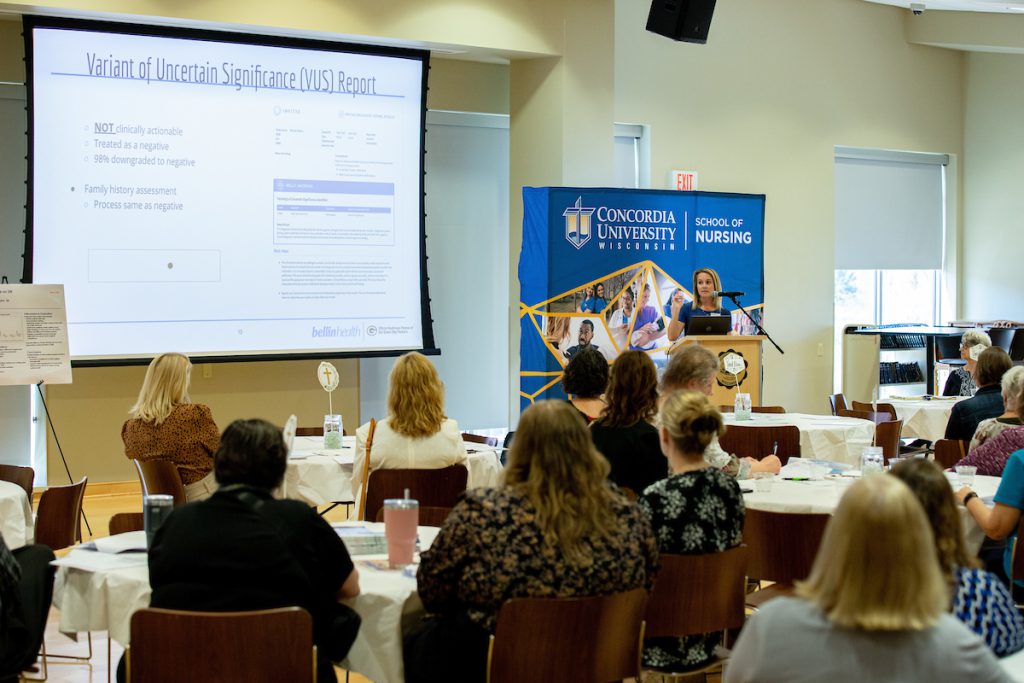
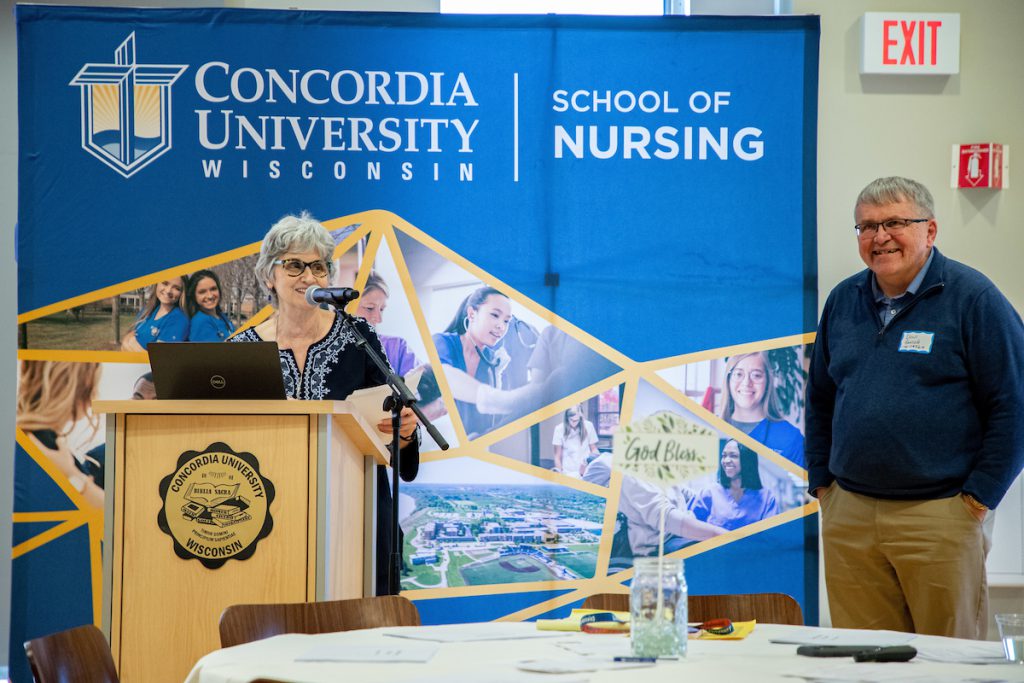
Last week, the CUW School of Nursing hosted a reception to celebrate 40 years of nursing at CUW; this week, the Parish Nursing Conference meets on campus for the 31st time!


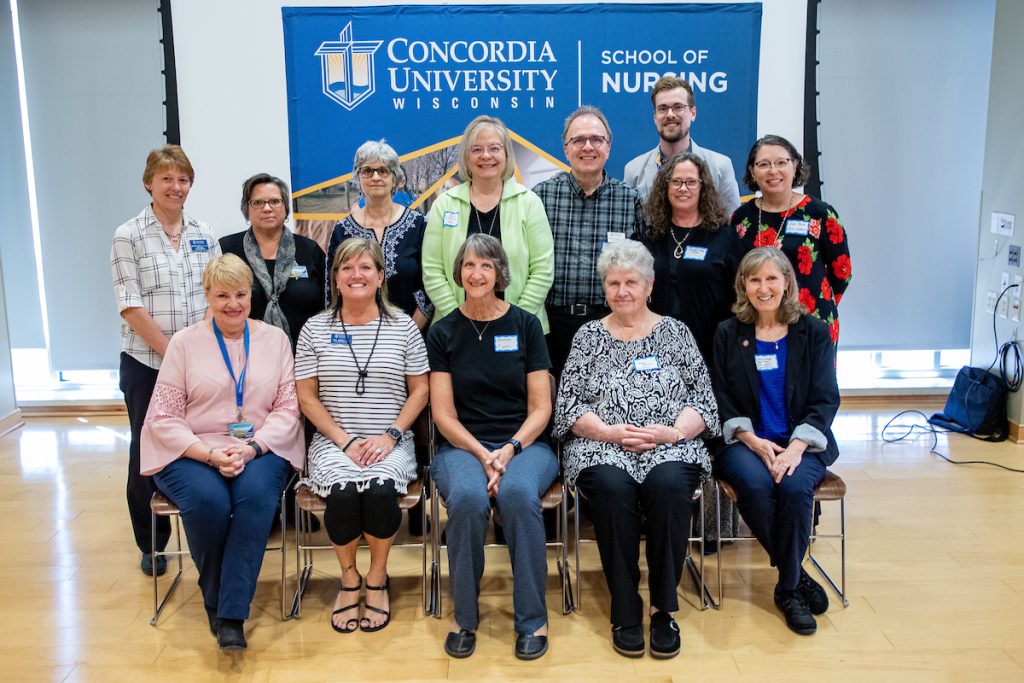
It’s been a big two weeks for the School of Nursing at Concordia University Wisconsin. Last Wednesday, SON faculty, students, and alumni gathered to celebrate 40 years since the nursing program launched.

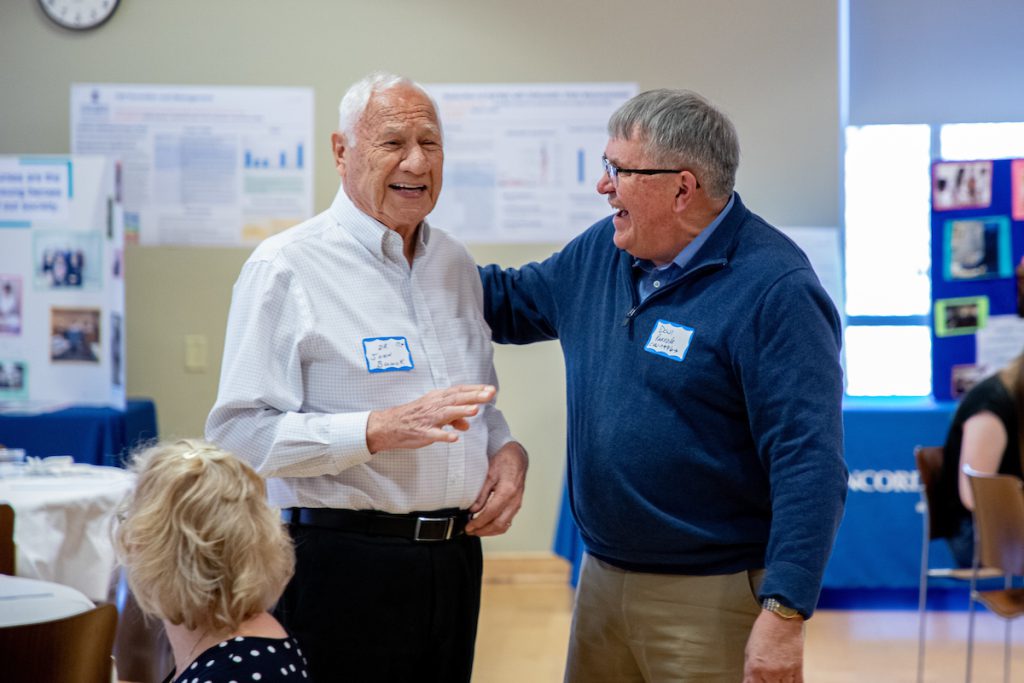
Notable guests included CUW President Dr. Erik Ankerberg; former Interim President Dr. William Cario; former President Dr. John R. Buuck, under whose leadership the nursing program was launched in 1982; and Dr. Grace Peterson, professor emeritus and longtime chair of the nursing department at CUW. Dr. Sharon Chappy, who served as dean of the School of Nursing for seven years, and Dr. Diane Ames, the current dean, were in attendance, and so was Dr. Mary Lou Kopp, a member of the first graduating class from 1986.

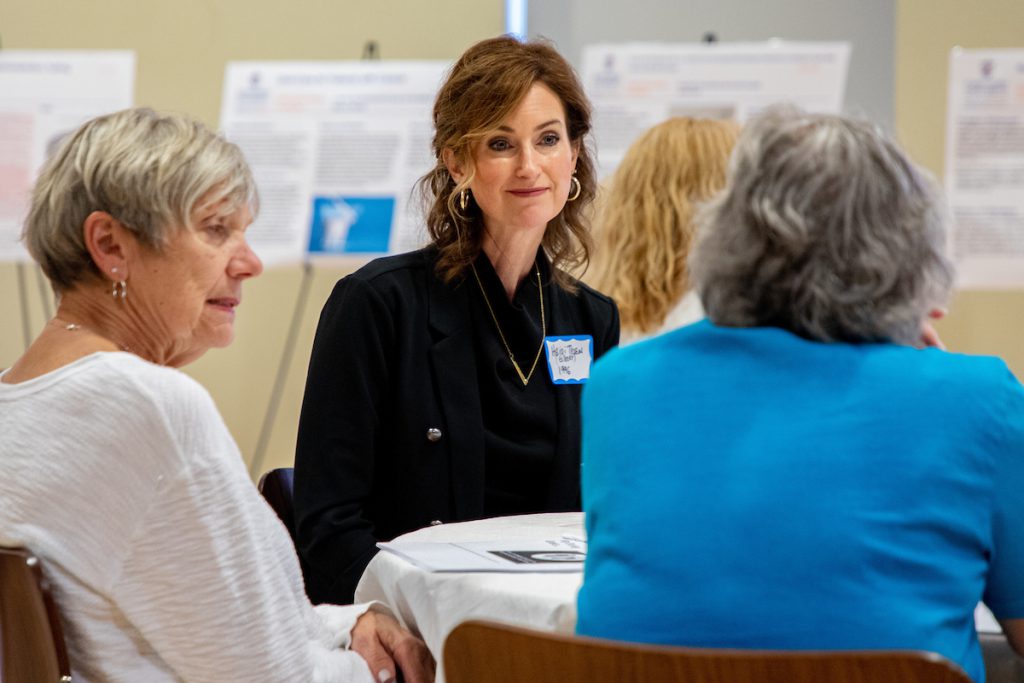
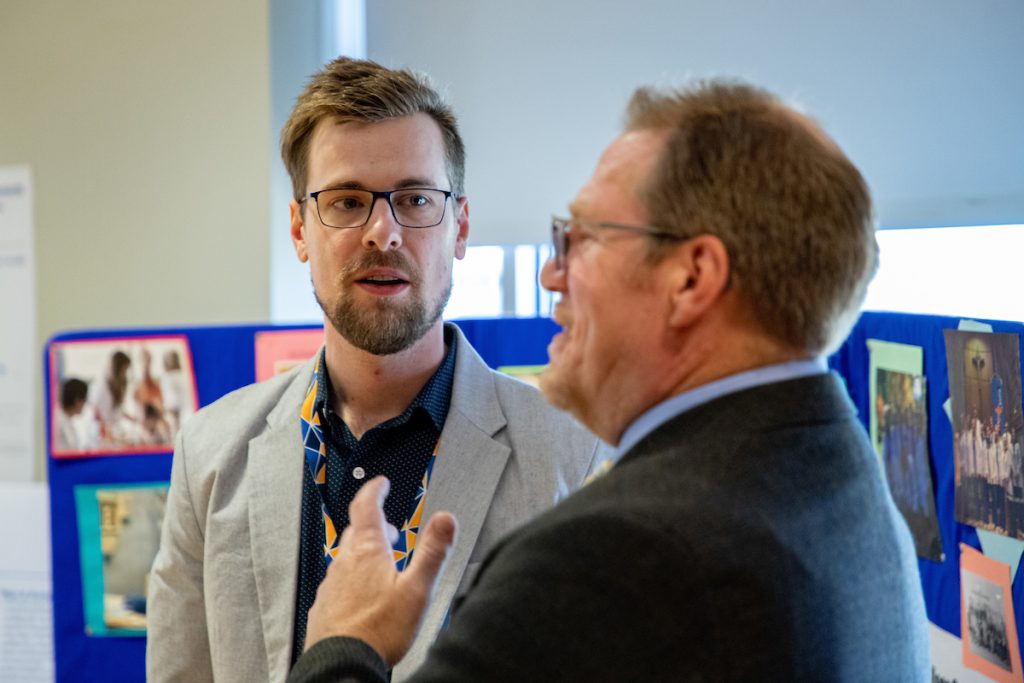
Photo highlights from the reception:

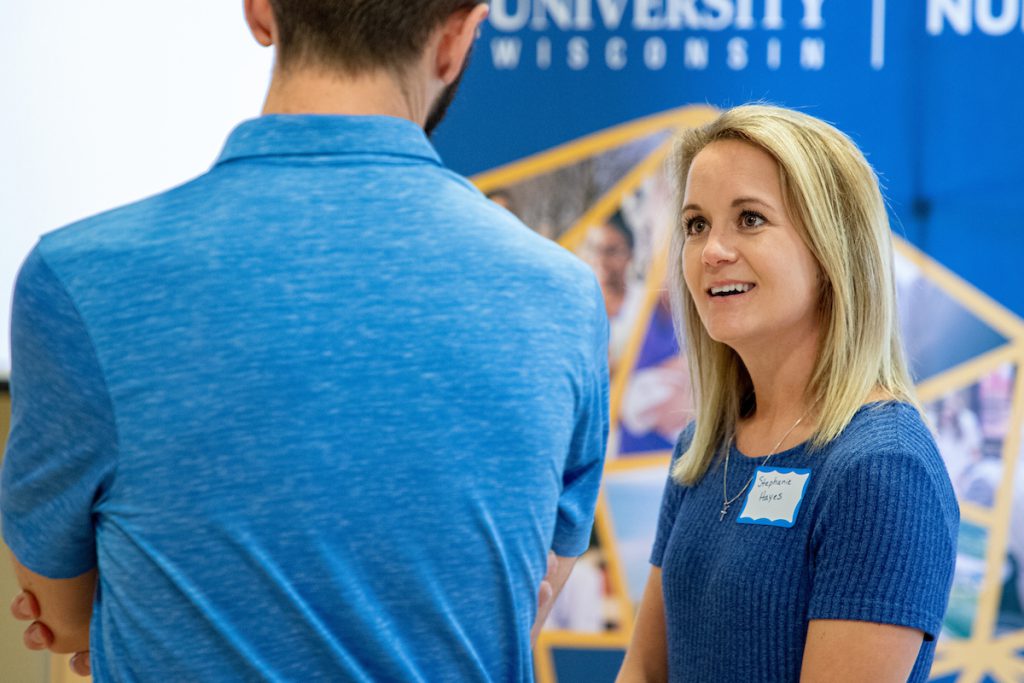
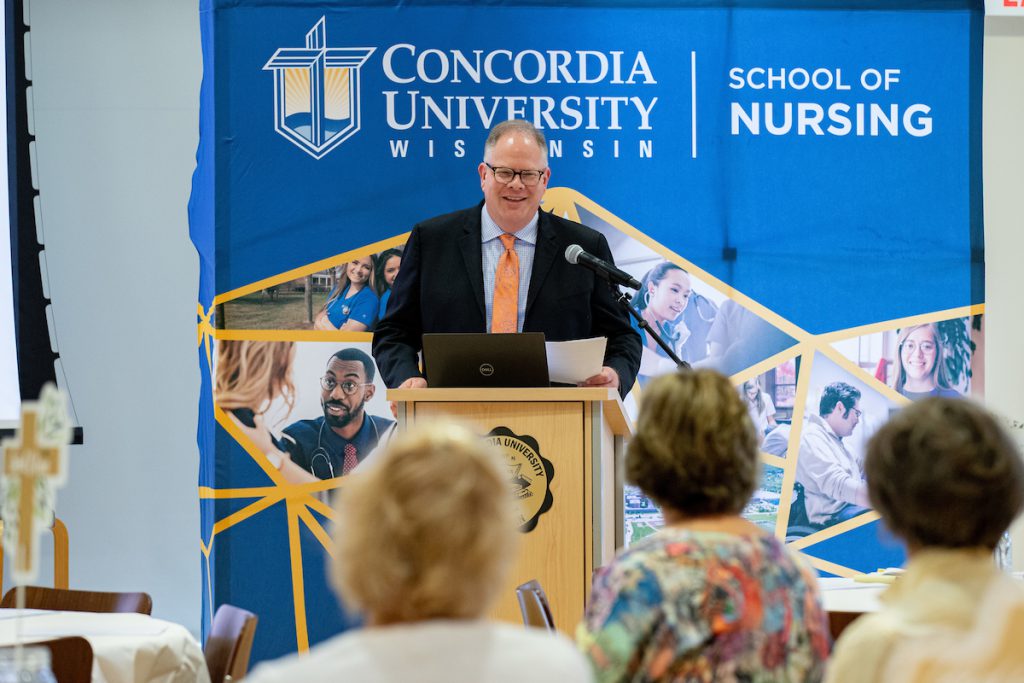
Giving the keynote presentation on “Genetic Testing for Cancer” was Stephanie Hayes RN, MSN, APNP, a genetic nurse practitioner (NP) trained through the City of Hope Health System in California. CUW’s Rev. Dr. Dan Paavola, professor of theology, provided opening remarks and prayer; Dr. Ankerberg ended the proceedings with a few thoughts and a closing prayer.

“That was a wonderful presentation today,” commented Kelly Felske (’92), a Registered Nurse at Children’s Hospital of Wisconsin. “It reminded me of why I chose Concordia for my nursing college/university: the great sense of community, inclusion, faith, and striving to be your best. Thank you for a great day—and great information.”

Dr. Carol Lueders Bolwerk, program director for parish nursing and congregational ministry—a 35-year CUW Nursing veteran who has also been chair of the nursing program and chair of the BSN completion program—said she was very pleased with how the event turned out.

“It was so nice seeing former faculty and staff, donors, alumni, students, and administrators, as well as current faculty and present staff attend this event, she said. “We had 79 people attend, representing each decade starting with our first graduating class in 1986. Thank you to all who helped make it possible.”

RELATED: “Celebrating four decades of faith-based nursing education”


CUW Parish Nursing Conference

Today, the celebration of nursing at CUW continues with the 31st annual CUW Parish Nurse and Congregational Health Ministries Conference. Approximately 90 participants from 20 different states will be taking part in two days of large group presentations, breakout sessions, networking, and more.

To read about last year’s conference, go here: “30 years of compassionate, Christ-centered care”


Nursing Programs & Degrees

BACHELOR’S

MASTER’S

DOCTORAL

GRADUATE CERTIFICATE

CONTINUING ED


Want in?

The School of Nursing is dedicated to providing a rigorous Christ-centered education that develops and inspires highly skilled professional nurse leaders who are prepared to serve diverse communities with excellence, truth, integrity, and compassion to promote health and healing.


Pharmacists in Federally Qualified Health Centers

Picking a specialization as a pharmacist isn’t always easy. However, hearing about a specialty from a professional can make it easier to determine if it would be a good fit. We asked Dr. Francesca Johnson about her work as a pharmacist with federally qualified health centers.

What is a Federally Qualified Health Center? 

Federally Qualified Health Centers (FQHCs) are public health centers focused on serving at-risk and medically underserved populations. They offer access to comprehensive healthcare regardless of a patient’s ability.

FQHCs qualify for grants and enhanced reimbursement from Medicare and Medicaid to offset costs for patients who cannot pay for care. FQHCs provide a wide range of services. These include preventive health services, dental services, mental health, and substance abuse services. They also provide transportation services necessary for adequate patient care and specialty care.  

What are the responsibilities of pharmacists in FQHCs? 

Pharmacists can serve in multiple roles in FQHCs. If the FQHC has a pharmacy onsite, pharmacists can practice in a dispensing role in a community pharmacy setting.

Pharmacists in this role have many responsibilities. They fulfill the medication and information needs of patients in an outpatient setting. Additionally, they provide discounted medications through the 340 Drug Pricing Program which allows qualifying hospitals and clinics that treat low-income and uninsured patients to buy outpatient prescription drugs at a discount.  

FQHC pharmacists can also practice in an ambulatory care role, where they provide comprehensive medication management under a collaborative practice agreement. Dr. Johnson is responsible for one-on-one patient visits at her practice site. During these visits, she evaluates medication regimens and provides education. She also adjusts care plans and medications to help patients understand and manage their chronic health issues. 

FQHC pharmacists can improve healthcare quality in many ways. They act as experts on medication and provide support to primary care providers. This helps to improve quality measures in the treatment and prevention of diabetes, blood pressure, and cardiovascular disease. They can contribute to departmental planning, make outreach calls to encourage medication adherence, and provide population health services.

Additionally, they can make recommendations to providers that align with quality measures. Dr. Johnson dedicates part of her time to this role. She has significantly improved star ratings and reimbursement rates at her organization.  

Do FQHC Pharmacists interact with students?

FQHC pharmacists frequently precept students and also residents in both the community and ambulatory care settings. Post-graduate residents have the option to complete their residency entirely at an FQHC. Alternatively, they may undertake a rotation at an FQHC during their residency. 

How do I become an FQHC Pharmacist? 

First, you must receive a Doctor of Pharmacy (PharmD) degree. If entering into a community role at an FQHC, typically no additional training is required. Pharmacists entering an ambulatory care practice role at an FQHC usually require one to two years of post-graduate residency. Therefore, the residency should include several rotations in ambulatory care.  

Additionally, FQHCs are mission-driven organizations. Pharmacists should have a strong passion for helping others. They should also strive to reduce health disparities and be aware of different cultures. This is essential in this practice area.

The patient care experience is incredibly fulfilling. It enables pharmacists to be servant leaders who provide care to those in the community who need it most.     

Why Concordia for pharmacy school? 

Concordia’s School of Pharmacy can help you find the right pharmacy field for your healthcare skills and interests. It will also help you grow as a servant leader. The coursework, patient labs, and experiential education will advance your abilities, knowledge, and compassion to provide culturally sensitive pharmacy services.  

Want more information? 

To learn more about the pharmacy program, visit our School of Pharmacy.

Why should I invest in a Tech Bootcamp?

Recently, Concordia University Wisconsin announced a new partnership with Upright Education to offer new tech bootcamps. This collaboration aims to fill the need for focused training in a short amount of time that leads to new employment opportunities. Sounds great, but what exactly are bootcamps, and are they right for everyone?  Our business partnership team went looking for some answers.

What is a tech bootcamp?

More specifically, tech bootcamps are training opportunities that allow students to gain specialized knowledge and develop skills needed for a range of careers in the tech-industry. Judson VanAntwerp is the Director of University Partnerships at Upright Education. He says, “Tech bootcamps will train adult learners into career paths such as software development, UX/UI, and Tech Sales, and for a variety of positions within those career pathways.”

Bootcamps vary in price ($3,200-$10,000) and timeline (8 weeks-24 weeks) depending on the program. You will only pay for the essential, job-related training needed for your career. This gets you into the workforce quicker than a traditional route.

What does a tech bootcamp look like, how much time per week?

These bootcamps were built for active learners.  In most cases, students are coming to the camp with little to no skills and will be ready for employment within several weeks.  To get the most out of the experience, learners can expect to spend significant time engaging the material.

For part-time learners, 20-30 hours per week is a good expectation for success. A full-time commitment should anticipate over 40-hours of engagement. This time includes things like working with instructors, practicing concepts in homework, and collaborating with classmates on group projects.

Who is a tech bootcamp best for?

According to VanAntwerp, these bootcamps are often best for adult learners who are interested in career-switching.  They have typically been in the career world for a while, are highly motivated, may already have a degree, and are looking to make a change. These career changers have a surprising demographic makeup. An Indeed study released on CNBC in 2019 revealed that of the 58% of participates that were willing to take a pay cut to change careers, the average age was 39-years old.

Other evidence indicates that these pre-pandemic career-changers were primarily comprised of middle-income earners. This more recent survey further discovered in 2021 that “Close to half (48%) of six-figure salaried workers are plotting their switches”. Workers are looking for better career opportunities that allow for more flexibility to their work-life balance.

Why is CUW collaborating with Upright Education?

This is a collaborative effort. Sarah Pecor, AVP for Continuing Education Studies at CUW, explains, “Upright has cultivated a robust team of knowledge experts from the tech industry. These experts have built the curriculum and are teaching the bootcamps. We were looking to expand our offerings in this field, so it was a natural fit for us to work and grow together. We are excited to be partnering with Upright.”

What types of tech jobs do bootcamp participants seek?

According to Antwerp, many completers achieve employment in the roles of Sales Development Representative, Account Executive, or Customer Success Manager.  However, the roles vary based on the specialized tech boot camps. 

For instance, those learners that complete the Software Development bootcamp will likely find roles as a junior software developer. Similarly, UX and UI designers may get there start from a specialized bootcamp taught by leading industry experts.

Could businesses use these tech bootcamps to upskill or reskill employees?

Yes! “All of our bootcamps offer flexible, part-time options which are great for adults working at organizations in order to advance at the company,” says VanAntwerp.

Many companies offer generous tuition reimbursement and education benefits that could help offset the costs to the individual. Some may even cover them entirely!

What are the recruitment opportunities?

We all know that this remains a challenging time in workforce recruitment.  Concordia’s Business Community Partners will now have access to an additional pipeline of trained professionals in the tech space for recruitment. Often times these professionals are ready to enter this space within 3-6 months.  In addition, we will seek companies to collaborate with Upright Education and CUW by sponsoring a student’s capstone project. 

These projects allow students to build their portfolio and showcase the specialized skills they have gained. These opportunities alone make tech-bootcamps a great fit for future employment.

Are there any scholarships or discounts available?

If companies are looking to provide these opportunities for multiple staff, please reach out about possible additional savings for your employees.  

What else should we know?

“Don’t let the news of tech layoffs distract you,” says VanAntwerp, “We are in the ‘great tech talent redistribution’. While the big players in tech may not have the roles they once had, many new and growing organizations have more tech openings right now than there are available job-seekers to fill them. These are still in-demand fields that offer fantastic career growth.”

Explore all of these tech bootcamps at bootcamp.cuw.edu. Business Community Partners can reach out to me at Christy.call@cuw.edu to discuss all of these bootcamps, as well as customized professional development for your company.

Faculty Spotlight: Don Wojczulis

Meet our new professor in the Sport and Hospitality program, Don Wojczulis. Don is a Milwaukee native and continues to reside in the area with his wife Elizabeth and daughter Annika. His education path includes a bachelor’s degree from the University of Wisconsin-Lacrosse in Elementary Education; a Master’s in Educational Administration from Concordia University of Wisconsin, and a Master’s in Sports Management from Cardinal Stritch University.

Over the past 10 years, he hosted the College Sports Show. Don currently hosts the 414Sports podcast, which is dedicated to talking about sports, professional and collegiate, in southeastern Wisconsin. The podcast can be found on Google, Spotify, and Apple. During basketball season, he can be found announcing play-by-play for the men’s and women’s teams at MSOE.

Don is currently in a doctorate program at Concordia University of Chicago. In June 2021, Don retired from the Milwaukee Public School System after 32 years where he was a teacher, athletic director, assistant principal, and principal. Learn more about Professor Don Wojczulis.

What brought you to Concordia?

I got my Master’s degree at CUW and enjoyed the community. So when I got the chance to begin a second career working with students at the collegiate level, I took it.

Favorite Course to Teach

I have enjoyed teaching Integrated PR & Social Media the most. The curriculum is interesting to me, and the students taught me a great deal when it comes to social media.

Favorite Course Project

Seeing how students re-brand an organization or business. The creativity put forth has been amazing to witness.

What do you like best about mentoring students?

Trying to provide them with some insight so they hopefully avoid as many pitfalls as possible. Additionally, knowing professionally what lies ahead for them, and their excitement and exhilaration is awesome to behold.

Favorite Quote

“If you can’t fly then run; if you can’t run then walk if you can’t walk then crawl, but whatever you do, you have to keep moving forward.” -Dr. Martin Luther King Jr.

Most helpful advice you have received.

Do the very best you can. Whatever happens…. happens. At least you know you gave it your all.

Favorite destination visited

If I had to pick my favorite place to visit, it is probably Hilton Head, South Carolina. The reason is simple, golf courses, and more golf courses.

Favorite Sports Season

If I had to choose, I would say the months of November, December, and January since the NFL, College Football, and College Basketball all overlap.


If you are interested in the Sports and Hospitality program, get more information here.

DBA Student Story: Part One

This DBA Student Story features Jennifer Kowal, a doctoral student concentrating on Organizational Performance and Change in the Doctorate of Business Administration (DBA) program at Concordia University Wisconsin. Outside of her education, she manages a full-time job and is a wife and a mother of three young adult children. She hopes to inspire and motivate others by sharing her academic experience.

Discover a little about Jennifer’s background and what led her to enroll in our DBA program.


Tell us about yourself

Hello, my name is Jennifer Kowal and I’m a student in the DBA program in Cohort #2 at CUW. I’m currently 5/12th done with the program, but who is counting? In addition to being a student, I’m a wife and mother of two college students, a high school student, and a full-time professional. Yes, I have a lot on my plate but I am determined to earn my DBA.

Why was now the right time to become a student again?

Well, simply put I have always wanted to be a Dr. It is an achievement I have wanted to conquer. However, I was unsure what kind of Doctorate or Ph.D. it would be, though certainly not a medical degree. Everything came together in the fall of 2021. Before I knew it, I was committed to making this goal happen. I started with some online research and found the DBA degree pretty quickly.

The DBA sounded familiar and maybe a bit comfortable since it is so close to the MBA. So, I continued my discovery by looking for schools that offered a DBA. I filled out forms for a few universities online. Within a week, I had scheduled introductory calls. As you can see, I can move pretty quickly in my decisions, once I know what I want.

The introduction calls with a few universities validated which DBA program was right for me. Also, from those conversations I knew which university would be the best fit.

What made you choose CUW’s DBA program?

I chose the DBA program at CUW because it checked all the boxes. Also, the decision just felt right. Follow your heart and gut, as it’s often said.

Two main criteria for me were the number of residencies and the cohort model. I knew I needed some on-campus time, but not too frequently. Furthermore, I knew I wanted the community offered by the cohort model in CUW’s DBA program. Within a couple of months, my acceptance letter arrived and I embraced being a student again in all ways.

What is your research focus?

My research focuses on motivation, curiosity, and a growth-oriented mindset in organizational development at the individual level. CUW’s Organizational Performance and Change concentration is teaching me to apply methods and theories for improving performance at all levels of an organization.

Describe the DBA program in your own words

The Doctor of Business Administration (DBA) program aims to develop individuals into scholar-practitioners. A scholar-practitioner integrates academic learning with practical experience in their chosen field of study. DBA students use theoretical knowledge and academic expertise to improve their practical work. Their valuable work experience also informs how they apply academic knowledge.

Students come from various fields, including education, business, and public policy. They typically possess a terminal degree and significant practical experience in their area of expertise.

What is a DBA scholar-practitioner exactly?

I like to think of being a scholar-practitioner as a bridge. On one side of the bridge is your day job, your work, your profession. On the other side is academic research. The DBA program develops its students to be that bridge, the conduit, between the practice of one’s profession and research. The bridge, in my mental model, is built with Legos and each scholar-practitioner adds more Legos to the body of knowledge in their field. Thereby strengthening both the academic and practitioner sides.

One aspect of being a scholar-practitioner that I find exciting is the opportunity to engage in research, evaluation, and critical analysis. I get to contribute to the development of new knowledge in my field. I’ll explain more about this opportunity in future articles.

The DBA program also opened a whole new community of like-minded individuals committed to bridging the gap between theory and practice in their respective fields.

Any words of wisdom?

Here’s a quote from my cohort during our first residency. It sums up the program and is a daily reminder that some things, like this program, need to be challenging.

A terminal degree is so much more than a degree.  It can break you down to your most vulnerable form but has the potential to build you back together to become a resilient, determined, humble, and knowledgeable researcher.  This process takes time and patience.  Please don’t give up on yourself.  It’s not just about getting the degree.  It’s about becoming who you are meant to be.

Unknown Author