Learning to abide

From an unexpected role at her home church to a new career in higher education, Emma Kaiser (’26) discovered that every workplace is an opportunity to serve Christ.


Who gets their dream job right out of college, anyway?

Emma Kaiser, who graduated from Concordia in May with a bachelor’s degree in business communication and a minor in psychology, certainly didn’t expect to return home without a job lined up. Like many recent graduates, she anxiously awaited what would come next.

This summer, Kaiser began her new role in Bellin College’s High School Initiatives Department, helping high school students earn college credit while exploring careers in healthcare.

“It’s essentially like Concordia’s dual credit program,” Kaiser said. “If a student wants to earn college credit while they’re still in high school, they’ll work through me.”

A position like this was exactly what Kaiser had hoped to find right after graduation. Before that opportunity came along, though, she found herself serving as a church secretary in a place she never expected. For two months, she worked alongside her parents at their home congregation, where her father serves as pastor and her mother teaches kindergarten.

“I felt like I was somewhere God wasn’t calling me,” Kaiser said. “Looking back, though, I realize I was wrong.”
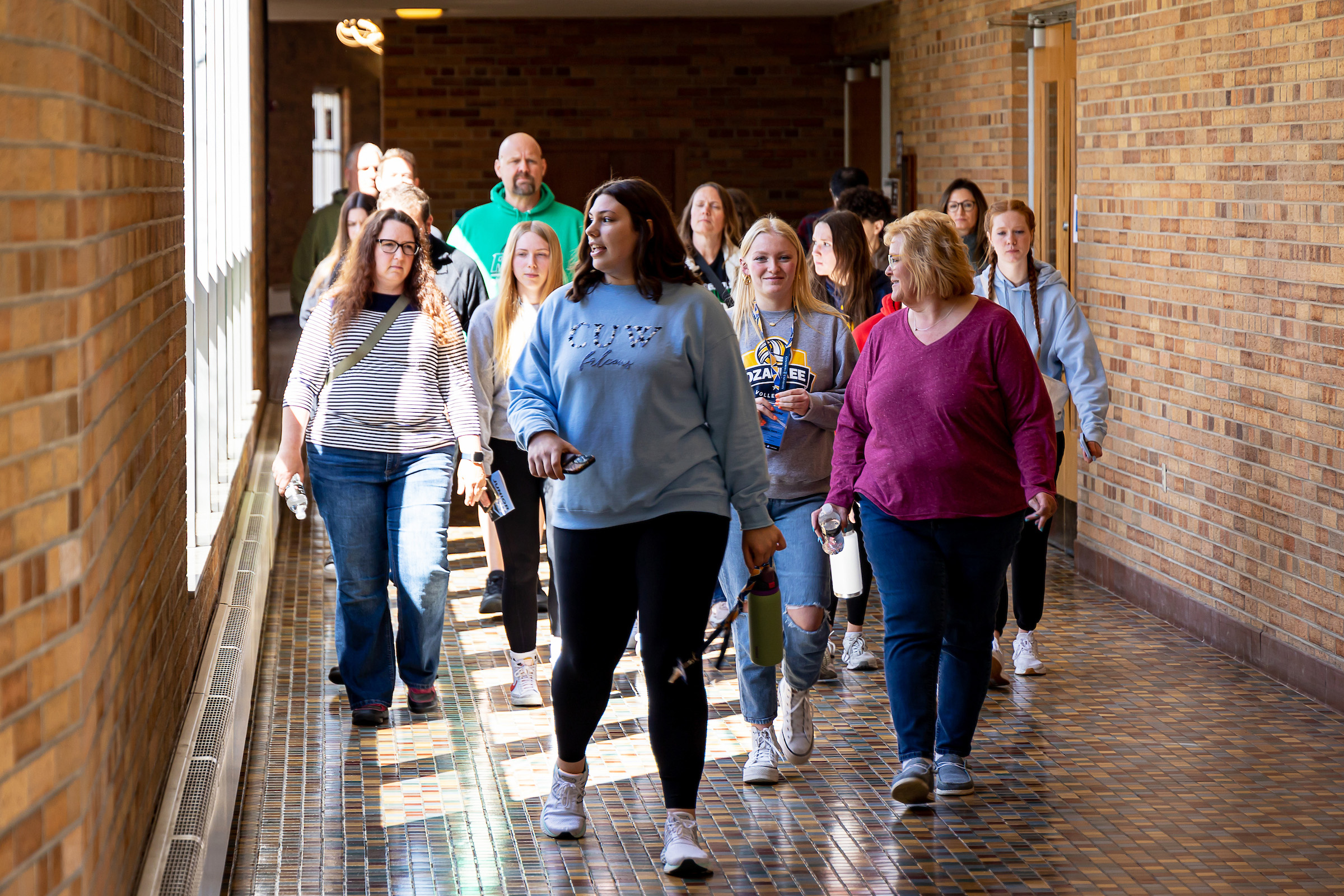

People walking in hallway

Learning to serve

Long before Bellin College entered the picture, Kaiser found a second home in Concordia’s Admissions Office. “I interviewed before I even started at Concordia,” she laughed. “And I was hired as an incoming freshman.”

Over the next four years, she welcomed prospective students and their families to campus. During her junior and senior years, she served as Lead Student Ambassador, leading tours, representing the university at special events like the LCMS Youth Gathering and helping create new initiatives for the department.

One initiative she’s especially proud of is the student ambassador retreat at Whispering Pines in her hometown of Shawano.

“The reason I wanted to create it was because our staff came from so many different backgrounds,” Kaiser said. “Some of us were athletes. Some studied computer science. Others were involved in theater. Outside of Admissions, many of us probably never would’ve crossed paths. I wanted everyone to actually know each other.”

Her goal was simple: build a stronger sense of community among the student ambassadors. What started as Kaiser’s idea became the Admissions team’s first Student Ambassador Retreat in fall 2024. This fall, the team is preparing to host it for the third consecutive year.

“One of Emma’s most impactful contributions was her idea to host a Student Ambassador Retreat at Whispering Pines to foster team development, leadership and community,” said Cassandra Chmielewski, assistant director of admissions for guest experience. “What began as Emma’s vision has since become a valued tradition.”


An unexpected season

Reflecting on her academic journey, Kaiser doesn’t sugarcoat the transition from college to career.

“I graduated without having a job lined up, and I don’t think we talk enough about that,” she said. “I walked across the graduation stage fully expecting I’d already have a job. That wasn’t reality.”

Having grown up in Lutheran education, Kaiser expected life after graduation to unfold a certain way. Teachers receive a divine call, and somewhere along the way, she assumed her own next step would naturally fall into place.

“It didn’t,” she said. “So I moved home.”

At the beginning of the year, Kaiser chose one word to intentionally focus on, an idea introduced to her by a woman in her home congregation. For 2026, that word was abide.

“I’ve been learning what it means to remain rooted in Christ and trust His direction even when life doesn’t unfold the way I expected it to.”

Those two months serving as the secretary at her hometown church ultimately reshaped her understanding of vocation. The church needed someone, and Kaiser stepped in. Looking back, she now sees that season not as a setback, but as preparation.

“I learned to find joy in the small things,” she said. “The church needed someone, and nobody else had stepped forward. God placed me in a position where I could help for a season, train someone else and leave things in a good place before moving on.”

That season also gave new meaning to the word she had chosen months earlier. “For me, abiding means accepting God’s plans as the final word and saying, ‘Okay, this is where You have me.'”


A new understanding of vocation

Kaiser’s experience at her home church also reinforced something she had begun to understand during her time at Concordia: vocation wasn’t necessarily tied to a particular major, career or workplace.

“That’s probably the biggest thing Concordia taught me,” Kaiser said. “I have a completely different understanding now of what vocation really looks like. A nurse can share God’s love while standing beside a hospital bed. Someone in business can share God’s love during a board meeting. Whatever job God places you in is where you’re supposed to be at that point in His timeline.”

That understanding developed in part as Kaiser navigated her own academic path. Academic advisor Barb Tyler watched as Kaiser reconsidered her studies and the career possibilities ahead of her.

“She realized that changing her major, or adding a major, wouldn’t change her purpose; it aligned her academics with her vocation,” Tyler said. “She remained flexible and open-minded throughout the process, realizing that adjusting her major provided options she hadn’t previously considered.”

Realizing that God’s plan looked different than her own wasn’t easy, but it strengthened Kaiser’s trust that her purpose would remain the same regardless of where she worked.

“I believe that no matter what your job title is, your purpose is still the same,” she said. “It’s to serve others and share the love of Christ.”

That lesson has also changed the way Kaiser sees herself. Although she admits she’s often been her own toughest critic, those who watched her grow at Concordia saw something different.

Chmielewski remembers Kaiser questioning whether she had the skills and abilities to succeed, particularly before high-pressure moments. Whether she was preparing to lead an important VIP tour or speak in front of more than 20,000 people at the National Youth Gathering in New Orleans, the nerves would inevitably come.

“Eventually, I learned to smile whenever she expressed those doubts because I knew exactly what would happen next,” Chmielewski said. “She would step up, do an exceptional job, and wonder why she had been worried in the first place.”

Watching Kaiser grow into a confident leader throughout her four years at Concordia was one of the most rewarding parts of working with her, Chmielewski said. All of those experiences taught Kaiser never to underestimate the ways God can work through her, and now she hopes other students do the same.

“I know myself. I know my flaws, and I know my sins,” she said. “But God is going to use you in ways that are so much bigger than you ever imagined. You might not think you’ve made an impact, but I promise someone is going to remember something you said or something you did. It may mean far more to them than you ever realize. So do everything with joy because you’re where you are for a reason.”

The path to Bellin College didn’t unfold the way Kaiser expected. Looking back, though, she wouldn’t change it. The unexpected season after graduation gave her something more valuable than the career path she had planned—it gave her a new understanding of vocation.

And perhaps, just as importantly, it taught her what it means to abide.


Want in?

Concordia University Wisconsin is a Lutheran higher education community committed to helping students develop in mind, body and spirit for service to Christ in the Church and the world.
Engineering a better way to play

CUW students will put their engineering skills to work making play more accessible for children with disabilities.


A toy that sings, dances or lights up at the push of a button may seem simple. But for some children, pushing that button is anything but. That is where Concordia University Wisconsin engineering students are stepping in.

On Oct. 24, students will gather in CUW’s Collaboratorium, located inside the Robert W. Plaster Free Enterprise Center, for the university’s first build day modeled after Inclusive Play: Toys for All, a collaboration between Penfield Children’s Center and Marquette University’s Opus College of Engineering. Their goal is to adapt as many as 120 off-the-shelf toys so children with physical or developmental disabilities can operate them using accessible external switches.

Subha Kumpaty, PhD, chair of Concordia’s engineering and mathematics department, says the project brings together technical learning, student leadership and service in a way that fits naturally with Concordia’s mission.

“Service learning is part of our DNA,” Kumpaty said. “We want to develop students who will serve Christ in the Church and the world. This is right in that alley.”


It only takes a few to move a mountain

Concordia’s involvement began in 2023, when Kumpaty connected with Vladimir Bjelic, a speech-language pathologist at Penfield Children’s Center, through CUW Professor Yiming Liao. Soon after, engineering students began designing and 3D printing adaptive switches for toys used by children with disabilities.

Last spring, the effort resulted in approximately 50 to 60 adaptive switches for Penfield. Kumpaty also sent groups from CUW to Marquette University’s Inclusive Play: Toys for All build days in 2024 and 2025, where they gained hands-on experience adapting the toys themselves.

Those who participated came back wanting more of their classmates to have the same experience. As interest grew, Bjelic and Kumpaty began working to bring a build day to Concordia for the first time.

“All of our students should be doing it, not just four of us or eight of us,” Kumpaty said. “When the students themselves started saying we should really be involved in this, I started thinking, ‘How can we do a build day ourselves?’”

On Oct. 24, they’ll get that chance. The event calls for eight workstations with teams of four or five at each. Trained student leaders will guide them through opening each toy, locating its activation circuit, installing a 3.5 mm jack, soldering and insulating the new connection, reassembling the toy and testing both its original and adapted controls. The goal is not simply to make the toy work. It also has to be safe, durable and ready for use by a child.

Organizers Lucas Kearney and Evan Delvaux have helped turn the idea into a working plan, coordinating funding, toy selection, tools, volunteer training and station logistics. Kearney, a junior, is studying industrial and mechanical engineering with a minor in computer science emphasizing AI and robotics. Delvaux, a sophomore, is pursuing bachelor’s degrees in industrial engineering and computer science, with an emphasis in AI and robotics. He is also pursuing a master’s degree in artificial intelligence through the CS Scholars program.

Planning this event has required both to manage budgeting, scheduling, problem-solving and coordination with campus and community partners. The experience has also made the importance of inclusive design more tangible for both.

Just think about it. A relatively small design change can determine whether a child can independently interact with an everyday object. That makes every detail matter. “The work cannot stop at ‘it turns on,’” Kearney and Delvaux explained. “We have to think about durability, loose parts, strain relief, clean wiring and consistent testing.”


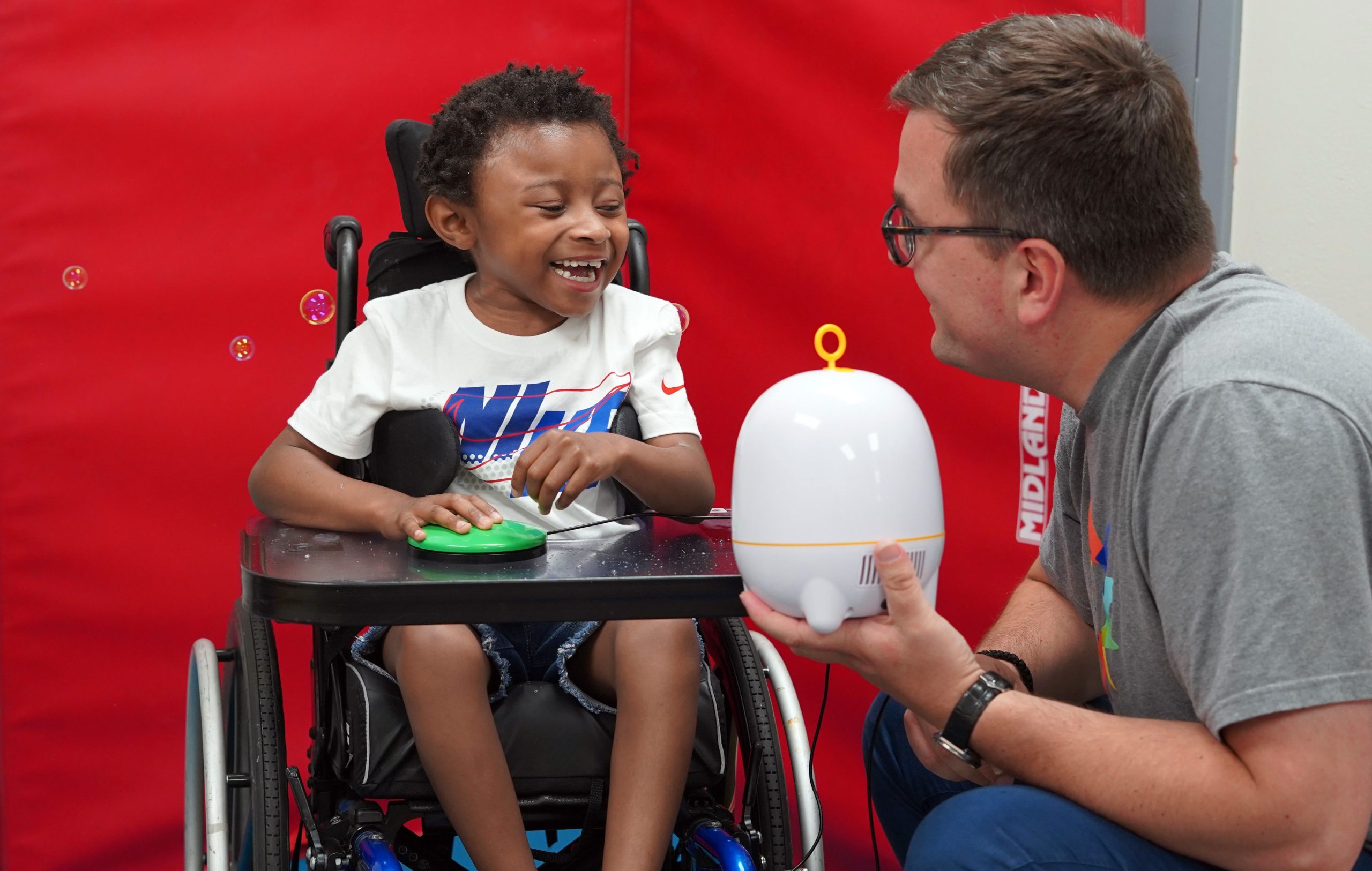
kid in wheel chair
Two photos courtesy of Penfield Children’s Center.

The power of a button

Bjelic has spent 13 years working as a speech-language pathologist. At Penfield, he works primarily with children from birth to age 3 through Milwaukee County’s Birth to 3 Program. But adaptive switches can benefit people well beyond early childhood.

The same concept can be applied to everyday items such as fans, drink dispensers, mixers and blenders, allowing someone to operate them using a larger, more accessible switch. A child learning to cook, for example, could activate a mixer while making cookies with a parent. Similar adaptations can give children, teenagers and adults greater access to everyday activities.

The possibilities are endless. Bjelic has also worked with older students using adaptive switches for functional activities, including one student who used a switch to operate a fan during a school activity. For him, the goal is the same at any age: finding ways for people to participate more independently in everyday life.

For those unfamiliar with adapted toys, their importance goes well beyond playtime. Many commercially available toys require a child to squeeze a small foot, press a particular switch or make another precise movement to activate the toy. A child with cerebral palsy or another physical disability, for instance, may understand perfectly well what the toy does but be physically unable to make it respond. That often leaves the child watching while someone else, such as a parent, activates it.

“It’s a nice way of playing, but it’s a different feeling when a child is able to activate the toy herself,” Bjelic said.

Adapted toys change that by giving children another way to interact with a toy independently. Engineers can bypass the toy’s original switch and connect it to a larger external button. Depending on a child’s movement, that button can be pressed with a hand, elbow, foot, head or another part of the body.

Once a child makes the connection, “I hit the button, the dog barks,” Bjelic said, something special begins to happen. “They get this little glimpse in their eye and you see that they comprehend that,” he said.

Bjelic has seen children vocalize, smile or show other expressions while interacting with the toys. For some families, it can even create new opportunities for a child to play alongside a parent or sibling.

That understanding of cause and effect can also help therapists learn more about what a child understands and may open the door to other forms of communication, including augmentative and alternative communication systems.

“For me, yes, I can work on speech and language and all these other areas,” Bjelic said, “but I think the most important thing is that it gives these kids a chance to be a child and play and engage with their parents and siblings.”


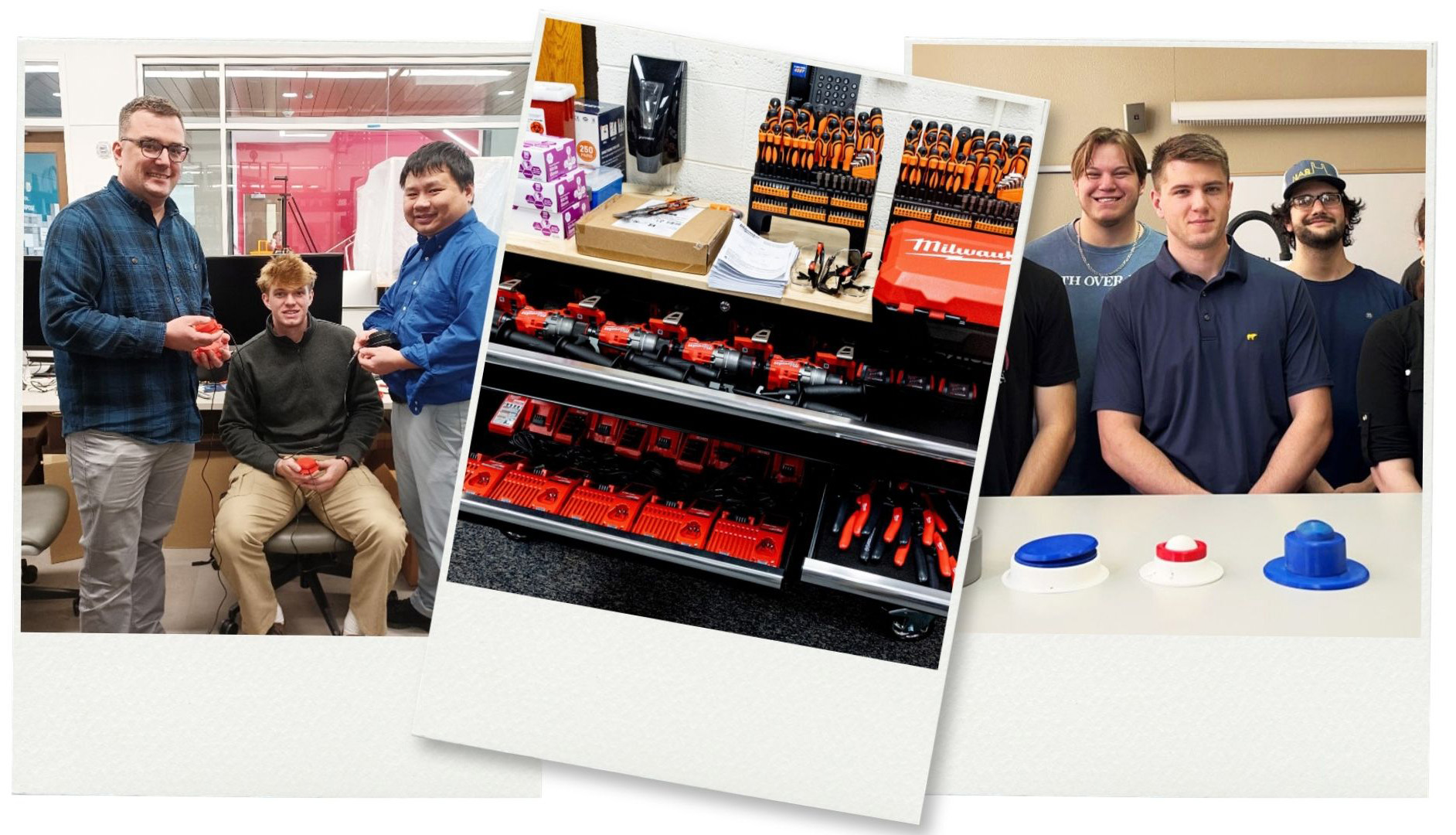
three photos collage with engineering students

Removing the barriers to play

Cost is one reason this work matters. Bjelic recalled finding that an ordinary toy costing about $40 could cost roughly $120 once adapted for accessibility. In some cases, adapted versions were several times more expensive than their off-the-shelf counterparts.

That price difference helped lead to the creation of Inclusive Play: Toys for All about five years ago through Bjelic and Marquette engineer Molly Erickson.

To date, the program has adapted 942 toys and distributed more than 800 to roughly 35 clinics and organizations in the United States and abroad, including locations in Wisconsin, Illinois, Indiana, South Carolina and Kansas, as well as Mexico City, Belize and Manila, Philippines.

Support for Concordia’s build day has come from across campus and beyond. Student Government Association is providing $2,000 to the Concordia Engineering Network, a student organization for engineering students, to purchase toys, while the engineering department has procured additional supplies and accessories needed for the build.

Milwaukee Tool has also generously supplied many of the tools needed to equip the event’s eight stations. The company sees the partnership as an opportunity to support the next generation of problem-solvers and makers while strengthening the communities it serves.

“We’re proud to partner on projects that provide students with hands-on experiences while making a positive impact for others,” said Jake Schaller, senior talent acquisition manager at Milwaukee Tool.

With the necessary tools at hand, teams can work simultaneously rather than wait for equipment.


Building with purpose

High school students, including members of the Grafton High School robotics team and students from Living Word, are also expected to participate or observe. They’ll have lunch with CUW students and tour the engineering labs.

Kearney and Delvaux hope the experience shows them that engineering is collaborative, creative and useful now, not something they have to wait until college to experience.

Bjelic hopes the experience stays with students long after the last toy is tested, showing them how their engineering skills can be used to help others.

“You’re giving these kids who require assistance and require more help than other kids an opportunity to play and live and laugh and just be a child.”

It is an opportunity Kumpaty believes is worth the time, resources and effort behind Concordia’s first build day.

“Even if one child has benefited, it’s worth it,” he said.


Want in?

Concordia University Wisconsin is a Lutheran higher education community committed to helping students develop in mind, body and spirit for service to Christ in the Church and the world.

Aspirus donates ultrasound systems to prepare CUW’s future sonographers

Diagnostic Medical Sonography students gain more hands-on experience with technology used in clinical settings.


As a patient, you may not realize just how many buttons, knobs and controls there are on an ultrasound machine. But there are a lot, according to Concordia University Wisconsin Diagnostic Medical Sonography senior Tanner Marien. In fact, he describes it as “a million,” an exaggeration that illustrates just how much time students need to become comfortable and confident using medical equipment.

That time especially matters when the person on the exam table is no longer a classmate or practice model, but a real patient. For a DMS student walking into a clinical setting for the first time, all those controls can be intimidating, Marien emphasized.

“You can get stage fright when you’re scanning an actual patient,” he said. “It’s real life.”

That is why two ultrasound systems recently donated to Concordia by Aspirus mean much more to students like Marien and fellow senior Bryn Falk than simply having additional equipment in the scan lab.

The donated GE ultrasound systems (GE LOGIQ E9s, for those in the know) are similar to those DMS students encounter at many of their clinical sites. More access means more time to learn the controls, practice scanning and develop the muscle memory needed to operate the systems without constantly looking down.

“The machines definitely better prepare you for the clinical sites because a lot of them have GEs,” Marien said. “If you’re working on it at least once a week before you’re regularly scanning, you are definitely miles ahead.”

Falk, nodding in agreement, said that familiarity allows students to turn their attention to something far more important once they begin scanning patients: the person.

“It allows you to focus on the actual anatomy and pathology on your patient, rather than struggling with the machine,” Falk said, adding that the patient is “the most important part.”


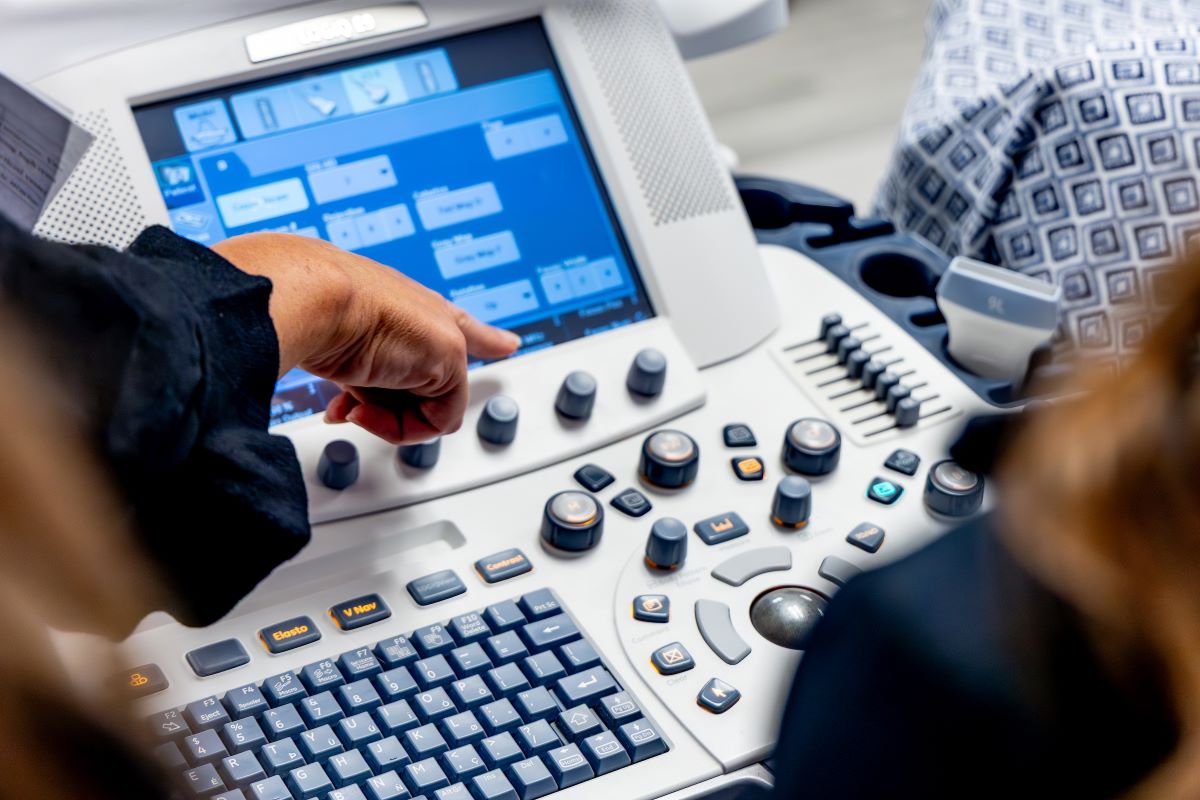
hand showing what buttons on ultrasound machine do
The donated GE LOGIQ E9 ultrasound systems are similar to those DMS students encounter at many of their clinical sites.

How does practice prepare you for clinicals?

Lisa Reimer, chair of CUW’s Imaging Department and director of the DMS program, sees the difference that familiarity can make.

Reimer compared learning to operate an ultrasound system to learning the controls of a car. After enough time behind the wheel, a driver no longer needs to look for the windshield wipers. The movement becomes automatic. Sonographers develop a similar type of muscle memory.

“We’re watching the screen, our left hand is typing and our right hand is scanning,” Reimer said. “The muscle memory to how far does my hand travel to get to this function, we’re not looking down trying to find it after we get familiar with the equipment.”

That familiarity becomes especially valuable because sonography requires students to perform several tasks at once.

“You’re watching, observing, making sense of the images, you’re keystroking to improve your images, you’re scanning, finding new windows to get that ideal picture,” Reimer said. “And then you’re talking with your patient to reassure them, make sure they’re doing OK.”

Knowing the equipment also allows students to give more of their attention to the patient.

“When you’re actually scanning patients in real life, you’re not wasting their time,” Marien said. “They feel comfortable having you scan as a student because you’re confident, and you already know what you’re doing before you even step foot in the hospital.”


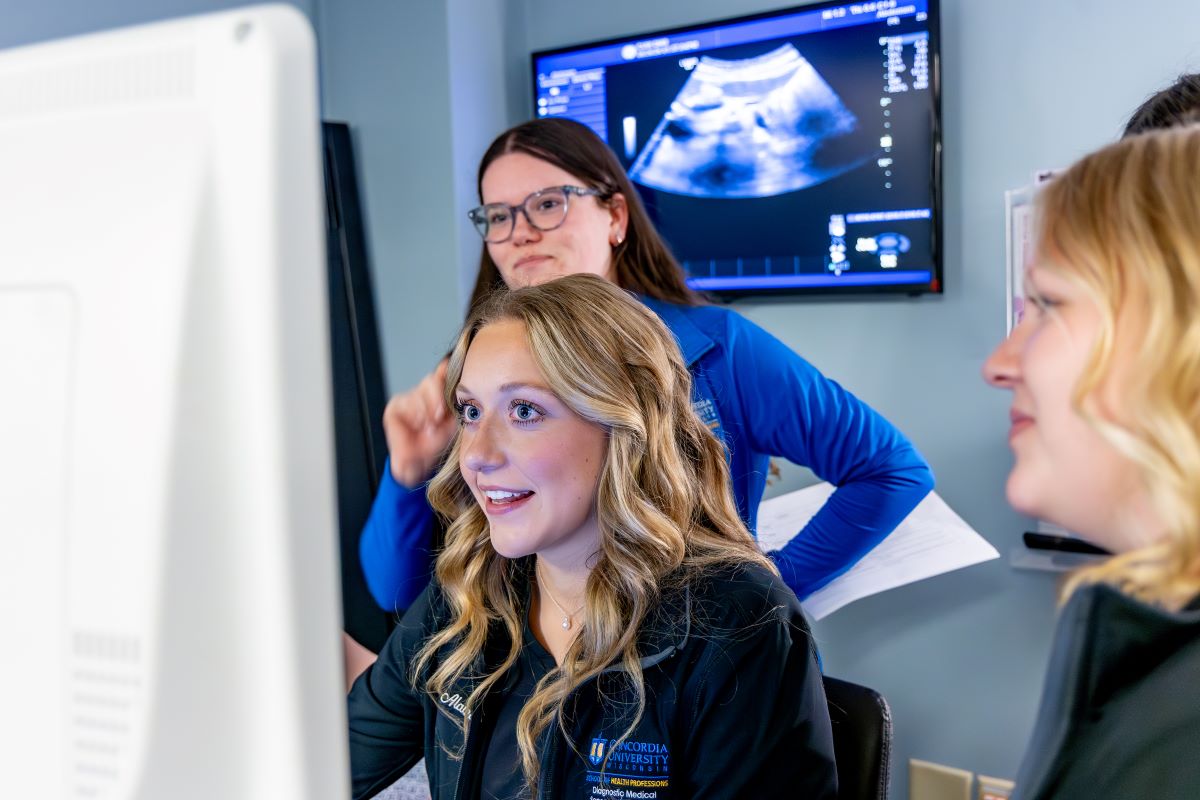
girl looking as screen
Senior Kaela (behind) collaborates with juniors Alaina (scanning) and Brie (right) as they learn the art and science of Diagnostic Medical Sonography.

When can you start scanning?

Concordia students begin scanning during their junior year, shortly after entering the professional phase of the DMS program.

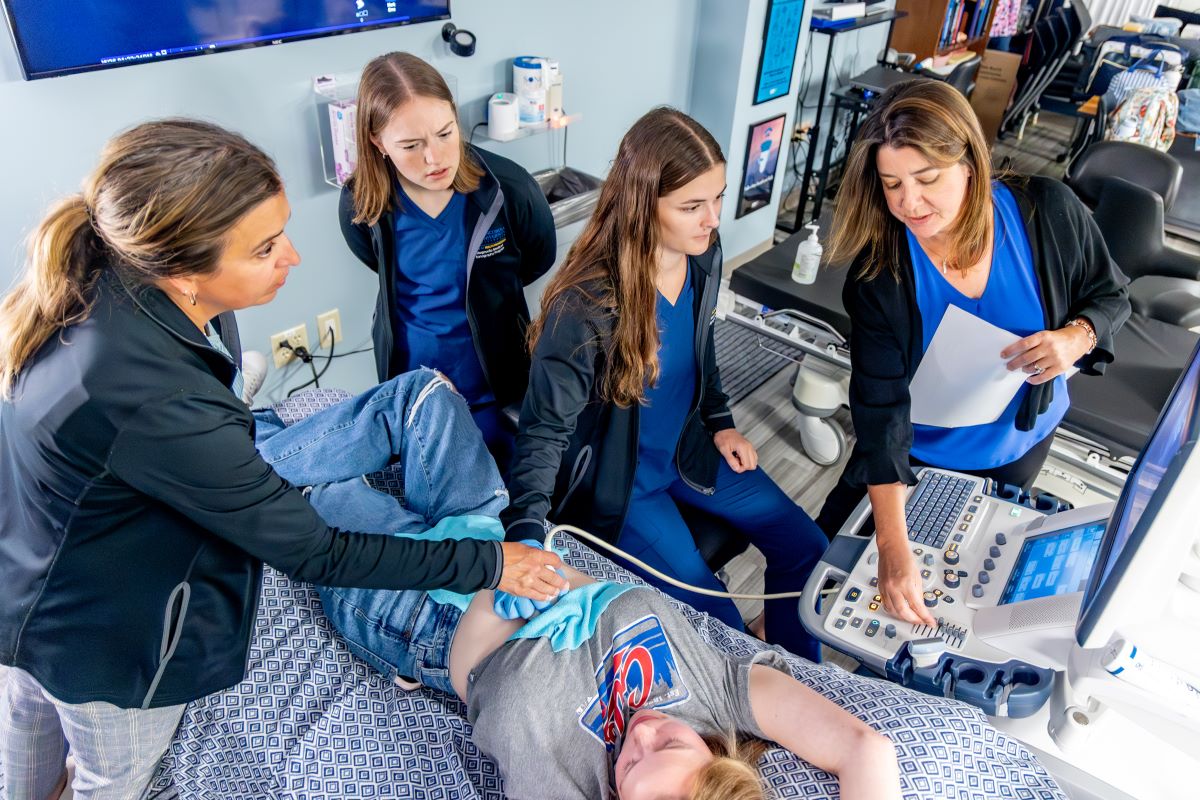
The newest juniors got an introduction to the equipment during a scan lab led in part by senior students. Marien, Falk and their classmates walked the juniors through buttons, knobs and other machine functions. Students also practiced by scanning Jell-O molds containing hidden objects, an exercise that allowed them to practice scanning while testing their ability to identify what they saw on the screen.

The Aspirus donation gives students more opportunities to work on equipment comparable to what they may use during clinical rotations. Previously, students rotated among the university’s available systems, including older equipment. With a variety of systems now available, students can spend more of their lab time developing familiarity with newer equipment.

That practice extends beyond learning which button does what. Sonographers must learn how to adjust depth, gain and other settings to produce diagnostic-quality images. Among students and professionals, Falk said, there is a simpler phrase for getting it right: making a “pretty image.”

“You’re also looking through the entire organ, so you have to make sure that your depth is good and your gain is good,” Falk said. “All the different little functions that optimize your images are really good so that you can make sure that you get the most out of your scan for your patients.”

And no two patients are exactly alike.

“Even though you’re scanning a liver on 50 patients, it’s not going to look the same for any patient because everybody’s unique in their own ways,” Falk said.

Knowing the equipment gives students more freedom to concentrate on those differences.


How did CUW get the ultrasound systems?

The two systems came to Concordia because Aspirus was upgrading its own ultrasound equipment and the units being replaced had no trade-in value, Reimer said. That presented the healthcare organization with another option: donation.

“When the opportunity arose to donate these ultrasound systems, we wanted to ensure they would continue to provide value by helping educate the next generation of sonographers,” said Laurie Lemke, Northern Region manager of Imaging Services at Aspirus. “Concordia University Wisconsin was a natural choice because of its outstanding reputation for excellence in sonography education and its commitment to preparing highly skilled imaging professionals.”

For a university program, equipment that has reached the end of its service within one healthcare setting can still have years of educational use.

Hospital-grade ultrasound systems can cost hundreds of thousands of dollars, making regular replacement across an entire teaching lab difficult. Donations can help programs expose students to newer technology while giving existing medical equipment another useful purpose.

“When you buy new equipment and you don’t get anything on your trade-in and you’re just going to dispose of it anyway, we will take it,” Reimer said. “These are really great pieces of equipment.”

Aspirus has also indicated that additional probes, or transducers, will be donated to accompany the systems.

“This has been our biggest gift to date,” Reimer said. “We are really grateful people are thinking of Concordia as an option.”


students learning ultrasound machine
DMS students work together during a hands-on lab, putting what they learn in the classroom into practice.

Where could a career in sonography take you?

Through this new connection with Aspirus, Reimer has learned more about the demand for sonographers in northern Wisconsin, including communities around Eagle River and Tomahawk. The donation has also opened conversations about future opportunities for CUW students and alumni.

“We didn’t know that need existed,” Reimer said. “Some good conversations are coming out of that, and what a gift. We can now stay connected, and when they have job postings, we can make sure those get in front of our alumni and our current students.”

For now, the most visible effect of the Aspirus gift can be found in the DMS program’s scan lab at Concordia.

There, students can practice until reaching for a control becomes instinctive. They can learn how an image changes from one patient to another. They can make mistakes, ask their professors questions and try again.

Then, when the patient is real, they can focus less on finding the right button and more on the person in front of them.

“I feel like it’s so important to get hands-on experience before you enter the clinical setting,” Marien said. “The fact that we have access to more of these machines now … is so important to helping the students succeed.”


How to donate medical equipment or supplies?

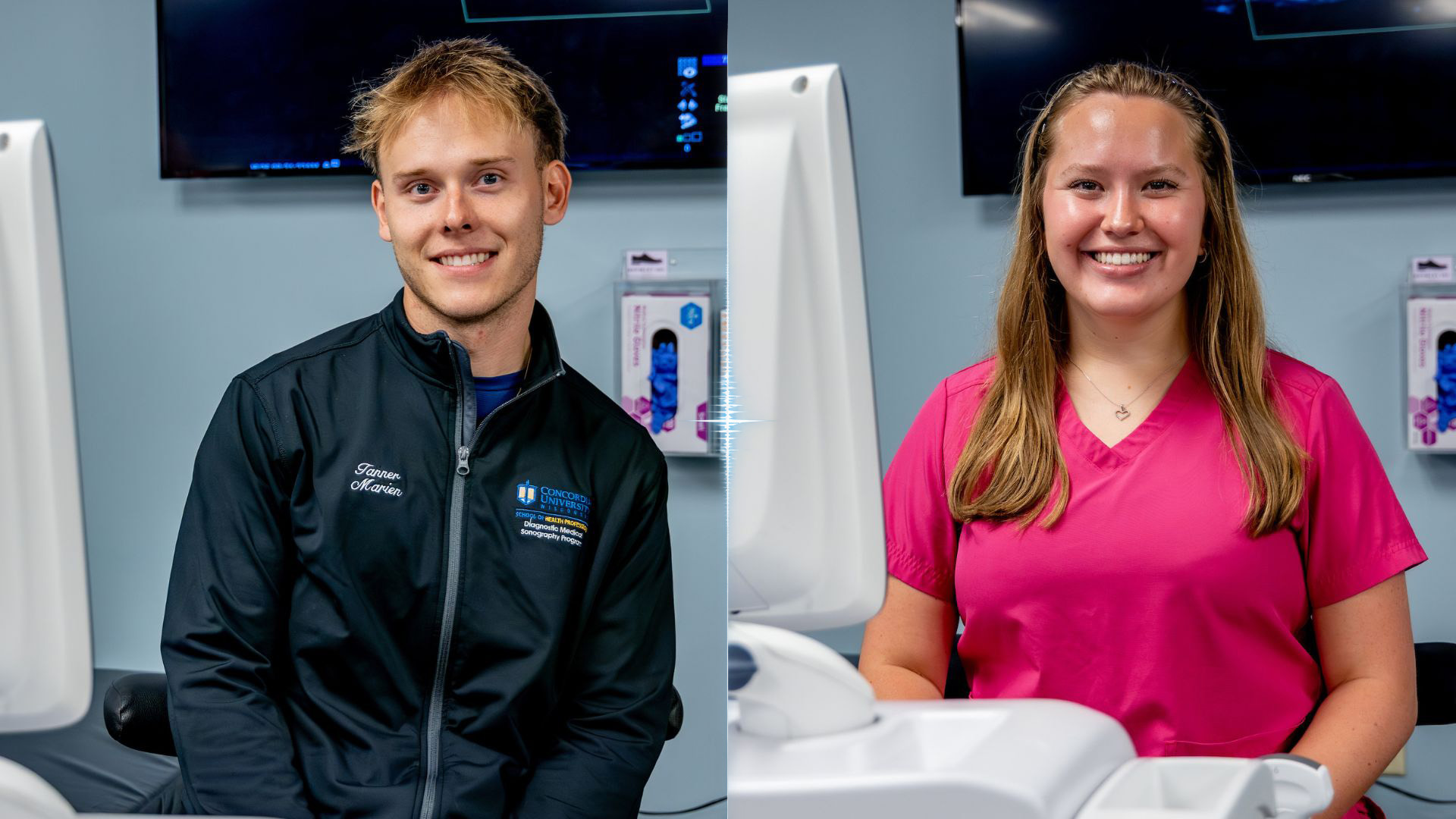
two students side by side
Meet two of CUW’s future diagnostic medical sonographers: seniors Tanner Marien (left) and Bryn Falk (right).

When healthcare organizations upgrade equipment or retire supplies that can no longer be used for patient care, those resources may still have educational value for Concordia students.

Concordia’s Diagnostic Medical Sonography program welcomes conversations with healthcare organizations about equipment and supplies that could support hands-on student learning.

Potential donations may include:

  • Ultrasound systems
  • Ultrasound probes and transducers
  • Medical supplies suitable for educational use
  • Expired supplies that can safely be used for training, such as sterile trays

“Even though they can’t be used on patients anymore, they can be used for education,” Reimer said.

Interested in donating? Contact Lisa Reimer at Lisa.Reimer@cuw.edu or 262-243-2172.


Want in?

Concordia University Wisconsin is a Lutheran higher education community committed to helping students develop in mind, body and spirit for service to Christ in the Church and the world.

This isn’t a program on campus. It’s part of campus.

Why Hesed’s record enrollment is about more than numbers.


There are two sides to every story. This one just happens to help parents and caregivers breathe a little easier.

Since Concordia University Wisconsin took over the Hesed Transition Program from AbleLight roughly two and a half years ago, enrollment has climbed to a record 18 students for fall 2026.

But that number tells only part of the story, according to Elizabeth Polzin, vice president of Student Success.

“The continued growth of Hesed shows that our mission of preparing students for lives of service in the Church and the world truly extends to all learners,” Polzin said.

Program Director Erik Halling (’96) credits that growth to something Concordia has been very intentional about: making Hesed part of everyday campus life. Rather than existing as a program apart from the university, Concordia expanded opportunities for Hesed students to learn, serve and participate alongside their peers.

The university also revised the curriculum, expanded student support and placed a greater emphasis on campus involvement.

“We encourage participation in student organizations, academics, athletics, intramurals and other campus activities. The goal is to fully integrate our students into the university community,” Halling said.


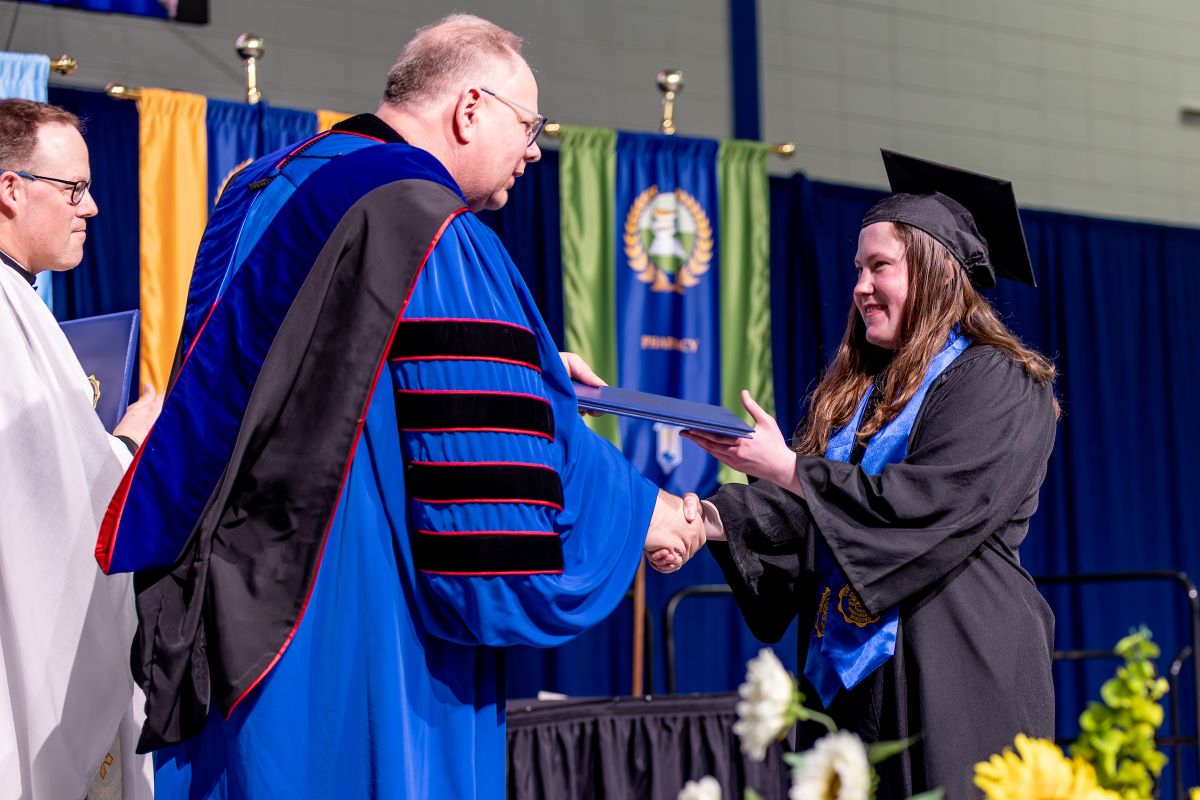
woman in graduation outfit being handed diploma

Choosing Concordia

Students who complete the Hesed Transition Program earn an Applied Learning Certificate that emphasizes the skills needed to increase their autonomy. What they learn helps with vocational exploration, independent living and self-advocacy.

Applicants may choose either a two- or three-year program and live on campus, making a certain level of independence an important part of the admissions process. They must have a documented intellectual disability and demonstrate the foundational skills needed to live successfully in a campus environment.

Halling said families are encouraged to understand exactly what Hesed is and what it means to attend CUW.

“We’re very transparent from the beginning that Concordia is a Christian university and that the Hesed program is grounded in the university’s mission,” he said.

Beyond a student’s diagnosis, Halling said the strongest applicants are those who genuinely want the college experience.

“They need to want to attend college,” he said. “They should want to participate, build friendships, become involved in campus life, develop new skills and prepare for competitive employment and independent living after graduation.”


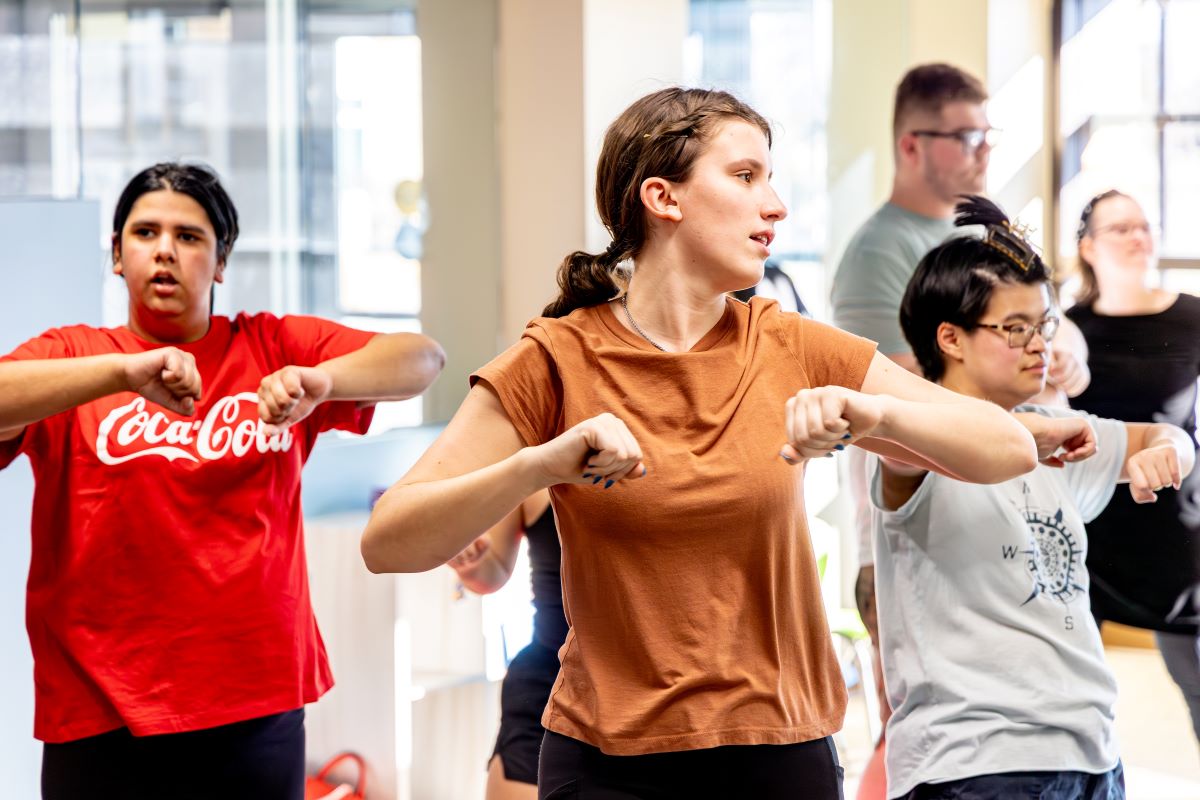
students doing aerobic dance

Is Hesed the right fit?

Parents or caregivers wondering whether Hesed is the right fit for their high school-aged student should look closely at the student’s abilities, personality and goals, Halling said.

Autism is a spectrum, and no two students are exactly alike. That’s why he encourages families to look beyond a diagnosis and honestly assess whether their student is ready for the responsibilities of college life.

Successful Hesed students can communicate their needs, express themselves in writing, advocate for themselves, manage personal care and stay on top of everyday responsibilities, such as cleaning their room and organizing their schedule.

“We support them with tools and coaching, but they need to arrive with a basic level of independence,” Halling said. “Our role is to build on those skills so they’re prepared to live independently with minimal support after graduation.”


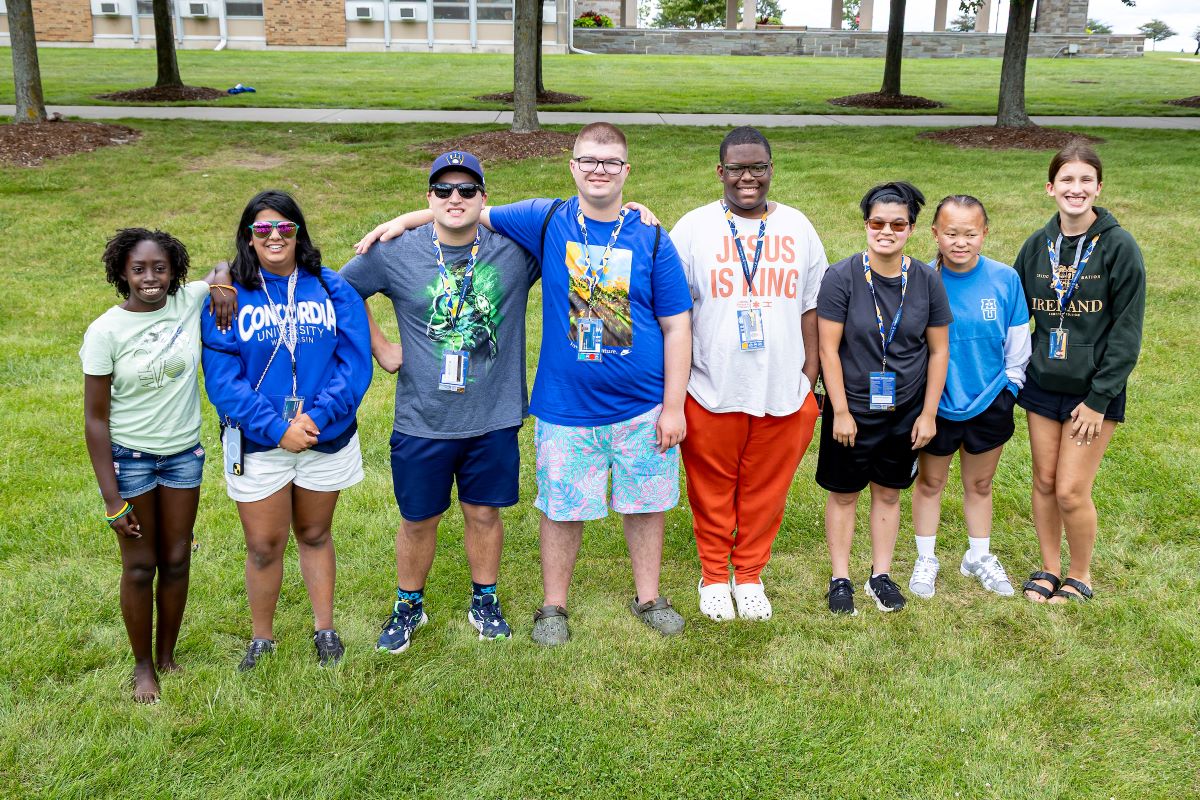
group of students from the Hesed program

A community that cares

Many students enrolled in the Hesed Transition Program fall somewhere on the autism spectrum. Autism is a lifelong condition, and each person experiences it differently. At Concordia, every student is encouraged to discover where their God-given gifts may lead them.

According to the Centers for Disease Control and Prevention, an estimated 1 in 31 8-year-old children were identified with autism in 2022. In Wisconsin, 89.5% of students with autism received a high school diploma (Autism by the Numbers).

Graduating from high school opens the door to new opportunities, but it also brings another question for students and their families: What comes next?

Hesed offers one possible answer. Students have the opportunity to experience college while continuing to develop the skills they’ll need for employment and greater independence after graduation.

Families choosing Concordia’s Hesed Transition Program are searching for more than the autonomy that comes with college life. They are also looking for a community, and Halling has witnessed this firsthand. He said traditional undergraduate students have embraced Hesed students in a way that is really special.

That sense of acceptance can be seen through everyday campus interactions. Hesed students participate in student organizations, academics, athletics, intramurals and other campus activities alongside traditional undergraduate students. In doing so, opportunities for friendships and relationships happen naturally.

And Hesed students aren’t the only ones benefiting from those relationships.

According to Polzin, traditional undergraduate students learn empathy, patience and leadership through their interactions with Hesed students, lessons that aren’t necessarily learned sitting in a classroom. Faculty and staff are challenged to think differently about accessibility and belonging as well.

“Hesed reminds all of us that every member of our community has something valuable to contribute,” Polzin said.

So why does a program like Hesed work so well at Concordia? The answer, according to Halling, is simple.

“It is the perfect place for a program like this because everything we do flows from our faith and from the university’s mission,” he said.


Want in?

Concordia University Wisconsin is a Lutheran higher education community committed to helping students develop in mind, body and spirit for service to Christ in the Church and the world.

More Than a Music Festival

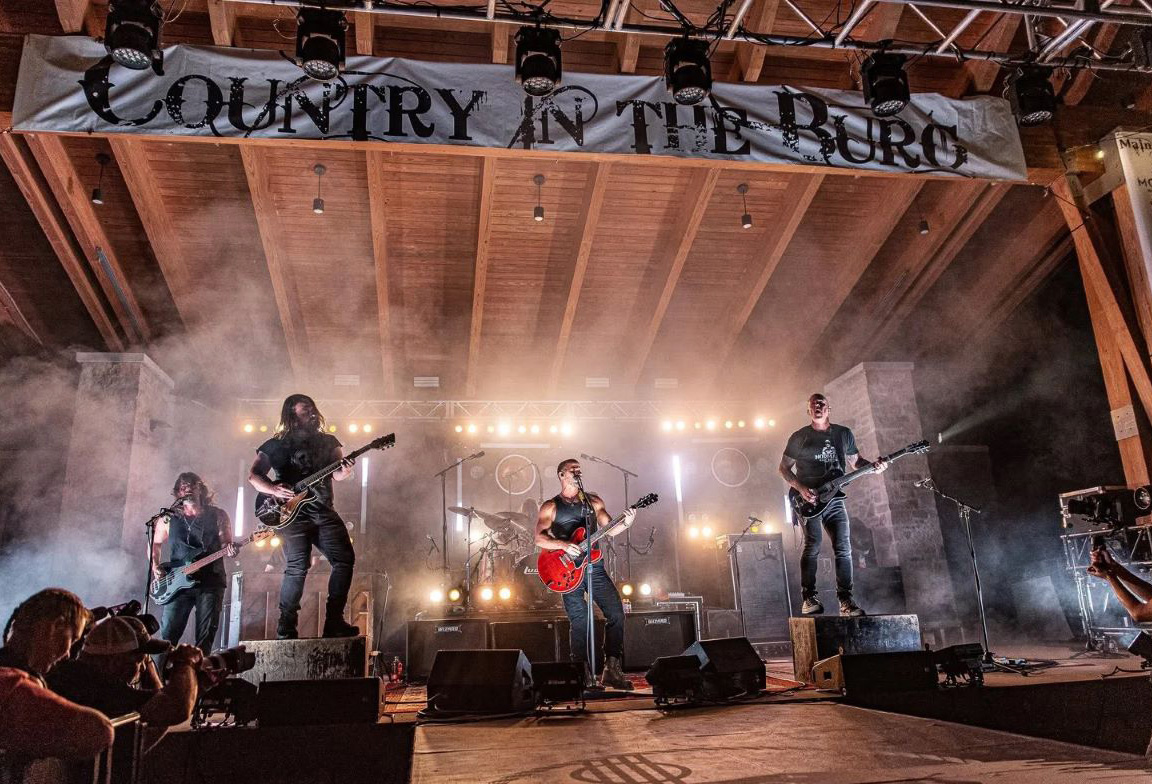
Country in the Burg (CITB) has become a weekend that brings together nonprofits, local businesses, volunteers and visitors—all while showcasing the community Concordia calls home.


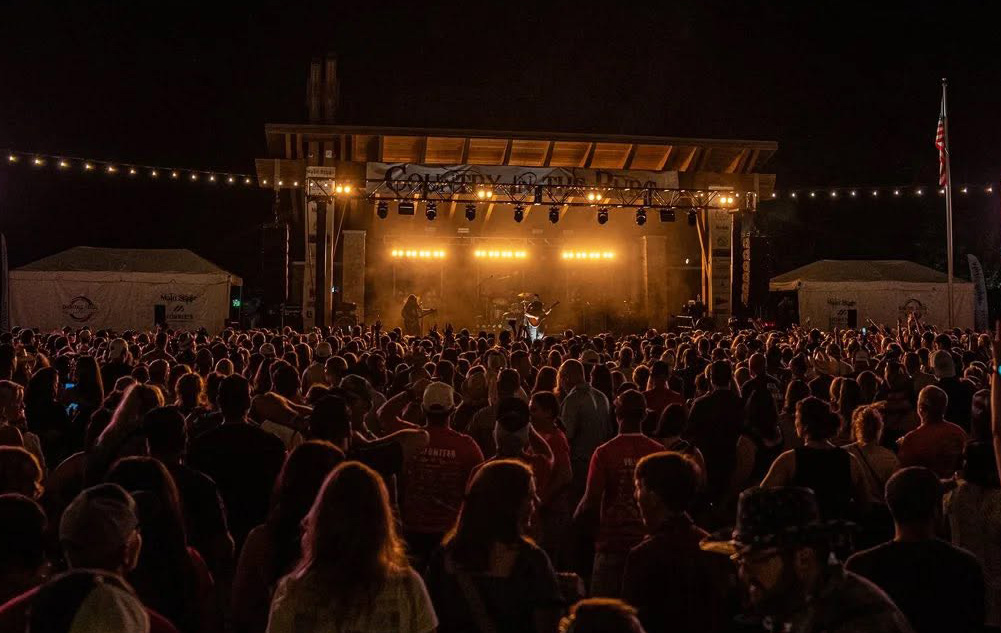
Thousands of people make their way to Cedarburg for Country in the Burg each year. Some come for the nationally recognized country artists. Others come for a weekend with family and friends. But many return year after year because they’ve fallen in love with more than the music itself.

What began as a country music festival has become one of Cedarburg’s signature traditions. Since its debut in 2019, CITB has welcomed visitors from 36 states and around the world while giving back more than $525,000 to more than 30 charitable organizations.

According to founder Alex Uhan, the festival’s greatest success isn’t measured by ticket sales or headline acts. It’s measured by the people who keep coming back.


A dream rooted in Cedarburg

lit up crowd

The idea for Country in the Burg started more than a decade ago.

Originally, Uhan envisioned a large country music festival capable of hosting 20,000 people. After years of planning, setbacks and searching for the right location, he needed someone willing to believe in the vision. That person was Randy Groth.

Groth became Uhan’s business partner, believing in the vision despite those who questioned its feasibility. “He looked at everything I presented and said, ‘I’ll take a chance. I think what you’re telling me is good,'” Uhan recalled.

Later, while the two sat together at Maxwell’s in Cedarburg, Groth asked one question. “‘Do you think you can do this?'”

“I know for a fact I can make it happen,” Uhan replied.

Groth’s response was simple. “‘All right. Let’s do it.'”

A short time later, inspiration struck while Uhan was playing softball across from Cedar Creek Park. He returned with a lawn chair and a piece of paper and sketched out what would eventually become Country in the Burg.

As the festival has grown, Uhan has considered moving to a larger venue. However, after a conversation with country artist Jake Owen, his perspective changed.

“He looked at me and said, ‘That’s your purple elephant—this venue,'” Uhan recalled. “If you have something people can’t duplicate—and people love coming because of it—that’s worth protecting.”

Rather than relocating, Uhan chose to embrace what makes the festival unique. Cedar Creek Park remains one of the festival’s signature features. “The venue itself sells part of the experience,” Uhan said.

Nestled along Cedar Creek, the venue pairs live music with the sounds of nature, towering trees and the occasional deer wandering nearby. Just steps away, festivalgoers can explore historic downtown Cedarburg.

That decision has helped transform CITB into more than a concert, with visitors spending the day exploring Cedarburg’s shops, restaurants and locally owned businesses before gathering along the creek for hours of entertainment.


Inspired by Concordia’s culture

man speaking on stage

Long before founding Country in the Burg, Uhan spent three years coaching women’s volleyball at Concordia University Wisconsin. Although he isn’t an alumnus, he says the university helped shape the kind of community he wanted to create.

“When you come to Concordia, one of the first things that stands out is the view,” Uhan said. “But beyond the scenery, what really stood out to me was the people. Everybody was friendly. People took the time to say hello.”

That sense of hospitality became part of CITB’s foundation. Whether someone is scanning tickets, pouring drinks, directing traffic or greeting guests at the entrance, volunteers help create a welcoming experience from the moment attendees arrive.

Emily Hiltzik, the festival’s VIP and volunteer lead, has watched that culture grow alongside the festival.

“The moment someone arrives at Country in the Burg, I want them to feel welcomed, excited and like they’re part of something special,” Hiltzik said. “Every interaction matters, and our volunteers understand that they help set the tone for the entire festival experience.”

Many volunteers have been part of the festival since its inaugural event. “Every year, concertgoers see how much fun our volunteers are having, and many decide they want to join the team the following year,” she said.

Today, Uhan says CITB has a waitlist of people hoping to volunteer.


Giving back together

musician touching crowd

The festival’s impact has always extended beyond the concert grounds.

CITB has donated thousands of dollars to organizations including Ozaukee Food Alliance, Mel’s Charities, Children’s Wisconsin, Wisconsin Stars and Stripes Honor Flight, Ozaukee Family Services and numerous local service organizations. Those partnerships aren’t an afterthought.

“They help us by providing volunteers, selling tickets and helping spread the word,” Uhan said. “It really takes a community.”

Uhan says Groth’s commitment to serving others helped define the festival’s mission from the start.

“He has been instrumental to that mission,” Uhan said. “Randy is one of the most generous people I know. His commitment to giving back is a big reason Country in the Burg has become what it is today.”

The festival also creates opportunities for local businesses, restaurants and hotels throughout Cedarburg and Ozaukee County as attendees spend the weekend shopping, dining and exploring the area.

Andrea Acosta, executive director of Ozaukee Food Alliance and co-owner of That Taco Guy, says Country in the Burg’s support extends far beyond a single weekend.

“Country in the Burg’s annual unrestricted donation has been incredibly meaningful because it allows us to respond to our community’s most immediate needs,” Acosta said. “Those funds can be used wherever they are needed most—whether that’s purchasing food for our pantry, buying school supplies for our Back-to-School Fair or stocking inventory for our food deliveries to local students.”

As both a nonprofit leader and local business owner, Acosta has also seen how the festival benefits Cedarburg as a whole.

“Country in the Burg shines a spotlight on everything that makes our community special,” she said. “It brings together local nonprofits, small businesses, community organizations and thousands of attendees for a weekend that celebrates and supports Cedarburg.”


More than the lineup

woman singing

For all of its growth, Uhan believes the festival’s success comes down to something much simpler.

“The music is what brings people here,” he said. “The experience is what brings them back.”

One moment continues to stand out. A group from New Hampshire reached out before the following year’s lineup had even been announced to say they were coming back. When Uhan asked who they wanted to see, their answer surprised him.

“It doesn’t matter.”

Instead, they said they had fallen in love with Country in the Burg, Cedarburg and the people they met during the weekend. Today, they make the trip every year.

“We’re the smallest country music festival in Wisconsin, but we’ve been able to make a really big impact,” Uhan said.

That impact isn’t measured by the size of the stage. It’s reflected in the visitors who plan annual vacations around the festival, the local businesses they support and the charitable organizations that benefit from the weekend.

Artists have noticed what makes the festival special, too. Country star Kip Moore has returned to perform multiple times, often spending his free time exploring Cedarburg’s coffee shops, restaurants and downtown rather than staying backstage. Other artists have reached out after seeing Moore’s social media posts about the festival and the community surrounding it.

Those experiences confirmed what Uhan had been witnessing all along: Country in the Burg had become much more than a music festival.


A tradition worth returning to

band on stage
All photos courtesy of Country in the Burg

The festival has also become a summer tradition for many members of the Concordia community. Students, alumni, faculty and staff have attended concerts, volunteered throughout the weekend and supported the nonprofits that make the event possible.

For Concordia alumnus Ryan Lehr (’15), Country in the Burg has become an annual tradition worth making the trip for. Although he moved away from the area more than two years ago, Lehr returns each summer to support the festival that gives back to so many worthwhile causes.

“CITB has had nothing but a positive impact on Cedarburg,” Lehr said. “Each year it improves and has never let me down with great performances and atmosphere.”

Lehr encourages first-time attendees to experience everything the weekend has to offer.

“Expect delicious local food vendors, a smaller, more intimate setting, award-winning country artists and plenty of singing, dancing and summer refreshments,” Lehr said. “It’s the party of the summer before life starts getting busy again.”

Uhan hopes others leave feeling rejuvenated. The weekend, he says, should give people a chance to slow down, connect with the community and enjoy something simple.

“I hope they fall in love with the festival, with Cedarburg and with Ozaukee County, and leave with memories they’ll never forget,” he said.

He is also quick to credit the people who make that possible. CITB’s success reflects the dedication of countless volunteers, nonprofit partners, sponsors, local businesses, artists and, of course, Groth, who have helped shape the festival into the community tradition it is today. Uhan also gives a special shout-out to his staff, a close-knit group of friends and family members who volunteer their time each year.

“They take their time to volunteer at this event, making it what it is today, and I’m so grateful for all their passion and hard work,” Uhan said.

Hiltzik agrees, saying the volunteers remain at the heart of the event’s success.

“Our volunteers generously donate their time to support the great causes the festival benefits, and that’s something we never take for granted,” Hiltzik said. “Seeing them build friendships, have fun and take pride in making the festival a success reminds me every year that they truly are the heart of Country in the Burg. The music brings people together, but it’s our volunteers who create the atmosphere that keeps them coming back.”


Want in?

Concordia University Wisconsin is a Lutheran higher education community committed to helping students develop in mind, body and spirit for service to Christ in the Church and the world.

The legacy of Concordia’s first comfort dog

What began with the university’s first comfort dog, Zoey, has grown into a lasting ministry of compassion, presence and care.


puppy with soulful eyes
Born on Nov. 11, 2012, Zoey arrived at Concordia in January 2014.

Just like humans, every dog has two sides: one that works and one that plays. Concordia’s first comfort dog, Zoey, was remarkable at both.

According to alumna Erika Buchel (’18, ’22), a PharmD graduate and one of Zoey’s original handlers, Zoey possessed a gentle, calming soul. (Just look at those eyes.)

“Her purpose was to be the bridge to open communication, provide comfort and give emotional support to any and all who needed it,” recalled Buchel.

“She fulfilled this purpose and so much more,” she continued. “She was a hard worker when vested and a fun, playful, sassy girl when unvested.”

In 2015, as Buchel began her college journey, she remembers seeing the young pup during a campus visit and immediately feeling called to work with her. “I knew I wanted to be involved,” Buchel said.

Over the years, that sentiment rang true for many under Zoey’s watch. Though she is essentially retired today and occasionally visits campus, Zoey has paved the way for the next generation of comfort dogs. Her impact has reached far beyond the people she comforted. It has shaped the environment of compassion and care that continues to grow at Concordia.

Zoey's job descriptions

Former director of the Counseling Center for 27 years, Dave Enters, MS, who now serves in a part-time counseling role, recognized the ministry’s promise the day Lutheran Church Charities first proposed it. Months after LCC visited campus to present its Comfort Dog Ministry, Enters continued researching the opportunity. When no one else stepped forward to lead the effort, he presented the idea to the Administrative Council for approval. With then-President Patrick Ferry’s full support, he established the program at Concordia with Zoey arriving in January 2014.

“I remember thinking, ‘This is too good of an idea to let go,'” Enters said. Zoey’s ministry was broad by design. Because neither she nor Enters was attached to one particular department or school, they served the entire university. “We were all things to all people,” Enters said.

After studying the ministry’s mission, developing a vision and consulting with Lutheran Church Charities—where Zoey was trained—Enters worked through how a comfort dog could function on a college campus.

“Eventually, I created the job description that became the foundation of Zoey’s work,” he recalled.


dog with blue training vest on

The making of a comfort dog

man with dog
Dave Enters with Zoey

From the start, Zoey seemed called to something bigger. At 8 weeks old, this four-legged girl was well on her way. She trained to become an LCC K-9 Comfort Dog for roughly a year prior to serving at Concordia. By the time she graduated, Zoey could respond to 55 commands.

“Looking back, Zoey was probably over-trained for most of her work at CUW,” Enters said with a smile. Only about 30 of those commands were regularly used. However, all of that training became essential when Enters, Zoey and other handlers began responding to national tragedies through LCC.

When Zoey arrived at Concordia, LCC was still expanding its K-9 Comfort Dog Ministry. One of her primary responsibilities was serving the university community, but an equally important part of her role was deploying to communities devastated by tragedy.


A ministry without walls

golden retriever with little girl
Zoey receives a smile as a young girl shows her the comfort dog’s business card during a national deployment.

One of Zoey’s first deployments came in 2013, when she was still in training. Following the aftermath of the Sandy Hook Elementary School shooting in Newtown, Conn., she was called to help comfort victims and families, especially children.

These deployments became a defining part of Zoey’s ministry. Alongside other comfort dogs and handlers from across the country, she entered communities experiencing unimaginable loss. The goal wasn’t to solve anyone’s pain or suffering, but simply to be present with those carrying it.

For LCC, the comfort dogs’ presence often opened the door to sharing compassion, faith and the hope of Jesus Christ.

During her years in the K-9 Comfort Dog Ministry, Zoey also responded to:

  • 2013: Boston Marathon bombing
  • 2016: Pulse nightclub shooting in Orlando
  • 2016: Baton Rouge officers ambush
  • 2020: Molson Coors shooting in Milwaukee
  • 2021: Waukesha Christmas Parade tragedy

young woman with burgundy pants and golden retriever dog
Alumna Erika Buchel embracing Zoey for a photo.

A ministry of presence

Zoey’s work carried her from the front door of a student’s residence hall to communities across the country. At Concordia, she spent her days surrounded by student handlers, hugs from students in need of comfort and quiet moments with members of the campus community. Off campus, she served communities navigating unimaginable grief, as well as individuals simply struggling with everyday life.

Zoey was highly intuitive. “She was able to sense the emotions of those around her, and she adapted her behavior to accommodate what people needed,” Buchel said.

Buchel accompanied Zoey to several crisis-response deployments, as well as visits to local nursing homes and the behavioral health unit at a local hospital.

dog at nursing home
Zoey visits with residents at a local nursing home.

Enters, like Buchel, recalls many moments when Zoey’s presence led to what felt like God moments. Some of the most meaningful moments happened just around the corner from campus during visits to local nursing homes.

“Whenever we visited a nursing home, the staff almost always directed us to the memory care unit first,” Enters said. The residents in that unit were often living with various stages of dementia.

“You would walk into a common room and see people sitting quietly, often not interacting with one another,” he continued. “The television might be on, but everyone seemed isolated, even though they were sitting together. Then we’d walk in with Zoey. Suddenly heads would lift and people became engaged.”

Zoey enjoyed greeting each person individually, and some would begin sharing stories about dogs they had owned.


Healing beyond words

The same quiet presence that reached nursing home residents also brought comfort to people facing mental and emotional health challenges. One of Buchel’s most memorable experiences with Zoey happened in the behavioral health unit at a local hospital. There, Zoey gently responded to a patient with anxiety around dogs. The process was slow but remarkable.

“I led Zoey over and she so slowly and gently laid her head on the patient’s lap, and the patient lowered her head toward Zoey to embrace her, and cried,” Buchel said. “You could feel the relief of the patient in the room and how Zoey allowed them to embrace their feelings and let them go onto Zoey. It was a definitive breakthrough in the patient’s therapy.”

Buchel’s college journey was shaped by Zoey. She spent three years as one of Zoey’s handlers during her undergraduate studies and continued working with her periodically throughout pharmacy school.

“Being her handler for so many different settings and experiences allowed me to become a more empathetic and intuitive healthcare provider within my community,” said Buchel.

Today, as a mother, Buchel especially sees how those experiences are life changing. The impact comfort dogs and service dogs can have on people in need of emotional support is powerful.

“Her presence was truly nurturing in ways that are incomprehensible until you have experienced it yourself.”


woman in black petting dog's ears
Zoey greets guests during the Passing of the Vest ceremony for Sage, the newest Lutheran Church Charities K-9 Comfort Dog, in 2018.

Passing the leash

Education professor Nicole Muth and athletic training professor Rhonda Verdegan, PhD, saw the impact Zoey had around campus and eventually joined Enters’ team as handlers in 2015. The experience they gained working alongside Enters and Zoey became the catalyst for developing the Compassion Care Certificate at Concordia, which launched in 2021.

“They are the architects of the certificate program,” Enters said. “I introduced them to the leadership side of comfort dog work, and then they took the leash and ran with it.” Though Enters’ Comfort Dog Ministry has retired, the Compassion Care Certificate continues to grow. Verdegan now works primarily with another comfort dog, Runner, helping carry forward the ministry Zoey helped build.

“Zoey has brought so much love to everyone who has crossed paths with her,” Verdegan said. “She has earned her time and can just chill, relax and kind of do her own thing.”

The School of Health Professions is home to Sage, who works primarily with the occupational therapy, physical therapy and speech-language pathology programs. Runner is housed under the School of Education, but serves a variety of majors across campus. Together, they are the “next generation,” as Enters calls them, carrying on Zoey’s legacy—the very outcome he had hoped for.

“When we started in 2014, we were the only university in the country with a highly trained comfort dog owned by the university and operating under a defined job description,” Enters said. “The success is overwhelming, and the evidence is irrefutable.

“Students here receive an experience that very few college students around the country ever have. They’re learning through service and ministry in ways that can’t be replicated in a traditional classroom.”

Zoey was the trailblazer. Her gift for accompanying people through difficult circumstances with joy and compassion was central to a ministry unlike any other. Her legacy lives on in the memories of all those whose lives she touched.


Dogs being petted
Zoey and Sage

Fast facts

  • Age 13.5
  • Placed through Lutheran Church Charities
  • Concordia’s first comfort dog (not a service dog; service dogs are trained to assist one person with a disability, while LCC K-9 Comfort Dogs serve anyone in need.)
  • Joined campus in January 2014
  • Served as the first comfort dog prior to the Compassion Care Certificate which launched in 2021
  • Retired/semi-retirement in 2024

Additional canine features


Want in?

Concordia University Wisconsin is a Lutheran higher education community committed to helping students develop in mind, body and spirit for service to Christ in the Church and the world.

A path forward in pharmacy

Zachary Ladwig’s path to pharmacy was not clearly defined from the start. He describes it as “muddy.”


Through personal challenges and new opportunities, pharmacy student Zachary Ladwig found direction. He is on track to graduate with his Doctor of Pharmacy degree in May 2027.

While his future in pharmacy has become clearer in recent months, Ladwig is still exploring how his vocation will take shape. The profession offers opportunities ranging from direct patient care to work in automation and technology.

“I can’t say exactly where I’ll end up,” he said, “but I’m confident it will be somewhere I’m happy and comfortable.”

He remains open to serving where he feels called and continues to explore interests in engineering, robotics and community pharmacy. Of those interests, community pharmacy stands out for its opportunity to build lasting relationships with patients.

“I like the idea of being the guy at the CVS,” he said with a smile.


Time and place

Drawn early to the outdoors, pharmacy was not Ladwig’s first choice, but it became his right choice.

After earning a bachelor’s degree in biology with a minor in chemistry from Western Michigan University, Ladwig initially planned to become a field biologist.

That career path changed after his sister was diagnosed with a brain tumor. Time spent with her in hospitals ignited his interest in healthcare. His mother, who worked as a nurse until he was in middle school, also helped shape that perspective.

At a time when he was struggling with his faith and looking for a profession that offered flexibility and long-term growth, Ladwig received an unexpected email promoting CUW’s School of Pharmacy. The timing stood out, and he felt called to move forward.

At CUW, Ladwig has become increasingly interested in how medications work and why providers prescribe them. He also appreciates the flexibility the profession offers. The field allows him to explore a variety of career paths while remaining connected to patient care.

“I have found that I can have a profound impact on the quality of patient care through prevention and education,” he said.


A timely mentor

Early in the program, Ladwig found a mentor in Michael Brown, PhD, associate dean in the School of Pharmacy. “I’ve appreciated his approach of sharing opinions without trying to convince me,” Ladwig said.

Brown, who has worked with Ladwig now for several years, describes him as an exemplary student and servant leader.

“Through his commitment to the profession and volunteer service, Zack exemplifies what it means to be a Doctor of Pharmacy student,” Brown said. “I am very confident that he is going to be an amazing pharmacist.”

Ladwig describes Brown as someone with decades of experience in pharmacy, academia and life. “He is sincerely dedicated to helping each of his students find their unique vocation,” Ladwig said.

Brown’s practical advice has reshaped how Ladwig views his own educational journey and the evolving role of technology in pharmacy.


Technology with purpose

Ladwig believes technology should be approached with curiosity rather than fear.

Robotic dispensing systems are becoming increasingly common in hospitals, community pharmacies and long-term care facilities. By assisting with counting, packaging and labeling medications, they give pharmacists and technicians more time to be present with patients.

Ladwig points to nursing homes as one example. Facilities serving large numbers of residents often manage high volumes of daily medications. Automated systems and single-dose packaging help streamline that process without overwhelming local pharmacies.

“It also helps nursing home staff reduce errors,” Ladwig said.

Barcode technology helps staff track medications from the time they are ordered through administration. By verifying the prescribed medication and its packaging, it helps ensure patients receive the correct medication.


Bridging the gap

While he remains open to where his vocation may lead, Ladwig is confident in the value of his work and the role pharmacists play in patient care. He believes pharmacists can help bridge important gaps in healthcare.

“I believe my skills help patients manage their health with confidence, reduce unnecessary emergency room visits and support the overall care team,” he said.


Fun facts

  • Pharmacists are among the most accessible healthcare providers.
  • Ladwig spent a summer interning at the Clement J. Zablocki VA Medical Center.
  • Omnicell technology and other mobile dispensing systems help hospitals shorten the time between a medication order and patient administration.
  • Today, Ladwig’s sister is doing well, and he remains committed to a career in healthcare.

“During my VA internship, they truly wanted me there as a student,” he said. “I was a learner first and a worker second.”

Interested in pursuing pharmacy? Read “Is Becoming a Pharmacist Worth It?”


Want in?

Concordia University Wisconsin is a Lutheran higher education community committed to helping students develop in mind, body and spirit for service to Christ in the Church and the world. The School of Pharmacy develops servant leaders who provide value-based, patient-centered care and improve the health of rural and urban communities through excellence in teaching, research, service and practice.

Combining Spanish with science on the road to veterinary medicine

Abigail (Abbey) Proctor is mastering a second language to better serve God’s creation.


Abbey Proctor, a biology major pursuing minors in Spanish and chemistry, spends her days serving both people and animals through the many roles she holds inside and outside CUW’s walls. A native of Pleasant Prairie, Proctor was homeschooled and began taking classes at Concordia as a dual credit student during 10th grade. By the time she graduated from high school, she was already halfway toward earning a Spanish minor. Learning another language not only became a bridge into college life, but also a way to support the people around her.


A heart for people and campus life

As a CUW student ambassador, Proctor is known for her ability to connect with others, especially through her growing proficiency in Spanish. For Proctor, the role is about helping prospective students and their families feel comfortable on campus, whether she is interpreting conversations for Spanish-speaking parents or answering questions about meal plans, student organizations and campus life.

“You can communicate with so many people that you never would have been able to talk with before.” Proctor said.

Being an ambassador is perhaps her favorite role and the one she has held the longest.

“It has been such a fulfilling role for me, even if I only get to see them for half of a day while they’re visiting,” she said. “It’s especially meaningful to show the parts of campus that I love and help students picture themselves here.”

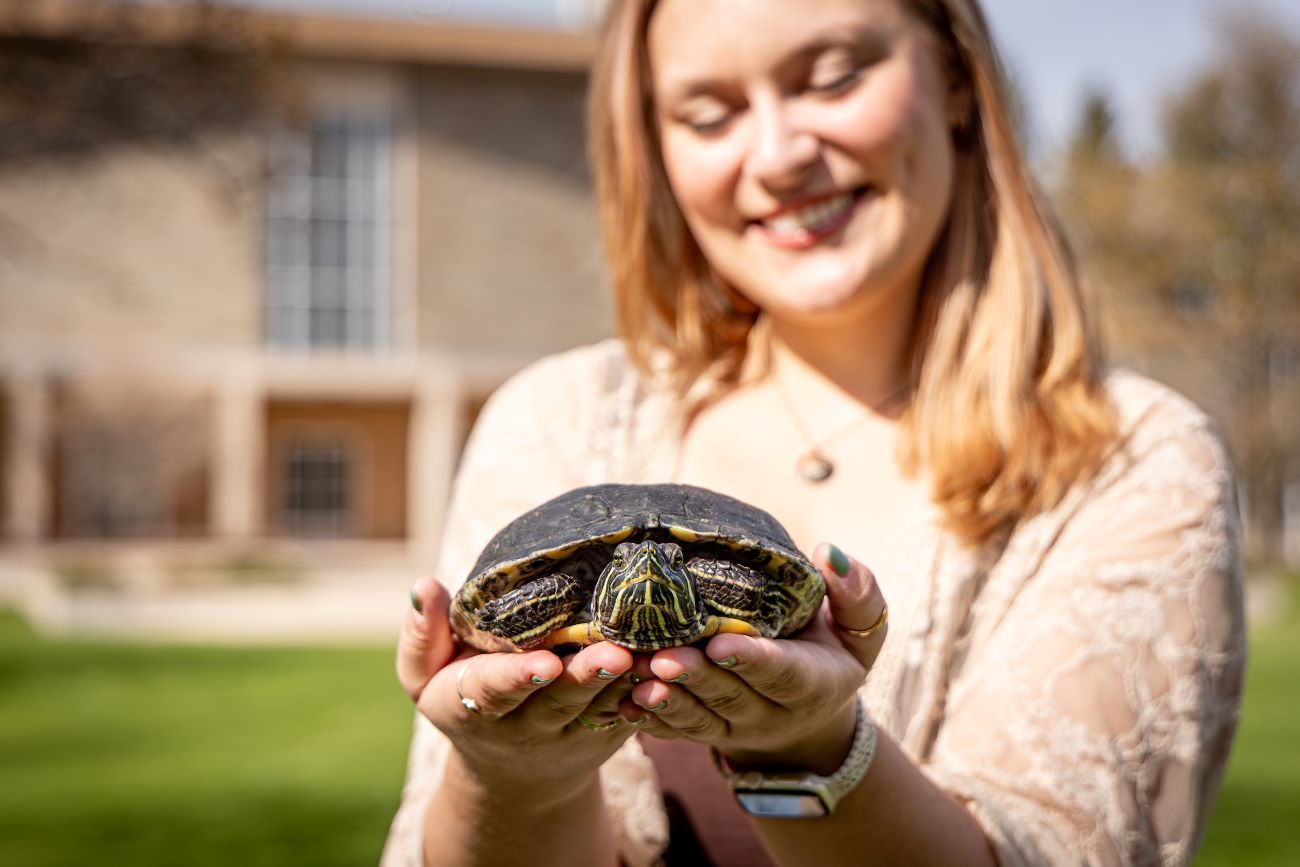
As a student worker in the Concordia Center for Environmental Stewardship, Proctor also cares for the center’s animals. She serves as the primary caretaker for Ralph, the CCES’s resident red-eared slider turtle.

“I’ll take her out of her tank and let her walk around while I’m doing feedings, and she kind of follows me,” Proctor said.

She also serves as secretary of the Sustainability Club, a newer student organization focused on encouraging environmental stewardship across campus. The group has hosted tree-planting events, participated in bird banding—a technique used to study individual birds—and worked with Concordia’s greenhouse.

Proctor believes students from all academic programs can benefit from spending time outdoors and engaging with nature.

“So any way we can promote a good thing,” she said.


A lifelong calling rooted in compassion

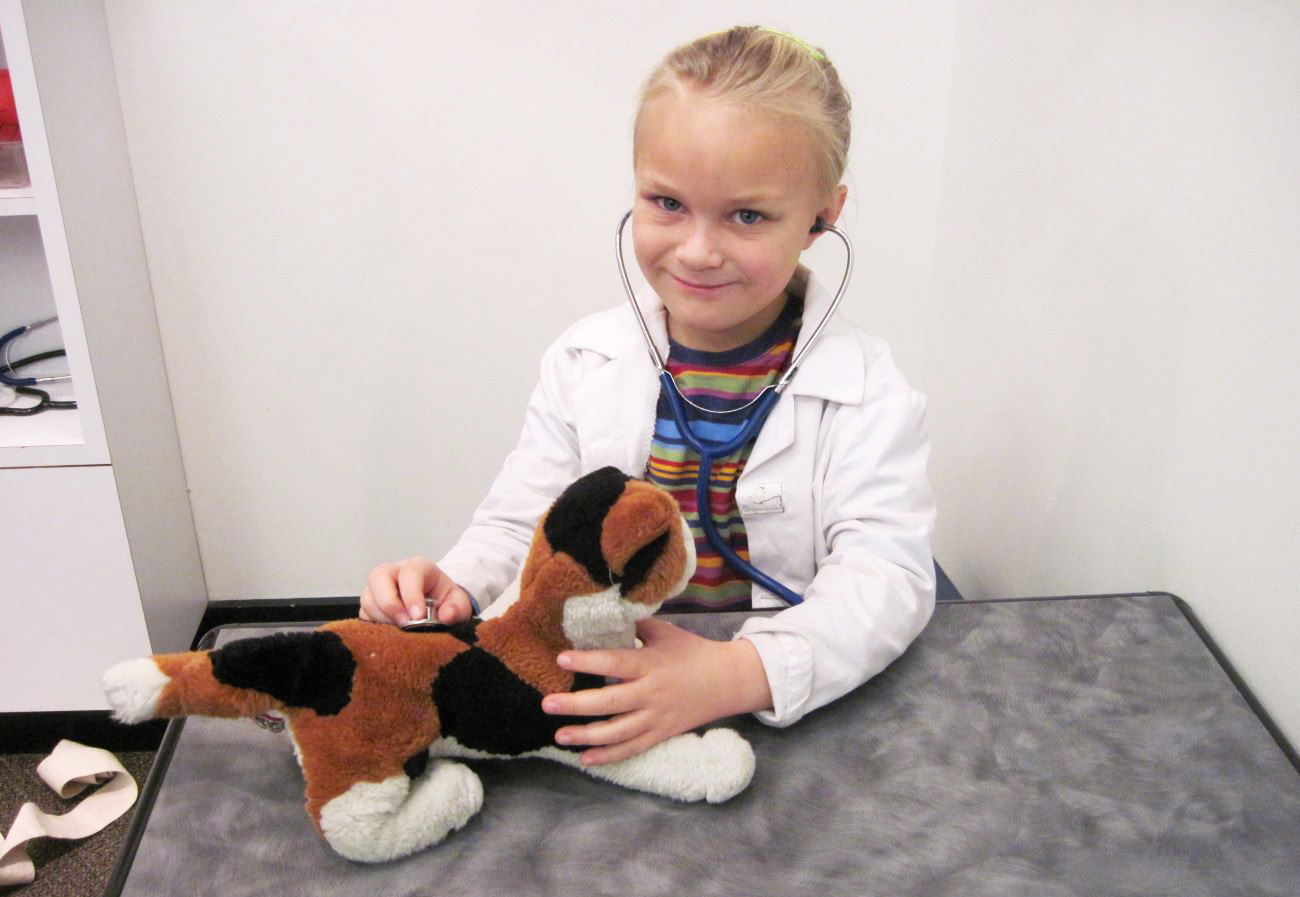
Beyond campus, Proctor spends much of her time working with horses, a childhood passion that continues to shape her future as she pursues a career as an equine veterinarian.

a blonde-haired little girl with a stuffed cat

Some of her earliest memories trace back to preschool days at the Schlitz Audubon Nature Center. She fondly remembers being that “dirty kid” covered head to toe in mud. Throughout her youth, she attended classes there, participated in 4-H, and spent time at Riveredge Nature Center.

Those experiences outdoors and around animals helped foster her passion for veterinary medicine.

“I think going through those programs really sparked an interest in learning anything I can about nature—whether that’s plants or animals,” Proctor said. “And then, as far as veterinary science goes, I became really fascinated with anatomy and physiology in different animal species, along with my own love of pets and horses.”

One of her responsibilities outside the classroom is providing hoof care for horses. As a natural hoof care practitioner, she has built a small client base in the Kenosha area where she trims horse hooves on weekends.

This summer, she accepted a new position as a seasonal animal care technician at the Wisconsin Humane Society. In this role, she will provide animals with daily care and enrichment, safe handling and clean housing, and assist the veterinary and behavior teams when specialized care is needed.

“What I’m looking forward to most about the job is getting the chance to see a different side of animal care while showing compassion and love to animals in need of a home.”


A calling tested in the field

girl in barn next to horse
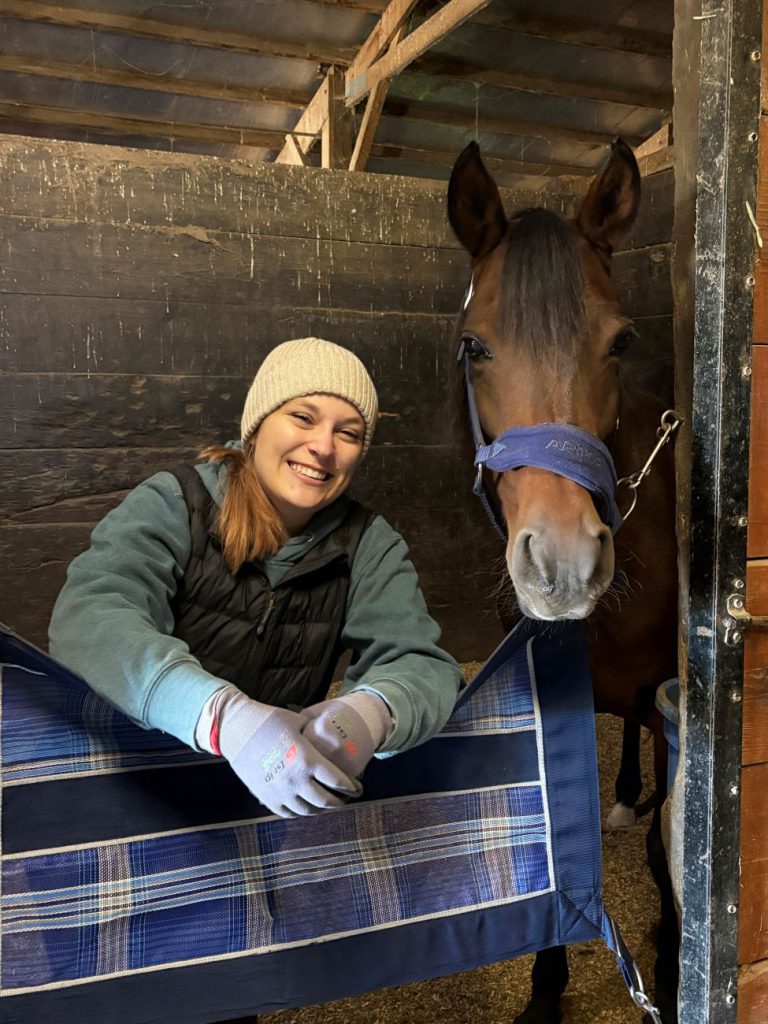
Abbey with her heart horse Lily.

“It’s my stress outlet,” Proctor said. “I get to go home and sometimes wrestle with horses while trying to take care of their feet. It’s definitely very fulfilling work.”

She has also spent the last two summers working with veterinary clinics. During one summer as a full-time equine veterinary assistant, Proctor remembers helping during an emergency involving a horse that had severely injured its hip on a fence.

While assisting with the suturing procedure, she also helped bridge communication between the veterinary team and the horse’s Spanish-speaking family.

“It was a little stressful being right on the spot and having to come up with medical terms,” she said. “Sometimes I had to take out my phone and look them up. But it was fun to put my brain to work in that situation, knowing I was helping make the process smoother and ultimately helping the horse.”

Though the situation was intense, Proctor’s ability to speak Spanish helped the family better understand the care their horse was receiving.


A holistic combination

According to Proctor, veterinary schools are looking for more than a high GPA. They want students who are well-rounded and able to connect with others in meaningful ways.

“They want to know — can you communicate? What are your people skills like?” Proctor said. “Admissions has helped me a lot with that, especially finding common ground with different people.”

Veterinary schools also want students who can apply what they learn in the classroom to a field that continues to evolve through new research and technology.

“So I’m learning not only the traditional knowledge from chemistry and biology, but also the bigger picture—how it connects to real life and even to faith,” she said. “That’s been a really meaningful part of my experience here. Understanding that what I’m studying, like a chemical equation in organic chemistry, isn’t just something on paper. It could be the formula for a drug I’ll prescribe in the future.”

Concordia is helping her build an academic foundation that reaches far beyond the classroom. The experiences are preparing her mind, body and spirit for a vocation caring for animals and the people connected to them.

“She is diligent, capable and strongly committed to this career path,” said Michael E. Young, professor and chair of the Department of Life and Earth Sciences. “While the majority of students only do what is required to graduate, Abbey was genuinely excited about a wide range of ‘extra’ classes available to her.”


A final note

Proctor strongly encourages students to pursue a well-rounded college experience, especially when it comes to learning another language.

“From what I’ve heard, it’s a nationwide trend—fewer students are choosing to study foreign languages,” Proctor said. “But I’ve really tried to advocate for keeping it, because it’s so valuable.”

Students with even the slightest interest in learning a language should pursue it, she said.

“It’s not only fun, but it allows you to communicate with so many more people. You never know how you might be able to help someone—or how they might help you.”


Want in?

Concordia University Wisconsin is a Lutheran higher education community committed to helping students develop in mind, body and spirit for service to Christ in the Church and the world.

A passion for service—and the spaces that make it possible

Melena Weber is building her academic path around her interests, leading her toward her calling.


Melena Weber’s time at Concordia has been formative. Through trial and error, she has discovered a passion for serving others. “I think I’m called to people,” she said. “I want to be part of something I truly care about, where I can live out my faith and serve others.”

As a junior majoring in mass communication and minoring in hospitality and event business, Weber is very active across campus. She writes for “The Beacon,” CUW’s student newspaper, and serves as membership coordinator for the Campus Activities Board.

In that role, she recruits and leads 30 ambassadors and helps plan up to 15 of the 40 to 50 events hosted each semester. She also works as a student engagement intern for the Concordia Crew, which welcomes and guides incoming students.

At Concordia, Weber has found ways to connect what she studies with how she serves, bringing together communication, leadership and event planning in meaningful ways.

During her first year, CAB in particular gave her a place where she could have fun, build relationships and step outside her comfort zone. “I felt overwhelmed and unsure of what I wanted to do,” Weber said. “Now, as part of CAB’s executive team, I can see how much that experience helped shape me. It helped me realize part of what I want to do in the future.”

Her passion for community continues to shape her academic and professional path.


Establishing a community

Feeling uneasy during her first year of college, Weber relied on the Lord more than ever. Having grown up attending Lutheran schools, her faith played a key role in her decision to attend CUW.

“I felt lost because I knew I was supposed to be at Concordia, but I didn’t know what I was supposed to study,” Weber said. “That uncertainty pushed me to rely on the Lord more than I ever had before. Looking back now, I can see how much He was working through that season. By junior year, I feel like I’m living in the answers to a lot of prayers.”

With prayer part of the daily rhythm in the classroom and faith woven naturally into campus life, Weber found space to pause, worship and build meaningful friendships. She also serves on the prayer team for Haven, Concordia’s student-led worship gathering.

“It has been a really meaningful way to serve,” she said.

For students new to CUW or still discerning their calling, Weber encourages them to seek out professors, advisors and peers. They should ask questions and build connections. Getting involved, she said, played a key role in helping her find direction.

“I kept circling back to the things I genuinely loved, and eventually I realized those interests could become a career,” Weber said. “Sometimes the path isn’t obvious right away, but that doesn’t mean it isn’t there.”


Growing in purpose

Family, faith and community have shaped Weber’s journey.

Choosing to attend CUW was not easy. “I’m very family-oriented, and I came here knowing almost no one,” she said, acknowledging her family’s steady support. “They’ve been my prayer warriors, and they’ve encouraged me to keep going.”

Today, Weber has grown in clarity about her interests and is eager to make a meaningful impact.

Inspired by her mother’s work running a nonprofit and organizing mission trips, Weber hopes to work for a smaller nonprofit where she can use her skills across many areas of the organization.

“My mom works with people across the organization, helping with event planning, handling communication and marketing, all while staying connected to the mission,” Weber said. “That kind of role feels like a really good fit for me.”


Guided by mentors

Director of Student Engagement Kara Janowski and Assistant Professor of Communications Dr. Marnie Lawler McDonough have played a meaningful role in shaping Weber’s college experience. Through their example, they model a steady, student-centered approach to leadership that continues to influence her goals.

In Lawler McDonough’s classroom, Weber found a new way of engaging with media.

“Her classes focus on rhetoric and critical analysis of mass media, and they have been fascinating,” she said. “I catch myself paying attention to how something is framed, what message is being sent and why certain choices are made. That has been really valuable.”

Outside the classroom, Janowski continues to offer mentorship in Weber’s campus roles.

“I was thrilled that she stepped up to join our orientation team—first as a crew leader, then as a crew intern, and now as the student engagement intern,” said Janowski. “It has been a joy to watch her grow in her work across campus. I can’t wait to see what she does next.”

Through those experiences in student engagement, Weber appreciates Janowski’s leadership approach.

“She wants students to have the best experience possible,” Weber said. “She is the kind of leader I would love to be like one day.”


Around the corner

As Weber nears the end of her time at Concordia, she is preparing for what comes next. She has managed people and social media platforms, created graphics and promotions, and spearheaded events—bringing together communication, leadership and event planning in each role.

Last summer, she completed a marketing internship with United Services for Children in St. Charles, Mo. This summer, she will intern with Concordia Publishing House in St. Louis, gaining additional experience in public relations.

With a clear desire to work with people, Weber is still discerning the details of her future.

“I don’t know exactly what that will look like yet, but I know I want to do work that helps people and reflects something bigger than myself,” she said.


“The School of &” blog series highlights the distinctive identity of Concordia University Wisconsin’s School of Arts & Sciences, where interdisciplinary connections shape learning and purpose. Each month, the series features Concordia students and alumni who have paired majors, minors and certificates in thoughtful and creative ways, showing how this approach influences both their education and their sense of calling.

These stories reveal how students connect their studies, develop their gifts and live out their callings in service to the Church and the world.


Want in?

Concordia University Wisconsin is a Lutheran higher education community committed to helping students develop in mind, body and spirit for service to Christ in the Church and the world.


The future of work belongs to people who think

Dale Kooyenga’s keynote speech at the third annual Ignite & Inspire Leadership Conference left attendees with more than just inspiration—it left them motivated.
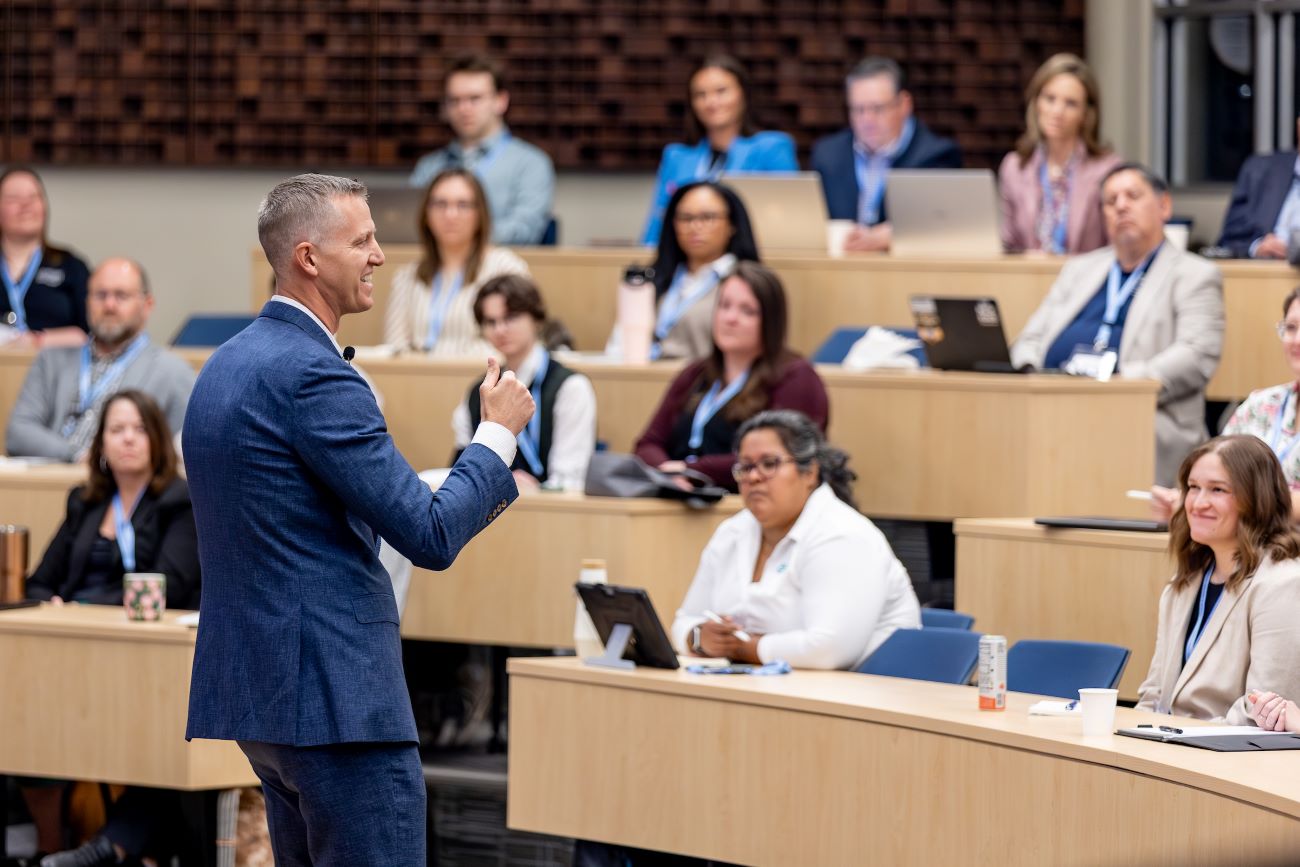

In a time shaped by artificial intelligence, smartphones, and endless digital content, the ability to think independently and read a physical book from cover to cover has never been more important. In fact, one of the most impactful statements Dale Kooyenga made during the conference was simple: “Your phone is the enemy.”
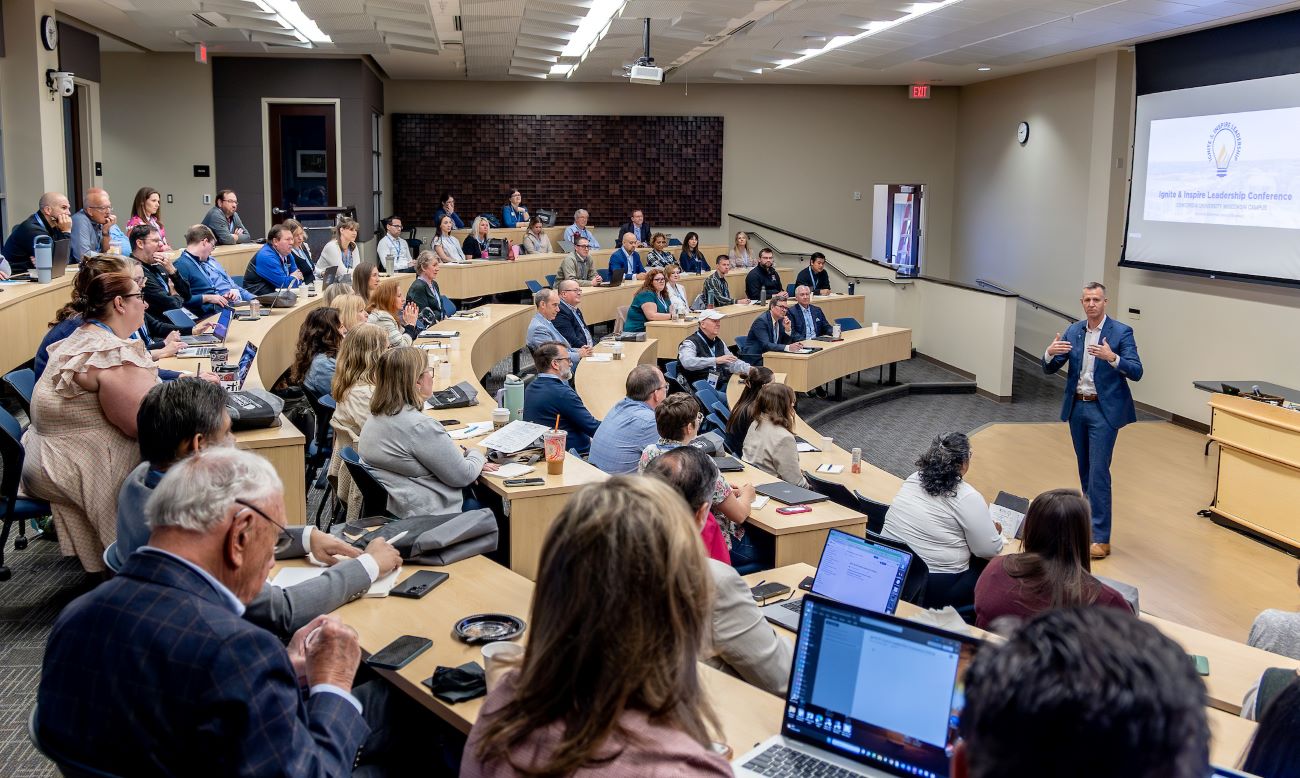
Kooyenga, president and CEO of the Metropolitan Milwaukee Association of Commerce and a current School of Business board member, delivered an hour-long presentation at the conference, hosted by the Batterman School of Business in CUW’s pharmacy building. What began as a memoir of his life evolved into a lesson on leadership in today’s economy.

As a growing regional leader in business education, the Batterman School of Business prepares future professionals not only with the hands-on skills needed to enter their chosen fields, but also with the mindset to become strong industry leaders. One way the school accomplishes this is through its network of professionals who come to campus to share their experience and knowledge with students and community leaders alike.

“The Concordia Batterman School of Business wants to be a resource and a destination for area businesses, their executives, employees and their families,” said Dean Rennicke, assistant dean for external relations. “Kooyenga’s willingness to serve on the Batterman School of Business Advisory Board helps connect our students and faculty with leaders in the business community while giving us insight into the needs of regional employers.”


From basketball benchwarmer to CEO

At 21 years old, Kooyenga dreamed of playing college basketball. In front of conference attendees, he joked about his struggles with the sport during high school and college, which eventually led him to shift his focus toward accounting. After earning his CPA from Lakeland University, he worked at KPMG for a decade before spending 12 years as CFO of a startup company.

While building his accounting career, the Sept. 11 terrorist attacks occurred. Kooyenga recalled exactly where he was at that moment, as many people still can. Having recently moved into a new apartment on Milwaukee’s east side, he remembered yelling to his roommates, “America is being attacked.”

“That day changed everything for me,” he said.

He felt called to enlist in the Army. With a deep conviction to serve, he deployed to Iraq. He later worked as an economic officer using his accounting and business background.

“One lesson from Iraq stayed with me forever: War is not just about combat. It’s about rebuilding communities,” he said. “Those experiences changed how I viewed leadership, sacrifice and purpose.”

He has served for more than 21 years in the U.S. Army Reserve and currently holds the rank of lieutenant colonel. He also spent eight years in the Wisconsin State Assembly and four years in the Wisconsin State Senate.

Today, he is president and CEO of MMAC, representing more than 2,000 businesses and 300,000 employees across southeastern Wisconsin.


Why are we doing this?

After sharing a bit about his life’s journey, Kooyenga, in a behind-the-scenes interview, shared an important message about what is needed from the next generation of leaders.

He said they need to be able to adapt, create and innovate.

Using artificial intelligence as an example, Kooyenga explained that AI is only as good as what it is querying. He called it “Garbage in, garbage out.” A term used to explain that the quality of output is only as good as the quality of input.

Workers need to constantly evaluate how their work can improve. “The next generation has to constantly think about productivity. How can I get more out of what I’m doing?” Kooyenga said. “Working harder matters, but working smarter matters more.”

Artificial intelligence is a tool that helps workers move beyond mundane tasks and focus on innovation, he explained.


Five tips for today’s leaders

To “win” in the professional world, Kooyenga said people need to be smart, adaptable and intentional about how they grow. He shared five lessons that have guided his own career.

No. 1 and No. 2: Build experience and maintain balance
Kooyenga encouraged attendees to build expertise in multiple areas rather than becoming narrowly focused on a single discipline. Exploring different industries is valuable, he said, but constantly jumping from job to job without direction is not.

“Every industry has its own language,” he noted. People should not be afraid to build expertise in one area while continuing to explore others.

“You have to develop the networks and the knowledge,” he said. “Simultaneously try to create expertise, network, knowledge, dive in—all while not being afraid to experience other industries and lay that on top of that.”

Kooyenga referenced the 10,000-hour rule popularized by Malcolm Gladwell in Outliers: The Story of Success, which suggests mastery comes through years of deliberate practice.

“I put 10,000 hours into politics. I put 10,000 hours into the Army, and I’ve put 10,000 hours into my CPA career,” he said.

He also emphasized maintaining balance outside of work through what he called the “four-legged stool” of life: physical health, intellectual growth, relationships and community, and spiritual grounding.

Without one of those areas, he said, balance becomes difficult to maintain.

No. 3: Read constantly
Kooyenga remembers the moment his principal caught him reading Stephen King’s It during a Christian junior high assembly. After passing the book among classmates and drawing their attention to an inappropriate section of text, the incident ended with a phone call home to his parents.

What happened next shaped his relationship with reading for the rest of his life.

“I remember coming home, and my dad tossed a book at me and said, ‘Keep reading, don’t bring it to school,’” Kooyenga said. “And I think that was the right answer because I subsequently got into the classics, and now I read Christian stuff and C.S. Lewis.”

For Kooyenga, the lesson was simple: keep reading.

“I didn’t want to read what they told me to read. I just wanted to read my own stuff,” he said.

He described himself as “not a very good high school student” with a 2.9 GPA, but said he was an avid reader growing up and remains one today. Now, he finishes approximately 50 books a year across a wide range of subjects.

No. 4: Communication matters
Kooyenga encouraged attendees to approach conversations with curiosity instead of trying to prove something. He said leadership is about listening more, learning constantly and treating networking as a service rather than extraction. Suggested reading: The Next Conversation by Jefferson Fisher.

No. 5: Meaningful work and meaningful relationships
Kooyenga referenced Harvard professor and social scientist Arthur Brooks, whose research focuses on happiness. He encouraged attendees to evaluate how they spend their time and whether those activities contribute to meaningful work or meaningful relationships.


To learn more, check out “Rising to the Top: Batterman’s Vision for Regional Excellence.”


Want in?

Concordia University Wisconsin is a Lutheran higher education community committed to helping students develop in mind, body and spirit for service to Christ in the Church and the world.